Home Blog Page 659

How contract fraud, substandard projects negatively affect education in Cross River

By Archibong JEREMIAH

From 2016 – 2023, the Cross River State Universal Basic Education Board (SUBEB) completed 616 infrastructural projects. The Chairman of the agency, Stephen Odey, disclosed this when giving stewardship Ben Ayade’s administration at a media parley on Tuesday 23 May 2023. The agency, he said, also distributed 1,611,818 tables and chairs with the hope that it would improve the quality of education that pupils and students get and improve the working conditions of staff. However, this investigation by Archibong Jeremiah shows that the state is far from achieving its goals, as contracts worth billions were awarded amidst procurement violations. Some projects have been abandoned, others were poorly executed, and some pose a threat to the safety and well-being of teachers and pupils.


In May 2019, the Universal Basic Education Commission (UBEC) released the 2018 digest of basic statistics, for public and private schools in Nigeria. The data shows that there were nearly 4,151 classrooms in primary (1,697), Early Childhood Care Development and Education (ECCDE)/pre-primary (1,614), and junior secondary schools (840) in bad conditions in the state.

The poor WAEC performance of public schools in the State from 2016 to 2020 can be partly traced to the learning conditions in which teachers are expected to impact knowledge in pupils and students. Some of the bad classrooms in schools are largely caused by the shoddy jobs of unpatriotic contractors and weak supervision from the procuring MDA.

It seemed that the government at the time, led by Ben Ayade, understood the problem when the State Universal Basic Education Board (SUBEB) Chairman, Stephen Odey disclosed to reporters on January 19, 2017, that N1.04 billion was approved as a counterpart fund to enable SUBEB to access the 2016 Universal Basic Education Commission (UBEC) matching grant.


Read Also:


Thus, 237 award letters for the 2012-2015 UBEC intervention projects were released, and no fewer than 235 primary schools in the state were earmarked for rehabilitation at N3.6 billion.

Six years later, in another media parley on Tuesday 23 May 2023 to give stewardship of the eight years of Ben Ayade administration Odey disclosed that the state had embarked on an aggressive development of 639 infrastructure projects.

Of the 639 projects, 616 have been completed and handed over to schools, while others are ongoing, according to records from Cross River SUBEB. In addition to the building of classrooms, offices, toilets, laboratories, and boreholes 1,611,818 tables and chairs were distributed.

A scrutiny of the 639 projects executed by SUBEB under the Ayade administration (556 between 2015 and 2018, and 83 between 2019 and 2022) unearthed several irregularities that go against the State Procurement Law, 2020. But records from 2015 – 2018 are not publicly available, not even on the State Open Contracting Data Standard (OCDS) portal, only data from 2019 – 2022 are available.

In 2019, contrary to the provisions of Section 1.4, sub-section 1 of the procurement guidelines and rules of 2011 requiring that “the project must have budgetary provision,” the state government awarded all 36 contracts without any budgetary provision. None of the projects was in the state government’s budget for that year.

The 36 education contracts were awarded on 26 April 2019 but were backdated to 7 January 2019.

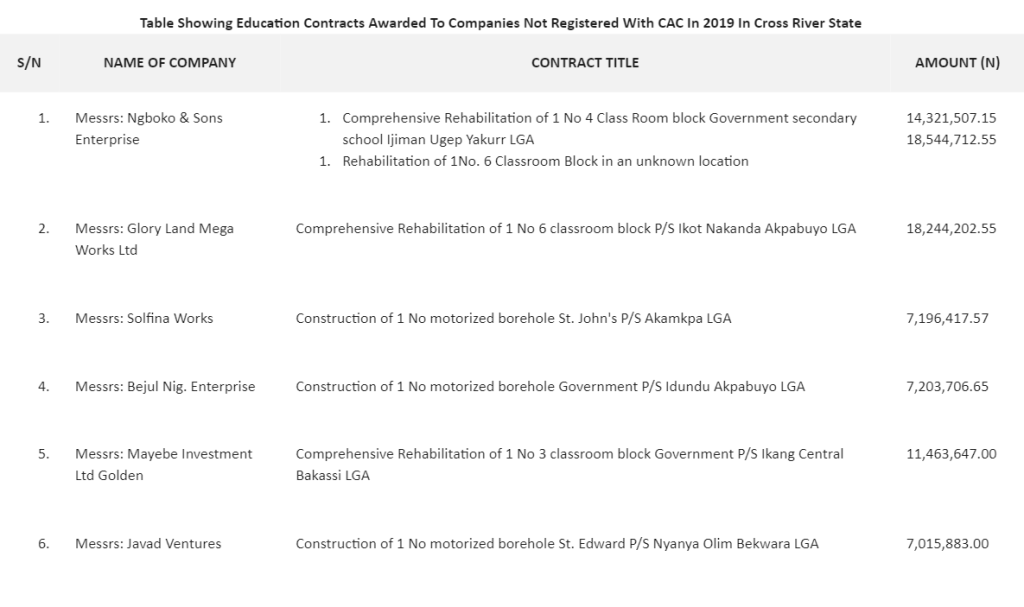
Furthermore, TheInvestigator established that between 2019 and 2022, 20 unregistered companies got contracts worth billions of naira.

Indeed, this contravenes Part 3, Section 6(b) of the State Procurement Law, 2020, which states that all bidders “shall possess the legal capacity to enter into the procurement contract.” See the tables below (zoom for better view).
Faulty Structures

At the Police Primary School in Ogoja LGA from the Head Teacher’s office through other offices to the classrooms, the walls are cracked. The foundation of the building is in trouble as erosion is fast washing it away, and some classrooms are profusely leaking.

Cracks on the wall.

Erosion washing the foundation away.

Likewise, at Government Secondary School Ijiman Ugep, Yakurr LGA, the staff rooms, laboratory, and two other classrooms are leaking badly.

The main staff room has received considerable emergency remediation to hold the building together.

Government Secondary School Ijiman Ugep, Yakurr LGA.

The Government Primary School Ogbojia, Ogoja LGA operates from dilapidated buildings; when it rains the classrooms are easily soaked, and they share the classrooms with criminals. The management has been in a long-run battle to reclaim their classrooms from hoodlums in the community, their identities are yet to be identified.

The Head Teacher’s office is routinely ransacked, goats are lodged at night in some classrooms, stolen properties are kept under lock and key in classes, and clandestine meetings are held in the school compound during ungodly hours.

As if it has not seen enough, used condoms, blood stains, pools of urine, and feces are regular sites for pupils as they are cleaned regularly from classrooms.

The Presbyterian Church of Nigeria (PCN) Primary School Mkpani, Yakurr LGA is another school not spared by roof leakages. Two classrooms have cracks, and they have poor drainage systems that don’t facilitate flowing of water.

Records from the State’s Due Process and Price Intelligence Bureau (DPPIB) show that Ijo Maritime Service Ltd was contracted to complete a block of five classrooms with an office and toilet at Police Primary School in Ogoja on May 19, 2022, and was paid N35 million to deliver the job in four months.

Ijo Maritime Service Ltd has as directors Inaku Jonathan Uko, Ayim Princewill Peter, and Ikoriatem Uko Inaku. The contract was executed but it was shoddily done. In less than a year after completion, the building is falling apart, and the entire building is filled with cracks.

The Head Teacher of the school, George Peter, told TheInvestigator that the substandard materials used for the building by the contractor hurt them. According to him, students openly defecate because the only good toilet is used by staff, and when it rains water from the leaking roofs disturbs teaching and learning.

“When I came, I noticed the cracks on the wall. I don’t know the cause but technically you can see that it was not a quality job. In the toilet, the plumbing system is not complete, no drainage is provided for the toilet, the wires used for the electrical are fake, and each time we use our generator it gets so hot”.

Government Primary School Ogbojia, Ogoja LGA also suffered a similar fate after E. Eke Son Global was paid N67 million to construct a 6-classroom block with a laboratory, office, and toilet.

The contract was executed but the low-quality materials used are obvious. Built in 2022 but only put to use in 2023, the building was already falling apart when the reporter visited in October and December 2023. Inside and outside, it has numerous cracks, even on the floor.

The Head Teacher of the school. Ellah Christopher, said apart from the cracks and leaks on the roof, security is a major problem because the school is not fenced. TheInvestigator found that when E. Eke Son Global finished the building, the keys were not given to the school authorities but to a tailor beside the institution. Only after the building was burgled were the keys returned to the Head Teacher.

Ellah told TheInvestigator that the new building “has cracks that run from the roadside across the classes to the other side. The backyard is deepening because of constant passing. The bad boys have started removing the fans, they did not provide any chalkboard, and the laboratory has no equipment.”

Furthermore, he recalled that “when they were building, we approached them saying that they should safeguard government documents (files, registers, scheme of work, lesson notes, results) by putting burglary proofs, they listened but did nothing.”

Ngboko & Sons Enterprise was the contractor contracted to rehabilitate four classrooms at Government Secondary School Ijiman Ugep, Yakurr LGA for N14.3 million.

The contract was done but with inferior materials. The contractor only changed the zinc, used the previous wood, and painted the wall after light plastering. The walls and terrazzo floor are rough and a section of the building does not have drainage. A beam attached to a major pillar in front of the school has detached and poses a threat to students and staff. Because of the dusty terrazzo floor, the classrooms are constantly dusty, making the classes and students appear dirty.

Principal of the school, Ebali Ubi, who spoke with TheInvestigator thanked the Parents and Teachers Association (PTA) for their support in addressing some of their challenges.

“What the contractor did was just to roof and paint the building and collect his money. He removed the wood, used the old wood, and bought new zinc and other things. The terrazzo is fake, all the students in the classrooms when they return from school look like they went to where they cook, and white ash would be all over them”.

The school’s Senior Prefect, Emmanuel Okoi, expressed dissatisfaction with the state of his school infrastructure. He corroborated the principal’s position and added “I think the responsibility of the government is to keep the school clean”.

In March 2022, the sum of N48,584,390.38 was paid to Dadamen Global Investment Nig Ltd to construct four classrooms that would have a library, laboratory, office, and toilet block at PCN Primary School Mkpani. It constructed the four classroom blocks but two of them and the library are seriously leaking such that pupils and books are moved when it rains.

The Head Teacher of the school, Eno Ubi, said the leakages have negatively impacted them, especially during the rainy season. He called for immediate government action to ameliorate their suffering.

Eno said, “For the leaking roof we have not amended it, we are waiting for money to see how we can call the carpenter to fix it”.

Investigation shows that out of the four contracts, three violated two sections of the Cross River State Procurement Law, 2020 (Law No. 9).

Only Dadamen Global Investment Nig Ltd merited the contract, Ngboko & Sons Enterprise, E. Eke Son Global, and Ijo Maritime Service Ltd did not.

The CAC incorporated Ijo Maritime Service Ltd for “Shipping and Marine Engineering” but it was contracted to complete a block of five classrooms with an office and toilet at the Police Primary School in Ogoja for N35 million by the State Universal Basic Education Board (SUBEB).

This violates Part 3, Section 6(a) of the State Procurement Law of 2020 and it stipulates that “All bidders in addition to requirements contained in any solicitation documents shall possess the necessary professional and technical qualification to provide the goods, services, or works”.

Ngboko & Sons Enterprise was contracted to rehabilitate four classrooms at Government Secondary School Ijiman Ugep and E. Eke Son Global was employed to build a six-block classroom at Government Primary School, Ogbojia, Ogoja. Both companies are not registered with the CAC.

The two companies are not qualified to do any government contracts, awarding any contract to them violates Part 3, section 6(b) of State Procurement Law. It states that all bidders “Shall possess the legal capacity to enter into the procurement contract”.

Project abandonment

The entire Sacred Heart Primary School Lagos Street in Calabar South LGA operates from a block of four classrooms.

The staff members share the classrooms with pupils since they have no offices. Pre-primary and ECCDE 2 share a hall. Primaries 1 and 3 share a classroom, it is the same for Primaries 2 and 4, Nursery 1 and Primary 5, while Primary 6 are alone.

In the classrooms shared, pupils sit in opposite directions, backing each other but lessons go on at the same time.

The staff and pupils were excited in March 2022 when SUBEB contracted Jab Maze Nig. Ltd to renovate the school and provide functional toilets for N41 million. But their joy was short-lived as the contractor abandoned the job halfway, compounding their problem.

Jab Maze Nig. Ltd, the contractor did not just abandon the toilets and classrooms halfway, it did not install complete ceilings but it roofed and painted the front of the building to deceive the public.

The front and back of Sacred Heart Primary School at Lagos Street in Calabar South.

Ten days after TheInvestigator visited the school, the contractor returned only to remove their signpost.

The inside.

A resident, Essien Ita, who has lived for over two decades close to the school told TheInvestigator’s reporter that he would never send his children to the school despite living on Dan Archibong Street (formerly known as White House), less than a five-minute walk.

The pensioner said the school needs more than classroom blocks, adding that it also has security and other problems.

“It is good that after many years of neglect, they were able to award a contract but the classrooms are not just what they need, did you see any gate?

“Parents whose children attended and still attend the school live around me, we see their struggles, my children or ward cannot go to that school, from noise to environmental pollution and class sharing, no, my ward can’t go there that doesn’t mean the school is completely bad, but no.”

Furthermore, he said the school is a “public toilet and meeting point for bad boys. When they rob you and run into the school you will never catch them. They need a new fence and gate, if possible, relocate the primary school entirely and leave the secondary school there.”

Since they had no other building to use and after waiting in vain for the contractor to deliver, the management had no choice but to begin using the building as it was.

Speaking about the classroom project, the Head Teacher of the School, Terrence Effiong, told TheInvestigator that the school was forced to start using the building because it had no choice.

“The classroom block that was to be rehabilitated has not been finished for two years now. Out of six, only two seats have been fixed in the toilet, the doors have not been fixed, the project is yet to be completed, we just tried to see how we can use the building for the children to continue their learning,” Effiong told TheInvestigator.

Documents from the CAC website show that Jab Maze Nig. Ltd is registered as a “Commission Agency” and is owned by the current member representing Bakassi/Akpabuyo/Calabar South Federal Constituency in the House of Representatives, Rt. Hon. Bassey Joseph. Serving alongside him as Directors are Ebong Uduak, Robson Mariah, Robson Iniobong, and Windful Samuel.

Hon. Joseph, who is the immediate past Deputy Speaker of the Cross River State House of Assembly and represented Calabar South two in two terms, was still a principal officer when his company got the contract in March 2022.

Hon. Joseph Bassey, member representing the Bakassi/Akpabuyo/Calabar South federal constituency in the House of Representatives.

Because the company is registered as a commission agency and not a construction or engineering firm, the contract award contravenes Part 3, Section 6a(1) of the Cross River State Procurement Law, 2020 (Law No. 9), which stipulates that “all bidders in addition to requirements contained in any solicitation documents shall possess the necessary professional and technical qualification to provide the goods, services, or works”.

Open defecation

As if sharing classrooms and not having a toilet is not enough, the environment at Sacred Heart Primary School on Lagos Street is not conducive to learning and teaching because the school premises are used as a public toilet by neighbors and traders at the famous evening fish market beside the school.

Evidence of open defecation at Sacred Heart Primary School on Lagos Street.

The stench of feces and urine is constant in and around the school. Just by the side and around the classroom block, piles of feces can be seen accompanied by a heavy stench of urine.

Open defecation is also practiced at the Government Primary Model School Idundu in Akpabuyo LGA because a contractor abandoned the construction of toilets there.

At Government Primary School Ikang Central in Bakassi LGA staff use neighbors’ residences while pupils openly defecate.

Had Jab Maze Nig. Ltd, a company owned by a serving parliamentarian, been patriotic and completed the job to specification, pupils, and staff of Sacred Heart Primary School Lagos Street would have had four toilets to share.

The Head Teacher of the School, Terrence Effiong, told TheInvestigator that “because there is no fence and it is situated in Calabar South. Since some compounds don’t have toilets after school hours they defecate in the school compound, even inside the classroom”.

He added that the lack of convenience at times makes teachers close early. His words “Sometimes when a teacher is pressed, he or she takes permission to go home, but because of the situation of the country, the teacher might decide not to come back”.

Built in 2019 for N145,015,738.88 by Ijo Maritime Service Ltd and commissioned in 2020, the Government Primary Model School Idundu has no functional toilet because the construction of all 16 toilets in the contract was abandoned.

On one occasion, a snake attacked the Head Teacher of the model school while defecating.

James Asuquo recounts the ugly experience to TheInvestigator.

He said “To be candid we are going through untold difficulty. There was a day I was seriously pressed, I went into the bush to ease myself. I was attacked by a very big snake. If I, as an adult, could face such a thing, what about the younger ones?”

Not having toilets and good chalkboards is not the only negative impact the project has on the students and teachers as they have no water and go a long distance to fetch from the stream.

In the same school, a motorized borehole that cost N7,203,706.65 was constructed by Bejul Nig. Ent. and it did not last two months before packing up. It has not been repaired and the overhead tank has been stolen by unknown people, while the tap heads are all broken and the pump needs repairs.

Asuquo added “No toilet, no water, and as you have seen this structure is new but if rain falls now leakages will be everywhere. There is a room I designated as a temporary library because of the leakages there. Some of the books have been spoiled”.

Miss Magdalene Bassey Asuquo, a Primary 6 pupil, said the nearest place they fetch water is a nearby stream but “One day a madman attacked us”. She observed that pupils are not happy with the learning environment and want a change.

In 2019 Mayebe Golden Investment Ltd was paid over N11 million for the rehabilitation of a three-classroom block at Government Primary School Ikang Central in Bakassi LGA.

A close look at the school shows that the contract was awarded in error because a proper needs assessment was not carried out. A staff member who pleads anonymity due to the volatile nature of Bakassi told TheInvestigator “What our school needs most is toilet facilities as staff and students practice open defecation like many schools here”.

What was met on the ground when TheInvestigator visited was four classroom blocks and not 3 as contained in the contract documented. The extra classroom should have been a toilet.

The staff member further stated, “We don’t have a toilet as you have seen. Teachers use neighbors’ places but pupils as you can see go around the bush behind”.

Government Primary School Ikang Central in Bakassi is not the only school where proper needs assessment was not carried out before project contracts were awarded. It was the same situation at Government Secondary School Ijiman Ugep in Yakurr LGA. The school has no toilet, and staff and students use the bush around the premises if they must ease themselves. However, the community has a four-room toilet for those who can afford N50.

The community toilet and papers used by some students and staff at Government Secondary School Ijiman Ugep, Yakurr LGA.

The Principal of Government Secondary School Ijiman Ugep, Ebali Ubi, said “We need more than just a classroom block, we don’t have toilets, the common toilet that students use I pay about N3,000 monthly for my students”.

Investigation shows the contract awarded to Ijo Maritime Service Ltd to construct a model school at Government Primary Model School Idundu in Akpabuyo for N145 million, to Bejul Nig. Enterprise to drill a motorized borehole in the same school awarded for N7,203,706.65 and Mayebe Golden Investment Ltd to rehabilitate a 3-classroom block at Government Primary School Ikang Central in Bakassi was not in tandem with the State Procurement Law of 2011, it was reviewed in 2020.

They delivered the projects but they were substandard.

Ijo Maritime Service Ltd was incorporated by CAC for “Shipping and Marine Engineering” services. This violates Part 3, Section 6 (a) of the law which stipulates that “all bidders in addition to requirements contained in any solicitation documents shall possess the necessary professional and technical qualification to provide the goods, services, or works.”

Bejul Nig. Enterprise and Mayebe Golden Investment Ltd are not registered with the CAC. Therefore, according to Part 3, Section 6(b) of State Procurement Law they should not have been considered for a contract. Part 3, section 6(b) states that all bidders “shall possess the legal capacity to enter into the procurement contract.”

Completed, Bbut not handed over 

While many schools suffer from uncompleted or shoddily executed projects, others contend with new projects that have now been completed but not handed over to them.

At St. Augustine Primary School, 8 Miles, Calabar Municipality, assemblies are held in the open and when it rains they will forgo it.

Mangle Enterprise Ltd was contracted in March 2022 to construct a hall for N37.5 million. The job has been completed but has not been handed over to the authorities. So, the school cannot use them.

The assembly hall at St. Augustine Primary School 8 Miles is used as a store by the State Universal Basic Education Board (SUBEB) while assemblies continue in the open.

The assembly hall at St. Augustine Primary School 8 Miles is used as a store by SUBEB.

But Mangle Enterprise Ltd is not registered with CAC and ought not to be awarded any government contract, the award violates Part 3, section 6(b) of State Procurement Law, and it states that all bidders “shall possess the legal capacity to enter into the procurement contract”.

In the same vein, when Government Primary School Behuatsuan, Ipong in Obudu, needed more classrooms, Ryte Reason Limited was contracted in March 2022 and paid N44 million to rehabilitate a block of four classrooms with two offices in the school.

As in the case of St. Augustine Primary School, the work at Government Primary School, Behuatsuan has been completed but the school has not taken possession of it.

The contractor, Ryte Reasons Ltd was incorporated in Calabar and the directors are Ugah Moses Uteka, Momba Lawrence, Ugah Florence, and Ellah Cornelius.

On why they are yet to hand over the project Ryte Reasons Ltd was contacted. Atarry Moses, CEO of the company responded to TheInvestigator’s voice note and referred this reporter to SUBEB.

He chatted “As you rightly observed we completed 100% of the job so the school was supposed to take possession of the facility with the consent of the board.”

He added “We have been working with SUBEB for upwards of 10 years. We just leave the site after job completion. We don’t participate in the rituals of handing out. Please revert to SUBEB.”

Politicians hijacking projects

Nigeria ranks 154th out of 180 countries on the Corruption Perception Index (CPI) according to a 2022 report by Transparency International (TI).

The CPI aggregates data from eight different sources that provide perceptions by experts and business people on the level of corruption in the public sector. In 2015, Nigeria was ranked 136th, 136th in 2016, 148th in 2017, 144th in 2018, 146th in 2019, 149th in 2020, and 154th in 2021.

In its 2019 report, TI emphasized that 66% of the money Nigerian governments allocate to education is stolen by corrupt officials.

This suggests that corruption is a severe problem in Nigeria’s education sector and it confirms the findings of TheInvestigator that politicians influence many contracts they have no intention to deliver and in most cases when they do, it is a low-grade job.

Procurement records from the State’s Due Process and Price Intelligence Bureau show that in 2019 the government initiated 36 educational projects; 12 were for the construction of model schools, 12 others for constructing motorized boreholes, and another 12 were for rehabilitating classrooms and hostels.

TheInvestigator further uncovered that 8 out of the 12 model schools built were constructed by four companies owned by Inaku Jonathan Uko, Chairman of the Cross River State Civil Service Commission.

Again, in 2022, another 47 educational projects were initiated and Uko’s same four companies got five of them, totaling 13 contracts he got out of 83 between 2019 and 2022.

Inaku Jonathan Uko, Chairman Cross River State Civil Service Commission.

The companies are Implementing Technology LtdIjo Maritime Services LtdRennies Works Ltdand Royal Touch Technology Limited

In Yala LGA, Royal Touch Ltd was paid over N28 million for the construction of the Inom assembly hall at Community Secondary School and N45 million for the construction of a four-block classroom with a library, offices, and toilet in Community Primary School, Adiero Okpoma.

For the construction of a block of four classrooms, a library, laboratory, office, and toilet at the primary school Nsofang, Etung LGA, Ijo Maritime Service was paid over N47 million. It also got the contract for the construction of a block of four classrooms at Ntol Comprehensive Secondary School for N254 million, and over N34 million for the rehabilitation/completion of a block of five classroom blocks with offices/toilets at Police Primary School in Ogoja LGA.

For the construction of a block of two classrooms at Community Primary School, Antebellum in Bekwarra LGA, Rennies Work Ltd got over N36 million and over N8 million to construct a block of two classrooms for ECCDE At PCN primary school, Ofumbongha, Obubra LGA.

Implementing Technology Ltd got over N43 million for the rehabilitation of 1no 6 classroom comprehensive Secondary school Ndok in Ogoja LGA.

In a similar fashion, Quintito Integrated Services Ltd, a company owned by Anthony Andor Ulayi, a relative of Governor Ben Ayade, was contracted to rehabilitate a six-classroom block at Community Primary School Ofu-Kpuru Affa, Bekwara LGA for N19.6 million in 2019. Other directors are Enamhe Ushie, Blessing Anthony Ulayi, and Prince Victor Necus-Agba.

Christians Global Synergy Ltd, a company owned by Mathias Unimke Angioha, Ayade’s younger brother, got two contracts in 2022 – the construction of 1 number motorized borehole, three elevated water tanks at St. Georges Primary School old Netim 1 Akamkpa LGA for over N9.5 million, and the construction of drains/converts at British/Canadian School, Kakum Obudu LGA for over N86 million.

Peter Ayim Princewill, another appointee of Governor Ayade, who was the Director General of the State Emergency Management Agency (SEMA) also appointed within the same period as Inaku is a director in Rennies Works Ltd and Ijo Maritime Services Ltd.

Peter Princewill Ayim Director General of the State Emergency Management Agency (SEMA).

This investigation shows that Princewill and Stephen Odey, SUBEB Chairman were legislative aids to Governor Ayade when he was a senator representing Cross River North.

Anthony Andor Ulayi, owner of Quintito Integrated Services Ltd is linked to the Governor of Ayade through his half-brother, Placidus Ogar. Months after the contract was awarded in 2019, he was appointed Special Assistant to the Governor on the Local Government Service Commission.

Anthony Ulayi Special Assistant to the Governor on the Local Government Service Commission.

TheInvestigator found Governor Ayade’s younger brother, Mathias Unimke Angioha as a director in Christians Global Synergy Ltd, Christians Ishamali Odey is also a director while Jaiye Samuel Ajayi is the secretary.

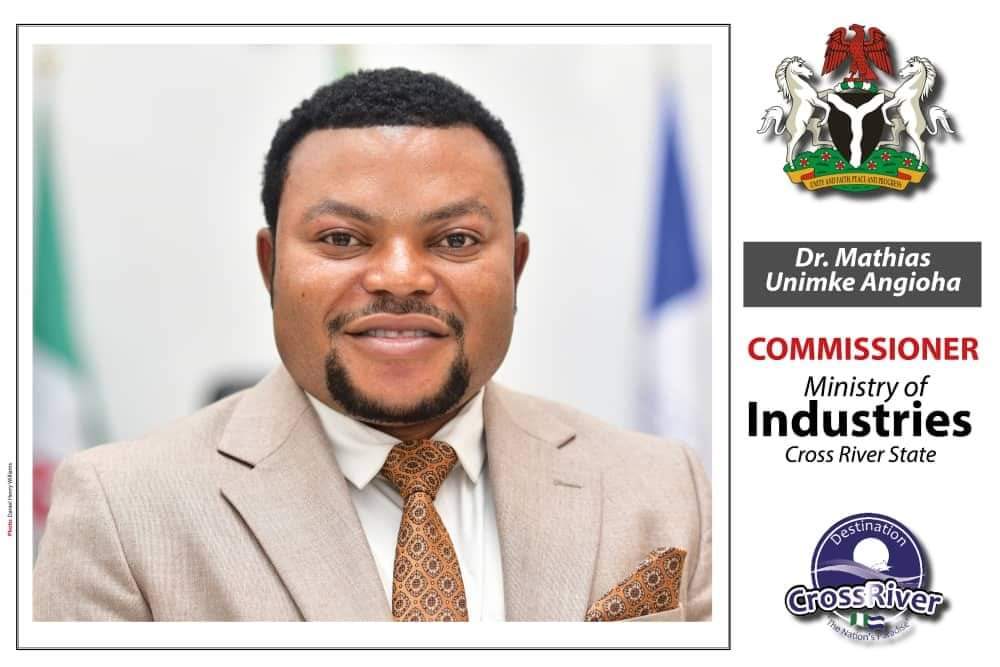
Mathias Unimke Angioha was Governor Ayade’s Personal Assistant (Domestic) throughout his tenure and is now Commissioner for Industries in the current administration of Bassey Edet Otu.
Disability rights law violation

The objective of the Cross River State Disability Rights Law (No. 11) of 2021 “is to ensure the full integration of persons with disability into the society”. TheInvestigator established from 13 schools visited, only 1 is partially compliant to the law.

Twelve schools were built without respect for the State Disability Rights Law which was fully operational a year before the contracts were awarded.

Part 2 (4 and 5) of the Law mandates that “A person with a disability has the right to access the physical environment and buildings on an equal basis with others.

“A public building shall be constructed with the necessary accessibility aids such as lifts (where necessary), ramps, and any other facility that shall make them accessible to and usable by persons with disabilities.” See table below (zoom for better view).
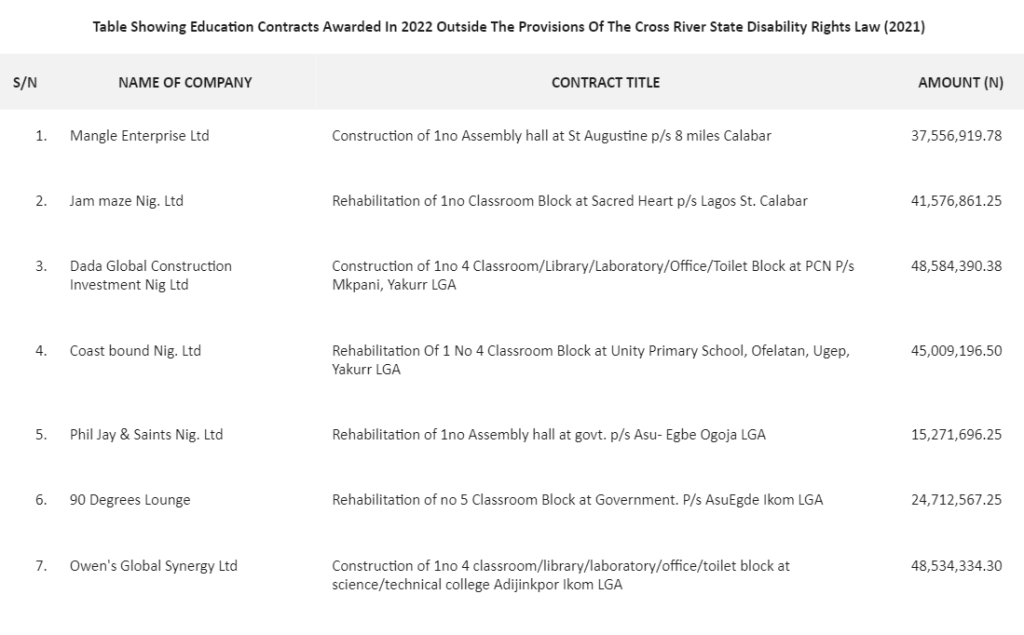
Only Police Primary School Ogoja has a partial rail for wheelchairs to access a section of the building. The contractor is Ijo Maritime Service Ltd, and the project gulped N35 million. See the table showing the schools built in violation of the State Disability Rights Law.

Take up ownership role – stakeholders urge communities

Cross River State Coordinator of Child Protection Network (CPN), Kebe Ikpi, described the findings of this investigation as “shocking,”.

He said, “It’s sad to admit that in 2023 children are still learning in an unconducive environment and lack the basics to study,” adding that the importance of a standard classroom and a conducive learning environment is what a child needs to succeed.

He appealed to the Commissioner for Education to “ensure our schools are up to standard. I am appealing to private citizens to adopt a school, it is true the government might not be able to do everything.” Ikpi further appealed to “citizens who are well-to-do can adopt a school and provide the necessary materials the school needs for children in that school to attend school comfortably.”

Gabriel Adim of the Aged Care Well Foundation while reeling out the dangers of open defecation emphasized the importance of ending it in schools.

He said, “Open defecation is a dangerous practice. One of the issues causing open defecation is no access to water, good sanitation, and hygiene practices. These contribute to negative health outcomes.”

Furthermore, he said “It has its own environmental and socio-economic danger, and now we are talking about climate change, the underlying word is it is dangerous and life-threatening. It should not be encouraged because of the health, economic, and social well-being of the people.”

Advising, he said, “We need to create a strong system of reorientation for our people, we need to provide adequate and accessible water, toilet facilities that are well-maintained.”

Communities were urged by Kebe and Adim to take up an ownership role in any publicly funded projects located within them to ensure the right things are done by the contractor and government.

SUBEB Boss angry, UBEC ignores FOI

TheInvestigator visited SUBEB headquarters three times to get answers on why the procurement law and disability rights law were not adhered to in the award of the contracts between 2019 and 2022. The visit was also to know why records of 556 contracts from the 639 awarded between 2015 and 2022 were not in the public domain, coupled with the shocking revelation of this investigation.

The Director of Administration, who is the acting Chairman of SUBEB in Cross River, Etta Inyang Eyo, was angered by the findings of TheInvestigator.

Eyo was angry that TheInvestigator did not visit his office first to arrange for a guided tour sponsored by SUBEB. Okpokam Odum, the Information Officer of SUBEB told TheInvestigator over the phone on the day October 13, 2023, explained Eyo’s anger thus: “I told him you had already gone round and have information with you. He was not too happy,” he said, adding that “you would have come to us first to arrange the visit, what you want we take you there.”

No further response has been received from SUBEB.

At the UBEC office in Calabar, the fourth visit paid off as Dodeye Jude, Head of Administration spoke briefly, saying that all their projects are well supervised. She then referred this reporter to their head office in Abuja.

Two days later, an FOI dated October 19, 2023, addressed to the Chairman of UBEC with REF: TI/ED/FOI/001/UBEC01, was sent to the official UBEC email (info@ubec.gov.ng) requesting a detailed response on the contract awarded in Cross River State between 2015 and 2023 with their descriptions, date the projects were advertised and the media, location of each project and the approved threshold.

Other information requested includes the procurement method, the dates of bid opening, the name of contractors, the date of contracts awarded, the contracts execution period, contract value for each, the approved budgetary provisions, the amount paid, the level of project completion, and remarks on the projects.

TheInvestigator has not gotten a reply from UBEC even though the mail was delivered successfully.

Education commissioner plays hard to get

The State Commissioner for Education, Stephen Odey is the immediate past Chairman of SUBEB. On October 12, 13, and 16 2023 the reporter visited Odey’s office but he was not there.

The same day a call to his mobile number went through and he gave an appointment for next Tuesday, October 21, 2023, at 11 am.

On the set day, this reporter sat from 10:30 am to 4 pm and could not see the Commissioner.

The appointment slip.

The appointment was rescheduled to the next day, but the Commissioner would still not speak to the reporter.

This investigation  republished from The Investigator is supported by the John D. and Catherine T. MacArthur Foundation and the International Centre for Investigative Reporting.

Presidency confirms Tinubu will visit Qatar despite snub concerns

0

THE presidency has debunked reports that the Government of Qatar ‘snubbed’ President Bola Tinubu on plans to embark on a state visit to the country. 

In a statement on Saturday, February 24, signed by Special Adviser to the President on Information and Strategy, Bayo Onanuga, the Presidency said the state visit by President Tinubu is on the invitation of the Emir of Qatar, Tamim bin Hamad Al Thani. 

The statement followed a leaked note verbale between the foreign ministries of both countries, which showed the Arab nation would be unable to hold a proposed forum intended to be held during Tinubu’s visit.

“It is not correct for anyone to insinuate that the Qatari authorities have snubbed the Nigerian leader over a business and investment forum which is tangential to the all-important State Visit and which President Tinubu is slated to attend as a guest,” the presidency said.

In the letter, Qatar said its decision to decline the business and investment forum was due to the lack of a legally binding agreement with Nigeria to promote investment.

The letter also claimed that the Minister of Commerce and Industry, Mohammed bin Hamad bin Qassim al-Thani, “will be carrying out official missions outside the country during the upcoming visit period,” which makes him unavailable for the forum.

However, in a statement titled ‘President Bola Tinubu’s state visit to Qatar,’ the Presidency explained that President Tinubu is expected to proceed to Qatar on the State Visit as scheduled and during the visit, the Nigerian leader will engage in high-level bilateral discussions with Qatari leader on many important matters, covering the full range of diplomatic and economic issues.

The Presidency said, “We are aware of a leaked diplomatic correspondence between the Embassy of the State of Qatar in Abuja and our Ministry of Foreign Affairs regarding President Bola Ahmed Tinubu’s state visit to Qatar between March 2 – 3, 2024.

“The leaked diplomatic paper by mischief makers about an investment forum is not in any way a snub on President Tinubu by the Qatari government.”

It said the note verbale is about a private sector-led Business and Investment Forum to be held on the margins of President Tinubu’s State Visit. 

The event is being put together by the Nigerian Association of Chambers of Commerce, Industry, Mines and Agriculture and Qatar’s Chambers of Commerce and Industry, where business people from Nigeria will engage their counterparts from Qatar on commercial and investment opportunities available in both countries.

“We note the strong bilateral relationship between our two countries and affirm that the State Visit by President Bola Tinubu to Qatar is at the invitation of the Emir of Qatar, Sheik Tamim Bin Hamad Al-Thani.

“The State Visit is particularly aimed at strengthening the bilateral economic cooperation between Nigeria and Qatar,” the Presidency insisted.

The presidency said NACCIMA and Qatar Chambers of Commerce and Industry, were collaborating to take advantage of President Tinubu’s visit to Doha to mobilise the business community from two countries to explore opportunities in key economic sectors such as oil & gas, manufacturing, agro-business, construction, real estate, ICT, Renewable Energy, Solid Minerals and service sector, among others.

It noted that the two leaders are committed to maintaining and building on the existing cordial and special relationship between Nigeria and the State of Qatar.

ECOWAS lifts sanctions on Niger, Mali, Burkina Faso

0

THE Economic Community of West African States (ECOWAS)has lifted economic sanctions on Niger, Mali and Burkina-Faso with immediate effect.

The resolution was taken at the extraordinary summit on the peace, political and security situation in the ECOWAS sub-region in Abuja on Saturday, February 24.

Reading the communique after the emergency summit of the West African bloc, ECOWAS Commission President Omar Alieu Touray reeled out some of the sanctions the Authority resolved to lift.

They include the closure of land and air borders between all ECOWAS countries and Niger Republic; no flight zone to all commercial flights to and from the Niger Republic, suspension of all commercial and financial transactions between ECOWAS member states and Niger Republic and freezing of all service transactions including utility services.

Other sanctions on Niger lifted are the freezing of assets of Niger Republic in all ECOWAS Central banks; freezing of assets of Niger State and the state enterprises and parastatals in commercial banks; suspension of Niger Republic from all financial assistance and transactions with all financial institutions lifted and travel bans on the military officials and their families involved in the coup attempt.

According to Touray, the decision by ECOWAS is based on humanitarian considerations especially as we are in the month of lent and as we prepare for the holy month of Ramadan.

He noted that the authority also resolved to lift the sanctions regarding the recruitment of Malian citizens in statutory and professional positions within ECOWAS as well as lifting financial and economic sanctions on the Republic of Guinea.

The ECOWAS President added that he has instructed the Commission to invite Burkina Faso, Niger, Mali and Guinea to attend the technical and consultative meetings of ECOWAS as well as all security related meetings.

ECOWAS directed all its institutions, member states and other regional institutions to implement these decisions.

The ICIR had highlighted some economic and security challenges that could arise from the exit of Mali, and Niger as the country’s fight against insurgency and dwindling economy.

The three countries were sanctioned by the Economic Community of West African States (ECOWAS) for enforcing a military regime and severing diplomatic ties with France, their colonial masters.

They officially took a sovereign decision on Sunday, January 28, to pull out their nations from ECOWAS.


FG released N313.48bn for 2023 elections – INEC

0

THE Independent National Electoral Commission (INEC) said it received N313.48 billion from the Federal Government for the conduct of the 2023 general elections.

The Commission disclosed this in its ‘2023 General Election Report’ released on Friday, February 23.

According to INEC, the figure fell short of the N355.298 billion approved for the Commission to conduct the elections.


Read Also:

Based on key activities in the approved Election Project Plan for the 2023 general election, INEC had proposed a budget of N305 billion for the conduct of the election.

But the Commission later reviewed it to N355.298 billion, blaming it on the inflation rate, consumer price index, and widening differentials in the foreign exchange rate.

“These three factors negatively impacted the procurement of domestic goods and services and the purchase of offshore electoral equipment and material.

“Furthermore, the Commission also faced the necessity to rebuild or relocate its operations from its buildings that were destroyed or burnt and replace lost election materials due to arson attacks and fire outbreaks,” INEC stated.

The Commission said it suffered more than 50 attacks on its facilities, vandalised properties, and election material between 2019 and 2022, which compelled it to request a supplementary appropriation of N52,12 from the Presidency.

A figure breakdown revealed that INEC requested N159.77 billion for electoral operations, N117.38 billion for electoral technology, and N20.42 billion for administrative costs.

It is set outside N7.44 billion, representing 2.5 per cent of the election operation, technological and administrative costs for unforeseen electoral expenses.

“In line with the provisions of the 1999 Constitution, the Commission’s budget proposal for the 2023 general election was submitted to the presidency and duly transmitted to the National Assembly for approval.

2023 budget and fund release breakdown. Source: INEC

The National Assembly approved and appropriated the sum of N303.18 billion for the conduct of the 2023 general election, it noted.

According to INEC, the breakdown of the appropriated amount based on the Average Cost per Registered Voter Index (COVI) for the 93,469,008 registered voters in Nigeria is N3,801 (US$6.72) per voter.

“This is well within the internationally acceptable Average Cost per Registered Voter (ACRV) of $4 to $8 that is deemed adequate for the conduct of election in transitional democracies,” it reported.

The INEC disclosed that a cumulative N293.48 billion was released in tranches between February 2022 and February 2023, and a further N20 billion was released to the Commission in August and September 2023.

It also revealed that N61.82 billion was outstanding as of October 2023.

The report showed that the Commission also received support from development partners for electoral activities.

The support was tailored around training, capacity building, civic and voter education, production of information, education and communication materials, and stakeholder engagement.

It said, “To be clear, the Commission does not receive any direct cash transfer from development partners.

“Rather, these partners are required to hold on to their funds and undertake the direct implementation of any activity requested by the commission that are usually directed at meeting urgent and sometimes unanticipated needs or to augment the cost of enhancing electoral integrity.”

The ICIR reports that the presidential and governorship elections were held on February 25 and March 18, 2023, respectively.

In a report by Daily Trust, the presidential candidate of the Labour Party in the 2023 general elections, Peter Obi, described the report as “medicine after death” and deceitful to the Nigerian people.

Pointing out issues with the INEC report, he said the country must revisit its electoral law to clarify election process.

Jigawa’s silent crisis: Farmers’ battle against hunger in the wake of devastating floods

BY Muhammad Abubakar TAHIR

In the aftermath of the 2022 floods in Jigawa state, the profound struggles faced by farming communities battling hunger and loss of livelihood underscore the urgent call for robust government intervention. In this report, Muhammad Abubakar Tahir writes on the pressing need to address the entwined issues of climate change and food security with a seriousness that matches the scale of the challenges.


In the wake of the United Nations’ grim 2022 prediction, which identified Nigeria as one of six nations facing an imminent and catastrophic hunger crisis due to unprecedented flooding, Jigawa state emerged as a focal point grappling with the devastating aftermath.

Long before experts sounded the alarm about the destructive impact of heavy rains across several Nigerian states, eight local government areas (LGAs) in Jigawa State – Kafin Hausa, Auyo, Kaugama, Hadejia, Kirikassam, Guru, Birniwa and Malamadori were already familiar with the anguish and uncertainty that the rainy season ushers in.

“Between July and September is the troublesome period; when we navigate through those months successfully, we are guaranteed of food throughout the year,” said Ibrahim Abdullahi, 28-year-old farmer from Auyo Local Government Area (LGA) whose aspirations of a bountiful harvest in 2022 was thwarted.

“I had anticipated a yield of 60 sacks of paddy rice, yet not a single sack was salvaged. The flood claimed everything I had worked for, leaving me with nothing. No government intervention has reached us, and hunger has been our constant companion since then,” he lamented.

The heartbreaking narratives of the affected farmers extend to Mamuda Maigari, a 65-year-old resident of Aimun Village in Kafin Hausa LGA, whose farmland fell victim to the floods in 2022.

“The scale of my losses is immeasurable. My household, accustomed to having ample food throughout the year, was left with nothing. The floodwaters swept away all our farmlands. I used to feed at least 70 people in my extended family house and had amassed at least 1,000 sacks of rice, sorghum, millet, and beans. I wonder when and how I will be able to get to that level again,” he said.

Halima Hassan from Ganuwar Kuka in Auyo LGA lays bare the stark connection between the recurring floods in Jigawa and the escalating impacts of climate change.

“My entire farmland and the expected produce have vanished, and we are left alone to bear the consequences of a changing climate we cannot explain,” she said.

Some of the affected Houses destroyed by flooding in Ganuwar Kuka. Photo credit: Muhammad A Taheer.
Some of the affected Houses were destroyed by flooding in Ganuwar Kuka. Photo credit: Muhammad A Taheer.

Sani Shafaatu, also from the same LGA, lost two hectares of her rice farm along with the anticipated 60 bags of paddy rice. Having invested over N100,000 on her farm, the financial strain makes it daunting for her to contemplate engaging in dry-season farming – an unfortunate reality shared by many small-scale farmers grappling with the uncertainty of the future.

Emotional and financial toll of the flooding

The residents of Aimun Village also share their stories of despair and loss after the devastating floods of mid-September 2022 that swept away their homes, farms, and dreams.

The floods, which struck at midnight, overcame their efforts to build embankments and forced them to flee in canoes to a nearby school.

“We felt defeated and had to hire 20 canoes from the neighbouring Haggo village to evacuate our families to Haggo Primary School,” said Garba Kailu, a resident of the area.

As Kailu lamented the loss, he expressed the profound change in his circumstances, transforming from a self-sufficient provider to a destitute resident reliant on aid at an IDP camp.

Mamuda Maigari 65 years Old From Aimun Village. Credit: Muhammad A Taheer

“I used to have adequate food to feed my family throughout the year, but the disaster has turned me to a beggar waiting for Garri and Sugar at the IDPs Camp,” he said.

Another resident, Aminu Sulaiman, shared the personal tragedy of his ruined investment in a rice farm. With dreams of a bountiful harvest, he had invested significantly, planning to use the proceeds for his marriage. However, the floodwaters swept away not only his crops but also his aspirations. The financial blow has left Sulaiman in a precarious position.

“I may not be able to go back to farming because I don’t have the capital for buying seeds, herbicides, fertilizer and other inputs and there is no hope anywhere,” he said.

Jigawa’s agricultural lifeline under vicious assault by climate’s wrath

As the lifeblood of Jigawa’s economy, agriculture paints a vivid picture of sustenance for the majority of the population residing in villages and towns like Hadejia. With major crops such as peanuts, sorghum, cotton, cowpeas, millet, rice, and wheat, Jigawa contributes significantly to Nigeria’s export, responsible for over 75 per cent of the nation’s shipped farm products, according to the Nigeria Shippers Council (NSC) in 2023.

However, this agricultural haven faces a formidable adversary – climate change – induced flooding.


Read Also

The floodwaters not only jeopardise significant agricultural investments but also wreak havoc on essential public infrastructure like roads, bidges, culverts, drainages, schools and health facilities in Jigawa State.

The International Monetary Fund (IMF) in 2022 sounded the alarm, predicting widespread food insecurity and surging inflation due to the impact of flooding on agricultural production across Nigeria.

Speaking on the sidelines of a conference on the relationship between climate change and food insecurity in Africa in 2022, Mai Farid, expert at the Africa Department, IMF, emphasised the dire consequences citing disruptions in transportation networks that impede the flow of food, exacerbating an already precarious situation.

In 2023, UNICEF issued a stark warning projecting that 25 million Nigerians are at high risk of hunger. Continued conflict, inflation, rising food prices, and the relentless impact of climate change were identified as key drivers of this alarming trend.

“The food security and nutrition situation across Nigeria is deeply concerning,” said Mr. Matthias Schmale, the Resident and Humanitarian Coordinator for Nigeria.

The impending crisis is clear — Jigawa, the country’s food bank and a major exporter of agricultural products, now faces the specter of food insecurity.

In an interview, the Chairman, Hadejia Rice Market, Abdullahi Rambo, lamented the setback on rice production, noting the ripple effect on food prices.

Muhammad Usman from Aimun voiced his concerns about the distribution of the relief items. Credit: Muhammad A Taheer

“As you are well aware, rice farmers bore the brunt of the flood, given that their crops are predominantly cultivated in low-lying areas. Other crops, such as sorghum, maize, millet, and beans, were also adversely affected. The flood disaster has significantly impacted our state’s economy, causing extensive damage to crops submerged in water. This has led to a decrease in agricultural productivity, substantial crop losses, and a decline in income within farming communities. Additionally, the floodwaters often carry pollutants and debris, contaminating crops and rendering them unfit for both the market and human consumption.”

Attributed to extreme rainfall and water released from the Lagdo Dam in neighbouring Cameroon, the floods, according to the state government, resulted in the loss of 138,442 hectares of farmland, displaced 176,882 farming communities and killed over 134 people across 22 LGAs of the state.

This, coupled with the ongoing effects of climate change, raises concerns about future extreme weather patterns that could further jeopardize food security.

Government response to the 2022 flood disaster and ongoing challenges

The Jigawa state governor, Umar Namadi, said his administration is doing all necessary to mitigate the annual flooding and its impact in some parts of the state.

The governor who spoke on a Nigerian Television Authority (NTA) programme, said a flood assessments committee inaugurated almost a year ago has come up with the recommendations to reduce the impacts of flooding.

“As a government, we are constructing culverts and drainage in towns to enable the free flow of water. A technical committee set up has recommended more embarkment at flood-prone areas to ensure that the communities are protected; that is what we have been doing for a long, and we have covered about 85 kilometres of embarkment.

“The embarkment is not less than 2.5 metres high and less than four metres thick as recommended by the technical committee; we have covered 35 communities within eight local government areas and a distance of about 85 to 90 kilometres (doing the embarkment).

On the clearing of the waterways, Namadi said the total kilometres between the upstream area in Jigawa and the downstream area in Yobe State is about 418 kilometres and trimming projects of the World Bank has done some desilting of the river and clearing of the waterways in about 95 kilometres in 27 months.

Yahaya Yunusa, a 61-year-old farmer from Ganuwar Kuka, also shared the grim consequences of the 2022 disaster. Credit: Muhammad A Taheer

“To serve the situation, the Jigawa State government have commenced the clearing up of grasses using the state-acquired excavator machines that have covered 36 kilometres within four months, and there are about 323 left; this is something that must be done.

Similarly, Jigawa State government flagged off the Committee on Flood Disaster Assessment, Fundraising, Palliative Distribution under the chairmanship of Alhaji Bashir Dalhatu, which has raised over 1 billion naira fund to support the victims.

However, this is the same committee that some victims complained had done nothing for them, claiming they only heard of them on radio.

More than a year after the 2022 flood disaster, the victims are still struggling to rebuild their lives.

The National Emergency Management Agency (NEMA) distributed relief materials to 22,000 households in September 2023 and also assisted victims in rebuilding their economy and livelihoods under the Special National Economy and Livelihood Emergency Intervention (SNELEI) which led to the distribution of items such as sewing and grinding machines, food, non-food items, and farm inputs.

Besides the support from the Federal Government through NEMA, an international organisation, ActionAid Nigeria, in collaboration with the Baba Azimi Foundation and supported by STARTFUND, also donated food and non-food items to 1,200 households that were severely devastated by the 2022 flood.

ActionAid allocated over N82 million to assist flood victims in Jigawa State. According to Logistics Adviser to ActionAid Nigeria, Mr. Goodluck Omoh, this included the provision of food items, nets, blankets, cups, and a cash donation of N20,000 each to 158 beneficiaries.

However, findings by this reporter shows that the relief efforts were insufficient to address the challenges faced by the victims. Some victims received nothing, while others who lost their homes, farms, and dreams to the flood were not given any psychosocial support or grant to restart their lives.

Shockingly, some victims received no assistance at all, while those who saw their homes, farms, and aspirations submerged by the floodwaters were left without any psychosocial support or grants to help rebuild their shattered lives.

A farmer, Abdullahi Gariyo, who lost his crops in his extensive farm said, “We heard the state government estimated about a trillion-naira worth of properties were lost, but I don’t think they included mine.”

Expressing his frustration with the government’s intervention, he lamented, “We haven’t received a single kobo from them; we’re still waiting for our turn.”

Similarly, Muhammad Usman from Aimun voiced his concerns about the distribution of the relief items.

“We heard of the distribution of fertilizer, herbicides, and water pumps among neighboring communities.”

Highlighting the apparent irregularities in the distribution process, he added, “You are well aware that some of the beneficiaries who got the relief materials were not farmers. The distribution was politicised. You can ask people in communities for confirmation.”

The flood also exposed the government’s lack of knowledge and commitment to address climate change and its impact on agriculture and rural farmers. Mr. Audu Oseni, a climate change expert, highlighted the need for concrete actions beyond political pronouncements.

“Government must ensure a robust long-term plan to curtail the yearly flooding menace with priority given to things such as protective measures, relief material distribution amongst others. To effectively implement these measures, it is crucial to adopt policies and practices that are proactive in nature and involve a thorough assessment and emergency preparedness before the disaster occurs. This assessment helps identify potential risks for survivors and optimise response strategies.”

Furthermore, he emphasized that the government should establish a register of survivors and affected communities, creating a tangible system for tracking beneficiaries to prevent duplication of livelihood and rehabilitation support.

“Prioritising the distribution of relief items based on well-vetted individual and community needs is essential. Factors such as health condition, family size, and support for Persons Living with Disabilities (PLWDs) should guide this process.”

An environmental consultant and founder of DunesGIS Tech Limited, Jibrin Gambo, acknowledged the government’s efforts to support the victims, but emphasised the need for verifying the actual victims to ensure the appropriate support reaches them.

“I strongly recommend that the government adopts a well-thought-out strategy for the distribution of relief materials to alleviate hunger and inflation through targeted interventions.

Implementing this approach could empower numerous farmers to sustain their farming businesses and ensure a stable supply of food for their livelihood,” said Gambo.

Victims seek urgent action, lament negligence by government

In the aftermath of the devastating floods that ravaged Jigawa state, the victims find themselves caught in a web of despair, seeking urgent action from the government and lamenting what they perceive as neglect in their time of need.

The spokesperson for the flood victims in Jigawa North Central Senatorial Zone, Abdul Usman Karnaya, expressed his frustrations with the prolonged wait for succour, stretching from the inception of the flood late 2022 to the present moment.

“We only heard from Freedom Radio that the Jigawa State Committee on Flood Disaster Assessment, Fundraising, and Palliative Distribution were disbursing money ranging from N1m to N3m, with some roofing sheets and cement, to a few affected communities with far less damages than ours.”

Yahaya Yunusa, a 61-year-old farmer from Ganuwar Kuka,also  shared the grim consequences of the 2022 disaster.

Ibrahim Ibrahim Abdullahi Ganuwar Kuka 28-year-old farmer clearing his farm for the dry season farm. Credit: Muhammad A Taheer

“I invested over N1m in my 10-hectare rice farm, but it has been washed away completely by the floodwater. As I speak, four of my children are in high school, two in university, two in College of Education; none of them are in school for now. I cannot pay for their registration fees. I may not be able to go back to farming because there is no hope that the same thing will not happen again and again,” he lamented.

The District Head of Ganuwar Kuka, Aminu Maigari, called on the government to urgently intervene in the aftermath of the devastating floods that ravaged Jigawa State.

“Our people lost their entire farmland, no home, no food to eat for over one year,” he said.

Maigari emphasised the need for preventative measures, including the dredging of the river Hadejia and the construction of embankments.

Senior Special Adviser on Flood Matters in Jigawa state, Abbas Auyo, provided insights into the government’s response to the flood crisis, highlighting proactive measures taken.

According to Auyo, the governor established committees that deployed two dredging machines for clearing River Hadejia’s waterways to each affected area. Despite these initiatives, he acknowledged the gravity of the disaster, stressing the urgent need for additional preventive measures.

“The disaster poses a significant setback to our agricultural land, resulting in unemployment among our youth who are directly reliant on farming and related activities,” he lamented.

Furthermore, Auyo underscored the severe consequences of the disaster, including the emergence of hunger in several affected villages.

Assessing the future implications and solutions

Global food insecurity has surged, driven significantly by climate phenomena. The influence of global warming on weather patterns, marked by heatwaves, heavy rainfall, and drought, contributes to this crisis. In regions already contending with water constraints, climate change exacerbates adverse effects on agricultural production.

Experts assert that diminished water supplies, heightened extreme events such as floods and storms, heat stress, and increased pest and disease prevalence further compound the challenges. With 25 million Nigerians facing a high risk of hunger, according to UNICEF, stimulating private investments in the agricultural sector becomes imperative for the Nigerian government. Crucial to this effort are incentives that apply to both primary and secondary food producers.

Tthe Director, School of Agriculture, Bilyaminu Usman College of Agriculture, Jigawa state, Sani Musa Shehu, provided crucial insights into the severe impact of continued flooding on agriculture and food security in the state.  He said the repercussions are widespread, ranging from crop damages and losses leading to a decline in agricultural productivity to increased tension between farmers and herders. This tension, according to Mr. Shehu, is exacerbated as floods displace livestock and force migrations into urban areas.

Shehu also highlighted the economic losses resulting from flooding, adding that it disproportionately affects small-scale farmers heavily reliant on agribusiness, creating a significant link between flooding, insecurity, and unemployment.

“The disruption of the food supply chain, exemplified by the 2022 flood, further underscores the importance of addressing this issue. The damages to transportation networks hinder the transport of food from production areas to markets, resulting in a lack of access to nutritional food.”

He proposed both short and long-term solutions to mitigate the impact of flooding.

“Short-term measures include improving drainage systems to facilitate the flow of excess water into rivers, dams and canals. Emergency response planning, including coordinating local authorities and establishing evacuation routes, is crucial. Additionally, financial assistance from the government to affected communities can aid in recovery and rebuilding efforts.”

For long-term solutions, he emphasized that the government should invest in research institutions to develop crops adapted to flood conditions., encourage the construction of barriers or embankments between rivers and adjacent villages to mitigate flooding risks.

“Implementing sustainable watershed management practices such as reforestation and soil conservation is also essential for addressing the root causes of flooding,” he said.

*This republished from BluePrint was done with support from the International Centre for Investigative Reporting, ICIR under the Promoting Democracy Governance Project (PDGP).

Wigwe: What preliminary report on helicopter crash revealed – NSIB

0

THE Nigerian Safety Investigation Bureau (NSIB) said it had received initial findings from the United States National Transportation Safety Board (NTSB) on the helicopter crash that took the life of Herbert Wigwe and five others.

The NSIB director of public affairs and consumer protection, Bimbo Oladeji, in a statement on Saturday, February 24, revealed that the preliminary findings showed the helicopter suffered catastrophic damage resulting in the fragmentation of significant components.

“The preliminary report on the Airbus Helicopter EC130B4 registered as N130CZ and operated by Orbic Air, LLC, under Part 135 regulations for on-demand flights, outlines crucial details surrounding the tragic incident.

“Departing from Bob Hope Airport in Burbank, California, the helicopter embarked on a journey to Boulder City Municipal Airport in Nevada via Palm Springs International Airport. However, during its flight, adverse weather conditions, characterised by rain and a mix of snow, were encountered, as reported by witnesses.


Read Also 


According to the Nigerian Safety Bureau, the NTSB also revealed that reports from law enforcement and eyewitnesses indicated several individuals who travelled along Interstate 15 observed a “fireball” in the area, prompting calls to emergency services.

“Subsequently, the wreckage of the helicopter was discovered in the high, mountainous desert and scrub-brush-covered terrain near Halloran Springs, California.

“Analysis of the accident site revealed a scattered debris pattern about 300 ft along a 120° magnetic, indicating a trajectory from an initial impact point which was a 1.5 ft deep, 12 ft long, and 10 ft wide ground crater, containing fragments of the right landing gear skid, cockpit wiring, and cabin floor structure,” NSIB said the NTSB findings showed.

It said the right skid step protruded upward at a 45° angle at the extreme eastern edge of the ground crater. Also, all major helicopter components were identified at the accident site. The helicopter’s fuselage was fragmented, and the cockpit and cabin were destroyed.

“Some debris and vegetation displayed thermal damage, indicative of the extent of the collision’s force. The flight control tubes and linkages leading up to the flight control servos were fragmented, and continuity could not be verified.

“All three pitch control links were attached at the swashplate and blade pitch change horns. The main rotor blades were fragmented and broomstrawed, and the blade sleeves and tips were present,” it stated.

According to NSIB, the data analysis utilised sources including automatic dependent surveillance-broadcast (ADS-B) data, operator personnel reports, and eyewitness accounts to reconstruct the flight path and sequence of events leading to the accident.

The NSIB’s right to access the findings is based on the International Civil Aviation Organisation’s (ICAO) Annex 13 to the Convention on International Civil Aviation.

NSIB said it would further engage the NTSB to receive the public docket of the investigation, which will comprise the compendium of information gathered throughout the investigation.

“This typically includes photographs, interview summaries, documentation, and other relevant data that will give a clearer picture of the factors that led to the accident,” it added.

Wigwe, his wife, son, and Abimbola Ogunbanjo, a former Group Chairman of Nigerian Exchange Group Plc, lost their lives in the unfortunate helicopter crash that occurred on February 9, The ICIR reported.

Before his death, Wigwe was the Group Chief Executive Officer of Access Holdings Plc.

Tinubu meets ECOWAS leaders, begs Mali, Niger, others to rethink exit

President Bola Tinubu is currently meeting with leaders of West African nations at the State House Conference Centre, Abuja.

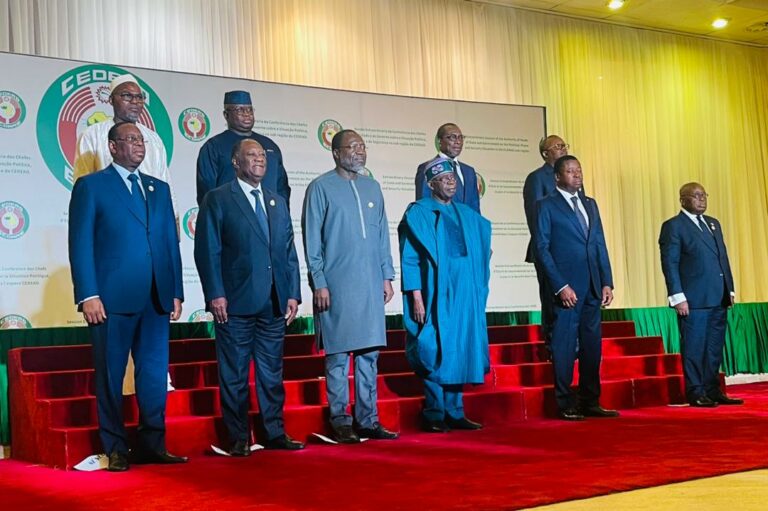
The Extraordinary Summit aimed to address majorly the exit of Burkina Faso, Guinea, Mali, and Niger from the Economic Community of West African States (ECOWAS).

Tinubu, who chairs the ECOWAS Authority of Heads of State, is appealing to the leaders of Burkina Faso, Guinea, Mali, and Niger to reconsider their exit from the regional bloc.


Read Also:


Speaking at the summit, Tinubu commended the leaders of the Nations who graced the summit, noting that their presence shows their commitment to regional integration and Peace, security, stability and socio-economic development in African countries.

“Once more, we are gathered here to address pressing developments in our sub-region surrounding the peace and security as well as the political situations in the Republics of Niger, Burkina Faso, Guinea, and Mali. We must approach these issues with a sense of unity and commitment to the well-being of our people,” Tinubu said.

“Permit me to say that the complexities of the issues at hand necessitate a comprehensive and collaborative approach. Accordingly, it is incumbent upon us to engage in constructive dialogue, exercise prudent judgement, and work collectively towards finding enduring solutions that will lead to sustainable peace and security and political stability in our region.”

He called for concerted efforts and a deep sense of history to address the issue to achieve unity and stability in West Africa.

“In the course of this Summit, therefore, we would receive a Memorandum from the ECOWAS Commission President on the peace, security and political situation in the region. The Memorandum will give us an update on the current situation in the Republics of Burkina Faso, Guinea, Mali and Niger,” he said.

He noted that the decisions at the meeting must be guided by our commitment to safeguarding the constitutional order, upholding democratic principles, and promoting the social and economic well-being of the citizens of the aforementioned countries.

“Furthermore, we will deliberate on the announced withdrawal from ECOWAS by the Republics of Burkina Faso, Mali and Niger. In the spirit of collective security and African solidarity, we realise that the stability of these nations is intricately linked to the overall peace and security of West Africa.

“As such, it is pertinent that we engage in constructive deliberations to examine the actions taken by these countries and ensure that the citizens are not denied the benefits derived from our regional integration initiatives. In our ensuing discussions, we must put the plight of people, the ordinary citizens at the centre of our decisions.”

He added that the decision by the Constitutional Council of Senegal to annul the postponement of the electoral process is a matter that also demands the attention of the ECOWAS leadership. 

“We commend our brother Macky Sall for agreeing to abide by the Court’s decision to organise election as soon as possible and to step down in line with the rule of law. We must all commend his courage and statesmanship as we wish him the very best in his future endeavours,” he said.

He called for the cooperation of the nations to promote economic integration, democracy, and human rights to achieve sustainable development across all the member states.

Tinubu urged the nations who exited to re-consider their decisions and not to perceive ECOWAS as the enemy.

The ICIR reported that Nigeria will likely face more security and economic challenges following the exit of Burkina Faso, Mali, and Niger as the country’s fight against insurgency and dwindling economy bite harder.

The three countries were sanctioned by the Economic Community of West African States (ECOWAS) for enforcing a military regime and severing diplomatic ties with France, their colonial masters.

They officially took a sovereign decision on Sunday, January 28, to pull out their nations from ECOWAS.

AfroBasket Championships: Nigeria lost 82-89 to Libya

0

NIGERIA’S senior men’s basketball team D’Tigers began its campaign with an 82-89 loss against Libya in the opening game of the 2025 FIBA AfroBasket qualifiers in Monastir, Morocco.

The highly intense match saw the D’Tigers brush off the hurried preparation before arriving at the competition ground as they displayed doggedness to stamp their authority.

The Libyans dominated the court in the first quarter, leading the D’Tigers with a nine-margin gap of 25-16.


Read Also:


However, the D’Tigers closed the gap, finishing 19-15 in the second quarter, but the result was not enough to give Nigeria the lead before the end of the half-time, which ended 35-40 in favor of Libya.

The five margins left Nigeria trailing behind Libya before the resumption of the second half, as Libya had a statistical advantage over Nigeria.

The third quarter witnessed a twist of events as Nigeria put up a fight on the court but fell behind Libya, who were resilient to maintain the lead, extending the margin with 10 points and scoring 60-50.

The fourth and final quarter saw a dramatic display as Nigeria pulled a massive comeback, outscoring the Libyans 25-15, forcing the match to overtime after it ended 75-75 in regulation time.

The overtime match allowed the Libyans to stamp their authority after winning Nigeria 14-7 to grab their first win with 89-82. 

The Individual performance statistics showed Nigeria’s Mike Nuga emerged as the standout player, scoring a game-high 31 points, eight rebounds, five assists, and one steal. 

Also, Micheal Afuwape and Divine Eke both had 16 points each. Mike Akhuiete had a game-high 12 rebounds coupled with 8 points. Divine Eke added 10 rebounds to his 16-point game.

Libya’s Mohamed Sadi was the hero for Libya, recording a triple-double of 24 points, 12 assists, 10 steals, and nine rebounds.

The victory placed Libya at the top of the group above Cape Verde, Uganda, and Nigeria.

Other results showed that Cape Verde defeated Uganda 78-73.

Nigeria, who won the title in 2015, will face Uganda in the second fixture today, February 24, 2024.

TCN announces 7-hour power interruptions in Abuja

THE Transmission Company of Nigeria (TCN) has announced a seven-hour power interruption on Saturday and Sunday in some parts of Abuja.

The TCN General Manager, Public Affairs, Ndidi Mbah, disclosed this in a statement issued on  Friday, February 23, 2024.

The company said the step is to enable its maintenance crew to carry out planned preventive maintenance on its 132/33kV 2X100MVA Power Transformers in the Apo Transmission Substation.

“The Transmission Company of Nigeria (TCN) wishes to inform the public that its maintenance crew will carry out planned preventive maintenance on its 132/33kV 2X100MVA power Transformers in Apo Transmission Substation,” Mbah said.


Read Also :


According to her, the maintenance jobs are slated for Saturday and Sunday, from 9:00 a.m. to 4:00 p.m. each day.

She said there will be power interruption through both transformers and Abuja distribution company (DisCo) will be unable to offtake power from the two transformers for distribution to its customers in Garki, Asokoro, Lugbe, Airport Rd, Gudu, Gaduwa, parts of Lokogoma, Apo, Kabusa, Guzape and Nepa Junction for seven (7) hours.

“Power supply will be restored on both days by 4 pm. TCN regrets the inconvenience this may cause to electricity consumers in the affected areas,” she added.

Recall that this is the second time the company would announce power interruptions in some parts of Abuja this month. Earlier this month, the company announced 6-hr power interruptions due to routine maintenance on its 132kV line 1 at both Gwagwalada and Apo transmission substations.

FX Crisis:CBN warns Banks, NGOs not to invest in BDCs

THE Central Bank of Nigeria (CBN) has warned banks, non-governmental organisations, and government agencies not to have a stake or invest in (Bureau De Change) Operations.

The Financial Policy and Regulation Department of the Apex Bank warned against such investment in a new set of guidelines to all BDC operators and stakeholders in the financial sectors.

The guidelines were released on Friday, February 23.


READ ALSO:


The guidelines warned that entities like banks, government agencies, and NGOs are not allowed ownership stakes in BDCs.

The apex bank said this new set of guidelines would enable it to monitor speculative activities currently confronting Nigeria’s foreign exchange market and the downward spiral of the naira.

Currently, the naira is going through its worst phase, leading to inflation and the high cost of food items in the country.

Already, the National Security Adviser, Nuhu Ribadu, had ordered the Economic and Financial Crimes Commission (EFCC), Department of State Services (DSS), and other security agencies to crack down on currency speculators in the forex market.

This resulted in raids on BDCs nationwide and the arrest of some illegal operators.

According to the guidelines, the capital required for the license of BDCs in the Tier 1 category is N2 billion, while that of Tier 2 is N500 million.

Tier 1 category of BDC are those with a national presence, branches, and franchises; while  Tier 2 is restricted to 1 state with a maximum of three locations.

The guidelines also stated that BDCs could source forex from authorised dealers, travellers, hotels, and embassies. It further noted that Large transactions above $10,000 require the declaration of the source.

“BDCs can sell forex for travel, medical bills, and school fees, up to specified limits per customer annually. At least 75per cent of sales must be via transfer, 25per cent can be cash,” it added.

It further said that BDCs can buy and sell foreign currencies, issue prepaid cards, serve as cash points for money transfer operators, etc. They cannot take deposits, grant loans, deal in gold, or engage in capital market activities.

The directive further warned that BDCs must verify customer identity, keep transaction records, connect to CBN systems, and display rates.

It further specified that regulatory returns must be rendered, records must be available for inspection, and compliance with guidelines is required.