Home Blog Page 660

AfroBasket Championships: Nigeria lost 82-89 to Libya

0

NIGERIA’S senior men’s basketball team D’Tigers began its campaign with an 82-89 loss against Libya in the opening game of the 2025 FIBA AfroBasket qualifiers in Monastir, Morocco.

The highly intense match saw the D’Tigers brush off the hurried preparation before arriving at the competition ground as they displayed doggedness to stamp their authority.

The Libyans dominated the court in the first quarter, leading the D’Tigers with a nine-margin gap of 25-16.


Read Also:


However, the D’Tigers closed the gap, finishing 19-15 in the second quarter, but the result was not enough to give Nigeria the lead before the end of the half-time, which ended 35-40 in favor of Libya.

The five margins left Nigeria trailing behind Libya before the resumption of the second half, as Libya had a statistical advantage over Nigeria.

The third quarter witnessed a twist of events as Nigeria put up a fight on the court but fell behind Libya, who were resilient to maintain the lead, extending the margin with 10 points and scoring 60-50.

The fourth and final quarter saw a dramatic display as Nigeria pulled a massive comeback, outscoring the Libyans 25-15, forcing the match to overtime after it ended 75-75 in regulation time.

The overtime match allowed the Libyans to stamp their authority after winning Nigeria 14-7 to grab their first win with 89-82. 

The Individual performance statistics showed Nigeria’s Mike Nuga emerged as the standout player, scoring a game-high 31 points, eight rebounds, five assists, and one steal. 

Also, Micheal Afuwape and Divine Eke both had 16 points each. Mike Akhuiete had a game-high 12 rebounds coupled with 8 points. Divine Eke added 10 rebounds to his 16-point game.

Libya’s Mohamed Sadi was the hero for Libya, recording a triple-double of 24 points, 12 assists, 10 steals, and nine rebounds.

The victory placed Libya at the top of the group above Cape Verde, Uganda, and Nigeria.

Other results showed that Cape Verde defeated Uganda 78-73.

Nigeria, who won the title in 2015, will face Uganda in the second fixture today, February 24, 2024.
TCN announces 7-hour power interruptions in Abuja

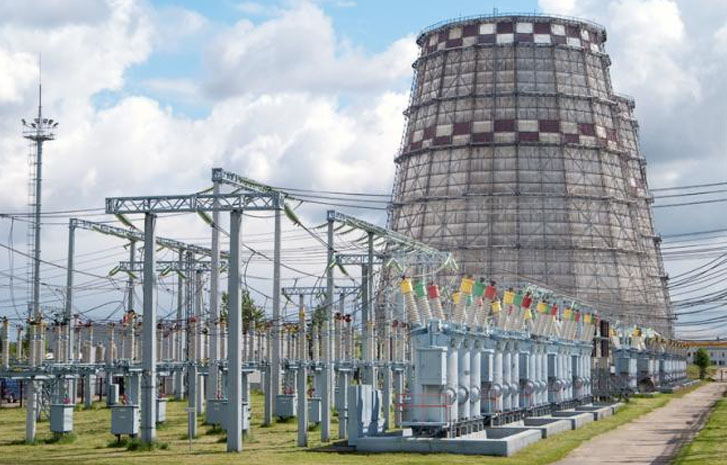
THE Transmission Company of Nigeria (TCN) has announced a seven-hour power interruption on Saturday and Sunday in some parts of Abuja.

The TCN General Manager, Public Affairs, Ndidi Mbah, disclosed this in a statement issued on  Friday, February 23, 2024.

The company said the step is to enable its maintenance crew to carry out planned preventive maintenance on its 132/33kV 2X100MVA Power Transformers in the Apo Transmission Substation.

“The Transmission Company of Nigeria (TCN) wishes to inform the public that its maintenance crew will carry out planned preventive maintenance on its 132/33kV 2X100MVA power Transformers in Apo Transmission Substation,” Mbah said.


Read Also :


According to her, the maintenance jobs are slated for Saturday and Sunday, from 9:00 a.m. to 4:00 p.m. each day.

She said there will be power interruption through both transformers and Abuja distribution company (DisCo) will be unable to offtake power from the two transformers for distribution to its customers in Garki, Asokoro, Lugbe, Airport Rd, Gudu, Gaduwa, parts of Lokogoma, Apo, Kabusa, Guzape and Nepa Junction for seven (7) hours.

“Power supply will be restored on both days by 4 pm. TCN regrets the inconvenience this may cause to electricity consumers in the affected areas,” she added.

Recall that this is the second time the company would announce power interruptions in some parts of Abuja this month. Earlier this month, the company announced 6-hr power interruptions due to routine maintenance on its 132kV line 1 at both Gwagwalada and Apo transmission substations.

FX Crisis:CBN warns Banks, NGOs not to invest in BDCs

THE Central Bank of Nigeria (CBN) has warned banks, non-governmental organisations, and government agencies not to have a stake or invest in (Bureau De Change) Operations.

The Financial Policy and Regulation Department of the Apex Bank warned against such investment in a new set of guidelines to all BDC operators and stakeholders in the financial sectors.

The guidelines were released on Friday, February 23.


READ ALSO:


The guidelines warned that entities like banks, government agencies, and NGOs are not allowed ownership stakes in BDCs.

The apex bank said this new set of guidelines would enable it to monitor speculative activities currently confronting Nigeria’s foreign exchange market and the downward spiral of the naira.

Currently, the naira is going through its worst phase, leading to inflation and the high cost of food items in the country.

Already, the National Security Adviser, Nuhu Ribadu, had ordered the Economic and Financial Crimes Commission (EFCC), Department of State Services (DSS), and other security agencies to crack down on currency speculators in the forex market.

This resulted in raids on BDCs nationwide and the arrest of some illegal operators.

According to the guidelines, the capital required for the license of BDCs in the Tier 1 category is N2 billion, while that of Tier 2 is N500 million.

Tier 1 category of BDC are those with a national presence, branches, and franchises; while  Tier 2 is restricted to 1 state with a maximum of three locations.

The guidelines also stated that BDCs could source forex from authorised dealers, travellers, hotels, and embassies. It further noted that Large transactions above $10,000 require the declaration of the source.

“BDCs can sell forex for travel, medical bills, and school fees, up to specified limits per customer annually. At least 75per cent of sales must be via transfer, 25per cent can be cash,” it added.

It further said that BDCs can buy and sell foreign currencies, issue prepaid cards, serve as cash points for money transfer operators, etc. They cannot take deposits, grant loans, deal in gold, or engage in capital market activities.

The directive further warned that BDCs must verify customer identity, keep transaction records, connect to CBN systems, and display rates.

It further specified that regulatory returns must be rendered, records must be available for inspection, and compliance with guidelines is required.


CBN reviews FX rates on import duty amid increasing commodity prices

0

THE Central Bank of Nigeria (CBN) has reviewed the formula for fixing foreign exchange (FX) rates for Customs duty on importation following public outcry at the rising commodity cost.

The apex bank  said in a memo on Friday, February 23, addressed to the Nigeria Customs Service (NCS) and all authorised dealers.

According to its Director of Trade and Exchange Department, Hassan Mahmud, the idea is to check irregular changes in the Import Duty Assessment levies applied by the NCS.

“Following the liberalisation of the FX market, the CBN has noted the concern of Importers of goods and services in the irregular changes in the Import Duty Assessment levies applied by the NCS.

“These developments have further built uncertainties around the pricing structure of goods and services in the economy,” Mahmud said.


Read Also:


He explained the situation was creating abnormal increases in the final sale prices of items, driven mainly by uncertainty rather than traditional market fundamentals, with implications for near-term inflation trends.

“To this effect, the CBN wishes to advise that the NCS and other related parties adopt the closing FX rate on the date of opening Form M for the importation of goods, as the FX rate to be used for Import Duty Assessment,” he said.

Mahmud maintained that the rate would remain valid until the date of termination of the importation and clearance of goods by importers to enable the NCS and the importers to plan appropriately and reduce the uncertainties around varying daily exchange rates in determining their revenue or cost structure.

“Therefore, effective Feb. 26, the closing rate on the date of opening of Form M for the importation of goods and services will be the rates that will apply for the assessment of import duty. This supersedes the requirements of Memorandum 9 of the CBN Foreign Exchange Manual.

“While the CBN is mindful of the initial volatility and price distortions in the aftermath of the FX market liberalisation, the apex bank is confident that these reforms would ensure stability in the market and entrench market confidence,” he added.

The ICIR had reported that Customs duty has risen six times since President Bola Tinubu came into office, as cargo is now stuck at various Nigerian ports.

The frequent increases have raised concerns among Nigeria’s business community as the duty collection has recently risen to N1,444.56 to the dollar.

The NCS had earlier adjusted the rate from N951 to N1,356 to the dollar on February 2.

In another report, The ICIR explained that the rise has negatively impacted commodity prices.

It noted, for instance, that the Association of Master Bakers and Caterers of Nigeria (AMBCN) has vowed to commence a nationwide strike from February 27 over increasing prices of baking materials, sugar, yeast, and vegetable oil.

How social media is boosting crowdfunding

0

THE emergence of social media in Nigeria has caused a shift in how people communicate and react to issues.

While social media boast of several benefits they have brought to modern societies, their merits go hand in hand with their demerits.

Recently, a Nigerian woman, Deborah Olaki, known as Debbie or Mummy Zee, became an online sensation after receiving cash presents, household appliances, food items and other stuff in response to her viral post on X.

In the post, Debbie revealed that her husband told her about a female colleague who brought two spoons to work so they could eat together. Debby was not comfortable with her husband’s confession, so she decided to cook for him each day before going to work.

To achieve this goal, the woman set her alarm for 4:50 am to enable her to wake early.

“I’ve always been too lazy to wake up and get his lunch ready. But the day he told me a colleague brought two spoons so he’ll eat with her was the day I set my alarm for 4:50am”, the post read.

Her post was greeted with criticisms and commendations, eventually leading to many who saw her decision as wise, rewarding her with monetary gifts and other valuables.

Debbie’s experience highlights the profound impact of social media on crowdfunding, even though there was no official call for crowdfunding for her; the discussion that shot her into fame originated from social media. 

Traditional media outlets, such as television, radio, newspapers and magazines, have been helping to spread crowdfunding campaigns to a diverse audience. Still, they have not been as effective as social media in reaching the larger part of the society. 

In Nigeria, many people have received help just by sharing their problems on social media. Social media users, including celebrities, influencers and those in authority, have extended a hand to help randomly to people in need.

Speaking with The ICIR on this, Ajibola Amzat, Editor at the Centre for Collaborative Investigative Journalism (CCIJ), said the traditional media had been crowdfunding for people in need on health grounds and education.

“For health situations, traditional media, for example, write a report and attach the person’s necessary details (photographs, name, phone number etc). Television and radio stations invite the person in need to the studio to talk about their problem,” he said.

He argued that with social media, crowdfunding and other forms of community services were made easier, but with risks attached.

“With the ubiquitous nature of social media, information travels fast and wide and has made it easier to get people to respond to crowdfunding. But some people often use it as a means to scam others”, he added.

Calling on the government to make more provision for public service, Amzat noted that “it is the government’s failure that leads people to crowdfund for health purposes or payment of fees. If the government is functional, education and health facilities will be accessible to people, and there will be no need for crowdfunding”.

EFCC denies shooting Kwasu students during operation

0

THE Economic and Financial Crimes Commission (EFCC) has denied allegations that its operatives shot students of the Kwara State University during a raid on the school hostels on Thursday, February 22.     

A statement by the commission on its X account noted that the commission didn’t conduct any operation on the said date, adding that there was no shooting of any student.

The ICIR reported on Friday, February 23, that some security operatives alleged to be operatives of the National Drug Law Enforcement Agency, NDLEA, and the Nigerian police force fired shots and teargas to disperse students protesting against the continuous raid of their hostels. 

The recent raid, which led to the arrest of 48 students, as confirmed by the EFCC, was carried out in the early hours of Tuesday, February 20, against a standing order by the EFCC chairman, Ola Olukoyede.

Subsequently, in response to another attempt by the security personnel to arrest some students from the university, the students engaged in a mass protest. They set fire to tyres on roads leading to the institution.

Refuting the reports and social media posts indicating that the EFCC participated in the shooting of the students while protesting, the commission noted that it had no joint operation with the NDLEA at the university.


READ ALSO:


The statement partly read, “The said report was fabricated as the operatives of the Ilorin Zonal Command of the EFCC neither visited Kwara State University on Thursday,  February 22, 2024, nor had any joint operation with the National Drug Law Enforcement Agency (NDLEA).

“The only operation by the commission happened a day earlier and involved the arrest of 48 students of Kwara State University. It was a well-coordinated and professional exercise devoid of any incident. And no other agency was involved in the operation.

“The public is enjoined to be wary of fabricated stories designed to mislead the public about the works of the EFCC or incite the people against the commission. EFCC remains focused, un-fazed by blackmail, and totally committed to its mandate of tackling all forms of economic and financial crimes in Nigeria.”

Kaduna Electric obeys NERC, to refund overbilled customers

0

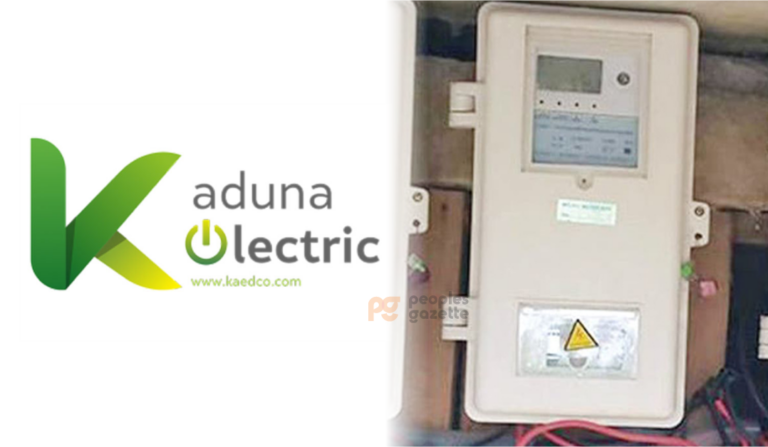
KADUNA Electric has assured customers it overbilled through estimated billing of refunds following the Nigerian Electricity Regulatory Commission’s (NERC) directive.

The NERC had sanctioned and directed distribution companies that overbilled customers to credit such customers, citing a violation of its capping order on estimated billing.

In a statement, the head of corporate communication at Kaduna Electric, Abdulazeez Abdullahi, confirmed the company’s readiness to comply with NERC’s directive on Friday, February 23.

“The NERC directive mandates distribution companies, including Kaduna Electric, to refund customers who were overcharged,” he said.

“The sanction from NERC stemmed from the non-compliance of Kaduna Electric and other distribution companies with the capping order, which limits the billing of unmetered customers to a specific threshold,” he added.

He stressed that the move aimed to align estimated bills for unmetered customers with the actual consumption of metered customers on the same supply feeder.

Abdulazeez also emphasised that customers benefiting from the refund must settle outstanding debts to avoid disconnection.

According to the NERC capping order, all unmetered-residential (R2) and customer one (C1) shall not be invoiced for energy consumption beyond the price capped in schedule one of the order.

The order also noted that all residential customers who consume no more than 50 kilowatts -kWh (R1 customers) per month should be billed NGN4 kilowatts-kWh at a maximum of NGN200 per month.

The order also directed that any customer whose current estimated bill is below the capped price shall remain so without upward review until the installation of a meter, and the Disco must disconnect any customer who rejects the installation of a meter.


Court grants ex-Kwara governor Ahmed bail on 8 conditions

0

A FEDERAL High Court sitting in Ilorin, Kwara State, has granted a former governor of the state, Abdulfatah Ahmed, bail on eight conditions.

Ahmed was detained by the Economic and Financial Crimes Commission (EFCC) for alleged fraudulent activities during his time as Kwara State governor, with the funds involved in the corruption running into billions of naira.

In addition, the anti-graft agency accused him of renting private aircraft with the state government’s operating expenses and security fund totalling N1.6 billion (N1,610,730,500.00.)


Read Also:

The judge, Evelyn Anyadike, gave him eight bail conditions before he could be released from the EFCC custody.

Among others, the bail conditions require that he provide ₦50 million, two sureties with landed properties in Ilorin, the Kwara state capital, submit his international passport to the court and seek permission anytime he wants to travel outside the country.

The EFCC’s lawyer, Rotimi Jacobs, a senior advocate, said Ahmed’s lawyer, Kehinde Eleja, also a senior advocate, verbally requested the defendant’s bail application, and the court granted the bail on stringent conditions.

Ahmed also said the former governor’s prosecution was at the court’s discretion and lamented his client’s ‘poor’ treatment.

 The judge adjourned the case to April 29 and 30 for continued hearing.

A reliable source at the EFCC headquarters in Abuja confirmed to The ICIR on Wednesday that Ahmed was at the Ilorin office of the commission over alleged financial misconduct during his tenure as governor.

“Yes, the former governor is at our Ilorin office; he is undergoing rigorous investigation, and he has been there since Monday,” the source told The ICIR on condition of anonymity.

Meanwhile, protests erupted at the Zonal office of the EFCC on Wednesday, February 21, over Ahmed’s continued detention.

The protests dissipated after a representative of the anti-corruption agency addressed the demonstrators.

The ICIR reported in September 2022 that Ahmed denied the alleged infractions. He described a forensic audit report indicting his administration of financial misappropriation as “preposterous and unfounded.”

The ICIR reported that the audit report commissioned by the Kwara State government disclosed that about N11.9 billion was stolen from the state’s treasury between 2011 and 2016 under Ahmed’s watch.

Reacting to the report, the former governor explained that every expenditure during the period under review was properly appropriated and followed due process.

He said since he left office, various auditing agencies had properly audited and certified the state accounts.

The former governor also challenged his successor to account for how the state government spent about N.3 trillion accruing to it since he took over office without commensurate infrastructural development in the state.

Ahmed served as Kwara State’s governor from 2011 until 2019. 

He succeeded Bukola Saraki as the governor of the North-Central state.

The ICIR, in a report on Sunday, February 18, listed ten prominent Nigerians currently having cases with the EFCC.

While some cases are in court, others are still being investigated.

You can read about some of the pending cases here.

Nigerian government lost over N37bn to 8 MDAs, Lagos Customs responsible for 90%

0

THE Nigerian government lost over N37 billion to the Nigeria Customs Service (NCS) and seven other ministries, departments and agencies (MDAs) in 2020, as shown by the Auditor-General’s Report for the year.

The MDAs, in addition to the NCS, include the Federal Capital Territory (FCT) Internal Revenue Service, Niger Delta Basin Development Authority, Port Harcourt, and Micheal Okpara University of Agriculture, Umudike.

Others listed include the Securities and Exchange Commission Abuja, Federal Ministry of Industry Trade and Investment and  Financial Reporting Council of Nigeria.


Read also:


According to the report, government revenue amounting to N37.1 billion was not accounted for by these MDAs in 2020, despite existing laws mandating them to do so.

“Paragraph 2 of the Treasury Circular Ref No. TRY/A1 & B1/2015 OAGF/CAD/026/V.1/253 dated 19th March 2015 states, ‘with effect from 1st April 2015, all payments due to the Federal Government or any of her agencies are to be paid into the consolidated revenue fund (CRF) or designated accounts in the Central Bank of Nigeria (CBN) through deposit money banks (DMBs) or electronic channels using the CBN payment gateway. This is in line with the operations of the treasury single accounts (TSA) and the e-payment policies of the Federal Government.

“Also, paragraph 213(ii) of the Financial Regulations (FR) 2009 states, ‘On no account shall any withdrawal be made from the revenue account other than for the purpose of transfer to the consolidated account.'” the report noted.

Lagos NCS responsible for nearly 90% of unaccounted revenue

The Lagos State Command of the NCS is responsible for nearly 90 per cent of the N37 billion not accounted for by the institutions, as the agency could not explain how it expended government revenue worth N32.3 billion.

“Nigeria Customs Service, Tincan Island Command, Lagos has the highest amount of N32,356,205,228.00,” the report stated.

The Niger Delta Basin Development Authority, Port-Harcourt, had the least sum, with N26.7 million not accounted for.

Non-remittance of IGR worth N3.6bn

Similarly, 11 MDAs did not remit N3.6 billion of their internally generated revenue (IGR) in 2020, according to the audit report.

According to the audit, the Federal Ministry of Industry, Trade and Investment, Abuja, owes half of this sum, as it did not remit N1.14 billion during the year under review.

Reactions trail Sunday Igboho’s return to Nigeria after 30 months

0

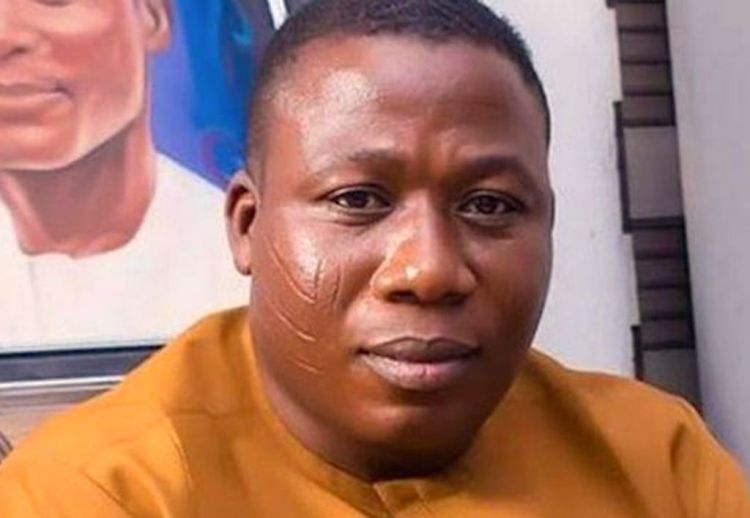
THE return of Yoruba nation agitator Sunday Adeyemo, also known as Sunday Igboho, to Nigeria has generated reactions among citizens.

Igboho returned to Nigeria to attend his mother’s funeral ceremony, according to a post by his spokesman, Olayomi Koiki, on ‘X’, on Thursday, February 22.

The agitator returned barely five months after the Beninese government freed him.

After his release, Igboho left Benin for Germany to reunite with his family, according to the leader of the umbrella body of Yoruba self-determination groups, Ilana Omo Oodua (IOO), Banji Akintoye.

The ICIR reported that Igboho ran into trouble in March 2021 when he declared the Yoruba nation’s sovereignty, sparking criticisms from Nigerians. 


Read also:


He alleged that much of Nigeria’s wealth was in the hands of northerners, stressing that Yorubas were being killed and their land taken over by herders.

He also launched a campaign to drive killer herders and kidnappers out of the South-West states.

However, he left Nigeria in July 2021 after operatives of the State Security Service (SSS) broke into his home in Ibadan at night.

At least one person died from the attack. The SSS arrested some of his aides and damaged some of his belongings. 

During the raid, the SSS said it found seven AK-47 rifles, pump-action guns, 5,000 rounds of ammunition, charms and other weapons in Igboho’s home.

The self-acclaimed agitator later attempted to flee Nigeria to Germany but was blocked and arrested at the Cardinal Bernardin International Airport in Cotonou, Benin Republic.

The International Criminal Police Organisation detained him on Monday, July 19, 2021.

After many appeals to the Beninoise government from stakeholders in Nigeria, he regained his freedom on October 8, 2023.

With the Yoruba nation agitator returning home, several Nigerians have welcomed him, while some questioned the government on his freedom.

The ICIR observed in viral videos how some residents of Igboho in Oyo State celebrated and escorted the agitator to his mother’s burial.

Some Nigerians also stressed that the Federal Government should free Nnamdi Kanu if Sunday Igboho could be released.

Kanu leads the campaign for Biafra – an independent nation for Nigeria’s South-East region.