THE Nigerian Army is seeking the intervention of the Federal Ministry of Power over the N42 billion debts owed by the barracks and cantonments, which resulted in power cuts and subsequent decomposition of corpses at the Army mortuaries.
The Army said the decomposition of the corpses had led to their relations protesting.
The Chief of Army Staff (CAS), Taoreed Abiodun Lagbaja, a general, disclosed this Thursday while making an appeal visit to the Minister of Power, Adebayo Adelabu.
He sought the minister’s intervention for the clearance of the backlog of electricity bills of over N42 billion and described the prevailing situation in the barracks as “security threats.”
According to him, “Debt owed is loaded on the metre, so no matter the amount of credit we put, the meters pick it automatically. Corpses in the Army mortuaries are decomposing, and the owners of the corpses are protesting”.
He further stated that the Army could not raise funds to pay the entire debt and solicited for liquidation as was done in 2005 by former President Olusegun Obasanjo.
He assured the Minister of the Army’s unflinching support towards developing intelligence strategies to curb electricity infrastructure vandalism.
The ICIRreported that the Abuja Electricity Distribution Company Plc (AEDC) threatened to disconnect power supplies to government ministries, departments, and agencies (MDAs), including the Presidential Villa, indebted to it unless the affected MDAs liquidate their debts.
President Bola Tinubu hastened and ordered the payment of N342 million out of the disputed bill of N923 million, according to AEDC records.
Lagbaja regretted that some barracks and cantonments had been in total blackout since January.
However, the Minister of Power informed CAS that the debts could not be wiped off but could only be restructured for payment monthly.
Adelabu further revealed that debt owed by distribution (DisCos) and generating companies (GENCOs) was not the only challenge of the power sector.
He stressed that the vandalisation of power infrastructure, which often led to national grid collapse, was a major concern.
He said theft, inefficiency in the billing and collection process, poor metering gap, liquidity, shortage in gas supply, and transmission stations being blown up were all issues experienced in the power sector.
“The fundamental issues in the power sector value chain could be traced back to the last 50 years, and a government that is barely eight months old cannot use a magic wand to proffer a solution. There is a saying that you won’t know what is happening in Rome until you get to Rome “, he said.
The Minister, who acknowledged that power outages were not peculiar to Army barracks but a national issue, said the DISCOs and GENCOs were profit-oriented organisations. “We can only plead with them to adopt a repayment plan every month instead of embedding the whole debt in their meter.”
While encouraging the Army to continue to assist the ministry in safeguarding power infrastructures across the nation, the minister pledged to seek collaboration with the Army through any of the development partners for the installation of Solar PVs and Battery Energy Storage Systems (BESS) as an alternative power supply in Army barracks and cantonments.
FEDERAL Medical Centre, Bida, Niger state, have been accused of making multiple unapproved payments running into hundreds of millions on the funds it expended in 2020, as revealed in the hospital’s audit by the Office of the Auditor-General of the Federation (OAuGF) for the year.
The audit report released by the (OAuGF) in December 2023 and made public recently showed that the medical facility was enmeshed in 26 corruption scandals amounting to the sum.
Gross misconduct by the hospital includes irregular awards and payments of contracts and non-remittance of tax payments to relevant tax authorities, amongst others.
Although the audit report did not state the medical director’s name, findings show that Muhammad Aminu-Usman was in charge of the facility during the period captured by the report.
Constant breach of the procurement act
Findings by the OAuGF showed repeated violations of the procurement act by the medical facility.
Section 24(1) of the 2007 Public Procurement Act (PA) states that except as provided by the Act, all procurements of goods and works by all procuring entities shall be conducted by open competitive bidding, the facility failed to provide evidence to show that the procurement was a result of open competitive bidding.
Paragraph 2397 of the Financial Regulations 2009 states that a certificate of no objection to award direct contract should be obtained from the Bureau of Public Procurement before direct procurement can be made.
The report highlighted that a sum of N245.4 million was paid for the supply of equipment and consumables for molecular laboratories using direct procurement without providing relevant supporting documents required by extant regulations for the audit.
Also, citing section 20 of the Public Procurement act 2007 which states that the accounting officer of every procuring entity shall have overall responsibility of planning, organisation of tenders, evaluation of tenders and execution of all procurements and in particular shall be responsible for ensuring that no reduction of values or splitting of procurements is carried out such as to evade the use of the appropriate procurement method.
The report stated that the centre awarded N210.7 million to various contractors in bits in order to circumvent procurement procedures and the approval of the medical director for the supply of surgery medical equipment, obstetrics and gyneacology medical equipment, hematology medical equipment, ENI, dental and general equipment, mama its amongst others.
In response, the facility stated that the contracts accumulated to the mentioned sum but not with the intention of circumventing approval threshold.
Furthermore, N70 million was paid to contractors for fumigation of Gawu Babangida and the main hospital but relevant documents were not provided for scrutiny such as certificate of no objection, fumigation certificates, technical and financial bid evaluation reports amongst others.
The audit report also identified that the sum of N98.2 million was awarded to ineligible contractors for various supplies and services to the centre without complying to with the conditions stated in the BPP’s ‘No objection certificate’ and relevant documents such as bidding documents, PENCOM compliance certificate, ITF certificate NSITF certificate were not provided for audit.
In response, the management stated that the companies were pre-qualified by the bureau of public procurement, with the ‘No objection certificate’ attached issued in their favour.
Other corruptions linked to the medical centre include;
Unapproved virement of capital expenditure vote worth N262.9 million.
Unapproved payment of N71.6 million (possible diversion of public funds)
Unapproved virement of personnel cost of N155.5 million.
Unsubstantiated contracts payment of N77.4 million (possibility of payments for jobs not executed and loss of government funds)
Unapproved payments of non regular allowances worth N69.5 million
Irregular award and payments to contractors worth N129.6 million
Non remittance PAYE of N25 million to relevant tax authorities (possible loss of government revenue and diversion of public funds.
Non deduction and remittance of PAYE of N19.1 million to relevant tax authorities.
Payment of personnel costs of N28.2 million without pre-payment audit
Unsubstantiated award of contract of N15 million (award of contracts to incompetent contractors, payments for jobs not executed and loss of government funds)
Unapproved payments of non-regular allowances worth N13.1 million to board members (possible misapplication of funds)
Payments of N181.7 million for contracts without supporting documents (payments for work not done and services rendered and possible diversion of public funds)
Unsubstantiated award of contract and payments of sum N49.9 million for the contraction of drainage and sewage system.
Overpayment of N42.2 million to contractors (inability of government to fund its budget and loss of revenue to government.
Non-remittance of 25 per cent amounting to the sum of N5.8 million IGR to the government (difficulty in funding budget)
Non-remittance of N10.3 million independent revenue to the federation treasury.
Irregular borrowing of N12.2 million from hospital service revolving fund
No records for store items worth N28.9 million taken on charge (payments for items not supplied)
Mobilisation payment above 15 per cent worth N61.3 million to contractors.
THE International Basketball Federation (FIBA) has adjusted its fixtures due to the late arrival of the Nigerian senior male national basketball team D’Tigers for the 2025 Afrobasket championship starting today, Friday, February 23, in Tunisia.
The ICIRreported that the D’Tigers had lost hope of featuring owing to being financially incapacitated two days before the commencement of the championship, eliciting public sympathy.
The torrents of public sympathy poured out to the team from the basketball enthusiasts awoke the sports ministry to wade in and provide funds for the team to feature at the championship.
The ICIR learnt the D’Tigers landed in Tunisia late Thursday and will train within a short time before beginning its quest for a ticket to the 2025 Afrobasket championship.
The initial time for the first match between Nigeria and Libya in group B was 2 p.m. but because of the D’Tigers late arrival, it was shifted to 6pm.
Meanwhile, ahead of the match, the head coach of D’Tigers, Abdulrahman Mohammed, has released a 12-man list, a mix of new players and some others who participated in the unsuccessful pre-Olympic qualifiers in Lagos State last year.
Michael Okiki, Johnson Anaiye, Victor Eze, Kanyinsola Odufuwa, and Mije Nuga take the lead in the roster.
Others are, Mojeed Ewuosho, Ibe Agu, Devine Eke, Bright Akhuetie, Abuchi Onyebuchi, Emmanuel Omogbo and Otibo Israel.
All eyes would be on the Nigerian lads to defeat their opponents and replicate the feats of their female counterparts, D’Tigress, who defied all odds to nick a ticket to the 2024 Paris Olympic Games.
The Nigerians would next face Uganda and Cape Verde in the subsequent qualifier matches.
THE Ministry of Industry, Trade and Investment under its former minister Niyi Adebayo failed to account for the balance of over N200 million COVID-19 funds allocated to it in the 2020 financial year.
This was disclosed by the 2020 Audit report published by the Office of the Auditor-General of the Federation (OAuGF) and released to the public recently.
Adebayo headed the ministry from 2015 to 2023 under the former President Muhammadu Buhari’s administration.
According to the audit report, N430,000,000 was released to the ministry as COVID-19 funds for the 2020 financial year.
The report noted that the ministry spent N146,740,145 from the fund, and the ministry could not account for the difference amounting to N283,259,855 being unspent.
The anomaly, the report said, could be attributed to the weakness in the ministry’s internal control system.
Exposing the infraction, the report noted that if allowed by the government, the practice would continue to result in the loss of government funds and the diversion of public funds.
The audit noted that there was no official response from the ministry or the minister on the issue.
The report recommended that the ministry’s permanent secretary be recommended to account to the Public Accounts Committee of the National Assembly the sum of N283,259,855 being the unspent balance of the COVID-19 intervention fund to the ministry.
It further recommended that the ministry remit the fund to the public treasury and forward evidence of remittance to the Public Accounts Committees of the National Assembly.
The report warned that there would be sanctions on the ministry for failing to manage public funds effectively, adding that the gross misconduct penalties prescribed in paragraphs 31150 and 31290 of the Financial Regulations 2009, respectively, should apply.
Paragraph 111(ii) of the Financial Regulations (FR) 2009 states that “The accounting officer shall be responsible for safeguarding public funds and the regularity and propriety of expenditure under his control.”
Furthermore, paragraph 112 (i) of the Financial Regulations states that the functions of the accounting officer shall include ensuring accurate collection and accounting for all public monies received and collected.
In 2020, Some food warehouses in Nigeria were vandalised as looters targeted government warehouses stocked with COVID-19 relief supplies which were meant for the poor, but were not distributed in some states.
Nigeria also recorded cases of acute hunger as a result of the COVID-19 pandemic despite various allocations to states by the Federal Government and support from local and international organisations.
FOR the past 15 years, residents of Tassa village in Dawakin Kudu Local Government Area, LGA and Mazan Gudu community in Gabasawa LGA, have been battling with sand mining activities in the community as it causes huge losses in their farming activities, environmental degradation, drug addiction and is also affecting their children’s education.
From 2022 to 2024, about 500 pupils have dropped out of school due to activities of sand miners in Mazan Gudu and Tassa.
Students absent themselves from school to work and earn some money at the sand mines. While the boys engage in manual work, including digging and diving into a deep river to fetch sand into tipper trucks or grinding machine sites, the girls hawk and sell food at the mining site.
In this investigation Lukman Abdulmalik reports on how students are abandoning school due to the earnings they make from the mining and loading of sand into tippers.
Tassa Community
Tassa village is a small community in Dawakin Kudu LGA with about 3,000 people, including over 1,200 school-aged children. The community is rich in mineral resources, one of which is sand, which is illegally exploited by corporations, individuals, and certain government entities.
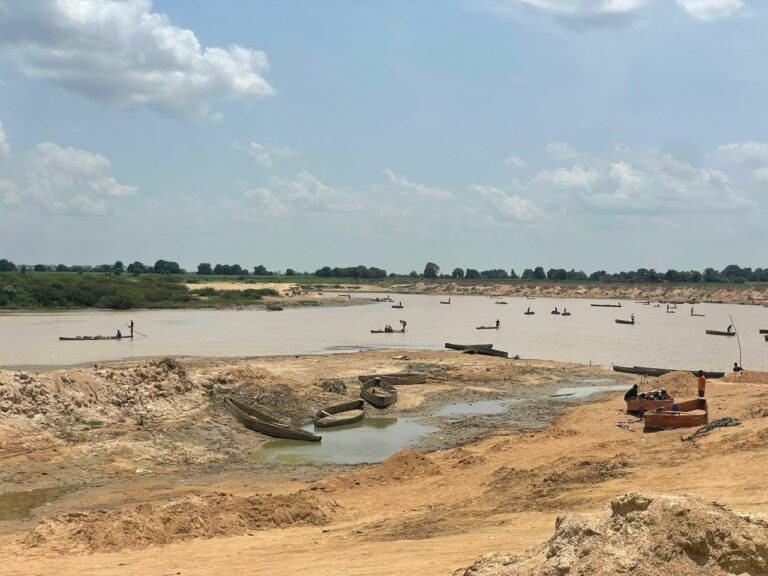
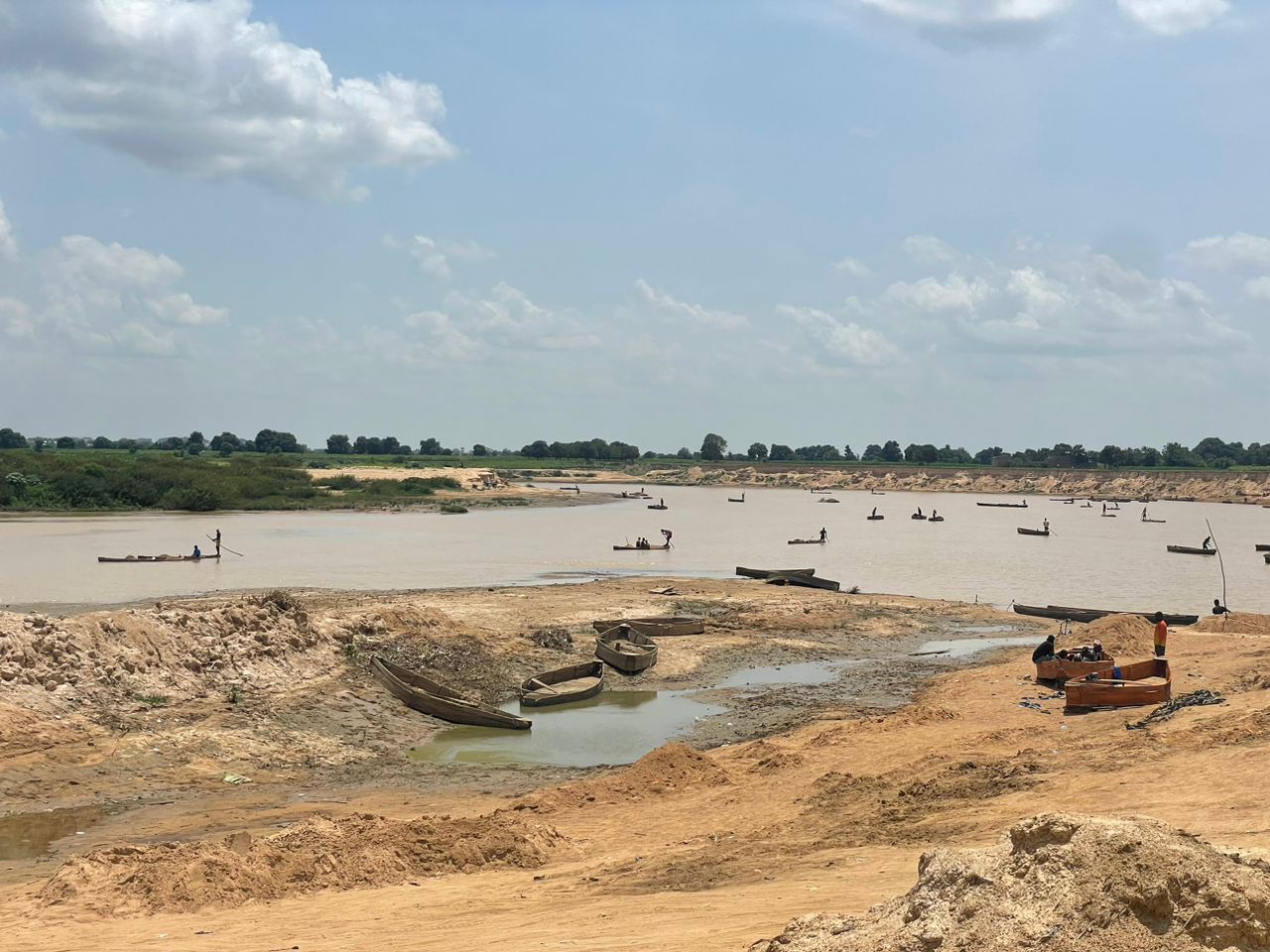
From the settlement to the sand mining site, it is about three kilometres but the impact of exploration activities are real.
It was around 8.00 am on the morning of January 15, when pupils were all expected to be in the classroom for daily school activities.
But the case was different in Tassa village as less than 200 pupils were seen studying in the school.
Abdullahi Hamza, 14, who left Pagi Nomadic Primary School in Primary 1 was spotted by this reporter as he held his shovel on his shoulder to join a group of sand miners heading to the Tumburawa River in Tassa to load sand taken from the river onto waiting tipper trucks.
Hamza, who is happy doing the sand mining business, said he willingly dropped out of school to earn money and also provide for his parents.
“I earn between N3,000 and N6,000 or more per day,” he said.
Abdullahi Hamza, carrying his shovel on his shoulder. PC: Lukman Abdulmalik
“I got influenced by my friends who were also labourers at the mining site, most of the time my friends spend lavishly and also make mockery of me. The stigma got me influenced to drop out of school and load sand on tippers.
“Every day I used to leave home around 4.00 a.m. and return by 7.00 p.m. from the sand mining site so that I could excavate as much sand as possible to make money.”
Hamza, who has been a laborer at the sand mining site for nine years, told this reporter that he “prefers going to the sand mining site to earn a living than going to school” reason being because “our parents cannot provide for us and also the school cannot provide what I earn daily at the mining site.”
In an interview with Abdullahi’s father,Hamza Abdu, 45, expressed his sadness that the sand mining has caused drawbacks in his children’s education.
“I registered my son Abdullahi in Pagi Nomadic Primary School for him to learn and acquire knowledge. My son didn’t spend a year in the school; he dropped out and joined his friends at the mining site,” he lamented.
Hamza Abdu. PC: Lukman Abdulmalik
“I feel so bad whenever I see my children going down to the sand mining site. I have done all my best for them to be back to school but they have refused.”
Musa Habib, a teacher in Dantube Primary School, one among the schools in Tassa Community of Dawkin Kudu LGA, said not less than 200 pupils have stopped attending school because of the sand mining activity.
I left College to start sand mining – Yau
Aminu Yau, 22, is a young boy who had a dream of becoming a pilot after his educational career.
He attended Abdullahi Bayero Nursery and Primary School in Tumburawa town of Dawakin Kudu LGA from 2004 to 2009. He furthered his education to secondary school at Dawakin Kudu Government Secondary School from 2010 to 2016.
Then, he got admitted to Federal College of Education Kano, FCE, in 2018. Sadly, this was when his dreams of one day flying airplanes died.
With a shovel in his hand, he narrated his sad story.
“I left FCE after my NCE 1 in 2019. Whenever I return home from school, I usually see my friends spending money and buying whatever they need. Most of the time they make fun of me that ‘nowhere this education will make you better learn how to hustle’, whenever I think of such a statement it hurts me a lot.
“During my NCE 1 holidays I decided to follow them down to River Bank to load sand on waiting tippers.
Aminu Yau, with his shovel. PC: Lukman Abdulmalik
“I joined them to work from 4.00 am to 8.00 p.m which I made N6,000 as a first timer. Sometimes, I make up to N10,000 in a day. I became so happy and I started following them to the extent I forgot that school had resumed.”
He said that his father wants him to go back to school but does not see how that can happen now.
“My father has quarrelled with me countless times to resume school but I refused, because I do make about N200,000 in a month, which is enough for my upkeep.”
In an interview with Abubakar Saleh, one among the leaders of Tassa sand miners, he said more than 3,500 labourers work at this site.
“I have been working here for like 20 years. This mining site has become a source of income for both residents and outsiders from other parts of the country.
“Every day, more than 500 trucks come here to load sand, which they sell to contractors and other builders. We have no age restrictions, any child who wants to work and earn money we give them the room.”
Our children have abandoned both Islamic and western education – Tsoho
Abdulwahab Tsoho Adamu, 55, an elder and leader of Tassa Farmers and Tassa Community Development Association lamented that all their children have abandoned both Islamic and Western education.
“Our children have become a threat to us, illiteracy is growing in our society, as children between the ages of 8 and above have decided to join activities of sand mining rather than seeking education.
“Most of them have turned to drug addicts, because they need extra energy to work and earn more money.
“For the past 20 years before the commencement of the sand mining activity, our children usually attend schools, some of them even travel out of the state for study.
“We have counselled our children on the negative effects of the sand mining work and lack of education, but they have refused to listen.
Abdulwahab Tsoho Adamu. PC: Lukman Abdulmalik
“In this Tassa community there are several cases of children beating their parents as a result of the parent’s disinterest.
“Recently a tertiary scholarship opportunity reached out to me to get students who are through with their secondary school.
“Surprisingly, I went round the community, and I couldn’t find a single child who had finished secondary school, it is so disheartening.”
Adamu contends that as long as this mining continues the children who are currently in nursery school “will surely drop out from school and join their brothers.”
He added that “we have done all our efforts to stop this sand mining, but the activities are covered by our community leaders and some state political actors.”
He disclosed that about 100 community members signed a petition on October 7, 2020 to the Kano State Public Complaint and Anti-Corruption Commission, the Kano State Ministry of Environment, the Ministry of Agriculture, and the River Basin Development Authority to stop the sand mining which is affecting their livelihood.
But all their efforts were in vain as the mining is still in progress affecting their livelihood.
Adamu revealed that the village head, Sani Umar, is part of the individuals in the community who are promoting the continuation of the sand mining activity as he usually receives a token of about N20,000 from the miners.
Our reporter called Umar to confirm him with the allegation of working with the mining companied to the detriment of his people on January. However, as he picked up the call and heard the reporter’s voice asking introducing himself, Umar hung up the calls and blocked the number.
Lack of education contributes to underdevelopment – CSACEFA
Dr. Auwal Halilu, Chairman of Civil Society Action Coalition on Education For All, CSACEFA stated that according to the United Nations Children’s Fund (UNICEF), Kano State has the highest number of out-of-school children in the Nigeria, which stands at 989,234 and contributed to the country’s indices as the highest globally.
UNESCO estimates that there are over 250 million children between 6 and 18 who are out of school around the world, with Sub Saharan Africa (98 million) having the highest figures.
Of Africa’s out of school children population, over 20 million come from Nigeria – 10.2 at primary level and 8.9 at Junior Secondary School (JSS) level.
Halilu explained that lack of education among children will lead to lack of representation which causes underdevelopment of skills necessary to represent oneself.
“Many individuals must resort to incredibly dangerous jobs just to make a living if they have limited education. Specifically, women and girls in developing countries often resort to various methods of exploitation to provide for themselves and their families.”
Girls molested at mining site
The problem with the mining sites concerns not only the boys but also girls, some as young as 10 years old. Young girls in the Tassa community also no longer go to school but hawk edible food at the sand mining site.
About 100 young girls hawk at the mining site, and it is alleged that some of them have been raped.
One of the miners, Ismail Sulaiman (not real name), disclosed that young girls are also engaged in prostitution activities around the mining site.
“Most of the young girls here are at the age of 12 to 25 who are not attending school but hawking and being raped. In most cases the male miners lobby the girls with money or buy their entire food items, while some are being forced without consent.”
Tassa Sand Mining Site.
Kubra Yarmama, 16, who is also a victim of rape at Tassa sand mining site narrated that she has been hawking rice and beans to the sand mining site for over five years.
In her words she said “I started hawking at the age of 11, immediately I dropped out from primary 4, Dantube Primary School.
“I was influenced by my friends who told me the sand mining site is a money making place, especially for young girls, so I started following them hawking rice and beans which was being prepared by my mother.
She recounted her harrowing rape experience to the reporter.
“On August 17, 2022 one of the sand miners known as Dankwabo bought my food worth N6,000. From then he started following me and seeking consent which I refused. Unknown to me Dankwabo followed me and raped me around 8.00 pm when I was on my way home.”
Currently Yarmama is still hawking rice and beans at the sand mining site and many girls who dropped out of schools to make money have terrible stories to tell.
Salamatu Hafizu, 17, said that she makes between 10,000 to 25,000 daily at the sand mining site.
She narrated that, “I started hawking and selling boiled sweet potatoes in 2019 to the sand miners.
“One of my loyal customers, Umar Baballe, usually gives me money for free or sometimes buys my food items and asks me to keep the change.
“As time went on, in 2021, Baballe started seeking to have carnal knowledge with me and I rejected because I have never done it and also afraid of my parents.
“He invited me to his tent after I had sold my food in the evening around 6 p.m, I went to his tent where he started seducing me and I couldn’t resist.
“Suddenly, he had carnal knowledge with me, two days after he gave me some drugs to swallow.”
However, both Baballe and Dankwabo are no longer working at the mining site.
On January 25 2024, a call was made by this reporter to Baballe but after narrating the allegations to him on Salamatu Hafizu’s case, he hung up the call and blocked the reporter’s contact.
Moments later, another phone number was used to contact Baballe but his number did not connect after many attempts, indicating that he had switched of his phone or abandoned his mobile number.
The next day, a text message was sent to Baballe but he failed to respond at the time of filing this report.
Text message sent to Baballe
In an interview with Zakirullahi Nura, one of the chairmen who takes care of the tippers at the mining site, he said that “both young and adult male and female come to this site to hustle.”
“Some sell food items while others, most especially the male load sand on waiting tippers.
“Majority of them are school dropouts, and the reason why we don’t disallow them coming here is because they also need money to support their family and we also need them to survive the work.”
While questioning Nura on the girls molestation on the site, he denied saying “we have never recorded any case rape or molestation here.”
The Centre for Information Technology and Development (CITAD) reported that it recorded 171 (Gender Based Violence (GBV) cases from November, 2022, to February, 2023, via its platform in the state.
Section 31 of the Child’s Rights Act (2003) provides as follows: 31. (1) No person shall have sexual intercourse with a child. (2) A person who contravenes the provision of Subsection (1) of this section commits an offence of rape and is liable on conviction to imprisonment for life.
Sandmining a silent global challenge affecting children
Sand mining is a silent global environmental problem that is largely ungoverned. Annually, 50 billion tonnes of sand is mined across the world, making it the most extracted material in volume and the second most used resource after water, according to the United Nations Environment Programme (UNEP).
While the scale at which sand is being mined in Nigeria is largely undocumented, increasing population and urbanisation are driving the demands for construction sand that the Tumburawa river possesses.
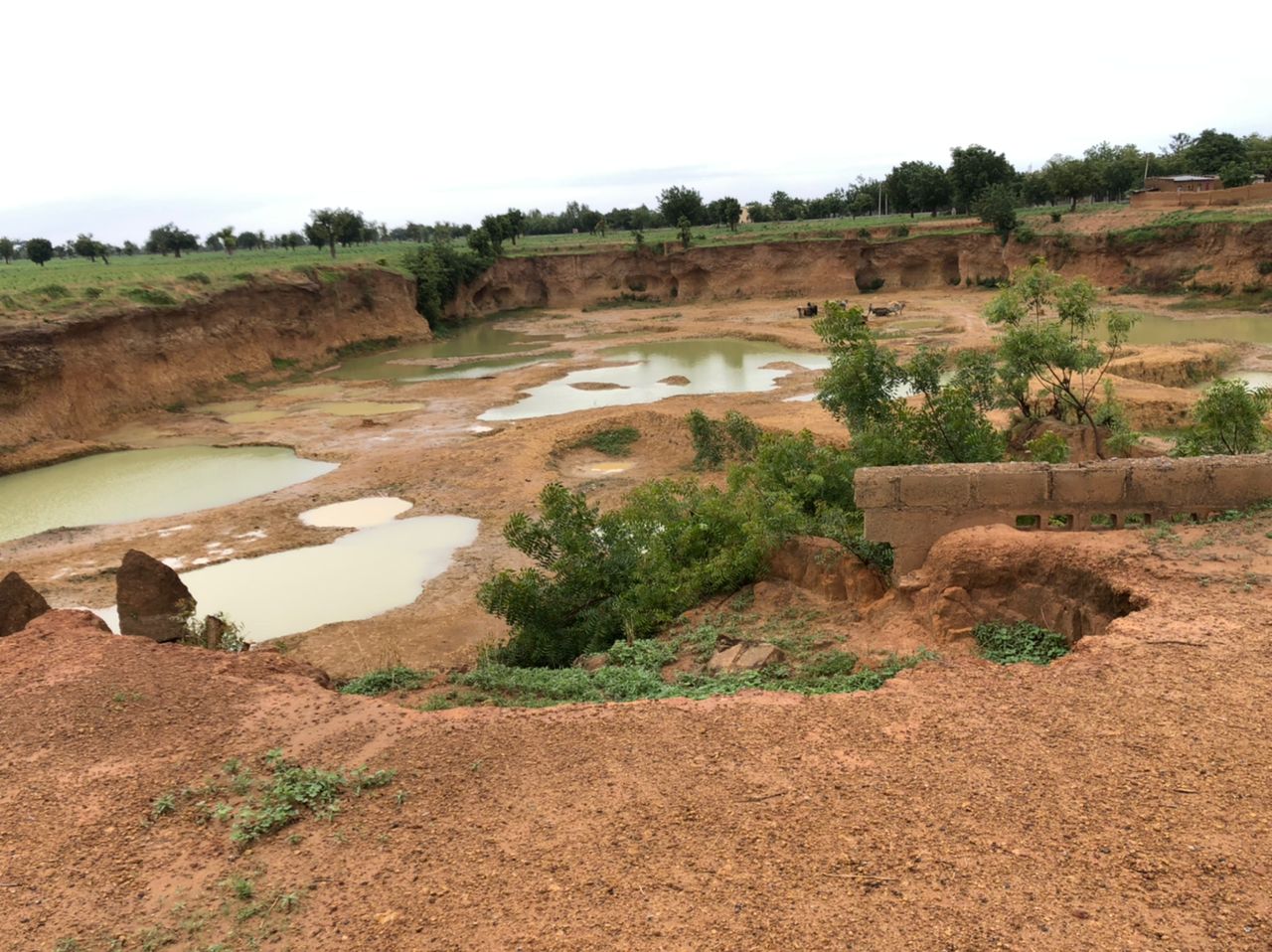
Without regulations, the extraction is wreaking havoc; escalating the risk of erosion, undermining protection against storm surges and impacting biodiversity. It has also affected education, water supply, food production and fisheries, all of which pose a threat to the livelihood of people in the affected areas and beyond.
The LO added that children in mining have become a focus of attention as its links to many of the worst forms of child labour on the African continent.
The ILO estimates that nearly 1 million children under the age of 5 to 17 work in the mines and quarries in Nigeria in 2005.
However in 2021 report by the ILO revealed that the number has significantly increased to 15 million children engaging in child labour in the country.
“Children are mining for several reasons: family disintegration through poverty or traditional expectations of children as income earners; negligence and premature independence from parental control.
“Local communities at the fringes of mines have suffered and continue to suffer various degrees of adverse impact of mining operations. Some communities have suffered militaristic attacks, others have had their water sources polluted, their land destroyed, and many of them continue to suffer low and inadequate compensation packages.
“Concerns have also been expressed about inadequate housing, youth unemployment, family disorganisation, school dropouts, prostitution and drug abuse associated with the mining boom. In most cases these impacts affect people of different age groups and gender differently.
“Due to the sub-sectors’ remoteness, informal character and mobility, the number of children involved in mining and quarrying activities is difficult to measure,” the report stated.
The Nigerian Child Rights Act
More than twenty years after Nigeria passed a law banning child labour, the ILO says there are still fifteen million children working in the country.
The plight of children working in Nigeria’s mines is especially harsh but for many the paycheck is worth the pain.
The Child Rights Act 2003 serves as the main legislation for the protection of children and young adults in Nigeria and it establishes the legal framework for the protection of a child’s rights in Nigeria.
The Act prohibits the engagement of children in any form of labour that is detrimental to their development, setting the minimum age for employment at 15 years. It however provides that children of 14 years can be engaged provided that it does not interfere with the their education.
The Act further provides that no child shall be exposed to any form of exploitative labour, employed as a domestic help, or even be involved in carrying anything too heavy for his physical physique. This provision in the Child Rights Act is quite comprehensive, as it also envisages the possibility of industrial employment.
In the face of the prevalence of child labour in Nigeria, it was indeed imperative for the Child Rights Act to provide as it did, a specific prohibition of child labour. In this regard, section 28 (1) and (2) provides thus:
(1) Subject to this Act, no child shall be:
(a) Subjected to any forced or exploitative labor; or
(b) employed to work in any capacity except where he is employed by a member of his family on light work of an agricultural, horticultural or domestic character approved by the Commissioner; or
(c) required, in any case, to lift, carry or move anything so heavy as to be likely to adversely affect his physical, mental, spiritual, moral or social development; or
(d) employed as a domestic help outside his own home or family environment.
(2) No child shall be employed or work in an industrial undertaking and nothing in this subsection shall apply to work done by children in technical schools or similar approved institutions if the work is supervised by the appropriate authority.
The Act goes a step further to also provide punishment for any person who violates the prohibition of child labour by providing that any person who contravenes any provision of subsection (1) or (2) of this section commits an offence and is liable on conviction to a fine not exceeding fifty thousand naira or imprisonment for a term of five years or to both such fine and imprisonment.
Drug abuse, illiteracy hits Mazan Gudu community in Gabasawa LGA
Apart from the negative impact of the mining activities at Tassa and other places on education and girls, there are other environmental and social harzards.
The mining industry can put a lot of pressure on its employees, including heavy workloads and hazardous conditions. This can cause workers to turn to substances for coping with high levels of physical pain, emotional turmoil, and mental stress.
Just like Tassa village, in Dawakin Kudu LGA, Mazan Gudu community in Gabasawa LGA also face similar challenges of pupils’ absence from school but also has a high rate of drug abuse.
Sand mining site at Mazan Gudu community in Gabasawa LGA. PC: Lukman Abdulmalik
Zuladaini Yusif, 15, is a labourer at the sand mining site in Mazan Gudu community. He dropped out from school at the age of 8 to make a living for himself.
“School is no longer interesting to me because I earn N5,000 every day from the sand mining site. My father enrolled me in Mazan Gudu primary school, but all the time I usually go to school with hunger and come back home with hunger.
“Seeing my colleagues are getting money and are not living a hungry life, I started following my friends to the mining site.”
Zuladaini told this reporter that part of what made him enjoy the mining activity is that he uses drugs to get extra energy and earn him more money.
However, most miners resort to self-medication and abuse of prescription painkillers, few of which are opioids, tramadol, and cocodamol in order to get through their workday.
Many addicted miners develop increased tolerances and eventually move onto stronger opioids such as heroin, resulting in even more deadly consequences.
Mallam Aliyu Ibrahim, the village head of Mazan Gudu community, lamented that his village is facing a high prevalence of drug addicts and school dropouts.
“More than 400 pupils in this community have stopped going to school due to the activities at the mining site. Our girls have turned to food sellers while some are just there to prostitute. This sand mining activity is seriously spoiling the character of our children,” he lamented.
Expert reacts
The Executive Director of ‘Say no to Drug Abuse’, Saminu Basiru, said substance abuse is a destructive force across all levels of society. It can ruin someone’s life and the lives of those around them, he observed.
He added that the reasons for substance abuse in society are varied and disputed, with genetics, poverty, drug availability, occupation and a whole host of other factors believed to be partly responsible.
“Mining is a male-dominated industry, which research shows has higher rates of substance abuse in the workplace.
“However the hectic work in mining can lead to boredom and detrimental mental health issues, both of which play a part in creating an atmosphere of substance abuse.”
The environmental impacts of sand minning
Sand mining has become a widespread and lucrative business in Africa. The continent is home to some of the world’s largest sand reserves, which have been used for construction, and land reclamation.
It is also commonly used in construction, especially in urban areas where there is a high demand for housing and infrastructure. The construction industry is booming across the continent, fuelled by rapid urbanization and population growth.
This has led to a massive increase in sand mining activities, which have become a significant source of income for many people.
However, the uncontrolled and often illegal extraction of sand has led to severe environmental and social impacts, including the destruction of ecosystems, loss of livelihoods, and displacement of communities.
According to Social Action International, it was reported that sand mining has severe environmental consequences. It can cause erosion and sedimentation, which can alter the flow of rivers and affect the habitats of aquatic organisms.
Sand mining can also reduce water quality and quantity, which can affect agriculture, fishing, and other industries that rely on water resources[3]. Furthermore, sand mining can cause the loss of biodiversity, as it can destroy habitats and disrupt ecosystems.
In Nigeria, sand mining has had severe consequences for local communities. One of the most significant impacts is the displacement of communities that depend on natural resources for their livelihoods.
Sand mining often involves dredging and excavation, which can damage or destroy crops, fisheries, and other sources of livelihood.
Additionally, sand mining can cause environmental pollution, as it often involves the use of heavy machinery, which releases emissions and noise pollution.
Another impact of sand mining in Nigeria is the damage to infrastructure. It can cause erosion and sedimentation, which can affect bridges, roads, and other infrastructure and lead to costly repairs and even accidents, such as bridge collapses.
Moreover, sand mining can contribute to climate change. The process of sand mining releases large amounts of carbon dioxide into the atmosphere, which contributes to global warming.
Furthermore, the loss of vegetation due to sand mining can reduce the capacity of natural ecosystems to absorb carbon dioxide from the atmosphere.
THE Nigeria Police Force (NPF) in Abuja has arrested some of its officers for extorting N30 million from a citizen.
The police operatives attached to the Special Tactical Squad of the NPF were arrested in Abuja according to a statement released on Friday, February 23, by the Force Public Relations Officer (FPPRO) Olumuyiwa Adejobi.
Adejobi said the Force discovered the extortion through the X platform, and it arrested and detained the officers and their accomplices, who first fled as the investigation got underway.
“The Nigeria Police wishes to reveal and announce that significant progress has been made in apprehending the officers and their accomplices responsible for this unprofessional conduct as the squad who initially escaped upon commencement of investigations have been arrested and are currently in custody.
“The Inspector General of Police (IGP), Kayode Egbetokun, as part of his commitment to upholding the highest standards of integrity and accountability within the Nigeria Police Force, has ordered the commencement of disciplinary proceedings to ensure that justice is served swiftly and decisively,” the statement stated.
It added that the disciplinary measure was to emphasise the zero-tolerance stance of the NPF towards any form of misconduct or corruption among its ranks.’
Adejobi said the IGP also emphasised the imperativeness of those found to have violated the trust placed in them by the public to face the full consequences of their actions, as such behaviour not only tarnished the reputation of the Force but also undermined the collective efforts to maintain law and order in the country.
“The NPF recognises that transparency and accountability are paramount in maintaining public trust and will continue to take decisive action against any misconduct within our ranks,” the statement added.
The ICIR reported last week that the police sacked Michael Odey, an inspector, for extorting a man of $3,000 in Rivers State.
His dismissal came a month after the conclusion of his orderly room trial.
Odey was one of the three police officers charged with extorting $3,000 from a man in the state.
The officer’s dismissal was disclosed in a statement by the spokesperson for Rivers State Police Command, Grace Iringe-Koko.
The statement said the recommendations for firing the other two Assistant Superintendent Police (ASPs) charged with Odey had also been sent to the Inspector General of Police’s Office due to their rank.
Following the disclosure of information regarding the alleged corrupt acts of the officers on X by human rights activist Harrison Gwamnishu from Delta State, the three officers were detained and paraded in January on charges of extortion.
The Rivers Police Command encouraged residents to promptly report any misconduct by law enforcement agents and be rest assured that their complaints would be handled with utmost seriousness.
The Police Service Commission also approved the demotion of ten officers and dismissed seven senior officers on October 4, 2022, for alleged excessive misconduct.
The NPF, on April 13, 2023, firedthree officers due to their excessive indiscipline, abuse of authority, mishandling of weapons, and waste of live ammunition.
SECURITY operatives at Kwara State University, Malete, fired gunshots and tear gas at students protesting an ‘illegal’ raid of their private hostels on Thursday, February 22.
The students were protesting against the alleged attempted arrest of their fellow students by the National Drug Law Enforcement Agency (NDLEA) on Thursday afternoon, just hours after the Economic and Financial Crimes Commission (EFCC) had raided the premises.
The raid, which led to the arrest of 48 students as confirmed by the commission, was carried out in the early hours of Tuesday, February 20, against a standing order by the EFCC chairman, Ola Olukoyede.
The ICIRreported how Olukoyede ordered that sting operations at night be halted in all the commission commands.
Olukoyede, in November 2023, ordered that sting operations at night be stopped following the arrest of 70 students of Obafemi Awolowo University, Ile-Ife, Osun State, in a midnight raid on off-campus hostels.
Meanwhile, sources and viral videos showed that the commission arrested the students at night, causing many to flee far away from their residences due to the indiscriminate arrests.
This occurred despite ongoing examinations at the school.
Among the private hostels raided were Western and Safari, located outside the university campus at Malete in Moro Local Government Area of the state.
While announcing their arrest, the EFCC stated that the 48 students were apprehended from various hideouts for offences related to internet fraud.
It was also noted that items recovered from the suspects included nine exotic cars, 24 laptops, and various brands of phones.
Consequently, on Thursday, sources disclosed that the students resisted another attempt by the NDLEA and police to arrest some students from the university, leading to a mass protest and burning of tyres on some roads leading to the institution.
The resistance from the students angered the security operatives and police officers stationed in the area, prompting them to start tear-gassing and shooting in the air to disperse the students.
According to sources, the confrontation between the students and security operatives, which began in the evening, lasted for a few hours and caused panic in the area.
The incident was further corroborated by videosfrom the scene, which are currently trending on social media.
The ICIR also observed some videos in circulation indicating that some students were injured during the clash, with sources who spoke with our reporter noting that over five students were injured.
Efforts to confirm the extent of the incident and obtain a response from the school students’ union regarding the development proved abortive, as the students’ union president, Soliu Kolapo Abdulkadir, claimed to be overwhelmed by the situation and declined to speak when filing this report.
Meanwhile, the NDLEA denied allegations of its involvement in the uproar at the university, as stated in a post made on Friday, February 23rd.
“Social media reports suggesting that NDLEA operatives were involved in a raid and arrest of some Kwara university students on Wednesday are outright falsehood and fake. Please disregard such. NDLEA was never involved in any such operation in Malete,” the post read.
NIGERIA’S gross domestic product (GDP) declined to 3.46 per cent year-on-year in real terms in the fourth quarter (Q4) of 2023 compared to 3.52 per cent recorded in the corresponding quarter of 2022, reported the National Bureau of Statistics (NBS).
The statistics office revealed this in the ‘Nigeria Gross Domestic Product Q4 2023’ report released on Thursday, February 22.
According to the NBS, the services sector was the primary driver of the overall GDP growth, recording an increase to 3.98 per cent and contributing 56.55 per cent to the aggregate GDP.
The agriculture sector improved slightly to 2.10 per cent, from the growth of 2.05 per cent in Q4 2023, while the industry sector left the negative territory of -0.94 per cent recorded in Q4 2022 to 3.86 per cent in Q4 2023.
The NBS reported that in terms of share of the GDP, industry and the services sectors contributed more to the aggregate GDP in the review quarter relative to the corresponding quarter.
Annually, GDP declined to 2.74 per cent in 2023 compared to 3.10 per cent reported in 2022.
On sectoral contribution to the GDP, the agriculture sector declined to 25.18 per cent in 2023 from 25.58 per cent in 2022, and the industrial sector declined from 19.02 per cent to 18.65 per cent.
On the contrary, the services sector’s contribution to the GDP grew to 56.18 per cent in 2023 from 55.40 per cent in 2022.
Also, while oil contribution declined to 5.40 per cent in 2023 from 5.67 per cent in 2022, the non-oil grew to 94.60 per cent from 94.33 per cent.
Quarter on quarter, GDP improved from 2.54 per cent in the third quarter of 2023 to 3.46 per cent in Q4 2023.
“In the quarter under review, aggregate GDP stood at N65,908,258.59 million in nominal terms. This performance is higher when compared to the fourth quarter of 2022, which recorded an aggregate GDP of N56,757,889.95 million, indicating a year-on-year nominal growth of 16.12 per cent,” the NBS stated.
Experts had toldThe ICIR that President Bola Tinubu was unlikely to achieve his target of increasing the country’s GDP rate to six per cent annually.
The experts said that his government needed to implement specific reforms to improve some sectors of the economy before the goal could be feasible.
In a report, The ICIR showed how government policies impacted households and businesses in 2023.
THERE are concerns over the Senate’s move to stop electricity tariff hike in Nigeria’s privatised power sector market, as the sector struggles with a liquidity crisis.
On Wednesday, February 21, the Senate, at the plenary, directed the Federal Government to stop plans to increase electricity tariffs, but the directive has attracted criticism.
Tariff increments are supported by the Nigerian Electricity Act 2024, which states that tariffs should be reviewed bi-annually to take care of foreign exchange differentials, inflationary pressures, and gas prices.
Currently, the Nigerian government is indebted to the gas generating companies, which has affected the gas supply to the power sector and is a major trigger to the current epileptic power supply.
The minister of power, Adebayo Adelabu, has confirmed the development and said Nigeria could notcontinue sustaining electricity subsidies, citing huge indebtedness in the power sector.
He said the sector was indebted to the tune of N1.3 trillion to generating companies (GenCos) and $1.3 billion owed to gas companies.
The minister also stated that only N450 billion was budgeted for subsidy in 2024, but the ministry needed over N2 trillion.
Energy experts and rights advocates told The ICIR that the Senate was not in tune with the realities of the power sector and should proffer solutions to the teething problems bedevilling the sector.
“Electricity is not a public utility anymore, it is now a commodity. We are presently owing gas suppliers in trillions, I didn’t hear the Senate speak on how to pay that debt, the inefficiencies we are facing in the sector can be traced to the subsidy. They’re not giving us ways out of this mess, only to be stating that tariff should not be reviewed,” said the Executive Director of Power Up Nigeria, Adetayo Adegbemle when speaking with The ICIR.
“I am certain the regulators that have been saddled with the task of keeping the power sector running will do their jobs,” he added.
Also commenting on the development, the National Coordinator of All Electricity Consumers Protection Forum, Adeola Samuel-Ilori, criticised the Senate’s decision, emphasising that the Senate resolution on the increase in tariff for next year, as approved by the Nigerian Electricity Regulatory Commission (NERC) is advisory, and the power to regulate and fix tariff in Nigeria Electricity Supply Industry (NESI) remains with the Nigeria Electricity Regulatory Commission (NERC).
Samuel-Ilori further buttressed his stance on the provisions of the Electricity Act 2024 as amended, which gives such power to the NERC and section 34(1)(4) of the same Act, which allows NERC to act as unbiased umpires in regulations of the activities between consumers and Discos.
“Section 114(2)(b) is unambiguous as to who holds the power to approve an increase in tariff when all perquisites and processes have been fulfilled,” he added.
Tariff halting by the Nigerian government has created a huge debt burden for the sector and dissuaded deep-pocket investors from investing in Nigeria’s power sector.
According to data from the Nigeria Electricity System Operator, the peak supply as of Wednesday, February 21, was 4186.67 megawatts, and the lowest was 3548.16 megawatts. Some sector analysts said this was a poor performance for a sector that has been privatised since 2013.
Just recently, the Abuja Electricity Distribution Company threatened to disconnect the Presidential Villa, and many agencies of government indebted to it to the tune of over N47 billion.
THE Manufacturers Association of Nigeria (MAN) has urged the Federal Government to provide incentives for the manufacturing sector to lessen the burden faced by the sector and businesses through currency crises.
The group said the government needed to protect industrialists and businesses to keep jobs amid Nigeria’s current problems with the foreign exchange crisis.
It also urged the government to focus on trade policy, import duty, incentives for production, and concessions for the economy’s productive sector.
“Manufacturing sectors are not incentivised. These are sectors that should be deliberately incentivised to protect jobs. For a developing economy like ours, you must subsidize production to allow industrialists to produce competitively and be in business,” former Director-General of the Lagos Chamber of Commerce LCCI, Muda Yusuf, told The ICIR.
Yusuf said that amid the country’s current situation, the government – both federal and state – should support agriculture and incentivise production.
“They are getting more allocation now from the federation allocation. We need to see support for the agricultural sector boosted and farmers getting improved seedlings and fertilisers at a subsidized rate,” he added.
The current Director-General of LCCI, Segun Ajayi-Kadir, said many manufacturers were considering leaving their business because of the foreign exchange challenges.
“There are so many costs that have gone up, and the foreign exchange crisis has also created problems for manufacturers, many of whom are frustrated in their businesses,” he said.
Corroborating this position, development economics Kelvin Emmanuel urged the federal and state government to have interventions targeted at pruning down food inflation.
“Interventions could be focused on backward integration for fertiliser prices. Fo example, if the government uses the might it has to open farm access roads, it will impact food prices,” he said.
According to Kevin, farm access roads are a major problem. It is so difficult to move food because of bad roads, and many foods go bad from farms in the hinterlands and in the city because of the lack of farm access roads.
“Most governors pride themselves in building roads and bridges, but they don’t pride themselves in building farm access roads.
“The impact of farm access roads on roads in Nigeria will significantly reduce food inflation. Farm access roads, fertiliser, irrigation, and seed varieties are major problems. These are the things that the targeted interventions should address to prune down food inflation,” Kelvin added.
According to The ICIRreport, food inflation rate in January 2024 quickened to 35.41 per cent on a year-on-year basis, which was 11.10 per cent points higher compared to the rate recorded in January 2023 (24.32 per cent).
In recent years, food prices have been on the rise across Nigeria. The situation became more complex after President Bola Tinubu announced the end of fuel subsidy payments during his inauguration on 29 May 2023.
The upward trend in the prices of these staples and other products has weakened the purchasing power of many citizens, making it difficult for many households in the country to afford daily meals.
Forex scarcity, orchestrated by exponential demand for dollars by Nigerians willing to offset bills (school fees and medical bills) abroad and unremitted forex backlogs by the Central Bank of Nigeria (CBN), has further mounted pressure on the naira.