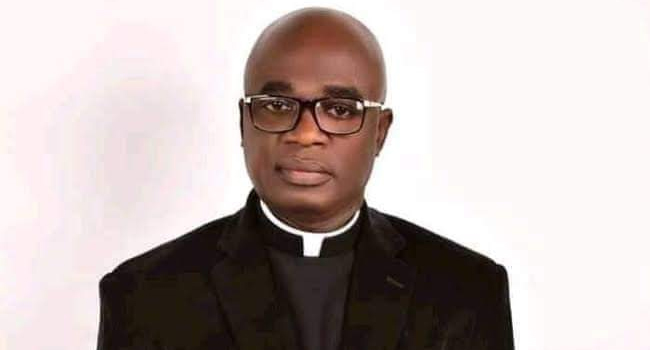
THE Chief of Defence Staff (CDS), Christopher Musa, has warned those promoting a coup in Nigeria due to economic hardship to desist.
Musa emphasised the need for patience and the superiority of democracy in this age.
The CDS disclosed this on Thursday, February 22, during an interview with journalists at the Nigerian Army 6 Division Headquarters in Port Harcourt, the Rivers State capital, following the launching of some construction projects.
“Whoever is making that call (coup) does not love Nigeria. We want to make it very clear that the Armed Forces of Nigeria are here to protect democracy. We all want democracy, and we do better under democracy. And so we will continue to support democracy. Those who are calling for anything other than democracy are evil people, and I think they don’t mean well for Nigeria.
“Everybody goes through a trying period in life, and it is what you do with them. You can see the government putting efforts to ensure we come out better. And it is when you go through difficulties and come out better you will really appreciate what it is to build a nation. And so we are going through our trying period, but I can assure Nigerians that it will get better,” the CDS stated.
He warned that the law would catch up with the putsch canvassers.
The newly built officers’ transit accommodations and entrance gate at the 6 Division Headquarters were commissioned by the CDS.
Nigeria is currently experiencing extreme economic crises, leading to protests nationwide.
The ICIR reports that protests against hardship facing the nation have taken place in Oyo, Niger, Kano and other areas over the past weeks.
The demonstrators lamented the high cost of living, food inflation, and other difficult living circumstances caused by the withdrawal of fuel subsidies and the unification of foreign exchange by the President Bola Tinubu’s government.
TheNigeria Labour Congress (NLC) and the Trade Union Congress (TUC) have issued the Federal Government a 14-day ultimatum to implement agreements reached with workers to ease economic hardships confronting them and other citizens.
This was contained in a statement by leaders of both organisations, Joe Ajaero and Festus Usifo, respectively, on Thursday, February 8, 2024.
The statement disclosed that the 14-day ultimatum would begin on Friday, February 9.
TIGER Eye Foundation is currently inviting Nigerian-based investigative journalists for its 2024 Nigeria Investigates Workshop.
The workshop is a training for early to mid-level investigative journalists and is open to applicants dedicated to shaping democracy through ethical reporting and rigorous storytelling.
This programme has, over the years, nurtured journalists who have gone on to produce impactful investigative stories and won prestigious awards, including the Wole Soyinka Award for Investigative Journalism, the Elizabeth Neuffer Fellowship, and the Future Awards Africa Prize for Journalism.
Interested applicants are expected to submit story pitches, after which successful candidates will advance to a five-day intensive training programme to undergo a comprehensive training regimen in investigative techniques, data analysis, navigating high-risk and hostile environments, storytelling, and post-production.
This application is exclusively open to Nigerian journalists practising in Nigeria, as successful ones are required to confirm their availability to attend the five-day training in April 2024.
The deadline for application is March 15. Interested journalists can apply here.
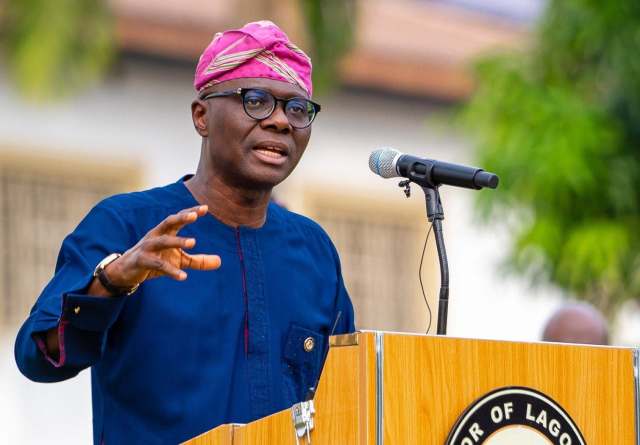
GOVERNOR Babajide Sanwo-Olu, on Thursday, February 22, unveiled plans to implement a three-day workweek for Lagos state civil servants and reduce transportation costs.
Speaking in a media chat with select media houses on worsening economic conditions in the country, Sanwolu noted that the move was to alleviate the current economic challenges in the state.
The governor noted that the civil servants from the lower level would be working three times a week, while teachers would maintain the five days a week work schedule, with the government ensuring additional transport support for them.
“We want to start with our public servants. Immediately from next week, civil servants from the lower level will be working like three times a week, and level 15-17 can work four times a week,” he said.
He also added that his administration would open Sunday markets across the state, where residents could buy food items at discounted rates.
“We will open Sunday Markets in at least 42 identified markets across Lagos State. You will be able to buy food items at a discounted price. You will only be able to buy items worth up to N25,000,” the governor said.
While disclosing that the 25 per cent reduction in transport services would commence this weekend for the State Public Transport system (BRT, Train, Ferry), he assured that his administration had been discussing with various transport unions to lower their fares.
“First is to express empathy with our citizens, We are not unmindful of the situation, as leaders, we must be able to solve socio-economic problems,” Sanwo-Olu said.
On the Lagos Food Hub (Idi-Oro, Mushin), Sanwolu stated that four more food hubs were under construction, and seven other locations in other Local Governments had also been identified for more food hubs to be developed.
He challenged the private sector to look into what they could do for the citizens by replicating the roles they played during the COVID-19 pandemic..
The ICIR reports that there has been an astronomical increase in the prices of goods since President Bola Tinubu announced the removal of the fuel subsidy on May 29, 2023, the day he took over power.
On February 16, the NLC announced that it would embark on a two-day nationwide mass protest on February 27 and 28 over the worsening hardship in the country.
The announcement was on the heels of the declaration by the Association of Master Bakers and Caterers of Nigeria (AMBCN), stating that it would commence a nationwide strike from February 27 should the Federal government refuse to implement the agreement it entered into with the association in 2020.
The NLC president, Joe Ajaero, announced the protest at the Labour House headquarters during an emergency press conference on Friday, February 16.
Ajaero said the decision to protest was made after the expiration of the 14-day ultimatum issued to the Federal Government over hardship across the country.
The ICIR reports that in addition to tackling hardship, the union gave the 14-day ultimatum to pressure the government to honour the 16-point agreement reached with the union on October 2, 2023.
TWO decades ago, Gainawa emerged as a refuge for those displaced by floods, with families arriving in search of hope and solace. Named after the village they had lost to the relentless waters, Gainawa was envisioned as a haven for the dispossessed. However, today, a shadow looms over Gainawa—a darkness that stems not from floodwaters but from a pervasive sense of neglect. In this report, Hafsat Bello Bahara delves into the challenges confronting the community.
As Kano City’s neon glow surrenders to twilight, a harsh reality emerges. Just an hour’s drive away from the metropolis, in a farming village called Gainawa in Kura Local Government Area (LGA), darkness reigns supreme. No bustling streetlights, no hum of electric life – only the flickering candles casting long shadows on mud walls.
This forgotten haven, born 20 years ago from the ashes of a devastating flood that occurred at their original settlement at the foot of the Tamburawa River, South of Kano City, now lives in the shadow of progress, shrouded in perpetual twilight.
Kura LGA, with a population of 144,601 according to the 2006 census, is a hub of agricultural and commercial activities in Kano State due to its fertile land, producing quality yields, and its residents tirelessly toiling the land. One of its prominent villages, Gainawa, however, suffers a two-decade-long blackout, a stark injustice against the community’s vital contribution. High crime rates, from phone snatching to burglary and robbery, keep the community cowering.
In October 2023, during a retreat, President Bola Tinubu said about 90 million people in Nigeria do not have access to electricity. He said, “The national grid only serves about 15 per cent of the country’s demand. This has left households and factories to rely on expensive self-generation, which supplies a staggering 40 per cent of the country’s demand.
In addition, the Nigerian Electricity Report of Q1 OF 2023 indicated that 11.27 million customers in Nigeria have access to electricity. A customer here can refer to a household which has an average of 5 individuals.
The quality of life of a large number of Nigerians is greatly affected by the lack of access to electricity. Imagine what life will be like when you can’t have a cold drink, iron your shirt, or turn on the fan when the weather gets hot. The people of the Gainawa community don’t have to imagine because life in perpetual darkness is their daily reality.
A mother of two, Maryam Ibrahim, remembers the city life she left behind after getting hitched to a Gainawa resident. Now, she clutches her children close, the fear in her eyes is a reflection of the crimes that lurk in the shadows.
Maryam Ibrahim PC: Hafsat Bello Bahara
“After living here (in Gainawa) for over a decade, I am no longer afraid of the dark, but I am afraid of what the boys in this town can do to me and my children under the cover of darkness. Once you go out, they gang up on you and steal your bag and phone. I can’t send my children on errands because I’m scared of what will happen. That is not all, I have little children that cry all night because of the heat, which is made worse by lack of electricity,” said Maryam.
Gainawa’s loss and reinvention in the dark
Despite its proximity to Kano’s vibrant nightlife, just an hour away, Gainawa residents experience fear-filled nights in darkness.
A livestock farmer in Gainawa, Imrana Yusha’u, knows the shadow’s bite all too well. One moonless night, under the village’s perpetual twilight, thieves stole his entire livelihood – 24 goats bleating into the darkness, leaving behind only a hollowness that echoed in his heart.
“They sneaked into the compound while we were asleep and left with 24 goats. By the time I woke up, only two were left. The livestock was my sole source of income. The community rallied to help identify the culprits, but we couldn’t find them,” he said, his voice thick with grief.
Cattle rearing was Imrana’s only skill, his anchor in a sea of uncertainty. It paid for his four children’s meals and their education. “I felt like a man who’d suddenly forgotten how to breathe,” he said.
Imrana Yusha’u PC: Hafsat Bello Bahara.
“From having it all, I had nothing. I had to start all over again. I sold the two goats left and started a small business and I’ve been using the profit to support my family ever since; it’s not much but at least I can provide for them again.”
One of Gainawa’s first settlers, Yusha’u Musa, carries the wisdom of countless sunrises in his eyes. He remembers the day they arrived, driven from their homes by a ruthless flood. “Our old town, Gainawa, was swallowed by the water. So, when we resettled here, we named it New Gainawa, a whisper of hope for a new beginning.”
There was no electricity then, yet it mattered little.
“When you lose everything, a roof over your head becomes a blessing, a beacon brighter than any light. But we soon started feeling the impact. Without light, there’s no water and we used to walk several miles to Karfi with our backs bent under the weight of water jugs, just to meet our family’s daily needs. Then came the boreholes, drilled by the wealthier members of the community. Water became a commodity, its price dictated by fortune, not fairness.”
A native of Gainawa, Isyaku Yusuf paints a vivid picture of life without electricity, a daily reality he knows all too well.
“I grew up in darkness used to oil lamps and flickering torchlights. Until I was ten, that’s all we had for the night. Then, one of our neighbors bought a generator. We flooded his house to watch movies and football matches. He was the only one in our lane that had light, and everyone gravitated towards him. I remember how joyous we were when Dad landed a job in Kaduna. Adapting to a new environment wasn’t easy at first, but when I finally woke and slept under the embrace of electric light in Kaduna, I never looked back.”
Yet, fate had other plans. Tertiary education brought Yusuf back to Kano, dividing his life between the hostel’s fluorescent glow and weekends spent with his grandparents in Gainawa.
“Returning here is a stark reminder of their struggle in Gainawa. Everything is inflated. A cold drink costs twice its usual price, and grinding grains is a luxury – generators guzzle fuel, forcing many to revert to backbreaking mortar and pestle.”
Gainawa presents significant challenges for women, hindering their ability to thrive due to the absence of a fully equipped hospital. Consequently, many women and children find themselves compelled to endure a 40-minute drive to and from the Kura Local Government Area whenever they fall ill. The town heavily relies on a modest dispensary, but this facility, lacking electricity and essential lab equipment, is inadequate when it comes to handling complex medical cases.
Gundutse Dispensary PC: Hafsat Bello Bahara.
During an interview with Maimuma Mustapha, a new mother in Gainawa, shared insights into the healthcare challenges residents face. The dispensary, she explained, becomes the go-to for basic needs such as malaria and typhoid treatment. However, in more critical situations, the dispensary’s limitations become apparent.
Maimuma recounted her journey, where complications during her pregnancy led to repeated trips to Kura. The hurdles persisted until her delivery, where timely access to the general hospital proved pivotal.
She expressed gratitude for the medical intervention that became crucial during her complicated delivery, requiring a lifesaving blood transfusion.
“I’m glad we managed to reach the general hospital early because there was a complication with the birth, and I needed a blood transfusion. I don’t know if I would have survived if I ended up giving birth at home.”
Electricity deprives Gainawa of economic empowerment
Gainawa’s darkness isn’t just a physical absence of light; it’s a heavy weight on the shoulders of its residents, a barrier to economic growth, and a plea for help that grows louder with each passing day. A visit to the community by this reporter showed that the lack of social amenities, including the high cost of fuel, is crippling entrepreneurs and stifling economic growth.
Nightfall – Gundutse PC:Hafsat Bello Bahara.
A long-time resident and owner of a phone charging centre, and cold drink stand, Abbas, exemplifies the struggle. His generator roars against the quiet night, guzzling expensive fuel to keep his small business afloat.
“Running on generator power makes everything costly,” he informed the reporter. “Most residents can’t afford it anymore, forcing them to shut down shops and dreams.”
Abbas, one of the few remaining businesses, often operates on credit.
“Majority of my customers are my neighbours, I can’t just say no. But even my generosity has limits. Fuel prices fluctuate, ice melts in the relentless heat without proper refrigeration, and my profits often dwindle. Sometimes I sell warm drinks just to stay open,” he said.
Abbas
Gainawa’s plight isn’t unique. An economist and professor, Kabiru Isah Dandago, explains the stark reality: “Without power, development stalls. People can’t be productive, their purchasing power shrinks, and they feel left behind. This disenfranchised community becomes a loss, not a contributor, to the nation’s economy.”
Small businesses struggle in the town, with most of them shutting down. Tailors have to use manual sewing machines, making the work tedious and strenuous on their backs. The reporter observed that women in the community are mostly relegated to petty trading at home, and they are excluded from running businesses as they lack the capital to function effectively in the expensive market.
Darkness hamstrings education in Gainawa
The impact of Gainawa’s perpetual darkness casts a wider shadow than stolen goats and melting ice. It stretches to children struggling to learn under the dimming glow in classrooms.
Gundutse Chiki Special Primary School, with about 2,300 pupils and run by 11 teaching staff, is the closest to the Gainawa community.
A teacher at the school, Muhamud Adam, paints a grim picture of learning in the school.
“The heat and lack of light make it difficult for both teachers and students to focus, affecting their performance. We can’t power computers, can’t print exam sheets.”
A father whose fourth-grade child attends primary school in the community, Iliyasu Muhammad, shares the challenges of keeping his child focused on homework under the dim light of a torchlight.
“I bought a dedicated torchlight for him to use during homework, but I have to sit with him and supervise, or he refuses to do it. He informed me that it’s uncomfortable to hold the light steady and write simultaneously.” Iliyasu, like any parent, aspires to provide his child with a quality education for better life opportunities. However, the living conditions they face make realizing that dream increasingly difficult.
Gundutse Chiki Special Primary School PC: Hafsat Bello Bahara.
This is not a new narrative. Research by UNDESA (United Nations Department of Economic and Social Affairs) in 2014 confirms the link between electricity and academic success, a reality lectirr at Bayero University Kano Idris Salisu Rogo echoes.
“E-learning is the future,” he said, “and students here (Gainawa) are left behind. Even WAEC and NECO will soon adopt the computer-based test like JAMB therefore students will be at a disadvantage.”
In a weird contrast, rice companies surrounding Gainawa bask in the glow of constant power. The irony hangs heavy, just as the unanswered pleas of the community do. Various efforts made by the community to call the attention of Kano electricity distribution company KEDCO, to the issue have yielded no fruitful result. Complaint letters sent to their incumbent representative for Kura, Madobi, and Garun Malam constituency at the state assembly, Hon. Kabiru Idris Danhassan, were met with a deafening silence.
Gainawa’s community leader, Ado Inuwa, chronicles the desperate struggle for basic amenities that has become the defining mark of their existence. “Living like this isn’t living. That’s why we decided to take matters into our own hands by contributing amongst ourselves.”
He emphasized that most of the community members are low-income earners, and when inflation hit, most of them pulled back from contributing. “We raised about 300,000 at the time that we planned to use for electricity access but we couldn’t continue.”
One of the youths, leading the charge for electrification in Gainawa, Abdullahi Shu’aibu Gundutse, said promises made by politicians to help the situation are yet to materialise.
Abdullahi Shuiabu Gundutse PC: Hafsat Hafsat Bello Bahara.
“We wrote a letter to the chairman of Kura LGA seeking his assistance, but that didn’t yield results. We wrote another letter to both our representatives in the state and federal assemblies, but no action was taken, so we reached out to the companies around here, soliciting for aid and most of them promised to provide us with money or materials to help set up light in the community, but so far none has delivered.”
When questioned, the Chairman of Kura LGA, Mustapha Abdullahi Rabiu, denied knowledge of the problem, stating that the community had not approached him. However, further attempts to follow up on the issue with the chairman have been met with unanswered calls.
Meanwhile, Gundutse revealed that the residents of the community approached the Kano State Electricity Distribution Company, KEDCO were told by some officials that “it’s a major undertaking that the company feels won’t yield much profit and therefore isn’t worth doing.”
Who is responsible for bringing light to Gainawa community?
A visit was made to the Kano Electricity Distribution Company (KEDCO) office on November 24, 2023, seeking clarification on Gainawa’s plight. However, inquiries were met with stony silence. The public relations officer was absent, and calls to him went unanswered.
A source who spoke on the grounds of anonymity revealed that KEDCO will not commit to the project because it is not its responsibility to provide the equipment needed to bring electricity to Gainawa community.
Further findings, however, painted a different picture. The 2023 Electricity Act places the onus on the Rural Electrification Agency (REA) to “promote electricity access for rural, unserved and underserved populace.” Section 128(d) of the Act mandates the REA to ensure unfettered access to electricity for such communities.
However, as a federal agency, the REA’s resources face limitations. Recognising this, the Act empowers the REA to collaborate with state electrification boards in Section 153(1), ensuring nationwide coverage. This synergy is further emphasized in Section 153(4), where the REA is tasked with “arranging technical assistance” and encouraging state governments to offer “technical and financial assistance” to local communities within their jurisdictions.
Electricity pole across Gundutse PC: Hafsat
These provisions highlight the intricate and shared responsibility for rural electrification, with the REA playing a central role in coordination and support. While KEDCO may not be directly responsible for Gainawa’s electrification, their lack of engagement raises questions about collaborative efforts and commitment to bridging the rural-urban electricity divide.
But while the onus rests with the REA,” stated an electricity expert Kunle Olubiyo, (“Gainawa’s plight boils down to a single missing piece: a transformer to step down electricity from the power lines feeding nearby companies.”
“The state government has a responsibility to ensure the people are connected to the grid running mere meters from their homes. The rural electrification agency doesn’t need to be the sole solution when the state can handle the issue.
“KEDCO, of course, will argue they are not liable. However, once the community purchases a transformer and connects the light to their homes, they will be quick to collect fees. They are eager to profit from the connection, regardless of who provides the infrastructure,” emphasised Olubiyo.
While acknowledging the board’s responsibility to address such situations, The Managing Director, Kano State Rural Electrification Board, Sani Bala Dambatta, admitted to being unaware of the Gainawa issue.
“We manage numerous projects,” he explained, “and unfortunately, some cases do fall through the cracks. The community’s concerns haven’t been officially brought to our attention, but we will certainly investigate the matter and explore possible solutions.”
Elected representatives of the people like the members of the House of Representatives for Kura, Garun Malam, and Madobi Federal Constituency, Yusuf Datti Kura are sworn to champion the interests of their constituents. But despite repeated attempts to engage him on the critical issue of Gainawa’s electricity shortage, Kura remained disappointingly silent.
Multiple calls and messages, including a WhatsApp message which was read on November 27, went unanswered.
A follow-up with his legal advisor for an introduction and interview yielded no fruitful result, thereby raising questions about his priorities and his accessibility to the very people he was elected to serve.
His counterpart in the Kano State House of Assembly, Alhassan Zakariya Ishaq, is currently marred in uncertainty as the election that awarded him victory was overturned by the Court of Appeal. Attempts to reach him for comment proved fruitless. Every call placed was diverted, and according to Aminu Abdullahi Ibrahim, a House Assembly correspondent, Ishaq has been absent from sessions since the verdict.
Experts react
A study by the University of Sheffield confirms a stark reality: darkness breeds crime. The research shows a clear correlation between reduced light levels and increased robbery rates. This echoes the concern of Abdullahi Bakoji, a security expert based in Kano.
“Rural communities often get overlooked when it comes to development projects,” he stressed. “Take away basic needs like electricity, and you take away their livelihoods. Without jobs or income, desperation sets in, leading people to petty theft to survive. This, unfortunately, can easily escalate into more serious crimes like armed robbery and even kidnapping.”
Bakoji’s position highlights the tragic consequences of neglecting basic infrastructure like electricity in Gainawa, where the darkness doesn’t just shroud homes but potentially fuels a dangerous spiral of crime.
A professor at Dangote Business School, Murtala Sagagi also emphasized how energy poverty erodes the development of not just the community but the country as a whole.
“The reality is most small businesses in Nigeria can’t survive if they rely solely on electricity from the national grid because the reality is in a decade to come Nigerian government cannot provide enough electricity for the masses,” he stressed adding that, “business owners in Gainawa should find alternative sources of power generation to sustain their needs.”
THE Benue State government has issued a two-week quit notice to herders engaging in open grazing in the state.
The state government also ordered all armed herders to leave the state through a resolution by its Security Council.
At the council’s meeting held in Makurdi, the state capital, and chaired by the governor, Hyacinth Alia, the council members said the decisions were reached to maintain peace in the state.
Heads of state-affiliated armed and paramilitary groups, leaders of traditional and religious institutions, and senior government functionaries were present at the meeting.
The chief press secretary to the governor, Tersoo Kula, read the resolution signed by the governor.
The council warned herders that the Ranches Establishment Law of 2017 and the Open Grazing Prohibition remained in force.
The council directed armed herders and invaders to leave the state immediately and warned those who invited armed herdsmen or invaders to desist.
“A seven-man committee is set up to enforce the ultimatum given. And security agencies, traditional rulers and the general public should intensify efforts and uncover for prosecution any person in the habit of collaborating/inviting armed herders into the state.
“Council is urging the general public to remain calm and security conscious as the state government is making every conceivable effort to ensure adequate security of lives and property in the state,” the statement added.
Benue State, located in the North-Central Nigeria, has been severely affected by herders/farmers conflict for more than ten years, and the situation has gotten worse since the anti-open grazing law was passed and put into effect.
Repeated efforts by the previous government to curtail herders attacks on the state residents have yielded only a little result despite banson the activities of armed herders in the state.
On January 1, 2018, attacks were carried out by the suspected herders in Logo and Guma LGAs of the State, with over 70 people killed.
Witnesses said the coordinated attacks began around 9 p.m. and continued until the early hours as the herders had a field day killing people and burning down houses without any intervention by security agencies.
In a report on July 30, 2018, it was reported morethan 1,300 Nigerians lost their lives in the first half of 2018 to violence involving herdsmen and farmers across the country, according to a report by the International Crisis Group (ICG).
The group, in a report published on July 26, said the figure was about six times more than the number of civilians killed by the Boko Haram insurgency in the same period.
LABOUR Party presidential candidate in the 2023 general elections, Peter Obi, has faulted the arrest of his party’s national chairman, Julius Abure, in Edo state, labeling the action as ‘demeaning and unequivocally intolerable’.
Obi, while condemning the action via his X handle earlier today, Thursday, February 22, emphasised the importance of upholding political oppositions’ rights in the country.
The former Anambra state governor noted that such actions epitomised the pinnacle of misconduct and contributed significantly to the perception of the country as one afflicted by lawlessness.
On Wednesday, Thursday 22, the Police in Edo state, arrested Abure in Benin, the Edo State capital, following the allegations of attempted murder levelled against him by the party’s youth leader, Eragbe Anselm Amphimia.
A video by Arise Television showed how men in police uniforms manhandled and dragged Abure into a police van after he had been made to sit on the floor.
While Abure was released hours after the arrest, many concerned Nigerians, including Obi, have faulted the arrest and urged the police to always behave civilly.
“Like many Nigerians, I observed the distasteful national television news reports detailing the humiliating arrest of the national chairman of the Labour Party, Barrister Julius Abure, earlier today in Benin City, Edo State.
“Throughout my roles as a private individual, public figure, governor, and presidential candidate, I consistently advocated for the paramount importance of upholding the rule of law in any sane society.
“I firmly believe that, as citizens, we are all duty-bound irrespective of our status in society to respond to invitations from properly constituted authority. My stance on this matter remains unwavering but does not explain watching the distressing image of our national chairman lying on the ground in the name of arrest. This act is undesirable , demeaning and unequivocally intolerable and must be condemned by any decent and civilized mind within the context of our present civic landscape in Nigeria,” he said.
While highlighting the need to allow for constitutional authorities to execute statutory functions, he also emphasised that the conduct displayed by the police must be diligently tackled to maintain the tenets of justice and honour the dignity of every individual in the society.
He also opined that political parties need to be accorded due respect, noting they are institutions of democratic statehood.
“It is imperative to reiterate that no pretext or subterfuge should be employed to stifle Nigeria’s political opposition. Therefore, I urge that he should be granted bail based on his status while the investigation into his alleged offence continues,” he added.
IF you were active on X in January 2024, you must have noticed that the word “Dr Betta Edu” trended for days on the social media platform. The name appeared on the trends section of the X platform without significant updates from Nigerian authorities or Ms. Edu regarding her alleged corruption disbursement case. In this analysis, The FactCheckHub findings show that the trend is a disinformation campaign orchestrated and launched by individuals aiming to pressure the authorities into reinstating the suspended Humanitarian Affairs minister.
More than fifty X accounts have been found pushing a disinformation campaign to launder the image of the suspended Nigerian minister of Humanitarian Affairs and Poverty Alleviation, Betta Edu, a social media investigation by The FactCheckHub has shown.
These accounts, which include parody and verified accounts, converge online to simultaneously push similar narratives about the suspended minister on X (formerly Twitter).
The FactCheckHub observed that the trending hashtag (Dr Betta Edu) is a disinformation campaign launched by a network of social media influencers organised to shape public sentiment and impact crucial decision-makers on her disbursement case currently before the Economic and Financial Crimes Commission (EFCC) and President Bola Ahmed Tinubu-led Nigerian government.
President Tinubu suspended Edu on January 8, 2024, following a leaked memo alleging that she approved the transfer of over N585 million into the personal account of one Oniyelu Bridget Mojisola.
Following her suspension, the EFCC invited her for questioning but she was subsequently released after hours of grilling and expected to report daily to the anti-graft commission.
The FactCheckHub uncovered more than fifty X accounts attempting to whitewash the suspended minister and downplay her alleged crimes despite the ongoing investigation. The common factor among these posts is the consistent use of “Dr Betta Edu” aimed at making her name trend and influence topical discussions on the social media platform.
Each account meticulously writes the name and honorifics in the same way. They also avoid the use of hashtags to escape detection. This uniformity, combined with shared content being disseminated and synchronized posting times, strongly suggests a deliberate influence operation to manipulate public perception around the case.
Influence Operations are coordinated efforts by actors to manipulate or spread disinformation, or propaganda to achieve desired goals and outcomes. The primary objective of influence operations is to sway the target audience’s beliefs or actions.
The process involves targeting its audience or population (Nigerians), identifying and creating a suitable narrative or story (Edu’s good deeds) and creating a suitable network of accounts on social media especially influencers to promote the narrative. The goal is reportedly to bring the minister back to power.
The Betta Edu saga
Edu came under criticism from Nigerians for authorising the transfer of the N585.2 million into the private bank account of a civil servant, who is the accountant in charge of grants for vulnerable Nigerians.
The transfer contravenes various sections of Nigeria’s Financial Regulations 2009, which are meant to prevent fraud and other forms of corruption in the country.
According to the suspended minister’s memo, the fund in question was transferred from the National Social Investment office account and meant for disbursement to vulnerable people in Akwa Ibom, Cross River, Lagos, and Ogun states, under the federal government poverty intervention project called Grants for Vulnerable Groups.
Suspended Minister for Humanitarian Affairs and Poverty Alleviation, Betta Edu
Edu said in the memo that the official, Bridget Oniyelu, whose private account with the United Bank of Africa the N585.2 million was paid into, is the project accountant.
In response to the public outrage, President Tinubu suspended the minister and directed a thorough investigation of the transfers by the Economic and Financial Crimes Commission (EFCC).
Tinubu said his decision to suspend her was in line with his pledges and commitment to uphold integrity, transparency, and accountability in managing the commonwealth of Nigerians.
She was at the EFCC a day after the former minister of the ministry, Sadiya Umar-Farouq, submitted herself to the commission in Abuja for grilling over alleged abuse of office under former President Muhammadu Buhari.
While the outcome of the investigation is still pending, the social media networks are putting the investigators in a tight spot by shaping public opinion using the power of social media.
The FactCheckHub observed that there has been a surge in the mentioning of the suspended minister’s name on social media and the internet since the issue began.
For instance, posts containing the name of the suspended minister had over 500,000 interactions on Facebook in January, according to data obtained from CrowdTangle. The trend shows that her name attracted more interest in January 2024 when her travail began.
Using Media Cloud, an open-source platform, The FactCheckHub monitored the digital news attention or coverage of the suspended minister, and we found out that the name gained more news coverage in January 2024. With over 3,000 published stories, the interest in the case rose within the time-frame earlier mentioned. Her name appeared in over 600 media reports on January 8, 2024, when she was suspended.
Media coverage of Betta Edu in January 2023
Enters a social media campaign
The FactCheckHub observed that these accounts post simultaneously, using the same fliers, images and videos to portray the suspended minister as hardworking and divert the attention of the public from her corruption case. However, they vary their captions to evade detection.
They make their posts simultaneously to ensure it is among the top trends at a particular time. This is to ensure that the narratives they are pushing gain enough visibility. The FactCheckHub also observed that the campaign became more coordinated from January 11, 2024.
On that day, more than 50 social media accounts circulated a flier claiming Edu empowered over 400 displaced persons in Niger state among other claims, found to be false. Even though media reports showed that the minister paid a visit to the IDP camp in the state in September 2023, there was no evidence of any empowerment.
Some X accounts shared fliers whitewashing suspended minister in a coordinated manner.
The social networks included a parody account of Chioma Roland, the wife of the popular Nigerian Afrobeat artiste, David Adeleke, popularly called Davido. The account has shared numerous posts and has been consistently involved in the campaign.
Another X user, @Anitasmily_ also posted the flier claiming the suspended minister built over 1 million homes for poor and displaced people.
“Dr Betta Edu good works and great service to humanity have always been her age long trade mark. The humanitarian minister ensured that over 1 million homes were built and completed to shelter the poor, IDPs & refugees across Nigeria,” @Anitasmily_ posted.
The FactCheckHub found out that this claim is also FALSE as no credible media platform reported the stride. The post was also shared by @callmemichaels and other X accounts in the network around 8 am and 10 am the same day.
Between 5pm and 6 pm, on January 21, 2024, some X accounts such as @Tykun_Grey, @MotundehBaby, @Onlysamson, @Activityqueen and @frankdozi shared a video of a public affairs analyst, speaking in support of the suspended minister and asking the Nigerian president to reinstate her.
Some X accounts shared an interview with an Analyst in a well-coordinated influence operations order.
Around 2pm to 4pm on January 23, 2024, the X accounts shared a screenshot of a publication titled “Betta Edu: A resilient leader amid controversy” and a letter to the president urging him to reverse the suspension of the embattled minister. All the X users in this network such as @TheChefChifan, @Tykun_Grey, and @its_heady_again shared the content.
On January 24, 2024, these social media accounts disseminated a video of the suspended minister during a visit to patients in an hospital and an image of her giving out a grant. A few of the posts can be found here, here and here.
Around 7pm on January 26, 2024, the X accounts promoted a social media card highlighting the strides of the suspended minister such as conditional transfer and empowerment programmes. The social media cards were posted by X networks including @Sirbaloo_Naija, @jenifa_, @Hass_Szn and @iam_lakays.
A similar flier showcasing the list of some achievements of the suspended minister was simultaneously shared on January 29, 2024. The flier contains images of the suspended minister collaged with the image of President Tinubu. It also consists of several achievements reportedly accomplished by the minister. A few of the posts are archived here and here.
Some X accounts shared video of the suspended minister sharing food items to some less privileged as part of the disinformation campaign.
What was used on January 31, 2024 was the video of the suspended minister sharing food items with some less privileged. The video was posted by these social networks with captions showcasing her achievements as minister. The content was shared around 2pm that day by some X users including @Tinuola_baby, Minat_mk, @lotanna_obi, @callmemichaels and @sharllousbaby, among others.
Who are the people behind the campaign?
On the day this disinformation campaign started on social media, a certain X user, @Oserume1 raised an alarm alleging that social media influencers were being paid to launder the image of Ms. Edu.
The account posted a screenshot of a WhatsApp group where the social media influencers were allegedly being given directives to post contents in favour of the minister. He reportedly linked the campaign to Bulama Muhammad Bukar.
He posted, “Betta Edu Media Center is working with “Dr. Betta Edu”. We see the work they are doing today ooh.”
Bulama was appointed as Borno State Coordinator of the Betta Edu new Media Centre in October 2023.
But The FactCheckHub couldn’t confirm the authenticity of that chat (WhatsApp screenshot).
A look at some X accounts involved in the disinformation campaign shows that they have a minimum of 1,000 followers; thus meaning they might have been carefully selected. A keyword search on these accounts showed that most of them started posting about the suspended minister on the same date – January 11 and the intervals between their posts are often short, our fact-checker observed. This has been shown in the earlier instances.
Topping the list of social media accounts running this campaign is an X account, @its_heady_again. The account has 14,000 followers and it has a telegram link where pirated Nollywood movies are distributed attached to this account.
Analysis of the account showed that he has trended the keyword 15 times in January 2024 alone. The account hardly posts about politics before the campaign started.
Another X account at the campaign’s frontline is Chioma’s parody account. The account name bears Chioma but has a different X ID. The account posts majorly entertainment content but the posts about the minister stood out on her timeline. The account posted the keyword 15 times within the time frame analysed. Though the account has a few followers, her posts get reasonable engagement. That likely explains why the account was chosen for the campaign.
Several other accounts involved in the campaign also share some similarities – They have a high number of followers and engagement and they hardly post about politics until the disinformation campaign kicked off.
Nigerians frustrated over ‘promoted’ trend
Meanwhile, Nigerians using social media have raised concerns about what they are describing as “paid PR” in favour of the suspended minister. They are expressing dissatisfaction with the narratives continuously appearing on their timelines, courtesy of social media influencers promoting these narratives.
An X user, Cyril Idoko Agbo expressed concern over the prevalence of promoted content on his page. He said, “Paid PR for Betta Edu all over my TL. We don’t talk about them enough. A good number of influencers are part of the problems we are faced with in the society today.”
Similarly, another X user, Nikky Perry, alleged that the suspended minister paid the influencers for image laundering. “The money Dr Betta Edu stole is enough to change the poverty of this country. Dr. Betta Edu paid some influencers on X to cover up her failure!!!!,” she posted.
Another X user, Lola Okunrin, wondered why the minister allegedly decided to engage influencers rather than coming out clean and facing the investigation squarely.
He posted: “Why do Nigerians always run to PR whenever they do something wrong instead of apologizing and doing the needful? Isn’t it madness? When Bolt passengers were dragging Bolt online that year, instead of putting measures in place, they quickly engaged hungry influencers.
“Dr Betta Edu” trending on X on January 31
“Betta Edu, after being caught in the midst of mismanagement, she engaged all these 500 Naira for 3 tweets influencers. Ify, after being dragged for owing, wrote a long epistle to fine tune who she is without being sober or planning rectification on the allegation. Must it always be about your image? What about the people you wronged?”
Another X user, Victor Emeadi believed the coordinators are exploiting the poverty in the country to recruit ‘hungry’ influencers into such a disinformation campaign.
He said, “The reason Dr. Betta Edu is trending is just because Nigeria is the world’s capital of poverty, if not for poverty. Why will an educated human being accept to trend her for money? if job opportunities were plentiful? This nonsense will never happen. hungry influencers everywhere.”
The action of these social media accounts involved in the disinformation campaign violated the X’s manipulation and spam policy which prohibits using its services “in a manner intended to artificially amplify or suppress information or engage in behaviour that manipulates or disrupts people’s experience or platform manipulation defences.”
The policy lists the forms of platform manipulation which include “inauthentic engagements that attempt to make accounts or content appear more popular or active than they are.”
It also includes coordinated activity that attempts to artificially influence conversations through the use of multiple accounts, fake accounts, automation and scripting.
Ikulajolu Adesola, a former Managing Editor with RoundCheck, said the campaign may sway the attention of the public and distort the investigation by the EFCC.
“It is obvious that there is actually a deliberate social media push to paint the Minister in good light despite her case with the EFCC and her suspension as well,” he said. “The whole mission is simple, just to make her name trend as a hardworking Minister. There is nothing wrong, just that it is coming at a time she has been suspended for financial malpractices that could distort the fact which the anti-graft agency is working on.”
“The issue is related to finance and it is one aspect everyone especially public office holder wants to wash their hands off. This public campaign with the name of the minister will gear people towards overlooking her misdeeds.”
He noted that the international community may also call for her reinstatement based on the narratives being promoted on social media.
“They are all orchestrated to divert the attention of the agency from focusing on her offence – it is just a call for public sympathy,” he concluded.
On his part, Vahyala Kwaga, a Senior Research and Policy Analyst at BudgIT Nigeria, highlighted the need for the anti-graft agency to investigate the matter professionally regardless of the pressure from social media.
“I think there is definitely a coordinated attempt at whitewashing the scandal and diverting attention away from it. Unfortunately, social media users tend to have short attention spans and the scandal may likely fritter out of public consciousness soon enough.”
“The bright side is that if the investigating agencies handle this professionally, the social media campaign will be of no effect. The facts remain what they are and without a calculated campaign, they can still carry out their investigation. The real question is whether or not they will follow through,” he concluded.
She takes over from Caroline Wura-Ola Adepoju, whose term in office expires on February 29.
“The President anticipates that the new Comptroller-General will deepen the ongoing reforms in the service and create a robust mechanism for efficient and dedicated service delivery to Nigerians, as well as strengthen the nation’s security through proactive and effective border security and migration management,” the statement reads.
The ICIR reports that Nandap is the 19th head of the Service. Her predecessors are Caroline Wura-Ola Adepoju (2023 – 2024), Isah Jere Idris (2021 – 2023), Muhammed Babandede, (2016 – 2021), Martin Kure Abeshi (2015 – 2016), David Shikfu Parradang (2013 – 2015).
The list includes Rilwan Bala Musa (2013), Chukwurah Joseph Udeh (2005 – 2010), Lady U. C. Nwizu (2000 – 2004), Alh. U. K. Umar (1999 – 2000), and Sahabi Abubakar Dange (1995 – 1999).
Other are: Garba Abbas (1990 – 1995), Muhammed Damulak (1985 – 1990), Lawal Sambo (1979 – 1985), Aliyu Mohammed, (1977 – 1979), Alayedeino (1967 – 1976), JE Onubogu, (1966 – 1967) and EH Harrison, (1962 – 1966).
THE Nigeria senior male basketball team, D’Tigers, has suffered another major setback after being financially incapacitated to participate in the first window of 2025 FIBA Afrobasket qualifiers that dunk off Friday, February 23, in Tunisia.
The country’s inability to participate in the qualifiers would add to the woes after failing to qualify for the World Cup and Olympics in 2023 and 2024, respectively.
Despite the country’s senior women’s basketball team, D’Tigress recently winning the ticket to represent the continent at the 2024 Paris Olympics in Belgium, The ICIR learnt that the Nigeria Basketball Federation, NBBF, is grappling with paucity of funds.
Confirming the withdrawal of the D’Tigers, NBBF, in a statement released on Wednesday, February 21, blamed the sports ministry for not providing the needed funds for the qualifiers.
“In recent times, the female and male national basketball teams have not had the best in preparations for major continental and global championships due to the perennial lack of funds,” the statement reads.
The federation claimed that its president, Musa Kida, has shouldered financial responsibility to fund the national teams to feature in tournaments, saying that he is yet to be refunded.
“While Kida, who is yet to be refunded the billions of naira, he has spent the participation of the various national teams is unable to raise more funds for the latest national assignment, the ministry of sports have not been able to come up with needed funds, citing lack of adequate funds to prosecute several other national engagements, including the forthcoming All Africa Games holding in Accra, Ghana in March,” the statement reads.
The federation appealed to basketball enthusiasts in the country and diaspora to understand the dire situation it found itself in view of the economic challenges faced by the country.
Fans react to D’Tigers withdrawal
A basketball journalist, Kehinde Bamidele, described the D’Tigers withdrawal as ‘shameful’, opining that there seem to be unhealthy relationships between the federation and sports ministry.
“The NBBF should be blamed largely; there is a breakdown between the communications with federation and ministry, that is the reason why the only way the federation communicates to the ministry is by putting something online like lack of funds, all of that.
“Looking at all other federations, you look at handball and volleyball; they are not struggling like basketball, so why basketball?,” he lamented.
Also, an ace sports journalist, Godwin Enekhena in a tweet via his ‘X’ account @genekhena wrote about the complexity of sports administration in Nigeria.
“I talked about the complexity of sport’s administration in Nigeria and my last line was that it’s not difficult to decode my post with an open mind.
“Our male basketball team won’t be at the Olympics because the government has not released money for the qualifiers. Is it clear now?” he wrote.
THE police in Edo State have released the embattled National Chairman of the Labour Party (LP), Julius Abure, on bail.
Abure was arrested in Benin City, the Edo State capital, on Wednesday, February 21, while preparing for the party’s primary election in the state.
The LP chairman’s arrest followed a petition of the threat of life and attempted murder, among other infractions, by the LP Youth Leader, Eragbe Anselm Aphimia.
According to the petition, addressed to the Edo State Police Commissioner and dated February 13, the party’s youth leader accused Abure of sponsoring thugs to attack him and some other party members outside a hotel gate on December 28, 2023, in Benin City.
Abure was arrested with the LP chairman in Edo State, Kelly Ogbaloi and one other party leader on Wednesday.
Speaking on his release around 2 am, on Thursday February 22, Abure said his ‘persecution’ was to destabilise the party.
The Punch reported him as saying, “Let me appreciate all of you for the solidarity, for the support and your commitment. No struggle to liberate the country comes easy. In many countries of the world where freedom fighters have fought for the emancipation of the people, freedom fighters suffer injustice, suffer prosecution and it is what is happening to me and my other colleagues since after the general election.
“After the general election, they have been trying to instigate crises in the party. They try to bring false accusations against us. They talked about forgery against us at a time when it didn’t work. They came with embezzlement.”
He frowned at the activities of the All Progressives Congress and its government, which it said was making life unbearable for Nigerians.
He explained that while his party sought to win elections and be in government, leading the people was not what truly mattered but the footprints left behind by power seekers and every citizen.
““Today, APC is in power. Life has become more unbearable for the people. Today, the dollar is exchanging for almost N2,000. Fuel today is sold for N700 per litre. There is even scarcity now, and the price is likely going to increase.
“Inflation, even though it is double-digit, it is now above 31 per cent, unemployment has increased, and a bag of rice today is sold for N120,000, and the minimum wage is N30, 000. You can see the paradox. You can see the irony, and Nigerians are in for a difficult time.”
He alleged that politicians always instigated every aggrieved person in the party to write a petition against the party leaders, adding that police acted on those petitions and, at the end of the day, discovered that they were false.
He said he and others were arrested by the police while making arrangements for the Edo State primaries. However, they did not disclose why they were arrested because the issues were still being investigated.
“But I must state clearly that following several interventions, they have graciously released me on bail except for the Edo State chairman of the party, Kelly Ogbaloi and the youth leader. They (police) have also promised that by the early hours of Thursday, they will release them. We are hoping that they will fulfil their promise and release them.
“Whatever is happening to me will not discourage me from the struggle. We must continue to pursue the cause of the people. We must continue to fight for our people until we liberate them. I have said it, and I will say it again: it is not capturing power that matters. It is what you do with power.
The ICIR reports that a video by Arise Television showed how men in police uniforms manhandled and dragged Abure into a police van Wednesday afternoon.
This organisation gathered that Abure is facing allegations of embezzling about N3 billion of party funds.
The suspended National Treasurer of the Labour Party, Oluchi Opara, had called on Abure to submit the party’s finances to a forensic audit and explain the source of funds he used to acquire properties in Nigeria and overseas between 2022 and 2023.
In her memo to the party’s leadership, she stated that Abure must render an account of party funds amounting to over N3.5 billion.
She also urged the party leadership to make the embattled chairman account for the “N958 million raised from off-cycle elections in 2023, provide paper trails and documentary evidence of adherence to due process.”