Home Blog Page 663

DSS warns of ‘elements’ planning to hijack, incite violence with workers protest

0

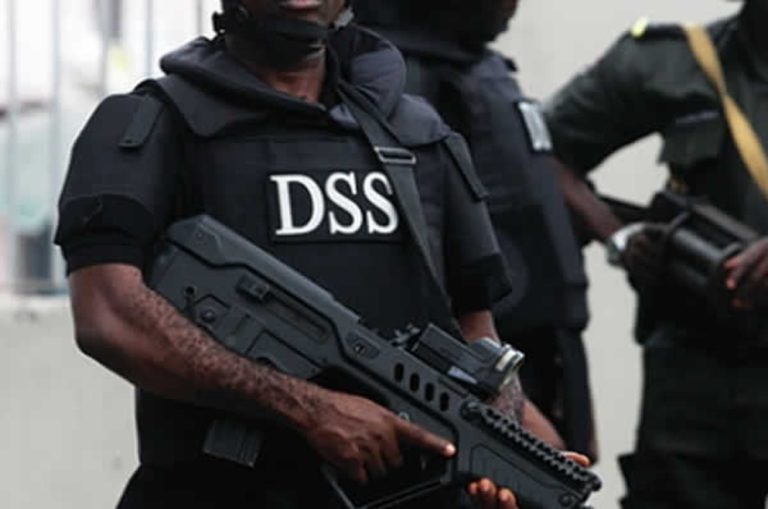
THE Department of State Services (DSS) has urged the Nigerian Labour Congress (NLC) and the Trade Union Congress (TUC) to shun their planned nationwide protest over the worsening rising cost of living.

In a statement on Wednesday, February 21, the DSS, through its director of public relations and strategic communications, Peter Afunanya, averred that it was within the right of workers to protest.

It, however, urged them to abort the protest to allow public order. The Service alleged that some ‘elements’ were planning to hijack the protest to cause violence.

The DSS said it opposed violence to address current challenges, be they economic, political or otherwise, assuring that the Service would work with sister security and law enforcement agencies to ensure that lasting peace is maintained in the country.

On February 16, The ICIR reported that the workers’ unions declared a two-day nationwide mass protest for February 27 and 28 over the worsening hardship in the country.

The NLC president, Joe Ajaero, said the decision to protest was made after the expiration of the 14-day ultimatum issued to the Federal Government over hardship across the country.


Read also: 


The ICIR reports that in addition to tackling hardship, the workers gave the 14-day ultimatum to pressure the government to honour the 16-point agreement reached with the union on October 2, 2023.

Reacting to the planned protest, the DSS urged parents and guardians to prevail on their children from joining the protest, which it said could jeopardise public safety and peace.

“The DSS further calls on parties to pursue dialogue and negotiation rather than engaging in conducts that could heighten tensions. This is more so that the Service is aware that some elements are planning to use the opportunity of the protest to foment crisis and, by extension, widespread violence. The development, without a doubt, will worsen the socio-economic situation across the country.

“It is common knowledge that all levels of government are striving to ameliorate the prevailing economic condition and as such should be given a benefit of the doubt. So far, appropriate authorities are working assiduously with a spectrum of stakeholders to fashion out modalities to address the current difficulties. They should, therefore, be given the chance to handle the challenges at hand,” the statement noted.

According to the Service, all levels of government are experiencing pains faced by other citizens and are working to ameliorate the crisis.

“Additionally, all sectors, including political parties, opposition groups, religious and traditional institutions, civil society and non-governmental bodies, are called upon to eschew violence and demonstrate leadership and statesmanship in these challenging times. Making political capital out of the current situation or involving in divisive utterances at a time like this will be of no benefit to any peace-loving Nigerian. Citizens are advised to be vigilant and not allow fifth columnists and hostile forces or agents to use them to destabilise the peace of the nation,” the Service stated.

Kwara ex-governor Abdulfatah Ahmed spends 3rd day in EFCC custody

0

A FORMER governor of Kwara state, Abdulfattah Ahmed, has spent his third day in the Economic and Financial Crimes Commission (EFCC) custody in Ilorin, Kwara State.

A reliable source at the EFCC headquarters in Abuja confirmed to The ICIR on Wednesday that Ahmed was at the Ilorin office of the commission over alleged financial misconduct during his tenure as governor.


READ ALSO:


“Yes, the former governor is at our Ilorin office; he is undergoing rigorous investigation, and he has been there since Monday,” the source told The ICIR on condition of anonymity.

Meanwhile, protests erupted at the Zonal office of the EFCC on Wednesday, February 21, over Ahmed’s continued detention.

The protests dissipated after a representative of the anti-corruption agency spoke with the demonstrators.

On Monday, February 19, there were reports that the EFCC interrogated and detained Ahmed over suspected fraudulent transactions involving billions of naira that took place when he was governor.

The former governor had yet to be released as of the time of filing this report.

On the accusation against Ahmed, our source stated that since the EFCC was only conducting a preliminary inquiry, it could not state immediately how the money was spent.

The source added that investigations were ongoing.

In September 2022, Ahmed denied misappropriating funds. He described a forensic audit report indicting his administration of financial misappropriation as “preposterous and unfounded.”

Ahmed said this in a statement released by his spokesman, Wahab Oba.

The ICIR reported that the audit report commissioned by the Kwara State government disclosed that about N11.9 billion was stolen from the state’s treasury between 2011 and 2016 under Ahmed’s administration.

Reacting to the report, the former governor explained that every expenditure during the period under review was properly appropriated and followed due process.

Ahmed said since he left office, various auditing agencies had properly audited and certified the state accounts.

The former governor also challenged his successor to account for how the state government spent about N.3 trillion accruing to it since he took over office without commensurate infrastructural development in the state.

Ahmed served as Kwara State’s governor from 2011 until 2019. He succeeded Bukola Saraki as the governor of the North-Central state.

The ICIR, in a report on Sunday, February 18, listed ten prominent Nigerians currently having cases with the EFCC.

While some cases are in court, others are still being investigated.

You can read about some of the pending cases here.

Amidst falling naira, Nigerians anticipate outcome of first MPC meeting under Cardoso

THE Central Bank of Nigeria (CBN) is expected to make critical decisions on where the country’s economy is headed when it holds its first Monetary Policy Committee (MPC) meeting next week.

The meeting will be held amid rising commodity prices, energy, transportation and falling prices of the naira.

The Apex bank has postponed the bi-monthly meeting three consecutive times – September, November 2023, and January 2024- since President Bola Tinubu took power on May 29, 2023. It held the meeting last July 2023.

Headline inflation has continued to surge, reaching 29.9 per cent in January, and food inflation has throttled above 35 per cent, worsening Nigerians’ hardship.

On Monday, February 19, a protest broke out in Ibadan. Oyo State and some other states have recently witnessed mass rallies against government policies, mainly fuel subsidy removal and exchange rate unification, making life more miserable for citizens.

In its ‘Commodity Update’ report released on February 15, the Financial Derivatives firm indicated that commodity prices had skyrocketed.

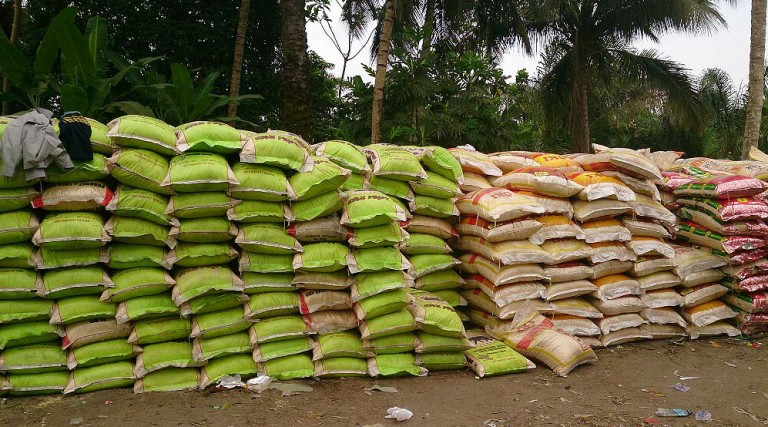
Its report shows that 50 kilogrammes (kg) of rice has risen to N77,000 from N70,000, garri (50kg) to N25,000 from N20,000, and beans (50kg) to N68,000 from N50,000 within a month. Also, the price of diesel has surged by 17.26 per cent to N1,325/litre from N1,126.69/litre.

The naira has been depreciating against the dollar and traded at N1,551.24/$1 at the official rate and N1,796/$1 at the parallel market on Tuesday, February 20.

Analysts believe the MPC will likely raise the monetary policy rate (MPR) when it meets next week, February 26 to 27.


Read Also:


President Bola Tinubu sent a list to the Senate last week to confirm his appointment of the committee members. However, the latter has yet to do so, with barely four working days left for the meeting.

The MPC members are the CBN governor (the chairman), the four CBN deputy governors, two directors, and five independent directors appointed by the President.

As the CBN’s highest policy-making body, the committee communicates policy direction to address major economic issues, such as inflation and interest rates, after considering global and domestic headwinds.

It reviews economic and financial conditions in the economy, determines appropriate policy stance in the short to medium term, checks the CBN monetary policy framework, and adopts changes when necessary.

However, investors are worried that the new CBN governor, Olayemi Cardoso, needed to rescue the falling naira and bolster other economic indicators.

In communicating its monetary and financial policy decisions, the MPC decides on the benchmark rate, cash reserve ratio (CRR) and other monetary policy tools after considering global and domestic economic metrics.

Critical decisions at MPC’s meetings

The MPC members make vital decisions at their by-monthly meetings, which include voting to either loosen, hold or tighten the MPR.

It holds the MPR to keep the rate unchanged, loosens it to reduce the rate, or tightens it to raise it.

Between January 2010 and July 2023, the benchmark rate has risen by 1,275 basis points (bps) to 18.75 per cent from six per cent.

The ICIR analysis of data from the apex bank shows that during former President Goodluck Jonathan’s tenure, MPR rose from the single-digit zone of six per cent as of May 2010 to 13 per cent as of May 2015, increasing by 700bps.

The most incredible jump in the MPR in Jonathan’s regime was when the rate rose by 275bps from 9.25 per cent in September 2011 to 12 per cent in October 2011.

Between May 2015 and May 2023, during the immediate past President Muhammadu Buhari, the benchmark rate rose by 550bps to 18.5 per cent from 13 per cent.

The rate, down to 11.50 per cent from September 2020 through May 2022, has continued to rise.

On the other hand, headline inflation has risen by 1,550bps from 14.40 per cent in January 2010 to 29.9 per cent in January 2024, while food inflation rose by 1,951 per cent from 15.90 per cent to 35.41 per cent within the same period.

The ICIR reports that inflation declined during Jonathan’s tenure to 9.00 per cent and food inflation to 9.80 per cent.

On the contrary, during Buhari’s tenure, headline inflation rose by 1,341bps to 22.41 per cent and food inflation by 1,502bps to 24.82 per cent in the review period.

In just seven months of Tinubu’s first term in office, inflation has risen by 749 bps to 29.9 per cent and food inflation by 1,059 bps to 35.41 per cent.

The ICIR analysis shows that Tinubu’s reforms are choking the country’s economy and pushing more Nigerians into suffering.

MPC decisions in recent time

The MPR is the benchmark rate at which the Central Bank lends money to commercial banks.

At the last MPC meeting in July 2023, the committee voted and raised the benchmark rate by 25 basis points to 18.75 per cent, adjusted the asymmetric corridor around the MPR to +100-300, and retained the CRR at 32.5 per cent and the liquidity ratio at 30 per cent.

Simply put, CRR is a fraction of the total deposits of customers, which commercial banks reserve with the Central Bank and is used to determine how banks price their loans to customers.

While the asymmetric corridor is a tool to encourage banks to bring in more deposits to the Central Bank through an increase in the standing deposit rate (SDR), the liquidity ratio is a measure of a company’s ability to pay off its short-term liabilities.

During his inaugural speech on May 29, 2023, Tinubu noted that the benchmark rate was “too high.”

“Interest rates need to be reduced to increase investment and consumer purchasing in ways that sustain the economy at a higher level,” he said.

In economics, if prices of goods rise faster than their target, most Central Banks will tighten monetary policy to rein in inflation.

The committee is expected to raise interest rates by as much as 500 basis points and provide clarity on foreign exchange management that is blamed for turning investors away, Bloomberg reported.

“I believe that MPR might likely be raised when the MPC meets next week,” a finance expert, David Adonri, said.

He explained that the MPC decision might target reducing liquidity in the financial sector where money saturation overheats the money, capital and foreign exchange markets.

“Beyond this, the factors fueling inflation are cost-push. There is a limit to which contractionary monetary policy can affect these factors.

“Only fiscal policy intervention coupled with the restoration of nationwide security can bridge the supply gap terrorising the economy,” he stressed.

Other measures that can address economic hardship

An economist, Muda Yusuf, said even though the ongoing reforms were inevitable to a large extent, it was essential to review them and finetune some of their methodologies in light of their outcomes.

He noted that the economy could not be run like physical science as it is not an exact science but a social science.

“Sometimes, what you expect as the outcome, you don’t quite get,” he said while on Channels TV on Monday, February 19.

He asserted that the situation required a lot of states’ intervention as there was a limit to which the market [monetary side] could solve the problem.

To tame the hardship, Yusuf suggested the need for targeted interventions.

“I am not talking about the distribution of palliative and all of that; I am talking of a system-wide intervention to specific sectors that relate to particularly staple foods, energy, transportation and pharmaceutical products.

“Those interventions are essential, and we can look at the intervention from the fiscal policy, looking at things like import duty, the concession for critical sectors, and having a robust engagement with key stakeholders in production in the entire chain,” Yusuf said.

He said these steps were necessary to stem the tide of the current crises, noting that protests had erupted from various states, indicating a situation requiring emergency response.

“The way out of this is to reveal the current policy, particularly around the management of the foreign exchange environment, and to have a robust engagement with critical stakeholders to develop a specific intervention policy that is well-targeted and not vulnerable to abuse or corruption,” Yusuf added.

FG concessions Zungeru Power, to recapitalise Agricultural Bank

0

THE Federal Government has officially concessioned and transferred operations of the Zungeru Hydroelectric Power Plant to Penstock Limited.

This development is expected to boost Nigeria’s power generation capacity and contribute significantly to meeting the country’s growing energy demands.

According to findings, the 700-megawatt (MW) Zungeru hydropower plant is estimated to generate 2.64 billion kilowatt-hours (kWh) of electricity a year, which will meet close to 10 per cent of Nigeria’s total domestic energy needs.


Read Also:


The Federal Government also announced plans to recapitalise and restructure the Bank of Agriculture (BOA) to bolster Nigeria’s agricultural sector and achieve national food security.

Vice President Kashim Shettima stated this on Tuesday, February 20, during the first meeting of the National Council on Privatisation (NCP) for 2024 at the Presidential Villa, Abuja.

Speaking at the meeting, Shettima noted the potential of BOA to play a central role in achieving national food security, citing its extensive branch network across all senatorial districts in the country.

According to a statement by Senior Special Assistant to the President on Media and Publicity, Office of the Vice President, Stanley Nkwocha, on Tuesday, Shettima expressed concerns about the bank’s current practices, particularly its tendency to disburse unsustainable loans.

The Vice President advocated modernisation of the BOA, emphasising the need to leverage technology and upgrade branch facilities, urging that embracing modern financial systems would enable the bank to function more effectively and fulfil its vital role in supporting agricultural development.

He further alluded to the potential of the Green Imperative Project, proposing its integration with the BOA’s restructuring plans.

“For me, we can marry the Green Imperative Project while we are going to bring in assorted agricultural machinery. Every farmer should be given a tractor, harvester, and other necessary machinery. We can take in the latest advances in science and technology and make it possible to track these items so that divergence can be minimized.

“We have no business being poor. Nigeria must attain national food security. Let us leverage science and technology. There are three or four states that can feed the whole of this country,” the VP said.

Currently, a committee led by the Minister of Finance and Coordinating Minister of the Economy, Wale Edun, is finalising a report on the BOA’s recapitalisation and restructuring, while key decisions have been made, and further updates are expected soon.

Also at the meeting, the NCP announced significant progress in the Zungeru Hydroelectric Power Plant (ZHPP) concession, including the official transfer of the plant’s operations to Penstock Limited.

The Concession Agreement was signed on December 13, 2023, by the Bureau of Public Enterprises (BPE) and Penstock Limited.

Following Council approval, the Concessionaire fulfilled its obligation by paying 50 per cent of the commencement fees on January 5, 2024.

The official handover ceremony took place on January 23, 2024, officially transferring the plant’s operations to Penstock Limited.

The Council also received updates on the report on the NITEL/MTEL property sale at Moloney Street, Lagos.

It was noted that efforts are ongoing to evict illegal occupants and resolve the court case on the property.

On the audit of NIPOST properties nationwide, it was noted that the Bureau of Public Enterprises (BPE) has provided detailed information to the Minister of Communications, Innovation and Digital Economy, and Postmaster General to assist with the ongoing Postal Sector Reform, facing pushbacks from NIPOST and unions.

Similarly, it was noted that the management of the Federal Mortgage Bank has submitted nominations to the implementation committee, which is expected to commence work shortly.

NPFL fails to implement rule on 50% divestment of state-run clubs

0

SINCE 2015, the Nigeria Premier Football League (NPFL) management has failed to implement the league rule that provides the divestment of some equity of state government-owned clubs.

According to Section A, under subsection 5.3.4 of the 2015 NPFL Framework and Rules, government-owned clubs should provide to the League Management Company (LMC) an undertaking of its owners to commence a divestment process from the 2015/2016 season of the league, making it relinquish fifty per cent of the club’s equity.

The yet-to-be-implement NPFL rule allows the divestment of state-owned clubs, making the government own fifty per cent of the equity. In contrast, other investors will own the remaining 50 per cent. This is part of efforts to allow transparency in the operations of state-owned clubs.


Read Also:


But checks by The ICIR showed that this rule has yet to be implemented, leaving the state governments to manage clubs in the league fully.

Currently, there are 17 state-owned and three privately-owned clubs in the NPFL.

The clubs owned by the states include Abia Warriors, Akwa United, Enyimba International, Gombe United, Heartlands FC, Kano Pillars, Katsina United, Kwara United, Bayelsa United and Enugu Rangers.

Others are Niger Tornadoes, Plateau United, Rangers International, Rivers United, Shooting Stars SC, Sunshine Stars and Bendel Insurance.

The league, dominated by state-owned clubs, has spurred reactions from stakeholders who have been calling on the league management to implement its rules, especially the Memorandum Of Understanding (MoU) signed with NASD Plc in 2016.

The MoU offers a secondary market trading of securities of unquoted public companies in Nigeria to allow government-owned football clubs that adopt good corporate governance practices to be listed on the NASD.

However, none of the government-owned football clubs have fully utilised the window, impeding the clubs from being commercially viable.

Stakeholders react to state owned clubs practices in the country’s top-flight league

In a chat with The ICIR, a technical consultant, Sport Industry Working Group (SIWG) Femi Abioye, described the state-owned clubs as ‘glorified’ professional clubs.

“These clubs are glorified professional clubs as you would have expected in forms, purpose and management. They lack professional management as they do not keep proper records of these activities.

“Players are sometimes not remunerated as at when due, no clearly defined fan base, poor infrastructure used for clubs activities and little or no commercial activities that support the business of the club, and lastly bad leadership as most of the clubs are managed by politicians who lack the capacity needed to manage a professional football club,” he said.

He attributed the lack of implementation of the Rule 5.3.4 of the NPFL framework and rules to weak institutions.

“The truth is that for a club to be registered in a league system, the league has set of best practices governance rules and regulations which the NPFL have in place, but what is observed is that the clubs do not practice these governance rules.

“The NPFL management is also weak in the enforcement of these rules, which makes for double jeopardy. Clubs who do not observe good governance practices do not have commercial success both on and off the field, and this is very evident in our league when you compare the three privately owned clubs and their government counterparts,” he said.

However, the chief executive officer of Matchroom Consult, Ojeikere Aikihoje, said state governments could own football clubs but cautioned that the clubs have to be managed professionally.

“I think everybody has a role to play in both the state and privately owned teams, but there seems to be the rebirth of the privately owned teams.

“Some people say governments should not own teams, but in other climes, government parastatals own teams, some countries have Army teams. The Association’s Sports of Forces Armed Royal (ASFAR) is in Morocco, and Clube Desportivo 1º de Agosto is owned by the Defence Ministry in Angola.

“So they should be professional, that is just my own take whether state government or not, they all have a role to contribute to the football development,” he said.

We will implement the divestment next season- LMC CEO

In a chat with The ICIR, the  Chief Executive Officer, League Management Company (LMC), Davidson Owumi revealed that the provision of the league’s framework on divestment of the state-owned clubs would be implemented in the 2024/2025 season.

He stressed that since the assumption of this tenure handling the league in 2022, the focus has been on restructuring the league.

“This is the first stage for us to provide infrastructures and welfare of the players, and the next season is going into the bureaucratic process of implementing the divestment rule.

“The implementation of the divestment rule is going to be a gradual process. We will have to use persuasion and legal plan to make sure it works out,” he said.

Customs to distribute seized foods to Nigerians

0

THE Nigeria Customs Service (NCS) has revealed plans to distribute food items it seized to Nigerians to reduce the hunger ravaging the nation.

The NCS’ public relations officer, Abdullahi Maiwada, disclosed this in a statement on Tuesday, February 20.

He, however, said the distribution would be done after all the food items had been certified fit for human consumption.

He explained that the situation became imperative to alleviate the pains caused by food scarcity.

According to Maiwada, the NCS will facilitate the direct disposal of the food items forfeited to the Federal Government.

“The modalities for the disposal will be communicated through NCS formations nationwide, with a firm commitment to transparency, fairness, and public safety. It is our pledge that this exercise will be managed diligently to ensure that the benefits reach those most in need.

“The NCS remains resolute in its dedication to safeguarding the nation’s food security and advancing the economic well-being of all Nigerians. With the unwavering support and cooperation of the public, we will surmount these challenges and pave the way for a more prosperous future for our beloved nation,” he added.

The ICIR reports that Nigerians are expressing anger as many of them can no longer endure the prevailing economic hardship, evidenced by hikes in food prices and other essential commodities.

Recently, protesters have gone to the streets in Ibadan, Lagos, Osun and Niger states to express their frustrations over commodities’ surging prices.

Civil servants in Niger State will on Wednesday, February 21, commence an indefinite strike over the government’s failure to meet their demands.

Prominent among the workers’ demands is improved welfare.

Similarly, the Nigeria Labour Congress (NLC) will embark on nationwide protest next week should the Federal Government fail to listen to its demand.

The union had given a 14-day ultimatum to pressure the government to honour the 16-point agreement reached with it in October 2023.

President Bola Tinubu’s fuel subsidy removal and exchange rate unification have continued to hit harder on the average Nigerian since he announced the policies after taking over power on May 29, 2023.

Bill on state police scales second reading at the House of Reps 

0

A BILL for creating state police has scaled a second reading at the House of Representatives.

The bill, sponsored by the Deputy Speaker of the House, Benjamin Kalu and 14 others, seeks to alter the relevant sections of the 1999 Constitution to pave the way for states to establish their police forces across the country.

During Tuesday’s plenary session of the House, lawmakers took turns contributing to the debate on the House floor.

Kalu, who stood in for the Speaker, Tajudeenm Abbas, encouraged members to put Nigerians’ safety above political aspirations. 


Read Also:

A member, Babajimi Benson, who also contributed to the debate, said it was the job of the police to maintain law and order. 

“We have a population of over 200 million people, but we have a police strength that is less than 400,000. State police should be created to address the internal security challenges of Nigeria,” Benson stated.

The ICIR reported on February 16 that the Federal Government and state governors agreed on creating state police.

This was part of the outcome of a meeting between President Bola Tinubu and state governors at the Presidential Villa in Abuja on Thursday, February 15.

Minister of Information and National Orientation Mohammed Idris disclosed this to reporters after the meeting.

He said the process was still in its early stages and would take shape after further discussions.

The ICIR reports that there have been calls for state police in response to the country’s growing security concerns.

Kidnapping and banditry are two security issues Nigeria has struggled with in recent years after over a decade of fighting terrorism.

On Monday, February 13, governors elected on the Peoples Democratic Party (PDP) platform reiterated their support for state police to address the nation’s deteriorating security. The governors lamented that Nigeria “is almost on the road to Venezuela.”

While Nigerian governors have been pushing for state police, regional groups in the country have established security outfits to complement the Federal Government-funded police and other security institutions in the country.

The South-East launched Ebube Agu, the South-West created Amotekun, and the North founded “Shege Ka Fasa”. 

However, it appears that only Amotekun has fully taken shape among the outfits.

In addition to the regional outfits, some states, including Benue, Zamfara, and Kano, have created vigilantes or constabularies to protect their people further.

The ICIR reported that over 5,000 Nigerians were killed in President Bola Tinubu’s first seven months in office, underscoring worsening insecurity under his watch.

 Maintain uniform FX price or face strike, oil marketers tell FG

THE Natural Oil and Gas Suppliers Association of Nigeria (NOGASA) – the umbrella body of the Petroleum Marketers, has urged the Nigerian government to maintain a uniform price in foreign exchange (FX) while transacting with petroleum marketers or risk industrial action.

The President of NOGASA, Beneth Korie, disclosed this at a press conference on Tuesday, February 19.

He said that the non-uniform price regime for the union and the naira’s freefall was the major cause of high energy prices.

He observed that foreign exchange volatility had exposed Nigerian petroleum marketers and businesses to avoidable risks, causing pain to citizens.


Read Also:


“When you go to the market, one dollar exchanges for N1,500/$ on Monday, and N1,600/$ on Tuesday, how do you expect the marketer to be in business? The naira’s free fall is creating problems for the marketer and the banks that gave him loans for business,” he said.

“Most filling stations are under lock and key and if care is not taken, from now till month end, the system will naturally shut down itself before we even think of going on strike,” he added.

Korie suggested that the government use a uniform rate of N750/$, which was the budget benchmark peg to restore the Nigerian economy amid the naira’s freefall.

“Heaven will not fall if the government uses a uniform FX rate with N750/$ benchmark. Marketers can buy from NNPCL at this rate in naira. It will strengthen the naira and stop this dollarisation. Our economy is too big to fail if we do the right thing and stop all this high inflation ravaging our economy,” he stated.

He also recommended that the refined petroleum product be sold in naira by the NNPCL; otherwise, the union would embark on industrial action.

Besides, he advised the government to peg the diesel price the way it did to fuel to stop the National Association of Road Transport Owners (NARTO) from embarking on industrial action.

“NARTO is our union member, and we understand their concerns. The price of diesel is rising the way the dollar is rising. We urge the government to find a way and peg the price of diesel the way it did to PMS. They should also repair the roads because our members are suffering to transport these products to various states of the federation. There are also issues of bridging the cost gap of transporting the products across the country, which the government owes billions of naira to our union members,” he added.

The ICIR reported that businesses and the economy were receiving heat over the negative impacts of the Central Bank of Nigeria’s floating of the naira, which has led to more troubles for businesses and the dollarisation of the economy.

The naira free fall led to the Nigerians saving their money in dollars, further putting pressure on the naira and leading to high inflation.

Already, there are pockets of protests across the country, of which a possible fuel price hike could trigger a wider problem with the organised labour gearing up to commence nationwide protests scheduled for  February 27 and 28.

“All together, we’ve seen the currency lose up to 40 per cent in the eight months of Tinubu’s government, yet its value continues to depreciate. This is a huge concern for businesses and investor confidence,” said a financial analyst, Dumebi Oluwole.

Senate probes N30trn loan obtained by Buhari

0

DESPITE sanctioning the approval, the Senate on Tuesday, February 20, resolved to probe the N30 trillion Ways and Means loan obtained by the administration of former president Muhammadu Buhari from the Central Bank of Nigeria (CBN).

The upper chamber has, as a result, constituted an ad hoc committee to interrogate disbursement and usage of the loan.

The resolution was sequel to a report of the Joint Senate Committee on Banking, Insurance and Other Financial Institutions, Finance, National Planning, Agriculture, and Appropriation presented during the plenary.


Read Also:


The Senate President, Godswill Akpabio, announced the resolution after most senators supported it through voice votes.

Chairman of the joint committee, Abdullahi Abubakar, who presented the report, explained that the current economic hardship was caused as a result of the violation of the ways and means of debt.

Abubakar, a Peoples Democratic Party (PDP) senator representing Kebbi North, advised the Federal Government to settle the N30 trillion debt.

The lawmaker also urged the CBN to ensure repayment of various intervention programmes and loans to reduce the money supply.

Ways and Means is a loan facility through which the Central Bank of Nigeria finances the Federal Government’s budget shortfalls.

Senators indict 9th National Assembly

During the plenary, the lawmakers blamed the leadership of the immediate past Senate led by Ahmad Lawan for approving such huge advances for the Federal Government.

In his defence, the immediate past Senate President, Ahmad Lawan, said his leadership approved a total of N23 trillion for the ways and means and not N30 trillion.

“What the 9th National Assembly approved or rectified in terms of ways and means was not 29 or 30 trillion. It was 22 trillion, but there was 819 billion to address very serious infrastructure dilapidation across the country.

“So, it was not 30 trillion. It was 22 trillion, and then, of course, the one we had made it almost 23 trillion. If we have ways and means that is 30 trillion today, that means something happened between then and now, and it is for the National Assembly to find out what happened,”  Lawan said.

He, however, urged his colleagues to investigate the approval and disbursement of funds under the ways and means.

“If there were expenditures done wrongfully in contradiction to the provision of the Constitution, the National Assembly can look at the expenditures, and if sanctions are needed for unlawful, wrong, or unauthorised expenditures, the National Assembly can provide the sanctions.

“Nobody in this chamber should suggest that we shouldn’t look into anything that we feel is in the public interest, but let me say this very clearly: what Nigerians want today is food and security. How are we going to provide food for Nigerians and protect their lives?”.

The ICIR reported at different times how the CBN violated lending to the Federal Government by exceeding the threshold stipulated by the Fiscal Responsibility Act.

There were concerns over failed oversight by the senators who sanctioned the approval without following what the Fiscal Responsibility Act said.

According to the Lead Director of the Centre for Social Justice (CSJ), Eze Onyekpere, the National Assembly flouted its oversight function as mandated by the Act establishing it by not insisting on the details of what the ways and means approved funds were spent on.

“If the National Assembly members had insisted on the breakdown and had done a cost-benefit analysis of the approval, they would have discovered probably that some of the funds were misappropriated. They flouted the law that empowered them for oversight,” Onyekpere said.

“The National Assembly is mandated by the Constitution to act as an agent of accountability through its oversight mechanisms, but failed,”Onyekpere added.

After threats of disconnection, Tinubu orders payment of Presidential Villa’s electricity bill

0

Two days after the Abuja Electricity Distribution Company (AEDC) threatened to disconnect the Presidential Villa over mounting debt, President Bola Tinubu directed immediate settlement of the outstanding bill.

According to a statement released on Tuesday, February 20, and signed by the Special Adviser to the President on Information & Strategy, Bayo Onanuga, Tinubu’s directive follows the reconciliation of accounts between the State House and AEDC. 

The statement said contrary to the AEDC’s initial claim of N923 million debt in a paid advertorial in newspapers, the State House’s outstanding bill was N342 million (N342, 352, 217.46.)


Read Also:

He said this was according to a letter by the management of AEDC sent to the State House Permanent Secretary dated February 14, 2024.

“Having reconciled the position to the satisfaction of both parties, the Chief of Staff to the President, Rt Hon. Femi Gbajabiamila, has given assurance that the debt will be paid to AEDC before the end of this week,” the statement reads.

The statement urged other MDAs to reconcile their accounts with AEDC and always pay their electricity bills.

Eighty-six other government-run institutions owed the AEDC, and the debts total N47 billion, according to an advertorial the distribution company ran on the debt.

The ICIR reported on Monday, February 19, that AEDC threatened to disconnect electricity in the Presidential Villa, the Federal Inland Revenue Service (FIRS), and other Federal Government ministries, departments and agencies over their refusal to pay over N47 billion outstanding debts as of December 2023.

In the list of the debtor MDAs are the Chief of Defence Staff – Barracks and Military Formations owing N12 billion, Ministry of Finance, Ministry of State Petroleum, Ministry of Health, Ministry of Information, Ministry of Education and Ministry of Agriculture.

The debtors also include the Ministry of Education, CBN governor’s office, Ministry of Foreign Affairs, Ministry of Budget and Planning, Ministry of Culture and Tourism, Ministry of Interior, and Ministry of Transport.

The AEDC said in the debts advertorial, “The management of the Abuja Electricity Distribution Company (AEDC) has given a ten days’ notice to 86 government agencies to pay up the N47.1 billion electricity debt they owe or risk disconnection.