THE Federal Government and state governors have agreed on creating state police.
This was part of the outcome of a meeting between President Bola Tinubu and state governors at the Presidential Villa in Abuja on Thursday, February 15.
Minister of Information and National Orientation Mohammed Idris disclosed this to reporters after the meeting.
He said the process was still in its early stages and would take shape after further discussions.
“Of course, this is still going to be further discussed. A lot of work has to be done in that direction. Both the Federal Government and the state governments agreed on the necessity of having state police. Now, this is a significant shift. But as I said, more work needs to be done in that direction.
“A lot of meetings will have to happen between the Federal Government and the sub-nationals to see the modalities of achieving this. Now, these are some of the issues that have been discussed,” Idris stated.
The ICIR reports that there have been calls for state police in response to the country’s growing security concerns.
Kidnapping and banditry are two security issues Nigeria has struggled with in recent years after over a decade of fighting terrorism.
On Monday, February 13, governors elected on the Peoples Democratic Party (PDP) platform reiterated their support for state policing to address the nation’s deteriorating security. The governors lamented that Nigeria is “almost on the road to Venezuela.”
While Nigerian governors have been pushing for state police, regional groups in the country have established security outfits to complement the Federal Government-funded police and other security institutions in the country.
The South-East launched Ebube Agu, the South-West created Amotekun, and the North founded “Shege Ka Fasa”.
However, it appears that only Amotekun has fully taken shape among the outfits.
In addition to the regional outfits, some states, including Benue, Zamfara and Kano, have created vigilantes or constabulary to further protect their people.
A report by The ICIR examined cases of kidnapping, ransom payment and the cost of being kidnapped in Nigeria.
The ICIR reported that over 5,000 Nigerians were killed in President Bola Tinubu’s first seven months in office, underscoring the threat posed by the nation’s insecurity.
The killings by non-state and state actors, which have persisted since Tinubu came into power, have seen over 5,000 casualties.
Tinubu’s thrust of campaign promise to Nigerians was to tackle insecurity and revamp Nigeria’s economy.
His government has struggled to keep Nigeria safe since he assumed office on May 29, 2023.
According to data gathered by The ICIR from the Armed Conflict Location & Event Data Project (ACLED), a data bureau that collects real-time data on the locations, dates, actors, fatalities, and types of all reported political violence and protest events worldwide, about 5,135 people were killed between May 29 and December 31, 2023.
This also means that an average of twenty-two people were killed daily from violent attacks during the period, given that the six months have 227 days (plus the remaining three days in May 2023) divided by 5,135, averaging 22.6.
According to the NBS, “In January 2024, the headline inflation rate increased to 29.90 per cent relative to the December 2023 headline inflation rate which was 28.92 per cent.
“Looking at the movement, the January 2024 headline inflation rate showed an increase of 0.98 per cent points when compared to the December 2023 headline inflation rate. Similarly, on a year-on-year basis, the headline inflation rate was 8.08 per cent points higher compared to the rate recorded in January 2023, which was 21.82 per cent.”
“Furthermore, on a month-on-month basis, the headline inflation rate in January 2024 was 2.64 per cent, which was 0.35 per cent higher than the rate recorded in December 2023 (2.29 per cent). This means that in January 2024, the rate of increase in the average price level is more than the rate of increase in the average price level in December 2023.”
Food inflation has been a reoccurring issue faced by several governments across the globe and inflamed by the ongoing war between Russia and Ukraine.
In Nigeria, the price of food products has increased sharply and persistently, triggered largely by high energy prices as a result of fuel subsidy removal,
The ICIR recently reported protests in different parts of the country in reaction to the high cost of living, with citizens in Niger, Kano, Lagos, and other states demanding solutions to the economic crisis.
Also, on Wednesday, the Northern traditional rulers and the Nigerian Bar Association decried the hardship in the country.
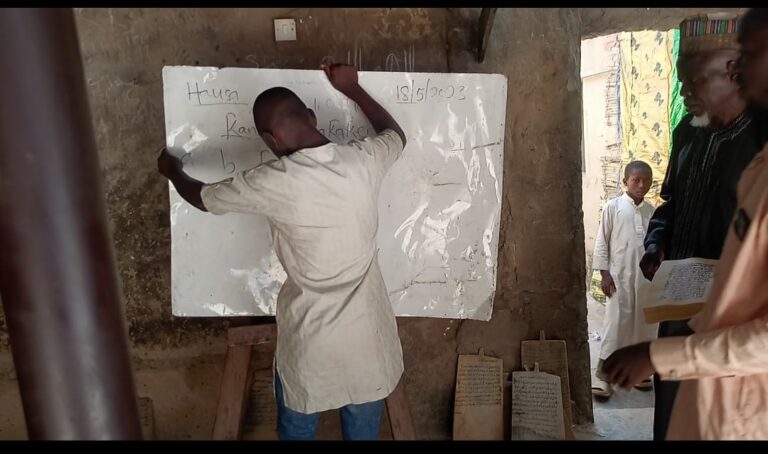
Yahaya Ibrahim and Muhammad Bilyaminu, both 16-year-old teenagers, are learning the alphabet and numbers both in Hausa and English languages for the first time in their lives, thanks to the World Bank’s sponsored Better Education For All (BESDA).
“Now I can read letters on the wall when I see them,” he said with a wide grin, but occasionally avoiding eye contact.
“We enjoyed the classes; we liked everything they were teaching us,” they replied.
Though pleased with the newly acquired literacy skill, Ibrahim was sad that basic literacy classes stopped in December 2022. He was looking forward to learning more.
Continuing to tertiary institutions is not a priority for him. He wishes to be able to read better and comprehend faster.
“I hope they will come back and continue,” Ibrahim stated hopefully.
Bilyaminu
Bilyaminu’s (earlier mentioned) wish is slightly different from Ibrahim’s. He wants more than just reading and writing. He would like to get a higher education.
He is one of the pupils of Tsangayar Malam Dauda at Tarauni Local Government Area (LGA) of Kano state, who are beneficiaries of the basic literacy classes held every Thursday and Friday.
Struggling to put words together, Muhammad was able to read two-letter words like A-T and B-Y.
“We like to sit and learn. The teachers come in every Thursday and Friday,” he smiled, reminiscing on how it felt like exploring a relatively new field.
“We are happy, we try to put words together when we walk past them. But I want to finish the Primary here and learn in a bigger school,” he stated enthusiastically.
He does not know how this will materialise, but it is a dream he shared with this reporter, hoping it would come to pass – sooner rather than later.
Ibrahim, helping display the whiteboard used for learning
The Better Education Service Delivery for All (BESDA), a World Bank initiative, was introduced to increase equitable access for out-of-school children in Nigeria.
The programne, which was implemented in Adamawa, Bauchi, Borno, Ebonyi, Kano, Oyo, Yobe, Niger and Zamfara states, is meant to improve literacy and strengthen accountability for results in basic education in Nigeria.
Part of the programme’s goal is to provide basic literacy and numeracy education for boys who do not have access to any form of western education.
The World Bank funds for the programme is $ 734.80 million and would run until October 31, 2025.
In 2019, the BESDA programme kicked off with Cohort I, spanning two years; another set of voluntary teachers was chosen for Cohorts II and III, which ended in 2022.
Currently, volunteer teachers patiently await the kickoff of Cohort IV. However, some state governments where the programme is being run have not disclosed when the exam and selection for Cohort IV will begin.
During this period, some Almajiri schools (Tsangayu) were enrolled in the programme to help equip the students with basic literacy and numeracy, which they would otherwise not have.
What is the Almajiri education system?
The Almajiri system of education, mainly practised in the northern part of Nigeria, dates back to the pre-colonial era when early Qur’anic scholars took students from very far distances under their wing for the memorisation of the holy Quran and the learning of Islamic principles, jurisprudence, values and theology.
Parents entrust their children (usually between the ages of seven to 15) to the Alaramma (Quranic teachers) for the memorisation of the holy Quran while maintaining contact with the mallam to provide food and other necessities for the child as he studies.
In the beginning, the boys did not beg as widely seen today. Instead, they went to farms, gathered firewood from the bush as well as did some menial jobs for members of their community, who in turn provided support and care through gifts and Zakat donations.
However, over time, the boys now go through the streets begging for food while a few do menial jobs to feed themselves. So, now, the boys fend for themselves while in the Quranic school.
Right programme, wrong approach
It is not just the students, but also the teachers and other stakeholders who share the same enthusiasm about the programme – it is the right programme, but there is a but.
The mixed education’s continued survival, even without government involvement, may depend on the provision of food and other necessities.
Malama A’isha Muhammad Lawan taught Bilyaminu for a few months.
She also taught about 15 Almajiri boys at Tsangayar Malam Dauda at Tarauni LGA, Kano mostly within the age range of 6-17.
She said, “I am proud of how fast these boys learn, but because they have to go out and beg for food, detergents, and sometimes bath soap, they leave classes early.”
These challenges, according to Muhammad, could cause the programme to fail later.
Also speaking, the chairman of Alarammas ( Quran memorisers) in Nassarawa LGA, Malam Ayuba and the proprietor of Tsangayar Malam Ayuba at Kawo, said the programme is “really good” adding “that was why we accepted it in the first place.”
“The teachers are selfless, despite that the government would owe them months allowances of N15,000, they never missed classes,” he noted.
The chairman, who said he started running his Tsangaya School 41 years ago, said, “The students are enjoying the classes, else we would not have allowed it. We want them to continue the classes, this is education, not a joke.”
The elderly Alaramma was excited about how his boys have gained some new knowledge – being able to read and write using the English & Hausa letters, without having to forsake Qur’anic memorisation.
hairman of Alarammas ( Quran memorizers) in Nassarawa LGA, Alaramma Malam Ayuba and the proprietor of Tsangayar Malam Ayub
He said that in a generation that is fast growing in different aspects, the boys also need to be exposed to Western education, even if it is at the basics.
But even he believes the programme will not last.
“Government is not fulfilling its promises to us, or even paying the voluntary teachers their allowances,” he lamented.
He fumed about how they were tricked with promises for the provision of food for the boys.
“They promised us that they would provide funds to our wives to cook for the boys, this way the boys would not have to go out to beg for food during hours for classes, but they never fulfilled the promise,” he said.
Sadisu Salisu is an expert and researcher in the Northeast on Almajiri education and insurgency, he believes the BESDA system is an excellent initiative that is yielding amazing results in states where it is being implemented.
“In Yobe, I have seen some of the results, when I was in Yobe.”
Parents are willing to enrol their children/wards in Tsangayas (Quranic memorisation schools) with a touch of Western education.
He said this singular act made the BESDA programme trustworthy to the Alarammas and their student’s parents.
A Tsangaya product himself, Salisu said, “One of the innovations or things they did I felt good about was the fact that they drew some of the facilitators/teachers from the Tsangaya and have them teach in the same Tsangaya.”
“The success (In Yobe) hugely depended on the effective implementation and integration, which they tried to do. As I said earlier, they engage the Alarammas. Some of the Alarammas are teaching in the school, some of the Gardis (most senior Almajiri students) are teaching in the school.”
In case a Tsangaya cannot produce teachers with the skills needed, they (instructors) were sourced from the neighbourhood where the Tsangaya is located, he disclosed.
“The Alarammas are asked to nominate someone from their area, someone they trust,” Salisu stated. “This is fundamental in dealing with the Tsangaya people. Now, in some Tsangayas in Yobe, even without government intervention, Tsangaya schools offer Western education up to secondary school level.”
For example, Salisu pointed out that Darul Furqan Tsangaya Model School is a privately run Tsangaya school that now teaches both Qur’anic and western education.
He said the programme is also doing well in Kano but still has a long way to go.
Why we may not fully support the BESDA programme in our Tsangaya – Group
Even though equipping these promising boys with basic literacy and numeracy is doing them good, some parents and Alarammas still do not seem so enthusiastic about it.
Alaramma Misbahu Aliyu Babagoni is the Kano Voice of Alarammas association’s secretary
An alaramma, Misbahu Aliyu Babagoni is the Kano Voice of Alarammas association’s secretary, and he told this reporter that he believes that “the BESDA system is in rivalry with the Qur’anic education.”
“So, the only way to make the Alarammas of the Tsangayas at ease and believe this is done in their best interest is for the rich and mighty to enrol their children in the Tsangaya schools.”
Personally, Goni Misbahu does not support the incorporation of Western education into the Tsangaya system, and it is not practised even at his Tsangaya.
He believes sooner or later, the other Tsangayas will turn against the programme as well unless they are properly reoriented on the matter.
Parents, however, have mixed feelings. Some believe they are doing their children a lot of good by sending them to Tsangaya, and that any attempt to introduce a foreign concept is not readily acceptable.
“We would like our boys to just attend their normal Qur’anic classes, and go to another school for Western education but not in the same building,” one father told this reporter.
For many of them, introducing modern/western education into the Tsangaya is a way of diluting the old system of education, and introducing spiritually harmful content.
Older schools have better coordination of mixed education
Tahfizul Qur’an wa Ilmi at Wailari in Kumbotso LGA of Kano is one of the Almajiri schools that benefited from the BESDA programme from 2020 to early 2023.
Its proprietor, Muhammad Rabi’u Ibrahim, says it was established 24 years ago.
He rose in defence of the scheme, saying that they knew and trusted the teachers sent to them would not bring in an agenda to destabilise the Quranic foundation/values already instilled in the boys.
“The teachers live close to us, so we know one another.”
He says maybe that’s part of the reason they hold classes even when the government has owed them for months and notes how established the school is as a reason for retaining the students even during rainy and harvest periods.
“During harvest periods, the students leave to help their parents on the farms,” he shared.
He added that when the students leave, a handful of them stay behind to continue learning.
How nomadic nature, insecurity foil the programme in some Tsangayas
Although the BESDA programme is working well for some Tsangayas, this is not the same for newly established ones, where the teachers take the boys with them to work for them (on the proprietor’s farm), and some Tsamgayas in insecurity-ridden areas in Katsina and Zamfara states.
Ahmad Ibrahim is the Tsangaya proprietor of Hisbul Raheem in Gusau LGA in Zamfara State. He said there was a government programme to teach their students how to read and write in Hausa, but added that “they stopped because they (government) were unable to pay the instructors their monthly allowances.”
“Then they returned the programme to radio – they were teaching students, giving them instructions through the radio, and they later stopped that too,” he added.
He said insecurity also played a role in discouraging the teachers from going to remote villages.
“The boys from the villages of Magami, Rijiya, and others came to us and they were included in the programme before it stopped,” he said.
He lamented how insecurity has ravaged all local governments in Zamfara, making residents leave for safety, and losing the chance to learn any kind of knowledge.
Birnin Magaji, Kaura Maradun, and Anka local government headquarters used to be safer, but even those places are no longer livable since the government officials have relocated to town, Ibrahim observed.
The story is similar in Katsina State where insecurity has persisted for a while.
An official at the State Universal Basic Education Board who spoke anonymously confirmed how insecurity prevented the implementation of the programme.
He said it is a sensitive issue he could not elaborate on, adding, “This is a state secret.”
Other Tsangaya not plagued by insecurity are disrupted by the nomadic nature of some of the proprietors.
Alaramma Muhammad’s Tsangaya, a Tsangaya in Kumbotso LGA in Kano was closed when we arrived. This reporter earlier arranged a visit.
However, after a phone call, he said he had left with his students to harvest produce on his farm in Zaria, Kaduna State.
“I am sorry we could not meet, we are here working on the farm,” the proprietor, Muhammad stated.
The nomadic nature of some of the Tsangayas deprives some of the boys of a chance for basic education, either with the government’s support or otherwise.
However, Tsangayas with private investment and documented arrangements with parents prevent them (parents) or teachers from withdrawing students for farming.
Another Tsangaya, Madarasatu Hubbin Nabiyu Littahfizul Qur’an fi Tarbiyatul Zikhrullah at Kwarin Goje, a private school, models mixed education – with the introduction of basic literacy and numeracy to its boys
Being in existence for over 20 years, it introduced the Western education system five years ago, without any government support!
Aside from the introduction of the system to the Almajiri boys, the school also widened its acceptance to include girls.
Malam Ibrahim Zakariyya Mukhtar, the school’s spokesman, says they could not sit by and watch their students being unable to catch up with the rest of the world.
“Seeing how the world is changing, our proprietor Muhammad Makiyi, decided to introduce the Islamiyya aspect and Western education. We call the Allo students (Tsangaya), boarding students.”
He revealed that all teachers in the school are National Certificate of Education (NCE) holders paid by the school, unlike other Tsangaya schools where parents do not pay a kobo.
“If the government had included us in the programme, it would strengthen them.”
He further shared that it is not too late to include them as the IV cohort of the programme is yet to begin. But the proprietor of the school, Muhammad Makiyi is sceptical about the government’s involvement.
“I want them to help, and I do not want their help, it depends,” he said. “We already have a system that works, all the teachers you see are NCE holders and I like how things are going.”
He pointed out the need for the government to support the students with teaching/learning materials and a curriculum (for the literacy and numeracy program).
“We will welcome these. For Western education, we teach it here from Saturday to Wednesday for the rest of the students. For the Almajiri students, sessions are held on Thursdays and Fridays.”
Kano government appreciates the impact of the BESDA program, promises full-time employment
On October 16, 2023, the Kano State governor, Abba Kabir Yusuf, said he was pleased with the performance of BESDA teachers in the overall programme (including where it is implemented in conventional schools).
He further directed that the about 5,500 teachers enrolled in the programme be screened and offered permanent and pensionable employment to better strengthen the quality of education in the state.
“Let me at this juncture appreciate the role of our BESDA teachers who support uplifting our primary education. It is based on this recognition that we will do everything to assist them,” he said.
The BESDA programme was a success in many ways, including resetting the minds of parents/guardians and Tsangaya proprietors to accept a form of basic Western into their system.
According to Mallam Haruna, the immediate past BESDA desk officer in the Kano State Universal Basic Education Board (SUBEB), over 100 Tsangaya recorded success in forms of ensuring literacy and numeracy across the state’s 44 local governments and gaining acceptance from parents/Tsangaya School owners.
He added that the program was successfully carried out, the students learned, and the government has monitored the whole program from inception.
NIGERIA, Côte d’Ivoire, the two finalists at the just concluded 2023 Africa Cup of Nations (AFCON) have moved upward in the latest Federation of International Football Association (FIFA) ranking of countries in the men category.
According to the FIFA ranking released on Thursday, February 15, Nigeria’s Super Eagles rapidly moved from 42nd to 28th position, closing the gap between fourteen places on the log.
While on the continent, the three-time African champions also moved three steps up from sixth to third.
The last time the Eagles recorded the highest global ranking was in May 2013, when they were ranked 28th also.
The Super Eagles’ upward movement in this latest ranking was due to their stellar performance at the AFCON in Cote d’Ivoire.
The Eagles ended as the runners-up after losing 1-2 to the host nation, Cote d’Ivoire, at the continental football showpiece final.
The winner, Côte d’Ivoire, moved ten places from 49th in the world to 39th.
Morocco and Senegal are the two African countries within the first twenty countries in the ranking, as the former moved from 13th to 12th position to lead African countries while the latter leapfrogged from the 20th to 17th position.
Also, Angola moved up 24 places to 94th from 118th, Equatorial Guinea jerked up by nine spots to 74th, and South Africa by eight spots to 58th.
Some African countries that dropped in the ranking were Egypt, from 33rd to 36th, and Cameroon, from 46th to 51.
Ghana moved downward from 61st position to 67th.
In the CAF ranking, Morocco remained at the top of the continent, while Senegal maintained the second. Nigeria occupies the third while Egypt and Cote d’Ivoire are on the fourth and fifth positions, respectively.
Tunisia, Algeria and Mali occupy the sixth, seventh and eighth positions, while Cameroon and South Africa occupy the ninth and tenth positions.
Meanwhile, in the world ranking, Argentina remained number one while France and Brazil maintained second and third spots, respectively.
England and Belgium are in the fourth and fifth positions in the ranking.
THE Federal Government has dropped treason and felony charges against a former presidential candidate, Omoyele Sowore.
The Attorney-General of the Federation (AGF), Lateef Fagbemi, filed a notice of discontinuance to inform the Federal High Court in Abuja of the decision to end the trial against Sowore, Sahara Reporters publishers.
The notice was dated February 15, 2024.
The government stated in the notice that it also intended to drop the charges against Sowore’s co-defendant, Olawale Bakare, also known as Mandate.
“Notice of discontinuance. By virtue of the power conferred on me under Section 174 (1) (c} of the Constitution of the Federal Republic of Nigeria 1999 as amended, Section 107 (1) of the Administration of Criminal Justice Act 2015 and all other powers enabling me in that behalf, I Lateef Olasunkanmi Fagbemi, SAN, intend to discontinue charge No: FHC/ABJ/CR/235/2019,” the notice reads.
On Wednesday, February 14, the trial judge, Emeka Nwite, threatened to dismiss the case, which had been pending for more than four years.
The judge also asked the Federal Government’s prosecution team to take a position on the trial after the Federal Government’s attorneys clearly failed to state their case in court in November 2023.
Two days before the pro-democracy activist Sowore’s scheduled August 5, 2019, #RevolutionNow rally dubbed “Days of Rage,” he was arrested by the State Security Service (SSS) agents at midnight.
Sowore posted a distress tweet at exactly 1:25 a.m. just before his phone was confiscated from him, The 247ureports, an online newspaper, said.
On his Twitter handle, @YeleSowore posted a terse message at 1:25 a.m.: “DSS invades Sowore’s house”.
“He also tweeted ‘Jap’, confirming his phone must have been seized while trying to raise the alarm about his arrest,” Premium Times reported, quoting a statement from a close associate of Sowore.
Sowore was coordinating a national protest, which he called ‘a day of rage’ in 21 states on Monday, August 5, against President Muhammadu Buhari’s government over maladministration and insecurity in the country.
He had promised to “shut down” the country on the day of the protest – which he claimed would be held simultaneously across the country’s cities.
The DSS repeatedly charged him after his arrest. However, after intense pressure, the African Action Congress (AAC) presidential candidate in the last general election was eventually freed.
The legal team of human rights advocate Femi Falana, a senior advocate, represented Sowore in court.
Responding to the termination of the case in court, Sowoore, in a post on X on Thursday, described the trial as “fruitlessly malicious, tendencious and idiosyncratic.
“Five years ago, the Federal Government of Nigeria commenced a fruitlessly malicious, tendencious and idiosyncratic treason trial (persecution) against me and several other revolutionary comrades across Nigeria. We stood our ground and began a historic journey to liberate our country despite threats, the assassination of family members, state-sponsored violence and targeted attacks by security forces. We promised never to back down.
“Today, we have been vindicated on one front. The Nigerian government has terminated its own case against me, but we will not terminate our struggle for justice and liberty of our compatriots. We warned the @MBuhari regime and those who followed his ruinous path that they would face ultimate disgrace before long. We salute our revolutionary comrades. #RevolutionNow,” he posted.
THE 34th Africa Cup of Nations (AFCON) came to an end in Côte d’Ivoire with millions of viewers around the world shouting at TV screens, and an astonishing performance by Côte d’Ivoire both on the field as champions and off it as hosts.
The west African country beat Nigeria 2-1 in the final but the good news was bigger than the match. The group stage of the most important national tournament in Africa produced an average of 2.47 goals per game – the highest in the competition for over a decade.
As a sports communication and African football scholar watching the matches, I’ve noted three particularly pleasing trends at this year’s event. African football revealed its depth of talent at a national level; refereeing was by and large fair; and a tough approach to broadcasting rights has paid off. The 34th AFCON attracted record TV viewership and, with that, most likely record revenue too.
Depth of talent
On the field, the 2019 decision by the Confederation of African Football (CAF) to expand the tournament from 16 teams to 24 is paying off. Critics had believed it would bring down the level of action because of the perceived talent gap between the top nations and the rest of the continent.
But if a read of the media around AFCON is anything to go by, results on the field proved the opposite. Upsets drove emotions and no doubt developed new fans, especially in underdog nations.
The eight teams to reach the quarter finals were different from the eight that reached the quarter finals in the previous v. Although the two teams that ultimately played the championship game have now each won three editions of the competition, neither was particularly high on the list of likely winners when the tournament started.
The progress of the continent was underlined by accomplishments made by the likes of Angola, Mauritania, Namibia and Cape Verde. They overcame far better known countries to get to the knockout stage.
Video assistant referees
The use of video assistant referees (VAR) was instructive at AFCON. This is a system used globally where referees analysing television footage of the action are asked to rule on decisions.
The use of VAR was roundly praised in Côte d’Ivoire compared to the kind of controversies over biased or incorrect VAR decisions in European leagues. Former UK player Gary Neville said that Europe had a lot to learn from Africa. Portuguese coach Jose Mourinhopraised AFCON’s “unbiased” VAR decisions for ensuring every team had a chance to perform at their best.
But it was not simply the use of VARs. The match officiating by on-field officials was credible, generating few controversies.
Record numbers
CAF boss Patrice Motsepe estimates nearly 2 billion people watched AFCON on TV. The previous record was at the last AFCON, where CAF reported 65 million viewers. The tournament was broadcast to 180 countries all over the world.
Market research analysis estimates this will translate to US$75 million for CAF. It wasn’t long ago that the confederation faced a financial threat over legal disputes between it and its broadcast partners.
The total revenue from this AFCON is expected to outstrip the US$125.2 million generated from all sources during the previous edition in Egypt.
The income from AFCON has enabled CAF to increase payouts to participants as well as to those in its other competitions. Afcon’s increased visibility means the rest of the world is starting to regard AFCON as a must-watch event.
AFCON 2025
These three trends taken together, the 34th AFCON appears to have been a pleasing sign of things to come for the tournament and with it the development and visibility of African football.
Morocco hosts the next AFCON in 2025. The north African country will use the opportunity to prepare for hosting some of the games at the 2030 men’s football World Cup finals.
Morocco, which has been a regular bidder to host the World Cup, has six venues ready for the next AFCON that have been serving as “home” venues for African countries that do not have approved grounds to host international games. Morocco’s readiness is not in question.
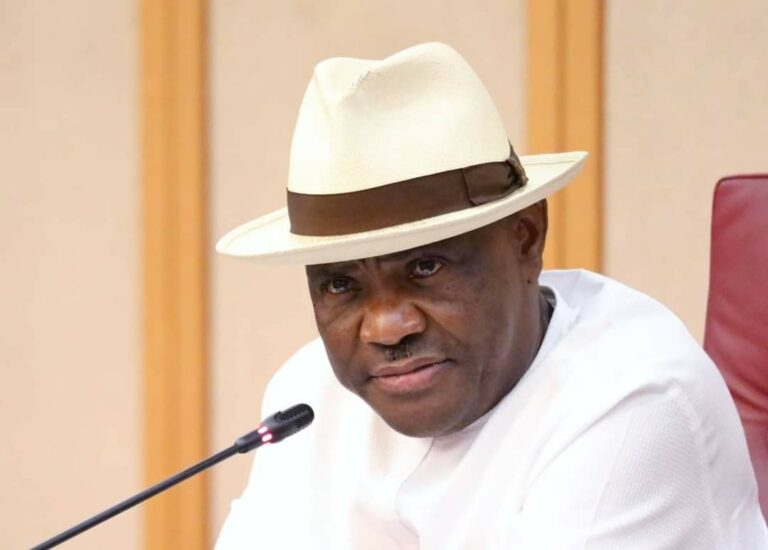
MINISTER of the Federal Capital Territory (FCT) Nyesom Wike has offered a reward of N20 million to the FCT Police Command for the arrest of two suspected kidnappers who are currently on the run.
Wike made the pledge on Wednesday, February 14, during a visit to the FCT Police Command.
He was at the command to monitor the parade of suspected criminals, including kidnappers, arrested by the police.
“Let me put money on their head. Wherever they are, put your men out there. I will give them N20 million. Go and fish them out wherever they are. I want to see them alive or dead,” Wike said.
He commended the Commissioner of Police, Beneth Igwe, for efforts being made to address the problems of insecurity in the FCT since he assumed office and promised to provide operational vehicles and gadgets to boost policing in the nation’s capital.
He also urged the FCT residents to cooperate with the police and expressed confidence in their crime-fighting abilities.
“Let me assure you that we will do everything humanly possible to provide you with all that you require to fight crime and criminality in this FCT. We believe that in the next few days, you will have more vehicles, you will have more communication gadgets that will enable you and your men to face these criminals,” he said.
Igwe became FCT Commissioner of Police on Wednesday, January 31, amid rising cases of abductions and insecurity.
Several parts of the FCT have been confronted with banditry and abductions recently, especially the Bwari Area Council.
The ICIRreported that residents of Bwari fled their homes due to the rising spate of abductions in the area.
As of January 19, at least 42 people had been abducted within the area council in 2024 alone.
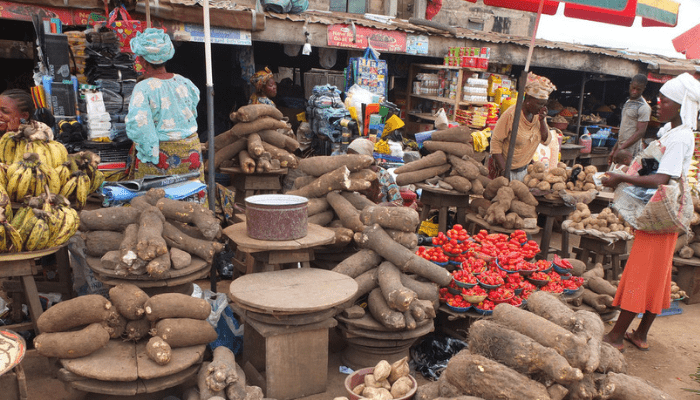
THERE is no end in sight to food price increase as Nigeria continues to suffer a major rise in import duty which is now N1,444.56/$.
This will inadvertently affect imported food and agricultural products, reports The ICIR.
In the past few weeks, there has been a series of protests in different parts of the country, triggered largely by the high cost of living and uncontrollable surge in food prices.
Nigeria is largely an import-dependent country with much of its agricultural products and raw materials for food and beverages majorly imported.
Already, the Association of Master Bakers and Caterers of Nigeria (AMBCN) has said it would commence a nationwide strike from February 27, citing concerns over the rise in prices of baking materials, sugar, yeast, and vegetable oil.
“The increase in commodity prices will continue for the average man. No respite for a drop in food prices. The other issue is that exchange rate depreciation is feeding into food inflation and commodity price rise. That is a twin problem, ” said a development economist, Dumebi Oluwole.
“There is high food inflation and the influx of cash in circulation as a result of poorly regulated cash inflow into the economy. The CBN may need to issue open market operations more to mop up cash. Above all, there should be consolidation of fiscal and monetary policy by economic managers in the country,” she added.
What NBS Foreign Trade Statistics report says
Data from the National Bureau of Statistics (NBS) revealed that total imports of agricultural goods in the third quarter (Q3) of 2023 stood at ₦643.68 billion or 7.61 cents of total imports.
This is an increase of 41.51 per cent when compared to the value recorded in the second quarter of the same year (₦454.85 billion) and by 25.50 per cent when compared to the value recorded in Q3 2022 (₦512.91 billion).
The major agriculture goods imported in the third quarter of 2023 included ‘Durum wheat (not in seeds)’ from Poland with ₦90.46 billion and Canada with ₦73.03 billion. This was followed by ‘Mackerel (Scomber scombrus, Scomber australasicus, Scomber japonicus) meat, frozen.’ from the Faroe Islands valued at ₦16.35 billion.
Industry analysts say prices of largely imported food and even home-grown food would not drop due to naira devaluation and exchange rate volatility triggered by weak exports of Nigerian exportable products.
What rise in Customs duty mean for the food price surge
For some economic analysts, the continuous increment in duty exchange rate is causing problems for businesses.
“This is not a good development for businesses, especially now we are having currency problems and commodity price surge,” Dumebi said.
This development would trigger a further rise in food prices, as for the fourth time in one month, the benchmark foreign exchange rate for computing import duties has been raised to N1,444.56/$.
The rate was adjusted on February 2 to N1,356.883/$ and reviewed to N1,413.62/$ last Friday, February 3.
According to information obtained from the official website of the Nigeria Customs Service, the latest upward review of the duty exchange rate represents a 1.9 per cent change, which is below the official CBN exchange rate of N1,481.982/$ as of February 12, 2024.
“Currency depreciation is already a major headache to businesses, and we expect initiatives and policies geared towards trade facilitation and economic growth. We must be able to enjoin the CBN to review the rate of these import duties to support businesses and facilitate trade,” Former Director-General of the Lagos Chamber of Commerce and Industry, Muda Yusuf, told The ICIR.
AMIDST the Niger crisis and the ECOWAS decision on border closure, The ICIR’s Olugbenga Adanikin and multimedia reporter Sinafi Omanga visited the border communities to document what is left of the real-live activities, crippled businesses, low-security presence and how smugglers and commuters breach Nigeria’s Illela porous border, paying between N200 to N500 at each border checkpoint under the watch of the Nigerian security operatives to enter Niger Republic.
It was precisely 12:01 p.m. on August 24, 2023.
A security official at the Nigeria Immigration Service (NIS), Illela border, sat quietly under a fairly grown tree to catch some shade from the scorching sunlight blazing at its peak.
Glued to him is a small transistor radio, a black earpiece tightly fixed at both ears, and a Joint Task Force (JTF) inscribed black T-shirt.
The Niger Republic military junta that led to the ousting of the Mohamed Bazoum administration has caused a shift in the usual security presence and buzzing activities at the Nigeria-Niger border area.
The officer was not in the usual full camouflage. But, one could tell the dark, mid-sized man was on duty manning the Nigerian-Niger border at Illela Local Government Area, Sokoto state.
From about 100 metres to the regular border gate is an erected pole with white on green inscription ‘Farewell From Nigeria.’ No vehicular or human movements. One could see the closed border with a long rusty iron barricade.
It was a dead silence. Nearby was an 18-foot iron pole with a video surveillance system and giant antennas.
Nigeria – Niger Border under lock and security surveillance. Photo Credit: Olugbenga Adanikin, The ICIR.
Illela is one of the insecurity-prone, deadly, local governments in Sokoto, with 11 districts. They are Illela, Araba, Damba, Sabon-Gari, Garu and Kalmalo. Others are Darna Tsolawo, Tozai, Gidan Katta, Gidan Hamma and Rungumawan Gatti.
In August 2023, The ICIR visited the Illela border communities to observe the usual border events, movements and cross-border trading and to ascertain whether or not President Bola Tinubu’s order on border closure received the utmost compliance following the consensus among the Economic Community of West African States (ECOWAS) to shut their borders against Niger due to the military junta.
“What do you want?” the officer at the boundary post asked. “We have come to observe activities at the border point”, replied the reporter. “As you can see, the border is shut. So, no movement.” He sounded hostile, as having journalists in the corridor called for suspicion. He stood and walked away.
Before the border, there were a few commercial motorcycles loitering about 300 metres east of the border, just by a telecommunication mast.
They perched under a tree, presumably waiting for potential clients – indicating possible movements across the porous border.
When the officer returned, some commanding officers (CO) from the Immigration and Department of State Security had asked to meet with The ICIR team. The CO of Nigerian Customs failed to turn up after being invited by his colleagues. The top officers were in mufti and did not disclose their identities. They were reluctant to speak with the journalists. According to them, they were not permitted to speak to the press, yet they shared a few concerns about bandit attacks.
Few weeks ago (July 2023), two officers were killed, and three were recovering, one of the top officers disclosed. The assertion was close to an earlier news report of a deadly bandit attack on two officials of the NIS. “As you can see, the border is closed, and no one can pass through this premises.”
But that claim was not entirely true; there was more to the barricaded highway.
Amidst border closure, smugglers have a field day under security watch
For a visitor who had tried accessing the francophone nation via the major highway, Niger is assumed inaccessible.
A commercial motorcycle was captured conveying a set of mattresses across Nigeria’s porous border, Illela, to the Niger Republic. Photo Credit: Olugbenga Adanikin, The ICIR.
But findings revealed commuters had discarded the regular route for alternative paths in the scrubland to access Niger. Cart pushers, okada riders, and petty smugglers use the porous border points.
The ICIR can, therefore, confirm, with multiple evidence, the movements of persons, animals and goods across the porous border areas while the heavy trucks remained grounded on the regular route.
It is no longer news that Nigeria has several un-maned border points. The immediate past chief of defence staff, Lucky Irabor, an army general, in October 2022, put the figure at 137. But the most disturbing discovery is the proximity of the illegal route to the main border gate; illegal movements are done under the watch of security operatives for a sum.
Residents at the border communities sought the opportunity to make quick cash while the security operatives looked away. That brings us to the question of whether the border was indeed closed as a result of the junta.
At about 1:46 p.m. on Thursday, August 24, the team observed a tiny footpath at the northeast edge of the famous Sabuwar-Kara market. It is a notable cattle market in Illela, but it was empty during the visit.
For several minutes, commercial motorcycles and cart pushers would occasionally ply the route. Some with passengers and others with goods.
Adjacent to the path, within the empty market, was a cluster of commercial bike riders. Most of the motorcycles popularly known as ‘Okada’ were without plate numbers. They were in the business of transporting people and goods through the narrow path across the border.
Plastic containers, grains, soft drinks, small-sized mattresses (student beds), regular Muslim prayer jugs, farm produce, and animal feeds are transported at the porous routes. They were smuggled under the watch of immigration officers, mobile police and customs at a cost.
With N3,000, you can gain access to Niger and return
From the regular inward and outward movements across the border, to ascertain if truly goods were smuggled across the border or if the goods ended up somewhere within the Nigerian territory. After all considerations, we took the risk to follow the trail. At this point, we established payment of about N500 at each security checkpoint along the border route in the bush under the watch of the security operatives.
Security operatives extorting money from smugglers at illegal border routes in Illela, Sokoto State. Photo Credit: Olugbenga Adanikin, The ICIR.
Multiple sources earlier revealed the presence of security operatives scattered across the bush on both sides of the border (Nigerian territory). As such, we were mindful of the risk of uncovering the truth.
The primary mandate of the immigration officers and other security operatives was to secure the porous border, prevent movements, and enforce the border closure policy. But the security officials were more interested in demanding money from the travellers.
It took The ICIR team N6,500 to cross the border to Niger and return.
Agric products checkpoint at De Konni, Niger Republic, an alternative border route to Nigeria via Araba community. Photo Credit: Olugbenga Adanikin, The ICIR
Analysing reason for the border closure
On July 26, the military toppled the democratically elected government in Niger Republic, spiking anxiety among West African nations. Coup in the West African bloc is gradually becoming a new normal, and Niger, since 2020, became the fourth to experience military rule after Burkina Faso, Guinea and Mali.
Led by Abdramane, a Colonel-Major, the military chief insisted on seizing power while attributing his action to worsening economic challenges and insecurity in his country. He went further to build new alliance with the neighbouring francophone nations – Burkina Faso and Mali with an unconfirmed claim of having the backing of the Russian Federation.
The ECOWAS came up with punitive actions following the government takeover. The bloc was even more determined to launch an invasive attack to restore power to the ousted leader. The decision altered regional trade and communal relationships with the Niger border communities; no flight zone affected flight operations and the African Continental Free Trade (AfCTA).
On Tuesday, August 22 laste year, the African Union (AU) threw its weight behind ECOWAS by suspending Niger over the military coup. It announced the action would remain until civil rule returns to the country.
Abdramane has since cut ties with France and the US and has almost prepared for war against the ECOWAS member nations following the threat by the regional government asking it to return power to the democratically elected government of Bazoum.
Multiple stakeholders, including religious emissaries, were sent on peace missions to dialogue with the aggrieved junta, but little or nothing came out of the discussion. The only improvement in the peace move would be the Junta’s plan to stay in office for three years, after which it promised to relinquish office.
“I am convinced that…we will work together to find a way out of the crisis, in the interest of all,” he told the ECOWAS delegation chaired by Nigeria’s former head of state Abdulsalami Abubakar.
Interestingly, many youths in the country appeared to support the military action.
Meanwhile, sanctions from the ECOWAS bloc have since prevented trading activities and cross-border movements into the francophone country. Nigeria shut its power distribution to Niger, among other sanctions, to make the military administrator revert its decision.
But preliminary findings earlier revealed Nigerians, particularly border communities around the region, were displeased due to the collapse of trading activities. As a result, the northern residents have since advocated for dialogue rather than planned military action. Among prominent Nigerians, the Former Governor of Kaduna State, Nasir El Rufai, described the Nigeriens as brothers whom the ECOWAS should not attack.
“As ECOWAS beats the drums of war, I recall the 1970s rock classic by Dire Straits, ‘Brothers in Arms,’ because a war within our subregion is a war between brothers. Indeed, the people of Niger Republic are the same as those living in Northern Nigeria.”
How we crossed…
Rahamatu Adamu Sale, a middle-aged female source, was first to respond when the team lead indicated an interest in visiting Niger. This was after a series of observations across the porous border. Seated under a shed, she was in the cluster of five other ladies who acted as merchants.
“You really want to cross the border? she queried. ‘Yes,’ The ICIR responded.
“It is risky”, she warned. The terrain has been an enclave of bandits that have terrorised the border communities for months.
Next, she met with selected commercial motorcyclists and reached an understanding.
“It will cost you N5,000 each.” After many pleas, she agreed with two other ‘okada boys’ to take the trip for N3000 for both persons on each bike and an extra N500 in appreciation.
It was the best chance to establish the border breach and illegal movements of persons and goods right under the watch of armed security operatives.
Travelling through the rough path and meandering the dangerous portions, The ICIR counted at least six security checkpoints before entering the Niger Republic. At each point, the Nigerian security operatives, through a third party dressed in mufti, demand N500 from the passersby. Some smugglers often part with N1,000 depending on their negotiating power.
People with goods and donkey carts also attempted to cross each border spot. A woman, who appeared to be in her early 30s, was seen pleading with one of the security operatives to accept N200 as she could not afford more, but the immigration officer insisted on N500.
Smugglers on Donkey head to the Nigerian border from Niger Republic. Photo Credit: Olugbenga Adanikin, The ICIR.
Eventually, the team entered Niger through the border point behind the kara market and returned through an alternative route behind Araba, back into the Illela community.
Exposing the illegalities at Nigeria’s porous border was a tortuous journey. The fear of being arrested by the Niger security operatives was one, and landing in the hands of bandits was another. Regardless, we moved.
Arriving in Niger, the local telecommunication network suddenly disappeared at Dekonni, Niger Republic.
The team sighted the Niger security operatives and the Phytosanitary Control Office, Ministry of Agriculture, Niger Republic (Republique Du Niger Ministere Charge De L’Agriculture, Poste De Controle Phytosanitaire), and multiple warehouses under lock. While on these findings, the anxiety of being caught by the Niger authorities occasionally ran through the mind.
The ICIR can, therefore, confirm the movement of goods, people, animals and extortions along the Niger-Nigeria porous borders in connivance with the Nigerian security operatives while the heavy-duty trucks stood at a halt. As of the visit, we can confidently report that an earth road (clay) was being manually put together at Araba, a few distance from Illela, to serve as an alternative vehicle route into Niger.
Abubakar Tsafe, Customs Public Relations Officer at the Sokoto/Zamfara Command, recalled, during his reaction, a similar report where the Service was accused of movements across the border. “I cannot deny the possibility of having smuggling going on in those parts of the location,” he said, stressing that Illela is a border community with several porous border points.
He attributed the weakness to banditry attacks and asked that intelligence information be shared with the Service to manage the borders effectively. “There is a limit to what we can cover.
“The border across Illela is vast; even today, we made seizures from people trying to move across the border.”
While the Police Force Spokesperson, Olumuyiwa Adejobi, kept mute after being contacted via calls and text message, Tsafe said there is a link between smuggling and banditry, with free access to illegal border routes.
He confirmed earlier findings of The ICIR where Custom officers were shot dead and others kidnapped along the axis. “I tell you, the one we can get hold of, we make arrest.”
The spokesperson of the NIS, Tony Akuneme, said the Comptorller-General of the NIS was committed to sanitising the system of corrupt officers. He asked for the name tags, but he was told the suspected officers had their tags removed. But, he promised to investigate as he was on a trip with the CG from Zaria to Kaduna.
Border closure collapsing economic activities
On August 13, 2023, Nigerians under the aegis of Arewa Economic Forum lamented huge economic loss since the Nigerian government shut its border against Niger. The forum declared it was losing N13 billion weekly with 2,000 stranded containers.
“Trade between Niger and Nigeria is largely informal, especially in perishable goods, and only last year alone, it was estimated at N177bn in goods and services like livestock and food items,” Ibrahim Yahaya Dandakata the forum’s leader told newsmen in Abuja.
The ICIR can confirm as of the visit, multiple trucks were stuck at both the Niger and Nigeria sides of the border.
Reports revealed that beyond the huge sum, the border closure has led to gradual rot of perishable items meant for exports to Niger. The then Comptroller General of the Nigeria Customs Service, Adewale Adeniyi, on August 4, visited the border stations to ensure the borders are under lock and orders by Tinubu, who doubles as the President of the ECOWAS nation implemented to the latter.
Regardless of the crisis, The ICIR can confirm Niger Republic is a strategic partner to Nigeria, even though this is not the first Nigeria will be closing its border against Niger. It did partially in 2019. Bilateral trade between both nations as of 2022 is now pegged at over $226.34 million.
Data from Comtrade on international trade also showed that exports to Niger stood at $195.85 million as of 2021. Top in the exports, according to the data last updated in August, identified tobacco, mineral fuels, oils, fertilizers, and Cocoa, including cement, among others
But Niger’s exports to Nigeria, as of 2022, were $67.84 million. Notable in the list of exports are live animals, edible vegetables, oil distillation products, sugar, and sugar confectionaries, to mention but a few. This implies trade between both nations has been steady until the recent development.
But beyond perishable products, The ICIR, during the field visit, discovered the popular cattle market is one of the major economic hubs in Northwestern Nigeria, also affected. It is also called the Sunday market. Usually, every Sunday, thousands of traders across the neighbouring nations troop into the cattle market to do business.
They would usually trade in cattle, camel, donkeys, rams and other ruminants. But it was empty during the visit. This implies a loss in economic value. Suppliers of Liquefied Petroleum Gases (LPG) were not left out. They were already stranded as of the visit
A set of LPG Trucks stranded at the Illela Border, Illela Local Government Area, Sokoto State. Photo Credit: Olugbenga Adanikin, The ICIR.
Parked adjacent to the Mobile Police checkpoint, Illela market, multiple trucks were stuck due to the border closure. The team counted at least 13 LPG parked trucks, whose drivers hoped the border might soon open.
Bashiri Kasna, one of the drivers, said the day The ICIR visited the border made it 25 days since they arrived at the closed border.
“Life is difficult; we are struggling to survive here…..there is no avenue to feed ourselves and our family,” Kasna said. “We cannot go back because we will be at a loss. We are facing many difficulties; if you ask anyone within this border, they will tell you that the situation is worsening daily…”
One of the trucks had as its registered plate number Jigawa, RNG 920 XC.
The traders expressed worry that further closure of the border would be detrimental to the huge trade between both nations. The Arewa traders appealed to the President to consider their plea for both their interest and nation-building due to accruable taxes once the ban is lifted.
Border closure breaking family bond, crippling local businesses
Suleiman Ibrahim, a father of 15 children and married to three wives, was born in 1972 in the Aliyu Jodi district, Sokoto. He lives at Sabo Garin Giraphshi, a new settlement largely dominated by the Nigeriens in the Wamakko local government area.
Sulieman Ibrahim, a resident of Niger Community, Sabo Garin Girapshi in Wamakko Local Government, Sokoto State, narrates his ordeal due to the border closure. Photo Credit: The ICIR.
His parents, both Nigeriens, migrated to Sokoto in 1954. They lived in the same Aliyu Jodi area until his mother died in 2017. Still, Ibrahim prefers to be identified as Nigerien despite being born and living in Nigeria for most of his life.
While two of his wives and 13 children live with him in Nigeria, he has not stopped pondering on the third wife, with three children domiciled in Niger. “Contacting them has been terribly difficult” according to Ibrahim, who begged the Nigerian government and the ECOWAS to reverse its promise of using force to restore power to civilian rule in the Niger Republic, his second home.
Ibrahim urged the regional authorities to use dialogue between the warring parties, stressing that the Nigerian government’s cut in energy supply had already worsened his family’s situation in the Francophone nation.
Unlike Ibrahim, Zainab Seidu, a born Nigerien, came to Sokoto when she was 12. She was married to her Nigerian husband, a trader who had a successful cross-border business.
Zainab Seidu, a 59-year-old Niger migrant, wants the military Junta to complete the 3-year proposed tenure. Photo Credit: Olugbenga Adanikin, The ICIR.
She is currently 59 years old, with seven children and 20 grandchildren. But Seidu lost her husband in 2012. She is now more bothered about her immediate family’s grandchildren but worried about an imminent attack on her relatives in Niger.
“Democracy is the best government, but when soldiers take power, they should be offered the chance to bring the changes they promised to offer.” She advised the ECOWAS to allow the junta the three-year proposed military rule or try to reduce the duration through diplomacy.
Though Ladidi Aliyu, a Nigerian businesswoman based in Sokoto, does all her businesses within the Nigerian territory, most of her clients are from Niger.
She is into sales of women’s fabrics. The business she started in 2017 with about N70,000, she said, has grown to a net worth of 20 million. According to her, she never believed it, but it grew, especially with support from her spouse, who also exports goods to the neighbouring francophone country.
Ladidi Aliyu, a Nigerian trader at Sabo Garin Girapshi, in the Niger community, laments over her business collapse due to Niger crisis. Photo Credit The ICIR.
During an interview at Sabo Garin Girapshi, she told The ICIR she made at least N400,000 weekly. But her worst nightmare is the border closure. Her customers who travel twice a week to her store have stopped for obvious reasons.
This implies from August 4, when the border was shut, till the interview, Ladidi has lost over N1.6 million, still counting. And it is unclear when ECOWAS will reverse its decision on the border closure. She is among several other traders raising the alarm as to how the policy is frustrating their cross-border businesses.
Amuda Yusuf, the chief executive officer of the Centre for the Promotion of Private Enterprise (CPPE), told The ICIR while reacting to the crippling businesses how inevitable the border closure policy would hurt the economies of both Nigeria and Niger.
He said, unlike when ECOWAS sanctioned Liberia and shut its border against the country, Liberia did not share any border with Nigeria. Hence, there was no direct impact on Nigeria’s economy. But Niger borders multiple states in Northern Nigeria. He concluded by announcing that the political objective would supersede the economic costs.
“The truth is this kind of sanction is like a double-edged sword. It does not only affect Niger; it is also affecting Nigeria, just like the Russia-Ukraine crisis. It economically impacts the people, but the political objective will take precedence.”
He emphasised that smuggling through various means, under the watch of security operatives, is inevitable, especially in the current circumstance – a trend that existed even before the border closure.
“The other time Buhari ordered border closure, people were still smuggling. Once you have this kind of closure, it is an opportunity for agencies at the border to make money. So, I am not surprised.” You see people move tankers across the border even during previous border closures. Petroleum tankers are not small baskets of products, yet they cross the borders, which also are very porous.”
FILE: Muda Yusuf, Chairman/Chief Executive Officer, CPPE
Prof. Freedom Onuoha of the Department of Political Science and the Coordinator of the Security, Violence and Conflict Research Group frowned at the extortions at the porous border points; he said such act remains a regular occurrence even within Nigeria’s territory.
“A more sustainable solution will include implementing system-wide reforms that enthrone the disciplinary matrix as a framework for guiding the promotion of officers, installation of high-tech surveillance gadgets at the border posts, compulsory use of body cameras by all border officials, institutionalising a robust reward-sanction regime and proper remuneration of personnel,” he suggested.
However, in the context of the imposition of sanctions and border closure to compel the junta to return power to Bazoum in Niger, Onuoha said it would be extremely difficult to enforce comprehensive compliance as such policies were poorly conceived. He argued they (the policy) failed to accommodate the realities of the business people whose trade or goods are not only perishable but also uninsured. “As a result, their desperation to cut loss feeds perfectly well into the extortionate propensities of security and border officials, making circumventing the border closure a sure practice and inadvertently encouraging corruption in that space.”
Ladidi, as of the visit, is sad that her business is shrinking, yet she is helpless.
She is considering divesting into other businesses – renting smaller apartments to retain her capital. But does she have the business acumen to run the new venture? It’s a risk she might need to face amidst the continuous lockdown of the nation’s territorial border with Niger.
THE House of Representatives Committee on Public Accounts (PAC) has threatened ministries, departments and agencies (MDAs) flouting the treasury single account (TSA) regulations with sanctions.
The committee said it was also investigating the alleged leakage of revenue accruing from Remita-(a payment gateway that enables the remittance of taxes to relevant government agencies) as part of measures to uphold transparency and accountability.
It has, therefore, summoned the governor of the Central Bank of Nigeria (CBN), Yemi Cardoso, Minister of Finance and Coordinating Minister of the Economy, Wale Edun, and representatives from the Accountant-General’s Office to appear before the House on February 28.
The decision to probe and sanction defaulting MDAs came after a hearing presided over by Bamidele Salaam, Chairman of the House Committee on Public Accounts, on Thursday, February 14.
The session was convened to probe instances of alleged leakages and non-remittance of TSA revenue generated through Remita, originating from a motion co-sponsored by lawmakers Jeremiah Umaru and Jafaru Gambo, both members of the All Progressives Congress (APC)
The committee chairman, Salaam, said, “The investigation is not a witch-hunt targeting any company but rather a crucial step towards transparency and ensuring accountability for the federation’s revenue.”
During the hearing, Deremi Atanda, Managing Director of Remita Payment Service Limited (RPSL), clarified that Remita was not managing government revenue.
He said it was an indigenous software and payment gateway channelling collected funds directly into CBN accounts.
He emphasised that revenue losses could not occur within the Remita platform, with the technology being designed to provide real-time data on the banking statements of all the MDAs using the platform.
Atanda further debunked the allegation of a one per cent fee charged by the Federal Government and Remita for processing TSA transactions.
Referencing the CBN circulars of November 2018 and December 2020, he confirmed that the applicable fee for processing TSA payments was N150 with applicable value-added tax VAT irrespective of the amount paid to any Federal Government MDA account at the Central Bank.
He also denied unauthorised fees beyond the N150 per transaction and affirmed that Remita offered free value-added services to the Federal Government despite foreign hosting costs.
According to him, banks receive 33 per cent, CBN gets 11 per cent, Nigeria Inter-Bank Settlement System Plc (NIBSS) takes 10.5 per cent, and the Office of the Attorney-General of the Federation (oAGF) gets 2.5 per cent share.
Similarly, Remita and other stakeholders, including card issuers, collectively share the remaining 43 per cent of funds paid through the platform.
Billy Osawaru, representing Orhionmwon/Uhunmwonde Federal Constituency of Edo State, and who initiated the motion to summon the CBN governor, AGF and Minister of Finance, decried the lack of documents at the investigative public hearing.
He was troubled by the Central Bank’s failure to produce documents, contrasting sharply with Remita, which provided a contract signed by the CBN.
In his decision, the House Committee on Public Accounts chairman, Salam, said it was important for the Minister of Finance and Coordinating Minister of the Economy, CBN Governor, and Accountant General of the Federation to appear before the committee on Tuesday, February 20.