Home Blog Page 688

Bye-elections: INEC raises alarm over plans to disrupt process

0

THE Chairman of the Independent National Electoral Commission (INEC) Mahmood Yakubu, has raised the alarm over alleged plans to disrupt the re-run and bye-elections slated for February 3 in various parts of Nigeria.

Yakubu raised the alarm on Tuesday, January 23, in Abuja at the first quarterly meeting of the Interagency Consultative Committee on Election Security (ICCES).

According to him, the conduct of isolated elections, such as bye-elections and re-run elections, poses significant challenges, noting that it’s essential to be vigilant about the disruptive behaviours that might emanate from certain candidates and their supporters.

Yakubu said, “Arising from the reports we received from the states, concerns have been raised about the impact of the prevailing insecurity in some states on the conduct of the elections, made worse by incendiary statements by some political actors.”

According to the INEC boss, the elections initially affected 35 national and state constituencies, stressing that four additional orders of the Court of Appeal were served on the commission in respect of Yabo/Shagari Federal Constituency of Sokoto State, Madara/Chinade State Constituency of Bauchi State, and Kudan and Kauru/Chawai State Constituencies of Kaduna State.

“This brings the total number of affected constituencies to 39, which translates to 2.6 per cent of the 1,491 constituencies for which elections were conducted nationwide in the 2023 general election,” Yakubu said.

He further highlighted the crucial role of security agencies in ensuring a secure environment for deploying personnel and materials and safeguarding all election stakeholders, including the media.

He also said that the commission had released the timetable and schedule of activities for the two off-cycle governorship elections in Edo State, scheduled for September 21, 2024, and Ondo State, to be held on 16th November 2024.

He noted that party primaries and nominations of candidates shall be done not later than 180 days before the date fixed for the elections as required by the Electoral Act 2022.

Aiyedatiwa dissolves Ondo State Executive Council

0

ONDO State Governor Lucky Aiyedatiwa has dissolved the state Executive Council and ordered all cabinet members to hand over to their respective permanent secretaries.

Chief press secretary (CPS) to the governor, Ebenezer Adeniyan, disclosed this in a statement on Wednesday, January 24.

The governor also dismissed all senior special assistants (SSAs) and special assistants appointed by his late principal, Rotimi Akeredolu.

“All members of the cabinet are to immediately hand over to the permanent secretaries or the most senior administrative officers in their respective offices. Also, all senior special assistants (SSAs) and special assistants (SAs) are relieved of their duties with immediate effect.

“All the affected officials are directed to hand over all government properties in their possession,” the statement partly read.

On January 2, Aiyedatiwa ordered caretaker chairmen in the 18 Local Government Areas (LGAs) and 33 Local Council Development Areas (LCDAs) in the state to vacate office.

He directed them to hand over to the Heads of Local Government Administration (HOLGAs) in all the LGAs/LCDAs.

Aiyedatiwa became governor in December 2023 after Akeredolu died of protracted prostate cancer.

Being Akeredolu’s deputy, Aiyedatiwa served in an acting capacity before his death and was sworn in as governor hours later.

Akeredolu’s long absence from Nigeria while attending to his health in Europe resulted in a feud between him and his deputy following the late governor’s insistence on retaining power despite being unable to function optimally.

Some Akeredolu’s aides tendered their resignation letters upon Aiyedatiwa’s assumption of office, with some citing loyalty to the late governor as the reason for their decision.

Controversies trail NNPC’s crude-for-cash loan

THERE are unanswered questions about the Nigerian National Petroleum Company Limited’s (NNPCL) $3.3 billion crude-for-cash loan from the African Export-Import Bank (Afreximbank).

The national oil company had sought to stabilise the naira with the facility, but experts are concerned about some pitfalls.

Despite the crude-for-cash arrangement, the naira has continued on a downward spiral against the dollar.

For instance, data from the FMDQ exchange showed that the naira closed at N925.34 at the official Nigerian Autonomous Foreign  Exchange Fixing-NAFEX rate on Monday, January 22.

However, at the parallel market rate, it traded at N1,360/$, showing a further decline against the dollar.

More so, there are questions about the long-term implications of the swap deal in the nation’s economy, amid Nigeria’s growing debt.

Chief executive officer of Financial Derivatives Company Limited, Bismarck Rewane, expressed worry about such arrangements by the national oil company, adding that the naira had been under pressure despite the arrangements.

“In all due respect, that will not solve the problem of the naira. The naira is still under pressure and is trading at about N1,350/$ this morning, the lowest point it has gone to in many years,” he said.

Also, the co-founder of Dairy Hills, Kelvin Emmanuel, expressed concerns over the high risk of resource-backed loans.

“I am not a fan of resource-backed loans, and this forward sales agreement that is akin to the financialisation of future oil and gas assets is an anomaly in statecraft that the National Assembly should fight with all rigour,” Emmanuel, the chief executive officer of Dairy Hills said on X.

“There is no genius in it; it is a lazy approach to getting dollars to improve your balance of payment position,” he added.

On August 16, 2023, the NNPC secured a $3.3 billion emergency crude repayment loan to support the naira and stabilise the foreign exchange market.

To make the repayment, the NNPCL said it would carry out a forward sale of 90,000 barrels per day of Nigeria’s share of offshore crude oil under the production sharing contract (PSCs) with the oil companies.

Giving details on the benchmark oil price, the NNPCL said the facility uses a conservative crude price of $65 per barrel to calculate the allocated crude to be produced and sold in the future. Brent crude price traded at $78 on Monday.

“This provides a safety margin for price fluctuations in the future,”  Chief corporate communications officer of NNPCL, Olufemi Soneye, said in a clarification statement.

He added, “NNPC Limited has reserved up to 90,000 barrels of crude for Project Gazelle, ensuring sufficient cash flow for repayment and other financial obligations.

The NNPCL had also announced its intention to make advance payments for upcoming royalties and taxes to the Federal Government.

This will be done using the $3.3 billion in financing it secured from the African Export-Import Bank last year. This has raised further concerns about the impact of the borrowing, which puts further pressure on the naira.

Uproar as Ogun speaker gets impeached

0

THERE was a mild drama at the Ogun House of Assembly on Tuesday, January 23, as the Speaker, Olakunle Oluomo, was impeached by 18 of the 26 members of the Assembly.

In a video posted by Arise News, The ICIR observed lawmakers quarrelling and shouting in the house, with one, clad in white attire and a white cap, seen moving around the Speaker’s seat with the mace.

According to the report, Oluomo’s opponent at the last speakership election, Oludaisi Elemide, was subsequently announced as the new Speaker.

Elemide was later seen sitting in the speaker’s seat, with security personnel present at the House.

Elemide is a third-term lawmaker representing Odeda state constituency.

Also, according to reports, the lawmakers noted that the Speaker was removed due to gross misconduct and financial misappropriation, among others.

The ICIR reported that the impeached Speaker, Oluomo, and others, Adeyemo Adedeji Taiwo, Oladayo Samuel and Adeyanju Amoke (now at large), were arraigned on 11 counts of conspiracy, forgery, stealing and money laundering preferred against them by the Economic and Financial Crimes Commission (EFCC) in September 2022.

The EFCC told the court that the defendants committed the alleged offences in Ogun State between 2019 and 2022.

According to the commission, the suspects allegedly stole the sum of N2.47 billion from the treasury of the Ogun State House of Assembly.

However, despite the corruption allegations against him, Oluomo was re-elected as the Speaker in June 2023. 

He was re-elected unopposed after about hours of drama and last-minute pressure on his main opponent, Oludaisi Elemide, to quit the race.

Impeachment not targeted at governor – Elemide

Meanwhile, in his inaugural address following the impeachment, the new Speaker, Elemide, clarified that the impeachment was not aimed at the state governor, Dapo Abiodun, contrary to speculations. 

He also said that the development fell within the constitutional rights of the members to choose who leads them in the House, urging members to stay calm.

Some deep fakes, AI-generated contents to watch out for in 2024

ARTIFICIAL Intelligence (AI) can bring about favourable shifts in society, such as higher levels of access to education, better healthcare, and increased productivity.

Even if AI has its advantages, there are significant ethical and societal ramifications that need to be taken into account such as privacy, security, job displacement, and information disorder.

In 2023, a funky picture of Pope Francis wearing a puffy jacket appeared online, marveling a lot of people as people believed it to be real. What most who saw the photo didn’t know was that it was AI-generated.

When individuals are unable to distinguish between AI from reality, issues occur including likely misinformation. Alternatively, when deliberately created AI content is used to deceive people, that is disinformation.

Experts have expressed concerns about the prevalence of AI-generated content and new patterns in which it would be played out in 2024. Some of them include:

1. U.S. Elections

Just like we saw disinformation and misinformation played out in Nigeria’s 2023 general elections, disinformation and AI experts have projected that the use of  AI for misinformation and disinformation would pose a threat to the 2024 U.S. elections and democracy as malicious actors will increasingly use generative AI to spread disinformation which would not only affect the United States but other countries of the world who are looking forward to their elections.

2. Voice-cloning scams and impersonation

Apart from using AI-generative content to amplify misinformation, scammers are also devising new methods of using AI-generative content to defraud people of their monies. The old style of scammers calling and pretending to be a relative or friend has gone a step further as scammers now use AI to clone the voices of individuals in order to scam people.

This also plays out on social media as scammers now use AI-generated images of women and AI-generated texts to steal money from people on dating and social media apps.

Apart from using AI-generated content to scam people, it is also being used to impersonate people.

Egemba Chinonso Fidelis, a popular Nigerian doctor and social media influencer, was impersonated with AI in September 2023. As a Facebook page (archived here) had posted deepfake videos of him advertising a cream that cures joint pain and arthritis.

Dr Fidelis disclosed this weeks after the video had gone viral stating that it was a video of him when he just had his surgery earlier in the year that was manipulated.

This also happened during the recent off-cycle governorship elections in Nigeria as a deepfake video of the People’s Democratic Party (PDP) gubernatorial candidate in Imo state, Samuel Anyanwu, claiming to have stepped down from the race and declaring his support for the All Progressives Congress (APC) candidate, Hope Uzodinma, went viral until the PDP candidate debunked the claim.

AI cyber-bullying and cyber harassment

Cyber-bullying and cyber harassment often manifest as a form of fake news.  It employs tactics such as rumours, post-truths, lies and sometimes mal-information. Politicians, government officials and public figures are most times victims of cyber-bullying, which we saw played out in the previous Nigerian elections.

Cyber-bullying might take a different turn in 2024 as AI-powered tools are already being used by social media trolls to magnify their abusive messages and more readily target people who are easily sensitive. AI intensifies cyber-bullying by creating realistic fake content, posing a heightened threat to young individuals and their families.

While it is being used by malicious actors for cyber-bullying, AI tools can also be used to prevent cyber-bullying by detecting and correcting several forms of cyber-bullying to mitigate the harmful effects of cyber-bullying in online forums, social media apps and websites.

Way forward…

In October, media reports stated that the National Broadcasting Commission (NBC) sent a bill to the National Assembly seeking to repeal and re-enact the NBC Act, CAP L11 laws of the Federation of Nigeria (2004), to enable the NBC to regulate social media when passed.

The Nigerian government had earmarked a budget of N24.5 million to the ministry of Information and National Orientation to tackle fake news out of the  N27.5 trillion for the 2024 fiscal year.

The funding is expected to support the agencies in facilitating “special enlightenment campaign on government policies and programmes; testimonial series to gauge impact of government policies on the citizenry, advocacy against fake news, hate speech, farmers-herder clashes, banditry, rape etc.”

The FactCheckHub reports that experts had stated that the budget allocation targeted at combating misinformation was insufficient and shows the lack of political will to stem its rise.

The report added that the Federal Government was not ready to complement the efforts of fact-checking organizations working hard to minimize the impacts of misinformation and fake news in the country which could be deduced from the goal outline of the ministry as the fight against the increasing prevalence of misinformation and disinformation, including AI-generated content and deep fakes.

Kunle Adebajo, a fact-checker and Investigations Editor at Humangle noted that it is the responsibility of lawmakers, regulators, and tech corporations to ensure that the distinction between reality and fiction is not entirely blurred.

“The thing with artificial intelligence technology is that it is getting better at an exponential rate. And it is almost impossible to distinguish between content that is generated by AI and that which is made by humans,” Adebajo stated.

He added: “Some of the loopholes fact-checkers look out for in generative AI material are getting ironed out as updates are made to the applications. What this means is that the burden of ensuring the line between fact and fiction is not muddled completely now lies with the regulators, policymakers, and tech companies.”

He said that although it could be used in a lot of positive ways, it could also be used in nefarious activities if not regulated properly.

“If more and more people have easy access to advanced deepfake technology, yes it could be used in a lot of positive ways. But it will also be used for fraud, cybercrime/warfare, unethical propaganda, and to spread hate speech and misinformation. We’ve already seen some examples of this and it will only get worse unless drastic measures are taken,” he said.

This report is republished from The FactChceckhub. 

One chance: FCTA to ban unpainted taxis

0

MINISTER of Nigeria’s Federal Capital Territory (FCT) Nyesom Wike has said unpainted taxis and buses would soon be banned from operating on roads within the Territory as part of measures to address the issue of criminal gangs disguising as commercial drivers.

Wike disclosed this while speaking to journalists in Abuja on Monday, January 22.

“We are not going to allow vehicles that are not painted with FCT colour and registered by the FCTA to ply commercial in the territory. That way, you know the driver is certified by the FCT and the buses and the taxes were also approved by the FCT.

“When this is done, you as the passenger will not take the risk of going to board any vehicle that you don’t even know,” he said.

Last year, in a detailed investigation, the ICIR reported the one-chance menace in a report titled  Caught in the belly of one-chance robbers: Nigeria’s major cities hotbed for crime on passengers.

The minister also noted that operators of e-hailing services would be required to register with the Federal Capital Territory Administration (FCTA) for easier identification of drivers.

He stated that the absence of official terminals for residents was contributing to the problem of “one chance” operations. He argued it was part of the issues to be addressed by his administration in 2024.

“What we are trying to do in the 2024 fiscal year is to at least build three terminals for a start so that we will know the buses and taxes that will carry people from such terminals. When this is done, nobody will take the risk of going on the road to wait for a taxi. That way, you will be able to reduce crime,” he said.

Activities of one-chance operators in the FCT have endangered the lives of residents for many years.

In September 2023, FCT resident Greatness Olufemi died of wounds sustained during an attack by a one-chance gang in Abuja.

Olufemi was pushed out of a moving vehicle by her assailants and died shortly after.

Stakeholders react to Otedola’s acquisition of Dangote Cement shares

0

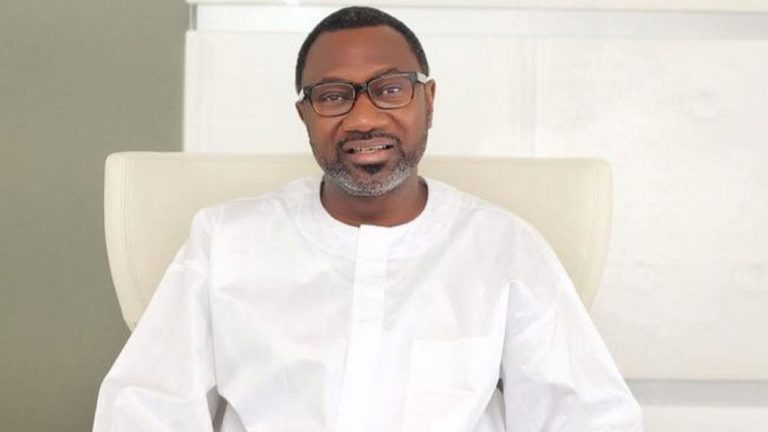
FEMI Otedola’s recent acquisition of Dangote Cement shares has sparked reactions from stakeholders in the capital market.                 

Otedola sparked controversy among stakeholders in April 2023 when he acquired 2.25 billion shares of Transnational Corporation Plc (Transcorp) to challenge the controlling power of his rival billionaire friend, Tony Elumelu.

On Monday, January 22, Otedola announced acquiring a significant share in Dangote Cement in a statement, confirming an earlier report of his buying interest in the Nigerian most capitalised stock, which crossed the N10 trillion mark at the close of trading on Friday.

Otedola’s move to acquire shares in Dangote Cement might elicit reactions given his similar move for Transcorp shares, the National President of New Dimension Shareholders, Patrick Ajudua, told The ICIR.

He, however, noted that it was within Otedola’s right to acquire shares of any companies he deemed suitable.

“But the takeaway here is the positive impact such a move has on the shares of Dangote Cement on the floor of the Exchange. The move has resulted in more than 30 per cent share appreciation of Dangote Cement shares within three days of trading.

“So for investors in the company’s shares, it has created better yield and good returns on their investment,” Ajudua said.

For the national chairman of the Progressive Shareholders Association of Nigeria (PSAN), Boniface Okezie, Dangote Cement only has strong competitors in the industry apart from Lafarge Cement and BUA Cement.

“Is it that Femi wants to gain experience and go into cement production, or could it be another way to diversify into another area of interest? This will be the first time he will invest in this company since its inception,” he said.

Okezie further told The ICIR that shareholders had no problem with Otedola entering into acquiring shares in Dangote Cement.

“It is a welcome development for me. There is no problem with Femi Otedola coming on board in that sector. After all; he is not a stranger in the boardroom of the quoted company,” he added.

An investment and portfolio analyst, Abel Ezekiel, opined that Otedola seemed like a “pump-and-dump” investor who stirs up unnecessary acquisitions in the capital market.

“He is the only one who understands the aims behind all his activities. He stirred up FirstBank’s price recovery and movement, having targeted many shares and becoming the bank’s chairman.

“Now he is moving into Dangote Cement. It is not as if Dangote Cement is seeking a merger whereby you will say maybe through that, he can become a substantial shareholder. Look at what is happening in Dangote Sugar and NASCON (NASCON Allied Industries), which people are looking towards the birth of Dangote Foods.

“Look at WAPCO (Lafarge Africa); the company has languished below N50. It has even recently moved to the current price, courtesy of the rally in the capital market. This is a company he (Otedola) can pump up to contend with all these BUA Cement and Dangote Cement,” Ezekiel argued.

Ezekiel worries that Otedola could invest in Dangote Cement, move the price up and then dump the shares in the hands of innocent investors.

He added that Dangote Cement was going into N600 on N20 dividends. “Is that worth declaring? Will that justify the price at the end of the day?” he queried.

In the official statement he issued on Monday, Otedola’s move underscores his confidence in Dangote Cement’s potential to generate foreign exchange for the country and his dedication to supporting businesses contributing to Nigeria’s economic resilience.

“Dangote Cement’s export capabilities and extensive operations across Sub-Saharan Africa are essential for regional economic integration and growth. My investment is a testament to my confidence in its potential to propel Nigeria’s and Africa’s industrial and economic development,” Otedola said.

He maintained that Dangote Cement’s unique position with two export terminals offered a substantial opportunity to earn foreign exchange, which is crucial for Nigeria’s economy, adding that the company’s pan-African presence makes it an ideal investment choice.

“In my investment decisions, I focus on long-term wealth preservation and ensuring shareholders are the ultimate beneficiaries of a company’s success. Companies like Dangote Cement, which consistently deliver value to their shareholders, are fundamental for sustainable economic growth. My investment reflects my belief in its capacity to continue providing significant returns and my commitment to businesses that prioritise their shareholders,” he added.

Otedola owns businesses in oil and gas, hotels, real estate and investments, and he is the current executive chairman of Geregu Power Plc.

Plateau conflict: Mutfwang declares 24-hour curfew in Mangu

0

THE Governor of Plateau State, Caleb Mutfwang, has declared a 24-hour curfew on the Mangu Local Government Area of the state.

The curfew, which resulted from the tense security situation in the area, is with immediate effect.

This was disclosed in a press statement on Tuesday, January 23, by the governor’s spokesperson, Gyang Bere.

Bere said the governor took the decision after consulting with the appropriate security authorities in order to prevent a breakdown of law and order in the LGA. 

He stated that until further notice, only those performing essential tasks could move within the LGA. 

He advised residents of the LGA to adhere to the sit-at-home order.

“He (the governor) lamented that some people are still determined to create an atmosphere of insecurity in the state despite the government’s efforts to end the activities of terrorist elements.

“He expressed his sympathy to the families of the victims and the injured and assured them that the government will not relent in ensuring lasting peace in the state,” the statement reads in part.

The governor said despite measures to curb terrorists’ activities, certain persons were determined to sow seeds of fear throughout the state.

He condoled with relatives of people who died from insecurity-related causes in the state, assuring them that the government would not back down in its efforts to ensure enduring peace in the state.

He pledged that the curfew would be revisited as soon as the security situation in the LGA improves.

The ICIR reported that protesting women burned down the house of the traditional ruler of Bokkos Local Government Area of Plateau State, Micheal Adanchi, over protracting insecurity.

According to reports, the incident happened around 12:30 p.m. on Friday, January 5.

The women were reported to have set fire to the house in retaliation to the arrest of some people who were said to be involved in some of the recent killings in the area.

The ICIR reported that about 96 people were killed in an attack by gunmen on several villages in the state on December 24..

Many people were also injured in the attacks, which were carried out in Bokkos and Barkin Ladi LGAs of the state.

About eight vehicles were burnt in the process.

The state commissioner of Police, Okoro Alawari, disclosed this on Tuesday, December 26, in a statement signed by the command’s spokesman, Alabo.

On Monday, December 25, The ICIR reported how the assailants attacked several communities in the state, killed scores of residents, looted farm produce, and set homes ablaze.

Reacting to the incident, the state commissioner of Police expressed grief over the attacks and directed the deputy commissioner of Police in charge of operations to relocate to Bokkos LGA and also deployed a team of operational forces to the affected areas to prevent further attacks and assess the level of damages in the affected areas.

However, there are indications that casualties in the attacks are higher than the figures provided by the Police. 

Several reports suggested that over 100 people were killed, and approximately 23 villages were affected.

Plateau state is one of the states facing ethno-religious conflicts in Nigeria.


Road accidents killed over 5,000 in 2023 – FRSC

0

THE Federal Road Safety Corps (FRSC) has said over 5,000 people died in various road traffic crashes (RTCs) in 2023.

Corps Marshal of the FRSC, Dauda Ali-Biu, disclosed this on Monday, January 22, in Abuja at a press conference to commemorate the conclusion of the organisation’s statewide “operation zero tolerance.”

According to Ali-Biu, the Corps’s implementation of a holistic strategy resulted in a 21 per cent decrease in RTCs when the 2023 fatalities are compared with 6,456 who died 2022.

He said from January to December 2023, the Corps ensured upward mobility in mobilising human and material resources to achieve maximum impact.

“From January 1 to December 31, 2023, a total of 10,617 RTCs were recorded across the country. This figure is against 13,656 in 2022, which represents a 22 per cent decrease.

“Also, 2023 records reveal that 5,081 people were killed against 6,456 in 2022, representing a 21 per cent reduction, while 31,874 victims got injured in 2023, against 38,930 in the year 2022, signifying an 18.1 per cent decrease,” he said.

Despite the decline, the FRSC boss stated that the number of RTCs and related deaths was still too high.

He cautioned drivers against overloading and night travels.

He added that driving at night on Nigerian roads is linked to several dangerous driving habits, including poor visibility, overspeeding and exhaustion.

According to Ali-Biu, driving at night puts all drivers at risk.

He said the FRSC held 93 special mobile court sessions nationwide in the past year and convicted 1,159 drivers.

The offenders were apprehended for committing 33,892 offences against 25,40 committed in 2022, which signifies a 33 per cent increase in offence.


AFCON: Super Eagles edge Guinea-Bissau, 1-0, may face Morocco, Congo DR, Mozambique in round of 16

0

THE Nigeria’s Super Eagles defeated Guinea-Bissau on Monday, January 22, in the last Group A stage match to seal their qualification for the round of 16 knock stage in the ongoing African Cup of Nations (AFCON) tournament.

The match was played at the Felix Houphouet-Boigny stadium in Abidjan.

The last group stage matches between the four countries in Group A; Côte d’Ivoire, Equatorial Guinea, Nigeria and Guinea-Bissau determined the top two countries to qualify for the next stage.

Before the start of the game, Nigeria was on the second position on the log with four points drawn from their first two matches; a draw against Equatorial Guinea and win against Cote d’Voire.

It needed a win to keep its flag raising at the continental showpiece.

The country’s determination to qualify for the knockout stage of the competition got a boost in the 30 minutes after Guinea-Bissau’s defender Arouna Sangante scored an own goal.

He latched into his net Moses Simon’s cross from the left flank.

The lead increased the confidence of the Super Eagles.

But despite their lead, the Super Eagles who played with 3-4-2-1 formation did not have possessions at the midfield, opening the space for their opponents to control the park.

Before the end of the first half, Victor Oshimen could have increased the tally but nodded the ball wrongly.

The match ended 1-0 in the first half.

The resumption of the second half saw the early attempt at goal by the Super Eagles in the 47 minutes as Moses Simon lost a one on one after he unsuccessfully dribbled past his opponents’ onrushing goalkeeper.

Guinea-Bissau Gomes sought to restore parity in the 59 minutes after his long range goal was parried by Stanley Nwabali.

In the 62 minutes, Raphael Onyedika and Alex Iwobi replaced Frank Onyeka and Joe Aribo respectively.

Super Eagles continued their profligacy as Moses Simon and Victor Osimhen failed to convert their chances, casting a doubt on the scoring ability of the array of attackers.

However, Oshimen and Zaidu Sanusi scored but the center referee Moroccan Bouchra Karboubi ruled them as offside.

Also, at the death of the match, Guinea-Bissau striker scored but was canceled for offside.

The Super Eagles ended the match 1-0 while the other match in the same group between the group table leader; Equatorial Guinea and host nation, Côte d’Ivoire ended in 4-0 in favor of Equatorial Guinea.

In the group, Equatorial Guinea finished at the top position with seven points while Nigeria stayed at the second position with the same seven points.

The difference between the two teams was goal difference as Equatorial Guinea had nine goals to their advantage ahead of Nigeria which finished the group with three goals.

Nigeria will face the country that finishes second in Group F which may be Morocco, Congo DR or Mozambique Sunday, January 28.

Notes; Zimbabwe in the headline was changed to Mozambican.