Home Blog Page 69

Executive order on NNPC remittance undermines Host Community Trust – Accountability Lab

0

THE Accountability Lab Nigeria said the recently signed Executive Order on oil and gas revenues remittance would undermine contributions to Host Community Development Trusts (HCDT).

President Bola Tinubu had on February 18 signed the executive order directing the Nigerian National Petroleum Company Limited (NNPC) to remit oil and gas revenues directly to the federation account. This move seeks to boost government earnings, block leakages, and strengthen oversight in Nigeria’s petroleum sector.

The president further directed that all operators and contractors must pay royalty oil, tax oil, profit oil, profit gas, and other government entitlements directly to the federation account.

According to the order, NNPC will no longer collect the 30 per cent management fee and the 30 per cent frontier exploration fund deductions from profit oil and profit gas.

The order suspended the payments of gas flare penalties into the Midstream and Downstream Gas Infrastructure Fund, with proceeds going directly to the federation account.

Reacting to this development, the Accountability Lab Nigeria, in a statement issued on Wednesday, March 4, by its Country Director, Friday Odeh, said that with the order, the Petroleum Industry Act (PIA), which enshrines a statutory mechanism for channeling three per cent of the operator’s annual expenditure into community-defined development priorities, could experience upset, leading to service delivery disruptions.

It stressed that the HCDT were conceived to provide stable, predictable funding for communities impacted by oil and gas operations and community-driven development.

It was also established to support planning, implementation and a mechanism for reducing conflict and enhancing local accountability, the organisation said.

The Accountability Lab Nigeria argued that while the order did not abolish HCDT, its revenue centralisation could undermine the structural logic that sustains it.

“When major revenue streams are folded into the central account without dedicated safeguards for community funds, there’s a risk that HCDT will be viewed as optional or duplicative. This could weaken enforcement and operator commitment.

“Direct remittance to the federation account subjects all petroleum revenues, including those that effectively fund community obligations, to the annual budgetary cycle. This can diminish the predictability and community inflows,” it added.

It stated that further that the net effect could be that HCTDs, while legally intact, become administratively weakened and vulnerable to underfunding.

The organisation suggested that the executive order signaled a broader review of the PIA for statutory protection of HCTD which could include a ring-fencing mechanism that ensures statutory triggers that ensures timely, predictable Trust funding.

Notably, one of the most consequential changes in the order is the suspension of payments of gas flare penalties into the Midstream and Downstream Gas Infrastructure Fund (MDGIF).

Under Section 52 of the PIA, this fund was intended, in part, to finance infrastructure and environmental mitigation related to gas activities. At the same time, Section 103 of the PIA established an Environmental Remediation Fund under the Nigerian Upstream Petroleum Regulatory Commission (NUPRC) with operator contributions tied to environmental harm.

Against this backdrop, Accountability Lab argued that redirecting flare penalties into the federation account would disrupt the polluter pays principle, undermining the causal link between environmental harm and financing its mitigation.

The organisation emphasised that the order would make remediation funding subject to annual budget negotiations, rather than automatic allocation, and weakens public traceability of environmental expenditures.

This shift, though fiscally motivated, risks weakening environmental justice frameworks designed to ensure that companies pay for remediation and communities receive compensation for damage incurred.

It stressed the importance of amendment of the PIA provisions to maintain the connection between environmental penalties and remediation financing.

Under the executive order, all taxes, royalties and profits under Production Sharing Contracts (PSCs) are to be fully remitted to the federation account, effectively blocking deductions at source by the national oil company.

The Presidency said the decision would safeguard and enhance oil and gas revenues for the federation, curb wasteful spending, and eliminate duplicative structures in the oil and gas sector.

According to the order, which has been officially gazetted, the NNPC will no longer collect and manage the 30 per cent frontier exploration fund.
Shi’ite protest thwarted by heavy security on Abuja highways

0

SECURITY was tight across Nigeria’s capital on Wednesday, March 4, following a planned protest by members of the Islamic Movement in Nigeria (IMN), also known as Shi’ites, amid rising tensions over the killing of Iran’s Supreme Leader, Ayatollah Ali Khamenei.

According to reports, the IMN had announced plans to stage demonstrations in Abuja in solidarity with Iran following coordinated United States–Israel strikes that Iranian media confirmed led to Khamenei’s death. 

The ICIR reports that since the attack which started on Saturday, February 28, with the killing of Khamenei, over 500 people have been killed in Iran.

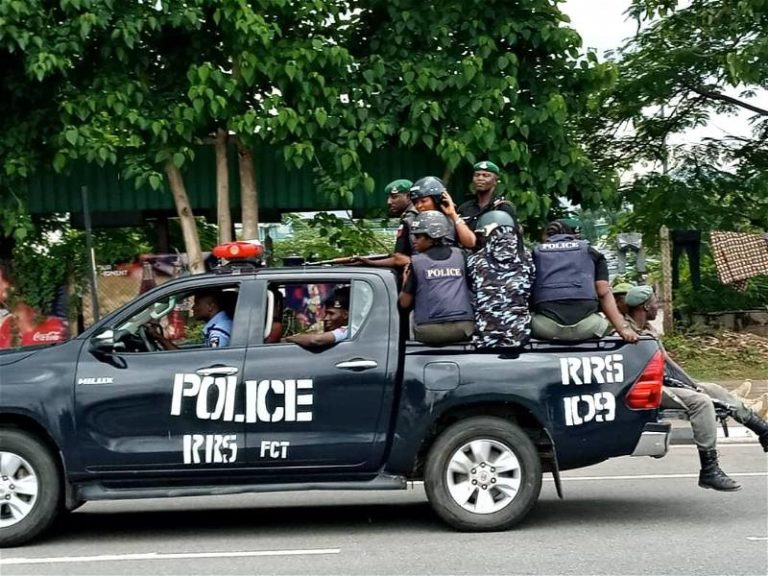
On Wednesday, heavy security presence was observed along the Mararaba–Nyanya Expressway, around the Federal Secretariat, Eagle Square and the gate of the Presidential Villa. 

Armed military and police officers, including Mobile Police units, mounted stop-and-search operations, while Armoured Personnel Carriers were strategically stationed in key areas, such as Kubwa, Maraba and parts of the City Centre to prevent breakdown of law and order.

The Federal Capital Territory (FCT) Police Command had confirmed it beefed up security following intelligence reports of the planned protest. 

The Police Public Relations Officer, SP Josephine Adeh, said the FCT Commissioner of Police, Miller Dantawaye, on Tuesday addressed and deployed officers to ensure public safety, urging them to protect lives and property while respecting citizens’ rights.

However, as of press time, after 4:pm, the protest failed to hold, an indication that the IMN might have put the demonstration on hold due to the heavy security. 

The group had protested in Niger, Sokoto, Kaduna, Yobe, Bauchi, Gombe and Lagos states, condemning what it described as joint US–Israel aggression against Iran. During a procession in Niger State on Sunday, led by IMN leader Ibrahim El-Zakzaky, demonstrators waved Iranian flags and chanted solidarity slogans, vowing continued resistance.

US Embassy issues security alert, cancels visa appointments

Amid the planned protest, the United States Embassy in Abuja earlier on Wednesday warned its citizens in Nigeria of a “high potential for protests” in the nation’s capital over the Middle East conflict.

The embassy noted that previous protests by some groups had resulted in violent clashes between demonstrators and Nigerian security forces. It advised US citizens in Abuja to remain in their residences and avoid areas where protests might take place.

In its advisory, the embassy urged citizens to avoid crowds, monitor local media for updates, exercise caution around large gatherings, keep a low profile, carry proper identification, and review personal security plans. 

It also encouraged US nationals to enrol in the Smart Traveler Enrollment Program (STEP) to receive security updates.

The alert followed the embassy’s earlier decision to cancel visa appointments scheduled for Wednesday as a precautionary measure.

“Due to the potential for protests in Abuja, the U.S. Embassy in Abuja has cancelled all visa appointments on Wednesday, March 4, 2026. Applicants will be contacted with information on how to reschedule. Please monitor our website and social media channels for further updates,” the statement read.

History of confrontations

The IMN has a history of confrontations with Nigerian security forces, particularly in Abuja and parts of northern Nigeria.

Clashes between security forces and the IMN intensified after the 2015 massacre, in which soldiers killed over 300 of its members.

Their leaders were later arrested and detained for years under the late President Muhammadu Buhari administration. 

Several legal disputes trailed the detention of the group’s leader, Ibrahim El-Zakzaky, and his wife, as the Nigerian government refused to release them after courts had granted him bail.

In 2019, the Buhari government officially proscribed the group following a court ruling that labelled it as being involved in “acts of terrorism and illegality.”

Tensions between the IMN and security agencies were again highlighted on March 30, 2025, following a violent confrontation in Abuja.

The ICIR reported how a clash broke out during an IMN procession marking International Quds Day near the Banex Roundabout in Wuse 2.

The police confirmed the death of one officer and the arrest of 19 suspected IMN members. 

FCT Police spokesperson, Josephine Adeh, alleged that members of the group attacked security operatives with firearms, cutlasses, catapults, sticks, stones and petrol bombs, leading to an exchange of gunfire in which two officers were severely injured, and one later died at the National Hospital.

However, the IMN disputed the police account. At a press briefing in Abuja, the group’s Resource Forum, led by Abdullahi Danladi, claimed that six of its members were killed and that as many as 380 protesters, including women and children, were arrested.

Danladi further alleged that security agents were concealing the bodies of those killed during the clash and demanded their unconditional release, as well as the prosecution of officers responsible for the alleged deaths. He rejected police claims that the group was armed, describing the allegations as a cover-up.

MRA condemns police summons of activist over FOI request, calls action abuse of power

0

MEDIA Rights Agenda (MRA) has condemned the summons issued by the Delta State Police Command to Victor Ojie, leader of the Young Nigerian Rights Organization (YNRO), following a Freedom of Information (FOI) request submitted by the group to the Delta State Ministry of Lands and Survey.

In a press statement issued in Lagos on Wednesday, March 4, MRA described the police action as a gross misuse of power and a blatant attempt to intimidate and harass a citizen for lawfully exercising his right to request information under the Freedom of Information Act, 2011.

According to the organisation, the YNRO had filed an FOI request with the Delta State Ministry of Lands and Survey seeking access to petitions and official records relating to land disputes in Aniocha South Local Government Area of Delta State.

MRA said that rather than comply with the provisions of the FOI Act by providing the requested information within the statutory seven days or formally refusing the request based on legally permissible grounds, the ministry involved the police, leading to the issuance of a summons against Ojie.

It said that in a “Letter of Invitation” with Ref. No.: CB:3422/SID/DTS/VOL 3/153, dated March 3, 2026, signed by Ojokoh Julius, Deputy Superintendent of Police and Second-in-Command of the State Intelligence Department (SID) in Asaba, Ojie was directed to report to the Assistant Commissioner of Police, SID.

The letter stated that the invitation was issued on the directive of the command’s commissioner of police, referencing Ojie’s FOI letter titled, “Freedom of Information Request Pursuant to the Freedom of Information Act, 2011, Request for Access to Petitions and Records Relating to Land Disputes in Aniocha South LGA.”

The officer further instructed that upon arrival, Ojie should contact Njoku Belden, an assistant superintendent of police to facilitate the meeting with the assistant commissioner of police, scheduled for Monday, March 9, at 10:00 a.m.

In a statement signed by Ayode Longe, Deputy Executive Director of MRA, the organisation described the police action as deeply troubling and reflective of a growing pattern of abuse.

“It is an alarming trend that the Nigeria Police Force, which is tasked with enforcing the law, has become the instrument for violating the rights of citizens under the law,” Longe said, adding that “the FOI Act is a national law that grants every person a legal right to access information in the custody of any public institution.”

The MRA added that for the Delta State Police Command to treat a civil FOI request made to a public institution as a criminal matter warranting police summons represents “not only an act of professional ignorance but a deliberate assault on the legal and constitutional rights of Nigerians.”

it further noted that Section 1(2) of the FOI Act explicitly states that an applicant does not need to demonstrate any specific interest in the information being requested, stressing that there was therefore no legal basis for interrogating Ojie over the request.

The organisation also pointed out that the FOI Act clearly outlines the circumstances under which a public institution may deny access to information and the procedures to be followed in doing so, adding that issuing police invitations to information requesters is not among the mechanisms permitted by the law.

Describing the incident as a classic example of police impunity, MRA warned that the summons sent a chilling message to citizens that requesting information on land disputes or other public matters could be treated as a crime.

“This is an attempt to protect potentially corrupt interests under the guise of police procedure,” MRA said.

The organisation called on the Delta State Commissioner of Police and the Inspector-General of Police to immediately withdraw the summons and ensure that neither Ojie nor any official of the YNRO is subjected to further harassment.

MRA also urged the Attorney-General of the Federation to intervene in the matter, citing his statutory responsibility as the principal legal adviser to the Federal Government and the official mandated to oversee the implementation of the FOI Act and ensure compliance by all public institutions.

It stressed that wrongful denial of access to information constitutes an offence under the FOI Act and maintained that the police, as an institution charged with enforcing the law, have both a legal and moral obligation to ensure compliance with the Act rather than undermine it.

US-Iran war: devastation, death toll rise across Middle East

THE ongoing war between Iran, Israel and the United States entered its fifth day on Wednesday, March 3, with reported casualties mounting across the Middle East.

Fresh strikes are also widening the conflict beyond the original battle lines.

The Iranian Red Crescent Society said that at least 787 people had been killed, including 165 schoolgirls and staff in a strike on a primary school in Minab, southern Iran, on the first day of the war.

It noted that it remained unclear whether the toll included members of the Islamic Revolutionary Guard Corps (IRGC).

According to ambulance service Magen David Adom, ten civilians have been killed in Israel including nine in an Iranian missile strike on Beit Shemesh near Jerusalem on March 1. The Israel Defense Forces said it had reported no military casualties so far.

Lebanon’s Health Ministry said 50 people were killed in Israeli air strikes. An Israeli strike on Wednesday reportedly killed four people in a residential building.

The interior ministry of Bahrain said that one person was killed after a fire broke out in Salman Industrial City following a missile interception.

Kuwait Health and Foreign Ministries also said three people, including two soldiers, were killed in Iranian attacks.

In Oman, authorities said one person died after a projectile struck the Marshall Islands–flagged tanker MKD VYOM off the coast of Muscat, while the United Arab Emirates Defence Ministry said three people were killed.

Similarly, the United States Central Command confirmed that six US service members were killed in a strike on a facility in Kuwait.

According to Reuters, the conflict has increasingly spilled into strategic energy and shipping corridors.

Saudi Aramco, Saudi Arabia’s oil giant, confirmed that its Ras Tanura complex, home to its largest domestic refinery, was struck again by a drone on Wednesday. The facility was shut on Monday after a previous drone attack. Saudi authorities said an initial assessment found no damage from Wednesday’s strike.

US President Donald Trump said American ships could begin escorting tankers through the Strait of Hormuz, raising the prospect of direct US naval involvement in protecting commercial shipping.

Meanwhile, Syria’s Land and Sea Ports Authority announced it was closing its border crossing with Lebanon after receiving warnings that Israel might target the crossing. Arrivals remain open to allow Syrians fleeing Lebanon to enter.

Air-raid sirens continued to sound across parts of Israel, warning of incoming Iranian missiles, as both sides exchanged further strikes.

Iran to soon name new supreme leader

Amid the escalating war, Iran is reportedly close to naming a successor to Supreme Leader Ali Khamenei.

Ayatollah Ahmad Khatami, a member of Iran’s Assembly of Experts, the body responsible for selecting the Supreme Leader, told state television that a decision was near.

“The Supreme Leader will be identified in the closest opportunity. We are close to a conclusion, however the situation in the country is a war situation,” he said.

Iranian sources said among the figures seen as a potential successor is Khamenei’s son, Mojtaba Khamenei, noting that the 55-year-old Mojtaba had survived the ongoing US-Israeli assault.

A mid-ranking cleric holding the rank of Hojjatoleslam Mojtaba has never held formal government office but is widely regarded as one of the most influential figures within Iran’s clerical establishment. According to analysts and diplomatic sources, over the past two decades, he has cultivated close ties with the Revolutionary Guards.

The US Treasury Department sanctioned Mojtaba in 2019, accusing him of representing his father in an official capacity and working closely with senior commanders of the Revolutionary Guards’ Quds Force and the Basij militia.  

Khamenei’s possible successor remains controversial in Iran, where critics reject any suggestion of dynastic rule in a republic born out of the 1979 revolution that overthrew a US-backed monarch. Mojtaba’s clerical rank is also seen by many as being low to earn him the position of Supreme Leader.

His prospects reportedly strengthened after former President Ebrahim Raisi, once seen as a leading contender for the role, died in a helicopter crash in 2024.

Petrol sells above N1,000/litre in parts of Nigeria as US-Iran war escalates

0

THE ongoing US-Iran conflict has driven up global oil prices, with filling stations in Nigeria raising pump prices to nearly N1,000/litre.

The increase comes amid sharp rises in global crude oil benchmarks as brent crude futures surpassed $80 per barrel on Tuesday and are currently trading at around $84.2 per barrel.

Checks by The ICIR revealed that the Nigerian National Petroleum Company Limited (NNPCL) and other filling stations have effected a hike in petrol pump price.

Further findings revealed that NNPCL retail outlets in Abuja on Tuesday revealed that petrol price was adjusted upward to N960 per litre, up from N875 sold on Monday.

This means that the state-owned oil firm jerked up its pump price by N85 per litre.

The new price was implemented in NNPCL filling stations on the Kubwa Expressway, Gwarimpa, Wuse Zone 6, Zone 4, and other outlets across the city.

Similarly, other outlets increased their fuel pump price to between N950 and N980 per litre.

The National Publicity Secretary of the Independent Petroleum Marketers Association of Nigeria (IPMAN), Chinedu Ukadike, told The ICIR that petrol sold for N930 per litre in parts of the country’s South and above N1,050 in several parts of the North, including Sokoto, Katsina and Gombe states.

The ICIR reported that Nigerians would experience a hike in fuel prices as Dangote Refinery hiked its gantry price following an increase in global oil prices occasioned by hostilities in the Middle East.

Both the Independent Petroleum Marketers Association of Nigeria and the Petroleum Products Retail Outlets Owners Association of Nigeria (PETROAN) had confirmed that fuel prices would go up from Tuesday.

PETROAN’s National President, Billy Gills-Harry, warned that continued volatility in crude prices would further strain consumers and businesses already grappling with economic challenges.

NERC: 109,556 customers metered by DisCos in December

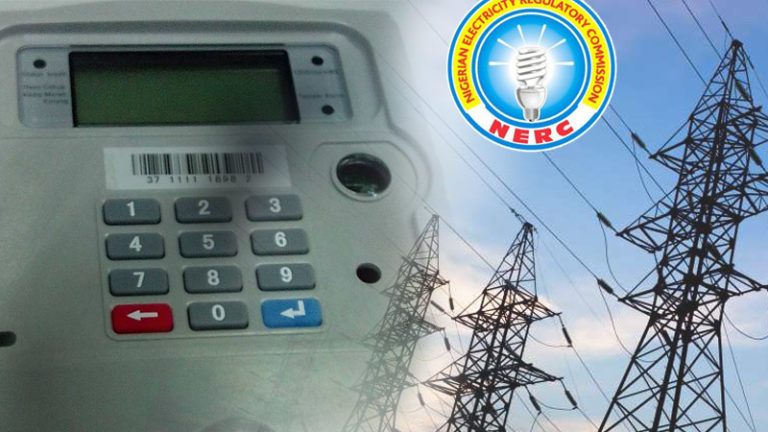
THE Nigerian Electricity Regulatory Commission (NERC) said 11 Electricity Distribution Companies (DisCos) operating in Nigeria metered 109,556 customers in December 2025.

In its latest report on metering, the Metering Factsheet for November and December 2025, released by the Commission on Tuesday, March 3, NERC provided a breakdown of metering progress across the country.

According to the report, the national metering rate rose to 57.27 per cent by the end of December 2025, up from 56.54 per cent in November 2025.

It showed that 109,556 new customers were metered in December 2025, compared to 88,592 recorded in November 2025.

The NERC report said Ikeja, Eko, and Abuja DisCos continued to lead with the highest metering rates, all maintaining levels above 76 per cent.

The breakdown revealed that the total metered customers as of December 2025 were 6,966,584 out of 12,163,412 active customers.

Recall that the Federal Government said it was perfecting plans to deliver 2.5 million prepaid meters and distribution transformer meters to bridge the identified metering gap in the Nigerian Electricity Supply Industry (NESI).

Under the Presidential Metering Initiative (PMI), the Federal Government said it provided ₦700 billion to deliver 2.5 million prepaid meters and distribution transformer meters, with the procurement process ongoing with 42 Local Meter Manufacturers and Assemblers (LMMA) to supply and install 750,000 meters within 15 months.

The ICIR reported that DisCos metered 106,822 customers in October 2025, achieving a 56.07 per cent national metering rate within the period.

The NERC’s factsheet supports transparency and keeps customers informed on the metering progress shaping Nigeria’s electricity market.

The latest report also showed that the number of active electricity customers increased from 12,030,315 million recorded in September 2025, to 12,071,018 million in October 2025.

US-Iran war: Nigeria’s external reserve may hit $55bn by end of March

0

THE Nigerian government will experience a huge leap in net external foreign reserves to $55 billion if the conflict between the United States and Iran lasts until the end of March, some economic watchers have said.

Already, global oil prices have surged beyond $80 per barrel, driven by disruptions to supply chains across Middle Eastern countries due to the conflict.

The external reserves specifically help stabilise the currency, pay for imports, and service external debts. They also act as a buffer to ensure the country meet its international financial obligations and maintain stability in times of economic uncertainty.

Nigeria’s net external reserves surged by 772.18 per cent in two years to $34.80 billion at the end of 2025, from $3.99 billion in 2023, according to Olayemi Cardoso, governor of the Central Bank of Nigeria (CBN).

“The naira will strengthen in the short term, supported by higher oil price and the external reserve is expected to rise to $55 billion by the end of March if the tension continues, “the chief executive officer of the Financial Derivatives Company (FDC), Bismarck Rewane, said.

He stressed, “CBN needs to pay closer attention in terms of money supply, exchange rate, and ensure that leakages and political spending pre-2027 elections have to be well managed to ensure a stable macroeconomic environment.

“For the consumer, the crude for naira swap will hedge the fuel pricing not to rise further, but it could rise to N1,200 per litre,” he said.

The Chief Economist at SPM Professionals, Paul Alaje, also warned that petrol prices could climb to N1,000 per litre and push up inflation figures if the conflict is not effectively managed.

“While crude oil goes up, we all need to check the impact on our economy. The first thing you see is high inflation, because as crude oil goes up, the cost of PMS, diesel, and Jet-A1 will also follow.

“As that is going on, about nine per cent has already attracted more cost for PMS in Nigeria, and by the end of April, we project that if the war is not properly managed, it might get to ₦1,000 plus for PMS in Nigeria,” he added.

According to the economist, if PMS is ₦1,000 per litre, the nation could imagine what diesel price and cost of flight tickets would be. “It will affect the poor, the middle class and, of course, the rich,” he stated.

Analysts also noted that global economic chains in aviation, logistics, and oil and gas would be affected by disruptions to flights and the associated movement of goods and services currently witnessed in Gulf countries.

Notably, escalating tensions among Iran, the United States and Israel could also offer some relief for Nigeria’s foreign exchange market, even as inflationary pressures threaten household welfare, according to Muda Yusuf, chief executive officer of the Centre for the Promotion of Private Enterprise.

In a policy brief titled “Implications of the Iran–US–Israel Conflict on the Nigerian Economy,” obtained by The ICIR, Yusuf said the deepening geopolitical crisis has injected fresh uncertainty into the global economy, with oil prices reacting upward amid fears of supply disruptions.

For Nigeria, where crude oil accounts for more than 85 per cent of export earnings and roughly half of government revenue, higher oil prices could significantly alter macroeconomic conditions.

“Higher oil prices typically strengthen Nigeria’s current account balance and improve foreign exchange liquidity,” Yusuf said. “This could reduce short-term pressure on the naira and reinforce investor confidence,” he added.

He noted that in recent years, exchange rate stability had been closely linked to oil receipts and capital inflows. Improved export earnings, he explained, could boost gross external reserves, enhance liquidity in the foreign exchange market, and reduce speculative pressure on the currency.

Yusuf, however, cautioned that geopolitical crises often trigger global risk aversion. He pointed out that during periods of heightened uncertainty, international capital tends to migrate toward safe-haven assets such as United States Treasury securities and gold, while emerging and frontier markets frequently suffer portfolio outflows during such episodes.

Given Nigeria’s relatively shallow capital market and dependence on foreign portfolio inflows, heightened volatility in global financial conditions could offset part of the gains from stronger oil receipts. “The net exchange rate impact will depend on the balance between stronger oil inflows and potential capital reversals,” he said.

For Nigeria, each increase in crude oil prices translates into higher export receipts and fiscal revenues. Immediate gains could include stronger foreign exchange inflows, improved external reserve buffers, and increased allocations from the Federation Account Allocation Committee to federal, state and local governments.

Yet Yusuf cautioned that the extent of revenue gains would depend heavily on Nigeria’s production performance.

“Current output has fluctuated between 1.4 million and 1.6 million barrels per day, below installed capacity and vulnerable to oil theft, pipeline vandalism and persistent underinvestment in upstream infrastructure,” he noted.

“Without sustained improvements in production efficiency and security, Nigeria may not fully optimise any price windfall,” he warned.

While higher oil prices could boost government revenues and reserves, Yusuf argued that the immediate domestic consequences might be less favourable.

Nigeria operates a deregulated downstream petroleum regime, meaning that international crude price increases impact domestic fuel prices. Rising crude prices are therefore likely to translate into higher pump prices for petrol, diesel and aviation fuel, he further said.

He identified multiple risks exposure to fuel price hike, including rising transportation and logistics costs, higher food distribution expenses, and escalating input costs for manufacturers.

He stressed that energy prices have a pronounced multiplier effect in Nigeria’s inflation dynamics, particularly since transportation and food account for a large share of consumer spending.

“With purchasing power already fragile, sustained increases in fuel prices could intensify cost-of-living pressures and deepen poverty levels,” he said.

The ICIR reports that oil and gas companies could benefit from improved earnings expectations and renewed investor interest in energy-linked assets. Higher crude prices may support profitability and bolster valuations in the sector.

Conversely, manufacturers, aviation operators, logistics firms and consumer goods companies could see margins squeezed by higher energy and operating costs. Heightened global uncertainty could also weaken foreign portfolio flows into equities and fixed-income instruments.

Overall, Yusuf said the ultimate impact of the Iran–US–Israel conflict on the naira and the broader economy would hinge on the duration of the crisis and the strength of domestic policy responses. “The effects will be both positive and adverse, depending on how long the tensions persist and how effectively Nigeria addresses its structural vulnerabilities,” he stated.


Iran warns of global war, says US, Israel strikes shut door on talks

0

IRAN has warned that the ongoing war involving Israel and the United States against it could spiral into a much bigger conflict if the rest of the world remain silent.

Speaking on Tuesday, Iran’s Foreign Ministry spokesperson, Esmail Baghaei, said the situation could worsen beyond the Middle East if no action is taken. He said Iran had preferred talks long before the strikes.

“They must stop the war,” he said, referring to Israel and the US.

Missile attacks were carried out by the US and Israel on Saturday, only hours after Tehran and Washington concluded several rounds of negotiations over Iran’s nuclear programme.

Although no agreement was reached, both sides had described the discussions as progressing. Israel later said the strikes were “pre-emptive”.

Israel’s Defence Minister, Israel Katz, said the operation was aimed at eliminating dangers facing his country, describing it as an effort to “remove threats against the State of Israel”.

Iran’s Baghaei warned that the consequences of the attacks would not be limited to the region.

“The international community must decide to fulfill its responsibility before it is too late,” he said, according to Al-Jazeera.

“The process that has begun will soon engulf Europe. The fire that the US and the Zionist regime ignited, will engulf the entire world.

“All of Europe’s approaches are contradictory. Any violation of the law and any breach of moral principles and the UN Charter will have consequences that affect every single human being on earth. If European countries understand this, they will certainly move out of their state of indifference.”

On Monday, US President Donald Trump said he was open to holding fresh talks with Iran’s new leadership.

However, Baghaei said Iran’s priority had shifted to defending his country.

“Eternal disgrace will remain upon those who claimed to pursue diplomacy but, in the face of Iran’s logic, bowed down and turned to the military option,” he said.

The ICIR reported that explosions were heard in the Iranian cities of Kermanshah, Lorestan, Tabriz, Isfahan, and Karaj on Saturday, February 28.

The bombardments killed the country’s Supreme Leader Ayatollah Ali Khamenei and some of his top officials. Iran responded by launching missile and drone attacks on Israel and neighbouring Gulf Arab states.

According to Trump, the operation targeted Iran’s missile capabilities, naval assets, and military infrastructure linked to regional militant groups.

“We are going to destroy their missiles and raise their missile industry to the ground. It will be totally, again, obliterated. We’re going to annihilate their Navy.

“We’re going to ensure that the region’s terrorist proxies can no longer destabilise the region or the world and attack our forces, and no longer use their IEDs or roadside bombs, as they are sometimes called to so gravely wound and kill thousands and thousands of people, including many Americans. And we will ensure that Iran does not obtain a nuclear weapon,” he added.

The president framed the campaign as a continuation of longstanding US policy aimed at stopping Iran’s nuclear ambitions, referencing earlier strikes on nuclear facilities at Fordow, Natanz, and Isfahan.

Tinubu appoints tax reform leader Oyedele as Minister

0

PRESIDENT Bola Tinubu has nominated Taiwo Oyedele as Minister of State for Finance, replacing Doris Uzoka-Anite.

A statement by the president media aide Bayo Onanuga, on Tuesday, March 3, noted that Uzoka-Anite was redeployed to the Ministry of Budget and National Planning as Minister of State, marking her third portfolio in the current administration.

It also noted that Tinubu had conveyed Oyedele’s nomination to the Senate in a letter addressed to the Senate President, Godswill Akpabio, seeking his confirmation.

Oyedele’s appointment comes months after the National Assembly passed the administration’s tax reform legislations he spearheaded as Chairman of the Presidential Committee on Fiscal Policy and Tax Reforms.

The new tax laws, which overhaul Nigeria’s tax administration framework, were some of the most debated decisions of the Tinubu administration before their eventual passage.

The laws, which faced stiff opposition from federal lawmakers from the northern part of the country before their passage include the Nigeria Tax Act, the Nigeria Tax Administration Act, the Nigeria Revenue Service (Establishment) Act, and the Joint Revenue Board (Establishment) Act – all operating under a single authority – the Nigeria Revenue Service.

A native of Ikaram in Akoko, Ondo State, the 50-year-old economist and public policy expert holds a Higher National Diploma in Accountancy and Finance from Yaba College of Technology and a BSc in Applied Accounting from Oxford Brookes University.

The Presidency said he completed executive education programmes at the London School of Economics, Yale University, the Gordon Institute of Business Science, and the Harvard Kennedy School.

Oyedele spent 22 years at PwC, where he rose to become Fiscal Policy Partner and Africa Tax Leader. He is also a professor at Babcock University and a visiting scholar at the Lagos Business School.

As Minister of State for Finance, Oyedele will serve as the junior minister under the substantive Minister of Finance Wale Edun.

He is expected to support or lead the implementation of some federal fiscal policies, oversee aspects of revenue generation and tax administration, coordinate with agencies such as the Federal Inland Revenue Service (FIRS), assist in budget financing and debt strategy coordination, and liaise with the National Assembly on finance-related legislation.

Given his background in fiscal policy and tax reform, he would be expected to lead the smooth rollout of the new tax framework, improve revenue collection efficiency, reduce multiple taxation, balance federal and state revenue interests, strengthen investor confidence, and enhance transparency in public finance management.

IPI, IMS open nominations for 2026 Press Freedom Awards

THE International Press Institute (IPI) and International Media Support (IMS) are proud to announce and seek nominations for this year’s World Press Freedom Hero Award and Free Media Pioneer Award.

The IPI-IMS World Press Freedom Hero Award honours journalists who have made significant contributions to the promotion of press freedom, particularly in the face of great personal risk.

The award is presented to organisations or media communities meeting the demands of the moment through innovative models of journalism, media, or press freedom defence. They are opening up new ways of thinking about the free flow of information to strengthen independent journalism and meet the needs of their communities.

The prize will be presented at a special event at this year’s Gabo Festival (July 24-26, Bogotá, Colombia), the leading event for journalists in Ibero-America. The Festival, now in its 14th edition, is organised annually by the Gabo Foundation, founded by journalist, writer, and Nobel laureate Gabriel García Márquez. The IPI-IMS award recipients will be announced before the event.

Nominations for this year’s awards must be received by March 20, 2026 (23:59 CEST).

Interested applicants can apply here. The award winners will be selected by the IPI and the IMS teams, and an international advisory committee.