Home Blog Page 70

Tinubu appoints tax reform leader Oyedele as Minister

0

PRESIDENT Bola Tinubu has nominated Taiwo Oyedele as Minister of State for Finance, replacing Doris Uzoka-Anite.

A statement by the president media aide Bayo Onanuga, on Tuesday, March 3, noted that Uzoka-Anite was redeployed to the Ministry of Budget and National Planning as Minister of State, marking her third portfolio in the current administration.

It also noted that Tinubu had conveyed Oyedele’s nomination to the Senate in a letter addressed to the Senate President, Godswill Akpabio, seeking his confirmation.

Oyedele’s appointment comes months after the National Assembly passed the administration’s tax reform legislations he spearheaded as Chairman of the Presidential Committee on Fiscal Policy and Tax Reforms.

The new tax laws, which overhaul Nigeria’s tax administration framework, were some of the most debated decisions of the Tinubu administration before their eventual passage.

The laws, which faced stiff opposition from federal lawmakers from the northern part of the country before their passage include the Nigeria Tax Act, the Nigeria Tax Administration Act, the Nigeria Revenue Service (Establishment) Act, and the Joint Revenue Board (Establishment) Act – all operating under a single authority – the Nigeria Revenue Service.

A native of Ikaram in Akoko, Ondo State, the 50-year-old economist and public policy expert holds a Higher National Diploma in Accountancy and Finance from Yaba College of Technology and a BSc in Applied Accounting from Oxford Brookes University.

The Presidency said he completed executive education programmes at the London School of Economics, Yale University, the Gordon Institute of Business Science, and the Harvard Kennedy School.

Oyedele spent 22 years at PwC, where he rose to become Fiscal Policy Partner and Africa Tax Leader. He is also a professor at Babcock University and a visiting scholar at the Lagos Business School.

As Minister of State for Finance, Oyedele will serve as the junior minister under the substantive Minister of Finance Wale Edun.

He is expected to support or lead the implementation of some federal fiscal policies, oversee aspects of revenue generation and tax administration, coordinate with agencies such as the Federal Inland Revenue Service (FIRS), assist in budget financing and debt strategy coordination, and liaise with the National Assembly on finance-related legislation.

Given his background in fiscal policy and tax reform, he would be expected to lead the smooth rollout of the new tax framework, improve revenue collection efficiency, reduce multiple taxation, balance federal and state revenue interests, strengthen investor confidence, and enhance transparency in public finance management.

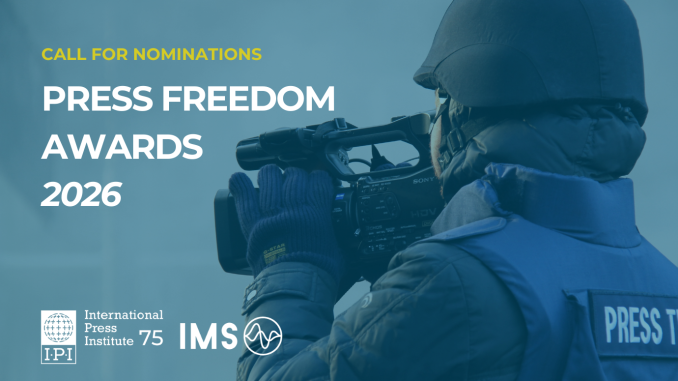
IPI, IMS open nominations for 2026 Press Freedom Awards

THE International Press Institute (IPI) and International Media Support (IMS) are proud to announce and seek nominations for this year’s World Press Freedom Hero Award and Free Media Pioneer Award.

The IPI-IMS World Press Freedom Hero Award honours journalists who have made significant contributions to the promotion of press freedom, particularly in the face of great personal risk.

The award is presented to organisations or media communities meeting the demands of the moment through innovative models of journalism, media, or press freedom defence. They are opening up new ways of thinking about the free flow of information to strengthen independent journalism and meet the needs of their communities.

The prize will be presented at a special event at this year’s Gabo Festival (July 24-26, Bogotá, Colombia), the leading event for journalists in Ibero-America. The Festival, now in its 14th edition, is organised annually by the Gabo Foundation, founded by journalist, writer, and Nobel laureate Gabriel García Márquez. The IPI-IMS award recipients will be announced before the event.

Nominations for this year’s awards must be received by March 20, 2026 (23:59 CEST).

Interested applicants can apply here. The award winners will be selected by the IPI and the IMS teams, and an international advisory committee.

2026 Wiki Loves Africa seeks entries for media contest

THE 2026 Wiki Loves Africa, Africa’s largest openly licensed photographic, video and audio contest, is now open for entries.

Wiki Loves Africa is an annual public contest organised by Wiki In Africa, in collaboration with the Wikimedia movement across Africa. The contest encourages people across Africa to contribute media (photographs, video and audio) about their environment to Wikimedia Commons for use on Wikipedia and other project websites of the Wikimedia Foundation.

The 2026 theme is Rites and Rituals, and it invites participants to explore the diverse ways African communities mark important life stages, honour traditions, and express their collective identity through symbolic practices.

The organiser says it “encourages participants to contribute to media that illustrates a specific theme for that year. Each year, the theme changes and could include any universal, visually rich and culturally specific topic (for example, markets, rites of passage, festivals, public art, cuisine, natural history, urbanity, daily life, notable persons, etc). The project is run across the whole continent. However, some specific actions (training, communication, etc.) are held in some countries with national organisers”.

Applicants are to only enter images or media that visually capture the theme as it applies to Africa.

There are several prizes, ranging from $200 to $1000, up for grabs for quality entries, both at a national and international levels. For national prizes, see what local organisers have planned in your country.

The deadline for applications is April 30, 2026. Interested applicants can apply here.

US-Israeli strikes cast doubt over Iran’s friendly with Nigeria, 2026 World Cup spot

0

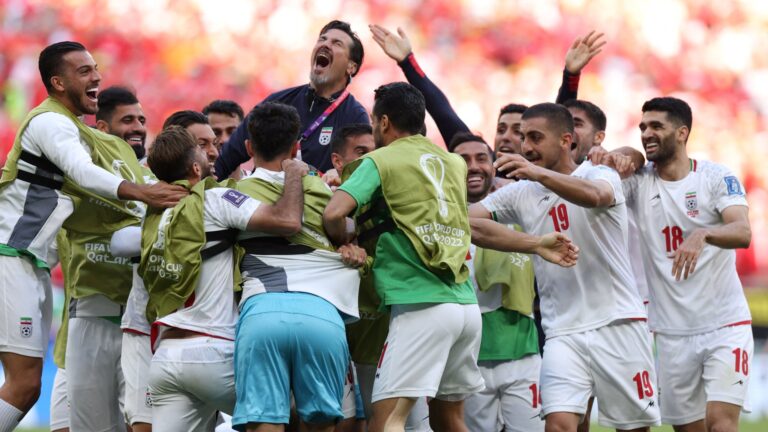
IRAN’S friendly match against Nigeria later this month remains uncertain following escalating United States–Israeli strikes on the country and the oil rich nation’s retaliatory attacks.

The conflict has raised concerns among Nigerians and global football lovers over whether the fixture and Iran’s place at the 2026 World Cup could be affected.

The Super Eagles are billed to face the Iran national football team on March 27 at the Amman International Stadium in Jordan as part of a four-nation invitational tournament during the FIFA international window.

Similarly, hosts Jordan will face Costa Rica at the King Abdullah Sports City Stadium the same day Nigeria takes on Iran. Four days later, the Super Eagles are scheduled to play Jordan, while Iran meets Costa Rica in a tightly arranged tournament format designed to replicate a major competition.

The ICIR reports that the four-nation competition forms a key part of the Super Eagles’ rebuilding process.

With limited international windows available before major qualifiers resume, the Jordan tournament provides Nigeria an opportunity to test depth and experiment in a tournament-style setting involving teams from Asia, the Middle East and Central America.

Rising geopolitical tension

The uncertainty follows coordinated strikes by the United States and Israel on Iran, described as pre-emptive actions over Tehran’s alleged nuclear ambitions.

On Saturday, February 28, the US President Donald Trump confirmed that targeted operations were carried out, before reports later indicated that Iran’s Supreme Leader, Ayatollah Ali Khamenei, was killed.

Iran has since launched retaliatory attacks across parts of the Gulf region, escalating tensions and raising security concerns internationally.

Although the tournament will be held in Jordan, not Iran, travel logistics, airspace restrictions, and possible directives from Iranian authorities could affect the team’s participation.

As of the time of filing this report, no official statement has been issued cancelling the Nigeria-Iran fixture.

Iran’s World Cup spot under threat?

Beyond the friendly, Iran’s participation at the 2026 FIFA World Cup has also been thrown into doubt.

Iran had already qualified for the tournament and were drawn in Group G alongside Belgium, Egypt and New Zealand. The competition will be hosted by the United States, Canada and Mexico.

However, the president of Iran’s football federation, Mehdi Taj, has reportedly said it is unlikely the team will participate, although no formal withdrawal has been communicated.

“We cannot be expected to look forward to the World Cup with hope,” he said, noting that “sports chiefs” would soon convene their final decisions.

Also, the world football governing body, FIFA, has said it was monitoring developments.

“I think it’s premature to comment on it in detail, but of course we will monitor the developments around all issues around the world. I think we had the final draw in Washington where all teams participated, and of course our focus is to have a safe World Cup with everybody participating.”

Possible implications

The ICIR reports that should Iran withdraw from the tournament, FIFA would be required to determine a replacement nation, which could alter the dynamics of Group G.

In this case, FIFA has the authority to take necessary action, according to Article 6 of FIFA’s 2026 World Cup regulations, which focuses on cases of non-participation.

The Regulation 6.5 relates states “If a Participating Member Association withdraws or a match cannot be played or is abandoned as a result of force majeure, the authorised FIFA organising body (including the Tournament Operation Centre) shall decide on the matter at its sole discretion and take whatever action is deemed necessary.”

Regulation 6.7 also states: “If any Participating Member Association withdraws and/or is excluded from the FIFA World Cup 26, FIFA shall decide on the matter at its sole discretion and take whatever action is deemed necessary. FIFA may decide to replace the Participating Member Association in question with another association.”

This means both Iraq and UAE could emerge as a potential beneficiary.

Iraq is set to compete in a continental play-off against Bolivia or Suriname for a World Cup spot.

In a reshuffling scenario, Iraq could be elevated automatically, with the United Arab Emirates stepping into the play-off slot.

Tarbell offers AI reporting grants

TARBELL offers grants of $1,000–$20,000 to support original reporting on AI, published in established outlets, whether from freelancers or staff. These primarily fund written journalism but are open to supporting other formats.

Experienced journalists and media creators are welcome to apply for the AI Reporting Grants. Journalists with an investigative background are particularly encouraged to apply.

Organiser says, “As artificial intelligence grows more influential, the companies building it and the policymakers regulating it warrant the kind of scrutiny that journalism exists to provide. We believe rigorous, independent reporting serves the public interest—demystifying technical developments, following the money, and documenting what happens when these systems enter the real world”.

“This round, we’re seeking applications across six focus areas: Accountability reporting on frontier AI companies, AI policy and politics, AI explainers and analysis, AI in government and the military, AI labour impacts, and AI developments in China.”

Applications for this round close March 8, 2026. Interested applicants can apply here.


What to know about slain Iran’s Supreme Leader Ayatollah Ali Khamenei

0

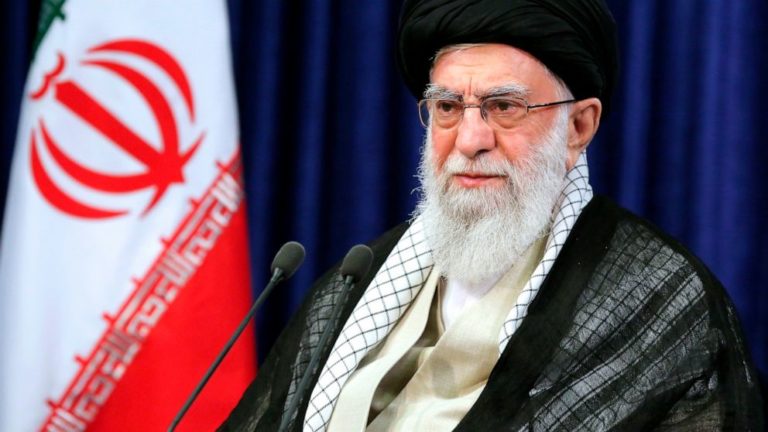
IRAN’S state media on Sunday, March 1, confirmed that the country’s Supreme Leader, Ayatollah Ali Khamenei, was killed in a joint military strike by the United States and Israel.

Khamenei, who led the oil-rich Middle East nation since 1989, breathed his last on February 28, after his residence in Tehran was hit.

The operation also reportedly killed several senior Iranian military figures and members of Khamenei’s family, as reports indicated that the strikes were part of a coordinated campaign targeting Iran’s power structure, marking one of the most significant attacks in decades.

The conflict has since spiraled across the Middle East, with Iran attacking US interests in Saudi Arabia, United Arab Emirates, Bahrain, Iraq, Jordan, Qatar, and others.

Who was Khamenei?

  1. Ali Khamenei was a long-time Iranian cleric and politician who became Supreme Leader of his nation in 1989, succeeding Ayatollah Ruhollah Khomeini after the founder of the Islamic Republic died.
  2. He also served as President of Iran from 1981 to 1989 before becoming the country’s highest authority.
  3. As Supreme Leader, he was considered the ‘Rahbar’ – Iran’s highest state authority with ultimate control over the military, judiciary, security apparatus, and foreign policy.
  4. The Supreme Leader was above all elected officials as he oversaw state institutions, appointed key positions like judges, heads of media, commanders, and influenced who could run for office. His decisions outweighed those of the elected President and parliament, despite Iran having elections and other nominal democratic processes.
  5. Under Khamenei’s regime, political dissent was often suppressed as media houses were closed, reformist candidates barred, protesters detained, and political activism was restricted.
  6. Major protests erupted in the country under his watch, including 2009 disputed elections protests, economic grievances protest in 2019, and Women, Life, Freedom movement in 2022, and 2025 protests, all of which were met with force by security forces.
  7. Under his rule, the Islamic Revolutionary Guard Corps (IRGC), a powerful military and political force expanded its influence domestically and across the Middle East.
  8. Khamenei’s tenure was marked by deep antagonism toward Western powers, especially the US and Israel, shaping Iran’s foreign policy and proxy support for groups such as Hezbollah (Lebanon), militias in Iraq and Syria, and the Houthi movement in Yemen.
  9. Khamenei endorsed Iran’s nuclear development as a deterrent and national priority, navigating crises like the 2015 nuclear deal (JCPOA) and subsequent US withdrawal in 2018.
  10. He expanded Iran’s strategic footprint through allied militias and political groups across the Middle East, making Iran a key and controversial regional power.
  11. The country faced economic challenges under Khamenei, partly due to international sanctions and centralised state control, contributed to inflation, unemployment, and public dissatisfaction
  12. The last atrocities his regime allegedly committed against Iranians took place in late 2025, following a sweeping protest that broke out over the country’s failing economy, economic mismanagement, snowballing unemployment and pervasive human rights abuses. He was accused of mass-arrest, killings and clamping down on dissenting voices.

Netanyahu unsure when Israel-US war against Iran will end

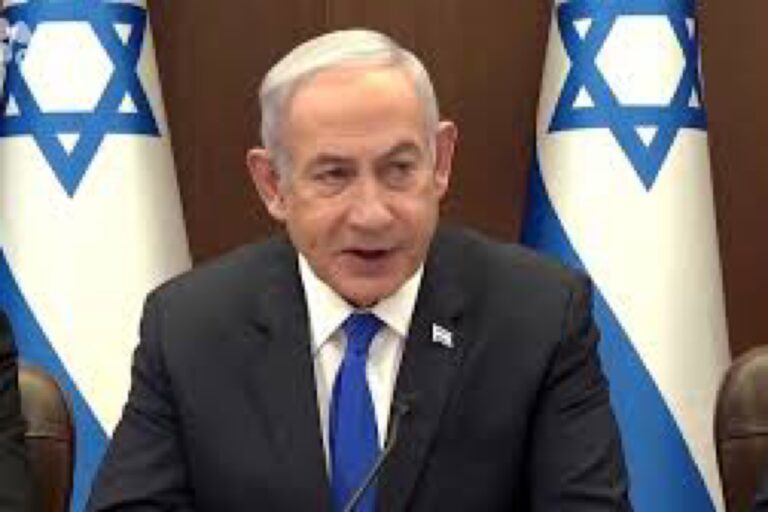
ISRAELI Prime Minister Benjamin Netanyahu said he could not say how soon the United States-led war against Iran would last.

However, he noted that it would not drag for years, even as the conflict spirals across the Middle East with fresh Israeli strikes on Iranian-backed Hezbollah in Lebanon and retaliatory Iranian attacks on United State-allied Gulf states.

Speaking on Fox News’ ‘Hannity’ programme, Netanyahu dismissed comparisons to past prolonged wars in the region.

“I said it could be quick and decisive. It may take some time, but it’s not going to take years. It’s not an endless war,” he said.

Nadav Shoshani, an Israeli Lieutenant Colonel, told reporters in an online briefing that while the timeline could shift depending on developments, Israel prepared for a campaign lasting weeks. He also indicated that deploying Israeli ground forces into Iran was unlikely.

Meanwhile, explosions were heard across Tel Aviv as Israeli air defences intercepted incoming Iranian missiles. Israel confirmed it had struck the Tehran headquarters of Iran’s state broadcaster, IRIB, as well as Hezbollah positions in towns across Lebanon.

The Israeli military said it had sent additional troops into southern Lebanon, positioning them near the border as part of what it described as “forward defense.” Despite a November 2024 ceasefire with Hezbollah, Israel has maintained troops at five strategic points inside Lebanon.

US President Donald Trump, who joined Israel in launching strikes on Iran on Saturday, initially suggested the conflict could last four to five weeks. However, he has since defended the possibility of a broader and potentially open-ended campaign.

Since the fighting began, Iran has carried out missile and drone attacks not only against Israel and US forces, but also against several US-allied countries in the Middle East. The escalating violence has disrupted critical global energy shipments from the Gulf and forced the closure of major air routes used for both short and long haul international flights.

In Saudi Arabia, two drones believed to have originated from Iran struck the US Embassy compound in Riyadh early Tuesday, causing minor damage and sparking a fire. Saudi authorities said at least eight additional drones were intercepted before reaching the capital.

Hundreds of civilians have reportedly been killed in Iran, Israel, Lebanon, and other countries since the war began, including the US and Israeli airstrikes that killed Iran’s Supreme Leader, Ali Khamenei.

Iran’s Islamic Revolutionary Guard Corps (IRGC) claimed responsibility for an attack on a US air base in Bahrain, saying its naval forces destroyed the main command building in what it called “Operation Promise of the Truth 4.” According to the IRGC, 20 drones and three missiles struck targets at the Sheikh Isa base.

US Secretary of State Marco Rubio warned that “the hardest hits are yet to come,” stating that US objectives, including the destruction of Iran’s ballistic missile launch and manufacturing capabilities, could be achieved without deploying ground troops. However, he added that Trump had not ruled out any options.

US/Iran war: Dangote Refinery raises petrol price to N875/ltr

0

IN what appears to be the first major fallout of US-Iran war in Nigeria Dangote Petroleum Refinery has increased its Premium Motor Spirit (PMS) gantry price by N100, bringing the ex-depot rate to N874 per litre from the previous N774.

Consequently, retail outlets across the country are already adjusting to the new price.

Economic watchers say the rise was a result of a spike in global oil prices occasioned by the United States and Israel’s attack on Iran.

Already, there is a global disruption in oil supply with many Saudi refineries and several others shut following the effects of the conflict, which has spread within the Middle East.

The price hike also followed the refinery’s suspension of petrol loading operations, effective midnight on March 2, 2026, after international crude oil prices surged past $80 per barrel overnight.

A senior refinery official confirmed the adjustment on Monday, March 2, explaining that the move was necessary due to recent volatility in global crude oil markets.

“Yes, the price has been reviewed. The new gantry price is now N874 per litre, up from N774. The revision became necessary due to changes in global crude fundamentals and replacement costs,” the official who does not want his name in publication said.

Checks on petroleumprice.ng also confirmed that the new pricing had already been implemented, signaling a shift in downstream benchmarks that will likely affect petrol retail prices across the country.

Industry data showed that PMS loading and issuance of proforma invoices were temporarily halted, although the suspension applied only to petrol, while Automotive Gas Oil (diesel) continued to load uninterrupted.

The refinery’s move triggered a ripple effect across Nigeria’s downstream sector, with several private depot owners halting petrol sales during the trading day.

“Several depot owners suspended PMS sales because of the crude rally. The market is already factoring in risk premiums. Nobody wants to sell below replacement cost,” a downstream operator stated.

The ICIR reported that American forces launched “major combat operations” against Iran, and the country’s Supreme Leader, Ayatollah Ali Khamenei, and some of his key officials were confirmed dead in the attacks.

The US President Donald Trump said the joint US-Israeli offensive could last at least four weeks, as a senior White House official confirmed “Operation Epic Fury” would continue despite signals from the new Iranian leadership, suggesting a willingness to talk.

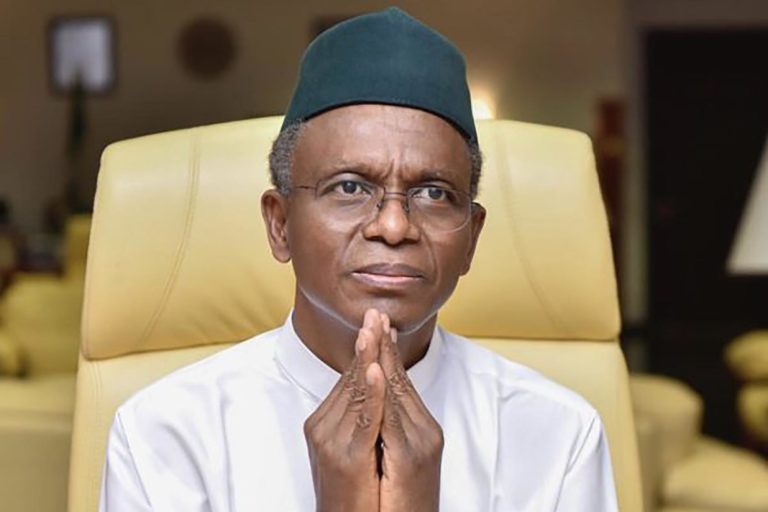
El-Rufai’s family fumes with ICPC over alleged wiretapping devices recovery in his residence

THE family of former Kaduna State governor Nasir El-Rufai has denied allegation by the Independent Corrupt Practices and Other Related Offences Commission (ICPC) that several electronic devices and documents were recovered during a search on the former governor’s residence.

The commission claimed that some of the documents relate to security matters and that others were capable of intercepting communications.

It noted that El-Rufai declined to consent to forensic examination of some of the seized devices.

“During the said search which was witnessed by the applicant’s wife, Hadiza Isma El-Rufai, and his son, Hon. Mohammed Bello El-Rufai, the commission retrieved sensitive security documents capable of compromising nation’s security.

“During the search operations, the commission retrieved electronic magnetic equipment capable of tapping conversations, and he was asked to give consent to enable the commission access to the equipment, but he refused,” part of the document read.

Responding to the ICPC’s allegations, El-Rufai’s son, a serving member of Nigeria’s House of Representatives, Mohammed El-Rufai, in a statement issued on Monday, accused the commission of attempting to weaponise his father’s constitutional right to remain silent by portraying it as a refusal to cooperate.

“That the ICPC believes silence implies guilt is a confession of their own inquisitorial mindset and their disregard for the very laws they are sworn to uphold,” he wrote.

He also dismissed claims about phone-tapping equipment and the list of items allegedly recovered from his father’s residence, describing them as fictitious.

He said ICPC only seized “old discarded personal mobile phones, some dating back as much as 20 years, storage devices like flash drives and laptops, which are standard possessions of any 21st century citizen”.

He added that the alleged sophisticated tapping equipment and sensitive security documents “exist only in the fevered imagination of the ICPC and its press team”.

The ICPC allegations followed El-Rufai’s suit at the court alleging that his arrest and detention violated his fundamental rights. He asked the court to declare his detention unlawful and to award him N1 billion in damages.

In an affidavit filed in support of his suit, El-Rufai confirmed his identity and career history but declined to answer questions about the allegations, citing his constitutional right to remain silent. He described his probe by the ICPC, and allegations made against him as politically motivated. He vowed to respond to the allegations in court.

Responding, the commission told the court that the action was necessary to conclude an ongoing corruption investigation linked to the former governor’s tenure in office.

In court filings, the anti-graft agency said El-Rufai was being lawfully held following allegations of financial misconduct involving loans, procurement processes, government account transfers, and payments to companies and individuals between 2015 and 2023, which were levelled against him. 

According to PREMIUM TIMES, the petition, attached to the court filings dated 26 February raised allegations relating to loans obtained by the Kaduna State Government, procurement processes, transfers from government accounts and payments to companies and individuals.

“Contrary to depositions of the applicant in his supporting affidavit, he is lawfully held in the custody of the commission, and the commission has not breached any of the fundamental rights of the applicant as claimed.

“That the 4th respondent’s (ICPC’s) mandate is to investigate cases of corruption and abuse of office and other related offences, and where there is prima facie evidence, prosecute any alleged offender,” the counter-affidavit read.

ICPC said it began preliminary investigations and obtained documents from banks and government institutions before issuing an invitation letter dated 9 February.

According to the commission, the letter could not be served earlier because El-Rufai was outside Nigeria. It explained that he was eventually served on 12 February after returning to the country.

The commission stated that El-Rufai, through his lawyers, asked to appear on 18 February. However, before that date, he responded to a separate invitation from the Economic and Financial Crimes Commission (EFCC), which detained him and later granted him administrative bail.

The ICPC said he failed to meet the bail conditions and remained in EFCC custody. On 18 February, he was arrested by the ICPC after being released by the EFCC.

On 19 February, the commission said it obtained a remand order from a Chief Magistrate Court in Bwari, Abuja, allowing it to detain El-Rufai for 14 days while investigating allegations of money laundering and abuse of office levelled against him.

The order, issued by Magistrate Okechukwu Akweke, directed that he be held in ICPC custody for 14 days, with a return date set in March for a progress report.

The ICPC told the High Court that the remand order would expire on 5 March and that it planned to file charges before that date.

The commission also said it executed a search warrant at El-Rufai’s residence at 12 Mambilla Street, Asokoro, Abuja, on 19 February. The search, it said, was witnessed by his wife, Hadiza El-Rufai, and his son, Mohammed El-Rufai.

According to the ICPC, several electronic devices and documents were recovered during the search. It claimed that some of the documents relate to security matters and that certain equipment capable of intercepting communications was discovered.

The commission further stated that El-Rufai declined to grant consent for forensic examination of some of the seized devices.

The commission also informed the court that a potential witness wrote to it requesting protection, alleging threats after public comments made during a television interview.

“The applicant herein is also threatening likely prosecution witnesses and one of such witnesses has written to the commission for protection. A copy of the said letter is hereby attached and marked as Exhibit ICPC 6,” the document read.

In its court filing, the ICPC maintained that inviting and detaining a suspect on the basis of reasonable suspicion would not constitute a violation of fundamental rights.

The commission cited relevant constitutional provisions and the ICPC Act to argue that it was legally empowered to investigate corruption allegations and, where necessary, detain suspects in accordance with the law.

It therefore urged the court to dismiss El-Rufai’s suit and permit the commission to complete its investigation.

Police Council ratifies Disu’s appointment as Inspector-General

0

THE NATIONAL Police Council has approved Olatunji Disu as the new Inspector-General of Police.

The Special Adviser to President Bola Tinubu on Information and Strategy, Bayo Onanuga, confirmed the approval to Punch after the council’s meeting at the State House in Abuja on Monday, March 2.

Tinubu led the council’s meeting to ratify Disu’s appointment as the new Inspector-General of Police.

Disu was appointed after Kayode Egbetokun resigned. He is now awaiting Senate confirmation.

The council’s meeting included top government functionaries namely Vice President Kashim Shettima, Secretary to the Government of the Federation, George Akume, and state governors.

The Nigeria Police Council, established by the Police Act 2020, advises on policing matters.

Disu’s appointment is expected to boost Nigeria’s fight against insecurity and improve public trust in the police.

Tinubu appointed Disu, an Assistant Inspector-General of Police, Acting IGP on Tuesday, February 24.

Onanuga said Tinubu approved Disu’s appointment in acting capacity, citing his “experience, operational depth, and demonstrated leadership capacity” as critical for steady direction of the Nigeria Police Force.

Disu is a career police officer with over three decades of service. Before his elevation, he served as Assistant Inspector-General of Police in charge of the Force Criminal Investigation Department (FCID) Annex, Lagos.

He previously held key operational and command roles, including Commissioner of Police in Rivers State and the Federal Capital Territory (FCT), Commander of the Rapid Response Squad (RRS) in Lagos, and head of the Police Intelligence Response Team (IRT).

His tenure in Lagos RRS drew attention for operational reforms in urban policing and crime response.

Disu, a graduate of English Education from Lagos State University, holds master’s degrees in Public Administration and Criminology, Security and Legal Psychology, and he is a member of the International Association of Chiefs of Police.