KUWAITS’ Ministry of Defense on Monday, March 2, confirmed that multiple United States military aircraft went down within the country, but said all crew members survived the incidents.
Kuwait, a small but strategically significant Gulf state bordering Iraq and Saudi Arabia, hosts key US military installations and serves as a logistical hub for American operations in the Middle East. Its proximity to Iran and location along vital shipping routes in the Persian Gulf have placed it within the orbit of the expanding regional conflict.
In a statement issued by the ministry’s spokesperson, Said Al-Atwan, authorities said search-and-rescue teams were immediately deployed to the crash sites. The affected personnel were evacuated and taken to hospital for medical evaluation.
“The crews were evacuating from the crash sites and transferred to hospital to assess their condition and provided necessary medical care,” the spokesperson said, noting that they were in stable condition.
He added that Kuwait was in direct coordination with US authorities over the matter.
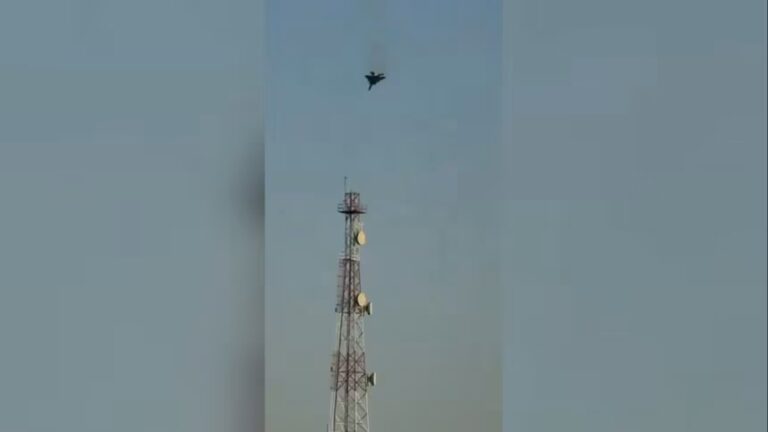
The ICIR sighted video geolocated by CNN which showed at least one fighter jet crashing in Kuwait, with a pilot parachuting to safety. The aircraft in the footage appeared to be an F-15E fighter jet, based on CNN’s analysis.
Another video, also sighted by The ICIR, showed the jet engulfed in flames, descending in a tailspin before coming down.
Details surrounding the incidents remain sketchy, as authorities have yet to confirm the exact number of US fighter jets involved or the precise cause of the crashes.
Meanwhile, some reports have suggested the aircraft might have been brought down by Iranian fire amid the ongoing conflict with the United States, but there has been no official confirmation.
The ICIR reports that the incidents occurred on the backheel of the military activity across the Gulf region linked to an escalating conflict involving Iran.
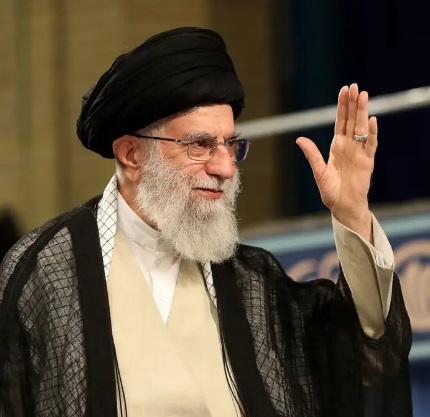
Since the attack that started on Saturday with the killing of Iran supreme leader Ayatollah Ali Khamenei, following coordinated US and Israeli strikes on Iranian targets, Iran has been attacking several neighboring countries that house US military base and facilities in a retaliatory attempt.
According to reports, over 500 people have been killed in Iran since the start of the US–Israeli airstrike campaign.
ISRAEL has launched new air strikes targeting Iran and expanded its assault to include attacks on Iran-backed Hezbollah militants in Lebanon.
The move came after Hezbollah said it launched a new wave of missiles that “opened the great gates of fire” on Israel, claiming retaliation for the killing of Iran’s Supreme Leader, Ali Khamenei.
Israel said on Monday that it was attacking sites connected to Lebanon’s Shi’ite Muslim Hezbollah militants, one of Tehran’s principal allies in the Middle East.
Lebanon’s state news agency reported at least 31 people killed and 149 wounded in Israeli strikes on Hezbollah-controlled southern Beirut, as Israel said it was targeting senior militants and strategic infrastructure tied to the group, one of Tehran’s most powerful regional proxies.
According to Reuters, explosions rocked Tehran and other Iranian cities as strike in Sanandaj around western Kurdistan province reportedly killed at least three people.
Israeli officials claimed their air force had established aerial superiority over Tehran, targeting intelligence hubs, military command centres and security facilities in sustained waves.
Iran responded with a new barrage of missiles. Sirens blared across Israel, including in Tel Aviv and Jerusalem, shortly after 7:00 a.m. Iranian state media said missiles were launched from central Iran toward “enemy locations.”
The Islamic Revolutionary Guards Corps declared it had struck the Israeli government complex in Tel Aviv, as well as military and security sites in Haifa and East Jerusalem, vowing that the attacks would expand and that Israeli air raid sirens “would never stop.”
The ICIRreported that American forces launched “major combat operations” against Iran and the country’s Supreme Leader Ayatollah Ali Khamenei was confirmed dead hours after the attacks.
The US President Donald Trump said the joint US-Israeli offensive could last at least four weeks, as a senior White House official confirmed “Operation Epic Fury” would continue despite signals from new Iranian leadership figures suggesting a willingness to talk.
IN the buildup to elections, political actors charge up the electoral space with various campaign promises; however, in most cases, such promises trap them when they go unfilled.
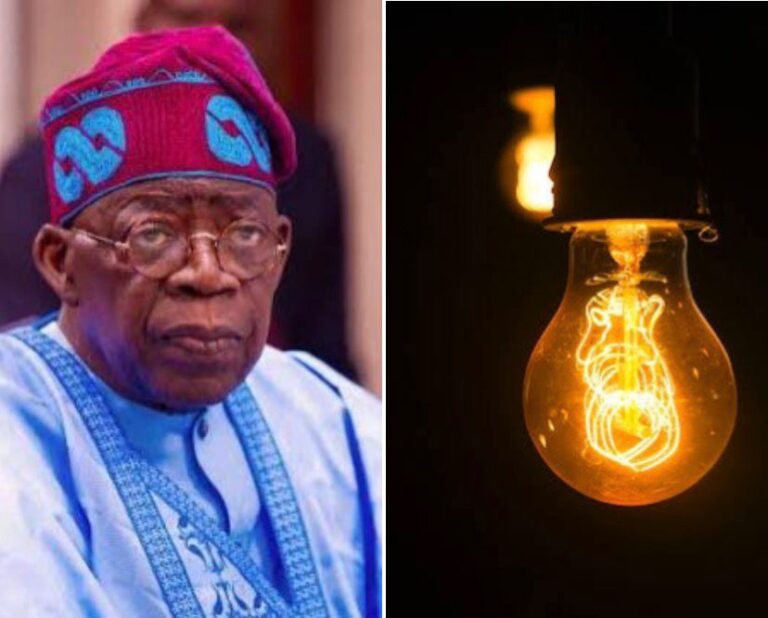
This is the case of President Bola Ahmed Tinubu, Nigeria’s current President, who is under intense public scrutiny for an election promise to deliver a constant power supply.
Having staked his re-election bid on constant electricity supply, the president is currently overwhelmed with myriad problems in the electricity sector, with electorates calling him out on the failed promise.
The president had said during the presidential campaign in 2023, “If I do not provide steady electricity in my first four years, do not vote for me in the second term…”
President Tinubu’s promise has put him on the spot and has elicited several reactions from Nigerians, including opposition party stalwarts.
“If I do not provide steady electricity in my first four years, do not vote for me for a second term,” a former presidential candidate, Peter Obi, quoted the president as saying. He noted that the national grid had already collapsed twice in January 2026 alone, adding that it collapsed about 12 times in 2025.
“This reality sharply contradicts the promise and should worry every patriotic Nigerian,” Obi said.
Despite power sector privatisation in 2013 and over $1.5 billion in intervention from the World Bank and other development partners, Nigeria’s power supply has gone from worst to worse.
From numerous records of grid collapse and inability to distribute and transmit power efficiently, Nigeria still oscillates between 4000 and 5000 megawatts (MW) of power for over 200 million of its population.
Several steps have been taken by the Nigerian Electricity Regulatory Commission (NERC) to unbundle the sector, but the transition is yet to yield the desired results maximally, as states are still on snail speed in taking regulatory responsibility and promoting energy mix beyond federal interventions.
A current teething problem is the inability of the sector to fund itself effectively without relying on government subventions or subsidies despite privatisation.
Recently, the federal government urged states to take up part of montly subsidy in the power sector, as the debt burden proves unsustainable.
This has placed a debt burden on the value-chain players, most especially the generation companies, who are currently being owed over N6 trillion for their power generation.
To worsen the concern, Nigeria’s prolonged power outages, affecting businesses across the country, are primarily due to inadequate gas supply to thermal power plants.
The Nigerian Independent System Operator (NISO) announced on Friday, February 27.
The system operator attributed the sustained drop in electricity generation to severe fuel constraints affecting the national grid.
Confirming this in a statement titled “Declining Power Output Attributable to Generation Shortfalls and Gas Supply Limitations,” released on its official handle, NISO said the average available generation currently hovers around 4300 megawatts, far less than Nigeria’s installed capacity of 15,500 megawatts.
This is not the first time NISO has issued this alert; the outages began in early February following scheduled maintenance on key Gas infrastructure by the Nigerian National Petroleum Company Limited and Replay Energy, which temporarily disrupter Gas deliverables to several thermal plants, triggering a nationwide decline in electricity generation.
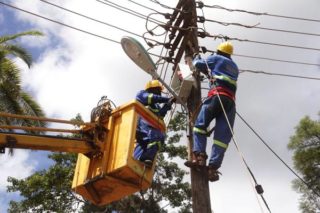
Picture of electricity workers on duty used to illustrate the report
The situation has persisted due to ongoing constraints in gas supply, worsening the power shortfall.
The NISO statement explained that the drop in supply is directly linked to severe gas constraints affecting thermal generating stations, which form the dominant share of Nigeria’s electricity generation mix.
“We hereby notify the general public and all market participants that the current average available generation of approximately 4,300MW is primarily due to inadequate gas supply to thermal generating stations,” the operator said.
It added that because thermal plants form the backbone of the national grid, any disruption in gas supply automatically translates into lower generation and reduced energy allocation to Distribution Companies.
“Given that thermal plants account for the dominant share of Nigeria’s generation mix, any disruption or limitation in gas supply directly affects available generation capacity and overall grid output,” the statement added.
NISO provided operational data to illustrate the extent of the shortfall, stating that thermal power plants require an estimated 1,629.75 million standard cubic feet (mmscf) of gas per day to operate at optimal capacity.
However, as of February 23, 2026, actual supply stood at approximately 692.00 mmscf per day — representing less than 43 per cent of the required volume.
Power generation companies confirm poor power supply nationwide
Commenting on the epileptic power supply, the Power Generation Companies (GenCos) have attributed Nigeria’s persistent average electricity generation of about 4,000 megawatts (MW), despite an installed capacity of 15,500MW, to liquidity challenges, weak contract enforcement and structural bottlenecks in the Nigerian Electricity Supply Industry (NESI).
Managing Director of Power Generating Companies of Nigeria (APGC), Joy Ogaji
The Association of Power Generation Companies (APGC), in a statement issued in Abuja by its Chief Executive Officer, Joy Ogaji, said the current market design discourages investment in capacity recovery and expansion, leaving about 7,000MW of mechanically unavailable capacity unrepaired.
According to the association, the failure to recognise and pay for available generation capacity under existing commercial arrangements has removed a key incentive for power producers to restore idle equipment.
“This singular reason has kept the sector at about 4,000MW of average grid generation for many years, notwithstanding an installed capacity of 15,500MW. This is a clear anomaly in the market,” the group stated.
The GenCos explained that electricity generation requires significant upfront investments and long-term cost recovery, but operators are paid only for power that transmission and distribution networks can absorb, rather than for capacity already made available for dispatch.
They noted that under standard Power Purchase Agreements (PPAs), generators are expected to receive payments for available capacity, nominated capacity and metered energy. However, the current practice of recognising only called-up power has weakened investor confidence and undermined the financial viability of power plants.
The association further disclosed that many power plants currently operate without active PPAs, describing the situation as a major risk for both local and international investors. It added that the absence of firm contractual backing has also made it difficult for generation companies to secure Gas Supply Agreements (GSAs), worsening fuel constraints across the sector.
GenCos also identified operational bottlenecks outside their control as major contributors to low power supply. These include the inability of the Transmission Company of Nigeria (TCN) to efficiently wheel available power, frequent load rejection by distribution companies (DisCos), and poor revenue collection across the value chain.
“The structure of the sector is such that poor performance is contagious,” the group said, noting that when DisCos fail to collect sufficient revenue, they are unable to settle energy invoices, further deepening liquidity problems.
The association revealed that generation companies are currently owed over ₦6.2 trillion, with only about 35 per cent of their invoices settled since 2015. It warned that persistent non-payment has rendered many GenCos technically insolvent and severely constrained their ability to invest in capacity maintenance and expansion.
According to the group, contrary to public perception, generation companies are not beneficiaries of electricity subsidies but are “the biggest victims” of the current system.
The GenCos stressed that the situation contradicts the objectives of the Multi-Year Tariff Order (MYTO) and the Federal Government’s Power Sector Recovery Programme, both designed to support a contract-based and financially sustainable electricity market.
They called for restoration of contract sanctity, full payment for available capacity and stronger enforcement of market rules, warning that failure to address these issues will continue to constrain electricity supply to consumers.
“Security of supply is strongly dependent on how quickly the electricity market can debottleneck the constraints imposed by other critical stakeholders,” the GenCos stated.
The association maintained that increased generation capacity would not translate into improved power supply unless financial and operational weaknesses across the electricity value chain are urgently addressed.
Nigeria’s power continues to fail despite privatisation
Nigeria’s power sector post-privatisation has failed to light up Nigeria despite over N7 trillion in intervention to uplift the sector.
This was disclosed by the Electricity Consumer Protection Forum (ECPA), National Coordinator, Ademola Samuel Ilori.
Ilori told The ICIR that consumers were not benefiting optimally from the privatisation.
“The government is still sinking money into the privatised power sector. This is not a good development. Already, N3.3 trillion was put into the sector under President Buhari without appreciable progress. We’re not far from 4,000MW despite these trillions. Consumers are not getting the best service.
“Banks are gradually taking over the bank’s acquisition due to illiquidity and huge debts by distribution companies (discos). We need to go back to the drawing board and review the licensing of the discos,” he said.
The power sector was privatised on November 1 2013. However, it still relies on intervention support from the World Bank, the Federal Government and the Central Bank of Nigeria (CBN) to survive.
After privatisation, the sector was projected to grow its on-grid power to 40,000 MW in 2020. But as of 2023, on-grid power is slightly above 4,000MW, raising concerns about the efficiency of the privatisation.
The former Special Adviser on Energy and Infrastructure, Office of the Vice President, Sodiq Wanka, had earlier said that ten years on, the objectives of the nation’s power privatisation had not been met as, according to him, over 90 million Nigerians still live in darkness due to a lack of access to grid electricity.
He noted that the key objectives of the privatisation were to improve the efficiency of the power sector, unlock private sector investments, and unleash the nation’s potential through an energised economy.
“I believe it is fair to say that the objectives of sector privatisation have, by and large, not been met. Over 90 million Nigerians lack access to electricity.
He further said the national grid only served about 15 per cent of the country’s demand. This, he said, left households and factories to rely on expensive self-generation, which supplies a staggering 40 per cent of the country’s demand.
“What is worse is that the total amount of electricity that can be wheeled through the national grid has remained relatively flat in the last 10 years.
“The grid capacity has increased from just over 3,000MW to typically just over 4,000MW today. Versus a 40,000MW target by 2020 that the Federal Government had set for the pre-privatisation”, he said.
He also said that liquidity problems in the sector could be averted if cost-reflective tariffs were enforced while different stakeholders honour their commitments to the terms of contracts entered into with the Nigerian Electricity Regulatory Commission (NERC).
“As of the second quarter of 2023, for every kWh of electricity sent to the grid, only 60 per cent of it is paid for. But as we know, even the tariff paid for that unit of electricity is far from being cost-reflective, especially in light of the recent devaluation of the naira.
“The sector has suffered from chronic underinvestment, especially in transmission and distribution. Many of the successor utilities of the Power Holding Company of Nigeria (PHCN) have failed to meet their performance improvement targets due to technical and financial capacity issues,” he added.
THE death of Iran Supreme Leader Ali Khamenei has triggered mixed reactions as celebrations are reported in some areas, mourning gatherings in others, and strong reactions from global leaders amid fears of escalating conflict.
The ICIRreported that Khamenei was confirmed dead following massive, coordinated strikes by the United States and Israel that have dramatically escalated tensions across the Middle East.
Witnesses and video footage verified by AFP showed groups of Iranians taking to the streets late Saturday night, setting off fireworks and playing celebratory music following news of Khamenei’s death.
The celebrations reportedly began shortly after 11:00 p.m. local time in parts of Tehran, however, social media posts suggested that large crowds did not gather nationwide, with many residents remaining indoors amid fears of reprisals.
Reports suggest that public caution follows memories of deadly crackdowns on anti-government protests earlier this year, which left many Iranians wary of mass demonstrations.
Exiled opposition figure Reza Pahlavi, son of Iran’s last shah, declared the Islamic Republic effectively finished, predicting it would soon be “consigned to the dustbin of history.”
Celebrations were also reported among Iranian diaspora communities across US cities, particularly Los Angeles, where crowds waved pre-revolution Iranian flags and called for a “Free Iran.”
Meanwhile reports show that thousands of mourners gathered in Tehran’s Enghelab (Revolution) Square, dressed largely in black and visibly grieving.
AFP journalists reported mourners chanting anti-US and anti-Israel slogans while waving Iranian flags and holding portraits of the late leader.
According to hospital officials cited by AFP, at least nine people were killed when hundreds of pro-Iran protesters attempted to storm the US consulate in Karachi, Pakistan.
Demonstrators also tried to breach Baghdad’s fortified Green Zone, home to the U.S. embassy, while protests erupted in Srinagar in Indian-administered Kashmir.
Similarly, Iranian state television announced a 40-day national mourning period alongside seven public holidays.
Iranian President Masoud Pezeshkian described the killing as a “declaration of war against Muslims” by the United States and Israel, while Iran’s Revolutionary Guards vowed retaliation against those responsible.
International reactions
China has condemned the killing as a “serious violation” of Iran’s sovereignty, urging an immediate halt to military operations.
Russian President Vladimir Putin, a key ally of Tehran, called the assassination a “cynical violation of international law” and expressed condolences to Iran’s leadership.
North Korea also denounced the strikes, accusing Washington and its allies of “gangster-like conduct.”
Hamas condemned the killing as a “heinous crime,” while Lebanon’s Hezbollah vowed to confront what it described as US and Israeli aggression.
In contrast, US President Donald Trump hailed Khamenei’s death as a historic turning point, calling it “the single greatest chance for the Iranian people to take back their country.”
Israeli Prime Minister Benjamin Netanyahu urged Iranians to overthrow the ruling system, describing Khamenei as a “cruel tyrant” responsible for decades of regional instability.
European leaders struck a more cautious tone, as European Union foreign policy chief Kaja Kallas described the moment as “defining” but warned that Iran’s future remains uncertain.
Meanwhile, Pope Leo XIV appealed for calm, urging all parties to halt escalating violence before it becomes an “irreparable chasm.”
With Iran’s most powerful political and religious figure gone, analysts warn the country now faces a volatile transition period that could reshape regional alliances and internal power structures.
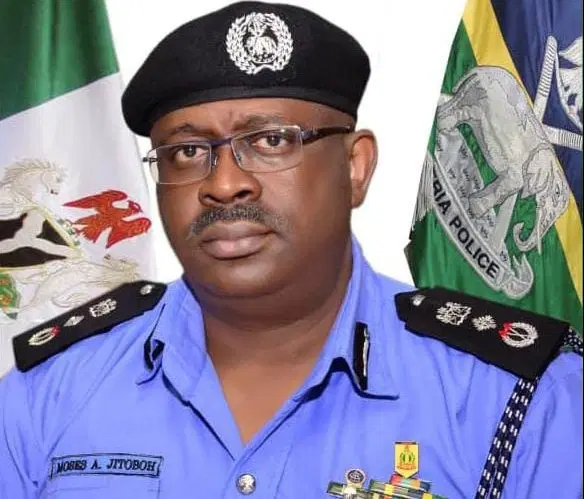
AMBAKINA Moses Jitoboh died suddenly on December 28, 2025. He was born on June 1,1970 to a father from Trofani, in Sagbama Local Government Area of Nigeria’s Bayelsa State. Jitoboh’s death occurred in the week before he was due to travel out of the country for a break.
The journey that he eventually got to make was, tragically, unplanned and to the Great Beyond. In the events of the past week in the Nigeria Police Force (NPF), in the service of which Jitoboh spent his professional life, his quiet commitment to fairness has bestowed his life with a timeless legacy that is unlikely to be easily forgotten.
Moses Jitoboh graduated with a degree in geography and regional planning from the University of Calabar in 1992. Two years later, in June 1994, he was commissioned into the NPF as an Assistant Superintendent of Police (ASP). Ten years later, he found himself the Aide-de-camp (ADC) to the Deputy Governor of Bayelsa, his home state, Goodluck Ebele Jonathan.
When he was translated into the office of the Vice-President in 2007, Goodluck Jonathan sought and retained Jitoboh as his ADC. Less than three years later, Jonathan was president. In that capacity, he was also the Commander-In-Chief of the Armed Forces and his ADC became a soldier. Jonathan turned to Jitoboh and made him the Chief Security Officer (CSO) to the President.
A rapid coincidence of events outside his control conspired thereafter to accelerate Jitoboh’s rise up the ranks of the Nigeria Police Force. 16 years into his service, by November 2010, Jitoboh had attained the rank of Assistant Commissioner of Police. 10 years later, in December 2020, he became an acting Deputy Inspector-General of Police (DIG).
In July 2021, the Police Service Commission (PSC) confirmed Ambakina Moses Jitoboh as a substantive DIG. At 51, he was the youngest person to attain that rank since the return of the country to civil rule in 1999. He still had nine years to serve in the rank before the compulsory retirement age of 60.
In the third week of his presidency, on June 19, 2023 President Bola Ahmed Tinubu designated Dr. Kayode Egbetokun as the Inspector-General of Police in acting capacity. Upon his elevation to the rank of DIG two months earlier in April 2023, Dr. Egbetokun was the most junior of the five officers of that rank in the NPF. However, upon being elevated to become IGP, he superseded them.
On August 25, 2023 the Chairman of the PSC, Dr. Solomon Arase, issued a letter to the four DIGs then in service requiring them all to proceed on “compulsory retirement from the service of the Nigeria Police Force with immediate effect from 25th August 2023.”
The Commission did not find any of the officers guilty of any mis-conduct. Instead, it said that its instruction was “premised on the fact that you were senior to the Acting Inspector-General of Police prior to his appointment on 19th June 2023.”
The letter cited what it called an imperative need “aimed at discouraging status reversal which is inherently dangerous to the exercise of authority by the Inspector-General of Police.”
The PSC did not exactly explain what it meant by “status reversal”. At the time, Dr. Arase was the latest in a succession of Chairmen of the PSC whose route to the position was paved by their having previously served as IGP. It was not supposed to be so.
The 1999 Constitution created the PSC as an independent police oversight institution.
When it began functioning in 2001, its inaugural chair was Simon Okeke, a civilian. However, when Chief Okeke’s five year tenure came to an end in 2006, then IGP, Sunday Ehindero, successfully persuaded President Olusegun Obasanjo that it was safer to hand the headship of the Commission over to retired police chiefs. This, it was believed, was to make the Commission more amenable to the machinations of the leadership of the NPF contrary to the clear design of the constitution. Ironically, that development produced the opposite result and the PSC and IGP sued one another up to the Supreme Court.
Back to the story; of the four affected DIGs, Dan-Mallam Mohammed, Hafiz Inuwa and Bode Adeleke complied and proceeded on compulsory retirement.
In October 2023, Moses Jitoboh sued. In the proceedings before the National Industrial Court of Nigeria, he argued through his lawyer, Silas Joseph Onu, that the PSC exceeded its powers in terminating his service in the NPF before the mandatory retirement age of 60 years or 35 years in service, and asked the court to set aside the Commission’s decision.
Bayelsa State Governor, Douye Diri, would later reveal that following the onset of this litigation, he met with Jitoboh and “urged him to drop his case against the Nigeria Police but he explained that he did not do it for himself but for the sake of justice.” He would get his wish – posthumously.
Sixteen days after his death, on January 13, 2025 Osatohanmwen Ayodele Obaseki-Osaghae, a judge of the National Industrial Court of Nigeria, handed down judgment in Moses Jitoboh vs. PSC. The Court found as a fact that Jitoboh had served in the NPF with distinction and without blemish.
But it was the findings of the court concerning the institutional practice of the Police that were to become revolutionary. The court found that “it is not the custom of the Nigeria Police, and there is no policy that senior officers are expected to tender their resignation on the appointment of their junior as IGP.” The PSC’s notice of compulsory retirement, the court held, was contrary to both the Public Service Rules and the Police Act, “which read together provide that the compulsory retirement age for all grades of officers in the public service shall be 60 years or 35 years of pensionable service whichever is earlier.”
Additionally, it also found that “in the history of the NPF there is in existence evidence that when a junior officer is appointed to a higher rank, his seniors are not compulsorily retired but allowed to serve in different capacities until retirement.”
The court, therefore, declared the compulsory retirement of Moses Jitoboh from the rank of DIG to be “unlawful, null and void and of no effect”, ordered him to be reinstated in the same rank and awarded him N50 million in damages, in addition to costs assessed at N750,000.
On that day of the judgment, Ambakina Moses Jitoboh was in his 16th day in the morgue. The judgment had sadly been delayed by one month from its original date of delivery in December 2024. It is only a matter for speculation what the effect could have been on his fate if the delay had not occurred.
The PSC chose not to appeal against the judgment.
In the past week, following the resignation of Dr. Egbetokun from the position of IGP and the appointment of Tuni Disu, an Assistant Inspector-General to replace him, much ink was spilt in pitted arguments over whether or not eight DIGs and 21 AIGs who were considered senior to the new helmsman should be cleared out of service. Many claimed that it was “the tradition of the police”, unaware that a court of competent jurisdiction had ruled that no such tradition existed and that, even if it did, it would have been considered unlawful.
A country in a life-and-death struggle with insecurity could ill have afforded such waste of experience and expertise. At the end of the week, it was reported that President Tinubu had moved to rule that out. It was the ultimate tribute to the memory of Ambakina Moses Jitoboh, the police officer who refused to accept injustice for an answer.
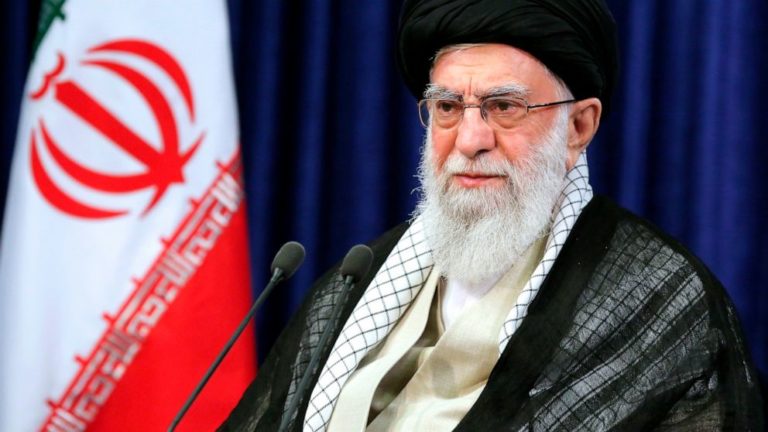
IRANIAN media have confirmed the death of Supreme Leader Ayatollah Ali Khamenei, following massive, coordinated strikes by the United States and Israel that have dramatically escalated tensions across the Middle East.
The ICIRreported on Saturday that Khamenei was reportedly not in Tehran when missiles from the US and Israel hit Iran. He was reportedly transferred to a secure location.
Iranian state television announced Khamenei’s death hours after US and Israeli strikes triggered immediate retaliation, with missile and drone attacks reported in Israel and several Gulf states, deepening what analysts now describe as an undeclared regional war.
The killing of Iran’s most powerful political and religious authority marks the most consequential leadership loss in the Islamic Republic since the 1989 death of Ruhollah Khomeini, signalling a potential turning point not only for Iran but for global security.
Reports from major Iranian cities describe panic buying, traffic congestion, and families fleeing urban centres amid fears of sustained bombardment and internal instability.
The uncertainty surrounding succession traditionally controlled by clerical institutions has heightened anxiety among citizens already strained by economic sanctions and political isolation.
In Washington, US President Donald Trump described the moment as “the greatest chance for Iranians to take back their country,” while warning Tehran against further retaliation, threatening unprecedented military force if attacks continue.
Israeli Defence Minister Israel Katz said the operation delivered a “mortal blow” to what Israel calls the regional “axis of evil,” adding that Israeli forces would maintain military pressure.
As missile exchanges continue and world powers call for restraint, the question facing the international community is no longer whether tensions will rise, but how far the confrontation will spread and who will control Iran’s future in the absence of its supreme leader.
Within hours of the announcement, Iran’s Supreme National Security Council ordered the formation of a temporary leadership council to stabilise governance and prevent internal unrest.
Security officials warned separatist movements against exploiting the crisis, accusing the United States and Israel of attempting to fragment the country.
Parliament Speaker Mohammad Baqer Qalibaf declared that Iran would continue Khamenei’s political and ideological path, signalling continuity rather than reform in the immediate aftermath.
Footage released by Iranian media showed Khamenei’s final public address on February 17, delivered shortly after indirect negotiations between Washington and Tehran began in Geneva.
In the speech, he defended Iran’s weapons development as essential deterrence, warning that nations without military strength risk domination by adversaries, remarks now viewed as a defining statement of his final political position.
Unlike elected presidents, Iran’s Supreme Leader holds ultimate authority over the military, judiciary, intelligence services, and nuclear policy.
Analysts warn that without a single undisputed successor, competing factions within Iran’s political and security establishment could struggle for influence, increasing the risk of miscalculation in an already volatile conflict, as Khamenei’s sudden death creates a rare and dangerous power vacuum at a time of active military confrontation.
ORCHESTRATORS of Ponzi schemes have increasingly turned to artificial intelligence tools to make their scams appear more sophisticated, believable and harder to detect.
With AI now able to generate realistic human faces, clone voices, and produce professional-looking videos within minutes, fraudsters no longer need real investors or legitimate businesses to attract victims. Instead, they manufacture trust digitally and push it aggressively across social media platforms.
Nigeria has repeatedly witnessed the destructive impact of Ponzi schemes on individuals and families. The collapse of CBEX recently remains one of the most recent popular examples, wiping out billions of naira belonging to millions of participants who believed they were investing in a peer-to-peer donation system. Many victims lost school fees, rent money and business capital, plunging households into financial distress.
Before CBEX, several similar schemes had emerged in the past, each repackaged with new branding but operating the same fraudulent model. Platforms such as MMM, Loom, Ultimate Cycler, Racksterli and numerous online “investment clubs” promised quick wealth while quietly depending on continuous recruitment to survive. Once new members slowed down, the platforms collapsed, leaving late participants with nothing.
What has made these scams far more dangerous is the integration of artificial intelligence. With AI, fraudsters can create realistic human faces, generate convincing voices and produce news-style videos that mimic legitimate financial announcements. These tools allow them to fabricate credibility at a scale never seen before.
As economic hardship pushes many people to search for quick income opportunities, these AI-powered scams thrive. Recognising the warning signs is now essential for protecting personal finances.
AI-generated testimonial videos that appear real
Many Ponzi adverts now feature individuals confidently claiming they earned huge profits within days or weeks. These videos are often created using AI technology, meaning the people shown may not exist at all. Although they look convincing, small details such as stiff facial movements, unnatural blinking or robotic voice tones can reveal that the content is artificially produced.
These fabricated success stories are designed to replace real customer experiences that the scammers do not have.
Screenshot of QuantumAI advert on YouTube
Our earlier investigation exposed how a YouTube advertisementtargeting Nigerians was launched in June 2025. The video showed a man dressed in a shirt and an overused false ‘African accent’, encouraging people to join Quantum AI, another AI-powered Ponzi platform. Looking at how the man in the video looks like a real human, some people may not know it is AI.
Manipulated endorsements from well-known figures
Another common tactic is the cloning of respected public figures to falsely promote investment platforms. Through AI, scammers replicate the face and voice of pastors, entrepreneurs, media personalities or influencers, making it appear as though these individuals are recommending the scheme. This creates instant trust among viewers who recognise the figure, even though the endorsement is completely fake and unauthorised.
An earlier investigation by The ICIR shows how AI-generated videos of public figures like 2023 presidential candidate of the Labour Party, Peter Obi, and Nigerian lawmaker Saliu Mustapha were used to promote Ponzi scams.
In the AI-generated video, the voice of Mustapha, a popular philanthropist in Nigeria, was cloned to appear as if he had said the scheme has an AI-powered analytical function, which allows it to predict trends, and subscribers could invest N395,000 to earn N1,580,000 per week.
Saliu Mustapha AD
While Obi was purportedly telling people to invest in a Ponzi platform and earn a sum of “N7 million” every month. The former LP presidential candidate reportedly stated that the investment platform was created with his backing and the support of the federal government. However, findings by The ICIR show that neither video is genuine.
Promises of guaranteed extremely high Returns
AI-driven Ponzi adverts consistently promote unrealistic profits, often claiming that investors can double their money quickly or earn a fixed daily income without risk. These promises contradict the realities of legitimate investing, where returns fluctuate, and losses are possible. The certainty of profit is deliberately used to remove doubt and attract people who may be financially desperate.
For instance, CBEX, which wiped out the money of many people in Nigeria, promised a 100 per cent return on investment in just thirty days.
Confusing or Vague Explanations of How Profits Are Made
Rather than clearly explaining business operations, Ponzi schemes rely on buzzwords related to artificial intelligence, cryptocurrency or automated trading systems. The explanations are often overly technical or intentionally unclear, making it difficult for potential investors to understand where money actually comes from.
This lack of transparency helps hide the fact that profits are usually paid from new participants’ deposits.
Strong emphasis on referrals
Participants are frequently encouraged to invite others to earn more money. The focus shifts away from any real product or service and toward building a network of new investors. This structure ensures that funds flow from newcomers to earlier participants, which is the classic Ponzi model that inevitably collapses when recruitment slows.
For instance, MMM and CBEX offered 10 per cent referral bonuses before their collapse. To maximise these bonuses, participants often register multiple accounts for themselves using their referral links.
Pressure tactics
Many adverts are scripted to make people feel they must act immediately. They often suggest that the opportunity is about to close or that only a few slots remain, pushing viewers to invest quickly without researching. This emotional pressure is a common scam technique designed to prevent careful thinking.
Suspicious social media accounts or websites
These adverts are usually posted from newly created pages or profiles with little history. The accounts or websites often display repetitive praise comments that look automated or fake.
Genuine investment companies typically have established online presence, clear contact information and verifiable reviews, while scam pages disappear once the scheme collapses.
Requests for Payments through unofficial or hard-to-trace channels
Instead of using recognised financial institutions or registered corporate accounts, scammers often ask victims to send money directly to personal accounts, digital wallets or other informal payment methods. This makes it extremely difficult to recover funds once the scheme shuts down, allowing fraudsters to disappear without a trace.
Absence of regulatory approval or legal registration
Most Ponzi schemes operate without authorisation from financial regulators such as Nigeria’s Securities and Exchange Commission. When asked for proof of legitimacy, promoters may avoid the question or present questionable documents.
Legitimate investment firms are always properly registered and transparent about their regulatory status.
This story was supported by the Pulitzer Centre
You can read the earlier investigation on AI-assisted Ponzi schemes here.
LIBERTY Semper Fidelis LP has condemned the revocation of bail and remand of its Managing Partner, Abdul Mahmud, by a Senior Magistrate Court in Mararaba, Nasarawa State, describing it as an instance of judicial misconduct and targeted persecution.
In a press statement dated February 28, 2026, the firm described the ruling delivered on Friday, February 27, by Senior Magistrate Zuluhiat Yusuf as a “judicial ambush,” insisting that Mahmud had faithfully attended court proceedings since the case began in 2023.
Backstory
The statement noted that the matter originated from a civil dispute between the Incorporated Trustees of Fatima Gold Estate, Mararaba, and Deputy Commissioner of Police (DCP) Muhammed Amabua, who owns two bungalows within the estate.
The estate authorities had reportedly accused the police officer of failing to pay estate dues and development levies since acquiring the properties in 2019.
At an estate general meeting in May 2023, residents allegedly resolved that defaulters owing N200,000 and above should receive formal demand notices and face suspension of services such as waste evacuation and electricity supply if they failed to comply.
It noted that fourteen residents were affected during the incident.
Meanwhile, tensions reportedly escalated on June 26, 2023, when Mahmud encountered two female police officers at the estate gate, with Amabua Muhammed allegedly in a police van, manhandling a security guard.
According to the statement, the officers claimed the guard had falsely imprisoned the DCP’s sister, prompting Mahmud to ask that the officers either contact the guard’s employer or produce a warrant of arrest before leaving for his church service.
Later that day, residents reportedly gathered to resist further arrests after additional police officers were invited to the estate. The firm claimed that during the confrontation, Amabua allegedly seized Mahmud by his shirt before being restrained.
Mahmud was later arrested pursuant to a warrant issued by a magistrate in New Nyanya. He was arraigned in July 2023 and granted bail on self-recognition before the matter was adjourned to August 2023.
”Upon learning of the arrest, IGP Tunji Bello, former Principal Staff Officer to the then Inspector General of Police, Kayode Egbetokun, directed that Mahmud be released. Mahmud was asked to return on 5 July 2023 for settlement discussions. On returning on that date, Mahmud was immediately arraigned and granted bail on self-recognisance. The matter was adjourned to 23 August 2023,” the statement noted.
Fresh complaint, detention
In August 2023, Amabua filed a fresh complaint at the Force Intelligence Bureau in Abuja.
“On 17 August 2023, DCP Amabua filed a further criminal complaint against Mahmud at the Force Intelligence Bureau in Abuja and Mahmud retained the services of Femi Falana SAN. Mahmud honoured the summons on 27 August 2023, was detained for nine hours, and was again granted bail on self- recognisance. The complaint was subsequently quashed for want of substance,” the statement added.
The law firm stated that Mahmud subsequently petitioned the Independent Corrupt Practices and Other Related Offences Commission (ICPC), the Police Service Commission, and the Code of Conduct Bureau, alleging abuse of office and corruption.
It claimed the petitions were not acted upon.
Court proceedings and alleged irregularities
Liberty Semper Fidelis LP alleged that during trial proceedings, charges were amended and consolidated repeatedly, and objections raised by the defence were overruled.
It added that the Nasarawa State Attorney General later took over the case.
The firm said that as trial was about to commence, the prosecution team was changed, and the new counsel adopted what it described as an “unmistakably adversarial posture.”
The immediate controversy leading to the bail revocation, according to the statement, arose after the prosecution alleged in October 2025, that Mahmud had instigated the Inspector General of Police to issue a signal summoning Amabua to the Force Headquarters.
The defence denied this claim, stating that the petition allegedly written by Mahmud was not produced in court and that the author of the police signal was not before the court.
When the matter came up on February 27, 2026, the Magistrate overruled Mahmud’s preliminary objection challenging the court’s jurisdiction and proceeded to revoke his bail.
The firm further alleged irregular communication regarding hearing dates and claimed that, on some occasions, the defence appeared in court while the magistrate or prosecution was absent.
It also said Mahmud had travelled to the United Kingdom for treatment of pneumonia and cardiovascular complications but returned to Nigeria to attend trial.
Call for intervention
Liberty Semper Fidelis LP called on the Chief Judge of Nasarawa State to review what it described as troubling proceedings in the court presided over by Magistrate Yusuf.
It questioned her continued involvement in the matter, alleging she had previously been transferred but was still presiding under a fiat.
The Nigeria Civil Aviation Authority (NCAA) has directed Overland Airways to refund passengers who were incorrectly charged Value Added Tax (VAT) on flight tickets purchased before January 1, 2026.
In a statement issued on Saturday, February 28, the NCAA’s Director of Public Affairs and Consumer Protection, Michael Achimugu, said the issue had been resolved following regulatory engagement between the authority, the airline, and the Nigeria Revenue Service.
“As directed by the NCAA, the operator, Overland Airways, has reverted with clarification from the Nigeria Revenue Service,” Achimugu said.
The ICIR reports that the directive followed a clarification issued by the Nigeria Revenue Service regarding the implementation of the new tax regime for airline tickets.
Passengers had raised complaints with regulators after an elderly woman was reportedly compelled to pay the new tax in 2025, despite the policy being scheduled to take effect on January 1, 2026.
Travellers said the development came as a surprise and imposed additional financial strain, particularly during the busy December travel period.
Achimugu explained that passengers who purchased their tickets before the new tax laws took effect should not have been required to pay any additional charges.
“Tickets purchased before January 1, 2026, were not affected by the new tax laws,” he said, adding that passengers who bought tickets in 2025 but were later made to pay VAT at check-in in 2026 were not supposed to have been charged.
According to the NCAA, the airline initially applied the VAT requirement based on its understanding of the new fiscal policy, which led to complaints from affected travellers, noting that regulatory clarification was required to establish the proper application of the tax.
“The onus was on the NRS to clarify, which they have now done,” he said, noting that the aviation regulator had earlier communicated its position to the airline.
He added that, following the clarification, Overland Airways agreed to rectify the situation.
“The airline has committed to redressing the situation by initiating a refund for affected passengers,” Achimugu added.
THE ISRAELI military has confirmed a new wave of Iranian missiles was launched toward Israel on Saturday, marking a sharp escalation in hostilities after the United States announced it had begun major combat operations inside Iran.
Iran confirmed it had carried out its first large-scale drone assault against Israel, firing what it described as “dozens of attack drones” in retaliation for earlier strikes targeting Iranian military and nuclear facilities. The retaliatory action quickly expanded beyond Israel, with explosions reported across several Middle Eastern countries, including the United Arab Emirates, Bahrain and Qatar, raising fears of a widening regional conflict.
Qatar’s Ministry of Defence said a second round of missiles directed toward the country was successfully intercepted.
“All incoming missiles were intercepted and destroyed before reaching Qatari territory,” the ministry said in a statement posted on Instagram, assuring residents that the armed forces possess the full capability to safeguard national security. Authorities urged citizens to remain calm and follow official instructions.
According to CNN, by 2:30 p.m. local time in Qatar, multiple missile interceptions were reportedly heard across the country, underscoring the scale of the unfolding confrontation.
The escalation follows an announcement by former U.S. President Donald Trump, who said American forces had begun “major combat operations in Iran,” aimed at dismantling Tehran’s missile capacity and nuclear programme. Trump also suggested the campaign could trigger political change within Iran, saying the objective was to secure long-term safety for the United States and its allies.
Israeli Prime Minister Benjamin Netanyahu confirmed that Israel and the United States were conducting joint military operations that would continue “as long as needed,” signalling a sustained campaign that analysts warn could engulf the broader Middle East.
The intensifying exchange between Iran, Israel and the United States has heightened global concern that the conflict could expand beyond bilateral strikes into a broader regional confrontation, threatening stability across the Middle East and international energy and security interests, as both sides signal readiness for prolonged operations.
The ICIRreported that on Saturday, explosions were heard in the Iranian cities of Kermanshah, Lorestan, Tabriz, Isfahan and Karaj.
Defence Minister Israel Katz had said, “The State of Israel launched a pre-emptive attack against Iran to remove threats to the State of Israel.”
The attack followed a 12-day air war between Israel and Iran in June and repeated US.-Israeli warnings that they would strike again if Iran pressed ahead with its nuclear and ballistic missile programmes.
US President Donald Trump on Saturday announced that American forces had launched what he described as “major combat operations” against Iran, marking a dramatic escalation in tensions between Washington.
Trump said the US military had begun large-scale operations aimed at eliminating what he called “imminent threats” posed by the Iranian government to American citizens, troops, and allied nations.
Military analysts say Iran’s rapid response is now testing the extensive U.S.-backed defence architecture built across the Gulf and surrounding areas.
Retired US Air Force Colonel Cedric Leighton told CNN that Iran’s speed in launching counterstrikes was unexpected, given intelligence assessments suggesting its missile-launch capacity had been weakened by earlier attacks.
“This defensive posture that has been established over months and years in the Gulf region is now being put to the test,” Leighton said, noting that Tehran appeared more prepared for a large-scale assault than anticipated.
According to intelligence estimates cited by the analyst, Iran may possess only about a third of the missile launchers it had before attacks last year, making the rapid retaliation particularly notable.