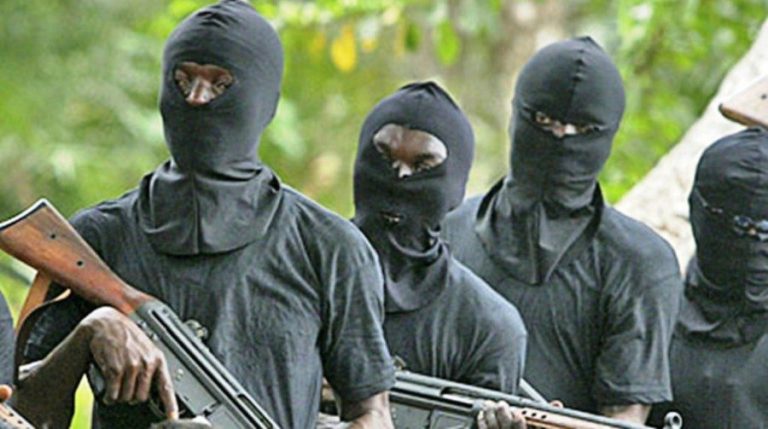
NIGERIA Premier Football League (NPFL) club’s side Sunshine Stars have lost their assistant kit manager, Taiwo Dosunmu, who was attacked by gunmen two weeks ago.
The ICIRreported how yet-to-be-identified gunmen attacked the club on its way to honour the NPFL match day 13 fixture against Bendel Insurance of Benin along the Ore-Benin highway.
He died at the intensive care unit (ICU) of the University of Benin Teaching on Friday, December 22.
The Sunshine Stars bus after the attack along Ore-Benin Expressway, Edo state on December 7, 2023.
A statement released by the club through its media officer, Michael Akintunde, on December 7 said one of the club’s ball boys was shot while other officials were injured.
“It saddens our hearts to inform Nigerians, especially football lovers, that our team was attacked a few minutes ago along Ore-Benin Expressway to honour an elite league tie against Insurance of Benin, scheduled for this weekend.
“Our ball boy was shot in the horrible attack. Our team manager and other club officials, including players, were seriously injured,” the statement read.
The statement added that the injured officials and the ball boy were rushed to a nearby hospital with the intervention of the Federal Road Safety Corps (FRSC) officers.
Sixteen days after the attack, the club announced Dosunmu’s death after a series of surgeries by consultants at the ICU of the University of Benin Teaching Hospital.
“With a lot of pain in our hearts, we announce the untimely transition to an eternity of our dear brother and assistant kit manager, Taiwo Dosunmu, who died in the line of duty by the bullets of armed bandit along Benin-Ore expressway on Thursday, December 7, 2023.” the club said.
The statement added that the deceased burial arrangements would be communicated as authorised by the family.
On December 10, The ICIRreported that the Edo state Police command kept mum over the attack on the club.
Netizens react to Dosunmu’s death, fault government on insecurity
Mixed reactions have trailed Dosunmu’s death on the club’s X account, as Nigerians condoned the deceased’s family and lampooned the Nigerian government over insecurity in the nation.
Ikokwu Chidozie, @ikokwuchidozie questioned the presence of uniformed security officers on the nation’s roads, adding that the roads remained unsafe.
“On this same road, you will find multiple roadblocks by various security outfits,” he wrote.
Another X user, Chim-Nedum, @EduWaltzChuka expressed how disheartening the loss of the club’s assistant kit manager was.
“Nigeria always taking her own. RIP,” he wrote.
Another X user, Igwe Onyekachi, @onyekapray bemoaned the state of insecurity on the nation’s highways.
“The series of killings along the expressway by bandits is becoming alarming. Those who are supposed to protect us are busy trying to curry favours from travellers rather than doing their jobs. What a pity! Thoughts with his family,” he wrote.
THE Lagos state government has begun the removal of illegal street gates in the Lekki Phase 1 axis of the state.
This came after days of prolonged traffic logjams in the area.
The state Commissioner for Environment and Water Resources, Tokunbo Wahab, disclosed this on Saturday, December 23, on his official X handle.
He said the affected gates were those permanently locked in the area.
According to the commissioner, the government’s action was due to the inability of the state residents to access connecting roads due to the indiscriminate mounting and multiple gates in many parts of the state.
He added that the gates were defacing the beauty of the environment and causing unnecessary traffic on major roads.
“Lagos state government, through the enforcement team of the Ministry of the Environment and Water Resources, has commenced the removal of illegal gates that are permanently closed around Lekki 1 axis.
“These gates include Sir Rufus Foluso Giwa Road, Theophilus Oji Road, Osaro Isokpan Road, Abike Sulaiman Road, Ben Okagbue MBA Road, Olubunmi Rotimi Road, Olanrewaju Ninalowo Road, Dele Adedeji road, Abayomi Sonuga road, Siji Soetan and Rasheed Alaba Williams roads.”
The commissioner urged all resident associations across the state with gates under permanent lock and keys to remove them voluntarily or face sanctions.
Meanwhile, some X users have reacted to the government’s action.
A spokesperson to President Bola Tinubu, Bayo Onanuga, called for the extension of the action to other areas of the state.
“This exercise must be extended to estates in the Chevron area and others. Gated communities are denying commuters access to possible alternative roads to the Lekki-Ajah expressway,” he posted.
Another X user, @PrinceSomorin, blamed bad governance for people erecting gates on their streets.
“If we had good governance, all the association presidents and anyone at the gates should be arrested and charged,” he said.
In his view, @allibaloo said, “Please extend the operation to Anthony. Anthony is not an estate, but by 8 o’clock, they will start locking the gates, making it difficult for residents to have access.”
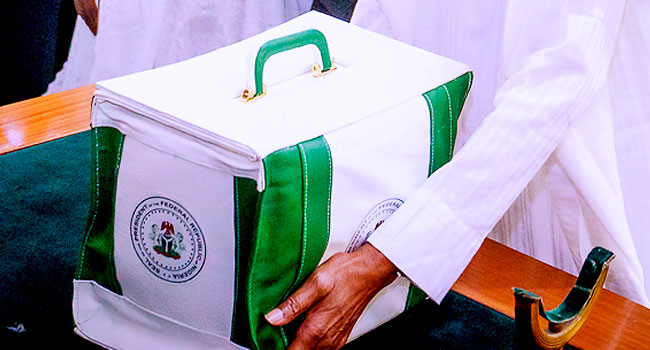
THE Federal Government has proposed an additional N693.3 million for the suspended national population and housing census in the 2024 budget.
Findings by The ICIR showed that this is the third time a budget for conducting a census has appeared in the country’s budget since 2022.
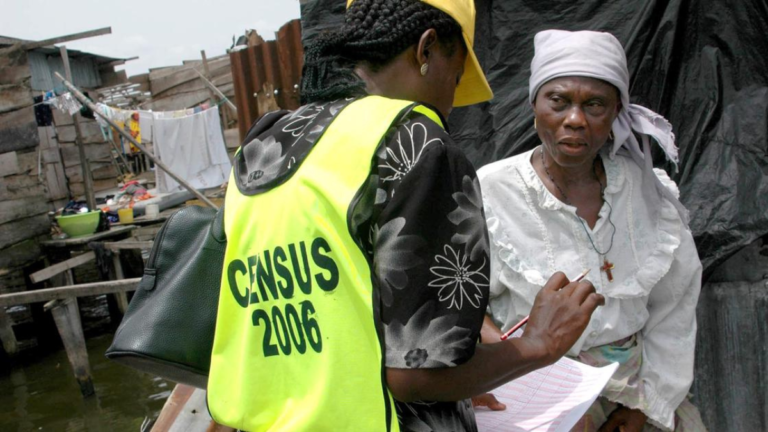
The last time Nigeria held its population census was in 2006. The exercise showed that the country had over 140 million people. According to the United Nations Population Fund (UNFPA), population censuses should be conducted at least every ten years.
However, 17 years after the last census, Nigeria has failed to organise a new one despite budgetary provisions.
The National Population Commission (NPC) is responsible for conducting census and managing other population issues in Nigeria.
The 2022 budget had N177.33 billion approved for a national population and housing census. When the first approval was made, The ICIRreportedhow the Federal Government announced plans to conduct the census. The exercise was eventually postponed.
There were plans to organise another census in 2023, but the exercise was deferred three times.
In the 2023 budget, former President Muhammdu Buhari approved N10.52 million for conducting a census. The commission later requestedN869 billion to carry out the exercise, which was scheduled to be held between March 29 and April 2.
Due to the general elections, the census waspostponed to May 3 and May 7.
Later, NPCsaidit had received N200 billion to enable it to prepare for the exercise. The Federal Government announced an additional N2.8 billion for the commission to procure some software for the census.
Again, the census was put off.
Given the government’s already approved funding, it was widely expected that Tinubu, who took over from Buhari on May 29, would have announced a new date for the exercise.
The ICIR reports that the Federal Government approved N202.9 billion in 2023, in addition to what the commission had received, for conducting a census.
This organisationreportedhow the census postponements threatened the accuracy of demographic data in Nigeria.
Areport said that the Senate Committee on Appropriations had expressed displeasure when it was informed that there was no census fund in the 2024 budget.
Year
NATIONAL POPULATION AND HOUSING CENSUS
PREPARATION OF EAD CONCEPT MANUAL
CENSUS IN SCHOOLS
2024 proposed budget
693,300,000
200,000
5,000,000
2023
10,520,000
2,375,000
30,000,000
2022
177,331,774,178
2,375,000
95,000,000
2021
No budget
2,500,000
642,036
Other line items receiving allocations
The ICIR reviewed the budget approval from 2021 to the proposed 2024 budget and observed that line items like census in schools and preparation of EDA concept manual had also been receiving allocation.
According to NPC’s website, Enumeration Area Demarcation (EDA) is the process of dividing the country into smaller units with clearly defined and identifiable boundaries, called Enumeration Areas (EAs). This is done so that there is no overlap or gap between them.
The ICIR observed that the Federal Government approved N2.5 million to prepare the EDA concept manual in 2021. Also, in 2022, another N2.38 million was approved in the budget. In the 2023 budget, the commission got N315,945 for the same item, and in the 2024 proposed budget, N200,000 was earmarked for the project.
Also, the Federal Government approved N642,036, N95 million and N30 million for a census in schools in 2021, 2022 and 2023, respectively. Another N5 million has been proposed in the 2024 budget for the same line item.
NPC’s 2024 budget
The commission has N12.77 billion in the proposed 2024 budget. This is 0.05 per cent of the proposed N27.5 trillion budget.
Of the amount, N10.82 billion would be spent on personnel costs, N818.93 million on overhead, and N1.13 billion on capital expenditure.
A recent publication by the National Bureau of Statistics revealed that the projected population of Nigeria is 216,783,381, comprising 108,350,410 males and 108,432,971 females as of 2022.
Keynote on this report
The report highlights what the Nigerian government has budgeted for the suspended national population and housing census since 2021.
The ICIR also reports that the National Population Commission has executed several programmes preceding the exercise, such as the enumeration area demarcation, trial census, and training of census officials among others.
In this report, The ICIR’s EHIME ALEX examines the performance of the Nigerian economy in 2023 and highlights the impacts of government policies on households and businesses.
UNTIL early this year, Omotayo Jimoh, a food seller, was doing well in her business before the cash crunch hit her operation and crashed the business she had nurtured for about 17 years.
Omotayo had relocated her business from the Jibowo-Fadeyi area in Lagos State some 14 years ago to acquire a shop at Opic Road, Mowe, in Ogun State, where she operated a “mama put” restaurant.
Her ordeal started when the Central Bank of Nigeria (CBN) introduced the naira redesign policy that birthed the new N200, N500 and N1,000 notes to phase out the old banknotes.
Among other issues, the policy created a scarcity of banknotes in circulation to the extent that Nigerians could not withdraw cash at will as banks rationed limited notes released daily from their headquarters under strict CBN directives.
The situation was so pathetic that Nigerians were sleeping at ATMs in banks in their bid to get cash to meet basic daily needs. Others who could not endure the pains of queueing for days in the bank agreed to part with almost 30 per cent of what they got from PoS operators.
At the time, Omotayo, whose business required cash daily to transact her food business, was cash-strapped. Regrettably, she had to stop the business, where she was making over N2.4 million in monthly sales.
“We had up to 10 companies we supply food to for their lunch, and we were making sales of not less than N35,000 a day when we supplied food to them,” Omotayo, a Banking and Finance graduate, narrated her ordeal to The ICIR.
She said she supplied the food to the companies three times weekly and made sales of over N105,000.
“Before January, I used to make sales of between N70,000 to N80,000 daily. But if I supplied companies purchasing from me, it would be above N100,000,” said Omotayo, a mother of three, who used what she realised from her business to support the salary of her husband, who works as a civil servant.
As pathetic as Omotayo’s story is, the removal of fuel subsidy and unification of exchange rates have further strained businesses, even as the naira scarcity has resurfaced lately.
Omotayo Jimoh
So, to assess the impact of government policies on households and businesses, The ICIR looks at critical macroeconomic indicators that speak to how the Nigerian economy fared in 2023.
Economic growth
Commonly used to measure the increase in the aggregate market value of additional goods and services produced, using estimates such as the gross domestic product (GDP), Nigeria’s economic growth declined in the review year.
Data from the National Bureau of Statistics (NBS) shows that GDP, which was at 3.52 per cent in Q4 2022, fell to 2.31 per cent in Q1, 2.51 per cent in Q2 and 2.54 per cent in Q3 of 2023.
In nominal terms, the GDP, which was at N56.76 trillion in Q4 2022, dropped to N51.24 trillion in Q1 and rose to N52.103 trillion in Q2 before jumping to N60.66 trillion in Q3 of 2023, while in real terms, the GDP at N21.04 trillion in Q4 2022, declined to N17.75 trillion in Q1, N17.72 trillion in Q2 and rose to N19.44 trillion in Q3 of 2023.
Real terms, which consider changes in the price level over time, contrary to nominal terms, which do not, are a far more accurate measurement of value.
Price stability
This relates to inflation, the rate at which the overall prices for goods and services change over time. More precisely, it means a low, stable and predictable inflation rate.
Nigeria’s inflation rate surged for 11 consecutive months to 28.2 per cent as of November this year from 21.34 per cent in December 2022.
During the year in review, the basket of goods and services consumed by the average Nigerian, known as food inflation, consistently outpaced the headline and core inflation. It throttled to 32.84 per cent in November 2023 from 23.75 per cent in December 2022.
The November inflationary situation is the worst in recent history, making it the highest rate recorded in almost two decades since August 2005.
Unemployment
Considered a vital measure of the economy’s health, the NBS puts Nigeria’s latest unemployment rate at 4.1 per cent as of Q1 2023 after modifying its methodology. Some experts had argued that the pace did not reflect the actual position of unemployment in the country.
The latest NBS report means that about 8.2 million Nigerians are unemployed, based on an estimated population of 200 million.
But NBS’ Nigeria Labour Force Survey Q4 2022 indicates that 5.3 per cent of the population, equivalent to 10.6 million Nigerians, were unemployed.
In Q4 2020, the statistics office disclosed that 33.3 per cent of Nigeria’s population was unemployed, revealing that one in three Nigerians was unemployed.
As of 2022, about 133 million Nigerians were multi-dimensionally poor. Experts have urged the Federal Government to work with this figure instead of the latest unemployment rate, which they believe would not be helpful for fiscal and monetary planning.
Foreign Exchange Market
Some foreign exchange challenges Nigeria faces include sharp currency depreciation, illiquidity, volatility, and transparency, as the recent policy settings are stifling business activities, investment and growth and amplifying macroeconomic risks.
The country’s foreign exchange rate, which was at N461.50/$1 at the official rate and N737/$1 at the black market rate at the beginning of the year, has worsened to N888.35/$1 and N1,230/$1 respectively, as of December 18, 2023.
Balance of payment position
The balance of payment statistics, in which the apex bank is the sole producer, shows Nigeria’s statement of account as regards its inflow and outflow of goods, services, and assets.
In its Q1 2023 Economic Report, the most recent disclosure, CBN revealed that the uncertainties of the 2023 general elections exerted pressure on the external sector as the overall balance of payments deficit widened.
The report shows that Nigeria’s current account posted a surplus of $2.49 billion; a capital reversal of $0.78 billion was recorded in Q1 2023, in contrast to an inflow of $1.94 billion in Q4 2022. Also, aggregate financial assets recorded a disposal of $1.30 billion compared to an acquisition of $1.09 billion in Q4 2022.
The international reserves at $35.14 billion were equivalent to 6.68 months of import for goods and services or 9.01 months for goods only.
The international investment position recorded a net financial liability of $76.62 billion, and public sector external debt stock and external debt service payment at the end of December 2022 stood at $41.69 billion and US$0.80 billion, respectively.
Nigeria’s economy weighed below projections
Nigeria’s economic growth weighs below the 2.9 per cent World Bank Group’s forecast for 2023.
The Britton Wood Institution had in its Global Economic Prospects predicted 3.3 per cent growth, but citing currency pressure, insecurity, and other challenges in its Africa Pulse report, a regional macroeconomic outlook revised Nigeria’s economic growth to 2.9 per cent.
Nigeria’s economic growth also falls below the earlier projection of 3.03 per cent by the CBN, 3.75 per cent by the Federal Government and 3.29 per cent by the International Monetary Fund (IMF).
“There was no compelling argument to undertake the naira redesign in the first place,” an economist, Muda Yusuf, said.
On exchange rate unification, Yusuf noted it would boost inflows from foreign direct investment (FDI), foreign portfolio investment (FPI), export proceeds and diaspora remittances.
However, the government should have avoided a complete floatation of the naira to guide against currency volatility amid intense speculative pressures.
“I must also acknowledge that the reform has its downsides, especially the further depreciation of the currency, which is expected to be temporary,” Yusuf said at a retreat organised by the Labour Writers Association.
A professor of economics, Segun Ajibola, pointed out that the avalanche of problems confronting the Nigerian economy arose from global and domestic challenges.
“There have been many policy issues, policy inconsistencies, environmental issues over the years. I am not sure any of them (economic indicators) were at a state of comfort as of May this year,” he said.
Nigeria’s macroeconomic faces instability, shrinking fiscal space, soaring public debt, heightening inflationary pressures, currency depreciation, foreign exchange illiquidity, surging energy cost, weakening purchasing power, legacy structural constraints, lingering insecurity, and crippling trade facilitation issues which the new administration of President Tinubu should tackle in the coming year.
ON December 12, the governor of Abia State, Alex Otti, presented the proposed 2024 appropriation bill of N567.2 billion to the state House of Assembly.
The proposed budget, more than 300 per cent higher than what was approved for 2023 (N160.5 billion), generated mixed reactions from the public.
The thrust of the argument was that the state governor presented a budget with a deficit of more than N400 billion, which would be secured from local and foreign borrowings to finance capital expenditure.
At the same time, N166 billion, pulled from the state’s internally generated revenue (IGR) and Federation Accounts Allocation Committee (FAAC), would be used for recurrent expenditure.
The governor said the N400 billion loan would be used to develop capital projects like roads, schools and other facilities that could generate revenue for the state’s economy, which would pay off the loan in the long term.
Amidst these reactions, The ICIR Data used the Abia state governor’s economic model to check if the country’s 36 states could use their IGR to offset recurrent expenditure, specifically personnel costs.
The ICIR Data used the states’ approved 2023 budget and the IGR generated in 2022, which are the latest data available for such analysis.
Personnel cost in a fiscal budget is the total money spent on the remuneration of workers within the government system.
Our findings showed that 17 out of 36 states in Nigeria cannot pay up to six months of the total personnel cost approved in the fiscal budget in 2023 if the IGR were used. To run their budget, the affected states would depend on local or external borrowings, multilateral loans, FAAC, grants and aids.
These states are Abia, Adamawa, Akwa Ibom, Bayelsa, Benue, Borno, Cross Rivers, Ebonyi and Imo.
Others are Kastina, Kebbi, Kogi, Nasarawa, Niger, Plateau, Taraba and Yobe. [View the sheet analysis here]
For instance, in the Bayelsa state fiscal appropriation for 2023, the budget for personnel cost was N81.78 billion, which is N6.81 billion if broken down monthly. However, the state generated an IGR of N15.09 billion. If the IGR is used to offset personnel costs, it can only pay for two months.
Similarly, the personnel cost approved for Plateau state in 2023 was N39.83billion (3.318 billion monthly), but the state generated an IGR of N15.93 billion, which can only offset five months of personnel expenditure.
The National Bureau of Statistics reported that the total IGR generated by the 36 states and the Federal Capital Territory in 2022 was N1.93 trillion. This was 1.57 per cent higher than N1.896 trillion pulled in 2021.
Meanwhile, The ICIRreported that Lagos, Rivers and the FCT got nearly half (49.25 per cent) of the total IGR generated in 2022.
Also, most states with a lower internally generated revenue survived on the Federal Government allocation and other loans.
On the contrary, states like Lagos, Ogun, and Rivers can use their yearly IGR to offset the personnel cost of a fiscal year and more.
The ICIR analysis shows that the 2022 IGR of Lagos state can offset the state’s personnel expenditure for two years and ten months (34 months). Also, Ogun IGR would offset 14 months, while Rivers’ will take care of 16 months.
The Acting Head of Open Government and Institutional Partnership, BudgIT, Iyanu Bolarinwa, said that most states could not fund their budget due to a lack of capital investments in foreign exchange.
He said, “By the time you remove IGR from a state, you will discover that some states cannot pay for recurrent expenditure, let alone capital expenditure. Many states believe that they can increase IGR by taxation, but when you do not expand the purchasing power of people through investment, you reduce the number of people you can tax.”
He added that for a state to develop its IGR, it needed to look at the human development index (HDI), invest more in capital projects, and expand its sales to the world.
NO Ngerian referee made the list of 68 officials appointed by the Confederation of African Football (CAF) to officiate at the African Cup of Nations (AFCON) coming up in Cote D’Ivoire in January 2024.
A breakdown of the officials shows they comprise 26 centre referees, 30 assistant referees and 12 video assistant referees (VAR).
The ICIR checks reveal that no Nigeria’s official was included in the the list published on CAF website..
At the last edition held in Cameroon in 2021, only one Nigerian, Samuel Pwadutakam, was selected as a match official for the biennial tournament.
Pwadutakam featured as an assistant referee out of the 63 match officials who officiated the tournament.
In the CAF referees list published on Friday, Morocco and Egypt have the most representation in the three tiers of officiating.
Morocco has three of the 26 referees, two of the 30 assistant referees, and two of the 12 VAR officials, totaling seven.
Similarly, Egypt has three referees, two assistant referees and two VAR officials, totalling seven.
According to a release by CAF, all selected referees are expected to arrive in Cote D’Ivoire on January 5, for a refresher course, which will be inclusive of physical and theoretical testing of all officials.
THE Akwa Ibom state Police Command has confirmed the release of a judge at Oron High Court, Joy Unwana, kidnapped by unknown gunmen on Monday, December 18.
The kidnappers whisked away Unwana and her driver.
The incident occurred on Monday night at around 8:00 p.m. along the Okobo-Esuk Inwang-Ndon Ebom road, resulting in the death of her Police orderly.
In a chat with The ICIR on Saturday, December 23, the Police Public Relations Officer (PPRO) of the Akwa Ibom command, Odiko Macdon, confirmed the judge’s release.
According to Macdon, the judge has met with the state governor, Umo Eno.
“Yes, I can confirm she has been released. She has met with his excellency (the governor). It is a great delight that the kidnapped judge has been released.
“It’s a wonderful gift to me on my birthday. We are delighted with her release.” added the officer.
He said that notwithstanding her release, security agencies in the state would go after the kidnappers and bring them to justice.
“We will spare no resources in going after people behind the dastardly act. They will be brought to justice,” he vowed.
When asked if ransom was paid for her release, Macdon said, “I have not heard about ransom. As a security agency, we do not discuss ransom.”
The ICIR reports that the Akwa Ibom state government announced the judge’s release early Saturday morning.
According to the state commissioner for information, Ini Ememobong, the government appreciated God for ensuring the judge’s safe return and the security agencies’ prompt response and dedication to duty when he received the judge at the Government House in Uyo.
The governor further assured citizens of the state that under his watch, there would never be a haven for criminals.
He charged security operatives to double their surveillance.
According to the statement, in her response, Unwana lauded the governor for his concern and efforts at rescuing her from her abductors.
She recounted her ordeal in their hands, praying that no one should face such a terrible experience.
Unwana, who was released with her driver, is being debriefed and receiving medical attention.
Before her release, her abduction prompted protests and the closure of court operations from several branches of the Nigerian Bar Association (NBA), particularly the Oron branch, where Justice Unwana works as a judge.
The NBA listed several demands, including that the state government and security services rescue the judge as quickly as possible.
The lawyers expressed their condolences to the family of Unwana’s Police orderly who was killed.
They also urged the state government to formulate a policy that upholds judicial autonomy in providing sufficient facilities for judicial officers.
“He has fulfilled his bail conditions and was released yesterday, Friday. He was released around 10 p.m.,” Umar stated.
On Wednesday, November 22, a Federal Capital Territory High Court, Abuja, granted Emefiele N300 million bailand two sureties in the like sum.
According to the judge, Hamza Muazu,the titles and certificates of occupancy for the properties held by the sureties must be from within the Maitama District.
Emefiele must stay inside the Abuja Municipal Area Council and deposit his travel documents with the court registrar.
The court ordered him to stay at Kuje Correctional Center until he met his bail conditions.
This came four months after the Federal High Court in Lagos granted him N20 million bail in a different case involving the unlawful possession of weapons.
The ICIR reportedon Friday, November 17, that Emefiele was sent to Kuje Correctional Centre over an alleged N1.6 billion procurement fraud.
The former CBN governor was arraigned on a six-count charge at a Federal Capital Territory (FCT) High Court, Abuja.
The Federal Government said in the new charge sheet that Emefiele unlawfully purchased 43 vehicles for N1.2 billion between 2018 and 2020.
The initial 20-count charge, totalling N6.5 billion, has been reduced to six.
After the six-count accusation was read to him, the former apex bank chief entered a not-guilty plea when he appeared in court on Friday, November 17, to request bail.
He was charged with ordering 37 Toyota Hilux vehicles, totalling N854 million.
He was also charged with giving corrupt benefits in violation of Section 19 of the Corrupt Practices and Other Related Offenses Act 2000 when he granted N73 million for the supply of a Toyota Landcruiser in 2019.
The ICIR reported that an FCT High Court granted the former CBN chief bail on November 8.
The judge, Olukayode Adeniyi, ordered that he be released immediately to his lawyers, who must bring him into court for arraignment the following week or any other day.
Meanwhile, the Special Investigator looking into the CBN activities, Jim Obazee, revealed that Emefiele and others had embezzled billions of naira and committed other financial offences after more than four months of investigation.
According to Obazee’s report, which was delivered to President Bola Tinubu on December 9, 2023, Emefiele, who held office from June 2014 to June 2023, committed fraud in the redesign of the naira and “in fraudulent cash withdrawal of $6.23 million.”
Besides, he was accused of keeping 543.4 million pounds in the United Kingdom.
ABOUT 3,413 inmates are on death row in Nigeria, the Nigerian Correctional Service (NCoS) has said.
The NCoS’ spokesperson, Abubakar Umar, said this while addressing journalists on Friday, December 23, in Abuja.
According to Umar, as of Monday, December 18, 2023, the total number of inmates in correctional centres across the country was 77,849, comprising 76,081 males and 1,768 females.
Out of this number, awaiting trial inmates (ATIs) were 53,836, comprising 52,512 males and 1,324 females.
This implies that the number of inmates increased by 2,340 in December 2023 from 75,509 reported in December 2022.
Similarly, the number of inmates on death row in Nigerian correctional facilities has increased by 115 when compared to the data given by the NCoS on April 19, 2023.
In April, Umar said there were about 3,298 inmates on death row in Nigerian correctional centres.
The NCoS’ spokesperson blamed the high number of death row inmates on the hesitation of state governors to sign death warrants.
According to him, death sentences are not always carried out due to the governors’ reluctance to sign warrants for the execution of condemned prisoners.
Umar further explained that sometimes, the execution of condemned prisoners is delayed because the concerned cases are still being appealed at higher courts.
Meanwhile, in his latest update on Friday, Umar said: “Awaiting trial persons in custody constitute 69 per cent of the total inmate population. This phenomenon is a huge challenge to us,” he said.
He explained that the service was working towards checking the trend by ensuring a speedy trial of suspects.
According to him, no form of internal insurrection was witnessed within the facilities in 2023, attributing the development to providing basic needs and necessities to inmates.
“This is through the deployment of technology for surveillance and provision of logistics for rapid response in and around custodial facilities.”
Umar highlighted that the NCoS engaged in collaborative efforts across agencies to enhance security within and around custodial centres.
He also noted that the proactive approach and support of the Minister of Interior, Olubunmi Tunji-Ojo, helped to reduce the number of inmates across the centres.
“The minister’s initiative ensured the release of 4,086 inmates who had options of fine and compensation,” he said.
On December 1, The ICIR reported that the Federal Government raised N585 million to settle fines for 4,068 inmates languishing in various correctional centres nationwide.
Giving an update during the release of 150 inmates from the Maximum Security Custodial Centre, Janguza, in Kano state, Tunji-Ojo, said the inmates were among the 4,068 prisoners the government intended to pay off their fines and allow them to return home.
Meanwhile, on December 16, The ICIR, via data obtained from the Nigerian Correctional Service (NCS), reported that 54,141 inmates awaited trial in Nigeria as of December 11.
The data also show that the number of inmates was 78,446, of which 24,305 had been convicted.
THE Central Bank of Nigeria (CBN) has lifted the ban on cryptocurrency transactions in the country.
This is contained in a circular titled ‘Circular to all Banks and other Financial Institutions Guidelines on Operations of Bank Accounts for Virtual Assets Service Providers (VASPS)’ and dated December 22, 2023, with reference number FPR/DIR/PUB/CIR/002/003.
According to the circular signed by the apex bank’s director, Financial Policy and Regulation Department, Haruna Mustafa, the CBN issued a guideline to financial institutions under its regulatory purview regarding their banking relationship with Virtual Assets Service Providers (VASPs) in Nigeria.
It also confirmed that banks and other financial institutions were still prohibited from holding, trading and/or transacting in virtual currencies on their account.
The ICIR reported the apex bank’s issuance of a circular in February 2021, instructing banks and other financial institutions to close accounts of individuals engaged in cryptocurrency transactions.
According to the CBN, this directive was prompted by the inherent risks of money laundering and terrorism financing (ML/TF), vulnerabilities inherent in their operations, and the absence of regulations and consumer protection measures.
The former CBN Governor Godwin Emefiele noted then that the government’s inability to track the movement of cryptocurrency trading effectively made regulatory functions difficult for the apex bank.
Issuing a new directive, CBN stated that current global trends had shown the need for crypto regulation, adding that all banks and other financial institutions were required to comply quickly with the new guidelines.
“Current trends globally have shown that there is a need to regulate the activities of virtual assets service providers (VASPs), which include cryptocurrencies and crypto assets. Following this development, the Financial Action Task Force (FATF) in 2018 also updated its Recommendation 15 to regulate VASPS to prevent misuse of virtual assets for ML/TF/PF.
“Furthermore, Section 30 of the Money Laundering (Prevention and Prohibition) Act, 2022 recognises VASPs as part of the definition of a financial institution. In addition, the Securities and Exchange Commission in May 2022 issued Rules on Issuance, Offering and Custody of Digital Assets and VASPs to provide a regulatory framework for their operations in Nigeria.”