A recent International Debt Report released for 2023 has shown that Nigeria was the highest recipient of fresh loans in 2022, receiving $2.9 billion from the World Bank.
This was followed by Tanzania, which got $2.7 billion in the same year.
The report, which is an annual publication that features the external debt statistics for over 100 low and medium-income countries, revealed that $443.5 billion was spent by developing countries on debt servicing in four decades (40 years), of which Nigeria is among.
The World Bank said, “Debt-service payments—which include principal and interest—increased by 5 per cent over the previous year for all developing countries. The 75 countries eligible to borrow from the World Bank’s International Development Association (IDA)—which supports the poorest countries—paid $88.9 billion in debt-servicing costs in 2022.
“Over the past decade, interest payments by these countries have quadrupled, to an all-time high of $23.6 billion in 2022. The report finds that debt-servicing costs for the 24 poorest countries are expected to balloon in 2023 and 2024—by as much as 39 per cent.”
Further findings by The ICIR show that as of June 30 2023, Nigeria owes the World Bank $14.5 billion, according to data ovation from the Debt Management Office website.
The ICIR has also reported how each Nigerian currently owes N396,376.19 in terms of debt per capita due to the public debt which increased by 75.27 per cent to N87.38 trillion at the end of the second quarter of 2023.
As of the second quarter of 2023, the total external debts by the federal government stood at N29.9 trillion.
Recall that during the budget presentation,the Senate President, Godswill Akpabio, urged Presiden Bola Tinubu to work towards reducing Nigeria’s debt profile.
However, this came after the National Assembly, under Akpabio’s leadership, approved Tinubu’s request to borrow $800 million from the World Bank to help cushion the effects of the removal of fuel subsidy in Nigeria in July.
The Washington-based global lender said that the Surging interest rates have intensified debt vulnerabilities in all developing countries.
“In the past three years alone, there have been 18 sovereign defaults in 10 developing countries—greater than the number recorded in all of the previous two decades. Today, about 60 per cent of low-income countries are at high risk of debt distress or already in it”, it noted.
The ICIR has reported how Nigeria secured three loans totalling $1.95 billion from the World Bank three months after Tinubu assumed office on May 29, 2022.
A PASSENGER at the Murtala Mohammed International Airport (MMIA) Chinedu Obikili has accused an officer of the Nigeria Immigration Service (NIS) of extortion.
Obikili disclosed that he was forced to part with N5,000 on November 7 at the airport while embarking on an international trip.
He said he paid the bribe into a First Bank account with the name Awonusi Tubosun Junior.
Transaction receipt provided by Obikili.
The ICIR could not confirm if the accused is the account holder, as the passenger did not give his name.
However, the demand for the N5,000 bribe came after the officer allegedly asked Obikili to provide proof of having at least $1,000 before embarking on the trip.
According to Obikili, efforts to convince the officer that he was not a first-time traveller yielded no results as the officer remained adamant.
“I explained that I was not a first-time traveller and simply renewed my old passport. He asked if I had the old one, and I showed him an electronic copy with my previous visas and immigration stamps. I also explained that I had friends at my destination and I had cash in my checked-in luggage for safety, but I was not comfortable carrying around large amounts of cash with me,” he told The ICIR.
The officer, however, went on to demand a bribe of N5,000, which he said was the only condition upon which Obikili would be allowed to make the trip.
“He insisted that I would not be allowed to travel unless I paid him some money. I also mentioned that I did not have cash with me, and he asked that I do a transfer to his personal account. I carried out a transfer of N5,000 to him and was allowed to travel,” Obikili stated.
The ICIR’s efforts to contact the NIS’ public relations officer, Tony Akuneme, on Friday over the allegation were unsuccessful as his phone was switched off.
Several Nigerians have raised concerns over harassment by airport officers, including Immigration, Nigerian Customs Service, the Federal Airport Authority of Nigeria.
On Thursday, December 14, the NIS disclosed that it was investigating allegations of extortion of a United States-based professor, Moyo Okediji, by its officers.
Okediji made a post via Facebook alleging that he was made to part with about $540 after some Immigration officers demanded a bribe while arriving Nigeria from Ghana through the Seme border.
“They asked for my Nigeria passport. I told them it had expired and I was in Nigeria to renew it. They said it was an offence for me to enter the country with an expired passport. I apologised. But they wanted none of that. They said I had to ‘settle’ them. They had my wallet containing the money I brought to spend in Nigeria.
“They saw two twenty-dollar notes and said I needed to give them these notes, otherwise, they would seize all the money in the wallet and take me to their office to make a statement. I had heard stories of visitors to the country ending up dead when the Police invited them to their offices to clear some issues. So, I eagerly gave them the forty dollars. They gave me back my things. But when I counted my money later, $500 was missing,” he said.
On Tuesday, December 12, the NCS announced that it had commenced investigations into the conduct of a female officer, who had been caught in a viral video demanding a bribe of N5,000 from a traveller.
The NCS’ National Public Relations Officer (PRO), Abdullahi Maiwada, confirmed this in a statement. He described the officer’s conduct as inappropriate.
“The recording reveals an inappropriate request for N5,000 in exchange for expeditious processing of customs procedures. We wish to confirm that the officer implicated is indeed a member of the Nigeria Customs Service, properly assigned to the Murtala Mohammed International Airport Area Command,” Maiwada said.
THE World Health Organization (WHO) has declared noma, an ailment of the mouth and face, a neglected tropical disease (NTD).
According to a statement by the organisation on Friday, December 15, the decision was recommended during the 17th meeting of the strategic and technical advisory group for neglected tropical diseases as part of its dedication towards addressing one of the world’s most unrecognised health challenges.
“Cases of noma are mostly found in sub-Saharan Africa, although cases have also been reported in the Americas and Asia.
“Evidence indicates that noma is caused by bacteria found in the mouth. There are multiple risk factors associated with this disease, including poor oral hygiene, malnutrition, weakened immune systems, infections, and extreme poverty. Noma isn’t contagious but tends to strike when the body’s defences are down,” WHO disclosed.
More than one billion people are affected by noma globally, according to data from the WHO. NTDs, including noma, are often related to environmental conditions.
Noma is a common disease which often occurs in children. It is mostly associated with malnutrition and has a survival rate of approximately 15 per cent, according to research.
Although the mortality rate from noma is high, WHO disclosed that early detection and treatment could aid healing without long-term consequences.
“Children who survive the gangrenous stage of the disease are likely to suffer severe facial disfigurement, have difficulty eating and speaking, face social stigma and isolation, and need reconstructive surgery,” the statement read.
At the 75th World Health Assembly held in 2022, Nigeria sought the inclusion of noma into the WHO’s NTD list, which comprised 20 conditions at the time.
Former Minister of Health Osagie Enahire said at the World Health Assembly that year that the inclusion of the ailment to the NTDs list would facilitate “global support to the request for its elimination, starting with preventive and curative measures for afflicted persons.”
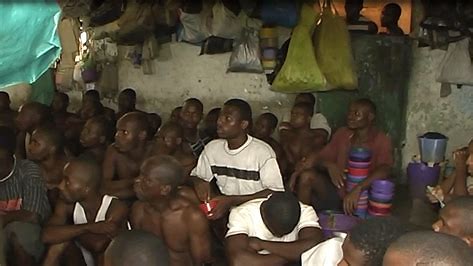
DATA from the Nigerian Correctional Service (NCS) have shown that 54,141 inmates await trial in Nigeria.
The number represents 69 per cent of inmates in the nation’s prisons.
To await trial means the court has yet to pass its final verdict on the crime committed. Hence, the alleged criminal is remanded until a judgment is passed.
The data show that as of December 11, 2023, the number of inmates was 78,446, of which 24,305 had been convicted.
The number of inmates increased by 2,937 in December 2023 from 75,509 reported in December 2022.
By gender, the total number of male inmates is 76,670, while females are 1,776.
According to a report, at least 1,317 people have been pardoned by the federal and state governments between January 2022 and early December 2023.
Male
Female
Convicted
23,870
435
Awaiting trial
52,800
1,341
Total
76,670
1,776
Last month, the Minister of Interior, Olubunmi Tunji-Ojo, flagged off the release of 4,068 inmates sentenced to various terms with the option of a fine.
According to Ojo, as of November 17, 2023, there were about 80,804 inmates in 253 custodial facilities nationwide, which could hold not more than 50,000.
He said, “The Medium Security Custodial Centre, Kuje, where 37 of the beneficiary inmates were released, has the installed capacity to hold 560 inmates, but currently, a total of 730 inmates are being held there.”
Ojo equally called on the United Nations to support the country’s efforts at reforming its correctional service and decongesting its custodial facilities, adding that only five per cent of inmates in the correctional centres could be released with the N585 million it had raised from philanthropic individuals, groups, and corporate bodies to release the inmates.
The ICIR findings in the 2024 proposed budget submitted by the Federal Government showed that the NCS has a capital expenditure of N13.91 billion of the total N120.63 billion allocated. This means the NCS will spend more of its budget (88.5 per cent) on personnel and overhead costs, while capital projects take 11.5 per cent.
A look through some of the capital projects is the ongoing construction of 3000 capacity maximum security prison in Abuja with N700.87 million, the construction and rehabilitation of custodial centres and barracks nationwide with N7.70 billion, the construction of four 3000-capacity maximum security custodial centres in four states with N1.86 billion among others.
The ICIRreported how the federal government budgeted N22.44 billion for feeding inmates in 2023.
This organisation also reported how Gashua Correctional Facility in Yobe state remained uncompleted 40 years after the Federal Government had budgeted billions on it.
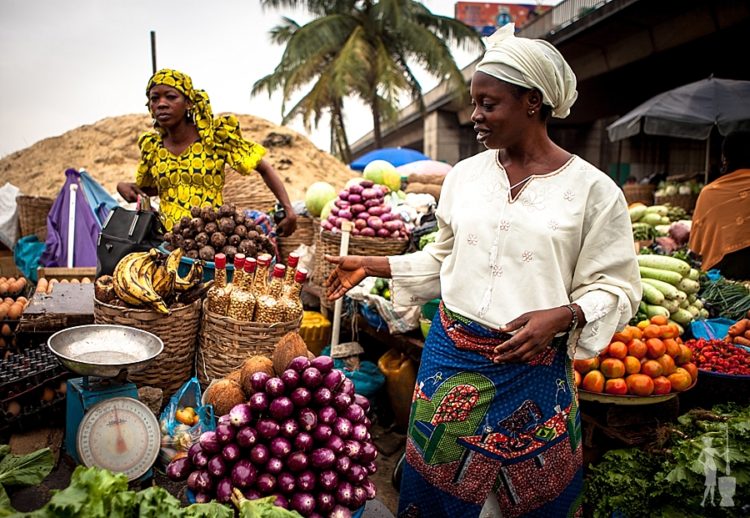
NIGERIA’S inflation rate for November 2023 has jumped to 28.2 per cent, making it the highest inflation rate recorded in almost two decades since August 2005.
Findings by The ICIR showed that this is the second time Nigeria would hit an inflation rate of 28.2 per cent. The first was August 2005.
The latest data from the National Bureau of Statistics (NBS) showed that the inflation rate rose by 0.87 per cent from 27.33 per cent in October 2023.
The November inflation rate is the 11 consecutive increase reported this year as millions of Nigerians battle with the high cost of household products following several economic reforms implemented by President Bola Tinubu since he assumed office on May 29.
The NBS said that on a year-on-year basis, the headline inflation rate was 6.73 per cent points higher compared to the rate recorded in November 2022, which was 21.47 per cent.
The food inflation rate, a major determinant of the inflation rate, rose to 32.84 per cent. NBS said that the rise in food inflation on a year-on-year basis was caused by increased prices of bread and cereals, oil and fat, potatoes, yam and other tubers, fish, fruit, meat, vegetables and coffee, tea and cocoa.
Since removing the fuel subsidy in May, Nigerians have struggled to adjust to the economic hardship of increasing market prices. Alternatively, the President has rolled out several palliative schemes to ease the economy, but the rising inflation rate shows that there has been very little impact.
While appearing before the Joint Committee on Banking, Insurance, and Other Financial Institutions on Thursday, December 14, the Central Bank of Nigeria (CBN) governor, Yemi Cardoso, said the inflation rate was expected to decline by 2024.
He said, “The outlook for the domestic economy remains positive and is expected to maintain the positive trajectory for 2024. Inflation pressures may persist in the short-term but are expected to decline in 2024.”
Also, while presenting the 2024 budget, Tinubu said that the budget was targeted at reducing the inflation rate to 21.4 per cent.
Meanwhile, KPMG Nigeria predicts that with the persistent inflationary pressure, Nigeria’s inflation rate might hit 30 per cent by December 2023.
FIVE students of the Federal University Dutsin Ma, Katsina State, who were abducted over two months ago, have been freed by their captors.
This was disclosed by the University vice-chancellor, Armaya’u Bichi, on Friday, December 15, while briefing journalists in the state.
According to Bichi, a voice recording aired by DW Hausa said four of the five students were released on Friday, while the other one had managed to escape a few days after the abduction.
The ICIRreported that on October 3, suspected bandits abducted five female students of the university.
It was gathered that the students were abducted from their residence behind Mariamoh Ajiri Memorial International School, along Tsaskiya Road, around 3am on Wednesday, October 4.
Meanwhile, briefing journalists on the students’ release, the vice chancellor said the students were on their way home and would be taken to the hospital for a medical checkup.
“Today (Friday), with the help of God, the students have been released. The students are on their way home but would be taken to Abuja to meet the National Security Adviser where they would also be taken to the hospital for medical checkup after which they would be handed over to their families,” Bichi said.
Bichi further attributed the students’ freedom to the efforts of the National Security Adviser, Nuhu Ribadu.
“No money was paid before their release. Neither the government nor the families of the abducted students paid money before the release of the students. It was the efforts of the National Security Adviser. He knows the effort he made to ensure the release of the students. You know it’s a security issue, and we’ll not be making it public,” he said.
The abduction of the FUDMA students came a few weeks after The ICIR reported that over 20 female students of Federal University Gusau, Zamfara state were abducted by bandits.
The bandits invaded the students’ private hostels in the Sabon-Gida community of the Bungudu local government area of the state in the early hours of Friday, September 22. Sabon-Gida is a few meters away from the university.
Sources in the school disclosed to The ICIR that the bandits kidnapped an estimated 25 students (largely female students) before the Nigerian Army rescued 13.
The Nigerian Army has since rescued other affected students.
TWO reports from The International Centre for Investigative Reporting (ICIR) have been nominated for the 2023 edition of the Nigeria Media Merit Award (NMMA).
The awards ceremony, which will be celebrating its31st anniversary, is set to be held at Munson Centre, Lagos, on Sunday, December 17, celebrating and recognising journalists for their excellence.
On December 9, two reports by The ICIR bagged awards at the 18th Wole Soyinka Award for Investigative Reporting (WSAIR) held in Abuja.
A former journalist with The ICIR, Beloved John, emerged as a runner-up for her work, ‘London Graduate School: The ‘Degree Mill’ selling fake honorary doctorate to Africans’.
Similarly, in October, another journalist with The ICIR, Nurudeen Akewushola, emerged as a winner at the 2023 PwC Media Excellence Award in the Tax & Fiscal Policy Reporting category with his two-part investigative series titled ‘Maritime ‘Bandits’.
THE Lagos state Government has asked stakeholders in the real estate business to collaborate with it to de-risk investments in housing and reduce building collapses and demolitions.
The Special Adviser to the Governor on Housing, Barakat Bakare, made this call at the 4th Lagos Real Estate Market Place Conference and Exhibitions held between December 13 and 14 and organised by the Lagos State Real Estate Regulatory Authority (LASRERA).
She said the choice of the theme, ‘Real Estate Regulation: A Penacea for Disaster Mitigation and Recovery in the Built Industry,’ was based on the need for collective assent and joint action in support of regulations and compliance in the sector.
“The Sector has been bedevilled with various disasters in recent times, ranging from building collapse, demolitions, inability to recoup investments, agents’ fraud, to mention a few. There is a need for us to unite and consciously change this narration.
“De-risking housing investments for private developers and investors is a key goal for us in Lagos state. We are certain that providing a favourable environment for private investment in the built sector is fundamental and an entry point for a partnership that works.” Bakare told participants at the conference.
At the two-day event, stakeholders pointed out that the real estate business faced many challenges despite Lagos state’s seemingly robust regulatory framework.
They criticised the state’s housing ministry and various agencies for not doing their jobs as required, thereby creating loopholes for some developers to abuse the system and encouraging quacks.
The incoming president of the Real Estate Developers Association of Nigeria (REDAN), Aliyu Wamakko, lamented the improper coordination of the various agencies under the Lagos state Housing Ministry.
He cited a situation where a developer who had obtained building approval, governor’s consent, and layout approval would fall victim to building demolition for not getting drainage permission, which ideally should have been factored in before commencing construction.
He, however, called on developers to abide by the state’s building code in totality.
While the real estate market in Lagos is booming, with high demand for residential and commercial properties due to the city’s growing population, rising incomes, and increasing urbanisation, the state experiences frequent disasters in building collapse and demolition.
Recent developments show that the state government has been busy demolishing buildings in various parts of the state, such as Lekki Phase II, Ikota GRA, and Oyingbo in Ebute-Metta and the International Trade Fair Complex and other areas, for multiple offences.
Besides, unspecified numbers of multi-million naira buildings are also marked for destruction for various environmental offences, ranging from building on drainage channels to lack of approvals, among others.
In September, a school-turned-residential building housing over 500 rooms with hundreds of residents known as Agboye Estate on Oduntan Street, Ketu, caved in entirely and also in November, a woman said to be 80-year-old was reported to have died as a result of a building collapse in the Oyingbo area of the state.
These incidents require synergy and disaster mitigation strategies by the various stakeholders in the building industry.
Speaking, the Lagos State Governor, Babajide Sanwo-Olu, represented at the event by the Commissioner for Housing, Moruf Akinderu-Fatai, said the urgency of addressing the impact of the well-regulated real estate sector was more apparent than ever before.
“To minimise the risk of disasters and enhance the resilience of structures, it has become compulsory for relevant authorities to require individuals and organisations to purchase insurance coverage against natural disasters.
“Let us all know that by prioritising safety, enforcing building codes, and promoting transparency, we can create resident communities that are better equipped. Let us work hand-in-hand to advocate for robust real estate regulation, for it is through our collective efforts that we can build a safer and more sustainable sector,” the governor urged stakeholders.
The ICIRreported that real estate developers, agents, financiers, realtors, marketers, and other practitioners said it had become imperative for the Lagos government to sanitise the built industry.
HOUR after the Zurmi local government area of Zamfara state requested four Armoured Personal Carriers (APCs) from the Federal Government to enable the military to tackle rising banditry in the area, bandits struck the Zormi community, the Zurmi LGA headquarters, killing soldiers, destroying APC and other military vehicles on Tuesday, December 12.
According to a document signed by Iliya Garba Zurmi on behalf of the sole administrator of the LGA, dated December 10, addressed to the commissioner of security and home affairs in Zamfara state, and obtained by The ICIR, the APCs are needed to fight armed and rampaging bandits.
Page one of the document where the Zurmi LGA demanded more APCs to enable the military to combat the bandits terrorising the LGA
In the document, the LGA listed details of various attacks on communities by a group of armed bandits suspected to be from the enclaves of a notorious bandits leader, Sani Black.
It also listed the names, age and gender of victims of the attacks.
On Wednesday, December 13, The ICIR exclusively reported how the bandits attacked Zormi town, killed soldiers, and destroyed the military base in the community, its armoured personnel carrier, and other vehicles.
According to the LGA, on Wednesday, December 6, the armed bandits in large numbers with their animals invaded farmlands around the Gidan Shaho axis of Sarkin Yamma district, grazing and destroying farm crops,
“This dastardly act started in October and has lasted to date. The armed bandits were chased by Operation Hadari stationed in Zurmi.”
Page two of the document where the Zurmi LGA demanded more APCs to enable the military to combat the bandits terrorising the LGA
It added that the military succeeded in retrieving about 44 sheep left by the armed bandits around Gidan Shaho village, adding that the bandits returned to Gidan Shabo on December 8 with their animals grazing and destroying farm crops.
The LGA said the military went back to the area and chased them away, leaving behind another 115 sheep, which were also moved to the Zurmi community.
“Around 11:30 pm the same armed bandits entered the village burning local grain silos, houses, and shops, killing one Mande aged 50. One Dodo Roba, 60 years sustained gunshots and is currently receiving treatment at General Hospital Zurmi. They also kidnapped 23 innocent persons,” the LGA stated.
Page three of the document where the Zurmi LGA demanded for more APCs to enable the military to combat the bandits terrorising the LGA
The LGA said that the military responded upon receiving the attack report, returned to Gidan Shaho, and chased the bandits away.
It added that on December 9, 2023, the armed bandits moved to Nasarawa Zurmi, the headquarters of Zurmi Local Government, killing two innocent people, namely Jiuji (alias Asha stim, Garba Rikwamba), kidnapped five women, injuring one Abubakar Jari and Yusuf Tailor who is currently receiving treatment at General Hospital Zurmi.
The report said on Sunday, December 10, the district head of Zurmi West, Lawal Ibrahim Sarkin, was almost lynched by members of the community while paying condolence at the family house of those killed by the armed bandits.
“In his condolence speech, he made a slip of tongue and said he is advising the local government council to conduct a security meeting and reconcile with the armed bandits with a view to stopping the rampant attack of innocent lives. Most of the internally displaced persons that attended the funerals were not happy with his remarks and, as such, decided to protest.”
As a result, the LGA said people started throwing stones and raining abusive words on the district head for provoking them with his statement that the LGA should embrace reconciliation with the bandit as the only way to stop the rampant attack on the community.
It added that it took the intervention of the security agents to rescue the district head from the hands of the IDP.
Last page of the document where the Zurmi LGA demanded more APCs to enable the military to combat the bandits terrorising the LGA
Consequently, the LGA requested the immediate intervention of the military authorities to send four more APCs to complement the one already existing at Zurmi Military Camp.
In its exclusive report on Wednesday, December 13, The ICIR highlighted how bandits suspected to be loyalists of a notorious kingpin Gwaska Dankeremi, attacked the military base in the Zurmi community, killing three soldiers.
This organisation gathered that the resurgence of the banditry attacks in the area could be linked with the recent military operations that led to the recovery of many cattle from the dreaded bandits in a nearby forest.
Consequently, the bandits launched a series of attacks on the community for five consecutive times, leaving four civilians dead and injuring others.
Zurmi shares a border with the Niger Republic.
One of the military vehicles attacked by bandits in Zurmi on Tuesday, December 12. Photo credit: The ICIR
The ICIR gathered that the worst of the attacks occurred in the afternoon of Tuesday, December 12.
The attack lasted from 4 p.m. to 6:30 p.m., during which four patrol vehicles of security operatives, including a military armoured personnel carrier (APC), were destroyed.
A government official who pleaded anonymity said three soldiers were killed during the encounter.
The ICIR reports that Zamfara is one of the North-West states facing protracted insecurity.
Zamfara has faced attacks from terrorists, lost hundreds of residents to insecurity, and had thousands of others displaced.
In October 2022, this organisation reported how 30 schools remained shut after one year because of insecurity.
Another military vehicles attacked by bandits in Zurmi, Zamfara state on Tuesday, December 12. Photo credit: The ICIR
NIGERIA’S double-digit inflation will decline in 2024 through the Federal Government’s reforms, the Central Bank of Nigeria (CBN) has said.
The apex bank gave the assurance in Abuja on Thursday, December 14, through its governor, Olayemi Cardoso, at a meeting with the National Assembly Joint Committee on Banking, Insurance and Other Financial Institutions.
Cardoso said reforms such as mopping up excess liquidity and a single exchange rate window would address the country’s volatile exchange rate.
He also projected less revenue from oil exports in the fiscal year, just as he declared that total trade from Nigeria’s foreign exchange market ( NFEM) stood at N18.8 billion in the third quarter (Q3) of 2023.
The apex bank chief told the committee that the outlook for the domestic economy in Nigeria for 2024 was very positive as both the inflation and exchange rates would withstand fluctuating pressures and stabilise.
“The outlook for the domestic economy remains positive and is expected to maintain a positive trajectory for 2024.
“Inflation pressures may persist in the short-term but are expected to decline in 2024. Exchange rate pressures are also expected to reduce significantly with the smooth functioning of the foreign exchange market”, he said.
He informed the committee that the unification of the exchange rate windows in June 2023 had ushered in a new approach to managing the exchange rate aimed at reducing arbitrage, rent-seeking behaviour and speculation in the market.
“The policy aims at creating a market where the demand and supply of foreign exchange determines the exchange rate.
” The premium has narrowed, and our focus on increasing the autonomous FX supply would lead to more stability and further narrowing of the premium,” he said.
According to Cardoso, the total trade in the third quarter of 2023 stood at N18.8 billion.
He added that exports within the same quarter were valued at N10.3 billion while total imports stood at N8.4 billion.
This represents a positive trade balance, which would lead to an increase of the external reserves “,he argued.
He, however, stated that due to prevailing domestic factors, fewer revenues would be earned from oil exports in 2024.
He said: “We expect less revenue from oil exports due to the production limit of 1.78mbpd in 2024. The Organisation of Petroleum Export (OPEC) approved quota for Nigeria is 1.8mbpd, higher than the 2024 budget assumption.
” However, the country’s production has been below these thresholds. The budget benchmark for 2023 was 1.69mbpd, but the highest production level during the year was about 1.35mbpd in Q3 of 2023.
He cited reasons for the projected underperformance of the oil production target, which include crude oil theft, pipeline vandalization, and divestments by major oil companies away from Nigeria.
Before the CBN Governor’s presentation, the committee’s chairman, Tokunbo Abiru (APC Lagos East), said the interactive session was organised for a statutory briefing by CBN in line with extant laws.
In his remarks, the committee’s co-chairman, Bahir El-Rufai, commended the CBN governor and the entire management team on measures being put in place to stabilise the economy.