THE Independent National Electoral Commission (INEC) has declared Joshua Ishaku of the All Progressives Congress (APC) winner of the Bwari Area Council chairmanship election in the Federal Capital Territory (FCT)
The declaration came amid low voter turnout, complaints of voter names mix-ups and reports of arrests over alleged vote buying that marred the exercise.
The Returning Officer for the election, Mohammed Nurudeen, announced the result on Sunday at the collation centre in Bwari.
“I am the returning officer for the 2026 FCT Area Council, Bwari chairmanship election held on Feb. 21, 2026. That Joshua Ishaku, having satisfied the requirements of the law, is hereby declared the winner and is returned elected,” Nurudeen said while declaring the results as reported by the News Agency of Nigeria (NAN)
Ishaku polled 18,466 votes to defeat his closest challengers. The candidate of the African Democratic Congress (ADC) secured 4,254 votes to place second, while the Zenith Labour Party (ZLP) candidate garnered 3,515 votes to finish third.
The election was conducted across the 10 wards of Bwari Area Council Igu, Shere, Dutse, Ushafa, Byazhin, Kuduru, Kubwa, Usuma, Bwari Central and Kawu.
Low turnout in several polling units
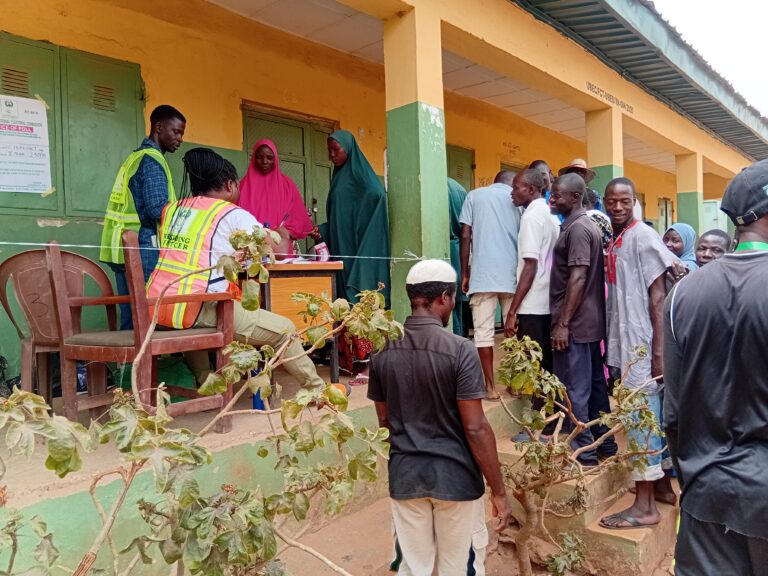
Several reports from Dutse Alhaji and other parts of the council indicated low voter participation, especially in the early hours of the poll. In some centres, INEC officials were seen seated and waiting as of after 10:00 a.m., with only a handful of residents arriving for accreditation and voting.
Accreditation and voting in many units commenced around 9:00 a.m., but turnout remained poor in several locations, reinforcing concerns about voter apathy in the FCT’s area council elections.
At Polling Unit 076 in Big Cele Settlement, Dutse Alhaji, the Peoples Democratic Party (PDP) recorded a sweeping victory.
In the chairmanship contest at the unit, the PDP secured 74 votes, while the APC polled two votes and the ADC garnered three. In the councillorship race, the PDP recorded 75 votes, with the APC and ADC garnering four and two votes respectively.
Gbenga Hashim, a PDP presidential aspirant, won his polling unit. Speaking shortly after the declaration of results there, he thanked residents for what he described as peaceful participation and grassroots engagement.
“This victory belongs to the people. It reflects consistent engagement, listening leadership, and our shared commitment to progress at the grassroots,” he said.
The outcome at Big Cele came amid heightened political tension ahead of the poll, including claims that the FCT Minister, Nyesom Wike, influenced the withdrawal of a PDP candidate on the eve of the election .
Beyond low turnout, some residents reportedly complained of difficulties in locating their names on the voter register despite possessing valid voter cards.
In a few polling units, voters were seen seeking help from officials to verify their details. This caused brief delays before voting commenced fully.
The Chairman of Bwari Area Council, John Gabaya, who cast his vote at Tokulo Primary School polling unit in his village, acknowledged the low turnout but expressed optimism that participation would improve as the day progressed.
“Elections started as scheduled. While turnout is not impressive at the moment,” he said.
The ICIR reports that Bwari election also followed a political shift ahead of the contest.
Julius Adamu, the former Peoples Democratic Party (PDP) chairmanship candidate for Bwari Area Council, had withdrawn from the race and endorsed Ishaku before the poll.
THE All Progressives Congress (APC) has secured victory in the Abuja Municipal Area Council (AMAC) chairmanship election, with incumbent chairman Christopher Zakka Maikalangu declared winner.
Announcing the result on Saturday, the Independent National Electoral Commission (INEC) Collation Officer for the area council, Andrew Abue, said Maikalangu, currently the incumbent chairman, polled 40,295 votes to defeat his closest rival, Paul Moses of the African Democratic Congress (ADC), who garnered 12,109 votes. In total, 62,861 valid votes were recorded in the contest.
The AMAC election was conducted as part of the broader Federal Capital Territory (FCT) Area Council polls, which involved 1,680,315 registered voters across 2,822 polling units.
Despite the scale of the exercise, turnout in many units was noticeably low.
At Garki Village Polling Unit 004, Maikalangu recorded a landslide win in his polling unit, securing 229 votes against ADC’s 15 and PDP’s two.
Out of 2,287 registered voters at the unit, only 252 were accredited.
Across polling centres, elderly voters expressed frustration over economic hardship and called for leadership that would prioritise their welfare.
Sixty-eight-year-old Aramide Kuburat while speaking with The ICIR at her polling unit 007, City Gate, lamented what she described as years of neglect.
“I am tired of the way the country is,” she said, adding that, “I am here to vote because I want them to empower us. I retired since 2014, especially here in Area 10 – there hasn’t been any major form of empowerment. All these our aged women, grown people like us, we are suffering. They should try to help us.”
Kuburat said the economic strain had extended to younger generations. “Our children passed out of university, no work. They are doing jobs they are not supposed to do. They are supposed to help us,” she added.
Similarly, 60-year-old widow Nwosu Justina said she voted with hope for a better future.
“Anybody that comes to that position should remember old women, especially we widows,” she said, stressing that “When we get a better ruler, things will be better. Do you know how much a bag of rice is now? If prices come down, poor people can eat rice.”
While the overall atmosphere remained largely calm, voting was briefly disrupted at Lugbe 2, Lugbe Primary School, following the arrest of two individuals suspected of vote buying around 12:55 p.m.
Security operatives apprehended the suspects for allegedly attempting to induce voters.
The arrest sparked tension as some residents confronted officers and demanded their release.
In the ensuing confrontation, one of the suspects resisted being taken away and was forcibly dragged into a police van.
The ICIR observed that the suspect was beaten and kicked by officers while being subdued.
Some women at the polling centre attempted to prevent the arrest, pulling at both the suspect and the security personnel in protest. Calm was eventually restored, and voting resumed.
THE candidate of the Peoples Democratic Party (PDP), Mohammed Kasim, has been declared winner of the Gwagwalada Area Council chairmanship election following the Federal Capital Territory (FCT) Area Council poll conducted on Saturday, February 21.
Kasim secured 22,165 votes to defeat his closest rival, Yahaya Shehu of the All Progressives Congress (APC), who polled 17,788 votes, according to results announced by the Independent National Electoral Commission (INEC).
Declaring the result, the Returning Officer, Philip Akpen, described the election as peaceful and orderly across polling units in the area council.
He said the area council had 207,577 registered voters, 46,294 accredited voters, 43,960 total valid votes, and 1,521 rejected votes.
Akpen announced the winners with the PDP polling 22,165, APC: 17,788; APGA: 1,687; ADC: 1,366; SDP: 432; NNPP: 175; while other parties got below 200 votes each.
Kasim’s campaign centred on community welfare, women’s empowerment, improved healthcare delivery, and better educational opportunities for children.
Residents who turned out in large numbers to vote told The ICIR that they expected the incoming administration to prioritise the provision of basic services, expressing confidence that the candidate they elected would address their most pressing needs.
In Zuba ward, members of the Persons With Disabilities (PWD) community, Abubakar Yusuf, said voters participated massively because they wanted responsive leadership.
“We have problems of water, light, roads and infrastructure. Many graduates are unemployed. That is why people came out to vote for someone who can listen to the masses,” he said.
He added that residents expected leaders who would be accessible and responsive after elections.
Similarly, a schoolteacher and resident of Zuba Ward, Rukaya Jibril, said that one of the most urgent priorities for the new council leadership was the reactivation of the suspended school feeding programme in Local Education Authority (LEA) primary schools.
“The programme previously helped improve school attendance and reduced the financial burden on low-income families. When the feeding programme was active, our children went to school every day. Now some parents struggle to give them food before classes,” she said.
Residents also called for improvements in healthcare facilities, potable water supply, road rehabilitation, and youth employment programmes.
As the newly elected council leadership prepares to assume office, many voters said the election promises must quickly translate into visible impact.
The ICIRreported that INEC conducted elections across the six area councils of the FCT, namely Gwagwalada, Abuja Municipal Area Council (AMAC), Abaji, Kwali, Kuje, and Bwari on February 21.
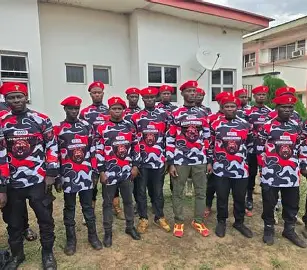
AGUNECHEMBA -the official Anambra State vigilante outfit has served a greater purpose of providing security for places that remain a mystery for the Nigerian police. However, despite closing gaps of insecurity, their activities are trailed by shadows of rights abuse.
For Stephen Abumchukwu Okoye, a masonry worker, his personal encounter with operatives of the Agunechemba has left him with a bitter experience. He recalled the commando-style of his arrest which he says was a display of intimidation and unprofessionalism in their mode of operation.
Riding from Umunya to Umudioka on November 9, 2025, started like any other journey. “The wind and hum of the bike provided a steady rhythm as I drove my Bajaj bike. However, as I reached the bustling hub of Afoigwe market near Ogidi, the rhythm was violently shattered,” he recalled.
“Without warning or explanation, I was intercepted. An official from the Agunechemba group blocked my path. There was no request for identification, no mention of a warrant, and no explanation of an offence.
“The official launched into a brutal assault, raining blows and verbal abuse upon me as if my mere presence on the road was a crime.
Okoye, a masonry worker in Umudioka, had a difficult encounter with officials at Afoigwe, near Ogidi in Idemili North Local Government Area, Anambra State.
According to him, the situation felt helpless until a Police constable stationed nearby noticed the commotion and stepped in to query the official on the of the assault.
”The intervention provided a momentary reprieve, but what followed was perhaps more shocking than the beating itself. Rather than showing remorse, the official turned away. With an air of total defiance, he walked to a nearby stand, pulled out Indian hemp, and began to smoke openly.”
There I stood—bruised and shaken—watching a man tasked with “security” flagrantly violate the law in the presence of a police officer. It was a stark, bitter irony: the enforcer had become the lawbreaker, showing an absolute disregard for the uniform he wore and the citizen he had just harmed,” Okote said, stressing that his experience highlights a dire need for systemic change.
“If these groups are to exist, the government must be far more intentional and rigorous in their recruitment processes. There must be proper background checks to weed out violent or unstable elements,” he said.
For a retired security consultant, who had insider knowledge of Agunechemba operations but does not want his name mentioned in print due to fear of victimisation, the group had, through high-handedness and recklessness, made a mockery of the records they had recorded in the fight against insecurity in the state.
“In my several encounters with them, the group will readily tell you that they are accountable only to the governor and that puts them above the police. The police are very careful in challenging them because it is seen as a confrontation with the governor.
“Recently, policemen from a police unit, I don’t want to name, were on regular patrol around the town hall. These Agunechemba boys had set up a roadblock, and the police felt that they should not be restricted, especially when they are on special assignments by the informal group.
“So, when they made to pass, one of the guys actually hit the police vehicle with the stick he was holding for daring to pass them. The policemen took offence and stopped their vehicle. There was an open confrontation as one of the Agunechemba boys grabbed the magazine of a policeman. Unfortunately, from my further interaction with them, they have no intention of making a case out of this. This was what happened at Eke Nkpor in mid-January,” he disclosed.
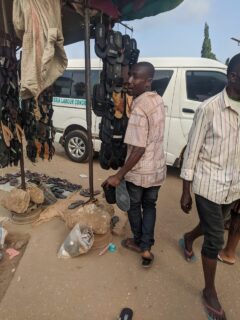
Onyeka Onwumere, a young trader who deals in various kinds of clothing at the Onitsha Main Market, narrated a similar encounter in the hands of the security outfit. On Thursday, November 13, 2025, at the Onitsha main market, Onwumere witnessed the recklessness of these officials allegedly killed a pregnant woman and injured several others out of carelessness and enforcement exercise at the market.
“The indiscriminate killing is becoming alarming in this state. All the security outfits need training and retraining. Those who are bearing arms need psychological training,” Onwumere, who was an eyewitness to the shooting spree at Onitsha main market, told The ICIR in Onitsha.
Onwumere narrates security operatives’ lack of professionalism at the main market in Onitsha
Onwumere expressed sadness over the uncoordinated and unfortunate manner in which most local security outfits operate in the state, which has put inhabitants under some form of tension.
He, however, believes that reforms, training and retraining of the local security outfits licensed for operations in the state could help them do their jobs better.
Similar cases are prevalent in the major city clusters of Onitsha, Nnewi, Ekwulobia, Aguleri, and Awka, the state capital. Residents are constantly apprehensive and discuss the approach of the local security vigilante operatives in hushed tones.
“Last few months, the Agunechemba shot a young boy at Ugwu Nwasike along the Nkpor-Ogbunike Road of Anambra State. Their infringement on human rights has become unbearable. We have also witnessed them delve into land dispute issues, which is not their core area of mandate. It appears no one is calling them to order, and this is not fair,” Senior Legislative aide to Senator Godswil Akpabio, an Anambra indigene, Ogochukwu Nwankwo, told The ICIR.
Nwankwo, Senior Legislative Aide to the Senate President.
“A few months back, one of the commanders of Agunenchemba was caught in the kidnapping web and was being interrogated by Ken Emeakai, who heads the vigilante services in the state,” Nwankwo said.
The pattern of Agunechemba’s operation resulted into last year’s assault of a youth corps member. The incident occurred on July 23, 2025, when operatives of the group stormed a National Youth Service Corps (NYSC) lodge and assaulted a female corps member, Jennifer Edema Elohor, and her colleagues. The vigilantes accused them of being involved in internet fraud, despite producing their NYSC identification cards and uniforms.
The incident sparked widespread anger and concern among traders and residents, with many demanding justice for the victims.
Concerns of human rights abuse
The Head of Human Rights Writers Association of Nigeria(HURIWA), Emmanuel Onwubiko, expressed concerns over the mode of operations of Agunechemba. He described it as “terrible with human rights violations.”
“The Agunechemba is a new security outfit that was set up by the Anambra State governor through legislative means. I don’t think it’s been more than three years since its legislation. It has become one of the most notorious human rights violators in Nigeria.
“In fact, they seem to be competing with the Nigerian police, Anambra State command. Anambra State is a special case. Our eyes are there to monitor their activities,” Onwubiko said.
HURIWA Executive Director, Onwubiko
“We have highlighted dozens of cases of grave human rights violations, one of which everyone knows, which is the case of a female corps member who was brutally attacked by the outfit.
He noted that the rights agency is currently monitoring cases of brutal attacks on traders by Agunechemba.
“Our major concern is that they have deviated from their core mandate of preventive security and ventured into revenue generation, adding that “We have also noticed their harassment of street traders and collection of tax.”
State government speaks
The Chief Press Secretary to the Anambra State Governor, Christian Aburime, told The ICIR that the government was evaluating and addressing concerns raised by the people in respect to unprofessionalism.
Anambra State Governor, Charles Soludo
“Measures are already in place to address concerns raised in several quarters about the Agunechemba security outfit,” Aburime told The ICIR.
The Director of Operations of the State Local Vigilante Services, Okompi Chinenye Ihenko, who spoke to The ICIR when concerns of rights abuse were raised, said, “We are looking into public outcry on some of our operations, and we are correcting that through training by the Nigeria Police Force.
How and why Agunechemba was formed
Disturbed by the rising incidents of kidnapping, cultism, drug abuse and other criminal activities in the state, in January 2025, the Anambra State government enacted the Anambra State Homeland Security Law,2025.
The ICIR reports that the Act, which repealed the Anambra State Vigilante Law 2014, provided for the establishment of a state security outfit known as Agunechemba, among others.
In line with the provisions of the Anambra State Homeland Security Law (ASHSL2025) and the determination of key stakeholders to combat insecurity in Anambra, the ASHSL 2025 was operationalised with the establishment of Agunechemba units at the town/community, local government and state levels.
A multi-agency security task force named “Operation Udo ga-achi’ was also launched to ensure effective policing across all nooks and crannies of the state.
Many stakeholders who spoke to The ICIR said the establishment of Agunechemba is relevant and appropriate given the contemporary security threats facing Anambra.
NEXIER 2025 Security Outlook report states that Anambra was among the states most affected by violent incidents like kidnapping, cult clashes, gunmen attacks and extrajudicial killings.
Omeje, a resident of Onitsha and trader, narrates his ordeal with state security operatives
Despite concerns of human rights abuses, the state’s vigilant services have recorded commendable success in combating insecurity in Anambra State.
Henry Icheku, an Uber driver whose movement cuts across every part of the state, told The ICIR that despite the concerns of rights violations, the Agunechemba security outfit has some positive impacts.
“As a driver, I have come across dangerous elements in lonely places. Elements that cannot be identified, many of whom have constituted a security menace to the state.
There are still huge concerns of insecurity thriving in Anambra state despite the much-touted progress made by the Agunechemba vigilante services.
What does data say about insecurity in Anambra?
Despite the relevance, appropriateness, and successes of Agunechemba, data from NEXIERS Nigerian Violent Conflicts Database (NNVCD) show that criminal elements still afflict the state with various forms of violence.
For instance, the number of violent incidents in Anambra State in the first half (January to June) 2025 reduced to 16 from 18 recorded in the same period in 2024. Similarly, the number of reported kidnap victims in Anambra State reduced to six in 2025 from seven recorded in the same period in 2025.
However, the number of deaths from violent incidents in Anambra State increased to 30 from 16 recorded in the same period in the previous year.
Notably, the goodwill enjoyed by Agunechemba suffered a serious setback following the recent event involving excessive use of force, leading to assault and abuse of Jennifer Elobor, a female corps member serving in the state, by persons confirmed to be operatives of Agunechemba.
Residents’, stakeholders’ concerns
A Public Affairs Analyst, Emmanuel Izeji, who resides in Onitsha, told The ICIR that the Agunechemba is part of the local arm of local policing empowered by the state. He, however, said that despite their inefficiencies, their work is still commendable.
Izeji noted that they monitor and enforce, in most cases, traffic laws, state cleanliness, and anti-touting laws.
“In the case of Agunaechemba, I ask: If the police did their job in eradicating kidnappers and non-state actors, would this security outfit be initiated? It is important that we apportion blame properly to determine the problems effectively.
“There is a need for close inspection of the people for compliance. Sincerely, this group did a tremendous job of keeping grassroots activities in order. Some sacrificed their lives to fight touts and expose their dungeons and structures. Anyone who has lived in Anambra state and returns to comfortably and confidently move around Upper Iweka and significant Anambra business axis will not only appreciate the initiative and the Akaodo people,” he added.
Other residents who spoke to The ICIR said the operations of Agunechemba are handy as they could go where the Police fear to enter and have the capacity to confront the daredevil criminality of “unknown gunmen” inside the bushes.
“Might is power. Just like in several aspects of our national life, when a politician will gleefully tell you to go to Court. Agunechemba has done fairly well but has its own issues. We can only continue to emphasise their reforms for improved services,” a Law Professor at Shaanahan University, , John Akachukwu Mmaduakor, said.
The All Progressives Congress (APC) chairmanship candidate, Zakka Christopher, recorded a decisive victory at his polling unit in Garki Village, Polling Unit 004, during the chairmanship and councillorship polls held across the six area council of the Federal Capital Territory (FCT) on Saturday, February, 21.
Results announced around 5:10 p.m. by the presiding officer, Ogbechie Chukwufumnaya, showed that Christopher secured 229 votes, defeating his closest rival by a wide margin.
The African Democratic Congress (ADC) polled 15 votes, while the Peoples Democratic Party (PDP) garnered just 2 votes in the chairmanship contest.
Out of 2,287 registered voters at the polling unit, only 252 voters were accredited, reflecting a low turnout.
Christopher defeated the ADC candidate, Moses Paul, to emerge victorious at the unit.
In the councillorship election at the same polling unit, the APC also clinched victory with 148 votes.
The Young Progressives Party (YPP) scored 47 votes, ADC polled 42, while 12 votes were declared invalid. Other parties trailed behind.
RESIDENT Electoral Commissioner for Ekiti and the Election Commissioner in charge of Abaji Area Council in the ongoing Federal Capital Territory (FCT) area council poll, Bunmi Omoseyindemi, has assured all accredited voters that they would cast their ballots.
Omosehin, responding to concerns about overcrowding observed by The ICIR at Central Primary School, Polling Unit 006, said, “Once a voter is accredited, the person will definitely be able to vote
He disclosed that accreditation and voting started at the prescribed 8:30 am in several polling stations, following feedback he had, adding that, “there is no record of any crisis so far.”
He said, “Electoral materials were distributed early, and we had no challenge whatsoever from the feedback we have. Everyone who is in the queue and is accredited will definitely cast their vote.”
The ICIR reports that several places in the Abaji area Council recorded massive voter turnout, including the elderly.
This organisation reported that INEC fixed February 21, 2026, for the polls, with over 600 candidates contesting chairmanship, vice chairmanship and councillorship positions.
The election involves 1,680,315 registered voters across 2,822 polling units. To facilitate the process, INEC deployed 3,345 Bimodal Voter Accreditation System (BVAS) devices.
The exercise is taking place across the FCT’s six area councils and 62 political wards, with 68 elective positions up for grabs.
The ICIR further reports that the exercise, where the All Progressives Congress (APC), African Democratic Congress (ADC), Peoples Democratic Party (PDP) and other political parties are battling to win seats, has also been going on smoothly in Kuje, Gwagwalada and other area councils in the nation’s capital.
FORMER Nigeria’s High Commissioner to Rwanda, Adamu Onoze Shuaibu, said Abaji area Council recorded high voter turnout because of sensitisation and understanding of voter participation in the poll.
The former ambassador, an Abaji indigene, told The ICIR during the Area Council chairmanship and councillorship election on Saturday, February 21, that Abaji was witnessing high voter awareness “because of inclusive democracy, which previous chairmen have encouraged.”
He said many voters came as early as 6:30 am to polling stations to prepare to cast their vote and were willing to stay late into the night to exercise their franchise.
He added that election officials gave priority to the elderly, pregnant women, and persons with disability. This, he noted, encouraged many aged persons to come out and cast their votes.
“As a senior citizen and retired Ambassador, I have also decided to cast my ballot as a way of encouraging development in my community and supporting democratic development,” he said.
The ICIR reports that several polling units in Abaji recorded massive voter turnout with several elderly, pregnant women and people with disability exercising their franchise right.
In Polling Unit 007 located at Onah of Abaji Palace, The ICIR saw several elderly persons, and breastfeeding mothers who queued to cast their votes despite the scorching sun.
At Central Primary School, Abaji, Polling Unit 006, the crowd was very massive that the supervisory election commissioner for the Abaji area council, Bunmi Omoseyindemi, had to assure non-accredited voters that they would be attended to even beyond the 2:30 p.m voting was expected to close.
With the current Ramadan fast, The ICIR also observed voters with sleeping mats around who occasionally went to a nearby stand to rest and returned to cast their vote.
“The indigenes and others who reside here are interested in voting. There is a huge voter awareness,” a restaurant owner, Ikenna Ugonabo, a non-indigene who resides in Abaji, told The ICIR.
VOTING at Polling Unit 009, Lugbe 2 Primary School in Abuja, was disrupted when officers of the Nigeria Police Force (NPF) arrested two suspected voter buyers – a man and a woman.
The polling unit has 8,562 registered voters and seven BVAS sub-units. It recorded a crowd of voters before the incident happened.
The disruption caused by the arrest halted accreditation and voting process for a while, leaving many prospective voters waiting on queue despite appeals by presiding officers that the exercise should continue.
Trouble started at about 12:55pm when operatives attempted to whisk away two people suspected of buying votes.
Their arrest sparked tension, as some residents confronted security personnel and demanded the suspects’ release.
The confrontation caused temporary disruption before calm was restored and voting resumed.
The ICIR observed as one of the suspects, who resisted being taken out of the primary school premises, was eventually dragged into the police van.
During the arrest, he was beaten and kicked by several officers attempting to subdue him. In the ensuing confrontation, some women were seen pulling at the suspect and the officers in an attempt to prevent his arrest.
A video by Business Day showed how these individuals, alongside many persons engaged in vote buying at the polling unit before it spiraled into chaos.
A PDP polling agent identified as Timothy told The ICIR that the individuals were not vote buyers but residents who had merely asked for money to buy water.
He described the arrest as a misunderstanding. The polling unit 009, has 8,652 registered voters spread across seven sub-units, each equipped with a BVAS machine.
Although voting commenced around 10 a.m., officials said fewer than 1,000 voters had been accredited as of the time of filing this report.
While the atmosphere has since stabilised, many voters withdrew as INEC officials warned that voting would close by 2:30 p.m.
The ICIR reported that INEC fixed February 21, 2026, for the polls, with over 600 candidates contesting chairmanship, vice chairmanship and councillorship positions.
The election involves 1,680,315 registered voters across 2,822 polling units. To facilitate the process, INEC deployed 3,345 Bimodal Voter Accreditation System (BVAS) devices.
The exercise is taking place across the FCT’s six area councils and 62 political wards, with 68 elective positions up for grabs.
This organisation reports that the exercise, where the APC, ADC, Peoples Democratic Party (PDP) and other political parties are battling to win seats, has also been going on smoothly in Kuje, Gwagwalada and other area councils in the nation’s capital.
VOTERS across several polling units in Kuje Area Council of the Federal Capital Territory (FCT) turned out in large numbers on Saturday, February 21, for the Area Council election.
They expressed hope that newly elected officials would prioritise basic infrastructure and social services in their communities.
The elections, conducted by Nigeria’s Independent National Electoral Commission (INEC), are being held across the six area councils of the FCT to elect chairpersons and councillors who will administer local governance for the next four years.
Although some polling units earlier in the day recorded low voter participation, the turnout eventually improved as residents trooped out to cast their ballots particularly in Central and Chibiri wards.
“We voted because we want leaders who will remember the people after elections,” Martina Joseph, a resident of Kuje Central Ward said.
Some of the residents said they hoped incoming council officials would deliver essential services like healthcare, water, and quality education that directly impact on the lives of residents in the area council.
“My expectation is for them to provide basic amenities that can improve living conditions like acceble water,” Safiya Filibus, a resident of Angwan Mangoro said.
Several women said primary healthcare centres in their communities lacked adequate medical personnel, forcing residents especially pregnant women and children to travel long distances for treatment.
“We still depend on unsafe water sources. We hope the next council leadership will provide accessible boreholes and potable water,” Mary Danjuma said.
Similarly, Hajara Timothy called for better-equipped primary and secondary schools, improved learning materials, and more teachers to reduce overcrowding in classrooms.
“The role of our council leadership is to provide social amenities, and we expect that whoever gets elected will provide water and quality education for our children. In the primary school, there are no chairs in most of the classes. No light, no computer,” Hajara said, referring to Chibiri Primary School.
Analysts note that Area Council elections are particularly important in the FCT because local authorities are directly responsible for community-level services such as primary healthcare, basic education, sanitation, and rural infrastructure.
Unlike Nigeria’s states, the FCT has no elected governor, making area council administrations central to grassroots development and service delivery.
With over 1.5 million registered voters and a high Permanent Voter Card (PVC) collection rate recorded ahead of the polls, expectations remain high that elected officials will respond to citizens’ demands for tangible improvement governance, especially in the provision of security, healthcare, education, access roads and other important amenities.