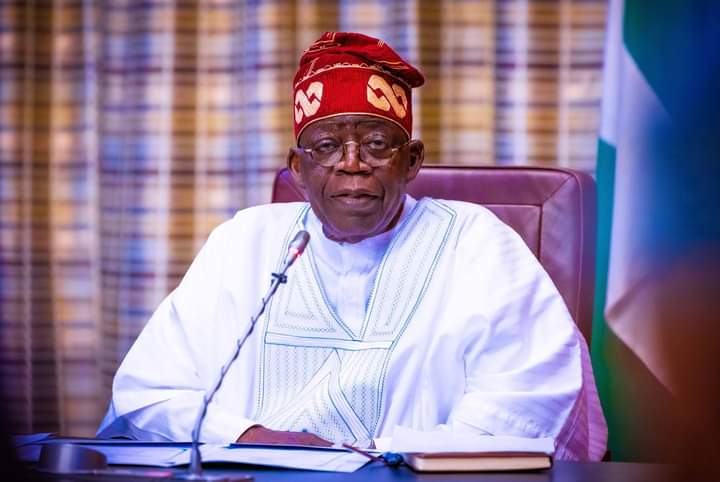
PRESIDENT Bola Tinubu has ordered security operatives to immediately rescue students of the Federal University, Gusau, in Zamfara state, who were abducted in the early hours of Friday, Sept. 22.
This was contained in a statement by the Special Adviser to the President on Media and Publicity Ajuri Ngelale on Sunday, Sept. 24.
“There is no moral justification for such heinous crimes against innocent victims whose only ‘offence’ was their pursuit of quality education,” the statement read.
Tinubu condoled the families of the affected students and assured them that no effort would be spared in securing their release.
He also noted that his government was determined to ensure the safety of educational institutions and rid them of terrorists.
Over 25 students, mostly female, were abducted from the Federal University, Gusau, during the attack. Six of the affected students were rescued by officials of the Nigerian Army, leaving more than 20 others still in captivity.
Sources within the school told The ICIR that the terrorists had earlier threatened to kidnap more than 100 people from the institution.
“They vowed that they would abduct 100, kill 30, and the government would pay ransoms for 70. Now they have started their mission and went with 24, they are still coming back to abduct the remaining 76 if care is not taken,” a school student, Mubarak (surname withheld), told The ICIR.
He also disclosed that while this was not the first kidnap incident recorded in the school, the current cases had affected more students than before.
On Friday, June 16, terrorists abducted five students from the institution. The incident led to protests by school students, who blocked major roads, leaving many motorists stranded for hours.
Other educational institutions in the state have also been affected by kidnap incidents, including the Zamfara State College of Health Technology, Tsafe, from which about five female students were abducted in April 2022.
In 2021, nearly 300 female students were abducted from the Government Girls Secondary School in Jengebe, a community in the state.
In northern Nigeria, especially states like Zamfara, where kidnapping of students is common, many families are discouraged from sending their children or wards to school for fear of losing them to terrorists.
This further worsens the literacy crisis in Nigeria, where about 20 million children are out of school, according to data from the United Nations Educational, Scientific and Cultural Organization (UNESCO).
On Sunday, September 24, The ICIR reported that over 7.5 million girls were out of school.
A section of the Supreme Court complex in Abuja caught fire on Monday, September 25.
The cause of the fire was unknown when filing this report.
Unconfirmed reports said the fire consumed the offices of three justices.
The spokesperson of the National Judicial Council (NJC), Adesoji Oye, could not be reached when this report was filed.
But the Supreme Court spokesperson, Festus Akande, confirmed the incident but said it was not as severe as widely believed.
He noted that most of the rumours on social media were not correct.
Akande, who spoke on Arise TV, stated that the fire outbreak didn’t affect anything in the Court.
“As a matter of fact, there’s no single connection, and it won’t affect anything in the Court. This incident occurred in a chamber equipped with a computer and other equipment, as well as a functional library used by any justice occupying such chamber.
“The only thing that was affected were the books and computer equipment in the chamber. Even the books are replaceable. Also, it has nothing to do with it because it was from an electrical fault, which could happen anywhere,” Akande stated.
He added the Court had an e-library for all the burnt documents and could replace the burnt documents.
Reacting to the incident, spokesperson of the FCT Police Command Josephine Adeh said the cause of the fire is still being investigated.
She added that the situation was under control.
“Only two chambers of two judges were affected. At the moment, properties destroyed are yet to be ascertained. The cause of fire is still being investigated by appropriate authorities , further information will be communicated later,” she stated.
Economic bases reason people patronise loan apps – Psychologist
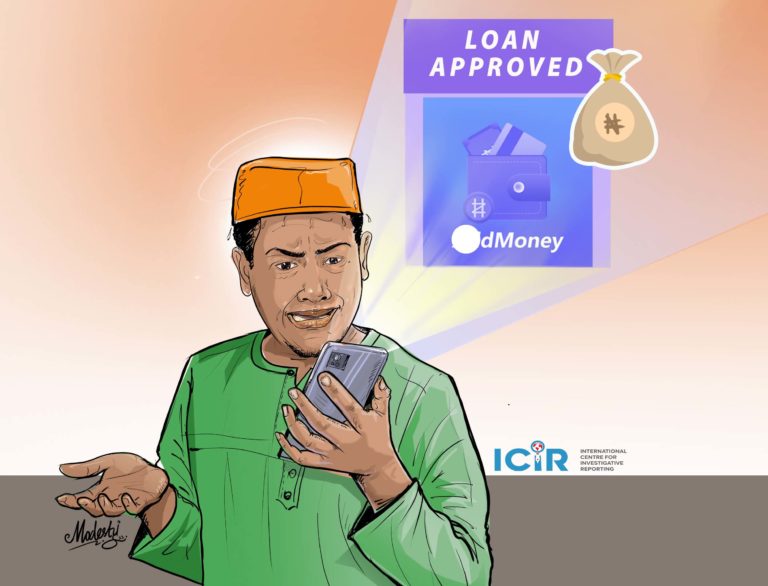
Despite unconventional methods loan firms deploy to collect their money, the country’s economic crisis is forcing Nigerians to use loan apps to get immediate emergency cash. The ICIR’s Shehu Olayinka examines stories of Nigerians who had terrible experiences with loan companies.
DOLAPO’s dad had received a call from a Henloan marketing agent, promising loans and affordable interest. After pondering for a while and being pushed by his financial crisis, he opted for the loan.Going for the loanremains one of his worst decisions in life as subsequent events unfolded.
“My dad, Jide Wale,borrowed money from other apps, but Henloan made life a hell for him. His mood changed as they constantly called and harassed him.”, Dolapo told The ICIR.
She said her father wanted to take a loan of N65,000. However, after downloading the app and inputting his details, he saw more interest than what the company’s agent had told him. He cancelled the request and deleted the app.
But despite not going ahead with the loan request, Dolapo said a few minutes later, her father got an alert of N25,000 to pay N55,000, which to him was too much interest for a N25,000 loan he did not request.
He was desperate to return the money and immediately called the Henloan representative who introduced the app. To his shock, he was told to return the money in full: pay the N55,000.
“They were calling daily and threatening to send messages to all his contacts, which they later carried out,” She told this newspaper. “My sister and I were constantly harassed and sent messages accusing my dad of being a criminal and ritualist.”
Message Henloan sent to Dolapo’s father
The messages sent to Dolapo’s father are part of strategies for loan apps in Nigeria deployed to force defaulters to repay.
The tactics are sometimes used to tarnish a defaulter’s image.
But Dolapo said her dad was not a defaulter as he didn’t request the loan. He had earlier accessed loans from Quick Credit, Cash Express and Cash Credit.
Message Quick Credit agent sent to Dolapo’s father
“The harsh economy may have pushed my dad to borrow from loan apps. But the outcome wasn’t palatable for my family. Though the constant messages and calls have stopped, they embarrassed us,” she said.
“I have told him to stop borrowing from loan app companies. That moment was difficult for us. Now, I try as much as possible to support him with what little I have.”
Dolapo’s family experience at the hands of Henloan is not uncommon. Many Nigerians who defaulted on loans experience harassment and cyberbullying by loan app operators despite efforts by the Federal Competition & Consumer Protection Commission (FCCPC) and Nigeria Data Protection Commission- NDPC to clamp down on the use of crude tactics to recover loans.
In April, the Nigerian government, through the FCCPC, banned unethical and illegal activities by lending apps, including accessing debtors’ contact lists. It also prohibited loan apps from accessing contacts and images of their customers.
It also approved 173 digital lending applications to operate in the country. The commission gave conditional authorisations to 54 loan applications, while 119 got full approvals.
Clients of some loan apps also told The ICIR that they received loans despite not applying.
There is limited information about Henloan online. However, The ICIR discovered that Henloan also uses the name Hencredit, which is operated by Orange Loans and Purple Credit Limited. They also have the same email address listed for inquiries, as seen here.
The app listed on an app site has both hencredit and Henloan on the display image.
There is also limited information for Quick Cash online. The ICIR effort to speak with a Quick Cash agent named Bode, who contacted Dolapo’s family, was rebuffed. Bode declined to comment and insulted the reporter after he was told of the cyberbullying claim against him and Quick Cash.
The other loan company that harassed Dolapo’s family was Quick Credit.
The ICIR found two loan companies using the name Quick Credit.
One of the loan companies, Quick Credit company, is owned and operated by Quick Credit Nigeria Limited.
Quick Credit Nigeria Limited is registered on the CAC database with registration number RC 1496778, identified as active by the commission, and registered as a General Contract and Merchandise company.
Two persons with significant control, Olapade Murtala Ayodele and Ejodame Odia Osewele, listed as Shareholder and Director, respectively, found on CAC and NGCheckers, were sent emails on the activities of Quick Credit.
In response to the enquiry, Ayodele denied Quick Credit engages in cyberbullying, stating that the organisation had been non-operational in the last 18 months due to an ongoing restructuring.
The second Quick Credit loan company was also sent a message in an email found on its Facebook page.
The ICIR called a phone number on the Facebook page, to which a female staff responded but declined to provide information about the organisation’s operation. She said the organisation would respond to the email sent by this reporter, but as of the time of filing this report, no response was received.
‘They said I have AIDs, and I’m a whore’
It’s a good initiative that such platforms exist, said *Bimbo (not real name), but according to her, using crude tactics when issues arise between a loan app and a customer would leave anyone regretting borrowing the money.
The ICIR reporter found Bimbo on a Telegram public channel, “Say No to Loan Sharks”, with 584 subscribers.
The group was observed to serve as a communication channel where Nigerians who have been at the receiving end of loan apps use crude tactics to fight back — and some have even claimed to be able to defraud lenders. The Telegram Channel also has a Facebook group.
This newspaper found more than five such groups on Facebook. [Say no to Sokoloan & Loan sharks, Say no to Sokoloan, Say no to Soko loan and LCredit ETC, Say No to loan app, Mobile loan apps debt victims in Nigeria, Say no to loan sharks, Illegal/fraudulent loan apps victims.]
Bimbo had posted on the page, looking for help dealing with the harassment and cyberbullying from agents of loan apps. After failing to make a timely repayment, Bimbo said she was hounded and defamed and had to turn off her phone to escape the abuse.
Bimbo, currently job hunting, said she took a combined loan of N180,000 from Fundy and Flypay loan apps.
“I had no option. I was broke and needed the money to offset some bills. But that was a big mistake, as those guys made my life a living hell,” she said.
Message sent to a client’s father by Flypay
She also disclosed that loan apps are increasingly reaching out to Nigerians through marketing agents to explain the advantages of obtaining loans through their apps.
She stated that before users download the apps, agents fail to disclose the actual interest rate on the loan.
Screenshots of Messages sent to Bimbo contacts
“It’s good that people have something to rely on financially. But the interest rate and the whole cursing and defamation are upsetting and wrong. They also have this habit of saying (on the dashboard, they’d show you, e.g. 54k to pay 58k) when you click on the receive money. They could disburse 33k to pay 58k in 7 days. And sometimes? You don’t have to apply; they will send it to your account as soon as you download their app and input your bank and BVN details into their app.”
“When I couldn’t pay back in time, they started harassing me and sending messages to my contacts. They said I had HIV/AIDs, that I was a prostitute who slept with men for between N800 and N5,000, and that my parents molested me as a kid. All were sent to all my contacts; it was the same day my loan was due.”
Bimbo told this reporter that she intended to repay her debt once she could, but as of the time of filing this report, she had not done so.
“Clients getting loans without applying”
A recovery agent with Camelloan, whose identity is being withheld because he was not authorised to speak, confirmed to The ICIR that marketing agents of some loan apps fail to disclose the actual interest rate on loans to users they call or message.
He also said the culture at loan companies is for workers to either meet their target or get sacked if they fail.
“We are always given targets. We are only doing this to survive. It is not as if we enjoy doing all this. Calling people regularly, but we need to work and feed our family. I have seen people get hired and sacked in a month because they couldn’t meet the target. And the salary is not that much, but we are doing it for survivors. You know the country is hard,” the agent said.
The source also admitted to having had clients complain about receiving loans without applying.
“I don’t understand how that works. But I have heard people complain that they didn’t apply for loans before being sent the money. We have complained to our managers and told them this doesn’t seem right, but they appear not to care about it.
The source said he wasn’t sure if the app was faulty, adding that the practice could be intentional.
Another source, who works as a marketing agent with Camelloan, admitted to the loan app companies sending money to people despite not applying.
“It’s a problem we face. Some complain about not applying for the loans sent to their accounts.”
A borrower, Eseosa Godfrey, whom Camelloan agent contacted first via text, described how he was tricked into taking a loan by a marketing representative of Camelloan named Paul but backed out when he realised the agent had misled him about the interest rate.
Godfrey said despite not seeking one, he received a short-term loan of N6,000 to be paid in seven days and experienced harassment and defamation after failing to repay the debt in full with interest.
“I was deceived. When the Camelloan marketing agent called me, he didn’t tell me the true interest on their loans. He told me it was not 10 per cent. He deceived me into downloading their app for a business loan, and after downloading and inputting my bank and BVN details, I saw what he told me was a lie. I cancelled. Later, I got an alert of N6,000 to pay N12,000 without my approval from my end, which I refused to pay,” he said.
Text sent to Geoffrey by Paul on WhatsApp.
Godfrey shared with The ICIR a message showing a 10 per cent interest rate on every loan.
He said he called the marketing agent to explain what had happened, that he hadn’t applied for the loan and wouldn’t be paying back with the said interest the loan was showing on the app.
“The agent only said okay and dropped the call. I paid back the N6,000 to the Camelloan bank account, but immediately after I paid, an agent named John called and threatened to send messages to my contacts if I didn’t pay back in full.”
Geoffrey transaction receipt to Camelloan
Geoffrey said the agent, true to his words, sent messages to his contacts, describing him as an internet fraudster.
Another borrower, Olayinka Lekan, said in an email to The ICIR that a marketing agent from Camelloan had gotten in touch with him and informed him that he had access to N50,000 and N100,000 with a loan interest rate of 10 per cent for a three-month term.
Lekan said the agent sent a link to his WhatsApp number, which he clicked, downloaded, and installed the app.
“Immediately, I downloaded the app from the Google Play Store and inputted my details. What the Camelloan representative told me differed from what I saw on their app. The low interest based on his promise was the only reason I consented to download the app, but I saw on their app that Camelloan charged more than 40% interest on its loans.
A screenshot of Lekan’s discussion with Camelloan agent, Precious
A screenshot of Lekan’s discussion with Camelloan agent Precious
Lekan also said he called the marketing agent who had sent him the link, informed her that she had lied about the actual interest, and told her he was no longer interested. At this point, he had already entered his bank and BVN information on the app.
He disclosed that he got an alert on his account of N6,000 the next day from Camelloan.
According to him, “What I discovered startled me when I logged into the app. I was to pay back N11,050 due on July 7. Rather, instead of paying that amount, I decided to pay N8,000 rather than the N11,050 I saw on the app to be paid back because of what the marketing agent had told me”.
Lekan further said a Camelloan agent called and asked him why he had paid N8,000 instead of the amount displayed on the app, and when he refused to pay the additional amount on the due date, the agent sent him threatening messages.
Another victim, Ronke Okun, a student at one of the universities in Southwest Nigeria, had a similar experience.
She had always borrowed from other loan companies, but not Camelloan.
She told this reporter she was credited N6,000 despite not applying for a loan.
According to her, an agent of Camelloan called her to apply for a business loan. After downloading and entering her details, she discovered that the loan limit was N6,000 and had an N5,000 interest.
Screenshots of Ronke and Camelloan agent
Ronke said she immediately closed the app but received an alert of N6,000 loan that she didn’t apply for and was to pay N11,000 in seven days.
She further said the effort to get Camelloan to resolve the issue proved abortive. Her pleas were ignored, and she was harassed and hounded by agents.
Ronke was later able to settle her issues with Camelloan two days after her due date after an agent called her to return the N6,000 that was paid into her account. But that happened after the loan firm had sent messages to her contacts.
Another loan app Ronke claimed defamed her is Deloan.
She had borrowed N5,000 and was to pay back N8,730 to offset bills in school.
She added that she returned the N5000 and begged for a few hours to pay the remaining N3,730, but a female Deloan agent denied her beg and threatened to send messages to her contact, which the agent eventually did by claiming she had passed away.
Deloan sent Ronke and her contacts a RIP message for missing a full payment by one day.
The ICIR contacted Precious, the Camelloan representative Lekan said spoke to him about collecting loans on their app. After explaining why the call was initiated, Precious told this reporter to wait while she talked to her manager. A few seconds later, the Manager spoke to this reporter through Precious’ phone and introduced himself as Bassey.
Bassey promised to call back a few hours after this reporter introduced himself and explained why he had phoned, but he never did. Two hours later, calls to Precious’ phone numbers were not answered.
A WhatsApp message was sent to Precious, but as of the time of filing this report, she had yet to reply despite the message being marked as delivered and read by the recipient.
Paul, who introduced Camelloan to Godffrey, said he only worked as a marketer and was not the one who harassed and defamed him.
He declined to comment when asked why he didn’t tell Geoffrey the actual interest on a loan.
When asked if Camelloan was sending loans to those who didn’t request, Paul said he has had customers complain about it but wasn’t sure why the app was sending loans to people who did not apply for loans and claimed there might be an issue with the app.
Paul promised to get an answer from his bosses, but subsequent calls to his phone were unanswered.
John, the debt collector Geoffrey claimed had harassed and slandered him, rejected the allegation and stated that Geoffrey’s file was no longer on his desk and that he would not be able to speak about him.
Another borrower, a student who only wanted to be recognised by her first name, Kemi, said CashDoor and Camelloan made her life a living hell. She explained that she had accessed and paid back loans several times on other apps with no issues but opted for CashDoor and Camelloan when the agents promised a lower interest.
“I didn’t apply for the loan they sent. When I downloaded the app, I saw that their interest was high. I decided against going ahead to get a loan from them. But they credited my account and wanted me to pay N11,000 for a N6,000 loan.
“I offered to pay back what they sent, but they declined and have been harassing and threatening me. And the loan keeps increasing because I refuse to pay the 11,000. They kept saying they would destroy my life and post my obituary picture. I couldn’t leave my house for one week because they kept threatening and harassing me and my contacts”, she added.
Screenshots of messages from Camelloan agent to Kemi
Kemi has still not paid back the loan as of the time of filing this report.
She further said her experience with Camelloan was the same as she experienced with the Cashoor loan app.
The ICIR contacted an agent with Cashdoor loan app who only wanted to be recognised by Dora.
Justifying using crude tactics for loan recovery, she said the tactics were always the last option whenever borrowers defaulted, “We are not at fault here. The crude tactics users always talk about only occur when borrowers ignore us. We do that to them when they are unwilling to pay us back.”
The ICIR also made an effort to get in touch with a Cashbus loan app agent. After introducing himself and outlining his reason for calling, the agent launched into a tirade and threatened to deal with the reporter.
Despite the cyberbullying and defaming that comes with loan apps, Nigerians are still collecting loans from app operators. In recent years, Nigeria has been plagued by protracted inflation, significant public debt, the COVID-19 pandemic, and a food crisis that has ravaged its agricultural industry. While unemployment and poverty have fluctuated, data from the NBS shows that inflation rose from 3.16 per cent in 2011 to 11.61 per cent in May 2018 and 24.08 per cent in July 2023.
The World Bank, in its Nigeria Development Update in 2022 and 2023, disclosed that increasing inflation drove at least nine million Nigerians into poverty within two years.
The NBS, in 2022, stated that 133 million Nigerians were multi-dimensionally poor, representing 63 per cent of the Nigerian population.
These economic hardships have caused an increase in the demand for soft loans, which come with high interest rates and short repayment periods. As collateral, the apps ask for financial details and access to read private data such as users’ location, media files and photographs, and contacts. Adverts for quick loans often flood social media platforms, blogs, and bus stops.
Loan companies still operating without proper regulation in Nigeria
There are 720 microfinance banks and 105 finance companies licensed by the Central Bank of Nigeria (CBN) to engage in financial services, a list last updated on August 28, 2023.
Nearly 200 companies operate in Nigeria’s fintech industry, ranging from digital loans to platforms for remittances and transfers.
Except for stockbroking and insurance, any business providing financial services must have a license from the CBN to operate.
Some of the loan apps mentioned in this report, Camelloan, Cashbus, HenCredit or Henloan, LifePurse, Quick Credit, Quick Cash, Flypay, Loan Me, Deloan, CashExpress and Cashdoor, were not listed on microfinance banks and finance companies licensed by the CBN.
These companies enjoy little or no oversight from the regulatory agencies; as such, they prey on Nigerians.
In 2021, the National Information and Technology Development Agency (NITDA) fined Soko Lending Company N10 million for sending threatening messages to borrowers, which constitutes a privacy invasion.
Everyone interviewed for this report said they were asked to pay back in seven days. This action breaches Google PlayStore’s updated rules for an app to be listed on its platform.
The Google Play Store’s guidelines state that financial apps that offer short-term loans on their network must give borrowers a minimum of 60 days from the date of issue to repay any loans.
It was also found that several lending apps that the FCCPC had prohibited and removed from the Google Playstore and Apply Playstore for breaking its rules would use the Android Package Kits (APK) file format to get around the restriction and keep operating in Nigeria.
These loan companies profit by charging excessive interest rates and shame and cyberbullying their customers.
The ICIR raised these questions in an email sent to some of the loan apps’ parent companies, such as Orange Loans and Purple Credit Limited, BetterLending, Quick Cash Nigeria Limited, and Phoenix Payment Solution Limited, to reveal their interest rates, loan terms and why they are breaching Nigerian financial regulations.
Orange Loans and Purple Credit Limited, with an address in Lagos, was registered on 1 July 2020 as a private company limited by shares to carry on the business of E-Commerce, Funding and Lending solution with an ordinary share of 1,000,000.
A Chinese Hong Kong-registered firm, Fench Inda International Group Limited, with registration number 2170465, operates Orange Loans and Purple Credit Limited, which has the largest share at 990,000.
Orange Loans and Purple Credit Limited, with registration 1681557, operates four loan apps in Nigeria: Camelloan, Henloan/ HenCredit, Loan Me and LifePurse. Camelloan, alongside another loan app, Getloan were recently delisted and banned from Google Playstore and outed by the FCCPC for improper operation in Nigeria.
Collage picture of loan apps operated by Orange Loans and Purple Credit Limited in Nigeria
The Commission said the violating digital money lenders (DMLs) resorted to using Android Package Kits (APK) file formats, providing links to consumers to visit unregistered websites using their Android devices/phones.
Marvin Omorogbe, a legal practitioner licensed to practice law in Nigeria, is listed as an active Secretary in Orange Loans and Purple Credit Limited CAC status document with an address in Abuja.
Responding to an enquiry by The ICIR, he said he ceased to serve as the Company Secretary in January 2021.
Lawyers behind loan apps
Omorogbe said he stepped down as the company Secretary after the company appointed a new secretary and had had no relationship with the company since then.
Charles Edosomwan, also listed as active in the company CAC document, said he had divested his interest in the company and had no information on the current management.
The company also has Osokolo Keneth Kema listed as Director with addresses in Ikosi, Ketu Lagos and Oyelowo Oluwaseye Ibitoye as the company Secretary.
The ICIR also sent an email to Salawu Yetunde and Anjorin Sunday, who are listed as people with significant control in Phoenix Payment Solution Limited, owner of Cashdoor on CAC.
They have both not responded as of the time of filing this report.
Another company contacted is BetterLending, owner of Flypay with CAC registration number 1755066.
BetterLending is managed by Flowcred Limited with 20,000,000 ordinary shares.
Anuoluwapo Olopade, with an address in Lagos, is listed as the organisation’s lawyer.
An enquiry email was also sent to Pavestone Legal, a law firm listed on the company CAC status report.
A representative of Pavestone Legal Quasim Ogunjimi, in response to the inquiry on Flypay harassing clients said BetterLending, the owner of Flypay (Flypay Pro-instant Loan), was a reputable money-lending organisation and would not condone the use of illegal and/or unethical debt recovery practices.
His response contradicts findings made on the activities of Flypay.
Some complaints against Flypay loan
He also told The ICIR that the nature of the company’s operations does not require obtaining a CBN license. Ogunjimi’s response contrasts what Nigeria Fintech Laws and Regulations 2022 says on Fintech operations in Nigeria.
The law states that Fintech companies offering financial services to Nigerian consumers must obtain the appropriate licences and comply with CBN’s applicable guidelines.
The ICIR also sent messages to Kou Yan, a Chinese national and Ovakporaye Onome, listed as Directors.
Quick Credit Limited, not on the CBN list, told this reporter that it was registered with the Association of Non-bank Microfinance Institutions of Nigeria (AMFIN).
ANMFIN is a Network of independent microfinance institutions in Nigeria, an initiative led by CBN.
He also said its organisation had a money lending licence and was processing its FCCPC approval.
For *Ifeanyi (not real name), the loan companies help in terms of emergencies, but the tactics they deployed in retrieving their loans are unreasonable and crude.
Obike, just like Bimbo, this reporter met him on the Telegram Public channel, “Say No to Loan Sharks.”
Message sent to Obike
He said, “Most times, people collect these loans for emergency purposes. Thus, they are okay with the interest rate. While some do pay back, banking network issues delay it from reflecting on the app. Also, some default and still pay the default fee.”
On how he fights back when they start issuing threats to pay back, he said, “All I do, and most others do, is to report them to the appropriate authorities and hold on to repaying them until issues are resolved between them and the authorities. Also, sometimes I pay them back ‘in their coin’ by not paying them back once my details have been broadcast to my contacts and on social media,” he said.
Efforts to speak with the CEO of FCCPC, Babatunde Irukera, on these findings were unsuccessful, as he was said to be out of town.
However, the Lead Psychologist at The Sunshine Series, Aisha Bubah, in an earlier interview on why people patronise loan apps, said the primary reason could be economic bases.
“A major reason could be that times are hard, and people struggle to make ends meet.
“If you check Maslow’s hierarchy of needs, the first includes basic needs like food, shelter, and security. People can barely get by, and basic needs are a part of human survival. Dignity and all comes later when basic needs have been met,” Aisha stated.
She added that people see the loan apps as the only alternative accessible to them.
THREE housemates of the ongoing reality TV show, Big Brother Naija (BBNaija) All Stars edition have been evicted from the show leaving six housemates as finalists.
During the live eviction show on Sunday, September 24, the host, Ebuka Obi-Uchenndu announced Venita Akpofure as the first housemate to be evicted for the night.
After Venita’s eviction, Soma Anyama and Angel Agnes Smith also faced eviction. Angel and Soma while on the show, they had embarked on a romantic relationship.
Angel shared her excitement, expressing that despite not winning the competition, reaching the 9th week made her feel like a winner and referred to herself as an “All Star.” She also expressed her excitement about the prospect of meeting Soma.
However, Adekunle and Pere, who faced the possibility of eviction, were saved, ensuring their positions as part of the top 6 finalists.
As the show enters its final week, the grand prize is now being contested by the top 6 finalists: Illebaye, Mercy, CeeC, Cross, Adekunle, and Pere.
The United Nations Children’s Fund (UNICEF) has said that 7.6 million girls are out of school in Nigeria.
In primary and junior secondary schools, 3.9 million and 3.7 million are missing, respectively.
Education Manager at UNICEF, Jutaro Sakamoto, who stated this in Abuja at an education conference organised by the French Institute in Nigeria, said 48 per cent of the girls were in the North West and North East.
While stressing that Nigeria accounted for 15 per cent of out-of-school children globally, he said only nine per cent of the poorest girls in Nigeria were in secondary school.
The official said if the out-of-school children crisis was not addressed in Nigeria, the world would never overcome it.
The ICIR reports that in the last decade, insecurity crises, from kidnapping to communal clashes and terrorist attacks, especially in the North, have displaced several families and halted education activities in the affected communities.
In 2020, the United Nations Educational, Scientific and Cultural Organisation (UNESCO) said Nigeria had 20 million out-of-school children.
Nigeria, according to the data, was one of the three countries accounting for the highest number of children not enrolled in school globally
However, The ICIRreported how the World Bank issued a $700 million loan to boost adolescent girls learning and empowerment. The loan is expected to accommodate more out-of-school children under the Adolescent Girls Initiative for Learning and Empowerment programme.
More than 150 Federal Government Ministries, Departments and Agencies (MDAs) do not actively respond to requests made through the Freedom of Information Act, checks by The ICIR have shown.
This analysis is according to a survey on ranking FOIA responses from 250 MDAs in three years, 2020 -2022.
The FOIA, signed in 2011 by former President Goodluck Jonathan, gives Nigerians the right to access information on government activities in the custody of any public institution or where public funding was utilised.
Section One, subsection (1) of the FOIA states that “Notwithstanding anything contained in any other Act, law or regulation, the right of any person to access or request information, whether or not contained in any written form, which is in the custody or possession of any public official, agency or institution howsoever described, is established.”
In several subsections, the Act highlights the process by which information should be requested, noting that public institutions must ensure that the information requested is provided. There are, however, exemptions for security agencies and provisions for delays in responses.
In cases where the FOI request would not be granted, the Act provides that the public institution from which the information is sought must send a written notice to the applicant, referencing the section of the law under denial.
Section Four states that: “Where information is applied for under this Act, the public institution to which the application is made shall, subject to sections 6, 7, and 8 of this Act, within seven days after the application is received- (a) make the information available to the applicant (b) Where the public institution considers that the application should be denied, the institution shall give written notice to the applicant that access to all or part of the information will not be granted, stating reasons for the denial, and the section of this Act under which the denial is made.”
Analysis of the data
The ranking was conducted by six organisations with a total score point of 100 based on the performances of each MDA. The ranking analysed the timeliness of responses to information and the level of disclosure of the information supplied by MDAs [sheet published here].
The rating was carried out by a coalition of civil society organisations (CSOs), including The ICIR, the Public and Private Development Centre (PPDC), BudgiT, Basic Rights Watch (BRW), Right to Know (R2K) and Media Rights Agenda (MRA).
For this report, The ICIR filtered the ranking sheet by 15 points, using it as a benchmark for poor performance in MDAs. This means that MDAs who scored below 15 points in the last three years either failed to respond to the FOI requests by the organisations or responded after the deadline threshold stated in the law.
From the result, 169 MDAs out of 250 scored below 15 points in 2020. Also, in 2021 and 2022, 173 and 153 MDAs scored below 15 points, respectively.
Meanwhile, on an average [50 points], the results showed that only two MDAs scored above 50 points in 2020, three MDAs in 2021 and seven in 2022.
The data showed that while responses to FOI requests have increased relatively in the last three years, information disclosure has been minimal. The ICIR, in several reports, captured the responses of these MDAs to FOI requests.
[The sheet below shows the names of MDAs who did not respond to FOI requests sent to them by the five organisations in three years].
S/N
2020
2021
2022
1
Architects Registration Council Of Nigeria (ARCON)
Directorate Of Technical Aids Corps
Agricultural Research Council Of Nigeria
2
Community Health Practitioners Registration Board
Directorate Of Technical Cooperation In Africa
Border Communities Development Agency
3
Court Of Appeal, Nigeria
Federal Airports Authority Of Nigeria
Centre For Automotive Design And Development
4
Directorate Of Technical Cooperation In Africa
Federal Ministry Of Agriculture And Rural Development
Council Of Legal Education
5
Federal Ministry Of Defence
Federal Ministry Of Industry Trade And Investment
Librarians Registration Council Of Nigeria
6
Federal Staff Hospital, Abuja
Federal Ministry Of Information And Culture
National Agricultural Land Development Authority (NALDA)
Office Of The Permanent Representative To The Fao (food &agricultural Organisation)
Nigerian Football Federation
15
Surveyor Council Of Nigeria
Nigerian Nuclear Regulatory Authority (NNRA)
16
Council Of Legal Education
Nigerian Television Authority
17
Nigerian Tourism Development Corporation (NTDC)
18
Office Of The Auditor General Of The Federation (OAGF)
19
Office Of The Chief Economic Adviser To The President
20
Office Of The Permanent Representative To The Food & Agricultural Organisation (FAO)
21
Petroleum Equalisation Fund (Management Board)
22
Federal Ministry Of Aviation
23
Consolidated Revenue Fund
24
State House
25
Utilities Charges Commission
26
Veterinary Council Of Nigeria
27
Defence Industries Corporation Of Nigeria (DICON)
MDAs that did not respond to FOI requests in three years
Meanwhile, the programme Officer of Right to Know, Victoria Etim, said that the Act is an effective tool in public space, which creates the basics for inclusion.
She said of the findings, “This will provide a means to properly operationalise the Act within the public service, leading to greater compliance by these institutions because, as we know, the service rules provide for the operational framework, the regulatory principles and duties of all public servants amongst other things.”
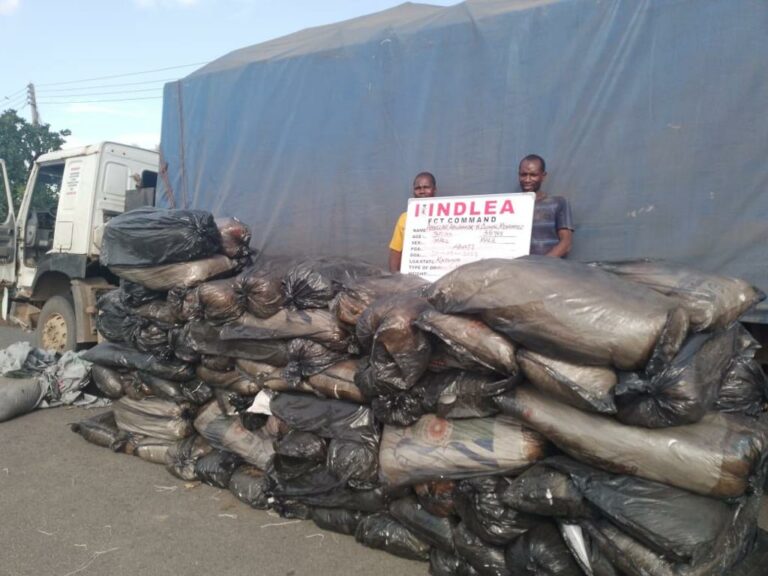
THE National Drug Law Enforcement Agency (NDLEA) has said it intercepted over 4,000 kilogrammes of illicit and controlled drugs in various states, including Lagos, Kogi, Jigawa, Kaduna, Sokoto, Edoand the Federal Capital Territory (FCT).
The intercepted drugs include consignments of nitrous oxide, popularly known as laughing gas, skunk, codeine syrup, methamphetamine and tramadol.
A statement by the agency’s spokesperson on Sunday, September 24, said about 1,194 cylinders of laughing gas weighing 2,547.2 kilogrammes and loaded in two Toyota Sienna buses were on Friday, September 22, intercepted by the NDLEA operatives along Okene-Lokoja-Abuja expressway.
The agency arrested two suspects, Onyebuchi Ikpozu and Kenneth Igwe, over the drugs. The two were said to be taking the consignments to the FCT.
The agency said one 48-year-old woman, Ugo Eluba, was arrested in Abuja in a follow-up operation after 2,400 ampules of pentazocine injection and 100,000 tablets of Exol-5 intercepted in Kogi state were traced to her.
“In the FCT, operatives intercepted 977 kilogrammes of skunk on Wednesday, 20th September, in a trailer marked LSR 343 XW, bearing cartons of Maggi. The skunk consignment was loaded into the truck at Ipele junction in Ondo state.
“While 959kgs of the substance were meant for distribution in Sokoto state, the rest would be dropped off at Gwagwalada. Two suspects, Auwal Mohammed and Abdullahi Abubakar, have been arrested in connection with the seizure, while two other suspects, Mutari Abdulazeez, 31, and Ayuba Madaki, 28, were also arrested on Saturday 23rd September, in the Zuba area of the FCT with different quantities of methamphetamine, cannabis and 13, 930 pills of tramadol.”
In the same vein, other suspects, Shuaibu Yusif, 27, and Abubakar Hussaini, 20, were on Saturday, 23rd September, nabbed with 89.1kgs of skunk along Kano -Hadejia road, Jigawa state, during a stop and search patrol by NDLEA operatives.
In another operation, the NDLEA recovered about 6,000 ampules of pentazocine injection from a suspect, Usman Musa Sidi, 35, on Monday, September 18, along Abuja – Forest road, Kaduna, on his way to Bauchi state.
In a follow-up operation, the agency in Bauchi arrested the owner of the consignment, Dominic Chukwuma, 35, on Tuesday, September 19, with at least 2.58kgs of Diazepam and 36.55kgs of pentazocine injection recovered from his home.
Two other individuals, Inuwa Nuhu and Isiyaku Dahiru Sani, were apprehended in connection with the discovery of 49 blocks of cannabis sativa concealed in a black sack, weighing 26kgs, inside a commercial vehicle travelling from Ogere, Ogun state, to Kano
“While a total of 183kgs of Ghana Loud, a strain of cannabis, were recovered from body compartments of a J5 bus intercepted in Lagos on Wednesday 20th September, operatives in Sokoto, on Tuesday 19th September arrested one Charles Okeke, 44, with 473 bottles of codeine syrup at Unguwar Kosai area of Sokoto.
“In Edo state, 365 blocks of compressed cannabis sativa weighing 258kgs were recovered from a Toyota Camry car marked KTU 886 EZ at Igarra, Akoko Edo LGA,” the statement added.
The NDLEA said it conducted a large-scale operation in Ekiti state, destroying 40 tons (40,000 kilograms) of cannabis plants covering 16 hectares of farmland in Ijesha Isu-Ekiti.
The agency stated it had intensified its War Against Drug Abuse (WADA) campaign, conducting sensitization lectures and advocacy visits in various institutions, worship centres, and communities to contain the illicit drug business.
THE Socio-Economic Rights and Accountability Project (SERAP) has asked President Bola Tinubu to investigate the missing $15 billion and N200 billion from Nigeria’s oil revenues.
In a statement on Sunday, September 24, SERAP’s Deputy Director Kolawole Oluwadare called on Tinubu to “set up a presidential panel of enquiry to promptly probe the grim allegations that over $15 billion oil revenues and N200 billion budgeted to repair the refineries are missing and unaccounted for between 2020 and 2021, as documented by the Nigeria Extractive Industries Transparency Initiative (NEITI).”
SERAP also urged Tinubu to name and shame anyone suspected to be responsible for the funds and ensure their effective prosecution and full recovery of any proceeds of the crime.
On September 19, the Nigeria Extractive Industries Transparency Initiative (NEITI), in its 2021 report, revealed how 14 government agencies, including the Nigerian Petroleum Development Company (NNPC) and the Nigerian Upstream Petroleum Regulatory Commission (NPDC), failed to remit $9.85 billion in revenue to the federation account in one year.
NEITI said the unremitted funds accounted for 8.47 per cent of the federal government’s $23 billion total revenue during the year.
The organisation stated that NPCL failed to provide a clear account of $1.951 billion generated as revenue for the federal government in 2021.
The report, presented in Abuja, showed that $286. 423 million was unremitted export crude sales; $871.145 million unremitted domestic crude sales, $722.596 million LNG dividend, $859,583 miscellaneous revenue, $24.332 million transportation revenue, and $45.758 million unremitted domestic gas proceeds.
Reacting to NEITI findings, SERAP said the report suggested a grave violation of the public trust and the provisions of the Nigerian Constitution 1999 (as amended), national anti-corruption laws, and the country’s obligations under the UN Convention against Corruption.
It added that the allegations of corruption documented by NEITI undermined the country’s economic development, trapping the majority of Nigerians in poverty and depriving them of opportunities.
“There is a legitimate public interest in ensuring justice and accountability for these serious allegations. Taking these important measures would end the impunity of perpetrators.
“Any failure to investigate these grave allegations, bring suspected perpetrators to justice and recover any missing public funds would have serious (effects on) resource allocation and exacerbate the country’s debt burden,” the statement read.
SERAP noted that Tinubu’s failure to take action against the agencies would create cynicism, suspicion, and eventually citizens’ distrust about the ability of his government to combat high-level official corruption, adding that it would deter foreign investment from the country.
SERAP further threatened legal action against the President should he fail to fully implement all the recommendations by NEITI in its 2021 report and recover the proceeds of crime within seven days.
“We would, therefore, be grateful if the recommended measures are taken within seven days of this letter’s receipt and/or publication. If we have not heard from you by then, SERAP shall consider appropriate legal actions to compel your government to comply with our request in the public interest,” the statement added.
PRESIDENT Bola Tinubu has declared the 7th National Youth Games opened as the age-grade sporting event commenced Saturday at the Stephen Keshi Stadium, Asaba, Delta state.
The President, represented by the sports minister, John Enoh, urged the athletes to embrace sportsmanship while noting that the sporting event has been a veritable tool for unearthing talents.
“It is the president’s hope and wish that this kind of event will be better glory and development of sports in our country and the development that this country needs and this game will contribute to the national unity and togetherness of country,” he said.
He urged against age cheating, commending the effort of the Local Organising Committee (LOC), and other stakeholders to verify athletes’ age via their National Identity Number (NIN).
“The issue of cheating in age and in is an area that the ministry requires the aid and the support and collaboration of all stakeholders,” he added.
Earlier, the governor of Delta state, Sheriff Oborevwori, expressed the state’s commitment to contribute to the development of sports in the country, saying that the sporting event helps to foster unity.
“Aside from athletes’ development, the National Youths Games has also proven to be reliable to develop national unity, advance development, and peace to the national and sub-national government.
“It is in our collective interest to harness the power of sports to help build a friendly and more suitable institution for all.
“Hence, the government of Delta state has continued to host national sporting competitions,” he said.
He assured tight security, urging the athletes to seize the opportunities embedded in the game to rise to stardom.
“To all athletes, the moment of truth has come; your family, friends and well-wishers are routing for you to seize the opportunity for the moment to launch yourself into national prominence, so you are mindful of the opportunities,” he added.
Also, the state’s sports commission’s chairman, Tonobok Okowa, advised the athletes to leverage the international standard facilities available.
The opening ceremony witnessed a match pass and musical interlude.
The games will feature 35 sports, with over 5,742 athletes from the 36 states of the Federation, including the Federal Capital Territory.
ZAMFARA State Government has banned all illegal mining activities in the state.
The government has consequently directed law enforcement officers to take stringent actions against violators, including shooting those involved on sight.
Issuing the order on Saturday, September 23, the state governor, Dauda Lawal, said he was ready to tackle illegal mining, a trade often linked to funding criminal activities and exacerbating insecurity.
Over the years, the state has battled incessant attacks from bandits and other terrorist groups.
The terrorists often target communities, raiding villages and abducting people for ransom. These activities have led to a huge loss of lives and property, displacing numerous families and causing widespread fear and instability in the state.
Zamfara had the second-highest number of deaths caused by non-state actors in the first quarter of 2022, with 327 cases.
However, the federal and state governments have blamed attacks from bandits and other criminal activities on illegal mining.
In a statement by his spokesperson, Sulaiman Bala Idris, the governor noted that it was time to end the practice and implement measures to protect the safety and well-being of the people.
He further disclosed that security operatives had been given strict orders to take bold action and shoot on sight anyone found engaging in illegal mining.
He said: “The directive is necessary to ensure the safety and security of the good people of Zamfara and deter potential wrongdoers from committing such acts.”
According to him, the directive would enable the state government to be in total control of state resources and block activities that endanger the lives and properties of the people.
“Illegal mining is undeniably one of the driving forces behind the rampant banditry plaguing Zamfara State. We must take swift, decisive action to curb this menace and restore peace and security to our communities,” the statement added.