THE Socio-Economic Rights and Accountability Project (SERAP) has asked President Bola Tinubu to investigate the missing $15 billion and N200 billion from Nigeria’s oil revenues.
In a statement on Sunday, September 24, SERAP’s Deputy Director Kolawole Oluwadare called on Tinubu to “set up a presidential panel of enquiry to promptly probe the grim allegations that over $15 billion oil revenues and N200 billion budgeted to repair the refineries are missing and unaccounted for between 2020 and 2021, as documented by the Nigeria Extractive Industries Transparency Initiative (NEITI).”
SERAP also urged Tinubu to name and shame anyone suspected to be responsible for the funds and ensure their effective prosecution and full recovery of any proceeds of the crime.
On September 19, the Nigeria Extractive Industries Transparency Initiative (NEITI), in its 2021 report, revealed how 14 government agencies, including the Nigerian Petroleum Development Company (NNPC) and the Nigerian Upstream Petroleum Regulatory Commission (NPDC), failed to remit $9.85 billion in revenue to the federation account in one year.
NEITI said the unremitted funds accounted for 8.47 per cent of the federal government’s $23 billion total revenue during the year.
The organisation stated that NPCL failed to provide a clear account of $1.951 billion generated as revenue for the federal government in 2021.
The report, presented in Abuja, showed that $286. 423 million was unremitted export crude sales; $871.145 million unremitted domestic crude sales, $722.596 million LNG dividend, $859,583 miscellaneous revenue, $24.332 million transportation revenue, and $45.758 million unremitted domestic gas proceeds.
Reacting to NEITI findings, SERAP said the report suggested a grave violation of the public trust and the provisions of the Nigerian Constitution 1999 (as amended), national anti-corruption laws, and the country’s obligations under the UN Convention against Corruption.
It added that the allegations of corruption documented by NEITI undermined the country’s economic development, trapping the majority of Nigerians in poverty and depriving them of opportunities.
“There is a legitimate public interest in ensuring justice and accountability for these serious allegations. Taking these important measures would end the impunity of perpetrators.
“Any failure to investigate these grave allegations, bring suspected perpetrators to justice and recover any missing public funds would have serious (effects on) resource allocation and exacerbate the country’s debt burden,” the statement read.
SERAP noted that Tinubu’s failure to take action against the agencies would create cynicism, suspicion, and eventually citizens’ distrust about the ability of his government to combat high-level official corruption, adding that it would deter foreign investment from the country.
SERAP further threatened legal action against the President should he fail to fully implement all the recommendations by NEITI in its 2021 report and recover the proceeds of crime within seven days.
“We would, therefore, be grateful if the recommended measures are taken within seven days of this letter’s receipt and/or publication. If we have not heard from you by then, SERAP shall consider appropriate legal actions to compel your government to comply with our request in the public interest,” the statement added.
PRESIDENT Bola Tinubu has declared the 7th National Youth Games opened as the age-grade sporting event commenced Saturday at the Stephen Keshi Stadium, Asaba, Delta state.
The President, represented by the sports minister, John Enoh, urged the athletes to embrace sportsmanship while noting that the sporting event has been a veritable tool for unearthing talents.
“It is the president’s hope and wish that this kind of event will be better glory and development of sports in our country and the development that this country needs and this game will contribute to the national unity and togetherness of country,” he said.
He urged against age cheating, commending the effort of the Local Organising Committee (LOC), and other stakeholders to verify athletes’ age via their National Identity Number (NIN).
“The issue of cheating in age and in is an area that the ministry requires the aid and the support and collaboration of all stakeholders,” he added.
Earlier, the governor of Delta state, Sheriff Oborevwori, expressed the state’s commitment to contribute to the development of sports in the country, saying that the sporting event helps to foster unity.
“Aside from athletes’ development, the National Youths Games has also proven to be reliable to develop national unity, advance development, and peace to the national and sub-national government.
“It is in our collective interest to harness the power of sports to help build a friendly and more suitable institution for all.
“Hence, the government of Delta state has continued to host national sporting competitions,” he said.
He assured tight security, urging the athletes to seize the opportunities embedded in the game to rise to stardom.
“To all athletes, the moment of truth has come; your family, friends and well-wishers are routing for you to seize the opportunity for the moment to launch yourself into national prominence, so you are mindful of the opportunities,” he added.
Also, the state’s sports commission’s chairman, Tonobok Okowa, advised the athletes to leverage the international standard facilities available.
The opening ceremony witnessed a match pass and musical interlude.
The games will feature 35 sports, with over 5,742 athletes from the 36 states of the Federation, including the Federal Capital Territory.
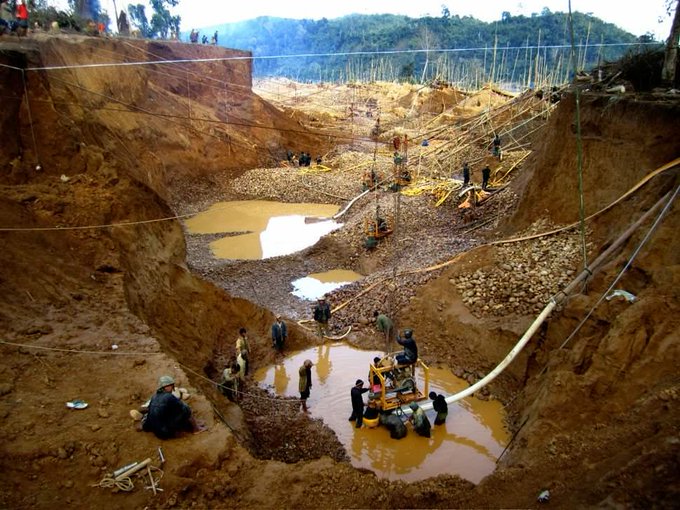
ZAMFARA State Government has banned all illegal mining activities in the state.
The government has consequently directed law enforcement officers to take stringent actions against violators, including shooting those involved on sight.
Issuing the order on Saturday, September 23, the state governor, Dauda Lawal, said he was ready to tackle illegal mining, a trade often linked to funding criminal activities and exacerbating insecurity.
Over the years, the state has battled incessant attacks from bandits and other terrorist groups.
The terrorists often target communities, raiding villages and abducting people for ransom. These activities have led to a huge loss of lives and property, displacing numerous families and causing widespread fear and instability in the state.
Zamfara had the second-highest number of deaths caused by non-state actors in the first quarter of 2022, with 327 cases.
However, the federal and state governments have blamed attacks from bandits and other criminal activities on illegal mining.
In a statement by his spokesperson, Sulaiman Bala Idris, the governor noted that it was time to end the practice and implement measures to protect the safety and well-being of the people.
He further disclosed that security operatives had been given strict orders to take bold action and shoot on sight anyone found engaging in illegal mining.
He said: “The directive is necessary to ensure the safety and security of the good people of Zamfara and deter potential wrongdoers from committing such acts.”
According to him, the directive would enable the state government to be in total control of state resources and block activities that endanger the lives and properties of the people.
“Illegal mining is undeniably one of the driving forces behind the rampant banditry plaguing Zamfara State. We must take swift, decisive action to curb this menace and restore peace and security to our communities,” the statement added.
THE Minister of Interior, Olubunmi Tunji-Ojo, has said over 70 per cent of the 79,000 inmates in Nigeria are awaiting trial.
He also said over 4,000 inmates were held in custodial centres nationwide because they couldn’t pay fines imposed on them by judges and magistrates.
A statement by the minister’s Media Adviser, Alao Babatunde, on Saturday, September 23, said the minister gave the figures and highlighted challenges facing inmates and correctional centres in the country when Ambassador of the European Union to Nigeria, Samuela Isopi, visited him in his office in Abuja.
According to him, inmates in correctional facilities would reduce to 40 per cent if non-custodial alternatives provided for in the Correctional Service Act are explored.
“Over 70 per cent of the 79,000 inmates are awaiting trial. We have over 4,000 inmates in the facilities because of their inability to pay various fines. We believe we can reduce the number of inmates in our correctional facilities by about 40 per cent if we explore non-custodial alternatives as provided for in the Correctional Service Act.”
The minister called on the EU to support the Federal Government’s plan to audit all correctional centres.
The statement added that the ministry had commenced working on key reforms, especially in travel documentation processes and knowledge transfer.
“We have commenced the process to unbottle the bottlenecks in our international passport application and collection process. Today, we have made huge progress. We are also working on ways to reduce identity theft. We want to ensure the green passport regains its pride and integrity.”
The minister also noted that the EU had the potential to assist Nigeria in implementing technology to strengthen Nigeria’s border management.
According to him, addressing crime and migration challenges in Nigeria would contribute to a better Africa, noting that given the proximity and borders shared with the EU by Africa, the issues are not just Nigeria’s but are concerns for the EU.
Earlier, the ambassador affirmed the EU’s commitment to technical assistance in addressing unlawful migration, combating human trafficking and illicit transportation of individuals.
The ICIR had, on May 11, reported that about 52,436 inmates were awaiting trial, causing overpopulation in many correctional centres across the country.
The Permanent Secretary of the Ministry of Interior, Shuaib Belgore, said there was a steady rise in the custodial centres’ population, noting that at least 80 per cent of the inmates were awaiting trial.
According to him, Nigeria’s 244 custodial centres accommodated 75,507 inmates. He added that more than 82 correctional centres were overcrowded.
“The total number of male inmates is 73,821, and 1,686 are female. Of the 75,507 inmates, 52,436 are awaiting trial, while 23,071 are convicted persons, with 3,322 as condemned inmates on death row.”
A report by The ICIR shows how oversight failure and authorities’ negligence cause an increasing population of awaiting trial suspects in custody of the country’s correctional facilities.
The report shows that police and other prosecuting agencies, including the State Security Services (SSS), contribute to the increasing number of inmates awaiting trial.
The police, according to the report, often file the wrong cases in the wrong courts. In several cases, courts fail to make preliminary findings on cases before ordering the remand of suspects.
THE Benue State Governorship Election Petition Tribunal has declared Governor Hyacinth Alia of the All Progressive Congress (APC) the winner of the state gubernatorial election held in March 2023.
The tribunal, sitting in Makurdi, dismissed the petition of the Peoples Democratic Party (PDP) and its governorship candidate, Titus Uba, on Saturday, September 23.
Nigeria’s election umpire, the Independent National Electoral Commission (INEC) declared Alia the winner of the governorship election held on March 18, having polled 473,933 votes to defeat Uba who garnered 223,913 votes.
Uba went on to challenge Alia’s victory at the tribunal.
In April, the tribunal confirmed 19 petitions by the candidates of various political parties who participated in the poll.
However, the chairman of the three-man panel of justices, Justice Ibrahim Karaye, said that the tribunal had no jurisdiction to entertain the petitions as the matters raised before the tribunal were pre-election issues as captured in section 285 of the Electoral Act.
Speaking on Uba’s case, the tribunal said the PDP candidate ought to have pursued his case of non-qualification, the nomination of Alia by the APC and the allegation of a forged certificate and false information on form EC9 against his deputy, Sam Ode, before INEC.
Alia’s victory comes days after the tribunal had upheld the election of the Deputy Speaker of the state House of Assembly, Danladi Lami.
The ICIR had also reported the affirmation of Plateau State Governor Caleb Mutfwang, Zamfara State Governor Dauda Lawal, and the sack of Kano State Governor Abba Yusuf, who is to be replaced by APC candidate Nasir Gawuna.
THEFederal Capital Territory Administration (FCTA) has said it would arraign owners of 149 impounded vehicles, 100 tricycles and motorcycles in the FCT, before a mobile court for various traffic offences.
Director of the FCTA Directorate of Road Traffic Services, also known as Vehicles Inspection Officers (VIO), Abdulateef Bello, made this known in Abuja on Friday, September 22, following the inspection of the impounded vehicles.
During his visit to some VIO Commands housing the impounded vehicles, tricycles, and motorcycles, Bello emphasized that the owners would face the consequences for their offences.
He outlined the offences: unauthorized parking, driving against traffic, engaging in unregistered and unpainted taxis, and operating illegal motor parks.
According to him, commercial motorists have been asked to register and operate within the defined routes and motor parks and refrain from picking passengers indiscriminately from the road corridors.
“We have also told the tricycle operators to operate within the confines of the road plan, already agreed upon.”
He added, “They are not supposed to come into the city. They are supposed to transport people that are going into estates and towards suburbs of the city,” he said.
He said traffic regulations had been reviewed, adding that fines would be reviewed equally.
The VIO boss noted that the traffic offenders would pay hugely when they face mobile court, adding that such punishments would deter future violations.
He also disclosed that the directorate was collaborating with the Transport Secretariat of the Federal Capital Territory Administration to assess current road traffic policies on traffic control.
According to him, this will ensure effective regulation of road traffic management.
Bello added that until the Abuja Mass Transit becomes fully operational to meet the needs of commuters, the directorate would continue to battle with unregistered vehicles operating illegally in the city.
“This is because it is a function of demand and supply, but I am sure in no distant time, all these will be a thing of the past,” he said.
NIGERIA has secured an additional $700 million loan from the World Bank to boost adolescent girls learning and empowerment.
According to the Bank, the loan supports the Adolescent Girls Initiative for Learning and Empowerment programme among girls in some targeted states.
“The additional financing will scale up project activities from the current seven states to eleven additional states and increase the targeted beneficiaries to include out-of-school girls, those who are married, and those who have disabilities,” said the organisation.
Checks by The ICIR showed that the loan was the third Nigeria secured from the Bank since President Bola Tinubu assumed office on May 29, 2023. This puts the total loan granted by the Bank to Nigeria at $1.95 billion between June and September 2023.
Meanwhile, data from the Debt Management Office showed that Nigeria has an outstanding external debt of $14.51 billion to the World Bank as of the second quarter of 2023.
$700 million AGILE loan
The $700 million loan allocated to Nigeria seeks to expand the AGILE projects to eleven states, thereby accommodating more out-of-school children, which had increased due to recurring insecurity crises, especially in the country’s Northern region, the World Bank noted.
The Bank said the AGILE programme had been implemented in seven states, increasing the number of secondary school girls from 900,000 to 1.6 million. These states are Borno, Ekiti, Kaduna, Kano, Katsina, Kebbi, and Plateau.
World Bank said, “Under the programme, over 5,000 classrooms have been renovated, and over 250,000 eligible girls have received scholarships. The AGILE programme has supported the construction and rehabilitation of WASH facilities in secondary schools and the installation of computers and solar panels, making attending school more convenient and conducive for girls and boys. Life skills, systems strengthening, and advocacy are other key aspects of the programme which address social norms impeding girls’ education.”
$750 million loan for power projects
In June, the international financial institution approved the first loan of $750 million for Nigeria under President Bola Tinubu’s government to boost the country’s power sector through the Power Sector Recovery Performance-Based Operation.
The loan is financed by the International Bank for Reconstruction and Development, which would provide $449 million, and the International Development Association would provide $301 million.
The Bank said, “Nigeria has the world’s largest absolute electricity access deficit. Lack of access to the electricity grid affects 45 per cent of the population (90 million people), making Nigeria the country with the largest number of people not connected to electricity. As such, Nigeria accounts for 12 per cent of the global access deficit.”
$500 million for women’s empowerment
Some days later, the Bank approved a $500 million loan to address women’s economic empowerment issues under the Nigeria for Women Program Scale Up (NFWP-SU).
According to the bank, the loan would help women improve women’s livelihoods, ensure better economic opportunities, education, and health and build women’s communities’ resilience to climate change.
The World Bank Country Director for Nigeria, Shubham Chaudhuri, said, “We have seen promising outcomes from the parent NFWP, which has helped to create economic opportunities for thousands of rural women through the Women Affinity Groups. NFWP’s model is helping to improve livelihood opportunities for women, enhancing their capacity to adapt to climate change and participating in local administrations for policymaking related to community empowerment.”
Meanwhile, The ICIR reported how Nigeria’s indebtedness to the World Bank grew from $6.29 billion in 2015 to $13.46 billion in 2022. Also, the country’s public debt stock rose to N87.4 trillion in the second quarter of 2023, putting every Nigerian debt per capita at N396,376.19.
THE Taraba State Police Command has paraded 20 suspected kidnappers allegedly terrorising the state.
According to the command, the suspects were arrested in various spots across the state, following credible intelligence.
Parading the suspects before newsmen at the command’s headquarters in Jalingo, the state capital, on Friday, September 22, the Police Public Relations Officer, Abdullahi Usman, disclosed that the suspects had all confessed to committing the crime.
He said operatives recovered three AK-47 rifles and a fabricated pump action gun from them.
The suspects include Buhari Ishaku, Sule Mohammed, Tsino Buns Majidadi, Emmanuel Danlami, Hassan Dan’asabe, Hussein Kasimu, Husseini Mohammed, and Usman Hassan.
Others are Haro Ibrahim, Abubakar Mohammed, Lawali Dogo, Gidai Ibrahim, Ibrahim Abdullahi, Okundu Godwin, Ikechukwu Emmanuel, and Ibrahim Babangida.
The Police PRO also stated that the suspects had collected over 30 million naira as ransom from their victims’ families.
”The command has launched a serious manhunt on the criminals hibernating in some identified hot spots within the state following public outcry on the nefarious activities of these criminal elements operating within the state, particularly the Jalingo metropolis.
“The Special Anti-Kidnapping Unit and Special Striking Force attached to the Government House have organized constant raids on the hideouts of these hoodlums to have a crime-free society where law-abiding citizens would be allowed to go about their lawful business without fear of being molested or intimidated by any quarter,” Usman said.
Giving the breakdown of the arrests, Usman highlighted that the command arrested suspected kidnappers, including Sanusi Ibrahim, John Baba, and Hassan Yusuf, in Sabon-Gida Akwe village of Kurmi local council based on credible intelligence.
He explained that the suspects were part of a kidnapping gang terrorizing the area, adding that they invaded the house of one Mafure Hassan in Sabon-Gida village and kidnapped two of his relatives, Usman Hassan and Habiba Mafure.
The Special Anti-kidnapping Unit similarly apprehended two suspected kidnappers in Donga Local Government Area, seizing an AK-47 rifle and two live ammunition.
The Command spokesperson said the suspects confessed to being part of a gang involved in armed robbery and kidnapping across the state’s Donga, Bali, and Takum Local Government Areas.
He added that in a separate incident on August 26, another four persons were arrested in Kurmi LGA for invading the compound of one Hussein I Mohammed’s residence, abducting his son, and demanding a ransom of six million naira.
On September 10, following credible information about suspected kidnappers, the Police said it deployed a team to a hideout in Kurmi LGA, arrested four persons and recovered an AK-47 rifle and an empty magazine.
According to Usman, the anti-kidnapping team, in collaboration with Ibi LGA Vigilante group, apprehended a suspect, Ibrahim Abdullahi of Gishirin Hassan Village in Ibi LGA, who had since confessed to being part of a kidnapping gang that terrorized Ibi and Wukari areas.
He, however, assured residents of the state of the Police Commissioner’s commitment to providing adequate security. He urged the residents to abide by the law and cooperate with security agencies to help them fulfil their mandates.
NiMET has predicted another flood crisis. In Bayelsa, the level of precipitation is expected to hit as high as 2500mm. As a result, residents of Bayelsa are adopting local measures which they believe could guarantee their safety. However, their effort is limited by the state government’s inaction. In this report for The ICIR, Beloved John reports how low government preparedness puts residents at risk of flooding.
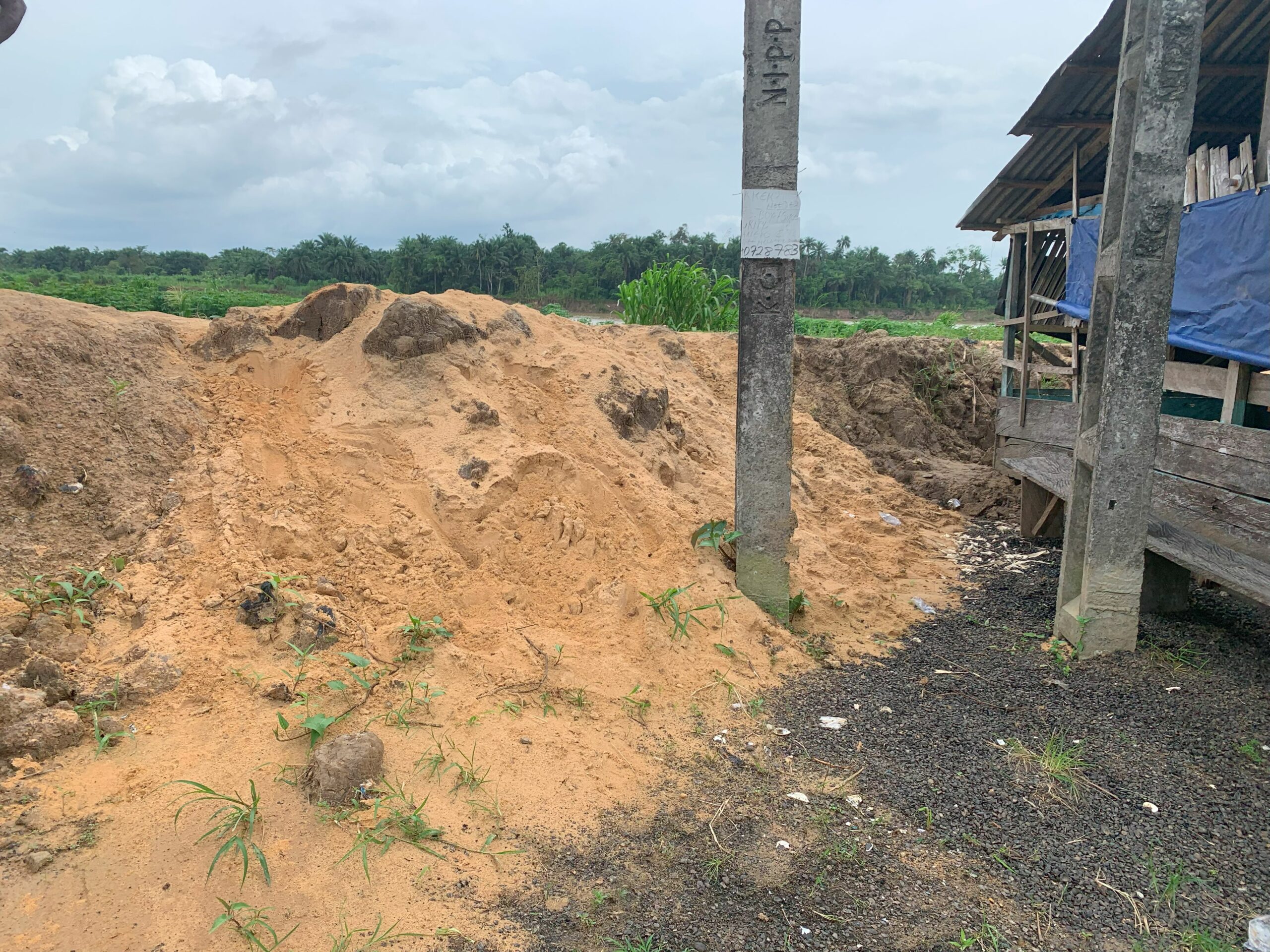
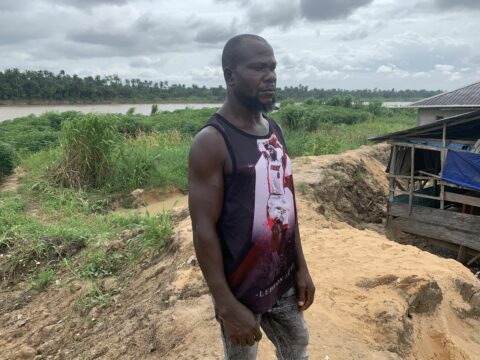
THE residents of Agbura, a small community in Yenagoa, Bayelsa state capital, are building a flood wall. They have been digging out sand from empty parcels of land at the edge of the community to build a sea wall that will circle the neighbourhood.
It is back-breaking work, but after learning about the possibility of another flood crisis from the local radio stations, the people agreed to it. After all, the state authority has been silent.
The flood wall in Agbura
The last quarter of 2022 came with a flash flood that enveloped most of Bayelsa and parts of Nigeria. It killed over 600 persons, displaced 3.5 million people and damaged about 569,000 hectares of farmlands, according to data obtained from the UN Office for the Coordination of Humanitarian Affairs (OCHA).
The flooding was heavy in Agbura; the water was four feet high, and it flowed into every street, destroying anything in its way. According to the residents, all the farms in the village were submerged. Several buildings collapsed, too.
The federal government blamed the incident on heavy rainfall. Media reports say it was further complicated by the release of excess water from the Lagdo dam in neighbouring Cameroon’s northern region. This is not the first time the government of Cameroon will be releasing water from their Dam. It is almost an annual ritual with severe implications in Nigeria.
The Cameroonian dam affected Nigeria because of the absence of flood defencemechanisms like the Dasin Hausa Dam, which should have been built 40 years ago. The flooding wrecked 300 communities across eight local government areas in Bayelsa, leaving thousands devastated.
In January, NiMET predicted a high possibility of a flood heavier than the last. The agency projects that the flood would affect 35 states and 314 local government areas. Bayelsa, a place comprising several coastal areas and lowlands, is one state at the top of the list.
An inadequate attempt at self-preservation
Beregee Amos, a 42-year-old resident and a farmer, is one of those who initiated the sea wall project. He is a part of the labour, and he mediates with the community chief on behalf of the workers.
But the farmer cannot guarantee that the mountain of brown sand can resist flooding. “Well, at least it’s something,” he says as he paces back and forth on top of it, his face furrowed with worry.
“This should be able to stop the Agbura River from overflowing into the community when it gets full,” Amos says to The ICIR. “I think so. What else can we do? We will build it around the area, so there’ll be no way in for it.”
The ICIR observed that the villagers are attempting other self-protection because the flood wall, made of just sand, won’t be strong enough to resist the flood. The ICIR can establish that the community is still at risk of flooding despite this.
A temporary flood wall should contain flood-resistant materials like concrete and trap bags, and a permanent one is an engineered structure that requires more technical materials.
Beregee Amos standing on the heap of sand.
But the residents hope to use the heap of sand as a barrier to defy the tides and prevent water from flowing into the community should the flood prediction by the Nigeria Meteorological Agency (NiMET) come true.
Unlike Amos, Most locals are hopeful. Their conversation with The ICIR shows a sense of certainty among them. They believe that with the water inflow under control, all they have to worry about is the food insecurity that would follow the crisis.
Low level of awareness
When The ICIR visited the communities in Yenagoa, Ogbia and Southern Ijaw LGA, it found the locals scrambling for ways to ensure their safety.
Although many residents have gotten wind of the impending flood, their understanding of the situation is still poor. They are unaware of how best to protect themselves, and as a result, some are adopting ineffective measures.
There are arguments over the intensity of the impending flood, the parts of Bayelsa not prone to flooding, the cost of relocation, and affordability.
Also, only residents with access to radio and TV stations are privy to information on flooding.
The ICIR found that the state government is yet to carry out grassroots sensitisation programmes as recommended by the National Emergency Management Agency (NEMA) in the flood prevention plan.
Residents say they are yet to see any attempt by the state to clarify why flooding is now more frequent.
“No one has told us anything. The government is not talking or doing for our community. We are just trying what we think can work,” Darlene points out.
According to Philip Geoffrey, the Bayelsa director of the Youth and Environmental Advocacy Centre (YEAC), the state authorities have failed to actively sensitise the people and make efforts to reduce the impact of the flood. The government, he says, has been too quiet.
“One would think that by now, the government of Bayelsa would have taken action. Instead, residents are running helter-skelter, hunting for solutions themselves.”
To reduce the impact of the flood, NEMA urged for the relocation of people in flood-prone areas, the creation of refugee camps, a standard drainage system and a speedup of the provision of mitigating factors.
However, The ICIR observed that the Bayelsa state government has failed to adopt any of these measures.
Clogged drainages, water channels
In Azikoro, a small town in Yenagoa, families are filling up their surroundings with sand to guard them against floodwater.
Comfort Ayagere has been pondering on how to guarantee the safety of her kids since she watched a TV advert sponsored by NEMA.
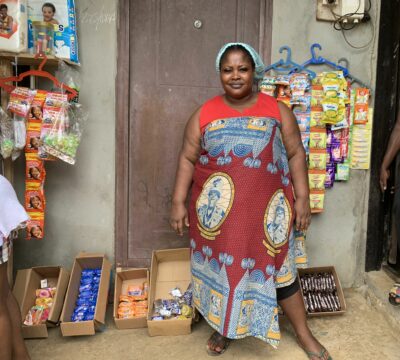
Comfort Ayagere outside her home.
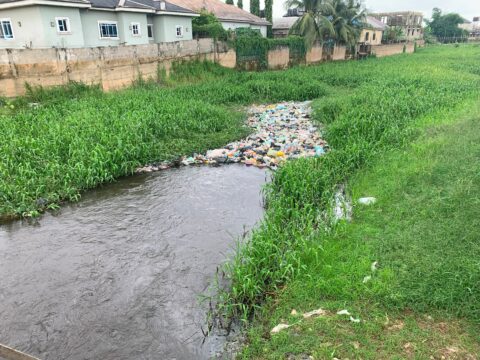
Her apartment is nestled on a sloping terrain that leads down to a small canal, which she is trying to fill up with sand. But the canal is a major concern because it is clogged with tangled grasses, plastic materials and dirt.
“If the canal is this way till then. What I am doing now might not be enough. This should be a free waterway, but it is covered with thick bushes and dirt. The water cannot flow well. Once it is full, it just flows up here,” Comfort says.
The clogged waterway in Azikoro
According to the area’s residents, the canal, which has not been cleaned in about four years, contributed significantly to the flooding in the community.
Beatrice Ebite, a dark, petite woman also residing in the area, believes their suffering is guaranteed if there’s another flooding because the canal will overflow.
“I don’t know how we will survive this flood they predicted. Last year was difficult, and I don’t want to go through that again.”
The ICIR found blocked water channels to be common in many flood-prone areas in Bayelsa. This is despite the approval of N2.6 billion for erosion and flood control in the 2023 budget.
Bayelsa is a flat, low-lying, swampy basin crisscrossed by a dense network of meandering rivers and creeks. This makes it very susceptible to flooding, and the absence of a standard drainage system in the state worsens the situation.
In the 2023 approved budget, Bayelsa budgeted N8 billion for the construction of standard drainage statewide. However, The ICIR did not see any ongoing drainage projects in the flood-prone communities it visited.
The ICIR contacted the Bayelsa information officer for the Ministry of Works, Dei Epunus, but he declined to discuss the issue. Epunus told The ICIR over a phone call that he is unauthorised to address the subject.
IDP camp in poor condition
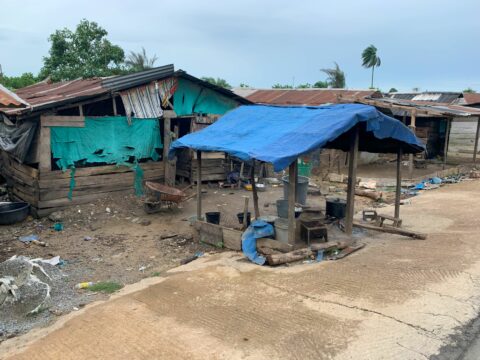
There’s only a handful of residents in Elebele new Berger Yard, but neither of them are considering relocation. The villagers cannot afford it.
A house in Elebele New Berger Yard community
Instead, they are opting for alternatives. Edna Udugwodo has begun to buy some of the tools she would use to build a flood camp. She has identified where the camp would be; it is a small part of the Elebele highway that was not affected by the flood in 2022.
“I have gotten wood and nails. What I need to buy now is a tarpaulin and some things to set up that place when the flood starts.
“It is not the best, but it is manageable. It is better an IDP camp. I can’t stay there.”
Edna Udugwodo outside her home
She recalls how most locals slept on the highway and any dry land they could find because the Public school buildings used as IDP camps were in congested, terrible condition.
The ICIR observed the case might be the same this year as there are no active plans to provide conducive camps for people at risk of flooding across the state.
Most of the locals in Elebele and other flood-prone communities share the same opinion as Edna. There is no conducive IDP camp, and relocation is too expensive.
The people prefer to look out for other alternatives rather than move to an IDP camp.
“Rather than stay in a classroom, I’ll get some blocks of cement to lift my tent high and keep my properties above the water,” says Faith Monday, another resident of Elebele community.
Also,farmers are opting for early harvest. Godfrey Kalazeri, a resident of Ayama community in Southern Ijaw local government, is set to harvest the cassava and plantain he cultivated early in the year.
Losing all his farm produce to the flood in 2022 kept him on edge. He was unwilling to take the same risk this year.
“I didn’t have enough crops to plant this year. Even stems for cassava were scarce and expensive. I just did the little I could do around February, and I amy harvest is ready now,” the farmer tells The ICIR.
Many farmers who did not cultivate early in the year did not farm to avoid incurring more losses. And the few who did, according to their conversation with The ICIR, are ready to harvest them prematurely.
What is Bayelsa government doing?
The ICIR found government flood preparedness to be abysmal, although the state, according to NiMET, will be one of the most affected.
The landscape is close to the water level, and the government knows this. Still, preparedness is poor, according to Fyneface Dunmamene, an environmental activist and YEAC executive director.
“Issues like the clearing of waterways, inadequate drainages, low awareness and absence of good emergency accommodation that could complicate the situation are yet to be addressed.”
Dunmamene points out that “the conditions of living at the emergency camps are dehumanising, and, understandably, residents are reluctant to use them.”
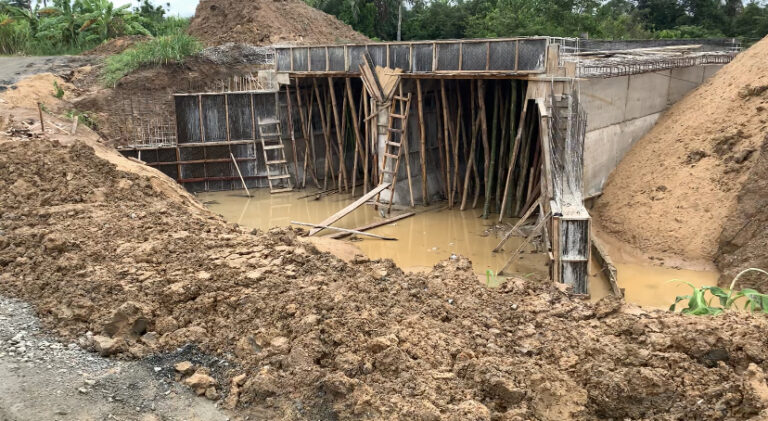
TheICIR observed the repair of damaged roads in the state. One of the major roads undergoing construction is the La More Water road in Elebele, Ogbia LGA. In the 2023 approved budget, Bayelsa budgeted N15 billion for the rehabilitation of damaged roads.
La More water road in Elebele under construction
Save for this, no active measures have been adopted to protect residents and reduce the impact of the impending flooding on the state.
On September 4, The ICIR also attempted to contact the state Commissioner for Environment, Iselema Gbaranbiri. But he did not respond to phone calls, and text messages sent to him.
However, when The ICIR contacted the Director General of the Bayelsa state, Directorate of Flood and Erosion Control, Omusu Wilson Omuso, he claimed the state is better prepared to deal with the impending flood compared to the previous year.
According to him, clogged drainages and creeks are being cleared to ensure free water passage.
“This year will be different,” he said.
“We are prepared and much better than we were last year. We know that clogged creeks and Rivers contributed significantly to the flood in 2022 and as a result we have commenced cleaning. We are opening them so that when there is a flood we won’t be too affected.
“We have been clearing a lot ever since. We have also looked out for higher grounds to accommodate people in each local government and we intend to provide the basic amenities. This year will be different.”
While the residents scurry around in search of safety, the inadequate preparedness of the state government reduces the chances of minimising the impact of the flood.
BANDITS have abducted several students of the Federal University of Gusau, Zamfara State.
The bandits invaded the private hostels of the students in the Sabon-Gida community of the Bungudu Local Government Area of the state in the early hours of Friday, September 22. Sabon-Gida is a few meters away from the university.
Sources in the school disclosed to The ICIR that the bandits went away with no fewer than 25 students (largely female students).
One of the sources, a student at the university, Mubarak (surname withheld), said, “I heard that they kidnapped 25 girls, and some are in 300 levels and 200 levels studying Biology Education. I don’t know the department of others yet.”
“Students used to live in two places off campus – Sabon-Gida and Damba – before. But they said Damba wasn’t secure, and people asked us to go to Sabon-Gida, which we did. Now, they have entered Sabon-Gida and abducted 25 girls. The last time they kidnapped people in Damba, it was four. Before, the highest they would take away was two or three, and the last was five. Now it’s 25,” he exclaimed.
He, however, stated that the Nigerian Army rescued six out of the 25 girls after a face-off with the bandits.
Mubarak said the bandits had warned that they would attack some of the hostels and kidnap 100 students in the past. “They vowed that they would abduct 100, kill 30, and the government would pay ransoms for 70.
“Now they have started their mission and went with 24, they are still coming back to abduct the remaining 76 if care is not taken,” he added.
Speaking on how the incident has sparked fear among students, Mubarak mentioned that his parents were against him going to campus due to the incident.
He noted that most students in the axis had deserted the place to find safety elsewhere.
While recounting the incident, sources in Sabon-Gida told Channels TV that the gunmen invaded the community around 3 a.m. and started shooting sporadically.
“They were seriously engaged with the army troops, but the way these bandits operate, they will divide themselves into two, one group will move with the kidnapped victims while the other will stay behind to protect the first group.
“The first group had left with the students while the second group engaged the army in a gun duel,” a source revealed.
Efforts by The ICIR to get the school management and Zamfara Police command tospeak on the incident proved abortive as calls and SMS were not answered or replied to.
Although the number of students abducted by the bandits was believed to be higher, it wasn’t the first time terrorists would kidnap students from the Gusau university.
On Friday, June 16, bandits kidnapped five students from the institution. This incident led to student protests, resulting in a road blockade and leaving many motorists stranded for several hours.
One of the students, Musa Shehu, who spoke to Punch, stated that many students had been kidnapped in the past, but not much was done to rescue them.
“A lot of students have been kidnapped from this institution, but no positive action is taken to rescue them.
“There are some students currently in bandits camp, and the authorities are not making any move to rescue them.”