TWO housemates, Kim Opara known as Kimoprah and Doyin David, have been evicted from the Big Brother Naija All Stars reality show.
The host, Ebuka Uchenndu during the live eviction show on Sunday, September 10 asked Kimoprah about her love triangle with Pere and Cross of which she admitted she is only focused on Cross.
Doyin on the other hand after being evicted said she will be going back to continue what she has been doing before being on the show.
It could be recalled that Prince, Lucy, Kim Oprah and Sholzy were introduced midway into the show as Big Brother’s special house guests, Lucy and Prince earlier, got evicted.
Kim Oprah has also been evicted from the show leaving leaving Sholzy behind, who is the current Head of House (HoH).
As the HOH, Sholzy, after succeeding Doyin, selected CeeC, Mercy, Whitemoney and Illebaye to join him as his companions in the HOH lounge.
With three weeks to the end of the show, 10 have been evicted from the show leaving 10 housemates battling for the N120 million grand cash prize.
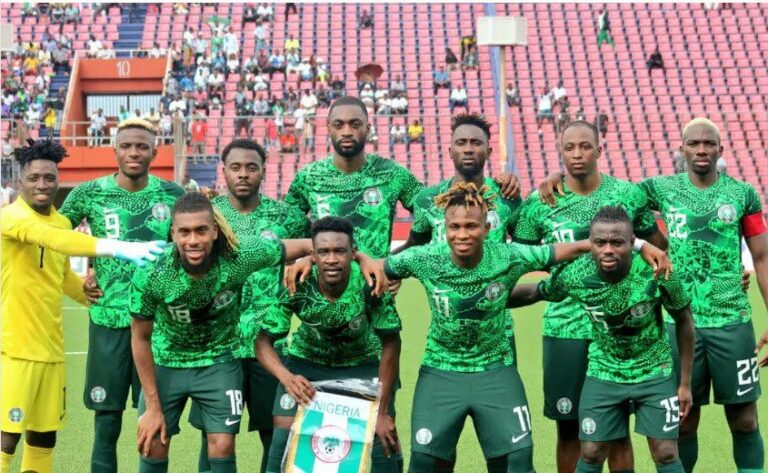
NIGERIA’S senior men’s national football team, Super Eagles, have secured a qualification ticket to participate in the 2024 Africa Cup of Nations, AFCON in Cote d’Iviore after walloping SAO Tome and Principe 6-0 on Sunday.
Although the Super Eagles’ final group match against SAO Tome and Principe at the Godswill Akpabio International Stadium in Uyo, Akwa Ibom State, had been proven to be a dead rubber match, they needed it to finish at the top of group A.
The three-time African champions achieved their aim of finishing atop the team after the array of strikers assembled for Sunday’s game proved their competence.
The match witnessed Napoli’s Victor Osimhen netting a hattrick after he gave the team the lead in the 13th minute, converted a spot kick in the 70th and raced to Samuel Chukwueze’s pass in the 79th minute, bringing his goal tally to ten in the six qualifying matches.
Also, Ademola Lookman’s superb finish in the 27th minute, Nottingham Forest of England striker Taiwo Awoniyi’s acrobatic kick in the 51st minute, and Samuel’s Chukwueze goal gave the star-studded Eagles the needed victory.
The victory helped the team to emerge as Group A leaders with 15 points from six matches and 22 goals, while Guinea Bissau is second with 10 points, with a game in hand against Sierra Leone on Monday.
The ICIR reports that out of the six qualifying matches played, the Super Eagles lost only one match to Sierra Leone, 1-2, won five, and conceded four goals with an 18-goal difference. They also emerged as the only African country with the highest goals in the qualifying edition.
THE Socio-Economic Rights Accountability Project (SERAP) has issued state governors a seven-day ultimatum to publish the spending details of the N2 billion disbursed by the Federal Government as part of interventions to cushion the effects of fuel subsidy removal on Nigerians.
The organisation disclosed this via its official X handle on Sunday, September 10.
“We’ve given Nigeria’s 36 state governors seven days to publish details on the spending of the N72 billion fuel subsidy palliative disbursed to them by the Federal Government, including the names of beneficiaries and the reliefs provided with the money,” SERAP posted.
In a letter signed by the organisation’s Deputy Director Kolawole Oluwadare dated September 9, SERAP noted that transparency and accountability in the spending of the palliative funds would check inclinations to corruption, adding that legal steps would be taken if the deadline is not met.
“We would be grateful if the recommended measures are taken within seven days of the receipt and/or publication of this letter. If we have not heard from you by then, SERAP shall take all appropriate legal actions to compel you and your state to comply with our request in the public interest.
“The oversight afforded by public access to the details of the spending of the N2 billion palliative and any subsequent disbursement would serve as an important check on the activities of your state and help to prevent abuses of the public trust,” the letter read.
On Friday, September 1, the Federal Government announced it had released two billion naira out of five billion naira it offered to states as palliatives to cushion the effect of fuel subsidy removal.
The five billion, which is a loan to be repaid, was approved for the 36 states and the Federal Capital Territory (FCT) in August due to the hike in fuel prices, transport and food costs due to the removal of petrol subsidy by Nigerian President Bola Tinubu.
An initial plan by the government to pay N8,000 to 12 million poor households for six months was met with backlash, as many Nigerians described it as unsustainable and an attempt to squirrel public funds.
Tinubu declared fuel subsidy gone during his inaugural speech on May 29, which resulted in marketers’ immediate hoarding of petrol and a hike in the pump price of the product by about 200 per cent.
Transport costs and commodities prices jumped, leaving many residents in dire straits.
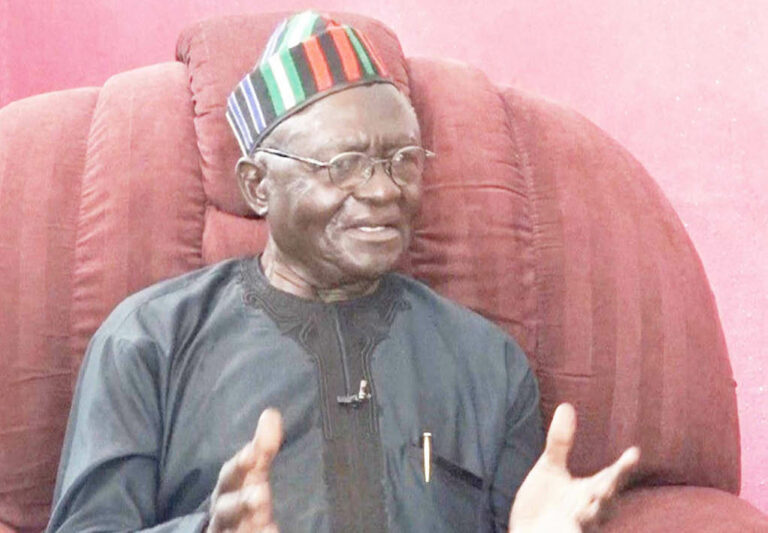
EX-MILITARY Governor of Rivers State Zamani Lekwot has said he was not responsible for the killings in the Zangon-Kataf crisis in 1992, which claimed hundreds of lives and left many others injured.
Lekwot, who spoke exclusively with Daily Trust in an interview published on Sunday, September 10, said he was framed and unjustly punished for the riot despite not being a party to it.
“The Zangon-Kataf issue was just blackmail. Do you see a whole general going to the village to kill villagers? No, it doesn’t make sense. Even the tissue of the lies they dashed out were not convincing. How can a general go and start killing people? I am not mad.
“The military tradition demands that when a soldier commits an offence, and he has to be put in the guardroom, you must tell him what he has done wrong so that he can prepare his defence within 24 hours.
“Nobody asked me anything. What caused the problem was a market relocation. A day was fixed for the market to be opened, people started a riot, and some people were killed. I was just framed up by some people,” Lekwot said.
The Zangon-Kataf crisis was one of the major violent clashes between various ethnic groups in the Northern region of Nigeria.
It began in February 1992 following a proposal to move a market from a location more favourable to the Hausas to one which seemed more beneficial to the Atyap people of the region.
The dispute occurred in February and May 1992, and over 460 people were killed. It transcended tribal rivalry and assumed a more religious outlook, as many Christians from other ethnic groups were murdered.
Following the crisis, Lekwot and six others were arrested for the riot. They were tried by a tribunal set up by the former Head of State Ibrahim Babangida and sentenced to death for charges around unlawful assembly and rioting with arms, among others.
Under Chris Okadigbo’s leadership, the tribunal left no room for appeal, and the convicted men were incarcerated until 1996, when they were eventually granted pardon and released under the Sani-Abacha-led government.
In 2020, however, the Supreme Council of Sharia in Nigeria (SCSN) called for a revisit to the death sentence, saying it was the only means to achieve peace in Northern Nigeria.
During the interview, Lekwot maintained that his implication in the riot resulted from conspiracy and blackmail.
THE legal team of Peoples Democratic Party’s candidate for the February 25 presidential election has criticised the appearance of a watermark on the Certified True Copy (CTC) of the Presidential Elections Petition Tribunal’s (PEPT) judgment affirming President Bola Tinubu of the All Progressives Congress (APC) as the winner of the election, hours after its release.
In a statement issued by the Special Assistant on Public Communications to the former Vice President, Phrank Shaibu, on Saturday, September 9, the team urged the PEPT to clear the air on the controversy over the copy of Tinubu’s legal team that has the watermark in the interest of Nigerians.
He alleged that the court delayed providing Abubakar and his legal team with certified true copies of the judgment.
He emphasized the importance of the court explaining the reason for a watermark of Tinubu’s legal team on the CTC copy to Nigerians.
Shaibu alleged that the court placed the respondent’s watermark on the certified true copy of the judgment received by the PDP while the copies provided to its team and others did not have the same.
He also raised concerns over special privileges he alleged the court accorded to the President’s team.
Part of the statement reads, “It is not our intention to stir up controversy on the matter, but it is very important that the PEPC should tell Nigerians why they chose to affix the header of the respondents on the CTC of their judgment, whereas the copies that went to the petitioners did not have the same.
“Was that because the Tinubu Legal Team is deemed to be accorded special privileges? The court must explain!
“It is very clear that there are many questions begging for answers, including why the PEPC came to the decision to avail the Respondents, especially the Tinubu Legal Team to have a first receipt of the CTC of the judgment before the Plaintiffs.
“The curiosity is more confounding based on the fact that the lead counsel to Atiku and the PDP had pleaded in the open court to have express receipt of the judgment, to which Justice Haruna Tsammani agreed and promised to make the document available the following day, which was Thursday.
He said Nigerians wanted to know why the PEPC conferred “special privileges” on the Tinubu Legal Team by making them have first custody of copies of the PEPC judgment, even though it was more urgent for the petitioners who needed the document to cause an appeal to the Supreme Court within 14 days including weekends.
“In the course of delivering its judgement, the PEPC had spoken of the petition it was ruling upon in a vexatious and denigrating language as if it was a crime to bring a case of electoral banditry before the court,” he stated.
He further expressed suspicions about the involvement of the Tinubu legal team in the judgment process and called for clarification from the court.
Responding to the allegation also on Saturday, Tinubu’s legal team denied the allegation that certified copies of the judgement of the PEPC made available to all the parties by the Registry of the court had their imprint on it.
One of the judgment’s pages containing Tinubu legal team’s watermark
The Tinubu Presidential Legal Team, TPLT, in a statement it made available to newsmen through its coordinator, Babatunde Ogala, described the allegation, which has gained traction on social media, as the handiwork of mischief makers.
Ogala noted that lawyers representing the Peoples Democratic Party, PDP, and its presidential candidate, Alhaji Atiku Abubakar, were at the Registry of the court when certified copies of the PEPC judgment were handed to the parties.
According to him, President Tinubu’s legal team watermarked its copy upon receipt of the judgment before circulating it to its members.
He said: “Following some mischievous insinuations being made in certain quarters regarding the innocuous watermark of copies of the consolidated judgment of the Court of Appeal with the inscription -‘Tinubu Presidential Legal Team ‘TPLT’, it has become necessary to offer this clarification.
“After the delivery of judgment in the three election petitions by the Court of Appeal on September 6, 2023, the Court directed its registry to make physical copies of same available on September 7, 2023.
“Accordingly, the Tinubu Presidential Legal Team applied for a certified true copy of the judgment and paid the prescribed fee. Lawyers for PDP were present at the registry at the same time to collect the same judgment. In fact, the representative of the PDP collected the first copy that was made available by the registry.”
He said the Tinubu’s legal team immediately scanned and water-marked its copy with the inscription – “Tinubu Presidential Legal Team ‘TPLT’” before circulating the scanned soft copies to its team lawyers.
He explained that the certified true copies issued to his team and other parties in the petitions by the registry did not contain the inscription, and any insinuation to the contrary is untrue.
He added that counsel to the petitioners should know that the allegation against Tinubu’s team on the judgment copy is “unkind, unfair, and unfortunate, as they have the same certified copies of the judgment as we have,” the statement read further.
NIGERIAN President Bola Ahmed Tinubu has extended his condolences to Morocco’s ruler, King Mohammed VI, following the earthquake which occurred on Friday, September 8 and claimed over 1,000 lives.
In a statement by his Special Adviser on Media and Publicity Ajuri Ngelale, on Saturday, September 9, Tinubu commiserated with everyone affected by the disaster and wished those injured a quick recovery.
“In the face of this adversity, Nigeria will continue to stand in solidarity with Morocco as they recover, rebuild and come out stronger than ever from this unfortunate event,” the statement read.
The earthquake occurred in the Marrakesh area of Morocco. There has been difficulty in reaching affected citizens in remote parts of the country.
Also affected by the earthquake is one of Morocco’s nine United Nations Educational Scientific and Cultural Organization (UNESCO) Heritage sites, the Medieval Walls of Marrakesh’s Old City, Medina, first laid in the early 12th Century.
According to the United States Geological Survey, the earthquake is the strongest to hit that part of Morocco in more than 120 years.
It is also worse than the 2004 earthquake in the country, which claimed at least 628 lives, leaving 926 people injured.
About 2,539 houses collapsed, including 2,498 in rural areas due to the 2004 earthquake.
Several countries have begun helping Morocco, including France, Israel, the US, and the United Arab Emirates (UAE).
Prime Minister of India Narendra Modi shared condolences to those affected by the earthquake while opening the G20 Summit on Saturday.
It was reported that the death toll was about 820, but this has now risen to over a thousand.
Moroccan monarch Mohammed VI has ordered the country’s Armed Forces to mobilise air and land assets to rescue some citizens trapped in remote parts of the country.
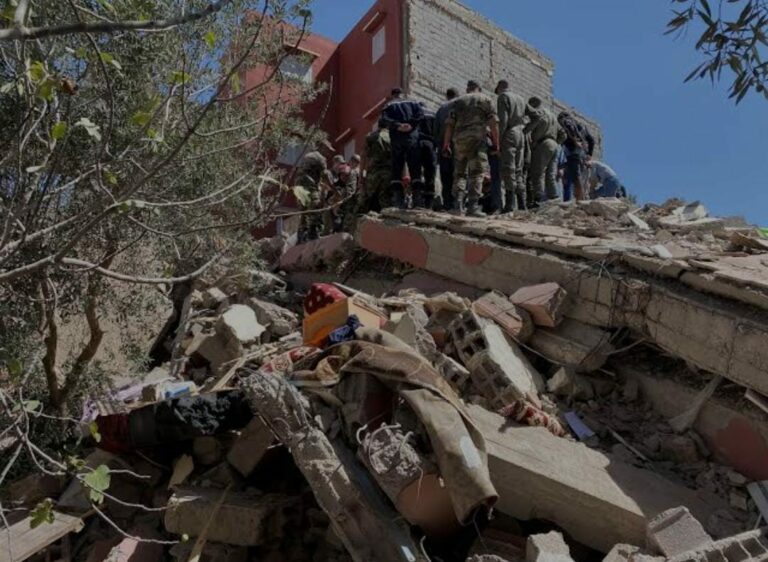
THE death toll from the earthquake that struck Morocco Friday night has risen to 1,037, a local media platform, the Morocco World News has reported.
According to the report, the official figure includes 1,204 injured and 721 in critical condition, adding that the number is expected to rise further as rescue operations continue.
The country’s Ministry of Interior Saturday morning disclosed that the 6.8 magnitude earthquake left over 600 people injured, with 205 in severe condition.
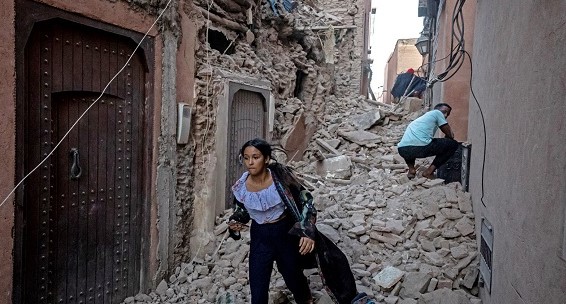
The earth tremors began at about 11 p.m. on Friday, forcing residents out of their homes.
Most residents slept on the streets for fear of aftershocks, as many old houses were made from stone and mud brick.
“We had to run right after the strong quake. I still can’t sleep in the house because of the shock and also because the old town is made up of old houses. If one falls, it will cause others to collapse,” a resident Jaouhari Mohamed told Aljazeera.
The incident occurred in the Marrakesh area of Morocco. While rescue efforts are still ongoing, there has been difficulty reaching affected citizens in remote parts of the country.
Also affected by the earthquake is one of Morocco’s nine United Nations Educational Scientific and Cultural Organization (UNESCO) Heritage sites, the Medieval Walls of Marrakesh’s Old City, Medina, first laid in the early 12th Century.
Leaders and diplomats worldwide have expressed their condolences and support for the country over the tragedy.
Nigeria President Bola Tinubu, in a statement on Saturday, September 9, by his spokesman, Ajuri Ngelale, extended his condolences to King Mohammed VI of Morocco.
“In the face of this adversity, Nigeria will continue to stand in solidarity with Morocco as they recover, rebuild and come out stronger than ever from this unfortunate event,” he said.
The spokesman for the United Nations Secretary-General, Stephane Dujarric, expressed condolences and solidarity with the nation.
“The United Nations is ready to assist the government of Morocco in its efforts to assist the impacted population,” Dujarric stated.
Several earthquakes have occurred in North Africa, bordering the Atlantic and Mediterranean Sea in past decades.
In 1994 and 2004, two earthquakes occurred in the northern town of Al Hoceima, a Riffian city in the north of Morocco.
The latter earthquake had a recorded 6.5 magnitude on the Richter scale, with over 600 dead, 900 injured, and thousands displaced.
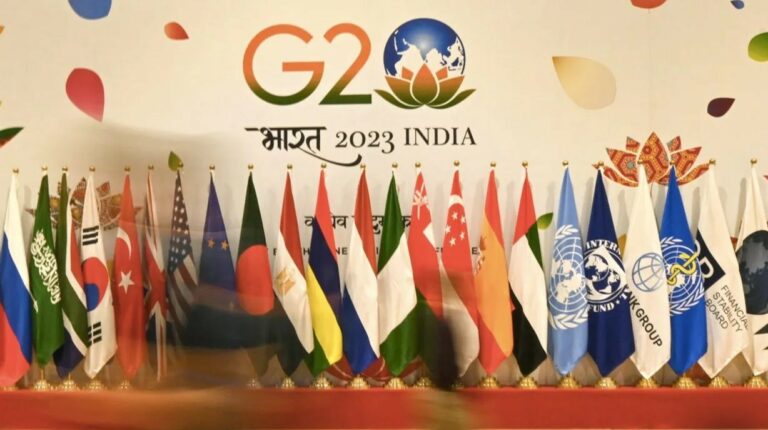
AFTER 24 years of its formation, the Group of Twenty, known as G20, has formally admitted the African Union (AU) into its fold.
Indian Prime Minister Narendra Modi announced this on Saturday, September 9, 2023, during the opening session of the G20 Summit held in New Delhi, India.
“I invite the representative of the African Union to take his place as a permanent member of the G20,” the Indian Prime Minister said before banging his gavel three times, attracting applause in the room.
The AU admission comes at a time when there are growing global rifts – effects of Russia’s invasion of Ukraine, which has lasted for over a year, nearly three years post-COVID and, recently, the geopolitical tension in Africa over military juntas, to mention a few.
President Bola Tinubu had on Tuesday, September 5, travelled ahead of the summit to meet with Indian investors on the sideline of the G20 annual meeting held today and tomorrow, Sunday, September 10.
Tinubu, attending the summit as one of the nine guests, had nearly pulled $14 billion in investments from Indian investors, the special adviser on media and publicity to the President, Ajuri Ngelale, posted on his Twitter handle.
He quoted Tinubu as saying, “We are ready to give you the best returns for investment possible; there’s nowhere else like our country. Nigeria offers the best returns for investment today, so invest now.”
Among the anticipated investments, Indorama Petrochemical Limited pledged $8 billion to expand its fertiliser production and petrochemical facility in Eleme, Rivers State.
Jindal Steel and Power Limited, one of India’s largest private steel producers, committed to investing $3 billion and founding President of SkipperSeil Limited to invest $1.6 billion in the establishment of twenty 100 megawatts (mw) power generation plants across the states of Northern Nigeria.
Ngelale also said Indian firm Bharti Enterprises, interested in telecom, space communications, digital solutions, insurance, processed foods, real estate, and hospitality, will invest an additional $700 million.
Meanwhile, the AU makes it the second regional bloc after the European Union to become a permanent member of the G20 bloc.
The G20, comprising world economic powers, represents 85 per cent of global gross domestic product (GDP), 75 per cent of international trade, and two-thirds of the world’s population.
Founded on September 26, 1999, the G20 is a forum for finance ministers and central bank governors to discuss global economic and financial issues.
The group was upgraded to the Head of State/Government level after the global economic and financial crisis of 2007 and 2009 and was designated the “premier forum for international economic cooperation”.
Initially focused mainly on broad macroeconomic issues, it expanded its agenda to inter-alia, including trade, sustainable development, health, agriculture, energy, environment, climate change, and anti-corruption.
The G20 comprises 19 countries: Argentina, Australia, Brazil, Canada, China, France, Germany, India, Indonesia, Italy, Japan, Republic of Korea, Mexico, Russia, Saudi Arabia, South Africa, Türkiye, United Kingdom and the United States.
AN X (formerly Twitter) user, @LifeofNapaul, has claimed that a Nigerian-trained lawyer cannot practise the legal profession abroad.
He made the claim following the judgement of the Presidential Election Petition Court (PEPC) which upheld the victory of Bola Ahmed Tinubu of the All Progressives Congress (APC) at Nigeria’s 2023 presidential election held on February 25, 2023.
The judgement did not sit well with supporters of opposition parties especially the Labour Party and Peoples Democratic Party who filed the petitions against Tinubu’s emergence as Nigeria’s democratically-elected president at the poll.
The post, published on his X page on Wednesday, September 6, 2023, reads:
“You know what’s funny about studying law in Nigeria?! You can’t practice anywhere else in the world. It’s either you practice here in NG were the law books ain’t respected or you go abroad & wash plate.”
The post has since garnered over one million views, more than 900 reposts and over 3,000 likes as of Friday, September 8, 2023.
CLAIM
Nigerian-trained lawyers cannot practise abroad.
Screenshot of the viral social media post
THE FINDINGS
Findings by The FactCheckHub show that the claim is MOSTLY FALSE.
Checks show that a Nigerian-trained lawyer can practice outside the country depending on the requirements set by the host (foreign) country on the practice of law in their nation.
Nigerian lawyers who sit for and pass law exams in a foreign country, right in their home country, can have multi-jurisdictional qualifications which allow them to practise law in that country and in Nigeria simultaneously, ThisDay newspaper reported. This was also corroborated by a Daily Trust report published in 2022.
However, this isn’t solely an embargo on lawyers trained in Nigeria; traditionally, any foreign lawyer seeking to practice in a different country must fulfil requirements set by the country. This requirement exists due to the potential differences in laws between countries, which makes it important for foreign-trained lawyers to familiarize themselves with the legal framework of their intended practice location.
Even in Nigeria, a foreign lawyer intending to practise must pass the Nigerian Barexams. Upon successfully passing the Bar final exam, such a foreign-trained lawyer will be admitted to the Nigerian Bar to become eligible to practise law in Nigeria.
A foreign lawyer cannot practise law in Nigeria without passing through the law school except a limited extent where they obtain a warrant from the Chief Justice of Nigeria (CJN) for the purposes of a specific proceeding or appeals arising from such proceedings.
In Canada, it’s based on province. An applicant must apply to the law society of that province and meet its requirements before they can be licensed to practise. The licence is subjected to assessment and examination that will be conducted by the National Committee on Accreditation (NCA), a committee responsible for evaluating foreign-trained lawyers seeking admission into the Canadian bar. This is followed by taking the Barrister Licensing examination and the Solicitors Licensing Examination, 10-month internship and character fitness test.
In United Kingdom, a lawyer is either addressed as a barrister or a solicitor. Therefore practising in the United Kingdom means an applicant will have to apply and be qualified as either of the two.
To qualify as a solicitor, the requirements include a law degree equivalent to a UK law degree, passing solicitors’ qualifying examinations (SQE1 and SQE2), two years of qualifying work experience, and passing the character and suitability test.
To qualify as a barrister, the applicant must possess a law degree, equivalent to a UK law degree, pass the Bar Professional Training Course (BPTC), complete a one-year studentship with a barrister’s chambers and also pass the character and suitability test.
Speaking with The FactCheckHub, a Nigerian-trained lawyer, based in the United States, Israel Olawunmi, confirmed that Nigerian-trained lawyers can be licensed in the United States and other countries.
“Nigerian-trained lawyers can easily get licensed in European and North American countries. It’s why you see Nigerian-trained lawyers in law firms in these parts of the world,” he said.
He pointed out that tons of Nigerians take the New York and California bar exams yearly, and they get licensed to practice in both states.
“The thing is, the US, UK, Canada, Australia and some of these popular destinations are common law countries; the same legal system practised in Nigeria. So, it makes transitioning easier,” Olawunmi stated.
He explained that Nigerian-trained lawyers can still get licensed to practice in non-common law countries, subject to fulfilling the requirements to practice in the given country.
“The Nigerian training is no barrier to practising in other countries. In fact, as a foreign-trained lawyer in Nigeria, to practice in Nigeria, there are some requirements such a person must satisfy, including attending the Nigerian Law School among others,” he added.
In few cases, he explained that Nigerian-trained lawyers may not even need to attend the law school of the countries they intend to practice.
He noted further: “In fact, in the UK, if you have practised satisfactorily as a barrister in Nigeria, you do not need to take any exams, you can apply for a waiver and would be ultimately admitted as a barrister in England and Wales.”
THE VERDICT
The claim that a Nigerian-trained lawyer cannot practice outside the country is MOSTLY FALSE; findings revealed that if the person passes all the necessary requirements of the foreign country where he intends to practice law, then they will be licensed to practice law outside their country.
COMMENTS by Minister for Women Affairs Uju Kennedy-Ohanenye that school days should exclude Fridays to enable children to get involved in production activities to boost urban development has received a lot of criticism from Nigerians.
On Thursday, September 7, Kennedy-Ohanenye, while speaking at the 2023 Anambra Investment Summit, said that Fridays should be made free for school children to allow them to produce items like matches and sanitary pads for sale.
“I am pleading for us to look into more production of some of these things in our society. Especially the necessities like the matchbox, the toothpick, the cotton buds, the sanitary pads and stuff like that. Let us introduce urban development in the schools. If we can think about using Fridays as free, for our children to start producing things just like they do in China … In China, even young kids get involved in production,” she said.
Kennedy-Ohanenye also disclosed that she contacted Nigeria’s Traders Union, who indicated an interest in marketing the items produced by the children.
“I was able to speak to the president of the Traders Union Association, and they are ready to partner on this where when they produce these things, they carry it and market it within our country.
“We will not only create jobs; we will not only stop the issue of giving handouts to our Nigerians when they are supposed to be eating fat. We will equally curtail the drug intake of our children because they will be more occupied. They will go to school and equally do some productions to start earning money on time. It will equally curtail the insecurity in our society,” she said.
However, the speech has been widely condemned by Nigerians, who described it as advocacy for child labour on various social media platforms.
“The Minister of Women Affairs, Uju Kennedy-Ohanenye, is at the Anambra Investment Summit, advocating for the reduction of school days and the use of school children as workers to manufacture essentials such as toothpicks, sanitary pads and cotton buds!
“The solution to drug abuse is child labour? The solution to insecurity is child labour and reduced school hours? In 2023, when children across the world are being taught digital skills a Minister is advocating that our children should be sent to labour camps?” a Twitter user I_am_Ilemona posted on Thursday.
“Can you imagine what she’s saying? Education isn’t important to them,” another user Shegun posted.
On Facebook, David Shuaibu reposted a video of the Minister speaking at the Summit with a caption that read in part, “Your plan to introduce child labour will not succeed.”
Another user, Quassim Olamilekan Ayodele, who also reposted the video, added a caption that partly read, “ Mind you, this woman sits on the FEC! She may introduce this very sickening idea and they will clap and adopt same,” he posted.
Reuben Abati, a former presidential spokesperson and one of the anchors of “The Morning Show,” a magazine programme on Arise TV, condemned the minister’s statement.
He said Thursday morning on the show that the minister’s position reflected how public officials were bereft of ideas and needed training on what they should say in public.
Child labour has been a matter of increasing concern in Nigeria.
According to the International Labour Organization (ILO), over 15 million children in Nigeria between five and fourteen years are engaged in child labour as of 2022.
Despite this, for some Nigerians on social media, the Minister’s suggestions were not tantamount to child labour but aimed at developing children’s skills.
“Bunch of bad mouths. If you could do better, trust me, you would have been there. There is nothing wrong with her suggestion. Besides, there are other ventures aside from tech. In other words, she is helping these young lads build something without seed funding,” a user, Kaybydesign, posted.
“She’s simply talking about developing vocational skills of children during their leisure hours. And I don’t see anything wrong with that. You quoted her out of context,” another user, Gbenga Saka, noted.
However, according to the ILO, certain factors determine what constitutes child labour, including work that “interferes with their schooling by depriving them of the opportunity to attend school; obliging them to leave school prematurely; or requiring them to attempt to combine school attendance with excessively long and heavy work.”