Home Blog Page 803

Abuja communities where girls breasts are ‘ironed’ to save them from rape

Most societies try to protect girls from sexual predators by punishing said predators. But in this report, GRACE OBIKE reveals how pre-teens in Abuja, the Nigerian capital city, are tortured and made to undergo breast ironing all in the name of preventing them from being raped.

It is widely believed that one in every four Nigerian girls has been a victim of sexual violence. Of the number who reported their ugly experiences, fewer than 5 % received any form of support, data from the United Nations International Children’s Emergency Fund (UNICEF) shows.

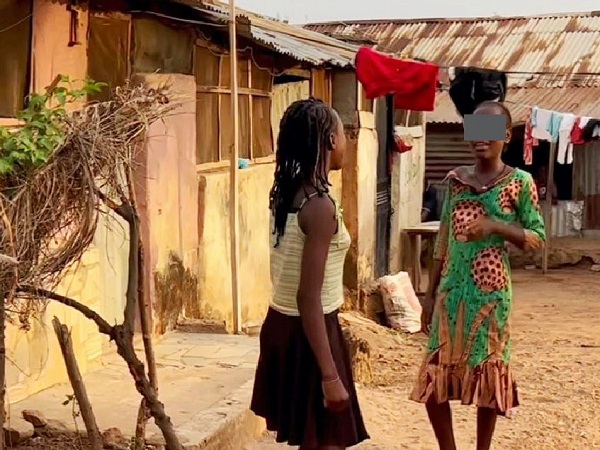
For centuries, the fear of sexual violence has pushed women to adopt different methods of protecting their daughters. In Pygba Sama, a community in Apo about, 14.2km from the Presidential Villa in Abuja, the fear of rape and sexual molestation by randy men has shaped the culture of protection for underage girls.

In order to make teenage girls look less ‘womanly’ and to prevent unwanted male attention, pregnancy and rape, women in Pygba Sama, Kpaduma II and a few other communities in the Federal Capital Territory (FCT) practice breast ironing, also known as breast flattening.

Why Iron the breast?
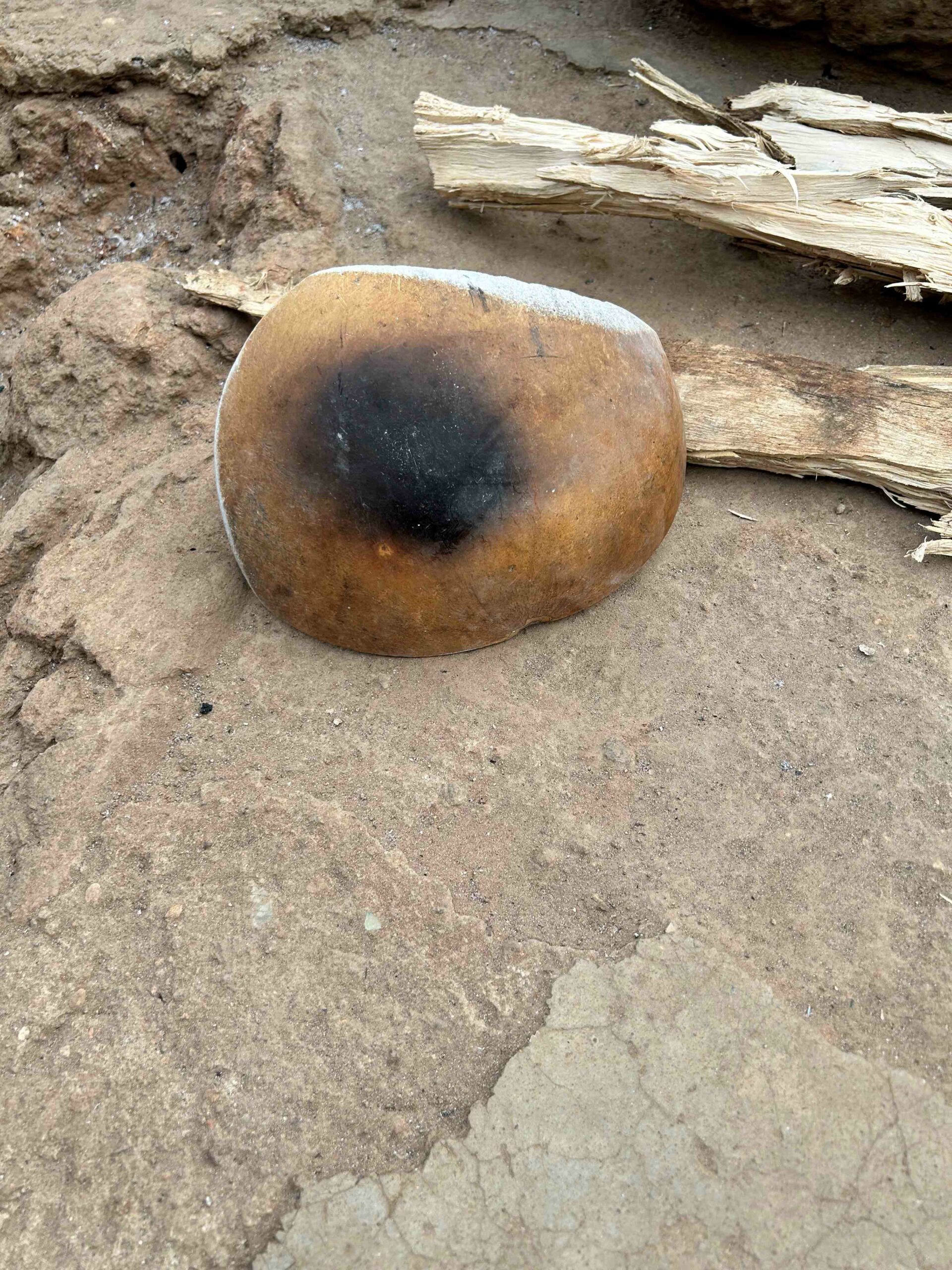
 An Amapala
 An Amapala

Thirty-year-old Kandie Iliya was in panic mode when she realised that her 10-year-old daughter was beginning to develop breasts. She broke up parts of a calabash into what looks like huge bra cup sizes, called Amapala in Gbagyi language. She then placed the parts of the calabash close to the fire, and when it was hot, she held her screaming daughter down and used it to meticulously massage the daughter’s breasts tissues until she was satisfied it had dissolved.

“I knew she didn’t want it, because she was crying and squirming. But what could I have done? she was too young to start having breasts. I love my daughter and did not want men to start noticing her.” she said.

Kandie is not the only one who believes in such a practice. Thirty-eight-year-old Grace Ekene, who is originally Gbagyi but married to an Igbo man, also decided to iron her daughter’s breasts after realising that the 11 years old was not only towering over her mates in the community but had began to grow breasts.

Although Grace escaped the experience when she was younger because she always ran away each time her mother tried to practice it on her, she still decided to put her daughter through the nightmare for fear of someone noticing the girl or molesting her.

She said:  “I didn’t like it when I was young. I was scared of it. Whenever my mother called me for it, I would run away from home till she forgot.

“But after seeing my daughter and the way she was developing beyond her age, I decided to protect her, and I almost succeeded in ironing her breasts.

“Luckily, my friends, who had attended a community meeting on the day that I had set aside to do it, came to visit.

“When I told them what I planned on doing to my daughter that evening, they told me that they were told at the meeting that young girls whose breasts are ironed may develop cancer later in life.”

Breast ironing

According to African Health Organisation, breast ironing is the process whereby young pubescent girls’ breasts are ironed, massaged and/or pounded down through the use of hard or heated objects in order for them to disappear or delay their development.

The United Nations (UN) states that breast ironing affects 3.8 million women around the world and has been identified as one of the five under-reported crimes relating to gender-based violence.

Investigation revealed that the unwholesome practice is carried out with the use of grinding stone, cast iron, coconut shell, calabash, hammer or spatula that has been heated for a long time over a scorching coal. It is also done by tightly wrapping the breasts with a belt or cloth.

In Pygba community, the practice of breasts ironing is as old as time. An investigation carried out by our reporter revealed that almost all the community women spoken to had experienced breast ironing at some stage in their life.

Interestingly, most of them insist that their own mothers and grandmothers were also victims of the generational practice.

An investigation carried out in the communities by the Teenage Network, a non governmental organisation, also revealed that one in every three adolescent girls had experienced breast ironing.

Some victims of the practice like Kandie ironed their breasts themselves when they felt their mothers were not forthcoming due to peer pressure.

Kandie said: “Growing up, I ironed my own breasts myself because I did not want to develop breasts early.

“I realised that the parents of all my friends and peers had ironed their breasts, so I didn’t even wait for my mother but did it myself.

“So you can see why I felt that I had to do it to my child.”

Kandie Iliya
Kandie Iliya

Is breast ironing only practised in the FCT?

While Grace Ekene, who is Gbagyi but married to an Igbo man laid out her plan to iron her daughters’ breasts, her best friend in the community, who hails from Enugu State, did the same. Where Grace was going to use the Amapala on the daughter, her friend planned on using a heated spatula as is used in her own village in Enugu.

Olanike Timipa-Uge, Executive Director Teenage Network, an organisation working with Action Aid Nigeria to motivate change in harmful socio-cultural norms that promote violence against women and girls, especially breasts ironing in the FCT explained:  “During our baseline assessment which we are implementing in two communities, Pygba Sama and Kpaduma II in the FCT, we identified that one in three adolescent girls in these committees have actually experienced breast ironing.”

She said apart from the FCT, breast ironing is widely practised in Nigeria but reporting is really low.

Timipa-Uge said her organisation has had interactions with adolescent girls in the FCT who came from places like Niger State and they tell them they had experienced it back home.

Apart from Nigeria, the United Nations Population Fund (UNFPA) reported that breasts ironing has been reported in other African countries like Cameroon, Togo, Guinea Bissau, West and Central Africa, including Chad, Benin and Guinea-Conakry.

In Nigeria, apart from the FCT and Niger State, it is reportedly more common in Cross River, mostly amongst Cameroon refugees in the state.

Dangers of breasts ironing

Breast ironing is very painful. But apart from the immediate pains experienced by victims, the practice can cause serious physical issues such as abscess, a painful collection of pus that develops under the skin; cysts: fluid-filled lumps under the skin that can develop into abscesses, itching, constant pain, burns due to the heated objects used, tissue damage.

It can also cause infection, discharge of milk, breasts becoming significantly different in shapes or sizes, fever, scarring, mastitis, an inflammation of breast tissue, complete disappearance of one or both breasts, difficulty breastfeeding and an increased likelihood of breast cancer.

Apart from the physical damage to victims, Timipa-Uge says, “it in a way creates a wrong impression about issues of sexual violence. When you iron girls’ breasts because you don’t want them to be sexually abused, you are indirectly saying that the fact that a girl gets sexually abused, the girl is to blame. You are saying the reason why she is being abused is because she has a breast, which is totally unfair to the girl child.”

She also said it could have a psychological effect on the child because eventually, they tend to develop Post Traumatic Stress Disorder (PTSD).

Cases of sexual abuse in Pygba Sama

At 13 years old, Maria had her life ahead of her until she was raped and impregnated by a 49-year-old man who threatened her life if she revealed his identity.

She later lost the baby after its birth and eventually confided in an adult who confronted her rapist. He dismissed the aspect of rape, claiming the girl had enjoyed the encounter even though she fought, cried all through, and bled.

Seventeen-year-old Joy was also molested by a young man in his early twenties, but unlike Maria, Joy spoke up. She reported the incident but was blamed by the molester’s parents. They accused her in front of the whole community of indecent dressing and acting like a know-all.

Ruth Ibrahim
Ruth Ibrahim

The parents of the rapist shamed, blamed and called her names in the community until the Teenage Network representative in Pygba Sama, Ruth Ibrahim, reported the case to the village head and threatened to report to the police and accuse their son of rape before the family backed down.

 What the law says

The UN Convention on the Rights of the Child (UNCRC) Article 6 states that “States Parties recognise that every child has the inherent right to life. States Parties shall ensure to the maximum extent possible the survival and development of the child.”

Article 19 states: “States Parties shall take all appropriate legislative, administrative, social and educational measures to protect the child from all forms of physical or mental violence, injury or abuse, neglect or negligent treatment, maltreatment or exploitation, including sexual abuse, while in the care of parent(s), legal guardian(s) or any other person who has the care of the child.”

In Nigeria, female genital mutilation/cutting/elongation, breasts Ironing and forced marriages are all criminal offences and are classified as harmful traditional practices under the Violence Against Persons and Prohibition (VAPP) Act.

In terms of punishment, the VAPP Act states: “A person who carries out harmful traditional practices on another commits an offence and is liable on conviction to a term of imprisonment not exceeding four years or to a fine not exceeding N500,000.00 or both.”

Prosecution

Although breast ironing in the VAPP act has been proscribed as a criminal offence punishable by jail term and fine, there is no visible record of a perpetrator who has so far been prosecuted for the crime.

An article by the National Library of Medicine on breast ironing explains that as with a number of other harmful traditional practices (e.g. Female genital mutilation or cutting), breast ironing is typically performed by female familial relatives (e.g. mother, sister, aunt, grandmother, nanny, or another female guardian), and the practice is maintained as a secret between girls and their mothers or other guardians.

It says to date, data and empirical studies on breast ironing have been extremely scarce, thus limiting broad understanding about its extent or general prevalence. Being as secretive a practice as it is due to the relationship between the victims and perpetrators has made reportage of the crime difficult.

Even the National Agency for the Prohibition of Trafficking in Persons (NAPTIP), which was mandated by the Federal Government to administer the provisions of the VAPP Act said the agency had not handled any complaints on breast ironing.

Steps being taken to end breast ironing in FCT

NAPTIP insists that even though no one has come forward to report a case of breast ironing in the FCT, it is aware of its existence and taking steps to curb it.

Director, VAPP Dept at the agency, Mrs. Ijeoma Amugo, said: “The issue was raised on the sideline of our engagement with some stakeholders from the Kabusa area of Apo, Abuja, some weeks ago and it was agreed that they should promptly report such a case to NAPTIP.

“The DG has also directed improved surveillance in the community alongside sustained awareness and enlightenment on the danger of such harmful practices.”

Apart from NAPTIP, Teenage Network has been working with stakeholders in Pygba Sama and Kpaduma II for the past three years on awareness creation.

Teenage Network’s representative in Pygba Sama, Ruth Ibrahim, said she did not know about breast ironing until she relocated to the community with her husband.

According to her, after her relocation, she noticed the high number of sexual and gender-based violence (SGBV) within the community, with men battering their wives at the slightest provocation, like being served their meals without meat, even when they (the men) refuse to provide money for food to wives who are mostly housewives.

She added: “I became friendly with the young girls in the community and they began opening up to me.

“Many of them come to me with things they cannot tell their mothers. It was in the process that I learnt about their tradition of breast ironing and the high level of sexual abuse being committed by older men and young boys.

“So far, I have confronted a lot of these molesters, called them and their families out in community gatherings that I have organised and sensitised the women on the dangers of breast ironing.”

Ruth Ibrahim says a lot has changed in Pygba Sama in the last three years in the aspect of breast ironing because the women are now listening and have begun ostracising mothers who still insist on practicing breast ironing.

Luckily, practitioners like Kandie Iliya are beginning to repent. “After ironing that of my first daughter, I did not iron the breasts of my second because I have become aware of its dangers.

“I did that of my first daughter out of ignorance because I thought I was doing what was best for her.

“But now, they told me that it could lead to cancer, breast pains after giving birth, or it could prevent a mother from producing milk after giving birth. I don’t want anything to happen to my daughters.” she said.

On her part, Timipa-Uge said so far the network has recorded quite a number of success stories. Adolescent girls in the communities have confirmed that there has been a significant reduction in the rate of breast ironing ever since the programme started.

She added: “We’ve had girls whose older siblings had experienced breast ironing before the programme now telling us they were saved from experiencing that, and we have had community women openly telling us how they have changed their mind on the practice.”
Defaulters in 3% host community trust fund risk losing operating licence – NUPRC

0

THE Nigerian Upstream Petroleum Regulatory Commission (NUPRC) has warned licensed oil and gas industry operators that they risk losing their licence if they fail to remit a three per cent annual contribution to host communities development trust fund.

The warning followed delays in such remittance by some oil firms despite the Petroleum Industry Act (PIA) making the payment compulsory.

In a statement issued on Saturday, September 2, NUPRC said the delay in remittance could trigger an uprising from host communities, which would negatively affect investments in the oil sector.

“The attention of the management of the Nigerian Upstream Petroleum Regulatory Commission (NUPRC) has been drawn to the agitation by host communities in the oil and gas producing areas of the Niger Delta region over the delay by industry settlors/operators in remitting the statutory fees governed by Section 235 of the Petroleum Industry Act (PIA), 2021.

“Clearly, the Commission understands and shares in the sentiments and particularly the patience of the host communities on this issue, especially as the PIA had suspended the Global Memorandum of Understanding (GMOU) and the Memorandum of Understanding (MOU), replacing both provisions with a new Host Community Development Trust Fund,” the regulator said.

The regulator also expressed concerns that such delays could truncate efforts at stabilizing the value of the naira, attaining the much-desired rebound in the national economy and improving the nation’s macro-economic status.

“The statutory provision of the PIA regarding the annual contribution of operators in the industry, under Section 240 (2) of the PIA, 2021, is very clear, and it states that each settlor, where applicable through the operator, shall make an annual contribution to the applicable host communities development trust fund of an amount equal to three per cent of its actual annual operating expenditure of the preceding financial year in the upstream petroleum operations affecting the host communities for which the applicable host communities development trust fund was established”.

“It must be stated that given the implications of allowing continued default on sustained peaceful operations and the eventual effect on national oil and gas output, the Commission will be minded to activate its regulatory powers, in line with the provisions of the Act as stated above, to bring defaulting and recalcitrant settlors into compliance, “it said.

Findings revealed that prompt payment of host community trust fund is key to stabilising Nigeria’s oil market and halting oil theft as Nigeria lost over N16 trillion to oil theft in 12 years.

Records from the Nigerian Extractive Industries Transparency Initiative (NEITI) latest policy brief noted that the volume of crude oil stolen represented a loss of over 140 thousand barrels per day, adding that between 2009 and 2018, the country lost 4.2 billion litres of petroleum products from refineries valued at $1.84 billion.

Over 60 illegal immigrants arrested in Ogun

0

OVER 60 illegal immigrants have been intercepted by the Ogun State Command of the Nigeria Immigration Service.

They include 60 Cameroonians and a Burkinabe from the Ibafo and Sagamu areas of the state.

The state Comptroller of Immigration Service, Olufunmilayo Olayemisi, said 51 others believed to be accomplices from Nigeria were also arrested.

Parading the suspects at the command’s office along the Presidential Boulevard in the state capital, Olayemisi said the suspects were without valid travel documents.

She said they were threats to Nigeria and would be repatriated to their countries of origin.

She stated that the illegal migrants remained threats to national security and would be repatriated to their countries of origin after due consultations with their countries.

It will be recalled that in 2022, the immigration service arrested 32 Chadians and one Togolese in the State.

Tinubu recalls all ambassadors appointed by Buhari

0

PRESIDENT Bola Tinubu has recalled all ambassadors appointed by his predecessor, Muhammadu Buhari. They comprise career and non-career.

The decision paves the way for the President to replace the recalled officials with his appointees.

The Minister of Foreign Affairs, Ambassador Yusuf Tuggar, announced the recall through his media aide, Alkasim Abdulkadir, on Saturday in a statement.

The statement confirmed the ambassadors’ recall following doubts surrounding an earlier directive on the Nigerian ambassador to the UK, Sarafa Ishola.

In a letter dated August 31, 2023, the minister wrote to Ishola, “I have the honour to notify you of Mr President’s decision to recall you, signalling the end of your tenure as Ambassador Extraordinary and Plenipotentiary of the Federal Republic of Nigeria to the United Kingdom.

“By this communication, you are now expected to commence the propose (sic) of winding down your affairs, take formal leave of your host government within sixty days and return to Nigeria by 31st October 2023 at the latest.

He expressed Tinubu’s appreciation for his service as Nigeria’s Ambassador and Principal Representative in the United Kingdom.

“While looking forward to welcoming you in Abuja on your return, please allow me to join Mr. President in thanking your Excellency for your exemplary leadership and service to Nigeria. I wish you God’s continued guidance in your future endeavours.“Please accept, Your Excellency, the assurance of my highest consideration,” he added.

Tinubu’s gov’t shuns bitumen, opts for concrete on Akure-Ado road, others

1

PRESIDENT Bola Tinubu-led Nigerian Government has said it would redesign the ongoing construction of the Akure – Ikere – Ado-Ekiti Expressway with concrete rather than asphalt. 

The Minister of Works, David Umahi, disclosed this during a visit to the acting Governor of Ondo state on Friday, September 1.

Umahi, who was in the South-West to inspect federal roads on which works were ongoing, said Nigerians should expect more concrete pavements on the nation’s roads due to their extended durability compared to bitumen-based roads.

According to him, roads constructed with bitumen do not last beyond 15 years, while those built with concrete technology have a minimum of 50 years lifespan.

“Any road construction contract, awarded by the Federal Government, with less than 20 per cent progress would be redesigned to concrete pavement roads,” Umahi declared.

On March 30, 2023, towards the end of former President Muhammadu Buhari, The ICIR reported that the FG approved N95.8 billion for the dualization of the Akure/Ita Ogbolu-Iju/Ado Ekiti road, linking Ekiti and Ondo states.

The former Minister of State for Works, Umar El-Yakub, revealed that the first section of the road project on the Ondo side was awarded to two construction companies at the cost of N46.6 billion, adding that the remaining N49.2 billion would be used for the second section of the project from the Ekiti State border.

The ICIR gathered that the road had been a subject of discussions between the Federal Government and the two state governments in the past years, as it has wide economic importance.

Umahi argued that the exclusive dependence on bitumen imports had been straining the national currency, and the adoption of concrete pavement roads would contribute significantly to utilizing local resources.

He said: ”You see jobs that are still ongoing, and that is why we are going round and then redesigning a portion of roads that are maybe 10 to 20 per cent completion, and we are sure that this is the way to go and it has a guarantee of 50 years.

“Not only that, you find out that we are having so much pressure on the naira; the importation of bitumen is a lot of pressure on the naira. So, cement is a local content, and almost everything we need is not produced in Nigeria.”

He also stated that all Federal Government road projects awarded three years ago were due for review, adding that some had been reviewed through VOP (Variation of Price).

The Minister also pointed out that road construction is a constantly changing sector, with material prices continuously rising and fluctuating. 

He decried a growing reduction in the quality of bitumen compared to what was obtained in the past.

“Let me put it on record that bitumen imported in the 1950s and 1960s is of higher quality than what we have today, so we have a lot of problems on our hands, and that is why we are courageous to introduce the concrete road department,” he stated.

In his remarks, the acting Governor, Lucky Aiyedatiwa,  emphasized that many federal roads in the state had either deteriorated or received inadequate maintenance, with many experiencing severe degradation.

Aiyedatiwa called for the dualisation of the Ore-Ondo-Akure road and highlighted the need to rehabilitate the Ore-Okitipupa road among other federal roads in the state.

“It is noteworthy to mention that the intervention of my boss (Governor Rotimi Akeredolu) is principally what has made these roads remain in their present motorable state,” he noted.

Bandits kill five worshippers, two others in fresh Kaduna attack

0

SEVEN persons, including five worshippers, have been reportedly killed by suspected bandits in Saya-Saya village of Ikara local government area of Kaduna State.

The five worshippers were gunned down in the village mosque, while the remaining two other victims were killed at different locations.

Locals explained that the incident occurred around 8 p.m. while villagers conducted their sunset prayers (Isha’i) at a nearby mosque on Friday, September 1.

A resident, Dan Asabe, said two other villagers who sustained gunshot wounds were rushed to the hospital for treatment.

Confirming the incident, the village Head, Abdulrahman Yusuf, said the head of the vigilante in the community was among the victims killed inside the mosque.

“We suspected they traced him (vigilante boss) to the mosque to attack him. We were inside the mosque praying when they arrived and started shooting. Five persons were killed at the mosque, while a driver who brought food items to the village was also killed. The other person was killed at a nearby village,” he said.

According to him, security forces, including soldiers and police from Ikara town and the Palgore area, reached the location at approximately 12:30 a.m. However, the bandits had already departed from the village by that time. 

He also mentioned that one of the individuals injured by gunfire was transported to Aminu Kano Hospital for medical care.

Also, while confirming the incident, the acting Public Relations Officer of the State Police Command, Mansir Alhassan, said security personnel had been mobilised to nearby bushes to fish out the perpetrators.

He also stated that the police and other security agencies were not informed of the attack until after the attackers left the area.

Kaduna state has, over the years, witnessed a recurring wave of insecurity that has resulted in the loss of thousands of lives, including some security personnel, the displacement of many people, and extensive damage to hundreds of hectares of land.

In addition to the recurring bandit attacks, the state has grappled with other security issues, including religious tensions and ethnic conflicts.

In 2021, The ICIR reported how deaths from insecurity causes were higher in Kaduna State than all people who died from the insurgency in Borno, Adamawa and Yobe States.

In 2022, The ICIR reported how parents withdrew their children and wards from school in the state because of insecurity.

According to records released by the state government in April 2023, approximately 1,266 individuals fell victim to bandit attacks in Kaduna State over the past 15 months. 

The report stressed that 746 persons were kidnapped in the state, and another 214 persons were killed in similar incidents between January and March. 

“Between January and December 2022, 641 deaths were recorded in Kaduna Central Senatorial Zone, while 349 deaths were recorded in Southern Kaduna Senatorial Zone, and 62 deaths in the Northern Senatorial Zone, bringing the total to 1,052 deaths as a result of banditry and other attacks.

“214 persons were killed between January and March 2023 in attacks by bandits/terrorists, communal clashes, violent attacks, and reprisals,” Kaduna State Commissioner for Internal Security and Home Affairs Samuel Aruwa said.

The ICIR reports that insecurity affects many states in Nigeria. On August 14, The ICIR also reported that within the first 45 days of President Bola Ahmed Tinubu’s inauguration – May 29 to July 13 – more than 600 individuals had lost their lives due to violence perpetrated by non-state actors nationwide.

According to data, the killings happened primarily from activities of bandits, Boko Haram insurgents, ethnic militias, armed robbers and other non-state actors.

Data from SBM Intelligence, an analysis platform, revealed that about 629 Nigerians were killed in the last 45 days under President Tinubu.

Other data from the Council on Foreign Relations’ Nigeria Security Tracker (NST) and media reports checked by The ICIR showed that non-state actors killed 587 people within the same period.

Why Petrol consumption dropped by 30% – NNPCL

0

THE Group Managing Director, Nigerian National Petroleum Company Limited, (NNPCL), Mele Kyari, has said the drop in Nigeria’s Premium Motor Spirit (PMS) consumption by 30 per cent was a result of removal of petrol subsidy by the current administration.

Kyari, who gave the information, at a joint press conference with the Minister of Finance and Coordinating Minister of the Economy, Wale Edun, in Abuja on Friday, September 1, said fuel subsidy removal had unmasked Nigeria’s real consumption figures.

He explained that the drop in fuel demand from 66.7 million litres daily before to about 46 million currently also meant a 30 per cent reduction in NNPCL’s demand for foreign exchange to import fuel.

“Oil production ramped up to 1.6 million barrels by Wednesday, August 30, from a very poor position of less than 1 million a few months ago,” he said.

PMS subsidy had kept prices cheap for decades in Africa’s biggest economy but it became increasingly expensive for the country – the government spent $10 billion last year – leading to wider deficits and driving up government debt.

Since the subsidy was ended, a black market in neighbouring Cameroon, Benin and Togo that relied on petrol smuggled from Nigeria has collapsed.

Despite having spent $2.41 billion on the subsidy in the first five months, Nigeria could save up to $5.10 billion this year from scrapping the petrol subsidy and from FX reforms, the World Bank said on June 27.

SSS arrests CBN Deputy Governor Obiora in connection with Emefiele’s trial

0

THE State Security Services (SSS), also called DSS by many, has arrested a deputy governor of the Central Bank of Nigeria (CBN), Kingsley Obiora.

Obiora is in charge of economic policy at the CBN.

According to reports, his arrest is connected to the ongoing trial of the suspended CBN governor, Godwin Emefiele, accused of financial mismanagement.

According to reports, Obiora, who resumed as a Deputy Governor in the Central Bank of Nigeria on March 2, 2020, is being sought as a critical witness against Emefiele.

Several attempts to confirm the arrest of Obiora from the Spokesperson of the SSS, Peter Afunanya, were unsuccessful as he did not pick up his call or respond to WhatsApp and SMS messages sent to his mobile line.

The ICIR reports that the SSS confirmed the arrest of Emefiele on June 10 after President Bola Tinubu suspended him on Friday, June 9, as the CBN governor.

Emefiele’s arrest was confirmed by the public relations officer of the SSS, Peter Afunaya, in a tweet posted on its official Twitter handle on Saturday, June 10.

The ICIR reported how President Tinubu suspended Emefiele shortly after assuming office and directed him to hand over the affairs of his office to the deputy governor operations directorate, Folashodun Shonubi.

The secret police did not initially give reasons why Emeiele was arrested.

However, the SSS finally arraigned him for alleged illegal gun possession before the Federal High Court in Lagos on July 25.

He was arraigned on two counts of illegal possession of firearms and ammunition.

Justice Nicholas Oweibo, however, released him on a N20 million bail bond, with one surety in the like sum.

The Federal Government, on Tuesday, August 15, filed fresh charges against the suspended apex bank chief in Abuja after rearresting him at the premises of the Federal High Court in Lagos.

He faces fresh charges filed at the Federal Capital Territory (FCT) High Court in Abuja.

Celebrity marriage: Ninalowo separates from wife after 18 years

0

NOLLYWOOD actor Bolanle Ninalowo has separated from his wife, Bunmi, after 18 years of marriage.

He shared the news on his Instagram page on Friday, September 1.

He wrote that he and his wife had decided to go their separate ways after issues between them became irreconcilable.

Ninalowo revealed he had endured to avoid the break-up, especially for the well-being of his children.

He said he recognized the separation as a crucial step “towards a more peaceful and affectionate future.”

According to him, he was heartbroken but not shattered. He expressed sadness in sharing the news to the world that once “adored his beautiful family.”

He wrote, ”Finally, I accept the reality of the end to a road! A sad reality that gives room and hope for a brighter and more fulfilling future! A reality that is sad for my loving and adorable children but necessary for a peaceful and loveable future.

“A sad reality I prayed, nurtured and worked tirelessly hard never to experience for the sake of all. A sad reality I now have to accept as I realize that my kids are much grown with a better sense of understanding and knowledge of my pain and struggles regarding them!

“A sad reality that screams that I won’t live or be around forever and must take care of my health and mental state for the goodness of all. May God help me and reward me with all I truly deserve or punish me for all I have done wrong if that be the case. In the end, we will all live with the consequences of our actions.”

He urged the public to honour their privacy and pray for them as they navigate the healing phase.

The ICIR reports that the actor and his wife celebrated their 18th wedding anniversary in November 2022.

Ninalowo is not the only actor to experience a relationship break this year. Actor Yul Edochie also parted ways with his wife, May.

In a statement released by a law group, DPA Family Law Clinic, in August, it was revealed that May Edochie filed a divorce petition against her husband, Yul, including his mistress, Judy Austin. 

According to the statement, May took legal action against them, suing for adultery and seeking N100 million in damages. She also requested a restraining order to prevent Yul from accessing their matrimonial home. 

FG to establish mobile courts to prosecute sexual harassment, FGM perpetrators

0

THE Federal Government is set to establish mobile courts to attend to issues relating to sexual harassment and Female Genital Mutilation (FGM).

The decision will help to tackle violence against women and enhance their participation in governance, the Minister of Women Affairs, Uju Kennedy Ohanenye, announced at a media roundtable in Abuja on Thursday, August 31.

The Federal Ministry of Women Affairs, Global Affairs Canada, and ActionAid Nigeria collaborated with Change Managers International Network, the 100 Women Lobby Group leaders, to organise the event.

Ohanenye said implementing a mobile court to try people mutilating female genital and abusing girls, including university lecturers sexually harassing female students was significant in promoting the rights of the female gender in Nigeria.

“I had a conversation with Mr President two nights ago, who granted me permission to address this matter. I also had a meeting with the Attorney General of the Federation (AGF) yesterday (Wednesday). However, during our discussion, we faced several obstacles, such as determining the extent of involvement of the state governors,” the minister stated.

According to her, the AGF said they would establish the mobile court when the Chief Justice of Nigeria (CJN) Kayode Ariwoola returns from vacation.

“We need a mobile court to facilitate our efforts in sensitising the public about gender-based violence, particularly Female Genital Mutilation as an offence that should not be condoned,” she added.

She told the gathering she would attend the United Nations (UN) General Assembly to discuss the matter.

Ohanenye stated that paid informants would be used, and mobile courts would be used to bring cases against those responsible for FGM and other types of gender-based violence.

The minister argued for a 50/50 gender representation in power, saying that such a fair distribution might result in positive societal reforms.

Also speaking at the event, former Minister of Women Affairs and Social Development Josephine Anenih emphasised the need for women to strategise and overcome societal barriers to their progress in governance.

According to a United Nations Women survey in November 2021, Forty-eight per cent of Nigerian women have been victims of violence since the COVID-19 outbreak.

According to the paper “Measuring the Shadow Pandemic: Violence Against Women During COVID-19,” 45 per cent of women in the research’s participating nations have experienced at least one kind of violence directly or indirectly.

The study covered 13 nations, including Albania, Bangladesh, Cameroon, Colombia, Côte d’Ivoire, Jordan, Kenya, Kyrgyzstan, Morocco, Nigeria, Paraguay, Thailand, and Ukraine.

Women in Kenya (80 per cent), Morocco (69 per cent), Jordan (49 per cent), and Nigeria (48 per cent) had the highest rates of exposure to violence. Less than 25 per cent of people in Paraguay reported having such encounters.

In a different report, Fatima Waziri-Azi, the director general of the National Agency for the Prohibition of Trafficking in Persons, NAPTIP, stated that more than 30 per cent of girls and women in Nigeria between the ages of 15 and 49 experienced sexual abuse.

Waziri-Azi disclosed in October 2021 at the commissioning of the Benue State Zonal Command office of the United Nations Population Fund (UNFPA) in Makurdi for survivors of Gender Based Violence (GBV.)

The Director General thanked UNFPA for its intervention and noted that, according to available statistics, “43 per cent of women marry before the age of 18; 30 per cent of girls and women between the ages of 15 and 49 are reported to experience sexual abuse,” she said at the event, where the Benue Zonal Commander Gloria Bai represented her.