Home Blog Page 806

MTN raises N125bn commercial paper as company’s debt financing surged by 161.81%

0

FACED by huge finance costs, MTN Nigeria Communication Plc said it had raised N125 billion via its Series 6 and 7 commercial paper to reduce its cost of debt.

The telecom company disclosed this in a corporate filing released to the Nigerian Exchange Limited on Wednesday, August 30 and signed by its company secretary, Uto Ukpanah.

“The CP Issuance aligns with MTN Nigeria’s strategy to continue diversifying its funding sources and reducing its average cost of debt. The proceeds will be applied towards short-term working capital requirements,” the company stated.

The debt was raised under its upsized N250 billion ‘Commercial Paper Issuance Programme.

The ICIR can recall that the telecom operator had in March this year raised N125 billion series 4 and 5 commercial paper under its N150 billion commercial paper programme.

Giving details of the series 6 and 7, MTN Nigeria hinted that it had sought to raise N100 billion, and after the offer, recorded 146 per cent subscription with N125 billion issued across both series.

It said it issued 181-day commercial paper at a yield of 13 per cent and a 256-day commercial paper at a yield of 13.5 per cent with an issue date of August 23, 2023.

“We are pleased with the support received from the investor community, having recorded 146 per cent subscription. This reflects MTN Nigeria’s robust financial capacity, the brand’s strength, and our leading role in the industry,” the chief executive officer, Karl Toriola, added.

Meanwhile, a commercial paper is an unsecured, short-term debt instrument issued by corporate entities. It is typically used to finance short-term liabilities such as payroll, accounts payable, and inventories.

A look at MTN Nigeria’s financial records in the first half of the year revealed that the company did not have enough capital to pay for its short-term obligations, hence the need to raise funds

Its unaudited financial statements for the six months ended June 30, 2023, revealed that current asset of N1.034 trillion was less than its current liabilities of N1.623 trillion.

By implication, the company’s working capital was negative, with over N588 billion, and impacted the business’ day-to-day operations.

The company’s finance costs (interest expenses), also rose by 161.81 per cent to N237.58 billion compared to N90.74 billion in June last year.

Details of the finance costs disclosed that interest expense on leases rose to N49.67 billion from N46.62 billion and interest expense on borrowings to N51.62 billion from N28.014 billion.

In the first half of this year, the company suffered a derivative liabilities loss on a fair valuation of N3.63 billion.

The company also went into a more profound financing cost as its net foreign exchange loss surged by 864.50 per cent to N131.45 billion from N13.63 billion, while its interest expense on banking fees reduced from N1.203 billion to N2.48 billion.

The Central Bank of Nigeria (CBN) had collapsed all foreign exchange windows into investors and exporters (I&E) windows on June 14 to allow for a free float of the country’s currency against the dollar and other global currencies, The ICIR reported.

“MTN Nigeria’s finance charge was impacted by the devaluation of the Naira from N461.10/$1 in December 2022 to N756.08/$1 in June 2023, which followed the policy change,” the company stated in the report.

MTN Nigeria debuted its issuance of commercial paper in June 2020 and raised N100 billion after its offer was over subscribed by 400 per cent.

In the midst of rising cost of funds, a number of firms have been issuing commercial papers to raise short-term funds.

22 journalists killed in Nigeria Since 1992 – CPJ

0

THE Committee to Protect Journalists (CPJ) said about twenty-two journalists and two media workers have been killed in Nigeria since 1992.

The association urged President Bola Tinubu to take intentional steps to enhance the freedom of journalists.

This was disclosed in a statement by CPJ President Jodie Ginsberg on Tuesday, August 29.

In the statement addressed to President Tinubu, Ginsberg said legislation, rules, and changes needed to be implemented to stop the imprisonment and monitoring of journalists.

“CPJ has documented consistent accounts of threats, harassment, and physical attacks by security officers, politicians, and their supporters against journalists on the job, including as they covered protests and elections.

“During this year’s presidential and state election period alone, CPJ documented intimidation attempts, physical attacks, or detentions of over 40 journalists.

“Since 1992, CPJ has documented the killing of at least 22 journalists in Nigeria, as well as two others who are missing and presumed dead.

“At least 12 of these journalists are confirmed to have been killed in connection with their work,” the statement reads.

The CPJ requested Tinubu to ensure that victims of attacks on the press receive justice.

 It also said the President should develop laws and regulations to stop journalists from being jailed.

Additionally, the Journalists group urged Tinubu to provide uninterrupted access to news websites and online platforms.

The CPJ also encouraged President Tinubu to use his three-month anniversary to revitalise press freedom throughout the country.

“We request that you ensure justice is delivered for attacks on the press and that you reform legislation and regulations to prevent the jailing and surveillance of journalists.

“We also urge you to ensure undisrupted access to the internet, online platforms, and news websites,” Ginsberg stated.

The CPJ demanded that Tinubu’s administration take urgent steps to improve the press freedom environment in Nigeria.

The group added that it is prepared to provide assistance or further information that can advance the rights of journalists to work freely and safely in Nigeria.

They also blamed the Buhari administration, who ordered telecom providers to block access to the Peoples Gazette in Nigeria.

The Committee to Protect Journalists is an independent non-governmental organisation defending global press freedom.

Despite serving in opposition govt, Wike dares PDP to suspend him

Minister of the Federal Capital Territory Nyesom Wike has dared his political party to suspend him despite working for the All Progressives Congress (APC).

Wike, who is a chieftain of the People’s Democratic Party (PDP) and now serves as a Minister in an APC government, said this during an interview with Channels Television on Wednesday, August 30.

“How can anybody talk about expelling me, a state that brought a governor? A state that brought three senators? A state that produced 32 House of Assembly members out of 32? A state that produced 11 out of 13 House of Reps? The person that will suspend me is the one that couldn’t provide a governor, three senators?

“Look, I have not seen that person with all due respect. Nobody will do it. So the issue will not arise. Who will discipline me? I should be the one calling for the discipline of these people who violated the party constitution. Who dares that person that said they will suspend me? Who is that person? I want to dare anybody who will say that,” Wike said.

He stated that he was unapologetic about his role in assisting the APC to win the 2023 elections, adding that his actions were in the interest of equity and justice.

“Governance is not about party. Party is a vehicle that conveys you. I am a PDP member. I never hid my intention. As a PDP member, I came out that I am going to support equity, fairness and justice. I was in PDP, I supported Bola Ahmed Tinubu, yes. Did I hide it?

“I feel at home working with Bola Ahmed Tinubu. He has given me that courage. He is a man who means well for the country. So, he is looking for people who will support him and achieve the renewed hope he has given to Nigerians. I’m not here to support a party. I am here to support the president who has confidence in me to help him deliver the renewed hope. And I owe nobody any apologies at all,” he said.

He also added that relevant authorities at the national, zonal and state levels of the PDP backed his appointment into the cabinet of Nigerian President Bola Tinubu.

Ahead of the 2023 general elections, Wike had vowed to fight what he described as injustice in the PDP. He also insisted on the emergence of a presidential candidate for the south despite his party fielding a northerner for the position.

His stance against the party followed the emergence of former Nigerian Vice-President Atiku Abubakar as the PDP presidential candidate in the primary elections, contrary to the party’s regulation on rotating the position among regions.

Wike also contested the party primaries in 2022 and lost to Atiku.

He, along with four other governors, formed the G5 group and insisted that Northern Nigeria could not produce both Chairman and presidential candidate of the party at the same time.

Attempt to bribe a judge: What are the implications?

0

ACCORDING to Wikipedia, a judge is a person who oversees court proceedings, either alone or as a part of a panel of judges.

The importance of a judge cannot be downplayed because their decisions are seen as law.

Recently, the chairperson of the Panel of the Election Petition Tribunal, sitting in Kano, Flora Ngozi Azinge, on Tuesday, August 15, expressed concern over some lawyers trying to influence judges on her team through bribery.

She claimed that this was the second occasion a judge had expressed dissatisfaction with how some lawyers who were prosecuting election cases in front of her attempted to undermine the legal system by offering bribes to her and her colleagues.

“Money is flying; it’s being rumoured that a staff collected N10 million.”

“They keep abusing judges, insulting us every day in the papers, in the media — that we are taking bribes.

“Let me repeat again, that nobody should approach me with money again. I’m contented with what God has given me, and I have a roof over my head,” she was quoted to have said.

This allegation has generated a lot of responses on Social media reasons, with many expressing apprehension on the issue, and this might not be unconnected with the ongoing election disputes before various election tribunals across the country.

What the law says about giving or taking bribe

In Nigeria, section 98 of the Criminal Code Act states that any public official who corruptly requests, receives, or obtains any property or benefit of any kind for himself or another person or who corruptly agrees to receive or attempt to obtain any property or any benefit for himself or another person in relation to any matter related to the functions, affairs, or business of a government department, public body, or other organ is guilty of a criminal offence and is liable to imprisonment for seven years.

Section 98A of the Criminal Code Act in Nigeria states that anyone involved in official corruption, including those who give bribes or otherwise influence the behaviour of public officials, is subject to a seven-year prison sentence.

The Corrupt Practices and Other Related Offences Act (ICPC ACT) also frowns at acts of giving or receiving bribes.

The primary goal of the Act is to outlaw bribery and corrupt behaviour, both of which involve giving or receiving something of value to influence an official decision. The Act defines individuals as including natural persons, juristic persons, any body of persons corporate or incorporated, and corruption as including bribery, fraud, and other connected acts.

Lawyers’ reaction to allegation of bribe

The ICIR contacted some lawyers to seek their reaction concerning the claim that some lawyers tried to bribe several election tribunal judges.

A Lagos-based lawyer, Adefisoye Okunade, called this situation ‘sub judice’. 

He declined to comment on the claim, describing it as a mere allegation. However, he chipped that the senior lawyer should know what to do.  

“This is sub judice. It is unprofessional to respond to these questions without being briefed. The enior Advocates of Nigeria (SAN) ought to know what to do,” he stated.

In response to the allegation, another lawyer, Olu Oyeniji, said, “What we should be doing at this time is asking these questions:

“Why is she not naming the SAN? How many SANs have matters before her court? Shouldn’t this be investigated by the Independent Corrupt Practices Commission (ICPC), Police, Nigerian Bar Association (NBA), Legal Practitioners Disciplinary Committee, Body of Benchers, Body of SAN? Is this attempt not a crime in itself, for example, conspiracy to commit a crime?” he asked.

In his contribution, a lawyer, Abiola Kolawole, said that the EFCC should be encouraged to go after the lawyers involved if the allegation is correct.

“There are so many laws that can be used to try the SAN.

“EFCC may try him on a count charge bordering on perverting the course of justice and offering gratification to public officials,” Abiola stated.

Previous case

This is not the first time a judge has disclosed that a lawyer is trying to bribe him.

In 2021, a judge, G. M Kamyal of High Court 9 in West of Mines Jos, announced that a lawyer tried to bribe him.

The judge publicly acknowledged in open court that a lawyer had attempted to solicit his favour in a case with suit number PLD/J602/2021.

The judge accused the Counsel of visiting him in the night.

“I wish to inform the Counsel and parties in court that yesterday night between 7 p.m. and 8 p.m., one Barrister B.C. Awang (Mrs) came to my house along with one of the claimants, in this case, to see me in respect of the case.

“They came along with a gift for me. I was seriously disturbed by the said unsolicited visit. I asked why would they pay such a visit to me based on a case before me.

“I am deeply annoyed by the said visit, and this has affected my mind frame with regard to handling this matter,” the judge said.

The judge added that he had returned the case file to the chief judge of the State to re-assign the case to another Judge for trial.

Tinubu condemns Gabon coup, says ‘rule of law must not be allowed to perish’

1

PRESIDENT Bola Tinubu has condemned the political situation in Gabon, expressing his deep concern over the country’s sociopolitical stability and the growing influence of autocracy in various African regions.

The special adviser to the President on Media and Publicity, Ajuri Ngelale, while speaking with State House correspondents on Wednesday, August 30, says Tinubu is working closely with other Heads of State in the African Union towards a comprehensive consensus on the next steps forward.

The President’s reaction is coming a few hours after a group of Gabonese military officers appeared on national television on Wednesday, August 30, announcing an end to the current regime.”

The president of Gabon Ali Bongo Ondimba, was deposed by a group of senior military officials following the just concluded general elections, which ushered him in for a third term.

The officers said they had cancelled the just concluded elections as the process was not credible.

“In the name of the Gabonese people … we have decided to defend the peace by putting an end to the current regime,” the officers said.

The officers also announced the closure of all borders and dissolved state institutions.

Reacting to this, the presidency said: “President Bola Ahmed Tinubu is watching developments in Gabon very closely with deep concern for the country’s sociopolitical stability and the seeming autocratic contagion apparently spreading across different regions of our beloved continent,” he said.

“The president, as a man who has made significant personal sacrifices in his own life, in the cause of advancing and defending democracy, has all of the unwavering belief that power belongs in the hands of Africa’s great people, and not in the barrel of a loaded gun.”

According to him, the rule of law and a faithful recourse to constitutional resolutions and instruments of electoral dispute resolution must not at any time be allowed to perish from Africa.

He also stated that the President is “working very closely and continuing to communicate with other heads of state in the African Union towards a comprehensive consensus on the next steps forward with respect to how the crisis in Gabon will play out into how the continent will respond to the contagion of autocracy we are seeing spread across our continent”.

Nigeria’s flag designer, Taiwo Akinkunmi dies at 84

0

THE man who designed the Nigerian Flag, Michael Taiwo Akinkunmi (OFR) is dead.

Announcing his death via his Facebook post, his son Akinkunmi Akinwumi Samuel wrote “Life is indeed transient; i can say boldly you live a life with a landmark. Continue to rest on, my father! Pa Michael Taiwo Akinkunmi (O.F.R) Great Man has gone”

Although the cause of his death hasn’t been publicly known, the deceased had been nursing an undisclosed illness for quite a long time. According to a report by Al-Jazeera in 2015, the late Akinkunmi couldn’t remember what the doctors diagnosed him with, nor could his son confirm the nature of the illness.

The only symptoms he could remember were recurrent fever. 

Born on May 10, 1936, in Owu, Abeokuta, Ogun state, Akinkunmi attended Baptist Day Secondary School in Ibadan for his primary education and pursued his secondary education at Ibadan Grammar School in the same city.

While he was studying engineering at Norwood Technical College in London in 1959, he saw a newspaper advert calling on people for submission of designs for the Nigerian national flag in view of the imminent Independence from British governance.

His design triumphed among over two thousand entries submitted as part of a competition to create the nation’s finest flag.

However, it wasn’t until October 1, 1960, when Nigeria gained independence from Britain, that this flag officially became the Nigerian National flag.

Akinkunmi was awarded 100 pounds, equal to $ 281, by the government when his design was selected.

In the October 2010 celebrations marking Nigeria’s golden jubilee, Akinkunmi was bestowed with a presidential award in recognition of his distinguished status as a Nigerian.

Subsequently, in 2014, he received the National Honours Award of Officer of the Order of the Federal Republic (OFR) during the administration of Goodluck Ebele Jonathan.

The former president, while conferring him with the national honour award, also announced his appointment as a Special Assistant, with a salary for life.


READ ALSO:


Speaking at an event unveiling the world’s largest national flag in Ibadan, the Oyo state capital in 2021, Akinkunmi said the journey to creating Nigeria’s national flag started about sixty-three years ago when he was studying electrical engineering at Norwood Technical College in London.

He added that: “I have always dreamt about Nigeria being at the front of every good thing and I’m delighted to be part of this historical event.”

Also, in one of the interview he had, one memory that didn’t forsake him was the support he received from Nigerians. “I was well-known all over the place,” he says. “Everybody was calling me Mr Flag Man.”

Why Hannatu Musawa did not get NYSC exemption

0

Following the appointment of Hannatu Musawa as Minister of Art, Culture and Creative Economy by Nigeria’s President Bola Tinubu, there have been controversies surrounding the validity of her nomination due to her status as a serving corp member – National Youth Service Corps (NYSC).

With the NYSC confirmation that she is still serving, comments flooding the internet was asking why she didn’t collect an exemption letter, seeing that she is well over the age limit.

Speculations over her status as a corps member had begun after she was screened by the Senate and was confirmed by the NYSC Director of Press and Public Relations, Eddy Megwa.

Provision of the law

People who are to serve

Section 2 of the NYSC decree states that every Nigerian shall be called to serve:

1) if they have graduated from any university in Nigeria,

2) If they have graduated from any university outside of Nigeria,

3) if they have obtained the Higher National Diploma, or such other professional qualification as may be prescribed.

People exempted from national service

According to the NYSC provision “a person shall not be called upon to serve in the service corps if,

  1. At the date of his graduation or obtaining his diploma or other professional qualification, s/he is over the age of thirty,
  2. He or she has served in the armed forces of the Federation or the Nigeria Police Force for a period of more than nine months,
  3. S/he is member of staff of any of the following, that is, a) The Nigerian Security Organisation, b) The State Security Service, c) The National Intelligence Agency, d) The Defence Intelligence Service
  4. or he has been conferred with any National Honour.

In lieu of this, Section 17 of the Act states that the following people would be issued with a certificate of exemption.

According to the NYSC spokesperson, Hannatu was mobilised in 2001 and deployed to serve in Ebonyi but did not complete her service year after she was re-deployed to Kaduna state.

Section 5, subsection 9 of the NYSC Bye-Laws states that any member who is absent for a continuous period of 3 months within the service year shall be considered to have absconded and shall be declared a wanted person, making them repeat the service year.

The rule of exemption cannot be applied to Musawa as she was less than 30 years of age when she was mobilised initially for the scheme, which she is currently repeating.

This is because eligibility or exemption for the NYSC scheme is based on the age a person is when s/he or he graduated. A person who graduated at 23 and did not serve, If 20 years later at 43 such a person is desirous of the certificate, the person will have to serve as s/he will not be eligible for exemption.

Honeywell flour mills sustains loss on lower sales volume, higher finance cost

0

HONEYWELL flour mills Plc, a consumer goods company operating in Nigerian food products, sustained a loss in the first quarter of this year as the company faced a lower sales volume and a higher finance cost.

The company disclosed the negative performance in its unaudited interim financial statements for the first quarter (Q1) ended June 30, 2023, released to the investing public on Tuesday, August 29.

It showed that the company posted a loss of N1.16 billion in the review quarter, representing a 51.56 per cent drop from N2.397 loss recorded in the corresponding period of 2022.

The ICIR analysis of the reports showed that the company’s revenue, that is, total sales figure, dropped by 12.98 per cent to N35.39 billion from N40.67 billion, despite recording a significant decline in its cost of sales.

The company’s cost of sales fell by 21.01 per cent to N31.418 billion from N39.774 billion, improving its gross profit to N3.977 billion from N896 million.

However, a 116.10 per cent rise in the company’s finance cost to N3.14 billion from N1.453 billion streamed its operating profit of N1.798 billion and ultimately brought its bottom-line performance to a N1.16 billion loss for the period.

A report by The ICIR on August 1 pointed out that fast-moving consumer goods (FMCGs) companies are faced with higher finance costs arising from the companies’ inability to hedge against huge revaluation losses caused by the floating of the naira. 

Honeywell flour mills involved in manufacturing and marketing of wheat-based products, including flour, semolina, whole wheat meal, noodles and pasta has been in legal battles with Ecobank Nigeria for the past eight years.

The company had, since November 2015, battled Ecobank over the freezing of its accounts and the demand by the bank to wind up its operations over-indebtedness.

But in 2018, the Supreme Court upheld the Court of Appeal ruling after the apex court was approached by Ecobank to overturn the decision to return full access to Honeywell Flour Mills.

Based on the apex court determination that the ex-parte orders obtained by the bank were improper, Honeywell flour mills, therefore, sought damages at the Federal High Court (FHC)

In the judgment delivered recently on Tuesday, July 18, by a judge, Mohammed Liman, the FHC sitting in Lagos granted all the reliefs sought by the company over the freezing of its accounts by the bank.

The court then awarded damages of N72.2 billion to the company in its eight-year legal battles with Ecobank.

The claims made by the company included losses due to foreign exchange devaluation, interest on unutilised cash balances, loss of revenue, and aggravated and exemplary damages.

Meanwhile, in a notice of April 29, 2022, Flour mills of Nigeria Plc announced its acquisition of a 71.69 per cent stake in Honeywell Flour Mills, formerly a portfolio company of Honeywell Group, and a 5.06 per cent stake in the company held by First bank of Nigeria Limited, stating that the transaction was consummated by the parties.

NPFL to deploy AI cameras to live stream matches as league begins Sept. 9

0

AHEAD of the kickoff of the 2023/23 Nigeria Professional Football League, NPFL season on Saturday, September 9, the board of the league has assured the deployment of Artificial Intelligence cameras to stream live the league matches.

The league board’s chairman, Gbenga Elegbeleye disclosed this during the draw for the new season conducted in Abuja on Tuesday, saying that 300 matches out of the 380 games will be streamed in the incoming season with AI cameras.

“Let me also use this very opportune occasion to appeal to our club leaders here to offer all required support to the Propel Sports Africa team as they start. Firstly, is that all individual club streaming activity is no longer allowed as clubs will be offered the data of all their matches including individual analytics for each player,” he said.

Giving details of the draw, the defending champions Enyimba will host the Federation Cup champions Bendel Insurance in one of the high-profile match-day one fixtures.

Also last season’s runners up, Remo Stars will play host to 2022 champions, Rivers United in Ikenne.

In the other match-day one fixtures, newly promoted Sporting Lagos will debut in the topflight league at home against Gombe United just as Katsina United will also face Kwara United in Ilorin on their return to the league.

Four-time champions, Kano Pillars, who just returned from the second tier, will slug it out against Sunshine Stars in Akure.

In Ibadan, Shooting Stars will host Plateau United while another newly promoted side Heartland will welcome Lobi Stars.

Other match-day one fixtures includes South South derby between Bayelsa United and Akwa United, Abia Warrior will face against Niger Tornadoes while Rangers up against Doma United.

FCTA to revive mass transport buses, introduce bi-weekly sanitation

0

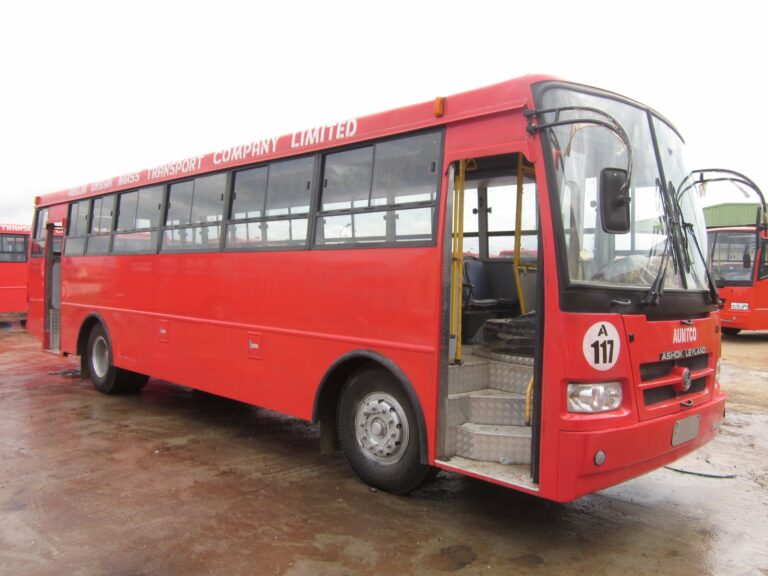
THE Federal Capital Territory Administration (FCTA) says it will revive the Abuja Urban Mass Transport Company Limited (AUMTCO) buses to address the transport challenges within the FCT.

According to a statement by the director of press, Office of the Minister Anthony Ogunleye on Tuesday, August 29, FCT Nyesom Wike disclosed this after a meeting on Monday, August 28.

He also disclosed that the administration will introduce bi-weekly sanitation programmes in the city, which will enable residents to keep the environment clean.

“The Minister revealed that there are plans to dedicate two Saturdays in a month as environmental sanitation days to allow residents to clean up their environment, saying that ‘Abuja must be clean’ and called for the cooperation of all residents in this regard,” the statement read.

Transportation and sanitation have been major challenges experienced by residents of the FCT.

In 2021, The ICIR reported that poor planning led to the failure of the AUMTCO transport scheme, leaving many residents to battle with an inefficient transport system resulting from the rising population of residents.

The AUMTCO commenced operations with over 500 high-capacity buses procured at a total cost of about N1.3 billion, deployed on designated FCT routes, including Abuja-Mararaba Abuja-Bwari, Abuja-Kuje, Abuja-Gwagwalada and Abuja-Suleja and the city centre.

However, many of the buses are currently out of use and can be spotted parked at the AUMTCO head office in the Kubwa area of the FCT.

Head of Administration and Human Resources AUMTCO Musa Bello told The ICIR that the centralisation of government offices in Abuja city areas was one of the reasons the company could not break even and is currently running at a loss.

He also said that the cost of maintaining the buses was too high, which made it difficult for the company to repair broken-down vehicles, issues that could have been resolved through better planning.

The ICIR also reported that an absence of garbage bins within the FCT was worsening waste disposal problems and resulting in more refuse heaps across the city.

Wike also disclosed that contractors will be mobilised to return to the sites of ongoing and abandoned projects in the FCT.

N826m approved for resettlement of Jiwa residents

The FCTA has also approved almost N826m as compensation for residents of the Jiwa community, who will be affected by the construction of the second runway of the Nnamdi Azikiwe International Airport, Abuja.

Wike stated that the sum had been made available for disbursement and that affected residents would receive payment in a matter of days.

“As we leave here, the Federal Capital Territory, through the FCDA, will release the money approved for compensation and resettlement of those who are there. The total value of what we are paying is N825, 819,911.43 (Eight hundred and twenty-five million, eight hundred and nineteen thousand naira, Nine Hundred and Eleven Naira Forty-Three Kobo) for the compensation and resettlement,” he said.

He also added that ten Jiwa indigenes would be employed by the FCTA as part of the compensation to members of the community, and construction of the Tunga Madaki bridge will be included in the FCT’s 2024 budget.

“Secondly, we are going to provide for the community a modern healthcare facility that is better than what is there now,” Wike further promised.