PRESIDENT Bola Ahmed Tinubu has approved the appointment of Mojoyinoluwa Dekalu-Thomas as the new Managing Director (MD) and Chief Executive Officer (CEO) of the Nigeria Electricity Liability Management Company (NELMCO) for a term of four years.
The Special Adviser to the President on Media and Publicity, Ajuri Ngelale, disclosed this development in a statement issued on Friday, August 25, 2023.
The NELMCO, it would be noted was created by the Federal Government to manage the non-core assets of the defunct Power Holding Company of Nigeria (PHCN).
The assets include power plants, land, buildings, and other infrastructure that were not sold during the privatization of the power sector in the country.
NELMCO was, therefore, mandated to manage and dispose of these assets transparently and efficiently.
Mojoyinoluwa Dekalu-Thomas has served as the Acting Managing Director of NELMCO since the tenure of pioneer NELMCO Managing Director Adebayo Fagbemi ended on May 8, 2023.
Accordingly, her previous interim role and new substantive appointment has created a vacancy at her previous position: Executive Director, Liability Management.
In a related development, President Tinubu has approved the appointment of Dimla Joel Nchinney to serve in NELMCO as the substantive Executive Director of liability management.
“By these directives of the President, these appointments take immediate effect”, Ngelale said.
THE Chief of Defence Staff (CDS) Christopher Musa, has vowed that the military would avenge the death of all the soldiers in the recent terrorist attacks in Niger state.
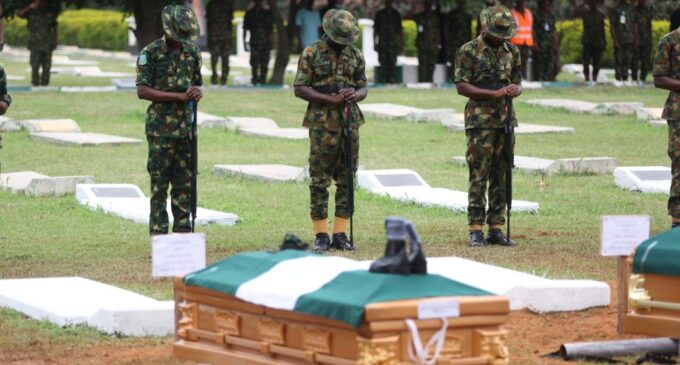
Musa said this on Friday, August 25, in Abuja, at the burial of 20 military personnel, who died during the combat with bandits and aircraft crash in the state.
He described the deceased as the frontlines of peace and guidance of freedom, stressing that their selflessness and unwavering dedication to the security of the country would leave an indelible mark in their hearts and memories.
The incident which happened in Zungeru and Chukuba, both in Niger State, resulted in numerous casualties, as the Nigerian Army confimed that three officers and 22 soldiers were killed in an ambush in the Zungeru general area while seven personnel were injured.
Also, the Nigerian Airforce (NAF) helicopter which was on a mission to evacuate the deceased and wounded troops was allegedly taken down by bandits at Chukuba area of Shiroro Local Government Area of the state on August 13, 2023.
The crashed helicopter, was carrying 14 of the 22 bodies of the previously killed soldiers and seven wounded ones, two pilots and two crew members, resulting in a total loss of 36 lives.
“Our troops entered into an ambush in the general of Shiroro Local Government Area of Niger state. The ambush led to a firefight which resulted in the death of three officers and 22 soldiers, while seven were wounded in action. As a result of this, there was a need for us to embark on a casualty operation whereby the Air Force helicopter was dispatched.
“While that process was on and inbound to Kaduna, the helicopter crashed. In the crash were 14 of the previously killed in action personnel in that ambush, seven of the previously wounded in action personnel, two pilots of the helicopter and two crew members. ”
The ICIR earlier reported that terrorists affiliated to Abubakar Abdallah, popularly known as Dogo Gide, claimed responsibility for the Nigerian Air Force (NAF) helicopter that ‘crasheď in a video obtained by WikkiTimes on August 16.
Addressing the gathering on Friday, the CDS said, “We stand here today to honour their courage, dedication and commitment to duty. Their lives were abruptly taken from us in the line of duty. We gather to celebrate their lives and extraordinary contributions to our beloved nation. We are gathered here today not as grieving family members, friends and colleagues but as a nation united in sorrow.”
The CDS vowed that the sacrifices of the deceased personnel to their nation would not be in vain, emphasizing that the troops would continue the battle against insecurity as a tribute to their memory.
“In the midst of this tragedy, we must remember that their sacrifice was not in vain. These brave men and women laid down their lives so that we could live in peace and security. They fought on the front line, ensuring that the flame of hope and liberty continued to burn bright in our nation. Their courage and dedication will forever be an inspiration to all who follow in their footsteps, “Musa said.
Musa also assured the family of the deceased of support in any possible ways, noting that they are not alone in their grief.
“To the families who have lost loved ones, we offer our deepest condolences. We cannot begin to fathom the pain and sorrow that we are experiencing. Deep in your heart, know that you are not alone in your grief. The entire nation and the Armed Forces know you and are ready to support you in any possible ways.”
He, however, ordered all commanders and troops of the Nigerian Army to hunt down and bring to justice, all terrorists, bandits and enemies of the state.
He added: “To the bandits, terrorists and perpetrators of violence who seek to sow the seed of fear among the people, know that our resolve will not waiver,” Musa said. “We will hunt you and bring you to justice. I will restore peace and security to every corner of our nation.
“Your actions may cause pain and suffering, but they will never extinguish the spirit of unity and resilience that binds us. I promise you, we will not relent until we get all those causing havoc in this country.”
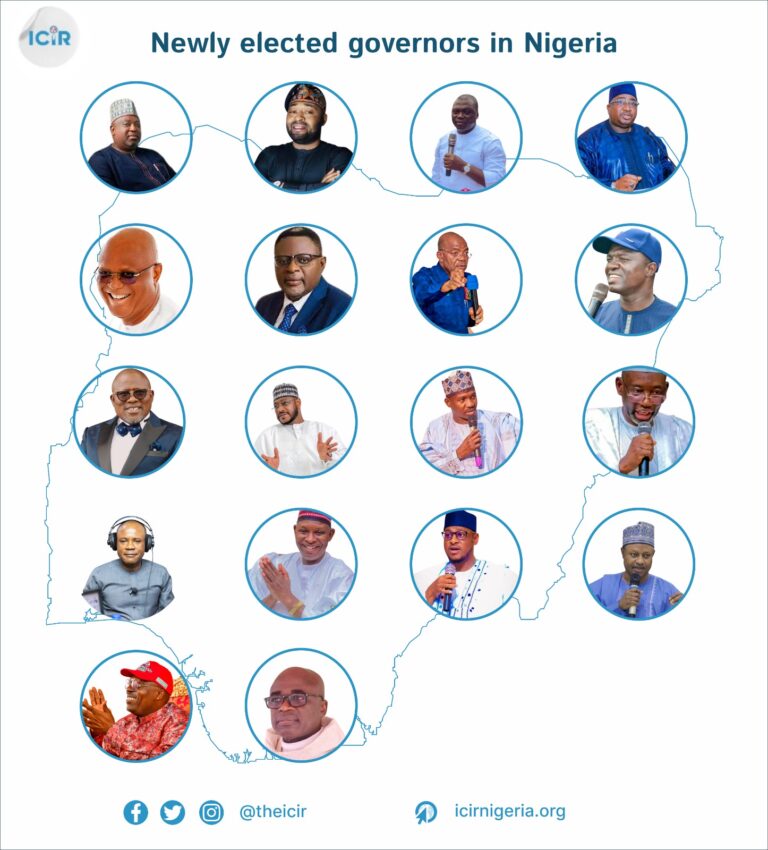
BARELY three months since the assumption of 18 newly elected governors into office, 17 state governors have inaugurated over 350 commissioners into their executive council.
The governors were sworn in on May 29, 2023,following the conclusion of the 2023 general elections.
The appointment of commissioners was in accordance with section 192 of Nigeria’s Constitution, which grants the state governors the privilege to create the offices of commissioners of government upon approval by the State’s House of Assembly.
Accordingly, Section 42 of the constitution, as amended by President Buhari, mandates the president and state governors to appoint ministers and commissioners within 60 days after they are sworn into office.
The ICIR findings showed that a combined total of 363 commissioners have been inaugurated and assigned portfolios by the state’s governors.
These 17 states are Kebbi, Zamfara, Sokoto, Niger, Kaduna, Katsina, Jigawa, Kano, Plateau, Taraba Enugu, Ebonyi, Cross River, Abia, Rivers, Akwa Ibom, and Delta states.
However, Benue state governor Hyacinth Alia, is yet to inaugurate commissioners. Recent developments showed that the governor had transmitted a list of 14 nominees to the state’s House of Assembly for screening and confirmation.
Recall that The ICIR had captured key decisions made by the new governors 20 days after being inaugurated into office. Several of these decisions included the revoking of appointments made by preceding governors, the demolition of structures, the appointment of advisers, the inauguration of state assemblies, and the payment of outstanding allowances among others.
Breakdown by state
The data collated by The ICIR showed that Ebonyi, Cross River and Niger states appointed the highest number of commissioners into their executive councils, while Rivers and Kaduna have the least appointments made.
In the Northwest region, the state governors of Sokoto, Kebbi, Zamfara and Katsina inaugurated 25, 26,18 and 20 commissioners in their respective states. Also, Kano, Jigawa and Kaduna appointed 19, 16 and 14 respectively commissioners into the state.
Similarly, in the South-South region, Cross River, Akwa Ibom and Delta states appointed 31, 23 and 26 commissioners to the state’s executive council.
Meanwhile, River state governor Siminalayi Fubara, barely two days after his inauguration, swore in four commissioners (Works, Justice, Education and Finance) into the state’s council chambers, urging them to deploy their wealth of experience into various positions they have been appointed.
In the North Central, the Niger and Plateau state governors, Mohammed Umaru and Caleb Mutfwang, swore in 30 and 18 commissioners in their state respectively.
For Taraba state, in the Northeast, Governor Agbu Kefas inaugurated 22 commissioners into his cabinet, charging them to deploy their energy in moving the state forward.
While in the Southeast region, Abia, Enugu and Ebonyi states inaugurated 16, 20 and 35 commissioners each into their respective states.
While the law does not restrict the number of commissioners a state governor can appoint to his council, there are concerns about the cost of governance increasing if more people are appointed to serve in executive offices.
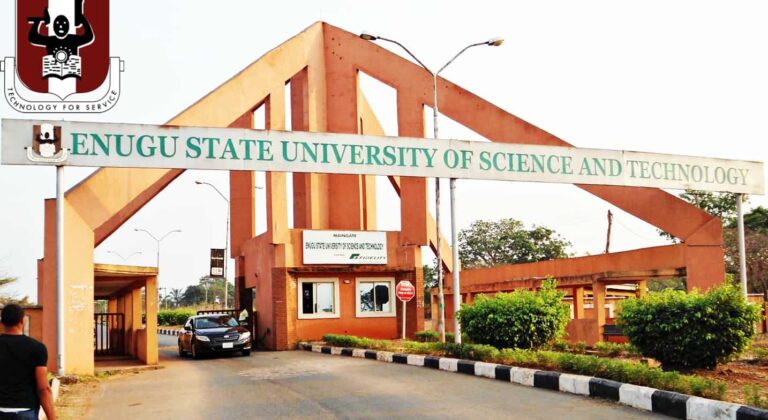
THE management of the Enugu State University of Science and Technology (ESUT) is being accused of negligence and an attempt to cover up the details that led to the death of several students with some putting the numbers between 9 and 13, however, the school confirmed only five deaths.
The deaths which releavnat stakeholders have described as tragic has caused anxiety among students and staff of the university. A student who spoke to the reporter said that he has personally heard stories within the university of at least nine students who have died as a result of the outbreak of the disease.
School administration accused of negligence
In reaction to the the National Association of Nigerian tudents (NANS), Zone F, South East, said It also it would not stand idly while the lives and welfare of students were endangered.
In a statement, NANS said that its investigations have shown a high level of negligence on the part of the school administration, ranging from non-functional medical centre which it says is a major factor for the “unfortunate death of students”.
The student (earlier mentioned) who spoke to this reporter also said that the situation could have been worsened by the lack of a functional medical centre in the institution where students cannot go and have their health properly examined and medication administered.
He said that at times of emergencies, students either have to run to Enugu town or resign to fate because the centre opens at 8am and closes at 6pm, with the workers showing poor attitude to work.
“They workers are always complaining about how they are not being paid, hence their lacklustre attitude to work”, he said. “The centre also lacks medication and this has been the situation over the years”.
Call for university closure
The nation student body -NANS zone F- called for the immediate closure of the university.
“In the light of these disturbing findings, the leadership of NANS Zone F has decided to order the immediate shutdown of the institution from tomorrow being 24th of August 2023, till further notice,” the statement read. “This action is necessary to allow us to engage in extensive meetings with relevant stakeholders including the university management, medical experts, security agencies, and student representatives”.
The association warned that failure to shut down the institution with immediate effect, will compel it to escalate actions as its leadership is committed to protecting the rights and welfare of Nigerian students.
“We will not stand idly while the lives and welfare of our students are endangered, as we seek a quick intervention to this crisis, we urge all our students in ESUT to return to their respective homes where they will be safe till further notice.”
ESUT’s SUG disclaimer
The president of ESUT’s Students Union Government (SUG) Donatus Okolieuwa described NANS reaction cashing on the situation to score political goals.
“It’s quite despicable and an aberration for somone to cash into such incident without proper finding, just to score politcal goal”, he said in the statement issued.
He also queried the intention of NANS, asking if the objective is to cause panic.
Okolieuwa urged students to disregard the call for a shutdown and “go about their normal academic activities in the school as the SUG leaders are already taking drastic measures on this matter.”
School management reacts
While sources say the casualties is between 9 to13 the school management puts the figure at five while noting that only one of the five was an on-campus student.
In a statement on Wednesday, August 23, the dean, student affairs of the university, a professor Jude Udenta said that the five include two students who died in their lodge and another two cases who were said to have died of certain “undisclosed ailments which they tried to tackle, in town, through self- medication” and one through a road mishap – this is the on-campus student.
“The cases are still under investigation but immediately we got the information, we held meetings with our security committee on these matters” Udenta said, referring to the students who died in their lodge. “We asked them to sensitise all Off-Campus students about the use of generators and such other possible risk factors”.
In the statement, Udenta also said that the school administration has also reached out to pastors asking for forgiveness and for divine intervention in regard to an end to such tragedies.
The dean said that rather than declare a shut down-which is of questionable integrity and, accordingly, null and void, NANS zone F should have pursued an appropriate synergy based on consultation and consolation.
When contacted, public relations officer of the University, Ikechukwu Ezeanioma said that the stories of deaths are unfounded. He said that the state governor, Peter Mbah, sent a team led by the Secretary to the State Government which visited to inspect facilities at the school’s medical centre together with the vice-chancellor and other stakeholders.
“We have not recorded any death of any student at the medical centre and there has not been any outbreak of disease, those stories were simply made up by people with ulterior motives. The government is investigating the reports to find out where they are coming from”.
State government embarks on fact-finding mission
The secretary to the state government (SSG), a professor Chidiebere Onyia, during the visit to the university said the commissioner for health has been directed to investigate the school’s medical facility.
He said, “The governor is concerned and has asked that we come here for a preliminary fact-finding mission concerning what we have read on the social media, and a few of them was also communicated to us directly as it regards the concerns they have about the medical facilities.
“He has asked us to find out what is going on with the state of the facilities and the veracity of a few comments made on social media through the National Association of Nigerian Students (NANS). So, we have decided as a government, to visit to make sure that we are open to getting information from students, and from the citizens generally.
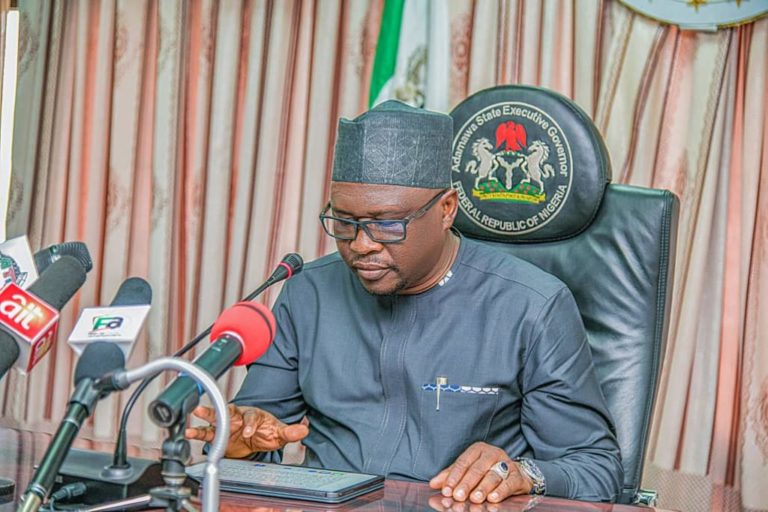
FIVE months after being re-elected into the office for a second term, the Governor of Adamawa state, Ahmadu Finitiri appointed two special advisers, 10 senior special assistants and 35 special assistants to his media team.
Fintiri said that the team would play a crucial role in enhancing our communication efforts and strengthening our public engagement but this announcement received backlash from the public.
Section 196 of the 1999 Constitution empowers a state governor to appoint any person as a special adviser (SA) to assist him in performing his [the governor] functions. While the law does not state clearly how many SA’s can be appointed by the governor, it says that “the number of such Advisers and their remunerations and allowances shall be prescribed by law or by resolution of the House of Assembly of the State.”
The ICIR findings showed that the governor might be paying over N17.9 million to offset the monthly salaries of two special advisers and 45 special assistants (this is a total of N214.5 million annually). These calculations were based on the remuneration approved by the Revenue Mobilisation, Allocation and Fiscal Commission (RMAFC) if a review has not been made.
According to the commission, each special adviser earns N380,241.76 monthly and N4.6 million annually. The assistants are also entitled to other allowances like accommodations, furniture estacodes, medical, severance gratuity, leave and motor vehicle loans, which are paid based on application.
Also, an SA is entitled to receive a duty tour allowance (travelling allowance) reviewed by the former president, Muhammadu Buhari, based on your grade level.
Although there are no clear breakdowns between what an SSA and an SA earn monthly, it is assumed that their remuneration would be different, which might increase the payment above N17.9 million monthly.
This N17.9 million monthly payment does not capture other allowances, nor does it capture the salaries and allowance of aides that are not under media.
There have been growing concerns over appointments and allocation made by public officials and how it increases the cost of government. The ICIRreported on N110 billon palliative and N218 million holiday allowance for lawmakers and how the funds can improve some sectors of the economy.
As what is obtained in Adamawa, experts told The ICIR that the remunerations of these assistants could ameliorate several challenges facing the state.
This report intends to capture the financial sustainability ranking of the state with a look into the state’s budget and how the remunerations of these assistants can solve some socio-economic issues confronting the state.
Poor sustainability ranking
In 2022, BudgIT, a civic society organisation, ranked Adamawa state low on debt sustainability. The state scored 33 out of 36 states ranked by the organisation.
The report captured that Adamawa increased its personnel cost by 25.07 per cent from N27.84bn in 2020 to N34.82bn in 2021 as against the capital expenditure, which increased by 15.43 per cent from N21.30bn spent in 2020 to N24.59bn in 2021. There are projections that the personnel cost might increase in 2023 due to the recent appointments.
“It is not clear why a state that needs to fix its management of scarce resources would decide to take up a burden that would impoverish the state purse. It might be necessary for the State House of Assembly to propose a bill to limit the number of Special Assistants that a Governor can have,” Vahala Kwagwa, senior research & policy analyst for BudgIT, told The ICIR.
Poor socio-economic growth
Amidst the concerns about the appointment, Adawama state also ranks low on several socio-economic indicators. In 2021, the World Bank said the state had the highest poverty rate in the Northeastern region.
According to the Multidimensional Poverty Index report released by the National Bureau of Statistics, as of 2020, during the COVID-19 pandemic, over 2 million people (54.9 per cent) were reported unemployed.
Also, a report captured how hospitals in the state face a shortage of staff, water supply, poor power and inadequate equipment to attend to patients. The state’s capital, Yola, has also been known to have a lingering water crisis, which Fintiri promised to address.
Meanwhile, The United Nations Children’s Fund (UNICEF), also said 71 per cent of schools in Borno, Adamawa and Yobe states that are operating with unqualified teachers.
What the monthly N17.9 million media aides salaries can do?
The ICIR examined the 2023 Adamawa Budget, using it as a benchmark to explain how N17.9 million can offset some capital expenditure.
Findings showed that the amount can offset the proposed construction and provision of fire fighting stations in the state valued at N17.7 million, or the rehabilitation and repairs in electricity and housing sector valued at N5.1 million and N10 million, respectively.
It can also offset expenditure on rehabilitation and repairs of traffic street lights, plant and equipment and agricultural equipment budgeted at N10 million, N17.4 million and N19 million, respectively.
To put it into context, the state government allocated N9 million for the drilling of a borehole and overhead tank at the HASC complex. This means, about two boreholes could be drilled from each monthly remuneration and about 22 boreholes in a year.
Also, N25 million was budgeted for the construction of 3 classroom blocks in GDSS Yadim. By this, the annual remuneration of these assistants can construct eight classrooms with less than two months salaries.
Kwagwa said, “Where the state raises the cost of governance without a corresponding increase in revenue generation, these would all lead to higher debt. This is because the state would not be able to pay back its debts as and when due.
“But where the state raises its revenues efficiently, invests in programs and projects that empower its citizens and uses the revenues it has judiciously-it would optimise the cost of governance. The latter is something that every state should focus on.”
Stormy ride
Several reports have been published by The ICIR documenting misappropriation of funds, allocations and socio-economic issues facing the state.
For instance, this report captured how a deplorable road deprived the state of investment despite several allocations released for its rehabilitation.
Another report exposed how an N43.5 million COVID-19 testing centre was awarded to a non-existing company while an investigation looked into some unresolved issues and allegations surrounding the implementation of the Anchor Borrowers Programme by the Central Bank of Nigeria to beneficiaries in the state.
THE Federal Road Safety Corps (FRSC) in Oyo State said 146 persons died in various road traffic crashes in the state between January and June 2023.
The FRSC also said 618 persons sustained varying degrees of injury in 246 road crashes recorded within the period.
The state sector commander of the corps, Joshua Adekanye, made this known to the News Agency of Nigeria on Friday, August 25, in Ibadan, the state capital.
Giving the breakdown of the incidents, he mentioned that in January, 15 individuals tragically lost their lives. The numbers continued with 15 in February, 23 in March, 24 in April, 45 in May, and 24 in June.
He further explained that investigations uncovered several causes for these accidents, including speeding, driving while under the influence of drugs or alcohol, and mechanical faults, among other factors.
The sector commander urged drivers against reckless driving, adding that the command had intensified enforcement and public awareness campaigns at motor parks, churches, and mosques.
He said, “We also seize every available opportunity to talk to the general public about the factors that can lead to road crashes and how to avoid same.
“We also make use of radio, print and social media to pass the message across to the general public. We also partner traditional leaders to talk to people in their domain on how to avoid factors that can lead to road traffic crashes.”
On April 15, the Federal Road Safety Commission (FRSC) disclosed that 1,349 people were killed in road accidents across the country between January 1 and April 12, 2023.
While noting that 2,463 crashes occurred during the period, the Commission said the crash involved 3,965 vehicles conveying 16,102 people.
Out of that number, 1,349 people were killed, while 7,744 got injured.
However, in another report on May 16, FRSC disclosed that about 40,000 people die annually from road crashes in Nigeria, according to the Federal Road Safety Corps (FRSC).
MORE lecturers in various schools across the country are being indicted or sanctioned for sexual harassment following recent protests by law students of the University of Calabar (UniCal) in Cross River state against the law faculty dean, Cyril Ndifon.
Following the protests, Ndifon was suspended by UniCal, his second suspension for alleged sexual assault since 2015, when a final-year law student accused him of raping her in his office.
Ndifon’s suspension took effect on August 17, the same day Nnamdi Azikiwe University (UniZik), Awka, Anambra, handed warning letters to two lecturers of the Department of Theatre and Film Studies, MacDonald Abunike and Somto Umobi, over allegations of sexual harassment.
The warnings resulted from allegations of sexual harassment made by an anonymous student of the department against the lecturers.
“I’m broken. I am tired of his harassment and cruelty. I don’t know what to do anymore. Everyone fears him. He’s the real HOD. Dr. Somto is too weak to help. And they share the same values and secrets. Sex, indiscriminate sex with students. Body touching in the office is ok. Forceful sex in the office. Invitation for sex or threats. Embarrassment and intimidation for delay in cooperating.
“HOD will ask, try to force himself on you. He left me when I cried. I know he has a little heart, even when it’s immoral. Abunike is different. He boasts a lot. ‘Do you know how I came here?’ He brags about how he bought the job. Are we girls his reward?” the message read in part.
Umobi, who was also Head of Department (HOD), was made to relinquish the position to another lecturer Nkemakonam Aniukwu, who now serves as Acting HOD.
Emmanuel Ojukwu, Media Adviser to the University’s Vice-Chancellor, confirmed the incident to The ICIR.
“It is true that there are online allegations of sexual harassment, yes. And the University has, based on what is going on, called the affected lecturers and issued warning letters to them, that is one. Two, the vice chancellor has asked those circulating the allegations to come forward.
“The problem we have is that they usually do not want to come forward. So, because of that, we have issued warning letters to the lecturers and then removed them from all official positions they are holding,” he said.
He noted that the school held meetings with lecturers accused of sexual harassment in affected Departments to issue last warnings and communicate the school’s stance against such issues.
“In fact, if the affected students agree to come forward, we will just send those people away. This is not the first time, but the problem we have is that the students cannot come, even privately, to confide in us,” Ojukwu said.
He noted that the school was committed to getting to the root of the issue.
“We will get the information. We are sure that over time, the students will be able to trust us. We must protect the students,” Ojukwu said.
A statement by the Acting HOD on August 20, which was sighted by The ICIR, disclosed that conversations had begun between students and authorities of the department.
“I want our students to be happy and proud. And the journey has begun. We have already started by meeting with the students and creating solid platforms where grievances, sexual abuse, harassment, exploitation, victimisation, etc, will be handled,” Akonam noted.
The sanctions, which some describe as lenient, were issued because no evidence was presented to support the anonymous claims.
The UniZik students contacted by The ICIR also failed to speak on record for fear of being victimised by lecturers or their cronies.
A report by FIJ showed how lecturers frustrate students for having issues with their cronies.
However, many ex-students have indicted other UniCal lecturers following the protests by the Law students.
“Only him? How about his other co-conspirators; Frank Enor, Otora Agbor, Elvis Okorn, and Okoi? Let’s include these notorious sex-for-grades lecturers in the conversation,” a Twitter user, Chief Ire, posted.
Another user, Onyinyechikwu, posted: When you people are ready, we will discuss Maxwell Eba.
While Ndifon, Abunike and Umobi merely got suspension and warning letters, two lecturers at the University of Abuja (UniAbuja) were dismissed about a month ago for similar reasons.
Although the lecturers were not named, UniAbujaVice-Chancellor Abdul-Rasheed Na’Allah disclosed that they were academic staff dismissed over allegations of sexual assault.
Many rural communities in Sokoto state are at risk of an outbreak of diarrhoea and other diseases due to an acute shortage of potable water. This is in spite of multi-million naira constituency borehole projects purportedly facilitated by federal lawmakers representing the people. ABDULWAHEED SOFIULLAHI, who visited a number of communities, reports that the 2020/2021 projects benefited the people for just a short time. Two years after the execution, he found none of the boreholes was functional.
OVER the past three weeks, Ibrahim Shuaibu, 35, finds himself in agony, often writhing on the dusty floor, desperately seeking relief from the relentless pain torturing his body.
Unlike others who hide their sufferings, Ibrahim is unable to conceal his pain, as he witnesses a distressing transformation in his body. Every time he drinks the tainted rainwater collected from an open-dug land, his private part swells, causing ominous consequences.
In Kyadawa Community, in the Gada LGA of Sokoto State, water, a crucial necessity for life, has become more valuable than petroleum. Last year, when scarcity hit the community, leaving residents thirsty and desperate, they came up with a bold plan to dig the land and collect rainwater to create a reservoir for their needs.
However, as time went by and the contaminated water flowed through their bodies, a sinister sickness gripped the entire community. People suffered from unfamiliar illnesses, primarily marked by painful diarrhoea and persistent typhoid fever. Tragically, due to inadequate care, many lives were lost. For Ibrahim, the cause of his suffering remained a mystery to everyone.
“It was only a year ago that I first noticed the swelling in my private area,” Ibrahim recalls, his words filled with raw agony.
Seeking relief, he travelled to Sokoto town and shared his troubles with a sympathetic doctor. The doctor, moved by Ibrahim’s plight, offered a glimmer of hope through medication but also warned him to avoid the deadly water.
“Stop drinking this contaminated water,” the doctor cautioned, emphasizing the seriousness of the situation.
Yet, Ibrahim felt trapped, with no alternatives. Giving up this water meant giving up sustenance itself. He faced a heartbreaking dilemma: endure the swelling and torment or cut ties with the water entirely. As a result, his private area continued to swell, and Ibrahim’s tears flowed freely, reflecting his unending anguish.
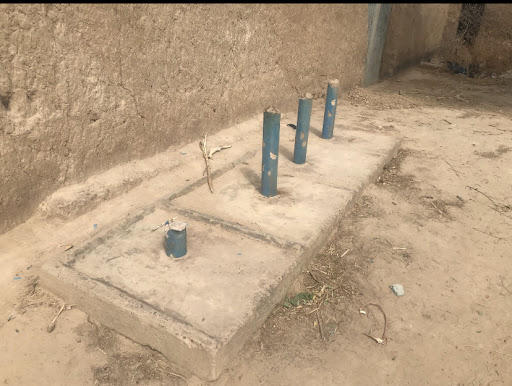
Damaged borehole at Awakkala Village, Goronyo. Photo: Abdulwaheed Sofiullahi
Damaged borehole at Awakkala Village, Goronyo. Photo: Abdulwaheed Sofiullahi
In the village of Awakkala, located in Goronyo Local Government Area, Sheu Malami, a man in his mid-50s, shares a heartfelt story of water scarcity. It affects his community, located approximately 78 kilometers away from Shuaibu’s home in Gada LGA. Malami vividly describes how this dire situation has impacted their lives. In 2021, a borehole brought them hope and relief as clean water flowed freely, bringing back their smiles.
Sadly, their joy was short-lived when the borehole abruptly stopped working just five months later. Since then, they have been forced to rely on a contaminated well, which has caused harm to Malami’s health and that of his fellow villagers.
“We’ve been plagued by infections, particularly water-borne diseases,” he laments.
The impoverished community struggles to gather funds for the borehole’s repair, reaching out to politicians for help, but their pleas have been ignored.
The tale of water scarcity unfolds further in the Tartakoi Community, also situated within the Gada LGA, where Aishatu Umar resides. Aishatu, a mother of five children, endures an ongoing battle with an unexplained fever. Little does she know that the root cause of her ailment lies in the very water she drinks from – the water from the nearby stream.
In 2021, the community had the privilege of drinking from a newly constructed source of clean water. Unfortunately, this precious lifeline ceased to function merely three months after its installation. Since then, the villagers have been left with no choice but to rely on the stream water as their sole source of sustenance.
Damaged borehole at Tartakoi Community, Gada LGA Photo credit: Abdulwaheed Sofiullahi
This stream water, used for washing clothes, cooking meals, and even consumed by their cows, has become a necessity borne out of desperation. Aishatu yearns for an alternative, knowing the toll it takes on her health. Yet, she finds herself trapped, with no other viable option but to continue consuming it.
According to a 2022 World Bank assessment, 114 million Nigerians lacked access to basic sanitation facilities in 2021, and another 70 million lacked access to clean drinking water. Research conducted by the Africa Water Development Project (RAWDP), confirmed that Sokoto is the only state in Nigeria with the lowest level of access to clean water.
UNICEF reports that in Nigeria, diseases like diarrhoea caused by contaminated water claim the lives of over 70,000 children under the age of five each year. Additionally, WHO data reveals that more than 45,000 children under five die annually due to diseases resulting from inadequate access to water, sanitation, and hygiene.
Rural residents once smiled, drinking from the poorly executed constituency boreholes
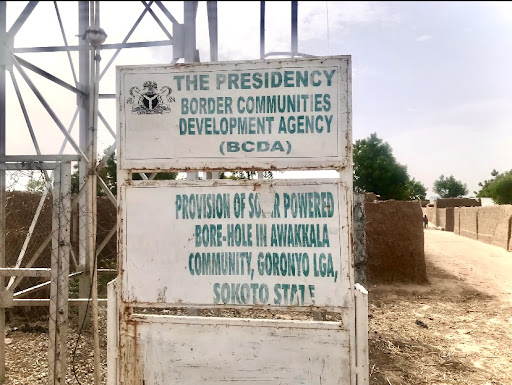
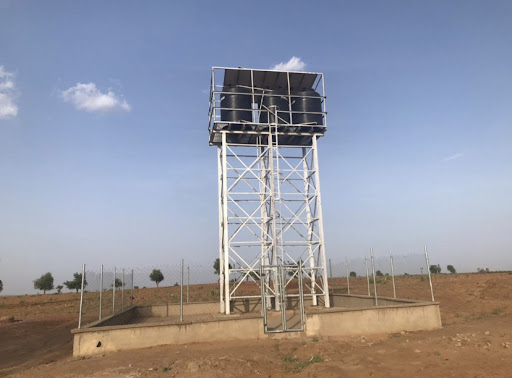
In the rolling countryside of Sokoto state, a tale of water woes has haunted the rural communities for years. The hardships faced by these residents, deprived of clean, drinkable water, seemed endless. However, a glimmer of hope emerged in the form of Honorable Musa Sarkin-Adar, the former lawmaker representing the Gada/Goronyo federal constituency. In 2020, as part of the Zonal Intervention Project (ZIP), he championed a noble cause—the provision of three solar-powered boreholes, two for Gada and one for Goronyo LGA.
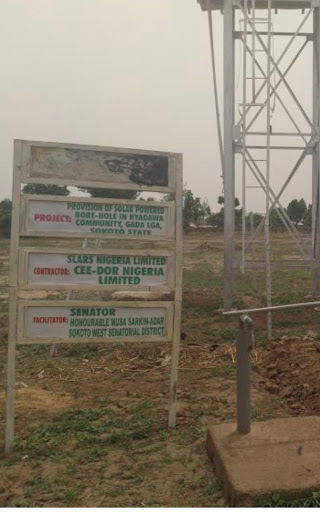
With a budget of N30 million allocated for this ambitious endeavour, the project found its place under the watchful eye of the Border Communities Development Agency (BCDA), facilitated by the Office of the Secretary to the Government of the Federation (SGF). Cee-dor Nigeria Limited, entrusted with executing the project, received a payment of N29,838,481.81.
Damaged borehole billboard at Kyadawa community, Gada LGA.
Fortune smiled upon the community of Gada, as the two boreholes designated for the area found their homes in Shuaibu’s community at Kyadawa and Mallami’s community at Awakalla while one borehole was drilled at Aishatu’s community at Tartakoi.
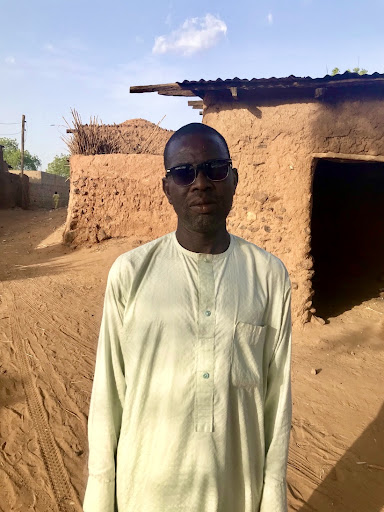
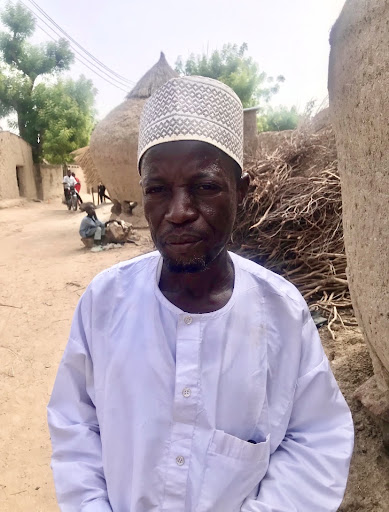
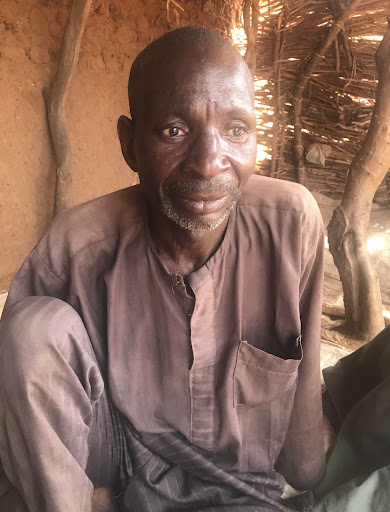
In the heart of Awakkala village, the community leader Ibrahim Marafa witnessed the fulfilment of a long-awaited dream in 2021 when the borehole was finally completed. The residents rejoiced as the thirst for clean, potable water was finally quenched after two decades of denial.
Awakkala village leader, Ibrahim Marafa
Photo credit: Abdulwaheed Sofiullahi
However, this newfound oasis was short-lived. Barely nine months after its commissioning, the borehole suffered catastrophic damage, plunging the community back into the depths of drinking dirty stream water.
Disheartened, Marafa lamented, “We have been enduring the hard journey of obtaining potable water since the borehole was damaged nearly two years ago. Our relentless efforts to restore it have been in vain. We appealed to the local government chairman, who promised repairs, but nothing has been done. Our people suffer from water-borne diseases, vomiting, and diarrhoea. We remain trapped, longing for relief, but uncertain of when it will come.”
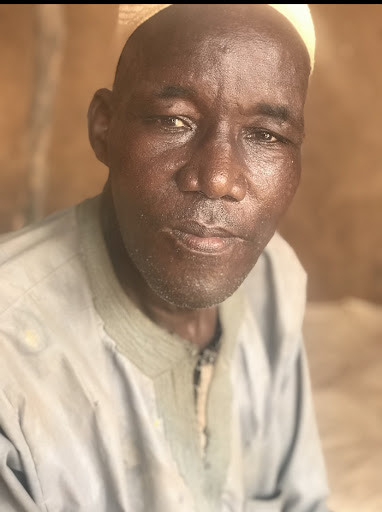
Tartakoi, under the leadership of Hashimu Abubakar, faced a similar tale of despair. The borehole that was installed with hope in early 2021 worked for only six weeks before failing, leaving residents in dire need. They rallied their resources, some even selling their belongings, while others borrowed generators, all to revive the source of clean water.
Tarkoi Community Leader, Hashimu Abubakar. Photo credit: Abdulwaheed Sofiullahi
Abubakar expressed their plight, saying, “We were excited when Honorable Musa facilitated this borehole, giving us access to clean water. But when it stopped working, we went back to consuming dirty water, causing diseases. We pleaded with the government for help. If the solar system can’t be fixed, we ask for a larger generator to power the borehole.”
Adamu Shuaibu, a resilient leader of Kydawa, shared a heartbreaking tale that moved hearts. For over a year, the whole community had laboured tirelessly, digging the earth in search of life-sustaining water. Sadly, their efforts yielded only two gallons of contaminated water. Undeterred, they turned their efforts to a patch of land beside the road, hoping for a different outcome. However, after a week, the water dried up.
The agony on Shuaibu’s face, at 53 years old, reflected the experience of his people.
“See the magnitude of our water-related suffering,” he sighed, recounting their plight. “We endure unimaginable hardships, digging tirelessly, seeking solace in every shovel’s turn.” His voice faltered, revealing the depths of his pain.
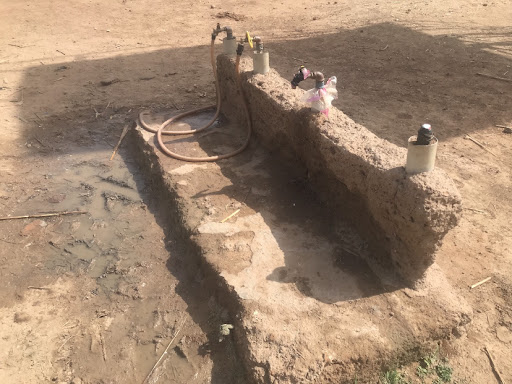
Next to the road, where individuals pedal bicycles or ride donkeys, there is another excavation—an emblem of hope amidst their challenges. This reservoir is created by carving the land, patiently anticipating the rainfall’s touch and when it falls, it transforms into a reservoir that saves water for the community’s necessities. Unfortunately, the stream that was once dependable now contains dirty water, satisfying the thirst of both humans and animals. Consequently, the community experiences health issues, fevers, and other perplexing illnesses, affecting both people and animals alike.
More poorly executed boreholes fuel water scarcity
Yahuza Umaru, 43, starts his day at the crack of dawn, rousing his family from their slumber at 6.00 a.m. to embark on a relentless search for water. Their home, located in Kantaore Community in the Gada Local Government Area, is no stranger to the merciless attacks by bandits. And if the constant trauma of insecurity weren’t enough, a devastating water scarcity looms over their heads, casting a shadow of sorrow upon their lives.
“We used to have a borehole in our community that quenches our thirst and keeps our lives running smoothly,” Yahuza recalls with sadness. “But everything changed in 2021 when the borehole suffered a serious problem. Since that day, we have been in a constant struggle for water.”
Damaged borehole at Kantaore Community, Gada LGA. Photo credit/Abdulwaheed Sofiullahi
The entire community shares Yahuza’s sorrow, waking up each morning with tired eyes, desperately searching for murky water, hoping to survive. They say that their collective hardships have not only led to innocent residents being kidnapped but also resulted in the loss of precious lives.
“I can’t find words to express how this water scarcity has caused us endless troubles and taken the lives of dear friends,” Yahuza adds, his voice filled with grief.
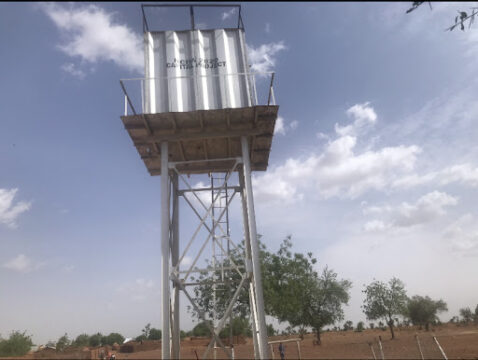
In 2020, the lawmaker representing Gada/Goronyo sought to alleviate the community’s suffering by facilitating the provision of motorized boreholes with fournos plastic tanks and generators at the Gada/Goronyo federal constituency, complete with four plastic tanks and generators. Among the fortunate recipients was the Kantaore community, where Yahuza resides. In early 2021, a sum of N6.5 million was allocated to Real Concrete Nigeria Limited to undertake the project, under the watchful supervision of the Sokoto Rima River Basin Development Authority.
Several attempts to speak with the SRRBDA weren’t successful, as the agency didn’t have a public relations officer, and after several visits to the agency’s location, the reporter was not able to speak with any staff as they said it violated their working rules to speak or release information to outsiders.
However, the community’s dreams were short-lived as the borehole suddenly stopped providing water in December 2021, just a few months after it was built. This has had serious consequences, with the community now facing a water crisis and desperation.
Aminu Abdullahi,43, shares the struggles of his neighbours. “When the borehole was working, it gave us hope as water flowed abundantly,” Aminu recalls. “But when it broke down, we sought help from people claiming to know how to fix it, but their attempts made things worse, pushing us deeper into despair. We had to go back to using our old well, which unfortunately, is not very clean. We faced many diseases and fought hard to keep our loved ones alive,” he explains. “We ask the government to help us and fix the borehole, so we can have water again.”
The Takakume community, located in the Goronyo Local Government Area, faces a similar situation as their neighbors in Kantore. They also received a borehole as part of the same project and from the same contractor. However, like in Kantore, their hopes for a reliable water source were shattered when the borehole in Takakume stopped working just five months after its construction, leaving the residents with a serious water shortage.
Hudu Mohammed, 58, recounts the bitter truth of their predicament
“We waited patiently for nearly three years for the construction of this so-called borehole, only to witness its demise within a year of operation. Each time it faltered, we sought the aid of technicians to fix it, only to find that their repairs were short-lived. We poured substantial amounts of money into these repairs, once even shelling out a hefty sum of N103,000, only to have it malfunction again after a mere two days,” he laments.
“The longest period of respite we had was when it worked for a week, but even then, the technicians constantly babbled about bushings and other mysterious issues. Frustrated by the persistent problems, we eventually resorted to selling our solar panels and pooling our resources to purchase a generator. As you can see, we are willing to adapt and make do with whatever means necessary. Prior to the borehole’s arrival, we relied on a well for our water needs, specifically one powered by a diesel engine,” he explains. “During that time, many fell victim to infections caused by fetching water from the open well. Thankfully, they received proper care and have since recovered. You see, we villagers possess a remarkable ability to adapt to whatever challenges life throws our way.”
The community’s request to the government, while knowing that wishes do not always come true, is for a stronger engine to power the borehole. The solar panels they relied on before have proven to be unreliable and short-lived. The residents want a solution that will last and provide them with a consistent water source.
The struggles of the Takakume community show their resilience in the face of adversity. They remain steadfast and resourceful despite the water crisis. They hope that their plea will reach those in power and prompt them to take action. In tough times, the collective voice of a community can bring about change and improve lives.
BCDA awarded contract to an inactive food-processing company
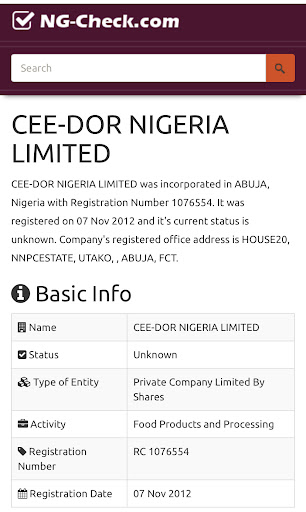
The construction of boreholes, a vital component of the 2020 ZIP project, was allocated to Cee-dor Nigeria Limited by the BDCA. Regrettably, upon investigation through the Corporate Affairs Commission portal, it was discovered that the company was inactive due to the absence of updated annual returns filing. Meaning, the firm has not fulfilled its legal obligations by paying necessary taxes and fees to the government within the stipulated time frame.
Image of cee-dor from ChechNG.
A thorough examination of online procurement portals Check NG and Nigeria 24 confirmed that Cee-Dor Nigeria Limited was initially incorporated in Abuja on Nov 7, 2012. However, the current status of the company remains unclear and the company’s operation is identified as food product and processing. Surprisingly, the company’s registered address, House 20, NNPC Estate, Utako, Abuja, FCT, could not be located.
Nigeria 24 provided the names of the company’s directors as Odufa Osatohanwen Ebalu, Omoathefe Osadebamwen Ebalu, Sandra Oghoreye Ebalu, and Francis Omoathefe Ebalu.
Unfortunately, conducting searches online yielded no results for any of these individuals as the contractor’s company has no online website or social media presence.
Adedeji Adegboyega, Assistant Chief Engineer of Project Development and Implementation at BDCA, addressed the issue of Cee-dor Nigeria LTD being identified as a food products and processing company. He said that the company’s Memorandum of Understanding includes real estate as part of its business scope, which inherently involves construction activities. Although the project dates back to 2020, specific details may not be immediately available, but decisions likely relied on the parties involved.
Habila Bonet, the BCDA’s head of Project Development and Implementation, highlighted that a company with real estate as part of its Memorandum of Understanding would have engineering capabilities. The selection process for contracts is comprehensive and goes beyond mere bidding, various factors are considered, he asserted.
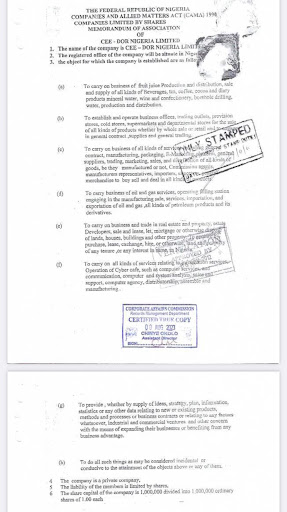
Cee-dor documents received from the CAC. Photo credit: Abdulwaheed Sofiullahi
However, document received from the CAC on Cee-Dor Nig Ltd is contrary to the BDCA’s Engineer’s claim as the company’s MoU doesn’t cover construction. It confirms that the company’s business focus is fruit juice production and distribution. The BDCA Engineer, initially said that the MoU states that the company would engage in real estate, which he interprets to include construction.
His claim is contrary to article 3 (e) under the company’s MoU, which states: “To carry on business and trade in real estate and property, estate developers, sealed lease, let mortgage or otherwise dispose of lands, houses, buildings and other property to acquire by purchase, lease, exchange, hire, or otherwise, land and property of any tenure, or any interest in Nigeria.”
Despite several attempts to reach out to Musa Sarkin-Adar, the former lawmaker representing Gada/Goronyo who nominated the project, all efforts have been in vain. Numerous calls made to his phone line went unanswered, and text messages sent to his contact and verified email address were unattended.
Another poorly executed borehole at Tambuwal LGA
The issue of water scarcity in Sokoto State extends beyond Gada and Goronyo. The residents of Dogondaji Community in Tambuwal LGA experienced a brief respite when a zonal intervention project borehole was constructed in 2021. However, the borehole abruptly stopped working, leaving the community in dire conditions.
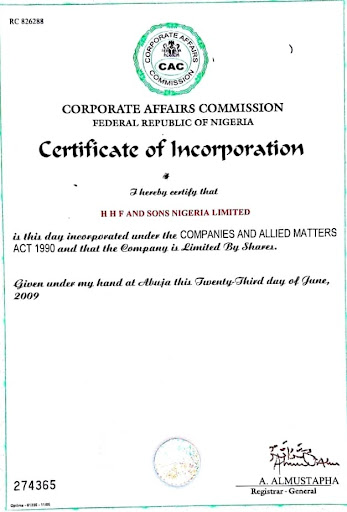
Back in 2020, Kakoni Balla, the former lawmaker representing Tambuwal/Kebe Federal Constituency, facilitated the construction of a solar-powered borehole in Shiyar Gandu Community, Dogondaji, Tambuwal LGA. The project, which cost N11.9 million naira, was supervised by the Border Communities Development Agency (BCDA), and H.H.F and Sons was listed as the contractor in the project documents. However, the billboard at the project site displayed the name of Gams & Abell Nig Ltd as the contractor. The latter is not registered with the CAC though there are companies with similar names such as Gams & Abell Oil & Gas Ltd, Gams & Abell Investment Ltd, Gams Abell and Co.
HHF and Sons Ltd document provided by the BDCA
Christian Anasili, the BDCA director of procurement, tried to address the issue of the discrepancy in the name of the contractor that got the contract (H.H.F and Sons) and the firm that executed (Gams & Abell Nig Ltd) thus:
“If another contractor executed the project through sub-contracting and the work was done, it is not our concern as the agency. HHF and Sons Nigeria Limited is the company that secured the contract from us, not the one that actually executed the project.”
However, sub-contracting a project violates Section 25 of the 2007 Public Procurement ct 2007, which explicitly prohibits a procuring entity from mandating or specifying a particular sub-contractor as a condition for participating in any procurement proceedings.
The bid document released by the agency confirms that HHF and Sons is the designated contractor for the project, not Gams and Abell Nigeria Limited, which is not registered with the CAC. To shed light on the matter, the reporter managed to obtain the contact information of Hassan H. Fawaz, the managing director of HHF.
In a phone conversation with Mr. Fawaz, he seemed hesitant to provide details and directed the reporter to speak with his secretary for further information about the project. Eventually, he shared the contact of a person named Abdulrahman, who claimed to be the company’s accountant or secretary, as per Mr. Fawaz’s statement.
CAC certificate provided by Abdulrahman
During the conversation with Abdulrahman via WhatsApp, he initially said that their company is involved in buying and selling. However, when questioned about the sub-contracted borehole project in Sokoto State, he altered his response.
Abdulrahman then stated, “I am an accountant of HHF and Sons Nigeria Limited, and we are a registered civil construction company with the CAC.” He did not address the question of subcontracting which their company did without any answers.
Faruq Jibo, 32, shares the hardships faced by the community since the borehole stopped working. He vividly describes the impact it had on their lives, saying,
“When the borehole was functioning, it provided us with approximately 600 liters of water per day. That’s equivalent to around 15 wheelbarrows filled with 10 30-liter gallons of water. We used to pay N10 per gallon, but since the borehole stopped working, the price has skyrocketed to N40. Some people fell ill, but fortunately, we managed to take care of them, and now everyone is healthy. We’ve tried various solutions to get the borehole working again, but nothing has worked so far. We plead with the relevant authorities in our community to come to our aid.”
Abubakar Hassan Dongondaji, 38, talks about the water scarcity they face. He explains, “Since we have the option to buy water, the water scarcity issue is not as severe in our community, especially on my street. However, we need more boreholes in our newly developed area. The borehole built by the Border Communities Development Agency was an excellent source of water until it stopped working five months ago. We are considering purchasing a new borehole. Fortunately, the other water sources we rely on, such as commercial boreholes, provide good-quality water because our community is known for having clean water. Anywhere we dig, we find good water.”
Rufai Maccido Sallah, the representative of the village head, sheds light on the maintenance challenges faced by solar-powered boreholes.
“The non-functioning borehole has brought significant suffering to the people in that vicinity. Solar-powered boreholes are difficult to maintain and manage, and they tend to break down faster than anticipated. It was a distressing experience for the community when the borehole suddenly became faulty, ending the supply of water. During the project execution, we faced some problems, mainly due to conflicting interests among our people regarding the location of the boreholes. However, a committee has been formed to address water-related issues, including the repair of the borehole.”
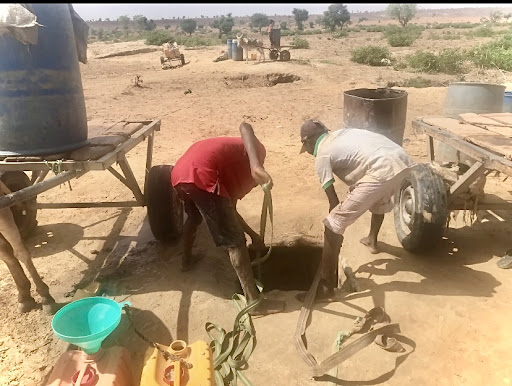
Local residents digging land for water at Kyadawa Village. Credit: Abdulwaheed Sofiullahi
BCDA responds to borehole projects with short lifespans
Sadiq Abdullahi Isa, Director of Planning Intergovernmental and Community Relations at the BCDA, addressed concerns regarding certain zonal intervention projects in Sokoto State from the year 2020, which experienced a disappointingly short operational lifespan after completion.
Isa suggested that the problem might be relatively minor, suggesting that when the boreholes stopped working, the affected communities should have promptly contacted their respective House of Assembly members who represent them. He also pointed out that at the project sites, the signboards displaying information about the agency’s involvement are visible, and the rural residents could have easily found the agency’s address there to report any issues. Isa emphasized that the BCDA would be responsive if they were made aware of such problems.
He explained that some of the boreholes may have encountered mechanical issues, leading to their malfunction. However, he expressed concern that the agency is not being informed about these matters, which hinders its ability to take timely action.
Isa shared that there have been instances in the past where rural areas experienced theft of machines from the boreholes, adversely affecting their functionality. Despite encouraging the communities to safeguard the projects upon handover, incidents of theft still occur, he noted.
To address these challenges, the BCDA actively encourages individuals to report instances where the projects have stopped working. Once notified, he said the agency promptly dispatches its engineers to assess the situation.
He said further that if the problem is attributed to vandalism, the BCDA takes appropriate measures to address the issue. On the other hand, if the boreholes require minor repairs, the agency promptly attends to the maintenance to ensure they are back in operation, he stated.
* This report republished from Ripples is supported by the John D. and Catherine T. MacArthur Foundation and the International Centre for Investigative Reporting (ICIR)
CROP production, trade, and information and communication services contributed over 50 per cent to increase Nigeria’s gross domestic product (GDP) to 2.51 per cent in the second quarter of 2023.
This is according to the Nigerian Gross Domestic Product Report for Q2, 2023, released by the National Bureau of Statistics (NBS).
Crop production, trade and ICT had a combined contribution of 53.52 per cent to the real GDP in the second quarter.
According to the report, the GDP grew by 0.20 per cent, higher than 2.31 per cent recorded in the first quarter of 2023. This translates to N52.10 trillion in nominal GDP and N17.72 trillion in Real GDP.
However, The ICIR findings showed that this is the slowest growth reported in the last two years.
The NBS said that the GDP performance was driven by the service sector, which recorded a growth of 4.42 per cent and contributed 58.42 per cent to the aggregate GDP.
Also, the agriculture sector grew by 1.50 per cent, an improvement from the growth of 1.20 per cent recorded in the second quarter of 2022.
“The growth of the industry sector was -1.94 per cent relative to -2.30 per cent recorded in the second quarter of 2022. In terms of share to the GDP, agriculture and the industry sectors contributed less to the aggregate GDP in the second quarter of 2023 compared to the second quarter of 2022,” the NBS report said.
This development is coming weeks after President Bola Tinubu inaugurated a presidential committee on fiscal policy and tax reform with a mandate to achieve an 18 per cent tax-to-GDP ratio within three years.
A financial expert, David Adonri, had toldThe ICIR that the reforms proposed by the government should adequately address the welfare of the average Nigerian to engender trust.
The ICIR also reported the promise of the president, while giving his inaugural speech on May 29, to increase Nigeria’s GDP by six per cent annually.
According to the NBS report, Nigeria’s GDP for the first half of 2023 is 2.41 per cent. To keep the promise of a six per cent annual GDP, the president has six months to get 3.59 per cent.
IS it the State Security Service (SSS) or the Department of State Services (DSS)? This is a question many people ask.
Many public organisations are named and established by law. Nigeria’s primary domestic intelligence agency the State Security Service (SSS), known as the Department of State Services (DSS), is one such agency.
Its primary responsibilities include obtaining national intelligence and safeguarding the security of significant political persons.
It functions as a department within the executive branch of government.
The law that created the SSS
The lawcreating “State Security Service” is known as the National Security Agencies Act 1986.
Section One of the Act says: “There shall, for the effective conduct of national security, be established the following National Security Agencies, that is to say-(a) the Defence Intelligence Agency; (b) the National Intelligence Agency; and (c) the State Security Service”.
According to the National Security Agencies Act 1986, “State Security Services” is created to detect and prevent crimes within Nigeria that may threaten the national security of Nigeria.
Operatives of State Security Service
/File Copy
However, in recent years, the SSS has portrayed itself as the Department of State Services (DSS) in official statements and all its official social media accounts.
Nigerians and the media have also frequently referred to the agency as DSS rather than SSS, which has generated a lot of debate in the country.
Lawyers’ view on the use of the name DSS
According to some lawyers who spoke to The ICIR, the name “State Security Services” and the National Security Agencies Act 1986 have not been amended or altered since 1986.
They agreed that the use of the name Department of State Services (DSS) by the State Security Service (SSS) is illegal and a violation of Nigeria’s National Security Agencies Act.
Hence, the statutory, legal and known name remains “State Security Services” and not DSS.
A Lagos-based lawyer, Adefisoye Okunade, said the name change is unknown to the law and a violation of the law.
“The use of “DSS” is a violation of the law. Section 1(c) of the National Security Agencies Act, Cap. N74, LFN, 2010.
According to Okunade, the referenced statutory authority provides that:
“There shall, for the effective conduct of national security, be established the following
He went further to say the position of the law is that the express mention of one thing is an exclusion of the other.
“Expressio unius exclusio ulterious. That is to say – the express mention of ‘SSS’ in section 1(c) of the NSA Act is an exclusion of any other name such as ‘DSS,’ meaning that the use of self-styled “DSS” is an executive recklessness,” the lawyer added.
In his view, another lawyer, Festus Ogun, told The ICIR that SSS is known to the law and not DSS.
“It is a secret outfit created by law. State Security Service is the secret outfit created by statute. Department of State Security is unknown to law.,” Ogun said.
According to Ogun, the use of DSS is in breach of law.
He blamed the security agency for unilaterally changing its name from the State Security Service.
He added that the organisation cannot change its name unless the National Assembly amends that law to reflect it.
“Even from its name, the DSS is not committed to the tenets of the rule of law. Looking at the antecedents of SSS. They’ve been quite lawlessly and recklessly, and you know, they abuse the fundamental rights of our people with reckless abandon.
“So the issue of it unilaterally changing its name without a cause to law is not only illegal but unconstitutional,” Ogun stated.
He added that the National Security Agencies Act created the State Security Service, and since the act has not been amended, it’s a gross violation of the National Security Agencies Act to refer to it as DSS.
Another lawyer, Inibehe Effiong, in a post on X (Formerly Twitter) on July 26, faulted the use of the name DSS by the SSS and called it an act of illegality.
“Part of the lawlessness is the use of the name “Department of State Services”. It is an illegality. It is unknown to law.
Part of the lawlessness is the use of the name “Department of State Services or DSS”.
It is an illegality.
It is unknown to law.
What is established by law by virtue of the National Security Agencies Act is State Security Service (SSS).
“What is established by law by the National Security Agencies Act is State Security Service (SSS),” Inibehe submitted.
DSS reacts
When asked about the legality of the continuous use of the name DSS by his organisation, the spokesperson of the agency, Peter Afunanya, in a text message, said it is not illegal but a creation of law.
SSS account on X with the inscription DSS
When probed further to state the law that changed the name from SSS to DSS, Afunanya said, “Your source is not well informed on the subject matter and may wish to expand his/her research.
“You are an investigative reporter. Find out for yourself. By the way, DSS Is not Illegal. It is a creation of the law,” Afunanya stated.