Home Blog Page 851

Nigeria’s women football, basketball teams in disarray ahead major tournaments

0

ALL is not well with Nigeria’s senior women basketball and football teams ahead of their participation in major international sporting tournaments.

The senior women football team, known as Super Falcons, will feature in the forthcoming 2023 FIFA Women’s World Cup, billed to kick off on Thursday, July 20 in Australia and New Zealand, two countries which are co-hosting the tournament.

In the same vein, the senior women’s basketball team, knowns as D’Tigress, will represent the country at the AfroBasket (African Basketball) tournament, starting on July 38, in Kigali, Rwanda.

Nigeria’s senior women basketball team, D’Tigress

Ahead of the AfroBasket tournament, the Nigeria Basketball Federation (NBBF) had last week announced that it will organise an open camp to select the players that will represent the country in Kigali.

The open camp tryout, according to the NBBF, will hold from July 8 to 11 in three different locations – Chicago, National Stadium, Surulere, Lagos, and the Moshood Abiola International Stadium, Abuja.

But less than 18 days to the commencement of the tournament in Kigali, one of D’Tigress’ experienced players, Oderah Chidom, on Monday, July 10, announced her retirement from the Nigeria Women’s basketball team. She cited a “lack of professionalism” on the part of the NBBF for the decision.

In an interview with ESPN, Chidom, who was not pleased with the crisis in Nigerian basketball that led to the withdrawal of the women’s senior national team from the FIBA World Cup in 2022, stressed that the open tryouts were the last straw for her.

D’Tigress ace resigns from team over NBBF ‘open tryouts’

D'Tigress ace Oderah Chidom in her resignation graphics shared via her twitter handle
D’Tigress ace Oderah Chidom in her resignation graphics shared via her twitter handle.

“The trigger for me was seeing an Instagram post of open tryouts in three different locations three weeks before Afrobasket.

“I will not be attending. I don’t think that’s professional at all. I consider myself a professional. And I don’t think it’s okay for me to pay my way to try out for something when I think I have a resume that speaks for itself.

“I have standards of how I conduct business at the professional level, and Nigeria continues to disappoint me,” she said.

Chidom added: “This is a national team. Generally what you do is you invite a group of professionals and you compete in a camp and then the 12 best at that camp get to compete on whatever team and that’s mostly how a national team is conducted.

“I have been blessed to play with a lot of teams where I have seen professionalism from management, and I don’t see those same qualities within our own federation. So to continuously keep coming back to to a federation that I feel does not value me is not worth it.

“I am officially done with national team. I cannot continue to have this added stress in my life. As a team, we try to choose our words very carefully so we do not offend anyone on the federation.

“But personally, I’m done and my purpose of doing this is to shed light on the lack of professionalism within the federation and that it needs to change.”

Reacting to her departure from the national team, NBBF President Musa Kida told ESPN that open tryouts for the national team is not new.

“We did the same thing in 2017 and we raised a team that went on to win the AfroBasket in 2019.

“Not everybody will like the idea, but we are trying to make the best decisions for Nigerian basketball. We have a new coach and we want to rebuild the team.

“Of course we would like to see all the players show up, but we can’t force any one to do so, and it is up to each player to make the decision that is best for them,” he said.

Super Falcons demand World Cup bonuses, threaten to boycott opening match 

As for the national senior women football team, the players, who are currently preparing for the World Cup, are demanding that the leadership of the NFF pay them 30 per cent of the bonuses reportedly given by FIFA to the 32 countries participating in the tournament.

Falcons women football team
Nigeria’s senior women football team, Super Falcons

The demand came on the heels of a revelation by coach Randy Waldrum, who, speaking on the podcast ‘On the Whistle’, said FIFA gave each participating country $960,000 to prepare for the World Cup.

The coach said, “The other side of this is, I have a real close contact in the US that is very connected and on some of the boards at FIFA.

“This person told me, that in October, every country was given $960,000 from FIFA to prepare for the World Cup. Where is that money? If Nigeria got it in October, why didn’t we have a camp in November?”

Angered, the Super Falcons threatened to boycott their opening match against Canada on Friday, July 21, if the NFF fail to meet the demand.

Reacting to the development, NFF media Officer Ademola Olajire, speaking on Channels TV, on Sunday July 9, said the federation had agreed to pay $3,000 per match to the players.

“So there is not going to be any bonus again because we have agreed on $3,000 per match, so if you win your three matches that is $9000.”

Reps move to resolve crisis

Meanwhile, the House of Representatives has moved to resolve the faceoff between the Super Falcons and the NFF ahead of the 2023 Women’s World Cup.

In a bid to shelve the boycott, the House of Representatives adopted a motion calling for its urgent intervention in the face-off between the players and the NFF. The motion was moved by Olumide Osoba (APC-Ogun).

Presenting the motion, Osoba said there was need for necessary action to prevent the planned boycott of the FIFA World Cup by the female national football team.

“I am concerned about the potential embarrassment and negative impact on Nigeria’s reputation if the planned protest and boycott proceeds without intervention, as witnessed in previous incidents involving the national female basketball team.

“There are historical instances of non-payment of salaries, allowances, and bonuses, as well as the arbitrary dismissal of players within the Nigerian women’s sports teams.

“The situation is not only embarrassing but also raises serious questions about the treatment of athletes and the overall management of sports in our country.

“I am aware that the Super Falcons have threatened to boycott their opening game on July 21, resulting in potential embarrassment for the government and jeopardising Nigeria’s participation in the tournament,” Osoba said.

The lawmaker noted that the commitment of the female footballers was unquestionable as they had represented Nigeria with honour and achieved remarkable success in international competitions over the years, adding that it was sad that the footballers had been neglected by the authorities leading to low morale.

The House urged the Nigeria Football Federation (NFF) to pay the outstanding match bonuses and allowances to the players, ahead of the tournament.

The Speaker, Tajudeen Abbas, urged the Sports Committee, when inaugurated, to invite the NFF and relevant stakeholders to provide detailed report on the steps taken to resolve the dispute and ensure hitch-free participation of the team at the 2023 Women’s World Cup.
Mongabay hosts webinar on covering planetary boundaries

MONGABAY is hosting a webinar themed ‘How to Cover Planetary Boundaries’ as part of its series for journalists.

Media reporters can register for a free live-stream webinar on how to cover or report on the environment.

The 75-minute webinar will be live-streamed on Mongabay’s YouTube ChannelTwitter, and LinkedIn. The event will be held on July 27, 2023.

Interested individuals can register here.


Emefiele: Court gives DSS 7 days to charge or release suspended CBN governor

0

A FEDERAL Capital Territory (FCT) High Court has issued a seven days ultimatum to the Department of the State Security Service (DSS) to charge the detained suspended Governor of the Central Bank of Nigeria (CBN), Godwin Emefiele to court, or release him.

The court gave the order on Thursday, July 13, after hearing a fundamental rights enforcement suit filed by Emefiele to challenge his arrest and detention by the DSS.

The presiding judge, Hamza Muazu, noted that while Emefiele has not demonstrated that his detention and investigation were illegal, it is within his rights to have a fair hearing.

The judge added that the suspended CBN governor cannot be held in custody without a formal charge and that the DSS is not permitted to look for evidence against Emefiele while he is being held.

Justice Muazu held that the security outfit has the authority to carry out its constitutional obligations to make arrests, keep people in custody, and ensure the prevention of internal crime, but emphasised that these obligations must be fulfilled in accordance with the law.

Muazu described the DSS as a renowned organisation tasked with ensuring the nation’s internal security and demanded that it carry out its duties strictly in accordance with the Constitution.

“Though I am in sympathy with the Applicant (Emefiele), but my sentiment will not go far to deliver judgment by granting all the reliefs sought by the Applicant.

“The Applicant has not shown that his arrest, detention and investigation were unlawful.

“However, I am concerned that the application is not without merit. The Applicant is entitled to a fair hearing.

“At this point, the continued detention of the Applicant cannot be justified in the absence of any charge against him.

“Consequently, I hereby make an order, directing the Respondents (DSS and AGF) to within one week, charge the Applicant to court or release him on administrative bail,” the judge said.

Emefiele filed a lawsuit against the Director General of the DSS and the Attorney General of the Federation (AGF) to have his fundamental human rights to freedom of movement and respect for life enforced.

In the suit marked FCT/HC/CV/6450/23, the suspended CBN governor had applied that his arrest and detention since June 10 without valid order of court be voided and set aside.

Emefiele demanded compensation of N5 million as exemplary damages for his alleged unlawful detention.

The ICIR reported that the DSS confirmed the arrest of Emefiele, who was suspended by President Bola Tinubu on June 9.

Emefiele’s arrest was confirmed by the spokesperson of the DSS, Peter Afunanya, in a tweet posted on the agency’s official Twitter handle on Saturday, June 10.

The ICIR also reported that Tinubu suspended Emefiele with immediate effect and directed him to hand over the affairs of the CBN to the deputy governor, operations directorate, Folashodun Shonubi.

Emefiele’s suspension was announced in a statement released on June 9 by Willie Bassey, director of information, Office of Secretary to the Government of the Federation (SGF).

The DSS did not state or give any reason for Emefiele’s arrest. However, it may not be unconnected with the allegations the agency had levelled against him.

DSS had in 2022 attempted to arrest Emefiele, accusing him of financing terrorism, aiding and abetting terrorism, and committing other economic crimes.

The DSS alleged that Emefiele funded the Indigenous People of Biafra (IPOB) with the resources he raised for his failed presidential bid on the platform of the All Progressives Congress (APC).

The security agency also accused him of fraud, money laundering, round-tripping and conferment of financial benefits to himself and others.

On December 7, 2022, the DSS filed an ex-parte motion at the Federal High Court, Abuja, seeking permission to arrest, probe and detain Emefiele.

However, on December 9, 2022, the court declined the application.

2023 budget: FG allocates N4.8bn to MDAs for projects outside their mandates

A NON-GOVERNMENTAL civic organisation, BudgIT, has uncovered a total of N4.8 billion allocated in the 2023 fiscal budget to some ministries, departments and agencies (MDAs) for projects that are outside the scope of their mandates. 

The report revealed that the five institutions implementing these projects are under the Federal Ministry of Agriculture and Rural Development, and the Federal Ministry of Education.

The institutions include the Nigeria Stored Products Research Institute, Ilorin (NSPRI); National Centre for Agricultural Mechanisation, Ilorin (NCAM); National Institute for Construction Technology and Management, Uromi, Edo state (NICTM); Federal Polytechnic, Ukana; and Federal College of Agricultural Produce Inspection and Stored Products Technology, Kano (FCAPT). 

The senior research & policy analyst for BudgIT, Vahyala Kwaga, told The ICIR that most of the projects may not be executed because the wrong institutions were allocated the funds to carry them out. 

“We need to understand that corruption is not a ‘technical’ matter but one that is fundamental to our governance and government.  Not only are monies almost never used for these projects, they are often diverted to other uses or not even released by the Accountant General’s office. 

“This would even lead to poor budget performance because the releases intended by the budget were not even made (though they were ‘saved’) by not disbursing them to these so-called projects outside the mandate of MDAs,” he said.

A look at the projects

The sum of N1.930 billion was allocated to NSPRI in the 2023 budget to carry out seven projects that are against its mandate. 

According to the NSPRI website, the commission conducts research into post-harvest handling and the problems of agricultural commodities, and to fabricate pilot scout post-harvest handling equipment. However, it was assigned projects to construct and install solar street lights in Akko local government area (LGA), Gombe central senatorial district; supply tricycles to youths in Adamawa State; and construct an ultra-modern aquatic market with solar street lights and landscaping in Briyel Ward in Bs Phase 2, among others.

Also, N1.245 billion for 11 projects was budgeted for NCAM. The projects include the procurement of three-in-one solar street lights for security enhancement & community development in Ngorkpala & Aboh-mbaise/Iheaka/Ovoko, support for sporting activities of youths in Bayelsa West senatorial district, and provision of empowerment facilities in Okehi, Kogi state.

By mandate, NCAM was established to mechanise Nigeria’s agriculture by developing simple need-based technology that reduces drudgery, increases farm productivity and improves farmers’ efficiency and income.

FCAPT, a college established to conduct middle-level manpower training in produce inspection and stored products technology for enhanced agricultural development in Nigeria, got a budgetary vote of N60 million to supply classroom desks for primary schools in Ilesha Federal Constituency, Osun State, and the electrification of Akwunda Ikwokwu Ipinu in Obi LGA, Benue state.

NICTM, under the supervision of the Federal Ministry of Education, was awarded a total of N1.4 billion to implement seven projects. These include the construction of the Alaro-Iraye-Lasu access road and drainage in Epe, and the rural electrification of selected communities with solar street lights in Yala LGA, Cross River state.  

The institute was established by former president, Goodluck Jonathan, to create knowledge to drive the construction industry via hands-on skill-driven curricula.

The Federal Polytechnic, Ukana, Akwa-Ibom state, was awarded  N160 million to supply sewing machines and salon pieces of equipment to women and youths in Delta state; supply and fix solar lights in Kiru/Bebeji Federal Constituency; and train youths and women on various skills acquisition in Lagos state. 

Failed project implementation

Although there are no laws in Nigeria that fault MDAs for carrying out projects against their mandate, former president, Muhammadu Buhari and the Independent Corrupt Practices and Other Related Offences Commission (ICPC) had condemned the implantation of several constituency projects by the lawmakers.

The ICIR, in its Open Contract Reporting project, had reported many constituency projects poorly implemented or abandoned in local communities. 

Vahyala noted that there has never been any consequence for these infractions despite interventions by advocacy groups and the ICPC.

“Ordinarily, the NASS should alert Nigerians on suspicious budget line items, since they are meant to be the ‘oversight’ body of the government. However, because the MDAs and the NASS are in bed together, there will be no way either of them will work in the interest of the people or ensure savings, value for money and efficiency of government spending,” he said.

An enterprise promotion and development professional, Celestine Okeke, said that while past administrations failed in controlling these infractions, the onus falls on the current administration to change the narrative.

“With the removal of fuel subsidy, there should have been a policy document on how the government intends to spend the funds. The removal will free up many funds for the government, but with the absence of a policy document it is difficult to tell what will happen,” Celestine told The ICIR.

16th Headies: Burna Boy leads nominees list

0

NOMINATIONS for the 16th edition of Nigeria’s highly esteemed musical awards, The Headies, were unveiled on Wednesday, July 13.

Grammy award-winning artiste, Damini Ebunoluwa Ogulu widely known as Burna Boy emerges as the frontrunner with an impressive 11 nominations.

He is also a strong contender for the prestigious Album of the Year category, where he faces competition from Davido, Rema, Asake, Omah Lay, and Victony.

The Headies awards made its debut in 2006 and has since played a significant role in promoting Nigerian music and acknowledging the talents of artistes within the industry.

The event has been instrumental in elevating the profiles of numerous musicians and has contributed significantly to the overall growth of the Nigerian music.

Additionally, this year’s edition of the award is set to acknowledge international artistes who have left a lasting impact on the Nigerian music industry, including Drake, Future, Selena Gomez, Don Toliver and Ed Sheeran, all nominated for the 2023 International Artiste of the Year.

Full list of nominees 

Best Recording Of The Year

“Alone” – Burna Boy

“Soweto” – Victony and Tempoe

“I’m a Mess” – Omah Lay

“Ku lo sa” –  Oxlade

“Stand Strong” – Davido

“No Woman, No Cry” – Tems

Producer Of The Year

Magicstickz – “Sungba Remix”

Pheelz – “Electricity”

Andrevibez & London – “Calm Down”

Tempoe – “Soweto”

Kel-P – “Kpe Paso”

Rexxie – “Abracadabra”

Songwriter Of The Year

“Loyal” – Simi

“I’m a Mess” – Omah Lay

“Lift Me Up” – Tems

“Alone” – Burna Boy

“In My Mind” – BNXN

“Earth Song” – Wizard Chan

Best R&B Single

“For My Hand” – Burna Boy ft ED Sheeran

“Mmadu” – CKay

“Just 4 u” – Dami Oniru

“Red Wine” – Preye

“Hard to Find” – Chike ft Flavour

“Loyal” – Simi ft Fave

Best Rap Single

“Hustle” – Reminisce ft BNXN

“Big Energy” – Ladi Poe

“Back in Uni” – Blaq Bonez

“Bando Diaries” – Psycho YP ft Odumodublvck

“Declan Rice” – Odumodublvck

“My Bro” – Jeriq the Hussla ft Phyno

Best Vocal Performance (Female)

“Loyal” – Simi

“In Between” – Waje

“Memories” – Niniola

“Adua Remix” – Liya

“Red Wine” – Preye Itams

“Just 4 U” – Dami Oniru

Best Vocal Performance (Male)

“KU LO SA” Oxlade

“My Only Baby” Ric Hassani

“Love Don’t Cost a Dime” Magixx

“Spell Remix” Chike

“Reckless” Praiz

“Kpe Paso” Wande Coal

Best Alternative Song

“Earth Song” – Wizard Chan

“Final Champion” – Cruel Santino

“The Traveller” – Basketmouth and The Cavemen

“In a Loop” By BOJ – Mellissa

“Game Changer” – Flavour

“Tinko Tinko” – Obongjayar

Best Music Video

“Back in Uni” –Blaqbonez Perliks

“PBUY” By TG Omori

“Spell (Remix)” –  Director Pink

“Common Person” – Director K

“Bandana” by TG Omori

“Calm Down (Remix)” – Director K

Best Collaboration

Asaka FT. Burna Boy – “Sungba Remix”

Bnxn ft. Kizz Daniel & Seyi Vibes – “Gwagwalada”

Pheelz ft Bnxn – “Finesse”

Spyro ft. Tiwa Savage – “Who’s Your Guy Remix”

Pheelz ft Davido– “Electricity”

Wande Coal ft. Olamide– “Kpe Paso”

Best Street-Hop Artiste

Rexxie Ft. Naira Marley & Skiibii – “Abracadabra”

Seyi Vibez – “Chance (Na Ham)”

Asake – “Joha”

Zlatan Ft. Young Jonn – “Astalavista”

Poco Lee & Hotkid – “Otilo”

Mohbad – “Peace”

Afrobeats Single Of The Year

“Last Last” – Burna Boy

“Rush” – Ayra Starr

“Buga” – Kizz Daniel & Tekno

“Finesse” – Pheelz ft Bnxn

“Who’s Your Guy?” – Spyro

“Asiwaju” – Ruger

Headies’ Viewers’ Choice

Ruger – “Asiwaju”

Victony & Tempoe – “Soweto”

Fireboy Dml & Asake – “Bandana”

Ayra Star – “Rush”

Asake – “Terminator”

Mavins – “Overloading (Overdose)”

Crayon – “Ijo (Laba Laba)”

Oxlade – “Ku Lo Sa”

Kizz Daniel & Tekno – “Buga”

Pheelz & Davido – “Electricity”

Best West African Artiste Of The Year

Gyakie (Ghana)

Black Sherif (Ghana)

The Therapist (Liberia)

Camidoh (Ghana)

Best East African Artiste Of The Year

Zuchu

Diamond Platinumz

Rayvanny

Eddy Kenzo

Hewan Gebreworld

Best North African Artiste Of The Year

Marwa Loud – Morocco

Wegz – Egypt

El Grande Toto – Morocco

Soolking – Algeria

Best Southern African Artiste Of The Year

AKA (South Africa)

Nasty C – South Africa

Costa Titch – South Africa

Uncle Waffles – South Africa

Focalistic – South Africa

Dj Tarico – Mozambique

Best Central African Artiste Of The Year

Fally Ipupa – Democratic Republic Of Congo

Gaz Mawete – Democratic Republic Of Congo

Matias Damasio – Angola

Emma’a – Gabon

Libianca – Cameroon

Best R&B Album

Home – Johnny Drille

The Brother’s Keeper – Chike

Reckless – Praiz

Waje 2.0 – Waje

Matter Of Time – Dami Oniru

To Be Honest (Tbh) – Simi

Best Alternative Album

Horoscopes – Basketmouth

Gbagada Express – Boj

Some Nights I Dream Of Doors – Obongjayar

Subaru Boys: Final Heaven – Cruel Santino

Heart Of The Heavenly Undeniable – Somadina

Native World – Native Sound System

Best Rap Album

Fly Talk Only – Payper Corleone

Palmwine Music Vol 3 – Show Dem Camp

Young Preacher – Blaqbonez

Ypszn3 – Psychoyp

Teslim: The Energy Still Lives In Me – Vector

Billion Dollar Dream – Jeriq

Album Of The Year

Love, Damini – Burna Boy

Mr Money With The Vibe – Asake

Rave And Roses – Rema

Boy Alone – Omah Lay

Outlaw – Victony

Timeless – Davido

Song Of The Year

“Calm Down” – Rema

“Last Last” – Burna Boy

“Ku Lo Sa” – Oxlade

“Buga” – Kizz Daniel & Tekno

“Finesse” – Pheelz Ft. Bnxn

“Sungba Remix” – Asake Ft. Burna Boy

Best Female Artiste

Tems

Simi

Ayra Starr

Tiwa Savage

Best Male Artiste

Asake

Rema

Kizz Daniel

Ruger

Omah Lay

Burna Boy

Next Rated

Young Jonn

Seyi Vibez

Asake

Victony

Spyro

Rookie of the Year

Odumodu Blvck

Bloody Civilian

Bayyani

Guchi

Eltee Skillz

Khaid

African Artiste Of The Year

Rema (Nigeria)

Burna Boy (Nigeria)

Marwa Loud (Morocco)

Black Sherif (Ghana)

Diamond Platnumz (Tanzania)

Lyricist On The Roll

Ladipoe – “Clowns”

Vector – “Clowns”

Payper Corleone – “Fly Talk Only”

Alpha Ojini – “Vigilante Bop”

A-Q – “Family First”

Tec (Sdc) – “Live Life”

International Artiste Recognition

Sean ‘love’ Combs

Hall Of Fame

Youssou N’dour

Best Inspirational Single

“Stand Strong” – Davido Ft Sunday Service Choir

“Jireh (My Provider)” – Limoblaze, Lecrae & Happi Music

“This Year” – Victor Thompson & Ehis ‘d’ Greatest

“Eze Ebube” – Neon Adejo

“Tobechukwu” – Nathaniel Bassey And Mercy Chinwo

“I Get Backing” – Victoria Orenze

Digital Artiste Of The Year

Burna Boy

Ayra Starr

Rema

Omah Lay

Kizz Daniel

Asake

Special Recognition

Sound Sultan

International Artist Of The Year

Drake

Future

Selena Gomez

Don Toliver

Ed Sheeran

Stopping fossil fuel funding destroying African economy – OPEC

1

THE Secretary General of the Organisation of Petroleum Exporting Countries (OPEC), Haitham Ghais, has said halting fossil fuel funding targeted at Africa would destroy the continental economy.

Ghais expressed his concern that financial institutions are limiting, tightening, as well as controlling how money is invested into fossil fuels under the guise of environmental, social, and governance (ESG) impacts.

The OPEC scribe asserted on Tuesday, July 11 at the 22nd edition of the ongoing Nigeria Oil and Gas Conference in Abuja that the situation was hindering Africa’s progress despite the fact that the continent accounts for only 3 per cent of global greenhouse gas emissions.

The theme of the conference is ‘Powering Nigeria’s Sustainable Energy Future.

On investments inflow into the oil and gas sector, he said the global oil sector alone would need a massive cumulative investment of $12.1 trillion between now and 2045.

“We are currently not on track to reaching that level. To make things worse, we have in recent years been getting calls to limit or stop funding new oil and gas projects altogether.

“This is, of course, unwise and is a very realistic scenario that will be particularly devastating to developing countries that rely on revenue and their precious oil and gas resources to develop their economies.

“Africa, for example, is blessed with an estimated 120 million barrels of crude oil reserves and 18 trillion metres of natural gas.

“However, a significant investment will be required to fully realise the potential of these resources to benefit African citizens, while also enabling necessary mitigation actions needed to reduce the carbon footprint of the oil industry,” he said.

The ICIR had reported how funding from international organisations like the World Bank and International Finance Corporation (IFC) were shifting away from oil to clean energy.

Some global multilateral lenders to international oil companies (IOCs) are seriously emphasising clean energy investments in line with global energy transition project.


Court restrains FCDA from demolishing Trademore Estate

0

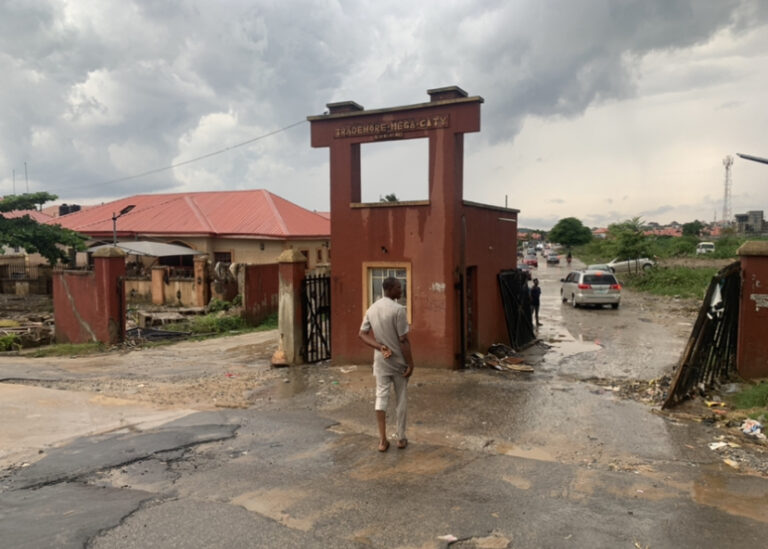
A FEDERAL High Court has restrained the Federal Capital Territory Development Authority (FCDA) from demolishing Trademore Estate in Lugbe, Abuja.

The court, presided by Mohammed Zubairu, in a temporary injunction, ordered that parties should maintain the status quo while the motion on notice and summons are served on the defendants.

The FCDA, the Abuja Metropolitan Management Council (AMMC), the Abuja Municipal Area Council (AMAC), and the Minister of the Federal Capital Territory are the first to fourth defendants/respondents in motion no: M/11692/2023 dated July 12, 2023.

The judge, Zubairu, gave an order “restraining the defendants, whether by themselves, agents, employees, officials, privies, and all those purporting to be acting for them, or to have derived title from them, or other persons howsoever and whomsoever called from trespassing on or further trespassing on, demolishing, or further demolition of all that Trademore Estate Lugbe, Abuja, Known as Plot 1981, Sabon Lugbe, Abuja, and other appurtenances thereof at Lugbe, Abuja, with the buildings and appurtenances thereon”.

The judge barred the government from evicting the property’s residents or otherwise interfering with the plaintiff’s sole ownership and control of the land as long as the Motion on Notice is pending, 

In addition, Zubairu mandated that the parties maintain the status quo while the defendants are immediately served with the Motion on Notice and Writ of Summons.

The matter was postponed until September 22, for hearing of the Motion on Notice.

The residents of the estate had approached the court through their lawyer, Mike Ozekhome (SAN), after a petition to the Permanent Secretary of the Federal Capital Territory Administration (FCTA), Olusade Adesola, protesting the planned demolition of more than 60 houses in the residential estate.

The residents debunked the insinuation that the estate has no approval for a development plan. They said the estate was developed in 2007, and had no case of flooding until recently.

The Permanent Secretary of the FCTA had declared the Trademore area a disaster zone that “needs immediate action to remedy further damages and loss of lives and properties”.

The ICIR reported on June 2 that the FCDA executive director, Shehu Ahmed, said structures in communities such as Trademore estate, disrupting the natural water flow, are responsible for flooding recorded in some parts of the city.

He disclosed this in a statement on Sunday, July 2, in Abuja.

Ahmed said many of the buildings in the estate have been marked for demolition.

On Friday, June 23, Trademore Estate was flooded after an hour-long rainfall.

The flood damaged several houses, vehicles, shops and other properties, while some lives were lost.

“People are clamouring that we act quickly and take tough decisions to save lives. And this is what we must do. We cannot work as though we don’t see this man-made problem caused by those who violate the Abuja Master Plan.

“By declaring Trademore a disaster zone, we have told the residents there to evacuate,” Ahmed said.

Ahmed added that a police station and some buildings will be demolished. 

Meanwhile, the residents protested against the planned demolition on Monday, July 3.

The residents shut their gates in protest against the planned demolition of structures in the estate by officials of FCDA.

The development came days after the estate was declared a disaster zone in light of flash floods which submerged houses and vehicles in the estate weeks ago.

Chairman of the residents association, Adewale Adenaike, said during the protest that the residents were the victims of the flood caused by a lot of water channels and tributaries diverted into the estate.

Adenaike argued that the FCTA’s demolition was unnecessary as the estate was not on a flood path.

“The demolition that they plan for Trademore is totally unnecessary because that’s not the reason. We are not sitting on the flood path; we are sitting like any other property in Abuja.

“There’s no reason for demolition, and we are asking through this medium, telling government agencies to come to our aid; let’s get together to find a lasting solution. We have experts on our side; they will come together with experts on the government side to come up with a lasting solution,” he said.

Adenaike further dismissed claims that the FCT authorities did not approve the estate.

He appealed to President Bola Tinubu to come to their aid and find a lasting solution to the crisis. 

It was reported that the flooding was the estate’s fifth incident since 2014.


Subsidy removal: Tinubu writes NASS, seeks N500bn for palliatives

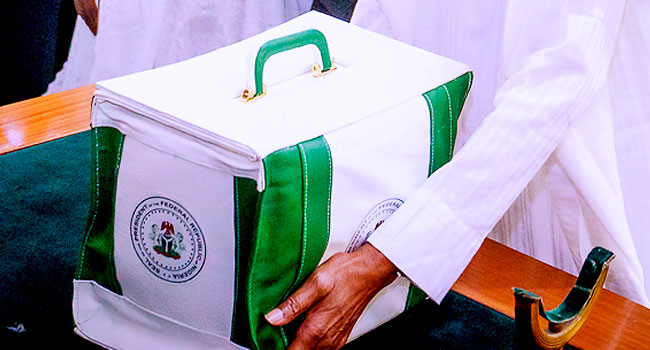
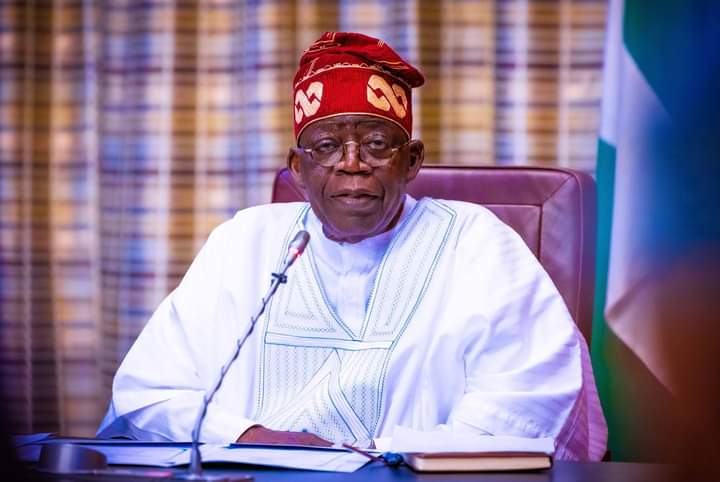
PRESIDENT Bola Tinubu has sought an amendment to the 2022 Supplementary Appropriation Act via a letter addressed to the National Assembly.

The Speaker of the House of Representatives, Tajudeen Abbas read the President’s letter titled, ‘Request for the amendment of the 2022 appropriation act,’ at plenary on Wednesday, July 12

Tinubu, in the letter, said the amendment was to allow the Federal Government to source N500 billion from the N819.5 billion 2022 supplementary budget.

This request is coming a few weeks after the President announced that his administration would not continue paying for petrol subsidy.

Days after Tinubu declared that subsidy has been removed, the Nigeria National Petroleum Company Limited (NNPCLtd) officially increased the pump price of petrol by about 200 per cent.

The development, however, led to an astronomical hike in the cost of basic goods and services.

In the letter addressed to the National Assembly, the President said the palliative is to cushion the effect of the removal of subsidy.

Parts of the letter read: “I write to request the approval of the House of Representatives for the amendment of the 2022 supplementary appropriation act in accordance with the attached.

“The request has become necessary in other to among other things source for funds necessary to provide palliatives to mitigate the effect of the recent removal of fuel subsidy on Nigerians.

“Thus the sum of N500 billion only has been extracted from the 2022 supplementary appropriation act of N819.536 billion for the provision of palliatives to Nigerians to cushion the effect of fuel subsidy removal. I hope that the House of Representatives will consider the request.”

Recall that the Federal Government under the former President Muhammadu Buhari’s administration, secured $800 million from the International Bank for Reconstruction and Development (World Bank), as part of its post-subsidy palliative plans. 

This was disclosed by the former Minister of Finance, Zainab Ahmed, on April 5 after a Federal Executive Council (FEC) meeting.

Ahmed said the $800 million from the World Bank will form the first tranche of palliatives and will be disbursed to 10 million households considered to be most vulnerable.

“There is a provision in the Petroleum Industry Act that says 18 months after the effectiveness of the PIA that all petroleum products must be deregulated. That 18 months takes us to June 2023.”

Also, the minister had in 2022, while addressing the House of Representatives, said the government will stop subsidy payments in June 2023.

Osun: Lawmakers repeal anthem, crest, flag introduced by Aregbesola

THE Osun State House of Assembly, on Tuesday, July 11, repealed the State’s Anthem, Crest and Flag Law 2012.

The law, enacted during the administration of former governor Rauf Aregbesola, introduced an anthem, a crest and flag for the state. The Aregbesola government also renamed Osun State as ‘State of Osun’.

The lawmakers repealed the law during a plenary session of the House.

The Speaker of the Osun State House of Assembly, Adewale Egbedun, disclosed the development on his Twitter page on Wednesday, July 12.

According to him, the action was taken in compliance with the judgment of a Federal High Court on December 14, 2017.

The Speaker stated that Kanmi Ajibola, a Peoples Democratic Party (PDP) member of the House representing the Oriade State Constituency, filed a lawsuit concerning the incident.

“Understanding, however, that there may be some aspects of the law that are appropriate, the House agreed that all corrections made on Osun State Anthem, Crest and Flag Law 2012 form part of the Bill for Osun State Anthem, Crest and Flag Bill 2023, sponsored by the Majority Leader.

“In essence, what the House has done, is vacate a law that had already been invalidated by a Court of competent jurisdiction to pave way for a new law that will respect the letters and spirit of the Nigerian Constitution that we swore to abide by,” Egbedun stated.

Aregbesola’s administration announced the renaming of Osun State as ‘State of Osun’ in 2011.

The House of Assembly, under the leadership of the Speaker, Najeem Salam, in 2012, passed a law creating an anthem, flag and crest for the state.

The bill was passed through a motion moved by the then Chief Whip, Ipoola Binuyo and seconded by Busola Adeyeni.

The Speaker said the anthem’s approval did not threaten the Federation of Nigeria.

Salam said the bill was the official description of the state and would allow the younger generations to attach importance to the culture of the Yoruba.

However, on December 14, 2017, an Osun State High Court ruled that the renaming was unlawful and, as a result, null and void.

The “State of Osun Land Use Charge Law” was challenged by human rights activist Ajibola as unconstitutional before the court presided by Yinka Afolabi.

In his ruling, the judge, Afolabi, held that the 1999 Constitution was unaware of the law and its authors.

The judge added that Aregbesola singlehandedly renamed the state contrary to known norms and the nation’s Constitution and granted all the seven prayers of the plaintiff.

During his inaugural speech in November 2022, Osun state governor, Ademola Adeleke, ordered a swift change from “State of Osun” to “Osun State.”

He directed that all government insignia, correspondences and signages must reflect Osun State rather than the State of Osun, which he said was unknown to the Nigerian Constitution.

However, the seventh state House of Assembly rejected Adeleke’s order and declared that the adoption was “a matter of law”, and therefore, the state will continue to be referred to as the “State of Osun”.

“The State of Osun House of Assembly, having reviewed the inaugural speech of the Governor and the activities of the inauguration, hereby resolves as follows:

“The usage of the State Anthem, Crest and Flag is an enactment of the law, and as such, its usage is a matter of law and not choice,” the House stated.
However, the eight State House of Assembly has finally repealed the law, in line with the governor’s directive in his inaugural address.


Concerns on spending by states as Federation allocation expected to rise to N4.4trn

ATTENTION is being beamed on states’ spending pattern as allocations from the Federation Account to state governments are projected to rise to the region of N4.4 trillion over six months. 

Economic watchers are expecting a cash bazaar for all levels of government as the removal of fuel subsidy frees lots more money for governments to share.

BusinessDay media reported on June 27 that a top level committee representing the entire federation and chaired by Charles Soludo, the Anambra State governor, had held two meetings since being set up two weeks ago to advance Nigeria’s quest to add a massive N4.4 trillion within the next six months to the cash available for sharing by the three tiers of government.

The current average monthly Federation allocation is N600 billion.

Analysts believe that additional cash, which works out to an average of N733 billion every month and implies a doubling in the monthly allocations, is possible following the government’s removal of costly petrol subsidies and foreign exchange reforms that paved the way for a 60 per cent depreciation of the naira.

But there are concerns on how all the levels of governments, especially states, will apply the expected windfall, even as they battle with debts and debt-servicing.

The Director of Media of the Nigeria Governors Forum, Abdulrazaq Barkindo, disclosed that the new state governors had been undergoing training on how best to manage funds and attract economic development to their respective states.

Barkindo told The ICIR that state goverments were having a United Nations Development Programme (UNDP) training on transparency and accountability in governance.

Barkindo said, “At the Nigeria Governors Forum, we are first and foremost established by the governors. We provide the platform for them to discuss, particularly a day before they go to the National Economic Council. I must also say that our role is still advisory as the governors have executive powers on what we advise them to do.”

He added, “We have our monitoring and evaluation mechanisms to track projects and interventions. Some foreign donors and agencies prefer to route intervention through us than through the state governments, and it is because of our transparent and accounting system.”

He further said that the Forum was intervening in ensuring structured and committed approach to governance, which he said would address loopholes in bad governance and ensure transparency and accountability.

To the Lead Director, Centre for Social Justice, Eze Onyekpere, lack of functional e-procurement portal and transparent budget systems in the states remains a concern.

“Many states’ e-procurement portals are non functional; you cannot easily track government businesses.There are lots of secrecy in the way and manner budgeting and its implementation is done in the states. Pre-bidding and after bidding processes are shrouded in secrecy,” Onyekpere told The ICIR.

Onyekpere: Many states’ e-procurement portals are not functional

“Examination of bids and information about how bids are conducted should be in the public domain. There should be more public information on open bidding and transparency to enable the media and civil liberty organisations track and cross-examine processes even after the bidding has closed,” he added.

Compliance on procurement and fiscal responsibility laws is still weak in several states, findings have shown.

Also, most states don’t actually have e-procurement portal for tracking government business.

The Executive Director of the African Centre for Leadership Strategy and Development, Monday Osasah, informed that Nigeria signed on to the Open Government Partnership (OGP) initiative at the 2016 London Anti-corruption Summit. However, many states are yet to domesticate it with the proper legal framework.

“Many states have signed on to the commitments of the OGP, but implementation is still weak. Records show that only 25 out of 36 states have signed on commitments to the OGP.

Osasah said Open Contracting is a major part of the OGP, which many states are still not complying with.

“There are many states that have procurement laws but operationalising and allowing citizens to track procurement, budgeting and other government business remains a concern,” he said.

The OGP is a multilateral initiative that aims to secure concrete commitments from national and sub-national governments to promote open government, empower citizens, fight corruption, and harness new technologies.

Immediate past president, Muhammadu Buhari, at the anti-corruption summit in London signed on to the commitment of the OGP, which seeks to promote transparency and accountability in governance through citizens participation and inclusivity in government business.

Nigeria’s Federal government and sub-nationals are spending large chunk of their revenue in servicing debts.

The World Bank, in its latest report, says Nigeria spent 96.3 per cent of its 2022 revenue on servicing its debts. The World Bank gave this information in its report on Macro Poverty Outlook for Nigeria, released in April 2023.

The ICIR had reported that with the rising debts, the Debt Management Office (DMO) raised concerns over reckless borrowing.

Available records showed that in the first half of the year, Nigeria’s GDP growth remained weak and fragile as it slowed to 2.31 per cent
in the first quarter of 2023, from 3.5 per cent in the fourth quarter of
2022.

Key sectors that contracted included agriculture, which shrank by 0.9 per cent, the first time in about a decade. The livestock sub-sector was the worst hit as it contracted by a staggering 30.6 per cent. Other sectors that contracted included oil refining, which contracted by 35.8 per cent; textiles, 3.7 per cent; rail transportation, 49 per cent; and
insurance, 8 per cent.

“We borrow a lot to fund the budget. As such, it is expected that both the federal and the sub-nationals should engage in prudent and cost-cutting measures to save the economy from collapse,” Onyekpere said.