Home Blog Page 868

Controversy trails CAN’s Christian education bill

THE National Assembly is currently pushing for the passage of a bill to create a regulatory body that will inspect and approve the content of Christian religious education in all schools across the country.

But the bill has been embroiled in controversy.

The proposed legislation is titled ‘Bill to Establish the National Council for Christian Education to Regulate and Set Standards and for Related Matters, 2023’.

It was initiated by the Christian Association of Nigeria (CAN) and is sponsored at the National Assembly by Binos Dauda Yaroe, a senator representing Adamawa South Senatorial District.

At the level of the House of Representatives, the bill is sponsored by Shawulu Kwenmwun, a lawmaker representing Donga, Takum, Ussa and Yantu federal constituencies in Taraba state.

According to the sponsors, the bill will regulate and set standards for developing a Christian education curriculum and monitor what learners are taught in school.

The bill passed second reading in the Senate in May.

What the bill proposes

The bill seeks to establish a regulatory council called National Council for Christian Education to monitor Christian religious education nationwide.

The proposed Council will monitor and collate data on Christian education.

Also, the bill seeks to develop and approve syllabuses for Christian education at all levels of learning and certify the study of Christian religion.

It equally seeks to train and certify teachers of Christian religious education in primary and secondary schools.

The bill stipulates that the regulatory body should conduct research, and also publish statistics and information on Christian education.

It further proposes that the body will review and approve the content of all Christian education in schools across the country and accredit the programmes of Christian theological institutions of learning.

The bill grants the Council the right to obtain relevant information and reports on Christian education in schools.

The Council can also demand data on the instructors and inspect the content of their lesson notes.

Speculations about the bill 

The bill was first reported as a move to regulate and set standards for the practice of Christianity and also create a curriculum for the practice of Christianity in Nigeria.

However, there were speculations that adherents of other religious faiths sponsored the bill to reduce the practice of Christianity in Nigeria.

But CAN had debunked the speculation, saying those spreading the claims have malicious intent.

According to the Christian association,  the bill does not regulate Christianity or censor Christian preaching and preachers in the country.

“The report that the bill seeks to regulate Christianity or censor Christian preaching and preachers was mischievous and maliciously spewed to cause disaffection between CAN, the sponsors of the bill and the Christian community in Nigeria and ultimately scuttle our noble agenda to have a voice on matters that concern our faith and calling,” the CAN Media Team said in a press statement on May 9.

CAN rather explained that the bill sought to oversee Christian curriculum development and monitor children and formalise it as a course in tertiary institutions.

The organisation said many unqualified theological institutions are operating in the country.

“This bill will harmonise their operations and set a minimum standard that must be met before awarding certificates to their graduands.”

Catholic bishops reject the bill

However, the Catholic Bishops Conference of Nigeria (CBCN) has kicked against the bill. 

According to the association, the bill is impractical as its proposal violates Sections 10 and 42(3) of the Nigerian Constitution. 

In a statement by its President, Archbishop Lucius Ugorji, and Secretary, Bishop Donatus Ogun, the CBCN said the bill made no exemption for seminaries and other religious institutes owned by other Christian denominations. 

The association noted that by doing this, the bill infringed on the rights of different Christian denominations to provide instructions according to their respective doctrines.

The association cited Section 42(3) of the 1999 Constitution, which states that “no religious community or denomination shall be prevented from providing religious instruction for pupils of that community or denomination in any place of education maintained wholly by that community or denomination”.

The CBCN noted that when the idea to initiate the bill came up in 2019, it was not originally intended to regulate theological institutions. 

“But at some point, certain elements were added to the bill, which certainly is not in the interest of the church,” the CBCN said.
AEPB urges Abuja residents to report cows on streets through phone calls

0

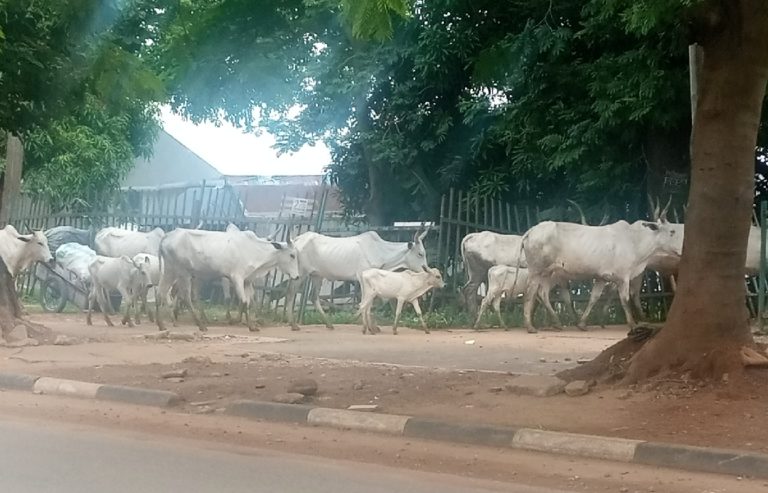
The Abuja Environmental Protection Board (AEPB) has urged residents to assist in ridding the city of open grazing by reporting violators via telephone calls.

Public Relations Officer (PRO) of the Board Janet Peni made the call in an interview with The ICIR on Friday, June 30.

“We are going to follow them up more than before. Once we get the cows, our FCT mobile court will pass judgment immediately; we’ll confiscate them, depending on whatever judgement they give us. We have our customer lines. Residents can report on our SERVICOM number: 09019823895,” she said.

This development comes a week after the AEPB Director Osilama Braimah said grazing animals on Abuja roads would no longer be tolerated.

“These are clearly illegal acts, and we cannot, and we will not have animals crisscrossing the expressways, and we will not certainly allow people to keep animals on their properties because they also carry diseases that are passed to humans.

“So apart from constituting physical environmental nuisance, they also constitute public health hazards, this is precisely why we have city planning, for you to keep your animals in certain areas, and live in certain areas. No conflict about this,” Braimah said.

Although open grazing along Abuja roads was banned in 2016 by Minister of the Federal Capital Territory (FCT) Muhammadu Musa Bello, herders leading cows through streets and major roads in the city has remained a common sight.

In a 2021 report by The ICIR, Abuja residents expressed concerns over the nuisance caused by cattle along major highways and the threat to life associated with open grazing in Nigeria.

Peni told The ICIR in 2021 that the Board was making efforts to curb open grazing within the city through activities of its Monitoring and Enforcement Department.

Following Braimah’s recent declaration, The ICIR reached out to the AEPB to ascertain if new methods are being deployed to rid the city of the menace.

According to Peni, no new measures were being explored to address the issue. However, she said the Board was more determined to rid the city of open grazing this time than it was in the past.

“We have been enforcing it, but this time around, we are not relaxing. We will make sure that we follow them up; we don’t give them breathing space. Today, our enforcement team were out to see how they can regulate them.

“We do not intend to soft-pedal, we are going to follow them more than before. Once we get the cows, our FCT mobile court will pass judgement immediately; we’ll confiscate them, depending on whatever judgement they give us. We have our customer lines. Residents can us on our servicom number: 09019823895,” she said.

Open grazing has been responsible for conflicts between host communities and herders across the country, resulting in displacement of residents, banditry and deaths.

Policemen who ran over man with vehicle moved to Abuja

THE Acting Inspector-General of Police (NPF), Olukayode Egbetokun, has condemned the action of some police officers caught on camera while crushing a man with their patrol vehicle in Ekpoma, Edo State.

The ICIR reported on Friday, June 30, that in the now viral video, a man was seen lying on the ground in handcuffs while a Sienna bus, occupied by police officers, intentionally ran over him.

It was gathered that the man was handcuffed by police officers attached to the Ekpoma division after he refused to allow them access to his mobile phones.

The officers’ attempt to take the man to the police station was resisted by onlookers, resulting in a confrontation between the two groups.

Amidst the chaotic scene, the police officers entered their vehicle and ran over the handcuffed man, who was left writhing on the ground.

The victim was said to have sustained multiple bruises on his body and was taken to the hospital for medical attention.

The incident angered Nigerians on Twitter, a popular micro blogging site, with many demanding the officers’ immediate arrest and prosecution.

Reacting in to incident in a statement signed by the Force spokesperson, Muyiwa Adejobi, the IGP ordered the immediate transfer of the erring policemen, who he said have been in detention in Edo State, to the Force Headquarters in Abuja for further investigation and appropriate actions to be taken.

“The IGP has, therefore, directed the erring policemen, who have been in detention in Edo State, to report to the Force Headquarters Abuja on Monday for further action,” the statement released by the Force spokesperson said.


He called members of the public, particularly the people of Ekpoma, to remain calm as the “present leadership of the NPF will not condone such an act of unprofessionalism and illegality”.

PSC approves appointment of two female CPs

0

THE Police Service Commission (PSC) approved the appointment of two female Commissioners of Police (CP) on Friday, June 30.

According to a statement by the Commission’s spokesperson Ikechuwku Ani, Acting Inspector-General of Police Kayode Egbetokun approved the appointment of eight CPs, two of whom are female.

Speaking with The ICIR, Ani confirmed that the female Commissioners are Adelesi E. Oluwarotimi and Augustina Ogbodo. Oluwarotimi was posted to Kwara while Ogbodo will serve in Ebonyi.

Other appointees include Godwin Aghaulor for Borno; Adebola Ayinde Hamzat, Oyo; Samuel Titus Musa, Kebbi; Aderemi Olufemi  Adeoye, Anambra; Stephen Olarewaju, Imo; and Alamatu Abiodun  Mustapha, Ogun.

The PSC commended Egbetokun for the gender inclusivity reflected in the appointments and urged him to include officials from disadvantaged geo-political zones in subsequent appointments.

“The Commission however expects that the Inspector General in his subsequent proposals will include more officers of North East and South East geopolitical zones that are yet to record the benchmark of 15 per cent as decided at its last plenary meeting,” Ani noted.

This is to meet up with the new guidelines for a more balanced deployment of top officials in the Nigeria Police Force (NPF), approved by the PSC.

On June 18, the PSC approved gender-inclusive policy guidelines for deploying top officials in the Nigeria Police Force (NPF).

The guidelines provide that at least, three out of the 37 state commands must have female officers as Commissioners of Police (CPs), and one out of the 17 zonal headquarters must have a female Assistant Inspector-General (AIG) in charge.

According to the Commission, the guidelines were to avoid portraying the NPF as anti-female and address the lopsided appointment of only male officials to Zones and Commands.

The PSC also approved that all geo-political zones must have at least 15 per cent representation in the deployment of Assistant Inspectors-General, Commissioners of Police and Commanding Officers to address the lack of equity and inclusiveness in the deployment of senior officers within the NPF.

FactCheckHub, others get Google/ YouTube grant

0

THE FactCheckHub is among the 35 organisations named as recipients of the Global Fact-Check Fund which is run by the International Fact-Checking Network (IFCN) at the non-profit Poynter Institute and supported by a $13.2 million grant from Google and Youtube.

The IFCN on June 29, 2023 announced the 35 grant recipients serving 45 countries. It will be recalled that The ICIR had in April 2023 reported that the global fact-checking body was seeking applications for the global fact-check fund.

The first phase of funding, which is the BUILD phase, aims to help fact-checking organisations scale or upgrade their online presence.

The organisations were awarded $25,000 each for projects that will modernise websites, hire staff, train people to identify misinformation and many other initiatives to build and strengthen their capacity.

The fund which would run over the course of three years and eight phases, would support eligible organisations to increase the level of professionalism in fact-checking associated with media outlets, as well as help citizens better assess what they see in mass media and social media.

“Misinformation is on the march in many parts of the world. This important funding will enable fact-checking organisations to become better at their work, stronger in their capabilities and wider in their reach,” said Angie Drobnic Holan, the newly appointed first female director of the IFCN.

“That will pay dividends for the citizens of their countries by helping to support free and accurate expression and providing tools to critically assess the information they consume.” She added

Fact-checking organisations that are signatories of the IFCN’s Code of Principles applied for the funding earlier this year, and grantees were selected in an open process. Recipients include organisation from Africa, South America, Asia, Europe and Oceania, with projects to be completed in a nine- to 12-month time frame.

Applications for the second phase (GROW) of the funds program would be open in August 2023, Holan noted

She said while the BUILD phase was limited to IFCN signatories, eligibility for the GROW grant extends to fact-checking organisations partnered with or endorsed by a verified signatory, which can include non-profit organisations, NGOs, for-profit organisations, research organisations, and academic institutes that are working to advance fact-checking.

A third phase, ENGAGE, will open for applications in November.

Outrage as Police run over handcuffed man in viral video

NIGERIANS on social media have expressed outrage after a video showed some police officers crushing a man with their vehicle in Ekpoma, Edo State.

The footage, which has since gone viral, shows a man lying on the ground in handcuffs while a Sienna bus, occupied by police officers, intentionally ran over him.

The ICIR gathered that the man was handcuffed by police officers attached to the Ekpoma division after he refused to allow them access to his mobile phones.

The officers’ attempt to take man to the police station was resisted by onlookers, resulting in a confrontation between the two groups.

Amidst the chaotic scene, the police officers entered their vehicle and ran over the handcuffed man, who was left writhing on the ground.

The victim was said to have sustained multiple bruises on his body and was taken to the hospital for medical attention.

The incident angered Nigerians on Twitter, a popular micro blogging site, with many demanding the officers’ immediate arrest and prosecution.

A user, O. O Nwani, while questioning the rationale behind the officers’ action, demanded justice for the victim.

Temo, another Twitter user, urged the police authorities to conduct a comprehensive assessment of their personnel to separate the bad eggs from the good ones.

A Twitter user who goes by the name, Truth Whispers, called on the Inspector General of Police to punish the officers behind the “heinous” incident.

In response to the incident, the Force Spokesperson, Muyiwa Adejobi, denounced the action of the officers as “unpolice” and confirmed that the Commissioner of Police in Edo had been contacted.

When The ICIR contacted the Edo State Police spokesperson, Chidi Nwabuzor, he said the Command would respond to the incident in an official statement today.

Asari Dokubo’s ‘men’, another Wagner group?

0

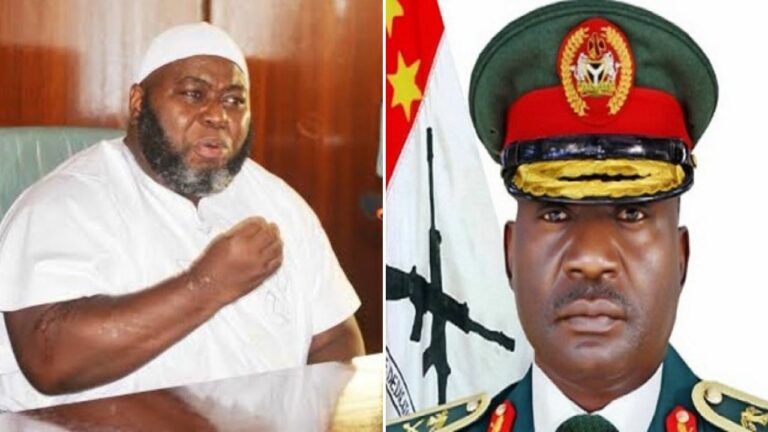
LEADER of the Niger Delta Volunteer Force (NDVF) Asari Dokubo recently declared that his ‘men’ are in charge of security on the Abuja-Kaduna road but the Nigerian military has said the former militant leader lied.

Director, Defence Information (DDI), Tukur Gusau, a brigadier general, told The ICIR on Friday, June 30, that troops of the Nigerian Army are the ones maintaining security on the road, and not Dokubo’s men.

At the peak of insecurity on the Abuja-Kaduna road, motorists and passengers were routinely killed or abducted on a daily basis, as bandits and terrorists had a field day. The situation forced travellers to abandon the road, opting to commute on the Abuja-Kaduna train.

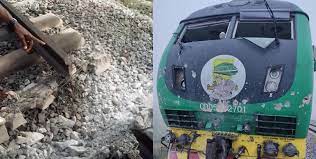
But the rail route turned out to be unsafe. On March 28, 2022, terrorists attacked the Abuja-Kaduna train carrying hundreds of passengers, reportedly killing nine and kidnapping several others. The incident, which forced the shutdown of the rail track, exacerbated insecurity on the Abuja-Kaduna route, as road became the only option for individuals travelling on that axis.

The attack on the Abuja-Kaduna train was the peak of insecurity on the Abuja-Kaduna axis.<br />Image: ICIR archives.
The attack on the Abuja-Kaduna train was the peak of insecurity on the Abuja-Kaduna axis.
Image: ICIR archives.

The security situation on the road has stabilised in recent times, with a sharp drop in cases of abduction, robbery and killings on the route.

It was taken for granted that the military and other security agencies were responsible for the improved security on the road. But Nigerians were stunned when Dokubo declared on June 16 that his men were behind the relative calm on the Abuja-Kaduna road.

Dokubo made the claim after meeting President Bola Tinubu in the Presidential Villa, Abuja.

Speaking with journalists after a closed-door meeting with the President, Dokubo faulted the performance of the military in the ongoing campaign against insecurity across the country.

The ex-militant leader went ahead to reveal a shocker – that his ‘private army’ was contracted by the Nigerian government to maintain security on the Abuja-Kaduna road, as well as in different parts of the country.

Dokubo’s words

He said: “There is a full-scale war going on and the blackmail of the Nigerian state by the Nigerian military is shameful. They said they do not have enough armament and people listen to this false narrative. They are lying. They are liars. I repeat they are liars because I am a participant.

“I am a participant in this war. I fight on the side of the government of the Nigerian state in Plateau, Niger, Anambra, Imo, Abia and Rivers. And in Abuja today, you are travelling to Kaduna on this road. It is not the army that makes it possible for you to travel to Abuja or travel to Kaduna, and vice versa. It is my men, employed by the government of the Nigerian state, stationed in Niger.

“Today, you travel to Baga, you go to Shiroro, you go to Wase. We have lost so many men and in all these engagements, we don’t even have one per cent of the armament deployed by the Nigerian military. One per cent and we have had resounding success.

“So, this blackmail must end. They (Nigerian Army) have enough resources to fight. Instead of fighting, they are busy stealing. They are busy making the government spend unnecessarily.”

Dokubo also accused the military authorities of involvement in oil bunkering in the Niger Delta.

Following Dokubo’s bombshell, the military denied involvement in oil theft. But the bigger issue – Dokubo’s men maintaining security on the Abuja-Kaduna road – was not addressed.

Another Wagner group?

Dokubo’s claims were disturbing, especially against the backdrop of recent activities of the Wagner Group in Russia, and reports of the private army’s involvement in wars and conflicts in different parts of the world. Apart from Russia, where it originated from, the group is known to be active in conflicts in Ukraine, Syria, Sudan, Central African Republic, Madagascar, Libya, Venezuela, Mozambique and Mali, among others.

Members of the Wagner Group
Image credit: Jagran English.

The Wagner group, a private army made up of mercenaries led by Yevgeny Prigozhin, was first identified in 2014, when it started backing pro-Russian separatist forces in eastern Ukraine. It is thought to have helped Russia annex Crimea in the same year. Last week, the group marched on Moscow with an estimated 5,000 fighters, but stopped 200km short of the capital. The development, regarded as an attempted coup or a rebellion, suggested the capacity of a private army to overrun sovereign territories and topple governments.

At last, Military reacts to Dokubo’s claims on Abuja-Kaduna road 

With the Nigerian military authorities silent on Dokubo’s claims, The ICIR reached out to the Defence Headquarters for clarification. The ICIR wanted to know if, truly, Dokubo’s men are in charge of security on the Abuja-Kaduna road, and whether the Nigerian government contracted the former militant leader’s private army to secure parts of the country.

The ICIR also wanted to know details of the security contract between the Federal Government and Dokubo’s army, if there is any.

Dokubo told lies – Military spokesperson

In a telephone interview on Friday, June 30, defence spokesperson Gusau explained that the military deliberately refused to join issues with Dokubo over his claims concerning the Abuja-Kaduna road.

Asked to respond to Dokubo’s claims, Gusau said, “Is it not the comments he made two weeks ago? We deliberately refused to join issues with him. There is no need to join issues with him.”

When The ICIR insisted on a categorical response to the ex-militant leader’s assertion that his men are in charge of security on the Abuja-Kaduna road, and in some other parts of the country, the defence spokesperson said Nigerians know better.

But he stressed that Dokubo’s claims are false.

According to Gusau, the Nigerian Army is maintaining security on the axis with Operation Whirl Stroke and Operation Deep Punch.

“I said we will not join issues with him because Nigerians know better. Nigerians that ply that road everyday, who are they seeing (manning security checkpoints), is it not military forces? So we don’t intend to join issues with him.

“He has made his own statements, we will allow Nigerians to judge whether he is right or wrong. But definitely people are seeing our troops on that road.”

Further asked whether the Federal Government contracted Dokubo to secure the Abuja-Kaduna road and some other troubled areas in the country, Gusau said, “You should ask him where he got the contract. I don’t know where he got the contract. You should ask him.”

“But all we know is that it is the Armed Forces that are in charge of the security of that road. We have Operation Whirl Stroke and Operation Deep Punch on that road. There are certain things we don’t even need to bother ourselves responding because Nigerians know better. We did not intend to waste our time responding to issues on which Nigerians know better.”

20 states reduced their domestic debts by N62bn in three months

DATA from the Debt Management Office (DMO) have shown that the total domestic debt figure for the 36 states and the Federal Capital Territory (FCT) rose by N141.2 billion in three months.

In December 2022, the figure stood at N5.33 trillion, but by the end of March 2023, the figure had increased to N5.5 trillion. 

Within that period, only 20 out of 36 states reduced their domestic debts by N62 billion. The 20 states had a combined debt profile of N2.34 trillion in December 2022.

The states were Abia, Akwa Ibom, Anambra, Bayelsa, Borno, Cross River, Ebonyi, Ekiti, Gombe, Imo, Jigawa, Kaduna, Kebbi, Kogi, Kwara, Ondo, Osun, Plateau, Yobe and Zamfara. 

Zamfara state led with the highest reduction in three months, dropping its debts by almost 13 per cent, from N112.2 billion in December 2022 to N98.1 billion in March 2023. 

It was followed by Akwa Ibom with 6 per cent, Bayelsa with 4.3 per cent, and Abia with a 4 per cent decrease. The states with the lowest reduction figures were Anambra (0.50 per cent), Cross River (0.50 per cent), Kebbi (0.60 per cent) and Plateau (0.60 per cent)

The ICIR had reported how 10 reelected governors increased their debt profiles by a total of 54.9 per cent during the first four years of their administrations.

Another report disclosed how the newly elected governors inherited domestic and external debts of N2.1 trillion and $1.9 billion respectively upon assumption of office. 

Meanwhile, 11 states and the FCT increased their domestic debt profiles within three months. Their domestic debts rose from a combined total of N2.35 trillion to N2.56 trillion, from December 2022 to March 2023. 

Lagos, Delta, Ogun and Oyo states ranked the highest increase within the period. 

Five states maintained the same debt profiles within the three months. This means that the states did not borrow any money from creditors in the country at the time of this collation.

The five states are Benue, Kano, Katsina, Rivers and Taraba.

Catapult Development Fund offers grant for documentaries

DOCUMENTARY filmmakers can apply for development grants ranging from US$5,000 to US$25,000.

The Catapult film fund is offering the Catapult Development Grant. The organisation gives early support to propel projects that hold the promise of a story that should be uniquely told in film.

The grant enables filmmakers to develop their projects to the next level, at the early stage when funding is hard to find. The grant supports powerful and moving storytelling by filmmakers with a strong voice across a broad spectrum of subject matter.

Catapult accepts applicants who can arrange to have a U.S. 501(c)(3) fiscal sponsor. Grantees will need a fiscal sponsor in order to receive the funds.

The deadline for the submission of the application is July 10, 2023. Interested persons can apply here 

Dubawa wins at Global Fact 10

0

DUBAWA has emerged winner of the highest impact fact check at the Global Fact 10 awards.

A fact check and investigation done by the Nigeria editor of Dubawa, Kemi Busari, won the highest impact category.

The published fact check/investigation focused on a Nigerian fake ‘doctor’ cashing out on a deadly concoction that cures nothing.

Shortlisted in the highest impact fact check in the second category alongside Dubawa (Nigeria), include AFP Fact-Checking (France/USA), Myth Detector (Georgia), and Taiwan Factcheck Center (Taiwan).

At the 10th Global Fact-checking ceremony which was held in Seoul, South Korea from June 26th to 30th, Dubawa was announced the winner of the highest impact fact-check.

Speaking during the ceremony, FactCheckHub editor, Opeyemi Kehinde, discussed overcoming hurdles and how digital media literacy innovation coupled with repurposed fact-checking content generated trivia game content.

FactCheckHub and Dubawa who are part of the Nigerian Fact-checkers Coalition (NFC) were also among the organisations that received grants from the International Fact Check Network (IFCN).

Speaking with The ICIR, Kemi Busari, talked about the challenges encountered during the course of the investigative fact check.

“The investigation itself took about five months, if I even want to add the research part, is far more than that. There were a lot of challenges, we needed to source funds to do the investigation, and secondly, it was hard to get respondents who will be willing to talk about the effect of taking the herbal product.

“Apart from that, it is really a very wide field. I had to read up a lot of scientific articles, terms, and documents so I could understand and clearly interpret the outcome from the laboratory to the public,” he stated.

Reacting to the award won in the category of the highest impact fact check, Busari expressed joy at the global recognition.

“We received the best award a few weeks ago when we saw that NAFDAC immediately swung to action to ensure this product is off the market and we also see their continued effort to make sure that they sanitize the space.

“When some of these little things we do in our small closet get international recognition, it brings a lot of joy and happiness to someone like me and the entire team who worked on the story.”

He went further to advise budding fact-checkers to go beyond the basics in their reports as fact-checkers can hold the government accountable anywhere in the world.

Winners also emerged in other categories of the awards. Cek Fakta-Liputan 6 (Indonesia) won the most creative format while the most innovative collaboration was won by Esatdao Verifica, Agencia lupa, aos fatos projeto Comprova, universo online and meedan.