THE Federal Government has declared Monday, June 12, as public holiday to mark Nigeria’s 2023 Democracy Day celebration.
Permanent Secretary of the Ministry of Interior Oluwatoyin Akinlade disclosed this in a statement on Thursday, June 8.
“Nigeria’s democratic journey has, like in many other climes, encountered both stormy and smooth sails, but the ship of State, its institutions and most importantly, the Nigerian people have remained steadfast on the tenets of democratic governance.
“On this memorable occasion therefore, Nigerians and friends of Nigeria are invited to appreciate the progress that has been made, celebrate the milestones covered and look forward to a better future for the country’s democracy,” the statement said.
Until 2019, Nigeria celebrated Democracy Day on May 29.
However, former Nigerian President Muhammadu Buhari directed that the celebration be marked on June 12 in honour of Moshood Abiola, acclaimed winner of the 1993 presidential election, held on the same date.
June 12 has always been significant to Nigerians, many of whom refer to the election as the most peaceful and credible poll ever held in the country.
An estimated 14 million Nigerians showed up at polling units, defying bad weather to vote in Abiola in an election they hoped would put an end to military dictatorships.
Although data from the elections showed that Abiola emerged winner of the election, he was never formally declared the winner.
Abiola was also never sworn in by the military government under the administration of Ibrahim Babangida, an Army General.
While struggling to reclaim his mandate, Abiola was imprisoned by the then Head of State Sani Abacha, another Army General who took over from Babangida. Abiola died while still in detention, in 1998.
Buhari conferred Abiola with a posthumous award of the Grand Commander of the Federal Republic (GCFR), the highest national honour exclusively reserved for Presidents and former Presidents.
“I received today the shocking news of the death of Prof. Opeyemi Ajewole who was gunned down by yet-to-be-identified assailants,” the Vice-President in a statement he signed.
“The late Opeyemi, a renowned Professor of Social and Environmental Forestry, was my classmate at the University of Ibadan and his untimely death just days after personally congratulating me on my swearing-in, came as a rude shock.
“I condemn the gruesome killing of Prof. Opeyemi, and wish to express my deep condolences to his family and the University of Ibadan Master Class of 1990. I pray for the repose of his gentle soul.”
Confirming his death, spokesperson of the Oyo State Police Command, Adewale Osifeso, told journalists on Tuesday, June 6, that an investigation has been opened into the matter.
“The matter is under investigation. Updates would be provided accordingly,” he said.
It was also revealed that the assailants went away with the lecturer’s car after he was killed.
The ICIR made unsuccessful attempts to get an update on the police investigation from Osifeso. He didn’t respond to phone calls.
But in a statement on Thursday, June 8, the UI chapter of the Academic Staff Union of Universities (ASUU), called on the Inspector-General of Police (IGP), Usman Alkali Baba, to take swift action in bringing Ajewole’s murderers to justice.
ASUU chairperson in UI, Ayo Akinwole, implored the IGP to extend his support to the Oyo State Police Command by providing the necessary resources and assistance required to uncover the truth behind Ajewole’s untimely demise and ensure the arrest of those involved.
The union also appealed to President Bola Tinubu to intervene promptly and demonstrate to the Nigerian populace that their lives are paramount under his administration.
“The ASUU-UI community is overwhelmed with profound grief, as if our hearts have been pierced by a thousand swords. We tremble uncontrollably as if our very essence has been exposed, vulnerable amidst the harsh tundra,” he said.
“We condemn in totality the gruesome murder of our comrade, Prof. Opeyemi Ajewole and charge the security operatives to track down and apprehend the perpetrators of this dastardly act, with a view to unravelling the motive behind the incident, as well as bringing the perpetrators to book.”
He lamented that “death lurks in every nook and cranny of this nation, where life has become incredibly cheap”.
Akinwole added that the Nigerian populace has continued to be plagued by terrorism, banditry, kidnapping, armed robbery, assassination, hunger, unemployment, and countless other threats, relentlessly crushing the collective aspirations of every citizen.
“The situation of the Nigerian academics is even doubly precarious; they are prophets without any honour at home.
“The union wishes to use this teary occasion of Prof. Ajewole’s sudden death to call on the Nigerian state to resolutely tackle the problem of insecurity in the country, apprehend the killers of Prof. Ajewole and punish them most appropriately,” he noted.
Ajewole’s killing came eight months after Adigun Agbaje, a professor of Political Science at UI, was kidnapped by gun-bearing men wearing military uniforms along on Lagos-Ibadan expressway.
A police officer was killed during the incident.
Although Agbaje later regained his freedom, one of his relatives told newsmen shortly after he was kidnapped that the gunmen had, during a phone contact with his family, demanded N50 million ransom.
Also, in March this year, a professor of political science at the University of Calabar (UNICAL), Felix Akpan, was discovered lifeless within his residence.
The Cross Rivers State Police Command Spokesperson, Irene Ugbo, told newsmen that the professor died from multiple stab injuries.
THE Economic and Financial Crimes Commission (EFCC) has arraigned the Deputy Accountant-General of Katsina State, Sani Lawal BK, before the state High Court on a five count charge of conspiracy and criminal breach of trust.
The Commission arraigned him alongside Saadi Maiwada, the former Sub-Treasurer in the Office of the Accountant-General of Katsina state.
This was disclosed in a statement released by EFCC spokesperson, Wilson Uwujaren, on Thursday, June 8.
The defendants, in their capacity’s as the then sub-treasurer and deputy-sub treasurer in the Office of the Accountant General of Katsina State, allegedly conspired and converted the sum of N289 million from the state’s coffers.
According to the statement, investigation revealed that the defendants laundered the stolen funds through the account of Integrated Gas Services Limited, a company where the first defendant (Maiwada) is a director.
The sum of N49 million was also allegedly transferred from the account of Integrated Gas Services Limited to the personal account of the second defendant (Lawal BK) who is now the Deputy Accountant-General of the state.
One of the counts read, “That you, Saadu Miawada and Sani Lawal BK sometime in 2017 at Katsina within the jurisdiction of this Honourable Court while being entrusted with dominion over money belonging to Katsina State Government dishonestly converted to your own use the sum of N120,790,942.86 (One Hundred and Twenty Million, Seven Hundred Ninety Thousand, Nine Hundred and Forty-two Naira, Eighty-six Kobo) which was transferred from Katsina State Government Sub -Treasury Expenditure Account number 1012424374 domiciled in United Bank for Africa (UBA) PLC to Integrated Gas Services Company Limited’s Fidelity Bank account no 4010693761 (CO1717299) and you thereby committed an offence punishable under Section 297 of the Penal Code Law of Katsina State 2021.”
Both defendants, however, pleaded not guilty when the charges were read to them.
In view of their pleas, counsel for the prosecution, Aisha Tahar Habib, prayed the court for a trial date.
The counsel for the defendants, J B Israel, subsequently made an oral application for bail on behalf of his clients which the prosecution objected.
The prosecution noted that a formal application is needed as the court is a court of record.
The court subsequently admitted the accused persons to bail in the sum of N5 million each and ordered that each defendant to provide a surety with a landed property within Katsina.
The court also asked the defendants to present letters of introduction from a traditional ruler.
THE European Parliament is accepting entries for the Daphne Caruana Galizia Prize for Journalism.
The prize rewards outstanding journalism that promotes or defends the core principles and values of the European Union (EU) such as human dignity, freedom, democracy, equality, rule of law and human rights.
Interested journalists must submit in-depth pieces that have been published or broadcast by media organisations based in one of the 27 EU member states. Only entries published or broadcast between September 1, 2022 and July 31, 2023 are submissible.
The winner will receive EUR20,000 (US$21,389).
The deadline for the submission is July 31, 2023. Interested applicants can click here.
HUMAN rights lawyer Inibehe Effiong has taken over the case of a lady, Olufunmilayo Brioluwa, remanded at Kirikiri Correctional Centre in Lagos State for allegedly assaulting a police officer.
The Lagos State Police Command’s spokesperson, Benjamin Hundeyin, a superintendent of police, broke the news of the case on his Twitter page on May 16.
He wrote, “Somewhere in Ogombo yesterday, she assaulted a police officer. She was arraigned today and has been remanded to (sic) the Kirikiri correctional facility till 6th June when the case come (sic) up again in court.”
He accompanied his post with a picture of the lady grabbing a male police officer in uniform and the charge sheet. A crowd of passers-by surrounded the officer and the lady in the picture.
Hundeyin did not give further details of the incident.
The picture he posted has a dark background, suggesting the incident could have happened at night.
Brioluwa was arrested on May 14 and arraigned before the Magistrate Court in Eti-Osa, Lagos, the following day on a two-count charge bordering on alleged assault on an officer.
Olufunmilayo Brioluwa’s charge sheet at the Magistrate Court in Eti-Osa, Lagos State, as published by the Lagos State Police Command’s spokesperson, Benjamin Hundeyin on his Twitter page on May 16.
However, on Thursday, June 8, Effiong said the police failed to tell the court the true account of what transpired.
He said his firm visited the accused at the Kirikiri Correctional Centre on May 25, where she gave a different account of the incident.
Besides, he said the Correctional Service failed to produce the accused in court on June 6, the scheduled date for the second hearing of the case.
“The public statement made by the Lagos State Police Public Relations Officer, SP Ben Hundeyin, does not reflect the true account of events in this case. We will speak to the true facts of the case in court. We urge the police to exercise restraint in the matter.
“We visited Brioluwa in Kirikiri custodial centre on 25th May, 2023. She briefed us extensively on what transpired. We equally appeared for her in court on Tuesday, 6th June when the case came up a second time. Sadly, the Nigerian Correctional Service failed to produce her in court. Ms. Brioluwa is a young and economically disadvantaged citizen. She has no influential person to speak for her.”
According to him, the accused’s present travails are what most oppressed Nigerians who have a conflict with law enforcement officers and fellow citizen face.
He promised to provide the accused with legal representation in line with her fundamental right to a fair trial, as Section 36 of the 1999 Constitution provides. The service will also be given pro bono, he stated.
“However, spirited members of the public who are minded to assist her can reach out to us. She needs help urgently.
“We are afraid that she may spend over a month in custody without being able to perfect her bail. She was admitted to bail by the court but could not perfect it due to lack of resources.”
He said the case will come up again on Tuesday, June 13.
THE Nigerian government has reaffirmed its dedication to developing an inclusive democratic state and a just society, with a strong focus on human rights, labour rights, and social justice.
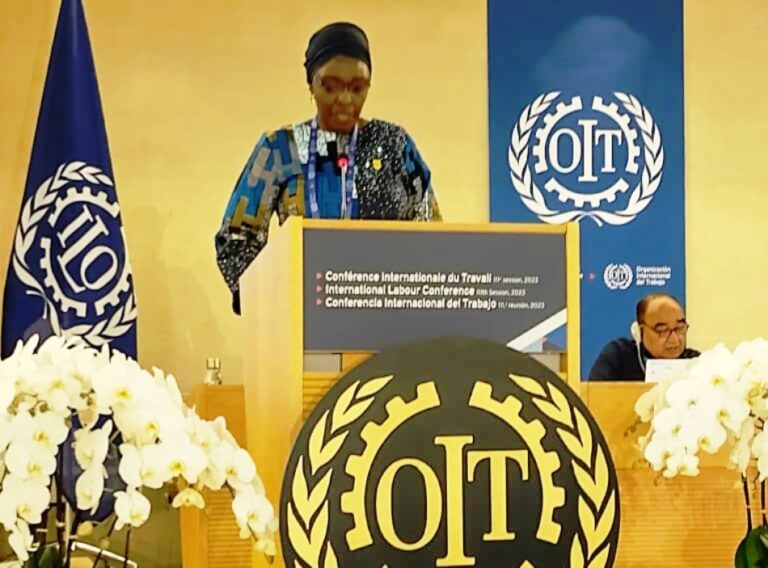
The commitment was expressed by the Permanent Secretary of the Federal Ministry of Labour and Employment Kachollom Daju, in her address to the General Assembly of the 111th Session of the International Labour Conference (ILC) on Wednesday, June 8.
Highlighting the importance of addressing injustice and persistent inequality in the workplace, Daju, who led the Nigerian delegation, noted that sustainable development cannot thrive in an environment plagued by injustice, persistent inequality and unsafe working conditions.
She highlighted the recent revision of Nigeria’s National Policy on Occupational Safety and Health as a significant step towards promoting the government’s intervention in this area.
“To address these challenges, the National Policy on Occupational Safety and Health has recently been revised to ensure the government’s effective intervention.
“We are also in the process of updating our Future of Work Report in alignment with the ILO Centenary Declaration, the Abidjan Declaration, and the Fundamental Principles and Rights at Work,” she stated.
Daju further reiterated Nigeria’s commitment to providing gainful employment with fair income, workplace security, and comprehensive social protection for all citizens.
The Nigerian government, according to her, aims to create opportunities for personal development, social integration, freedom, and popular participation, particularly focusing on gender equality and harnessing the potential of the country’s vibrant youth population.
“Our commitment has been reflected in our second Decent Work Country Programme 2015-2018, and we eagerly anticipate commencing the third phase with technical support from the ILO (International Labour Organisation) Abuja Office,” she added.
Nigeria is also taking steps towards ratifying ILO Convention No. 102 on Social Security (Minimum Standards) as part of its efforts to enhance social protection measures. This ratification would bring the total number of ratified ILO Conventions in Nigeria to 45.
In addition, Nigeria has undertaken to implement social protection intervention programs to mitigate the effects of emerging global challenges and maintain the gains achieved prior to the COVID-19 pandemic.
“We continue to engage with our constituents and development partners to strengthen our legal and institutional frameworks in upholding fundamental principles and rights at work, providing full employment opportunities, ensuring social and labour protection, and fostering social dialogue and tripartite institutions,” Daju stressed.
Earlier, ILO Director-General, Gilbert Houngbo, called for greater social justice and equality as crucial elements in combating growing economic disparities witnessed worldwide.
The ICIR reports that the ILC serves as the annual gathering for more than 180 member countries of the International Labour Organisation (ILO), providing a platform to discuss crucial labour-related matters.
The 111th conference of the ILO commenced on June 5 in Geneva, Switzerland, and will continue until June 16.
CLIMATE change is not just an environmental issue; it is also a social and economic problem affecting communities around the world. In Nigeria’s Kwara state, the impact of climate change is being felt in a particularly devastating way, as it is impacting children’s access to education.
The changing climate is making it difficult for children to attend school and receive the education they need to succeed.
Yearly floods have left families and children displaced and left classrooms destroyed.
Before the COVID-19 crisis, sub-Sahara Africa, according to different reports, already had the highest number of students excluded from education, “with more than one-fifth of children aged 6-11 years out of school.”
Chewuru, a community on the fringes of River Niger in Edu Local government area of Kwara state, North Central Nigeria tells a story of a desolate community that has been experiencing yearly flooding for more than 30 years and no form of assistance from the government.
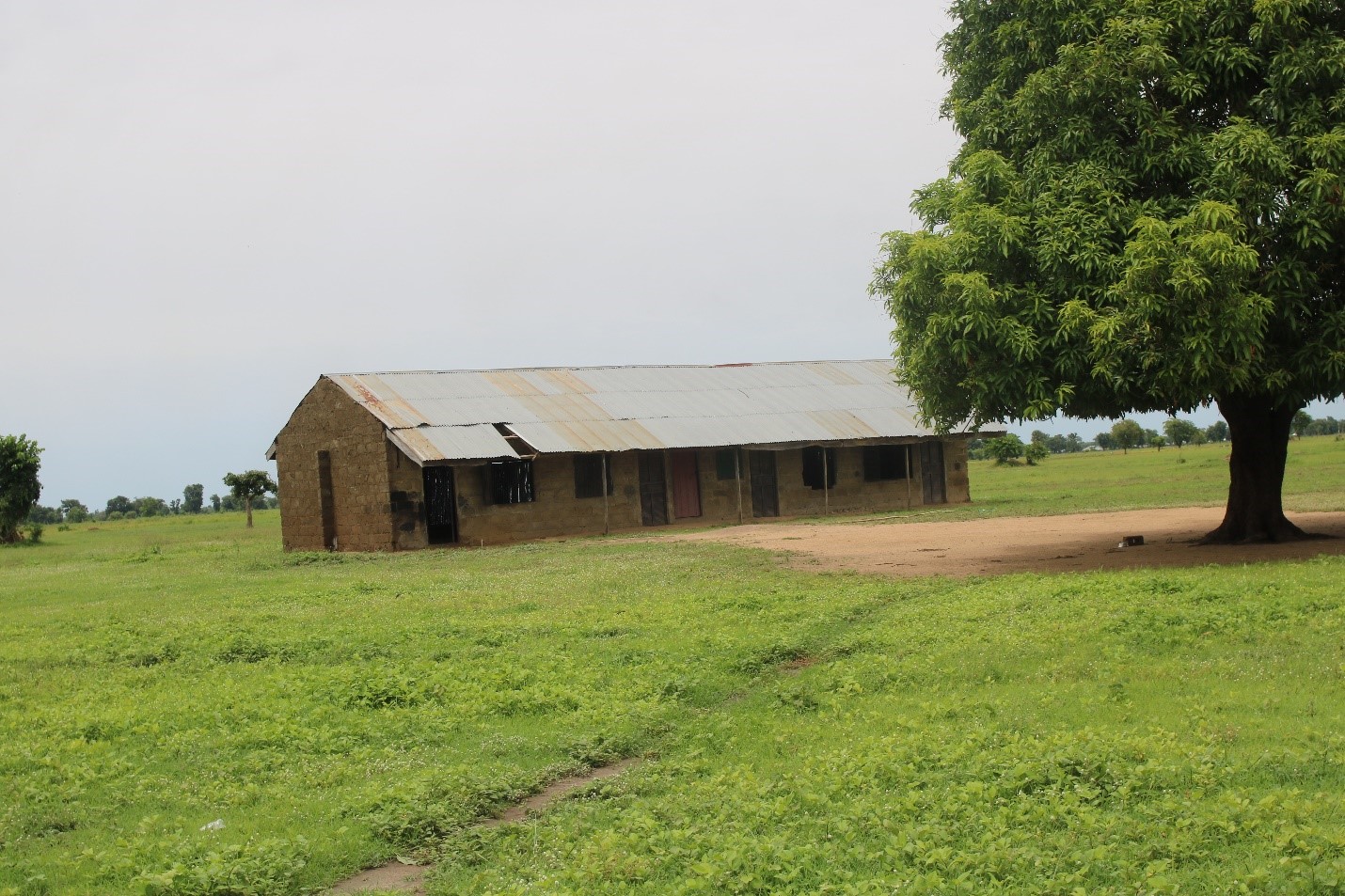
Chewuru LGEA school Photo: Emmanuel Adegoke
At the entrance of the community is a block of two rooms that serve as the community primary school, built through communal effort.
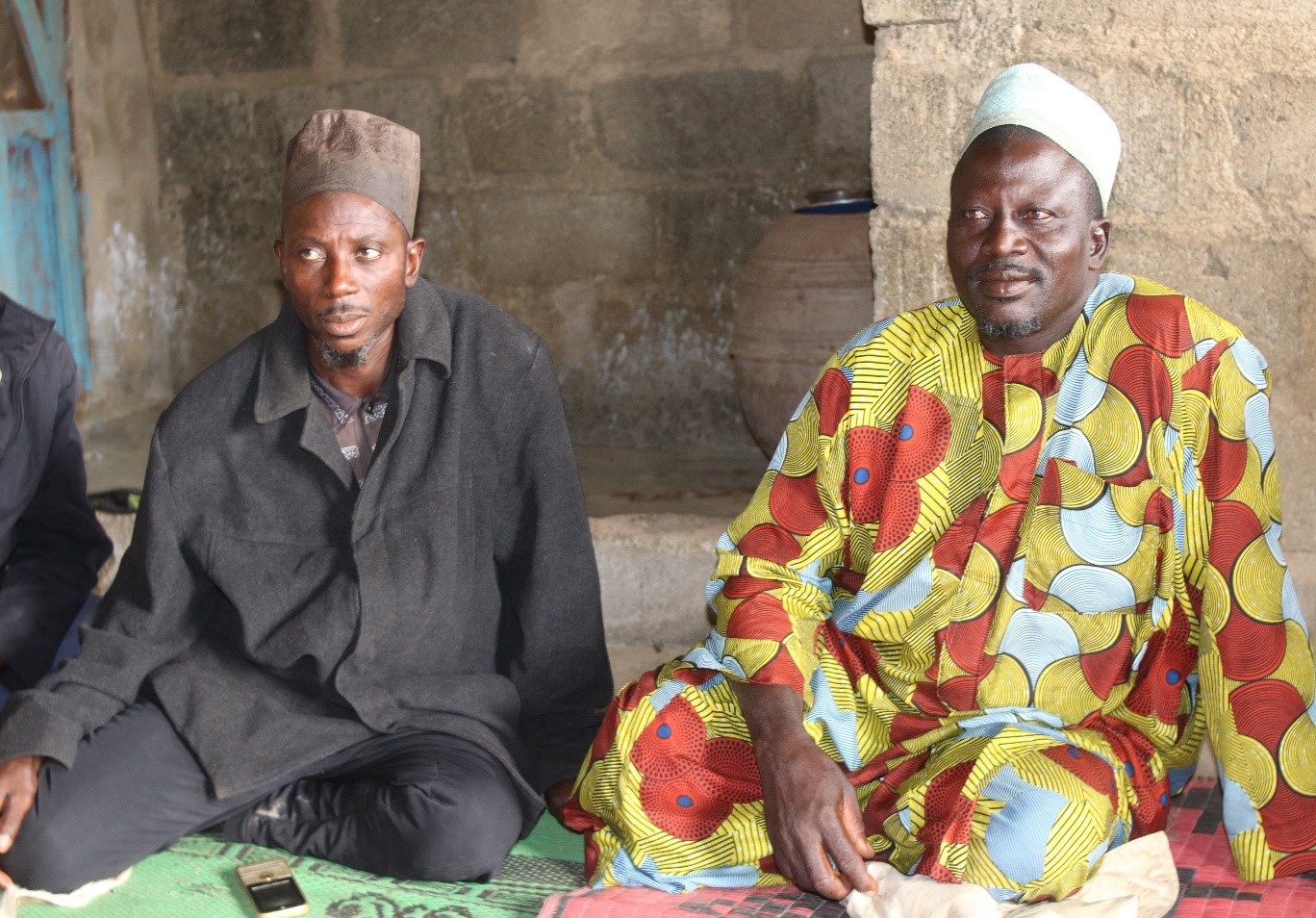
While taking the reporter around the community of about 35 houses and 400 inhabitants, mostly women and children, the community head Umaru Shaaba who spoke through an interpreter, said the people of the town always relocate to Edogi, a nearby town during the yearly flooding as the whole town is always submerged.
He said they can’t farm during the rainy season due to fear of running into losses and only make do with dry season farming, which affects yields due to lack of irrigation equipment, the effects according to him, has also affected education as the school is always flooded and teachers have stopped coming into the community.
Alhaji Umaru Shaaba sitting on the right and another village chief Photo: Emmanuel Adegoke
For children of the community, any rainy day and most especially during the thick of the rainy season, automatically becomes a no-school day as the school is flooded, which has resulted in the death of a 5-year-old girl in the past he explained.
“We are suffering in this community; we can’t farm, because if we do, flood water will destroy it. Our children don’t go to school during the rainy season, the three teachers posted to the school live in Lafiagi and can’t access the community,” Shaaba lamented.
*
Climate change is causing disruptions to the local economy and way of life.
Droughts, floods, and other extreme weather events are becoming more frequent, making it difficult for families to earn a living and send their children to school.
As a result, many children are being forced to drop out of school or never enroll in the first place, depriving them of the opportunity to learn and build a better future for themselves.
According to the UNICEF climate risk index report released in August 2021, climate change is the greatest threat facing the world’s children and young people, with one billion children at “extremely high risk”.
In Nigeria, children are not alone in their suffering. Out of 163 countries, the country ranks second on the list of nations where children are most vulnerable to climate change.
The issue of water scarcity has also become prevalent in Nigeria’s northern region. Children are mostly at risk as they have to go long distances in search of water which has become a scarce resource due to climate change.
Asabe Usman, aged 10, and 13-year-old Fati Shaaba are some of the victims affected by water scarcity in Chewuru village.
Standing beside a hole to fetch water, Asabe hung her head in despair when asked about the water situation in her community.
Asabe fetching water from the only water source in the village Photo: Emmanuel Adegoke
She spoke about constant battles with cholera and diarrhoea adding that sometimes, she doesn’t go to school after walking the long distance to fetch water for the household.
Fati, couldn’t converse in English, but with the help of an interpreter, she spoke in her local dialect about what the children of her community go through.
“I wish the government can provide another water [dig a borehole] for us so we can stop drinking this water,” she said.
Hajia Ladidi, her mother, said they use water from a dirty stream that runs through the hole dug in the grounds to find water.
She also said the community is aware that the water is not healthy, but they keep using it because there is no alternative.
“We drink water from the river, which made our children and the women fall sick, which has led to the death of some people before we can take them to hospital in the next village.”
“We always hear on the radio what the government is doing for other communities suffering from flooding and water scarcity to alleviate their suffering. We only hear, we don’t see.”
“The only time we see government in the village is during the election campaign with many promises, and after that, nothing is heard again from them, we have resigned to fate,” she explained with a teary eye.
The community’s once-reliable water sources have been severely affected. With unpredictable rainfall patterns and diminishing water bodies, the scarcity of clean water has become an everyday struggle.
Children are forced to travel long distances in search of water, sacrificing precious time that should be spent in classrooms. The lack of sanitation facilities further exacerbates health risks, perpetuating a cycle of waterborne diseases that hamper their overall well-being.
This alarming scenario not only disrupts the lives of the children but also undermines the progress toward the United Nations’ SDGs.
Goal 4, which aims to ensure inclusive and equitable quality education, is dealt a significant blow as the children of this community are denied their right to education due to climate change-induced challenges.
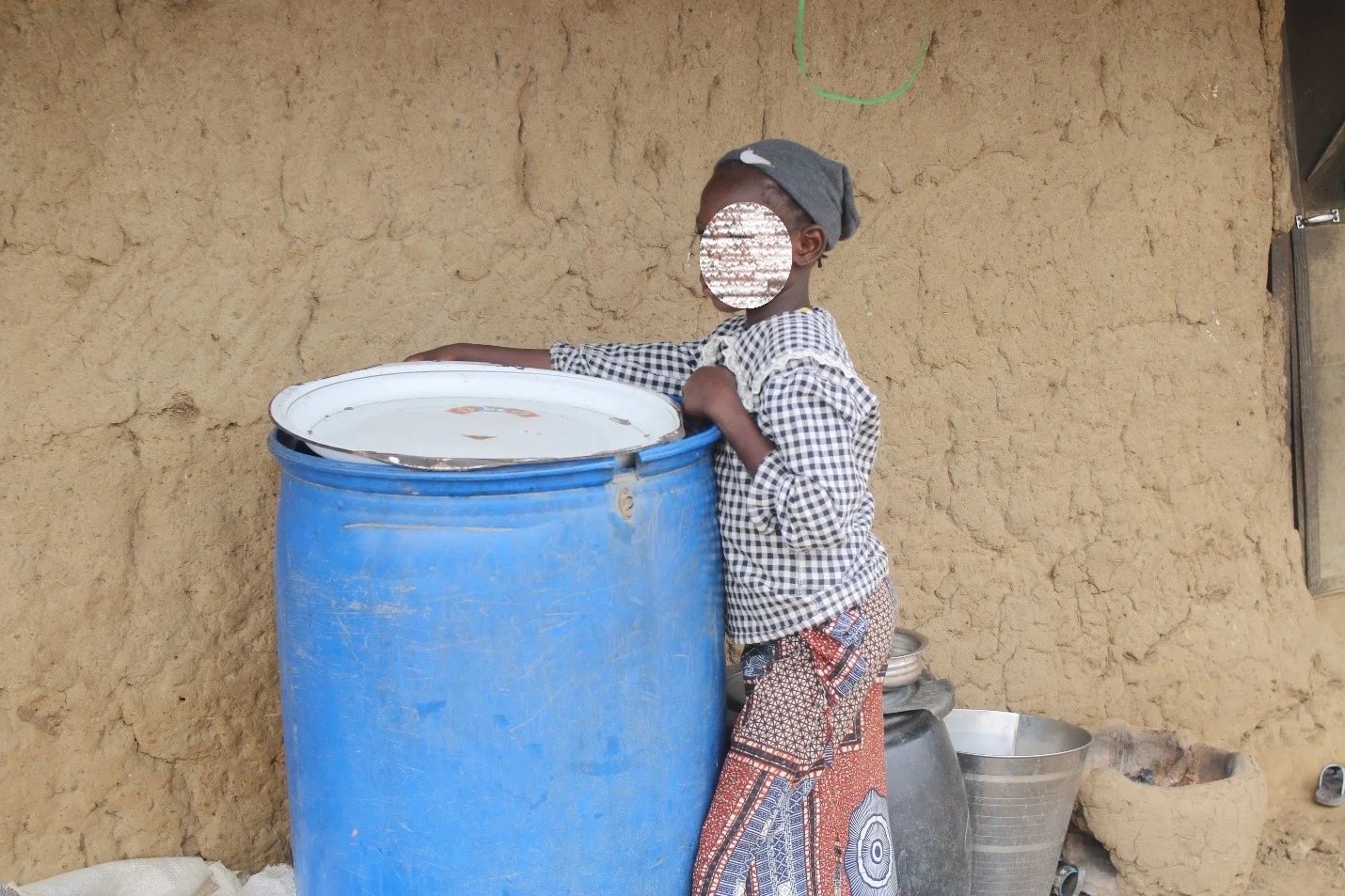
Fati standing beside an empty drum Photo: Emmanuel Adegoke
Additionally, Goal 6, focusing on clean water and sanitation, is regrettably compromised as the community struggles to access safe drinking water and adequate sanitation facilities.
Children in Nigeria’s northern region form part of the 920 million children globally currently exposed to water scarcity, and the situation is likely to worsen as climate change increases the severity of droughts and contamination.
Circumstances such as climate change and conflict in Nigeria’s northern region have negatively impacted Fati’s education. At 16, she is still in primary five, and despite having the desire to go to school, there is a tendency that she might not further her education if such circumstances persist.
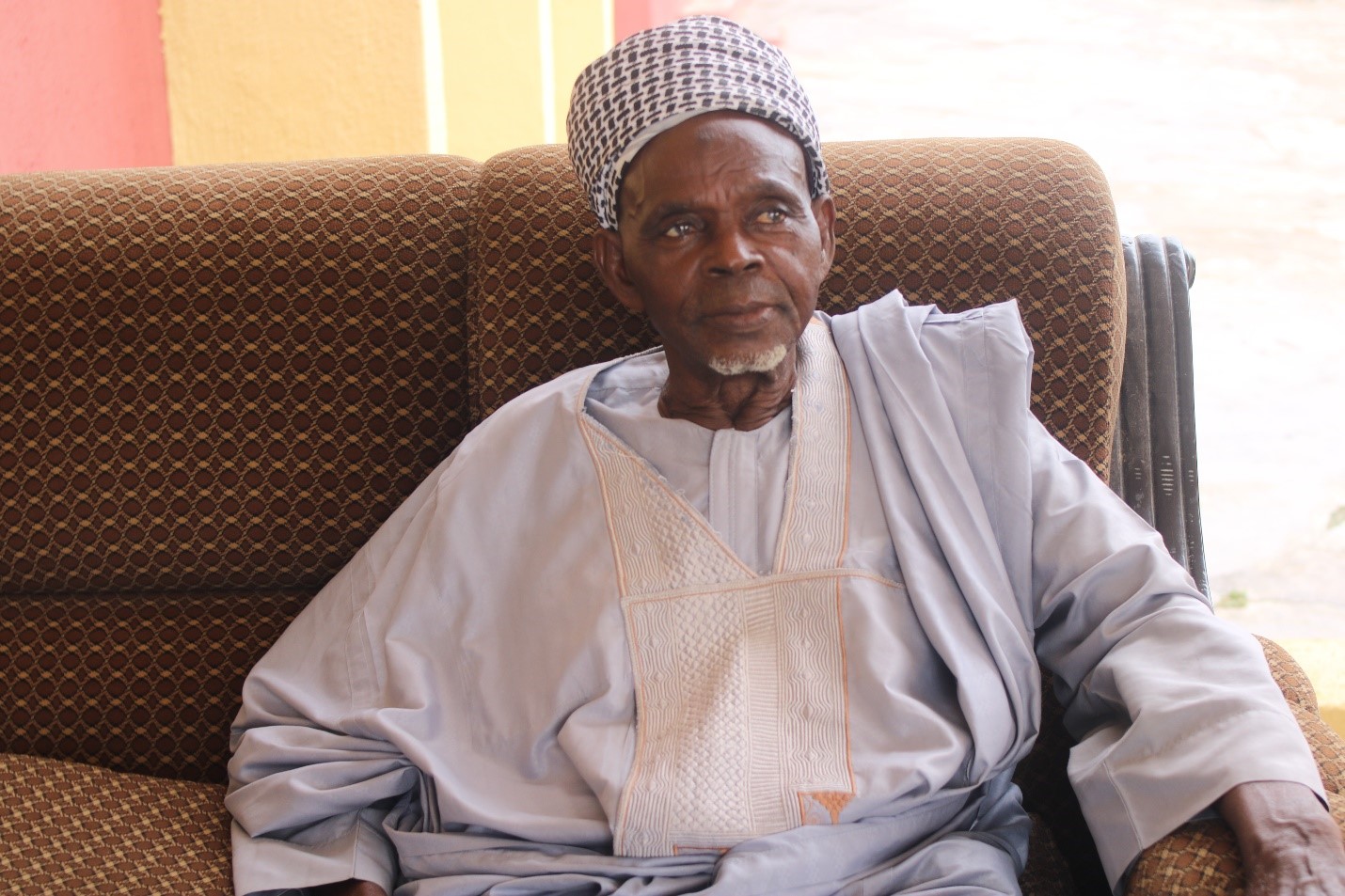
Lukpan of Lafiagi, who is the district head of Likpata and Chewuru Manzuma Ndamusa, who spoke on behalf of communities around the river Niger in the area, said communities always suffer a heavy loss due to the destruction of their farmlands occasioned by the yearly floods.
District head of Likpata and Chewuru Manzuma Ndamusa Photo: Emmanuel Adegoke
He said that during August to October, when rainfall is heavy, villagers always vacate their communities to do the menial jobs in towns to survive.
“The flood every year always destroys food stuff, farmlands, and live stocks are lost, and children can’t go to school.
“Government has visited all these communities to see the suffering of the people with promises, but nothing has been done till date,” he lamented.
*
The situation in Kwara is just one example of how climate change exacerbates existing inequalities and denies children access to education.
As the world continues to grapple with the impacts of climate change, it is becoming increasingly clear that urgent action is needed to protect vulnerable communities and ensure that every child has the opportunity to learn and thrive.
With children suffering significantly from the impact of climate change, there have been calls for world leaders to take decisive action.
As the world discusses climate change at the Bonn Climate Change Conference from tomorrow Monday, June 5, Nigerian children like Fati and Asabe silently wish that their concerns would be well represented and that the summit yields result for the protection of their future.
This story is produced with support from Brain Builders Development Youth Initiative (a climate-focused non-profit in Nigeria) and Sobi 101.9 FM Ilorin, Kwara State, North Central Nigeria.
DOUBTS about Nigeria Air continue to mount as its booking website has been redirecting customers to another website, amid other controversies that have trailed the purported national carrier.
Attempts to book a Nigeria Air flight from Lagos to Abuja on the website www.flynigeraiair.world, which the airline had launched, showed that customers were being redirected to www.aviasales.com, a booking website.
This is happening days after the unveiled Nigeria Air aircraft left Nigeria and has been operating as Ethiopia Air.
A check with the flight tracker showed that the aircraft ET-APL had, in the last seven days, shuttled the Djibouti-Adisa Ababa route on June 4, June 6, and June 7.
More disclosures about Nigeria Air emerged on Tuesday, June 6, after its interim managing director, Dapo Olumide, admitted that the aircraft branded Nigeria Air unveiled on May 26, was a chartered flight from Ethiopian Airlines.
Olumide confirmed that the aircraft returned to Ethiopian Airlines after the unveiling.
Members of the House of Representatives committee on Aviation had, on Tuesday, June 6, expressed their misgivings on the unveiling of the airline.
The ICIR had reported that the committee, chaired by Nnolim Nnaji, had described the aircraft’s unveiling as “a fraud.”
After evaluating the issues, the committee directed that the Federal Ministry of Aviation and its partners in the Nigeria Air project should immediately suspend flight operations and every other action concerning Nigeria Air.
It urged President Bola Tinubu to “as a matter of urgency constitute a high-level presidential committee to undertake a holistic review of the processes of the whole Nigeria Air project, and advise the government on the way forward.”
It also urged the committee to be set up to “ensure that all individuals, or groups, or organisations involved in the controversial shenanigan named Nigeria Air take-off are brought to book, prosecuted and sanctioned.”
The former minister of Aviation, Hadi Sirika, had gone ahead to flag off the operations of Nigeria Air despite a standing court injunction against such a move, and without any provision for sustaining the functions of the airline.
“A careful review of the process indicates the exercise to be highly opaque, shrouded in secrecy, shoddy, and capable of ridiculing and tarnishing the image of Nigeria before the international community,” the House committee added.
DESPITE multi billion naira funding from foreign donors and National strategic plans to reduce the spread, communities, particularly in the FCT, are still battling malaria cases while also complaining that they have not been receiving help from the Government to combat this disease. Misappropriation of funds, lack of state ownerships, and poor budget releases are the reasons identified as The ICIR’s Mustapha Usman reports.
Nigeria has been grappling with the burden of malaria, continuously reporting the highest rates of cases and fatalities globally for several years. Despite the implementation of a national malariastrategic plan in 2015, aimed at reducing the disease to pre-elimination levels and achieving zero malaria-related deaths by 2020, the country has persistently maintained its position as the nation with the highest prevalence of the disease.
The plan was to also provide 80 per cent of the targeted population with appropriate preventive measures by 2020.
Three years after the target year, Nigeria remains top of the countries with the highest recorded cases of malaria.
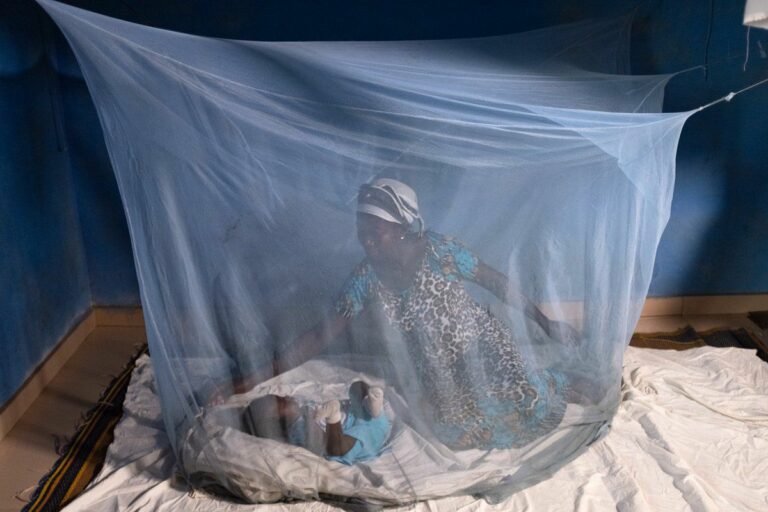
The ICIR visited three suburbs in the FCT to inquire about government interventions and the availability of vaccines for malaria, the common answer among the residents in these communities was that they had never received intermittent treated nets (ITNs), intermittent preventive treatment for malaria during pregnancy, or access proper healthcare.
The National Malaria Elimination Programme (NMEP) defined ITN as a factory-treated net that does not require any additional treatment and can, in most cases, can only be obtained from mass distribution by government agencies or concerned non-governmental organisations (NGOs). The ITNs repel and kill mosquitoes, thus providing protection against mosquito bites and reducing the transmission of malaria parasites.
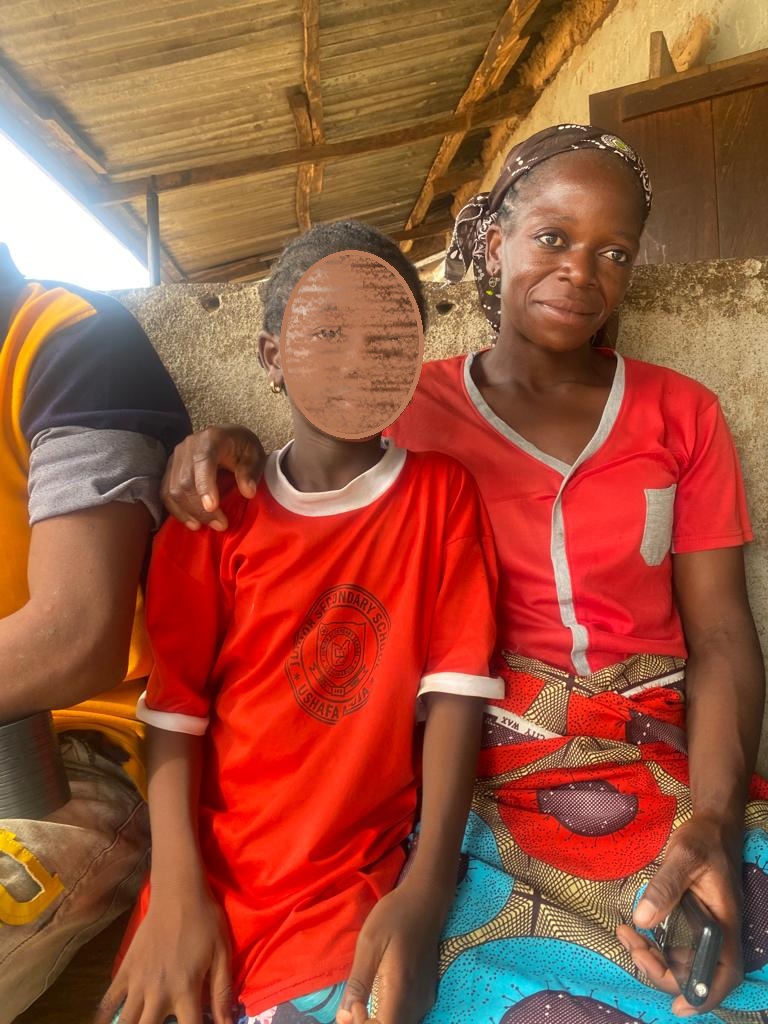
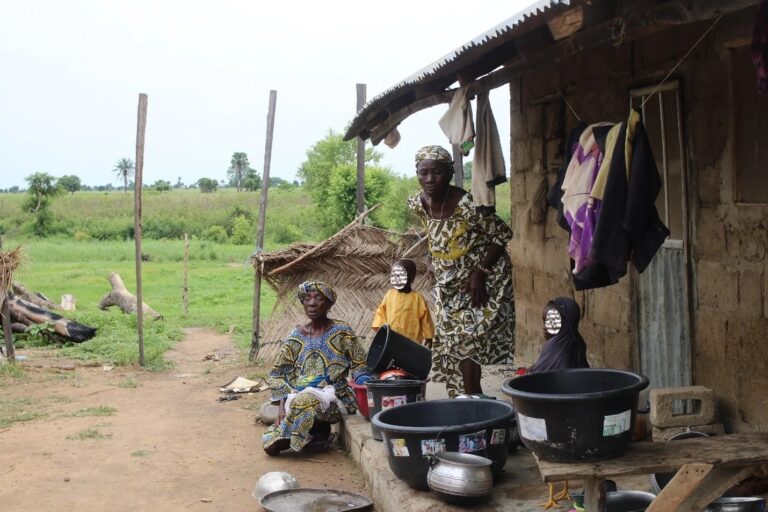
Hassana and her daughter Helen
Umaru Hassana, 40 years lives in Sumakpa community, a suburb of the Katampe area in FCT, with her husband and three children. The family sleep in a room with an old, defective door, and has never slept under a mosquito net.
Early this month, April, Hassana’s daughter, Helen, fell ill with malaria. She experienced high fever, and her body temperature soared, prompting the family to rush her to Dr. Bello Hospital in Mpape, a journey of approximately 30 minutes by bike.
Upon getting to the hospital, Hassana discovered that her daughter was suffering from yet another Malaria case and had to spend up to N10,000 from her hard-earned profit for hospital bills.
She explained to The ICIR that it was the second time that she would be taking Helen to the hospital despite the long distance and bad road. Before getting to the hospital, one has to cross through several bodies of running water amidst other road difficulties.
“We they get problem for sickness o, we no get hospital for here, we dey carry ourselves go Mpape, a private hospital called Dr Bello hospital. Even this month, this one (pointing towards her daughter, Helen) we carry go hospital,” Hassana said.
Sumakpa Community Secretary Amos Jerry confirmed that the community in the past 15 years has not received any government intervention to combat the ravaging malaria in the community. According to him, the community lacks a public health centre; most times, rely on a makeshift pharmacy and ‘God’s intervention.’
The situation of this community mirrors Tuda Gani a community, in Dei -ei-about 42 kilometres away from Sumakpa-as few residents who spoke to The ICIR confirmed that they have not been sleeping under ITNs because they have never been provided one.
Muhammad Aishatu, 27, recovered from Malaria a week ago as at the time of the interview, her eyes were still red, her face pale, and her voice hoarse as she narrated her ordeal.
“Malaria is a normal thing here, there’s hardly a week where any of my family won’t have fever or feel cold. And before now, when the heat was still much, all of us used to sleep outside. I can’t really remember the last time they brought the mosquito nets around here, but I know that it has been long because I was still a teen then,” she said.
Caused by parasites that are transmitted to people through the bites of infected female Anopheles mosquitoes, malaria is a preventable and curable major public health issue affecting millions of Nigerians.
While individuals of all ages are susceptible to the disease, children and pregnant women are particularly vulnerable and prone to experiencing complications. This heightened susceptibility puts them at a higher risk of severe illness and increases the likelihood of mortality, especially among children under the age of five.
Aside from the National malaria strategic plan (NMSPs), in the last decade, Malaria control in Nigeria has witnessed a mass campaign for the replacement of insecticide-treated nets (ITNs), intermittent preventive treatment of malaria during pregnancy and continued funding from foreign donors. This is, of course, expected to improve the prevention of Malaria in the state; however, misappropriation of funds, poor releases and marginalisation of some communities are major factors contributing to this burden.
Trends of Malaria in Nigeria
Malaria transmission rates vary across regions in Nigeria, with higher prevalence generally observed in the northern states compared to the southern states, according to the 2021 National Malaria Indicator Survey (NMIS).
The 2021 Nigeria Malaria Indicator Survey (NMIS) revealed that malaria prevalence fell from 42 per cent in 2010 to 27 per cent in 2015, then to 23 per cent in 2018 and finally to 22 per cent in 2021.
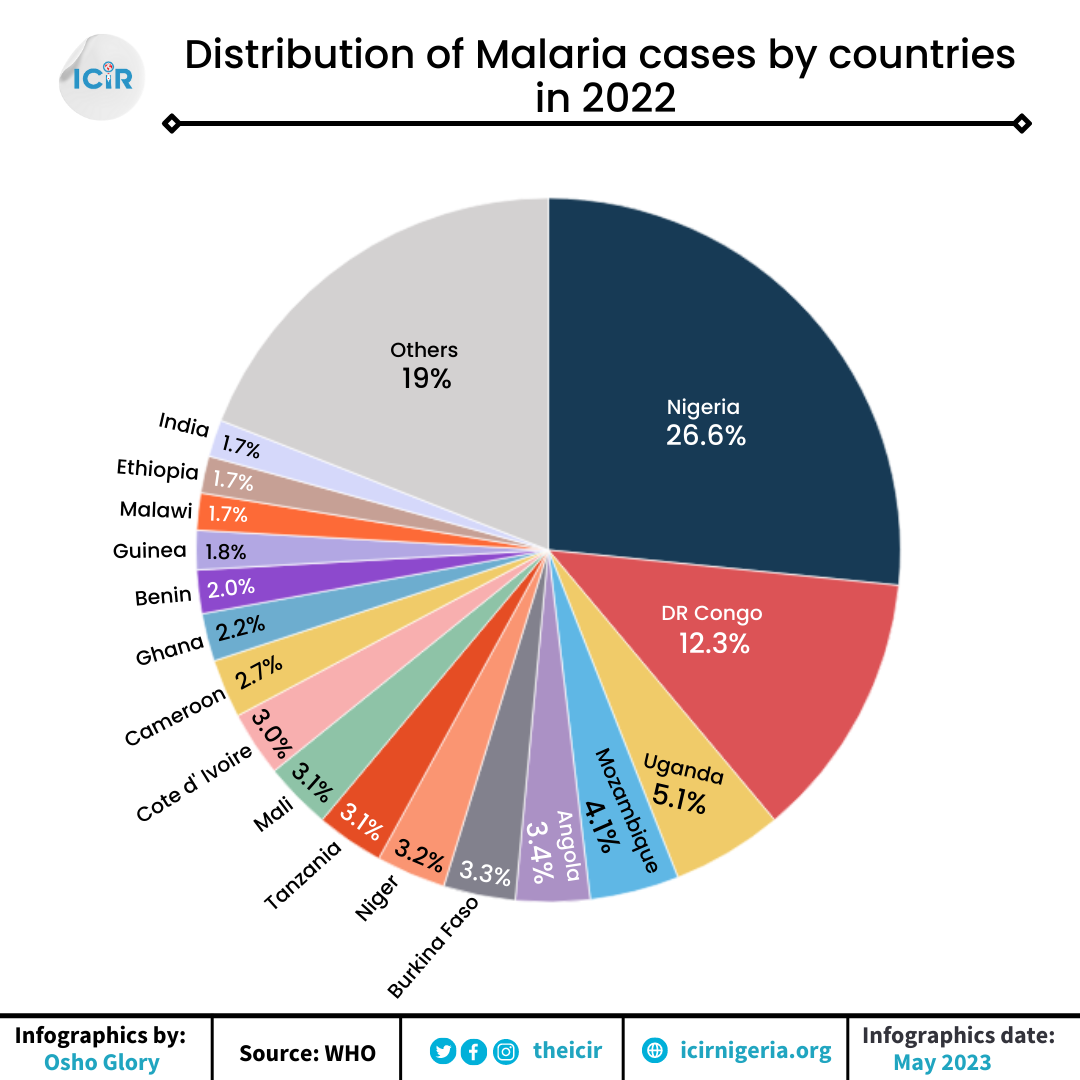
Infographic showing the distribution of Malaria by countries according to 2022 WHO report.
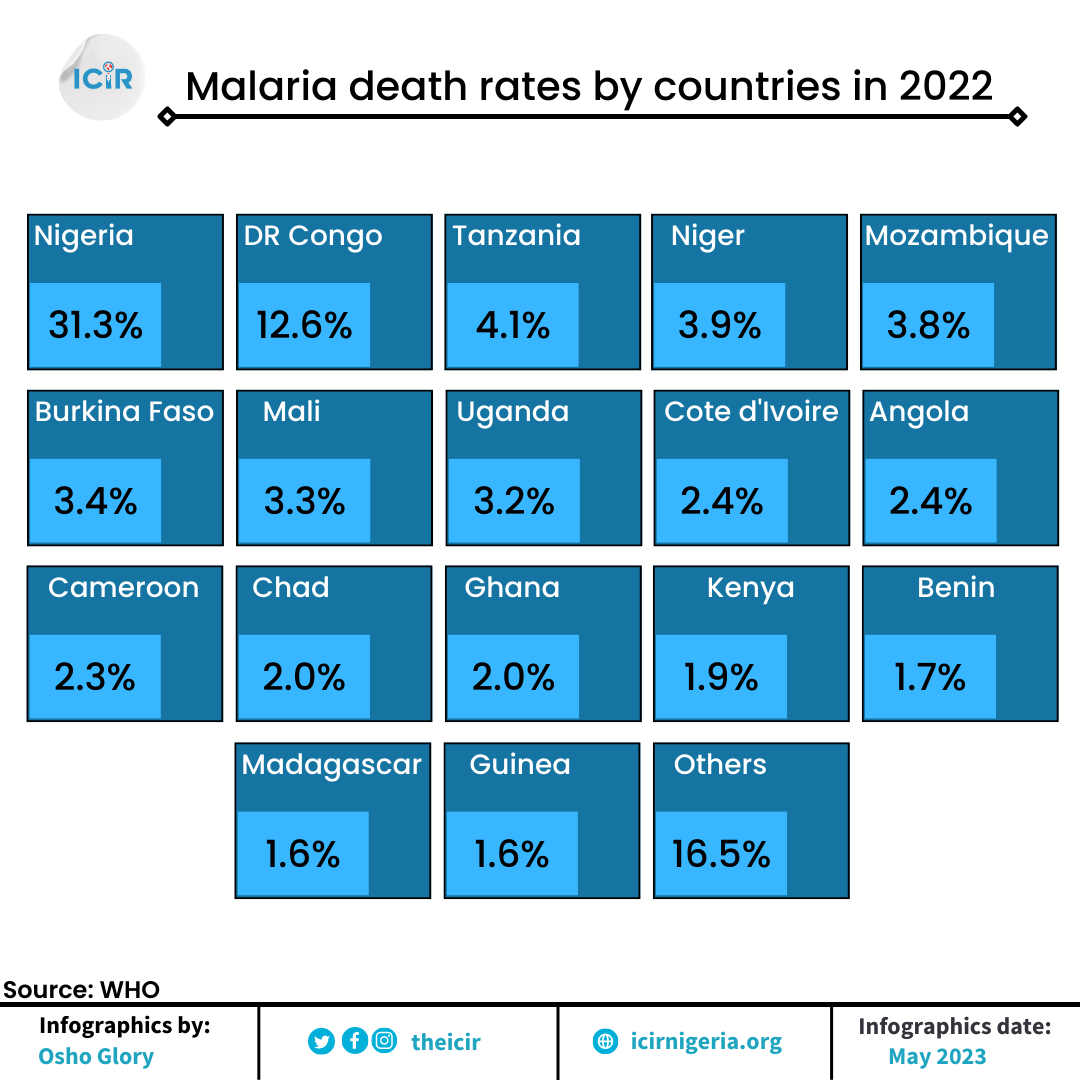
However, the2022 World Malaria Report – the latest report on the disease – shows that the country contributes about 27 per cent (26.6) of the global burden of the disease. The report also shows that Nigeria accounts for about 31.3 per cent of deaths from malaria, the largest globally.
Infographic showing the country with the highest malaria death rate, according to WHO 2022 report.
According to the United States government, malaria is a major public health problem in Nigeria, accounting for more cases and deaths than any other country in the world. The US report stressed that malaria is a risk for 97 per cent of Nigeria’s population.
”The remaining three per cent of the population live in the malaria-free highlands. There are an estimated 100 million malaria cases, with over 300,000 deaths per year in Nigeria. This compares with 215,000 deaths per year in Nigeria from HIV/AIDS. Malaria contributes to an estimated 11 per cent of maternal mortality,” the US add.
The Nigeria Malaria Elimination Program Coordinator, Perpetua Uhomoibi also said that the endemic disease accounts for 60 per cent of outpatient visits to health facilities, 11 per cent of maternal deaths (4,500 per year), and 25 per cent of infant deaths (children under a year old).
Budgets, foreign donation for malaria
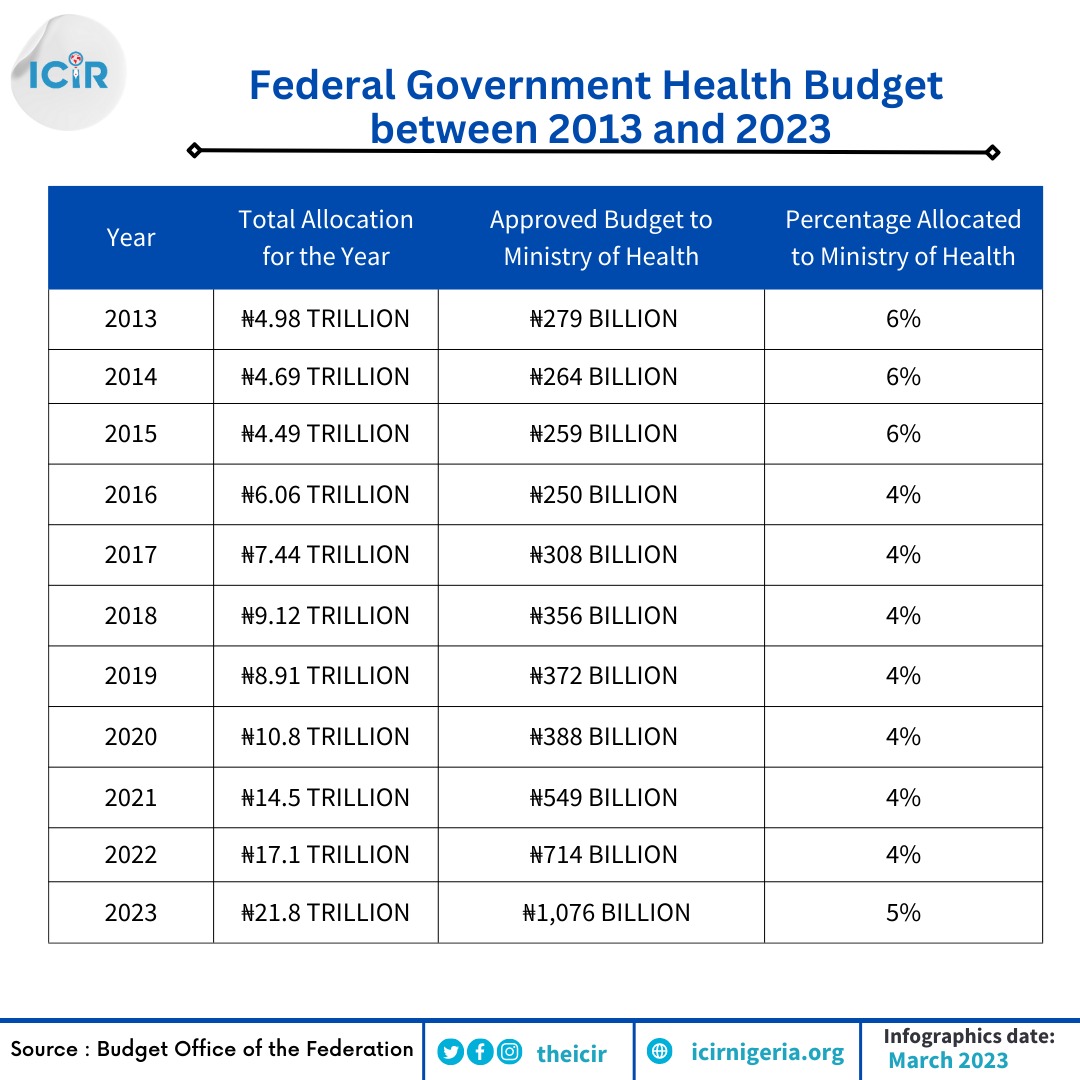
The allocation of the budget for health by federal government, as a proportion of total investments, has consistently remained low (averaging between 5-7 per cent). This percentage is consistently below the recommended 15 per cent set by African Heads of State during the Abuja Declaration of 2001.
FG Health budget from 2013 to 2023.
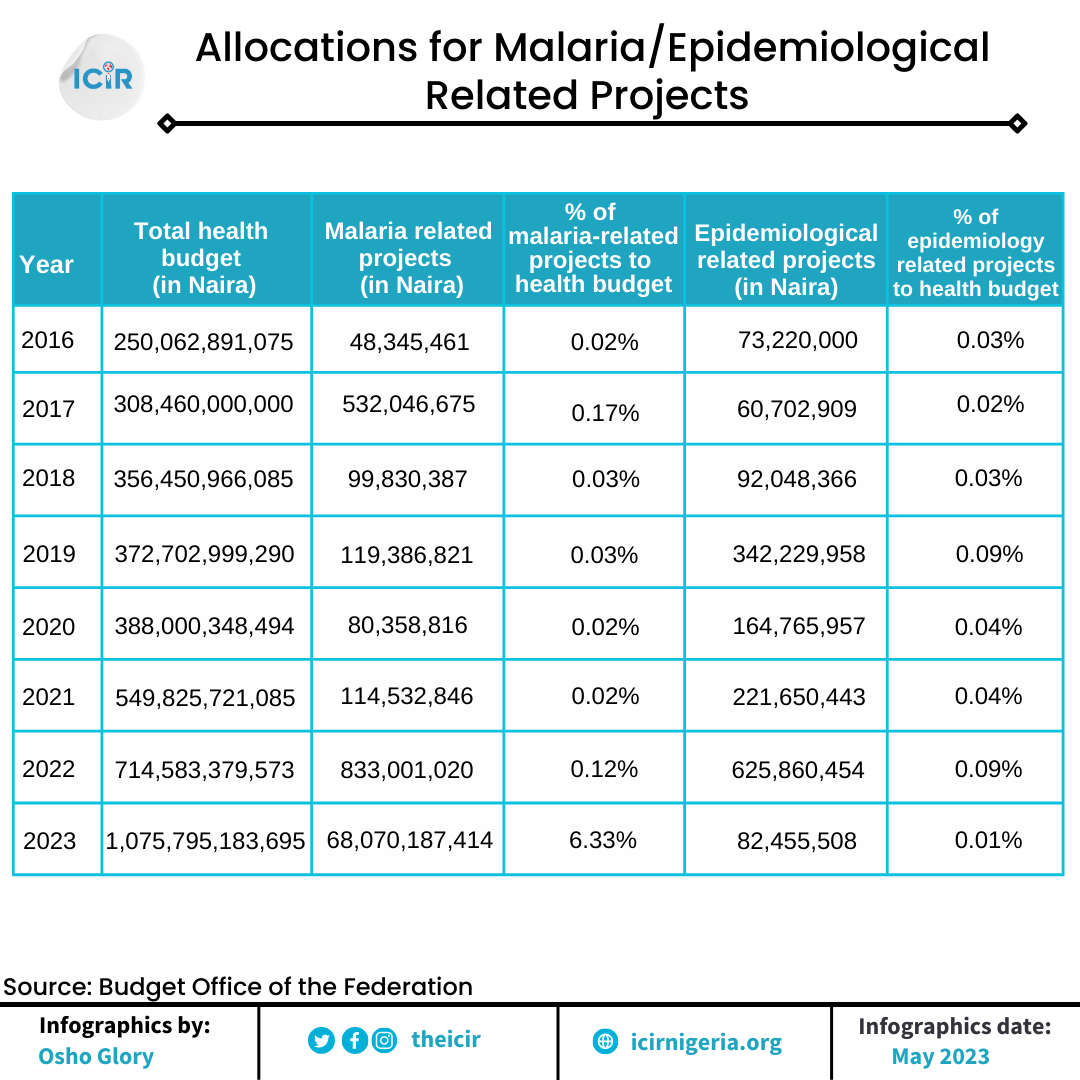
Checks by The ICIR revealed that the Malaria related allocations in the National Health budget had increased from 0.019 per cent in 2016 to 6.327 per cent in 2023.
However, NMEP, the body solely responsible for the elimination of malaria, saw a decline in the portion of the budget allocated to them from the Federal Ministry of Health budget between 2016 to 2019, according to the 2019 Malaria Programme Review.
The budget decreased from 0.003% in 2016 to 0.0003% in 2019, representing a ten-fold decrease. This reduction, according to the review, has widened the funding gap for the Malaria Strategic Plan.
Infographic showing the percentage allocations for malaria/epidemiological related projects (2016 – 2023)
Also, the Federal Government has consistently failed to earmark a significant amount to epidemiology and disease control-related projects as the highest amount the country has ever allocated for epidemics was in 2019 when it approved N625, 860,454 million, translating to 0.09 per cent of the health budget and that was in 2019.
Meanwhile, apart from the National and state budgets for epidemic responses, Nigeria has benefitted from other sources of funding for Malaria, which include the Global Fund, US President’s Malaria Initiative, UK Department for International Develop, The World Bank, World Health Organization and UNITAID.
For instance, the World Bank, between 2006 and 2019, committed a total of $180 million to a Malaria Booster Programme for seven states in Nigeria – Gombe, Kano, Jigawa, Adamawa, Anambra, Rivers and Akwa Ibom. Although the money was given primarily to the states, part of it was to go into some activities on the national level.
Also, Nigeria was also allocated over US$1.5 billion for the 2017-2019 and 2020- 2022 funding cycles, meaning that it is one of the single biggest recipient of Global Fund grants.
In February 2023,Global Fund approved nearly $1 billion for Nigeria to continue its fight against tuberculosis (TB), malaria, and HIV/AIDS for the next three years. Out of approximately 110 countries, Nigeria got the highest grant of $933,156,931, covering 2023 to 2025.
The fund adds toalmost $3 billionthat the country has received since 2003. The Global Fund boasts of providing 63 per centof all international financing for malaria programmes and has invested more than US$16.4 billion in malaria control programs as of June 2022.
Since the start of the COVID-19 pandemic in 2020, it stated that it awarded over US$4.2 billion to 108 low- and middle-income countries and 21 multi-country programmes to fight COVID-19 and protect lifesaving malaria, HIV and TB interventions.
Similarly, USAID PMI, DFiD, Unicef, WHO, UNITAID were also part of the foreign donors that funded Nigeria in its fight against Malaria.
The ICIRgathered that USAID PMI donated N73,230,000 in 2014 and N75,000,000 in both 2015, 2016, and 2017 for the malaria intervention project. Also, DFiDfunded the Malaria treatment and intervention project in Nigeria in 2014 with N89,272,524 and while Nigeria got N2,967,421 in 2015.
Malaria interventions
In 2021, the NMEP implemented its Nigeria Malaria Indicator Survey (NMIS) across the country, including the FCT. The survey asked questions about the intermittent preventive treatment of malaria during pregnancy, fever management in children and the usage of intermittent treated nets, popularly known as mosquito nets.
The NMEP, is a division of the Department of Public Health of the Federal Ministry of Health which is responsible for policy formulation, coordination and regulatory roles on all matters that concern Malaria control and elimination in Nigeria. Its pursuit of universal access to prompt malaria diagnosis, effective treatment and universal coverage with preventive interventions made it to develop a very ambitious plan in 2014 targeting Elimination.
The result shows that 56 per cent of the households own at least one insecticide-treated net (ITN), translating to half of the examined population, while 25 per cent of households own enough ITNs to cover all households’ members.
According to the report, 50 per cent of the sampled pregnant women aged 15-49 slept under an ITN, while 31 per cent of women within that age bracket said they received three or more doses of Intermittent preventive treatment.
This figure revealed that there is still a significant problem in preventing malaria in the country, particularly in FCT, where only 29 per cent of the household population sleep under an ITN.
The low percentage could be traced to many residents not having access to the nets, as it was noted that the last time an ITNs were distributed in FCT by the government was in 2011.
Households that own at least one ITN increased from 8 per cent in 2008 to 69 per cent in 2015 before decreasing to 56 per cent in 2021.
Another key finding by NMEP was that only 41 per cent of children under age five nationwide sleep under an ITN.
On May 7, Ramatu Bolanle, a resident of Gida fulani community of Dei-Dei, was in a PHC to complain about the sickness of her five-year-old son when this reporter approached her. The attending doctor had directed her to do a malaria test, which came out positive.
Bolanle explained to The ICIR that she suspected that the cause of the malaria was mosquito as she has been sleeping outside of her house without nets because of the heat.
This situation represents one of the numerous unreported instances in which children experience preventable illnesses, despite the government’s claims of significant investments and interventions in addressing such issues.
Some other factors contributing posing as challenges for intervention is the widespread extortion of citizens through the sale of free anti-malaria drugs to patients at primary health centres (PHCs) across the country.
Corruption in Malaria intervention project
While there has been a slight reduction in the number of people affected with malaria and deaths recorded over the past few years, there are projections that Nigeria could have achieved even a lower number of cases if the 2015 strategic plan had been successful and adequate funding were allocated for the project.
The 2019 Malaria Programme Review (MPR), stated that the country was unable to accomplish the objectives outlined in the National Malaria Strategic Plan and attributed the failure to the government’s inadequate allocation of funds for combating the disease.
In 2022, the Global Fund, in its audit, accused the National Agency for Control of AIDS (NACA) and the Lagos State Government of misappropriating $19.6 million worth of COVID-19 procurement grants through shady contract awards.
That was also not the first time the Global Fund would accuse Nigeria of misusing its grants. In 2016, the Fund accusedNACA and NMEPof misappropriating the grants they got. The Global Fund consequently suspended them as its grant recipients, and as of 2021, NACA wasyet to clear itself of the 2016 indictment before the Nigerian government.
Need to tackle malaria
Tackling malaria in Nigeria requires a comprehensive approach from all levels of government, according to a public health physician and CEO of TalkHealth9ja, Laz Ude Eze.
He noted that although there has been some progress recorded in the past few years, he said the progress is not proportionate to the investment made by the government.
“Malaria cases in Nigeria are too high. Though some progress has been made towards malaria control, but they’re not proportionate to the humongous investments made so far. All hands must be on deck if we must end malaria.”
Speaking on whether Nigeria needs to improve its strategic plan to attain zero cases of malaria, Eze explained that Nigeria has a challenge of poor implementation.
“Nigeria has always developed a good strategic plan but has a challenge of poor implementation. Many of the subnational governments don’t do their jobs efficiently,” he said.




![[DASHBOARD] Access and use of malaria preventive treated nets in Nigeria](https://www.icirnigeria.org/wp-content/uploads/2018/05/REVEALED-Why-some-people-are-attractive-to-mosquitoes-and-others-are-not.jpg "[DASHBOARD] Access and use of malaria preventive treated nets in Nigeria")