Home Blog Page 90

Where is the accountability? Oceanography Institute earmarks billions for questionable projects

0

THE Nigerian Institute for Oceanography and Marine Research (NIOMR) budgeted N700 million for the construction of inner roads in Igbo Etu/Apuabi communities in Iyin, Ekiti State, in the 2026 Federal Government’s appropriation bill.

It proposes to spend another N420 million on the renovation of six primary healthcare centres (PHCs) in Owan Federal Constituency of Edo State within the financial year.

The institute also plans to spend N980 million on the provision of 14-seater buses for religious and community development organisations in Ikeja, Lagos State from its proposed N58.68 billion (N58,679,565,787) for the year.

Finding showed that the N980 million earmarked by the institute for PHCs repair represents 1.67 per cent of its total budget.

The ICIR reports that the proposed spending is outside the mandate of the institute, which includes “Rational exploitation of marine resources and conservation for sustainable development and healthy environment.”

Other statutory responsibilities of the organisation obtained from its website include “Genetic improvement of marine and brackich water living resources in Nigeria; brackich and marine waters; establishment of physical and chemical characteristics of Nigerian territorial waters and the determination of the effects of pollution of Nigerian coastal waters, and its prevention.

The institute budgeted another N1.05 billion for the fabrication, fencing and equipping of ultra-modern town halls in selected schools of South-South states

The N1.05 billion budget represents 1.79 per cent of the total N58.67 billion for the institute in the proposed budget.

It also seeks to spend N490 million on the supply of grains to the less privileged people of Njikoka/Anaocha and Njikoka Federal Constituency to reduce hunger in selected communities.

The proposals are coming at a time when the government is to fund a large chunk of its budget from borrowing through domestic and dollar-denominated bonds.

The government is also struggling to fund the capital component of its budget, with only 30 per cent achievement recorded in 2025, while 70 per cent was carried over to 2026.

Apart from the stipulated fund for borrowing, a large chunk of the budget is to be funded by the new tax laws.

Economic watchers lent their voice and urged the National Assembly to subject the 2026 budget to rigorous scrutiny, with lots of questionable allocations already identified in the N58.47 trillion 2026 appropriation bill.

The scrutiny, they said, should not be neglected, given the government’s proposal to borrow N17.89 trillion to fund the 2026 budget.

With Nigeria entering a new fiscal phase in which oil revenues play a lesser role, analysts said legislative diligence during budget defence sessions must not be optional but central to fiscal credibility.

Chief Economist at SPM Professionals, Paul Alaje, said the 2026 budget is most likely to be funded largely by tax revenue and borrowings.

He warned that while the government had expressed optimism around tax reforms, Nigeria’s fiscal history suggests borrowing will still play a dominant role.

“Perhaps the government expects taxes to deliver the 2026 budget, but if that does not happen, borrowing will finance the gap. The framework already shows borrowing above 30 per cent of financing needs, and that could rise,” Alaje said.
‘Nigeria needs urban health wake-up call, as Africa, Asia cities grow faster than health systems can contain’

0

NIGERIA’S urban health system is heading for tougher times, as new projections show that urban populations across Africa and Asia will grow by as much as 90 per cent over the next two decades, health policy experts say. 

The experts warn that without urgent reforms, cities such as Lagos, Abuja, Port Harcourt, Kano and Enugu could face deepening health crises.

This warning comes from the (community-led effective urban health systems) CHORUS Urban Health Consortium, a multi-country research group working in Nigeria, Ghana, Bangladesh and Nepal, which says cities are expanding far faster than the health systems meant to serve them.

Speaking from the Nigerian perspective, a professor, Obinna Onwujekwe, Lead of the Health Policy Research Group at the University of Nigeria and Nigeria’s lead for the Consortium, said the situation demands deliberate efforts to build resilient health systems.

“Cities across Africa and Asia are expanding faster than their health systems can contain, prompting urgent discussions about the present and future of urban health,” he said.

He added that the work of the Consortium “emphasises the need for Africa and Asia to build resilient health systems to address the challenges posed by a rapidly growing urban population and significant disease burden.”

To advance these discussions, the Consortium is convening researchers, policymakers and city officials at a major Evidence-to-Policy Forum in Accra on January 29–30, 2026, in partnership with the University of Ghana’s School of Public Health and the International Society for Urban Health. The meeting will focus on how African and Asian cities can build resilient health systems capable of coping with rapid urbanisation and rising disease burdens.

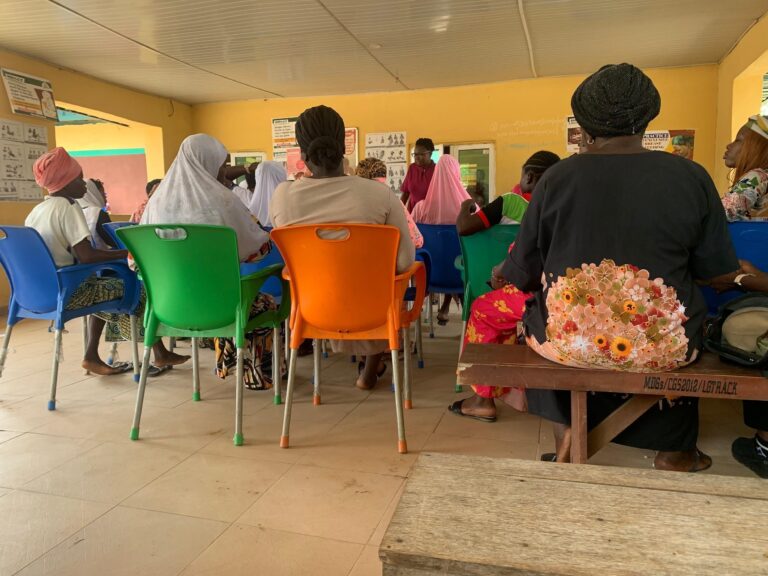
Across Nigeria’s cities and other focal countries, healthcare delivery is often fragmented, with public hospitals, private clinics, pharmacies and informal providers operating side by side with little coordination. This fragmentation according to a professor,  Helen Elsey, Co-Director of the Consortium has contributed to poor maternal and child health outcomes and a growing crisis of non-communicable diseases such as hypertension and diabetes.

She noted that CHORUS research has shown that informal providers, including traditional birth attendants, remain a major source of care for urban residents, particularly the poor.

One of Nigeria’s key breakthroughs from the research on linking informal healthcare providers into formal urban health system in Nigeria, according to Onwujekwe, is the creation of an Urban Health Unit within the Enugu State Ministry of Health, designed to formally link informal providers with government primary healthcare services.

Findings from the five-year urban health research further revealed that a large share of healthcare in urban slums is delivered by informal providers such as patent medicine vendors, traditional birth attendants, many of whom lack the training and oversight to safely manage conditions like hypertension and diabetes, despite serving more clients than formal health facilities. These insights have pushed state authorities to recognise that informal care providers must be integrated into formal health systems if quality and equity are to improve.

Beyond healthcare delivery, CHORUS Urban Health Consortium leaders stress that urban health cannot be separated from wider social and economic conditions. Poor roads, unreliable electricity, unsafe water, air pollution and weak sanitation systems all compound health risks in fast-growing cities.

The Accra forum is expected to showcase lessons from Nigeria alongside experiences from Ghana, Bangladesh and Nepal, where researchers are testing ways to integrate pharmacies and NGO clinics into government health systems to better manage chronic diseases.

Strike: irate FCT workers dismiss court ruling, direct members to ‘sit at home’

0

SOME workers under the Joint Union Action Committee (JUAC) in the Federal Capital Territory (FCT) have reacted defiantly to a court order directing them to suspend their ongoing strike.

Mocking the ruling, the workers said they were no longer on strike but would shun work until their demands are met.

The National Industrial Court of Nigeria (NICN), sitting in Abuja, on Tuesday, January 27, ordered JUAC to suspend the industrial action that has shut down activities across the FCT.

The ICIR reported on Monday that primary and secondary schools across the nation’s capital were also shut down following a directive by the Nigeria Union of Teachers (NUT) ordering its members to join the strike.

JUAC gave the directive as contained in a communiqué signed by the FCT NUT Chairman, Secretary, and Publicity Secretary, Abdullahi Shafas, Margaret Jethro, and Ibukun Adekeye, respectively. The union said the decision followed a directive by the Nigeria Labour Congress (NLC) instructing all its affiliates in the FCT to comply with the strike.

Meanwhile, on Tuesday, the presiding judge, E.D. Subilim, granted an interlocutory injunction filed by the Minister of the FCT, Nyesom Wike, and the Federal Capital Territory Administration (FCTA) in suit number NICN/ABJ/17/2026, restraining JUAC and its leadership from continuing the strike pending the determination of the substantive suit.

The judge ruled that although the matter constituted a trade dispute and satisfied the necessary legal requirements, workers’ right to strike was not absolute. He held that once a trade dispute is referred to the National Industrial Court, workers are barred from embarking on any strike action, and where a strike is already underway, it must be suspended pending the court’s determination.

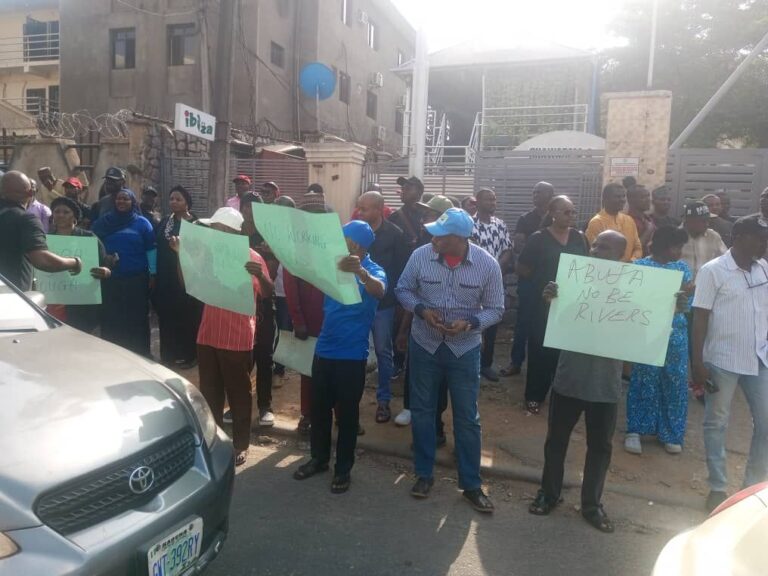
However, workers protesting at one of the FCTA facilities in Abuja described their response to the ruling as a “stay-at-home” action rather than a suspension of the strike.

“We are no more on strike, but we are in our house. Let them open the gate wide; we are in our house. Tell them Wike has won. Let them open all the gates,” one of the protesters, said.

The worker, who was addressing journalists alongside her colleagues, added that employees would only resume duties after their demands were met.

“When they meet our demands, we will come. We are not struggling with anybody. We are going home to relax and be praying,” she said.

“They have the gun, they have the power and the resources, but the people’s power is more than their own. We are remaining in our houses. We are no more on strike, but we are not resuming work,” the protester added.

Some protesters also chanted “Wike must go” during the demonstration, while insisting the industrial action must continue.

When The ICIR contacted the Public Relations Officer of the Joint Unions Action Committee (JUAC) Holina Adejoh, for an official reaction, she said there was no immediate response to the ruling.

According to her, the leadership of the union is currently meeting with the chairman of the NLC to review the court order and determine the next steps.

Backstory

The ICIR reported that the strike followed a directive issued by JUAC President, Rifkatu Iortyer, and Secretary, Abdullahi Saleh, dated January 8, ordering workers across all cadres to withdraw their services from Monday, January 19, in protest against what they called the government’s continued neglect of their demands.

The union said an earlier ultimatum issued on January 7 had elapsed without meaningful engagement from the authorities.

According to the group, key grievances include the non-payment of outstanding promotion arrears, delays in the conduct and release of promotion exercises, and what they described as the continued extension of service for retired directors and permanent secretaries, a practice they said was blocking career progression for serving officers.

The workers also accused the administration of failing to remit statutory deductions, including pension contributions and National Housing Fund payments, warning that the situation could jeopardise the future welfare of affected staff.

JUAC further expressed dissatisfaction with the outcome of the 2024 promotion examinations, describing the exercise as largely unsuccessful and alleging that a significant number of its members were adversely affected.

On Monday, the striking workers, backed by the NLC, picketed the Nigeria Industrial Court in Abuja.

They also reportedly attempted to block the motorcade of the FCT Minister, Nyesom Wike, who allegedly escaped through the FCTA’s back gate.

National grid records second collapse in 2026

THERE appears to be no end in sight as the National Electricity Grid on Tuesday recorded its second collapse in 2026, consequently throwing many Nigerian cities into darkness.

A check on the website of the Nigerian Independent System Operator (NISO) showed that all the Discos had no allocated supply as of 11. am, January 27.

As of the time of filing this report, data showed zero megawatts of power supply to the 11 electricity distribution companies in the country.

The grid recorded its first collapse on Friday, January 23, barely weeks after a similar incident on December 29, 2025, which caused widespread power outages across the country.

Grid collapses have largely been attributed to a combination of technical faults, including inadequate maintenance of transmission lines, and fluctuations in generation capacity.

Electricity generation dropped sharply from over 4,500 megawatts to as low as 0 megawatts as of 11 am on Tuesday.

Checks showed that all 23 power generation plants connected to the grid lost output during the incident, resulting in zero power allocation to power distribution companies.

Meanwhile, NISO has yet to respond to the latest grid collapse.

NISO had explained that the first 2026 collapse was associated with the simultaneous tripping of multiple 330kV transmission lines, alongside the disconnection of some grid-connected generating units.


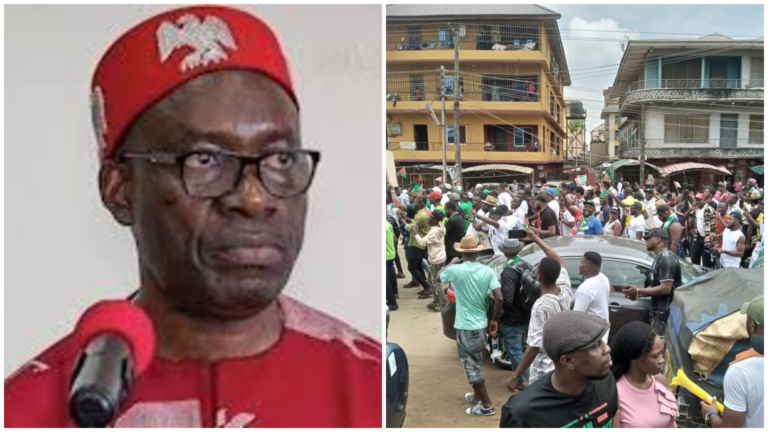
Traders protest in Onitsha as security officials enforce Soludo’s market closure order

MANY traders are currently protesting the Onitsha Main Market closure by the Anambra State government.

On Tuesday, January 27, viral videos show the protesters as security officials enforce the market closure order by Governor Charles Chukwuma Soludo.

Eyewitnesses also confirmed that traders were seen staging a protest walk from the Main Market down to Upper Iweka axis of Onitsha municipal and chanting solidarity songs with the lyrics, ‘Say No to Monday Market’.

However, they were not allowed access to their respective shops by armed security officers who were on the ground to enforce the government’s directive.

Soludo had ordered the market closure for a week on Monday, January 26, following the observance of the Monday sit-at-home by the traders.

Traders who spoke with The ICIR urged the government and the market leadership to find a common ground to avoid further disruption of economic activities and other possible chaotic situations.

Some of them said they did not have any incentives or insurance from the government, yet they are subjected to a forced market closure directive.

“As traders, we have sustained ourselves for years without government incentives. The government doesn’t even give us loans for business. During COVID, when governments elsewhere gave palliatives, Anambra traders received nothing. We bore the burden alone. Yet, the government continues to collect taxes, stallage fees and levies from us. Today, the government that cannot do anything for traders is now using all security apparatus to enforce sit-at-home,” a businessman and importer at the market, Ezennia Ifekudu, told The ICIR.

Ifekudu stressed that the same government that claimed it was losing N8 billion from Monday trading revenues in the state was justifying a week market closure.

“This is a private business, not civil service. Traders are not paid by the government; we survive from our own sweat,” he added.

An importer and dealer in specialised ladies’ wear, Morgan Okoye, told The ICIR that the governor’s directive had disrupted business flow.

“I have some of my clients who came in from Lagos since Saturday and are currently lodged at Hotels in Asaba. They have already incurred more debts because of the unplanned market closure,” he said.

Public affairs analysts are also speaking up and urging the government to engage the market leaders in managing the chaos in the market.

“Soludo may not understand the gravity of his actions and their consequences. The earlier he summons an emergency meeting with the market leaders, security personnel and stakeholders, the better, before this escalates to unprecedented bad reactions. The use of force may not be the best option for this kind of situation,” said a public affairs analyst, Christopher Ihejirikwe.

The governor ordered the closure of the market for one week as a warning to traders and businessmen who defied the government’s order to stop the enforcement of sit-at-home directives on Mondays.

The governor expressed regret on Monday, when he visited the market, and warned that the state was losing much revenue to the sit-at-home ritual.

“The government cannot stand by while a few individuals willfully undermine public safety and disregard official directives meant to restore normalcy. This is plain economic sabotage,” he said.

The Commissioner of Information in the state, Law Mefor, corroborated the government’s stand, noting that “The government loses N8 billion revenue weekly to the sit-at-home order.”

Notably, the Onitsha Main Market is one of the largest markets in the South-East and has trading and business links to some West African traders.

The closure comes amid long-standing economic losses linked to the sit-at-home order in the region.

The ICIR reports that Anambra generated N52.69 billion (N43,689,648,058.74) as internally generated revenue (IGR) for 2024. This placed the state 17th out of 37 states, including the Federal Capital Territory.

Also, a report by The ICIR in January 2023 showed that micro businesses in Anambra, Enugu, Ebonyi, Imo, and Abia lost an average of ₦4.618 trillion ($10.495 billion) in one year due to sit-at-home.


Dangote Refinery hikes petrol price by N100 after yuletide

DANGOTE Petroleum Refinery & Petrochemicals has increased its petrol gantry price to N799 per litre, while MRS retail outlets will now sell at N839, up from N739 per litre.

The company, in a statement, reaffirmed its commitment to market stability and uninterrupted nationwide supply of the product.

The refinery clarified that the Christmas price slash was a deliberate and temporary price support intervention to cushion Nigerians household spending.

According to the $20 billion refinery plant, its gantry price of petrol is now sold at N799 per litre, while the retail price is N839 per litre, up from N699 and N739 per litre sold since December last year.

The Chief Executive Officer of the refinery, David Bird, stated that the refinery continued to supply the domestic market with approximately 50 million litres of petrol daily, with nationwide evacuation and distribution operating normally.

He stressed that the refinery’s design flexibility allowed it to process a wide range of crude and intermediate feedstocks, enabling continued fuel supply during planned maintenance activities.

According to him, this capability ensures that the domestic supply remains stable and uninterrupted.

Dangote Refinery had recently resorted to gasoline imports to boost its capacity amid its Residual Fluid Catalytic Cracker (A type of secondary conversion process that makes heavy oil lighter) downtime.

As of Monday night, retail filling stations, including Nigerian National Petroleum Company Limited, dispense petrol between N805 and N830 per litre.

However, Dangote’s price hike may trigger a petrol price increase across the country’s downstream sector.

The president of the refinery, Aliko Dangote, had in December last year said that its N739 per litre retail fuel price would persist nationwide to edge out importers.

Petroleum Retail Owners Association of Nigeria (PETROAN) had kicked against Dangote’s market influence on petroleum pricing, noting that it was disrupting importers who had imported at a higher cost to close demand gaps in the petroleum downstream market.

APC gains 29th governor as Abba Yusuf joins ruling party

KANO State Governor, Abba Kabir Yusuf, has officially joined to the All Progressives Congress (APC), becoming the 29th serving governor under President Bola Tinubu’s ruling party. 

The announcement came on Monday, January 26, three days after he resigned from the New Nigeria People’s Party (NNPP).

Yusuf formally communicated his resignation on Friday, January 23, citing internal crises, leadership disputes, and ongoing legal battles within NNPP which he said had destabilised the party at both state and national levels. 

In his resignation letter to the NNPP Chairman of Diso-Chiranchi Ward, Gwale Local Government Area, the governor expressed gratitude for the platform and support he received since joining NNPP in 2022, but said unresolved disputes left him with no choice but to resign.

Yusuf was elected governor under the NNPP in 2022. His tenure was recently marked by internal party conflicts and leadership disputes, which he cited as reasons for his resignation. 

Following Yusuf’s resignation, multiple NNPP lawmakers and officials in Kano State reportedly also left the party, including 22 members of the State House of Assembly, eight federal lawmakers, and 44 local government chairmen.

The lawmakers announced their defection during a plenary session on Monday, January 26.

This, many have argued, would cause a major collapse of the party’s structure in the state.

The ICIR reports that Yusuf’s defection is part of a wider pattern of governors and lawmakers leaving opposition parties, particularly the Peoples’ Democratic Party (PDP) and NNPP, to join the ruling APC ahead of the 2027 general elections. 

Recent months have seen similar high-profile defections, including Rivers Governor Siminalayi Fubara, Plateau Governor Caleb Mutfwang Bayelsa Governor Douye Diri, and Akwa Ibom Governor Udom Eno, who all cited political alignment with the federal government as a key motivation.

Current governorship standings (January 2026)

Party Number of Governors
APC 29
PDP 4
APGA 1
Labour Party 1
Accord 1


The addition of Yusuf as the 29th APC governor strengthens the party’s influence in northern Nigeria, consolidating its reach in a region that is often regarded during election. 

Several online commentators suggested that the wave of defections is likely to influence both state and national politics, giving APC a strategic advantage in key regions ahead of the next polls.

The ICIR reports that there have also been concerns among political analysts that the shrinking number of opposition governors could result in a de facto one-party state in the country, as the APC steadily consolidates power under the Tinubu’s leadership.

Military finally admits coup attempt against Tinubu after initial denials

0

THE Armed Forces of Nigeria (AFN) has finally confirmed that some of the 16 officers previously arrested over ‘indiscipline and service breaches’ were implicated in plotting to overthrow the government of President Bola Tinubu.

A statement signed by the Director of Defence Information Samaila Uba, on Monday, January 26, stated that the officers would face formal trial before a military judicial panel following its investigation, which it said was conducted according to established military procedures. It also said the probe examined all circumstances surrounding the officers’ conduct.

“It would be recalled that the Defence Headquarters issued a press statement in October 2025 regarding the arrest of sixteen officers over acts of indiscipline and breaches of service regulations. The Armed Forces of Nigeria (AFN) wishes to inform the general public that investigations into the matter have been concluded, and the report forwarded to appropriate superior authority in line with extant regulations.

“The comprehensive investigation process, conducted in accordance with established military procedures, has carefully examined all circumstances surrounding the conduct of the affected personnel. The findings have identified a number of the officers with allegations of plotting to overthrow the government which is inconsistent with the ethics, values and professional standards required of members of the AFN,” the statement read.

While some officers were found with cases to answer, others were cleared of wrongdoing.

The AFN said the arraignment would proceed under the Armed Forces Act and other relevant service regulations, to ensure fairness and due process.

“The AFN reiterates that measures being taken are purely disciplinary and part of ongoing institutional mechanisms to preserve order, discipline and operational effectiveness within the ranks,” it added.

The official admittance came after months of public speculation and denials of the aborted putsch by the military. Sahara Reporters, an online news medium, had on Saturday, October 18, claimed that 16 officers arrested and detained by the Nigerian Armed Forces planned to topple Tinubu’s government.

Another report by Premium Times also claimed that top intelligence sources provided insights into how the coup was to be hatched before the officers plotting it were apprehended.

The reports also alleged that key government officials, including Tinubu, Vice President Kashim Shettima, Senate President Godswill Akpabio, and House Speaker Tajudeen Abbas, were targeted for assassination.

The development reportedly created tension within the government, prompting the Presidency to cancel the National Independence Day parade usually held on October 1.

At the time, the Defence Headquarters denied the claims, stating that the arrests were part of routine disciplinary measures linked to career stagnation and repeated failures in promotion examinations, and not politically motivated.

NUT shuts FCT primary, secondary schools. orders teachers to join workers’ strike

0

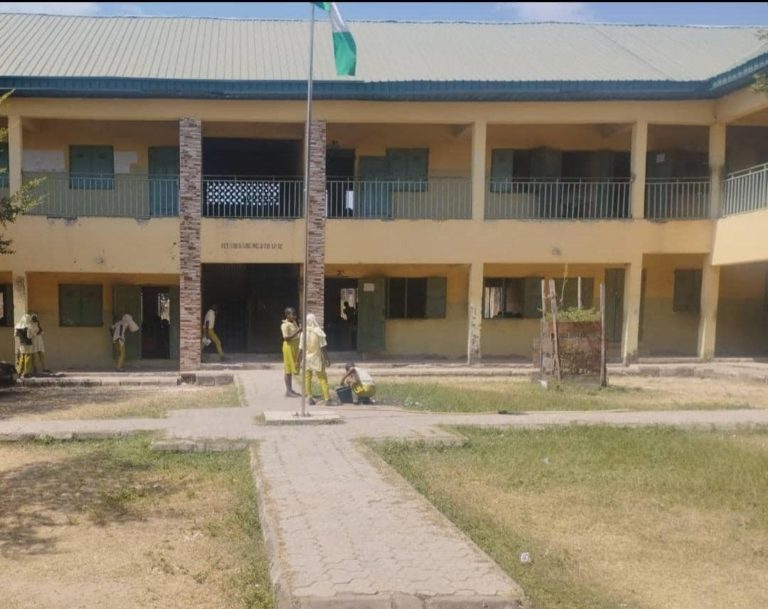
PUBLIC primary and secondary schools across the Federal Capital Territory (FCT) are expected to shut down immediately following a directive by the Nigeria Union of Teachers (NUT) ordering its members to join the ongoing strike by the FCTA workers.

The Joint Union Action Congress (JUAC) gave the directive as contained in a communiqué signed by the FCT NUT Chairman, Secretary, and Publicity Secretary, Abdullahi Shafas, Margaret Jethro, and Ibukun Adekeye, respectively.

The union said the decision followed a directive by the Nigeria Labour Congress (NLC) instructing all its affiliates in the FCT to comply with the strike.

“All teachers in FCT primary and secondary schools are to stay away from classrooms starting Monday,” part of the communiqué read.

“In pursuit of justice and to demonstrate our collective resolve, we must stand together. A people united can never be defeated,” the union said.

The NUT added that it would continue to engage with relevant authorities until all outstanding issues affecting teachers are resolved, urging members to remain disciplined during the strike.

The ICIR reported that the strike followed a directive issued by JUAC President, Rifkatu Iortyer, and Secretary, Abdullahi Saleh, dated January 8, ordering workers across all cadres to withdraw their services from Monday, January 19, in protest against what they called the government’s continued neglect of their demands.

The union said an earlier ultimatum issued on January 7 had elapsed without meaningful engagement from the authorities.

According to the JUAC, key grievances include the non-payment of outstanding promotion arrears, delays in the conduct and release of promotion exercises, and what they described as the continued extension of service for retired directors and permanent secretaries, a practice they said was blocking career progression for serving officers.

The workers also accused the administration of failing to remit statutory deductions, including pension contributions and National Housing Fund payments, warning that the situation could jeopardise the future welfare of affected staff.

JUAC further expressed dissatisfaction with the outcome of the 2024 promotion examinations, describing the exercise as largely unsuccessful and alleging that a significant number of its members were adversely affected.

It condemned the handling of the 2024 promotion examinations, describing the exercise as deeply flawed and largely unsuccessful.

On Monday, the striking workers, backed by the Nigeria Labour Congress (NLC), picketed the Nigeria Industrial Court in Abuja.

They also reportedly attempted to block the motorcade of the FCT Minister, Nyesom Wike, who allegedly escaped through the FCTA’s back gate.

Sit-at-home: Soludo shuts down Onitsha Market

0

ANAMBRA State Governor Chukwuma Soludo has ordered the closure of the Onitsha Main Market for one week after traders allegedly failed to open their shops on Monday, despite the state government’s directive to end the sit-at-home.

The governor gave the order during a visit to the market on Monday, January 26, where he met many shops locked.

The ICIR reports that state government had ordered traders to resume their business on Mondays as against the sit-at-home ritual.

However, during his visit to the market on Monday, the governor expressed concerns over the continued closure, saying the closure of businesses was hurting the state’s economy.

Soludo said, “The government cannot stand by while a few individuals willfully undermine public safety and disregard official directives meant to restore normalcy. This is plain economic sabotage.”

He warned that the closure could be extended if traders did not comply. According to him, “You either decide that you are going to trade here or you go elsewhere. I am very serious about this.”

Security operatives were deployed to enforce the shutdown, and the market gates were sealed.

The Onitsha Main Market is one of the largest markets in the South-East and plays a key role in trade across the region. Any disruption affects traders, transporters, and suppliers who depend on daily business activities.

The shutdown comes amid long-standing economic losses linked to the sit-at-home order in the South-East.

The ICIR reports that Anambra generated ₦42.69 billion (₦42,689,648,058.74), as Internally Generated Revenue (IGR) for 2024. This placed the state at 17th out of 37 states, including the Federal Capital Territory.

Many argued that the continued disruption of business activities, especially on Mondays, has affected revenue generation.

Also, a report by The ICIR in January 2024 showed that micro businesses in Anambra, Enugu, Ebonyi, Imo, and Abia lost an average of ₦4.618 trillion ($10.495 billion) in one year due to sit-at-home.

The investigation found that estimated revenues of micro businesses in the five states were added together and multiplied by 52 weeks, representing the number of Mondays in a year. The analysis used data from the National Bureau of Statistics (NBS) and the Small and Medium Enterprises Development Agency of Nigeria (SMEDAN) 2021 survey reports.

Another ICIR-funded report published by Dataphyte showed that micro businesses in the South-East lost ₦5.375 trillion ($12.215 billion) after wasting 71 Mondays between August 9, 2021 and December 19, 2022.

In the same vein, a report by The Guardian newspaper noted that sit-at-home observances every Monday since August 9, 2021 have cost the South-East an estimated ₦7.6 trillion in lost productivity, potential investments, and losses of lives and property.