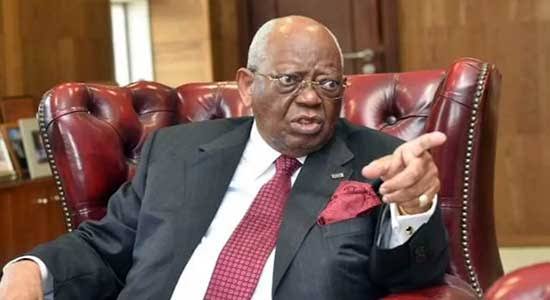
LAWYERS representing Afrobeat singer Seun Kuti have accused the Lagos State Police Command of failing to comply with a court order by withholding his case file.
Seun, son of Afrobeat legend, Fela Kuti was seen in a viral video slapping a policeman in Lagos State.
The Inspector General of Police, IGP Alkali Baba Usman, according to a statement from police spokesman, CSP Muyiwa Adejobi, thereafter ordered the arrest of the musician.
Kuti, on May 15, turned himself in at the Lagos State Police Command Headquarters, Ikeja accompanied by his lawyer and family members.
The 40-year-old musician was subsequently arrested and moved to the State Criminal Investigation Department (CID) in Panti.
On May 16, he was arraigned before Magistrate Adeola Olatunbosun of a Magistrate’s Court in the Yaba area of Lagos State.
The Afrobeat singer was, however, granted bail but according to his lawyer, the judge ordered that he is to be released in 48 hours after meeting his bail conditions.
The judge also ordered that Kuti’s file be duplicated and sent to the director of public prosecution (DPP) and subsequently adjourned to May 23, 2023.
But on May 18, his lawyers said the magistrate has extended the remand order for additional four days to enable the police continue with its investigations.
Speaking on behalf of other members of the legal team, Kuti’s lead counsel, Adeyinka Olumide-Fusika, in a statement on Saturday, May 20, said the police have not complied with the order of the court that the case file be submitted to the Lagos State Director of Public Prosecution for legal evaluation.
Olumide-Fusika, a Senior Advocate of Nigeria (SAN), also accused the police of turning the matter into a “national emergency” and creating a circus around it.
According him, Kuti willingly surrendered himself to the police to answer for the allegation of assaulting a policeman.
He said that the police have chosen to make a spectacle of the situation, instead of taking the necessary procedural steps to charge the embattled musician officially.
The statement further questioned when Kuti would be formally charged for the offense of “attacking and slapping a police officer in uniform,” as stated by the police.
“Now that Mr. Kuti had been put in manacles and taken on parade from one police station to another, and from one location to the other across Lagos since Monday 15/5/2023, when exactly is he going to be charged for, as you put it in your statement,’ attacking and slapping a police officer in uniform’?
“Mr. Seun is patiently waiting to be charged to court for the alleged offence so that he can offer his defence. That should not be too much for a suspect to expect.”
The lawyer expressed hope that the Lagos State Deputy Commissioner of Police, Simon Asamber Lough, who is a lawyer and a Senior Advocate of Nigeria (SAN), would advise the police to comply with the order of the Magistrate Court to submit the case file to the Lagos State Director of Public Prosecution for legal evaluation, potential charges, and prosecution in a court of law.
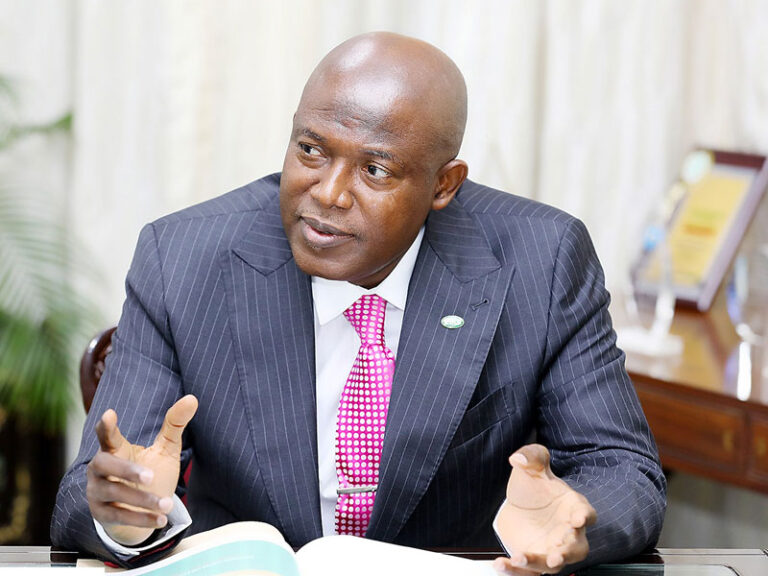
THE Bank of Industry (BoI) said small and medium enterprises in the country are being given loans at a subsidised rate between 9 and 10 per cent below the Central Bank of Nigeria’s (CBN) official rate of 18 per cent to preserve them from collapse.
The BoI managing director, Olukayode Pitan, said this during the bank’s 63rd annual general meeting (AGM) in Abuja on Thursday, May 18.
Pitan called on small and medium-sized companies to access more loans from the BoI to improve their businesses.
It was resolved at the meeting that the bank’s share capital be increased from N250 billion to N500 billion.
Pitan disclosed that shareholders’ funds were over N400 billion, with some shareholders’ funds deposited for shares.
“So when we put everything together, our shareholders’ funds will be very close to N600 billion.
“We are getting towards the target that we have, which the minimum should be about N1 trillion and that will allow us to do more than we are doing now,” he said.
Shareholders expressed optimism that the bank would continue to grow and exceed N5 trillion shareholders’ fund in the coming years.
The chairman of the Board of the bank, Aliyu Dikko, disclosed at the meeting that the total assets of the group grew by 39.2 per cent between 2021 and 2022.
He said the bank maintained appreciable growth in its financial performance in the year.
“Total assets of the group grew by 39. 2 per cent between 2021 and 2022, from N1. 71 trillion to N2.38 trillion, respectively.
“This growth was largely due to the three successful capital-raising transactions worth 1.85 billion euros in the year.
“The group also reported a growth of 11.7 per cent in its total equity between 2021 and 2022, from N384.85 to N429.83 billion, respectively.
“Profit before tax also followed the same trend, reporting 15.6 per cent growth from 62. 28 billion to N71. 99 billion in 2021 and 2022, respectively,” he said.
According to Dikko, loans and advances improved by 3.2 per cent, from N780.48 billion in 2021 to N805.46 billion in 2022.
The chairman said the remarkable performance depicted the passionate and proactive disposition of the bank, to continue to effectively deliver on its mandate as the macro-economy gradually strengthens.
He admitted that the BoI challenges encountered during the period, but that it was an opportunity for the bank to perform better.
Inflation, monetary policy rate, foreign exchange differentials and shrinking foreign direct investment punctured President Muhammadu Buhari’s eight years of administration, a finance expert and development economist, Kelvin Emmanuel, posited at The ICIR weekly Twitter space programme on Friday, May 19.
The ICIR Twitter space was created to discuss topical issues in the economy, politics, health, governance, and other matters of national interest.
Emmanuel, it’s guest speaker on Friday, addressing questions on the topic, ‘State of the Nigerian Economy under Buhari’, submitted that Nigerians could weigh Buhari’s economic achievements based on the realities on the ground.
“It is quite unfortunate that the government believes that they have done better in the last eight years,” he said, “when the realities on the ground proved otherwise.”
Emmanuel added, “People are struggling to eat, inflation is at an all-time high, and foreign direct investment has fallen below in record time.
“I struggled to understand how they claimed they have done better in the last eight years.”
According to him, the reality is that inflation was double-digit at 22.04 per cent as of April this year, a far cry from a single digit of 9.0 per cent in May 2015.
The MPR, too, had throttled to 18 per cent at the last monetary policy committee meeting in March.
“If inflation is at 22.04 per cent and MPR is at 18 per cent, by the time we add management, appraisal, facilitation, and documentation fees and others, the commercial lending rate would have gone to between 28 per cent and 31 per cent.
“How can a company, for example, borrow money at a 31 per cent interest rate and still be in business?” Emmanuel questioned.
He also noted the exchange rate disparity between the naira and dollar, which had surged from N196 to a dollar in 2015 to N461/$1 at the official window, and is hovering around N745 to a dollar at the black market rate.
Kelvin Emmanuel
On the Central Bank of Nigeria (CBN) advancing N22.7 trillion borrowing to the Federal government, Emmanuel said, “We notice that since the CBN embarked on the quantitative easing, through ways and means, we have seen corresponding devaluation between 2019 and 2023.
“We have seen the naira drop significantly, inflation has accelerated over this period, and that has affected the monetary policy committee position on the MPR.”
He expressed worries that Nigeria is in a “wholly messed-up situation” as the purchasing power of the people continues to drop.
“As inflation keeps rising, per capita income will continue to drop, which means that the purchasing power of the masses will keep shrinking by the day,” he said.
Emmanuel faulted the model used for calculating the consumer price index (CPI), asserting it was outdated.
The National Bureau of Statistics (NBS) still uses the National Economic Survey of 2004 against the recommended National Living Standard Survey of 2018, which has a more elaborate basket for calculating inflation.
Emmanuel said that the 2004 model for calculating inflation captured only food and energy price.
“Times have changed; that basket is broader now. So, it is left for the NBS to adapt to the times and widen the basket to better reflect the realities on the ground.
“Inflation in Nigeria is more than 40 per cent, but the NBS official inflation rate is 22.04 per cent,” he said.
According to his thoughts, the outgoing government should have focused on stimulating economic growth by improving the people’s human development index (HDI).
Buhari’s ideology of closing the borders, widening the budget and relying on the central bank to provide the deficit financing of the budget “was a hit missed”, the economist added.
THE Central Bank of Nigeria’s (CBN) aggressive method of raising the monetary policy rate has failed to curb inflation because of the troubles faced in four key areas where the apex bank funds liquidity in the market.
A finance expert and development economist, Kelvin Emmanuel, who was the guest speaker at The ICIR Twitter space programme on Friday, May 19, listed the drop in crude oil proceeds, foreign direct investments (FDIs) and foreign portfolio investments (FPIs), issues of trade finance, and diaspora remittances as cogs in the wheel of the apex bank’s efforts at reining in inflation.
Nigeria’s headline inflation has reached a record high of 22.04 per cent, according to the April data released by the National Bureau of Statistics (NBS).
Emmanuel, at the programme, pointing out that proceeds from crude oil sales had dropped significantly, argued that the Federal government made the mistake of giving outright to companies crude oil he said should have been sold and paid to CBN’s account.
“The government said Nigeria was using 66 million litres of petrol per day, which I doubt,” he said.
According to him, because of the drop in FDIs and FPIs, companies were no longer bringing in money to Nigeria, resulting in a decline in foreign investments from about $4.4 billion to $568 million.
Kelvin Emmanuel
“If the gap between the official market rate and the parallel market rate is much, they can not price-risk. They cannot bring their money in and convert it to N426-N463/$1. What happens when they want to take it out?” he asked.
A raging issue as an instance is foreign airlines funds of over $717.4 million trapped in the country. The airlines have been finding it very difficult to repatriate their funds, as the CBN bickers.
On the issue of trade finance, that is, net export proceeds, Emmanuel said companies would not want to export goods worth millions of dollars to Nigeria because of foreign exchange palaver.
He explained that when investors bring in funds to Nigeria, the apex bank would make them convert it at the official importers and exporters window, maybe somewhere around N572/$1 against the N745/$1 at the black market rate.
He said this is because the central bank operates a “fixed pegged exchange rate mechanism, which is outdated” when it should have floated the naira and have one exchange rate window so that investors could know who and what they are dealing with.
The economist submitted that diaspora remittances now appear to be the only credible way for foreign exchange liquidity in the forex market.
“These are why investors are not bringing in their monies,” he said.
He asserted that if Nigeria would deal with the problem, it would witness an automatic turn-around in two to three months.
“You obey economic principles, you get the results. If we have to curb inflation, we need to bring foreign exchange liquidity back, and to do that we need to close the gap between official and parallel (black) markets.
“If this is not done, it becomes more expensive for people to bring stuff into Nigeria, where you will see an impact on inflation to increase yield curve, because inflation will keep going up and the MPC will keep adjusting the MPR along the 400 basis points,” Emmanuel maintained.
He further explained that as inflation keeps increasing, the cost of capital would keep rising until it becomes even more expensive for companies to borrow money to fund businesses.
AFTER Nigerian Hilda Baci set the new record for the longest cooking marathon achieved by an individual, numerous individuals have expressed their determination to emulate or surpass her achievement to earn a coveted spot in the Guinness World Records.
To become a Record-Holder necessitates a combination of unwavering determination, exceptional skills and wholehearted commitment.
Prior to submitting an application for an established record, it is imperative to thoroughly examine the current information and ensure that you possess the necessary qualities to surpass the existing record.
If you have a new record idea in mind, it is highly recommended to take some time to explore other existing records to determine if similar achievements have already been accomplished within your field of expertise.
Here are the steps to follow
Thoroughly delve into the extensive World Records database: Review the record-breaking criteria and policies by referring to the page titled ‘What Makes a GUINNESS WORLD RECORDS Record Title?’ Take the time to familiarise yourself with this information.
Select a World Record to attempt: Perhaps you already have a particular World Record in mind that you’re eager to pursue, or alternatively, you can propose a fresh concept.
Submit your application and patiently await the receipt of the guidelines: In a case where your suggestion is not accepted, rest assured that you will be responded to and provided with a detailed explanation. Also note that the response time may take up to 12 weeks or longer if there is a higher demand than usual.
Comprehend the necessary requirements and the supporting evidence that are essential for the attempt: You will be granted access to ‘GUIDE TO YOUR EVIDENCE’, a vital document that provides detailed instructions for verifying your world record attempt. Strict adherence to the outlined rules is crucial to avoid rejection, as many attempts are disqualified due to non-compliance with these guidelines.
Guinness world record logo
Dedicate ample time and effort to practice relentlessly: Achieving the title of the World’s Best requires immense commitment. Only proceed to the next step when you possess unwavering confidence in surpassing the current World Record or meeting the minimum requirement for a new record.
Prepare for your world record attempt by scheduling a date, time, and location: Plan logistics and gather necessary equipment. Coordinate the presence of independent witnesses, specialists, photographers, and videographers. Verify the current record and aim to beat it. Enjoy the process and give it your all!
Submit all required documents, including evidence and a cover letter: Inadequate evidence leads to over 50 per cent of rejections. Once you’re ready, upload your evidence online and wait for the review. Our Records Management Team carefully assesses each application, which can take up to 12 weeks. Stay updated on current waiting times for the latest information.
Achieve success and earn an official Guinness World Records certificate.
How to apply
Log in or register an account to gain access to the record database.
Find the record you would like to attempt.
If the record is active and accepting applications it will have an ‘Apply Now’ button, then select.
If you can’t find the desired record through search, suggest a new title by selecting the ‘Apply for a new record title’ button at the bottom of the search results page.
Fill the form and submit.
Standard applications typically take up to 12 weeks to receive guidelines, with the possibility of longer wait times during periods of high demand. For the most current information on waiting periods, please check the updates.
Upon acceptance of your application, you will receive the record guidelines and subsequent instructions.
THE FIFA UN-20 World Cup will kick off today as teams in group A slug it out against teams in group B.
Checks by The ICIR show that three players of Nigerian descent will represent England at the tournament.
It would be recalled that in the edition held in 2017, when the Young Lions of England defeated Venezuela 1-0 to win the UN-20 World Cup in Korea, six players with Nigerian roots were part of the team.
The 2017 victory was England’s first major international football silverware since they won the 1966 World Cup.
Five players with Nigerian roots played for England in the 2017 final match against Venezuela. They are Sheyi Ojo, Fikayo Tomori, Dominic Solanke, Ademola Lookman and Joshua Onomah.
Ovie Ejaria, the sixth player of Nigerian origin in the squad, did not play in the final.
The English team for the 2023 UN-20 World Cup features players from top Premier League clubs, including Chelsea, Tottenham, Arsenal, and Brentford.
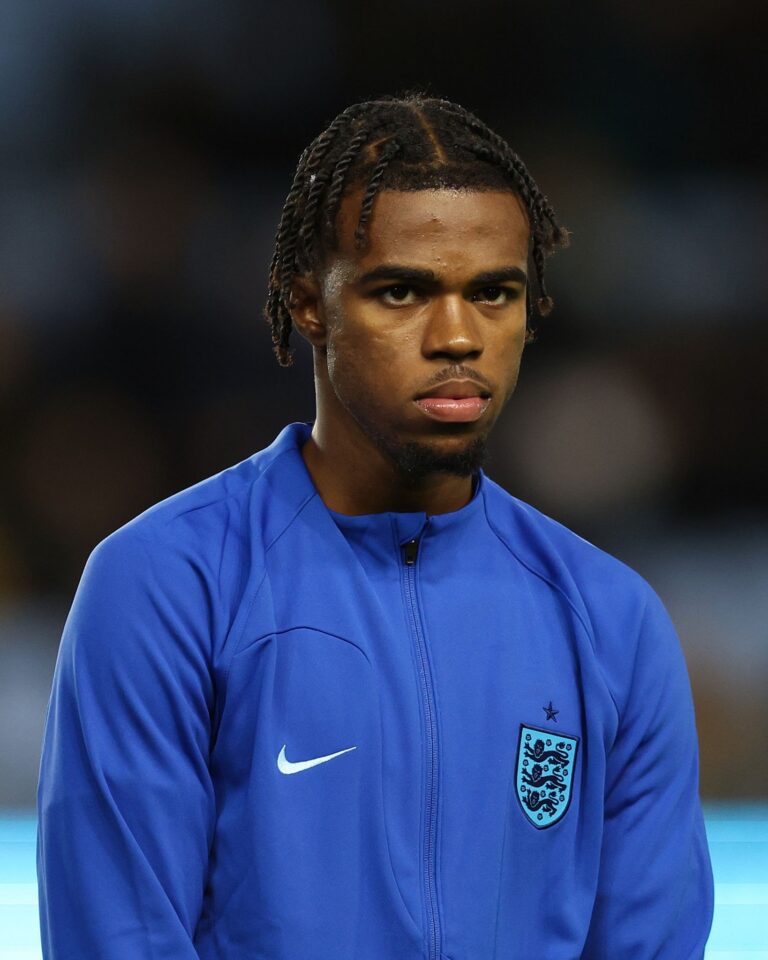
The three players with Nigerian roots in the squad include Carney Chukwuemeka, who is of Igbo descent. He was born in Austria to Nigerian parents and then later moved and was raised in Northampton, England.
He is eligible to play for the national teams of Austria, England and Nigeria.
Also in the squad is Daniel Oyegoke who began his youth career as a forward in the Barnet Academy, before he moved to the Arsenal Academy in 2017.
He currently plays as a defender for Brentford. He attended Aldenham School.
The third player, Sam Edozie plays as a winger for Premier League club Southampton. He was born in England to an Igbo Nigerian father and an English mother.
The tournament will take place in Argentina, commencing on May 20.
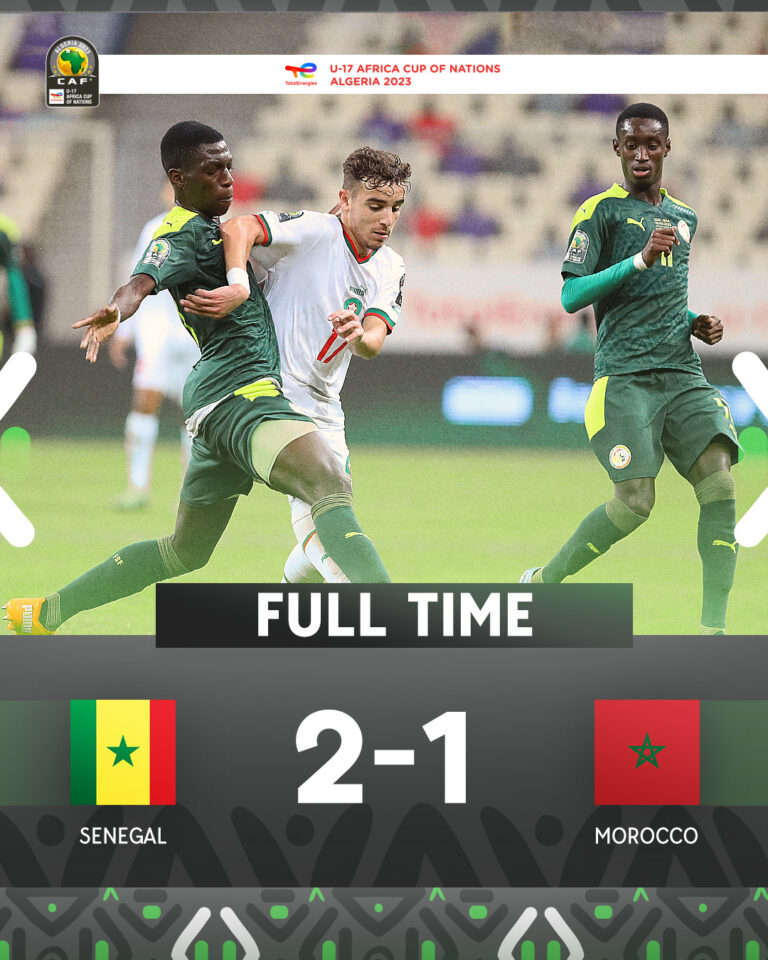
SENEGAL came from a goal down to beat Morocco 2-1 to win the 2023 UN-17 Africa Cup of Nations (AFCON) tournament in Algeria, on Friday, May 19.
The final match was played at the Nelson Mandela Stadium in Algiers.
This is the fifth consecutive time Senegal is winning a competition organised by the Confederation of African Football (CAF), at different levels.
Senegal, since 2022 began to make a statement in African football after winning their first Africa Cup of Nations in the senior category when they defeated in the final Egypt in the final after a penalty shootout.
Also in the same year, at the Africa Beach Soccer Cup of Nation (BSAFCON) Senegal who were the defending champions, retained the title after defeating Egypt in the final to secure their 7th title.
In February 2023, at the African Nations Championship, abbreviated as CHAN, Senegal defeated Algeria 5-4 to win the title for the first time.
In March 2023, Senegal, who had thrice lost in the CAF U-20 Africa Cup of Nations final, got their hands on the trophy by beating The Gambia 2-0 in Cairo.
Senegal continued its recent dominance of CAF competitions by defeating Morocco in a dramatic contest to win the UN-17 AFCON on Friday.
This means that Senegal won all the age-group CAF tournaments since 2022.
Late comeback win earns Senegal UN-17 AFCON title
Senegal won the UN-17 AFCON title in a late drama after Serigne Diouf reduced the deficit for the Lions of Teranga after converting from the spot in the 79th minute.
Four minutes later, Senegal completed the turnaround when Mamadou Sawane headed home to seal the victory for the team.
Earlier in the 14th minute of the match, Morocco’s Abdelhamid Boudla had given the North African side the lead.
Road to the final
The competition which lasted for three weeks was replete with daunting, fun and heart-throbbing actions in the Algerian cities of Algiers, Annaba and Constantine,
Eleven teams began the action, but four were able to get a ticket to the FIFA World Cup. The four teams are Burkina Faso, Mali, Morocco and Senegal.
Individual awards at the tournament
Senegal swept 3 out of the 5 awards.
Senegalese forward Amara Diouf emerged as the top goal scorer while the goalkeeper Sergine Diouf emerged as the best goalkeeper of the tournament.
Senegalese coach Serigne Saliou got the best coach of the tournament.
The runner-up Morocco won the Fair Play Award.
Souleymane Alio of Burkina Faso won the award of the best player of the tournament.
In the third-place playoff, Burkina Faso finished as the third defeating Mali 2-1 in Annaba on Thursday night.
TEACHERS and headmasters in many rural schools in Bauchi state are taking advantage of the government’s laxity to operate an epileptic education system. They determine when children learn and when to open schools, Yakubu Mohammed, who visited three schools in the Katugum local government area of Bauchi state reports.
Mangal, a volunteer teacher, reports to school at will, and he does his teaching halfway, if not completely drunk.
The volunteer teacher takes pupils in basic lessons at Central Primary School Chinade in Katagum local area, Bauchi State. Mangal, according to his colleague, only teaches when he gets free food.
Many elementary schools in Bauchi suburbs are left to the care of volunteer teachers whose motivation to teach varies. It was not a freebie day when The ICIR visited the school earlier in February, so Mangal was nowhere to be found, but his story was told as one of the volunteers in the school.
Nazifi Alhassan, another volunteer teacher at the Chinade Primary School told The ICIR he had been volunteering for the school since 2015 following his teaching practice. According to him, he was motivated by his supervisor to give back to society.
Recently, pupils have been deserting the school, Alhassan revealed, stressing the dearth of teachers as a chief reason.
“Our major challenge now is the continued decrease in the number of pupils in the school. Day by day, pupils are decreasing due to the inadequate number of teachers,” he told The ICIR. “The school has only seven teachers, among which four are active volunteers.”
“But the number is not sufficient. Even the headmaster does teach. He doesn’t stay in the office until when he has a visitor or during breakfast time,” he added.
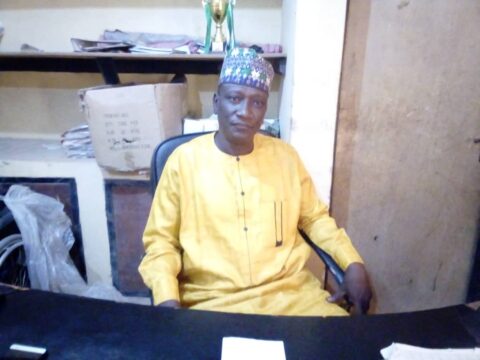
The Headmaster, Central Primary School Chinade, Umar Ahmad admits that the school is suffering from a shortage of staff. The few teachers in the school are belaboured with over 2,000 pupils. Although the school has seven permanent teachers, they are being aided by 11 volunteers who get peanuts from the headmaster. Not all the volunteers are active.
Ahmad explained that two out of the seven teachers had gone for studies, and two were also paralysed. He, however, declined to reveal the identities of the paralysed teachers and the circumstances surrounding their situations.
“We are constrained by a dearth of teachers,” he said. “Two have gone for studies and the only five teachers out of available are not enough. Two of our teachers are somehow paralysed, they can’t teach.”
“It happened during the previous administration when teachers’ salaries were stopped, and you know the kind of pressure one has to undergo in this kind of situation. So, the volunteers are really helping matters in fact if not because of them, only God knows what would have happened,” Ahmad continued.
All burden on headmaster
As the government continues to neglect basic education in the state, headmasters carry the burden of running a cash-strapped educational system where they take from the little they earn to bankroll the schools. Even the little token from Parents-Teachers Association (PTA) had stopped, according to the headmasters, thus making the task difficult for them.
“We used to buy chalk from our pockets. The PTA levy that we used to collect from parents is no longer coming because they have stopped paying, I have to source money myself to buy these items. Even the volunteers, I pay them from my salary every month,” said the headmaster.
“We were left with nothing. Repairs of desks alone are a major problem. We can not wait for the government to do things because we don’t know when they will”, Ahmad continued.
Parents satisfied with substandard system
To parents, the Central Primary School Chinade is a no-match compared to others in the axis. Though, they believe volunteers help keep the school intact.
“I can say that the school is doing well compared to others. The children are always in the school and under watchful eyes,” said Abubaker Chinade, a father with two wards in the school.
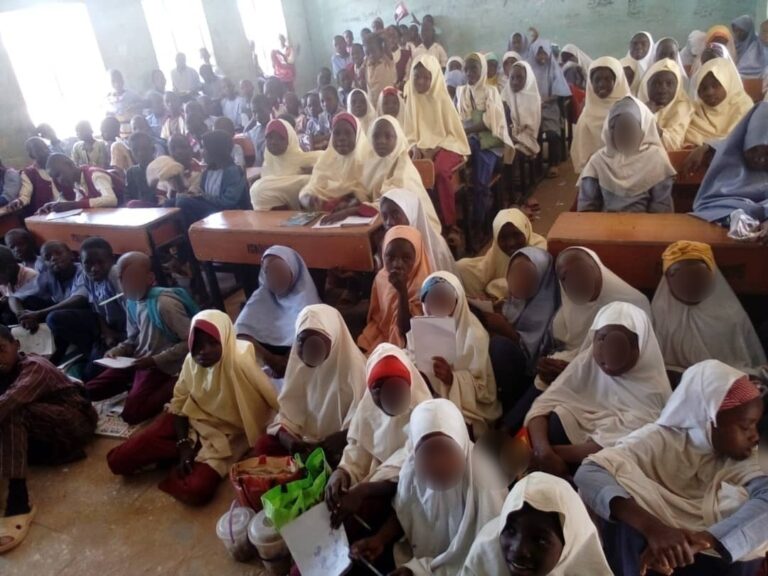
But otherwise, this was the case when The ICIR visited the school. Primary four and five pupils could be seen crammed into one classroom where the senior pupils were receiving mathematics lessons while their junior counterparts looked on idly.
Headmasters decide when schools open
Headmasters and principals of Dagaro Primary/Upper Basic and Dohuwar Kura Primary/Upper Basic Schools in Katagum local area decide when their schools operate.
For instance, Dagaro Primary/Upper Basic School remains closed whenever the headmaster does not come around. Located along Bulkachuwa road, the blocks-classroom school has only two teachers — the headmaster and an Arabic teacher. This anomaly, parents told The ICIR, forced them to enrol their wards into schools in Bulkachuwa, a town quite far from Dagaro.
For two consecutive times that The ICIR visited the school, it was found locked. The resident told our reporter the headmaster closes the school before 11:00 am, sending willing-to-learn pupils home when they should be in school.
Expressing his grievances, Yusuf Adamu Dagaro, 20, a student of the school, said with about 70 pupils in the school, two teachers could be best described as inefficient for effective teaching.
Adamu revealed that the headmaster comes from neighbouring Chinade village “and whenever he doesn’t come, pupils will have to play to their satisfaction before returning home.”
“What we can say about the school is Alhamdulillah,” said Adamu. “But the pupils are not many and the teachers too. From what we are seeing, the pupils are about 70, and the only teacher we used to see is the headmaster, who is from Chinade and the school used to close around 11:00 am.”
He added, “Any day the headmaster doesn’t come, this block you are seeing will be under lock, and the children will be playing or some senior among them will control them before going back home.”
Sulaiman Musa Dagaro, a father to one of the pupils, told The ICIR their children do not regularly attend the school due to the absence of teachers and abnormal closure of the school.
“How can you be sending your children to school where they cannot learn anything?” he queried. “It is painful to ask a child what he has learned in school, but he will answer nothing. This is what makes many of us lose confidence in our educational system. There is only one teacher that you will be seeing in the school, and sometimes even the village head laments about their truancy, but nothing changes.”
Dagaro lamented the lack of some basic instructional materials in the school. According to him, pupils often sit on bare floors to take lessons. He said the worries would have been less if the children truly learned from the teacher.
“Some of them cannot write their names,” he decried. “We are helpless, and our dreams of giving sound education to our children have died. What are we going to do when our children are not even learning anything?”
Sabo Dagaro, who graduated from the school two years back, said he only realised he was cheated during his primary days. This, he discovered after joining a secondary school in Bulkachuwa.
Just like the present situation, Sabo said only two teachers were attending to them during his primary school days, and the headmaster is the one who taught them every subject except Arabic.
Sabo said he weeps for the younger generation for passing through what he and his colleagues went through. He corroborated The ICIR findings about the headmaster’s unavailability.
“During our time, whenever the headmaster didn’t come, we only played or read some of our books and then went back home,” he said.
“It pains me a lot seeing the school with only two teachers. If I have the chance, I would change the situation here. In my new school, for instance, teachers are coming every day for different subjects, not only one teacher for all subjects,” Sabo added.
Pleas fall on deaf ears
Several times, residents said they have complained to relevant authorities about the situation at the school, but their pleas had not been responded to.
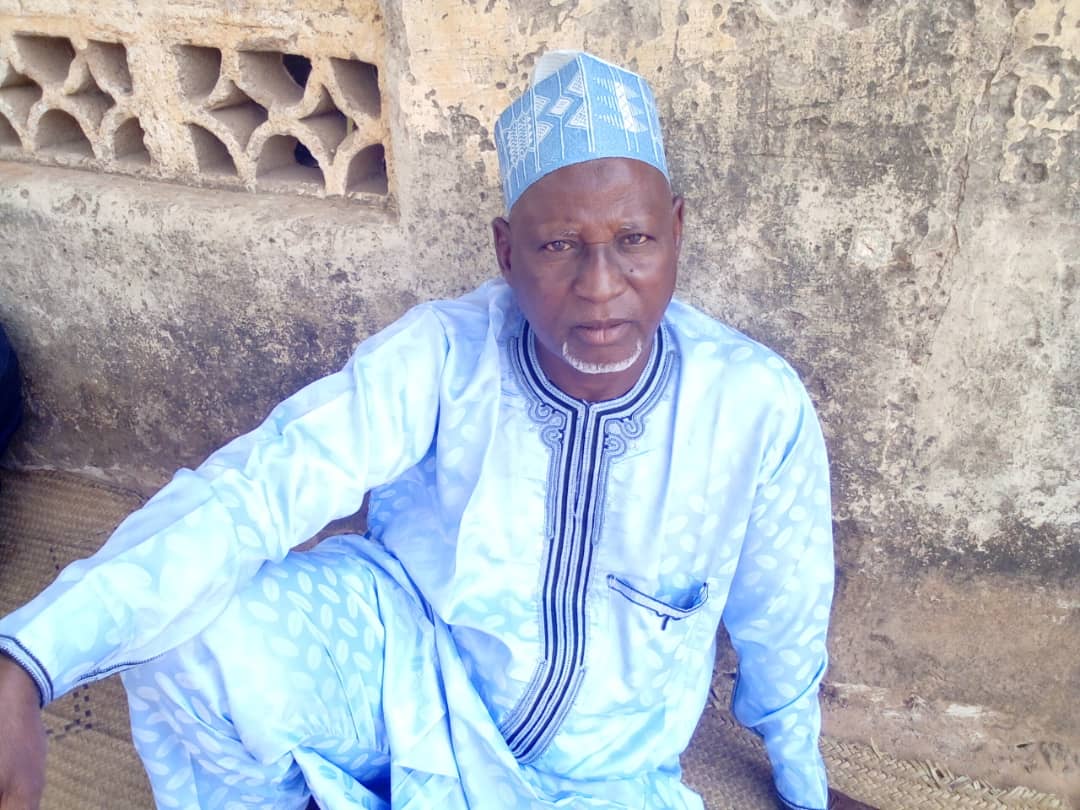
The Wakilin Sarkin Dagaro, Ahmed Umar Abdullahi, told The ICIR the declining standard in the school discourages students from schooling.
The Wakilin Sarkin Dagaro, Ahmed Umar Abdullahi
He said the village had on several occasions went to the Local Education Authority (LEA) on the need to have teachers but his efforts proved abortive.
Abdullahi claims that many teachers who were transferred to villages do not report to the schools. “Inspectors would come, and we would complain to them, but it dies there. If our upper basic school, for instance, has a teacher who only comes three times in a term and we report to the inspector, but nothing changes, what would you think?”
“Teachers’ attendance is a factor that will make students come to school, but they also don’t come regularly,” he said. “The primary school used to close around 11 a.m., and the teachers most times closed due to the absence of students. The only time you see a high number of pupils is during food distribution by the vendors. The programme has been going halfway now because of insufficient money given to the vendors. But whenever they come, you will see a large turnout of students in the area,” said the village head.
The village head was referring to the federal government school feeding programme.
Situation not different in Duhuwar Kura school
Just like the school in Dagaro, Duhuwar Kura Primary and Upper Basic School, along Gadau road in Katagum LGA, also suffers the same anomaly as the school’s leadership operates a skeletal system. They decide when students stay back home and vice versa.
During The ICIR’s visit to the school in February, some students playing on the school’s veranda said their principal left some hours earlier.
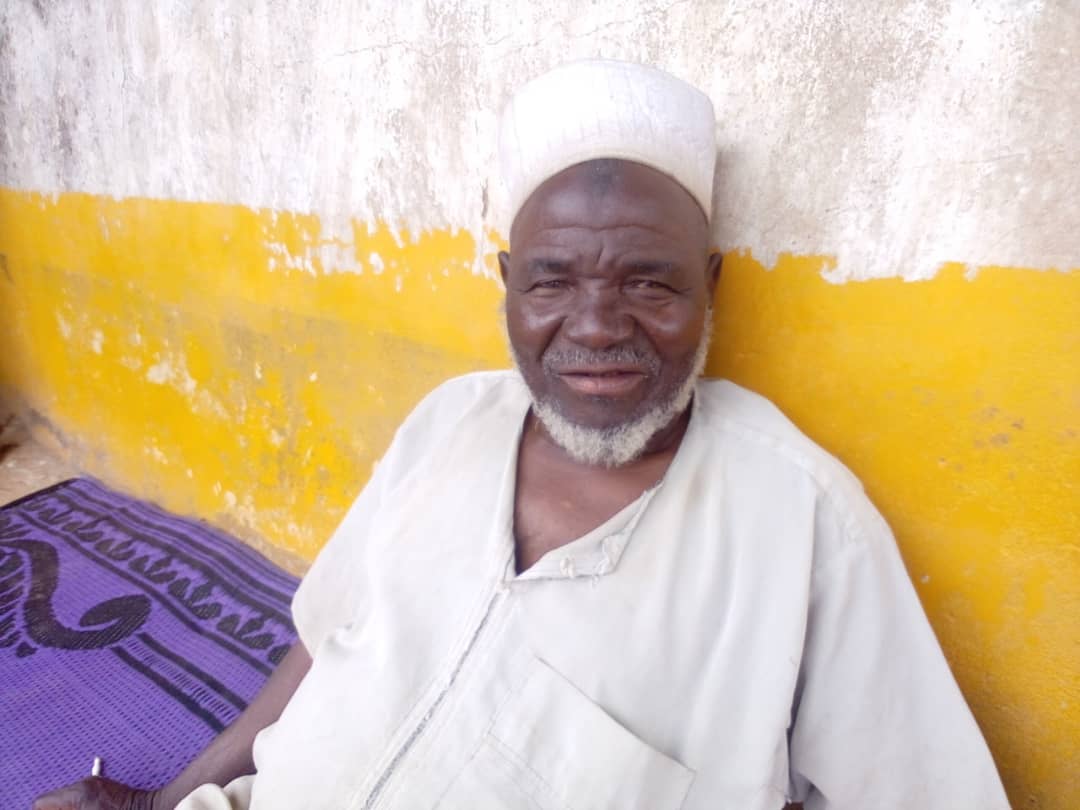
An octogenarian, Muhammadu Inuwa, Sarkin Magani Duhuwar Kura said his grandchildren have not been going to school because whenever they do, there would not be a teacher to attend to them.
According to him, he was forced to keep sending his grandchildren to empty classes. At times two or three teachers would appear in the school for “other businesses” different from teaching. The teachers, he said, come from Azare.
Grand father and Sarkin Magani Duhuwar Kura , Muhammadu Inuwa,
“I have since stopped sending my four grandchildren to school because all they do is play. The boys will play football, and the girls will play ‘gada’ — a local dance among girls in the area.
“If you ask them what they learn, they will tell you nothing because the teachers didn’t come or did not enter the classes to teach. Many have stopped coming and opted for Almajiri education. They are cheating our younger ones by not coming and doing their duties,” said Sarkin Magani.
The situation baffles Sale Ya’u, a volunteer teacher in the area who, out of sympathy for his village, took the task upon himself to save the situation.
According to him, in a day, “only 20 or fewer students attend school. He said the situation was compounded by a lack of supervision from the government and its failure to encourage enrollment of students in schools.
Ya’u revealed that supervisors hardly come from the Ministry of Education or Local Education Authority to supervise the school. “And when they do, they don’t take action against any teacher found wanting in the course of their responsibilities.
“The headmasters and principals can only advise teachers who abdicate their duties, because if they reported them to LEA, it is some people in the office that will tell the affected teacher that their principal has reported them and the case ends there,” Ya’u said while adding that , “So how can you expect a change in these situations where no disciplinary action will be taken by a principal or headmaster against an earring teacher because he has someone in the office?”
He added that “It is pathetic that people in Duhuwar Kura are not sending their children to school. The turnover of attendance is not up to 25 per cent, how can you expect our town to develop? This attitude as some parents said was a result of the insufficiency of teachers in the school and the level of poverty in the area. The government is also to be blamed because it doesn’t supervise, and even if there is, no positive result will be seen after such visits. A supervisor will come and find a teacher wanting, but they can’t discipline him.”
While pleading with parents not to withdraw their children from school, the Village Head of Duhuwar Kura, Abdulsalam Halilu, blamed the government for its failure to meet up their expectations.
“We used to have over 11 teachers in the school, but the present situation is not encouraging at all,” the village head said. “What is hurting me is that the children are not attending schools. Although I understand that there is a shortage of teachers, we cannot progress without education. For instance, we have been requesting for a health care center and let us assume we were provided, do we have people in Duhuwar Kura that will be employed there? No! We don’t and this is as a result of uneducated population among us.”
Authorities react
The Education Secretary for Katagum Local Education Authority, Adamu Alhaji Muhammed admits that the shortage of teachers is bedevilling many schools, especially primary schools across the local government.
Muhammad revealed that teachers who retired and died before retirement were not replaced by new ones, hence the shortfall. This, according to him, dates back to 2015. But many of the challenges are being addressed, he claimed.
Education Secretary for Katagum Local Education Authority, Adamu Alhaji Muhammed
“We have a team comprising of Quality Assurance Officers and myself going round to schools to see what the teachers are doing. “Most times, we have strategies aimed at correcting abnormalities discovered during supervision in schools. Firstly we used to counsel the teachers to abide by the oath they signed while assuming duty and if it persists we take the next action,” he said.
Even though the Education Secretary did not clearly mention the number of teachers found wanting during supervision, he claimed that corrective actions taken against the teachers shape their conduct.
“We have zero tolerance to absenteeism on the part of the teachers. If we find out that people posted to rural areas do not report to their place of assignment, we do not take it lightly with them.
“The issue of having only a headmaster and an Arabic teacher in a village school is what is hurting me since I assumed office a year and a half ago. We have been requesting but no employment from the government.
“In some schools, you will find only one teacher, and this makes things difficult. This dearth of teachers is what makes volunteers to be teaching in our schools, and thank God we have over 300 volunteer teachers spread across the local government area,” he said.
He states that volunteer teachers are screened to ensure their intelligence and character suit the job.
“To me, I have never come across any reports of bad behaviour from the volunteer teachers and believe me, if there is, we will deal with such a person. Up to today, this office has not received any report of misconduct from the teachers and our doors are open to taking necessary action if there is,” he said.
Commenting on the dilapidating state of the schools, he said: “I find it difficult to control myself whenever I come across pupils sitting down on bare floors. The sudden breakdown of chairs and their inadequacy was from the contractors that were given contracts in some schools. They don’t deliver quality services and in the end, it is the children who suffer.”
The Public Relations Officer (PRO) for Universal Basic Education (SUBEB) in Bauchi State, Muhammed Abdullahi, said the agency is aware of the conditions in the rural schools. He, however, claimed that the government is working “so hard” to address them.
“If not all, the government has addressed at least 80 per cent of the problems,” he said. “The government is looking into the issue of inadequate teachers. Infrastructure, training and retraining of teachers and provision of instructional materials.”
Although volunteer teachers do most of the teaching in the schools, they are left out of the training programmes, Abdullahi explained, reiterating that the issue of inadequate teachers would soon be addressed.
ABOUT 87 people were killed and 39 injured during an attack on villages in the Mangu Local Government Area of Plateau State on Tuesday, May 16.
The spokesperson of the state police command Alabo Alfred disclosed this in a statement on Friday, May 19.
According to him, seven suspects in connection with the attack have been arrested.
Alfred explained that the individuals that sustained varying injuries are currently receiving treatment in different hospitals in the state.
“After calm was restored to the communities, more bodies were recovered, which is part of the thirty (30) earlier reported. The figures are as follows: (1) Kubat Village 27, (2) Kantoma Village 31, (3) Alagon 6, (4) Kubwas 8, (5) Dumnang 9, (6). Shangal 1, (7) Gwet 3 and (8) Washna 2.
“As at the time of filling this report, Manret Hospital had about Fifteen (15) injured persons, Infinity Hospital had over Eight (8), Allah Nakowa Hospital had over Sixteen (16), while at Mangu Cottage Hospital, there are an unspecified number of persons receiving treatment there also, ” he added.
Alfred noted that the suspects were all arrested in while committing crime and exhibits were recovered from them.
“We are pleased to inform the general public that in addition to the Five (5) suspects earlier announced, two (2) more suspects have been arrested, and exhibits recovered from them include two (2) cutlasses, one (1) dagger and some amount of money suspected to have been stolen from the houses they looted, as they were all arrested in the act of committing the crime by officers from one of our tactical team.
He stressed that the suspects will be charged to court for prosecution immediately the police conclude its due investigation.
“The suspects are presently in our custody and will be charged to court for prosecution after our investigations are concluded. As part of the Command’s efforts to maintain peace and order, there has been an intensified security presence in and around Mangu Local Government Area.
The Command extended its condolences to the families of the deceased, pledging that the perpetrators of the heinous crime will be brought to justice.
” The CP also urged the good people of Plateau State to remain calm and cooperate with the Police and other Security agencies in their efforts to maintain law and order in the State through the timely reportage of suspicious activities in and around their environment, as security is everybody’s business.
“He also assures them that the Police will continue to work tirelessly to ensure the safety and security of all the residents of Plateau State,” the statement read.
A member of the House of Representatives, Solomon Maren, on Wednesday, May 17, disclosed that over 100 persons have been killed by terrorists in Plateau State within the last 48 hours.
Maren, who is representing Mangu/Bokkos federal constituency of plateau state, said the killings happened within his constituency as a result of multiple village attacks in the area.
He said this at a press conference at the National Assembly Complex in Abuja.
According to him, the latest attacks took the death toll to 200 in the past four months.
He stressed that the attackers also burnt houses, farms and stored agricultural inputs.
“I find it expedient at this time to intimate the world on the unfortunate happenings in my constituency, Mangu/Bokkos federal constituency of Plateau state,. In the last two days, over 100 persons, most of them women and children, have been massacred and butchered in cold blood by terrorists during an overnight unprovoked attack and their houses burnt down, including foodstuff, food barns and seedlings.
“These killings are one among many in the constituency, where over 200 persons have been killed in the last four months before this one.
“Government may claim to be doing its best but its best is not good enough, since it is not able to stop the killings in years. However, I commend the few gallant officers working without sufficient arms, yet gave themselves to save lives,” he said.
He further urged President Muhammadu Buhari to immediately order security agencies to curb the killings.
“Therefore, I urge the president to order the security agencies to move into the area with immediate effect to curb the killings as well as the National Emergency Management Authority (NEMA) and other well-spirited organizations to also move in with relief materials for the wounded survivors of the dastard attack.
FOUNDER of the FCMB Group, formerly known as First City Monument Bank, Otunba Michael Olasubomi Balogun, has died aged 89.
According to a report, family sources confirmed Balogun’s death in London on Friday, May 19, morning.
The family said a formal announcement of the death of the high-ranking Ijebu chief would, however, be made in line with tradition.
Born on March 9, 1934, in Ijebu Ode, Ogun state, Balogun attended Igbobi College, and thereafter studied Law at the London School of Economics.
The banker established the FCMB in 1982 after its early origins in investment banking as City Securities Limited in 1977. FCMB emerged as a Top10 bank in February 2012 following the takeover of FinBank, which was one of the nine banks that failed during the Nigerian banking crisis in 2009.
When setting up the FCMB, a wholly Nigerian bank, Balogun was quoted to have said he was coming up with a culture of excellence, and went ahead to define what his meaning of culture of excellence would be.
This could explain why the FCMB buildings replicate a construction with monumental architectures.
Before his death, the entire asset base of the FCMB had gone up to N3.1 trillion, while its total market capitalisation was N81.59 billion, as contained in the financial institution’s last financial result dated March 31.
He earned many international and local awards, which included the American Biographical Institute Inc’s Distinguished Leadership Award for outstanding contributions to the development of Investment Banking; the University of Ibadan’s Degree of Doctor of Laws (Honoris Causa) in recognition of his outstanding achievements both in the field of Law and his contributions to the socio-economic development of Nigeria; and a Merit Award for philanthropic services to Ogun State in particular and the country as a whole.
He also received the Council membership of many multinational Chambers of Commerce, even as the Chartered Institute of Bankers of Nigeria made him a Fellow for his pioneering and outstanding contributions to the banking industry.