THREE clerics from the Anglican Church in Ekiti State have been killed in an auto crash along Otun-Iro road in Moba Local Government Area of the state.
The state police spokesperson, Sunday Abutu, who confirmed this to newsmen said the clergymen were travelling from Ipere-Ekiti to Iro-Ekiti when their bus somersaulted, leading to their instant death.
He said the incident also left five others in the bus with injuries, and they were taken to the Federal Teaching Hospital in Ido Ekiti for treatment.
The remains of the deceased were deposited in the morgue.
“We got the information, our men from the traffic section were deployed to the axis. The body of the deceased were recovered and moved to hospital,” he said.
“We are monitoring the situation, and investigation is still ongoing to ascertain the cause of the accident.”
According to Abutu, the deceased included Felix Okeowo, who was said to have been transferred from Saint Peters’ Anglican Church, Ipere Ekiti and was on his way to assume duty in his new station in Iro-Ekiti when the accident occurred.
Others were identified as Arije of Saint James’ Anglican Church, Eda Oniyo Ekiti, and Omotoso of Saint Mary’s Anglican Church, Ewu Ekiti.
Between January and September 2022, road crashes killed more than 69 persons in Ekiti, according to the Federal Road Safety Corps (FRSC).
FRSC Sector Command in the state, Olusola Joseph, blamed the incidents on over speeding by drivers and poor condition of the roads.
He called on drivers to prioritise safe driving and ensure that their vehicles, including their tyres, are in good condition.
The Nigerian Bureau of Statistics (NBS), said there were 6,627 road traffic accidents in the country during the first half of 2022.
These crashes involved a total of 10,579 vehicles between the months of January and June.
The statement was released to mark this year’s World Press Freedom Day, with the theme, ‘Shaping a Future of Rights: Freedom of Expression as a Driver for all Other Human Rights’.
“We share the popular notion that freedom of the media is indispensable for protecting all other human rights. Instances abound where inhuman treatment, torture, corruption, misuse of power, impunity and nepotism were exposed because of the reports by the media.
“Disturbing signs of repression, violations of media freedom and several cautious attempts to criminalise journalism practice have been observed in the past few years in our country. There have been different forms of control, censorship, and pressure over the content of mass media in Nigeria, especially the broadcast stations, which have hindered their independence and pluralism.
“Cases of journalists who are deprived of their inalienable rights due to their work continue to occur over and over again. Cases of harassment, intimidation, violence – and even murder – have been documented in the past eight years – by both local and international pro-media rights groups,” the NGE stated.
The NGE also gave the incoming administration the responsibility of launching purposeful, long-lasting policies and initiatives to support journalists’ safety, media freedom, and freedom of expression.
The Guild further stated that it had observed recent deliberate attempts by some National Assembly members, acting in tandem with representatives of the executive branch of government, to criminalise journalism practice in Nigeria.
The NGE promised to engage the National Broadcasting Commission (NBC) Act and that NBC to discuss the Broadcast Code of Conduct with the incoming administration to update and reform the document per international best practices.
The editors asserted that Nigeria could not be an exception to the rule that pluralistic mass media based on freedom of expression, freedom of information, and freedom of the press are essential to any viable and functional democracy worldwide.
According to the NGE, two Nigerian journalists Gidado Shuaib and Alfred Olufemi, who were recently found guilty by a lower court in Kwara State, should not have even been charged with a crime, much less found guilty for writing a story on a factory.
According to the NGE, the conviction of the two journalists sent troubling signals to the media, highlighting the urgent need for legislative change and ensuring that journalism is not criminalised in Nigeria as anti-media forces intend.
The body advised members of the public to make use of the recently inaugurated nine-member board of the National Media Complaints Commission (NMCC), otherwise known as the National Ombudsman, to report cases of media misconduct.
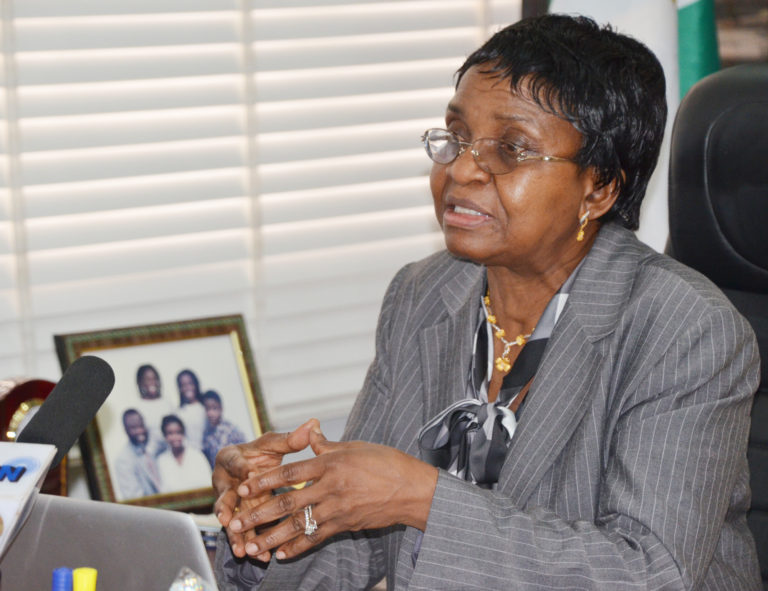
THE National Agency for Food, Drug Administration and Control (NAFDAC) announced the ban on importation of Indomie’s ‘Special Chicken Flavour’ instant noodles to prevent the smuggling of the product into the country, according to the Director-General, Mojisola Adeyeye.
Adeyeye disclosed this in a statement issued on Tuesday, May 2.
She said the Special Chicken Flavour noodles was flagged in the country years ago and NAFDAC did not register the product.
Adeyeye said the Agency is exercising extra caution to prevent unapproved importation of the product. She added that sampling of the product and other brands of instant noodles is ongoing.
“The product is on the government’s prohibition list,” she said.
“What we are doing is an extra caution to ensure that the product is not smuggled in, and if so, our post-marketing surveillance would detect it. We also want to be sure that the spices used for the Indomie and other noodles in Nigeria are tested.”
NAFDAC is set to commence clinical tests and random sampling of Indomie noodles and their seasoning from production facilities for the presence of ethylene oxide.
Adeyeye promised that once the tests are completed, the outcome of the sampling and analysis of the products would be available to the public.
She assured Nigerians of a thorough investigation of the products both at factory and market levels.
“Indomie instant noodles products and other brands of noodles registered by NAFDAC for sale in the Nigerian market are manufactured in Nigeria and are only granted NAFDAC registration status following a strict regulatory regime covering all aspects of good manufacturing practice,” she said.
The move to conduct clinical tests on noodles was influenced by the decision of Malaysia and Taiwan to recall the sale of the Indomie Special Chicken Flavour noodle.
The decision of the Asian countries raised some concerns about food safety in Nigeria and globally.
Regarding the development, Adeyeye said, “NAFDAC is aware of the ban on Indomie Instant Noodles’ Special Chicken Flavour’ by the Ministries of Health in Malaysia and Taiwan on account of the alleged presence of ethylene oxide, a compound associated with an increased risk of cancer.
“NAFDAC, as a responsible and responsive regulator, is taking swift actions to carry out random sampling and analysis of Indomie noodles (including the seasoning) for the presence of ethylene oxide, as well as extending the investigation to other brands of instant noodles offered for sale to Nigerians.”
Findings by Malaysia and Taiwan
Last week, health officials in Malaysia and Taiwan said they detected ethylene oxide in the “special chicken” flavour noodles.
Ethylene oxide is a colourless, odourless gas used to sterilize medical devices and spices. According to the United States Environmental Protection Agency, the gas can contribute to increased cancer risk.
On Monday, April 24, the health department in Taipei, Taiwan’s capital, disclosed that it found the substance in the instant noodle variant following a random inspection of various brands available in the city.
It said the detection of ethylene oxide in the product did not comply with standards.
“The Taipei City Health Bureau reminds the food industry that our country has not approved ethylene oxide as a pesticide, nor has it approved ethylene oxide gas for disinfection purposes.
“The industry is sure to implement autonomous management and confirm that the raw materials and products should comply with food safety and health management,” the department said in a statement.
Two days later, the Ministry of Health in Malaysia also said it examined 36 instant noodles from different brands and found that 11 samples contained ethylene oxide.
“The detection of ethylene oxide in the product did not comply with standards and businesses have been ordered to immediately remove them from their shelves,” the Health Director-General, Muhammad Radzi Abu Hassan, said last Wednesday, April 26.
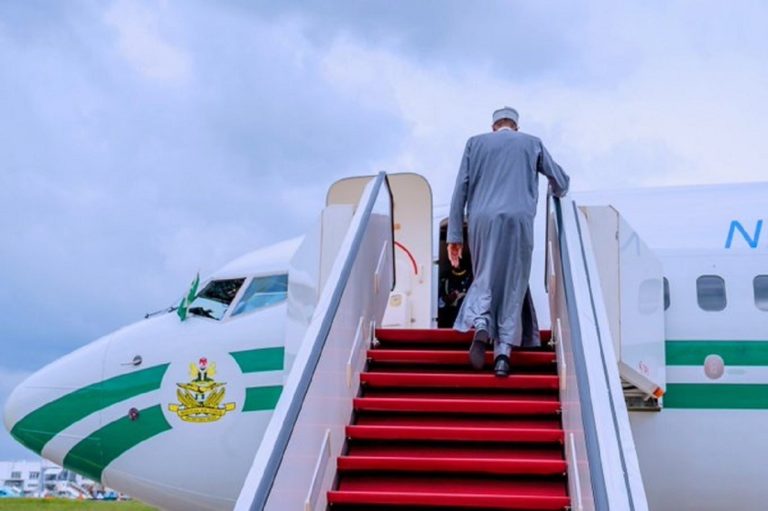
NIGERIAN President Muhammadu Buhari will leave for the United Kingdom (UK) on Wednesday, May 3, to attend the coronation ceremony of King Charles III and the Queen Consort Camilla in London.
In a statement released on Wednesday morning, Special Adviser, Media and Publicity to the President Femi Adesina disclosed that Buhari would be attending a Commonwealth Summit in London ahead of the coronation, slated for Saturday, May 6.
“Ahead of the coronation, the Commonwealth Secretariat will take advantage of the gathering of leaders in London to host a Commonwealth Summit for Presidents and Heads of Government of Commonwealth countries on Friday, May 5.
“President Buhari is billed to participate in the Summit, which will deliberate on the Future of the Commonwealth and the Role of the Youth,” Adesina noted.
Buhari would be accompanied by some of his ministers, including Minister of Foreign Affairs Geoffrey Onyeama, Minister of Information and Culture Lai Mohammed, and the National Security Adviser (NSA) Babagana Monguno.
Others on Buhari’s entourage include the Secretary to the Government of the Federation, Boss Mustapha, Director General of the National Intelligence Agency (NIA), Ahmed Rufai Abubakar, and Chairperson/Chief Executive Officer of Nigerians in Diaspora Commission, Abike Dabiri-Erewa.
Charles III was proclaimed king after the death of his mother, Queen Elizabeth II, in September 2022, and Buhari visited him at Buckingham Palace to foster bilateral relations between Nigeria and the United Kingdom.
Upon his return, Buhari said the king showed interest in improving relations with Nigeria.
The primary purpose of the visit, according to a statement released on Monday, April 10, by his Senior Special Assistant on Media and Publicity, Garba Shehu, is to perform Umrah, the Lesser Hajj Pilgrimage.
The Saudi trip was expected to be his last foreign trip as Nigerian President, before it was announced that he would be embarking on another trip journey to London.
Buhari has been known to travel frequently since he became President in 2015, making both official and private trips to various parts of the world.
Some of his foreign trips, which have cost the country billions of taxpayers money, include visits to countries such as the United States, China, the United Kingdom, France, Germany, and South Africa, among others.
Between the last quarter of 2021 and the second quarter of 2022, Buhari visited Addis Ababa, Belgium, Gambia, Ghana, Cote D’Ivoire, Equatorial Guinea, France, Kenya, Portugal, Rwanda, Saudi Arabia, South Africa, Spain, Turkey, The United Arab Emirates (UAE) The United Kingdom (UK), among several others.
BARRING any last-minute hitch, the first batch of Nigerian students returning from Sudan will arrive Abuja today, Wednesday, May 3.
The Chairman and Chief Executive Officer of the Nigerians in Diaspora Commission (NIDCOM), Abike Dabiri-Erewa, disclosed this in an update on Wednesday morning.
The processing of Nigerian evacuees from Sudan stranded in Egypt commenced on Tuesday, May 2, after an initial denial of passage by the Egyptian authorities.
However, the Egyptian border was opened, albeit with stringent conditions, after President Muhammadu Buhari’s intervention with the Egyptian President.
The approval paved the way for the deployment of a support team from the Nigerian Air Force to complement Air Peace, the airline that will be airlifting the evacuees.
“Nigeria Embassy in Egypt has moved all evacuees from the Sudan side to the Egypt side of the Arqeel border, with priority given to the females. They are now being prepared for their departure to Abuja through Aswan Airport,” Dabiri-Erewa said.
Part of the conditions given by Egypt for passage include details and schedules of the aircraft, capacity of the aircraft, and a strong pledge that once Nigerians depart the border, they would be conveyed to the designated airport.
Other conditions include a comprehensive list of the evacuees with passport numbers, valid travel documents, and the presence of Nigerian government officials at the point of embarkation.
The Nigerian students in Sudan had left Khartoum, the country’s capital, for Aswan, Egypt, on Wednesday, April 26, by road.
The journey had become necessary after numerous calls for a ceasefire between the warring parties had failed to yield results, frustrating efforts of the Nigerian and other governments to airlift citizens directly from Sudan.
Sudan eventually declared a ceasefire, although fighting had continued across the country.
The students arrived at the Egyptian border on Thursday, April 27, hoping to proceed to the Aswan airport, from where they would be airlifted to Abuja, Nigeria.
For several days, they were denied access to the country by the Egyptian authorities, who demanded visa processing fees before the borders could be opened.
However, they are set to return to Nigeria, after the Federal Government and the Egyptian authorities reached an agreement on the procedure for their movement through the North African country.
DESPITE increases in total sales figures for the first quarter (Q1) of this year relative to the prior period, the profit lines of the three giant cement manufacturing companies in Nigeria seesawed on the back of the naira redesign policy of the Central Bank of Nigeria (CBN).
A check by The ICIR on the unaudited financial results of Dangote Cement Plc, BUA Cement Plc, and Lafarge Africa Plc for the three months ended March 31, 2023, showed that their gross profit, operating profit, profit before tax or pre-tax profit and profit after tax or net profit varied in the review period.
The CBN had on October 26, 2022 revealed plans to redesign, produce, and circulate new series of N200, N500 and N1,000 notes. Inaugurated on November 23, 2022, by the President, the notes officially came into circulation on December 15, 2022.
And as part of the implementation plans, the apex bank oughted to phase out the old notes under a tight deadline of January 31, but further extended the deadline to February 10, after the move was greeted with public outcry.
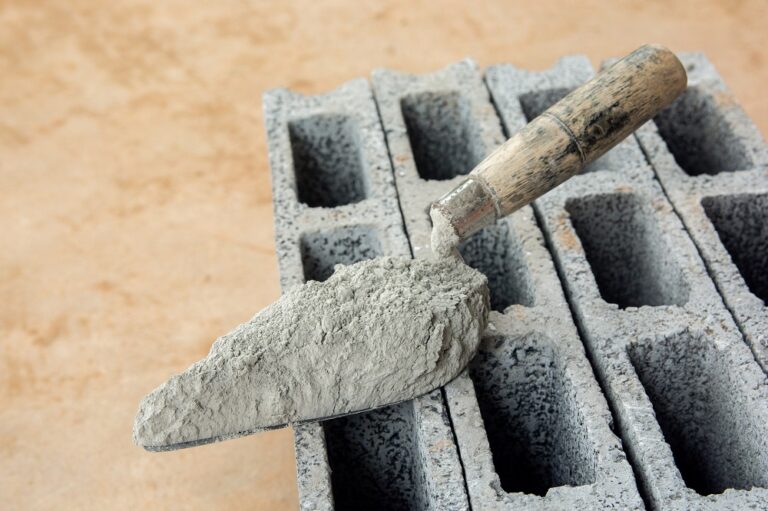
Bag of cement from Dangote, Lafarge and BUA.
But when it became obvious that the previous date was not.longer tenable, the apex bank further extended the validity of only the old N200 note to April 10, and reluctantly obeyed the verdict of the Supreme Court that the old notes should remain legal till December 31.
The much ado about the implementation of the policy and the cash-strapped saga that followed virtually affected every businesses and grounded the economy to a halt, The ICIRreported.
“Q1 2023 was a challenging first quarter due to the economic impact of the general elections and shortage of cash in circulation following the currency redesign policy,” Khaled El Dokani, the chief executive officer of Lafarge Africa, lamented.
According to the Lafarge Africa boss, these factors constrained the company’s financial performance in the review period, however, the company remains focused on delivering sustainable value to all stakeholders as market recovers post-election and through the rest of the year.
Analysis by The ICIR showed that Lafarge Africa’s sales rose by 1.34 per cent to N91.82 billion; gross profit by 10.21 per cent to N46.48 billion; operating profit by 0.81 per cent to N22.24 billion; and pre-tax by 4.72 per cent to N22.48 billion.
However, the company’s net profit dropped by 14.94 per cent to N14.94 billion in Q1 2023 compared to N17.56 billion in Q1 2022.
Lafarge Africa’s Q1 performance. Source: Unaudited financial result for the three months ended March 31, 2023 as posted by the company
A member of the global leader in innovative and sustainable building solutions, Lafarge Africa specialises in cement, construction aggregates, and concrete.
In the period under review, while BUA Cement reported a sales growth of 9.65 per cent to N106.35 billion, gross profit was upped by 4.52 per cent to N50.38 billion, however, the company’s operating profit fell by 9.43 per cent to N38.38 billion, pre-tax profit by 15.57 per cent to N35.46 billion and net profit by 19.13 per cent to N26.80 billion.
BUA Cement’s Q1 performance. Source: Unaudited financial result for the three months ended March 31, 2023 as posted by the company
BUA Cement is a $1 billion investment of BUA Group primarily engaged in the business of quarrying, extracting, processing and dealing in limestone as well as the manufacture and supply of cement.
The big elephant in the room, Dangote Cement, marginally reported a 3.45 per cent rise in net profit to N109.50 billion in Q1 2023 while all other profit lines including sales dropped in Q1 relative to Q1 2022.
The company’s sales fell by 1.56 per cent to N406.72 billion; gross profit by 6.18 per cent to N243.05 billion; operating profit by 14.19 per cent to N156.87 billion; and pre-tax by 6.12 per cent to N146.82 billion.
However, the company posted a 3.45 per cent growth in N109.50 billion in Q1 2023 from N105.85 billion in Q1 2022.
Dangote Cement’s Q1 performance. Source: Unaudited financial result for the three months ended March 31, 2023 as posted by the company
According to Dangote Cement, gas supply and currency weakening were some of the challenges the business faced.
“Faced with a high inflationary environment and weaker demand, Dangote Cement Plc deployed new and innovative business strategies that helped to drive up revenues, contain costs and protect margins.
“With the significant rise in diesel and gas prices, we opted for the aggressive use of cheaper Alternative Fuels (AF) in the production of cement, through the co-processing of wastes such as: agro wastes, waste lubricants, tyre derived fuels, sawdust, and packaging materials,” the company stated.
Dangote Cement is sub-Saharan Africa’s leading cement company with a production capacity of 48.6 million tonnes per year across ten countries.
HOW much time did your child spend looking at a screen today?
The answer likely depends on how old they are, what grade they’re in at school and what rules you have in place at home about screen time. But the reality is that, for children and adolescents growing up as “digital natives”, it is almost impossible to imagine life without screens of some sort.
Devices like cellphones, laptops and tablets have become ubiquitous as tools for entertainment and education in most parts of the world. This has led parents, guardians, teachers and researchers to wonder whether screens are good or bad for children.
The World Health Organization recommends that school-going children (five-17 years) limit their recreational screen time. The recommendation for two to four year-olds is not more than one hour of screen time per day (less is better); it suggests that children younger than two should have no screen time. Research evidence suggests that children and adolescents were already exceeding these recommendations, and that the COVID-19 pandemic only made this worse.
There isn’t yet conclusive evidence about whether screen time is good or bad for children. But, based on my ongoing research into children’s development – including the role of play, sleep, physical movement and screen time – my view is that there are benefits of educational screen time, but we don’t know enough about the potential harms.
Nevertheless, there are several things parents and teachers can do. This includes basics such as being aware of how much time children are spending on screens and what their posture is like through, to more complex issues such as what each child’s developmental weaknesses and strengths are. It also involves setting boundaries.
None of this is easy to implement. However it doesn’t mean that they cannot be a healthy goal worth working towards. It is never too late to start, but the earlier you do, the better.
Covering the basics
First, it is essential for parents to be aware about how screen-based activities (educational and recreational) influence their child’s development, as well as their behaviour.
Secondly, remember that all children are different and will therefore respond differently to screen time. So understanding the child and their strengths and weaknesses is key. For example, if a child struggles with managing sensory input – like loud noises, bright lights or certain textures – it may be better for them to avoid recreational screen time.
Thirdly, establish boundaries around screen time. This is key at home and at school.
Fourth, keep tabs on how screen time is stopping children from doing other things that are developmentally beneficial. For example, in the home, a child who is learning mostly on screens at school could be encouraged to spend time after school playing outside, and doing activities that develop fine motor skills. Screen swiping and typing are poor substitutes for activities that stimulate these skills, like writing, drawing, colouring in, painting, and cutting.
Fifth, in a school environment, are there other activities that provide children and adolescents opportunities to intentionally develop their social and emotional skills that are not getting as much attention when they are working alone on screens?
Sixth, are screens set up in such a way that encourages good posture?
Baby steps
Setting boundaries and striving for a healthy balance of educational and recreational screen time within the broader context of development may seem daunting.
It requires thoughtfully reflecting on the wider impacts of the choices made around screens, and offering a range of opportunities that help to boost chlidren’s chances of growing up to be healthy and well-adjusted adults.
As much as possible, involve children and adolescents in conversations about why a healthy balance of screen time will benefit them. This can help them take ownership of their choices about their health and development – both in the present as well as their future health and well-being.
THE American Political Science Association (APSA) has appointed a Professor of International Relations at Lagos State University (LASU), Kayode Soremekun, to coordinate and drive its Research Development Group on Africa.
This was disclosed in a letter of appointment signed by the Warren Weinstein Chair of African Studies at the Johns Hopkins University School of Advanced International Studies (SAIS), Peter Lewis.
In this capacity, Soremekun will help to foster academic engagement between scholars based in North America and Africa.
The Research Development Group initiative helps to support scholarly work and to develop collaborative networks and randomly selected academics are supported to attend the APSA annual meeting, which will be held this year in Los Angeles, United States, between August 31 – September 3.
Soremekun is the immediate past Vice Chancellor of Federal University, Oye Ekiti (FUOYE), and has lectured for over 20 years in both public and private tertiary institutions such as the Obafemi Awolowo University, Covenant University, Ota in Osun State and the National Open University of Nigeria.
APSA is the leading professional organisation for the study of political science and serves more than 11,000 members in more than 100 countries.
The Association promotes a lively, diverse community of scholars, teachers, students, and practitioners who bring wide-ranging interests, methodologies, and perspectives to the analysis and conduct of government and politics.
THE Speaker of the Parliament of the Economic Community of West African States (ECOWAS), Sidie Mohamed Tunis, has appealed to the Chief Clerk of the Central Criminal Court Old Bailey, London, over the sentencing of his predecessor Ike Ekweremadu, for offences relating to organ trafficking.
Ekweremadu, a Deputy Senate President, along with his wife Beatrice, and doctor Obinna Obeta, were convicted of organ trafficking, in the first verdict of its kind under the UK’s Modern Slavery Act.
The couple had facilitated the travel of a 21-year-old Nigerian man to the United Kingdom (UK), for the purpose of transplanting one of his kidneys to their ailing daughter, Sonia, after the man was confirmed as a good match by Obeta.
But the story took a different turn when the man told UK authorities that he was deceived into travelling and was not aware he was to donate his kidney to Sonia, raising questions about consent which the couple claimed they previously got from him.
In his letter to the UK Court, Tunis said as a parent, he could relate to the pains, dilemma and crossroads the couple faced over the health of their daughter and urged the court to wear a human face in meting out judgement on May 5, noting that Sonia must still undergo a kidney transplant to stand a chance of surviving to fulfil her destiny.
“It is certain that Sonia cannot survive the absence of her parents in her present health condition… I wish to fervently appeal to the honourable court, on behalf of the ECOWAS Parliament, for leniency in meting out justice to the couple.
“We understand the position of the law, but only appeal that the honourable court puts on a human face in this circumstance and temper justice with mercy, especially considering his good behaviour and contributions to the good of the society, the less privileged, and democracy.
“Importantly, the typical Ekweremadu, being one, who is given to charity work and experienced in lawmaking in Nigeria and internationally, could also be very useful to the Nigerian and international community in public enlightenment and legal reforms/campaigns on organ trafficking to curtail such incidents drawing from his personal experience,” Tunis added.
Nigeria’s House of Representatives and former President Olusegun Obasanjo have also made similar appeals to the Old Bailey Court.
AHEAD of sentencing on May 5, Nigeria’s House of Representatives has asked the United Kingdom (UK) to ‘temper justice with mercy’ in delivering judgment on former Deputy Senate President Ike Ekweremadu, who has been tried for organ trafficking.
In March, the UK’s Old Bailey Court in London, found Senator Ekweremadu, his wife, Beatrice and a medical doctor, Obinna Obeta guilty of an organ-harvesting plot against a 21-year-old Nigerian man.
In a resolution passed at plenary on Tuesday, May 2, the legislators also called on the Federal Government to take diplomatic steps to intervene in the matter.
Earlier, a lawmaker from Enugu state Toby Okechukwu, sponsored a motion of urgent public importance, where he stated that Ekweremadu “acted within his limited knowledge”.
He said although ignorance is not an excuse, the court should take into consideration that Ekweremadu has not been convicted before and has been a responsible citizen of Nigeria.
In the same vein, the Speaker of the House of Representatives, Femi Gbajabiamila, said it behoves on any government to plead for clemency when their citizens are in such a situation.
“For 24 years, Ekweremadu has served the country with vigour. He has used his office to champion democracy,” Gbajabiamla said.
Last month, former President Olusegun Obasanjo wrote asking the Chief Clerk of the UK c2ourt in old Bailey to intervene and ensure that justice is tempered with mercy on the matter.
“Mr. Chief Clerk, I am very much aware of the current travails and conviction of Ike Ekweremadu and his wife in the United Kingdom resulting from their being charged with conspiring to arrange the travel of a 21-year-old from Nigeria to the UK in order to harvest organs for their daughter.
“I do realise the implications of their action and I dare say, it is unpleasant and condemnable and can’t be tolerated in any sane or civilized society.
“However, it is my fervent desire (that) you will use your good offices to intervene and appeal to the court and the government of the United Kingdom to be magnanimous enough to temper justice with mercy and let punishment that may have to come take their good character and parental instinct and care into consideration,” Obasanjo wrote.
During trial, prosecutor Hugh Davies KC said the Ekweremadus had treated the man and other potential donors as “disposable assets” and “spare parts for reward”, a behaviour that showed “entitlement, dishonesty and hypocrisy”.
He said Ekweremadu, who owns several properties and had a staff of 80, “agreed to reward someone for a kidney for his daughter – somebody in circumstances of poverty and from whom he distanced himself and made no inquiries, and with whom, for his own political protection, he wanted no direct contact”.
Davies also argued that Ekweremadu ignored medical advice to find a donor for his daughter among genuine family members.