Home Blog Page 951

Transcorp value jumps as Elumelu, Otedola acquire more shares

TONY Elumelu and Femi Otedola have increased their stake in the shares of Transnational Corporation Plc (Transcorp), the company informed the investing public on Thursday, April 27.

Elumelu, who is the chairman of Transcorp, has through HH Capital Limited acquired a total of 9,697,189,979 units of the company’s total shares between April 19 and April 25.

The transactions were broken down into 1,843,008,604 units of share at N1.85; 6,552, 167,522 units at N2.45; 16,738,209 units at N2.69; 1,039,399,057 units at N2.95 and 245,876,592 units at various prices.

With this new acquisition, HH Capital Limited now holds a total of 25.58 per cent of the company’s total shares, totalling 9,991,173,177 units.

HH Capital is owned by billionaire investor Tony Elumelu and appears to be an acronym for Heirs Holdings.

“In compliance with Chapter 17, Rule 17.13 of the NGX Issuers Rules, Transnational Corporation Plc (the Company) hereby informs the Nigerian Exchange Limited (NGX) and the investing public of the below new acquisition of shares in the Company. With this new acquisition, HH Capital Limited now holds a total of 9,991,173,177 units, representing 25.58% of the Company’s total shares,” Transcorp stated.

Otedola, chairman of Geregu Power Plc, had on April 20 acquired 228,384,959 units of shares, Transcorp announced on Thurday, April 27.

Otedola had earlier acquired 5.52 per cent or 2,245,639,251 units of Transcorp’s shares, a transaction the company confirmed on April 20.

By these official announcements, Otedola’s share acquisition stands at 2,474,024,210 units, representing about 6.08 per cent.

The ICIR had reported that Transcorp shares had jumped significantly in the last two weeks arising from the buy interest of both parties, as well as that of other investors.

A check on trading activity at the floor of the Nigerian Exchange Limited (NGX) on Thursday, April 27 showed that the share price of Transcorp closed at N3.12. When compared to the N1.4 it was on April 12, it means that the company’s shares price has jumped by 122.86 per cent in about two weeks.

“I am happy that Transcorp is becoming investors’ toast,” Elumelu said in an interview with Arise TV on Wednesday, April 26.

He added, “I welcome Femi Otedola’s investment in Transcorp. I am happy to see an indigenous, active investor community. I am happy that Femi is investing locally and he should be commended for that. I also welcome his investment in Transcorp because the more people show interest in the activities and performance of the company, the more people invest in the company, the better for our shareholders.”

He noted that about 10 years ago before his leadership took over Transcorp, people were not interested in the company’s shares.

“When I wanted to buy over Transcorp, people who owned shares of Transcorp couldn’t even find their certificates because they lost confidence in the company. Today, under our leadership, Transcorp has consistently paid dividends.

“So, when friends and the investing public come to invest in it is a validation. It tells you that they believe in your story, vision, management, leadership, competence. That is what I have demonstrated and I would like my friend to come on board,” Elumelu said.

According to him, Transcorp has over 300,000 shareholders, enthusing that five per cent, six per cent or 20 per cent investments in Trancorp were all add-ups.

“What is important is that we have a strong leadership, a strong board and we continue to deliver on shareholders’ expectation or public expectation,” he said.
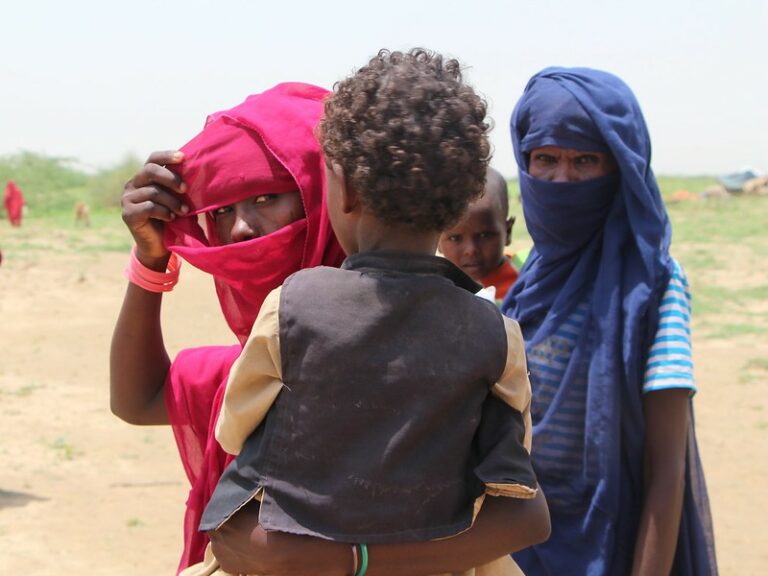
Sudan’s conflict has its roots in three decades of elites fighting over oil and energy

0

By Harry Verhoeven, Columbia University

SUDAN stands on the brink of yet another civil war sparked by the deadly confrontation between the Sudan Armed Forces of General Abdelfatah El-Burhan and the Rapid Support Forces of Mohamed Hamdan Dagalo (“Hemedti”).

Much of the international news coverage has focused on the clashing ambitions of the two generals. Specifically, that differences over the integration of the paramilitary Rapid Support Forces into the regular army triggered the current conflict on April 15, 2023.

I am a professor teaching at Columbia University and my research focuses on the political economy of the Horn of Africa. A forthcoming paper of mine in the Journal of Modern African Studies details the strategic calculus of the Sudan Armed Forces in managing revolution and democratisation efforts, today as well as in past transitions. Drawing on this expertise, it is important to underline that three decades of contentious energy politics among rival elites forms a crucial background to today’s conflict.


Read Also:

The current conflict comes after a decade-long recession which has drastically lowered the living standards of Sudanese citizens as the state teetered on the brink of insolvency.

How energy has shaped Sudan’s violent political economy

Long gone are the heady days when Sudan emerged as one of Africa’s top oil producers. Close to 500,000 barrels were pumped every day by 2008. Average daily production in the last year has hovered around 70,000 barrels.

In the late 1990s, amid a devastating civil war, President Omar Al-Bashir’s military-Islamist regime announced that energy would help birth a new economy. It had already paved the way for this reality, ethnically cleansing the areas where oil would be extracted. The regime struck partnerships with Chinese, Indian and Malaysian national oil companies. Growing Asian demand was met with Sudanese crude.

Petrodollars poured in. The regime in power between 1989 and 2019 oversaw a boom. This enabled it to weather internal political crises, increase the budgets of its security agencies and to spend lavishly on infrastructure. Billions of dollars were channelled to the construction and expansion of several hydro-electric dams on the Nile and its tributaries.

These investments intended to enable the irrigation of hundreds of thousands of hectares. Food crops and animal fodder were to be grown for Middle Eastern importers. Electricity consumption in urban centres was transformed; production in Sudan was boosted by thousands of megawatts. The regime spent more than US$10 billion on its dam programme. That’s a phenomenal sum and testament to its belief that the dams would become the centrepiece of Sudan’s modernised political economy.

South Sudan secedes

Then, in 2011, South Sudan seceded – along with three-quarters of Sudan’s oil reserves. This exposed the illusions on which these dreams of hydro-agricultural transformation rested. The regime lost half of its fiscal revenues, and about two-thirds of its international payment capacity.

The economy shrank by 10 per cent. Sudan was also plagued by power cuts as the dams proved very costly and produced much less than promised. Lavish fuel subsidies were maintained but as evidence shows, these disproportionately benefited select constituencies in Khartoum and failed to protect the poor.

As the regime sank ever deeper into economic crisis, its security agencies concentrated on accumulating the means they deemed essential to survive, and to compete with each other. Both the Sudan Armed Forces and Rapid Support Forces deepened their involvement in Sudan’s political economy. They took control of key commercial activities. These included meat processing, information and communication technology and gold smuggling.

Soaring fuel, food and fertiliser prices

This economic crisis fuelled a popular uprising which led to the overthrow of Al-Bashir. After the 2018-2019 revolution, the international community oversaw a power-sharing arrangement. This brought together Sudan Armed Forces, Rapid Support Forces and a civilian cabinet. Reforms were tabled to reduce spending on fuel imports and address the desperate economic situation.

However, the proposals for economic reform competed for government and international attention with calls to fast-track the “de-Islamisation” of Sudan, and to purge collaborators of the ousted regime from civil service ranks.

Inflationary pressures worsened as food and energy prices rose. It also strengthened a growing regional black market in which fuel, wheat, sesame and much else was illicitly traded across borders. At the same time, divisions grew in Sudan’s political establishment and among protesters in its streets.

The government’s efforts to push back against growing control of economic activities by the Sudan Armed Forces and Rapid Support Forces ultimately contributed to the October 2021 coup against Prime Minister Abdallah Hamdok.

Overlapping crises

The coup only deepened the crisis. So too did global supply shocks, such as those caused by the COVID-19 pandemic and the Russia-Ukraine conflict, which sent the prices of fuel, food and fertiliser skyrocketing globally, including in Sudan. Fertiliser prices increased by more than 400 per cent. The state’s retreat from subsidising essential inputs for agricultural production, such as diesel and fertiliser, led farmers to drastically reduce their planting, further exacerbating the food production and affordability crunch.

Amid these overlapping energy, food and political crises, Sudan’s Armed Forces and Rapid Support Forces have been violently competing for control of the political economy’s remaining lucrative niches, such as key import-export channels. Both believe the survival of their respective institutions is essential to preventing the country from descending into total disintegration.

In view of such contradictions and complexity, there are no easy solutions to Sudan’s multiple crises. The political, economic and humanitarian situation is likely to worsen further.

A version of this article was first published by the Center on Global Energy Policy.The Conversation

Harry Verhoeven, Senior Research Scholar at the Center on Global Energy Policy, Columbia University

This article is republished from The Conversation under a Creative Commons license. Read the original article.

WHO partners with FG to immunise over 900,000 children annually

THE World Health Organization (WHO) is collaborating with the Federal Government to improve routine immunization in the country by vaccinating 930,000 children annually.

The WHO Team Lead, Vaccine Preventable Diseases and Polio Eradication, Dr Kofi Boateng, disclosed this during an engagement programme organised by the National Primary Healthcare Development Agency with other development partners on optimised outreach in Abuja.

According to him, the negative impact of the COVID-19 pandemic resulted in an estimated 33 million African children not being immunised from 2019 to 2021.

“What we have noticed in Nigeria for the outreach sessions that are supposed to go to the communities, we are not seeing the number of yield in terms of the number of children vaccinated over a longer period.

“We are discussing the issue of partners supporting the state in terms of resourcing, engaging the state authorities to make sure the funds are released to support this plan. In the WHO, we have a presence in all 36 states, and we also have staff in almost every ward supporting polio eradication and other PHC services.”

WHO said it will leverage the support of the government to make sure all plans at those levels are of high quality.

“WHO supports strategic policy, we also monitor what is happening. We have teams in the fields that would be supporting the state in terms of coordination, planning and implementation.

“We are discussing the issue of partners supporting the state in terms of resourcing, engaging the state authorities to make sure the funds are released to support this plan. In the WHO, we have a presence in all 36 states and we also have staff in almost every ward supporting polio eradication and other PHC services. So we will leverage that to support the government to make sure all plans at those levels are of high quality.

“WHO supports strategic policy, we also monitor what is happening. We have the teams in the fields that would be supporting the state in terms of coordination, planning and implementation.

Nigeria’s childhood vaccination coverage is low. It falls short of Global Vaccine Action Plan (GVAP) targets and this puts a large number of children at risk of death from vaccine-preventable diseases.

According to the 2021 National Immunisation Coverage Survey (NICS), at least 64 per cent of children between ages 12-23 months in Nigeria did not receive all recommended vaccines in the last five years.

Sudan crisis: Nigerian students arrive Egypt

0

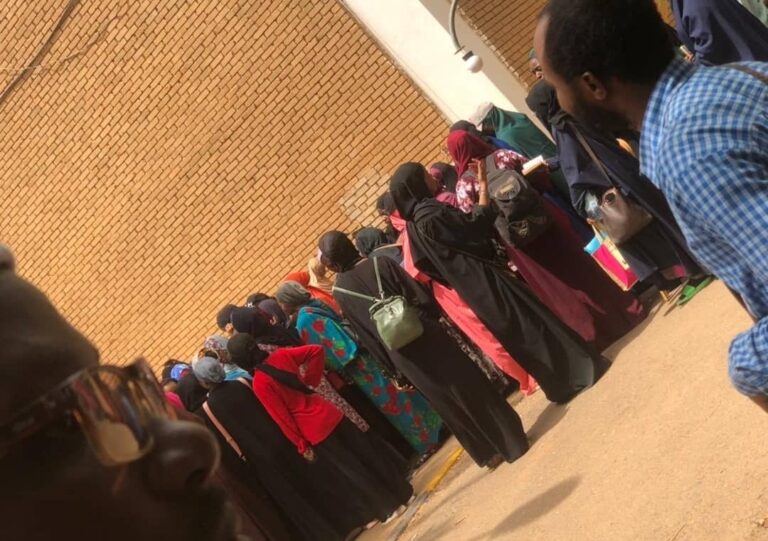
THE first batch of Nigerian students being evacuated from Sudan arrived at the Aswan border in Egypt on Thursday, April 27.

Chairman of the Nigerians in Diaspora Commission (NIDCOM) Abike Dabiri-Erewa disclosed this via her Twitter handle on Thursday night.

“The first set has arrived at the Aswan border in Egypt, but the border is already closed. They will leave early in the morning and then proceed to the airport,” the tweet said.

The students had left Khartoum, the Sudan capital, by road for Aswan, early on Wednesday, April 28. They are to be airlifted from Egypt to Nigeria.

The Sudan crisis had frustrated the Nigerian government’s efforts to airlift the stranded students directly from Khartoum.

The Nigerian government, on Thursday, April 27, disclosed that the Egyptian authorities had granted landing permits to the Nigerian Airforce and airlines, including Air Peace, to evacuate the students.

This was contained in a statement jointly signed by the Ministry of Foreign Affairs and the Federal Ministry of Humanitarian Affairs, Disaster Management and Social Development.

“Nigerian Mission in Egypt is liaising with the Egyptian authorities to facilitate the evacuation exercise by providing emergency entry documents and holding shelters until the stranded Nigerians are airlifted back to Nigeria.

“The Nigerian Air Force, Air Peace and other Airlines have received clearance to fly to Egypt. The NAF C-130H is scheduled to leave Abuja tomorrow, 28th April, 2023, to commence the airlifting of the evacuees,” the statement read.

Thousands of foreigners, including at least 10 000 Nigerian students and over five million Sudanese of Nigerian origin, were trapped in Sudan, Northeastern Africa, a week after intense fighting between two rival forces broke out.

According to the World Health Organisation (WHO), at least 400 people have died in the fighting, and almost 3,500 more have been wounded in Khartoum, the western region of Darfur and other states.

During the journey to Aswan, a video circulated on social media on Thursday, in which students complained of being abandoned in the desert due to non-payment of fees to the bus operators by the Federal Government.

In one of the videos, a lady believed to be one of the students said the transporters abandoned them in the desert for hours without food and water.

However, Dabiri-Erewa confirmed that the issues were settled and the journey to Egypt from Sudan had continued.

Nigeria to borrow more as FG shifts subsidy removal beyond June

THE Federal government has suspended the scrapping of petroleum subsidy in June amid concerns of more borrowings and huge sums expended on debt service.

The National Economic Council (NEC) announced today in Abuja that it had agreed that petrol subsidy should not be removed in June, as earlier planned.

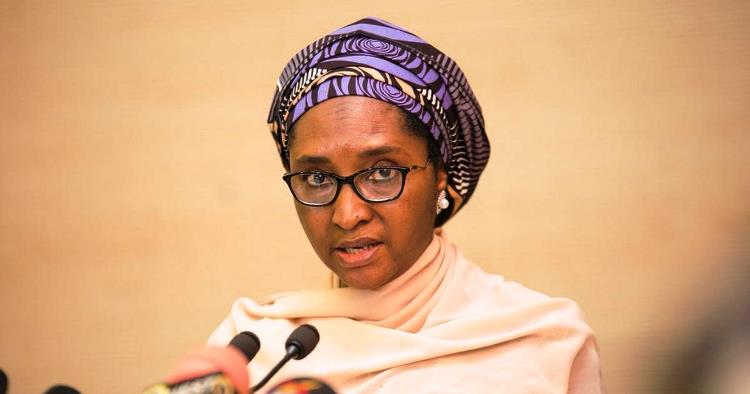
The minister of Finance, Budget and National Planning, Zainab Ahmed, disclosed this to State House correspondents shortly after the valedictory Council meeting presided over by Vice President Yemi Osinbajo at the Council Chambers of the  Presidential Villa, Abuja.

Ahmed said the Council agreed on the need for continued discussions on the issue, adding that the Federal government, together with states and representatives of the incoming administration, required more preparatory work on it.

The Federal government had already built a N11.34 trillion deficit in the 2023 budget to be financed through domestic and foreign borrowing sources, including multilateral loan drawdowns.

According to data from the Nigerian National Petroleum Company Limited (NNPCLtd), N4.39 trillion ($9.7 billion) was spent on petrol subsidy last year, an expense the government had blamed for dwindling public finances.

This year, the government did not provide a budgetary vote beyond June. Ahmed’s disclosure of a shift of the subsidy date will, however, mean an extra-budgetary expense for the government. With the budget suffering from a huge deficit already and revenue generation hit by shortfall in oil production, there is the fear government might have to resort to borrowing once again to sustain the subsidy regime.

NNPCLtd. did not remit funds to Federal accounts last year, its data showed, leaving a hole in public finances at a time when the government was warning that low revenues and large deficits left it unable to stimulate the economy.

Nigeria’s decision to push the subsidy removal date forward will be bad news to institutions like the World Bank and International Monetary Fund, as well as to many Nigerian economic analysts who had warned the Federal government of the dangers of continuing with the oil subsidy option, saying it is robbing the country of funds that could be spent on infrastructural development.

Successive governments in Nigeria had attempted but failed to remove or reduce the subsidy, which has become a politically sensitive issue.

Nigeria imports nearly all its refined petroleum products because local refineries had broken down due to years of neglect.

Oil production volume also dropped due to crude theft and pipeline vandalism, which has left Nigeria spending more on fuel imports than it is getting from crude oil production.

Not unaware of the political sensitivity of the subsidy issue, the Federal government now seems willing to further footdrag on subsidy removal.

Ahmed said that while the NEC had once agreed that the subsidy must be removed earlier rather than later because it was not sustainable and affordable anymore, government must do it in such a way that the impact would be mitigated on the lives of ordinary Nigerians.

She said, “So, this will require looking at alternatives to the fuel subsidy that needs to be planned for and subsequently put in place. We also have to look at what needs to be done to support the people that will be most affected as a result of the removal.”

Ahmed added that the Federal government would be working together with representatives of the states between now and June 2023 on the matter.

“We have a plan that we will start working on, putting the building blocks towards the eventual removal of the first subsidy.

“And if I may remind this forum that the budget for 2023 has a provision for fuel subsidy only up to June 2023, and also the Petroleum Industry Act has a provision that requires that all petroleum products must be deregulated 18 months after the effective date of the PMS subsidy removal, and that that period is also up to June 2023,” the minister explained.

24 die in Plateau, Bauchi road accidents

0

ABOUT 24 persons died in separate road accidents that occurred in Plateau and Bauchi states on Thursday, April 27.

In the Jos North Local Government Area (LGA) of Plateau State, 10 persons were burnt beyond recognition after a tanker conveying Premium Motor Spirit (PMS) crashed and burst into flames.

Confirming the incident, Public Relations Officer (PRO) of the Plateau State Police Command Alfred Alabo said the fire affected three other vehicles and two tricycles.


Read Also:

“This afternoon, we received information from a good Samaritan that a tanker conveying PMS lost control, crashed and burst into flames along Bauchi Road Junction. The Commissioner of Police in the state, Bartholomew Onyeka, directed the Angwan Rogo Divisional Police Officer and his team of detectives to immediately move to the scene of the accident.

“Upon arrival, it was discovered that 10 yet to be identified persons were burnt beyond recognition. Their lifeless bodies were later deposited at Plateau Specialist Hospital, Jos,” Alabo noted.

He added that efforts were being made to determine the identity of the charred bodies.

Meanwhile, 14 commuters were also killed and five others, injured in an accident that occurred along the Bauchi-Darazo road, Bauchi.

Federal Road Safety Corps (FRSC) Sector Commander in the state Yusuf Abdullahi said in a report on Thursday that the accident, involving two cars, was caused by over speeding.

“Nineteen persons were involved in the fatal road crash comprising 10 female adults, seven male adults, one female child and one male child. Fourteen of them lost their lives on the spot. They include 10 female adults, two male adults, one male child and one female child,” he noted.

He said the injured persons were receiving treatment at the Abubakar Tafawa Balewa Teaching Hospital, where the corpses of the deceased have also been deposited.

In the first half of 2022, there were 6627 road traffic crashes in the country, according to data by the Nigerian Bureau of Statistics (NBS).

A total of 10, 579 vehicles were involved in road crashes between January and June 2022.

Adamawa govt demands prosecution of persons involved in Binani’s declaration

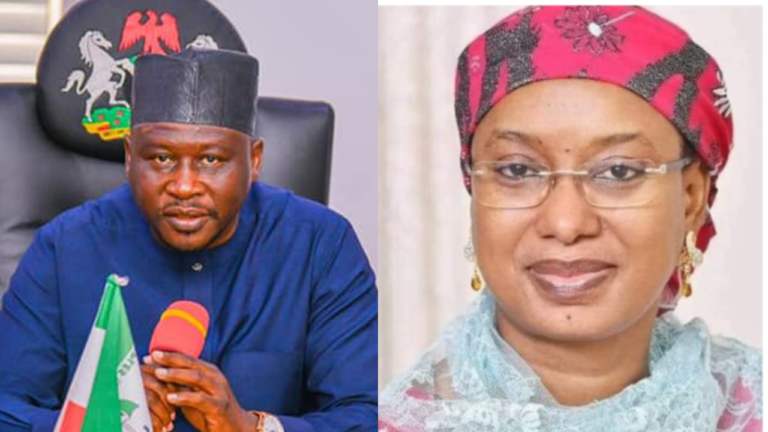
THE Adamawa State government has asked the Police to investigate and prosecute persons involved in the “illegal” declaration of All Progressives Congress (APC) candidate Aishatu Dahiru Binani as the winner of the governorship election in the state.

The demand is coming nine days after the Independent National Electoral Commission (INEC) declared the incumbent governor and Peoples Democratic Party (PDP) candidate, Ahmadu Finitiri as winner of the poll.

According to a statement issued by the Chief Press Secretary to the Governor, Humwashi Wonosikou, the state Commissioner of Justice has written to the Police commissioner requesting that the election saga be investigated so culprits can be prosecuted.

The statement, released on Thursday, April 27, mandated the Police to commence investigations, after which prosecution can be conducted.

“The State Government, in a letter to the State Police Command signed by the Attorney General and Commissioner for Justice Afraimu Jingi, wants the Police to prosecute for possible prosecution of all those found guilty in the saga and role played by each.

“The State Government has pledged its support to the state police command towards ensuring the logical conclusion of the investigation.

“The State Government is worried that Hudu’s action threatened the hard-earned peace that the present administration has built in the last four years,” the statement said.

The supplementary election in Adamawa was mired in controversy. 

On April 16, the INEC Resident Electoral Commissioner (REC), Hudu Yunusa-Ari, announced Binani winner of the election while collation was still ongoing. 

The announcement elicited protests from members of the PDP present at the state collation centre in Yola, the state capital. 

When the REC made this declaration, only results from 10 out of 20 LGAs had been announced, and Binani was trailing Fintiri, the incumbent governor.

The ICIR had reported that INEC rejected the declaration and suspended the REC. 

The Commission’s spokesman, Festus Okoye, said, “The action of the REC is a usurpation of the power of the Returning Officer. It is null, void and of no effect. Consequently, the collation of results of the supplementary election is hereby suspended.”

Two days after, INEC declared Fintiri the winner of the election. 

Senate moves to provide legal backing for Atomic Energy Commission

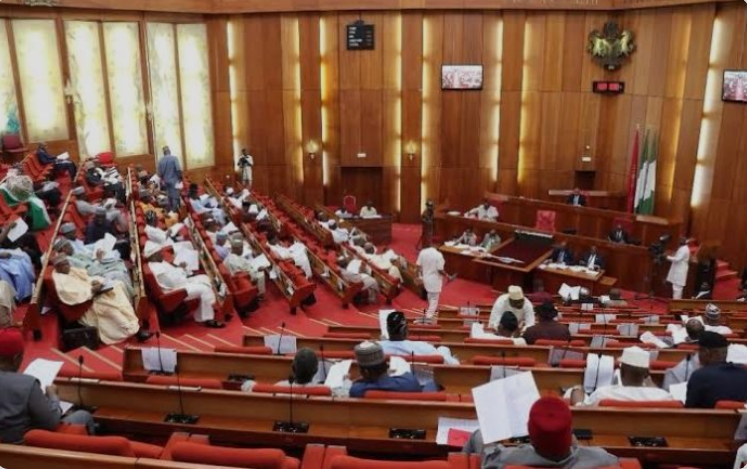
THE Nigerian Senate has taken steps to provide legal support for the Nigeria Atomic Energy Commission (NAEC), which was established 46 years ago.

At a public hearing on Thursday, April 27, the Senate Committee on Science and Technology said the move is intended to align the Commission with current global dynamics.

The two bills discussed at the public hearing were the ‘Nigeria Atomic Energy Commission (NAEC) Act (Repeal and Reenactment) Bill 2022’, and the ‘Nigerian Content in Programmes, Contracts, Science, Engineering, Technology and Innovation (Establishment) Bill, 2023’.

In her opening remarks, Chairperson of the Senate committee Senator Uche Ekwunife said the passage of the Nigeria Atomic Energy Commission Act (repeal and reenactment) was crucial for the advancement of the science and technology sector.

She noted that the original Act was passed 46 years ago in 1976, and since then, no legislative steps had been taken to update the Commission to reflect current global realities.

Ekwunife went on to explain that the bill aimed to repeal the Atomic Energy Commission Act (CAP.N91) Laws of the Federation to streamline its provisions.

She stressed that the bill would ensure the Commission can implement the National Nuclear Programme in accordance with international standards and Nigeria’s obligations under relevant international legal instruments.

Ekwunife explained that the repeal of the Act was not intended to encourage negative use of nuclear power, such as armament, but rather for peaceful purposes, including medical diagnoses and others.

She said that the repeal of the Act would also enable the Commission to explore and harness atomic energy for sustainable national development.

The Nigerian Content in Programmes, Contracts, Science, Engineering, Technology and Innovation Bill, which was also discussed at the hearing, aims to develop domestic talent and indigenous capacity in science and technology.

NAEC Chairman, Yusuf Ahmed, observed that the decision to establish a nuclear programme in Nigeria represents a long-term commitment to safety.

He, however, noted that the lack of a legal framework had significantly impeded the Commission’s ability to harness the potential of atomic energy.

Ahmed urged the Senate to amend Section 2 of the NAEC Bill, which addresses the Commission’s leadership structure.


READ ALSO:


He said the move could scale up Nigeria’s quest and ability to generate large amounts of electricity with a relatively small amount of fuel even as it seeks to expand its power generation capacity.

Currently, Nigeria relies heavily on fossil fuels to meet its power needs. However, the use of atomic energy could reduce the country’s dependence on fossil fuels and help to mitigate the environmental impact of energy generation.

Additionally, as noted in the draft bill, atomic energy has many other applications beyond electricity generation. It can be used in medical diagnostics and treatment, agriculture, and industry, among other areas.

IGP orders immediate deployment of 12 CPs to state commands

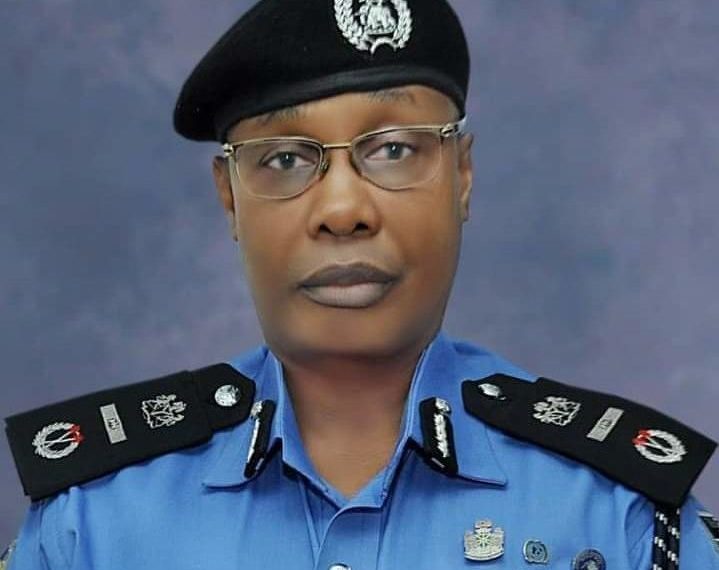
THE Inspector-General of Police (IGP), Usman Alkali Baba, has ordered the immediate deployment of 12 Commissioners of Police to various state commands nationwide.

The IGP also gave the senior police officers orders to report to their assigned posts immediately to take care of their offices’ activities and carry out the policing agenda set forth by the leadership of the Nigeria Police Force (NPF).

This was disclosed in a statement released on Thursday, April 27, by the Force Public Relations Officer, Olumuyiwa Adejobi.

The 12 newly-posted CPs are Mohammed Gumel, Kano State Command; Taiwo Jesubiyi, Ondo State Command; Julius Okoro, Benue State Command; Romokere Ibiani, Bayelsa State Command; Mohammed Bunu, Yobe State Command; Tajudeen Abass, Delta State Command; Oladimeji Olarewaju, Ogun State Command, Garba Yusuf, Kaduna State Command; Garba Ahmed, Zamfara State Command; Hayatu Ali, Sokoto State Command, Aliyu Musa, Katsina State Command Haruna Garba, FCT Command.

“The Inspector-General of Police has charged the senior police officers to entrench professionalism and respect for fundamental rights in all officers and men under their supervision leveraging on the recent training for Strategic Police Managers held at the Nigeria Institute of Police Studies, Jabi, Abuja.

“He urged them to adequately engrain community-oriented policing in their various jurisdictions to achieve modern, technology-based, and people-oriented policing services on all fronts,” Adejobi said.

The Police Service Commission (PSC) ratified the posting of the CPs to various state commands on April 25, according to a statement issued by spokesperson for the PSC, Ikechukwu Ani.

“The Chairman of the PSC, Dr Solomon Arase, retired Inspector-General of Police, called for greater dedication to national duty from the new state command commissioners. Dr Arase said the new posting comes with a lot of commitment and innovativeness and demands of them total loyalty to the Nigerian nation.

“He noted that at this national transition period, the new state command commissioners must brace up for challenges in the course of their duties. The PSC chairman said they should quickly settle down to duty and tackle the security challenges in their respective states of posting,” the PSC statement said.

The statement added that the Commission will monitor the stewardship of the CPs in their various state commands and ensure that they stay within established rules and regulations.

Sudan: FG says Nigerian students not abandoned in desert

THE Federal Government has debunked reports that students travelling from Sudan to Egypt were abandoned in the middle of the desert on Thursday, April 27.

The Federal Government also denied reports that students were placed in various buses and were being treated differently based on states of origin, saying there were separated for administrative reasons.

Public Relations Officer (PRO) of the Nigerians in Diaspora Commission (NiDCOM) Abdul Balogun debunked the reports in an interview with The ICIR on Thursday.

“Saw the videos. Not true. They only profiled them for administrative purposes. First batch arrive Abuja tomorrow,” he noted in a text message to The ICIR.

NIDCOM Chairman Abike Dabiri also announced via Twitter that she had reached out to the Director-General of the Nigeria Emergency Management Agency (NEMA) Mustapha Ahmed who confirmed that the journey to Egypt from Sudan had continued.

“I have just spoken to @nemanigeria DG. He confirmed the buses have continued their journey and said whatever issues have been resolved,” she tweeted.

The Federal Government is evacuating Nigerian students trapped in Sudan following the crisis that broke out in the country.

The government had arranged for bus operators to convey the stranded Nigerians to Aswan, Egypt, after calls for a ceasefire, which would allow countries airlift their citizens from Sudan, failed.

NEMA confirmed on Wednesday, April 26, that the first batch of Nigerian students trapped in Suda had begun the journey to Aswan, Egypt, from where they would be airlifted to Nigeria.

NEMA PRO Manzo Ezekiel said the students were expected in Abuja by Thursday night.

However, a video circulated on the social media on Thursday, in which students were seen complaining of being abandoned in the middle of a desert due to non-payment of fees to the bus operators by the Federal Government.

In one of the videos, a lady, believed to be one of the students, said they were abandoned in the desert by the transporters for hours, without food and water.

The students expressed displeasure at the situation and called on the government to pay the transporters, for the journey to continue.

There were also reports on the social media that students were separated and placed in buses according to states of origin.