THE Federal Government has set up a committee to plan and oversee the evacuation of Nigerians trapped in Sudan.
The committee consists of professional emergency responders, as well as search and rescue experts, a statement released by the National Emergency Management Agency (NEMA) on Saturday, April 22, said.
The committee will work towards rescuing citizens of the country from the civil unrest ravaging the country.
TheICIR has earlier reported that the non-adherence to calls for ceasefire by the warring parties — the Sudanese army and the paramilitary Rapid Support Forces (RSF) — has made the evacuation of Nigerian nationals in the country difficult.
NEMA, in a statement released by the Head of Press Unit, Manzo Ezekiel, quoted the Director General, Mustapha Ahmed, as saying that the committee would evaluate the situation and work towards evacuating Nigerians safely.
“The committee will constantly evaluate the situation and seek the safest way to evacuate the Nigerian citizens, even if it is through a country neighbouring Sudan.
“The current emergency in Sudan is very complex, with fighting between warring factions and all airports and land borders closed. NEMA is working assiduously with all its partners and is constantly compiling updated information on the situation.”
The NEMA boss added that the agency is in constant communication with all relevant partners including the Ministry of Foreign Affairs, the Nigerian Embassy in Khartoum, Sudan, the Nigerians in Diaspora Commission (NiDCOM) and security agencies “while seeking for an appropriate window of opportunity to evacuate all stranded Nigerians back home in a safe and dignified manner”.
The Sudanese Armed Forces (SAF) led by Abdel Fattah al-Burhan and the paramilitary Rapid Support Forces (RSF) led by Mohamed Hamdan Dagalo have been fighting for control of the country since February 15.
As a result, many Nigerians are trapped in the country. About 10,000 Nigerian students study in the country and thousands of others are engaged in businesses.
According to the World Health Organization (WHO), more than 400 people have been killed and over 3,500 others hurt due to the crisis.
“The Nigerian Mission in Sudan and NEMA have put in place arrangements to evacuate Nigerian students and other Nigerian citizens stranded in Sudan. The tense situation makes it gravely risky and impossible for any flight at this point. Aircrafts parked at the airport in the country were burnt yesterday morning,” Dabiri-Erewa said in a statement signed by Gabriel Odu of the Media, Public Relations and Protocols Unit of NIDCOM, on Friday.
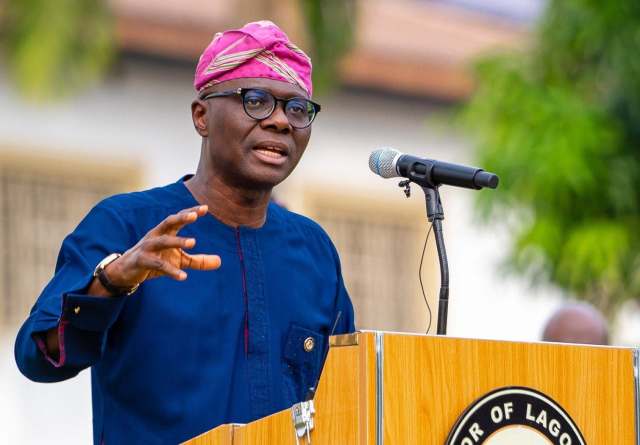
LAGOS State Governor, Babajide Sanwo-Olu, has ordered the removal of several buildings in the Banana Island area of the state.
The governor’s Chief Press Secretary, Gboyega Akosile, who revealed this in a Twitter post, said the governor gave the order while conducting an on-site evaluation of a seven-story building under construction that recently collapsed in the area.
He stated that some completed and uncompleted buildings in the area have been marked for removal.
Update: Some completed and uncompleted buildings are marked for removal in Banana Island today following Governor Babajide Sanwo-Olu's instruction after the inspection tour. pic.twitter.com/uNa5gEXgcT
The exclusive neighbourhood, home to some of the wealthiest Nigerians, witnessed the collapse of a building under construction on April 12.
The Lagos State Ministry of Physical Planning and Urban Development said no casualties were recorded during the incident.
However, the state’s Commissioner of Information, Gbenga Omotosho, said not less than 25 people were rescued from the rubbles of the collapsed building.
Lagos State has had at least 115 incidents of building collapse in the last decade.
In some cases, there were no fatalities, while in others, scores of people perished in the rubble.
In November 2021, the collapse of a 21-story building at Gerard Road, Ikoyi, led to the death of about 45 people.
Additionally, the collapse of a building at the Lekki Gardens in Ikoyi in 2016 claimed the lives of about 35 people.
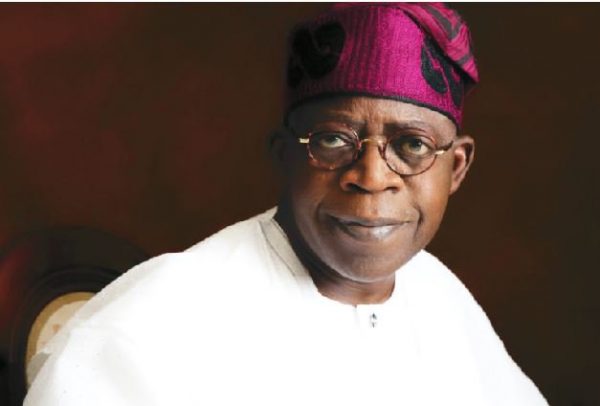
MANY Nigerians, including stalwarts of the All Progressives Congress (APC), are currently worried over President-Elect Bola Tinubu’s whereabouts as his inauguration draws closer.
Tinubu will be inaugurated as Nigeria’s President on May 29, when the eight-year leadership of President Muhammadu Buhari ends.
The ICIR reports that Tinubu travelled to Europe in late March after the Independent National Electoral Commission (INEC) declared him the winner of the presidential election conducted on February 25.
Nothing has since been heard from him, except when he appreciated Nigerians for voting for him, and other statements issued through his social mediahandles. He also reportedly expanded the Presidential Transitional Council on Thursday, April 20.
Reactions from Tinubu’s media spokesperson, Tunde Rahman, and other aides to the former Lagos State governor appear not to convince those who doubt that all is well with the President-Elect.
While rumours spread that Tinubu jetted out to Europe in late March after the governorship and state houses of assembly election to attend to a medical emergency, Rahman debunked the claims.
But some party stalwarts and other Nigerians remain unconvinced because Tinubu has not been seen since he left Nigeria.
Rahman argued that Tinubu needed rest after touring the 36 states and working hard for his victory at the presidential poll.
He said the President-Elect travelled to France to rest and would proceed to Saudi Arabia during Ramadan for Umrah, the lesser Hajj.
Those who suspect that all is not well with Tinubu have pointed at a picture of Buhari and the former Lagos State governor, purportedly taken when they participated in the lesser Hajj in Saudi Arabia during the just-concluded Ramadan.
Sam Omatseye’sone of the heads of Tinubu’s media outfits, tweeted the picture.
The picture, when fact-checked, was found to be misleading, raising suspicion over Tinubu’s whereabouts.
The picture was from a news report published by Premium Times on May 11, 2019. It shows President Buhari breaking Ramadan fast with Tinubu at the Presidential Villa in Abuja.
The image caption on the media report indicated that the photo was shot by Sunday Aghaeze, President Buhari’s Personal Assistant on Photography, on May 10, 2019.
An APC chieftain who is worried over Tinubu’s whereabouts told the The ICIR, “A Northern governor reached out to his (Tinubu’s) people so that he could join him to Umrah, but the governor was ignored. That further heightened concerns.”
There have been more worries about Tinubu’s whereabouts because no one has heard from or seen him since he left Nigeria, with his inauguration less than 40 days away.
Tinubu embarked on a similar journey before the elections
Shortly after he won the APC presidential primary in 2022, Tinubu travelled to Europe and was inaccessible to many of his party’s leaders.
Speaking with The ICIR on the telephone on Friday, April 21, Rahman, his media aide, confirmed that Tinubu was not in Saudi Arabia for the lesser Hajj, Umrah, during the just-concluded Ramadan.
Rahman said the former Lagos State governor would return to the country soon.
“He’s not in Saudi Arabia. He should be returning anytime from now. He’s not in Saudi Arabia because there are a lot of people lurking around the corner to see him there. What he is doing is planning for his inauguration, and he needs to reflect on the things he has to do as he plans for his inauguration.”
Speaking on the rumours that the President-elect has been treating an undisclosed ailment since he jetted out of the country, Rahman said, “All I can tell you is that His Excellency is there. He’s okay. He’s in fine spirits, and he’s strong. He’s not taking a break. At the appropriate time, he will talk.”
The ICIR reports that Tinubu’s lawyers are representing him in court after the candidate of the Peoples Democratic Party, Abubakar Atiku and his Labour Party counterpart, Peter Obi, disagreed with the Independent National Electoral Commission (INEC) that Tinubu won the presidential election. Atiku and Obi filed petitions before the Presidential Election Tribunal.
“How will you boast that you have a President-Elect who is elusive to his people and could not be seen to have been visited or discussing with anyone from around the world? Where does that happen?
“If he had done that in the past, he needs to change. Nigeria needs to see him that he’s alive and doing well,” one of the party leaders told The ICIR.
The leader said Nigerians must not have a repeat of how Buhari spent months treating ailments outside the country and left his government shuddering.
How Tinubu expanded the Presidential Transition Council
On Thursday, April 20, reports indicated how the President-elect expanded the 22-member Presidential Transition Council created by President Muhammadu Buhari on February 9.
Tinubu had two members among the initial team, headed by the Secretary to the Government of the Federation, Boss Mustapha. They are Kebbi State Governor Atiku Bagudu and a former Commissioner for Finance in Lagos State, Olawale Edun.
Fourteen members added to the team by Tinubu include a former Director-General of the News Agency of Nigeria and spokesperson of the Tinubu/Shettima Presidential Campaign Council, Bayo Onanuga. He will serve as Head of Media and Publicity for the Council.
Others are the Executive Director of Nigeria Export-Import Bank, Stella Okotete (Secretariat, Planning and Monitoring); APC National Women Leader, Betta Edu (In charge of the Medical Team); former governorship aspirant in Ekiti, Makinde Araoye (Venue, Parade and Swearing-in); former Director General of National Broadcasting Commission, Danladi Bako (In charge of inauguration lecture) and Zainab Marwa-Abubakar, daughter of the Chairman of the National Drug Law Enforcement Agency, Brig. Gen. Buba Marwa (retd.). She will anchor the pre-inauguration dinner and gala night.
Also nominated by Tinubu is the acting National Deputy Chairman (North) of the APC, Abubakar Kyari (a former senator), who will coordinate and direct the committee’s finance and budget. The late President Umaru Musa Yar’Adua’s younger brother, Col. Abdulazeez Yar’Adua, will head security and ceremonial parade for the inauguration.
Samira Saddik will coordinate Children’s Day; Abuh Andrew Abuh is in charge of accommodation, Hajiya Hadiza Mohammed Kabir will take care of transportation and logistics, Donald Wokoma will manage protocol and invitation; Bishop Adegbite heads the church service, and Imam Faud will supervise Jumat Service.
THE Anambra State Government has approved the establishment of a Bureau of Missing Persons.
According to a statement by the state’s Commissioner for Information Paul Nwosu on Saturday April 22, the Bureau would be created within the Ministry of Justice as part of efforts to carry out recommendations of the Truth, Justice and Peace Commission set up by Governor Chukwuma Soludo.
“Recall that on the 23rd of June 2022, Governor Soludo, pursuant to the Commission of Inquiry Law of Anambra State, inaugurated the Truth, Justice and Peace Commission which has Professor Chidi Anselm Odinkalu as the chairman, Ambassador Bianca Odumegwu Ojukwu as the secretary and Professor Sylvia Chike Ifemeje as one of its commissioners.
“The Commission’s Inception Report also recommended a whole-of-government strategy that locates atrocity and violence within a public health framework,” Nwosu noted.
The Bureau would also be mandated to trace cases of missing persons and provide reliable data to be used by security agencies during investigations.
The Truth, Justice and Peace Commission was inaugurated by the state governor Charles Soludo in 2022 to identify remote and immediate causes of agitations, restiveness, violence and struggle in the state and other parts of the South-East since 1999.
The Commission was also mandated to document victims and circumstances of death, brutality, and incarceration in the region.
The ICIR reported that Nigeria’s Ministry of Humanitarian Affairs, Disaster Management and Social Development had announced that the country lacks reliable data on missing persons.
Minister of Humanitarian Affairs, Disaster Management and Social Development Sadiya Farouk had expressed concern over the problem, describing it as an “often-neglected and tragic humanitarian and social issue”.
However, a report by the International Committee of the Red Cross (ICRC) said Nigeria accounts for the highest number of missing persons ever registered by the organisation.
According to the report, 25,000 persons are missing in Nigeria due to insecurity.
A News Guard’s ‘misinformation monitor’ report has revealed that Twitter’s “blue check” which was previously an indication of an account’s authenticity, has now become a tool for propagators of false information to present themselves as credible.
Initially, Twitter created its verification system to boost users’ confidence in the platform by placing a blue check mark next to the names of public figures, companies, journalists, and organisations, however; currently, the blue check mark can be obtained by paying a monthly fee of $7.99. This move is part of Musk’s effort to increase the company’s revenue, which he acquired for $44 billion.
News Guard’s report highlights that the blue checkmark has become a tool for peddlers of misinformation to appear trustworthy and legitimate.
According to the report, numerous Twitter accounts with a history of spreading false information, some of whom were only recently readmitted to the platform, are now paying $8 a month to obtain a blue checkmark through Twitter Blue, the verification system.
This is giving them an appearance of credibility.
NewsGuard found that 25 misinformation superspreader accounts that were “verified” by Twitter Blue accounts cumulatively posted 141 tweets (original and quote tweets) containing false, misleading, and unsubstantiated claims between March 1 and March 7, 2023.
“These tweets were viewed nearly 27 million times and received more than 760,000 likes and retweets during this period, the NewsGuard analysis determined. The 25 accounts also cumulatively retweeted 35 posts containing misinformation, bringing the total number of tweets and retweets identified by NewsGuard for advancing false, misleading, or unsubstantiated information to 176,” the report stated.
According to NewsGuard, out of those 25 accounts, 10 were reinstated under Musk after being suspended under Twitter’s previous ownership.
Most false information shared by the accounts are bordering on the COVID-19 vaccine, the Russia-Ukraine war, among others.
Twitter Blue initiative permits individuals worldwide to feature a blue checkmark on their profile by paying a monthly fee of $8. For organisations, the cost is now $1,000 per month, which grants them the ability to efficiently handle connected accounts like subsidiaries and representatives.
Twitter previously used “Legacy” verification based on “authenticity, notability, and activity” to confirm user accounts before Musk’s acquisition. However, Twitter has started phasing out Legacy verification from April 20.
This is republished from the FactCheckHub, see the original here
THE Njiko Igbo Forum, an Igbo socio-political group affiliated with Ohanaeze Ndigbo Worldwide, has rejected the emergence of Chief Emmanuel Iwuanyanwu as the President-General of Ohanaeze Ndigbo.
Ohanaeze Ndigbo is the apex socio-political body of the Igbo.
President of Njiko Igbo Forum Okechukwu Obioha stated the group’s opposition to Iwuanyanwu’s emergence as Ohanaeze leader in a statement released on Friday, April 21.
Obioha recommended former Ohanaeze Secretary-General Joe Nworgu as a more suitable candidate for the position.
He said Nworgu was endorsed by the Forum based on experience.
“Njiko Igbo Forum rejects Chief Emmanuel Iwuanyanwu as the President-General of Ohanaeze Ndigbo. As the President-General of Ohanaeze Ndigbo Worldwide is deceased and Imo State is unarguably the state to still retain the President-General, we strongly recommend Joe Nworgu, who was one of the contestants for that position,” the statement released by Njiko Igbo Forum said.
The group also stated that if Iwuanyanwu insists on being referred to as the President-General, he will not be recognised by the Forum or other affiliate organisations of Ohanaeze Ndigbo Worldwide.
Iwuanyanwu’s emergence as Ohanaeze leader followed the death of the substantive President-General, Professor George Obiozor, who passed away on January 9, 2023.
The Imo Elders Council led by the Chairman, Eze Cletus Ilomuanya, had presented Iwuanyanwu to Imo State governor, Hope Uzodinma, as the new President-General of Ohanaeze Ndigbo.
His nomination was also endorsed by a group of Igbo youths under the aegis of the Coalition of South East Youth Leaders (COSEYL)
The group’s President General, Goodluck Ibem and its Director Of Mobilization, Ogbonnaya Obasi, said Iwuanyanwu is the best man for the job.
During a recent interview on Channels Politics Today, Iwuanyanwu accepted the position, stating that he was pleased to serve and that he had been selected by distinguished stakeholders of Ohanaeze.
AFTER two years, four kidnapped students of the Federal Government College (FGC) Yauri, Kebbi State, have regained their freedom.
The four girls are part of the remaining 11 girls in captivity.
According to Daily Trust Newspaper, a prominent bandit commander, Dogo Gide, reportedly released the four girls on Friday night.
The released girls are Faiza Ahmed, Bilha Musa Hafsa Murtala and Rahma Abdullah.
“It took six days of negations in the forest before four of the girl were released to us. We have seven more still in captivity, and two of the parents are still in the forest trying to secure their release.” a parent Salim Kaoje told Daily Trust on Saturday, April 22.
Kaoje, the chairman of the committee of parents, said after selling their properties and holding a fund-raising event where many Nigerians helped financially, they paid an undisclosed sum of money to ensure the release of the four girls.
Parents of the remaining 11 female students had earlier in January 2023 appealedfor donations to raise N100 million ransom demanded by the abductors.
The parents, under the aegis of ‘Committee of Parents of 11 Abducted Students of FGC Birnin Yauri, Kebbi State, Nigeria’, made the appeal in an open letter addressed to Nigerians.
In the letter, they said efforts at negotiating with the abductors or getting the government to intervene and secure the release of the students had not yielded results.
Kaoje noted in the letter that the abductors were demanding the sum of N100 million naira as a ransom for the release of the students.
On June 17, 2021, terrorists attacked the FGC in Birnin Yauri and kidnapped about 80 students and teachers.
Some students were severely injured in the gun battle between the abductors and the police. A policeman was also killed in the incident.
A letter had been addressed to the school, presumably by the terrorists, warning of the attack, but the authorities dismissed it as a prank.
While some students were earlier released, 11 remained in captivity.
It was reported in February 2022 that some of the girls had been married off and impregnated by their captors.
The mass abduction of students had become more frequent since 2014, when at least 276 girls were kidnapped from the Government Girls Secondary School in Chibok, Borno State.
Between 2020 and 2021, at least 700 students were abducted in northern Nigeria, forcing many schools to shut down.
The situation has forced many parents to withdraw their children from school, worsening the number of out-of-school children in Nigeria, which is currently over 20 million, according to the United Nations Educational, Scientific and Cultural Organisation (UNESCO).
THE people of Southern Kaduna have declared that they have lost faith in the Federal Government as a result of unending killings by suspected armed herdsmen in the area.
Southern Kaduna Peoples Union (SOKAPU) President Awemi Dio Maisamar expressed the position of the indigenes in a statement released on Friday, April 21.
SOKAPU pleaded with the Economic Community of West Africa (ECOWAS), African Union (AU), the United Nations (UN), and other international organisations to speak out and take action, so as to protect the people of Southern Kaduna from “genocide”.
“However, we have actually lost faith in the Nigerian state, not in the Nigerian people. In particular, we have lost faith in the Nigerian leadership and the current political arrangement that we have.
“Honestly, we have lost hope in the system and leadership of Nigeria, and that is why we are calling on the international community to intervene.
“The truth must be told that it is possible that you can change personnel, but if you don’t change the operating environment, you are not likely to get a better result,” Maisama said.
He frowned at what he described as the silence of the international community over the situation in Southern Kaduna.
“We are also very sad about the silence of the Economic Community of West African States (ECOWAS), the Africa Union (AU), the Commonwealth of Nations and the United Nations (UN) over the unrelenting pogrom in Southern Kaduna.
“SOKAPU is calling on these continental and global bodies to send independent investigation teams to Southern Kaduna to debunk or confirm our claims of ethnic cleansing here.
“Before then, we advocate for a UN or AU Peace Enforcement Operations Base in Southern Kaduna. This will practically demonstrate that the world is interested in our collective survival as minority ethnic groups. It must not abandon us to be hounded by well-funded and well-armed herdsmen who are being encouraged and protected by their powerful relatives and collaborators in and outside Nigeria,” he added.
The SOKAPU President listed some recent attacks on Southern Kaduna communities.
“Last Sunday, April 16, 2023, the peaceful, farming Runji village (Sankwab) in Atyap land Zangon Kataf LGA in Southern Kaduna, was invaded by marauding armed herdsmen around 1 a.m. in which they carried out horrific acts of murder, arson and theft. After operating for hours, brave youths of the town, joined by others from neighbouring villages, teamed up and faced the invaders, who then retreated into the night.
“By daybreak, 42 houses were burnt, with 17 women and children roasted beyond recognition. Twelve corpses mutilated by machete cuts and bullet shots were picked in and around the village. Later in the day, four persons that were rushed to hospitals died of their wounds, making the death toll 33 and those still in hospitals eight.
“The victims were buried in a mass grave on the eastern edge of the village. Southern Kaduna is dotted by numerous mass graves of such kind of victims.”
He claimed that no fewer than 245 Southern Kaduna communities have been sacked by armed herdsmen in collaboration with terrorists.
“And the fact that the same government wants to succeed itself at both the state and federal levels, we have great doubts if the genocide, kidnapping, displacement and occupation will abate,” the SOKAPU President noted.
According to records released by the state government on Wednesday, April 20, about 1,266 persons were killed by bandits in Kaduna State in the last 15 months,
Also, 746 persons were kidnapped in the state between January and March 2023.
Kaduna State Commissioner for Internal Security and Home Affairs, Samuel Aruwan, released the figures on Wednesday, April 19, at the Sir Kashim Ibrahim Government House, Kaduna.
According to Aruwan, 1,052 deaths were recorded due to banditry and other attacks in the state in 2022, while another 214 persons were killed in similar incidents between January and March 2023.
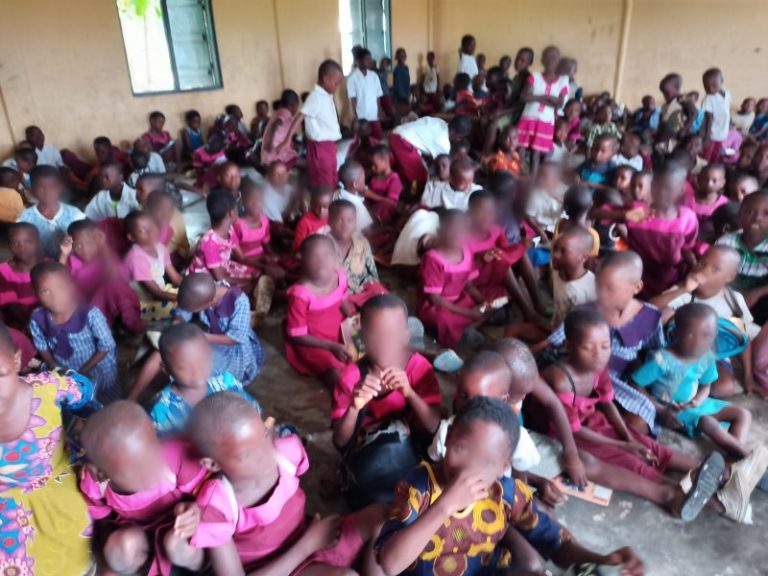
Globally, Nigeria ranks third among countries with the highest number of out-of-school children, behind only India and Pakistan, with education deprivation being worsened by several factors. In this report, IJEOMA OPARA examines how poverty is pushing Nigerian children out of school and onto the streets.
IN the Lugbe area of the FCT, thirty-year-old Hadiza Shuaibu lives with her husband and two children in a one-room apartment with shared facilities. She makes “kunun aya,” a local drink extracted from tiger nuts, which she sells to children in the neighbourhood.
Her husband is a local carpenter within the area, but the income generated from both jobs is inadequate to meet the family’s daily needs, much less afford their children an education. Shuaibu told The ICIR that due to a lack of money, her children do not go to school.
“My children, Aisha and Abdullahi, are five and eight years old. They do not attend school because there is no money. On the days I can afford it, I send them for evening lessons. When I cannot, they stay at home. They are home most of the time,” she said.
Abuja resident, Hadiza Shuaibu. Photo: The ICIR/ IJeoma Opara
Aisha and Abdulahi’s fates mirror the life of many of the estimated 20 million Nigerian children who are currently out of school.
The United Nations Educational Scientific and Cultural Organization (UNESCO) 2020 Model Estimates on out-of-school children, published in 2022, states that almost 20 million Nigerian children are out of school.
According to the data, the secondary school out-of-school population has grown by 61 per cent, from 6.3 million to 10 million since 2010.
Also, the number of primary school-aged children who are not in school also increased by 50 per cent, from 6.4 million to 9.7 million since 2010.
Globally, this puts Nigeria as the country with the third highest number of children deprived of education, only behind India and Pakistan.
The UNICEF also identified several factors, including insecurity, poverty and gender inequality, as responsible for the rising figure.
Among these factors, poverty plays a significant role in keeping millions of Nigerian children out of school.
Although basic education is free under the Universal Basic Education Commission (UBEC) Act, there are associated costs, including transportation and the purchase of uniforms, which are unaffordable for many families in Nigeria, where more than half the population live in extreme poverty.
Findings by The ICIRshowed that enrolling a child into most government-owned primary schools costs between N10,000 and N20,000, while junior secondary schools cost higher due to certain hidden fees demanded by the authorities.
This is also different and higher than the cost of enrolling a child into a private-owned school where some parents believe their children can be well taught.
Some of the fees collected by government-owned schools include N500; Parents Teachers Association (PTA) fees, N1,950; Uniforms, N2,500; Pupil’s file N500; Online registration, N500; Sportswear, N2000 and some textbooks, among others.
When contacted by The ICIR, the FCT-UBEB said education was not entirely free but vowed to tackle these fees.
But beyond hidden fees demanded in some schools, many families are unable to meet up with the necessary financial requirements for educating their children.
Over half the population live in poverty
UNICEF and other organisations have identified poverty as a major driver of education deprivation in Nigeria.
According to the Federal Government, 133 million out of the over 200 million people in Nigeria live in different poverty categories, representing 63 per cent of the country’s total population.
This was contained in the National Multi-Dimensional Poverty Report released in 2022 in collaboration with the National Bureau of Statistics (NBS), the National Social Safety-Nets Coordinating Office (NASSCO), the United Nations Development Programme (UNDP), the United Nations Children’s Fund (UNICEF), and the Oxford Poverty and Human Development Initiative (OPHI).
In the report, the federal government said 65 per cent of the poor (86 million people) live in the North, while 35 per cent (nearly 47 million) live in the South.
The report also stated that two-thirds (67.5 per cent) of children (0–17 per cent) are multi-dimensionally poor, and half (51 per cent) of all poor people are children.
Child poverty, the report notes, is prevalent in rural areas, where almost 90 per cent of children experience poverty.
Out – of – school, pushed into labour
Many of the children who leave school due to the inability of their parents to pay fees end up engaging in menial activities to augment their family incomes.
Nine-year-old Ibrahim Useni*, who attends Local Education Authority (LEA) primary school in Kubwa, was spotted on a Monday morning in March 2023 hawking sachet water under a pedestrian bridge in the area.
He told The ICIR that he was sent out of school due to his parents’ inability to pay the Parents Teachers Association (PTA) levy demanded by his school.
Useni could not confirm how much was demanded by his school, but The ICIR had reported that PTA fees required in government-owned schools within the Federal Capital Territory (FCT) often fall between N1,500 and N5,000.
He also told The ICIR that he had missed classes many times in the past due to a lack of funds to pay certain fees and is unsure of returning to school.
“They said I should go home. I did not pay the PTA money in school, so they sent me home. My mother said I should stop school for now and hawk pure water, so we can get money. She said I would go back to school later,” he said.
Some children become victims of forced labour in a bid to acquire an education.
Mariam Suleiman lives with her husband and three of her four children in the Kuchingoro area of the FCT. She told The ICIR that her oldest child, who is twelve years old, had gone to work as a maid with a relative in Kubwa, a different part of the FCT.
“The oldest child is not here. She lives with one of my husband’s relatives. The woman needed someone to help with house chores, so I sent my daughter to her. She promised to also send her to school,” Suleiman said.
Nigeria, among other nations, is one of the countries that are signatories to the Social Development Goals (SDG) 2023. Goal 4 aims at ensuring “inclusive and equitable quality education and ensure lifelong learning opportunities.”
However, this does not look attainable for Nigeria with its outrageous number of out-of-school children and the slow pace of its reduction.
Way out
While challenges bedevilling Nigeria’s education sector seem to be overwhelming, advocate for free basic education Joshua Arogunyo, in an interview with The ICIR, suggested ways these issues can be addressed, including using National Social Investment Programmes (NSIPs) as bait for parents to send their children to school.
“We have the National Social Investment Office that oversees the National Social Investment Programme, NSIP. We have various programmes under the NSIP, including the popular one we call Conditional Cash Transfer. The NSIP can be used as a way of baiting parents to ensure their children are in school, especially the poor.
“Recall that the Social Investment Programme is targeted at the poorest of the poor. It is a conditional cash transfer. You can, say one of the conditions that will make us keep giving you this money is if you promise us that all your children will go to school,” he said.
He noted that in some cases, poor parents might still be unable to afford basic requirements such as uniforms and suggested that in such situations, children be permitted to attend school in ordinary clothes.
However, he pointed out that this method might not be effective in certain areas where school children are susceptible to abduction and terror attacks due to insecurity, as uniforms were also a means of identifying students and separating them from strangers.
“It has an implication. This is an era where there is insecurity in schools. Uniforms are also a way of helping to identify who is a student and who is a visitor. So it will not be ideal in our current circumstance, but maybe in other circumstances, or in the South, but we may not want to go that route in Northern Nigeria.
Arogunyo also said local governments should assume responsibility for subsidising uniforms, as basic education also falls under its purview.
Stating that textbooks were the responsibility of government officials and are usually made available in many cases, Arogunyo suggested that notebooks, which parents are expected to provide, could be provided through partnerships with private organisations.
“While education may be free and compulsory, the government should also begin to think of strategic partnerships with the private sector for education in Nigeria, considering the backlog of children out of school, about 20 million, according to UNESCO. So it will require some partnerships. That way, when children come to school, they have access to writing materials,” he said.
He pointed out that several private organisations are willing to partner with the government if trust is built. Arogunyo also encouraged state governments to incentivise education through certain benefits, such as scholarships, which would boost the level of retaining children in school after enrolment.
He, however, admitted that the process would require a lot of commitment, sincerity and hard work on the part of the government and others involved.
* Name with asterisk was changed to protect the identity of minior
This report is a part of Youth Hub Africa’s Basic Education Media Fellowship 2022 with support from the Malala Fund and Rise Up.
A SENIOR lecturer with the Department of History and International Studies at the Federal University of Lafia, Nasarawa State, Fred Ayokahi, has been sentenced to six months imprisonment for assaulting a female student, Blessing Mathias.
Ayokahi who had been remanded in the facility of the Nigeria Correctional Service, Lafia since October 2022, was convicted by the Nasarawa State High Court, in Obi Local Government Area of the state.
In October 2022, a video that went viral surfaced on the social media showing Ayokahi and his children assaulting and stripping Blessing, an orphan.
The lecturer was arraigned before Justice Solomon Ayenajeh of the Nasarawa State High Court, Obi.
The other suspects include Emmanuella Ayokahi, Bob-Praise Ayokahi, and Saint-Dan Ayokahi, who are all his children. The other accused person, Vera Ogbonnaya, is still at large.
They were charged with criminal conspiracy and physical assault with canes and sticks, contrary to sections 96 and 264, and punishable under sections 97 and 265, of the Penal Code (1963).
After processes were filed, issues joined and witnesses taken on the case with exhibits, counsel to defendants, A.U Idris, approached the court with an offer for a plea bargain, after his clients have pleaded guilty to the crime charged.
Delivering judgment on Thursday, April 20, the presiding judge, Justice Ayenajeh, convicted the lecturer and sentenced him to jail for six months for criminal conspiracy and another six months for physical assault.
The judge, however, said the sentences would run concurrently in consideration of the convict’s plea. He also explained that the six months Ayokahi had spent in prison would be reckoned with.
He said consequent upon the plea bargain and taking into cognizance their age, Ayokahi’s children were let off under a six months probation order for six months.
Justice Ayanejeh ordered that, within the six months period, Ayokahi’s children will be keeping the premises of the Nasarawa State High Court of Justice clean.
In a post-conviction speech, Ayokahi thanked the judge and parties involved for the consideration and the leniency accorded him.