Home Blog Page 963

Kaduna: 1,266 killed in 15 months — State govt

ABOUT 1,266 persons were killed by bandits in Kaduna State in the last 15 months, according to records released by the state government.

Also, 746 persons were kidnapped in the state between January and March 2023.

Kaduna State Commissioner for Internal Security and Home Affairs, Samuel Aruwan, released the figures on Wednesday, April 19, at the Sir Kashim Ibrahim Government House, Kaduna.


READ ALSO:
Outrage trails killings in Southern Kaduna

Bandits kill over 28 residents in Southern Kaduna communities

Terrorists allegedly deploy helicopter, kill 32 in Southern Kaduna

Harvest of death: The pains of living in Southern Kaduna


According to Aruwan, 1,052 deaths were recorded as a result of banditry and other attacks in the state in 2022, while another 214 persons were killed in similar incidents between January and March 2023.

“Between January to December 2022, 641 deaths were recorded in Kaduna Central Senatorial Zone, while 349 deaths were recorded in Southern Kaduna Senatorial Zone and 62 deaths in the Northern Senatorial Zone bringing the total to 1,052 deaths as a result of banditry and other attacks.

“214 persons were killed between January and March 2023 in attacks by bandits/terrorists, communal clashes, violent attacks, and reprisals.”

Giving a breakdown of cases of kidnapping in the state in 2023, Aruwan said, “A total of 746 people were kidnapped in the first quarter, with Kaduna Central Senatorial District accounting for 492 deaths, Southern Kaduna Senatorial District recorded 221 kidnapped persons, and the Northern Senatorial District recorded 33 kidnapped persons.
Kaduna
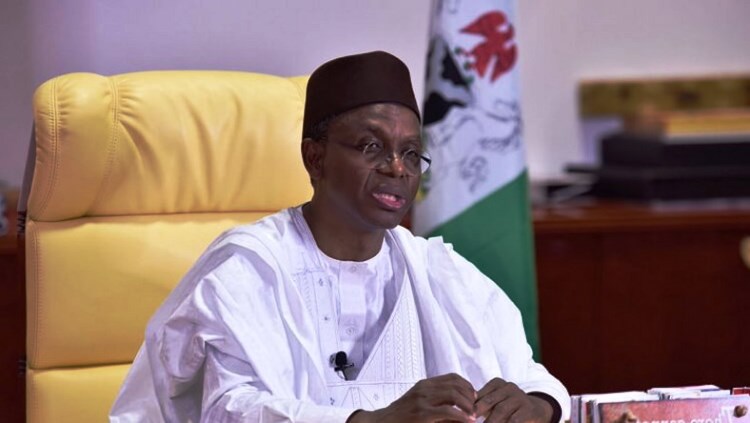
Kaduna State Governor Mallam Nasir El Rufai
Photo Credit: Pulse

“A total of 746 people were kidnapped in the first quarter, with Kaduna Central Senatorial District accounting for 492 (about 66% of the total). All of these occurred in Birnin Gwari, Giwa, Igabi, Chikun and Kajuru LGAs. One hundred and thirty-seven people were kidnapped from Birnin Gwari LGA and 131 from Igabi LGA. Giwa LGA recorded 100 kidnapped persons, Chikun LGA 83, and Kajuru LGA 41.

“Twelve persons were reported to have been raped by bandits across the state from January to March this year. Ten (10) of these were minors.”

However, he added that although there were many more unreported cases of rape by armed bandits, only reported cases were highlighted in the security report.

Speaking on cases of cattle rustling during the period under review, the commissioner noted that a total of 3,247 animals were rustled in the state in the first quarter of 2023, with 2,353 stolen from the Kaduna Central Senatorial District, accounting for around 73 per cent of the total number.

Among the local government areas in the state, Kajuru had the highest figure of rustled animals in the first quarter, with 1,000, he noted.

Speaking during the presentation, the state governor, Nasir El-Rufai, warned that bandits would use the time of transition to carry out gruesome crimes across the nation.

The governor urged security agencies to step up operations against bandits throughout the remaining months of the current administration and beyond.

El Rufai observed that the reports on the security situation in the state provided detailed data on the enormity of the challenge.

“Just as they have a right to updates on the progress in investments, revenue generation and other happy events, citizens have legitimate expectations to be provided with consistently accurate accounts of what is going on and on measures being taken to address security challenges.

“The two reports just presented by Samuel Aruwan, our Commissioner for Internal Security and Home Affairs, indicate the persistence of security challenges, including terrorism, banditry, and the unfortunate toll in killings, kidnappings, injuries and threats to the livelihoods of our people.

“We regret the pain and losses, pray for the repose of the souls of those killed, pay tribute to the victims of various crimes and reiterate our solidarity with them,” he said.

El-Rufai said the statistics presented showed that there has been some slight improvement in fatalities and other incidences of criminality across the state between 2021 and 2022. 

“The Kaduna State Government does its level best to prevent these sad events through institutional measures and pragmatic actions on the ground.

“These measures include persistent pressures on the Federal Government to launch comprehensive and sustained military operations against the terrorists and criminal elements that are menacing our people and their lives, liberty and livelihoods.”

He thanked the Federal Government for finally authorising the launch of combined military and police offensives against bandits and also commended the military and security forces for their efforts and sacrifices in the fight against insecurity.

The governor said the state government will continue to do everything within it’s powers to enhance security. 

There have been an upsurge in attacks by suspected terrorists and bandits in Kaduna and across the country after the general elections.

In April, bandits attacked the Atak’Njei hamlet in Kaduna State’s Zango Kataf Local Government Area, killing at least eight people.

The attack occurred a few weeks after a similar tragedy in the same local government area’s Langson village that took eleven lives.

The President of Atyap Community Development Association, Sam Timbuwak, told Channels Television that the gunmen invaded the neighbourhood on Wednesday, April 12 at around 9:00 pm and began firing intermittently at residents’ homes.

The ICIR also reported the killing of about 28 residents in Kaduna on December 18, 2022.

In the December 18, 2022 attack, the bandits also razed houses at Malagum and Kagoro communities in the Kaura Local Government Area of Kaduna State.

An inter-denominational burial service was held for the victims of the attack on Thursday, December 22. 

Many Nigerians condemned the unending killings in Southern Kaduna following the attack.

Also, in June 2022, the National President of the Adara Development Association, Awemi Maisamari, said terrorists allegedly deployed a helicopter and killed over 30 persons during an attack on the Adara community in Southern Kaduna.

Maisamari, who addressed journalists, said the attackers razed buildings, including the area’s Evangelical Church Winning All (ECWA) parish.

On April 3, bandits abducted eight female students in the Kachia Local Government Area of Kaduna State.

The students later escaped from their captors a few days later.

The Nigerian security forces have killed hundreds of criminals whose operations continue to endanger Kaduna state and its environs.

Key data on early childhood education in Nigeria

0

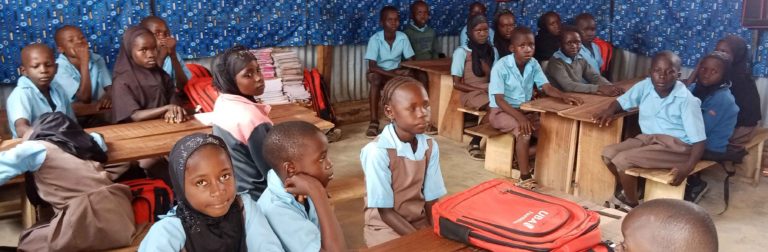
ON WEDNESDAY, April 19, the United Nations Children Fund (UNICEF) and the United States Agency for International Development (USAID) presented models for boosting child literacy and numeracy in Nigeria after piloting the models for five years.

The report on the presentation is available here.

While piloting the intervention, UNICEF documented key data on primary school education in the country.

Below are some of the statistics.

Foundational Literacy and Numeracy

  • Seventy per cent of children in Nigeria cannot read with meaning or solve simple math problems.
  • Only 49 per cent and 55 per cent of children in the school achieve basic proficiency in literacy and numeracy, respectively.
  • Literacy rates are as low as 38 per cent in the North-West and 42 per cent in the North-East for young women compared to 57 per cent in the North-West and 53 per cent in the North-East for young men.
  • Only 14 per cent of young women from the poorest quintile are literate. Fewer than six per cent of children under age five have three or more children’s books at home.
  • According to the agencies, 27 per cent of teaching staff in Nigeria are unqualified, and 175,000 qualified teachers are needed to fill capacity gaps.

Education opportunities for girls

  • As of June 2022, 7.8 million girls are out of school in Nigeria: 3.9 million at the primary and 3.7 million at the junior secondary level.
  • More than 50 per cent of girls were not attending school at the basic education level.
  • Forty-eight per cent of out-of-school girls were in the North-West and North-East.

Education Opportunities for Out-of-School Children

  • One in three children is out of school in Nigeria:
  • 10.2 million at the primary level and 8.1 million at the junior secondary school level.
  • 12.4 million children never attended school, and 5.9 million left schools early.
  • Nigeria’s out-of-school population accounts for 15 per cent of the global total.
  • Only one in three children aged 36-59 months can access the ECCDE programme.
  • Only one in three adolescents eligible for senior secondary school are attending.
  • More than 50 per cent of girls are not attending school at the basic education level.
  • Sixty-six of all out-of-school children are in the North-East and North-West. Eighty-six are from rural areas, and 65 per cent are from the poorest quintile.

Data on Early Childhood Education  

  • Only one in three children (36 per cent) ages 36-59 months attend Early Child Care Development Education (ECCDE). At least 10 million children are not in ECCDE in Nigeria.
  • Two out of three children aged three to five are engaged in early learning activities at home. This is lower in the North-East (49 per cent), North-West (55 per cent) and for the poorest children (46 per cent)
  • Consequently, two in five children between the ages of three and five are not developmentally on track.
  • The poor data are a violation of children’s right to education. They also increase children’s risk of mental ill-health, delayed entry to primary school, and lower learning outcomes.

Attacks on schools  

  • 25 schools were attacked in Nigeria as of February 2022.
  • 1,470 learners were abducted, of which 200 were still missing.
  • Over one million children were afraid to return to school in 2021.
  • In 2020, 11,500 schools were closed due to attacks.
  • North-West accounts for 76 per cent of attacks.

Educational opportunities for Almajiris 

  • Almajiri children in Nigeria are approximately two million, and they’re considered out-of-school.
  • Most Almajiris are in the North.

Public Financing of Education 

  • Between 2001 and 2017, Nigeria allocated on average 1.97 per cent of its gross domestic product (GDP) to education.
  • At 1.2 per cent of GDP in 2021, the country’s allocation to education is lower than other Sub-Saharan African countries.
  • Only 7.2 per cent of public expenditures was allocated to education at the federal level and 10.1 per cent of the national budget (federal and state levels).
  • Nigeria’s allocations to education within the federal budget have decreased since 2015, despite the growing child population and increased demand for education.
  • 36 per cent or N792.4 billion of the education budget was underspent between 2018 and 2020.
  • Between 2005 and 2021, over N48 billion in Universal Basic Education Commission (UBEC) funds were not accessed to improve basic education.
  • Nigeria’s spending on education is regressive and misaligned with international benchmarks that recommend the greatest spending at pre- and primary levels.
  • Aids to education in Nigeria is less than three per cent of the country’s domestic expenditure on primary education.

Meanwhile, The ICIR published reports on how the Education Ministry got its lowest budget size in six years under President Muhammadu Buhari.

Another report showed how the ministry tackled Universal Basic Education Commission (UBEC) and UNICEF over data on out-of-school children, and yet another publication on how an initiative helped internally-displaced children (whose parents ran from the insurgency in the North-East to Abuja) to enrol in school.

Why Buhari did not intervene in Adamawa poll – Minister

MINISTER of Information and Culture Lai Mohammed has explained why President Muhammadu Buhari did not intervene in the Adamawa State governorship election despite the controversy that trailed the actions of the Resident Electoral Commissioner (REC) Hudu Ari.

The ICIR had reported how the Adamawa Independent National Electoral Commission (INEC) REC Ari announced All Progressives Congress (APC) candidate Aishatu Binani as winner of the gubernatorial election while collation was still ongoing.

Following the development, INEC suspended the REC and subsequently reported him to Buhari for further sanctions. 

Speaking during an interactive session with journalists on Wednesday, April 19, information minister Mohammed said Buhari did not intervene in the Adamawa poll because the President has never interfered in the way INEC conducts its operations.

He added that Buhari does not control any institution of government.

“The President does not micromanage any institution. I don’t think that this government has ever intervened in the way the Independent National Electoral Commission conducts elections. It was entirely an INEC matter and INEC has handled it.

“The President before the elections promised that he would provide a level playing ground and he is doing that.

“In the first instance, he did not confer any advantage on the ruling party and that is why, as far as we are concerned, we would rather lose the election than win at all costs. And the results showed it. The President lost the presidential election in his own state, Katsina. It has never happened before for a sitting president to lose in his own state,” he said.

The ICIR also reported that incumbent governor and Peoples Democratic Party (PDP) candidate, Fintiri, was declared the winner of the election.

Fintiri won the supplementary election with 9,337 votes. He defeated Binani of the APC, who came second in the poll with 6,513 votes.

The supplementary poll was conducted in 69 polling units in the 20 local governments in the state, with less than 40,000 eligible voters.

For both the main election and the rerun, the governor polled a total of 430,861 votes while the APC candidate scored 398,788 votes.

Analysts weigh implications as CBN dusts up guidelines on dormant accounts

AS the Central Bank of Nigeria (CBN) reviews its guidelines on the management of dormant funds that banks have been feeding fat on, analysts have been weighing the implications this might have on both the fiscal and monetary sides, and to query the sincerity of the apex bank to truly manage the funds.

In a circular dated April 6, the CBN had announced the release of an exposure draft on the ‘Guidelines for the Management of Dormant Accounts.’

The apex bank uses the exposure draft to gather comments from banks and other stakeholders before coming up with resolutions on how dormant accounts should be managed.

The CBN had done the same thing on February 16, 2015 when it issued an exposure draft to banks, explaining that the move was to curb abuses in the operation of dormant and inactive accounts, and to set operational guidelines.

While referencing the exposure draft of February 16, 2015, the apex bank, on October 7 of the same year, set guidelines on how dormant account balances should be managed.

Part of its resolutions was that once accounts became dormant, banks should, on a quarterly basis, report to the Banking Supervision section of Other Financial Institutions Supervision Department of the CBN.

In January 2021, the Federal government expressed its intention to borrow N895 billion from dormant account balances and unclaimed dividends. This was greeted with disdain by many Nigerians, industry players and several institutions.

Questioning the motive, the Socio-Economic Rights and Accountability Project (SERAP) sued the Federal government on the matter.

In suit number FHC/ABJ/CS/31/2021 filed March 12, 2021, SERAP sought “an order of perpetual injunction restraining and stopping President Muhammadu Buhari from demanding, taking over, borrowing, and collecting Nigerians’ money in the form of their unclaimed dividends and funds in dormant accounts, or transferring and moving the money into a trust fund known as Unclaimed Funds Trust Fund.”

The CBN is, however, at it again to rejig the guideline with the intention to take over the management of dormant funds, and with the view of lending it to the federal government, whose debt portfolio is worrisome at N46.25 trillion.

CBN’s renewed interest

On Thursday, April 6, the CBN issued an exposure draft, stating that the guideline was coming in response to requests from banks, and other stakeholders for it to further clarify the procedures for the management of dormant and inactive accounts.

Section 72 (11) of the Banks and Other Financial Institutions Act 2020 (BOFIA) empowers the apex bank to issue guidelines for the administration of unclaimed funds in banks, specialised banks and other financial institutions in the country.

The CBN stated, “This Guideline is, therefore, issued as an exposure draft pursuant to the powers conferred on the CBN Governor by the CBN Act 2007 and BOFIA 2020, and supersedes the 2015 Guidelines on the Management of Dormant Accounts and Other Unclaimed Balances by Banks and Other Financial Institutions in Nigeria.”

With the new guidelines, CBN will open and maintain an account, ‘Unclaimed Balances Trust Fund Pool Account,’ for the purpose of warehousing unclaimed balances in eligible accounts.

In addition, the apex bank will establish a management committee to oversee the operation of the UBTF pool account.

According to the CBN, a dormant account is a bank account that has remained inactive for a period of, at least, one year, while an inactive account means an account that has no customer-initiated transaction for a period of six months to 11 months.

How an account can become dormant

An account can become dormant for a number of reasons, experts told The ICIR.

This arises where account holders are dead, and the next-of-kin are yet to make claim to the accounts; have relocated abroad; or are yet to link their bank verification numbers (BVN) or national identification numbers (NIN) with the accounts, and such other issues.

According to the CBN, the guideline would affect dormant accounts that have remained with the financial institutions for a period of 10 years and more.

Such accounts include current, savings and term deposits in local currency; domiciliary accounts; prepaid card accounts and wallets; unclaimed salaries and wages, commissions and bonuses; and a judgment debt for which the judgment creditor has not claimed the amount of judgment award.

The CBN said it would be holding the funds in all the accounts involved in trust for the beneficial owners.

It, however, exempted dormant accounts/financial assets that are government-owned accounts; accounts that are subject of litigation; accounts under investigation by a regulatory authority or law enforcement agency; and encumbered accounts, including, but not limited to, collaterals and liens.

According to the CBN, contravention of the provision of the guideline by any financial institution would attract a penalty of not less than N2 million, warning that failure to comply with its directive in respect of any infraction would attract a further penalty of N200,000 daily until the directive is complied with, or as may be determined by the apex bank.

Stakeholders weigh implications

Some financial analysts, however, believe CBN’s intention to mop up dormant funds in banks, estimated to have accumulated to over N20 trillion, will not only worsen the Federal government’s debt portfolio, it will also put the country’s financial institutions under pressure.

A top official with the Zenith Bank Plc told The ICIR that the banks are not perturbed yet since this was not the first time the apex bank would be issuing guidelines on the management of dormant accounts.

The official, who wanted anonymity, said that as this guideline is still in a draft stage, banks have not started to notify their customers of CBN’s plan on dormant accounts.

“It is too early to start informing our customers. It is when the policy comes into effect that the bank will inform its customers or next-of-kin before it hands over the money to the CBN,” he said, adding that it might take up to three months or more before the guidelines could come into effect.

What the CBN wants to do is exactly what the Securities and Exchange Commission (SEC) has done with unclaimed dividends by channelling the funds into Unclaimed Funds Trust Fund, the chief executive officer (CEO) of Highcap Securities Limited, David Adonri, told The ICIR.

“When the federal government was thinking of how to resolve the unclaimed dividends issue, some of us did a global research and discovered that it actually goes beyond unclaimed dividends to other unclaimed monies – dormant accounts, unclaimed money from court litigation, arising from court judgment, especially when the litigants are no longer alive to claim such money,” Adonri explained.

He argued that the federal government had over-borrowed and needed to look for other venues to raise funds and reduce its debt exposure.

Adonri, saying the CBN move might not be ill-intended, however, feared removing the funds from the grips of the banks could strain their operations as those financial institutions had been feeding fat on the idle funds for a long time.

“It is unlikely the CBN will make good use of the funds for societal good, anyway. Generally, we expect that the private sector will be the engine room for the development of the country as the majority of the credit available in the country ought to flow to the private sector. Unfortunately, we have a government that wants to do everything,” he posited.

A lecturer at the Department of Finance, University of Lagos, Abu Noruwa, was of the opinion that the guideline would actually trigger the reactivation of dormant accounts.

But the apex bank, he said, may not be sincere in refunding the money to the owners when needed, even though it fixed a 10-day period to process the withdrawal.

“When I was doing my research work on banking operations and laws related to banking, I was amazed when I got to so many banks, meeting with managing directors, and asking them questions.

“Where banks make their money is in the next-of-kin thing. No customer tells their next-of-kin what they have in their account because of fear they could be killed and their money taken over,” Noruwa added.

An investment and portfolio analyst, Abel Ezekiel, feared many people might lose their money when CBN eventually takes over the management of dormant funds.

He said, “Government agencies are not to be trusted when it comes to discipline and carrying out their functions.

“I can recall what happened to my sister, who travelled abroad and later came back. When she approached her bank to gain access to her funds, she was told that her money had been transferred to the bank’s head office.”

According to Ezekiel, based on the antecedents of regulators, the beneficiaries may not get back their funds when they need it.

He argued, “A case in point is the currency redesign. Did we achieve the objective? We did not! CBN is managing macroeconomic policy, is our currency getting stronger? Is the apex bank managing the market for foreign exchange well? So, what makes CBN think that this will work?

“An institution that is known for policy somersaults in managing the micro and macro economy can’t be trusted.”

He was certain some weak and vulnerable banks would be affected by the CBN decision, pointing out that most banks run on huge operational costs.

“For instance, some banks now close around 2pm and some have even shut down some of their branches due to operational cost. Those banks need every kobo they can lay their hands on.”

How Nigeria can promote child literacy in five years – UNICEF, USAID

THE United Nations Children Fund (UNICEF) and the United States Agency for International Development (USAID) have presented models for boosting child literacy and numeracy in Nigeria.

 The agencies said if adopted, the models would bring a turnaround to high illiteracy and innumeracy among children in the country, especially in the North, within five years.

Addressing participants at the presentation of the results of trials they conducted on their joint initiative on primary education – Foundational Literacy and Numeracy (FLN) – in Abuja on Wednesday, April 19, the organisations said the intervention proved effective in all states where they were piloted.

The intervention comes in various forms and aims to promote FLN models and lessons learnt from implementing it in Northern Nigeria in the past five years.

According to the agencies, three out of four children in basic schools cannot read and understand or solve simple Math problems.

In a bid to address the problems, the agencies developed Reading and Numeracy Activity (RANA), Teaching at the Right Level (TaRL), Leveraging Education Assistance Resources in Nigeria (LEARN) to Read Project and Haske (a programme designed to integrate Quranic schools into the conventional educational system) as different options and strategies for reducing children’s illiteracy and innumeracy.

 Addressing journalists at a seminar to present the programmes’ results, and discuss their scale-up, Chief Education, UNICEF Nigeria, Saadhna Panday-Soobrayan, said the inability of most children in the country to read and understand or do simple Math was a major problem the country must address as it seeks to develop with the rest of the world.

“To solve this crisis, we’ve tested various interventions over the past five years. To solve this learning crisis, we’ve identified a couple of things that are involved. We’ve got to train our teachers. We need to have the right materials available. Teachers must know how to teach well, and the community must value the teachers.

“We’ve subjected these pilots to independent assessment and evaluation. They are effective in improving literacy and numeracy. What we are doing at the seminar today is presenting those findings. 

“We’re having a conversation with government, civil society, development partners, and the media to push out that evidence and say we have it in our hands. Now the top of the next five years is to scale the successful interventions across Nigeria.”

She expressed optimism that the country would see a massive improvement in literacy and numeracy levels in the next five years if the government scaled the initiatives. 

In her remarks, the Director of Basic Education, Federal Ministry of Education, Dr Mrs Folake Olatunji-David, said Nigeria was a signatory to global best practices on education. 

She said the country was already domesticating best practices promoted by the FLN. 

“The issue of learning crisis for learning outcome is not just in the northern part, but because it is at a larger scale in the North. It is predominant in all parts of the country. We appreciate what is being done here. The language policy that is domiciled, because most of these projects are done in the language of the immediate environment. To replicate them in other parts, we need to have them in language children in all parts of the country will understand. 

“The Federal Government, through the Federal Ministry of Education, is putting in place a reviewed National Policy on Mother Tongue for Use in Primary School.”

She said the policy would help improve education nationwide, especially in the North.

She explained that the country was looking at having a policy framework and implementation guidelines to support FLN practices and approaches in the country.

She averred that the FLN was important to the nation’s education sector.

The ICIR reports that UNICEF and USAID presented grim statistics on primary education in the country while piloting the programmes.

Police react to death of murder suspect in custody

0

THE Federal Capital Territory (FCT) Police Command has reacted to the death of a murder suspect, Erasmus Emhenya, on April 6, 2023, while in custody.

According to the Command, the late Erasmus was being held as one of the principal suspects in a murder case that is under being investigation.

This was disclosed by the spokesperson of the FCT Police Command, Josephine Adeh, in a statement on Wednesday, April 19.


Read Also:

“The late Erasmus and one Benjamin Agbasi were arrested for their involvement in the stabbing and killing of one 25-year-old Blessing Ogbu ‘female’ at the front of Number One Hotel, Nyanya, Abuja.

“Preliminary investigations by the Command has, however, revealed that the suspect was not tortured to death by the Police,” the statement said.

The statement added that the Acting Commissioner of Police, FCT Police Command, Ahmed Musa, has ordered discreet investigations into the remote and immediate cause of death of the deceased suspect while in custody.

The statement added that as part of ongoing investigations, an autopsy to determine the remote cause of the suspect’s death has since commenced, while the report of the Medical Examiner is being awaited.

The Command called for calm, stressing that the suspect was not tortured while in Police custody.

The statement assured that the process would be transparent and that the report of the autopsy would be made public in due course.

“The Command assures the general public of its unwavering commitment to upholding the rule of law and respect for the fundamental rights of all residents in the FCT,” the statement noted.

A Coalition of civil society organisations had on Tuesday, April 18, called on the Inspector General of Police (IGP) Usman Baba Akali and the Chairman of the Police Service Commission (PSC) Solomon Arase to conduct a prompt investigation into the death of the suspect. The coalition said Erasmus died in police custody as a result of unjustified and severe torture.

The statement was signed by Osaro- Oniawu Jnr on behalf on behalf of the Coalition of Civil Society Organisations in Edo State.

The groups in the coalition include the People’s Care and Advocacy Initiative, the Center for Grassroot Development and Crime Prevention (CGDCP0), and Womenfest for Betterlife Initiative in Benin City, Edo state.

“The public’s attention was brought to this heinous occurrence, which was documented in full detail on Human Rights Radio Abuja on April 18, 2023, when the mother of the deceased, a widow, narrated her ordeal.

“We are thus informing the Police hierarchy that, based on the deceased mother’s oral evidence, and investigations conducted by our team, the deceased was also unfairly incarcerated and detained on fabricated charges and was never charged in court until his horrific murder at the hands of law enforcement personnel”, the Coalition said.

The Coalition pleaded with the leadership of the NPF and the PSC to launch an investigation and bring officers responsible for the deceased’s death to justice.

FG declares Friday, Monday public holidays for Eid-ul-fitri celebration

0

THE Federal Government has declared Friday, April 21, and Monday, April 24, as Public Holidays to mark this year’s Eld-ul-fitr Celebration.

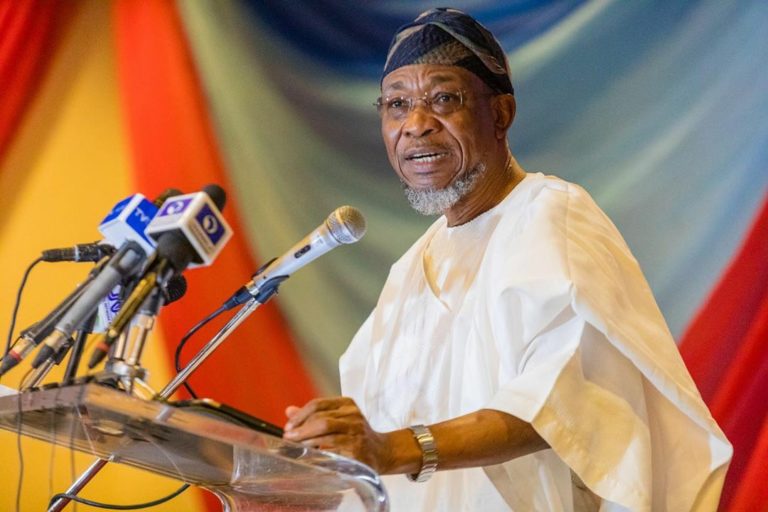
The Minister of Interior, Rauf Aregbesola, announced this in a statement released through the Ministry’s Twitter handle on Wednesday, April 18.

In the statement signed by the Ministry’s Permanent Secretary, Shuaib Begore, Aregbesola congratulated all Muslims for the successful completion of the holy month of Ramadan.

The minister urged Muslims to imbibe and practice the virtues of kindness, love, tolerance, peace, self-denial, sacrifice and good neighborliness.

“The self-restraint, self-denial, sacrifice and deep spiritual consciousness that accompanied the fasting period should not end but be maintained and improved upon, in order to be a better person and true worshiper,” he added.

Aregbesola also reassured Nigerians that President Muhammadu Buhari is fully committed to a peaceful transition of government following the general elections.

He added that the Federal Government is committed to securing  the life and property of every citizen and foreigner in the country.

Aregbosola commended the security agencies for the successes recorded in the fight against criminals across the country, and urged Nigerians to be part of the nation’s security architecture by being vigilant and reporting suspicious individuals and activities to law enforcement agencies.

He admonished Nigerians  to report suspicious activities and persons to the N-Alert application, adding that security is everybody’s responsibility.

Adamawa guber poll: Tinubu asks police to conduct full investigation

0

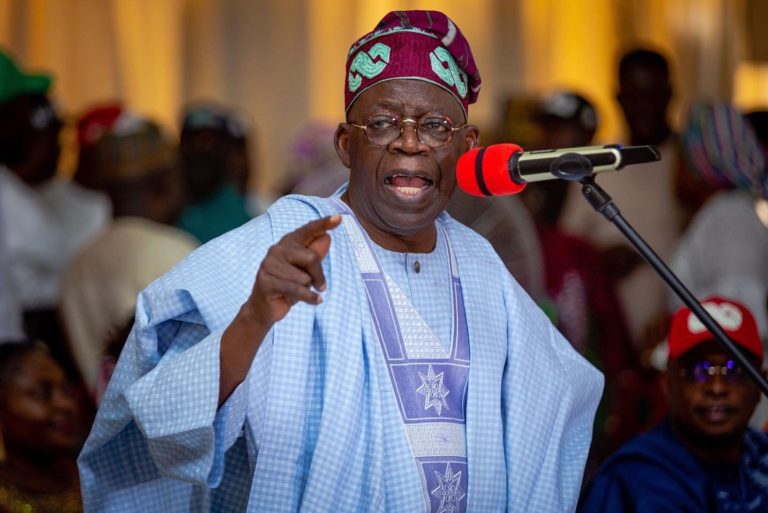
PRESIDENT-Elect Bola Tinubu, has asked the Nigeria Police Force to investigate what transpired during the supplementary governorship election in Adamawa State.

Tinubu also urged all those who feel aggrieved at the outcome of the poll to pursue legitimate means of addressing their grievances.

The All Progressives Congress (APC) candidate in the 2023 presidential election disclosed this in a statement he signed and released via his Twitter handle on Wednesday, April 19.

He also called on all those elected in the general elections to brace themselves for the task ahead, urging them to rededicate themselves to selfless service.

He wrote: “With the conclusion of the 2023 elections, I now welcome all of us who have been elected to brace up to serve our people with diligence and dedication and to join hands with me as your President-elect in the pursuit of our agenda to renew the hopes of our people in a better, stronger, more secure, economically vibrant and prosperous Nigeria.

“I congratulate the winners of the Supplementary Governorship elections held in Kebbi and Adamawa States on Saturday, April 15, 2023. I also rejoice with those elected into the Senate, House of Representatives and State Houses of Assembly during the last round of elections in states where such took place. These victorious men and women have earned the trust of their people and I call on them to rededicate themselves to the service of their respective constituents.

“The supplementary polls have now brought the 2023 elections to a final, fitting conclusion. I observed, with satisfaction, the largely peaceful atmosphere that pervaded the supplementary election on Saturday. It was a further testimony that our citizens have accepted democratic norms and have unalloyed faith in the electoral process.

“However, I note the matter of Adamawa Supplementary Governorship Election and I urge police authorities to fully investigate all that transpired in the election given the attendant controversy.

“In every democratic contest there has to be one winner. I call on those aggrieved to pursue legitimate means of addressing their grievances.”

The ICIR had earlier reported how the resident electoral commissioner, Hudu Yunusa-Ari, illegally announced APC’s Aishatu Binani as the winner of the election despite ongoing collation of results.

The announcement caused widespread outrage among residents of the state and some concerned Nigerians.

Subsequently, the Independent National Electoral Commission nullified the announcement made by the REC, noting that it was unconstitutional and unofficial

On Tuesday, April 18, the electoral body finally declared Ahmadu Fintiri of the Peoples Democratic Party (PDP) as the winner of the election after collating the the result of the supplementary election.

According to the returning officer of the state  Muhammed Melee, Fintiri secured a second term in office after polling 430,861 votes to defeat other contestants.

Nigerian Railway Corporation revenue drops from N6bn to N5.6bn in 2022

THE Nigerian Railway Corporation (NRC) generated an income of N5.57 billion from passengers, goods and other services in 2022, a 7.69 per cent reduction from the N6.03 billion it generated in 2021.

According to the National Bureau of Statistics (NBS) in its latest data report on the NRC performance for the third and fourth quarters of 2022, the Corporation generated N4.54 billion from only passengers last year, while it got N5.69 billion in 2021.

The NRC also raked in N416.85 million in 2022 from cargoes, an improvement on the N299.80 million figure it earned in 2021 from such service.

The report showed that the NRC realised N607.80 million as income from other receipts in 2022, compared to the N38.42 million recorded in 2021.

The NBS further noted that the Corporation generated N2.07 billion and N598 million in the first and second quarters of 2022, while it raked in N715 million and N1.15 billion in the third and fourth quarters.

The report stressed that N71.76 million, N86 million, N101.8 million and N157.233 million were generated from goods and cargoes in the first, second, third and fourth quarters respectively.

It also showed that the N603.80 million got from other income revenue receipts spread across the four quarters.

Although N57.92 millon and N49.72 million were gathered in the first and second quarters, N117.98 million and  N382.16 million were generated in the third and fourth quarters.

The report stated that more that 3.2 million passengers made use of the railway service in 2022.

It also revealed that 118,000 volumes of goods used NRC’s cargo service.

Train attacks affected NRC’s revenue

The ICIR reported that the NRC temporarily suspended services on the Abuja-Kaduna route.

The suspension followed a terrorist attack on a Kaduna-bound train carrying hundreds of passengers on the evening of May 28.

According to the NRC, there were reports of gunshots, and the train derailed due to the attack.

The report noted that the bandits detonated a bomb on the Abuja-Kaduna track and successfully immobilised it at a point between Katari and Rijana.

Further revelations from the NRC stated that 146 of the 362 passengers on the Kaduna-bound train attacked by terrorists on March 28 could not be reached six days after the incident.

More than 60 passengers were whisked away and abducted, while nine were killed.

Subsequently, The ICIR reported that the NRC suspended the Lagos-Kano and Ajaokuta train services due to threats of terrorist attacks.

According to the NRC managing director, Fidet Okhiria, the Lagos-Kano and Ajaokuta train services were suspended due to insecurity fears.

Okhiria had said, “We have not stopped (services). Rather, what we said was that we are not going to be stopping at the Ajaokuta station.

“This is because yesterday (Monday), while passengers were leaving the station with their private cars and buses, they had people shooting at them. So we said we will not stop there again for passengers.”

Also, in January 2022, the Warri-Itakpe train service (WITS) was grounded after a train operating the route was derailed, which left passengers stranded. The ICIR reported that the NRC declared that its services along the Abuja-Kaduna rail lines and Nigeria resumed on Tuesday, January 31.

Consequently, The ICIR further reported that the NRC bemoaned that about N113 million was lost due to the shutdown of the Abuja-Kaduna rail line for over eight months.

Speaking to the News Agency of Nigeria (NAN) in December 2022,  Okhiria said many Nigerians incurred some losses indirectly due to the halt of operations on the route.

He said, ”The last time we checked –  that was between the months of February to August – we have lost about N113 million, using what we were earning between January and March as a working document.

“When the train was working, there were a lot of other businesses that were going on.

“So those were indirect benefits and costs that had been lost to the Nigerian economy.

“More so, somebody who would have travelled from Kaduna to Abuja via train for some form of transaction and couldn’t make it because the trains were not running would have also lost something.

“The economic benefits are also lost. So we should not only look at the Naira and kobo that the NRC would have been able to make from it, but at all other losses by Nigerians,” he said.

Two die as building under construction collapses in Abuja

0

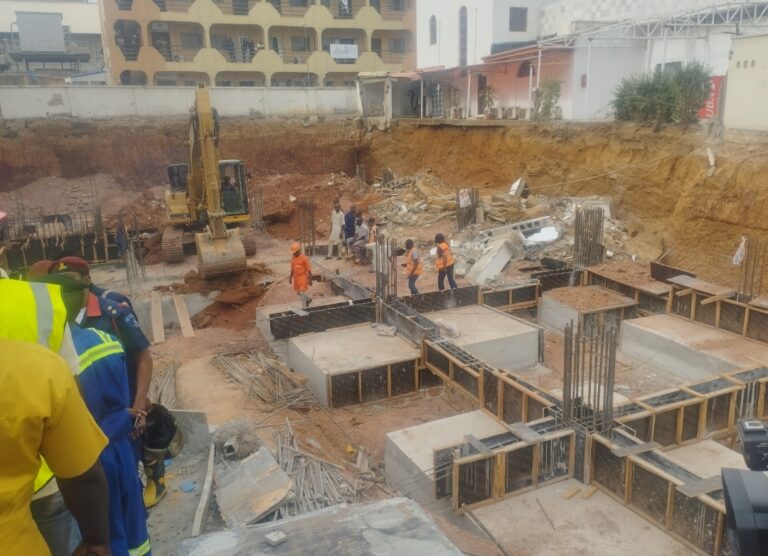
TWO persons died in a building collapse that occurred in the Wuse 2 area of the Federal Capital Territory (FCT) on Wednesday, April 19.

A fence adjacent the building fell on the structure, which was still under construction, trapping six workers.

According to eye witnesses, the foundation of the building had been dug too close to surrounding houses, and affected the fence of the adjoining building, leading to the collapse.

Corroborating eyewitness accounts, Head of Operations, FCT Fire Service Adebayo Amiola, while addressing journalists at the scene, said there was no retaining wall around the structure which could have mitigated the incident.

“Out of the six people that were trapped, four were rescued alive and two were fatally injured. The building was under construction and the adjacent fence to the main building under construction collapses on men that were working on the site.

“No retaining wall was introduced while they were excavating the site where the building will be situated, so the adjacent wall fell on the people that were working,” Amiola said.

He said the injured persons have been conveyed to the General Hospital, Asokoro for medical treatment.

Director, Department of Development Control of the Federal Capital Territory Development Authority (FCDA) Mukhtar Usman Galadima told journalists that there was an earlier order stopping work at the site until necessary measures were put in place.

“The Department of Development Control has done all within its power by even stopping the work here. But then the developer, maybe using his engineer, did not heed the warning and then this incident happened.

“Because when you are doing this kind of activity, you need to shore it up, retain the wall so that there will be no collapse. We didn’t know that work had resumed until this thing happened this morning.”

Operatives of the Nigeria Police Force (NPF), National Emergency Management Agency (NEMA), FCT Fire Service, National Security and Civil Defence Corps (NSCDC), among others, were present at the scene.

On Thursday, February 2, a three-storey building still under construction collapsed in the Gwarimpa area of the FCT, killing three persons.

The Federal Capital Territory Administration (FCTA) subsequently revoked the allocation for the plot on which the building was being constructed.

Also, in 2022, at least two people died when a building housing a shopping mall collapsed at the Kubwa area of the FCT.