

JOURNALISTS in Kaduna and Plateau states recount harrowing experiences of how past administrations secretly intercepted their phone calls, text and WhatsApp messages using GSM/UMTS Interception Systems to track, arrest, detain and torture them.
Onibiyo Segun recalled with certainty the day he was detained for 24 days at the Kaduna State Maximum Custodial Centre. He had been arrested by the police in Kaduna on November 23, 2018, over allegations of incitement, defamation of character and injurious falsehood against the former Governor in the state, Nasir El-Rufai.
“It started in 2017,” he recalled while hosting a popular road traffic programme on radio called ‘Oga jeje’. “I guess the governor got interested, and some of his boys called me that His Excellency would want to work with me. I turned it down.” He said in November 2018, while making a delivery in Minna, Niger State, he noticed a strange number had called him multiple times. “I answered the call and it was a police inspector,” Segun said.

He said the officer asked him to report to the police station but more worrisome was that he described his exact location and insisted he could see him where he was. That was when it dawned on Segun that his phone could be tracked.
The journalist told The ICIR that he later found from a reliable source that the police had been intercepting his calls for two weeks and had called a close relative he was communicating with consistently with the aim of tracking him down.
Reports show that the El-Rufai administration procured several surveillance and communications-interception technologies between 2015 and 2023.
“They knew where he was before he arrived.
They had his calls. His messages. Even his WhatsApp chats.”
Nigeria’s surveillance system meant for criminals was allegedly turned on journalists instead.
This investigation by #TheICIR reveals how authorities tracked reporters,… pic.twitter.com/hxI1L2643O
— The ICIR (@TheICIR) May 15, 2026
The state budget in 2017 indicated that the government appropriated N193.6 million to procure geo-position interceptor and location of GSM, UMTS system to check trends, intercept and locate kidnappers’ calls.
However, The ICIR’s findings revealed that the GSM/UMTS interceptor, a surveillance system used to track the location of mobile phones, intercept calls and SMS, identify SIM cards and devices, had also been used by the government to intercept journalists’ calls, leading to their harassments and unlawful detentions.
Arrest over a digital shadow
According to Segun, the tone of conversation shifted at the police station, when officers quickly surrounded him. “There was this funny character who was cocking his gun. I said you can’t harass me. They brought out some printouts with my picture, my name, and a Facebook post,” he recalled.
He said the post which had contained allegations against then governor El-Rufa had been made from a Facebook account he lost some years back. But the police First Information Report revealed that a government official had reported that the post was inciteful, defamatory, and injurious to the former governor.
“They asked me to submit my phones. People from the Government House came. I think about five of them, including lawyers and from the Justice Department.”
Segun said despite insisting that the Facebook account used to publish the post had long been compromised, he was charged before a magistrate the same day. Although he pleaded not guilty and was denied bail, he was taken to Kaduna State Custodial Centre by evening.
However, his arrest had triggered outrage as activists and pro-democracy groups condemned his detention.
“My lawyer and about six others came to represent me in court. I was handcuffed and taken to court,” he explained, noting that his legal team challenged his bail denial, arguing that the charges were not capital offences. However, while the bail process was going on, he was returned to the prison and locked up until the 12th of December when he made bail and was eventually released on December 15, 2018.

Your phone isn’t just smart. It could be spying on you.
Calls tapped. Messages tracked. Location monitored.
This is how spyware works — and why you should care. 🔓 #Spyware #DigitalSecurity #SpywareAccountability pic.twitter.com/9gLMcEwMAI— The ICIR (@TheICIR) May 21, 2026
Segun’s story is not just about one arrest, but a broader pattern of how surveillances were used to pressure, intimidate and arrest journalists during the administration of El-Rufai as documented cases by media rights groups and press freedom organisations show.
Three months in prison because of a story
A former Bureau Chief of Vanguard Newspaper in Kaduna, Luka Binniyat, said he spent 97 days in the Custodial Centre after he wrote a story captioned, “Fulani herdsmen kill five College of Education students” that turned out to be false in December 2016.
“When I finally discovered that the story was not true, I called my editor and told him to ‘Please, drop the story,’ he didn’t drop it,” Binniyat narrated. The journalist said the then Commissioner of Information in Kaduna, Samuel Aruwan, ordered his arrest after which he was detained at the Kaduna Maximum Custodial Centre for over three months. “I was isolated. I spent the first week in prison. I got bail but the magistrate court didn’t acquit me,” he said.
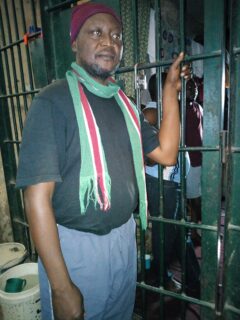
Binniyat said he was re-arrested on November 3, 2020, when he wrote another story about an alleged Christian massacre in Kaura Local Government Area of the state. “By then, Aruwan was the Commissioner of Internal Security and Home Affairs. He issued a statement, saying that it was a clash. I interviewed the senator representing Southern Kaduna Senatorial district, Danjuma Laah, whether what happened was a clash and not genocide. The senator said it was genocide, so I quoted him as saying Aruwan was trying to cover the genocide. Aruwan found that very offensive and ordered my arrest,” he explained.
The journalist said the police had used a device to track him at a time the government had disconnected communication networks across the city. “Apparently, they had a way of tracking phone numbers. They tracked me to the office of Southern Kaduna People’s Union. Six armed men in plainclothes stormed the office, and pointed a gun at the security guard who led them to the office I was in,” he said.
Binniyat confirmed seeing the tracking device in the police station and gave a pictorial description of what looked like GSM/UMTS Interception Systems. “When I went to the office, I saw the tracker. It’s a small device. Flat device, the size of a phone. They were connected with an antenna. At that time, they were tracking somebody. While writing my statement, they were trying to arrest another person. So, it points at coordinates. This is a part of town. If you show a dot there, and then you zoom it, you will see the address, the name of the street, you can zoom it to the exact spot where the phone is, where the person is. It’s slightly bigger than the size of an Android,” he recalled.
He said he was detained at five different police cells, before he was transferred to the correctional centre again where he spent 93 days marking the most terrible experience of his life.
“Even as bad as the prison cells were, the police cells were five times worse. There was a cell that would take like 70, 80 people. You had no place to sit down and stretch your legs. Cockroaches were common. Lice and bed bugs, the cell was stuffy, and then some of the big bosses in the cells will be smoking. People were fainting roughly every three hours and had to be taken out. In fact, one guy died,” he added.
The journalist said his case was taken to Federal High Court 1, Kaduna, and lingered there for years before he was finally acquitted and discharged in January 2026.
About GSM / UMTS interception systems
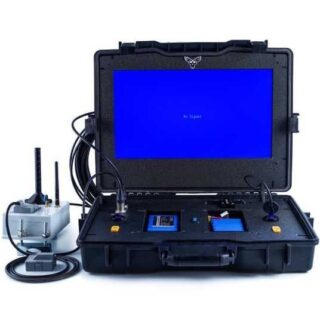
According to the website of Intercept Monitoring System, Cellular interception systems of GSM (2G), UMTS (3G), LTE (4G) are black server racks often labelled as “Interception Mediation Device (IMD)” or “LI Gateway” that have a suitcase-sized box with a small antenna mounted.
OluGbenga Odeyemi, the Chief Executive Officer of e86, a digital security and software company explained that GSM / UMTS IMSI Catchers, also known as Stingrays, act as ‘fake’ cell towers. “Your phone is designed to connect to the strongest signal; the device tricks your phone into connecting to it instead of the real network, allowing the operator to intercept calls, SMS, and location data.”
He said the Signalling System No. 7 is the protocol used by networks to talk to each other and therefore hackers or agencies can exploit flaws in SS7 to redirect calls or SMS to their equipment, essentially “man-in-the-middle” attacking the global telecom backbone. “This can happen even if you are thousands of miles away from the interceptor,” the cyber security expert said.
The ICIR reported that El-Rufai, the former governor of Kaduna State recently confessed at an interview on Arise Television that the phone of the National Security Adviser (NSA), Nuhu Ribadu had been tapped, enabling him (El-Rufai) to listen to a conversation in which the NSA allegedly ordered for his arrest.
Speaking on Arise TV on February 13, El-Rufai alleged that security operatives attempted to detain him at the Nnamdi Azikiwe International Airport at the instance of anti-corruption authorities, describing the move as an abduction attempt. “Nuhu made the call and made the order that I must be in custody,” he said.
When asked how he became aware of the alleged directive, El-Rufai added: “The government thinks that they’re the only ones that listen to calls. Someone tapped his phone.”
He acknowledged that tapping phone calls without court authorisation was illegal but argued that state agencies routinely monitor communications without judicial approval.
The Nigerian Communications Commission while exercising its powers under section 70 of the Nigerian Communications Act, 2003 adopted the ‘Lawful Interception of Communications Regulations, 2019 on January 23, 2019, providing the legal framework for authorised agencies to intercept communications in Nigeria, such as phone calls, emails, and data.
It mandates licensees to install equipment capable of interception to protect national security, public safety, and public order.
However, the Socio-Economic Rights and Accountability Project (SERAP) in March 2026 SERAP filed a lawsuit against the Federal Government at the ECOWAS Community Court of Justice seeking to halt the implementation of the framework, arguing it is unconstitutional and lacks judicial oversight.
The request followed El-Rufai’s allegations, as the organisation insisted that the law is in serious interference with fundamental rights that cannot be authorised through subsidiary regulations or exercised in secrecy without strict safeguards.
Checks by The ICIR showed that the Kaduna State government under El-Rufai had spent at least N4 billion on the procurement of GSM UMTS System and installation of CCTV Cameras for monitoring and surveillance from 2016 to 2019.
In 2016, the government approved N74,931,004.32 on procurement, installation of CCTV cameras for monitoring and surveillance under Kaduna State University (KSU). In the same year, it approved N2,100,000,000 on the procurement of Comprehensive Security and Surveillance Equipment through the office of the Secretary to State Government (SSG). In 2017, it approved N26, 961,066.57 through KSU for the same surveillance gadgets. Besides, it spent N1,568,600, 000.00 in 2017 and N850,000,000 in 2019 through the SSG for the same gadgets.
Similarly, in 2017 and 2018, the state government approved N193,608,945.39 on procurement of Geo-position Interceptor and location of GSM UMTS System to check the trends and intercept/locate kidnappers calls and approved N173,608,945.39 in 2019 for the same purpose.
A report by Spaces for Change (S4C), a civil society organisation in 2024 revealed that Nigeria invested heavily in surveillance and interception technologies with Chinese tech firms Huawei, the dominant Chinese telecom vendor in the country.
It said the Nigerian government allocated approximately $40 million for interception technologies and an estimated $583 million on public surveillance projects, noting that most surveillance technologies used in Nigeria are imported from Israel, China, and the United States. It emphasised the risks posed by dual-use technologies that could be repurposed for oppressive purposes.
The ICIR reported that Paradigm Initiative, a digital rights group documented how at least N127 billion was spent on surveillance/security equipment from 2014 to 2017 with evidence showing that the procurements were made for political purposes to monitor political opponents.
Monitored through WhatsApp
A journalist with Leadership Newspaper, Midat Joseph said his WhatsApp was tapped because he was writing stories about the attacks and killings in the southern part of Kaduna State.
“Somebody within the security architecture informed me that my calls were being monitored by the government at that time, warning that I should be careful of my discussions on the phone,” he said.
Joseph explained that there was an attack in southern Kaduna, and he was added to a WhatsApp group where money was being raised for the affected community.
“There was a suggestion that a protest should be held in Kaduna, Abuja, or Kafanchan to draw the attention of the world. That was why they were trailing me. They were monitoring my conversations,” Joseph recalled.
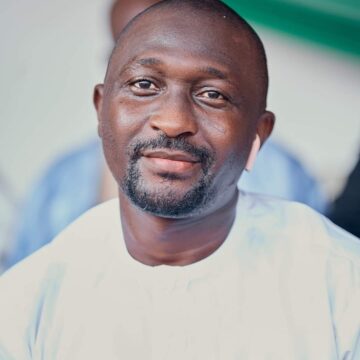
The journalist said the police arrested the friend he frequently conversed with and a web designer who designed a website for him.
“Based on the information I got, the Intelligence Response Team (IRT) from Lagos were told that I was into gun running. So, they thought they were coming to arrest a big suspect. They monitored my calls, a friend of mine was tricked and arrested.”
Midat said that he noticed a black, tinted bus trailing his car, days later, when he parked, the vehicle stopped behind him and armed men stepped out.
“I came out of the car, the police came out with guns, one of them said are you Mr. Midat, I said yes. When we got to the metro police station, they brought a sheet of paper with people’s comments and all the comments from that WhatsApp platform. They showed me my name, and asked, are you the one that made this comment, I said yes I made the comment. They said are you willing to write a statement on this? I said yes, so they gave me a paper,” the journalist said.
He recalled how he slept in the police cell that night and how the officers abandoned his case the following morning and left to arrest another suspect in Bauchi State.
“They confirmed that it was the government that ordered for my arrest. Pressure was high the following morning, as journalists across the country, my station and everybody condemned my arrest,” he added.
He said the matter was immediately transferred to the Office of the Commissioner of Police from the Metro Police Station, and consequently to the Police Headquarters. He noted that the police officers who were left behind told the commissioner that he was arrested for gun running.
“I was detained with hardened criminals inside the police cell at SARS Police Station in Kaduna,” he stated.
The journalist however said after appearing in court for over a month, the matter was struck out for lack of proper jurisdiction, stressing that the government and its lawyers never made any appearance.
A publication that led to 162 days in prison
In March 2019, Steven Kefas another journalist in Kaduna said he published an article titled “How the Kajuru Genocide Started,” but it drew the attention of authorities to him.
“In 2018, a rumour started spreading that El- Rufai was trying to balkanise the Adara chiefdom, which is one of the largest chiefdoms in Kaduna State. The then paramount ruler was against it and in October of that year, El Rufai invited him for a meeting. On his way back, the chief was abducted alongside his wife. The wife was released after a ransom was paid but they killed the man.”
Kefas said shortly after the chief’s death, a government gazette formalised the restructuring of the chiefdom, confirming earlier fears.
“I just noticed that my lines were being bogged down from March 2019. I was in Port Harcourt, and I noticed if you wanted to call me, you wouldn’t reach me. When I tried to make a call, I couldn’t. Something strange was happening to my phone.”
He said security operatives invited his friend, a security officer, for questioning adding that the officer was pressured to call him and lure him to a police station. When Kefas arrived, he said he was arrested without warrant.
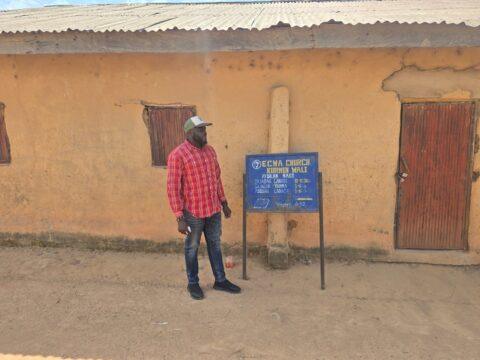
The journalist said that what followed was a prolonged legal battle and incarceration, as he spent 162 days in detention, much of it in the Custodial centre. He said prosecutors repeatedly argued in court that he should not be granted bail because even while in detention, he continued to criticise the government, a decision he claimed the judge agreed with.
But after months of routine remands, he said the judge had asked his prosecutors, “Do you have evidence?” Because the litigants could not produce any, Kefas said he was granted bail and by early 2020, the case ended. But his ordeal did not end as he claimed he had received multiple threatening messages and calls from anonymous callers after he amplified a report that allegedly linked security personnel to attackers.
The journalist explained that his lawyer had written to the Commissioner of Police in 2021 seeking protection after the multiple threats. To buttress this, he said one of the threats came through a letter written to a pastor in Kafanchan in which the pastor was asked to convey a message to Kefas. ‘They told him to tell me that they were going to hunt me down, that was in 2021 and by 2022 April I was attacked in my house,” he said.
Former commissioner responds
Former Commissioner of Internal Security and Home Affairs in Kaduna State, Samuel Aruwan whom journalists Binniyat and Kefas alleged was at the centre of their threats, insist that his actions against the two were strictly within legal boundaries and driven by personal safety concerns following what he described as ‘mischievous’ and damaging publications.
When The ICIR contacted him, Aruwan said he had filed a formal complaint to the police over Binniyat’s publication on November 1, 2021, accusing the journalist of publishing allegations amounting to injurious falsehood and also sent a separate letter to the senator quoted in the report the same day.
The former commissioner however distanced his office from direct operational control of surveillance and interception gadgets, when asked about claims that journalists had been tracked using state-supported surveillance tools.
Instead, he said surveillance gadgets acquired to combat kidnapping were handled by federal security agencies. “They were supports that Kaduna State government gave to intelligence agencies,” Aruwan said, adding that decisions on surveillance and threat classification fell within the jurisdiction of security agencies, and not his office.
When The ICIR contacted the Public Relations Officer of the Kaduna State Police Command, Mansir Hassan, for a response to the allegations, he said that he was not PRO at the time the incidents occurred.
“We Are Watching You” journalist alleges threat from Plateau SSS
At 7 a.m on September 18, 2020, an independent journalist in Plateau State, Masara Kim, said he published a story on his blog detailing what he claimed as “intelligence about planned coordinated attacks in communities in Jos South LGA.” By noon, Nigeria’s security agencies were already on his trail.

“By 9 a.m, I started getting rumours from sources within the system that there was plan to arrest me. So, that morning, I left town immediately. Then, by around 12 p.m., I received a phone call from the DSS, which demanded I appear at its office to answer questions regarding the story. About an hour later, the police also called to invite me.”
Kim said the State Security Service, told him that it was just a friendly invitation, but he was left to wait for hours before the interrogation began. He was asked to reveal his sources and take down the article, but he refused.
“They threatened and told me, ‘you are being watched. We have every detail about you, and we can pick you at anytime, anywhere.’ They showed me a computer and said everything is here and we have everything about you here, if you think that you can hide. They threatened to put me in jail, but I refused to yield. So, they made me take off my belts, wristwatch, clothes. They took mugshots and locked me behind bars. I remember the OC Legal threatening to lock me up forever.”
The journalist said he was detained for two days and yielded to take down the article and publish a retraction. However, he refused to share details of his sources, noting that communities in Jos South were hit by coordinated assaults which killed the traditional leader in Foron.
“By the time I was out, after two days, the police were waiting. So, I was whisked away from the premises of the DSS straight to the police headquarters. I was interrogated by the CP.”
Kim alleged that after his release, the intimidation shifted online, as his devices showed signs of hacking, his communications were monitored and his blogs, masarakimsblog.com and mkreporters.media, were taken down till date.
“I did a couple of cyber security checks on my lines and my devices. I had to change my cell phones and my computers because there were traces of hacking. My two websites were brought down within weeks, and I still don’t have access to them,” he added.
Explaining what may have happened to Kim’s website, the CEO of e86, OluGbenga Odeyemi, who also a software engineer, explained that flooding websites with traffic could cause them to crash, adding that domain seizure can force companies hosting the URL to suspend the sites. He said websites hosts often used national security or copyright claims as pretext.
The ICIR’s checks on the Plateau State budget documents, security reports, and media coverage, shows that the administration of the former governor, Simon Lalong between 2015–2023, funded and procured several electronic surveillances systems amounting to N1 billion mainly through the state security outfit, Operation Rainbow and other agencies. While many items are described generically in budgets rather than by brand names, the records still reveal categories of surveillance technologies.
Although many procurement entries were vaguely described in official budgets, the documents reveal repeated spending on Electronic Security Gadgets at N45 million in 2023 alone under Operation Rainbow titled “Acquisition of Electronic Security Gadgets.”
The Lalong-led administration Secretary to the Government of the State, Danladi Atu, said he will have to gather details from documents and consult with Operation Rainbow before responding to questions when The ICIR contacted him for details on April 11, however, Atu has not responded to calls and messages at the time of filing this report.
Expert insight
The CEO of e86 explained that the difference between lawful and unlawful interception lies in authorisation and accountability adding that lawful interception is a legally sanctioned process where a government or law enforcement agency intercepts communications based on a specific warrant or court order.
Citing the Nigerian Communications Act 2003 and the Lawful Interception of Communications Regulations 2019, Odeyemi said the only authorised agencies that could carry out lawful interception are the Office of the National Security Adviser, the SSS, and the Nigerian Police Force, through a court order.
“Generally, an agency must apply for a warrant from a judge of the Federal High Court. The application must demonstrate that the interception is necessary for national security or to prevent a serious crime. The Cybercrimes Act 2015 as amended criminalises the intentional interception of any communication without “lawful authority.
“Section 37 of the 1999 Constitution guarantees the privacy of citizens’ “telephone conversations.” Any surveillance conducted without a specific, time-bound court order is a violation of this constitutional right,” he added.
He urged journalists to use forensic tools, including Mobile Verification Toolkit developed by Amnesty International, to scan their phones for indicators of compromise tied to known spyware.
“When journalists are surveilled, it creates a chilling effect. If a source knows the journalist’s phone is tapped, they will stop sharing sensitive information, effectively killing investigative stories on corruption. Journalists may avoid certain risky topics to protect themselves, which weakens the democratic role of the fourth estate,” he added.
He urged journalists to use Signal or WhatsApp with disappearing messages rather than regular SMS or voice calls.
SSS mum
The ICIR contacted the Deputy Director, Public Relations and Strategic Communications of the Department of the SSS, Favour Dozie on April 21 seeking reactions to allegations made by journalists in Plateau State against the agency but received no response. When contacted again via telephone on May 12, Dozie said she would revert. However, subsequent follow-up calls made by this reporter on May 13 had not been responded to as of the time of filing this report.

Nanji is an investigative journalist with the ICIR. She has years of experience in reporting and broadcasting human angle stories, gender inequalities, minority stories, and human rights issues. She has documented sexual war crimes in armed conflict, sex for grades in Nigerian Universities, harmful traditional practices and human trafficking.