

A NEW report has revealed that millions of Nigerian children affected by conflict, displacement, climate shocks and economic hardship remain largely invisible in government budgets, leaving critical early childhood services severely underfunded despite worsening humanitarian needs.
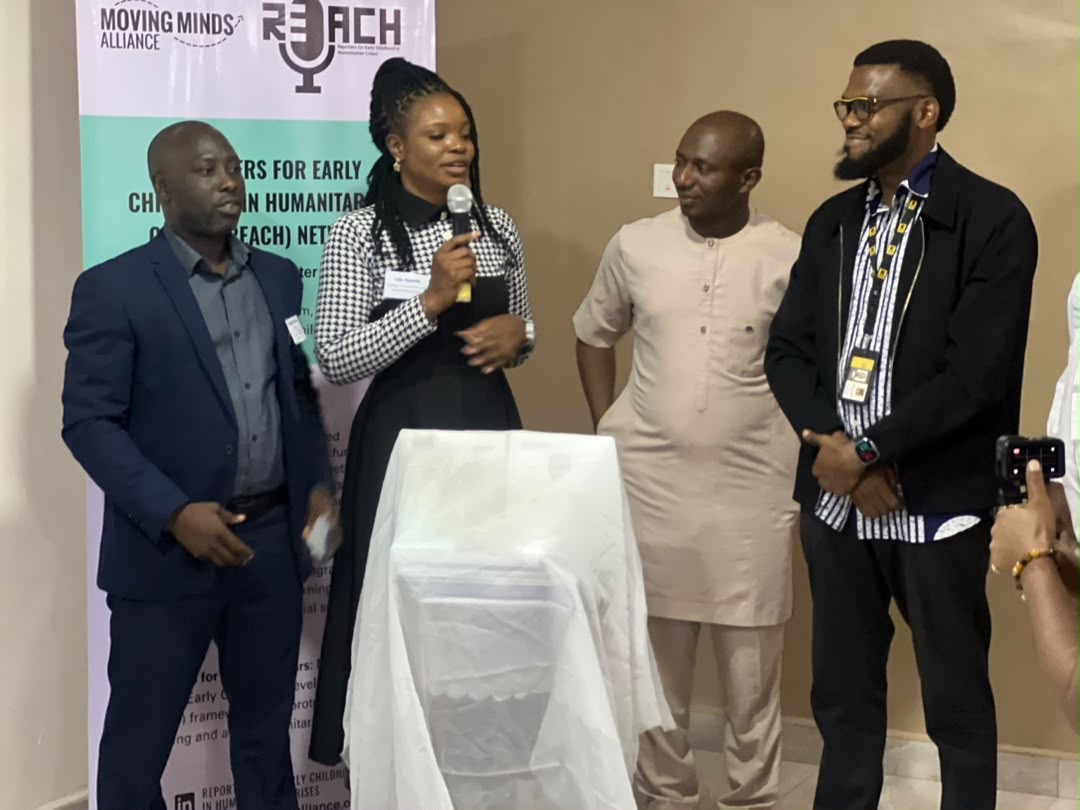
The report, Financing Early Childhood Development in Crisis (ECDiC) in Nigeria: From Fiscal Invisibility to Child-Level Results, was launched in Abuja on Wednesday, July 8, by the Moving Minds Alliance (MMA) in partnership with Whole Child Advisors at a workshop that brought together journalists, development partners and policymakers to discuss early childhood development in humanitarian settings.
The report was unveiled by Communications Manager of the Moving Minds Alliance, Lola Ayanda, alongside Global Co-Chair of the Reporters for Early Childhood in Humanitarian Crisis (REACH) Network, Mojeed Alabi, and other stakeholders.
Speakers at the event identified chronic budget shortfalls, insecurity, weak implementation of government programmes and limited ownership by state governments as major obstacles to improving outcomes for children living in crisis-affected communities.
According to the report, Nigeria’s Human Capital Index stands at 0.36, indicating that a child born in the country today is expected to achieve only 36 per cent of their potential productivity due to persistent deficiencies in health, nutrition and education.
It also found that although about 4.9 million children require humanitarian assistance and 3.6 million people were forcibly displaced in 2025, there is no dedicated budget line for early childhood development in crisis (ECDiC) at either the federal or state level.
The report further noted that Nigeria had about 31 million children under the age of five, while between 33.8 and 40 per cent suffer from stunting. It noted that cases of severe acute malnutrition had also risen to about 1.8 million children, representing a 69 per cent increase compared to previous estimates.
Reacting to the report’s findings, stakeholders said the country’s current financing system prioritises administrative structures rather than children’s needs, making children affected by humanitarian crises “fiscally invisible.”
They pointed to poor budget implementation as a major concern, adding that the Federal Government implemented less than 40 per cent of its approved expenditure in 2024, while only 17.7 per cent of capital allocations was released by the third quarter of 2025.
The report also highlighted fragmented funding mechanisms, inadequate investment in early childhood education and unequal distribution of humanitarian resources, with more than 85 per cent of humanitarian funding concentrated in Borno, Adamawa and Yobe, leaving conflict-affected communities in the North-West and North-Central significantly underserved.
Beyond funding gaps, participants at the launch said insecurity continued to undermine children’s development by disrupting access to education, healthcare and nutrition services.
They noted that repeated attacks on schools, displacement of families and prolonged humanitarian emergencies had increased the number of out-of-school children while worsening malnutrition and learning losses among children in affected communities.
Stakeholders also criticised the limited commitment of many state governments to early childhood development, saying interventions remained heavily dependent on donor support with insufficient domestic investment.
Speaking on the project and launch, Nigeria Early Childhood Development in Crisis Coalition Coordinator, Arome Agenyi, said investments made during children’s early years determine their future outcomes.
He urged journalists to sustain coverage of early childhood issues, saying public attention could influence policy decisions and government investments.
“Behind every successful adult is an early childhood story. The question is not whether children are developing; they are. The question is whether they are developing to their full potential. In this regard, the stories journalists choose to tell today can shape the policies, investments, and public actions that determine the future of millions of Nigerian children, especially those in crisis contexts across Nigeria,” he said.
Also on his parts, Global Co-Chair of the REACH Network warned that children who become fiscally invisible also risk becoming politically invisible.
He said the launch of the REACH Network in Nigeria would strengthen evidence-based journalism focused on the needs of young children affected by humanitarian crises while holding governments accountable for commitments made to them.
Meanwhile, Interim Director and Co-Chair of the Moving Minds Alliance, Katie Murphy, said the report would provide Nigeria with clear evidence of existing financing gaps and practical recommendations for addressing them.
The report recommended seven priority reforms, including creating a dedicated federal policy framework for early childhood development in crisis settings and introducing specific budget tags across federal and state budgets.
Others are protecting budget releases, simplifying funding mechanisms, expanding results-based financing, redirecting resources based on vulnerability and establishing a joint investment framework involving government, humanitarian agencies and philanthropic organisations.
The report envisions that by 2028, both federal and state governments would have established dedicated budget tags for early childhood development in crisis settings, with at least 70 per cent of allocated funds released annually and measurable improvements recorded in children’s developmental outcomes across local government areas.

Mustapha Usman is an investigative journalist with the International Centre for Investigative Reporting. You can easily reach him via: musman@icirnigeria.com. He tweets @UsmanMustapha_M