Home Blog Page 100

Failed by government insurance schemes, Niger women farmers turn to God

AGRICULTURAL insurance was designed to protect farmers from risk. But in Niger State, it has become another risk on its own. Many women farmers say they’ve lost more money chasing claims than to floods, pests, or drought. Tired of endless paperwork and silence from insurance officers, these women farmers now depend on faith, not policy, to survive.

By Justina ASHISHANA

When termites invaded her soya beans farm in Paikoro Local Government Area (LGA) of Niger State, Jummai Makama thought help would come from the state government. She had registered for insurance through the state’s Agricultural Development Project (ADP), now called the Niger State Agricultural and Mechanization Development Agency (NAMDA) and paid the required premium. But when she called her extension officer to report the loss, the response shocked her: “You didn’t report within 24 hours,” she was told.

Jummai in her soya bean farm

“In my farm, for soya beans, you plant and they come up with good flowers but termites enter into them and you won’t know until you harvest. At the end of the day, the seeds do not come out fine. When I complained to the insurance company so that I will be assisted, they did not answer and I just got tired and left them. One day when they finally answered, the insurance company said I did not report within 24 hours, so I did not get any benefit.

“How can I know my farm will fail within 24 hours?” she asked, her voice cracking in disbelief.

“By the time I saw that the crops were not producing, it was already too late. It is only when the seedlings start coming out that I would know that it did not produce fine. But as at that time, they said the insurance had expired.”

Jummai says herself and many other women farmers in Niger State have resigned to their fate and concluded is that, “God is our insurance.”

Across Niger State, hundreds of women farmers say they have lost faith in the state government’s agricultural insurance scheme meant to protect them from crop failure, drought or pest invasion; while others have not even heard of the agricultural insurance scheme and what it is meant for. Many say they either never heard back from insurance officers or were denied claims for technical reasons they barely understood.

Distance, paperwork, and mistrust

For many rural farmers, the idea of insurance feels like another government promise that ends at the city. Some say they are asked to take photos or fill forms in English and majority of them cannot read, write or speak English. They always need someone who would interpret to them in any situation where English is needed. Others do not even have phones that can capture images, a key requirement for evidence of damage.

Jummai complained of inadequate sensitisation about what is expected of them when disaster struck on their farms, adding that even the extension officers from NAMDA come to their farms and get them registered but do not respond to distress calls when they have challenges in their farms.

“The extension officers are the ones, when you plant, they come and survey and advice on what they do. Our problem with them is that when you have issues in the farm, they will say you have paid for insurance so you should go to the insurance office which is far away in Minna and does not assist.

“We feel maybe we do not know the right channel to follow. When it is time to pay the premium or to assist you in registration of the insurance, you will see the extension officer and the insurance company. But when you need them, you won’t see them.

“Since that time of my soya beans, I did not register with them again because they will collect the money, but they will not assist you when you have challenges in your farm. My farm is along Lapai Road, which is about 20 kilometres from my house. I  don’t go there every day  and when you plant your crops and it comes out with green leaves, you have the belief that it will produce well.

“Then, later, you go to your farm and see the leaves of the crops change colour . When you call on them to come and see, they will say you did not report the farm on time within 24 to 48 hours. What can you say?

“There was no training on what to do when something like this happens, that you have to report within 24 or 48 hours. No sensitisation or training at all, all they want is the registration fee and payment of premium”, she said.

Comfort Joseph, a maize and rice farmer in Dikko community in Gurara local government said the process of registering for insurance is tiring. Distance is also an issue for many of the farmers who have to travel long distances from their villages to town for the registration.

“As a farmer, we don’t like what will waste our time. The procedure of going to insure your farms is what discourages us. You cannot leave a village and go to the town that you want to insure your farm and they will waste your time. The conditions they give are not one you will be able to meet. The transport cost alone is enough to discourage anyone.”

“So, we have decided to trust in God as our insurance. Insurance is for a year. I do not think I can insure my farm for a year without anything happening and next year. I will do the same again, paying them money that I need to do other things. That is why we get discouraged.

“In Agaie, during meetings of smallholder women farmers of Nigeria, we have discussed insurance several times,” said Halima Mohammed, SWOFON Coordinator in the area.

“But most of our women are not used to the process. The registration process is long, and many of them cannot even read. If the insurance wants us to join, they should come to us, not wait for us to go to them.”

The few who tried to benefit from the Anchor Borrowers’ Programme say the experience made them wary of any formal financial scheme. “They gave us seedlings that didn’t germinate,” said Martha Baba, a rice farmer in Katcha local government area, “When we complained, they said it was insured, but we never saw a dime till today.”

A system that forget its users

Agricultural insurance was created to protect farmers from risk, but its design was made for urban bureaucrats, not rural women who cannot read and write or afford to travel far from their farms. In addition to these, the perceived 24-hour loss-reporting rule, complex documentation, and absence of field officers have left most farmers excluded.

Call for decentralisation

Women farmers say until insurance companies decentralise their operations, build local trust, and simplify claims, the scheme will remain a paper promise.

“In my village, most of them do not know how to make the complaints or document losses, and as such, they lose out of the insurance benefit. In this case, nothing is usually done. So, we no longer go for it. What we do is contribute small money in our cooperative so that if anything happens, we help one another. But as for government insurance, it has failed us. It is only God that has not failed.”

“When we face any problem, we pray,” said Comfort, adding: “We are used to depending on God because government people always disappoint us.”

While some are sceptical about the agricultural insurance, the women in Agaie LGA, whose farms have been ravaged by herders who lead their cattle to eat up their crops causing them tremendous losses are optimistic that getting insured can help them back to their feet after their crops have been eaten up by the cattle.

Halima, the SWOFON Coordinator in Agaie expressed optimism that if they had registered for the agricultural insurance, they would have been able to recoup some of the money they invested.

“We have raised the issue of insurance in our various meetings but our people are not used to the process of registration for this insurance. I believe that if I had insurance, I would not have lost it all when those herders allowed their cows to enter my farm. It would not have affected me much. I believe that the insurance would have helped me cover some of the loss.

“The insurance registration takes time and as I have learnt from the insurance registration, as soon as the incident happens, you will take the picture and send it to them. You can’t give them an ordinary letter, you have to show proof of evidence but what about those of our women who do not have phones that can take pictures? In Agaie, we, the women farmers are not used to insurance, but we are working to see how we can register for it very soon.”

Same bottlenecks  in accessing bank loans

The challenges the women farmers face towards agricultural insurance is the same they encounter in approaching commercial banks for loans. Several of them said that the banks have not been understanding to their plight whenever they experience loss in their farms. They said that they have to pay heavy interests even when they experienced loss.

To this end, the women farmers now rely on their community cooperatives or associations while others have vowed never to collect loans either from the bank or their various cooperatives.

Agnes Aynadanyi, a farmer in Gurara, said: “I collect loan from my community cooperative, because it is when you have it that you will return it. I never go to the bank to collect money because their interest is too much, and you must pay at the time they ask you to pay back.”

Talma Baba, also in Gurara, said: “I have never collected loan from cooperative or bank. I sell my product, from which I get the money to use for my farm. As regards insurance, I don’t know about it, it is only God that is my insurance.”

Comfort Joseph who is the SWOFON Treasurer in Gurara said they had a cooperative meeting with about 25 women where they save money weekly and from the savings, anyone who needs money is given from the purse.

“We pay it back. It is given for a minimum of three to six months and with low interest. I don’t go to bank because their interests are very high and if you do not pay at the given time, you will regret. I have tried them before and the conditions they gave include payment of interest every month and they do not wait. If you don’t meet up, they go for the collateral and with this, I can’t collect their loan for farming because it is seasonal as you cannot get the money immediately and use it to pay for loan.”

For Halima, failure to pay back the loan collected from the cooperative would limit the chances of the defaulter from accessing any other loan

“In our cooperative, we do weekly contributions and when you have need, you can borrow money and pay with interest. Whoever did not pay on time will not be given any loan again and the person will forfeit any money she has contributed so far.

“There is a duration of loan. The cooperative is helping us. What we give out is determined by what we have in our purse. For banks, the procedure is long and if you take a loan from the bank, and refuse to pay, the interest will keep increasing. That is why in Agaie, we do not buy the idea of a loan from the bank.”

Why farmers are not accessing agricultural insurance despite benefits – NAIC

The Nigerian Agricultural Insurance Corporation (NAIC) is the primary agency of the Federal Government of Nigeria, under the Federal Ministry of Agriculture, responsible for providing insurance coverage to farmers.

NAIC’s main goal is to implement and manage the federal government’s official Agricultural Insurance Scheme which is designed to protect farmers from the financial losses caused by natural disasters and other hazards. The Corporation helps stabilise farm incomes and encourages farmers to continue investing in their operations. This coverage includes subsidised insurance which is for major crops and livestock whereby the government (federal and state) subsidises the insurance premium by 50 per cent. This makes it affordable for small-scale farmers.

It covers staple crops like maize, rice, yam, cassava, sorghum, cotton, including livestock like poultry, cattle, sheep, goats, and piggery. It covers also losses due to fire, drought, floods, pests, diseases, windstorms, and other natural hazards.

There is also the commercial insurance where NAIC offers commercially priced insurance for large-scale agricultural investments and other related assets. By insuring a farmer’s project, NAIC reduces the risk for banks and other financial institutions. This makes lenders more willing to provide credit and loans to farmers, as the loan is protected even if the farm fails due to a covered disaster.

NAIC also functions as a general insurance company, offering policies for farm buildings and machinery, motor Insurance for tractors, vehicles, fire & special perils, burglary and housebreaking, livestock and crop policies outside the subsidised scheme.

The NAIC Manager in Niger State, Mohammed Al-Amin, Al-Amin explained that for the standard subsidized scheme, a farmer typically pays 2 per cent to 2.5 per cent of the total value of their investment which is the sum insured adding that this is possible because the Federal and State Governments pay a 50 per cent subsidy on the premium for approved crops and livestock.

“For instance, if you invest ₦1,000,000 to plant maize, the total insurance premium is ₦40,000 (4 per cent). You pay ₦20,000 (2 per cent) while government pays ₦20,000 (the remaining 2 per cent).

He admitted that most women farmers do not know much about the agricultural insurance and how to access its policies which is why the majority of them are not covered. He added that several women farmers and others generally find it difficult to part with the meagre premium required for the registration of the insurance policy as they will not offer them anything and would affect their incomes.

“Whenever we go and talk about agricultural insurance to women (farmers), the first thing they ask is what is their gain, when we try to tell them the gain, they say it will not benefit them. Most women farmers are usually small-scale farmers who feel it is not important for them to come for insurance.”

Speaking about the claim process, which the women farmers complained about, he said these are paid after full documentation which include loss notification, loss assessment and final report. He faulted the 24-hour report claim by the women, explaining that it is within 72 hours that they will need to report their loss.

“If there is loss, the clients have been told to inform NAIC office either through phone call, email or text message within 72 hours. Failure to do that would result to non-compliance. The farm should not be tampered with until our physical verification of the damage. Some of these farmers do not inform us about the loss they have until after two or three months or after harvest where there would be no evidence to substantiate such claim. Therefore, such claim cannot be compensated. This is what usually happens with our farmers in the rural areas.

A group of women farmers in Katcha, Niger State

“There are different types of claims in agricultural insurance. Once they inform us within the stipulated time, we go to the farm and assess. If it is a pest, we try to identify what type of pest and if it is a flood, a picture is taken when the flood happens and after it recedes. We assess it to determine the type of damage that occurred. After full documentation, we send our final report to the claims department and the claim is processed within 30 days.”

Al-Amin highlighted the importance of insurance, stating that it is a transfer of risks that gives the farmer peace of mind and takes the farmer back to prosperity after they have suffered any loss in their farms.

He disclosed that in 2025, NAIC registered 9,325 farmers across Niger State pointing that the majority of those who signed up are large scale and livestock farmers, who take insurance very seriously.

Why agricultural insurance is important – Niger government

The Permanent Secretary of the Niger State Ministry of Agriculture, Mathew Ahmed, explained that farming is a business and insurance is essential to protect farmers from losses, pointing that the state government has been sensitising farmers across the 25 LGAs through radio and media campaigns on the importance of farm insurance, while some development partners also support this initiative by paying insurance premiums for some farmers.

“Insurance is part of business, and farming is business. We have encouraged all our farmers across the state to ensure all their farm across the 25 local governments. In fact, we have gone to radio houses to sensitize our farmers on the importance of insuring their farms. Now, some of our development partners have demonstrated the importance of insurance by paying insurance for our farmers.

“Agricultural insurance is to help our farmers to get back to business when they have any challenges, if there is any endemic, if there are floods, if there are droughts, if there are fire incidents. If a farmer has spent, for example, N1 million, the insurance company may not be able to pay him that N1 million, but they can pay the farmer up to N400,000 to N500,000 so that he can use that money to go back to the field to reinvest. So, the insurance helps the farmer to adjust his shocks so that he doesn’t lose everything that he has invested.”

Ahmed said that the ministry continues to emphasise insurance awareness during training and community engagements to ensure farmers understand its value and benefits.

The Managing Director of  NAMDA), Muhammad Ali Baba, said that the extension officers of the agency assist women farmers in registering for agricultural insurance but because it is not free, the women farmers do not take advantage of it.

“You know, insurance is not free and the average farmer, because they have resource constraints, they might be looking at payment for the insurance premium as if they are throwing precious money down the drain. But it is an idea that is gaining ground. We continue to spread the message across.”

He also noted that several farmers do not know the importance of agricultural insurance because sensitisation is low especially in rural communities. He said that if there are sensitisation, one of the key messages by the officials would be explaining why they need to go for insurance, the premium they need to pay. Another key message, he said, would be explaining that it is the premium that validates the insurance as if they do not pay premium, there would be no cover for their farm or livestock.

“Most of our farmers, because they have limited resources, they would rather focus on buying physical inputs, either fertilizer or chemicals. So, they will see expenditure on insurance as throwing away good money. But we continue to sensitise them. But they have to pay. That is just the crux of the matter.”

Across Niger State, the message from women farmers is clear: government insurance schemes have failed them. They are not asking for miracles, only fairness, proximity, and a system that listens when their crops die. Until then, their faith will remain rooted not in paperwork, but in prayer.

When the next planting season comes, Jummai will still return to her farm. She will pray against pests, drought, and loss, not because insurance protects her, but because her faith does. For her and many others, survival in the field has become a matter of belief, not bureaucracy.

This report was made possible with support from the International Centre for Investigative Reporting, (ICIR) under its Strengthening Public Accountability for Results and Knowledge (SPARK 2.2) project. 

 

Appropriation Acts: CSOs, Budget Office disagree over constitutional violations of fiscal transparency

A COALITION of civil society groups under the aegis of Nigerian Civil Society Economy Action and the Budget Office of the Federation have disagreed over constitutional violations in the 2024 and 2025 appropriations.

While the CSOs argued that there was a constitutional breach in the repeal and re-enactment of the 2024 and 2025 Appropriation Acts, the Budget Office of the Federation insisted that President Bola Tinubu and the National Assembly did not err in their actions.

In a statement obtained by The ICIR on Thursday, January 8, and signed by Centre for Social Justice (CSJ), Civil Society Legislative Advocacy Centre (CISLAC), PLSI, BudgiT and PRIMORG, the CSOs posited that the re-enacted and repealed appropriation acts lacked transparency and were opaque in their execution, thereby creating room for constitutional violation.

“These breaches raise fundamental questions about the management of public revenues and expenditure and the responsiveness of the executive and the legislature to the fiscal stipulations of the constitution of the Federal Republic of Nigeria, as amended and the Fiscal Responsibility Act.

“We recall that section 81 of the Constitution explicitly provides for the submission of expenditure proposals by the president to NASS and prior approval of the NASS before public expenditure is incurred. This is further buttressed by section 80(2),3 and (4) of the constitution,” the CSOs said.

They observed that the process stated by the constitution was not followed by both the Presidency and the legislature.

They also disclosed that expenditure must be based on prior legislative approval and not legislative endorsement of already incurred expenditure, which was the case in the 2024 and 2025 appropriation acts.

According to the CSOs, the 2024 appropriation Act should have expired on December 31, 2024. However, the legislature proposed to extend the life span to June 2025 and later to December 2025 without following relevant extant provisions of the law.

“Even in its extended lifespan, the executive failed to implement the 2024 budget in accordance with its tenure, and now that the extended life has ended, the president sought to repeal and re-enact the Act, increasing the total budget size from N35.05 trillion to N43.56 trillion.

They described the actions as a legal and constitutional impossibility, which could only be possible in a country where the rule of law is continuously desecrated.

The pressure group noted that it would be an affront to the fiscal provisions of the constitution for the president to spend an extra N8 trillion in public funds without prior legislative approval, as Nigeria was not operating under any declared state of emergency.

They further expressed worry that the president only sought endorsement after expenditures, stressing that “it’s a violation of constitutional breach on fiscal transparency.”

Responding to the concerns raised by the CSOs, the Director-General of the Budget Office, Tamimi Yakubu, in a statement, said the constitution did not prohibit the National Assembly from repealing and re-enacting an appropriation act where fiscal circumstances, implementation realities or reconciliation of fiscal instruments make such legislative action necessary in the public interest.

The Budget Office further clarified that when the National Assembly passes a repeal and re-enactment bill, and the president assents, the resulting act becomes a valid law.

“It is therefore incorrect to describe a duly enacted repeal and re-enactment as a ‘constitutional impossibility,” it stated.

According to the Budget Office, where the National Assembly, in exercise of its legislative powers, extends the operational window of an appropriation act, such extension is an expression of legislative authority, not an illegality.

“The repeal and re-enactment process serves, among other things, to consolidate and regularise fiscal authority through an act of the National Assembly, thereby reinforcing – not undermining constitutional control of public,” it added.

Reacting to the Budget Office’s position, the CSOs stressed that legislative endorsement after expenditure questioned fiscal discipline and gave room for arbitrariness and careless spending of public fund.

“We recognise that the National Assembly has constitutional powers to legislate on fiscal matters; however, frequent or ad-hoc extension of budget lifespans – especially through resolutions rather than formal amendment acts – risks introducing uncertainty into fiscal management,” the CSOs added.

It would be noted that the Tinubu administration has carried over most of the capital components of the Federal Government’s budget, which the CSOs said did not follow due process in most cases and created room for fiscal recklessness.

There have been cases of the government’s increased borrowing, which is not directly tied to a particular project, and which is often used to fund the ostentatious lifestyle of political elites who continuously call on the populace to make sacrifices.

Hisbah directives in Yobe trigger debate on jurisdictional authority

0

ON Tuesday, January 6, 2026, the Yobe State Hisbah Commission issued wide-ranging directives banning several activities across the state.

The notice, signed by the state chairman of the commission, Yahuza Hamza Abubakar, urged all residents and visitors to comply with the orders, which it said sought to preserve Islamic values.

“The Yobe State Hisbah Commission under the chairmanship of Dr. Yahuza Hamza Abubakar hereby informs the general public that the following activities are strictly prohibited throughout the state: (1) Reckless driving and over speeding with vehicles and tricycles during Sallah and wedding celebrations.

“(2) Intermingling of males and females in public transportation and gatherings. (3) Isolated discussions between male and female conducted in a manner that contradicts the teachings of Islam.

“All residents and visitors are urged to observe these directives strictly in order to maintain peace, safety, and uphold the Islamic values of our society. Your understanding and cooperation is highly appreciated,” the statement read.

Does Yobe Hisbah have jurisdiction over reckless driving?

One of the warnings is against reckless driving and overspeeding with vehicles and tricycles during festive celebrations. While concerns about road safety are universally recognised, enforcement of traffic laws in Nigeria is legally entrusted to the Federal Road Safety Corps (FRSC).

The FRSC Establishment Act, 2007, stipulates and grants the organisation the responsibility for traffic management, accident prevention, road safety education, and enforcement of highway traffic laws nationwide. Members of the Corps are empowered to arrest and prosecute persons reasonably suspected of committing traffic offences, including dangerous or reckless driving on highways and breach of speed limits.

Similarly, recognised state road safety agencies, such as Vehicle Inspection Officers (VIO), operate under delegated authority to inspect and ensure vehicle compliance with regulatory standards and are focused on traffic and vehicular safety.

To gain clarity on how the FRSC constitutional mandate intersect with state-level bodies like the Hisbah Commission, and if the Hisbah commission has the legal authority to issue and enforce road safety regulations, The ICIR contacted FRSC Public Relations Officer Segun Ogungbemide.

He said, “Land transportation safety system is under concurrent list. So, both the Federal and State have a stake in it. Their operations depend on the mandate given to them by their state government.

“Meanwhile, FRSC does not dwell on religious issues other than to create a safe motoring environment for Nigeria, in partnership with interested stakeholders.”

Hisbah activities across Northern Nigeria 

While this latest directive has raised eyebrows, Hisbah commissions and Sharia enforcement bodies are not limited to Yobe State. Across northern Nigeria where Islamic laws complement secular legal systems, similar institutions operate under different mandates:

Jigawa State: The Jigawa State House of Assembly passed a law in March 2025 establishing a formal Hisbah Board designed to promote moral values and enforce Sharia-based conduct. 

Bauchi State: The Hisbah Command of the Bauchi State Sharia Commission issued social regulations that included banning DJs and restricting women from male-only gatherings, citing concerns over public morality and social order in August 2025.

Kano State: In October 2025, a magistrate court in Kano ordered two popular TikTok creators, Idris Mai Wushirya and Basira Yar Guda, to get married within 60 days following allegations of producing and sharing ‘indecent’ videos online after the state Hisbah Board reported the content creators.

Magistrate Wali instructed the Kano State Hisbah Board to facilitate the marriage process between the two social media personalities, warning that failure to conduct the marriage within the stipulated period would amount to contempt of court. But with the intervention of experts like the Nigerian Bar Association, the ruling was reversed.

The Kano State government moved to proscribe the formation of an unauthorised group calling itself “Independent Hisbah Fisabilillahi”, in December, declaring it unlawful and a threat to public order. It said only the statutory Hisbah Board had legal mandate in the state.

These developments underscore the diversity of Hisbah mandates and legal frameworks across northern Nigeria, reflecting differing approaches to religious policing and constitutional compliance.

Legal experts and civil society advocates have repeatedly frowned at the sensitive balance between state-level Sharia enforcement bodies and federal jurisdiction, particularly when directives extend beyond religious conduct into areas like road and traffic safety.

Critics argue that such commissions must operate strictly within their statutory limits and should avoid directives that contradict or overlap with federal agencies’ responsibilities, such as traffic regulation, which the FRSC is statutorily empowered to enforce under federal law.

Amala, moi moi, biko, over dozen others added to Oxford English Dictionary

0

Report by Esther Tomo

THE Oxford English Dictionary has added about 22 Nigerian and West African words and expressions to its latest update, reflecting the influence of everyday language, culture and popular expressions from the region on global English usage.

The additions are part of the dictionary’s December update for its 2026 edition, which introduced hundreds of new words and meanings from different parts of the world where English is shaped by local realities.

Some of the Nigerian expressions added include ‘abeg’, ‘biko’, ‘amala’, ‘moi moi’, ‘nyash’, ‘Mammy market’, ‘Ghana Must Go’ and ‘Afrobeats’. The words capture common usage in Nigerian daily life, food culture, markets and music.

Afrobeats, which refers to the music genre that emerged from Nigeria and Ghana, was included following its growing global popularity and widespread usage in international media and entertainment.

Other words such as abeg and biko are frequently used in informal communication to express politeness or emphasis, while amala and moi moi refer to staple foods consumed across different parts of Nigeria. Mammy market describes informal markets often found in military barracks and youth service camps, while Ghana Must Go refers to the widely used chequered travel bag.

The latest additions build on previous updates that have included Nigerian expressions, as the dictionary continues to document emerging words and meanings in global English.

Rivers APC faction rejects impeachment moves against Fubara

A FACTION of the All Progressives Congress (APC) in Rivers State, led by Emeka Beke, has rejected the impeachment proceedings commenced by the Rivers State House of Assembly against Governor Siminalayi Fubara and his deputy, Ngozi Odu, warning that the move could further harm the state’s fragile political environment.

In a statement signed by the party’s spokesperson, Darlington Nwauju, on Thursday, December 8, the faction said it was alarmed by the development in the Assembly and described the resort to impeachment as untenable.

The group urged lawmakers, particularly APC members in the Assembly, to resist what it described as external pressures aimed at undermining the state government

It added that the party would take steps to prevent internal disagreements from disrupting governance in Rivers State.

“It will be totally untenable for our party to keep quiet when an obvious hangover from strifes that occurred within the PDP are allowed to resurface in our great party.

“It is important to say to Rivers people and Nigerians that since the latest threat of impeachment centers on the budget, may we remind ourselves that under the period of emergency rule, a budget was transmitted to the National Assembly by the President and Commander-in-Chief in May 2025 which was approved by the Senate on 25 June 2025 and subsequently by the House of Representatives on July 22 2025 for a total sum of ₦1.485 trillion.

“Interestingly, this budget is for one year and should run until August 2026, and if the governor is comfortable with the composition of the said budget, he may elect not to present any supplementary budget. Besides, the constitution allows for a six-month spending window into the new fiscal year by a state governor,” the statement read.

The faction’s position came against the backdrop of impeachment proceedings initiated when the Rivers State House of Assembly, during plenary presided over by Speaker Martins Amaewhule, received a notice of allegations and gross misconduct against Fubara.

The notice, presented by the Majority Leader, Major Jack, cited Section 188 of the 1999 Constitution (as amended) and listed seven allegations against the governor, including the demolition of the Assembly complex, alleged extra-budgetary spending, and withholding of funds meant for the Assembly Service Commission.

According to reports, 26 lawmakers signed the notice, with the speaker directing that it be served on the governor within seven days, in line with constitutional provisions.

In a related development, the Deputy Leader of the House, Linda Stewart, also presented a separate notice of gross misconduct against Deputy Governor Odu.

The lawmakers accused her of reckless and unconstitutional spending, obstructing the Assembly’s constitutional duties, and facilitating the occupation of government offices by individuals who had not undergone legislative screening.

The impeachment move followed renewed political tensions in the state, days after the Minister of the Federal Capital Territory (FCT), Nyesom Wike, accused Fubara of failing to honour a peace agreement brokered by President Bola Tinubu during a closed-door meeting at the Presidential Villa in June 2025.

Speaking during a visit to Tai Local Government Area on December 31, 2025, Wike said the details of the agreement would ‘soon’ be made public and warned that his supporters were prepared to confront the governor politically if the alleged breach continued.

The developments also coincided with Wike’s physical presence in Rivers State amid renewed mobilisation by his supporters, and weeks after Fubara defected from the Peoples Democratic Party (PDP) to the APC.

Rivers Assembly begins impeachment proceedings against Fubara, deputy as Wike alleges ‘agreement’ breach

0

THE Rivers State House of Assembly on Thursday, January 8, commenced impeachment proceedings against Governor Siminalayi Fubara and his deputy, Ngozi Odu, days after the Minister of the Federal Capital Territory (FCT), Nyesom Wike, accused the governor of reneging on a peace agreement brokered by President Bola Tinubu.

At plenary presided over by Speaker Martins Amaewhule, the Majority Leader, Major Jack, formally presented a notice of allegations and gross misconduct against Fubara, citing Section 188 of the 1999 Constitution (as amended).

Jack listed seven allegations against the governor, including the demolition of the Assembly complex, extra-budgetary spending, withholding funds meant for the Assembly Service Commission, and failure to comply with a Supreme Court ruling granting financial autonomy to the legislature. 

According to Channels Television, twenty-six lawmakers signed the notice, with the speaker directing that the notice be served on the governor within seven days, in line with constitutional provisions.

In the same development, the Deputy Leader, Linda Stewart, laid a separate notice of gross misconduct against Deputy Governor Odu. 

The lawmakers accused her of reckless and unconstitutional spending of public funds, obstructing the Assembly from performing its constitutional duties, and conniving to allow unauthorised persons to occupy government offices without legislative screening.

They further alleged that Odu sought budgetary approval from another group instead of the Rivers State House of Assembly and seized salaries and allowances due to lawmakers and the Assembly Service Commission.

The impeachment move, The ICIR reports, came barely a week after Wike publicly alleged that Fubara failed to honour an agreement reached during a closed-door meeting convened by Tinubu at the Presidential Villa in June 2025 to resolve the state’s prolonged political crisis.

Speaking during a visit to Tai Local Government Area on December 31, 2025, Wike said the details of the agreement would soon be made public and warned that his supporters were prepared to confront the governor politically if the alleged breach persisted.

The impeachment move also unfolded at a time Wike is physically present in Rivers State, amid renewed political mobilisation by his supporters, and weeks after Fubara defected from the Peoples Democratic Party (PDP) to the ruling All Progressives Congress (APC) in what appeared to be an effort to stabilise his administration.

Recall that Fubara announced his move on December 9, during a stakeholders’ meeting at the Government House in Port Harcourt, days after a wave of defections hit the Rivers State House of Assembly.

The ICIR reports that the development came barely 24 hours after the Rivers’ governor held a closed-door meeting with President Bola Tinubu at the State House, Abuja.

His decision followed the defection of 16 lawmakers from the PDP to the APC during a plenary on Friday, December 5.

“APC is my new party. I will do all that is needed to be done towards ensuring that the party card of the All Progressives Congress is issued to me in no time. I am happy to be a member of the APC so that we can join forces with Mr. President. He is doing so much for this country,” he said.

The defections, which included lawmakers Dumle Maol, Major Jack, Linda Stewart, Franklin Nwabochi, Azeru Opara, Smart Adoki, Enemi George, Solomon Wami, Igwe Aforji, Tekena Wellington, Looloo Opuende, Peter Abbey, Arnold Dennis, Chimezie Nwankwo, and Ofiks Kabang, have reshaped the House’s political configuration.

The political crisis, rooted in a struggle for control of the Peoples Democratic Party (PDP) structure in Rivers State, had earlier split the House of Assembly, with lawmakers loyal to Wike forming the majority and repeatedly threatening impeachment.

At the peak of the standoff, President Tinubu, on March 18, 2025, declared a state of emergency in the state, suspending Fubara, his deputy, and all members of the Assembly for six months under Section 305 of the Constitution. 

He appointed a retired rear admiral, Ibok-Ete Ekwe Ibas, as administrator, while retaining the state judiciary.

The president subsequently on September 17, announced the end of the state of emergency he imposed on Rivers State after six months of federal control.

Nigeria’s 2026 budget threatened as oil price falls to $60, below proposed benchmark

0

NIGERIA’s 2026 budget could suffer a major setback as the global oil price dropped below the $64.85 per barrel projected as daily oil production of 1.84 million barrels.

Oil prices dropped on Wednesday, January 7, as the market reacted to United States President Donald Trump’s announcement that the US had secured a deal to import up to $2 billion in Venezuelan crude.

Reports from oilprice.com revealed that Brent crude dropped by 0.38 per cent to $60.56 a barrel by 17.00 West African Time, while US West Texas Intermediate crude fell by 1.17 per cent to $56.46 a barrel.

Earlier on Wednesday, Trump said Venezuela would turn over between 30 million and 50 million barrels of oil to the US.

Trump’s announcement followed his declaration that the US would take over the affairs of Venezuela until a political transition is achieved, after capturing Venezuelan President Nicolás Maduro and transporting him to New York.

Trump’s announcement would increase supplies to the US, the world’s largest oil consumer, media reports say.

Despite using a large chunk of its revenue to service debts, the current oil price threatens Nigeria’s budget implementation, as it is lower than the 2026 budget benchmark of $64.85 per barrel.

President Bola Tinubu presented the 2026 federal budget of N58.18 trillion to the National Assembly on December 19, 2025, with a ‘conservative’ crude oil benchmark of $64.85 per barrel.

“The 2026–2028 Medium‑Term Expenditure Framework and Fiscal Strategy Paper sets the parameters for this budget. Our projections are based on a conservative crude oil benchmark of US$64.85 per barrel; crude oil production of 1.84 million barrels per day; and an exchange rate of N1,400 to the US Dollar for the 2026 fiscal year,” he said.

The budget carries a deficit of N23.85 trillion, representing 4.28 per cent of gross domestic product (GDP).

More worrisome is the fact that the government has carried over 70 per cent of the capital component of the 2025 budget into 2026, citing unmet revenue amid concerns about massive borrowing.

This development has also increased worry about the government’s ability to fulfil a large chunk of its budget promises, amid dwindling oil revenue resources.

In December 2025, during the budget defence, lawmakers raised concerns over the Federal Government’s inability to meet revenue targets, with a shortfall of N30 trillion from a projected N40 trillion – a major cause of carrying over 70 per cent of the capital component of the 2025 budget, as was disclosed by the Minister of Finance and Coordinating Minister of the Economy, Wale Edun.

“The economic recovery and projections of 4.49 per cent by the Tinubu-led administration would most likely suffer a setback with the oil.

“Our major source of revenue earner is dropping below our benchmark. This is the time to work the talk of the economic diversification that the government has been talking about ,” said a public policy analyst, Kingsly Obiakor, while speaking with The ICIR on the development.


Infrastructure gaps cripple cassava farmers, increase post-harvest losses in Anambra

IN this report, The ICIR chronicles the impact of infrastructure gaps on cassava production in Anambra State and how it affects Nigeria’s agricultural potential.

By Arinze CHIJIOKE

Nkechi Obah, a smallholder farmer in Atani, one of the communities in Ogbaru Local Government Area of Anambra State, could not wait for her cassava to fully mature during the 2024 farming season.  The floods approached thick and fast and harvesting early was her only chance to salvage something from a season already threatened by unpredictable weather.

But saving the crop from the floods marked the beginning of another struggle.

Without a proper storage facility in her community, Obah had nowhere to keep the prematurely harvested cassava while waiting for the right time to process and sell it in the local market. She also tried to act quickly, hoping that immediate processing would help reduce losses.

“I was willing to process everything at once,” she recalled, “but I could not access a processing facility and before long, many of my cassava tubers got spoilt. I also sold them at giveaway price at the market.”

Obah’s experience is not isolated. Every harvest season, thousands of cassava farmers like her watch their hard work turn into waste. After months of tilling the soil and tending to their crops, many of them lose nearly half of what they produce due to weak infrastructure, and limited access to agro-processing centres.

In Anambra, one of the key cassava-producing states, women are the major players in the entire value chain, with a yearly production increasing from about 276,000 metric tons in 2014 to over 2.1 million metric tons by 2021, according to the state government. A study on agricultural productivity and post-harvest loss among cassava farmers found that nearly a third of the cassava produced in the state, about 32.0%,  is lost after harvest, largely due to a combination of factors like inadequate storage facilities, poor road networks, and unreliable electricity and transportation systems.

Women manually pill Cassava for processing in Aguleri

Consistently, the Anambra State Governor, Chukwuma Soludo, has said that his administration aims to leverage agricultural programs, including cassava production, to enhance food security and stimulate economic growth.  At the launch of the ‘Farm to Feed Campaign’ in August 2024, which is intended to encourage citizens to take up farming, Soludo claimed that his administration had, among other things, improved rural infrastructure to minimise post-harvest losses.

Sadly, farmers interviewed said they continue to suffer huge losses which significantly reduce their incomes and limit the potential contribution of cassava to the states and nation’s food security and economy. While this story focuses on cassava, smallholder farmers of tomatoes, plantains, and other vegetables in the state said that they also count losses due to poor infrastructure.

A national concern 

Post harvest loses is not just an Anambra State problem. Nigeria loses an estimated $9-$10 billion annually due to post-harvest losses, a crisis stemming from inadequate storage facilities, poor road networks, and unreliable electricity supply and  transportation.

Cassava alone, with many by-products including sweeteners, animal feed, industrial starch, high-quality cassava flour (HQCF), and bioethanol which are in growing demand both domestically and internationally, accounts for approximately 35% of the national post-harvest losses for roots and tubers.

According to a Nigeria Cassava Investment Accelerator (NCIA) report, the country is the world’s largest producer of cassava, accounting for 18% of global output with over 61 million metric tons annually. Between 2019 and 2023, Nigeria’s cassava production climbed from 56.96 million tons to 62.69 million tons, a 10 percent increase that keeps the country ahead of Brazil, Thailand, and Indonesia. Yet, the country only captures 2% of the massive $183 billion global cassava processing market, losing a significant amount of cassava due to post-harvest losses.

At this year’s World Cassava Day, Vice-President Kashim Shettima said that the Federal Government remains committed to turning cassava into a driver of industrialisation, describing it as “one of the most strategic assets in our agricultural portfolio,” with its wide applications in food, feed, fuel, pharmaceuticals, textiles, and even construction.

Bad roads increase transportation cost 

In April 2025, the Anambra State government began the rehabilitation of the road that connects to Oye Igbariam, the major market in Igbariam, a community in Anambra East. Igbariam is a significant community for cassava cultivation and research, hosting an outstation of the National Root Crops Research Institute (NRCRI). Farmers in the area hoped it would be completed in due course to ease the cost of transporting cassava and other farm produce from their farms. But it stalled along the line. And when it was time to campaign for a second term, the governor promised the people to complete the project.

“They brought heaps of sand and gravel, and we thought that they had finally come to fix it,” said Rosemary Uchechukwu, a farmer in the community,”.

The road leading to a major market in Igbariam. PC: Arinze Giseon/ICIR

“But when the election ended and he was re-elected, they have not shown seriousness with the project. They just come every day with machines and we don’t see changes,” she lamented.

As a result, vehicles and motorcycles frequently breakdown on the road and this not only increases transportation costs but also results in delays and spoilage of the perishable produce. For instance, farmers say they pay N5,000 for a tricycle cart to convey cassava from Anekwem, one of the villages in Igbariam to Oye Igbariam Market, a distance of about 15 minutes on a good road and 25-30 on a bad one.

Rosemary Uchechukwu is coordinator for SWOFON in Igbariam. PC:C Arinze Gideon/ICIR

Ugochukwu said that they often have to book the cart ahead of time. Sometimes, they do not end up coming because they would rather not travel on bad roads leading to the farms. And that leaves the cassava roots exposed to direct sunlight after harvest, resulting in moisture loss which makes the roots shrivel, harden, and become less suitable for processing.

Tricycle cart used to carry cassava from farmlands to the market

It is the same situation across different locations visited by this reporter – from bad roads to track roads that are only accessible by motorcycle. In Ubahu, for instance, farmers trek long distances, with bags of casava tubers strapped to their heads to get to the main road after harvesting and washing. This takes a toll on their health, with studies showing that carrying heavy loads on the head has measurable biomechanical effects on the cervical spine (neck), including loss of cervical lordosis, reduced disc height, vertebral translation/instability.

Motorcyclists charge N2,000 to carry a cement bag of cassava back home from that point. If they manage to get into the farm, farmers pay N4,000. Oftentimes, these farmers also pay people to help carry tubers to the main road.

A not so effective solution

In 2023, the Women’s Rights Advancement and Protection Alternative (WRAPA), supported by the Malala Fund, procured manual machines for cassava processing in Anambra West, Ogbaru and Awka North, with the help of the Smallholder Women Farmers of Nigeria (SWOFON). The machines include a peeler, grater, presser, a mechanical dehydration machine and fuelwood-powered garri fryer.

The machines for Anambra West were installed at Amma Goat Market, opposite Police Academy in Aguleri, Anambra East LGA and is being handled by Highly Favoured Multipurpose Cooperative Society Ltd. PC: Arinze Gideon/ICIR

To be able to use the machines, Onwuegbuka Rose, coordinator for SWOFON Anambra East, said that members of the corporative society rented an open space where they pay N122,000 rent yearly and also hired an operator who is paid N35,000 monthly. Farmers from different villages bring their cassava to this location for processing.

However, findings show that the machines installed at the centre are insufficient compared to the number of farmers who bring their cassava for processing. On many days, the operator works until 2 a.m. just to attend to many farmers as the entire Aguleri community relies on only one major processing facility.

Onwuegbuka Rose says the dryer was not properly installed and has not been used. PC; Arinze Gideon/ICIR

The machine installed by the government has not worked since installation nor has it been used because it was not well constructed.

“There is not a single machine provided by the government. They have made several promises to support us, but nothing has come,” one operator said. “We need bigger, more efficient machines to improve productivity because whenever one breaks down, it disrupts all our work.”

Also, some of the machines are not being used either because of technical fault or because the women cannot operate them. In both Aguleri and Umunankwo where the machines for Ogbaru were installed, women complained about the non-availability of a borehole to serve the peeling machine.

Processing centre equipped by WRAPA in Umunankwo. PC: Arinze Gideon

In Aguleri, the peeler machine is currently not being used because, according to Rose, they cannot afford to always buy water, hence they still resort to manual peeling. In Umunankwo, they depend on water from the palace of the traditional ruler, which is not always available. Alternatively, they fetch water from a dirty stream just behind the processing centre.

Okonyia Elizabeth, a farmer who oversees the processing centre, explained that the women were never consulted about what methods or equipment would work for them. Also, no proper structures were put in place to house the machines across the locations and so, farmers say they risk being stolen.

Elizabeth said that some of the machines were not properly installed, adding that she called the contractor to complain about the challenges faced with the machines, but he did not respond. This reporter also made attempts to reach him via calls and text message but he did not respond.

“The contractor only told us he was only following the design given to him by the funders.”

Okonyia Elizabeth’s Cassava farm in Ogbaru. PC: Arinze Gideon/ICIR

Built but not equipped 

In March 2024, the International Fund for Agricultural Development (IFAD) – funded Value Chain Development Programme (VCDP) put up a structure that was supposed to serve as a Cassava Processing Center in Umunankwo. The VCDP assists rice and cassava smallholder farmers through a value chain approach to enhance productivity, promote agro-processing and increased access to markets.

In Umunankwo, the structure consists of three rooms which were supposed to house different machines for processing. Amaka Obi, a farmer from the community said that they freely donated the land where the structure is sited because of how much they needed the facility to make processing easier.

Cassava processing center completed by IFAD but not equipped in Umunankwo. PC:Arinze Gideon/ICIR

“We were all happy because it was in our community and was going to help us address the stress of carrying cassava to far distances”, she said. “They told us that they will bring the machines as soon as possible”.

Sadly, more than a year after the structure was put up, not a single machine was brought. A physical inspection of the location shows that the paint of the structure is already wearing off, with some of the ceilings already falling. The structure is also overgrown with bushes. And the solar-powered borehole constructed just beside the building has since stopped working.

“Since they left, we have not heard anything, “Obi said, referring to IFAD and other partners. “Every day, we expect that they will come back and install the machines but we never see them,”.

When contacted for comments on the abandoned structure, the Anambra State Programme Coordinator of IFAD VCDP, Dr. Deborah Onyefulu, said that the Fund only intervenes in areas that are already involved in the activity and have machines but who either need a new structure or the renovation of an already existing one.

“You must have machines on ground before we can come in”, she said, adding that the project in Umunankwo must have been wrongly sited.

The structure in Umunankwo is now overgrown with bushes. PC: Arinze Gideon/ICIR

This runs contrary to findings from community members who said that IFAD had promised to equip the centre with machine. When pressed further however, Onyefulu said that even when IFAD builds a structure and there is a need to equip, that is not done immediately because the machines have to be captured in different budget cycles.

“If the community needs machines, they can come to us and we will see how to provide for them,” she said.

“They know us very well because they gave us the land upon which we built the structure. We have some equipment that we plan to give out.”

During a media tour of Aguata, Orumba North and South council areas, Onyefulu had claimed that the programme was investing N666m in communities to boost local agricultural production and processing in the state.

Onyefulu was quoted as saying that the programme had invested N316 million to provide market infrastructure and processing facilities in Aguata Local Government Area. She added that the programme was implementing rice and cassava processing projects worth over N350 million in Orumba North and South LGAs. She, however said that the processing centres will be equipped as soon as approval is secured to enable them commence full operation.

With efficient technology largely absent, many locals depend on locally fabricated equipment, including frying pans, knives used for peeling, sieves and manual press, all of which tend to be less effective and less energy-efficient. These outdated tools slow down production and contribute to lower overall productivity.

Women also pay with their health

There is also the challenge associated with using fuelwood/open fires for frying, which according to the Global Alliance for Clean Cookstoves, is one of the world’s most pressing health and environmental problems, directly impacting about half the world’s population and causing nearly four million premature deaths each year. Around 2.1 to 2.3 billion people, or about one-third of the global population, rely on polluting fuels such as wood, charcoal, and coal in open fires or inefficient stoves.

research on occupational exposure to particulate matter from biomass smoke and its risks among rural women involved in cassava processing in Nigeria found that the use of biomass fuel for cooking is associated with exposures to high levels of PM2.5, PM10, black carbon, sulphur dioxide.  “This has been associated with several adverse health effects such as upper and lower respiratory tract infections, chronic obstructive pulmonary disease (COPD), asthma, cancer, low birth weight, cataract and blindness”.

The traditional, manual garri frying can take a long time, depending on the quantity. In Aguleri, at least three women were seen frying, sweat dripping down their bodies, their eyes reddened and watering as they struggled to breathe. From interviews with the women, this reporter gathered that they are often exposed to biomass smoke for up to 11 hours daily. Peeling costs N500 while frying costs N800 per cement bag.

Ngozi Okagbue  and her daughter often fry garri in Aguleri.PC: Arinze Gideon/ICIR

Ngozi Okagbue works as a garri frier at the processing centre. She earns N9,600 for frying 12 cement bags of gariThe big aluminium pot she works with handles 25 cement bags while the smaller pots handles eight bags between 7am and 6pm. On weekdays, she works with another fryer but on weekends, she works with her children. And that often takes a significant toll on their respiratory health.

“I would always buy drugs, Malt and Milk for body pain when we return home because our body often hurts after work, I have to come back again the next day because that is the only way I survive with my children”.

Turning to traditional storage system

Cassava roots are highly perishable and begin to deteriorate rapidly (within 2-3 days) after harvestSadly, with the lack of storage facilities, farmers adopt different traditional methods, including a form of pit or trench storage for short-term preservation of fresh cassava roots. The method involves burying harvested roots in a trench or a pit. The method is designed to create a high-humidity environment that helps “cure” any wounds on the root surface and prevents them from drying out, which causes rapid spoilage.

Farmers share their experience amidst lack of storage and processing facilities in Aguleri.PC: Arinze Gideon/ICIR

Alternatively, farmers say they also store their cassava in jute sacks, woven polypropylene bags, or perforated sacks. However, this method can fail when not properly managed. If the bags are loosely tied for instance, pests such as insects and rodents can easily enter or chew through them, causing infestation.

Placing bags directly on bare floors exposes the roots to termites, dampness, and soil pests.

Veronica Okechukwu, another farmer in Aguleri said that this method is also unsafe because criminals often steal cassava when they are stored.

“If you harvest and keep in your farm, they can also go and carry them,” she said.

Findings show that a proper cassava storage facility slows spoilage by providing good ventilation, controlled temperature, and regulated humidity. Using cool or insulated environments and keeping roots dry and clean prevents heat buildup, mould, and rapid decay, allowing cassava to last much longer than the usual 48–72 hours after harvest. It also gives farmers more time to wait for better market prices or recover from climate-related disruptions like flooding in Anambra and also ensures the roots remain clean and of high quality, which improves the final products such as garri, fufu, and starch.

Farmers are compelled to sell cheap

Calista Ewuzie owns a large expanse of cassava farm in Ubahu Ihembosi, one of the communities in Ekwusigo LGA. Her farm is close to the Ulasi River (also known as the Orashi River), which often overflows its banks and covers the entire farmland whenever there is flooding.

Calista Ewuzie  inside her cassava farmland in Ekwusigo.PC: Arinze Gideon/ICIR

“We are often forced to remove our crops whether or not they are mature for harvest. But we don’t have anywhere to store them so we can make some profit after investment. At this time, you have plenty cassava in the market everybody wants to sell to avoid losing completely.”

Ewuzie said that there is no single processing facility in her community, hence farmers are forced to travel to Ozubulu or Ukpor, about 20-30 minutes away, spending over N4,000 to and fro on motorcycle. When they get there, they wait for their turn.

Elizabeth from Umunankwo, which also faces significant flooding challenge, said that a cement bag of cassava sells for N8,000 instead of N25,000. She gets six bags of cassava from her farm. That is N40,000, after spending close to N100,000 in preparing the farmland.

“There is more supply in the market than demand, instead of losing everything, I sell them off and I am not able to recover the money invested”, she said. “That is after I have removed the one for my family,”.

In Igbariam, farmers told this reporter that a full load of cassava (tricycle cart) which used to sell for N70,000-N80,000 currently goes for between N30,000-N40,000.  The markets are often saturated because everybody wants to sell to avoid losing out completely.

Edith Obi, another farmer in Ubahu Ihembosi said that she spent over N500,000 this cassava planting season on land acquisition, preparation of moulds, cultivation, purchase of stems, spraying of chemicals, at least two times before harvest and harvesting. Now, she can hardly boast of N400,000 because prices have fallen and there is no way she can store till next year when prices will rise.

Edith Obi inside her farmland.PC: Arinze Gideon/ICIR

“We have made attempts like reaching out to the ministry of Agriculture in the state and agencies like the Small and Medium Enterprises Development Agency of Nigeria for help. But nothing has happened”.

Pushing for a change

Small holder farmers interviewed say they have tried to draw the attention of government to their challenges. For instances, this month, leadership of SWOFON visited the director at the Federal Ministry of Agriculture in Anambra State where they complained about the lack of storage facilities, processing centers and good road networks and how that affects their work.

Anambra State coordinator of SWOFON, Georgina Akunyiba, said that they were asked to come up with a charter of demands, adding that this is not the first time they are making attempts to get the authorities, particularly the state government, to provide infrastructure for farmers in the state.

“We have written severally to the Ministry of Budget and Economic Planning with our demands, embarked on advocacy visits to the commissioner for agriculture, women affairs, the attorney general and auditor general, but nothing ever gets done.”

One of the charter of demands written by SWOFON

“The government appears not to value agriculture and we can see from the budget for the sector. Even when they manage to provide certain facilities, it is politicised and never gets to those that truly need, councillors get everything,” she stated.

She noted, however, that communities like Umunankwo cannot be completely absorbed of blame because they have not come to complain to SWOFON about the challenges that they are having with the usage of their processing machines.

What can be done? 

Sunday Akpan, Associate Professor of Agricultural Economics at the Akwa Ibom State University, said that to fully maximise its cassava potential, the state government, working with the local government, must construct access roads because most cassava farms are located in remote locations and farmers are often forced to carry roots on their heads.

“It is also important for the government to subsidise land preparation, which for cassava farmers is a major cost component,” he said.

“They can set up tractor hiring centres and subsidise the cost,” he added.

He further noted that government can set up processing centres with modern technologies to ramp up production, which according to him, will depend on the availability of raw materials in the locations where they will be established.

“Currently, there are garri fryers that address the challenge of direct contact with heat but local farmers cannot afford them,” said Akpan, a member of the technical committee that set up the factories in Akwa Ibom. “Government interventions must be strategic. Farmers can afford fertiliser, so government should stop using that to gain cheap popularity. When all of these are addressed, it can help increase revenue for farmers,”.

Unmotorable road leading to farms in Ekwusigo.PC: Arinze Gideon/ICIR

He further suggested that there can also be arrangements for off takers to form clusters through which farmers can sell their products directly from the point of harvest and take away the stress of processing.

We are working to boost cassava production 

The Permanent Secretary in the State Ministry of Agriculture, Ifeyinwa Uzoka, acknowledged that infrastructure gaps, leading to post harvest losses in cassava existed across communities in the state. She however, said that the state government was committed to addressing the challenges which is evident in its ongoing partnership with IFAD and VCDP to provide numerous processing centres and related infrastructure.

Uzoka noted that at least eight out of the 21 LGAs in the state were already benefitting from the programme, adding that the ministry was working to access more donor funded agricultural programmes to be able to capture more locations in the state.  These LGAs include Ayamelum, Anambra East and West, Orumba north and South, Awka north, Ihiala and Ogbaru.

“We cannot finish all the LGAs at the same time”, she said. “But I can assure that we are supporting farmers in those LGAs with facilities for production and processing. We cannot do it all alone.”

On Thursday, December 11, this reporter sent a Freedom of Information Act (FOIA) request addressed to the Commissioner for Agriculture in the state, Dr. Forster Ihejiofor via his whatsapp platform as he requested. Specifically, the FOIA request sought to find out if the ministry was aware of the infrastructure gaps leading to post harvest losses, if they have taken any steps to provide storage and processing facilities and good road networks in rural communities and the specific communities where they have intervened.

Also, it sought to find out if the ministry was aware of the processing centre in Ogbaru and plans to get the facility functional and if the ministry had any challenges in addressing the infrastructure gaps as well as the current data on the metric tonnes of cassava produced by the state.

This was followed with a call and a text on December 12 and another call on December 15.  Another follow up text was sent on Tuesday, December 16 and Monday, December 22, after seven days. He was also called, but he neither responded to the calls not the messages and the FOI request at the time of this publication.

This report was made possible with support from the International Centre for Investigative Reporting, (ICIR) under its Strengthening Public Accountability For Results and Knowledge (SPARK 2.2) project. 

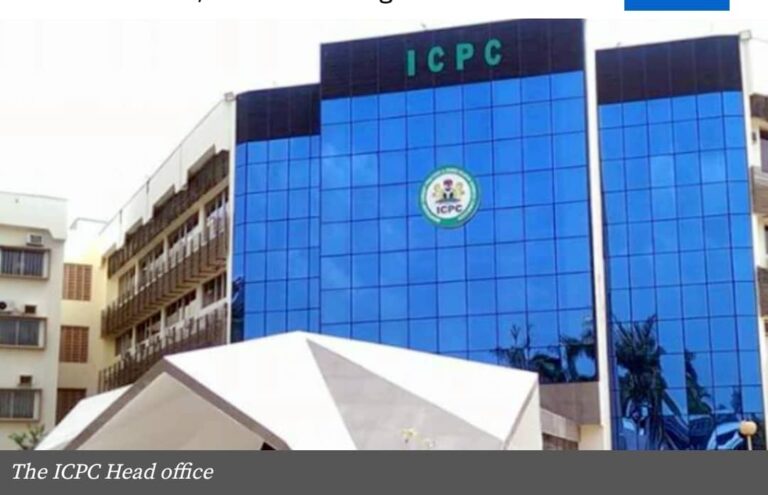
ICPC rejects Dangote’s bid to stop ex-NMDPRA boss probe

0

THE Independent Corrupt Practices and Other Related Offences Commission (ICPC) has said it would continue investigating allegations against the immediate past Chief Executive Officer of the Nigerian Midstream and Downstream Petroleum Regulatory Authority (NMDPRA), Farouk Ahmed, despite the withdrawal of a petition filed by billionaire industrialist Aliko Dangote.

In a statement signed by the commission’s spokesperson, J. Okor Odey, on Wednesday, January 7, the ICPC confirmed that it received a letter dated January 5, 2026, from O.J. Onoja, a senior advocate and counsel to Dangote, notifying the commission of the withdrawal of the petition dated December 16, 2025.

The letter also indicated that another law enforcement agency had taken over the matter.

Meanwhile, impeccable sources told The ICIR that Dangote requested that the ICPC discontinue its investigation on the grounds that the Economic and Financial Crimes Commission (EFCC) was already handling the case.

The ICPC was said to have declined the request, maintaining that it had already commenced investigations and could not be directed by a petitioner on how to exercise its statutory mandate.

The commission insisted it would proceed with the probe in the interest of the Nigerian state.

The ICIR gathered that the ICPC requested Dangote’s legal team to endorse the investigation but has yet to do so.

As part of its ongoing probe, the commission was also said to have contacted the Switzerland school where the children of the former NMDPRA chief are allegedly enrolled to verify claims relating to their tuition fees which Dangote claimed was above the lawful means of their father.

Speaking further in its Wednesday statement, the ICPC vowed that the withdrawal of Dangote’s petition would not affect its investigation, noting that the probe had already commenced in line with sections 3(14) and 27(3) of its enabling Act.

“The ICPC wishes to state categorically that in line with the provisions of sections 3(14) and 27(3) of its enabling Act, the investigations in the interest of the Nigerian people and the Nigerian state have already commenced and are presently ongoing,” the commission said.

Backstory

Dangote’s petition accused Ahmed of abuse of office, corruption, financial impropriety and violations of the Code of Conduct for Public Officers.

The ICPC had earlier confirmed receipt of the petition and assured the public that the allegations would be investigated.

In the petition, Dangote, through his lawyers, alleged that Ahmed spent over $7 million in public funds on the education of his four children in Switzerland, an expenditure he claimed was inconsistent with the earnings of a career public servant.

The petition also alleged diversion of public funds.

The allegations emerged amid tensions in Nigeria’s downstream petroleum sector, where Dangote has repeatedly accused regulatory authorities and entrenched interests of undermining domestic refining and protecting fuel import cartels.

Following the public allegation against him, Ahmed resigned as Chief Executive Officer of the NMDPRA, with the Presidency confirming his resignation on December 17, 2025, and nominating Saidu Aliyu Mohammed as his replacement.

Although the Presidency did not directly link Ahmed’s resignation to the allegations, the timing of his exit heightened suspicion on the matter.

Ahmed, who was appointed in September 2021 under the Petroleum Industry Act, dismissed the allegations against him as “wild and spurious” and said he would not engage publicly while the matter was before investigative agencies.

Court orders interim forfeiture of 57 properties worth N213.2bn, linked to Malami, sons

0

A Federal High Court sitting in Abuja has ordered the interim forfeiture of 57 properties valued at over N213.2 billion, allegedly linked to former Attorney-General of the Federation and Minister of Justice, Abubakar Malami, a senior advocate, and two of his sons, Abdulaziz Malami and Abiru, Rahman Malami.

This was revealed in a statement issued by the Economic and Financial Crimes Commission (EFCC) Wednesday evening.

The EFCC said the presiding judge, Emeka Nwite, granted the order on Tuesday, January 6, 2026, following an ex-parte motion filed by the commission and argued by its counsel, Ekele Iheanacho, a senior advocate.

“The multi-billion naira landed properties, valued at N213,234,120,000 are located in Abuja, Kebbi, Kano, and Kaduna States. In granting the order, justice Nwite ruled that, “It is hereby ordered that an interim order of this honourable court is hereby made forfeiting to the Federal Government of Nigeria the properties described in Schedule 1 below which are reasonably suspected to be proceeds of unlawful activities,” part of the statement read. 

The ICIR reported that Malami, his wife, Bashir Asabe, and son, Abubakar Abdulaziz, were remanded at the Kuje Correctional Centre, following their arraignment by the EFCC and are currently facing an alleged N8.7 billion money laundering charge.

While adjourning the case to January 27, for a report of compliance, Nwite also directed the EFCC to publish the forfeiture order in a national daily, inviting any individual or organisation with an interest in the properties to show cause within 14 days why a final forfeiture order should not be made.

Properties include hotels, schools, factories, luxury homes

According to the statement, the properties include: 

  1. Rayhaan University Buildings,  Agro allied factory buildings, machines, hotels, pharmacy, supermarket, primary and secondary schools, oil and gas filling stations, shops and other buildings. 
  2. Luxury Duplex at Amazon Street, Plot No. 3011 Within Cadastral Zone, A06 Maitama; File No: AN enhancement 11352, which was allegedly purchased in December 2022 at N500, 000, 000.00 (value after enhancement at N5,950,000,000).
  3. Two-winged large storey building Situate at No. 3, Onitsha Crescent, Area 11, Garki, Cadastral Zone, A03, Abuja (formerly Harmonia Hotels Limited), FCT, allegedly purchased Dec. 2018 at N7,000,000,000.
  4. Plot 683, Jabi District, Cadastral Zone B04, comprising a five storey building (now luxurious Meethaq Hotels Ltd, Jabi with 53 rooms/suites), said to have been purchased in Sept. 2020 at carcass level at N850,000,000 with additional N300,000,000 to take possession. It’s value after completion is allegedly N8,400,000,000.
  5. Property No. 3130 within Cadastral Zone A04, Asokoro District, FCT, Abuja, comprising terraces, which the commission said was purchased in January 2021 at N360,000,000.
  6. Property No. 3 Rhine Street, Maitama, Abuja (Meethaq Hotels Limited, Maitama With 15 rooms), purportedly purchased in February 2018 at N430,000,000. Current value after rehabilitation is said to be N12,950,000,000.
  7. Plot No. 1241B, Asokoro District Zone (No. 11A Yakubu Gowon Crescent) Asokoro District, which was purchased in July 2021 at N325,000,000.
  8. Shop No. C82 Citiscape — Shariff Plaza, Plot 739 Cadastral Zone A07, Aminu Kano Crescent, Wuse Il, FCT, Abuja, which was reportedly purchased in March 2024 at N120,000,000.
  9. No. 4 Ahmadu Bello Way, Nasarawa GRA, Kano, said to have been purchased in December 2022 at N300,000,000.
  10. Plot 157, Lamido Crescent, Nasarawa, GRA, Kano, allegedly purchased in July 2019 with no specific amount stated.
  11. A Plaza, Commercial Toilets, Laundering, Warehouse Tanks Adjacent           
  12. 100 Hectares Of Land Along Birnin Kebbi, Jega Road, which the commission said was purchased in 2020 at N100,000,000.
  13. Four Bedroom Bungalow Gesse Phase, Birnin Kebbi, said to have been bought in 2023 at N101,000, 000.
  14. Shops Nos. A36, B3 Vegas Mall, Wuse 2, Abuja, “which was purchased in July 2023 at N158,000,000.”
  15. No. 26, Babbi Drive, Bua Estate, Abuja, allegedly bought in 2022 at N136,000,000.
  16. No. 27, Efab Estates Avenue, 59™ Crescent, Gwarimpa, Abuja, “purchased in January 2016 at N120,000,000.”
  17. Four Bedroom/ 2 Rooms Boys Quarters At No. 10B, Doka Crescent Abakpa GRA, Kaduna, purportedly bought in January 2018 at N40, 000, 000.00.
  18. Plot No. 13, Ipent 7 Estate, Karsana District, Abuja, “purchased in June 2018 at N85,000,000.”
  19. A Bedroom Duplex & Boys Quarters At No. 12 Yalinga Street, Off Adetokunbo Ademola Crescent, Wuse Il, Abuja, said to have been bought in October 2018 at N150,000,000.
  20. Two warehouse shops B40 And B46, Wuse Market, Abuja, “purchased in July 2020 at N50,000,000.”
  21. Twin Houses At Zone E, Apo Legislative Quarters, Cadastral Zone B01, Plot 14014, Gudu District, Abuja, which the commission said was purchased between February and May 2017 at N250,000,000.
  22. Properties acquired by Khadimiyya for Justice & Development Initiative at the Academic Garden City, Birnin Kebbi, allegedly sold by the Federal Housing Authority.
  23. Others are nine units of three-bedroom, bungalow, three units of two-bedroom, bungalow, and 5.4 hectares of land, which were purportedly purchased between February 2023 and September 2023 at N187,000,000, among other assets listed in the schedule.