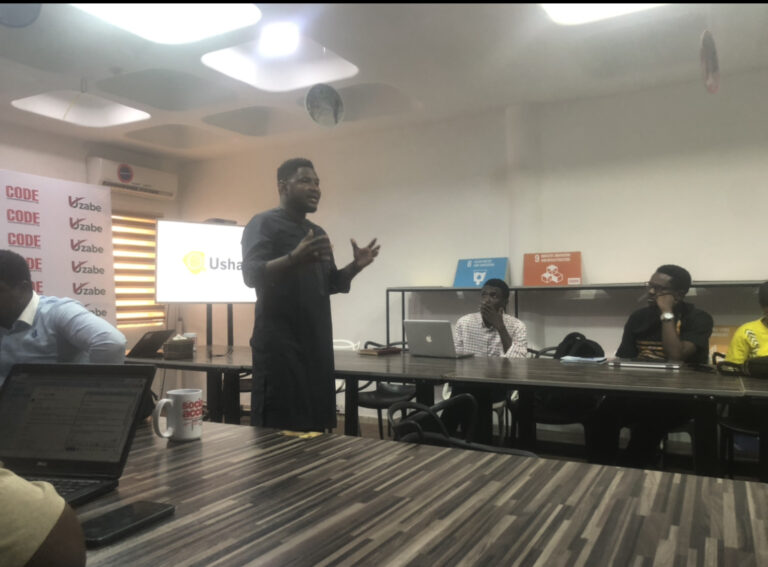
JOURNALISTS from different media organisations gathered in Abuja on Thursday, February 23, for election monitoring and reporting training.
Connected Development (CODE), a non-profit focused on empowering marginalised communities, organised the training.
The training provided journalists with insight into monitoring and reporting elections from the situation room using advanced technological software.
CODE said it has partnered with USHAHIDI, an organisation that collates real-time geospatial data, to improve its election monitoring innovation across other countries.
To cover the 2023 election, CODE will also deploy its intelligence tool, Uzabe, to ensure smooth election processes.
The facilitator, Mukhtar Madibbo, urged journalists at the training to be “more concerned about the election processes rather that the results.”
Madibbo, CODE’s community engagement manager, said Uzabe is an open situation awareness room initiative.
He said,” Uzabe will provide real-time intelligence, mapping tools and witness report from CODE’s 20,000 field observers.
“Field observers will provide reports based on a categorisation of incidence, namely, ballot issues, polling station issues, security and Positive events.”
He noted that journalists in the situation room must review and verify reports before publishing to avoid misinforming the public.
THE 2023 general election is only a few hours away, but the scarcity of naira notes is the topic on the lips of most Nigerians.
With the long queues at the commercial banks, the increase in the cost of POS withdrawals, poor internet network for online banking including transfers, and a shortage of available notes, the Naira redesign policy left in its wake hardship and frustration — as the days passed, the hardship bites harder.
The Federal Government said it intends to curb vote buying in the coming election with this policy. But as the hardship intensifies, more Nigerians might be susceptible to financial inducement.
To understand the impact of this policy on voters during the polls, The ICIR spoke to several Nigerians across different local government areas in Abuja.
Some of the voters who spoke to The ICIR said they would not accept any sum during the polls; others said they would take new notes from party supporters “because they need it” but would still vote for their preferred candidates.
Some people said they were unsure if cash offers wouldn’t influence them, while others said their choices are flexible.
Choice can be switched
Police signpost, Lugbe.
One of those open to exchanging their vote for new notes is Olaolu Raymond, a 35-year-old artisan in FHA Estate, in the Lugbe area of the Federal Capital Territory (FCT).
Although Raymond has a preferred presidential candidate, he won’t mind switching his choice, but there is a condition attached; the cash gift has to be in the new naira notes.
As a result of the shortfall in cash supply, Raymond’s business suffered setbacks. His job offers have reduced, and jobs earlier contracted to him have been challenging to execute as the cash needed to buy necessary materials is unavailable.
Raymond desperately needs cash “to work, eat, settle apprentices and go about day-to-day activities”.
“I have someone I’ll like to vote for, but if I see new money, I can change my mind; I need cash.”
The Central Bank of Nigeria (CBN) announced on October 26 that it would be decommissioning N200, N500, and N1000 notes with new versions.
This was in line with plans to curb vote buying and fight counterfeiting, kidnapping, corruption, money laundering and other illicit financial flows.
But since the deadline for old note usage passed, many Nigerians have experienced increased hardship.
‘We need cash’
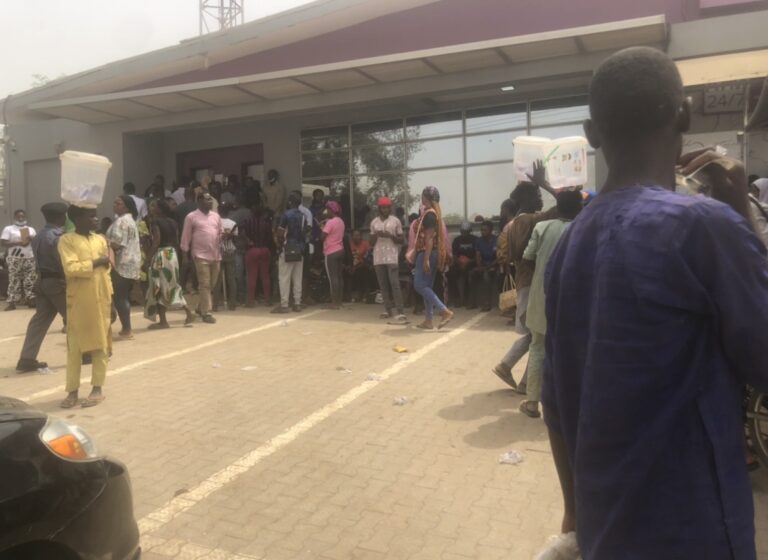
A large crowd gathered outside Wema Bank PLC in Lugbe on Tuesday, February 21 when The ICIR visited. The bank was rowdy; people struggled to join and maintain their positions in the ATM queue.
Fights broke out at intervals, and people yelled and hurled curses at one another. The environment was agitated as people struggled for a chance to withdraw cash.
Wema Bank PLC, Lugbe
Tired, Ikenna Moses sat in one corner of the bank and watched the crowd.
“I cannot struggle with these people and I need to withdraw. I doubt it can get to my turn,” he said to The ICIR reporter who was beside him.
Moses explained that he has been trying to get cash and buy food items in his home for over a week, but his endeavours have been unsuccessful.
“This is the third time this week that I’ll be coming to the bank for money, and from the look of things, I might not get cash today either. I have money, but I can’t use it. Imagine that,” he said.
When asked, Moses cheerfully affirmed that he intends to vote for his preferred candidate in the presidential polls.
But he noted if he is still unable to get cash by then, he might be swayed to accept a cash gift from another candidate.
Others at the bank who spoke to The ICIR affirmed that they would strictly vote for their preferred candidates. However, they would accept the money from party supporters because “they need cash.”
Traders vow to vote preferred candidates
Sandra, a petty trader at Gwagwalada market, Gwagwalada Local Government Area, has been frustrated by the cash scarcity.
The entrance to Gwagwalada market
The mother of two sells kerosene in a small kiosk at the market entrance. The location of her stall has always been an advantage.
People going in and out of the market would always stop at her place for kerosene.
However, due to the cash scarcity, patronage has significantly reduced.
Sandra said people who want to buy kerosene often offer to pay through a bank transfer. And she, sceptical of the network reception, would have to decline.
Sandra is determined to vote. She said nothing would sway her choice, not the cash scarcity nor low sales. She said she has sworn not to vote in exchange for money, regardless of her situation.
But Ikenna, another trader in the market, made a slightly different decision.
The thrift clothes seller said he would accept cash gifts but still vote for his preferred candidates.
Ikenna said, “If they give me new money, I will collect because I need cash, but I will not vote for them.”
The ICIR also spoke to residents in Giri and Dagiri towns, who agreed they would accept cash from other candidates — but added that it might not influence their voting choice.
No cash, no vote
A resident of Kuje, Mohammed Umar, told The ICIR that he would not be voting for any candidate unless he is offered a sum.
The bike rider spent eight hours at the bank before he was able to withdraw a sum of N5000 from his account.
Exhaustion was written all over him. As he spoke, sweat trickled down his face.
“I cannot vote for anyone just like that. This last election, I actively participated, but what good did that do for me? Look at how I struggle to spend the money I worked hard for.
“I need cash, and I will vote for whoever can offer me a good amount.”
Residents of Dabi, in Kwali LGA, said they are looking forward to the presidential poll. While some residents know their preferred candidate, others are still unsure.
Ugo, a trader in the community, is optimistic that the election can usher in a new and progressive leadership. And to make this happen, he would be participating in the poll.
However, Ugo’s choice of candidate would not stop him from accepting cash gifts from other candidates.
Considering that his business has not been thriving, the sum offered could help cater for a few of his needs.
Vote selling might increase
The head of Media and Community at YIAGA Africa, a non-profit devoted to democratic governance in Nigeria, Mashood Isah, said the scarcity of cash could compel voters to want to sell their votes.
According to him, the voters consider this a way to reduce hardship and get cash quickly.
Describing the policy as an extreme measure to curb vote buying, Isah said the limited cash supply would limit the number of votes politicians can buy. But it could also increase the number of citizens willing to sell their votes.
Isah said, “To solve vote buying, one has to look at vote buying holistically; there are laws guiding this. Cash swap alone is not sufficient to fight vote buying. We can’t keep changing notes during every election.
“Yes, the policy could reduce vote buying as limited cash would limit the number of votes a politician can afford. But on the other hand, it won’t prevent people from selling their votes.
“The people would be more inclined to sell their votes because they will see that as an easy way to get cash.
It could reduce vote buying but will increase vote selling.
“Generally, the policy has negatively impacted Nigerians. It has caused hardship; people cannot access their own money. It has made life difficult for many.”
THE Federal Government has said it did not breach the Supreme Court ruling that ordered the recirculation of all redesigned naira notes.
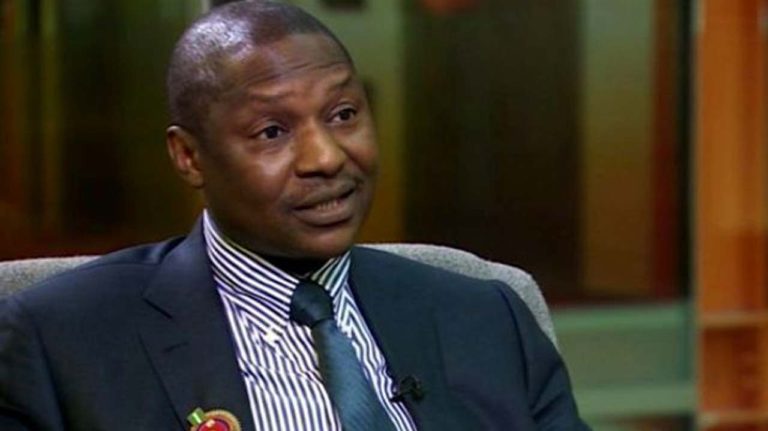
Attorney-General of Federation (AGF) and Minister of Justice Abubakar Malami made the assertion at a press briefing in the State House, Abuja, on Thursday, February 23.
Malami said those against the Federal Government on the issue were opposing a policy which he described as beneficial to Nigerian citizens.
“We are not in breach of any order made by the court, inclusive of any order associated with the naira redesign.
“But then, assuming we are in breach, the fact remains that this matter is sub-judice, as you rightly know. It’s being contested before the Supreme Court and when an order is made, you have multiple options within the context of the rule of law,” he noted.
The Nigerian government is currently being criticised by members of the public for acting contrary to a Supreme Court order.
The court had delivered an interim ruling restraining the Federal Government and the Central Bank of Nigeria (CBN) from implementing a deadline on the use of old naira notes, pending the determination of a case between the president and some governors over the issue.
The suit filed by the governors was a result of an announcement by the CBN stating that the old N200, N500 and N1000 would cease to be legal tender by February 17.
Despite the court order, Nigerian President Muhammadu Buhari directed that only the old N200 notes be recirculated.
Some Nigerians have accused Buhari of disobeying the order of the Supreme Court.
But a lawyer and human rights activist, Chidi Odinkalu said Buhari had not disobeyed the court, as the ruling had been misunderstood by Nigerians.
“The Supreme Court to the best of my knowledge, has not said what people are presenting it as having said. Because, that is not a policy of the court, it’s a misplacement of the capabilities and assets of a court for it to get to that kind of thing.
“I suspect what the Supreme Court has said is: preserve the status quo ante until we hear the case, status quo antebellum, which is what the thing was before the onset of litigation,” he said.
The lawyer stated that the status quo antabellum was the CBN circular on the deadline for the use of old notes.
“I suspect this is the advise the President got, he has not breached anything,” Odinkalu added.
ONDO State Governor Rotimi Akeredolu has said the Naira and fuel scarcity hitting Nigeria were part of a plot to make the presidential candidate of the ruling All Progressives Congress (APC), Bola Tinubu, fail to achieve his ambition.
In a state-wide broadcast on Thursday, February 23, the governor decried the Naira redesign policy, which he described as ill-timed and orchestrated by officials of the Federal Government to make Nigerians hate the ruling party and consequently make its presidential candidate lose his popularity.
“He (Tinubu) is at the centre of all the darts arrows of the current misnomer in Nigeria because he represents the new Nigeria we all envisage. The central purpose is to frustrate his popularity and renowned acceptability across all tribes and religions in the country.
“The goal is to truncate the election and deny the country the service of a true patriot and endowed visionary with a proven record of character, knowledge, leadership and performance. It is also an attempt to abuse the principle of the constitutional presidency by denying a section of the country its legitimate right, thereby fueling ethnic disaffection and creating a great constitutional crisis in the country,” the governor said.
The ICIRreported how the Central Bank of Nigeria (CBN) redesigned the old N200, N500 and N1000 notes and made the old notes cease to be legal tender.
But Akeredolu, like other APC governors who have condemned the policy, failed to direct his attack at the President.
The ICIRreported how some APC governors dragged the Federal Government to court over the policy.
In his Thursday address, Akeredolu noted that the policy was designed to truncate the nation’s democracy by disrupting the election process.
“It is disheartening and worrisome that the exercise is faced with unnecessary, unfortunate and undesirable man-made obstacles deliberately set to incapacitate and truncate the entire election process and confuse our people,” he said.
While empathizing with his state’s people over the challenges they face in getting cash, he said he was convinced that both the “ill-timed cash swap policy and the ‘artificial scarcity of fuel were both literal injections deliberately administered to demarket government, create an uncontrollable crisis in the nation, brew disaffection between the people and government and finally frustrate the 2023 general election.
“To say the least, it is a dagger drawn at the heart of the ruling party All Progressives Congress on the eve of the election in order to destroy it and the government it controls at the federal and state levels.”
He noted that despite the “desperate effort of selfish and subversive elements” within government to destroy the multi-party politics in Nigeria, the dividends of good governance he claimed the APC brought to Nigerians remained indelible.
While highlighting what he described as the good works of the APC in Ondo State, he urged the people to troop out and vote for Tinubu and other APC candidates at the Presidential and National Assembly election coming up on Saturday, February 25.
THE Federal Capital Territory (FCT) Commissioner of Police, Sadiq Abubakar has assured residents of the safety of their lives and properties ahead of the general election.
The commissioner spoke in a statement signed by the Police Public Relations Officer, Josephine Adeh, on Thursday, February 23.
Abubakar said adequate preparations had been put in place to ensure a violence free election.
The Police chief noted that the Command through the Inter-agency Consultative Committee on Election Security is working assiduously with other security agencies to secure the public space for the successful conduct of the election.
He stressed that security forces have been ordered to arrest violators to ensure a hitch-free poll.
The commissioner, however, advised residents to comply with the order of vehicular movement restriction from 12:00 am to 6:00 pm on Saturday, February 25.
THE One World Media is seeking applications for its fellowship.
One World Media Fellowship is aimed at aspiring journalists and filmmakers who seek to make a career out of reporting on stories from the global south.
Working in film, print, audio, or multimedia, our Fellows’ projects bring together integrity and creativity to present underreported stories that break down stereotypes and build cross-cultural connections.
We guide filmmakers and journalists on a single project and provide a supportive network of mentors and peers through the production and completion of their projects.
We seek to champion diverse emerging talent, and particularly encourage submissions from underrepresented groups (people of colour, ethnic groups, women, LGBTQ+, or people with disabilities) as well as from people from and based in the global south.
Fellows receive a GBP1,000 (US$1,205) production grant, mentorship, training, and networking opportunities.
Journalists and filmmakers interested in telling stories from the Global South can apply for this fellowship.
The deadline for the submission of the application is March 22, 2023. Interested applicants can apply here.
CONTROVERSIAL pro-Biafra agitator Simon Ekpa has been arrested in Finland, days after the Nigerian government expressed worry over his inciting comments and imposition of a sit-at-home order on residents of Nigeria’s South-East, which could scuttle the elections scheduled to hold on February 25 in the region.
Ekpa was reportedly arrested on Thursday, February 23 by plainclothes police officers shortly before he was due to be interviewed by a filmmaker at his residence in Lahti, Southern Finland.
An officer from the Central Criminal Police, Tommi Reen, confirmed to the press that the operation was in connection with an ongoing preliminary investigation, but did not comment further on the matter.
Earlier on Thursday, Ekpa had released a video calling for a referendum rather than an election in the South-East. He insisted that he was not fighting democracy in Nigeria but autocracy.
“We are now on the eve of our historic sit-at-home for the exit of Biafra from Nigeria. Biafra people are going to speak like never before. Their language will be historic starting from tomorrow,” he announced.
The pro-Biafra agitator also appealed to the United States not to ignore the will of the “Biafra people” to secede from Nigeria in 2023.
“US @SecBlinken must understand that the Biafra people have rejected the election, it is not their will & can never be their will. Don’t ignore the will of the Biafra people which is to conduct referendum for Biafra Exit,” he said in a tweet.
Recall that last week, the Nigerian Government had asked Finland to take decisive actions that would curb Ekpa’s activities and a viral letter emerged on social media claiming that the Finnish government had ordered Ekpa to retract his sit-at-home order or get arrested.
The sit-at-home order in the eastern states of the country is to commence from February 23, lasting till February 28, after Nigeria’s presidential and National Assembly elections, and would hamper smooth conduct of the election exercise.
MILLIONS of Nigerians go to the polls on Saturday, February 25, to elect a new President in what is shaping up to be the most keenly contested presidential election since the country returned to democratic rule in 1999.
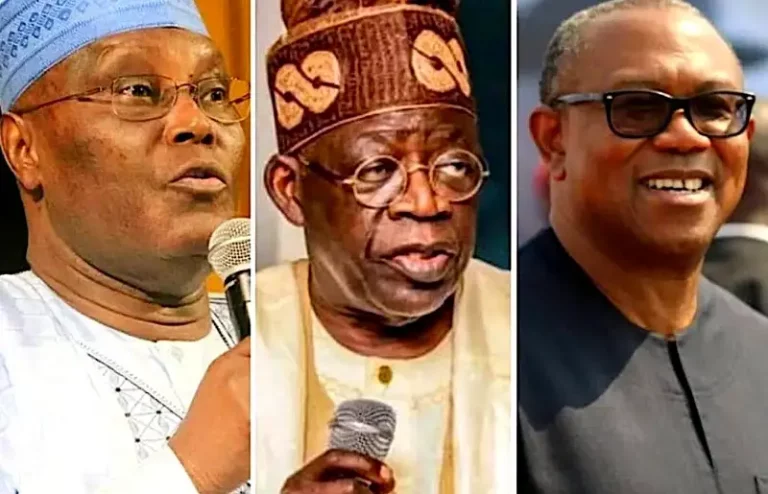
Eighteen candidates from 18 political parties, are contesting the presidential election. But The ICIR projects that the contest is a three-horse race between three leading candidates – Atiku Abubakar of the Peoples Democratic Party (PDP), Bola Tinubu of the ruling All Progressives Congress (APC) and Peter Obi of the Labour Party (LP). The rest are there to make up the numbers.
More than previous elections since Nigeria’s return to civil rule in 1999, the 2023 presidential election is too close to call.
In past elections, there were clear favourites who end up coasting to victory at the end of the contest.
In 1999, the odds were stacked in favour of the PDP when Olusegun Obasanjo defeated Olu Falae, who was running on the joint Alliance for Democracy/All Peoples Party ticket. In the election that heralded Nigeria’s return to democratic governance, Obasanjo got 18,738,154 votes, 62.78 per cent of total votes cast, to defeat Falae, who got 11,110,287 votes (37.22 per cent of total votes cast).
Obasanjo’s reelection for a second term in the 2003 presidential election was expected. As the incumbent and candidate of the PDP, he won in 25 states plus the Federal Capital Territory (FCT), scoring 24,456,140 votes (61.94 per cent of total votes cast) to defeat Muhammadu Buhari of the All Nigeria Peoples Party (ANPP) who only won in five states, scoring 12,710,022 votes (32.19 per cent of total votes cast).
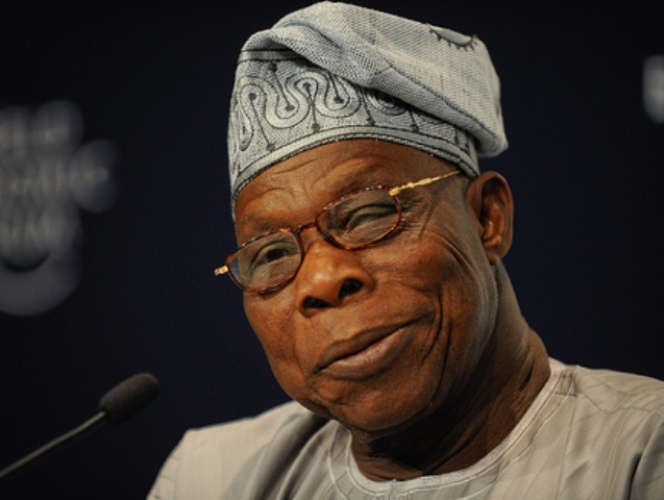
Former President Olusegun Obasanjo
With PDP dominating Nigerian politics, it was not a surprise when the late Umaru Yar’Adua defeated Buhari to succeed Obasanjo in 2007 – the first civilian to civilian transition since Nigeria returned to democratic rule.
Yar’Adua, the PDP candidate, won by a landslide, scoring 24,638,063 votes (69.60 per cent) of total votes cast. Buhari, of the ANPP, got 6,605,299 votes (18.66 per cent) of total votes cast. Having succeeded Yar’Adua, who died in office, Goodluck Jonathan, as expected, duly continued PDP’s winning streak when he won in 22 states and the FCT, scoring 22,495,187 votes (58.87 per cent of total votes cast) to defeat Buhari, now flying the flag of the Congress for Progressive Change (CPC), in the 2011 presidential election.
Buhari won in 13 states, scoring 12,214,853 votes (31.97 per cent of total votes cast).
Jonathan’s loss to Buhari in 2015 could be deemed an upset – an incumbent President failing to get reelected and conceding to a challenger, an anomaly in Africa and the rest of the Third World. But the signs that power could change hands were there in the election build-up.
Jonathan had lost a lot of goodwill, and the momentum was with Buhari and the newly formed APC. So it was unsurprising that Buhari won in 21 states, scoring 15,424,921 votes (53.96 per cent) to defeat Jonathan, who won in 15 states plus the FCT, garnering 12,853,162 votes (44.96 per cent).
Buhari’s reelection in 2019 was not unexpected. As the incumbent, he won in 19 states, scoring 15,191,847 votes (55.60 per cent of total votes cast) to defeat his major rival, Atiku Abubakar of the PDP, who won in 17 states plus the FCT, scoring 11,262,978 votes (41.22 per cent of total votes cast).
The situation is markedly different in 2023. No particular candidate is a clear favourite. It will not be a big surprise if any of Atiku, Tinubu or Obi wins the election.
Leading candidates – their strengths and weaknesses
Hours to the 2023 presidential election, The ICIR reports that the poll is too close to call.
The three leading candidates have their strengths and weaknesses, which would all come into play in determining the election outcome. The ICIR assesses the strengths and weaknesses of the leading candidates.
Atiku: Sixth time lucky?
Atiku, now on his sixth attempt to become Nigeria’s President, can bank on the large followership of the PDP, Nigeria’s main opposition party, which was in power for 16 consecutive years until it was upstaged by the APC in 2015.
The ‘Northern factor’ is another element that may work for Atiku. The North, with its large population, is a critical factor in Nigerian presidential contests and bloc votes from the region could decide the outcome of the election.
Atiku is the strongest northerner in the race. Is the North ready to cede power to the South after President Muhammadu Buhari’s eight years? Will Atiku inherit the bloc votes of the North? The answer to these questions will go a long way in determining the presidential election’s outcome.
While Tinubu’s emergence as APC presidential candidate was largely as a result of support from northern APC governors, it is not impossible that northerners who are wary of power moving back to the South would see in Atiku a vehicle to retain control of Nigeria’s affairs, even after eight years of Buhari, a fellow northerner.
Atiku also has supporters in the South-East, a long time stronghold of the PDP. Despite Obi’s emergence as a front runner, major political leaders in the South-East, who are mostly members of the PDP, are backing Atiku. Parts of the South-South, where his running mate, Delta State governor Ifeanyi Okowa, hails from, may also go with Atiku.
On the flip side, Atiku stands to lose most from the effect of Obi’s emergence as a major contender in the presidential race. Obi was Atiku’s running mate in 2019. Ordinarily, Atiku, as PDP candidate, should be counting on bloc votes from the South-East, which traditionally go with the PDP. But it is likely that the larger population of the South-East would queue behind Obi.
Also, Atiku is seen as a liberal Muslim, a factor which may affect his acceptability among core Muslims of the North.
Again, his inability to get his former boss, Obasanjo, on his side has continued to raise big question marks over his suitability for the country’s number one job. Atiku was Obasanjo’s vice president from 1999 to 2003. Obasanjo has repeatedly voiced his reservations about the PDP candidate’s character and fitness for the office.
Obasanjo’s testimony on Atiku is largely responsible for the widely held impression that the PDP candidate is corrupt. This impression has continued to dog Atiku’s political aspirations ever since.
Tinubu: It is the APC candidate’s election to lose
Inasmuch as the 2023 presidential election has been adjudged to be a close contest, it is equally Tinubu’s election to lose.
The APC flagbearer has the incumbency factor on his side – being the ruling party’s candidate, an enormous advantage in Nigerian elections. Added to his vast political network and structure, Tinubu also has 21 APC governors behind him. To a large extent, these governors can be counted on to mobilise votes for their preferred candidate.
The APC Muslim-Muslim ticket is a deliberate gambit targeted at northern Muslim votes. It may pay off. Tinubu has a lot of influence in the South-West – many state governors in the zone are/were his proteges. He should count on bloc votes from the region. Again, the Northern APC governors who backed his emergence as the party’s flagbearer can also mobilise votes for him in the presidential election. Tinubu has the big guns on his side.
But the former Lagos governor is not without weaknesses. Many Nigerians are not happy with the change brought by the Buhari government, a situation which was exacerbated in the build up to the election by the hardship arising from the naira redesign policy, which has led to acute scarcity of banknotes.
Those who are not happy with the current administration remember Tinubu’s role in Buhari’s election. Nigerians, who were alarmed when Tinubu promised to build on the legacy of the Buhari administration, may see in the APC candidate a continuation of the suffering they are experiencing under Buhari.
Unresolved questions over Tinubu’s health, amplified by series of gaffes on the campaign trail, as well as drug trafficking allegations, could also discourage some voters. And then the Muslim-Muslim ticket has alienated many Christians, including some leaders of the APC. The gamble may not pay off.
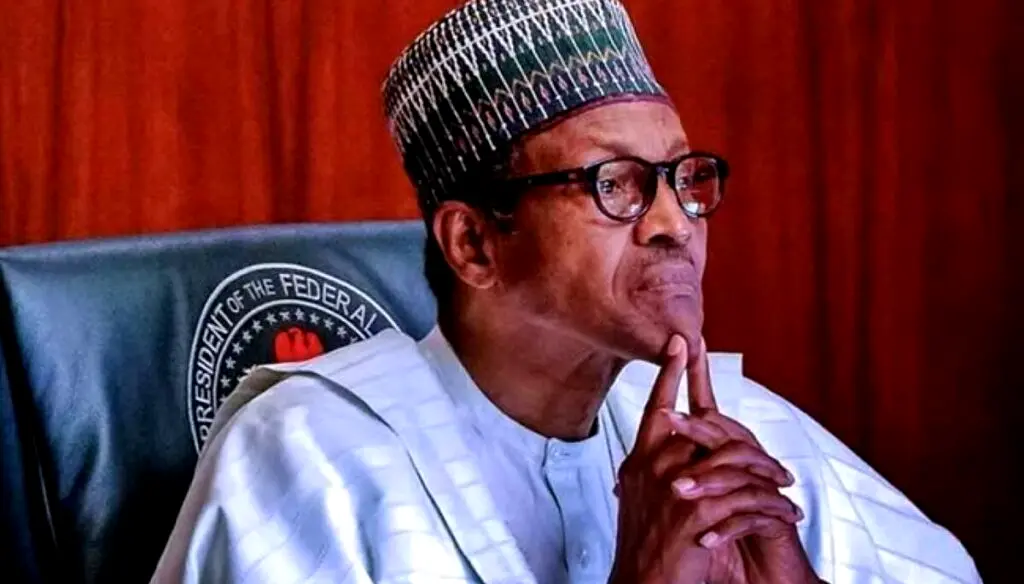
File photo: President Muhammadu Buhari
Buhari’s seeming lukewarm disposition to Tinubu’s candidacy is another problem for the APC flagbearer. Although the President had in recent days taken pains to explain that he is backing Tinubu, not many in Tinubu’s camp are convinced.
Buhari had been saying he will leave a legacy of free, fair and credible elections, and the assertion by minister of information and culture Lai Mohammed that the President is not favouring any candidate would not go down well with Tinubu.
Tinubu had claimed that the naira redesign policy was a ploy to stop him from winning the election. Although he turned around to back the policy, even going further to suggest ways to make it work, he would certainly be alarmed at the level of hardship it had brought on Nigerians.
Fears that the naira crisis would undermine Tinubu’s chances informed spirited efforts being made by some APC governors to stop the policy at the Supreme Court. There are suggestions that Tinubu would not benefit from the ‘incumbency factor’, which played a crucial role in Yar’Adua’s election to succeed Obasanjo in 2007, when the outgoing President (Obasanjo) declared that the election would be a “do or die affair” for the PDP.
Having worked hard for Buhari’s election in 2015, the recent declaration by Buhari that he will be neutral concerning the 2023 presidential poll may not sound very pleasing for Tinubu.
Obi: Will the ‘Third Force’ dislodge the old order?
Since the return to democratic rule in 1999, average Nigerians, who had become fed up with the domination of national politics by the same group of individuals parading the colours of the PDP, and later, the APC, have been yearning for a ‘Third Force’, a political movement or alignment which would dislodge the old order and set the country on a new path.
It appears that those Nigerians who wish for a Third Force have rallied round Obi, adopting him as their flagbearer.
The LP was one of the parties that made up the numbers until Obi defected from the PDP.
Since then, the status of the party and the candidate has continued to soar to the extent that many are tipping Obi to win the presidential election. Obi’s major strength is the youths, who are more active on the social media.
The LP candidate is also widely popular among the masses – poor and downtrodden citizens who see in him the messiah they have been waiting for to ease their burdens. Many people in the South-East also see in him an opportunity to actualise the quest for an Igbo President. Endorsement by Obasanjo had also boosted Obi’s profile, ahead of the election.
But the LP candidate also has major weaknesses. There are doubts over the reliability of his ‘political structure’. In fact, Obi’s opponents have severally claimed that he has no structure, and his large followership – the Obidient Movement – is dismissed as ‘social media phenomenon’. Will the Obidients take their support for Obi beyond the social media by voting on election day? The answer to this question will go a long way in defining the outcome of the presidential election.
Another concern for Obi’s candidacy is the insecurity in the South-East. It is expected that Obi will get bloc votes from the region. But that is if voting takes place. A faction of the Indigenous People of Biafra (IPOB) led by Simon Ekpa has declared that elections will not take place in the South-East and to enforce the declaration, ordered a sit-at-home exercise in the zone during the election period.
Will the ‘unknown gunmen’ be able to enforce the sit-at-home? Already violence has escalated in the region days to the poll. Obi’s chances will be affected, one way or the other, by the manner the insecurity in the region is addressed.
“Standard keeps industry open, it keeps people alive, it makes the whole business work. SON is also charged to check for the quality of products,” he added.
He explained that SON collaborates with regulatory bodies like the National Agency for Food, Drugs Administration and Control (NAFDAC) to mitigate the number of substandard products in market.
According to him, the activities of SON has made companies to improve the quality of their products.
He added that the organisation has been able to introduce a healthy competition among manufacturers and producers of similar products locally and internationally.
“There are a lot of companies building products with the sole hope of coming into the Nigerian market and if our products are below standard, foreign products will be chosen over Nigerian products.”
He noted that some products labelled in foreign languages are substandard.
“We have seen products imported from foreign countries where they are labelled in foreign language but we are Nigerians, we speak English. No matter the quality of any product if it is labelled in Arabic or Chinese, it is below standard,” he said.
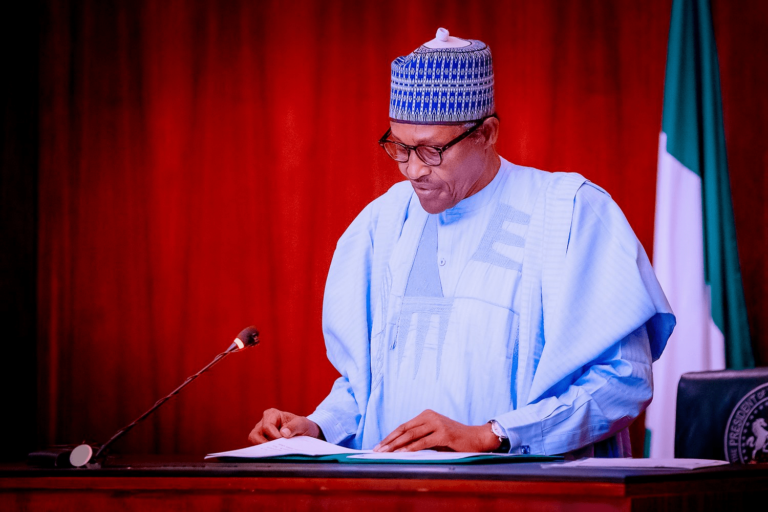
AHEAD of the 2023 general elections, President Muhammadu Buhari has urged candidates to respect the choice of voters and accept results announced by the Independent National Electoral Commission (INEC).
Buhari said this in a statement posted on his Twitter handle on Thursday, February 23.
“Any aggrieved candidate should resort to the established judicial processes, and we must have the confidence to trust our legal systems,” he noted.
Buhari further charged Nigerians to avoid violence and maintain peace regardless of the outcome of the elections.
“Let me remind all Nigerians, not for the first time, that, this is the only country we have, and we must do everything to keep it safe, united and peaceful. There should be no riots or acts of violence after the announcement of the election results.
“All grievances, personal or institutional, should be channelled to the relevant Courts.”
The President reiterated his administration’s commitment to free and credible elections.
“We will continue to act with neutrality and allow the rule of law to take precedence over political expediency.
“We have demonstrated that with the off-cycle elections in Edo, Ondo, Anambra, Ekiti and Osun States. We allowed Nigerians to decide who should govern them. We are committed to this legacy in this administration,” he said.