Home Blog Page 127

Tinubu orders withdrawal of police officers from VIPs nationwide

0
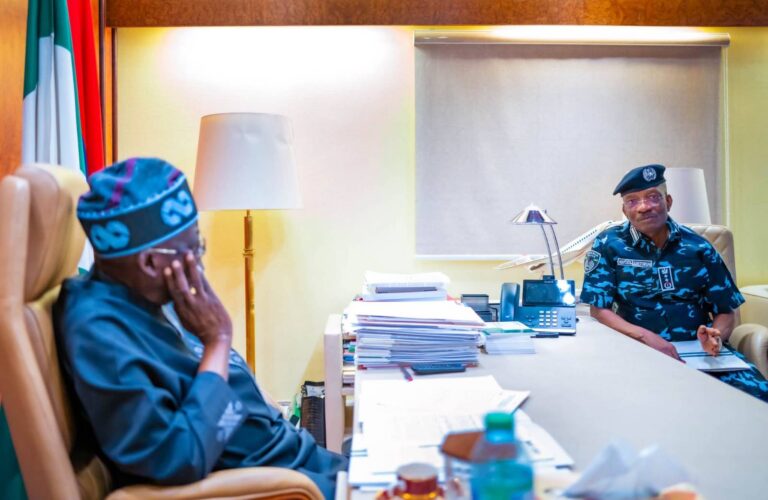
PRESIDENT Bola Tinubu has directed the withdrawal of all police officers currently providing security for Very Important Persons (VIPs) in Nigeria.
The police authorities are to henceforth deploy such officers to concentrate on their core policing duties, the president said.
Tinubu advised anyone seeking police protection to request well-armed personnel from the Nigeria Security and Civil Defence Corps (NSCDC)
The president gave the directive on Sunday, November 23, during a security meeting he held with the Police, Air Force, and Army chiefs, as well as the Director-General of the Department of State Services, DSS, in Abuja.
A statement signed by the Special Adviser to the President, Information and Strategy, Bayo Onanuga, on the directive reads, “According to the presidential directive, VIPs who want police protection will now request well-armed personnel from the Nigeria Security and Civil Defence Corps. Many parts of Nigeria, especially remote areas, have few policemen at the stations, thus making the task of protecting and defending the people difficult.
“In view of the current security challenges facing the country, President Tinubu is desirous of boosting police presence in all communities. Already, President Tinubu has approved the recruitment of 30,000 additional police officers. The federal government is also collaborating with the states to upgrade police training facilities nationwide.
“Sunday’s meeting was attended by the Chief of Army Staff, Lt General Waidi Shaibu; the Chief of Air Staff, Air Marshal Sunday Kelvin Aneke; the Inspector General of Police, Kayode Egbetokun; and the Director-General of the Department of State Services, Tosin Adeola Ajayi.”
The order came on the heels of ballooning insecurity in Nigeria.
On November 18, two people were confirmed dead and an unspecified number of residents abducted after terrorists attacked Eruku town, in the Ekiti Local Government Area of Kwara State.

The Kwara State Police Command in a statement on Tuesday, November 18, said the attack left two men fatally shot and several others missing.

Subsequently reports showed that 38 worshippers were whisked away by the gunmen. Tinubu announced their released Sunday evening, after the abductors allegedly slashed their ransom to N20 million per head. 

Earlier on Monday, November 17, gunmen stormed Government Girls’ Comprehensive Secondary School, Maga, in Danko/Wasagu Local Government Area of Kebbi State and abducted several students. They killed the school vice principal.

Similarly, in the early hours of Friday, November 21, terrorists stormed St. Mary’s Papiri Private Catholic Secondary School in the Papiri community of Agwara Local Government Area, Niger State, and abducted dozens of students and teachers.

Multiple community members who visited the school after the incident confirmed the attack, describing it as a coordinated operation carried out between 2:00 a.m. and 3:00 a.m.

Findings later showed that 315 students and staff were abducted from the institutions. Fifty of the students have reportedly escaped and reunited with their parents.

Following the terrorists’ week-long rampage in the nation, the Federal Government shut down its 41 Unity Schools, while state governments, including Niger, Plateau and Katsina closed down all schools over security concerns.

Tinubu also cancelled his planned trips to Angola and South Africa to enable him to coordinate security situation in Nigeria.

The developments followed recent United States (US) President Donald Trump’s declaration of Nigeria as a “Country of Particular Concern” over alleged Christian killings. Trump has repeatedly claimed that Christians were being killed in droves in Nigeria and described the Africa’s most populous nation as ‘a disgraced country.”

Meanwhile, the Nigerian government has vehemently denied the claims and argued that faithful from Islam and Christianity had been the victims of lingering insecurity in the nation.

It has continued to urge the US and other allies to support its fight against terror and other forms of criminalities.

.

38 abducted worshippers from Eruku freed after days in captivity in Kwara

0

By Dare Akogun

All the 38 worshippers abducted during last Tuesday’s attack on Christ Apostolic Church (CAC) Oke Isegun in Eruku, Kwara State, have regained their freedom after days in captivity, The ICIR has confirmed.

The victims were freed on Sunday following a combined security operation involving federal and state agencies, according to our findings.

The rescue brings to an end a tense five-day manhunt triggered by the attack, which left three worshippers dead and deepened anxieties over rising insecurity in Kwara’s border communities.

In a statement issued on Sunday, the Chief Press Secretary to the Governor, Rafiu Ajakaye, said Governor AbdulRahman AbdulRazaq confirmed the release of all abducted worshippers, attributing the breakthrough to the “hands-on involvement” of President Bola Ahmed Tinubu.

According to the statement, Tinubu cancelled his scheduled trip to the G-20 Summit in South Africa to oversee the rescue efforts.

“This is wholly due to the hands-on approach of President Bola Tinubu, GCFR, who has personally led the efforts to free the abductees,” the governor said.

“The abductees were freed today, November 23. The President had called off his scheduled trip to attend to the breaches in Kwara and Kebbi States and ordered heightened security deployments to Kwara.”

The ICIR had earlier reported that at least four new tactical squads, including intelligence and rapid-response teams from Abuja, were deployed on the President’s directive.

The governor also acknowledged the roles of the Office of the National Security Adviser (ONSA), the Department of State Services (DSS), Nigerian Army, Nigeria Intelligence Agency (NIA), Nigeria Police Force and local vigilante networks.

The Eruku attack is the latest in a string of violent incidents in Kwara’s border corridor with Kogi and Niger. Data gathered by The ICIR shows a surge in kidnappings, highway ambushes, and attacks on farming settlements in Ekiti, Kaiama and Baruten LGAs.

Security beef up at the entrance of the community. PC: ICIR

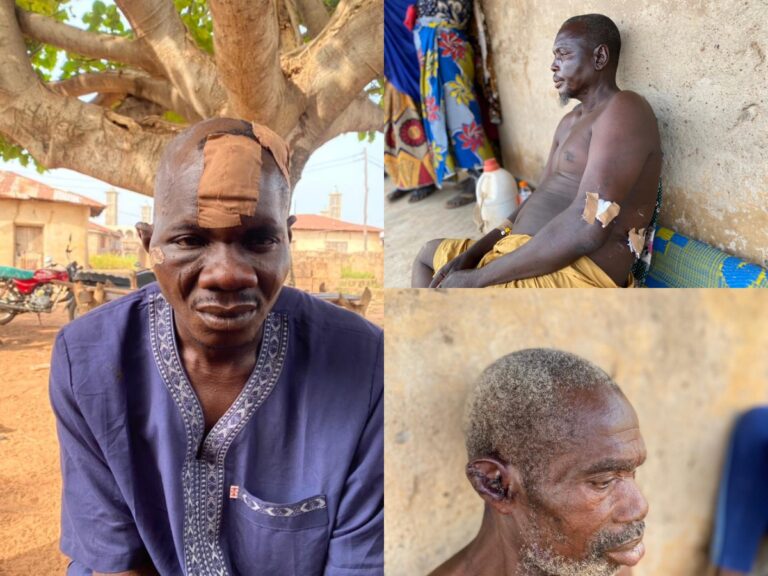
The assailants invaded the Church during a programme on Tuesday night, shooting sporadically and taking worshippers into the forest. Three people were confirmed dead, while one person remains hospitalised.

The abduction immediately drew national condemnation and renewed scrutiny of Nigeria’s security architecture, especially after the United States designated Nigeria a “Country of Particular Concern” over escalating violence.

By press time the community said they were yet to formally receive the freed abductees although the community confirmed they got called but confirmed receiving calls over their freedom shortly after 4:00 p.m. today.

“We were told they have been rescued, but we are still waiting to see them,” the presiding pastor, Lawrence Bamidele, told The ICIR.

Heavy security presence spotted in Eruku community.

The ICIR earlier reported that amid fear and grief, worshippers congregated to offer prayers for safe return of their members in captivity. Read the report HERE.

This report is part of The ICIR’s ongoing monitoring of Nigeria’s escalating kidnapping crisis and the failure of state and federal authorities to dismantle cross-border criminal networks operating across North-Central Nigeria, titled, “Terror Series“.

Schoolgirls abduction: You are undermining ongoing security efforts – Kebbi governor tells Senator Maidoki 

0

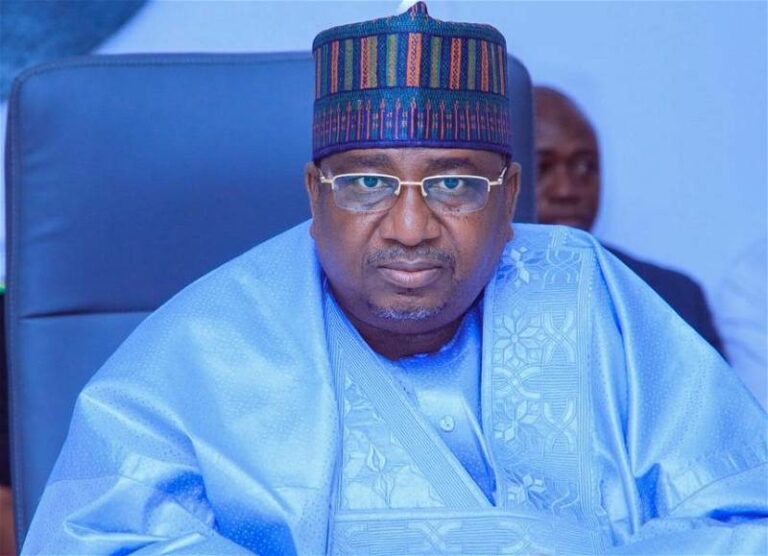
THE Kebbi State Government has faulted Senator Garba Maidoki’s recent remarks on insecurity and development projects, calling them “baseless” and “a deliberate distortion of facts.”

A statement released on Sunday by Abdullahi Idris, Special Adviser on Communication and Strategy to Governor Nasir Idris, said Maidoki’s comments were aimed at undermining ongoing security efforts in the wake of the abduction of students from Government Girls Secondary School, Maga, in Sakaba Local Government Area.

Maidoki, the Senator representing Kebbi South, has frequently criticised the government’s handling of security and infrastructure, leading to recurring political clashes with the APC-led government.

His latest comments dwelled on displacement figures and governance when he appeared on Channels TV’s Politics Today on November 19 has triggered the latest backlash.

“I won my election by promising  to ensure our people are secure and once we got to the senate, I engaged key stakeholders to ensure that we fulfilled  our promises.  Prior to that,  there were more than two hundred villages that were completely occupied by bandits , these bandits are economic  terrorists who purely create chaos for financial gain and our efforts have been beneficial with all our villages being recovered.  But there are sudden attacks mostly from Zamfara State. This is one of those attacks,” Maidoki said.

The government in its latest statement accused Maidoki of repeatedly opposing “socially and economically viable projects,” alleging he had not attended any security or stakeholder consultations organised for representatives of affected communities.

It also claimed the senator was engaged in political alliances aimed at undermining the APC-led administration.

Idris faulted the senator’s assertion that 200 communities had been displaced by banditry. He said, “Government records show about 50 affected communities along the Wasagu–Sakaba axis were successfully returned home through coordinated operations by security agencies deployed on the request of Governor Nasir Idris.”

He insisted that the deployment of military personnel and the planning of field operations are centrally coordinated by the Defence Headquarters, “With the governor fully carried along and providing the required logistics.”

The statement outlined the administration’s security interventions, including the provision of more than 100 Hilux, 5,000 motorcycles and the hosting of high-level security conferences attended by traditional rulers, military chiefs and academics.

The government also noted that reconstruction of the long-abandoned federal Koko–Zuru road was underway under the Idris administration, insisting the senator was fully aware of the ongoing work.

“We are not surprised by his posture in view of his alleged alliance with ADC governorship aspirant Abubakar Malami,” the statement read, adding that both politicians resorted to “media campaigns and political declarations.

“At a time federal and state authorities were intensifying efforts to rescue the abducted schoolgirls, including the visit of Minister of State for Defence, Bello Matawall”.

Kebbi State continues to grapple with security challenges, especially in the Zuru Emirate, where numerous communities have endured recurrent attacks.

The recent abduction of schoolgirls in Maga has heightened public pressure on both state and federal authorities to step up their response.

The ICIR reported that Before dawn on November 17, 2025, armed men breached the fence of Government Girls Comprehensive Secondary School in Maga, Kebbi State, killed the vice principal, and abducted 25 schoolgirls a chilling echo of the Chibok, Dapchi, and other mass kidnappings of young girls in Nigeria.

A teacher was killed while trying to protect girls during the attack and a security guard later died in hospital from gunshot wounds.

An official of Danko Wasagu council, Hussaini Aliyu, told the BBC on November 19 that two girls among the 25 students managed to escape, explaining that the girls ran away across farmland as their armed captors were leading them into the bushes.

Aliyu added that though one of the girls needed medical treatment because she hurt her leg while running in the bushes, the girls were “back and are safe.”

Pope demands ‘immediate release’ of abducted Niger schoolgirls

0

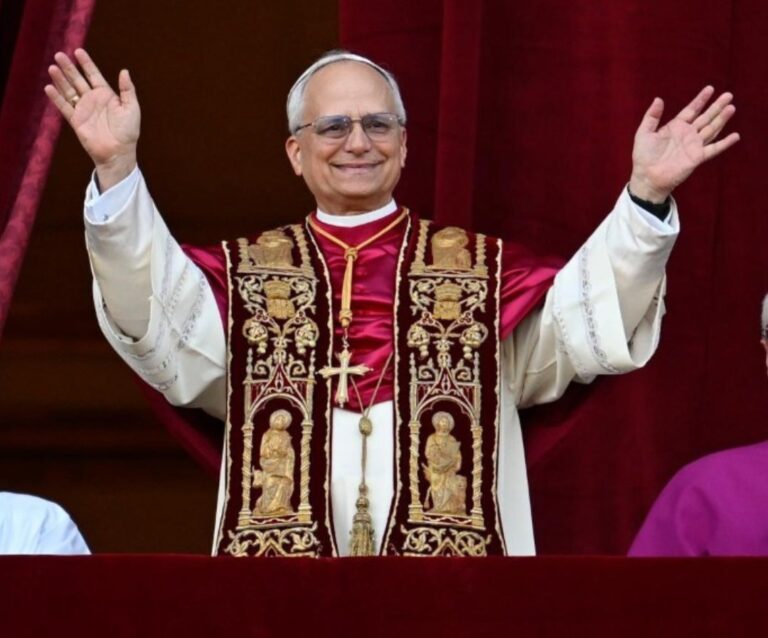
POPE Leo XIV has urged the immediate release of the abducted schoolgirls of St. Mary’s Catholic Primary and Secondary Schools in Papiri, Agwarra Local Government Area of Niger State.

Pope Leo made the charge at the end of a mass in St. Peter’s Square on Sunday.

“I was deeply saddened to learn of the kidnappings of priests, faithful, and students in Nigeria and Cameroon. I feel great pain, especially for the many young men and women who have been abducted and for their anguished families,” Pope Leo said

“I make a heartfelt appeal for the immediate release of the hostages and urge the competent authorities to take appropriate and timely decisions to ensure their release,” he added.

He urged Christians to pray for Nigeria saying “Let us pray for these brothers and sisters of ours and that churches and schools may always and everywhere remain places of safety and hope.”

The ICIR reported that Before dawn on November 17, 2025, armed men breached the fence of Government Girls Comprehensive Secondary School in Maga, Kebbi State, killed the vice principal, and abducted 25 schoolgirls a chilling echo of the Chibok, Dapchi, and other mass kidnappings of young girls in Nigeria.

A teacher was killed while trying to protect girls during the attack and a security guard later died in hospital from gunshot wounds.

An official of Danko Wasagu council, Hussaini Aliyu, told the BBC on November 19 that two girls among the 25 students managed to escape, explaining that the girls ran away across farmland as their armed captors were leading them into the bushes.

Aliyu added that though one of the girls needed medical treatment because she hurt her leg while running in the bushes, the girls were “back and are safe.”

Since Monday, a team of soldiers, police and volunteers have been combing forested areas in an attempt to rescue the students, but gunmen stormed St. Mary’s Papiri Private Catholic Secondary School in the Papiri community of Agwara Local Government Area, Niger State, in a fresh attack and abducted scores of students and teachers, in the early hours of Friday November 21, making it the second mass abduction within a week.

Local sources said the gunmen arrived at the school between 2:00 a.m. and 3:00 a.m in large numbers, riding on over 60 motorcycles and accompanied by a van, and shot the school’s gatekeeper, leaving him with serious injuries.

The state government has said it is yet to confirm the number of students abducted.

Th ICIR reports that the Senate on November 19 demanded President Bola Tinubu to probe into misuse and poor implementation of the N144.7 billion SSI following the Kebbi abduction, insisting that schools in high-risk zones still have no perimeter fence, CCTV, early warning systems, armed patrols, or emergency evacuation plans.

The Nigerian Senate’s demands reflect widespread concern that political promises have not translated into concrete protection for children, especially girls.

This development has caused security concerns across the country as the Federal Government and some states have led to isolated, state-specific adjustments to school operations. 

The Director of Senior Secondary Education at the Federal Ministry of Education, Binta Abdulkadir, directing the shutting down all 41 Unity Schools in the country with immediate effect over growing spate of abductions.

Similarly, the Plateau, Katsina, Taraba, Adamawa, and Niger State governments directed the immediate closure of all basic schools respectively between late Friday and early Saturday citing urgent need for preventive action. 

Read the terror series here

Eruku residents defy fear, grief, hold church service as kidnappers slash ransom to N20m per victim

0

By Dare Akogun

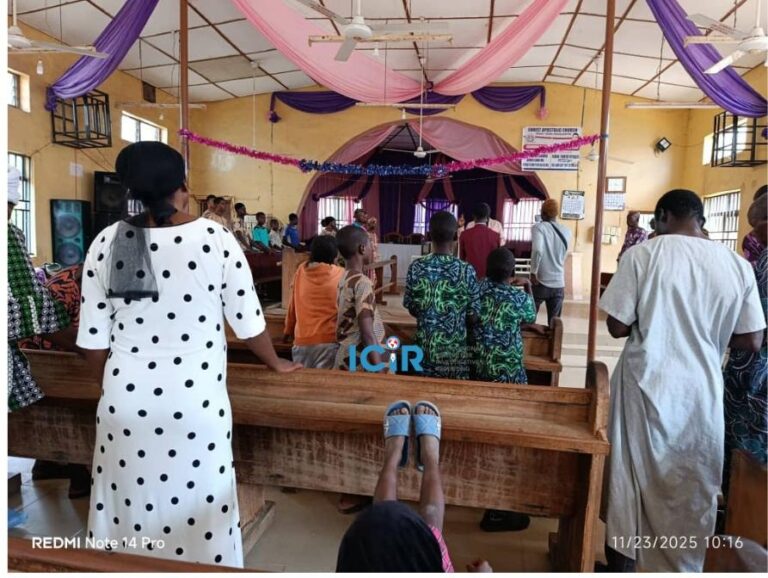
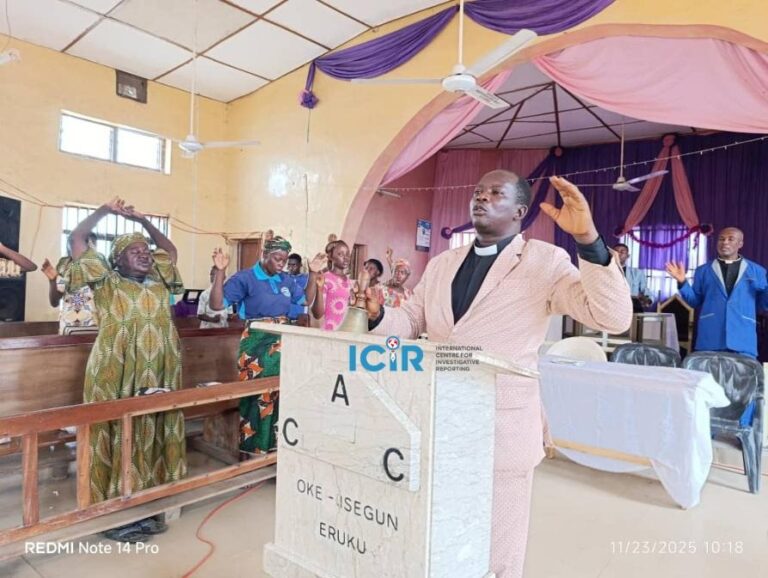
AMID fear and grief, worshippers of the Christ Apostolic Church (CAC) Oke Isegun in Eruku, Ekiti Local Government Area of Kwara State congregated on Sunday, November 23, to offer prayers for safe return of their members in terrorists’ captivity.

This is even as the community has confirmed that the kidnappers have reduced their ransom demand to N20 million per victim from the N100 million they earlier demanded.

The ICIR reports that worshippers gathered inside the blood-splattered auditorium of the Church where the attack occurred.

Blood stains still visible on the floor of the attacked Church. PC: ICIR

Pastor Bamidele Lawrence, who led the ‘special service’, told The ICIR that the incident was a “testing moment” for the congregation, adding that he had received “divine assurances” over the fate of the abducted members.

“God revealed to me that all our people will return alive. It will be a miracle when they regain freedom,” he said.

During the service, a worshipper, Elder Ige, whose wife and son are among the abducted, made an emotional appeal to authorities.

“My wife and son were kidnapped, my son was just released just two weeks ago, he was first kidnapped in September, and I raised 2 million naira to secure his release.

” He has been kidnapped again with my wife, I don’t know who I offended, I am begging the government and security agencies, please help us bring them back,” he said in emotion laden voice.

The ICIR observed a significant deployment of security personnel in the town, including the military, Special Tactical Squad from the Force Headquarters, SWAT, Anti-Kidnapping operatives from the Kwara Police command, and local vigilantes.

Worshippers during the Special Church Service. PC: ICIR

Despite the deployment, residents say fear persists, especially as the attackers remain at large.

The Eruku incident underlines the growing vulnerability of border communities in Kwara, many of which lie along the forested corridors linking Kogi and Niger states now hotspots for organised kidnapping syndicates.

There are concerns that the Eruku attack could worsen the humanitarian and economic impact on local communities already struggling under repeated raids, displacement, and loss of livelihoods.

Kidnappers reduce ransom as community Confirms 38 abductees

Findings by The ICIR reveal that Kidnappers the abductors have reduced their ransom demand to N20 million per victim, after initially asking for N100 million each.

With each victim priced at N20 million, families of the abducted now face a combined demand of N760 million, a sum security experts warn could embolden criminal networks if paid.

Worshippers in prayer session during the Church service

Also, the Church has formally confirmed that 38 persons were taken during the invasion contrary to exaggerated figures circulating online.

The Church Secretary, Michael Agbabiaka, who spoke with the ICIR on Sunday, said the reduction in the ransom followed negotiations with the abductors.

“The kidnappers first asked for N100 million each, but we negotiated it down to N20 million per person. We have not heard from them since Friday. As of now, 38 people are in captivity,” he said.

Agbabiaka said the Church had documented names and phone numbers of all abducted persons to avoid misinformation.

He dismissed viral social media claims that over 60 persons were taken.

“We initially counted 35 of our members. Later, we confirmed that three other non-members were also abducted. That gives us a verified total of 38,” he explained.

He disclosed that three worshippers were killed during the attack, while one injured victim remains hospitalised.

A Security analyst who doesn’t want his name in print told The ICIR that the reduced ransom demand may indicate one of two things: “Either the kidnappers are under pressure from intensified military presence, or they are seeking faster payouts before security forces close in.”

As at the time of filing this report, neither the Kwara State government nor security agencies have publicly confirmed the ransom negotiations.

However, security sources said joint operations in the area had been ordered following instructions from President Bola Tinubu.

This report is part of The ICIR’s ongoing monitoring of Nigeria’s escalating kidnapping crisis and the failure of state and federal authorities to dismantle cross-border criminal networks operating across North-Central Nigeria.

Read the update on the worshippers regaining freedom HERE

Read the terror series here

Lead in their blood: how battery recyclers are poisoning Nigerians[Part-1]

0

By Oladeinde Olawoyin & Folashade Ogunrinde

SOME of the factories in Ogijo, once symbols of job opportunities and communal progress, have become agents of quiet destruction, poisoning the soil, water, and people in the community.


Around 10 a.m. on the sunny Friday morning of September 17, about 30 residents of Ogijo, a sprawling industrial community in Sagamu LGA, which lies on the border of Lagos and Ogun State, gathered at the Ogijo Health Centre to collect the results of their Blood Lead Level (BLL) test. As the sun baked the skin with mild intensity, they trickled into the community health facility, some with their children in tow. Tension filled the air as the residents clustered in groups to discuss their fate in subdued voices.

Months earlier, in July, their blood samples had been drawn to check for traces of lead through BLL, which refers to the concentration of lead in a person’s blood, measured in micrograms per decilitre, to assess lead exposure and its health risks. Now, the results would reveal whether the dust and smoke emitted by lead recycling companies in the Ogijo community had poisoned them.

Francis Ede worries over what the lead findings mean for his family’s future. PC: Premium Times

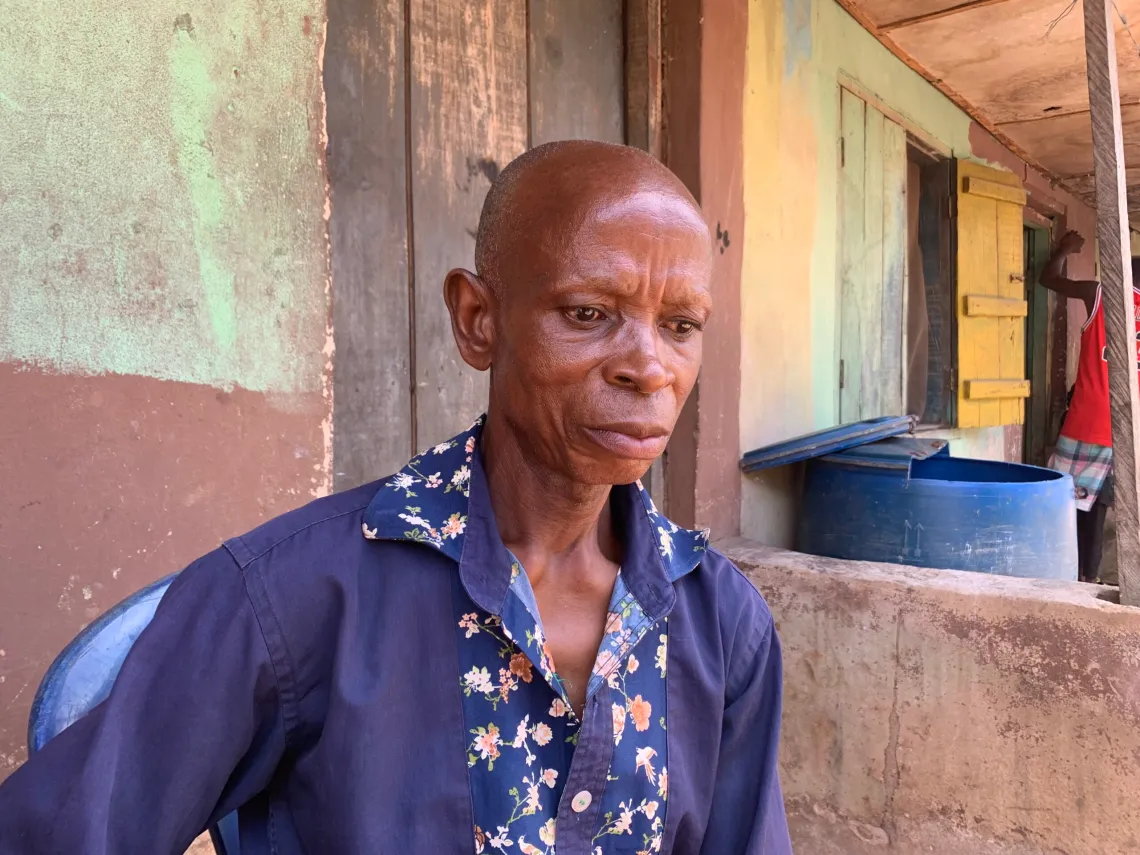
Fifty three-year-old Thomas Ede and his three children, all under the age of 11, were among the 70 Ogijo residents whose blood samples had been drawn for testing. Ede, a single father, lives 500 metres from True Metals Nigeria Limited, one of the companies that recycle used batteries for lead export in Ogijo.

For over 15 years,  Ede had called the Ogijo community home, long before True Metals began operations in the community. But about a decade ago, when the company began operations, he observed as thick black smoke from the factory’s chimneys travelled through the skies and settled daily on every possible surface, rooftops, crops, clothes, and even cooking pots. Lately, he had begun to fear that the pollution from True Metals and similar factories in the area had seeped into his family members’ bodies.

A drive around Ogijo reveals the vulnerability of its environment through the smell in the air. During the day, the atmosphere feels heavy, as if every breath carries a film of dust. At night, residents say the smoke burns their throats and leaves a bitter taste that lingers till the next morning. These recycling factories, once symbols of job opportunities and communal progress, have become agents of quiet destruction, poisoning the soil, air, and people of Ogijo.

At the community health centre, lines of worry cut across Ede’s face as he sat amid a small crowd, waiting to be called.

Hours later, his name was read out and his worst fears were confirmed. He and all three of his children have traces of lead in their blood. But the result that broke him was that of his eldest child, eleven-year-old Freeman, whose blood showed dangerously high lead concentration at 28.47 micrograms per decilitre, more than five times the level considered safe by the World Health Organisation (WHO).

Francis Ede and his son in their one-room apartment. PC: Premium Times 
Francis Ede and his son in their one-room apartment. PC: Premium Times

“I am really worried,” Ede told PREMIUM TIMES in an interview at his residence, a one-room apartment. “I know that a lot of damage has been done to his body because of the high level of lead in his blood.”

“He has been having some symptoms, such as frequent cases of malaria and typhoid, as well as a distended stomach. His stomach is always big, no matter how little he eats,” Ede added. Doctors familiar with lead poisoning explain that “distended stomach” can occur when the liver and digestive system are under stress, a common complication among children exposed to heavy metals.

Since his wife left him due to financial difficulties, Ede has been raising his three children alone. He works as a farmhand, earning just enough to keep food on the table.

Most of what he makes goes toward rent for their small, single-room apartment and toward keeping Freeman and his siblings in school. When the blood test results came back showing dangerous levels of lead, it felt like one more blow, another reminder that survival in Ogijo comes at a cost.

Lead, a toxic heavy metal, is released into the environment during informal battery recycling. When used batteries are burned or melted, they contaminate the surrounding soil, air, and water.

The resulting fine lead dust spreads through the wind and onto household surfaces. Once inhaled or ingested, especially by children, it enters the bloodstream and accumulates in organs such as the brain, liver, and kidneys.

According to the World Health Organisation (WHO), there is no safe level of lead exposure. Blood-lead levels above 5 µg/dL and soil concentrations over 400 mg/kg are considered hazardous, yet many contaminated communities exceed these limits many times over.

Residents of Ogijo wait at the local health centre to collect their blood lead level results. PC: Premium Times

Worse still, studies have linked lead exposure to lower intelligence quotient, learning difficulties, and behavioural problems. A 2020 UNICEF and Pure Earth report found that children with blood lead levels as low as five micrograms per decilitre scored up to five points lower on intelligence tests than their unexposed peers, providing evidence that no amount of lead is safe.

Sadly, Freeman’s blood isn’t the only one contaminated with lead poisoning.

Science of poisoning

To understand what was happening to Freeman and dozens of other families, The Examination, a nonprofit newsroom that investigates global health threats, in partnership with PREMIUM TIMES, Joy FM, Pambazuko and Truth Reporting Post, launched an investigation and commissioned an independent scientific study to measure lead levels in the soil, as well as in the blood of workers and residents living in Ogijo community. The findings of the investigation show massive lead poisoning of humans and the environment in Ogijo.

Between April and June, environmental health researchers collected blood, nasal swabs, and soil samples to measure the scale of lead contamination. In total, 70 residents, including children, adults, and factory workers, were tested for blood lead levels (BLL).

To study lead contamination in Ogijo, Nigeria, The Examination and The New York Times hired scientists to conduct the most extensive blood and soil testing that had ever been done here. Nigerian health officials oversaw the blood tests. (PHOTO CREDIT: Quadri Taiwo for The Examination)A team of Nigerian scientists led by Gilbert Adie at the University of Ibadan sampled soil and dust near battery recycling factories in Ogijo, looking for evidence of lead contamination. (PHOTO CREDIT: Grace Ekpu for The Examination)
A team of Nigerian scientists led by Gilbert Aide at the University of Ibadan, sampled soil and dust near battery recycling factories in Ogijo looking for evidence of lead contamination. PC: Premium Times

Independent laboratory tests on blood samples from residents of Ogijo and factory workers reveal widespread and dangerous exposure to lead. A report prepared by the Sustainable Research and Action for Environmental Development (SRADev Nigeria), a non-governmental environmental health organisation, found that among factory workers, the average blood-lead concentration was around 20 micrograms per decilitre (µg/dL), four times higher than the WHO’s reference limit of 5 µg/dL. Every worker was poisoned, with some recording readings as high as 38 µg/dL.

Children, who are the most vulnerable to lead poisoning, also showed alarming results. Their average level stood at roughly 12 µg/dL, with nearly three-quarters of the children tested exceeding the WHO guideline. 11-year-old Freeman’s blood contained over five times the maximum level considered safe.

Among other adult residents who do not work in the factories, lead levels averaged about 9 µg/dL, nearly double the WHO limit. For comparison, control samples collected from individuals outside the exposure zone showed almost no contamination, with readings below 0.2 µg/dL.

In simple terms, people living and working in Ogijo have an amount of lead that is as high as 190 times greater than those living in unaffected areas.

The soil beneath their feet in Ogijo proved just as toxic. 46 environmental samples taken from 30 locations, including soil, non-soil, and dust tests in areas where families live, farm, and children play, revealed alarming levels of lead contamination. The most shocking result came from an elementary school, where soil samples contained 1,901 parts per million (ppm) of lead, almost five times higher than the US Environmental Protection Agency’s safety limit for play areas.

Results also showed that about 80 per cent of dust and slag samples taken from homes and public spaces exceeded international safety thresholds. Dust from a hotel room that shares a fence with Everest Metal, one of the prominent companies engaged in Used Lead-Acid Batteries (ULABs) in Ogijo, contained 18,647 ppm.

Scientists also documented a link between proximity to the factories and symptoms such as stomach pain, fatigue, and poor concentration. The SRADev Nigeria report also showed that common exposure pathways include inhalation of airborne lead particles, consumption of polluted water, ingestion of contaminated food, and ingestion of contaminated soil or dust.

Residents recount their pain

Sikirat Odufeso
Sikirat Odufeso

For Sikirat Odufeso, life in Ogijo has become a daily struggle with illness and exhaustion. Her blood lead level reads 17 µg/dL, more than three times the World Health Organisation’s safety limit.

“I’ve been really worried since I got my result,” she said.

Odufeso, who shares a fence with True Metals, said the company initially occupied a smaller portion of land several meters away from her house. However, an expansion drive saw the company buy land from her former neighbours. Now, instead of a friendly neighbourly community, the smoke emitted daily from the lead recycling plants has been a constant challenge for her, with attendant health complications.

“It used to be just our neighbours, but now it’s just smoke. Every day, the smell and fumes enter the house. We can’t open the windows again.”

Gradually her health began to fail, she narrated, her voice a mixture of pain and frustration. Odufeso’s echocardiogram— an ultrasound test that checks the heart’s structure and function—done at the Federal Medical Centre in Abeokuta, Ogun State, and Babcock University Teaching Hospital, shows global systolic dysfunction and moderate pulmonary hypertension, meaning her heart’s ability to pump blood has been weakened and pressure in her lung arteries is abnormally high.

These conditions, which cause fatigue, breathlessness, and swelling, are consistent with the long-term effects of toxic exposure from smelting plants.

“The dust has blocked my chest,” she said. “I always feel tired. I can’t walk a long distance.”

Odufeso said she had spent over N3 million on treatment, but her symptoms persist.

The nights, she said, are the worst. “When the factories start operation, everywhere turns dark. The smoke becomes heavier. It wakes me up at night, and all the tiles and the floor will be blackened by morning.”

While Odufeso battles with her failing health, Mary Mike, a former cook at True Metals, bears an even deeper pain.

Her voice trembled as she recounted how her husband, also a worker in the same company, died in a furnace repair accident at another lead recycling plant in October 2024.

Although the company paid N8 million as compensation, Mike said she only received N1.5 million after her husband’s relatives took the rest.

Soon after the burial, she was allegedly dismissed by True Metals for taking too long to resume work. Now a widow and sole breadwinner, she struggles to care for her children.

“The supervisors do not implement any safety standards,” she said bitterly. “The safety gear is taken by the supervisors themselves. We need help. If you are not dying by fire at the company, you are dying from the smoke at home.” Mike’s BLL result read 21.8757 µg/dL.

Children suffer too

Eleven-year-old Freeman is not the only child with worrying blood lead levels, as results show that eight out of the 14 children tested have lead poisoning of more than 5 μg/dl.

Five-year-old Sunday and eight-year-old John have a BLL of 15.006 and 24.623 micrograms per decilitre, respectively. Their mom, 49-year-old Bayonle (not real name), lived 500 metres from True Metals.

Bayonle recalls days when smoke and dust settled thickly over homes. The consequences, she believes, followed her into the most vulnerable moments of her life. During her pregnancy, she went into labour for three days. She said the water leaking from her body carried a strange smell.

Doctors later informed her that toxic substances, which they identified as lead, had entered her system. Her son was born at just seven months and four days. Bayonle said medical staff told her the premature birth was linked to the environment she lived in.

“They said the place was not okay at all,” she recalled.

Her worries did not end there. Her children frequently struggle with stomach pains and headaches, and medication offers little relief. When the family underwent testing, she said health workers told her the symptoms were consistent with lead exposure.

“They told me it is the lead that is causing the stomach aches and the headaches,” she said.

The emotional toll is still heavy. Some nights, the memories of her pregnancy, the dust, and the medical reports return too vividly.

“Once I remember everything, I cannot sleep,” she said. “I suffered a lot when I gave birth to my son.”

Environmental hazards at Everest Metal Nigeria Limited, where she worked as a cleaner, didn’t spare her from the fumes either. Her assigned room, used by other workers too, sat beside the furnace, where smoke pushed through gaps in the walls.

She cleaned toilets, pumped water, and earned N100,000 a month, but the constant sickness wore her down.

“It wasn’t a small sickness; some days, I had no energy. My whole body pained me,” she said.

Bayonle’s BLL test confirmed her fears, as her result showed 31.0589 micrograms per decilitre, the highest of all the women tested in Ogijo. Her children, Sunday and John, tested second and fourth highest of all children tested.

Even now, living farther away, she worries about the long-term effects on her children.

Joshua Ojo, a professor of health physics and environment at the Obafemi Awolowo University, Ile-Ife, said pregnant and lactating women in exposed communities are the most vulnerable population as they often pass the lead to their babies either in the womb or through breastfeeding.

“The cases of chronic low-dose endogenous exposure of our vulnerable babies are widespread and constantly ongoing. It is affecting millions of our children, significantly degrading the quality of their lives, and consequently, our potential for development as a nation,” he said.

Schools, pupils not left out

When Adeyombo Adesoji established his school in 2010 within the Ogijo community, his goal was to provide hope for young minds through quality education. However, that goal has since been disrupted by the hazards of smoke and chemical dust from nearby lead-recycling factories drifting into his classrooms. At Fountain of the Lord’s Glory Secondary School, Adesoji’s school, more than 300 pupils try to learn under a grey, polluted sky.

Adesoji speaks about the effects of the Everest Metal plant on his school and the surrounding community. PC: Premium Times 
Adesoji speaks about the effects of the Everest Metal plant on his school and the surrounding community. PC: Premium Times

“When we started here, the companies around us were few and they dealt mostly in iron,” he said. “But over the years, these lead-recycling factories began to spring up. When they start production, you feel uncomfortable. The smoke, the smell, it’s choking.

“The students complain all the time. Most of them live around here, so they’re used to it, but it’s not normal,” he said.

About a decade ago, in 2015, the community decided it had had enough. Since his school had a large student population, residents asked Adesoji to let the children join a protest to draw attention to the pollution.

“We all came out with placards, students, parents, everybody. We even invited officials from the State Ministry of Environment; they came, they saw the water and everything we showed them, and we thought something would finally change. But it didn’t.”

“From what we heard, the officials collected bribes,” he said with a shrug. “But this is Nigeria, things like that happen.”

More than 10 years later, the school is still standing, still imparting knowledge in its own way, and its pupils are still inhaling the toxic smoke billowing from the chimneys of nearby factories.

This investigation, the first of a 2-part series is republished from PREMIUM TIMES

On whose mandate do judges stand?

0

By Chidi Anselm Odinkalu

“I had discovered since my appointment as a High Court judge that most of the politicians in Nigeria and, indeed, in other developing countries only pay lip-service to the independence of the judiciary…. It pays in the end for a judge, even at the risk of being a snob or of haughtiness, to be somewhat aloof, not only from members of the executive, but also from political powerbrokers.” – Atanda Fatayi Williams in Faces, Cases and Places, pp. 77-78 (1983)

Atanda Fatayi Williams, the fourth Chief Justice of post-colonial Nigeria (CJN), has not always received the kind of credit that he probably should for a judicial career of impact. Few judicial careers in Nigerian history can compete with that of this grand-son of an Ijebu merchant in terms of both legacy and luminosity.

Sworn in as a judge a mere seven days after independence on 7 October 1960, Justice Fatayi Williams was the first person to be appointed a judge in post-independence Nigeria. Nineteen years later, he became Nigeria’s first Chief Justice of the presidential era. In this capacity, he was the first CJN to truly feel the pulse of the elected president as both Head of State and Head of Government.

It was his good fortune that the president during his tenure as CJN was the emollient Alhaji Shehu Shagari, but he saw enough to leave him a sceptic about judicial dalliance with politicians. “In Nigeria” he warned in his memoirs, “familiarity does not breed contempt. It breeds obligation…. people with whom you are friendly expect you to bend the rules to suit their requirements.”

As CJN, Fatayi Williams pioneered the All Nigeria Judges Conference in Ilorin, the capital of Kwara State, on 8 March 1982. That was a year after the current CJN became a lawyer. Shehu Shagari, then the president, traveled to Ilorin to address the conference. Shagari’s presence and delivery bore the hallmarks of the polished modesty that defined his long public service career.

The conference has grown since then to become a biennial tradition of the bench of Nigeria’s Superior Courts of Record. For many judges, the opportunity to mix, introspect, and learn together with colleagues from across the country, both serving and retired, is the highpoint of every judicial biennium. The conference is also an opportunity for judges as a collective to diagnose common problems that afflict the judicial branch, think together, and communicate with the other branches of government on policy matters adjacent or relevant to the judiciary.

For the past decade and a half, the conference has acquired a permanent home on the premises of the National Judicial Institute (NJI) in Abuja. This year’s conference began on 17 November at the same venue. The Administrator of the NJI, Babatunde Adejumo, a former President of the National Industrial Court of Nigeria, ran the floor under the direction of the Chair of the Institute, the CJN.

As befits a conference with the president of Nigeria in attendance, the opening of the conference was supposed to be brisk. The Administrator of the NJI had to be persuaded from lingering on the microphone with prolix protocol. Thereafter, it was the turn of the CJN.

Her delivery made a case that appeared both respectable and heartfelt, inviting her colleagues to defend and deepen democracy in Nigeria “by ensuring that justice is not only done but manifestly seen to be done in every courtroom, across every jurisdiction, and in every case.” With deftness, she acknowledged widespread notions that judicial decisions in Nigeria are “sometimes vulnerable to external influences”, a euphemism for perceptions of both corruption and capture of the judiciary; and admitted “with candour that there are some within our ranks who have undermined the integrity of the Bench.” She hoped that “this must change” but stopped short of saying how or when.

The CJN ended her address by inviting President Bola Tinubu to address the judges and declare the conference open. As she unfurled this introduction and transition, the judges gathered in the Andrews Otutu Obaseki Auditorium of the NJI stood in unison both to applaud the delivery of the CJN and, presumably, as a mark of courtesy to their presidential patron.

In unison, the military band from the Presidential Guards Brigade broke into an instrumental rendition of “On Your Madate We Shall Stand”, the President’s personal fealty anthem. When the President was done with the delivery of his 1,314 word-long address, the same band again played the same accompaniment as the judges stood to applaud his transition from the presidential podium back to his seat.

So, not once but twice in a period of less than 15 minutes, the presidential band played this partisan political rendition. From any other president, this may have been a mistake but this President is no political eunuch. If the first was an error, the second surely was comfort. Whatever the intention or design was, this guaranteed that no one remembers anything of what President Tinubu said. The only memory of his showing at this All Nigeria Judges Conference is that he sought to wheedle the judges with an instrumental symbolism of personal fealty.

For a conference with the timely theme of “Building a Confident Judiciary”, President Tinubu could hardly have done worse in undermining public confidence in the judges. To their credit, many of the judges inside the conference auditorium were schtum at the rendition(s). Unmistakably, however, there were people in the hall who also sang along.

President Tinubu’s own television station, TVC, later offered the spectacular apologia  that the singing was done by “the people who came with the President…. The President’s staff, they were at the back”, adding: “if those ones were singing, can anyone question them for singing? This is a song they have been singing since they were in Lagos.” The claimed that President Obasanjo had such a song too. That was absurd.

To convince their audience of presumed presidential proselytes, they hyperventilated to the claim that the same tune had been played the previous week when the President opened the conference of the Guild of Editors. In their estimation, a gathering of Nigeria’s most senior judges is worth no more than the currency of a conference of the Guild of Editors.

One judicial participant at the event went further, privately dissimulating that there was no such rendition and that any sound other than the National Anthem associated with their gathering was deep fake from Artificial Intelligence!

The leadership of the judiciary appeared ambivalent. When eventually they responded, over 48 hours later, it was through a statement with mangled syntax signed by a middling officer described as the “Head, Information, Media and Public Relations” at the NJI. The only thing notable about this statement was what was missing on its face: no judicial principal was courageous enough to own the debacle. Its content was entirely forgettable.

In its text, the statement dutifully dismissed the optics as unfounded, exculpated all conferees from suggestions of partisan political animus, and righteously denounced “any attempt to distort the solemnity of the event”, without offering evidence or process. Instead, they trained ostentatious indignation at people to whom they owed both contrition and apology.

The authors of this statement apparently didn’t know that the horse of the distortion of the solemnity of the event had long bolted. The President accomplished that with hubris to spare.

It does considerable injustice to the current generation of judges in Nigeria to suggest, as that statement does, that they are incapable of running with efficiency and without partisan incident a conference in existence for over four decades. Its attempt to outsource responsibility for an incident that should never have occurred is beneath the dignity of judicial office. A confident judiciary should learn from this and promise itself that it shall never happen again.

Alexander Hamilton may have called the judiciary “the least dangerous” branch, having “neither force nor will but merely judgment”, but in taking his personal fealty anthem to the floor of the judges conference, President Tinubu sought to relocate the source of the judicial function from its constitutional foundation to personal loyalty to him. The question he raised is simple: On whose mandate do judges stand? The judges cannot duck the issue posed by the president’s symbolic choice of battleground.

A lawyer and a teacher, Odinkalu can be reached at chidi.odinkalu@tufts.edu

Assessing the relevance of traditional rulers

0

ERIC TENIOLA

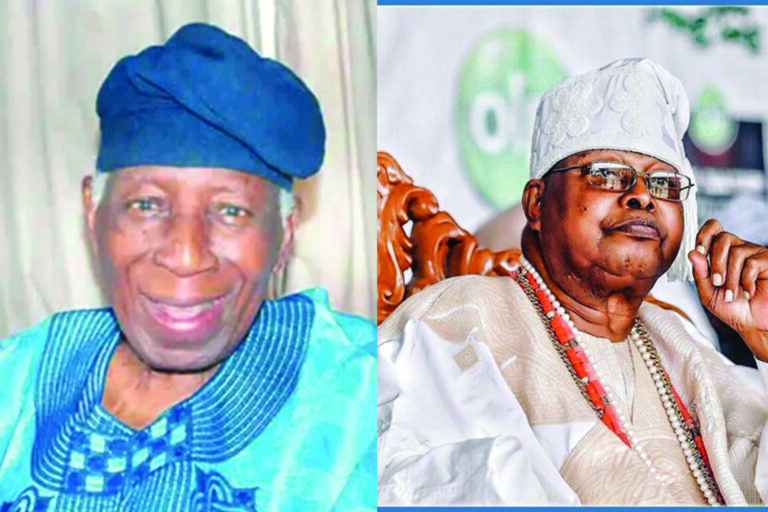
With the death of Dr. Victor Omololu Sowemimo Olunloyo (14 April 1935 – 6 April 2025) and the Awujale of Ijebuland, Oba Sikiru Kayode Adetona (10 May 1934 – 13 July 2025), GCON, Ọgbagba Agbotewole II, the final chapter of emergency rule in Western Nigeria of 1962 has been closed. Historians will have to draw the final curtain on that tragic event. Incidentally, both men died during the emergency rule declared by President Bola Tinubu GCFR, on Thursday March 20, 2025 in Rivers state.

Dr. Olunloyo and the Awujale served as Commissioners/Ministers during the emergency rule in Western Nigeria under the administration of Dr. Moses Adekoyejo Majekodunmi (17th of August 1916- 11 April 2012). He served as administrator of Western Region from 29 June 1962 – December 1962).

The emergency rule in Western Nigeria was effected on May 29, 1962, when the then Prime Minister,  Sir Abubakar Tafawa Balewa (December 1912 – 15 January 1966),  tabled a motion in the House of Representatives in Lagos. The motion was passed by 232 to 44.

Alhaji Sir Tafawa Balewa exercised his new prerogative to appoint his doctor friend, Senator Chief Moses Adekoyejo Majekodunmi, the Minister of Health, who still belonged to no party as administrator. Stanley Wey and others would have rather that for appearances’ sake the administrator had not been so obviously a personal friend of the PM, but they held their peace. Dr. Majekodunmi had in fact proposed the then Chief Justice of the Federation, Sir Adetokunbo Adegboyega Ademola (1 February 1906 – 29 January 1993), Balewa had commented that this would permanently compromise his judicial position, and on the spur of the moment responded, “What about you?” The doctor, still determined to see to the opening of the Lagos State Medical College, agreed provided that, to universal inconvenience, he retained his full federal portfolio.

On resumption as administrator, Dr. Majekodunmi appointed Dr. Olunloyo and the Awujale, as Commissioners/Ministers. He also appointed Captain Murtala Ramat Mohammed (8 November 1938- 13 February 1976), who had just returned from military operations in the Congo, as his ADC. Mohammed later became Nigeria’s Head of State between July 27th, 1975 and February 13th, 1976. They were appointed along with others on June 4, 1962.

Others appointed as Commissioners/Ministers were Chief S. O. Adedeji – Chieftaincy Affairs; Mr. V. Owolabi Esan – Finance; Mr. A.M. Laosebikan – Home Affairs; Mr. Abdul Yesufu Eke -Information; Mr W.G. Egbe – Justice; Mr. Olajide Esan – Labour; Chief J.O. Fagbemi – Lands and Housing; Chief E. A. Adeyemo—Local Government; Mr. B.O. Mark Uzorka – Midwest Affairs; Mr. J. Oyegoke – Office of Administrator; S.L. Edu – Health and Social Welfare and Dr. Adegbite – Trade and Industry.

Also sworn-in as Commissioner/Minister was Chief Thompson Adogbeji Salubi (1906-1982), the Akaborode of Urhobo land in the present Delta state. Chief Salubi led the Urhobo Progressive Union for twenty years. He was appointed Commissioners/Ministers for Education.

Majekodunmi also appointed Engineer Adeniyi Williams (1907-1999), the Gboyegun of Oye-Ekiti as Commissioner/Minister for Works and Transport. Adeniyi Williams was the son of Phillips Williams, a foremost nationalist, whose contemporaries included Herbert Macaulay. His classmates at the Cambridge included Justice Adetokunbo Ademola and Sir Francis Akanu Ibiam (29 November 1906 – 1 July 1995), who later became Governor of the Eastern Nigeria. He was also the father of Chief Olufemi Adeniyi Williams (86), a Lagos socialite and former Managing Director of OBM, a foremost advertising agency, who later became chairman of the Island Club, Lagos.

Majekodunmi also swore in Prince Daniel Adeleke Ademiluyi (10 September, 1913-20 September, 1985) as Commissioner/Minister of Agriculture and Natural Resources. Ademiluyi was the son of revered Ooni of Ife, Ajagun Lawarikan, who ascended the throne in 1910. He was an aristocrat from Ile-Ife, the cradle.

Prince Adeleke Ademiluyi was elected to the Western House of Assembly in 1954 to represent Ile-Ife Central. His political career saw him appointed as Parliamentary Secretary in the Ministry of Trade and Industry from 1954-1959. He later became chairman of Western Nigeria Development Corporation from 1963-1966. He was the father of the famous journalist, Prince Kanmi Ademiluyi.

Others appointees were Oba of Benin, Akenzua II, The Osemawe of Ondo, Oba Tewogboye II, the Olubadan of Ibadan, Oba Akinyele, the Olu of Warri, Erejuwa II and the Oluwo of Iwo, Oba S.O. Abimbola. Two ministers S.T. Rufai and F. Lamina were appointed to assist in two ministries, including Justice.

The appointment of the Obas was an acknowledgement of the contribution of traditional rulers in Nigeria’s struggles for independence. No doubt, the traditional rulers were involved in pre-independence struggles for Nigeria’s independence like the politicians.

For example, at the London’s Nigeria’s Constitutional Conference on Monday 27 July, 1953, the following traditional rulers attended the conference. The Ooni of Ife, Sir Adesoji Aderemi, the Olowo of Owo, Sir Olateru Olagbegi (1910-1998) -(regional Minister without portfolio), the Obi of Idumuje Ugboko Kingdom in Aniocha North in Delta state, Obi Justin Nkezie Nwoko (1926-1955) and the Emir of Katsina, Sir Usman Nagogo Dan Muhammadu Dikki (1905-18 March 1981), 47th Emir of Katsina.

Others who attended the conference were Chief Bode Thomas, Chief S. L. Akintola, Chief Arthur Prest, Chief Obafemi Awolowo, Western Regional Minister of Local Government, Chief Rotimi Williams, S. O. Shonibare, S. O. Awokoya, Chief Anthony Enahoro, Latifu J. Dosumu, Mrs. Tanimowo Ogunlesi, G. C. Nonyelu, Alfred Ogbeyiwa Rewane and Mallam Mudi Sipikin.

Others were Dr. Nnamdi Azikiwe, K. O. Mbadiwe, E. O. Eyo, Mallam Bello Ijumu, Kolawole Balogun, Mazi Mbonu Ojike, N. P. Birabi, V. A. Nwankwo, N. N. Mbile, L. P. Ojukwu, E. G. Gundu, D. C. Osadebay, Mrs. Margaret Ekpo, Chief H. Omo Osagie, Chief Yamu Numa, Chief F. S. Edah, Ahmadu, Sardauna of Sokoto, Abubakar Tafawa Balewa and The Hon. Aliyu, M.H.R., Makama Bida.

The others were Abba Habib, Pastor David Lot, Mallam Ibrahim Imam, Mallam Saladu Alamanu, G. U. Ohikere, Benjamin Akiga, Mohammadu Ribadu, Mallam Dauda Kwoi, Shehu Ahmadu, Sarkin Shanu, Mallam Nuhu Bamalle, Mallam Aminu Kano, Mallam Abubakar Zukogi, E. M. L. Endeley, Rev. J. C. Kangsen, Eyo Ita, A. C. Nwapa, Okoi Arikpo, J. A. Wachuku and Dr. E. U. Udoma.

Let’s take a look at the profile of other traditional rulers appointed as ministers by Dr. Majekodunmi as administrator.

Oba Samuel Omotosho Abimbola was the Oluwo of Iwo between 1958 and 1982. He was one of the most respected kings in Yorubaland at that time.

Oba Isaac Babalola Akinyele (18 April 1882 – 30 May 1965) became an active member of the Christ Apostolic Church and was, for a long, its head in Ibadan. He also became a chief and thus rose steadily in the traditional hierarchy headed from 1936 by an Oba, the Olubadan. He became Otun Balogun and then, in late 1953, the Balogun. Problems were expected because the title had close associations with the traditional Yoruba religion, which make it difficult for a devout Christian to hold it. But the problems were overcome and Oba Akinyele rose steadily towards the Oba’s throne.

Oba Isaac Akinyele was involved in politics, as a party supporter of the Action Group (AG). His political interests conflicted with those of the National Council of Nigeria and the Cameroons (NCNC) which controlled the Ibadan District Council, and its local boss, Adegoke Adelabu. In February 1955, he was elected Olubadan of Ibadan having previously served as Chief Judge.

Oba Akinyele’s rule was soon engulfed in the turbulent political developments in Western Nigeria, the result of the growing rift in the Action Group between its leader, Chief Obafemi Awolowo (6 March 1909 – 9 May 1987) and his deputy and Premier of the Western Region, Chief Samuel Ladoke Akintola (6 July 1910 – 15 January 1966) in 1962. This came to a head when Alhaji Chief Dauda Soroye Adegbenro (1909-1975), the Balogun of Owu and the Ekerin of Egbaland, Chief Awolowo’s supporter, was appointed premier by Governor Sir Adesoji Aderemi, the Ooni of Ife. Disorder broke out in the House of Assembly as the new Premier was presenting his government for vote of confidence and following the subsequent outbreak of violence both among their supporters outside, the region was placed under a state of emergency. The government was suspended and as Sole Administrator of the West was appointed in the person of Dr. Moses A. Majekodunmi.

Throughout the entire political crisis, Oba Akinyele remained aloof, placing himself at the disposal of any peace initiative for which Ibadan was a venue on several occasions. He ruled for only ten years but left a big reputation behind when he died in May 1965.

Oba Uku Akpolokpolo Omo n’Oba n’Edo (1889-1978) Akenzua II was born as Edokparhogbuyunmun at Benin in 1899; his father was Oba Eweka II who ruled Benin from 1914 until 1933, and his grandfather the great Oba Ovonramwen who was the last independent King of Benin. He studied at Benin Government School between 1907 and 1915 and later at King’s College, Lagos, from 1918 to 1921. On leaving school, he became employed as a transport clerk in the Benin Native Authority on a wage of N6 per month.
His training for the future office of Oba began when he became Confidential Secretary to his father, Eweka II, whose death in 1933 introduced Akenzua II to the rigour of office. Before then, in 1925, he worked under the supervision of the late Alake of Egbaland, Oba Ladapo Ademola II (1872–1962). Following this, he was appointed to head the Ekaidolor District, the present Iyekuselu; he was in this office when his father died. In the same year Prince Okoro was installed Oba of Benin with the title of Akenzua II.

Between 1946 and 1966, the formative years of the new political system in the country, the Oba was a member of the Legislative Council of Nigeria, member of the Western House of Assembly, a member of the Western House of Chiefs and a Cabinet Minister.
Oba Akenzua was instrumental in the creation of the Midwest Region; it was his view that the two provinces of Benin and Delta in the Western Region could constitute the Bendel State by which the Midwest later became known. In October 1953, he formed the Benin-Delta People’s Party to campaign for the unification of the two provinces. With the creation of the region, he became the first President of the Midwest House of Chiefs in 1964. His contributions to the politics and policies that shaped the content of Nigerian formative politics were rewarded by awards and honours bestowed on him: he was decorated with the insignia of the Commander of the Republic of Nigeria and was made a Justice of Peace. From 1966 to 1972 he served as the Chancellor of Ahmadu Bello University, Zaria.

As the Oba of Benin, Akenzua II was the custodian of the rich Bini tradition and culture whose study and promotion he personally encouraged; it was to this end he volunteered whatever bronze or ivory carvings under his jurisdiction for the success of the Black Arts and Culture Festival, FESTAC, that was held in the Nigeria capital in 1977. He died in the late 1978 and was succeeded by Solomon Igbinoghodua Aisiokuoba who became Oba Erediauwa I of Benin in 1979.

Oba Rufus Adesokeji Aderele (Tewogboye II), son of Oba Tewogboye 1 ascended the throne as the Osemawe of Ondo, after the dethronement Oba Fidipote II. He was an educated Oba, adequately experienced in the system of governance and reigned from 1942-1974. He was the father Prince Ademola Olugbade Aderele; who served Nigeria as Ambassador Extraordinary and Plenipotentiary of the Federal Republic of Nigeria on various missions, including representing the Nigerian Government as its first Nigerian High Commissioner to Thailand.

According to Wikipedia, Ọba Sikiru Olukayọde Adetọna, Ọgbagba Agbotewole II, was born on 10 May 1934, into the Royal House of Anikinaiya of Ijẹbuland in his father’s house in Imupa, Ijebu Ode. His father was Prince Rufai Adetọna Adeleke (born 1902), a son of Ọba Adeleke, Ọgbagba Agbotewole I (1825–1906), who was the Awujalẹ of Ijẹbuland from 1895 to 1906. His mother was Ajibabi Ọnaṣile, who was from the town of Ijebu Igbo. The founder of the Royal House of Anikinaiya (or Anikilaya) was his great-grandfather Oba Anikilaya, Figbajoye Agboogunsa I, (c. 1775–1854) who reigned from 1821 to 1854, and who himself was a son of Ọba Gbelegbuwa. As a member of the Royal House of Anikinaiya, his paternal family claimed descent from Olu-Iwa, the semi-legendary first Awujalẹ and Ọbanta, another founder of the Ijẹbu kingdom.

Prince Adetọna attended various Baptist Schools, Ereko, Ijẹbu-Ode; Ogbere United Primary School, Oke Agbo, Ijẹbu-Igbo; and Ansar-Ud-Deen School, Ijebu-Ode between 1943 and 1950. For his secondary education, he attended Olu-Iwa (now Adeola Odutọla) College, Ijebu-Ode from 1951 to 1956. Between 1957 and 1958 he took up an appointment with the then Audit Department of the Western Region, Ibadan. The prince resigned his appointment in 1958 to pursue further studies in accountancy in the United Kingdom, which was the colonial ruler of Nigeria at the time.

By a letter dated 4 January 1960, referenced CB. 4 1/333, the Permanent Secretary in the Western Region Ministry of Local Government conveyed to the Local Government Adviser in Ijẹbu Ode approval of the Western Region Governor in Council, the appointment of Prince Sikiru Kayode Adetona as King, and his confirmation as the new Awujale of Ijebuland with effect from that date (4 January 1960). It became the lot of Ijẹbu notables like the late Ọgbẹni-Ọja, Chief (Dr.) Timothy Adeọla Odutọla, Bọbasuwa I, Chief Emmanuel Okusanya Okunọwọ (MBE, KFNM); and Aṣiwaju, Chief Samuel Ọlatubọsun Ṣhonibare to arrange for the home-coming of the King-elect.

On 18 January 1960, the head of the Ijẹbu Ode Regency Council, the Ọgbeni-Ọja, Chief Timothy Adeọla Odutọla formally presented the new traditional ruler to the whole world. This presentation, which was a novelty, signalled the commencement of the installation ceremonies of the King-elect. It was indeed, a new dawn in the annals of the Ijẹbu people. The king-elect thereafter proceeded to undergo the traditional seclusion at the Odo for three months.

Oba Sikiru Kayọde Adetọna, who had earlier been nominated along with five others by the ODIS was unanimously selected by the kingmakers in conformity with Section 11 of the Chiefs Law of 1957 applicable in Western Region. The then Governor signed the Instrument of Office approving Prince Sikiru Kayọde Adetọna as Awujalẹ of Ijẹbuland. The formal coronation took place on Saturday, 2 April 1960.

On 5 April 1960, newly crowned Ọba Adetọna took his seat as a member of the Western Region House of Chiefs, after a formal introduction.

Erejuwa II was a traditional title holder and paramount leader of the Itsekiri who was Olu of Warri from 1951 to 1964 and from 1966 to 1986. He was the 18th Olu of Warri Kingdom with the title Ogiame Erejuwa II. He succeeded his father Ginuwa II as Olu. Ginuwa II was a great grandson of Olu Akengbuwa the last Olu who died in 1848, he was crowned in 1936 after an interregnum that lasted 88 years when Warri’s political leadership was dominated by merchant princes.

Erejuwa was born in 1908 as Wilson Gbesimi Emiko, he attended a CMS missionary school at Ogbesse, thereafter he did business with United African Company rising to become a provincial cooperatives president. Warri was the capital township of Warri Province, a colonial administrative unit with Warri Division as a sub-unit consisting of Warri Township, Sapele and Forcados.

The government decision led to protest led by non-Itsekiri groups within Warri Division who feared the title could lead the Olu to lay claim as paramount authority within Warri Division. The title had always been “the Olu of Warri before it was changed to Olu of Itsekiri in 1936 to pacify the Itsekiri neighbours who had always feared Itsekiri domination by their very influential king. But the Itsekiri had used every civilized forum to protest this anomaly until 1952 when the title was reverted to its original status of Olu of Warri.
As Olu of Warri, he was appointed regional Minister without portfolio and president of the Warri Divisional Traditional Council.

Following unhealthy rivalry between prominent Itsekiri leaders in the Action Group and the NCNC in the lead to the creation of a Mid-West region, Erejuwa, who perceived to have backed Action Group, was deposed by the NCNC led regional government in 1964 and deported to Ogbesse. He was re-appointed in 1966 by the new military government of David Ejoor after some of the prominent Itsekiri leaders in the NCNC had been taken out by the emerging military government.

On September 26, this year, President Bola Ahmed Tinubu, GCFR, attended the coronation of the Olubadan of Ibadan, Oba Rashidi Adewolu Akanmu Ladoja, ARUSA I. The governor of Oyo state, Seyi Makinde gave the Oba the staff of Office. Laudable words were uttered by both the President and the governor on the preservation of the institution of traditional rulers in the country. They are mere words. Traditional rulers have no role in our present-day democracy. Let any of them cross the redline, he will be reminded instantly that he is under a director in the state’s Ministry of Local Government and Chieftaincy Affairs and he will be queried accordingly. That is the sad aspect of our Constitution.

An example was when the central government took action on the Ooni of Ife, Oba Okunade Sijuwade (1 January 1930 – 28 July 2015) and the Emir of Kano, Alhaji Ado Bayero (25 July 1930- 6 June 2014) in 1984. They were restricted to their domain and had their international passports seized by the military government of General Muhammadu Buhari.
This action was taken after the Ooni and the Emir of Kano, Alhaji Ado Bayero, made an unauthorised trip to Israel in 1984, which was against the policy of the military government at the time. They were essentially placed under a travel ban and confined to their respective local government areas for a period of six months as a form of government sanction

The Deji of Akure, Oba Oluwadamilare Adesina, was removed by the then Ondo state Governor, Olusegun Rahman Mimiko, for allegedly smacking his wife. Eze of Akaeze, Joseph Okor, was dethroned in 2022 by the Ebonyi State government for drunkenness. Onojie of Uromi, Anslem Aidenojie, was suspended and later dethroned in Edo State for abusing a woman and showing disrespect to constituted authorities, Baabe Kingdom Chief, Monday Frank Noryea, was removed by the Rivers State Governor for alleged cult-related activities, etc.

While in other countries of the world, the culture of the people is being sustained by the role of their traditional rulers, ours has been completely deleted. They are getting numerous with no schedule of duty.

The 1999 Constitution has no role for traditional rulers in the country. This contradicts the 1979 Constitution, which provided a little role for them. Section 140 of the 1979 Constitution states that 1. The Council of State shall comprise the following persons, namely—(a) the President, who shall be the Chairman (b) the Vice-President, who shall be the Deputy Chairman ; (c)all former Presidents of the Federation and all former Heads of the Government of the Federation; (d) all former Chief Justices of Nigeria who are citizens of Nigeria; (e) the President of the Senate; (g) all the Governors of the States of the Federation; (h) all the Governors of the States of the Federation; (h) the Attorney-General of the Federation; and (i) one person from each state, who shall as respects that State be appointed by the Council of Chiefs of the State from among themselves.

The legal drafting team of the Constituent Assembly between 1978 and 1979 was coordinated by a friend for whom I have the greatest respect, Justice John Hezekiah Omololu Thomas (1925- January 2, 2018). A copy of the 1979 Constitution autographed by Justice Thomas is still with me till today.

In the recommendation of constitution drafting committee of 1975: “The President shall consult the Council of States as a body in the exercise of his powers in relation to National population census and Registry, Prerogative of Mercy, Award of National honours, Electoral Commission and such other matters as the President may wish to consult the Council. The members of the Council of States are (1) The President as the Chairman (2)the Vice-President as the Deputy Chairman; (3) former President who did leave office for reasons of dishonesty or Senate impeachment and who for the time being do not suffer any of the disqualifications prescribed for a Senator; (4) former Chief Justice of the Federation who did not leave office for reason of dishonesty and who is not otherwise disqualified if he were a Senator; (5) President of the Senate; (6) Speaker of the House of Representatives; (7) State Governors (8) Attorney-General of the Federation (9) former most senior Grand Khadi ; (10) six other persons appointed by the President, and (11) one traditional ruler from each state, to be appointed by the State Council of Chiefs from among themselves. Persons who are members of the Council by virtue of their former office shall hold office for life unless they are otherwise disqualified.”

While the 1979 Constitution gave a little role to the traditional rulers, the 1963 Constitution gave free role to them. Section 41 of the 1963 Constitution states that: “There shall be a Parliament of the Federation, which shall consist of the President, a Senate and a House of Representatives. (42) —1. Without prejudice to the provisions of section 46 of this Constitution, the Senate shall consist of—- twelve Senators representing each Region, who shall be selected at a joint sitting of the legislative houses of that Region from among persons nominated by the Governor; four Senators representing the Federal territory; c. four Senators selected by the President, acting in accordance with the advice of the Prime Minister. (2) The Senators representing the Federal territory shall be (a) the Oba of Lagos, who shall be an ex-officio member of the Senate; (b) a Chief selected in such manner as may be prescribed by Parliament by the White White-Cap Chiefs and War Chiefs of Lagos from among their own number; and c. two other persons selected for that purpose in such manner as be prescribed by Parliament. (3) A joint sitting of the legislative houses of a Region may regulate its own procedure for the purposes of this section. 43. Without prejudice to the provisions of sections 47 and 88 of this Constitution, the House of Representatives shall consist of three hundred and twelve members. 44. Subject to the provisions of section 45 of the Constitution— (a) a person shall be qualified for selection as a Senator if he is a citizen of Nigeria and has attained the age of forty; (b) a person shall be qualified for election as a member of the House of Representatives if he is a citizen of Nigeria and has attained the age of twenty-one years.

In the past, traditional rulers served in the government as legislators or as commissioners or even as governors. A case in point was that of the Ooni of Ife, Sir Adesoji Aderemi (15 November 1889 – 3 July 1980), who was the only traditional appointed governor.
Oba Titus Martins Adesoji Tadeniawo Aderemi (Atobatele I), (15 November 1889 – 3 July 1980), was the Ooni of Ife  from 1930 until 1980. He served as the Wovernor of Western Region between 1960 and 1962.

Sir Adesoji Aderemi was known as a wealthy man and had a large family of many wives and children. One of his children was Princess Tejumade Alakija (17 May 1925 – August, 2013), who later became the head of Service of Oyo state.

During the colonial era, the Ooni gained a considerable amount of power due to the colonial policy of indirect rule and being labelled a first class Oba among traditional rulers in Yorubaland. The policy of indirect rule was used to ensure native awareness and consultations about colonial policies affecting the regions. The British leaned on existing native political structures and hierarchy, particularly the Nigerian traditional rulers, for political consultation and tax collection. Later on, the Ooni, with the consent of the leading Yoruba political leaders, used his position to close the gaps of exploitation of divisional differences among Yorubas and tried fervently to rally the Yoruba towards a common goal.
In 1962, the king acting as governor, used his power to remove the premier of the region, sensing the premier did not have the support of the majority members of the House of Assembly. The event escalated the political rivalries in the region.

As we contemplate on our never-ending attempt to amend the Constitution, the nagging question is whether or not to give the traditional rulers any role at all. No doubt, the 1999 Constitution has deleted any role for them. Should we continue to allow them to remain idle in their palaces, occasionally attending social events or give them some roles?
Definitely, they represent a part of our past.

Many of them are highly educated and wealthy, but because of constitutional limitations they are idle and suffering in silence. Worse still, the greedy and selfish politicians we have don’t want to share power with them. So they are not likely to amend the constitution to give them certain schedules.

What should we do with them? Should we continue to pretend that they are still relevant?

Eric Teniola, a former director at the Presidency lives in Lagos.

US Congressman to Nigerian government: Disarm militants terrorising Middle Belt

0

UNITED States Congressman, Riley Moore, has urged the Nigerian government to take swift and decisive action against armed groups in the Middle Belt.

In reaction to the abduction of children and teachers from St. Mary’s Catholic School in Niger State on Friday, Moore in a post on his X handle on Saturday, expressing outrage over the reported attack.

“We now know that more than 300 children and 12 teachers have been kidnapped from St Mary’s Catholic School in Nigeria. As a father, seeing these attacks makes my stomach turn,” he wrote.

Moore called on authorities to ramp up efforts against those responsible for the violence, insisting that the government “must disarm the radical Muslim Fulani militants terrorising the Middle Belt.”

“The Nigerian government must disarm the radical Muslim Fulani militants terrorising the Middle Belt. The persecution of Christians in Nigeria is escalating out of control. I believe it is now a genocide,” the congressman wrote.

He urged stronger collaboration between Abuja and Washington to tackle insecurity and warned that continued attacks could prompt action from the US administration.

“It is up to the Nigerian government to work with the United States to stop the killings and kidnappings of our brothers and sisters in Christ. This human tragedy has to end, or else, @POTUS has made it clear that he will take action to stop this tragedy,” he added.

Moore comments come amid a wave of abductions and violent attacks on boarding schoolgirls in northern Nigeria.

The ICIR reported on Monday that gunmen stormed Government Girls’ Comprehensive Secondary School in Maga, Kebbi State, kidnapping at least 25 students.

A teacher was killed while trying to protect girls during the attack and a security guard later died in hospital from gunshot wounds.

An official of Danko Wasagu council, Hussaini Aliyu, told the BBC on November 19 that two girls among the 25 students managed to escape, explaining that the girls ran away across farmland as their armed captors were leading them into the bushes.

Aliyu added that though one of the girls needed medical treatment because she hurt her leg while running in the bushes, the girls were “back and are safe.”

Since Monday, a team of soldiers, police and volunteers have been combing forested areas in an attempt to rescue the students, but gunmen stormed St. Mary’s Papiri Private Catholic Secondary School in the Papiri community of Agwara Local Government Area, Niger State, in a fresh attack and abducted scores of students and teachers, in the early hours of Friday November 21, making it the second mass abduction within a week.

The recent attacks have led the federal and state government issuing directive over the total shutdown of public and private schools across the country over security threats, as many of the unity schools across the country had started complying by shutting down and asking students to vacate. 

The ICIR reported that the Director of Senior Secondary Education at the Federal Ministry of Education, Binta Abdulkadir, directing the shutting down all 41 Unity Schools in the country with immediate effect over growing spate of abductions.

Similarly, the Plateau, Katsina, Taraba, Adamawa, and Niger State governments directed the immediate closure of all basic schools respectively between late Friday and early Saturday citing urgent need for preventive action. 

Moore held a meeting with a Nigerian delegation led by National Security Adviser Nuhu Ribadu on Wednesday in Washington, DC, and he said their discussion focused on counterterrorism strategies and protecting vulnerable communities, describing the engagement as frank, honest, and productive.

The Nigerian delegation included several top government and security officials, including the Minister of State for Foreign Affairs Bianca Ojukwu; Inspector-General of Police Kayode Egbetokun; Attorney-General of the Federation Lateef Fagbemi (SAN); Chief of Defence Staff General Olufemi Olatunbosun Oluyede; and Chief of Defence Intelligence Lt Gen Emmanuel Undiendeye, among others.

The Minister of Information and National Orientation, Mohammed Idris, said during an interview on Channels TV on Friday that meeting is in  response to the decision of US President Donald Trump who said that Christianity faces “an existential threat” in Nigeria, warning that if the Nigerian government fails to curb the killings, the US response would be fast, vicious, and sweet.

Idris, said that the Nigerian delegation in the US is working to correct what he described as misleading narratives about the country’s security situation, particularly allegations of religious persecution.

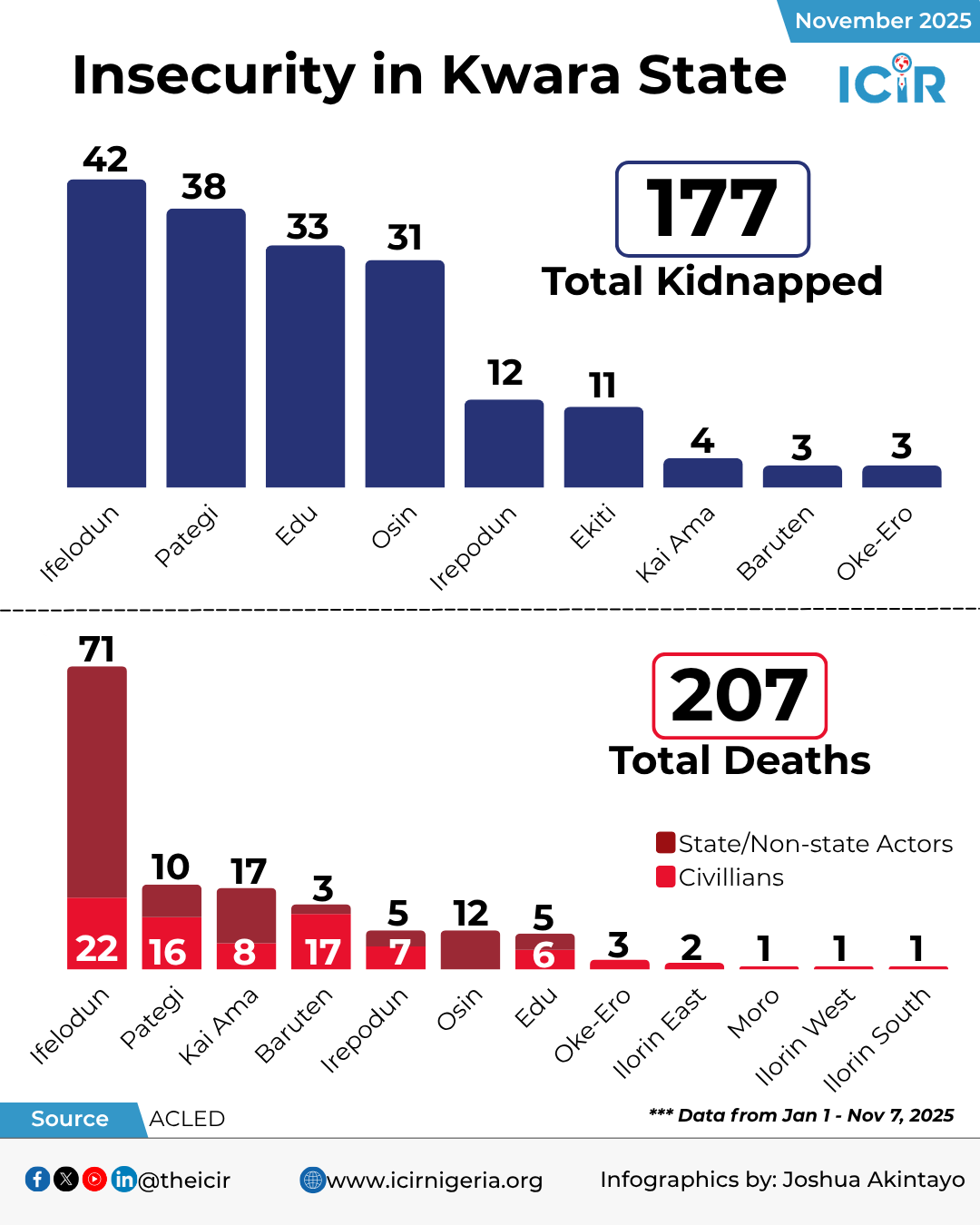
Insecurity: Kwara records over 207 killings, 177 abductions in 10 months

BARELY a day after the abduction of schoolchildren in Kebbi State, residents and worshippers in Eruku town, Ekiti Local Government Area of Kwara State, were thrown into panic as armed bandits attacked a local Church.

In a live-stream video seen by The ICIR, the worshippers, including children and elderly persons, were singing and waving their hands in devotion when sporadic gunshots rented the air across the premises.

The congregation, led by three young men, ran toward what appeared to be an exit to seek safety, but that would not save them from the ravaging bandits who had apparently surrounded the building.

About five bandits descended on those still in the Church, beat some worshippers and continued shot indiscriminately, sending the community into unspeakable terror. 

In the aftermath of the incident, at least two people were confirmed dead by the Kwara State police command in a statement on Tuesday, November 18. The command confirmed that the attack, which occurred around 6 p.m., led to the death of one Aderemi, and Tunde Asaba Ajayi, a vigilante.

However, several people were abducted, including the pastor, while others escaped with injuries.

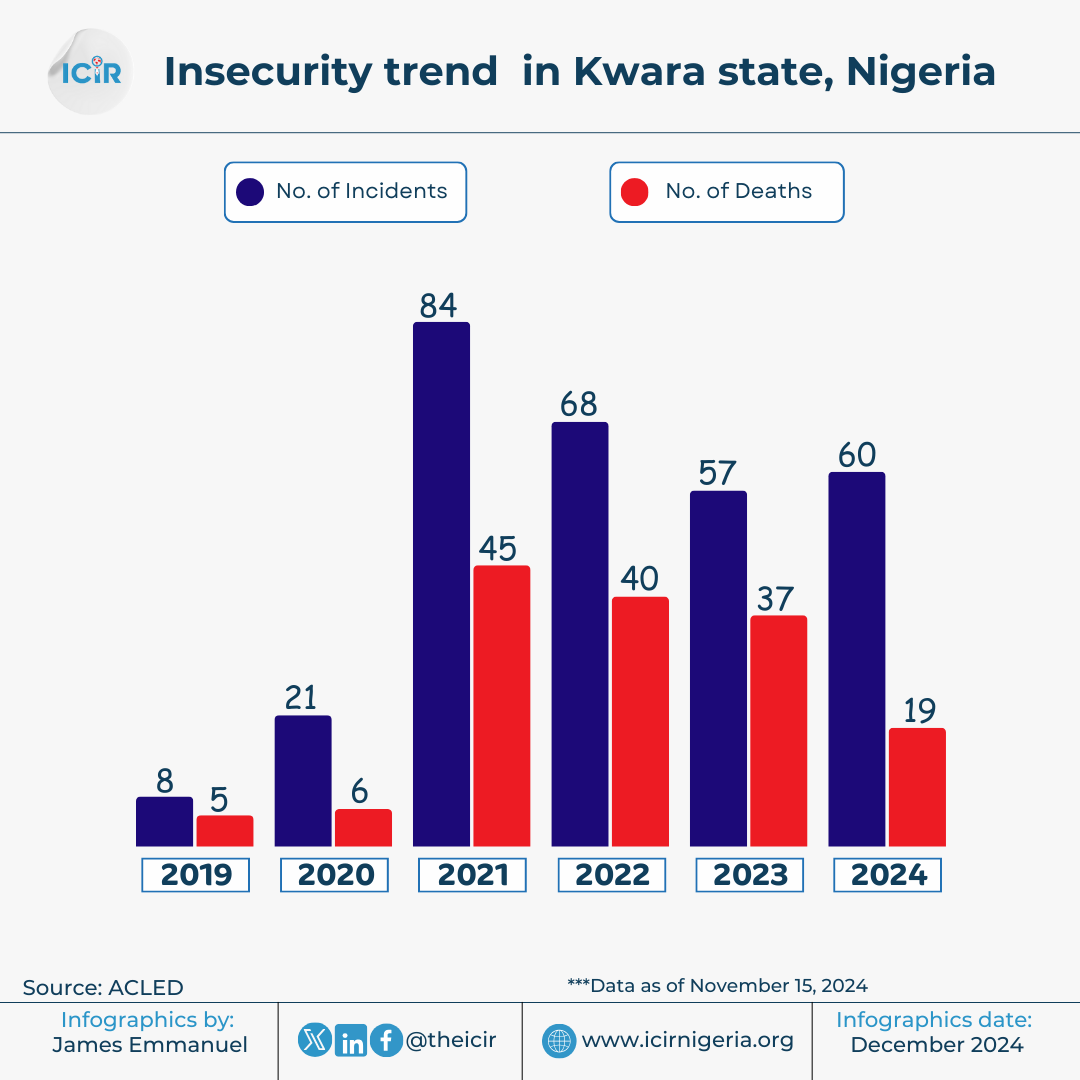
A troubling pattern

The ICIR reports that the attack is part of a troubling pattern in Kwara State. While there have been moments when the violence seemed to be slowing, each time it appeared under control, another wave of attacks struck, spreading fear among residents and disrupting daily life.

Between September and October, the police and state government frequently reported neutralising the bandits and overtaking of their camps in various parts of the state. These operations, according to officials, were part of ongoing efforts to curb banditry and restore security to communities that have been repeatedly attacked. 

Despite these claims, residents said attacks on their communities continued, with many now displaced or in bandits’ captivity.

207 people killed in 10 months

Between January 1 and November 7, 2025, at least 207 people were reportedly killed in the state, including 84 civilians. 

During the same period, 177 individuals were abducted, with the highest number of victims in Ifelodun, Pategi, Kaima, Irepodun and Osin LGAs.

The data sourced from the Armed Conflict Location & Event Data (ACLED), which tracks violent incidents across Nigeria, including attacks by bandits, herders, and other non-state armed groups exploiting ungoverned areas, showed that on average, this translates to roughly two death every three days in the state.

Infographics showing the number of deaths and kidnappings in Kwara State between January and November 7.

Out of the 207 killed, 84 were civilians, while 123 deaths were linked to state or non-state actors.

The ACLED’s dataset distinguishes civilian-targeted deaths but does not clarify whether state or non-state actors were involved in other fatalities unless noted in the “notes” column. 

The ICIR could not independently verify whether the 82 individuals killed were security operatives, including local vigilantes, or bandits killed during gun duels. 

What we could confirm is the multiple deaths of vigilantes in some of these Kwara communities since January. For instance in September 2025, the terrorists killed over 15 vigilantes and hunters after invading Oke-Ode community in Ifelodun Local Government Area of the state. The armed men abducted an unspecified number of residents during the attack.

In another instance, in April 2025, armed  terrorists attacked a vigilante group in Kemanji, Kaiama local government area of the state, killing over 15 members and villagers.

The majority of fatalities were concentrated in four LGAs with Ifelodun recording the highest  deaths of 93 fatalities, nearly half of the state’s total. This included 22 civilian-targeted and 71 deaths associated with state or non-state actors.

Pategi followed with 26 fatalities, including 16 civilians. Kaiama and Baruten also recorded high numbers. Together, the four LGAs account for 164 out of 207 deaths (79.23 per cent), showing that most attacks are geographically concentrated in that area. 

Some of these LGAs either border Kogi or Niger states or are in close proximity to them, making them accessible to armed groups operating from or moving through neighboring LGAs that directly border Kogi or Niger, states that have experienced insecurity in past years.

For instance, while Ifelodun does not directly border Kogi or Niger, it is close to both, particularly Kogi, located in central-east Kwara. Its high levels of violence, despite not being a frontier LGA, suggest that armed bandits may be operating from or moving through neighboring LGAs that border Kogi or Niger.

For Patigi, the LGA directly borders Niger State to the North (separated by the Niger River) and Kogi to the East (separated by the Niger River). The Niger River, rather than being a barrier, is a major avenue for movement. This makes it highly susceptible to inter-state conflict spillovers, including banditry, resource conflicts, and the movement of armed groups.

Other LGAs, include Irepodun (12) , Osin (12), Edu (11) and Oke-ero (3). Ekiti and Asa recorded zero fatalities during this period.

The same period saw 177 individuals kidnapped across Kwara State, with the largest numbers in Ifelodun (42), Pategi (38), Edu (33), Osin (31) and Irepodun (12).

Others are Ekiti (11), Kaiama (4), Baruten (3) and Oke-Ero (3).

Findings by The ICIR also showed that abductions are often linked to armed bandits or herders exploiting the locations. Families frequently pay ransoms, while many residents continue to live in fear of being targeted.

Things getting worse?

Kwara State’s insecurity has worsened steadily over the past few years. Violent incidents were relatively low until 2021, when 84 attacks resulted in 45 deaths. 

Infographics showing the number of deaths and kidnappings in Kwara State between 2021 to 2024
Infographics showing the number of deaths and kidnappings in Kwara State between 2019 to 2024

Earlier this year, The ICIR reported how the state recorded at least 60 incidents that led to 19 deaths in 2024.  Experts and residents said many attacks went unreported.

Residents also attributed this to bandit groups fleeing military pressure in the North-West, who are now continuing their activities such as kidnapping for ransom and cattle rustling. The ICIR reports that over the past years, banditry has spread extensively across the North-Western states of Zamfara, Katsina, Sokoto. 

In response, the Nigerian government intensified military operations to combat these armed groups, pushing many southward into Niger, Kogi, and the Federal Capital Territory (FCT). But the violence expanding into the North-Central region, led to Kwara State feeling its effects, with the armed groups exploiting ungoverned spaces in the remote areas of the state. 

Since the beginning of 2024, the state has recorded numerous incidents of attacks, kidnappings, and other violent crimes. For instance, in September, gunmen killed  10 people, including a pregnant woman, in Matogu village, Pategi Local Government Area of Kwara State.

These attacks have led to several communities in Ekiti, Asa, Moro, and Kaiama LGAs raising repeated concerns over increasing bandit movement through forest corridors linking Kwara to Kogi, Ekiti, and Niger states.

Meanwhile, a 2022 SBM Intelligence report highlighted an alarming rise in kidnappings, gang violence, inter-communal conflicts, targeted killings, and cattle rustling. The report noted that Fulani militants and herder-resident conflicts were often blamed for escalating violence.