THe Niger State government has ordered the immediate closure of all public and private primary and secondary schools following the abduction of an abduction of pupils from St. Mary’s Catholic School, Papiri, in Agwara LGA.
This was made known in a statement by the Chief Press Secretary to the Governor, Bologi Ibrahim, shortly after an emergency security meeting held with heads of security agencies in Minna on Saturday.
“Niger State Government has ordered the closure of all public and private Primary and Secondary Schools across the State.
Bologi said that the move is aimed at preventing further attacks on educational institutions and ensuring the safety of children across the state.
The directive affects missionary and Islamic schools, as well as Federal Government Colleges, including FGC Minna.
“Tertiary Institutions are not affected except for those in the defined vulnerable areas in Niger North and East Senatorial Districts respectively,” the statement added.
The ICIR reported that gunmen stormed St. Mary’s Papiri Private Catholic Secondary School in the Papiri community of Agwara Local Government Area, Niger State, and abducted scores of students and teachers, in the early hours of Friday, the second mass abduction within a week.
Several community members who visited the school after the incident confirmed the attack and described it as a coordinated operation carried out between 2:00 a.m. and 3:00 a.m.
The Head of Department, Disaster and Relief, Agwara Local Government, Ahmed Abdullahi Rofia, also confirmed the attack.
In his latest announcement, Governor Bago described the kidnapping as “sad and unfortunate,” noting that the administration’s priority is to secure the unconditional release of the children and other victims currently in captivity across the state.
Bago charged all heads of security agencies, Civil Society Organisations, the organised labour and religious leaders to focus on the rescue of the children and reiterated that the government will continue to protect the lives and property of its citizens.
He said the number of children kidnapped from the St. Mary’s Catholic School has not been ascertained as the Department of State Service, Nigeria Police and other security agencies are already carrying out headcount to ascertain the actual figure.
Friday’s abduction came five days after terrorists attacked Maga Comprehensive Girls’ Secondary School in Kebbi State, where about 25 female students were whisked away and a staff member was killed. A guard was also injured during the early-morning assault.
Similarly, the Adamawa State Government has ordered the closure of all public and private boarding schools in the state.
In a statement on Saturday, signed by the state Commissioner for Education and Human Development, Umar Pella, the government said the decision was aimed at preventing a repeat of the recent abductions of students in Niger and Kebbi states.
“Sequel to the security challenges that the country is facing at the moment, particularly with what happened to students in Niger and Kebbi states, it has been observed with great dismay that the target of the evil perpetrators is boarding secondary schools.
“Considering this ugly situation in the country, I am directed by his Excellency, the Executive Governor of Adamawa State, Hon. Ahmadu Fintiri, to deboard all boarding schools across the state, be it public or private schools.
“They should all operate as day schools for the moment. Therefore, by this letter, all principals and proprietors of public and private schools should deboard their respective boarding schools without further delay,” Pella said.
The ICIR reported on Saturday that Taraba State Governor, Agbu Kefas, has directed all public and private secondary schools in the state to immediately deboard their students amid growing insecurity nationwide.
The government explained that the rising security threats across the country have made boarding students in both public and private secondary schools vulnerable to kidnappers, citing the recent student abductions in Kebbi and Niger states.
THE 2025 Anambra governorship election, held on November 8, drew nationwide attention as residents of the state went to the polls to elect their next administrator.
Despite high expectations for a transparent electoral process, the campaign period, election day, and the aftermath were characterised by a flurry of unverified claims and viral content designed to confuse voters and undermine the electoral process.
Reports circulated online claiming that a certain candidate had won, violent incidents occurred, that officials were caught with cash, and that voting malpractices were rampant. Many of these stories, however, were found to be false or misleading, fact-checks by the Nigerian Fact-Checkers’ Coalition (NFC) later revealed.
Over the three days, the coalition fact-checked multiple claims but were able to conclude on a total of 28 claims. Out of these, six were verified as correct, 14 as incorrect, seven as misleading, and one as unproven. Here is a recap of some of the claims fact-checked.
Analysis of claims fact-checked
Misinformation about candidates and voting processes
Before voters cast their ballots, several claims sought to mislead the electorate about the voting process and the political landscape. For instance, an X user, @mr_niceguy234, claimed that Governor Chukwuma Soludo had declared November 7 a public holiday specifically for teachers to serve as delegates. NFC investigations revealed that while the state did declare a holiday, it applied to all workers, and no official documentation supported the teacher-specific claim.
An X user @starvillageboy (archived link)claimed that the People’s Democratic Party(PDP) did not field any candidate in the Anambra gubernatorial election.
According to the finalreport from the Independent National Electoral Commission (INEC) officially lists PDP candidate Jude Ezewanfor in the Anambra governorship race. He has also appeared in multiplemedia interviews, sharing his plans for the state if elected.
Similarly, a Facebook post circulated urging voters to use their index finger to mark ballots. The claim contradicted INEC guidance, stating that any finger could be used as long as the mark was clear.
A social media user alleged that voter turnout had historically never exceeded 22 per cent, yet analysis of past elections showed turnout closer to 46–47 per cent. These pre-election misrepresentations were designed to create doubt about the electoral process and potentially influence voter behaviour.
Misleading images and videos
During and immediately after voting, social media became a hub for misleading visuals and misinformation about candidates.
For instance, a video showing women being assisted to thumbprint ballots, shared by Nigeria Undivided on TikTok, was originally posted in 2023 and had no connection to the Anambra election. Other claims suggested local government chairpersons were caught with cash or that certain candidates, like the Anambra East chairperson, intimidated voters with armed men. Investigations confirmed that neither police nor observers witnessed any intimidation, and the purported arrests were found to be false.
Even high-profile claims gained traction. A Facebook user, Michael Chibuzo, alleged that two of Soludo’s mayors were caught with N750 million each. Field checks with the Anambra State Police Command disproved this, confirming no such arrests occurred.
Similarly, a video circulated by Bube Africà showed bundles of cash purportedly delivered as “election-sensitive materials,” but reverse image searches traced it back to Obi Cubana’s birthday celebration months earlier.
Adding to the wave of misinformation, the ADC coalition circulated images of a “Ghana-Must-Go” bag filled with cash, alleging widespread collusion between APGA and APC. A reverse image check revealed that these photos were from 2019 in Benue State, unrelated to the Anambra elections.
Misleading photo by shared by ADC to depict vote buying in Anambra
Misinformation about violent incidents
It is not so uncommon to see false reports of violence during the election. The Anambra is not different. On the day of the election, an X user, @Ojay147, posted a photograph of a man with a head injury, claiming it was from election-related violence. NFC traced the image back to 2018, during a clash among APGA party members in Dunukofia Local Government Area, proving the post misleading.
Old photo falsely linked to violence in the Anambra election
Similarly, a Facebook user, Ogechukwu Akwaeze,claimedthat the local government chairperson of Anambra East, Ifeanyi Chinweze, visited Community Development Primary School, Umueri Ward 2, Unit 003, accompanied by armed men to disrupt the election and intimidate voters.
The CJID observer Grace Nnoruka informed NFC that the LGA chairperson visited some polling units in the area. She also confirmed the presence of police vans in the polling unit but noted there was no form of intimidation. The observer stated that the LG chairperson and the police arrived at different times but departed almost simultaneously.Images from Arise TV confirm the peaceful conduct of the election at the polling unit.
False and premature result claims
In the aftermath of voting, social media became a hub for premature and misleading claims about the election outcome. For instance, on November 9, an X user, @whitenigerian, falsely claimed that APGA had secured 72.5 per cent of the votes, while others prematurely congratulated Governor Charles Soludo as the winner. Another X user asserted that Soludo had won with 361,893 votes, yet the Independent National Electoral Commission (INEC) confirmed the actual figure as 422,664 votes.
Meanwhile, reports that Ezechukwu Nweke, Action Alliance candidate, was leading the polls were entirely false, as vote collation had not yet been completed at the time of posting.
In addition, the African Democratic Congress (ADC)coalitionposted some photos of collation sheets on its X account, claiming the results were fake to discredit the coalition.
A comparison between the photosuploaded by the user and those available on the INEC IReV portal for polling units 005 Amadim V Square I (Achalla III LGA), 010 UGA B.S.S I (Aguata LGA), 039 Obosi Central School III, and 014 Obosi Central School I (both in Idemili North LGA) shows that the results are identical, accurate, and were not manipulated, contrary to the ADC coalition’s claim.
Accurate claims
Not all the viral claims surrounding the Anambra 2025 governorship election were false. Some posts circulating online accurately reflected the unfolding realities of the poll.
For instance, an X user @Tkoy2025 had claimed that there was “massive vote-buying” by the All Progressives Grand Alliance (APGA) and the All Progressives Congress (APC) during the election. This was verified as correct by the Nigerian Fact-checkers’ Coalition (NFC) after reporters from Premium Times and The ICIR confirmed witnessing incidents of voters being induced with cash across multiple polling units in the state. Early reports from Premium Times also corroborated that such practices were “rampant” in some areas.
Similarly, another verified claim came from a post highlighting results at a micro-level polling unit in Agulu, Anaocha Local Government Area – the home community of Labour Party (LP) presidential candidate, Peter Obi. The claim stated that the APC governorship candidate, Nicholas Ukachukwu, defeated the LP candidate with 73 votes to 57 votes at Polling Unit 019, Umudim Akasi Square, Agulu II Ward. This was confirmed correct through data obtained from the INEC IReV portal, which matched the figures precisely as stated online.
One of the MIL cards.
In addition, the NFC verified other localised realities of the election, including reports of technical delays linked to the Bimodal Voter Accreditation System (BVAS) and verified posts describing the deployment of an AI-powered real-time result dashboard, which processed updates from all 5,720 polling units across Anambra State. These confirmed instances reflected the evolving use of technology in election monitoring and the growing accuracy of certain user-generated election content.
Another verified incident involved Governor Chukwuma Soludo’s directive to remove Arabic inscriptions from certain public materials in Anambra State. Reports circulating on social media claimed that Soludo had ordered the removal of Arabic scripts from some government signage and documents. A check on theofficial website of the nation’s apex bank reveals that Soludo was the governor of the CBN in Nigeria at the time the shift was made.
Likewise, claims of BVAS (Bimodal Voter Accreditation System) malfunctions delaying voting at Polling Unit 001, Fegge Ward 5, were confirmed by Channels TV and Sahara Reporters, showing that certain operational issues affected accreditation and voting. The claim that the People’s Democratic Party (PDP) only got 1,401 votes is also correct.
Media Information Literacy articles
During the Anambra 2025 governorship election, the Nigerian Fact-Checkers’ Coalition (NFC) produced seven quick media and information literacy (MIL) articles and cards to guide voters, prevent misinformation, and strengthen public understanding of election processes. These were from the pre-election MIL.
The articles which were done in response to misinformation trends advised voters on what to do after casting their ballots, including monitoring the process peacefully, encouraging others to vote, observing the collation of results, and reporting any irregularities. They also provided practical steps for detecting fake election results, including verifying sources, avoiding premature claims, checking the authenticity of EC60E forms, and ignoring anonymous posts.
The NFC further explained how voters can identify old or misleading videos through careful observation, reverse image searches, timeline checks, context evaluation, and keyword searches. Cards also directed citizens to credible platforms such as NEC, reputable media, and fact-checkers for authentic election results.
One of the MIL cards.
Other articles focused on election-day offences like vote buying, impersonation, incitement, campaigning near polling units, and the legal penalties attached. Voters were reminded to stay alert for misinformation during result collation, rely on multiple credible sources, and verify before sharing.
Additional guides outlined how gubernatorial votes are counted from polling units to RA, LGA, and state collation along with the role of security agencies. The NFC also clarified who is legally allowed access to collation centres, restricting entry to accredited officials, agents, security personnel, and journalists.
This analysis was done from live checks conducted by members of the Nigerian Fact-checkers Coalition(NFC) for the Anambra Gubernatorial Election.
FOMER presidential candidate of the Labour Party, Peter Obi, has raised concerns over the conviction of the Indigenous People of Biafra (IPOB) leader, Nnamdi Kanu, warning that the development risks heightening tensions at a time when Nigeria is already grappling with deep economic hardship and worsening insecurity.
In a statement issued on Saturday, Obi described the conviction as “unfortunate” and a reflection of leadership failure, arguing that the government mishandled the matter from the onset.
“The news of Mazi Nnamdi Kanu’s conviction should compel every well-meaning Nigerian to pause and reflect. This is coming at a time when our beloved nation is facing severe economic hardship, insecurity, and the consequences of poor governance.
“Rather than reducing tension, this unfortunate development may well only aggravate it. I have always maintained that Mazi Kanu should never have been arrested. His arrest, detention, and now conviction represent a failure of leadership and a misunderstanding of the issues at stake,” Obi said.
The ICIR reported on Thursday that Justice James Omotosho of the federal high court in Abuja convicted and sentenced Kanu to life imprisonment, after admitting that Kanu was a freedom fighter seeking to liberate his people but chose the path of terrorism.
He found the accused guilty of all counts one to seven, including his sit-at-home order resulting in economic losses and death of innocent people in the South-East, being a member of a proscribed organisation and committing acts of terrorism, and threatening anyone who failed to obey his order.
The court also found him guilty of inciting the killings of Nigerian security personnel, and for making broadcasts to kill people.
Obi maintained that dialogue, not force, remains the most effective pathway to lasting peace, insisting that the concerns raised by Kanu were neither new nor impossible to resolve, noting that the government missed opportunities to embrace constructive engagement, empathy, and inclusive governance.
“For years, I have consistently argued that dialogue, constructive engagement, and inclusive governance offer the path to lasting peace. Coercion becomes necessary only when reason has been exhausted. In this case, I submit that the reason was not only not exhausted, but was probably not explored at all, or not fully explored.
“The concerns Kanu raised were not unheard of. The issues for which he demanded solutions were not insoluble. It only required wisdom, empathy, and a willingness to listen. In any functional society, such grievances are met with dialogue and reforms aimed at strengthening unity,” the former presidential candidate explained.
While urging the Presidency, the Council of State, and respected statesmen to intervene urgently and pursue a political settlement that prioritizes healing, reconciliation, and national unity, Obi likened the government’s handling of the case to “a man trapped in a hole who, instead of finding a way out, keeps digging deeper,” warning that the consequences of such actions could worsen national cohesion.
“The government’s approach has only deepened mistrust and created an avoidable distraction at a time when citizens are overwhelmed by harsh economic realities and insecurity. While some may insist that “the law has taken its course,” leadership often demands more than a strict, mechanical application of the law. Nations around the world resort to political solutions, negotiated settlements, and even amnesty when legal processes alone cannot serve the broader interest of peace and stability. Nigeria is not an exception.
“The handling of Kanu’s case mirrors the government as a man trapped in a hole but who, instead of looking for a way out, keeps digging deeper. It worsens not only the government’s predicament but also the nation’s collective condition.
If we truly desire a new Nigeria – a united, peaceful, and progressive one, our leaders must choose healing over hostility, reconciliation over retaliation, and dialogue over division. Only by addressing grievances with justice, fairness, and compassion can we move towards a future where every Nigerian feels heard, valued, and safe.
“My ultimate call at this time, without prejudice to how anyone feels about the decision of the court, is for us to be optimistic for peace and reconciliation which will come in the end. I am also saying, thereby, that the Presidency, the Council of State and credible statesmen who love this country and who are interested in cohesion and inclusivity, should rise to the occasion, for a lasting solution,” he said.
The ICIR reported that Kanu’s trial began after his 2015 arrest on charges of treasonable felony and terrorism, and the case saw multiple twists and developments since then.
In 2017, Kanu left Nigeria while on bail after a military raid on his home during the “Operation Python Dance” exercise in the South-East.
In June 2021, he was arrested in Kenya under controversial circumstances and repatriated to Nigeria, a development his legal team and IPOB denounced as an “extraordinary rendition.”
Kanu’s defence team consistently questioned the legitimacy of the trial, insisting that major legal and procedural breaches, including alleged violations of international extradition protocols and jurisdictional requirements weakened the prosecution’s case.
The ICIR reported that Kanu sacked his lawyers and agreed to stand for himself in the court. He faced a seven-count charge bordering on terrorism, treasonable felony, and incitement.
TERRORIST groups have intensified attacks on religious organisations and educational institutions in Nigeria. The ICIR reports that the daring terrorists battle not only with state and other non-state actors but also target civilians.
Several Churches in Nigeria have suffered a number of attacks by armed bandits who did not only abduct the worshippers but request for ransom before releasing the victims. In some instances, the armed bandits killed victims after collecting the ransom. The Evangelical Church Winning All (ECWA) was attacked in July 2025 by armed bandits while holding a meeting in Kampani Village, Maro, located in the Kajuru Local Government Area of Kaduna State. They killed at least five persons.
The schools are no longer safe for children as terrorists continue to launch attacks and abduct both learners and staff. Since the abduction of 276 Chibok schoolgirls in 2014 under the administration of Goodluck Jonathan, Nigeria continues to witness more invasion of schools and abduction of schoolchildren by terrorists. The ICIR chronicles the abduction of schoolchildren since 2014.
Timeline of incidents
November 14
The Islamic State West Africa Province (ISWAP) terrorists on Monday captured and executed Musa Uba, a Brigadier General of the Nigerian Army during a deadly ambush on a military convoy. Four other military personnel were killed in the ambush. This took place when the convoy, led by Uba of the 25 Task Force Brigade, was returning from a patrol near Wajiroko village in northeastern Borno state late on Friday.
November 17
The Kebbi State Police Command confirmed that armed gunmen stormed the Government Girl’s Comprehensive Secondary School, Maga in Danko/Wasuga LGA in the early hours of Monday. The attack resulted in the abduction of 25 students and the killing of the school vice principal.
November 19
Unknown gunmen with masks attacked worshippers of Christ Apostolic Church (CAC), Oke Isegun in Eruku, Ekiti Local Government Area of Kwara State during a thanksgiving session. The pastor, Lawrence Bamidele, said that at least 30 worshippers were kidnapped. He added that the service was actually a thanksgiving for 18 persons who regained freedom from their abductors.
The ICIR reported that at least two persons were confirmed dead during the church attack.
November 20
Sixteen prospective Corps Members who are graduates of Adeyemi Federal University of Education (AFUED) in Ondo State were said to have lost their lives in a fatal accident while traveling to the NYSC Orientation Camp in Gombe State.
November 21
Few days after the invasion of a school in Kwara State, armed gunmen abducted 215 schoolchildren and 12 staff of St. Mary’s School, a Catholic High School in Papiri community, Agwara Local Government Area of Niger State. The attack took place between 1am and 3am of that same day.
Taraba State Governor, Agbu Kefas, has directed all public and private secondary schools in the state to immediately deboard their students amid growing insecurity nationwide.
The directive was disclosed in a statement issued on Friday and signed by the Commissioner for Education, Augustina Godwin. She explained that the rising security threats across the country have made boarding students in both public and private secondary schools vulnerable to kidnappers, citing the recent student abductions in Kebbi and Niger states.
“In light of the current circumstances, Governor Kefas has issued a directive requiring all secondary schools, both public and private, to function exclusively as day schools for the time being. Principals and owners have been advised to promptly arrange for the deboarding of all students,” she said.
The ICIRreport that Taraba government directive is coming a few hours after the Federal Government shut down all 41 Unity Schools in the country over the growing spate of abductions and other forms of insecurity.
The Director of Senior Secondary Education at the Federal Ministry of Education, Binta Abdulkadir, announced this in a circular on Friday.
Similarly, the Plateau State Government has directed the immediate closure of all basic schools in the state, citing urgent need for preventive action.
It noted Government Junior Model Secondary Schools would close effective Saturday, November 22, 2025, while Primary and Day Schools would shut from Monday, November 24, as a precautionary measure.
In the same vein, the Katsina Government through its Ministry of Basic and Secondary Education on Friday ordered the immediate shutdown of all public schools across the state due to rising security concerns.
The order prompted thousands of boarding students to return home shortly after the announcement.
Godwin added that the Taraba State government has assured parents of its commitment to restoring stability and will continue collaborating with security agencies to address the situation.
The ICIRreported that gunmen stormed St. Mary’s Papiri Private Catholic Secondary School in the Papiri community of Agwara Local Government Area, Niger State, and abducted scores of students and teachers, in the early hours of Friday, the second mass abduction within a week.
Several community members who visited the school after the incident confirmed the attack and described it as a coordinated operation carried out between 2:00 a.m. and 3:00 a.m.
The Head of Department, Disaster and Relief, Agwara Local Government, Ahmed Abdullahi Rofia, also confirmed the attack.
Friday’s abduction came five days after terrorists attacked Maga Comprehensive Girls’ Secondary School in Kebbi State, where about 25 female students were whisked away and a staff member was killed. A guard was also injured during the early-morning assault.
THE United Nations has condemned the abduction of hundreds of pupils and teachers from St. Mary’s Catholic Primary and Secondary Schools in Niger State during the early hours of Friday.
UN Spokesperson, Stéphane Dujarric, in a statement described the attack as “heartbreaking” and emphasised that “schools must be safe places for learning.”
“We have witnessed yet another abduction of pupils in Niger State, just days after the kidnapping of schoolchildren in Kebbi,” Dujarric said.
The ICIRreported that terrorists stormed St. Mary’s Papiri Private Catholic Secondary School in the Papiri community of Agwara Local Government Area, Niger State, and abducted scores of students and teachers, in the early hours of Friday, the second abduction within a week.
Several community members who visited the school after the incident confirmed the attack and described it as a coordinated operation carried out between 2:00 a.m. and 3:00 a.m.
The Head of Department, Disaster and Relief, Agwara Local Government, Ahmed Abdullahi Rofia, also confirmed the attack.
Friday’s abduction came five days after terrorists attacked Maga Comprehensive Girls Secondary School in Kebbi State, where about 25 female students were whisked away and a staff member killed. A guard was also injured during the early-morning assault.
“We join UNICEF and the UN Resident and Humanitarian Coordinator, Mohamed Malick Fall, in expressing deep sympathy to the families and communities affected. Every effort must now focus on ensuring the childrens’ safe and immediate return,” Dujarric added.
Dujarric noted that the recurring assaults highlight the urgent need to fully enforce the Safe Schools Declaration, which sets out practical steps to protect educational institutions and ensure students’ access to learning during conflict.
The ICIRreported on Friday that the Federal Government has shut down all 41 Unity Schools in the country over the growing spate of abductions and other forms of insecurity.
The Director of Senior Secondary Education at the Federal Ministry of Education, Binta Abdulkadir, announced this in a circular on Friday.
Similarly, the Plateau State Government has directed the immediate closure of all basic schools in the state, citing urgent need for preventive action.
A statement issued by the Plateau State Universal Basic Education Board on Friday said Government Junior Model Secondary Schools would close effective Saturday, November 22, 2025, while Primary and Day Schools would shut from Monday, November 24, as a precautionary measure.
Similarly, the Katsina Government through its Ministry of Basic and Secondary Education on Friday ordered the immediate shutdown of all public schools across the state due to rising security concerns.
The order prompted thousands of boarding students to return home shortly after the announcement.
The Commissioner for Basic and Secondary Education, Yusuf Jibia, said on DW Hausa that the closure was a precautionary measure, following recent attacks in neighbouring states.
THE Federal Government has shut down all 41 Unity Schools in the country over growing spate of abductions and other forms of insecurity.
The Director of Senior Secondary Education at the Federal Ministry of Education, Binta Abdulkadir, announced this in a circular on Friday.
Part of the circular reads, “Sequel to the recent security challenges in some parts of the country and the need to prevent any security breaches, the Honourable Minister of Education has approved the immediate closure of the listed Federal Unity Colleges.
“Principals of the affected colleges are to ensure strict compliance. Please accept the warm regards of the Honourable Minister.”
Similarly, the Plateau State Government has directed the immediate closure of all basic schools in the state, citing urgent need for preventive action.
A statement issued by the Plateau State Universal Basic Education Board on Friday said Government Junior Model Secondary Schools would close effective Saturday, November 22, 2025, while Primary and Day Schools would shut from Monday, November 24, as a precautionary measure.
“The Plateau State Universal Basic Education Board (PSUBEB) has directed the immediate closure of schools across the state. This decision is underscoring the urgent need for preventive action,” the statement read.
The Board also directed Local Government Education Authorities, school heads, and community leaders to cooperate and remain vigilant.
“The Board assures parents, guardians, and stakeholders that this closure is a temporary but necessary step to forestall potential threats and to reassure communities that the government is prioritising the well-being of our learners,” the statement added.
Similarly, the Katsina Government through its Ministry of Basic and Secondary Education on Friday ordered the immediate shutdown of all public schools across the state due to rising security concerns.
The order prompted thousands of boarding students to return home shortly after the announcement.
The Commissioner for Basic and Secondary Education, Yusuf Jibia, said on DW Hausa that the closure was a precautionary measure, following recent attacks in neighbouring states.
He urged parents, caregivers, teachers, and the public to abide by the order as officials monitor the security situation in the country to safeguard students and staff.
Jibia explained that most schools had already concluded first-term academic activities.
The latest development comes less than 24 hours after gunmen stormed St. Mary’s Papiri Private Catholic Secondary School in the Papiri community of Agwara Local Government Area, Niger State, and abducted scores of students and teachers, in the early hours of Friday, the second mass abduction within a week.
Several community members who visited the school after the incident confirmed the attack and described it as a coordinated operation carried out between 2:00 a.m. and 3:00 a.m.
The Head of Department, Disaster and Relief, Agwara Local Government, Ahmed Abdullahi Rofia, also confirmed the attack,
Friday’s abduction came five days after terrorists attacked Maga Comprehensive Girls’ Secondary School in Kebbi State, where about 25 female students were whisked away and a staff member was killed. A guard was also injured during the early-morning assault.
Reacting to the latest incident, the Niger State Police Command confirmed the attack and announced that security forces had already been deployed for an immediate rescue operation.
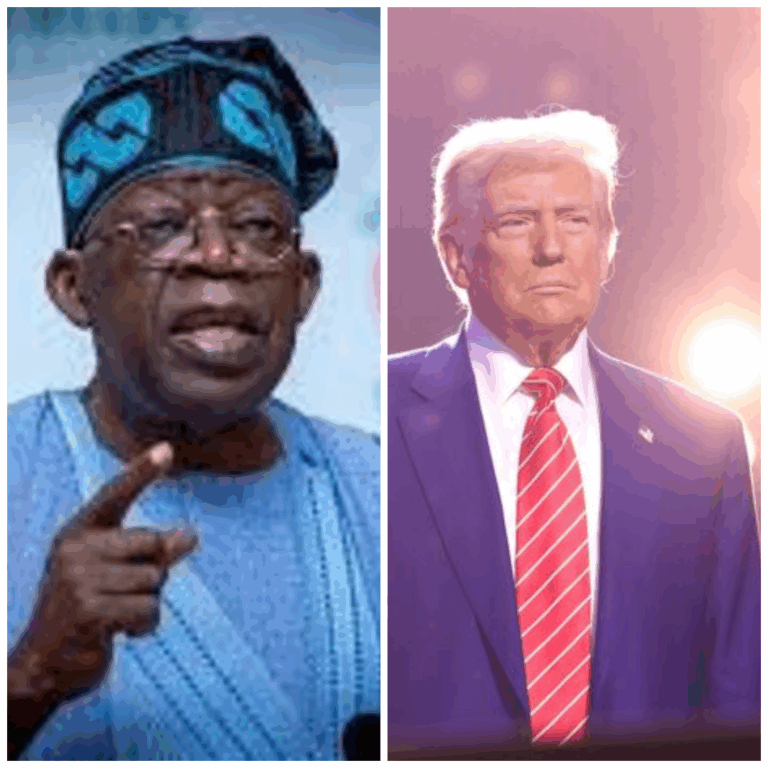
THE Federal Government has said President Bola Tinubu would visit the White House when the “situation is right,” dismissing insinuations that the president is avoiding Washington amid recent diplomatic tensions triggered by United States President Donald Trump’s designation of Nigeria as a “Country of Particular Concern” and his Christian genocide claim in the African most populous nation.
Speaking during an interview on Channels Television, on Friday, November 21, the Minister of Information Mohammed Idris, said there was no breakdown in Nigeria–US relations, insisting that both countries were actively engaging on the issues raised by the Trump administration.
Addressing questions on why Tinubu had yet to visit the White House, he said the president was not avoiding the US and that diplomatic timing mattered.
“Well, we believe that he will go once the situation is right for him to go. But he has been to America. I mean, I was with him at the U.N. when he took office,” the minister said.
The ICIR reports that Tinubu took over power on May 29, 2023, while Trump was sworn in on January, 20, 2025.
When pressed specifically about a White House visit, he added: “I believe that he will do that. I believe that. But let’s not make a deal out of it. The fact is that these countries are engaging. America is engaging Nigeria. Nigeria is engaging America.”
He stressed that ongoing diplomatic activities demonstrated that ties between both nations remained strong.
“No, our relationship hasn’t broken down, it hasn’t. If it has broken down, I mean, I can confirm to you that there are diplomatic engagements happening between Nigeria and the United States and other countries,” he said.
According to him, the core issue is a ‘misunderstanding’ on the American side about Nigeria’s internal security challenges.
“I don’t think it’s a matter of broken down. I think it’s a matter for us to engage America so that they can understand this more. What we feel is that there is no proper understanding of what the situations are in America” he stated.
He confirmed that National Security Adviser Nuhu Ribadu is currently leading a delegation in Washington for talks after Trump’s designation of Nigeria as a Country of Particular Concern.
“The fact that they (Ribadu and others) are in America indicates that there are channels of communication that have already been opened between Nigeria and America to deal with this matter, especially after this designation by President Trump,” he said.
Fielding questions on whether Tinubu and Trump had spoken directly, he emphasised that leader-to-leader communication follows diplomatic protocols.
He also expressed confidence that future communication between the two presidents was not off the table.
“I don’t think it’s something impossible to say that President Trump is not going to talk to President Tinubu, or President Tinubu is not going to talk to President Trump,” he stated.
Idris said the Federal Government was doing everything possible to contain insecurity in Nigeria. He explained that followers of both Christian and Islamic faiths had been victims of insecurity.
He said it was painful that the crisis was escalating when the nation was beginning to reap the benefits of the economic policies of the administration.
He argued that Nigeria was not helpless in tackling insecurity but needed the support of the US and other nations to defeat terrorism and related causes of insecurity facing the nation.
The minister also informed that Tinubu shelved his planned trips to Angola and South Africa to ensure the nation’s security forces return peace to the country, especially communities where gunmen had recently whisked away schoolchildren and worshippers in church.
He gave the assurance that the president’s actions on the recent spate of abductions and general insecurity would yield fruits in the coming days.
He, however, affirmed that Trump’s alarm could have escalated the tensions and recent attacks.
Idris urged Nigerians to remain firm and united in the face of the challenges. He pledged that the Tinubu administration would lead the nation of the crisis.
The ICIR reports that the remarks came as Ribadu led a high-powered delegation to the US following renewed allegations of Christian genocide claims that gained traction in the last few weeks.
The situation escalated earlier this month when Trump redesignated Nigeria as a Country of Particular Concern and tasked a group of US lawmakers, including Congressman Riley Moore, to investigate alleged religious persecution in Nigeria.
Trump threatened that he was considering military intervention in Nigeria if nothing was done to stop the killings.
Despite the Nigerian government’s efforts to dismiss the claims, the US pressed ahead, culminating in a development on Tuesday, November 18, when American rapper Nicki Minaj was invited to testify at the United Nations against Nigeria in an event co-hosted by the US Mission to the UN.
Similarly, the Nigerian delegation on Wednesday held a detailed meeting with Congressman Moore, who reportedly released a statement describing the engagement as “frank, honest, and productive.”
Moore said the Nigerian officials shared extensive information on counterterrorism efforts, security assistance, and protection of vulnerable communities.
PRESIDENT Bola Tinubu has announced the cancellation of his scheduled trips to South Africa and Angola in order to address pressing security concerns in Nigeria.
He has consequently assigned his vice, Kashim Shettima, to represent him at the G20 Leaders’ Summit in Johannesburg.
The Vice President spokesperson, Stanley Nkwocha, revealed this in a statement on Friday, November 21.
“Following the decision of President Bola Ahmed Tinubu, GCFR, to stay back in Nigeria and attend to security concerns in the country, Vice President Kashim Shettima has departed Abuja to represent the President at the G20 Leaders’ Summit in Johannesburg, South Africa,” Nkwocha said.
The summit, slated for Saturday, November 22, to Sunday, November 23, at the Johannesburg Expo Centre, is expected to gather leaders of the world’s top 20 economies, alongside representatives of the European Union, the African Union, and major financial institutions.
The president had initially been scheduled to depart Abuja for the summit, followed by a trip to Luanda for the 7th AU-EU Summit.
The latest announcement followed Tinubu’s earlier decision to postpone his scheduled trips to the two countries to await further security briefings on recent security incidents in Kebbi and Kwara states.
The ICIRreported that Tinubu postponed his scheduled trips to the two nations, citing “security breaches” in Kebbi and Kwara States.
On November 18, two people were confirmed dead and an unspecified number of residents abducted after terrorists attacked Eruku town, in the Ekiti Local Government Area of Kwara state.
The Kwara State Police Command in a statement on Tuesday, November 18, said the attack left two men fatally shot and several others missing.
According to the Police Public Relations Officer, Adetoun Ejire-Adeyemi, a superintendent of police, the Divisional Police Officer (DPO) of Eruku and his team, working alongside local vigilantes, swiftly mobilised after hearing gunshots from the outskirts of the town.
Earlier on Monday, November 17, gunmen stormed Government Girls’ Comprehensive Secondary School, Maga, in Danko/Wasagu Local Government Area, and abducted several students and killed the school vice principal.
THERE is currently no end in sight to Nigeria’s grid collapse, as the latest report from the Nigerian Electricity Regulatory Commission (NERC) showed unresolved grid weaknesses.
Nigerian businesses, homes and industrial clusters are not relieved from the incessant grid collapse, which industry stakeholders say was a result of managerial and technical incompetence and misalignment of various power value chains.
The ICIR reports that in 2024, the national grid collapsed more than 12 times.
Nigeria has also witnessed several grid collapses in 2025, with the most recent one occurring on September 10, causing widespread power outages across the country.
According to the Commission’s latest Operational Performance of Power Plants fact sheet for October, the grid-connected plants recorded a Plant Availability Factor (PAF) of 40 per cent during the month, up by two per cent.
The NERC disclosed that system stability indicators fell short of regulatory thresholds.
It explained that grid voltage fluctuated between 294.55 (kilovolts)kV and 346.90kV, dipping below and rising above the target band of 313.50–346.50kV.
The regulator explained further that the grid frequency performance also remained unstable, oscillating between 49.46Hz and 50.69Hz—well outside the prescribed 49.75–50.25Hz range.
It noted that during the period, hydropower stations outperformed their thermal counterparts in availability.
The breakdown shows that Zungeru posted a 100 per cent PAF (700MW available), followed by Jebba at 93 per cent, and Kainji at 75 per cent.
Conversely, the regulator revealed that the country’s power plants recorded improved performance in October.
The commission, however, announced that the grid voltage and frequency stability remained outside prescribed operational limits.
It stated that out of the nation’s 13,625 megawatts (MW) of installed capacity, an average of 5,506MW was available for dispatch, a six per cent increase from the previous month.
Despite this improvement, only 78 per cent of available generation capacity was utilised.
In the month under review, the average hourly energy generation stood at 4,290 MWh/h, representing a 5 per cent rise.
Other strong performers included Ihovbor (Unit 2) at 89 per cent and Shiroro at 74 per cent.
Meanwhile, gas-powered plants such as Odukpani (31 per cent), Delta (45 per cent), and Egbin (50 per cent) operated far below installed capacity, reflecting ongoing challenges with gas supply, maintenance, and ageing infrastructure.
A number of plants, including Alaoji and Ibom Power, recorded zero available capacity throughout the period.
The report showed that the top ten energy producers accounted for 80 per cent of total generation in October.
It stated that Kainji delivered the highest load factor at 95 per cent, followed by Olorunsogo (Unit 1), Ikeja West, Dadin-Kowa, and Omoku, all at or near full utilisation of available capacity.
However, Zungeru, despite having full availability, recorded a relatively low load factor of 47 per cent, indicating limited dispatch due to grid constraints or water management considerations.
Also, during the period, several grid-connected plants continued to struggle, with Sapele Steam posting a two per cent availability factor, Omotosho (2) recorded three per cent, while Ihovbor (1) and Olorunsogo (2) posted 12 per cent and 14 per cent respectively.
Also, only a few small-capacity stations, such as Dadin-Kowa (40MW), Ikeja (110MW), and Igbabo (45MW), operated at 100 per cent availability.