Home Blog Page 129

Reactions trail Nnamdi Kanu’s life sentence

0

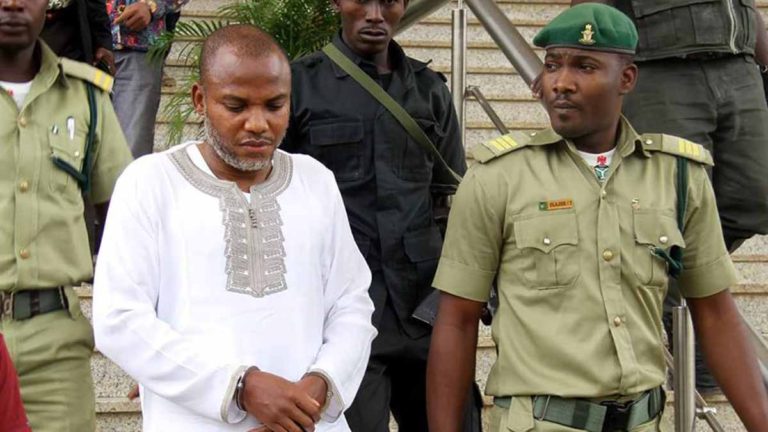
NIGERIANS and prominent figures in the international community have reacted to the Abuja Federal High Court’s verdict that sentenced the leader of the proscribed Indigenous People of Biafra (IPOB), Nnamdi Kanu, to life imprisonment instead of death sentence sought by his prosecutor, after several years of standing trial on terrorism charges.

The judge, James Omotosho, delivered the ruling on Thursday, November 20, after admitting that Kanu was a freedom fighter seeking to liberate his people but chose the path of terrorism.

He found the accused guilty of all counts one to seven, including his sit-at-home order resulting in economic losses and death of innocent people in the South-East, being a member of a proscribed organisation and committing acts of terrorism, and threatening anyone who failed to obey his order.

The court also found him guilty of inciting the killings of Nigerian security personnel, and for making broadcasts to kill people.  

A chieftain of the All Progressives Congress (APC) in Lagos State, Joe Igbokwe, expressed satisfaction with the judgement in a video he shared on Facebook.

“I am not happy that somebody will be convicted and sentenced to life, but also, I understand that there has to be accountability. This is the beginning of the long journey to the quest for peace in the South-East,” he said.

The Federal Government prosecuting counsel, Adegboyega Awomolo, said the judiciary salvaged Nigeria from IPOB oppression.  

“Today, God has brought an end to injustice, oppression suffered by our brothers and sisters of the eastern states of Nigeria. They will now be able to sleep with their two eyes closed,” he said.

In its reaction, the Centre for Social and Economic Rights (CSER) lauded the judiciary for the conviction and sentencing of the IPOB leader. It described Kanu as an international terrorist and called the judgment a significant victory in Nigeria’s war against terrorism.

The CSER Executive Director, Nelson Ekujumi, in a statement condemned the attempts by some individuals to portray IPOB as a freedom-fighting organisation, highlighting the history of terror, killings, and destruction the group had caused, particularly in the South-East.

Meanwhile, several voices in the international community condemned the ruling. Among them is the Chairman, Austrian Committee For NATO, Gunther Fehlinger-Jahn, who called on the Nigerian government to free the IPOB leader in a one-minute video.

“Dear friends of the free world, I want to protest against the treatment of Mazi Nnamdi Kanu, the hero of Biafra, the Mandela of Nigeria and the Rugova of West Africa, a peaceful man, a trusted man, a credible personality of global standing, and he’s treated so shamelessly in the kangaroo courts of Nigeria this morning. It’s an absolute disgrace,” he said. 

Fehlinger-Jahn challenged the United States and European Union to declare support for Kanu.

“The free world asks and calls for the Secretary of State Marco Rubio and Kaya Kalas, the Prime Minister of the European Union, to punish Nigeria and to make very clear no more support for Nigeria if Mazi Nnamdi Kanu is not freed and liberated immediately in this kind of mock political, Stalin’s kind of prosecution, which the Nigerians have copied from the Soviet Union and Yugoslavia. It’s an absolute disgrace and must be ended, and he must be freed.

“Free Mazi! Free Mazi! Free Mazi! Here from Vienna, we shout that loud and clear, and I hope the world is listening, hearing, and saying to Nigerian authorities in their brutal authoritarian style that this must stop. Liberate Mazi. Free him,” he added.

Similarly, Human Rights Activist, Malcolm Emokiniovo Omirhobo in a statement also compared Kanu’s judgement to Sheikh Ahmad Gumi, whom he said openly fraternised with armed bandit groups, negotiated with terrorists, defended their actions, issued inflammatory public statements, positioned himself as their public relations officer, and continued to walk freely without even a police invitation.

“The recent conviction of Mazi Nnamdi Kanu for alleged incitement through his broadcasts has once again exposed the disturbing reality of Nigeria’s two-tiered justice system; one that punishes some citizens with ruthless efficiency while shielding others who commit equal or worse offences in full public view.

“While Kanu has been arrested, detained, tried, and now convicted, Sheikh Ahmad Gumi, who openly fraternises with armed bandit groups, negotiates with terrorists, defends their actions, issues inflammatory public statements, and positions himself as their public relations officer, continues to walk freely without so much as a police invitation.

“This contradiction is not just morally indefensible; it is unconstitutional. Sections 17, 36, and 42 of the 1999 Constitution guarantee equality before the law, equal protection for all citizens, and freedom from discrimination in law enforcement. Yet, in today’s Nigeria, one man is prosecuted for speech, while another who routinely engages with terrorists is celebrated as a ‘mediator.” 

The argued that the process conflicted with the rule of law but was done through selective discretion. 

According to him, Gumi enters terrorist camps freely, meets armed criminals responsible for mass killings and kidnappings, publicly defends them as ‘misunderstood’, issues sectarian and provocative statements, and undermines national security repeatedly.

He called on the Federal Government, the Attorney-General of the Federation, the Department of State Services, and the Nigeria Police Force to apply the same standards of law to all citizens regardless of ethnicity, religion, region, or political agenda.

“Investigate Sheikh Ahmad Gumi for his open engagement with terror groups. End the culture of selective prosecution that has become the hallmark of governance. Restore public confidence in the justice system by demonstrating fairness and impartiality.

“The conviction of Nnamdi Kanu while Sheikh Gumi remains untouched is a glaring example of double standards. Until the Nigerian state demonstrates that the law is blind to religion and ethnicity, its fight against insecurity will remain compromised,” he wrote.

In his comment on the case, US Congressman, Former chairman of the Africa Subcommittee and now a member of the Energy and Commerce Committee Representative, John James, opined that Kanu’s case was a proof of religious persecution in Nigeria.

Similarly, a permanent deacon of the Diocese of Lancaster, Nick Donnelly wrote on his handle that Kanu was falsely convicted of terrorism. 

“Mazi Nnamdi Kanu has been falsely convicted of terrorism. This has been nothing but a show trail, a travesty of jurisprudence. 

“Witnesses have lied, due process has not been observed, legality trampled underfoot. All tyrannical governments imprison their political opponents, thereby destroying democracy,” he wrote.

Nigeria’s famous writer, Chimamanda Ngozi Adichie also shared her thoughts on the ruling. She wrote on X, “The truth is that Mazi Nnamdi Kanu is a global figure. Even the judge, the DSS, Police and those writing on social media from the place of unnecessarily induced anger and bitterness RESPECT him. 

“A son of man was born sound for a purpose. Don’t cry for him, rather cry for yourselves, families and communities.”

Another human rights activist, Elohchukwu Ohagi, compared the Kanu’s sentence to the judgement of Sunday Igbogho. 

“The hypocrisy of these people is second to none. Igbogho walks free. He is not in prison and has no case. But Yoruba people say Mazi Nnamdi Kanu should be in jail,” he posited.

Speaking on behalf of Ndigbo leaders, the Deputy Speaker, House of Representatives, Ben Kalu, noted, “All hope is not lost. Political solution is underway to secure Kanu’s release.” 

In a statement by Levinus Nwabughiogu, the Deputy Speaker’s Chief Press Secretary, Kalu expressed optimism that the convict would be freed through a political approach.

He expressed hope that President Bola Tinubu would heed the pleas of Igbo leaders on the matter.

“It is now time to explore political solutions that had been hindered because the matter was before the court. But now that the court has finished, it is time to intensify the request for the president’s intervention, and we are sure that the president is not averse to it. We are going to get it. All hope is not lost. Our people should remain calm.”

The ICIR reported that Kanu’s trial began after his 2015 arrest on charges of treasonable felony and terrorism, and the case saw multiple twists and developments since then.

In 2017, Kanu left Nigeria while on bail after a military raid on his home during the “Operation Python Dance” exercise in the South-East.

In June 2021, he was arrested in Kenya under controversial circumstances and repatriated to Nigeria, a development his legal team and IPOB denounced as an “extraordinary rendition.”

Kanu’s defence team consistently questioned the legitimacy of the trial, insisting that major legal and procedural breaches, including alleged violations of international extradition protocols and jurisdictional requirements weakened the prosecution’s case.

The ICIR reported that Kanu sacked his lawyers and agreed to stand for himself in the court. He faced a seven-count charge bordering on terrorism, treasonable felony, and incitement.


Detty December: from street slang to marketable brand

0

DETTY December, a phrase that has been part of Nigerian slang since 2010, is now officially trademarked.

Deola and Darey Art Alade secured a legal trademark for Detty December in 2019 through their company, Livespot360. For years, the registration remained largely unnoticed, even as the phrase became a nationwide shorthand for parties, concerts, and the festive end-of-year energy.

But after the couple announced and launched Detty December Fest in September, the trademark resurfaced in public consciousness. By October, many Nigerians realised, for the first time, that the beloved cultural phrase had been legally owned for years. This discovery quickly ignited debates about cultural ownership, creativity, and the commercialisation of shared expressions.

A similar situation recently unfolded in the baking industry when the owner of the popular cake brand ‘Fastest Cakes’ took legal action against an Ibadan-based baker who claimed to have been using the description “fastest cakes in Ibadan” for years, and registered the name with the Corporate Affairs Commission (CAC) in April 2025 after the brand had opened an outlet in the city.

The case sparked widespread discussion about how individuals or companies can trademark seemingly generic phrases like “luxury cakes” or “best cakes” and then pursue legal action against small business owners simply for using them in captions or hashtags.

Trademark versus culture: when a phrase becomes a brand

So, what exactly does it mean to trademark a phrase like Detty December? Under Nigerian law, a trademark is a distinctive sign, symbol, or phrase that identifies and distinguishes the goods or services of one business from another.

It gives the owner the exclusive right to use that mark in commerce and prevents others from using it in ways that could confuse. In practice, this means that while everyone can still talk about Detty December as a cultural concept, using it commercially for events, merchandise, or advertising, without permission could potentially constitute infringement.

 Ayomide Tayo, a pop culture critic, told The ICIR that Detty December is more than a phrase; it is a mood. It reflects pride in Nigerian youth culture and the country’s rising influence on global pop music and entertainment.

He stated that while the term has become embedded in public discourse, the trademark creates tension for show promoters and entrepreneurs.

“What Detty December represents is a celebration of how cool it is to be a Nigerian right now. Thanks to the international success of Nigerian contemporary pop music, the world perceives young Nigerians in a new light. So, Detty December is a pilgrimage for young Nigerians abroad and those interested in tapping into Lagos nightlife during the festive period.”

“The name can be trademarked, but it does not stop the partying and the emotional experience; it might affect show promoters who had events tagged ‘Detty December’, but for the masses, I doubt it would have much of an impact,” Tayo noted.

Legal perspectives on cultural expressions

Habeeb Gobir, an intellectual property and tech lawyer, states that under Nigerian law, particularly the Trade Marks Act, Cap T13, Laws of the Federation of Nigeria 2004, a mark is registrable if it is distinctive and capable of distinguishing one entity’s goods or services from another’s. Even widely used phrases can qualify if they have acquired distinctiveness through commercial use and are tied to specific goods or services.

“For example, “Detty December’ in public conversation simply refers to festive social activities. But if someone uses it distinctively for branded events, merchandise, or entertainment services, and can show it serves as a source identifier, then it may be eligible for trademark protection.

The prior public use of the phrase could weaken its distinctiveness and make registration questionable. The Registrar at the Trademarks Registry has the discretion to refuse registration where a phrase is descriptive, generic, or customary in the current language or trade practice.” Gobir explained.

This debate sits at the uncomfortable intersection of public culture and private legal rights. While a trademark gives its owner commercial control over a phrase, Nigerian law also recognises that some expressions belong to everyone. The Trademarks Act provides room for objections even after a mark has been registered, on several grounds. A trademark can be challenged if it is not distinctive enough, if it has become too common in everyday language, or if granting exclusive rights would run against public interest or accepted cultural practice.

Put simply, trademark law was never created to privatise collective cultural expressions. Phrases that have long existed in the public domain, or are widely used as part of social language, are not typically meant to be locked behind private ownership, especially if such ownership could restrict how the public naturally uses them.

“Trademark rights are not designed to privatise cultural heritage. Nigerian law, in principle, does not protect expressions that belong to the public domain or form part of common social language.

Therefore, if the registration of “Detty December” or similar cultural phrases prevents the public from using them in their natural expressive form, it can be challenged before the Trademarks Tribunal or Federal High Court on public interest grounds.” Gobir added

These concerns deepen when cultural expressions shift from community use to corporate control. Tayo observed that such transitions often strip the expression of its authenticity, leaving it open to exploitation by people who may not fully represent or understand the culture behind it.

“It lacks authenticity and is exploited by people who do not belong to the culture. My fear is that a cultural celebration like this will be pimped to the highest bidder, and in a couple of years, it will lose its cultural value,” Tayo stated.

He added that the implications go beyond culture; they shape the future. Once legal ownership enters the picture, people become more cautious and commercially savvy about the phrases they coin or popularise.

Gobir and Tayo share the same stance on the consequences of trademarking for entrepreneurs. He stated that once a phrase is registered as a trademark, any commercial use without permission, whether in event promotion, merchandise, or advertising, could amount to infringement. This type of enforcement has the potential to disrupt business plans and expose smaller creators to legal pressure, especially when rights holders take an aggressive approach.

“The legal consequences include Cease-and-desist orders, Damages or account of profits, and Injunctions preventing further use. Commercially, it can disrupt marketing plans and even expose small creators to legal intimidation, especially where enforcement is aggressive.

However, non-commercial or descriptive use, for example, using “Detty December” in conversation or as part of commentary, would not typically amount to infringement.” Gobir highlighted.

In reflecting on how Detty December ended up in private hands, pop culture analyst Tayo suggested that the phrase might have been better safeguarded as a shared cultural asset. He noted that if relevant agencies had recognised the cultural and economic weight of youth-driven expressions early enough, they could have ensured that no single organisation acquired exclusive naming rights. Instead, he argued, institutions often overlook the soft power embedded in youth culture until it becomes too valuable to ignore.

He added that the trajectory of Detty December is not unusual. In his view, most cultural movements eventually collide with capitalism; it is part of how industries grow and how new markets are created. The risk, he warned, is when the original communities behind these expressions stop benefiting from them, allowing cultural meaning to be reshaped or diluted by commercial interests.

Gobir agreed that creators hoping to protect emerging cultural phrases should act early and strategically: register expressions before they become mainstream, define the scope of protection narrowly to avoid stifling public use, and remain engaged with the communities that shaped the language in the first place. Importantly, he emphasised the need for fair use allowances so that cultural expressions continue to thrive in everyday conversation, even as they acquire commercial value.

Their perspectives underscore a larger tension: the challenge of preserving collective cultural identity in a system where almost anything, even a feeling, a season, or a slang term, can be legally owned.

[BREAKING] Terrorists attack Niger school, abduct scores of students

TERRORISTS in the early hours of Friday, November 21, stormed St. Mary’s Papiri Private Catholic Secondary School in the Papiri community of Agwara Local Government Area, Niger State, and abducted scores of students and teachers.

Several community members who visited the school after the incident confirmed the attack and described it as a coordinated operation carried out between 2:00 a.m. and 3:00 a.m.

The Head of Department, Disaster and Relief, Agwara Local Government, Ahmed Abdullahi Rofia, also confirmed the attack, according to Daily Trust.

The ICIR is yet to confirm the number of students abducted. Some residents said dozens of children were abducted, but the claim have yet to be independently verified.

Friday’s abduction came five days after terrorists attacked Maga Comprehensive Girls’ Secondary School in Kebbi State, where about 25 female students were whisked away and a staff member was killed. A guard was also injured during the early-morning assault.

Reacting to the latest incident, the Niger State Police Command confirmed the attack and announced that security forces had already been deployed for an immediate rescue operation.

In a statement issued by the Police Public Relations Officer, Wasiu A. Abiodun, the command said it received a report at about 2:00 a.m. on November 21, 2025, that armed bandits invaded the school and abducted an unconfirmed number of students from the school hostel.

Abiodun said police tactical units, military components, and other security agencies had since moved to the area and were combing the surrounding forests to rescue the victims.

He added that the Commissioner of Police, Adamu Abdullahi Elleman, reiterated the command’s commitment to rescuing the students unhurt and appealed to members of the public to remain calm and support ongoing security operations.

The police further stated that the incident would be thoroughly investigated and that necessary action would be taken against the school management for continuing academic activities despite the state government’s directive ordering schools in the area to close due to security concerns.

Reacting to the attack, the state government joined the police to blame the school for the abduction.

In a statement signed by the Secretary to the State Government, Abubakar Usman, the government condemned the attack but said it would have been prevented had the school abided by its directive.
“This unfortunate incident comes despite a prior intelligence report obtained by the government indicating an increased threat level in parts of the Niger North Senatorial District. In response to these credible security alerts, the State Government had earlier issued a clear directive suspending all construction activities and ordering the temporary closure of all boarding schools within the affected zone as a precautionary measure.
“Regrettably, St. Mary’s School proceeded to reopen and resume academic activities without notifying or seeking clearance from the State Government, thereby exposing pupils and the staff to avoidable risk,” said the government.
It averred that security agencies had since commenced a full-scale investigation and search-and-rescue operations to ensure the safe return of the abducted pupils, adding that it was in close communication with all relevant security formations and would provide continuous updates as more information becomes available.
“The Government urges school proprietors, community leaders, and all stakeholders to adhere strictly to security advisories issued in the interest of public safety. The protection of lives, especially those of our children, remains the utmost priority of this administration.
“We call on the public to remain calm and cooperate with security agencies by providing any useful information that may aid ongoing efforts,” the statement added.

Similarly, the Chairman of the Christian Association of Nigeria (CAN), Niger State, Bulus Dauwa Yohanna, has condemned the attack, describing it as a painful assault on children, educators and the entire community.

The CAN leadership expressed deep concern over the safety of the abducted children and their families, stressing that the “Body of Christ” was actively collaborating with security operatives, community leaders and government authorities to facilitate their rescue.

Yohanna, who is also the Bishop of the Kontagora Diocese, called on members of the public to remain calm, support ongoing security efforts, and continue praying for the safe and speedy return of all abductees.

NOTE: This report has been updated to include reactions from the Police, the Niger State Government, and the Christian Association of Nigeria (CAN) in Niger State.

Read the terror series here

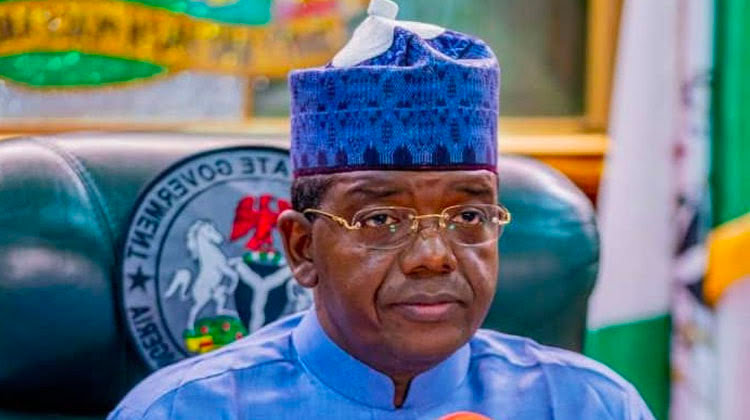
Maga schoolchildren abduction: Tinubu orders Defence Minister Matawalle to relocate to Kebbi

PRESIDENT Bola Tinubu has directed the Minister of State for Defence, Bello Matawalle, to immediately relocate to Kebbi State.

A statement on Thursday, November 20, by presidential spokesperson, Bayo Onanuga, noted that the directive was part of efforts to intensify the rescue over 20 students abducted during an early-morning attack on Government Girls’ Comprehensive Secondary School, Maga, in Danko/Wasagu Local Government Area.

The ICIR reported on Monday, November 17, that the state police command confirmed that armed men invaded the school around 4 a.m., killing the school’s vice principal and abducting several students.

Police spokesperson Nafi’u Abubakar said the attackers scaled the school fence before opening fire and whisking away 25 students from their hostel.

“The police tactical units deployed in the school engaged them into a gun duel but the suspected bandits had already abducted them in their hostel,” he said.

Also confirming the incident, the Chairman of Danko/Wasagu LGA, Hussaini Bena, told The ICIR that the gunmen stormed the school while shooting sporadically.

Meanwhile, the president said he had instructed Matawalle to remain in Kebbi to coordinate security operations aimed at securing the release of the abducted schoolgirls.

Matawalle, a former governor of Zamfara State, is expected in Birnin Kebbi on Friday.

According to Onanuga, Matawalle previously handled several large-scale kidnapping crises during his tenure, including the February 26, 2021 abduction of 279 students from Government Girls Science Secondary School, Jangebe, who were released days later.

Onanuga also said Tinubu had postponed his scheduled trips to Johannesburg, South Africa, and Luanda, Angola, to receive continuous security briefings on both the Kebbi school attack and the abduction of worshippers at Christ Apostolic Church in Eruku, Kwara State.

The ICIR reports that terrorists have been on the prowl in Nigeria. Since 2011, when the conflict, which began in the North-East, escalated, thousands of people have died and hundreds of thousands displaced across the North, especially in rural communities where security response is slow or absent.

Following his appointment in August 2023, The ICIR reported how Mattawalle’s previous role as governor was marked by heavy criticisms due to insecurity issues that plagued Zamfara State under his watch.

Mattawalle, who served as the governor of Zamfara State between May 2019 and 2023, left the state as one of the worst hit by terrorist attacks in Nigeria.

Attacks by a group of terrorists known as bandits went rampant under his watch leading to the killing of thousands of people in the state and across the North-West region of the country.

During Matawalle’s tenure, agriculture, the major source of income for the state residents, suffered devastation as terrorists imposed protection levies before allowing farmers to cultivate farmlands or harvest crops.

Some measures he introduced to address the challenge include shutting down telecommunication, restriction of vehicular movements, shutdown of markets and directing police to allow the residents to bear arms .They failed to end the menace.

Before Mattawalle left office, terrorist activities such as abductions, looting, and killings escalated throughout the state.

In some parts of the state, the terrorists ran parallel administration, collecting taxes and levies and making laws.

Read the terror series here

Free maternal healthcare in Niger State falters under fund delays, cultural barriers, and administrative gaps

0

By Anibe Idajili

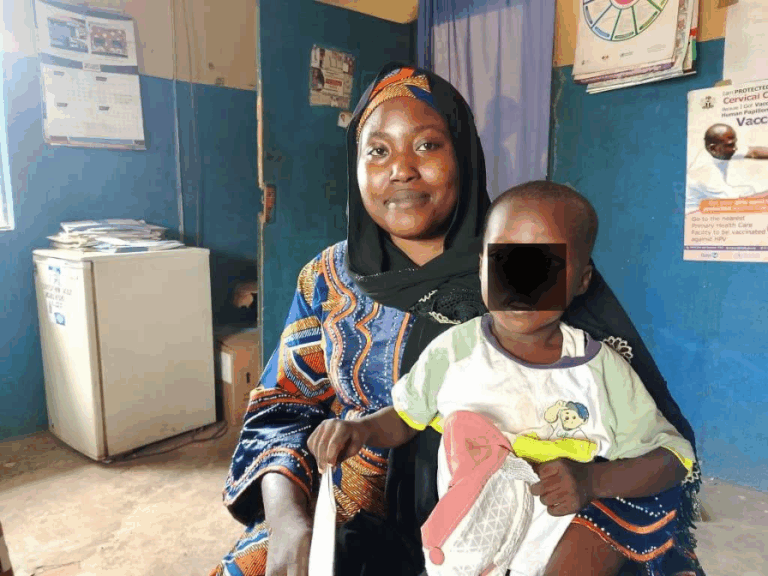
THE scorching heat of Niger State bears down on the Kudu Primary Health Centre (PHC) in Mokwa Local Government Area (LGA), but inside, 36-year-old Aisha Usman holds her baby close as she waits her turn for a routine antenatal checkup. For Aisha, the state government’s effort to eradicate maternal mortality through free healthcare is not just a policy but her reality.

“I am fortunate. Medical checkups, scans, and the child delivery have all been free for me and others who have enrolled,” Aisha confirms. Her experience is a good example of the Basic Health Care Provision Fund (BHCPF)’s potential. The fund, designed to subsidise primary healthcare, removes the immediate financial barrier that often drives rural women to unqualified traditional birth attendants (TBAs).

But Aisha Usman’s story is closer to an exception than the rule. Across Niger State, the delivery of this life-saving fund is defined by bureaucratic delays, insufficient funds, exclusionary identification requirements, and entrenched cultural resistance.

In 2019, the Nigerian government launched the Basic Health Care Provision Fund (BHCPF) under Section 11 of the National Health Act (NHAct) 2014 to support the Basic Minimum Package of Health Services (BMPHS) and improve the overall financing of the health sector.

For a state like Niger, burdened by vast rural distances and poverty, this promise was monumental. But six years on, an investigation into the implementation of the BHCPF reveals that facilities offer zero-cost care one moment, only to turn away desperate mothers the next due to funding delays and bureaucratic identity requirements.

Niger State faces a high maternal mortality ratio, estimated at 130 per 100,000 live births. This figure significantly exceeds national averages and shows the peril faced by pregnant women who cannot access timely and adequate care.

Similarly, the under-5 child mortality rate in Niger State stands at approximately 103 deaths per 1,000 live births, meaning one in every seven children born in the state dies before their fifth birthday. The lack of consistent free antenatal care, safe delivery options, and post-natal services due to the BHCPF’s shortcomings directly impacts child survival.

Mokwa Central MHC-PHC.

Exclusion by identification

While Aisha Usman enjoys free care, just a few kilometres away in Mokwa town, Aisha Alhassan faces a different fate at the Mokwa Mother and Child Health (MCH)-PHC.

“I usually pay for every service,” Alhassan reveals. “I see other mothers being attended to for free, but they told me I must pay because I do not have a National Identity Number (NIN).”

This single requirement, the NIN, has become the gatekeeper to Niger State’s free basic healthcare. The BHCPF, the primary vehicle for federal funding channeled through the state, mandates enrollment using this National Identification Number.

This requirement keeps countless women from accessing care. Aisha Ahmed, Programme Officer of the State BHCPF, however, reassures that “OICs (Officers in Charge) of PHCs know who to call when patients need to be enrolled. They have their contacts, so I do not know why this is an issue.”

At Kudu PHC, the Officer in Charge (OIC), Jubril Isah, confirms the administrative limits. He reports that only 137 of its 7,175 residents have been successfully enrolled under the BHCPF. While this small number of patients enjoys free care including antenatal, delivery, post-natal, and child immunisation services, the cost for those outside the system is prohibitive.

Isah details the facility’s price structure for the excluded, “Pregnant mothers who are not enrolled pay ₦1,000 for the first antenatal visit and ₦500 for subsequent visits. For delivery, non-enrollees pay ₦2,000 for medications and consumables such as gloves, sanitary pads, and detergents.”

While these fees may seem small, in communities where disposable income is measured in daily subsistence, ₦2,000 can be the difference between choosing a supervised facility birth and resorting to a traditional home delivery, with its attendant risks.

The free care, where it works, has increased trust.

“The BHCPF has been very helpful,” Isah attests.

“We now have more community members visiting our facility since they have no reason to remain at home when sick.”

However, the facility’s reach is hobbled by the NIN requirement, forcing staff members to constantly sensitise residents to obtain the identifying documentation for the next enrollment window.

Mohammed A. Aliyu, Ward Development Chairman, Mokwa Central

Irregular and insufficient funds

The most significant operational challenge is rooted in cash flow. The BHCPF funding, designed to be consistent, is anything but. This irregular flow of funds starves facilities, forcing PHC staff, who are instructed never to turn a patient away, to perform a constant balancing act between service delivery and solvency.

Following a referral from the Information Officer of the Niger State Primary Healthcare Development Agency, Fatima Mohammed, the reporter spoke with the State Programme Officer for the BHCPF, Aisha Ahmed. The reporter presented preliminary findings indicating that disbursements to PHCs have been inconsistent and subject to significant delays. The Programme Manager vehemently denied the claims and demanded to know the Officers-in-Charge who made them.

“Disbursement is made in four quarters and has been consistent. The only thing PHCs can complain about is some little delay in disbursement, and that’s not our fault. We disbursed for all four quarters in 2024 to the 274 health facilities in the state. For 2025, we have only released funds for Quarters 1 & 2 and are working on Quarters 3 & 4,” Ahmed said.

She also highlights an incentive structure, “There’s a 2.0 clause on the way, where high-volume PHCs will receive ₦800,000 while low-volume ones will get ₦600,000. Facilities that meet all targets receive an extra 10 per cent funding.”

Mohammed A. Aliyu, the Ward Development Chairman of Mokwa Central Ward, agrees that “Funding for the BHCPF is usually delayed. It can take two to three months. So, providing free medications for the women who visit these PHCs can be difficult.”

This delay is prevalent across the state, from Mokwa LGA in the East Senatorial District to Kontagora LGA in the far North Senatorial District. At the Tundun Wada MCH clinic in Kontagora LGA, a designated BHCPF focal facility, a young mother named Hadiza lamented that her luck had run out.

“I enjoyed free healthcare before, but now I pay for it. The facility told us they simply do not have the required funds,” she said.

Bernice Egboche, the Ward Focal Person at Tundun Wada MHC, confirmed Hadiza’s experience, stating that while the fund is helpful for medications and consumables, its sporadic nature is crippling.

“We are supposed to get ₦300,000 four times in a year. But it’s usually just once or twice in the first quarter or last quarter of a year. This year, we received just twice.”

Mairo Abdullahi, Focal Person, Kontagora Central PHC

In contrast, Mairo Abdullahi, the Focal Person at Kontagora Central PHC in the same LGA, reported a smoother experience, claiming her facility receives BHCPF funding quarterly and NiCare (Niger State Contributory Health Agency) funding monthly, and that both are regular. This suggests a disparity in logistics management or reporting across different focal facilities.

However, this investigation found out that, given the centralised nature of the federal and state disbursement channels, there is no administrative mechanism that would allow one designated BHCPF focal facility to receive consistent, scheduled payments while others in the immediate vicinity fail to receive any.

“We disburse the BHCPF to all facilities at the same time, and they all receive ₦300,000 each. There’s no way one facility will receive disbursement and another would not,” Ahmed, the State’s BHCPF Programme Officer, claims.

Another challenge is the inadequacy of the funding when it finally arrives. Victoria Abubakar, the Officer in Charge of Mokwa Central PHC, clarifies the administrative constraints: “The ₦300,000 BHCPF disbursement has made our work easier but it is not always enough. Apart from maternal and child health, it has about 10 other approved uses. And there’s the issue of delay. It used to come quarterly, but now it’s in six months.”

Maryam Shehu, Officer in Charge at Kawo PHC, cmaking a clearification notes that while NIN is required to register enrolles for both BHCPF and NiCare, BHCPF is intended to cover vulnerable populations, including all pregnant women. She reiterates that late disbursement is the major issue. Despite this, she insists, “whatever the case, no patient is turned away.”

A BHCPF Poster at Tundun Wada MCH Clinic, Kontagora LGA

Manpower, distance, and emergency

The BHCPF is designed to handle routine care. When complications arise, such as severe pre-eclampsia, haemorrhage, or obstructed labour, the PHCs must refer patients to higher-level facilities, usually General Hospitals. This is where the fragile system often crumbles entirely.

For 28-year-old Nafisat Musa from Kwanti community, the free care at Kpaki PHC had initially brought relief. “My antenatal sessions were free, and the staff were kind,” she recounts. When she went into labour with her second child, she headed to the PHC, expecting a straightforward birth like her first. But this time was different. The baby wasn’t descending. The midwife on duty, after an examination, recognised the signs of obstructed labour and fetal distress. Nafisat needed an urgent Caesarean section, a procedure far beyond the scope of the Kpaki PHC.

“They told me I had to go to the General Hospital in Mokwa, about 30 minutes away,” Nafisat remembers. “My husband had no money for the transport, let alone the surgery. We thought we would lose the baby, or even me.”

Her family had to scramble, borrowing from neighbours, before she could be rushed away in a borrowed vehicle. The surgery saved her and her baby, but the cost left her family in a financial situation, a contrast to the free care promised by the BHCPF.

Mohammed Jubril, the Ward Focal Person of Kpaki PHC, validates this fear, confirming the systemic failure that confronted Nafisat.

“One of the challenges we face is that the fund cannot cover serious pregnancy complications, and such patients may not have the finances to pay for medical care in the hospital we refer them to,” he said.

The logistical hurdles are equally serious. Abubakar, the Officer-in-Charge of Mokwa Central PHC, highlights the long distances between communities and referral centres. “The General Hospital and some referral facilities are a long distance from most people. Imagine travelling about 150 kilometres to get emergency medical care.”

Fatima Auwal, 32, a trader who delivered her fourth child at Kawo PHC, started haemorrhaging two hours after delivery. “The nurses stopped the bleeding initially, but they told me I needed a transfusion and specialist attention at Kontagora General Hospital. We had to borrow ₦15,000 just for the taxi, and when we arrived at the General Hospital, the free card meant nothing because the specialised procedures, they said, were not covered. We spent everything we owned to save my life. The free care at the PHC was a good start, but the referral nearly ruined us.”

In Kwanti, Hauwa Abdullahi’s baby was determined to be breech and she required an immediate Caesarean section at Mokwa General Hospital. “I was in serious pain, and my husband had to hire an old car,” Hauwa explains. “The car broke down twice. By the time we arrived, the baby was in severe distress. The medical team was able to save him but the distance and the fear that I would lose my baby before reaching help is something I will never forget.”

Coupled with the distance is a manpower shortage. Mohammed Aliyu Kimbokun, the Director of Primary Healthcare for Mokwa LGA, identifies personnel as a major problem.

“Until recently, we had retired midwives helping out under the Midwives Service Scheme (MSS), providing services in rural areas. But their one-year posting to PHCs has elapsed,” he explains.

To meet the needs of the local population and achieve Universal Health Coverage (UHC), the minimum manpower standard, according to the National Primary Health Care Development Agency (NPHCDA), is that every PHC facility, regardless of location, is staffed with at least  1 medical doctor, 10 nurses, 1 pharmacist, 3 pharmacy technicians, 2 community health officers, 6 community health extension workers (CHEWS), 1 laboratory scientist, 3 laboratory technicians, 1 medical records officer, 3 medical records technicians, and  1 environmental health officer.

But, in reality, there is a manpower vacuum that leaves overburdened nurses juggling multiple roles.

At Kawo PHC in Kontagora LGA, a nurse asked, “A permanent doctor? We haven’t had one here since I joined this facility five years ago. We rely heavily on referring patients out for levels of care that our current staff and limited equipment cannot provide.”

A Community Health Extension Worker (CHEW) at Kudu PHC in Mokwa LGA also describes her daily struggle, “I often feel like I am three people in one. With only two of us here for a community of thousands, serious cases often arrive too late and we can only offer basic healthcare before advising them to go to Mokwa General Hospital.”

“Even in the Mokwa General Hospital, there’s a shortage in manpower and doctors are overwhelmed with work. So, referring patients from PHCs there is still a challenge,” Kimbokun says.

Kudu PHC, Mokwa LGA
Kudu PHC, Mokwa LGA

Cultural walls and administrative gaps

The struggle to deliver healthcare free of charge is not only financial or logistical. There are also cultural and administrative challenges.

The Ward Development Chairman of Kpaki/Takuma Ward, John D. Salau, has led community advocacy about the benefits of the BHCPF but faces stiff resistance on multiple fronts. He has organised numerous sensitisation drives for NIN registration, yet many community members remain negligent.

“One major excuse has always been distance, as some women come from surrounding villages to the PHC,” Salau notes.

More troubling is the patriarchal barrier. “Also, some husbands do not allow their wives to go out to get their NIN or even visit the PHC for their healthcare needs,” Salau adds.

Aliyu the Ward Development Chairman, Mokwa Central re-echoes this, also pointing to the negligence of mothers who are predominantly farmers and traders. They, he says, often prioritise their farms and businesses over visiting PHCs for antenatal sessions, leading to complications later.

Compounding this problem is the issue of administrative capacity among those managing the funds. Hauwa Kulu Abdullahi, National Media Officer for the Federation of Muslim Women’s Associations in Nigeria (FOMWAN), highlights a lesser-known but key systemic fault.

“There is a lack of capacity with those administering the funds at PHCs, especially in preparing business plans and retirement of expenditures. This also result in delays in fund reimbursement,” Abdullahi explains. She notes that while NIN registration can be done on a mobile phone, many rural residents lack phones or the literary skills to operate them.

FOMWAN is actively working to bridge these gaps, conducting training for health workers and advocating for more women representation in Ward Development Committees (WDCs) because, as she puts it, “primary healthcare caters to vulnerable people such as women and children.”

The stakes of delay

Niger State’s commitment to free maternal health through the BHCPF and NiCare is a necessary intervention in a nation struggling with high maternal mortality rates. Data shows that subsidised care significantly reduces financial burden and increases facility usage, leading to better outcomes.

However, the current reality across Mokwa and Kontagora LGAs reveals a system perpetually on the brink of collapse, where the promise of ‘free’ is constantly undermined by the operational costs of delay, exclusion, and distance.

From the Kudu PHC, where only 137 residents are formally protected, to the mothers forced to travel 150 kilometres during an emergency, the common issue is inconsistency. The funds may come but they come late, are inadequate (covering only a fraction of the facility’s needs), and the eligibility requirements exclude those who need it most.

“We often advise PHCs to maximise the BHCPF by purchasing medications from the Drugs Management Agency in Minna before using the funds for other purposes,” Aisha Ahmed stresses.

But without consistent funding and wider NIN access, even the best policies cannot reach those who need them most.

The solution? Halima Sanni, a Program Officer at Youths in Justice Health and Sustainable Social Inclusion (YIJHSSI) says “We need faster, more reliable disbursements, simplified NIN enrollment, and stronger emergency referral systems at this point. Until then, the promise of free healthcare may remain unfulfilled for too many mothers in Niger State.”

For now, the hopes of free maternal healthcare persist, but so do the hurdles.

Spark2.2 project.

Oga Lecturer: how a digital platform is redefining sexual harassment fight on campus

SEXUAL harassment in Nigerian campuses thrives largely due to a culture of silence, intimidation, and low institutional action. Many victims are unable to speak out due to fear of retaliation, stigma, or lack of trust in school authorities. Against this backdrop enters a digital initiative known as Oga Lecturer, a platform created by the International Centre for Investigative Reporting (ICIR), which is seeking to change that.

Oga Lecturer (www.ogalecturer.com) allows students to report sexual abuse anonymously, track institutional accountability, and provides support.

A 2025 ICIR survey conducted across multiple Nigerian campuses revealed that “Not trusting the system; threats from harassers; and fear of stigma” were the top barriers preventing victims from reporting. The survey had 312 respondents, including 93 males.

How Oga Lecturer came to be

“The Oga Lecturer project is a media initiative aimed at exposing and combating sexual harassment by lecturers of Nigerian higher institutions, including universities, polytechnics, and colleges of education,” its description reads on the ‘About us’ page.

Chukwudi Iwuoha, a programme officer for The ICIR, explains that Oga Lecturer was born out of a need to help students overcome the culture of fear. He says, “Sexual harassment in Nigerian universities is widespread, yet victims often feel powerless to act. The project was created to empower students, especially female students, to overcome intimidation and reclaim their confidence.”

He describes the problem as systemic.

“Sexual harassment has been like a pandemic in our institutions. Female students are often made to feel they cannot perform independently. Sometimes it’s suggested that a student must sleep with a lecturer to progress. We want students to know they can succeed without compromising themselves,” he states.

Chukwudi Iwuoha, ICIR Programme officer.

He adds that the platform helps students report harassment, understand their rights, and access support. “It’s not just about reporting”, he says, “it’s about empowering them to speak up and ensuring they are heard.”

On feedback about the platform’s name being male-coded “Oga”, Iwuoha responded, “Most sexual harassment incidents are perpetrated by male lecturers when compared to female-to-male harassment in universities.”

Beyond digital: the offline engagement of Oga Lecturer

Although Oga Lecturer is a digital initiative, it combines online reporting with offline engagement. The project has conducted surveys, sensitisation campaigns, campus outreach, and institutional visits across Nigeria. It is currently implementing a peer-to-peer advocacy model aimed at empowering female students to combat sexual harassment in higher education institutions.

In 2023, Oga Lecturer carried out an awareness campaign in 12 institutions, introducing students to the platform and educating them on how to use it.

Joshua Prince, from one of the sensitised institutions, says the Oga lecturer anonymous reporting platform serves two purposes. Students who are being harassed can report, and other students can also report misconduct, even if the victim does not.

Additionally, as part of the data-gathering efforts of The ICIR, field officers visited campuses to administer surveys. One of them, Itoro Udo, described mixed reactions from students.

“Getting students to fill out the survey wasn’t so difficult. Many were already fed up with the way sexual harassment was handled in their schools,” she, however, noted that some students expressed distrust.  “Some were hesitant because they felt it wouldn’t make a difference. They said many cases had been overlooked, so nothing would change.”

Udo explains that ‘fear’ also played a role as “some were scared that answering the survey would implicate them,” some of them eventually did after assurances about confidentiality.

ICIR uses this data to refine and design its programming so as to get maximum mileage.

With support from the Development Research and Project Centre (dRPC) through its NGO Support Initiative (NSI), Oga Lecturer launched a peer-led advocacy model in 2025. The initiative ‘Empowering Female Students to Challenge Sexual Harassment in Nigerian Universities’ is designed to build student networks that support survivors and enhance reporting mechanisms.

According to Iwuoha, “we are making students aware of sexual harassment policies and reporting mechanisms in their universities. Awareness is critical because many students don’t know their rights or who to contact.”

The model includes training students who will serve as ambassadors, building bridges between students and trusted lecturers, supporting survivors through referral systems and engaging school management on policy reforms.

ICIR trains students, lecturers in Abuja to tackle sexual harassment in varsities
Participants and facilitators of the peer-led initiative Empowering Female Students to Challenge Sexual Harassment in Nigerian Universities, which aims to build survivor-support networks and improve reporting systems on campus.

“We have student ambassadors who collect reports and guide victims to support lecturers. These lecturers then communicate with the university administration when necessary. This builds trust and allows victims to speak up safely,” Iwuoha explains.

He adds that peer-led advocacy is essential as “students often face isolation. Peer support ensures they are not alone when navigating harassment cases.”

Mercy Mmesoma, another student who was sensitised during the campus tour awareness campaign in 2023, when informed about the addition of the peer-to-peer aspect, agrees that it can help build a community.

“Most victims don’t know who to trust”, she replies. “Many don’t feel comfortable opening up to government officials or elders. But with their peers and friends, they can trust and talk.”

“So yes, it can help,” she stated in response to her view of the model.

One of the student ambassadors, Miranda Hassan Danjuma, while speaking following a capacity training, describes the peer-led model as a place where she can be heard.

“I feel like it’s a safe place where my voice can be heard and something can actually be done about it,” she says.

The offline activities of the Oga Lecturer also include institutional engagement with the goal of strengthening policies.

According to Iwuoha, “Universities are starting to recognise the need to combat sexual harassment… Nearby institutions are now cooperating to create safer campuses. This is a groundbreaking achievement for us.”

Iwuoha believes it has increased student confidence significantly.

“The project empowers female students with knowledge about sexual harassment and gives them local support networks. It allows them to overcome fear and reclaim their agency,” he states.

Barriers to reporting and anonymous digital reporting of Oga Lecturer

Despite progress, persistent barriers remain. Iwuoha explains, “Fear is one of the major reasons students don’t report harassment. There is also stigma, and sometimes victims are blamed or left to deal with the situation alone.”

Hence, the anonymous digital reporting of the Oga Lecturer. The platform operates first as an anonymous reporting system that allows students to document incidents of sexual harassment without fear of exposure or retaliation.

Through the “Report Assault” form on the website, students can choose whether or not to provide their name or email. They are only required to fill in core details such as the institution involved, the category of the alleged perpetrator (lecturer, student, non-academic staff), and a description of what happened.

The Oga Lecturer anonymous reporting system allows students to document incidents of sexual harassment without fear of exposure or retaliation.

This structure ensures safety and accessibility while giving victims and witnesses a direct, confidential pathway to speak up. The aim is to break the culture of silence by offering students a secure space to come forward, says Iwuoha.

Once a report is submitted, the Oga Lecturer team reviews the information and determines the appropriate response. Cases may be escalated to relevant authorities and stakeholders outside or within the school or connected to legal and psychosocial support systems, depending on the needs of the student.

In situations where institutional action is weak or nonexistent, the platform triggers independent investigative journalism, digging deeper into allegations and exposing systemic failures that enable abuse.

This leads to the investigative and accountability reporting aspect of Oga Lecturer.

Investigative journalism as an accountability arm of Oga Lecturer

Investigative journalist Nanji Venley Nandang, who leads several Oga Lecturer investigations, including a recent one from Bayero University Kano (BUK), describes the intervention as transformative.

“Oga Lecturer is a very good initiative that will go a long way in enlightening students. It doesn’t just publish stories; it guides students on how to report cases and how their rights can be protected,” she states.

She also hosts Twitter Spaces on sexual harassment awareness for Oga Lecturer. She notes that classroom coercion, hostile verbal comments, non-verbal harassment, online blackmail, physical assault and institutional negligence are some of the breadth of abuse she has documented.

“Students tell me how lecturers demand sex for grades. Many give in because they don’t know how else to tackle the situation,” she says.

She referenced a notorious Kogi State University case, “in July, a lecturer reportedly died during sexual intercourse with his 200-level student in a hotel. Cases like this show how lecturers exploit students’ timidity,” she explains.

She adds that “some lecturers walk into the classroom and sexualise female students, saying things like, ‘Is it because you are carrying big breasts or a big bum that you think you can be rude to me?’ The girls are uncomfortable but don’t know how to report.”

A screenshot of the investigative section of Oga Lecturer website.

She noted that there is also hostile-environment harassment, “Lecturers intimidate students into agreeing to romantic relationships. Some students eventually drop out. One student told me she left the university in her 300-level because of persistent harassment.”

And increasingly, online sexual harassment, “A student told me how her boyfriend used intimate photos to blackmail her for money.”

Nandang notes that the legal framework exists, but it is poorly implemented. “Lack of implementation of our laws and policies is the reason these abuses persist. The VAPP Act, the Child Rights Act, and university sexual harassment policies are not properly enforced,” she says.

She states that even institutions that champion reforms sometimes fail to uphold their own standards, “One organisation told me they knew what was happening but didn’t want to ‘spoil their partnership’ with the school.”

She states that Oga Lecturer fills an essential gap. “Oga Lecturer engages with students through social media, Twitter Spaces, and sensitisation on campuses. The ambassadors do the footwork in schools. It doesn’t end with storytelling; there is real one-on-one engagement,” she says.

She believes that this combination of journalism, data, outreach and support positions Oga Lecturer as an accountability tool that will lead to enlightenment and have a long-term impact.

“Very soon, students will understand their rights. Policymakers will have no choice but to sit up,” she says.

Muhammad Sada, a lecturer who has done research on gender and GBV, believes digital tools like Oga Lecturer are critical.  His school was one of the institutions visited during the awareness tour.

He says, “the culture of silence surrounding sexual harassment in the Nigerian higher educational system can be broken with the use of digital reporting tools like Oga Lecturer. They offer immediacy and anonymity, two essential elements that will motivate witnesses and victims to speak up without worrying about shame, victim blaming or reprisal by perpetrators or society.”

But he cautions that without strong legal backing and institutional collaboration, such platforms risk becoming symbolic rather than transformative.

He calls for proactive institutional adoption, “The university management should not see the platform as an external tool but as a partner. They should integrate it into their internal reporting system so that cases reported online are reviewed by the disciplinary committee”.

He added that they should create clear guidelines and protect whistleblowers.

Oga Lecturer website mast head.
Oga Lecturer website masthead.

A researcher with Health Policy Research Group (HPRG) and a doctoral student, Ifunanya Agu, notes that, “in Nigeria, many students stay silent because they fear consequences. A digital anonymous platform can break this silence.”

Agu, whose doctoral research focuses on evaluating interventions that address gender issues, explains that sustainability depends on institutional action because, “If complaints just sit without follow-up, victims will lose trust. Feedback is crucial,” she says.

She insists the platform should be universal, as “Lecturers can be victims of colleagues. Students can be victims of lecturers or fellow students. Everyone in the university system should be able to use the platform.”

This report is done for ICIR under the dRPC-NSI reporting grant.

Obafemi Awolowo’s grandson Olusegun is dead

0

OLUSEGUN Awolowo, a grandson of the late Yoruba statesman, Chief Obafemi Awolowo, has died. He passed away on Thursday, November 20, at the age of 62.

Awolowo, a lawyer by training, previously served two consecutive terms as the Executive Director of the Nigerian Export Promotion Council (NEPC). He was the son of the late Chief Awolowo’s first son and of Madam Abah Adesanya.

The Awolowo family confirmed his death in a statement on Thursday, describing him as a devoted family man and a committed public servant.

“With extremely heavy hearts, we announce the passing of our beloved husband, father and grandfather – Olusegun Awolowo,” the statement said.

The family paid tribute to him as “the world’s most phenomenal husband, father and grandfather — steady, wise, endlessly loving, and the constant anchor of our family,” adding that he was “a painfully loyal servant to Nigeria” whose life was marked by vision, integrity, passion, and unwavering commitment.

According to the family, he lived every day with purpose, humility, and a generous spirit that touched everyone who knew him.

“We are shattered by this loss, but forever grateful for his life, his legacy, and the love he poured into all of us. May his gentle soul rest in perfect peace,” the statement concluded.

According to public records, the late Awolowo was born on September 27, 1963. His father, Segun Awolowo Sr., died in a car accident on the old Ibadan–Lagos road at age 25, two months after Olusegun’s birth.

He began his early education at Mayhill Convent School. He later attended Igbobi College, Yaba, Lagos, and completed his secondary education at Government College, Ibadan. Afterward, he proceeded to Ogun State University (now Olabisi Onabanjo University), Ago Iwoye, where he earned his LLB degree.

Called to the bar in December 1989, he began his legal career at the law firm of Abayomi Sogbesan & Co., and later worked with GOK Ajayi & Co.

Awolowo joined former president Olusegun Obasanjo’s administration as Special Assistant on Traditional Institutions, Legal Due Diligence and Legal Matters.

Former president Umaru Musa Yar’Adua later appointed him Special Assistant, after which he served with the Federal Capital Territory Administration as Secretary for Social Development and Secretary of Transport between 2007 and 2011.

When the administration changed in 2011, he returned to legal practice until November 2013, when President Goodluck Jonathan named him Executive Director/CEO of the Nigerian Export Promotion Council.

In July 2021, trade promotion organisations across ECOWAS unanimously elected him President of the regional body representing National Trade Promotion Organizations.

IPI Nigeria set to launch ‘Book of Infamy’ at 2025 annual conference

0

THE International Press Institute (IPI) Nigeria is set to unveil its Book of Infamy at its 2025 Annual Conference and Annual General Meeting (AGM) scheduled for December 2 and 3 n Abuja.

The IPI Nigeria’s President, Musikilu Mojeed, and Legal Adviser, Tobi Soniyi, confirmed the plan in a statement issued on Wednesday, 19.

The conference, themed “Addressing Media Repression and Safeguarding Democratic Accountability in Nigeria,” will bring together more than 100 media leaders, journalists, government officials, press-freedom advocates, and academics from across the country.

The event, according to the statement, will feature the official launch of the Book of Infamy, a publication that documents cases of media repression and press-freedom violations nationwide.

The institute described the book as an accountability tool designed to expose individuals and institutions “that, through their actions or neglect, harass, arrest, intimidate, or otherwise, violate the fundamental rights of journalists and media organisations.”

It also noted that the book highlighted abuses involving public officials, security agents, private individuals, and organisations whose conduct undermined media independence.

The Institute would also induct new members during the conference, expanding its network and reinforcing its mission to defend press freedom, promote ethical journalism, and strengthen democratic values.

Mojeed emphasised the importance of the conference, describing it as “a vital platform for assessing the state of media freedom and journalists’ safety in Nigeria.

It will also discuss policy and legal reforms to strengthen independent journalism; and foster dialogue between the media and government on transparency and accountability..

Mojeed added that the gathering “ is also an opportunity to share best practices and global perspectives on protecting press freedom.”

In addition to the conference sessions, the second day will feature the Institute’s AGM, which is open only to members.

“The AGM provides a forum to receive and deliberate on reports from the Executive Committee, review the organisation’s progress and strategic direction, and develop new strategies and partnerships to strengthen press freedom and journalists’ safety,” he added.

Court hands Nnamdi Kanu life sentence ‘out of mercy’

THE Federal High Court in Abuja has sentenced the leader of the proscribed Indigenous People of Biafra (IPOB), Nnamdi Kanu, to life sentence after finding him guilty of terrorism charges preferred against him.

The judge, James Omotosho, found Kanu guilty of all counts one to seven, including his sit-at-home order resulting in economic losses and death of innocent people in the South-East, being a member of a proscribed organisation and committing acts of terrorism, and threatening anyone who failed to obey his order.

The court also found him guilty of inciting the killings of Nigerian security personnel, and for making broadcasts to kill people.

Besides, he was found guilty of committing an act of terrorism against the Federal Republic of Nigeria by threatening that people would die and the world would be at a standstill during a live broadcast.

“The court is minded to send the convict to death given the atrocities he has committed,” he said, adding that he had not shown any remorse for his actions.

He quoted some Bibllical verses to “show mercy” on the convict, noting that death penalty was being frowned upon globally. He therefore sent Kanu to life sentence on count 1, 4, 5, 6 instead of death sentence.

With respect to count three, he was sentenced to 20 years without an option of fine. The same applied to count seven.

He said the sentences should run concurrently.

Omotosho noted that the tendency of violence had not left the convict, and he should be kept at any correctional facility in the country and must not be allowed to have access to any digital device.

The judge admitted that Kanu is a freedom fighter, who was fighting for the freedom of his people.

He, however, called the IPOB leader a terrorist who must be treated as such. According to him, Kanu did more harms to his Igbo people he was fighting for than good.

Omotosho said, “Mr Kanu knew what he was doing, he was bent on carrying out these threats without consideration to his own people.”
He said the prosecutor’s evidence was “credible, cogent, and uncontroverted,” which the accused failed to fault.
“His (Kanu’s) agitation (is) in the states of South-East, South-South and some Middle-Belt, and he is doing so using terrorism as a weapon. Terrorism has become a monster in the world today, and several groups have continued to use this as a form of weapon to form a separate government.
“Groups like Boko Haram, Lakurawa, IPOB, and in recent years troubled Nigeria with terrorism activities. These terror groups, by their activities, are denying innocent people the enjoyment of their fundamental rights.
“The action of the defendant and his terrorist organisation has led to the bloodshed of innocent citizens and security personnel who were going about their legitimate duties. His incitement through his Radio Biafra, as well as social media of the group, has led to the loss of innocent lives,” the judge reasoned.
He emphasised that the court gave the convict the opportunity to defend himself but refused.

The ICIR reported how the judge ordered Kanu out of the court shortly before the ruling over ‘unruly’ conduct.

Kanu was protesting that the judge could not rule on his case when he (the accused) had yet to file his final written address.

“‘Which law states that you can charge me on an unwritten law? Show me. Omotosho, where is the law? Any judgment declared in this Court is a complete rubbish,” the accused queried the judge.

Kanu had confronted the judge in a similar manner at the last hearing of the case, when the court admitted that he had forfeited his opportunity to file his final written address.

The ICIR reported that Kanu had sacked his lawyers and agreed to stand for himself in the court. He faced a seven-count charge bordering on terrorism, treasonable felony, and incitement.

Before he was sent out of the court today, amid heavy security, he had argued that the judge knew nothing about law and lacked the power to determine his case.

The ICIR reports that Kanu is championing the secession of the South-East region from Nigeria for the Biafra nation.

Omotosho proceeded on a recess at 2:40 pm and returned at for the sentence after 4pm to deliver a judgement that lasted less than ten minutes.

Prosecution counsel seeks death penalty for convict

Prosecution counsel, Adegboyega Awomolo, informed the court that some of the counts, including one, two, three and five, carried death sentence.

Responding to the charges read by the judge, Awomolo, who represented the State Security Services (SSS), said, “Those whose relatives were brutally killed will know that they did not die in vain. Many have been rendered poor because of his inciting statements.”
He stated that justice knew that the law was greater than any individual, and justice had been done to the convict. “His acts of terrorism are against innocent Nigerians, and the honourable court has to apply strict measures.
“He demonstrated no respect for justice administration, and his acts in this temple of justice have been marked out of arrogance,” the lawyer noted.

He added, “The action of the defendant and his terrorist organisation has led to the bloodshed of innocent citizens and security personnel who were going about their legitimate duties. His incitement through his Radio Biafra, as well as the social media of the group, has led to the loss of innocent lives.

“Nothing further remains but the imposition of sentences. The punishment prescribed for the offences in counts 1, 2, 4, 5, and 6 is the death penalty. The only sentence that my lordship will impose on counts 1, 2, 4, 5, and 6 is the death sentence. This court has the power to do so, and with respect, must do so.”
He said the court had the power to restrict further access to the digital media through which the act of terrorism was committed.
” We pray the court to order forfeiture of all the broadcasting equipment, in particular the radio transmitter and to be forfeited to the Federal government of Nigeria,” he stated.
Awomolo added that “We want the court to restrict his online access to digital devices to stop broadcasting. Someone in that position ought to show some penitence and not arrogance.
“We are urging that, for his safety and security, until your sentence is executed, I plead that he be kept in the safest correctional centre in Nigeria.
“We are asking that Your Lordship keep him in the safest Custodian centre. I am not sure that Kuje, with records of several jail breaks, will be the best place for him.”
The judge also asked for allocution from Nnamdi Kanu’s consultants.
A federal House of Representatives member, Obinna Aguocha, who represents Umuahia North and South, pleaded for clemency for the convict.
“Like the prosecutor said, Nigeria is bleeding, and we must find common ground on the issue of terrorism. I therefore plead my Lord to show clemency in your judgment.
Omotosho took notice of his pleas and said that the court would return by 3:50 pm for his verdict on the matter.

Background to the report

Kanu was first arrested in 2015 on charges including treasonable felony and incitement over his activities as the leader of IPOB, which seeks the secession of Nigeria’s South-East from Nigeria. He was granted bail in 2017 but fled the country after his home in Abia State was raided by the military.

He was re-arrested in Kenya in 2021 and extradited to Nigeria under controversial circumstances that violated international law, according to the Court of Appeal. The court discharged and acquitted him of all terrorism-related charges in October 2022, but the Federal Government appealed the decision at the Supreme Court.

In December 2023, the Supreme Court ruled that the trial could continue at the Federal High Court. Since then, Kanu has remained in the custody of the SSS, despite multiple court rulings ordering his release or improved detention conditions.

The ICIR reported that the seven-count terrorism charge against Kanu includes allegations of treason, incitement, defamation of Nigerian authorities, and unlawful broadcasting. His trial has been marked by repeated adjournments, legal disputes over fair hearing, and concerns raised by his lawyers and family members about his health.

The court relied on a report by the Nigerian Medical Association (NMA) declaring Kanu fit to stand trial, a report the defendant dismissed as forged.

On October 23, 2025, Kanu sacked his legal representatives and announced that he would defend himself in court.

The decision came after his lead counsel and former Attorney-General of the Federation, Godwin Kanu Agabi, a senior advocate, informed the court that the defendant had decided to take back his case from him and his team.

Agabi formally withdrew his appearance and those of other senior advocates in the team.

Kanu, who was brought to court by operatives of the State Security Services (SSS), informed his counsel in open court that he no longer required their services.

The development was formally communicated to the judge, who confirmed that Kanu had chosen to conduct his own defence.

Confirming the development, Kanu told the judge that he would represent himself, although he might later reconsider the decision.

Omotosho asked whether the court should assign a lawyer to assist him, but Kanu declined, insisting on handling his own defence in the seven-count terrorism charge filed against him by the Federal Government.

The judge later ordered Kanu to open his defence on Friday, October 24.

[BREAKING] Judge proceeds on recess, to resume at 3:50 pm for Kanu’s sentencing

0

THE judge handling the case of the proscribed Indigenous People of Biafra (IPOB) leader, Nnamdi Kanu, at Federal High Court in Abuja, James Omotosho, has proceeded on recess after hours of reading the seven-count charge and conviction of the accused on all the charges.

Omotosho said at 2:40 pm on Thursday, November 20, that he would resume to sentence the accused at 3:50 pm.

The found Kanu guilty of all counts one to seven, including his sit-at-home order resulting in economic losses and death of innocent people in the South-East, being a member of a proscribed organisation and committing acts of terrorism, and threatening anyone who failed to obey his order.

The court also found guilty of inciting the killings of Nigerian security personnel, and for making broadcasts to kill people.

The judge admitted that Kanu is a freedom fighter, who was fighting for the freedom of his people.

He, however, called Kanu a terrorist who must be treated as such. According to him, Kanu did more harms to his Igbo people he was fighting for than good.

The ICIR reported how the judge ordered Kanu out of the court shortly before the ruling over ‘unruly’ conduct.

Omotosho said he could rule on the case in Kanu’s absence.

Kanu was protesting that the judge could not rule on his case when he (the accused) had yet to file his final written address.

“‘Which law states that you can charge me on an unwritten law? Show me. Omotosho, where is the law? Any judgment declared in this Court is a complete rubbish,” the accused queried the judge.

Kanu had confronted the judge in a similar manner at the last hearing of the case, when the court admitted that he had forfeited his opportunity to file his final written address.

The ICIR reported that Kanu had sacked his lawyers and agreed to stand for himself in the court. He faced a seven-count charge bordering on terrorism, treasonable felony, and incitement.

Before he was sent out of the court today, amid heavy security, he had argued that the judge knew nothing about law and lacked the power to determine his case.

The ICIR reports that Kanu is championing the secession of the South-East region from Nigeria for the Biafra nation.

Prosecution counsel, Adegboyega Awomolo, informed the court that some of the counts, including one, two, three and five, carried death sentence as he appealed that the court keeps him in one of the best prison facilities in the country.

Details soon…