Home Blog Page 130

Peter Obi condenms Kanu’s life sentence, says it’s ill-timed

0

FOMER presidential candidate of the Labour Party, Peter Obi, has raised concerns over the conviction of the Indigenous People of Biafra (IPOB) leader, Nnamdi Kanu, warning that the development risks heightening tensions at a time when Nigeria is already grappling with deep economic hardship and worsening insecurity.

In a statement issued on Saturday, Obi described the conviction as “unfortunate” and a reflection of leadership failure, arguing that the government mishandled the matter from the onset.

“The news of Mazi Nnamdi Kanu’s conviction should compel every well-meaning Nigerian to pause and reflect. This is coming at a time when our beloved nation is facing severe economic hardship, insecurity, and the consequences of poor governance. 

“Rather than reducing tension, this unfortunate development may well only aggravate it. I have always maintained that Mazi Kanu should never have been arrested. His arrest, detention, and now conviction represent a failure of leadership and a misunderstanding of the issues at stake,” Obi said.

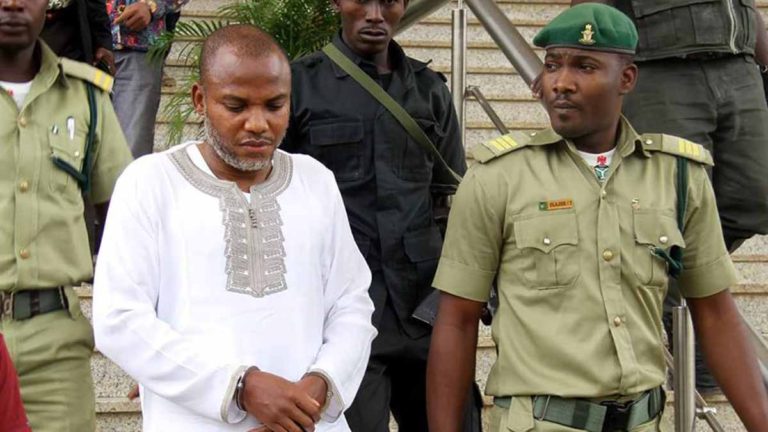
The ICIR reported on Thursday that Justice James Omotosho of the federal high court in Abuja convicted and sentenced Kanu to life imprisonment, after admitting that Kanu was a freedom fighter seeking to liberate his people but chose the path of terrorism.

He found the accused guilty of all counts one to seven, including his sit-at-home order resulting in economic losses and death of innocent people in the South-East, being a member of a proscribed organisation and committing acts of terrorism, and threatening anyone who failed to obey his order.

The court also found him guilty of inciting the killings of Nigerian security personnel, and for making broadcasts to kill people.  

Obi maintained that dialogue, not force, remains the most effective pathway to lasting peace, insisting that the concerns raised by Kanu were neither new nor impossible to resolve, noting that the government missed opportunities to embrace constructive engagement, empathy, and inclusive governance.

“For years, I have consistently argued that dialogue, constructive engagement, and inclusive governance offer the path to lasting peace. Coercion becomes necessary only when reason has been exhausted. In this case, I submit that the reason was not only not exhausted, but was probably not explored at all, or not fully explored.

“The concerns Kanu raised were not unheard of. The issues for which he demanded solutions were not insoluble. It only required wisdom, empathy, and a willingness to listen. In any functional society, such grievances are met with dialogue and reforms aimed at strengthening unity,” the former presidential candidate explained.

While urging the Presidency, the Council of State, and respected statesmen to intervene urgently and pursue a political settlement that prioritizes healing, reconciliation, and national unity, Obi likened the government’s handling of the case to “a man trapped in a hole who, instead of finding a way out, keeps digging deeper,” warning that the consequences of such actions could worsen national cohesion.

“The government’s approach has only deepened mistrust and created an avoidable distraction at a time when citizens are overwhelmed by harsh economic realities and insecurity. While some may insist that “the law has taken its course,” leadership often demands more than a strict, mechanical application of the law. Nations around the world resort to political solutions, negotiated settlements, and even amnesty when legal processes alone cannot serve the broader interest of peace and stability. Nigeria is not an exception.

“The handling of Kanu’s case mirrors the government as a man trapped in a hole but who, instead of looking for a way out, keeps digging deeper. It worsens not only the government’s predicament but also the nation’s collective condition.

If we truly desire a new Nigeria – a united, peaceful, and progressive one, our leaders must choose healing over hostility, reconciliation over retaliation, and dialogue over division. Only by addressing grievances with justice, fairness, and compassion can we move towards a future where every Nigerian feels heard, valued, and safe.

“My ultimate call at this time, without prejudice to how anyone feels about the decision of the court, is for us to be optimistic for peace and reconciliation which will come in the end. I am also saying, thereby, that the Presidency, the Council of State and credible statesmen who love this country and who are interested in cohesion and inclusivity, should rise to the occasion, for a lasting solution,” he said.

The ICIR reported that Kanu’s trial began after his 2015 arrest on charges of treasonable felony and terrorism, and the case saw multiple twists and developments since then.

In 2017, Kanu left Nigeria while on bail after a military raid on his home during the “Operation Python Dance” exercise in the South-East.

In June 2021, he was arrested in Kenya under controversial circumstances and repatriated to Nigeria, a development his legal team and IPOB denounced as an “extraordinary rendition.”

Kanu’s defence team consistently questioned the legitimacy of the trial, insisting that major legal and procedural breaches, including alleged violations of international extradition protocols and jurisdictional requirements weakened the prosecution’s case.

The ICIR reported that Kanu sacked his lawyers and agreed to stand for himself in the court. He faced a seven-count charge bordering on terrorism, treasonable felony, and incitement.

Insecurity: five deadly attacks that shook Nigeria in eight days

TERRORIST groups have intensified attacks on religious organisations and educational institutions in Nigeria. The ICIR reports that the daring terrorists battle not only with state and other non-state actors but also target civilians.

Several Churches in Nigeria have suffered a number of attacks by armed bandits who did not only abduct the worshippers but request for ransom before releasing the victims. In some instances, the armed bandits killed victims after collecting the ransom. The Evangelical Church Winning All (ECWA) was attacked  in July 2025 by armed bandits while holding a meeting in Kampani Village, Maro, located in the Kajuru Local Government Area of Kaduna State. They killed at least five persons.

The schools are no longer safe for children as terrorists continue to launch attacks and abduct both learners and staff. Since the abduction of 276 Chibok schoolgirls in 2014 under the administration of Goodluck Jonathan,  Nigeria continues to witness more invasion of schools and abduction of schoolchildren by terrorists. The ICIR chronicles the abduction of schoolchildren since 2014.

Timeline of incidents

November 14

The Islamic State West Africa Province (ISWAP) terrorists on Monday captured and executed Musa Uba, a Brigadier General of the Nigerian Army during a deadly ambush on a military convoy. Four other military personnel were killed in the ambush. This took place when the convoy, led by Uba of the 25 Task Force Brigade, was returning from a patrol near Wajiroko village in northeastern Borno state late on Friday.

November 17

The Kebbi State Police Command confirmed that armed gunmen stormed the Government Girl’s Comprehensive Secondary School, Maga in Danko/Wasuga LGA in the early hours of Monday. The attack resulted in the abduction of 25 students and the killing of the school vice principal.

November 19

Unknown gunmen with masks attacked worshippers of Christ Apostolic Church (CAC), Oke Isegun in Eruku, Ekiti Local Government Area of Kwara State during a thanksgiving session. The pastor, Lawrence Bamidele, said that at least 30 worshippers were kidnapped. He added that the service was actually a thanksgiving for 18 persons who regained freedom from their abductors.

The ICIR reported that at least two persons were confirmed dead during the church attack.

November 20

Sixteen prospective Corps Members who are graduates of Adeyemi Federal University of Education (AFUED) in Ondo State were said to have lost their lives in a fatal accident while traveling to the NYSC Orientation Camp in Gombe State.

November 21

Few days after the invasion of a school in Kwara State, armed gunmen abducted 215 schoolchildren and 12 staff of St. Mary’s School, a Catholic High School in Papiri community, Agwara Local Government Area of Niger State. The attack took place between 1am and 3am of that same day.

Abductions: Taraba Governor orders closure of public, private schools

0

Taraba State Governor, Agbu Kefas, has directed all public and private secondary schools in the state to immediately deboard their students amid growing insecurity nationwide.

The directive was disclosed in a statement issued on Friday and signed by the Commissioner for Education, Augustina Godwin. She explained that the rising security threats across the country have made boarding students in both public and private secondary schools vulnerable to kidnappers, citing the recent student abductions in Kebbi and Niger states.

“In light of the current circumstances, Governor Kefas has issued a directive requiring all secondary schools, both public and private, to function exclusively as day schools for the time being. Principals and owners have been advised to promptly arrange for the deboarding of all students,” she said.

The ICIR report that Taraba government directive is coming a few hours after the Federal Government shut down all 41 Unity Schools in the country over the growing spate of abductions and other forms of insecurity.

The Director of Senior Secondary Education at the Federal Ministry of Education, Binta Abdulkadir, announced this in a circular on Friday.

Similarly, the Plateau State Government has directed the immediate closure of all basic schools in the state, citing urgent need for preventive action.

It noted Government Junior Model Secondary Schools would close effective Saturday, November 22, 2025, while Primary and Day Schools would shut from Monday, November 24, as a precautionary measure.

In the same vein, the Katsina Government through its Ministry of Basic and Secondary Education on Friday ordered the immediate shutdown of all public schools across the state due to rising security concerns.

The order prompted thousands of boarding students to return home shortly after the announcement.


Godwin added that the Taraba State government has assured parents of its commitment to restoring stability and will continue collaborating with security agencies to address the situation.

The ICIR reported that gunmen stormed St. Mary’s Papiri Private Catholic Secondary School in the Papiri community of Agwara Local Government Area, Niger State, and abducted scores of students and teachers, in the early hours of Friday, the second mass abduction within a week.

Several community members who visited the school after the incident confirmed the attack and described it as a coordinated operation carried out between 2:00 a.m. and 3:00 a.m.

The Head of Department, Disaster and Relief, Agwara Local Government, Ahmed Abdullahi Rofia, also confirmed the attack.

Friday’s abduction came five days after terrorists attacked Maga Comprehensive Girls’ Secondary School in Kebbi State, where about 25 female students were whisked away and a staff member was killed. A guard was also injured during the early-morning assault.

UN condenms Niger abduction, says schools must be safe

0

THE United Nations has condemned the abduction of hundreds of pupils and teachers from St. Mary’s Catholic Primary and Secondary Schools in Niger State during the early hours of Friday.

UN Spokesperson, Stéphane Dujarric, in a statement described the attack as “heartbreaking” and emphasised that “schools must be safe places for learning.”

“We have witnessed yet another abduction of pupils in Niger State, just days after the kidnapping of schoolchildren in Kebbi,” Dujarric said.

The ICIR reported that terrorists stormed St. Mary’s Papiri Private Catholic Secondary School in the Papiri community of Agwara Local Government Area, Niger State, and abducted scores of students and teachers, in the early hours of Friday, the second abduction within a week.

Several community members who visited the school after the incident confirmed the attack and described it as a coordinated operation carried out between 2:00 a.m. and 3:00 a.m.

The Head of Department, Disaster and Relief, Agwara Local Government, Ahmed Abdullahi Rofia, also confirmed the attack.

Friday’s abduction came five days after terrorists attacked Maga Comprehensive Girls Secondary School in Kebbi State, where about 25 female students were whisked away and a staff member killed. A guard was also injured during the early-morning assault.

“We join UNICEF and the UN Resident and Humanitarian Coordinator, Mohamed Malick Fall, in expressing deep sympathy to the families and communities affected. Every effort must now focus on ensuring the childrens’ safe and immediate return,” Dujarric added.

Dujarric noted that the recurring assaults highlight the urgent need to fully enforce the Safe Schools Declaration, which sets out practical steps to protect educational institutions and ensure students’ access to learning during conflict.

The ICIR reported on Friday that the Federal Government has shut down all 41 Unity Schools in the country over the growing spate of abductions and other forms of insecurity.

The Director of Senior Secondary Education at the Federal Ministry of Education, Binta Abdulkadir, announced this in a circular on Friday.

Similarly, the Plateau State Government has directed the immediate closure of all basic schools in the state, citing urgent need for preventive action.

A statement issued by the Plateau State Universal Basic Education Board on Friday said Government Junior Model Secondary Schools would close effective Saturday, November 22, 2025, while Primary and Day Schools would shut from Monday, November 24, as a precautionary measure.

Similarly, the Katsina Government through its Ministry of Basic and Secondary Education on Friday ordered the immediate shutdown of all public schools across the state due to rising security concerns.

The order prompted thousands of boarding students to return home shortly after the announcement.

The Commissioner for Basic and Secondary Education, Yusuf Jibia, said on DW Hausa that the closure was a precautionary measure, following recent attacks in neighbouring states.

FG, Plateau, Katsina shut schools over insecurity

THE Federal Government has shut down all 41 Unity Schools in the country over growing spate of abductions and other forms of insecurity.

The Director of Senior Secondary Education at the Federal Ministry of Education, Binta Abdulkadir, announced this in a circular on Friday.

Part of the circular reads, “Sequel to the recent security challenges in some parts of the country and the need to prevent any security breaches, the Honourable Minister of Education has approved the immediate closure of the listed Federal Unity Colleges.

“Principals of the affected colleges are to ensure strict compliance. Please accept the warm regards of the Honourable Minister.”

The affected schools include FGGC Minjibir; FGA Suleja; FTC Ganduje; FGGC Zaria; FTC Kafancha; FGGC Bakori; FTC Dayi; FGC Daura; FGGC Tambuwal; FSC Sokoto; FTC Wurno; FGC Gusau; FGC Anka; FGGC Gwandu; FGC Birnin Yauri; FTC Zuru; FGGC Kazaure; FGC Kiyawa; FTC Hadejia; FGGC Bida; FGC New Bussa; and FTC Kuta-Shiroro.

Others are FGC Ilorin; FGGC Omu-Aran; FTC Gwanara; FGC Ugwolawo; FGGC Kabba; FTC Ogugu; FGGC Bwari; FGC Rubochi; FGGC Abaji; FGGC Potiskum; FGC Buni Yadi; FTC Gashau; FTC Michika; FGC Ganye; FGC Azare; FTC Misau; FGGC Bajoga; FGC Billiri; and FTC Zambuk.

Similarly, the Plateau State Government has directed the immediate closure of all basic schools in the state, citing urgent need for preventive action.

A statement issued by the Plateau State Universal Basic Education Board on Friday said Government Junior Model Secondary Schools would close effective Saturday, November 22, 2025, while Primary and Day Schools would shut from Monday, November 24, as a precautionary measure.

“The Plateau State Universal Basic Education Board (PSUBEB) has directed the immediate closure of schools across the state. This decision is underscoring the urgent need for preventive action,” the statement read.

The Board also directed Local Government Education Authorities, school heads, and community leaders to cooperate and remain vigilant.

“The Board assures parents, guardians, and stakeholders that this closure is a temporary but necessary step to forestall potential threats and to reassure communities that the government is prioritising the well-being of our learners,” the statement added.

Similarly, the Katsina Government through its Ministry of Basic and Secondary Education on Friday ordered the immediate shutdown of all public schools across the state due to rising security concerns.

The order prompted thousands of boarding students to return home shortly after the announcement.

The Commissioner for Basic and Secondary Education, Yusuf Jibia, said on DW Hausa that the closure was a precautionary measure, following recent attacks in neighbouring states.

He urged parents, caregivers, teachers, and the public to abide by the order as officials monitor the security situation in the country to safeguard students and staff.

Jibia explained that most schools had already concluded first-term academic activities.

The latest development comes less than 24 hours after gunmen stormed St. Mary’s Papiri Private Catholic Secondary School in the Papiri community of Agwara Local Government Area, Niger State, and abducted scores of students and teachers, in the early hours of Friday, the second mass abduction within a week.

Several community members who visited the school after the incident confirmed the attack and described it as a coordinated operation carried out between 2:00 a.m. and 3:00 a.m.

The Head of Department, Disaster and Relief, Agwara Local Government, Ahmed Abdullahi Rofia, also confirmed the attack,

Friday’s abduction came five days after terrorists attacked Maga Comprehensive Girls’ Secondary School in Kebbi State, where about 25 female students were whisked away and a staff member was killed. A guard was also injured during the early-morning assault.

Reacting to the latest incident, the Niger State Police Command confirmed the attack and announced that security forces had already been deployed for an immediate rescue operation.

Trump’s threats: Tinubu will visit White House ‘once the situation Is right’ – Minister

0

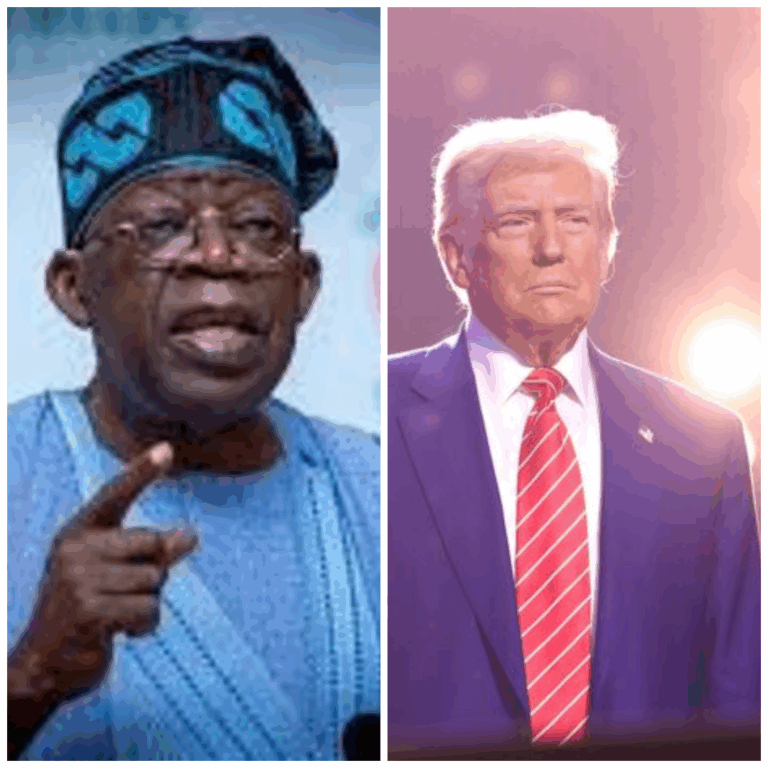
THE Federal Government has said President Bola Tinubu would visit the White House when the “situation is right,” dismissing insinuations that the president is avoiding Washington amid recent diplomatic tensions triggered by United States President Donald Trump’s designation of Nigeria as a “Country of Particular Concern” and his Christian genocide claim in the African most populous nation.

Speaking during an interview on Channels Television, on Friday, November 21, the Minister of Information Mohammed Idris, said there was no breakdown in Nigeria–US relations, insisting that both countries were actively engaging on the issues raised by the Trump administration.

Addressing questions on why Tinubu had yet to visit the White House, he said the president was not avoiding the US and that diplomatic timing mattered.

“Well, we believe that he will go once the situation is right for him to go. But he has been to America. I mean, I was with him at the U.N. when he took office,” the minister said.

The ICIR reports that Tinubu took over power on May 29, 2023, while Trump was sworn in on January, 20, 2025.

When pressed specifically about a White House visit, he added: “I believe that he will do that. I believe that. But let’s not make a deal out of it. The fact is that these countries are engaging. America is engaging Nigeria. Nigeria is engaging America.”

He stressed that ongoing diplomatic activities demonstrated that ties between both nations remained strong.

“No, our relationship hasn’t broken down, it hasn’t. If it has broken down, I mean, I can confirm to you that there are diplomatic engagements happening between Nigeria and the United States and other countries,” he said.

According to him, the core issue is a ‘misunderstanding’ on the American side about Nigeria’s internal security challenges.

“I don’t think it’s a matter of broken down. I think it’s a matter for us to engage America so that they can understand this more. What we feel is that there is no proper understanding of what the situations are in America” he stated.

He confirmed that National Security Adviser Nuhu Ribadu is currently leading a delegation in Washington for talks after Trump’s designation of Nigeria as a Country of Particular Concern.

“The fact that they (Ribadu and others) are in America indicates that there are channels of communication that have already been opened between Nigeria and America to deal with this matter, especially after this designation by President Trump,” he said.

Fielding questions on whether Tinubu and Trump had spoken directly, he emphasised that leader-to-leader communication follows diplomatic protocols.

He also expressed confidence that future communication between the two presidents was not off the table.

“I don’t think it’s something impossible to say that President Trump is not going to talk to President Tinubu, or President Tinubu is not going to talk to President Trump,” he stated.

Idris said the Federal Government was doing everything possible to contain insecurity in Nigeria. He explained that followers of both Christian and Islamic faiths had been victims of insecurity.

He said it was painful that the crisis was escalating when the nation was beginning to reap the benefits of the economic policies of the administration.

He argued that Nigeria was not helpless in tackling insecurity but needed the support of the US and other nations to defeat terrorism and related causes of insecurity facing the nation.

The minister also informed that Tinubu shelved his planned trips to Angola and South Africa to ensure the nation’s security forces return peace to the country, especially communities where gunmen had recently whisked away schoolchildren and worshippers in church.

He gave the assurance that the president’s actions on the recent spate of abductions and general insecurity would yield fruits in the coming days.

He, however, affirmed that Trump’s alarm could have escalated the tensions and recent attacks.

Idris urged Nigerians to remain firm and united in the face of the challenges. He pledged that the Tinubu administration would lead the nation of the crisis.

The ICIR reports that the remarks came as Ribadu led a high-powered delegation to the US following renewed allegations of Christian genocide claims that gained traction in the last few weeks.

The situation escalated earlier this month when Trump redesignated Nigeria as a Country of Particular Concern and tasked a group of US lawmakers, including Congressman Riley Moore, to investigate alleged religious persecution in Nigeria.

Trump threatened that he was considering military intervention in Nigeria if nothing was done to stop the killings.

Despite the Nigerian government’s efforts to dismiss the claims, the US pressed ahead, culminating in a development on Tuesday, November 18, when American rapper Nicki Minaj was invited to testify at the United Nations against Nigeria in an event co-hosted by the US Mission to the UN.

Similarly, the Nigerian delegation on Wednesday held a detailed meeting with Congressman Moore, who reportedly released a statement describing the engagement as “frank, honest, and productive.”

Moore said the Nigerian officials shared extensive information on counterterrorism efforts, security assistance, and protection of vulnerable communities.

Tinubu cancels trip to Angola, delegates Shettima to G20 summit in S/Africa

0

PRESIDENT Bola Tinubu has announced the cancellation of his scheduled trips to South Africa and Angola in order to address pressing security concerns in Nigeria.

He has consequently assigned his vice, Kashim Shettima, to represent him at the G20 Leaders’ Summit in Johannesburg.

The Vice President spokesperson, Stanley Nkwocha, revealed this in a statement on Friday, November 21.

“Following the decision of President Bola Ahmed Tinubu, GCFR, to stay back in Nigeria and attend to security concerns in the country, Vice President Kashim Shettima has departed Abuja to represent the President at the G20 Leaders’ Summit in Johannesburg, South Africa,” Nkwocha said.

The summit, slated for Saturday, November 22, to Sunday, November 23, at the Johannesburg Expo Centre, is expected to gather leaders of the world’s top 20 economies, alongside representatives of the European Union, the African Union, and major financial institutions.

The president had initially been scheduled to depart Abuja for the summit, followed by a trip to Luanda for the 7th AU-EU Summit.

The latest announcement followed Tinubu’s earlier decision to postpone his scheduled trips to the two countries to await further security briefings on recent security incidents in Kebbi and Kwara states.

The ICIR reported that Tinubu postponed his scheduled trips to the two nations, citing “security breaches” in Kebbi and Kwara States.

On November 18, two people were confirmed dead and an unspecified number of residents abducted after terrorists attacked Eruku town, in the Ekiti Local Government Area of Kwara state.

The Kwara State Police Command in a statement on Tuesday, November 18, said the attack left two men fatally shot and several others missing.

According to the Police Public Relations Officer, Adetoun Ejire-Adeyemi, a superintendent of police, the Divisional Police Officer (DPO) of Eruku and his team, working alongside local vigilantes, swiftly mobilised after hearing gunshots from the outskirts of the town.

Earlier on Monday, November 17, gunmen stormed Government Girls’ Comprehensive Secondary School, Maga, in Danko/Wasagu Local Government Area, and abducted several students and killed the school vice principal.


Nigerians face more grid collapses as NERC reports unresolved weaknesses

0

THERE is currently no end in sight to Nigeria’s grid collapse, as the latest report from the Nigerian Electricity Regulatory Commission (NERC) showed unresolved grid weaknesses.

Nigerian businesses, homes and industrial clusters are not relieved from the incessant grid collapse, which industry stakeholders say was a result of managerial and technical incompetence and misalignment of various power value chains.

The ICIR reports that in  2024, the national grid collapsed more than 12 times.

Nigeria has also witnessed several grid collapses in 2025, with the most recent one occurring on September 10, causing widespread power outages across the country.

According to the Commission’s latest Operational Performance of Power Plants fact sheet for October, the grid-connected plants recorded a Plant Availability Factor (PAF) of 40 per cent during the month, up by two per cent.

The NERC disclosed that system stability indicators fell short of regulatory thresholds.

It explained that grid voltage fluctuated between 294.55 (kilovolts)kV and 346.90kV, dipping below and rising above the target band of 313.50–346.50kV.

The regulator explained further that the grid frequency performance also remained unstable, oscillating between 49.46Hz and 50.69Hz—well outside the prescribed 49.75–50.25Hz range.

It noted that during the period, hydropower stations outperformed their thermal counterparts in availability.

The breakdown shows that Zungeru posted a 100 per cent PAF (700MW available), followed by Jebba at 93 per cent, and Kainji at 75 per cent.

Conversely, the regulator revealed that the country’s power plants recorded improved performance in October.

The commission, however, announced that the grid voltage and frequency stability remained outside prescribed operational limits.

It stated that out of the nation’s 13,625 megawatts (MW) of installed capacity, an average of 5,506MW was available for dispatch, a six per cent increase from the previous month.

Despite this improvement, only 78 per cent of available generation capacity was utilised.

In the month under review, the average hourly energy generation stood at 4,290 MWh/h, representing a 5 per cent rise.

Other strong performers included Ihovbor (Unit 2) at 89 per cent and Shiroro at 74 per cent.

Meanwhile, gas-powered plants such as Odukpani (31 per cent), Delta (45 per cent), and Egbin (50 per cent) operated far below installed capacity, reflecting ongoing challenges with gas supply, maintenance, and ageing infrastructure.

A number of plants, including Alaoji and Ibom Power, recorded zero available capacity throughout the period.

The report showed that the top ten energy producers accounted for 80 per cent of total generation in October.

It stated that Kainji delivered the highest load factor at 95 per cent, followed by Olorunsogo (Unit 1), Ikeja West, Dadin-Kowa, and Omoku, all at or near full utilisation of available capacity.

However, Zungeru, despite having full availability, recorded a relatively low load factor of 47 per cent, indicating limited dispatch due to grid constraints or water management considerations.

Also, during the period, several grid-connected plants continued to struggle, with Sapele Steam posting a two per cent availability factor, Omotosho (2) recorded three per cent, while Ihovbor (1) and Olorunsogo (2) posted 12 per cent and 14 per cent respectively.

Also, only a few small-capacity stations, such as Dadin-Kowa (40MW), Ikeja (110MW), and Igbabo (45MW), operated at 100 per cent availability.


Reactions trail Nnamdi Kanu’s life sentence

0

NIGERIANS and prominent figures in the international community have reacted to the Abuja Federal High Court’s verdict that sentenced the leader of the proscribed Indigenous People of Biafra (IPOB), Nnamdi Kanu, to life imprisonment instead of death sentence sought by his prosecutor, after several years of standing trial on terrorism charges.

The judge, James Omotosho, delivered the ruling on Thursday, November 20, after admitting that Kanu was a freedom fighter seeking to liberate his people but chose the path of terrorism.

He found the accused guilty of all counts one to seven, including his sit-at-home order resulting in economic losses and death of innocent people in the South-East, being a member of a proscribed organisation and committing acts of terrorism, and threatening anyone who failed to obey his order.

The court also found him guilty of inciting the killings of Nigerian security personnel, and for making broadcasts to kill people.  

A chieftain of the All Progressives Congress (APC) in Lagos State, Joe Igbokwe, expressed satisfaction with the judgement in a video he shared on Facebook.

“I am not happy that somebody will be convicted and sentenced to life, but also, I understand that there has to be accountability. This is the beginning of the long journey to the quest for peace in the South-East,” he said.

The Federal Government prosecuting counsel, Adegboyega Awomolo, said the judiciary salvaged Nigeria from IPOB oppression.  

“Today, God has brought an end to injustice, oppression suffered by our brothers and sisters of the eastern states of Nigeria. They will now be able to sleep with their two eyes closed,” he said.

In its reaction, the Centre for Social and Economic Rights (CSER) lauded the judiciary for the conviction and sentencing of the IPOB leader. It described Kanu as an international terrorist and called the judgment a significant victory in Nigeria’s war against terrorism.

The CSER Executive Director, Nelson Ekujumi, in a statement condemned the attempts by some individuals to portray IPOB as a freedom-fighting organisation, highlighting the history of terror, killings, and destruction the group had caused, particularly in the South-East.

Meanwhile, several voices in the international community condemned the ruling. Among them is the Chairman, Austrian Committee For NATO, Gunther Fehlinger-Jahn, who called on the Nigerian government to free the IPOB leader in a one-minute video.

“Dear friends of the free world, I want to protest against the treatment of Mazi Nnamdi Kanu, the hero of Biafra, the Mandela of Nigeria and the Rugova of West Africa, a peaceful man, a trusted man, a credible personality of global standing, and he’s treated so shamelessly in the kangaroo courts of Nigeria this morning. It’s an absolute disgrace,” he said. 

Fehlinger-Jahn challenged the United States and European Union to declare support for Kanu.

“The free world asks and calls for the Secretary of State Marco Rubio and Kaya Kalas, the Prime Minister of the European Union, to punish Nigeria and to make very clear no more support for Nigeria if Mazi Nnamdi Kanu is not freed and liberated immediately in this kind of mock political, Stalin’s kind of prosecution, which the Nigerians have copied from the Soviet Union and Yugoslavia. It’s an absolute disgrace and must be ended, and he must be freed.

“Free Mazi! Free Mazi! Free Mazi! Here from Vienna, we shout that loud and clear, and I hope the world is listening, hearing, and saying to Nigerian authorities in their brutal authoritarian style that this must stop. Liberate Mazi. Free him,” he added.

Similarly, Human Rights Activist, Malcolm Emokiniovo Omirhobo in a statement also compared Kanu’s judgement to Sheikh Ahmad Gumi, whom he said openly fraternised with armed bandit groups, negotiated with terrorists, defended their actions, issued inflammatory public statements, positioned himself as their public relations officer, and continued to walk freely without even a police invitation.

“The recent conviction of Mazi Nnamdi Kanu for alleged incitement through his broadcasts has once again exposed the disturbing reality of Nigeria’s two-tiered justice system; one that punishes some citizens with ruthless efficiency while shielding others who commit equal or worse offences in full public view.

“While Kanu has been arrested, detained, tried, and now convicted, Sheikh Ahmad Gumi, who openly fraternises with armed bandit groups, negotiates with terrorists, defends their actions, issues inflammatory public statements, and positions himself as their public relations officer, continues to walk freely without so much as a police invitation.

“This contradiction is not just morally indefensible; it is unconstitutional. Sections 17, 36, and 42 of the 1999 Constitution guarantee equality before the law, equal protection for all citizens, and freedom from discrimination in law enforcement. Yet, in today’s Nigeria, one man is prosecuted for speech, while another who routinely engages with terrorists is celebrated as a ‘mediator.” 

The argued that the process conflicted with the rule of law but was done through selective discretion. 

According to him, Gumi enters terrorist camps freely, meets armed criminals responsible for mass killings and kidnappings, publicly defends them as ‘misunderstood’, issues sectarian and provocative statements, and undermines national security repeatedly.

He called on the Federal Government, the Attorney-General of the Federation, the Department of State Services, and the Nigeria Police Force to apply the same standards of law to all citizens regardless of ethnicity, religion, region, or political agenda.

“Investigate Sheikh Ahmad Gumi for his open engagement with terror groups. End the culture of selective prosecution that has become the hallmark of governance. Restore public confidence in the justice system by demonstrating fairness and impartiality.

“The conviction of Nnamdi Kanu while Sheikh Gumi remains untouched is a glaring example of double standards. Until the Nigerian state demonstrates that the law is blind to religion and ethnicity, its fight against insecurity will remain compromised,” he wrote.

In his comment on the case, US Congressman, Former chairman of the Africa Subcommittee and now a member of the Energy and Commerce Committee Representative, John James, opined that Kanu’s case was a proof of religious persecution in Nigeria.

Similarly, a permanent deacon of the Diocese of Lancaster, Nick Donnelly wrote on his handle that Kanu was falsely convicted of terrorism. 

“Mazi Nnamdi Kanu has been falsely convicted of terrorism. This has been nothing but a show trail, a travesty of jurisprudence. 

“Witnesses have lied, due process has not been observed, legality trampled underfoot. All tyrannical governments imprison their political opponents, thereby destroying democracy,” he wrote.

Nigeria’s famous writer, Chimamanda Ngozi Adichie also shared her thoughts on the ruling. She wrote on X, “The truth is that Mazi Nnamdi Kanu is a global figure. Even the judge, the DSS, Police and those writing on social media from the place of unnecessarily induced anger and bitterness RESPECT him. 

“A son of man was born sound for a purpose. Don’t cry for him, rather cry for yourselves, families and communities.”

Another human rights activist, Elohchukwu Ohagi, compared the Kanu’s sentence to the judgement of Sunday Igbogho. 

“The hypocrisy of these people is second to none. Igbogho walks free. He is not in prison and has no case. But Yoruba people say Mazi Nnamdi Kanu should be in jail,” he posited.

Speaking on behalf of Ndigbo leaders, the Deputy Speaker, House of Representatives, Ben Kalu, noted, “All hope is not lost. Political solution is underway to secure Kanu’s release.” 

In a statement by Levinus Nwabughiogu, the Deputy Speaker’s Chief Press Secretary, Kalu expressed optimism that the convict would be freed through a political approach.

He expressed hope that President Bola Tinubu would heed the pleas of Igbo leaders on the matter.

“It is now time to explore political solutions that had been hindered because the matter was before the court. But now that the court has finished, it is time to intensify the request for the president’s intervention, and we are sure that the president is not averse to it. We are going to get it. All hope is not lost. Our people should remain calm.”

The ICIR reported that Kanu’s trial began after his 2015 arrest on charges of treasonable felony and terrorism, and the case saw multiple twists and developments since then.

In 2017, Kanu left Nigeria while on bail after a military raid on his home during the “Operation Python Dance” exercise in the South-East.

In June 2021, he was arrested in Kenya under controversial circumstances and repatriated to Nigeria, a development his legal team and IPOB denounced as an “extraordinary rendition.”

Kanu’s defence team consistently questioned the legitimacy of the trial, insisting that major legal and procedural breaches, including alleged violations of international extradition protocols and jurisdictional requirements weakened the prosecution’s case.

The ICIR reported that Kanu sacked his lawyers and agreed to stand for himself in the court. He faced a seven-count charge bordering on terrorism, treasonable felony, and incitement.


Detty December: from street slang to marketable brand

0

DETTY December, a phrase that has been part of Nigerian slang since 2010, is now officially trademarked.

Deola and Darey Art Alade secured a legal trademark for Detty December in 2019 through their company, Livespot360. For years, the registration remained largely unnoticed, even as the phrase became a nationwide shorthand for parties, concerts, and the festive end-of-year energy.

But after the couple announced and launched Detty December Fest in September, the trademark resurfaced in public consciousness. By October, many Nigerians realised, for the first time, that the beloved cultural phrase had been legally owned for years. This discovery quickly ignited debates about cultural ownership, creativity, and the commercialisation of shared expressions.

A similar situation recently unfolded in the baking industry when the owner of the popular cake brand ‘Fastest Cakes’ took legal action against an Ibadan-based baker who claimed to have been using the description “fastest cakes in Ibadan” for years, and registered the name with the Corporate Affairs Commission (CAC) in April 2025 after the brand had opened an outlet in the city.

The case sparked widespread discussion about how individuals or companies can trademark seemingly generic phrases like “luxury cakes” or “best cakes” and then pursue legal action against small business owners simply for using them in captions or hashtags.

Trademark versus culture: when a phrase becomes a brand

So, what exactly does it mean to trademark a phrase like Detty December? Under Nigerian law, a trademark is a distinctive sign, symbol, or phrase that identifies and distinguishes the goods or services of one business from another.

It gives the owner the exclusive right to use that mark in commerce and prevents others from using it in ways that could confuse. In practice, this means that while everyone can still talk about Detty December as a cultural concept, using it commercially for events, merchandise, or advertising, without permission could potentially constitute infringement.

 Ayomide Tayo, a pop culture critic, told The ICIR that Detty December is more than a phrase; it is a mood. It reflects pride in Nigerian youth culture and the country’s rising influence on global pop music and entertainment.

He stated that while the term has become embedded in public discourse, the trademark creates tension for show promoters and entrepreneurs.

“What Detty December represents is a celebration of how cool it is to be a Nigerian right now. Thanks to the international success of Nigerian contemporary pop music, the world perceives young Nigerians in a new light. So, Detty December is a pilgrimage for young Nigerians abroad and those interested in tapping into Lagos nightlife during the festive period.”

“The name can be trademarked, but it does not stop the partying and the emotional experience; it might affect show promoters who had events tagged ‘Detty December’, but for the masses, I doubt it would have much of an impact,” Tayo noted.

Legal perspectives on cultural expressions

Habeeb Gobir, an intellectual property and tech lawyer, states that under Nigerian law, particularly the Trade Marks Act, Cap T13, Laws of the Federation of Nigeria 2004, a mark is registrable if it is distinctive and capable of distinguishing one entity’s goods or services from another’s. Even widely used phrases can qualify if they have acquired distinctiveness through commercial use and are tied to specific goods or services.

“For example, “Detty December’ in public conversation simply refers to festive social activities. But if someone uses it distinctively for branded events, merchandise, or entertainment services, and can show it serves as a source identifier, then it may be eligible for trademark protection.

The prior public use of the phrase could weaken its distinctiveness and make registration questionable. The Registrar at the Trademarks Registry has the discretion to refuse registration where a phrase is descriptive, generic, or customary in the current language or trade practice.” Gobir explained.

This debate sits at the uncomfortable intersection of public culture and private legal rights. While a trademark gives its owner commercial control over a phrase, Nigerian law also recognises that some expressions belong to everyone. The Trademarks Act provides room for objections even after a mark has been registered, on several grounds. A trademark can be challenged if it is not distinctive enough, if it has become too common in everyday language, or if granting exclusive rights would run against public interest or accepted cultural practice.

Put simply, trademark law was never created to privatise collective cultural expressions. Phrases that have long existed in the public domain, or are widely used as part of social language, are not typically meant to be locked behind private ownership, especially if such ownership could restrict how the public naturally uses them.

“Trademark rights are not designed to privatise cultural heritage. Nigerian law, in principle, does not protect expressions that belong to the public domain or form part of common social language.

Therefore, if the registration of “Detty December” or similar cultural phrases prevents the public from using them in their natural expressive form, it can be challenged before the Trademarks Tribunal or Federal High Court on public interest grounds.” Gobir added

These concerns deepen when cultural expressions shift from community use to corporate control. Tayo observed that such transitions often strip the expression of its authenticity, leaving it open to exploitation by people who may not fully represent or understand the culture behind it.

“It lacks authenticity and is exploited by people who do not belong to the culture. My fear is that a cultural celebration like this will be pimped to the highest bidder, and in a couple of years, it will lose its cultural value,” Tayo stated.

He added that the implications go beyond culture; they shape the future. Once legal ownership enters the picture, people become more cautious and commercially savvy about the phrases they coin or popularise.

Gobir and Tayo share the same stance on the consequences of trademarking for entrepreneurs. He stated that once a phrase is registered as a trademark, any commercial use without permission, whether in event promotion, merchandise, or advertising, could amount to infringement. This type of enforcement has the potential to disrupt business plans and expose smaller creators to legal pressure, especially when rights holders take an aggressive approach.

“The legal consequences include Cease-and-desist orders, Damages or account of profits, and Injunctions preventing further use. Commercially, it can disrupt marketing plans and even expose small creators to legal intimidation, especially where enforcement is aggressive.

However, non-commercial or descriptive use, for example, using “Detty December” in conversation or as part of commentary, would not typically amount to infringement.” Gobir highlighted.

In reflecting on how Detty December ended up in private hands, pop culture analyst Tayo suggested that the phrase might have been better safeguarded as a shared cultural asset. He noted that if relevant agencies had recognised the cultural and economic weight of youth-driven expressions early enough, they could have ensured that no single organisation acquired exclusive naming rights. Instead, he argued, institutions often overlook the soft power embedded in youth culture until it becomes too valuable to ignore.

He added that the trajectory of Detty December is not unusual. In his view, most cultural movements eventually collide with capitalism; it is part of how industries grow and how new markets are created. The risk, he warned, is when the original communities behind these expressions stop benefiting from them, allowing cultural meaning to be reshaped or diluted by commercial interests.

Gobir agreed that creators hoping to protect emerging cultural phrases should act early and strategically: register expressions before they become mainstream, define the scope of protection narrowly to avoid stifling public use, and remain engaged with the communities that shaped the language in the first place. Importantly, he emphasised the need for fair use allowances so that cultural expressions continue to thrive in everyday conversation, even as they acquire commercial value.

Their perspectives underscore a larger tension: the challenge of preserving collective cultural identity in a system where almost anything, even a feeling, a season, or a slang term, can be legally owned.