Home Blog Page 139

Peter Obi votes, condemns vote buying in Anambra poll

0

FORMER Anambra State Governor and 2023 Labour Party (LP) presidential candidate, Peter Obi, on Saturday cast his vote in the state governorship election and lamented alleged persistent vote buying.

Obi voted at Polling Unit 019, Umudim Akasi, Agulu Ward 2, Anaocha Local Government Area, around 12pm.

Addressing journalists after casting his ballot, Obi decried the practice, describing it as a major threat to Nigeria’s democracy. “Our democracy is deteriorating, and unfortunately, those who benefit from bad governance are the ones sustaining it,” he said.

He lamented that voters, often unemployed, were being paid to sell their votes.

“Someone who is not employed collects ₦30,000 for their vote. That means they have sold their school, their hospital, their job opportunities. They are selling away their future. That is what is very worrisome about our democracy,” Obi said.

Comparing the situation with other countries, he noted that even in West African elections he had observed, such widespread vote buying was rare. He called for reforms to strengthen electoral integrity.

The ICIR reports that the Saturday’s elections have drawn 121 accredited local and international observers and 76 media organisations.

It’s also the first assignment for the new INEC chairman, Joash Amupitan, a professor.

The election has so far been peaceful. According to the INEC data, 2,802,790 registered voters across 21 Local Government Areas, 326 political wards, and 5,718 polling units are expected to participate in the exercise.

The INEC data further shows that over 1.7 million voters collected their Permanent Voter Cards (PVCs), while more than 7,000 Bimodal Voter Accreditation System (BVAS) were deployed for the election.

The ICIR reported that the electoral body had cleared 16 candidates from various political parties to vie for the highest political office in the state, including the incumbent Governor Charles Soludo All Progressives Grand Alliance (APGA), Ukachukwu Nicholas, All Progressives  Congress (APC), Ezenwafor Jude, Peoples’ Democratic Party (PDP), and Moghalu Nnadubem, Labour Party (LP).

Anambra: LP governorship candidate Moghalu votes, laments voter apathy

0

THE Labour Party (LP) governorship candidate in Anambra State, George Moghalu, has cast his vote at polling Unit 017, Iba Okpunoeze Hall 2, Uruago Ward 1, in Nnewi North Local Government Area.

Moghalu arrived at the polling unit around 11:30 a.m., where he was accredited before casting his vote.

Addressing journalists shortly after, he expressed disappointment over the low voter turnout observed across several polling units in Nnewi North, describing it as a worrying sign of the people’s waning trust in the electoral process.

“Voter apathy is the manifestation of the lack of confidence people have in INEC,” Moghalu said.

He added that the government weaponised poverty against the people, adding that as long as citizens remained impoverished, it would be difficult to expect truly free and fair elections.

Meanwhile, data from his polling unit and surrounding areas reflect the low participation he claimed.

As of 12:00 p.m., at Polling Unit 017, where Moghalu voted, only 69 out of 463 registered voters had been accredited.

In the nearby Polling Unit 016, in the same Iba Okpunoeze Hall 2, Uruago Ward 1, there were 123 accredited voters out of 856 registered, while Polling Unit 018 recorded 86 accredited voters out of 563 registered.

Across Urugua Ward, several polling units at the Cooperative Centre, Nnewi North, also witnessed poor turnout. At Polling Unit 011 (Cooperative Centre 1), only 28 out of 188 registered voters had been accredited as of 10:50 a.m, according to the presiding officer who spoke with The ICIR.

Similarly, Polling Unit 012 (Cooperative Centre 2), which began voting around 9:00 a.m., accredited just 41 out of 422 registered voters as of 11:00 a.m., according to presiding officer Mubarak Adam.

At Polling Unit 013 (Cooperative Centre 3), only fewer than 100 of 796 registered voters had voted by midday, further illustrating the low participation trend.

A Labour Party agent who spoke with The ICIR alleged that his party was struggling to attract votes because it refused to engage in voter inducement, claiming that “other parties are openly giving out money to voters.”

Earlier, in an exclusive interview with The ICIR at his residence in Iba Okpunoeze, Nnewi North, Moghalu discussed the challenges of vote buying, voter inducement, and election security, urging the authorities and electoral officials to maintain fairness and transparency throughout the process.

Despite the low turnout, election officers at the units confirmed that voting was ongoing peacefully, with no reports of malfunctioning BVAS devices or security breaches.

Police officers were also on ground to ensure a calm voting environment.

The election, which began early Saturday across the state’s 21 local government areas, has been peaceful.

Some areas reported early arrival of voters and smooth accreditation, others, including parts of Nnewi North, have seen a sluggish turnout.

NYSC extends 2025 Batch C registration by 48 hours over system glitch

THE National Youth Service Corps (NYSC) has extended the online registration for the 2025 Batch C prospective corps members by 48 hours due to technical challenges encountered during the exercise.

In a statement signed by the Director of Information and Public Relations, Caroline Embu, on Saturday, the NYSC announced that the registration, initially set to close on November 9, would end at midnight on Tuesday, November 11.

“The Management of the National Youth Service Corps (NYSC) has noted the difficulties being faced by some prospective corps members (PCMs) in the ongoing registration for the 2025 Batch ‘C’ mobilisation. The longer than usual time it is taking some PCMs to complete the registration is as a result of network issues.”

The Corps apologised to applicants for the inconvenience, noting that it’s working to resolve the glitch.

“While management regrets the inconvenience this might have caused our valued PCMs, we wish to assure all that we are working round the clock to resolve the issues and ensure they enjoy seamless registration.

“In view of this regrettable development, management has extended the registration period by 48 hours till midnight of Tuesday, 11th November 2025, to enable our enthusiastic PCMs conclude their registration,” the statement read.

Anambra: Poling unit with 923 registered voters in Soludo’s hometown struggles with crowd

0

REPORTS of overcrowding have emerged from Polling Unit 002, Umuezeadigo Street, in Isuofia community, Aguata Local Government Area of Anambra State, where about 923 registered voters are jostling to cast their ballots.

The unusually large number has led to long queues and delays, with election observers noting that the Independent National Electoral Commission (INEC) should have split the polling unit into two or more to ease the process.

Isuofia is the hometown of the incumbent Governor Charles Soludo, a professor, while Aguata is one of the seven local government areas that make up the Anambra South Senatorial District.

The ICIR reports that voters in Anambra State are today electing their next governor, as Soludo’s first tenure ends in March 2026.

The governor, seeking re-election, contests with other 15 candidates vying to govern the state for the next four years.

Over two million voters are eligible to vote across 5,720 polling units spread within the 21 local government areas of the state.

Among the 16 candidates, four are regarded as major contenders namely: Soludo of the All Progressives Grand Alliance (APGA); entrepreneur Nicholas Ukachukwu of the All Progressives Congress (APC); former managing director of the Nigerian Inland Waterways Authority, George Moghalu of the Labour Party (LP); and businessman and economist, John Chuma-Nwosu of the African Democratic Congress (ADC).

Adeboye urges FG to eliminate terrorists, sponsors to avert US invasion

0

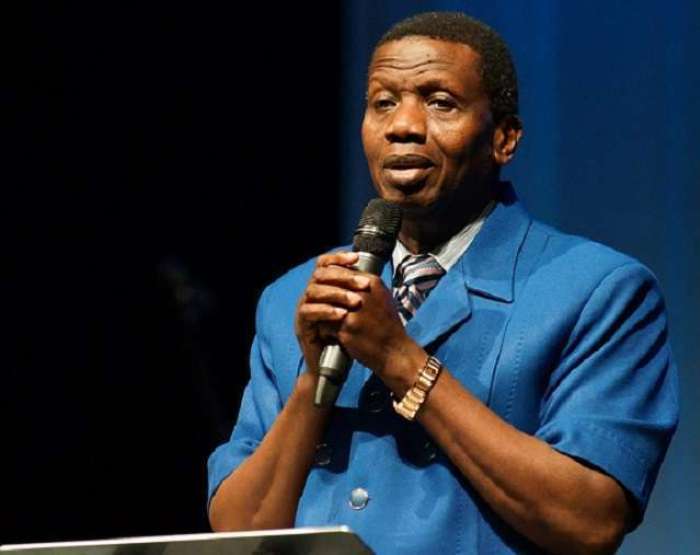
THE General Overseer of the Redeemed Christian Church of God, Enoch Adeboye, has called on the Federal Government to take swift action in eliminating terrorists and their sponsors to avert United States military operations in Nigeria.

Adeboye made the call Friday night during the November Holy Ghost Service, while reacting to recent threats by the United States President Donald Trump.

The cleric’s warning came after remarks by Trump, who vowed to end all aid to Nigeria and deploy the United States military to fight terrorists in Africa’s most populous nation if what he termed “Christian genocide” continued.

The ICIR reported that Trump added Nigeria to countries on watchlist for Christian genocide on Friday, October 31.

The Countries of Particular Concern list also includes China, Myanmar, North Korea, Russia, and Pakistan, among others.

The US leader said he had asked US Representatives Riley Moore and Tom Cole, along with the House Appropriations Committee, to investigate the issue and report their findings to him.

In his message Friday night, Adeboye warned that if the United States eventually invades Nigeria, China, Russia, and other global powers would not intervene to defend the country.

“All the so-called world leaders will talk, they will condemn what America has done in the strongest terms, that’s all they will do. Britain is not going to come and help us. No other foreign power will come to our aid.

“This is not the time for joking. This is not the time for drama. This is not the time for semantics. This is not the time to begin to argue, is it suicide or kidnapping or whatever name they call it? And this is not the time to say, ‘Ah, it’s not Christians alone, Muslims are also involved.’ The point is, people are dying. Innocent people are dying,” he added.

He said he had advised the late President Muhammadu Buhari and other past leaders to deal decisively with the nation’s insecurity crisis.

“Our President inherited this problem,” he said, recalling the tenure of the late Buhari, whom he said had once privately advised to take decisive action when killings in the country became unbearable. He said Buhari did not follow through with the directive after issuing it to his security chiefs.

“Some of you will remember who called the service chiefs together and said, ‘I give you three months, get rid of all these Boko Haram people or resign. It’s not allowed to tell you who gave him that advice. He ran with that advice, but he didn’t follow it through, because he gave the order as the Commander-in-Chief of the Armed Forces, and the security operatives moved fast.

“But three months went by, and the work was not done. So, I went to see him. It wasn’t unusual. This time, somehow, the press got to know that I visited him. Of course, they were not there when we talked.

“Unfortunately, like I said, he’s not alive now. I would have asked you to go and ask him, ‘Sir, why didn’t you follow through? Because when three months passed and the work wasn’t done, why didn’t you proceed with your, are we going to call it a threat?” he said. 

He further advised Tinubu to appeal to Trump for a 100-day grace period to address the insurgency in Nigeria, noting that the president should, in turn, issue a marching order to the service chiefs and other security agencies to resolve the issues within 90 days.

“Let the government use diplomatic methods to convince President Trump to give us 100 days of grace. All our service chiefs, fortunately, are new, should perform within three months, or resign,” he said.

“When giving orders to the service chiefs this time around, we should make it clear to them that they are not only to eliminate the terrorists but also their sponsors, no matter how influential they may be,” the cleric stated.

He pleaded that Nigerians should stop apportioning blame. 


Elderly, persons with disabilities given priority as election commences in Anambra

0

VOTING has officially commenced across several polling units in Anambra State, with the elderly and persons with disabilities (PWDs) receiving priority as accreditation and balloting begin.

At Polling Units 016 and 017, located in Iba Okpunoeze Hall 2, Uruago Ward 1, Nnewi North Local Government Area, presiding officers began accreditation and voting at around 9:22 a.m.

Police officers were present to maintain order, while elderly voters were provided with plastic chairs to sit comfortably as they exercised their franchise.

As at the time of filing this report, The ICIR confirmed that the BVAS devices were functioning smoothly and that voting was progressing without any disruption.

Similarly, at Omaigwe Central School, Ward 2, Osumenyi, Nnewi South Local Government Area, voting was already underway by 9:20 a.m. across Polling Units 017, 018, and 019, with election materials properly deployed and voters participating peacefully.

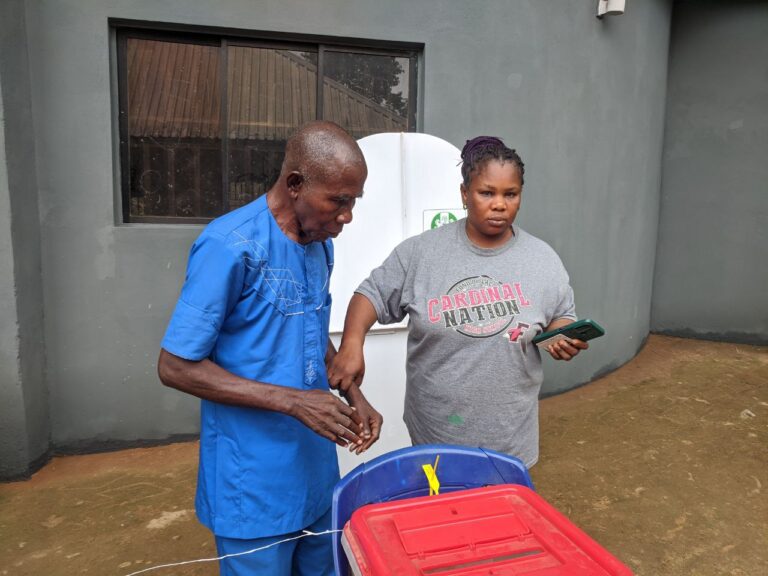
In Aguata Local Government Area, Julius Nwafor, a 74-year-old visually impaired man, cast his vote at 8:47 a.m. in Ward 13, Polling Unit 002, Ofili Square, Isuofia, assisted by his daughter, Ifeoma Nwafor.

He expressed optimism about the election being eventually adjudged to be very credible.

He also urged the incoming administration to prioritise the welfare and healthcare of senior citizens and persons living with disabilities.

“I believe in the unity of Nigeria and would want a hitch-free election devoid of any violence,” Nwafor told The ICIR after voting.

Although he is from the same town with Governor Charles Soludo, he noted that he would welcome the outcome of the election once it’s free and fair and devoid of criss.

“I believe in the unity of Nigeria and would want a hitch-free elections devoid of any electoral violence,” he said.

The ICIR reports that Nwafor was assisted to cast his vote by his daughter, Ifeoma Nwafor.

Presiding officers across the observed polling units confirmed that special consideration was being given to vulnerable groups, in line with INEC’s inclusion policy, which mandates priority voting for the elderly, pregnant women, and persons with disabilities.

The ongoing exercise has so far been peaceful, with no reports of BVAS failure or security breaches across the monitored areas in Nnewi North, Nnewi South, and Aguata LGAs.

According to the INEC data, 2,802,790 registered voters across 21 Local Government Areas, 326 political wards, and 5,718 polling units are expected to participate in the exercise.

The INEC data further shows that over 1.7 million voters collected their Permanent Voter Cards (PVCs), while more than 7,000 Bimodal Voter Accreditation System (BVAS) were deployed for the election.

The ICIR reported that the electoral body had cleared 16 candidates from various political parties to vie for the highest political office in the state, including the incumbent Governor Charles Soludo All Progressives Grand Alliance (APGA), Ukachukwu Nicholas, All Progressives  Congress (APC), Ezenwafor Jude, Peoples’ Democratic Party (PDP), and Moghalu Nnadubem, Labour Party (LP).

QUICK media & information literacy for Anambra decides 2025

0

By Nigeria Fact-Checkers’ Coalition

Topic 1: #AnambraDecides2025: Four things to do after you cast your vote

As the Anambra Election continues, electorates are encouraged to remain actively engaged  — not only by casting their ballots but also by participating fully even after the voting process is completed. 

Here are four things you can do as an electorate after casting your vote:

1) Monitor the election: After casting your vote, you can stay around the polling unit and monitor ongoing activities peacefully. Monitoring election activities even after you have voted is important to ensure your vote is protected. 

2) Encourage others to vote: While it is prohibited to campaign during the election, as an active citizen, you can go ahead to encourage registered voters who might not be interested in the process to cast their votes. 

3) Wait for results collation: You should wait and observe the counting process. This is important to ensure transparency in the counting process and helps you know the outcome of your vote. The results sheet (Form EC8A) can also be recorded and kept for future use. 

4) Report irregularities: One way to protect your vote is to report any form of irregularities during the election, even after you have cast your vote. When any form of irregularity has been observed, you can reach out to a security official around your polling unit, election observers, or the media.

It is important as an electorate to ensure that your votes are monitored and protected. With this, you are building a culture of transparency and accountability, making sure your votes count.  


Topic 2:  How to spot fake election results 

As votes are being counted in the #AnambraDecides2025, social media will likely be flooded with fake, premature results as experienced in past elections. 

Below is how to identify fake election results before you share them:

  1. Verify the source: Trust only official updates from INEC and credible news outlets.
  2. Wait for official announcement: Disinformation actors share fake election results claiming an early lead. The most effective  way to get the correct information about the original election results is by waiting for the official announcement by INEC
  3. Watch out for Fake Form EC 60E:  People post manipulated EC60E forms, which are usually pasted on the walls after the election at a polling unit to claim an early lead. Look for spelling errors, inconsistent fonts, or blurry logos and do a reverse image search to check their origin.
  4. Cross-check figures: Never rely on one source for election results. Check other credible platforms before sharing 
  5. Beware of anonymous sources: Some often claim to have insider information about who wins. Never trust them until the official results are out.

Topic 3:  How the NFC exposed old video and how you can do that

A Facebook user posted a video displaying bundles of cash, claiming in the caption that it was “election-sensitive materials” delivered for the Anambra election. 

The NFC quickly swung into action to fact-check and found the video had nothing to do with the election. 

You can also do this. Here is how:

Observation

  • If the video involves humans, landscapes, license plates, currency, languages etc, observe for details.
  • In this case, we observed that the bundles are in the Nigerian Naira currency, so the video was most likely recorded in Nigeria, but this alone doesn’t prove it was recorded in Nigeria.

Reverse image search

  • There are different ways to do a reverse image search, depending on the available tools to you. You can take a screenshot of the image and upload it to Google to search for the exact images. 
  • You can also download the Invid plugin for Chrome, break the video into frames and conduct a reverse image search on the search engine of your choice (Google, TinEye, Yandex, etc). Invid is a video verification platform that assesses the reliability of video content spread via social media.

When did it appear?

  • Click on the search results to see the posts with the same video. Don’t assume. Click on the posts you see in the results page to confirm the date it was posted.
  • In this case, the video mainly appeared in April 2025, months before the Anambra election. Meaning: The recent post was misleading.
  • Always prioritise official pages, verified accounts and journalists.

Add context

  • If a video displaying bundles of cash suddenly appears during an election, it could be a deliberate attempt to sabotage legitimate efforts to ensure a fair process or a confirmation bias of years of vote-buying and selling among Nigerians.

One more check 

  • Captions often accompany images and videos. For this video, the posts claim it’s from the birthday celebration of a socialite. A keyword search of the birthday and the bundles of cash led to the same video on TikTok.

Stuck? Share with the NFC

  • We understand that fact-checking an old video, especially with limited tools or a low-quality image, can be tricky. If you are stuck or don’t know how to go about fact-checking a video you came across in the Anambra elections, reach out to the Nigerian Fact-Checkers’ Coalition (NFC) on WhatsApp: +234(0)9030785265

Topic 4: Where to check for the Anambra election result

Election results have started circulating after the end of the voting period in the Anambra election. It’s a common pattern after elections to see results from polling units circulate online, especially from partisan individuals who want to create a sense of victory at the polls. But some of these results can be fake, old or manipulated, which makes it essential to know the right place to check for a credible election result. Below are the credible places to monitor the outcome of the polls:

The Independent National Electoral Commission (INEC): INEC remains the primary and official source of election results. The Commission provides updates via its result viewing portal, where results are uploaded from every polling unit in the state. You can monitor the results being uploaded from the comfort of your home. DOn’t rely on random social media accounts.

Credible media organisations: You can also rely on them for live reporting. Some of these organisations have trained journalists and observers on the ground monitoring the collation of the votes as they trickle in from the hundreds of polling units in the state. 

Nigerian Fact-Checkers’ Coalition (NFC): Voters can also follow the credible fact-checking organisations in the NFC. The NFC verify the election results and other claims circulating online to ensure they reflect the official results or the on-the-ground situation. 

It is very important to avoid relying on random social media accounts for the Anambra election result. Always cross-check information with INEC’s official result webpage or credible media organisations. If you are in doubt about a claim you came across, reach out to the NFC about what you’d like to check.


Topic 5: Vote buying and other election day offences 

By all accounts, vote buying was rife during the 2025 Anambra state governorship election. 

Observers, journalists, and leading candidates in the election all complained about how blatantly agents of political parties induced voters with cash, sometimes in the presence of security agents. 

It seemed those involved were unaware that giving or receiving money as an inducement to vote on Election Day could get them jailed for one year. 

According to Section 127 of the Electoral Act 2022, anyone who pays money directly or indirectly to “corruptly influencing a person to vote or refrain from voting” at any time after the announcement of the date of an election, or ‘being a voter, corruptly accepts or takes money or any other inducement” commits an offence and is liable on conviction to a fine of N100,000 or imprisonment for a term of 12 months or both.

The Act also says that threatening voters or preventing a political aspirant from freely using the media, designated vehicles, mobilisation of political support and campaign at an election, attracts a fine of N1 million or imprisonment for a term of three years. 

Here are other offences you could commit on Election Day:

  • Voting or attempting to vote in a constituency where your name is not on the register of voters. Anyone who does that commits an offence and is liable on conviction to a maximum fine of N100,000 or imprisonment for a term of six months or both.
  • Bringing to a polling unit a voter’s card that is not yours. The law says that any person who knowingly brings into a polling unit during an election a voter’s card issued to another person commits an offence and is liable on conviction to a fine of N100,000 or imprisonment for a term of six months or both.
  • Inciting others to act in a disorderly manner.  This offence attracts a maximum fine of N500,000 or imprisonment for a term of 12 months or both. 
  • Campaigning, canvassing or soliciting for votes less than 300 metres from a polling unit. The law prohibits the following within a distance of 300 metres of a polling unit on Election Day: canvassing for votes, soliciting for the vote of any voter, persuading any voter not to vote for any particular candidate, persuading any voter not to vote at the election, shouting slogans concerning the election, possessing any offensive weapon, dressing in way aimed at intimidating voters, displaying any notice, symbol, photograph or party card related to the election, using any vehicle bearing the colour or symbol of a political party by any means whatsoever, (i) loitering without lawful excuse after voting or after being refused to vote, or blaring siren. Doing any of these is an offence that attracts a fine of N100,000 or imprisonment for a term of six months.
  • Snatching or destroying election material or devices. This is an offence that is punishable by imprisonment for a term of 24 months. 

Topic 6: Four tips to avoid falling for misinformation after voting

As Anambra voters complete their ballots, attention now shifts towards vote counting, results collation, and political reactions. In this period, emotions may run high, and party supporters may begin to flood social media with unverified claims, misleading images, or sensational videos. Knowing how to navigate this information is crucial in ensuring that you’re not misled.  

Below are four tips to help you avoid falling for false narratives as you await the result

  1. Check the source: Rely solely on information provided by the Independent National Electoral Commission (INEC), credible news platforms, or trustworthy fact-checking organisations.
  2. Look for multiple confirmations: Genuine claims are often reported by multiple reliable sources. Exercise caution with information from a single post.
  3. Pause before sharing: Don’t forward any message about Anambra election results without confirming first. Spreading unverified content will only fuel confusion.
  4. Use fact-checking platforms: Tag DUBAWA, RoundCheck, FactCheckHub, AfricaCheck, or any member of the Nigerian Fact-checkers’ Coalition (NFC) on every post that appears suspicious. 

To protect public trust and the integrity of our democratic process, it is essential to remain responsibly informed. By verifying claims, avoiding sensational content, and reporting false information, you also contribute to a calm and credible post-election environment.


Topic 7: How gubernatorial election votes are counted and declared 

As votes are counted in the ongoing Anambra gubernatorial election, results follow a structured collation process designed to ensure accuracy and transparency before the winner is announced.  

Below are processes that the results follow: 

  1. Polling Unit Level: After voting ends, the Presiding Officer counts the votes and records the results in Form EC60E, which is posted at the polling unit.
  2. Registration Area (RA) Collation: Results from multiple polling units are sent to the RA Collation Officer, who compiles and forwards them to the Local Government Area (LGA) Collation Officer.
  3. Local Government Area (LGA) Collation: The LGA officer aggregates results from all RAs within the LGA and submits the totals to the State Returning Officer.
  4. State Collation: The State Returning Officer reviews all LGA results, declares the official state-level totals, and announces the winner as the Governor-elect.


Voting preparations underway as INEC ad-hoc staff set up polling units across Anambra South

0

ELECTORAL activities are underway in Anambra State as officials of the Independent National Electoral Commission (INEC) commenced preparations ahead of the 8:00 a.m. accreditation and voting exercise.

According to INEC’s deployment plan, ad-hoc staff are expected to arrive at their Registration Area Centres (RACs) a day before the election and move to their polling units before dawn for timely setup.

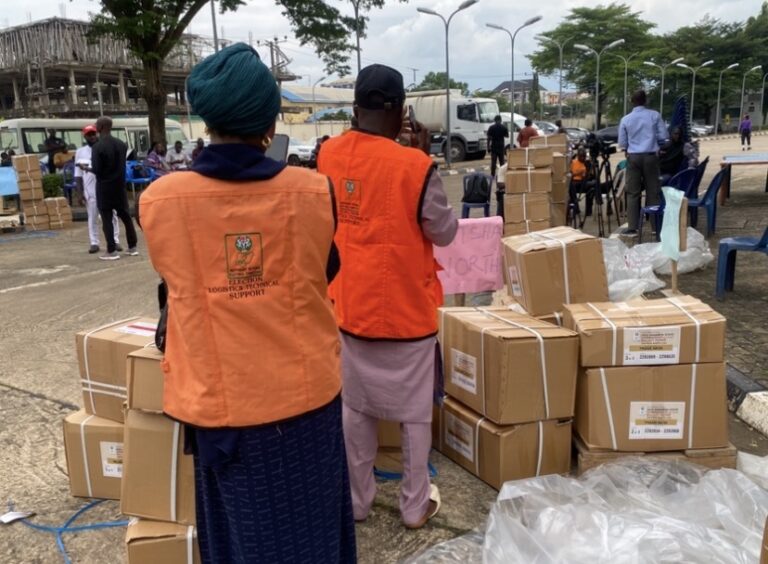
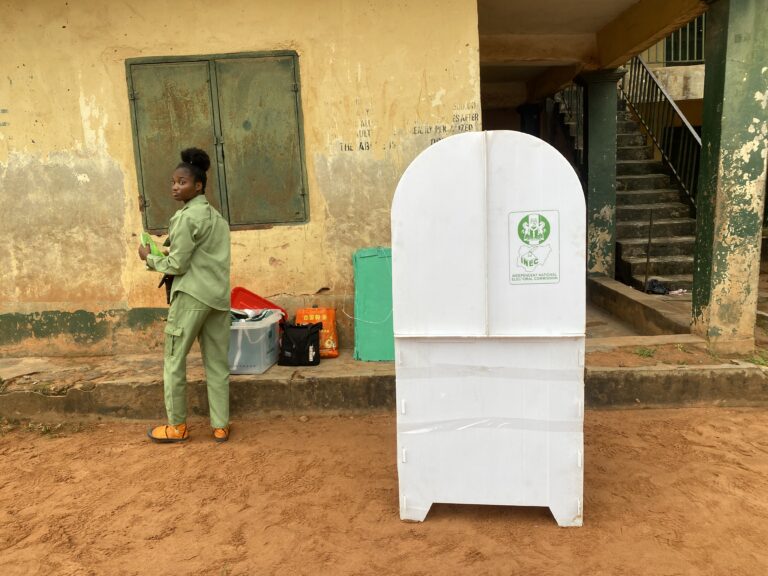
This includes arranging voting cubicles, configuring the Bimodal Voter Accreditation System (BVAS) devices, and displaying voter registers. The commission had assured that both sensitive and non-sensitive materials were distributed across all 21 local government areas on schedule.

As of 7:18 a.m., presiding officers and assistant presiding officers, mostly National Youth Service Corps (NYSC) members, alongside police officers, were sighted at the RAC Centre in Akwudo Central School, Nnewi North Local Government Area.

The RAC, which serves three wards, Otolo I, II, and III had corps members already moving to their assigned polling units.

By 7:22 a.m., electoral officials were seen setting up polling booths at Polling Units 027 and 028 within Ward 1, Akwudo Central School, Nnewi North, in readiness for the commencement of accreditation.

Similarly, at Okpo Village Hall, Ekwulobia, in Aguata Local Government Area, INEC ad-hoc staff were setting up by 7:40 a.m. across Polling Units 029, 030, and 031 under Ekwulobia Ward 1, preparing materials and checking devices before the official start of voting.

At First Hall Secondary School, Umuchima Village, also in Ekwulobia, voters began arriving early, searching for their names on the voter register and waiting for accreditation to begin at Polling Unit 018 by 7:57 a.m.

The ICIR reports that 2025 Anambra governorship election features 2,802,790 registered voters, out of which 1,790,982 have collected their Permanent Voter Cards (PVCs). The INEC deployed over 7,000 BVAS devices across 5,718 polling units in 326 political wards spread across 21 LGAs.

Sixteen candidates are contesting the election, including the incumbent Governor Chukwuma Soludo.

The election, according to INEC data, is being monitored by 121 domestic and international observers.

Additionally, 76 media organisations were accredited for its coverage, while over 50,000 security personnel were deployed to maintain order and ensure a peaceful voting process.

Groups warn of apathy, fragile trust in Anambra poll

0

THE  Centre for Democracy and Development (CDD–West Africa) and the Nigeria Civil Society Situation Room (Situation Room), have raised concerns over low electoral competitiveness, weak institutional confidence, and voter apathy ahead of the Anambra State governorship election holding today, Saturday, November 8.

In a statement on Friday, November 7, in Awka, the CDD-West Africa noted that while the election presents an opportunity for Anambra’s 2.8 million registered voters to shape the future of the state, internal crises within major political parties have weakened electoral competitiveness.

“A major concern in the Anambra governorship election is that the political parties have not demonstrated the capacity to mobilise and sensitise voters. The internal crisis within Nigeria’s major political parties at the moment has weakened electoral competitiveness in the Anambra governorship election,” it said.

The organisation warned of the fragility of electoral institutions, urging the National Independent Electoral Commission (INEC) and the judiciary to act decisively to restore public trust. It cited delayed court rulings and logistical lapses observed during the Continuous Voter Registration (CVR) exercise as worrying indicators.

The CDD further highlighted the spread of misinformation and hate speech as key threats to the credibility of the election.

It identified seven major patterns of manipulation, including disinformation about INEC’s competence, exploitation of insecurity narratives, and gendered hate campaigns targeting women in politics.

Similarly, the Nigeria Civil Society Situation Room, a coalition of over 70 civil society organisations, at a press conference on Friday, said it had deployed trained observers and was monitoring the process through its Election Reporting App.

The group acknowledged INEC’s assurances of readiness, noting that over 3,000 vehicles and 83 boats had been mobilised to transport election materials, including 6,879 BVAS machines and 24,000 ad-hoc staff, to RACs and polling units.

“Situation Room expects that the presence of security agencies in Anambra State will provide a level-playing environment for all parties, deter vote buying and selling, and uphold the sanctity of the election results,” the group said.

The Situation Room commended the relatively peaceful pre-election atmosphere in Anambra, contrasting it with the tense conditions surrounding previous polls in the state.

It, however, emphasised that INEC’s credibility would hinge on early deployment of materials, timely opening of polls at 8:30 a.m., and the real-time upload of results to the IReV portal.

Anambra pre-election activities intensify as INEC finalises material distribution

0

PREPARATIONS for the Anambra State Governorship Election scheduled for Saturday, November 8, 2025, gathered momentum across the state on Friday as the Independent National Electoral Commission (INEC) continued the distribution of election materials and briefings for ad hoc staff ahead of the poll.

Reports from multiple Local Government Areas (LGAs) sent in by CJID election observers show that while most activities proceeded smoothly, a few logistical challenges were observed, particularly in the verification of deployment lists for ad hoc staff and the delivery of materials to Registration Area Centres (RACs).

INEC steps up distribution of materials

At the Awka North INEC Office, the distribution of election materials to Supervisory Presiding Officers (SPOs) began as early as 2:27 p.m. on Friday, in preparation for the poll. Similarly, in Awka South, SPOs were seen handing out non-sensitive materials such as ballot boxes, cubicles, and INEC bags to Presiding Officers (POs).

In Ogbaru, Dunukofia, and several other locations, some officials confirmed that both sensitive and non-sensitive materials had been distributed to the appropriate officers.

Smooth coordination in Dunukofia

At the Dunukofia INEC Office, the Electoral Officer (EO) confirmed earlier on Friday that the distribution of materials to SPOs had been completed. The officer also briefed several Presiding Officers (POs) and Assistant Presiding Officers (APOs). Many corps members ad-hoc staff were still within the compound awaiting deployment details.

Dunukofia
Dunukofia

To aid coordination, the list of wards and their corresponding polling units was displayed outside the office, allowing ad hoc staff to easily confirm their polling stations.

Traffic in Dunukofia remained heavy due to ongoing construction on the expressway, forcing vehicles to move in a single lane and slowing down transportation logistics.

Following the EO’s earlier confirmation of the distribution of both sensitive and non-sensitive materials to RAC Managers and SPOs, further verification was conducted.

The RAC Manager for Akwa reported at 4:29 p.m. that he had yet to receive all materials in full but was receiving them gradually. He assured that he would confirm once the complete set of materials was delivered.

Other RAC Managers contacted confirmed that they had received their allocated materials from INEC and were fully prepared for the election. Although three RAC Managers could not be reached for confirmation, feedback from those contacted indicates that INEC has largely completed its distribution process and appears ready for the election.

Mixed experiences in Onitsha axis

In Onitsha South, several corps members from Delta State who arrived to serve as Presiding Officers faced challenges locating their names on the official ad hoc staff list. At the time, the EO was still at a meeting, and affected corps members were later reassigned to other LGAs across the state.

Earlier in the day, movement within the LGA was restricted as the council gate was closed, allowing only security personnel and INEC staff access. Many ad hoc staff members were seen moving around in search of the published posting lists, while security officers maintained a visible presence around the premises.

At the Onitsha North INEC Office, the EO held a closed-door meeting with SPOs before distribution of sensitive materials began. However, a minor altercation occurred between a television media crew and an SPO over alleged unauthorised recording without the EO’s consent. The matter was swiftly resolved through the intervention of INEC staff.

Activities in other LGAs

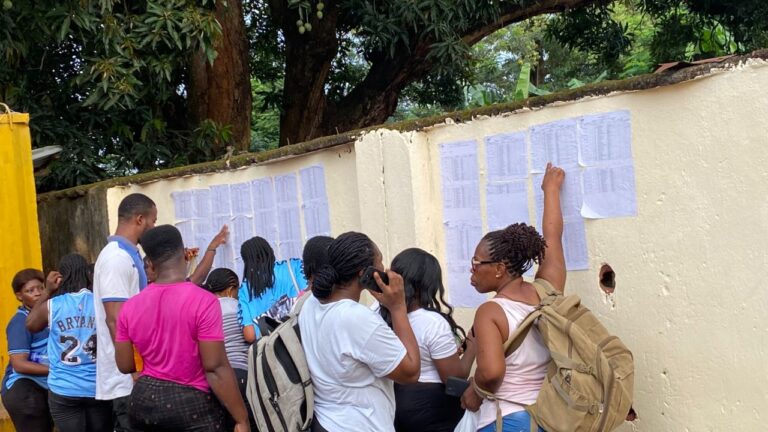
In Anambra East, ad hoc staff were seen checking the deployment lists pasted on the wall to confirm their postings. Non-sensitive materials had already been distributed and loaded into vehicles, while sensitive materials were scheduled for release the next day. Some corps members, however, complained about discrepancies between online postings and the physical lists displayed at the INEC office.

Similar scenes played out in Nnewi South, Nnewi North, Orumba North, and Ihiala, where corps members and other ad hoc staff verified their names on posted lists as security personnel maintained order. In Idemili South, scores of police officers were sighted patrolling the LGA field while awaiting the arrival of election materials.

Security tightened ahead of poll

Security presence across the state remained strong throughout the day. In Awka South, officers were seen distributing identification tags to INEC officials, while several buses conveying ad hoc staff and election materials departed the office later in the afternoon.

Observers also reported that both police and military personnel were strategically positioned around major INEC offices to ensure a safe and orderly pre-election environment.

This report is based on updates from CJID election observers.