For decades, the narrow wooden walkways of Makoko have carried the hopes, struggles, and livelihoods of thousands of residents living along Lagos waterfront. But after recent demolitions in Makoko, Oko-Agbon, and Sogunro communities, many now face a difficult choice. They must either abandon the fishing settlements where their families have lived and worked for generations or resist relocation to a proposed housing estate in Agbowa, Epe.
‘We’re not leaving our ancestral home’
Like many of the affected individuals, Wabi Jarado insists that he and his family aren’t relocating. “When they evicted us, we had nowhere to stay,” he lamented, “We lost our house, and many of our belongings. The place they’re planning to relocate us to is not acceptable to us,” he insists. “Makoko is where we belong. This is where we will stay, from beginning to end. We can’t abandon Makoko.”
Jarado maintains his defiance. “We do not want to go far from here. This community, Makoko, is where we want to remain. We are fishermen; we earn our living by catching fish. We are not thieves, and we do not steal. We can’t leave this community… We need everyone’s support so that we can continue to live among you. If we are forced out, it means we may have to return to Benin, which we do not want,” he said.
In a press statement on April 15, 2025, jointly signed by designated members of the Makoko community, including traditional leaders, youth representatives, and religious figures, the waterfront community rejected plans by the Lagos state government to relocate them from their ancestral homes, insisting instead on being included in the United Nations-backed urban development project.
They stated: “Despite our demands being clearly set out – a stop to the demolition, immediate humanitarian assistance and emergency shelter for the displaced, and the rebuilding of illegally demolished homes – none of these things has transpired. Not even the most modest form of palliatives.”
Proposed relocation to Agbowa
Amid growing tension over the forced eviction of waterfront communities, the Lagos State House of Assembly has recommended relocating affected residents to a proposed low-cost housing estate in Agbowa, Epe. The recommendation followed the adoption of a report by the House Committee on Rules and Business during plenary on Tuesday, March 10, after lawmakers received a petition titled, ‘Urgent Appeal Regarding Ongoing Mass Forced Eviction and Illegal Demolition Threatening Tens of Thousands in Makoko, Oko-Agbon and Sogunro Communities.’
However, for many residents, relocation is not simply about moving homes; it means abandoning their livelihoods, the fishing economy, and their way of life tied to the Lagos Lagoon. As demolitions spread across the waterfront communities, residents insist they would rather remain in Makoko than relocate inland to Agbowa, which they fear would cut them off from the water that sustains them.
Demolition day: How thousands were displaced
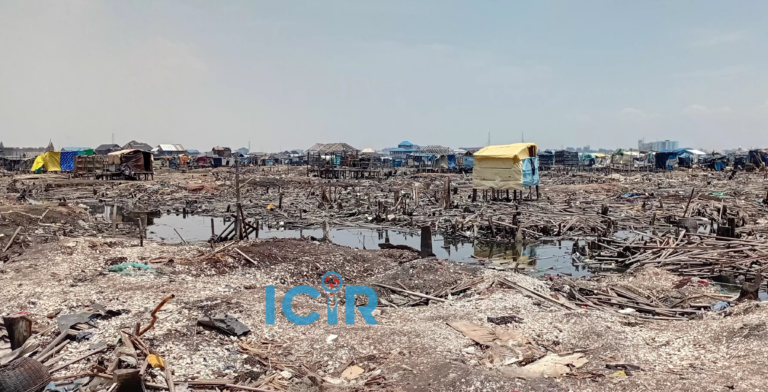
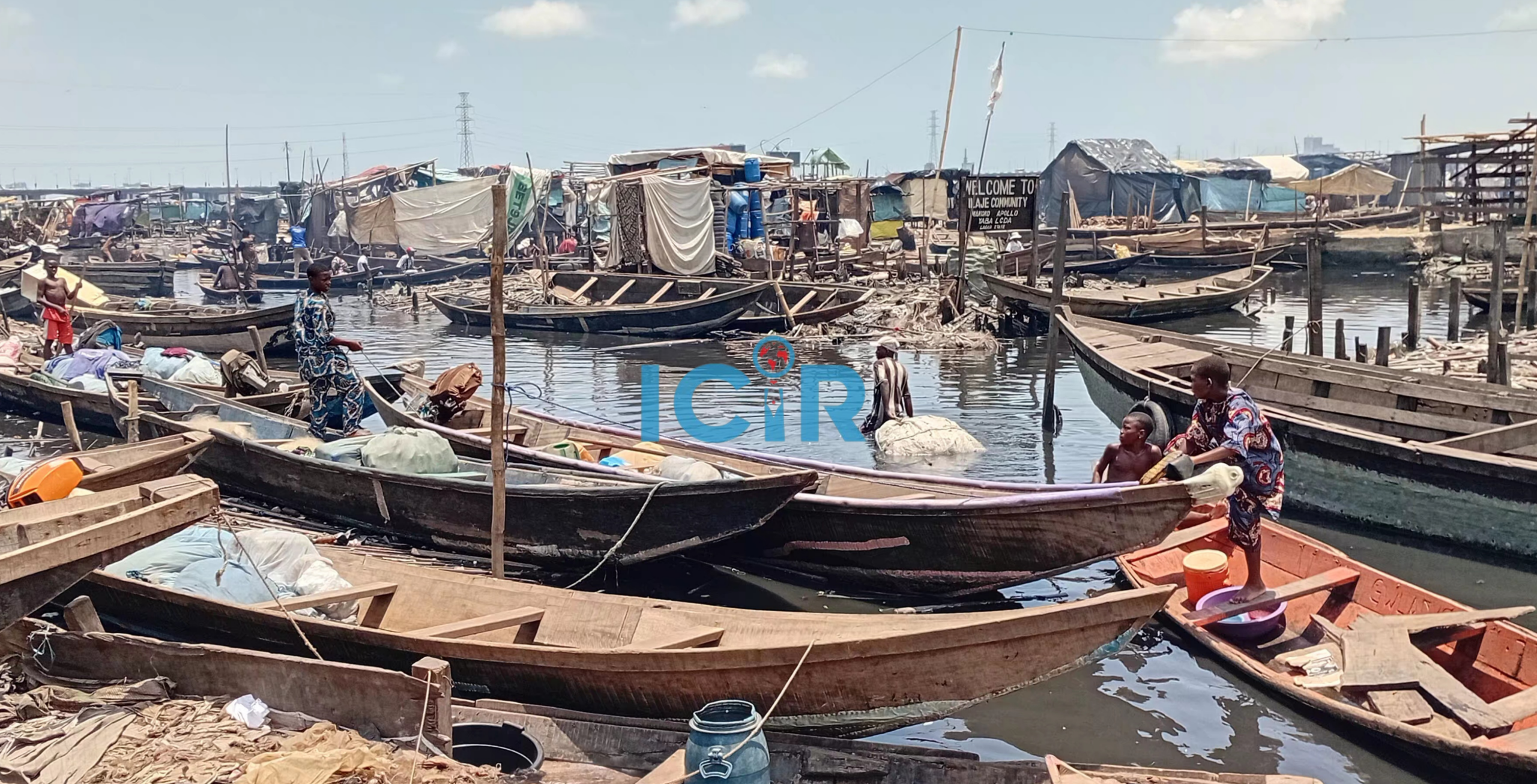
It was just after midday on Tuesday, December 23, 2025, when the quiet rhythm of life in Makoko was broken. Around 12:30 p.m., amphibious excavators pushed through the narrow waterways as they advanced into the community. Armed police officers escorted them, moving in formation as the machines bore down on rows of wooden homes balanced on stilts above the water. One after another, the structures gave way, shacks that had stood for years crushed beneath metal and force.
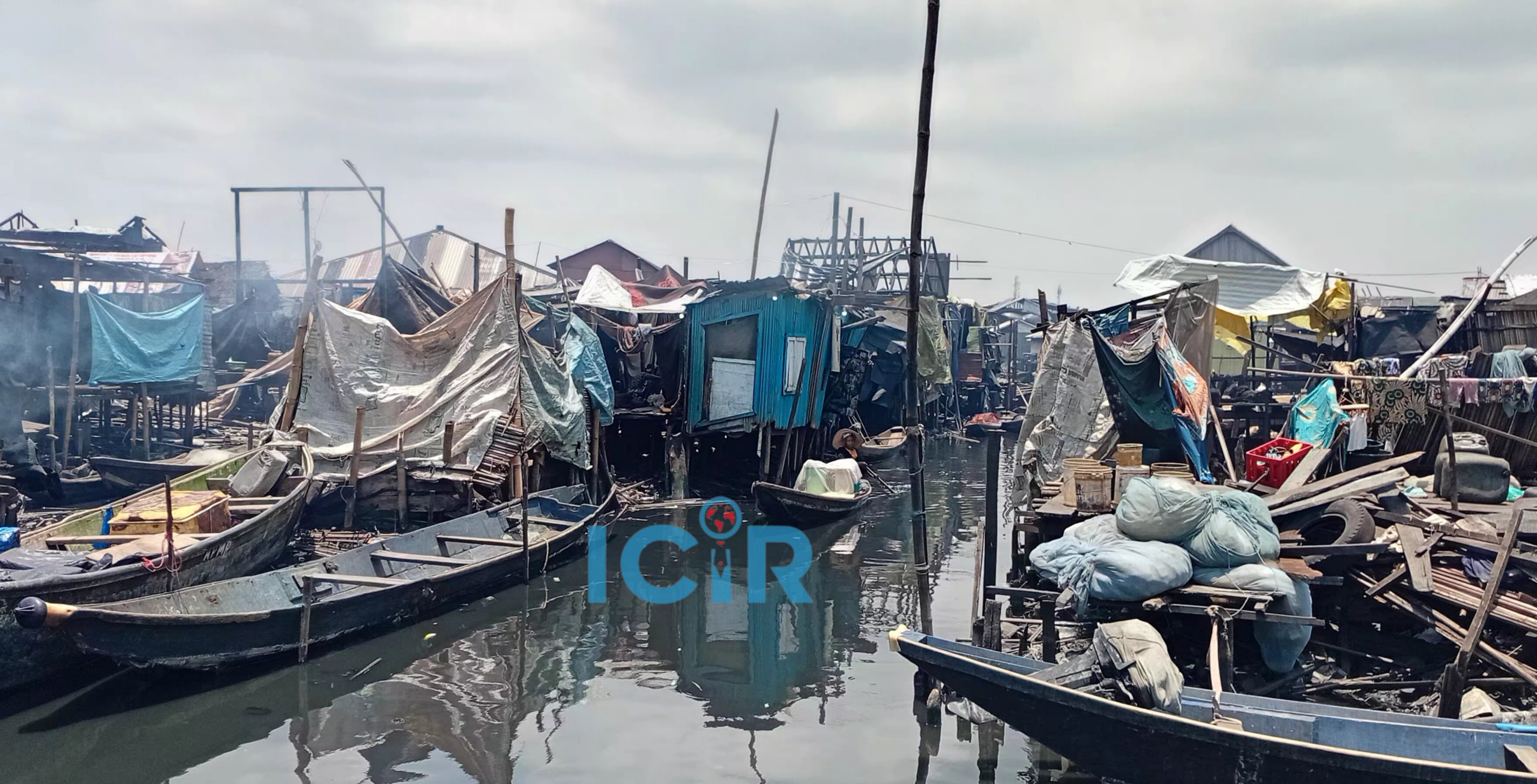
The community says the operation affected an estimated 30,000 people before it stopped after protests. Residents later learned it aimed to enforce a 30-metre safety setback from a high-tension power line across Makoko, Oko Agbon, Sogunro, and the Third Mainland Bridge. But the clearance area, they say, was extended to cover more than ten times that length.
What began as a targeted enforcement of safety setbacks has escalated into a humanitarian crisis, putting one of Lagos’s most vital informal economic systems at risk. The community’s aquatic economy, driven by fishing, boat-making, and informal trade, is now caught between state-led urban renewal and residents’ struggle to preserve their ancestral livelihood.
A fishing community fighting to stay afloat
Long before the demolition, Isaac Dosugan’s days followed a familiar rhythm: going out to fish, returning to sustain his household, and continuing a way of life passed down through generations. At over 75 years old, his life has been shaped by the water. “I’ve been a fisherman from the beginning until today,” he says. “Makoko is my town, my community.”
Beyond fishing, Dosugan is one of the elders of Makoko, but that sense of stability was shattered. “I had a house on the water, and it was destroyed,” he recounts. “All my fishing nets were destroyed… my house and all my property.”
What happened to Dosugan was repeated across the settlement. “About 852 houses were destroyed,” according to him, adding that canoes, essential tools of trade, were not spared. “Every house has a boat. Many people couldn’t remove their boats, which were broken and destroyed,” noting that the human cost, however, weighs more heavily. “We lost about 12 people,” he says quietly. “One was a five-day-old baby who died immediately from tear gas.”
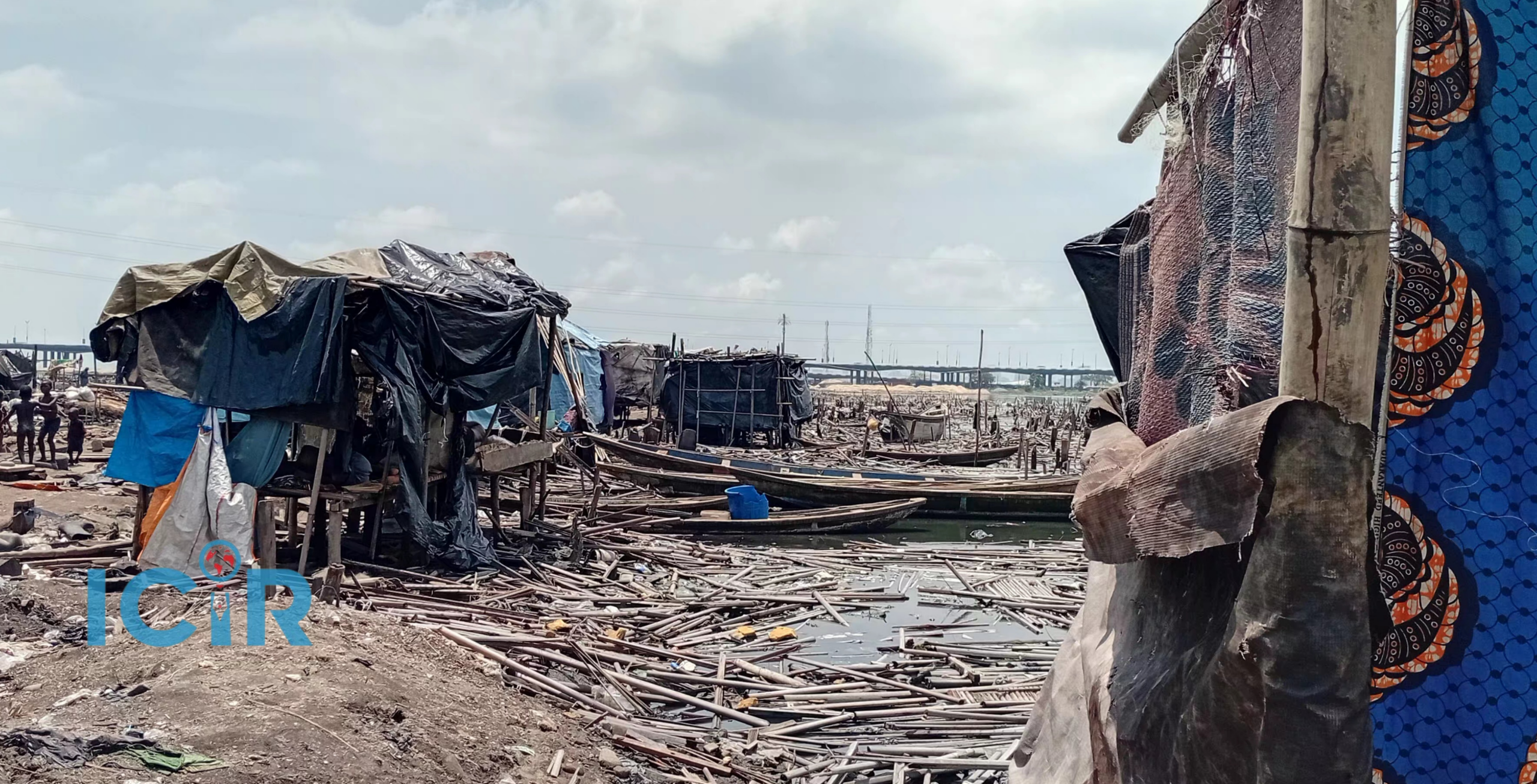
Lamenting, Christiana Bababatan says, “I lost everything again in the Makoko demolition,” then her voice breaks into the deepest loss of all: “I even lost my child. Now, I’m left with nothing.” She recalled that everything she had lost had been gathered after suffering an earlier loss from the demolition of Otodo Gbame, a predominantly Egun fishing community on the shores of the Lagos Lagoon in Lekki, which was demolished between November 2016 and April 2017, leading to the displacement of over a thousand residents.
For Bababatan, the story isn’t just about displacement. “How can you remove fish from water?” she asks rhetorically. “We are like fish; we can’t leave the water. That’s where we feed our families, where we eat, and where we live.” Like many others, her position is firm: “We are not going to Agbowa. We want our land back. We are still on our land. We want it back.”
Why residents say Agbowa isn’t an option
For Ade Oluwatobi, Vice Chairman of the Fishermen Association of Makoko, popularly known as Baale Jeje, Makoko is a way of life shaped by water, work, and tradition. “Makoko people lived on the water because we were fishermen. We couldn’t stay on land,” he says, explaining that residents settled on the water to stay close to fishing routes and tides.
“This water connection has continued to define our daily life and livelihoods,” he says, adding that, “we have more than 4,000 houses, and almost everyone is a fisherman. We work as a team. After fishing, everyone sells their catch and provides for their family.”
Over time, this collective effort has grown into a major supply chain, as Baale Jeje notes that “Makoko supplies about 90 per cent of fish to the state and even beyond Nigeria. If you want fresh fish, Makoko is the best place.”
For him, any attempt to relocate residents inland threatens not just shelter, but an entire economic and cultural system. “Relocation would destroy our way of life,” he says, stressing that their fishing knowledge “is tied to this environment.”
Homeless after widespread displacement
Honfo Ela, 40, says the demolition has left many families homeless. “Since they demolished our community, people have been suffering. We have no place to sleep; we are homeless.” With eight children to care for, the strain has become overwhelming.
“We are worried and sad, we are living a restless life, like dead people. They evicted us without informing us, and now we don’t know where we are being relocated to. When the government talked about resettlement, we were not okay with those places. They should allow us to stay in Makoko,” she said.
Insisting that Makoko is their inheritance, Ela laments, “The Makoko community belongs to our elders. They can’t take Makoko away from us; that’s impossible. Our children do not have food to eat. This is not proper. Someone gave my children money, and that’s what we are using to feed ourselves.”
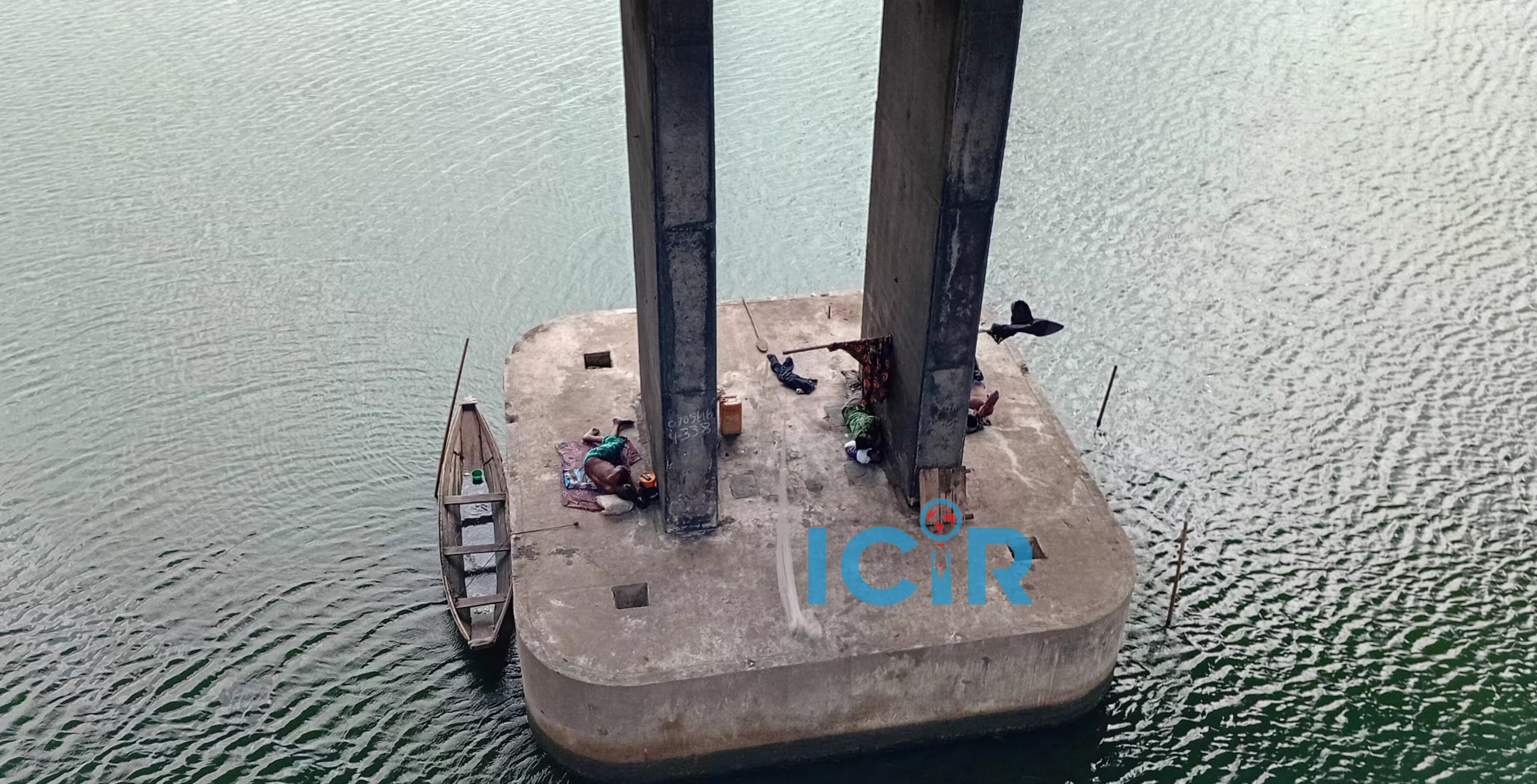
At 30, Basira Jarado finds herself forced into the open with her children after the demolition. “We have no other place to stay. We are outside with our children, filled with worry. We are exposed to the sun, and when it rains, we are also affected.”
Abetigo Adogba, 60, says his life as a fisherman was disrupted when the demolition began. “They demolished our homes while we were there with our children,” he said. “They did not inform us beforehand. They took away our houses, and now we have nowhere to stay. We are suffering. The rain beats us, and the sun scorches us,” Resisting the relocation move, he says: “They said they would take us to Agbowa, but we won’t accept that place. If we go there, what work will we do? We are fishermen, and this is where we do our work.”
Fear of eviction deepens across the waterfront
For Solomon Shepherd Wesu, Makoko has been home since birth. “I was born and raised in Makoko. The land we are living on wasn’t bought from anyone… it was given freely to us by the Baales,” he said. He said the residents had used their own resources to develop the area. “We created this land through our labour. We bought sand with our own money.”
For Wesu, demolitions of houses under the power lines may be lawful, but he fears the wider eviction plan. “They want to take away Makoko, where our fathers lived. I’ve grown old here. My children were born and raised here.” What troubles him most is the motive he perceives behind the eviction. “It feels like they want to demolish our homes for the benefit of rich people, so that we will end up serving them,” he fears.
The threat of displacement has also left Gosu Ezinsu demoralised. “We have nowhere else to go. We are the owners of Makoko, and all our belongings are here.” For him, relocation isn’t an option. “They said we are being moved to Agbowa, but we can’t stay there. We want to remain in Makoko. We are fishermen.”
Livelihoods destroyed
Often described as a waterfront slum, Makoko is also a thriving economic system that sustains families and connects directly to the wider Lagos economy. Set along the Lagos Lagoon, Makoko runs on what has been described as an “aquatic economy.” Fishing, logging, and boat-making form the backbone of daily life, turning the water into both a workplace and a marketplace.
But the economy does not end on the water. Furniture makers, shoemakers, welders, caterers, and food sellers operate within the settlement, serving both residents and nearby communities. Makoko also supplies labour and services to the broader Lagos metropolitan area, linking the informal settlement to the formal city economy.
Before the demolition, economic life in Makoko had been relatively stable, with income levels varying sharply, depending on occupation. But since the demolition, many livelihoods have collapsed.
Razaq Adosu, a tailor, now tends to what remains of his livelihood under the open sun. “They scattered all the shops here in Makoko. Look at my shop, I’m under the sun with my apprentice,” he says. “I don’t have any other place to work. Whenever I try to find another spot, they say there is no space,” he says. “I’m under the sun with no food to eat.”
For Agemo Atiatan, Makoko is the centre of his craft. “This is where we carry out our business,” he says. “Since they came and destroyed parts of Makoko, business hasn’t been moving well.” A boat maker, Atiatan says, the losses have cut deep into his livelihood. “When they demolished this place, both our homes and materials were scattered. The woods we used for building boats were missing, and even the new boats we had parked by the waterfront could not be found. We lost many boats.”
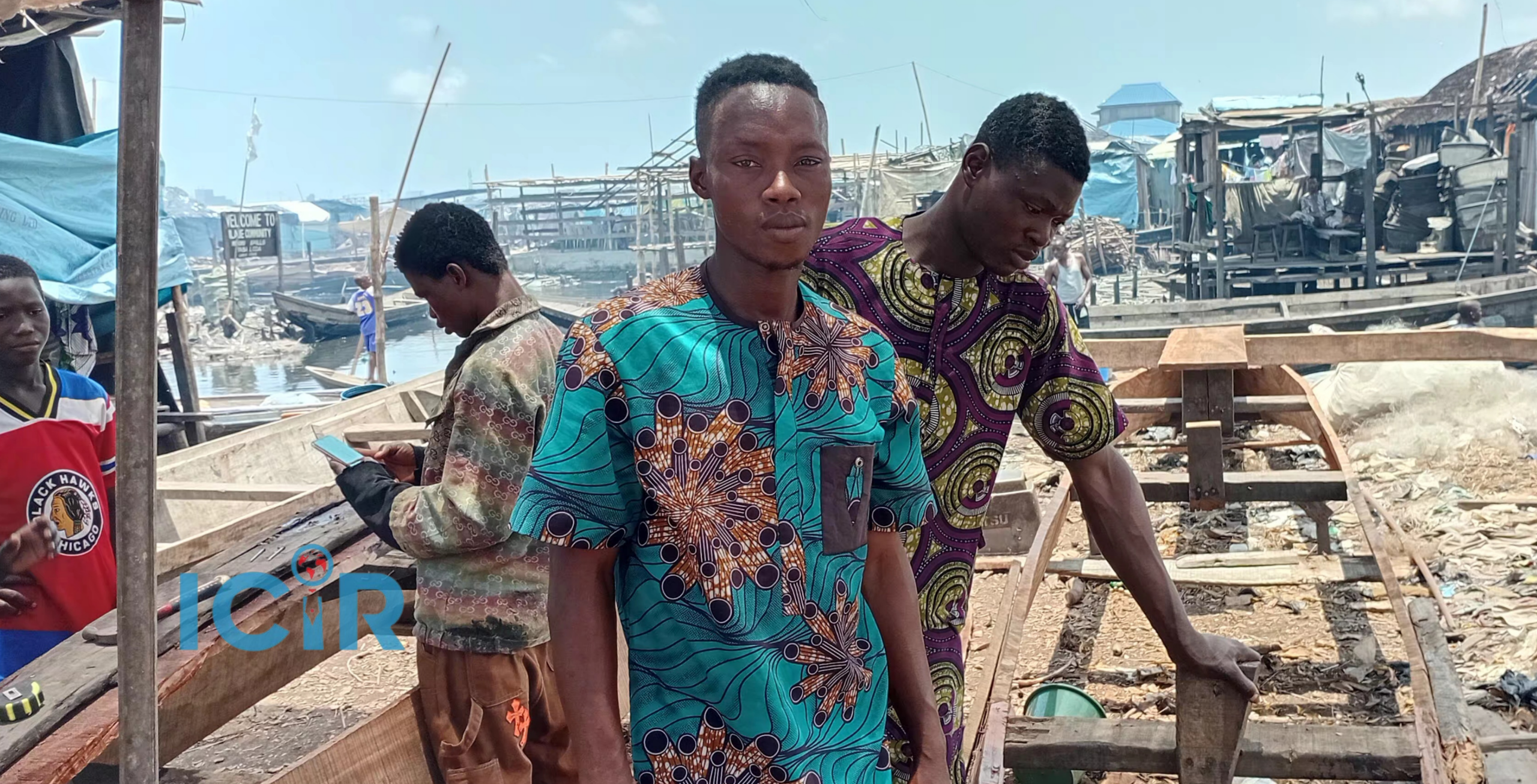
“Some cost ₦200,000 for smaller sizes, others ₦500,000, ₦1,000,000, and even up to ₦5,000,000… This is our livelihood, but the demolition has continued to affect us deeply,” he laments. Atiatan had tried moving to Agbowa and other places, but could not survive there. “Now, we sleep outside because we have no homes. We sometimes sleep inside the boats.”
Schools, clinics and community structures left in ruins
Many parents said their children stopped going to school after the demolition because they no longer have the money to send them back. Ayinde Rodrick Oluwatosin, founder of Potential Children School, says the demolition swept through schools, clinics, churches, and shops built by residents.
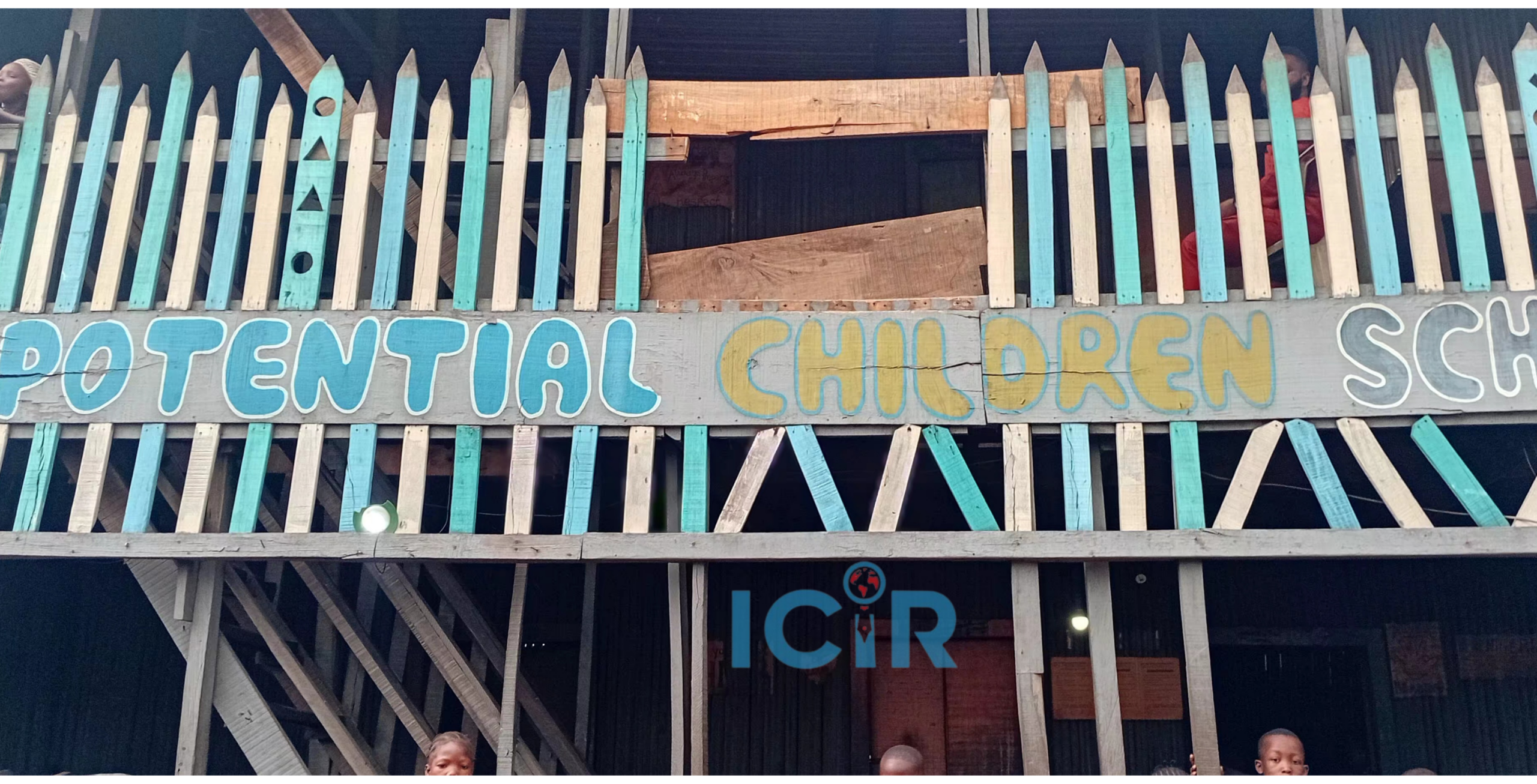
“Lagos State Government officials pulled down houses, schools, clinics, churches, and shops without proper notice,” stressing that “there was no warning, no time given to pack or evacuate.” The result, he says, has been a sharp decline in access to education and healthcare, with his school’s population dropping from over 360 pupils to about 120.
Residents also attempted to quantify their losses through a self-organised enumeration process, as Oluwatosin says they counted about 562 houses in Makoko alone before the exercise was halted. “Other nearby communities like Oko-Agbon and Sogunro also recorded hundreds of demolished houses,” estimating that “nearly 2,000 houses across three communities were affected.”
Questions trail UN-backed Makoko dev’t plan
Amid the crisis, Oluwatosin pointed to earlier engagement with international development partners as evidence that Makoko was already on a path toward improvement, not displacement. He recalled facilitating visits by the UN Deputy Secretary-General, Amina Mohammed, in 2020 and 2021.
“We later heard that about $8 million was allocated through the United Nations for the development of Makoko, with an additional $2 million from the state government,” he says, emphasising that the combined $10 million “was meant to improve the community—not displace its residents.”
While the government has since floated a Makoko Water City project, findings by this reporter show that the residents remain wary of any plan that prioritises relocation over development.
Rights groups raise concerns over forced relocation
Megan Chapman, co-executive director of Justice and Empowerment Initiatives (JEI), describes the demolition in Makoko as “very heartbreaking,” noting that many residents have been left homeless and scattered. “People are really suffering, and they will continue to suffer because what they have lost, no one is helping them rebuild,” she says.
She argues that repeated evictions across Lagos are damaging the wider economy. “To go from that to living under the bridge… the losses are not just for the family but for society,” she says. Citing recent cases such as Ilaje-Otumara and Precious Seed communities, Chapman says thousands have been displaced despite prior engagement with the government.
She contrasts this with recommendations for in-situ upgrading, where communities are improved rather than destroyed. “The communities are ready to work with the government,” she says, “but instead, people are being evicted in violation of the law.”
On the proposed relocation of Makoko residents, Chapman believes the plan is unrealistic. “How can you take over 80,000 people and move them to a place that’s a fraction of their current land, with nothing built?” she asks.
Lagos gov’t defends demolition, stays silent on key questions
Reacting to criticism over the demolition and proposed eviction, the Lagos State government defended that the demolitions were a safety and environmental measure.
The Special Adviser to the Governor on eGIS and Urban Development, Olajide Babatunde, in an official statement, said the exercise aligns with similar enforcement across the state. “Clearing high-tension corridors is a safety requirement across Lagos State,” he said, linking the exercise to a long-term Makoko waterfront redevelopment plan, with about $2 million committed since 2021.
However, the Lagos State Commissioner for Information and Strategy, Gbenga Omotoso, did not respond to inquiries seeking clarification on compensation plans, funding commitments, and how the demolitions align with the project’s stated objectives. Follow-up phone calls also went unanswered.
Similarly, efforts to obtain clarification from the UN were unsuccessful. After contacting Stéphane Dujarric, spokesperson for the UN Secretary-General, via email, he referred the inquiries to the Lagos office. The reporter subsequently contacted Adeola Margaret Adedeji, Public Information Assistant at the UN Information Centre in Nigeria, seeking details on the UN’s role in the Makoko Water City project, including its status, safeguards against displacement, and community engagement efforts. Despite repeated follow-ups through email, WhatsApp messages, and phone calls, no response was received.
Experts warn of economic fallout if relocation fails
Clearing Makoko without a structured plan is not urban renewal, but the disruption of a functioning economic system, says Felix Ijeh, an economist, researcher, and policy analyst. Currently lecturing at the Department of Economics, Faculty of Management and Social Sciences, Adeyemi Federal University of Education, Ondo, Ijeh explains that the immediate impact is a collapse in daily income from fishing, trade, and related services that could result in millions of naira in lost turnover and a contraction of Lagos’ informal economy.
“You are creating sudden unemployment with no safety nets,” Ijeh explains, warning that this deepens urban poverty and strains the labour market. He also points to the destruction of informal capital, boats, tools, and trade networks, describing it as “equivalent to wiping out SMEs overnight.”
Ijeh maintains that the government must move away from a “clear first, think later” approach and ensure any relocation preserves livelihoods. Otherwise, he warns, such demolitions will continue to create more economic problems than they solve.