Home Blog Page 144

Nigeria committed to religious freedom – Tinubu

0

PRESIDENT Bola Ahmed Tinubu has reaffirmed Nigeria’s commitment to religious liberty, describing recent claims that the country is intolerant or hostile to Christians as inaccurate and inconsistent with the nation’s realities.

In a statement issued on Saturday, Tinubu said Nigeria stood firmly as a democracy governed by constitutional guarantees of religious liberty and continued to maintain open engagement with both Christian and Muslim leaders across the country.

He stressed that the portrayal of Nigeria as religiously intolerant “does not reflect our national reality,” adding that the government’s efforts to safeguard freedom of belief for all Nigerians remained consistent and sincere.

“Religious freedom and tolerance have been a core tenet of our collective identity and shall always remain so. Nigeria opposes religious persecution and does not encourage it,” Tinubu stated.

The president reaffirmed that Nigeria’s Constitution protects citizens of all faiths and that his administration was working closely with the United States government and the international community “to deepen understanding and cooperation on protection of communities of all faiths.”

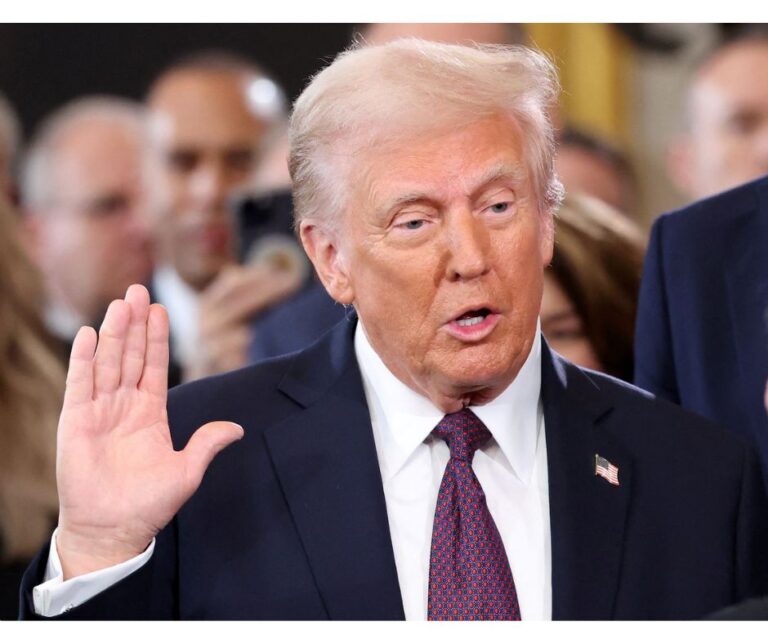
Tinubu’s remarks followed earlier statement by the Ministry of Foreign Affairs, which rejected comments by former U.S. President Donald Trump alleging widespread killings of Christians and announcing Nigeria’s designation as a “Country of Particular Concern.”

“These claims do not reflect the situation on the ground. Nigerians of all faiths have long lived, worked, and worshipped together peacefully,” said the ministry.

The government said while it appreciated global concern for human rights and religious freedom, the allegations were inaccurate and misrepresented the country’s realities.

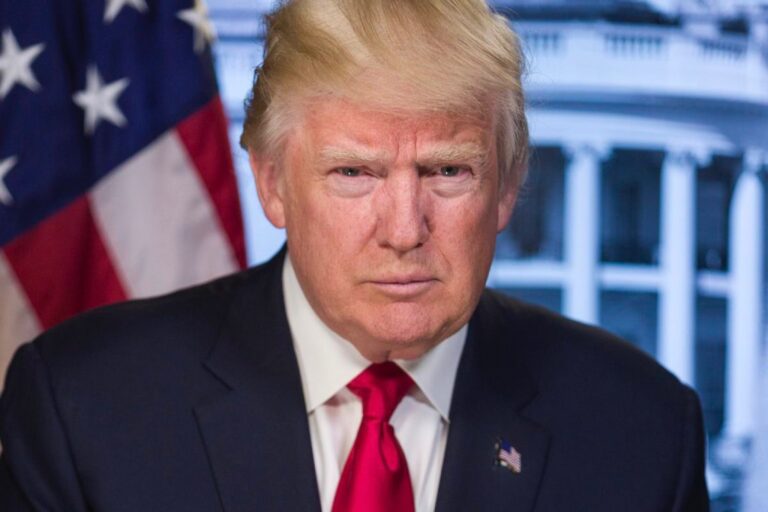
Trump, in a Truth Social post shared on the White House X handle on Friday night, announced that he had designated Nigeria as a “Country of Particular Concern,” citing what he called an existential threat to Christianity.

“Christianity is facing an existential threat in Nigeria. Thousands of Christians are being killed. Radical Islamists are responsible for this mass slaughter. I am hereby making Nigeria a ‘Country of Particular Concern’ — but that is the least of it,” Trump wrote.

Citing figures he described as alarming, Trump added, “When Christians, or any such group, are slaughtered like is happening in Nigeria (3,100 versus 4,476 worldwide), something must be done.

“I am asking Congressman Riley Moore, together with Chairman Tom Cole and the House Appropriations Committee, to immediately look into this matter and report back to me. The United States cannot stand by while such atrocities are happening in Nigeria and numerous other countries,” he stated.

In its response, the Nigerian government said under Tinubu’s leadership, the country remained committed to fighting terrorism, strengthening interfaith harmony, and protecting the lives and rights of all its people.

The statement added that Nigeria would continue to engage constructively with the Government of the United States to deepen mutual understanding of regional dynamics and the country’s ongoing peace and security efforts.

Last month, US lawmaker Riley Moore had urged Secretary of State Marco Rubio to take diplomatic action over what he described as the “systematic persecution and slaughter of Christians” in Nigeria, calling it “the deadliest place in the world to be a Christian.” He also advocated suspending arms sales to Nigeria until measurable progress was made in curbing violence.

Meanwhile, the Minister of Information and National Orientation, Mohammed Idris, had dismissed claims that terrorists in Nigeria deliberately target Christians while speaking earlier in the week on CNN.

“Some of the claims made by certain officials of the United States are based on faulty data and assumptions that the victims of this violence are largely Christians,” Idris said, adding that “Yes, there are Christians being attacked, but these criminals do not just target one religion. They target Christians, and they also target Muslims. We have seen that especially in the northern part of the country.”
Bandits abduct Kebbi deputy speaker

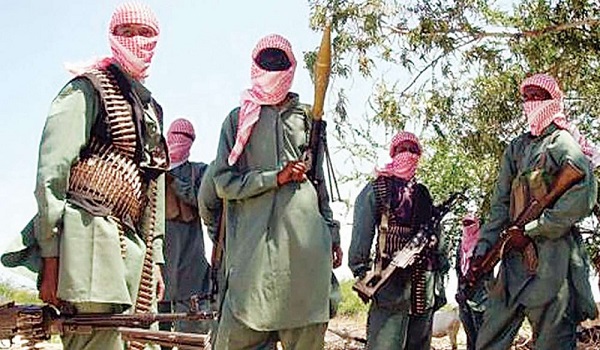
THE Deputy Speaker of the Kebbi State House of Assembly, Samaila Bagudo, has been abducted by bandits

He was abducted in his hometown in Bagudo Local Government Area of the state.

The Kebbi State Police Command confirmed the incident, saying armed men invaded the area shortly after the lawmaker observed Isha’i prayers on Friday night and seized him as he was returning home.

In a statement issued by the Command’s Public Relations Officer, CSP Nafiu Abubakar, the police said the attack occurred around 8:20 p.m. on Friday, October 31.

Abubakar said a joint team comprising police tactical units, military personnel, and local vigilantes had been deployed to the area to track down the abductors and rescue the lawmaker unharmed.

“The combined forces are currently combing suspected bandits’ routes and surrounding forests in an effort to rescue the lawmaker unhurt and apprehend those responsible for the attack,” the statement read.

The Command described the abduction as “a dastardly act that will not go unpunished,” assuring that all available resources were being mobilised to secure the victim’s release.

The Commissioner of Police, according to the statement, reaffirmed the Command’s commitment to protecting lives and property across the state and urged residents to remain calm, vigilant, and provide credible information that could aid the rescue operation.

#EndSARS: Amnesty International, others condemn assault on Yemi Adamolekun

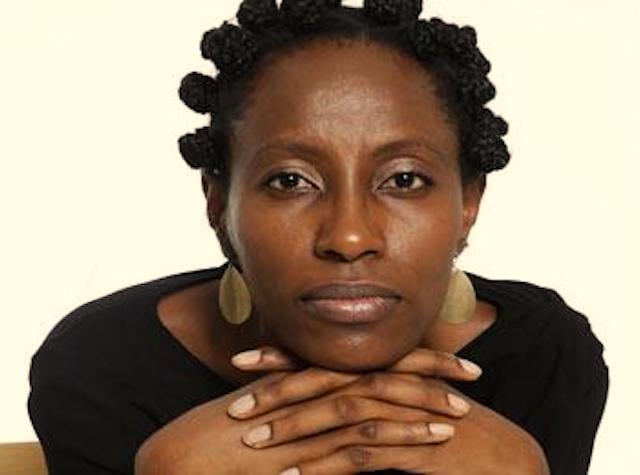
A coalition of civil society organisations  in Nigeria and prominent citizens have condemned the assault on Executive Director of Enough is Enough (EiE) Nigeria, Yemi Adamolekun, by Man O’ War volunteers allegedly acting under police instruction during a wreath-laying ceremony at the Lekki Toll Gate, Lagos State.

Adamolekun was reportedly accosted and manhandled on Sunday while attempting to honour victims of the October 20, 2020, #EndSARS protest, where security operatives opened fire on peaceful demonstrators.

In a protest letter addressed to the Lagos State Government and copied to the President Bola Tinubu, as well as relevant police and Man O’ War authorities, citizens and civil society groups across the country expressed outrage at what they described as an attack on civic freedom.

Among the signatories to the petition are the Nigeria Network of NGOs, Amnesty International Nigeria, SERAP, CISLAC, Media Rights Agenda, Global Rights, Yiaga Africa, TechHerNG, Accountability Lab, Hope Behind Bars, We The People, and Middle Belt Concern. Prominent citizens including Remi Sonaiya, a 2015 presidential candidate, and Mr. Frank Nweke Jr., a two-time federal minister, also signed in solidarity.

The groups said they were writing “as concerned citizens and citizen groups to express their deep concern and unequivocal condemnation of the assault on Yemi Adamolekun, Executive Director of Enough is Enough (EiE) Nigeria, by individuals identified as Man O’ War volunteers acting under the instruction of officers of the Nigeria Police Force in Lagos State.”

They described the incident as “an act that should have been protected under our democratic guarantees of freedom of expression, peaceful assembly, and human dignity.”

According to them, verified video evidence shows Adamolekun being accosted and manhandled while laying a wreath to commemorate victims of the #EndSARS massacre.

The citizens noted that the incident was “particularly troubling” because it was carried out “under official supervision,” warning that such actions “undermine the credibility of law enforcement agencies and tarnish the human rights record of both the Lagos State and Federal Government.”

They further cautioned that such pattern of aggression projected the administration as intolerant of civic participation and devoid of empathy for the citizens it serves.

The coalition demanded a public apology from the Lagos State Government, the Lagos State Police Command, and Man O’ War Nigeria to Adamolekun and the Nigerian public, as well as an immediate and transparent investigation into the conduct of those involved, with disciplinary measures where appropriate.

They also called for a clear commitment from the authorities to uphold citizens’ rights to peacefully assemble and commemorate national tragedies without intimidation or assault.

The groups stressed that the assault on Adamolekun represented a wider threat to civic space in Nigeria, noting that the incident was not just about one individual, but about the continuing struggle for civic freedom and accountability in Nigeria’s democracy.

To assault a citizen for mourning victims of state violence is to reopen the wounds of #EndSARS, they stated, adding that the government must choose the path of justice and empathy, not intimidation and silence.


FG rejects Trump’s claim on Christians’ killings, CPC designation

0

THE Federal Government has dismissed Friday’s remarks by United States President Donald Trump alleging widespread killings of Christians in Nigeria and declaring the country a “Country of Particular Concern (CPC).”

In a statement issued on Saturday by the spokesperson for the Ministry of Foreign Affairs, Kimiebi Ebienfa, the government said Trump’s claims did not accurately reflect the situation in Nigeria.

“The Federal Government of Nigeria notes the recent remarks by US President Donald Trump alleging large-scale killings of Christians in Nigeria and calling for the country’s designation as a ‘Country of Particular Concern.

“These claims do not reflect the situation on the ground. Nigerians of all faiths have long lived, worked, and worshipped together peacefully,” said the ministry.

The government said while it appreciated global concern for human rights and religious freedom, the allegations were inaccurate and misrepresented the country’s realities.

Trump, in a Truth Social post shared on the White House X handle on Friday night, announced that he had designated Nigeria as a “Country of Particular Concern,” citing what he called “an existential threat to Christianity.”

“Christianity is facing an existential threat in Nigeria. Thousands of Christians are being killed. Radical Islamists are responsible for this mass slaughter. I am hereby making Nigeria a ‘Country of Particular Concern’ — but that is the least of it,” Trump wrote.

Citing figures he described as alarming, Trump added, “When Christians, or any such group, are slaughtered like is happening in Nigeria (3,100 versus 4,476 worldwide), something must be done.

“I am asking Congressman Riley Moore, together with Chairman Tom Cole and the House Appropriations Committee, to immediately look into this matter and report back to me. The United States cannot stand by while such atrocities are happening in Nigeria and numerous other countries,” he stated.

In its response, the Nigerian government said under the leadership of President Bola Tinubu, the country remained committed to fighting terrorism, strengthening interfaith harmony, and protecting the lives and rights of all its people.

The statement added that Nigeria would continue to engage constructively with the Government of the United States to deepen mutual understanding of regional dynamics and the country’s ongoing peace and security efforts.

Last month, U.S. lawmaker Riley Moore had urged Secretary of State Marco Rubio to take diplomatic action over what he described as the “systematic persecution and slaughter of Christians” in Nigeria, calling it “the deadliest place in the world to be a Christian.” He also advocated suspending arms sales to Nigeria until measurable progress was made in curbing violence.

Meanwhile, the Minister of Information and National Orientation, Mohammed Idris, speaking earlier in the week on CNN, dismissed claims that terrorists in Nigeria deliberately target Christians.

“Some of the claims made by certain officials of the United States are based on faulty data and assumptions that the victims of this violence are largely Christians,” Idris said.

“Yes, there are Christians being attacked, but these criminals do not just target one religion. They target Christians, and they also target Muslims. We have seen that especially in the northern part of the country.”

Trump adds Nigeria to countries on watchlist for Christian genocide

0

UNITED States President Donald Trump has added Nigeria to countries on watchlist for Christian genocide..

Trump made the announcement on Friday on his Truth Social.

“Christianity is facing an existential threat in Nigeria. Thousands of Christians are being killed. Radical Islamists are responsible for this mass slaughter,” Trump said.

He said Nigeria, Africa’s largest oil producer and most populous nation, would be added to the US “Countries of Particular Concern” list for nations accused of violating religious freedom.

According to the State Department’s website, the “Countries of Particular Concern” list also includes nations such as China, Myanmar, North Korea, Russia, and Pakistan, among others.

The US President  said he had asked US Representatives Riley Moore and Tom Cole, along with the House Appropriations Committee, to investigate the issue and report their findings to him.

The ICIR reported that US Senator Ted Cruz recently introduced a bill aimed at protecting ‘persecuted’ Christians in Nigeria.

A member of the US House of Representatives, Riley Moore, urged Secretary of State Marco Rubio to take immediate and decisive diplomatic action against the Nigerian government over what he described as the “systematic persecution and killing of Christians” in the country.

Similarly, US comedian and talk show host Bill Maher alleged that Christians in Nigeria were being systematically targeted and killed by terrorist groups.

Reacting, President Bola Tinubu, on September 30, dismissed allegations of religious genocide in Nigeria as unfounded, stressing that the nation was built on the faith and resilience of its people.

However, the Christian Association of Nigeria (CAN) has maintained that Christian communities, particularly in northern Nigeria, have faced intense attacks, resulting in loss of lives and the destruction of churches and other places of worship.

Similarly, reacting to growing reports of Christian persecution in Nigeria, the Vatican Secretary of State, Pietro Parolin, said that many Muslims in Nigeria were victims of Nigeria’s insecurity.

Turkey suspends 149 referees over betting allegations

0

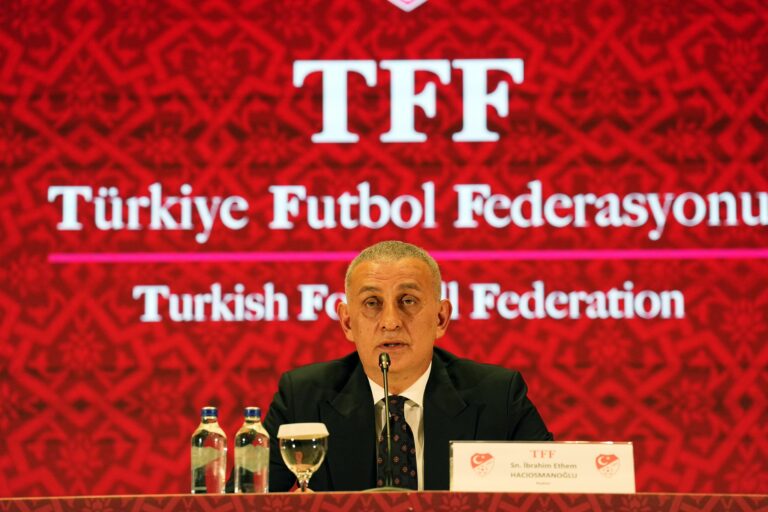
THE Turkish Football Federation (TFF) has suspended 149 referees accused of betting on football matches.

In a statement on Friday, October 31, reported by AFP, the TFF said its disciplinary committee-imposed bans ranging from eight to twelve months after investigations confirmed that the referees had placed or maintained active betting accounts.

The federation added that investigations were ongoing into three other referees.

The suspensions followed a months-long inquiry that examined 571 referees across the country’s professional leagues.

The TFF revealed that 371 officials were found with sports betting accounts, and 152 were actively placing bets.

According to the TFF, 22 of the affected officials, including seven match referees and 15 assistants, were officiating in the country’s top division, the Super Lig.

One referee alone placed more than 18,000 bets, while 42 referees each wagered on over 1,000 football matches.

Background

The betting probe began in April 2025, following reports of widespread gambling among match officials.

A five-year audit report found systemic violations of both TFF and FIFA disciplinary regulations, which strictly prohibit referees, coaches, and players from engaging in betting activities.

According to TFF regulations, referees found guilty risk suspension for up to one year. Under Article 27 of FIFA’s Code of Ethics, they may also face fines of up to 100,000 Swiss francs (£94,000) and bans lasting as long as three years from all football-related activities.

The revelations have shaken confidence in Turkish football, with prominent clubs, including Besiktas, Fenerbahce, and Trabzonspor, calling for investigation.

Court sacks Zamfara lawmaker for defection 

0

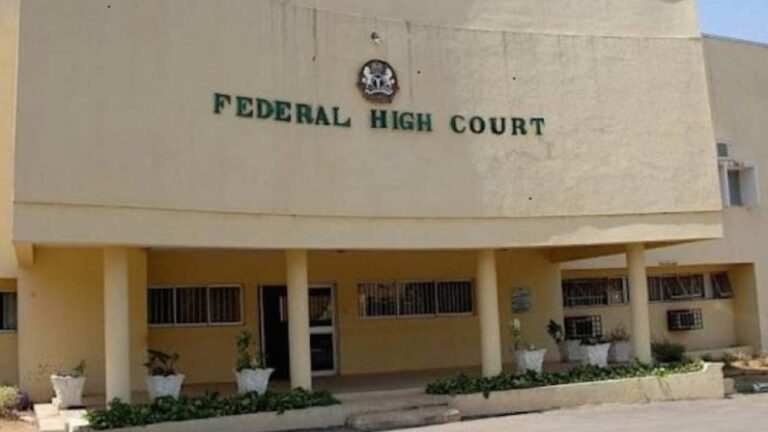
THE Federal High Court in Abuja has sacked Abubakar Suleiman Gummi from the House of Representatives for defecting from the Peoples’ Democratic Party (PDP) to the All Progressives Congress (APC).

Gummi represented the Gummi/Bukkuyum Federal Constituency of Zamfara State before his removal.

In a judgment delivered by a judge, Obiora Egwuatu, the court restrained the Speaker of the House of Representatives, Tajudeen Abbas, from further recognising Gummi as a member of the legislature.  The judge also directed the Independent National Electoral Commission (INEC) to conduct a fresh election to fill the vacant seat within 30 days.

The suit, marked FHC/ABJ/CS/1803/2024, was filed by the PDP and its Zamfara State chairman, Jamilu Jibomagayaki, through their counsel, Ibrahim Bawa, a senior advocate.

The plaintiffs argued that Gummi’s defection to the APC was unconstitutional since there was no division within the PDP at the time he left the party.

They urged the court to declare his seat vacant and compel the Speaker to act in line with Section 68(1)(g) of the 1999 Constitution, which mandates lawmakers to forfeit their seats if they defect from the party under whose platform they were elected, except in cases of internal crisis within the party.

In his defence, Gummi said his decision to join the APC was due to persistent internal and external crises within the PDP both at the national and constituency levels. He claimed that the party’s unresolved conflicts made it difficult for him to effectively represent his constituents.

After reviewing the case, Egwuatu rejected Gummi’s argument and granted all the reliefs sought by the plaintiffs. He declared that Gummi’s seat automatically became vacant upon his defection and ordered him to refund all salaries and allowances he received from October 30, 2024, until the date of judgment.

The court also awarded N500,000 in costs against him.

The judge criticised the growing trend of political defections, describing it as an abuse of the electoral mandate. He said elected officials must respect the choices of voters who cast their ballots based on party manifestos and ideology.

Egwuatu noted that votes belong to political parties, not individuals, and that transferring such votes to another party amounted to political misconduct.

He emphasised that the law was designed to prevent what he described as “political prostitution” and to protect the sanctity of the electoral process.

The judgment comes amid a wave of political defections in Nigeria’s National Assembly.

Just a day earlier, The ICIR reported that six lawmakers from Enugu and Plateau States announced their defection from the PDP and Labour Party (LP) to the APC during plenary.

Those who defected include Nnolim John Nnaji, Anayo Onwuegbu, Martins Oke, Obetta Mark Chidiebere, Dennis Nnamdi Agbo—all from Enugu State—and Daniel Asama from Plateau State.

Speaking on behalf of the group, Nnolim Nnaji said their decision followed the defection of Enugu State Governor Peter Mbah to the APC earlier in October.

Nnaji said the move was aimed at aligning with the state’s new political direction and ensuring that Enugu was no longer isolated from the Federal Government.

Mbah, who left the PDP after months of speculation, said his defection was a deliberate step to connect Enugu and the South-East region to national governance. The governor joined the APC alongside members of his cabinet, the state assembly, and local government officials.

The APC’s national leadership has since welcomed the new entrants, describing their move as a milestone for the party’s expansion in the South-East.


Tanzania opposition alleges 700 killed in post-election protests

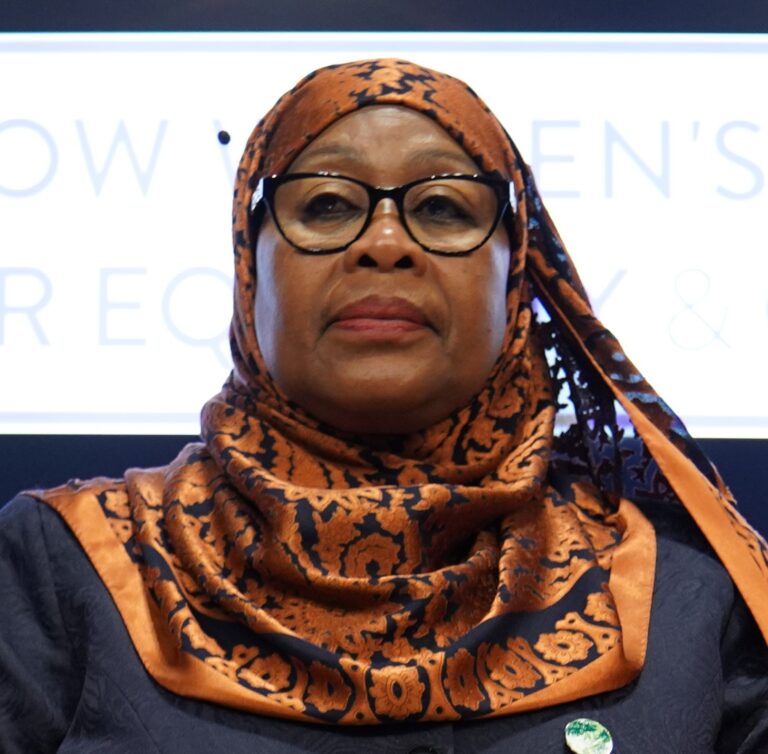
TANZANIA’S main opposition party has claimed that 700 people have been lost to the ongoing nationwide protests that erupted after the presidential poll conducted earlier this week in East Africa country.

The spokesperson for the opposition CHADEMA party, John Kitoka, stated this on Friday, noting that the party had documented about 700 deaths since Wednesday, citing reports from health workers.

CHADEMA party was barred from the election after refusing to sign a code of conduct, following the arrest of its leader on treason charges in April.

Kitoka said that demonstrations were still taking place in several cities on Friday, though their intensity had decreased in some areas because of the heavy security presence.

“We are calling for the protests to continue until our demands for electoral reforms are made,” he told Reuters.

Protests erupted after the exclusion of President Samia Suluhu Hassan’s two main challengers from the ballot and allegations of widespread repression. Sources said police used tear gas and live ammunition to disperse demonstrators.

An overnight curfew has been in place in Dar es Salaam for two consecutive nights after government offices and other buildings were set on fire. Internet connectivity has been severely disrupted since Wednesday.

On Friday, heavily armed police and military officers patrolled the streets of Dar es Salaam, restricting movement and allowing only those with valid reasons to pass. The government has also extended a work-from-home directive for civil servants.

The United Nations said it had received credible reports of at least 10 deaths in three cities, the first public casualty estimates from an international body since the Wednesday vote, but authorities have yet to release any official casualty figures.

The ongoing unrest poses a major test for Hassan, who was initially lauded after assuming office in 2021 for relaxing political restrictions but has recently come under fire from opposition groups and activists over a wave of arrests and alleged abductions of political opponents.

Hassan has rejected accusations of widespread human rights abuses, saying last year that she had ordered an investigation into reports of abductions, though no findings have been made public.

The electoral commission began releasing provisional results on Thursday, indicating that Hassan was securing majority of votes across several constituencies.

The government addressed the ongoing unrest for the first time on Friday through a statement from the Ministry of Foreign Affairs to diplomatic missions, stating that, “Owing to isolated incidents of breaches of law and order, the government has heightened security and implemented several precautionary measures.”

Trump directs military to resume testing US nuclear weapons

PRESIDENT Donald Trump has ordered the United States military to immediately resume nuclear weapons testing after a 33-year pause, a move seen as a warning to rival nuclear powers, China and Russia.

Trump made the announcement late Thursday on his Truth Social account while aboard Marine One, en route to Busan, South Korea, for a trade negotiation meeting with Chinese President Xi Jinping.

“Because of other countries’ testing programmes, I have instructed the Department of War to start testing our Nuclear Weapons on an equal basis. That process will begin immediately. Russia is second, and China is a distant third, but will be even within five years,” Trump posted.

According to Reuters, no nuclear-armed nation, except North Korea, which last conducted a test in 2017, has carried out an explosive nuclear test in more than 25 years.

It added that post-Soviet Russia has never conducted a nuclear test. The Soviet Union carried out its last test in 1990, while China’s final test took place in 1996. In the United States, President George H.W. Bush, a Republican like Trump, declared a moratorium on nuclear testing in 1992 following the nation’s last test in September of that year.

Russia, which tested a new nuclear-powered cruise missile on October 21, conducted nuclear readiness drills on October 22, and tested a nuclear-powered autonomous torpedo on October 28, stated that it hoped Trump was correctly informed that Moscow had not carried out an actual nuclear weapon test.

“President Trump mentioned in his statement that other countries are engaged in testing nuclear weapons. Until now, we didn’t know that anyone was testing,” Kremlin spokesman Dmitry Peskov told reporters.

Later, while returning to Washington, Trump stated that nuclear testing was necessary to ensure the United States remains on par with rival nuclear powers.

“With others doing testing, I think it’s appropriate that we do also,” Trump told journalist, adding that nuclear test sites would be determined later.

When asked if the world was entering a more dangerous nuclear era, Trump downplayed the concern, saying US arsenals were “well secured,” while adding that he would welcome global denuclearisation.

“I’d like to see a denuclearisation because we have so many and Russia’s second and China’s third and China will catch up within four or five years.”

“We are actually talking to Russia about that, and China would be added to that if we do something,” he stated.

Earlier this week, while en route to Asia, Trump commented on Russia’s actions, telling reporters that Putin should focus on ending the war in Ukraine “instead of testing missiles.”

The ICIR reported that, Trump announced the cancellation of the planned summit with Putin because he no longer believed it would deliver the results he hoped for, lamenting that despite having many “good conversations” with the Russian leader did not “go anywhere”, after slamming Russia’s two biggest oil companies with sanctions in his latest policy shift on Moscow’s war in Ukraine.

According to the Washington-based Arms Control Association, a nonpartisan organisation promoting nuclear nonproliferation, the United States possesses 5,225 nuclear warheads, while Russia holds 5,580.

In August, Trump said he had held talks with Putin on nuclear arms control and expressed a desire for China to participate. However, Beijing dismissed the idea as “unreasonable and unrealistic,” arguing that its nuclear arsenal was far smaller in comparison.

Putin, who oversees the world’s largest stockpile of nuclear warheads, has repeatedly warned that Russia would resume testing if any other country conducted a nuclear test.

Over the past five years, Xi Jinping has more than doubled China’s nuclear arsenal to an estimated 600 warheads, while Russian President Vladimir Putin has recently tested two new nuclear-powered weapons.

In reaction to Trump’s latest announcement, Head of the Vienna-based Comprehensive Nuclear-Test-Ban Treaty Organization, Robert Floyd, expressed concern, warning that any nuclear weapon test by any nation would undermine global non-proliferation efforts and pose a serious threat to international peace and security.

Similarly, United States Secretary-General António Guterres has repeatedly warned that global nuclear risks were dangerously high and urged nations to refrain from any actions that could trigger miscalculation or escalation with ‘catastrophic’ consequences, according to deputy UN spokesperson Farhan Haq.

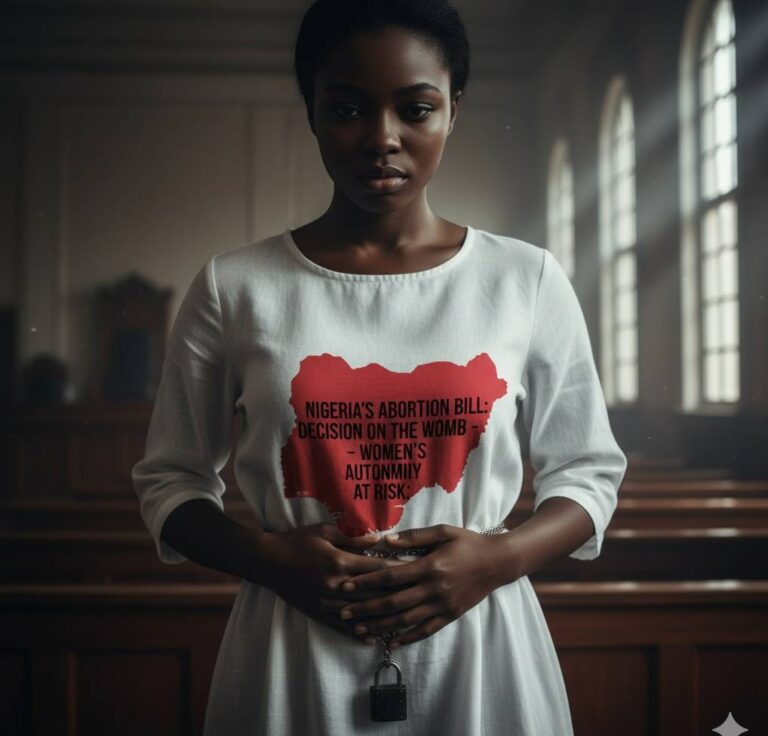
What to know about Nigeria’s abortion bill suspended by Senate

The Nigerian Senate on October 26 suspended consideration of a controversial bill seeking to impose a 10-year jail term for abortion-related offences, following heated debate among lawmakers over what constitutes an “unlawful abortion.”

The bill, titled the Criminal Code Amendment Bill 2025, was introduced by Senate Leader Opeyemi Bamidele and aims to update sections of Nigeria’s Criminal Code Act to reflect modern realities. It also proposes stiffer penalties for sexual offences such as defilement and sexual assault.

The initial recommendation by the Senate Committee had pegged the punishment for sexual assault at five years, but an amendment increased it to 10 years. However, deliberations became heated when the chamber turned to the section of the bill seeking to raise the penalty for supplying drugs or instruments used to procure abortions from three years, as currently stated in law, to 10 years imprisonment without an option of fine.

Divided opinions in the chamber

Lawmakers were divided on how to determine when an abortion should be considered unlawful. Some senators argued that abortion might sometimes be medically necessary to save the life of a pregnant woman, while others noted that economic hardship and other circumstances could compel women to make such decisions.

Kwara Central Senator, Saliu Mustapha, cautioned that certain abortions might be justified on health or religious grounds and should not be automatically criminalised. Bauchi Central Senator, Abdul Ningi, shared similar concerns, warning that the proposed amendment could discourage medical practitioners from providing life-saving care to women with complications.

After a prolonged debate, Senate President, Godswill Akpabio, intervened and proposed that the contentious clause be stepped down for further consultation. The motion was adopted through a voice vote.

The Senate subsequently referred the bill to the Committee on Judiciary, Human Rights, and Legal Matters for additional legislative input and directed the committee to report back within two weeks.

The senator representing Kogi Central, Natasha Akpoti-Uduaghan, confronted Akpabio to allow her to speak on the matter. She said as a woman, abortion is a matter that directly concerns her. However, she was not allowed because of an objection by another senator, Adams Oshiomhole, citing Senate rules that bar reopening concluded debates.

What the bill seeks to change

Abortion in Nigeria remains largely restricted by law and is only permitted when performed to save the life of the pregnant woman. The country’s legal framework on abortion is primarily derived from the Criminal Code Act, applicable in the southern states, and the Penal Code, applicable in the northern states.

Currently, under the Criminal Code Act applicable in southern Nigeria, a woman who unlawfully procures her own miscarriage faces up to seven years imprisonment, while anyone who assists faces up to 14 years. Supplying drugs or instruments for abortion attracts up to three years imprisonment.

The Criminal Code Amendment Bill seeks to increase penalties for abortion-related offences and clarify the legal definitions surrounding them. 

In the northern states, the Penal Code contains similar provisions but allows abortion “in good faith for the purpose of saving the life of the woman.” This is the only broadly accepted exception under Nigerian law.

The proposed amendment seeks to stiffen penalties but does not yet define “unlawful abortion,” raising concerns that even medically justified procedures could be punished.

Current legal and health context

Acoording to Nigeria’s abortion laws, abortion is permitted only when necessary to save a woman’s life, leaving no clear legal pathway for cases involving rape, incest, or severe fetal abnormalities.

Because of these restrictions, many women resort to unsafe abortions, often performed by unqualified individuals or in unsanitary conditions. According to the Guttmacher Institute, hundreds of thousands of unsafe abortions occur annually in Nigeria, contributing significantly to the country’s high maternal mortality rate.

Health experts have warned that increasing criminal penalties without addressing the underlying causes including limited access to contraception, poor healthcare infrastructure, and social stigma could worsen the public health crisis.

What happens next

The Senate’s Committee on Judiciary, Human Rights, and Legal Matters has been tasked with reviewing the bill’s language, especially regarding the definition of “unlawful abortion.” The committee will consult stakeholders and report back within two weeks.

If the committee returns with agreed recommendations, the bill will return to the floor for further debate and possible passage. If consensus remains elusive, the abortion clause may be deleted altogether while other provisions on sexual offences are passed.

While the bill aims to modernise the criminal code, experts warn that unclear or overly punitive abortion laws could drive more women toward unsafe procedures and worsen maternal health outcomes.

Meanwhile, recent judicial developments also point to a potential shift. In June 2025, a Federal High Court in Abuja affirmed that unplanned pregnancies resulting from rape, incest, and other forms of sexual violence constitute a violation of the rights of women and girls to physical and mental health.

As it stands, the fate of the abortion clause remains uncertain, pending the Senate committee’s report. But this debate has once again reignited questions about how far Nigeria’s laws should go in regulating women’s reproductive choices in a country where unsafe abortions are one of the leading causes of maternal mortality, contributing up to 15 per cent of maternal deaths.