AN investigation has revealed that infrastructure once used for Russian disinformation campaigns is now being repurposed to promote large-scale dating and cryptocurrency scams through a network of obscure advertising systems and offshore companies.
The investigation, published by Qurium and titled “Catfish Incorporated: How the Dating Scam Industry Works,” revealed that servers linked to the bulletproof hosting provider Aeza, also known as Evilempire or Lethost, were used to host domains tied to both Russia’s Doppelganger disinformation network and fraudulent dating sites.
The traffic from these sites is distributed using a traffic distribution system (TDS) known as Los Pollos, which redirects users through smart links to pre-landing pages that promote various scams.
According to the findings, Los Pollos was also connected to Vextrio, a large ad-tech network used for distributing malicious traffic, scams, and unwanted applications. The overlap suggests that the same infrastructure supporting disinformation campaigns also fuels global online fraud, revealing how digital advertising systems can be manipulated for exploitation.
The research also identified a complex web of intermediaries, including affiliates, black advertisers, and concealed operators who profit from these scams while hiding behind shell companies registered in jurisdictions such as Cyprus, Malta, Hong Kong, and the Marshall Islands. Victims are typically lured through online ads or spam messages to pages branded as Loveme, OnlyOne, or FlirtUp, before being redirected to fraudulent dating services.
“One we had discovered that Los Pollos was a core player in dating scams – distributing traffic between publishers and advertisers – we decided to explore who the Concealed Advertisers were – hiding their legal names behind obscure off-short companies in Hong Kong, Cyprus, Malta, and the Marshall Islands, ” the report stated in part.
Over the past year, researchers identified at least four major organisations using Los Pollos’s infrastructure for dating scams: Meet Us Media (Nexxie Group), Traffic Partner (Digital Performance), Adsempire (Detailed Graphics Kft/Howlogic Kft), and Mirelia (Alziator Commercial/MediaScythe).
At the centre of the operation is the Nexxie Group, a Cyprus-based conglomerate running companies like Meet Us Media Ltd, Redwalking Ltd, Merchsuite Ltd, and Elevven 11 Ltd. One of its branches, VDesk, recruits freelancers to pose as romantic interests and keep victims engaged through fake profiles.
“A fascinating discovery was to see the recent inclusion in the Terms and Conditions of the websites operated by Meet Us Media (Nexxie Group) stating that the company operates fake profiles (flirt bots) designed to enhance the user experience. This disclaimer seems to contradict how these websites are promoted and advertised. A sample list of over 100 domains leading to sites operated by the Nexxie Group is available here” the investigation noted.
Since the initial exposé by Qurium in November 2024 with its “Doppelganger” investigation, Los Pollos has continued operating, moving its infrastructure and rebranding its hosting network under new names, including the Swiss Innovative Arts and Technologies Institute (SIATI).
Investigators say the changes reflect a pattern among cybercriminals who adapt quickly to evade detection while maintaining the same fraudulent activities
Another company identified as part of this ecosystem was Traffic Partner BV / Digital Performance GmbH, operating from the Netherlands and Germany. Researchers linked hundreds of dating and subscription websites associated with Ultimate Enterprises Ltd, a Hong Kong-registered shell company, to Traffic Partner’s infrastructure.
The investigation revealed that the company’s websites share common technical footprints, including hosting within CQ International BV (AS25418), the use of Cloudflare DNS, and registration through InterNetX GmbH, suggesting a unified backend system.
The investigation also identified Adsempire, operated by Hungary’s Detailed Graphics Kft (formerly Howlogic Kft), as a major player in the scam ecosystem. The company, owned by Ukrainians Anastasiia Bilotserkovets and Liudmyla Kachalovska, promotes “subscription trap” dating sites associated with Together Networks, a Malta-based company accused of misleading users with fake profiles and hidden charges.
The infrastructure behind Together Networks traces its roots to Cupid Plc, a former UK-listed dating company that collapsed in 2013 after journalists exposed its use of fake profiles to trick users into paid subscriptions. Though Cupid Plc sold its assets, investigators found continuity between its old infrastructure (codenamed “Phoenix Platform”) and today’s Antheia Services Ltd in Cyprus, which now hosts hundreds of dating domains.
The investigation uncovered 470 active domains connected to Antheia, all running similar designs and backend systems. Many of the payment processors linked to these sites operate under fake identities or use Cyrillic characters to mask their true corporate names.
The final network identified involves Mirelia, an advertising company linked to MediaScythe Ltd, registered in the Marshall Islands. The company is connected to Alziator Commercial Ltd, a Cyprus-based entity associated with Andreas Soteriou and Roman Khmelnytskyy. Mirelia promotes dating sites through Los Pollos and operates a network of shell “web development” firms, such as Ornelio and Braelynn Holdings Ltd, to conceal its ownership.
Despite multiple exposures, Los Pollos and its affiliates continue to operate under new brand names and hosting providers. The company’s infrastructure has migrated from C41.ch (AS6898) to the Swiss Innovative Arts and Technologies Institute (SIATI), reflecting efforts to stay ahead of detection.
The investigation concludes that these entities rely on proxy legal structures to conceal their operators and maintain plausible deniability while profiting from large-scale digital exploitation.
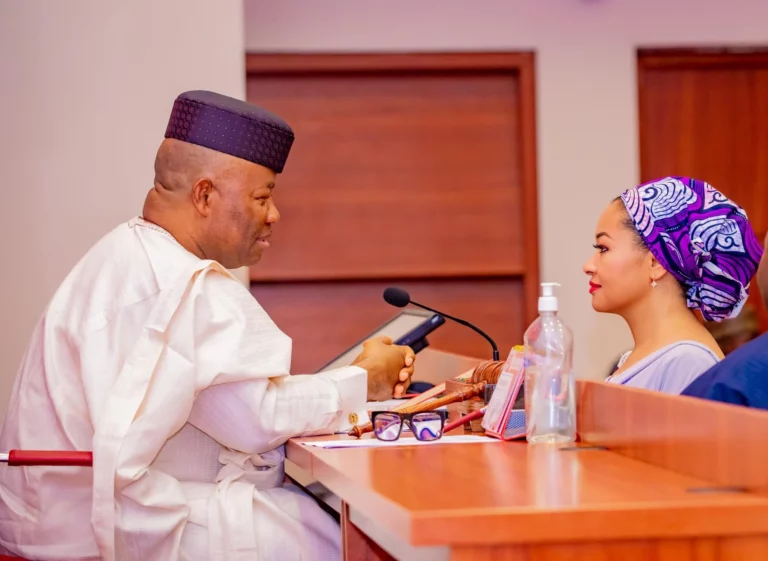
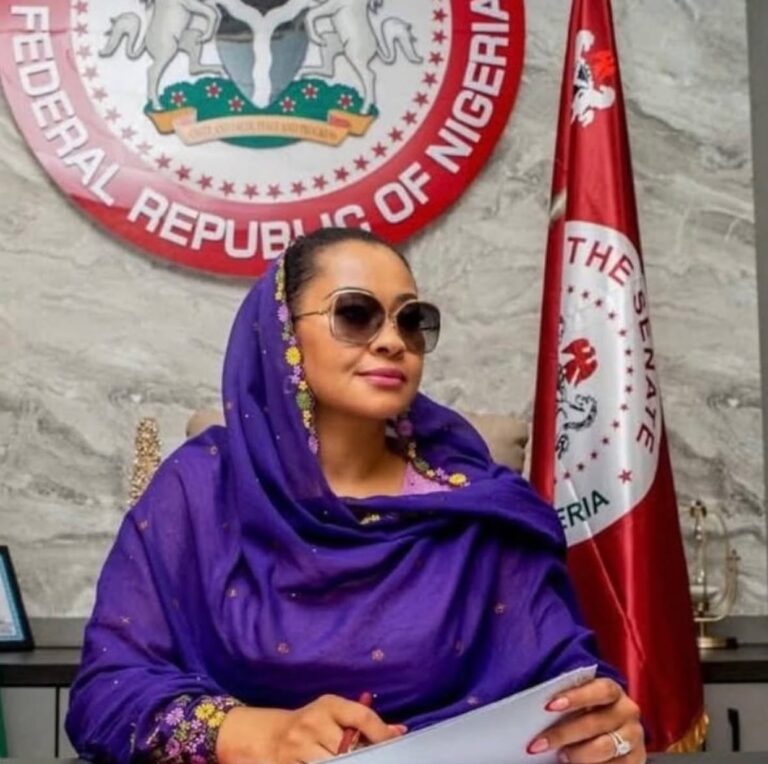
The Senator representing Kogi Central, Natasha Akpoti-Uduaghan has invited the Senate President Godswill Akpabio and other lawmakers to the inauguration of constituency projects in Kogi State.
The invitation was contained in a letter read by Akpabio during Thursday’s plenary, weeks after her return from a six-month suspension.
“In marking my second anniversary as serving Senator of the Federal Republic of Nigeria, I wish to invite fellow distinguished senators to join me for projects commissioning in Kogi State,” the letter read.
According to the invitation, the inauguration is scheduled to be held on Sunday, November 2 in Ihima, Okene Local Government Area, with the meeting point fixed at her residence.
The senator advised lawmakers travelling by air to use the Obajana airstrip before proceeding by road to Ihima.
In response, Akpabio warmly said “Congratulations in advance” after reading the letter.
If honoured, Natasha’s invitation could mark a turning point in the rift between the two senators.
The ICIRreported that Akpoti-Uduaghan was suspended in March 2025 for violating Senate rules after a seat arrangement brawl with Akpabio, whom she later accused of sexual harassment. Akpabio denied the allegation.
She accused Akpabio of running the upper chamber with a “dictatorial hand,” while the Senate President insisted her actions breached parliamentary decorum.
Although her suspension expired in September, she only regained access to her office in October.
Cases on the sexual harassment allegation are currently pending in courts.
THE Senator representing Kogi Central, Natasha Akpoti-Uduaghan, is set to reopen the case of late Elizabeth Ochanya Ogbanje, who died in 2018 after allegedly enduring years of sexual abuse by her uncle and cousin.
Akpoti-Uduaghan disclosed this in a social media post on Thursday, October 30, urging the family of the late 13-year-old Ochanya to submit a petition to her office.
“Seven years ago, the heart-wrenching story of little Ochanya devastated me. I thought the perpetrators were in jail. Alas, they were discharged and acquitted,” she wrote.
The senator noted that she stood for the protection of children and justice for Ochanya, joining the voices of Nigerians who have condemned the handling of her case.
“The family of late Ochanya Ogbanje should write a petition to me: Senator Natasha Akpoti -Uduaghan, Room 2:05 Senate Wing, National Assembly Complex , Abuja,” the senator urged.
Last week, Ochanya’s case resurfaced across social media platforms, with many Nigerians urging the government to ensure she gets justice.
The ICIRreported that In October 2018, Ochanya died after suffering years of sexual abuse while living with the Ochiga-Ogbuja’s family to get a better education in Ugbokolo, Benue State.
Andrew Ochiga-Ogbuja and his son, Victor Ochiga-Ogbuja, both maternal relations of the deceased, were accused of serially raping her.
Ochanya spent four months in diapers’ before several tests revealed that she was sexually violated through her vagina and anus. Doctors later diagnosed Ochanya with Vesico-Vaginal Fistula (VVF) and she was admitted at the Federal Medical Centre in Makurdi for two months before she died on October 17, 2018.
Although Ochanya’s death sparked national outrage, the pursuit of justice moved at a slow pace.
Ochiga-Ogbuja, a lecturer at the state polytechnic was arrested and remanded in custody while his son, Victor was at large..
Her case was filed before a High Court in Makurdi, the Benue State capital, making it to compete with a backlog of civil, criminal, land disputes, infrequent hearings, and repeated adjournments.
Nearly four years later, on April 28, 2022, a High Court in the state acquitted Ochiga-Ogbuja, ruling that the prosecution failed to meet the burden of proof while his wife, Felicia Ochiga-Ogbuja in a separate Federal High Court was convicted of negligence and received a five-month prison sentence without the option of a fine.
When Ochiga-Ogbuja and his wife were arraigned in October 2019, the National Agency for the Prohibition of Trafficking In Persons (NAPTIP) presented medical reports, video testimony from the victim, and eight witnesses, including police, medical experts, and family members.
However, two conflicting autopsies clouded the narrative, one local autopsy attributed Ochanya’s death to natural causes, while another in Lagos State suggested sexual violence.
The court found a gap in the lack of provision of a deoxyribonucleic acid (DNA) evidence or other forensic linkage to Ogbuja, leading to his acquittal.
The ICIRreported that experts have insisted that the creation of special courts to handle sexual related offences will complement the fight against sexual abuse.
These sexual offences courts will have trained and experienced prosecutors to interact with survivors, provide support and ensure timely prosecution of the cases.
SIX members of the House of Representatives on Thursday, October 30, dumped the Peoples Democratic Party (PDP) and Labour Party (LP) for the ruling All Progressives Congress (APC).
The Speaker of the House, Abbas Tajudeen, read their defection letters during plenary, confirming the lawmakers’ switch to the APC.
Those who defected include Nnolim John Nnaji (Nkanu East/Nkanu West), Anayo Onwuegbu (Aninri/Awgu/Oji River), Martins Oke (Igbo Etiti/Uzo Uwani), Obetta Mark Chidiebere (Nsukka/Igboeze South), Dennis Nnamdi Agbo (Igbo-Eze North/Udenu)—all from Enugu State—and Daniel Asama (Jos North/Bassa) from Plateau State.
The lawmakers said they left their parties due to “irreconcilable internal crises” and the need to align with “progressive leadership.”
Speaking on behalf of the Enugu lawmakers, Nnolim Nnaji said their decision followed Governor Peter Mbah’s defection to the APC earlier this month.
“With your blessing and in line with our collective decision to stand firmly with our visionary Governor, Dr, Barrister Peter Ndubisi Mbah, we formally announce our defection to the All Progressives Congress (APC),” Nnaji said.
He added that joining the ruling party would enable Enugu lawmakers to secure federal projects and end years of political isolation.
“For too long, our dear Enugu State has remained in opposition, watching from the sidelines as others shaped the destiny of our nation and accessed opportunities that could have transformed our people’s lives. That era is over,” he added.
Nnaji said their collective focus would now be to attract infrastructure, youth empowerment initiatives, and increased federal presence to their constituencies.
Backstory
Earlier this month, Enugu State Governor, Peter Mbah, defected from the PDP to the APC after months of speculation.
During a statewide broadcast on October 14, 2025, Mbah said his defection was a deliberate step to connect Enugu and the South-East region to the Federal Government in Abuja.
“Today, after a long reflection, we have decided to join the All Progressives Congress,” Mbah said.
He described the decision as a painful but necessary choice to better serve the state’s people. He further argued that the defection aligned with President Bola Tinubu’s vision.
Mbah defected alongside members of his State Executive Council, the Enugu House of Assembly, local government chairmen, councillors, and several political appointees.
The APC National Chairman, Nentawe Yilwatda, hailed the governor’s entry into the party as a defining moment for the ruling party’s expansion in the South-East.
The development followed similar defections by Governors Sheriff Oborevwori of Delta State and Umo Eno of Akwa Ibom, both of whom joined the APC earlier in 2025 with their cabinets.
AT least four people, including a police inspector, were feared dead, and several others injured in a multiple-vehicle accident involving five articulated trucks on Kara Bridge, inward Mowe, along the Lagos-Ibadan Expressway on Thursday, October 30.
The Lagos State Commissioner of Police, Moshood Jimoh, confirmed the incident during a visit to the scene, stating that emergency response teams worked through the early hours to rescue victims and clear the wreckage.
“We have a case of multiple accidents at the border between Ogun and Lagos State. Five vehicles were involved, all articulated vehicles. Precisely, three people have been rescued from the scene of the accident.
“As early as 5 a.m., we have been on it, and we have other agencies here assisting us. We have LASTMA, the Road Safety Corps, and other security agencies,” Jimoh said.
The commissioner also confirmed the death of one of his inspectors attached to the Lagos State Police Command who was part of the police advance team deployed to the scene.
“It’s very unfortunate that we lost one of our police inspectors who came with our advance team to salvage the situation,” he said.
He explained that preliminary findings indicated the accident was triggered by a trailer that experienced brake failure, as he cautioned motorists, particularly drivers of articulated vehicles, against reckless driving, which he described as a leading cause of fatal crashes on highways.
“We want road users, especially those driving articulated vehicles, to stop this kind of recklessness. If they are not reckless in their driving habit, we won’t have this kind of accident,” he warned.
Reports indicated that rescue operations involving the police, Federal Road Safety Corps, Lagos State Traffic Management Authority, and other agencies were still ongoing as of press time, with efforts underway to clear the damaged vehicles and restore normal traffic flow.
The ICIR reports that this latest accident adds to the frequent accidents along the Lagos-Ibadan Expressway over the years.
In 2024, a container truck crushed three people to death in Mowe on the Lagos-Ibadan Expressway.
It was gathered that the accident occurred when the container slid off the truck with number plate T-1563 LA, killing the three victims inside a Howo truck without a number plate.
In 2023, at least ten persons died in an auto crash along the busy highway.
The FRSC in Ogun State confirmed that the incident, which occurred in the early hours of January 14, involved a Mack truck and a Toyota Hiace bus.
The ICIRreported in 2022, that FRSC said ten persons died in an accident on the highway.
The accident involved a commercial bus with registration number TRK 135 ZY and a hit-and-run truck carrying a container.
Six persons were injured in the crash, which occurred around the Guru Maharaji area of Ibadan end of the expressway.
THE Federal Capital Territory (FCT) Police spokesperson, Josephine Adeh, has confirmed a fire incident occurred at the Jabi Lake Mall, Abuja, in the early hours of Thursday, October 30.
According to Punch, Adeh said police officers were deployed to the location to secure the area and prevent looting.
“We received a distress call at about 3:40 a.m. We immediately deployed our men there to secure the place and prevent any breach of public order,” she said.
Reports indicated that the fire affected only the Adidas Sports shop, though the cause of the outbreak had yet to be determined as of press time.
It was also gathered that firefighters from the Federal Fire Service, the Berger Fire Department, and the FCT Fire Service were deployed to the scene.
The incident adds to a chain of fire disasters in the FCT in recent years.
The ICIRreported in 2022 that many traders in the popular Karmo market in Abuja counted their losses after fire razed their shops.
The fire, which started around 12:00 am and lasted for over two hours, burnt down several shops and destroyed goods before it was put out by operatives of the FCT Fire Service..
Shops and goods were also destroyed during the 2021 fire outbreak at the Nyanya Market in the night and the cause of the fire could not be ascertained.
Similarly, on December, 26, 2021, The ICIR reported how the Next Cash and Carry Mall, in the nation’s capital went up in flames.
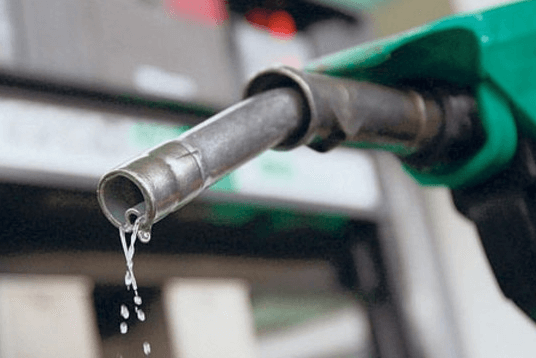
PRESIDENT Bola Ahmed Tinubu has reportedly approved 15 per cent import duty on petrol and diesel.
The measure is expected to push pump prices of the products up, with projections suggesting petrol could rise by as much as ₦150 per litre in some parts of the country.
The approval, contained in a presidential directive dated October 21, 2025, was communicated to the Federal Inland Revenue Service (FIRS), the Nigerian Midstream and Downstream Petroleum Regulatory Authority (NMDPRA), and the Nigeria Customs Service.’
It followed a proposal from the Ministry of Finance and FIRS seeking to align Nigeria’s fuel import pricing with domestic production realities and protect local refineries.
According to government documents obtained by The Cable, the tariff will be applied on the cost, insurance, and freight (CIF) value of imported petrol and diesel. The move, the government said, aims to stabilise the downstream petroleum market, promote energy security, and ensure fair competition between importers and local refiners.
The presidency explained that the policy was part of wider reforms to strengthen domestic refining capacity and reduce reliance on imported fuel. It follows the Federal Executive Council approval of July 29, 2024, which allowed crude oil for domestic use and refined products to be traded in naira.
Officials said domestic refining, particularly at the Dangote Refinery, has begun to increase, but that instability in pricing between local refiners and importers continued to distort the market. Import parity pricing, which often determines the pump price, has remained below cost recovery levels for local producers.
According to Arise News, in the official communication, the presidency noted that “while domestic refining of petrol is gradually improving, misalignment between local refiners and marketers has led to price instability. The 15 per cent import tariff is designed to protect consumers and producers by discouraging duty-free imports that undercut domestic refiners.”
The directive also explained that the measure would prevent unfair competition, promote investment in refinery and logistics infrastructure, and ensure that local production remains viable. Payments from the new import duty are to be made into a designated Federal Government account under the FIRS, with NMDPRA responsible for verifying compliance before any shipment is released.
Sections 71 and 72 of the Petroleum Industry Act (PIA) were cited as the legal foundation for the policy. These provisions empower NMDPRA to impose regulations that promote energy security, safeguard supply, and advance broader economic goals, including through levies or tariffs considered to be in the public interest.
The implementation of the new tariff, initially proposed to begin after a 30-day transition period to allow importers to adjust, is now expected to take effect immediately following a presidential instruction. “Approved as prayed for implementation immediately,” President Tinubu reportedly wrote in the directive.
The government also directed that future import licensing must prioritise local production capacity before foreign supply is approved. Customs and NMDPRA have been instructed to update import templates, enforce digital verification for all shipments, and issue a compliance notice to prevent market speculation.
Officials say the policy is not primarily designed to raise revenue but to correct market distortions that make locally refined products less competitive than imported fuel. The presidency believes that the import tariff will help Nigeria achieve fuel self-sufficiency, stabilise supply, and attract further investment into the refining sector.
However, concerns have emerged among stakeholders in the downstream petroleum industry. Many argue that the country’s refining capacity remains insufficient to support the policy without disrupting supply and inflating prices. Nigeria still imports more than 60 per cent of its refined petroleum products, with less than 40 per cent sourced locally—mostly from the Dangote refinery and smaller modular refineries.
Industry experts warn that, while the policy could eventually encourage local refining, consumers may bear the immediate brunt of higher fuel prices. Some marketers have already projected that the new tariff could push pump prices beyond ₦1,000 per litre if the naira weakens further or international freight costs rise.
STANDING at an elevation of over 1,800 meters, the Mambilla Plateau offers panoramic views that stretch for miles in every direction. Its rolling hills, lush green pastures, and charming villages create a unique picturesque landscape. The Plateau, which shares borders with Cameroon, is a treasure trove of natural beauty, cultural richness, and economic opportunities. However, beyond the peaks, scenic beauty,and potential to become a premier tourist destination in Nigeria,The ICIR unravels thedark side that underscores the paradox of the Plateau’s hidden gems and misbegotten communities.
Travelling through ‘hell’
The journey from Jalingo, the capital of Taraba State to Gembu, the headquarters of Sardauna LGA on the Mambilla Plateau, should be less than four hours. But it takes between seven to eight hours depending on the type of vehicle. No thanks to the bad road, coupled with the plethora of checkpoints.
For first time visitors, the 376 km road to Gembu through Bali and Gashaka is a gruelling test of endurance. Potholes, some as deep as sinkholes, pockmark the asphalt, which has long given up its battle against the elements. The surface resembles a rugged, unforgiving terrain, with jagged edges and uneven slabs of asphalt that jolt vehicles mercilessly.
As vehicles navigate the treacherous stretch, the rhythmic thud-thud-thud of wheels hitting potholes becomes a constant companion. The air is thick with the sound of scraping metal, straining engines, and the occasional loud complaint from frazzled passengers.
An aerial view of Gembu: ‘Heartbeat of the Mambilla Plateau’. Photo: TheICIR/Fidelis Mac-Leva
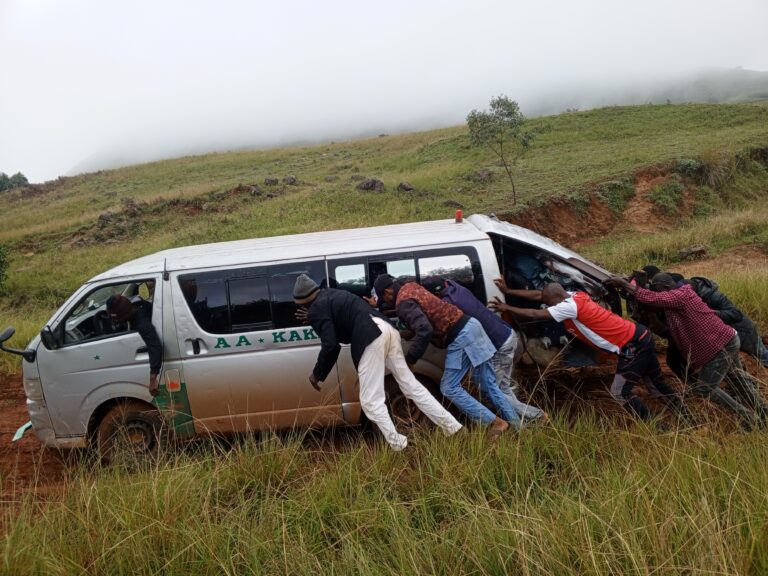
Dust devils swirl around the vehicles, coating everything in a fine, choking layer of dirt. The sun beats down relentlessly, offering no respite from the heat. The smell of burning rubber and gasoline hangs heavy over the landscape. In the rainy season, the road transforms into a muddy, slippery nightmare. Vehicles struggle to gain traction, wheels spinning futilely as they sink into the mire. The risk of accidents looms large, and the mere thought of breakdowns or skidding into a pothole fills every passenger with dread.
Beyond the poor state of the road lies a bigger challenge: security checkpoints. They dot the landscape, each one a potential minefield for commuters. Agents, often in worn-out uniforms, flag down vehicles with a mix of authority and expectation. At each checkpoint, the ritual plays out: agents scrutinise documents, question travellers, and inspect cargo. But the underlying message is clear – “pay up or face delays.” Commercial drivers, aware of the game, try to negotiate, hoping to minimise the “transaction fee.” Other commuters, fearful of repercussions, hand over money without question.
The extortion is veiled, often disguised as “settlement” or “dash.” But the reality is stark: security agents leveraging their positions for personal gain, leaving commuters feeling vulnerable and exploited. The practice perpetuates a cycle of poverty and mistrust, further straining relations between security forces and the communities they’re meant to protect.
As vehicles navigate the potholed roads, they are forced to factor in the added costs – financial and emotional – of these encounters. The journey becomes a test of endurance, with security checkpoints serving as reminders of the systemic challenges plaguing the region.
From Gembu to the hinterlands
From Gembu to the border communities: The road makes the journey a nightmare. Photo Fidelis Mac-Leva/The ICIR
If you are proceeding from Gembu to the rural-border communities, you are in for another round of ordeal. The journey to the rural communities within the Mambilla Plateau is an arduous odyssey. The road, barely passable, winds its way through the rugged terrain, testing the mettle of even the sturdiest vehicles. Potholes, craters, and jagged rocks stretch out like obstacles in a minefield, threatening to puncture tires or shatter axles at every turn.
The surface, is a muddy quagmire during the rainy season, sucking wheels into its grasp like quicksand. Vehicles and motorcycles struggle to gain traction, inching forward in a slow, agonising dance. The sound of scraping metal, straining engines, and frustrated shouts fills the air.
As travellers navigate this unforgiving terrain, the scenery offers little comfort. The landscape is a mix of rolling hills, steep inclines, and sharp bends, with vegetation growing wild and untamed alongside the road. The air is cool and misty, but the road conditions make every journey feel like an adventure – or an ordeal.
Commuters face a constant battle against fatigue, injuries, and potential accidents. Breakdowns are common, leaving passengers stranded in the middle of nowhere, exposed to the elements and the uncertainties of the road. Yet, despite these challenges, the people of Mambilla persevere, driven by necessity, resilience, and a deep connection to their community. The road may be harsh, but their determination remains unbroken.
Key facts about the Mambilla Plateau
Located in the highland region of Taraba State, the Mambilla Plateau is a majestic destination that boasts breathtaking landscapes, rich cultural heritage, and abundant wildlife, making it an ideal spot for nature lovers, adventure seekers, and cultural enthusiasts.
Accessed from Gembu, headquarters of Sardauna LGA, the Plateau stands at an elevation of over 1,800 meters, offering panoramic views that stretch for miles. Its rolling hills, lush green pastures, and charming villages create a picturesque landscape. It also houses the famous Chappal Waddi mountain considered the highest point in Nigeria with an average height of about 2,419 metres (7,936 ft) above sea level.
Being among Nigeria’s top tourist destinations, the Plateau which attracts visitors from different parts of the country and beyond, has one of the best weather conditions in the country which is cool and always accommodating all year round.
The famous Highland Tea is also found there. Livestock like cow, goats, sheep and other rare birds thrive on the Plateau, including natural forests that are home to very rare species of birds and trees which have attracted lots of researchers from around the world.
Signed plebiscite, broken promises
Historical accounts record that in the early sixties, the people of the area now known as the Mambilla Plateau (then part of the British-administered Northern Cameroons) participated in a United Nations-supervised plebiscite to decide whether to join the Federation of Nigeria or the Republic of Cameroon. The majority voted in favour of joining Nigeria, and the territory was formally integrated on 1 June 1961.
Although there is no official record of any formal conditions attached to the vote, local oral histories and later writings suggest that many of the people expected that joining Nigeria would bring development opportunities including better roads, schools, and greater political inclusion. They were also assured, through political campaigns and local leaders, that they would enjoy equal treatment and participation in national affairs.
Over time, many on the Mambilla Plateau have expressed disappointment that these expectations have not been fully realised.
Saleh Alhaji Aabubakar, the district head and acting third-class chief of Mbamga chiefdom.Photo: Fidelis Mac-Leva/The ICIR
“We lack almost everything. There is no good road network. No higher institution, and our people are not partakers of the national cake,” laments Saleh Alhaji Aabubakar, the district head and acting third-class chief of Mbamga chiefdom.
The chiefdom comprising eight districts, each headed by a village chief called Mbon.
The royal father who took The ICIR through memory lane, said: “In Mambila Plateau as a whole, we joined Nigeria through a plebiscite in the early 60s by vote. We chose to join Nigeria based on certain conditions that were entered into by our forefathers with the Nigerian government.
“Today is more than 60 years and none of the conditions has been put in place. We have been faced with a lot of challenges; lacking almost everything. We are cut off from the Nigerian government, “he said.
He underscored the economic and tourism potentials of the Mambilla Pleteau, while decrying the neglect of the border communities by successive governments.
“There are a lot of things that government needs to do there. Naturally, you savour the weather and the terrain which is good for tourism. There is need for government to come and develop that place that will attract tourists all over the world.
“I have not been to Obudu, but people said the Mambilla Plateau is almost like the Obudu Cattle Ranch in terms of tourism potentials. Government can transform that place,” he said.
Echoes of anguish
A visit round the communities on the mountains and valleys of the Plateau, however, reveal that they are far from development. Across its major border settlements of Dorofi, Kan-Iyaka, Yerimaru, Tamnya, Mbamga, Mayo-Ndaga and Njimtilo, the visible scars of neglect have given rise to echoes of lamentation. Consequently, there is a boom in illicit economic activities across the borders, including smuggling.
Youths like this one have taken advantage of the bad road to smuggle petrol across the porous borders. PC: Fidelis Mac-Leva/ICIR
Like other border communities in Nigeria, locals say they are only remembered by politicians during electioneering campaign period. The timeless Chinese adage that, “Civilisation follows the road” holds no essence there as there are no access roads. Other essential infrastructure such as hospitals and schools are also lacking, leading to the communities relying more on such amenities from Cameroon.
Mike Nyako, a businessman based in Mbamga said, “Our greatest challenge here is lack of motorable roads. We convey goods, patients and corpses to Gembu on bikes even as there are no hospitals and doctors. Added to these is the absence of good schools, running water and electricity. If the federal government fails to do something, scores will continue to migrate to Cameroon where they enjoy these facilities.”
Yuguda Mairiga, a resident of Mbamga, also harped on the importance of roads on the Plateau among other amenities. “There are no motorable roads. We also need a big hospital as we travel to Gembu and Cameroon for treatment. We lack schools even as we get water from dams,” Mairiga said.
Elsewhere at a village called Mbamga Petel, Saidu Umaru, a 65-year-old cobbler ensconced in his cage-like workshop, re-echoed the absence of a motorable road as the major challenge confronting communities on the Mambilla. “We are basically farmers and traders but have no good roads to convey our farm produce to the markets,” he said, his sweat-soaked face bearing the furros of sorrow.
Ismaila Musa, another resident of Mbamga Petel said, “As a maize farmer, I convey my produce on head to the market for sale due to the absence of motorable roads. Hardship and lack of amenities have forced our children to move into Cameroon in search of opportunities. I personally have three children who are in Cameroon in search of means of survival.”
If you have visited one primary or secondary school in communities on the Mambilla, you have visited them all. They stand as a testament to neglect and abandonment, with crumbling walls that bear the scars of time and harsh weather. While most of the buildings are in mudbricks others have faded paints peeling off in strips. There are leaky roofs and broken windows-some gaping like empty eye-sockets, allowing birds to fly in and out at will.
Dilapidated structures like this are a commonplace in communities on the Mambilla Plateau which serve as classrooms for students. PC: Fidelis Mac-Leva/ICIR
Inside, the classrooms are a mess and the floors creak beneath your feet. Chalkboards are cracked and worn smooth. Desks, where available, are broken, their wooden slats splintered and uneven. Even the floors bear the scars of years of neglect with yawning cracks. Despite these challenges, the schools still hum with the whispers of eager students who trek from miles away with hope and determination.
Roselyn Wamba, Assistant Head Teacher at the Mbamga Petel Primary School said each class is overcrowded with up to seventy students. “There are only five teachers here with poor learning facilities. No first aid box, sports and sanitation facilities,” she laments.
At Bang, a border community which is fifteen minutes drive to Cameroon, Wakili Dahiru, a resident said, “We are suffering from lack of portable water, hospitals and schools. Our major challenge is lack of good road. We convey patients on shoulders to Cameroon and other places. Two of such patients died recently while being conveyed for treatment. We drink water from the streams with animals. Government has abandoned us-hence our children troop to Cameroon in search of what to do.”
Speaking in the same vein, Ibrahim Kaka, the Sarkin Hausawa of Hainare, said the lack of roads, water and medical facilities are their greatest worries. “We convey the sick on bikes and shoulders to Gembu. Most of our youths have moved into Cameroon where they enjoy these amenities and look for daily bread.
“There is no secondary school here. For over ten years, secondary classes are held in a crowded primary school. There is no government presence; we have been abandoned by government and our political representatives who only come during campaigns to curry our votes.”
One of the fragile bridges constructed by locals to connect the border communities on the Mambilla Plateau. Photo: Fidelis Mac-Leva/The ICIR
The story is no different at other border communities visited on the Mambilla Plateau, including Dorofi and Mayo Dule. Jauro Gidado Modibbo, who spoke with The ICIR in Dorofi said, “We really don’t know whether we are still in Nigeria. We are cut off, no road, no GSM network and hospitals. We are by the border and these amenities lacking here are found in Cameroon. This is why many of our youths go there to stay. Our children are educated but idleness make them to cross over to Cameroon.”
At Mayo Dule, Ardo Dini Usman lamented that about 75 per cent of their youths were in Cameroon, adding that many have abandoned schooling. The only secondary school we have here was built by the National Boundary Commission (NBC). We live in darkness here due to lack of electricity. Ironically, these amenities we lack here are found in border communities on the Cameroonian side.”
Fuel smuggling
Findings by The ICIR indicate that the bad state of the roads linking communities on the Mambilla Plateau, coupled with the poor state of infrastructure has forced youths to go into smuggling activities. Majorly, they smuggle petroleum products through the porous borders into Cameroon where they attract higher prices.
There are seven major border points between Nigeria and Cameroon within the Mambilla Plateau of Sardauna LGA in Taraba State. These are: Dorofi, Kan-Iyaka, Yerimaru, Tamnya, Mbamga, Mayo Ndaga and Njimtilo.
Large scale coordinated smuggling activities take place at these border areas, especially at Kan-Iyaka where the illicit activity has persisted for over a decade.
Local sources told The ICIR that while fuel is transported in bulk from Port Harcourt, only a small portion is reportedly offloaded within the local government area, with the remainder believed to be taken across the nearby border into Cameroon through informal routes. They gave them number that only two out of every 50 trucks are offloaded.
Security agents arrest and confiscate trucks loaded with smuggled fuel like these. But they are released after ‘settlement’. PC: Sardauna LGA information office
Along the multiple ‘illegal’ checkpoints leading to Cameroon through the border communities, security agents exploit the smugglers with extortion. It was gathered that while each truck smuggling fuel is made to part with N50,000, motorcycles loaded with the commodity pay between N1,000 to N2,000 at each checkpoint.
The ICIR was informed that some traditional rulers are also involved in the extortion as they collect N10,000 per fuel-laden vehicle as “traditional council clearance”.
The district head of Mbamga, Abubakar, denied this allegation. He, however, said, “What we are trying to do is to introduce some gates and collect some ‘maintenance tolls’ from the smugglers who spoil the road after we engage our community members to repair.”
A youth involed in fuel smuggling, who spoke on the condition of anonymity for fear of being victimised, said, “Many of us completed lower schools but we idle around because there is no money to go further and no job to do. We are left with no option than to go into smuggling.”
“Customs officials and other security agents confiscate petrol from us and demand bribes before they release.
Ray of hope?
Amid lamentations the people on the Mambilla communities are, nonetheless, appreciative of the Federal Government for awarding a contract for the road from Gembu through Mbamga. While accusing their state and federal lawmakers of not attracting development to their communities, they lauded the effort of a prominent son of the area whom they said influenced the road project.
The district head of Mbamga, Abubakar said, “We are so happy and proud with the present administration recognising us and approving the construction of the road from Gembu down to the border through Mbamga Chiefdom which will open that place.
“As you travelled down to Mbamga, you must have seen them working on the road. The government has signed a contract of over 71 billion which in the history of this area, nobody or government has ever done that to us. Also, the Taraba State government has introduced free education and established the State University of Agriculture and Climate Change, Science and Technology on the Mambila Plateau. It’s just a new university that has been passed into law by the present governor. We are so happy and overwhelmed.
“None of the previous administrations keyed into it but the current one was able to do so with the federal government. So, we are now seeing a ray of hope being part of Nigeria. But like I earlier said, apart from the road and the school they have brought, we are faced with a lot of challenges in terms of social amenities,” the royal father said.
Bakari Umar, a retired senior civil servant, who worked on a United Nations Resettlement Committee on the Mambilla Plateau in 2002, called for a needs assessment team on the development of each of the communities.
“This is important to find out what projects are most suitable to them based on their own challenges,” he said, adding: “Once that is done using local contractors for the various projects, I think everything will be okay.”
Describing smuggling within the border communities on the Plateau as “serious”, he said the problem is difficult to solve because: “There is a connivance between the community and the customs officials.”
Umar Muhammed, the chairman of Sardauna LGA, failed to respond to inquiries on the issues relating to our findings. He initially promised to speak to the issues but failed to respond to calls and text messages afterwards.
Mambilla Plateau is work in progress – Taraba SSG
The Secretary to the Taraba State Government (SSG), Timothy Gibon Kataps, admitted that the challenges in Taraba were enormous, “but gradually we will get there.”
He said, “The federal government is already doing the road from Gembu to the border. They are done with the bridge, and I am sure after the rains the work will speed up. “Government has also remobilised contractors to return to all roads that were started and I believe we will get somewhere.
“Similarly, government is looking at the issue of water. The governor recently had a townhall meeting to hear directly from the people. So, it is work in progress. As you know Taraba is the third largest state in Nigeria after Niger and Borno.”
Commenting on the issue of smuggling, Kataps said, “We have security operatives all over there. So, it depends on what is smuggled and what is not. If the security operatives allow them to pass, that means it is no longer smuggling. About two or three months ago, the Customs reportedly confiscated fuel products along the border, so I believe the security agencies are equally working on that.”
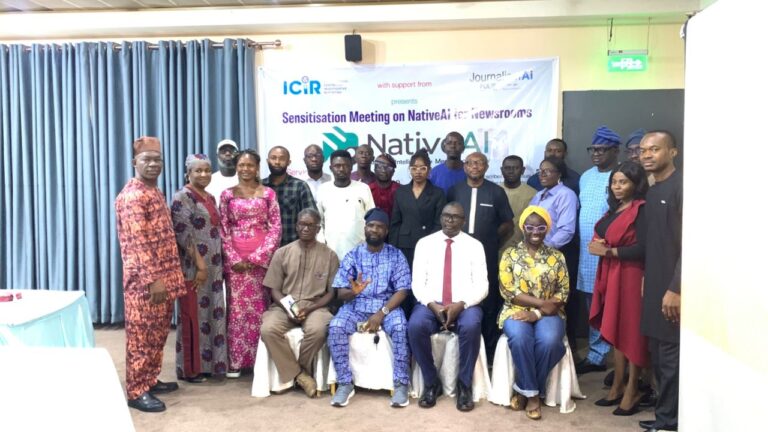
As part of its efforts to strengthen journalism through innovation and technology, the International Centre for Investigative Reporting (The ICIR) on Wednesday, October 29, held a sensitisation meeting for media professionals on the use of its new tool – NativeAI for newsrooms.
The tool is an indigenous artificial intelligence tool that supports transcription, translation, and accessibility in storytelling.
The meeting, held in Abuja, brought together journalists, editors, and media technologists to familiarise them with the product — a continuation of The ICIR’s commitment to helping journalists adapt to the changing digital landscape and enhance newsroom productivity.
Developed by The ICIR and unveiled in September at a webinar, the product is designed to help journalists and content creators transcribe audiovisual files, translate them into Nigeria’s major languages, and make media content more inclusive for diverse and hearing-impaired audiences.
Speaking at the event, the Executive Director of The ICIR, Dayo Aiyetan, noted that the organisation recognised the growing intersection between journalism and technology and the need for practitioners to embrace digital tools that make their work faster and more efficient.
“We invited not just journalists but also tech people from the media because journalism today is driven by technology “Native AI transcribes audiovisual files and translates them into Hausa, Yoruba, and Igbo. Eventually, we hope to cover more Nigerian languages,” he said.
Aiyetan explained that the tool emerged due to the challenges journalists face when manually transcribing lengthy interviews and translating local language recordings.
“At The ICIR, and even at our verification platform, The FactCheckHub, we had to pay people for translations. We thought why not build a tool that simplifies the work of journalists, researchers, and students by transcribing a one-hour video in just minutes?” Aiyetan stated.
Beyond streamlining newsroom tasks, Aiyetan said the tool also reflects The ICIR’s dedication to inclusion and accessibility. NativeAI was designed with the hearing-impaired community in mind, allowing users to upload audio files and have them transcribed or translated into text, he stated.
The programmes manager at The ICIR, Eunice Enoch, also described NativeAI as an indigenous innovation developed to make newsroom work more efficient.
She noted that the tool was designed to transcribe English audiovisual content, helping reporters save the long hours typically spent typing interviews manually.
“From the name itself — NativeAI — you can tell it’s something indigenous, something that is your own. It’s an AI-powered transcription tool developed by The ICIR to support journalists in their day-to-day newsroom workflows.
“Like most of you, The ICIR is a media organisation. We go to the field to conduct interviews and return to the newsroom to transcribe those conversations. After the stress of fieldwork, you still have to sit down, listen, pause, and type. It’s exhausting, and that was one of the reasons we developed NativeAI — to make that process easier.” Enoch explained.
Sharing a personal experience, she highlighted how tasking transcription could be while noting that NativeAI was developed to save journalists the long hours spent on manual transcription, allowing them to focus on deeper storytelling and investigative work, while also enhancing access to media content across Nigeria’s diverse linguistic and cultural landscape.
Senior Programmes Manager, Chukwudi Iwuoha, demonstrated how the platform works, explaining that users could either record directly on the platform or upload audio and video files for transcription and translation.
“When you upload a video, it extracts the audio and transcribes it. You can also upload an audio file or record directly. For now, the model supports English transcription, but translation into the three major Nigerian languages will be integrated soon,” Iwuoha explained.
Screenshot showing HOW TO USE the Native AI transcription tool on the website PC: Fatimah Quadri/The ICIR
He also assured participants of data safety, noting that the system runs on Google Cloud and does not retain user data.
“You don’t need to create an account; you simply use the platform and log out. Your data remains secure,” he stated.
Participants described the tool as a timely addition to Nigerian newsrooms. Editor of Pinnacle Daily, Sunday Michael Ogu, said Native AI could drastically reduce newsroom costs and improve turnaround time.
“Imagine spending one or two minutes to transcribe a 50-minute audio that would have taken four hours before; it increases efficiency and allows journalists to focus on storytelling,” he stated.
Assistant Editor at Dubawa, Lois Ugbede, lauded the tool’s ability to bridge Nigeria’s language divide.
“We’ve seen transcription tools before, but none that translates into our local languages. That’s what makes Native AI unique. Any newsroom that wants to evolve and make an impact should adopt it,” she said.
Editor of The Federal Radio Corporation of Nigeria (FRCN) online, Adeniyi Bakare, opined that the tool would make radio journalism faster and more efficient.
“It helps you extract inserts quickly and reduces the time spent replaying recordings,” he said, adding that “It’s a tool I’ll definitely recommend to my colleagues.”
The Chairman, Abuja Association of the Deaf, Ayoade Beyioku-Alase, commended the organisation for developing NativeAI, describing it as a valuable tool for improving accessibility.
She noted that the tool’s ability to transcribe and translate into major Nigerian languages such as Yoruba, Igbo, and Hausa could greatly benefit people with hearing impairments.
Beyioku-Alase encouraged further development of the technology to enable live translation, which, she said, would help deaf individuals follow conversations in real time and enhance inclusivity in communication.
The sensitisation meeting ended with a live demonstration of the platform and a call for journalists to continue embracing technology-driven innovations that enhance storytelling, inclusivity, and efficiency in the newsroom.
The Senate has confirmed the new service chiefs nominated by President Bola Tinubu after last Friday’s major reshuffle.
The Senate during plenary on Wednesday, October 29, confirmed Olufemi Oluyede, a lieutenant general, as Chief of Defence Staff, Wahidi Shaibu, a major general, as Chief of Army staff, Idi Abbas, a rear admiral, as Chief of Naval staff, and Kennedy Aneke, an air vice marshal, as Chief of Air Staff.
The confirmation came after a two-hour closed-door session during which senators grilled the nominees on their strategies for enhancing national security and reforming the armed forces.
Tinubu, in a letter he to the Senate on Monday, urged lawmakers to grant “expeditious consideration” to the nominees, after he held a closed-door meeting with the new service chiefs at the Presidential Villa in Abuja.
The Senate President, Godswill Akpabio, referred the president’s request to the Committee of the Whole for screening and confirmation, slated for Wednesday.
The ICIR reported that the president sacked Nigeria’s service chiefs and replaced them in a major shake-up of the nation’s security hierarchy on October 24.
Tinubu said the shake-up was “in furtherance of the efforts of the Federal Government to strengthen the national security architecture.”
He urged the new appointees to justify the trust placed in them by upholding professionalism, vigilance, and unity within the Armed Forces.
The administration expressed confidence that, once confirmed, the new appointments would strengthen inter-agency collaboration and enhance the fight against insurgency, banditry, and other security threats across the country.