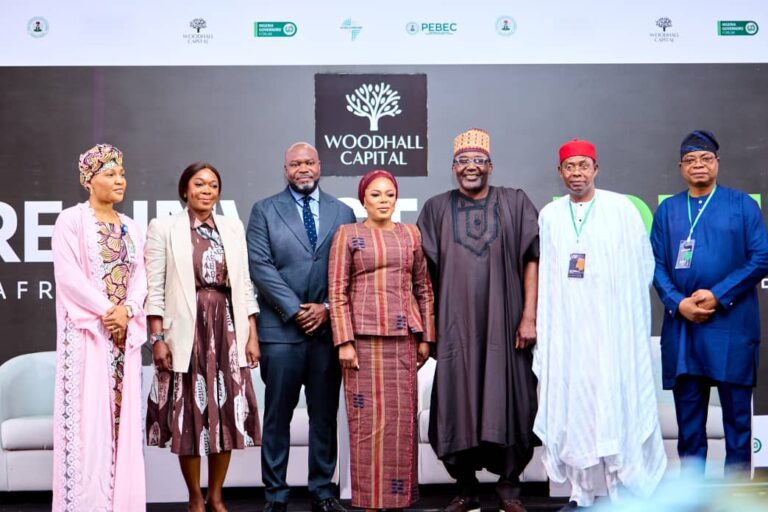
VICE PRESIDENT Kashim Shettima has urged state governments and other sub-national officials in the investment business to explore economic opportunities in intra-African trade, while focusing on the African Continental Free Trade Agreement (AFCTA).
The Vice President made the call on Friday, October 17, in Abuja, at an event organised by the Presidential Enabling Business Environment Council (PEBEC), Nigeria Governors Forum, Afreximbank and WoodHall Capital.
The event was themed: “Facilitating Intra-African Trade and Investment: Unlocking the Potential of African Direct Investments and Foreign Direct Investments for Sustainable Growth.”
Represented by Deputy Chief of Staff to the President -Office of the Vice President, Ibrahim Hassan Hadija, the Vice President decried the declining status of intra-African trade, which he said, “currently stands at 17 per cent.”
He urged the sub-nationals to utilise the market size of Nollywood, technology hubs and and the macro-economic reforms being embarked on by the current administration to grow their economy.
He said the sub-nationals had a strong role to play in intra-African trade, while urging them to also build regional power grids for electricity improvement, especially with the signing of the Electricity Act, 2023, by the President Bola Tinubu-led administration.
Earlier in her remarks, the Director-General of PEBEC, Zara Audu Mustapha, said the council was working closely with states to grow opportunities in Investments.
“African future lies in attracting investments and mobilising capital for African investments,” she said.
She added that closer economic ties between the federal and sub-national levels would strengthen opportunities for wealth creation in intra-African trade.
He further stated that the council was committed to removing bottlenecks in businesses and utilising reforms of the current administration to attract investment.
Also in her remarks, the President of Woodhall Capital, Mojisola Humponu-Wusu, reaffirmed the firm’s commitment to creating structured investment platforms that connect state-led development initiatives with domestic and international investors.
She noted that Africa’s growth story was increasingly subnational, and unlocking the potential of Nigerian states through strategic partnerships, policy alignment, and capital mobilisation, which she said was vital to achieving inclusive economic transformation.
The AfCFTA is Africa’s most ambitious economic integration project, bringing together 55 African Union (AU) member states into a single market. Officially launched in 2021, AfCFTA aims to boost intra-African trade, industrialisation, and economic diversification.
The agreement presents enormous economic opportunities with a market of 1.4 billion people and a combined gross domestic product GDP of $3.4 trillion.
However, challenges such as trade barriers, logistical inefficiencies, and currency differences hinder its full implementation.
The United States has issued a security alert to its citizens in Nigeria ahead of a planned #FreeNnamdiKanuNow protest expected to take place on Monday in the Federal Capital Territory (FCT).
In a statement posted on its website on Friday, the US Embassy in Nigeria warned that the planned protest could result in disruptions and possible outbreaks of violence.
“The US Embassy in Abuja informs US citizens that the Free Nnamdi Kanu Now protest has called for peaceful demonstrations on Monday, October 20th, 2025, in Abuja. There may be roadblocks, traffic congestion, and confrontations between police and protestors that could turn violent around Eagle Square and the Central Business District” the statement read.
The ICIR reports that the protest, tagged #FreeNnamdiKanuNow, was announced by activist and former African Action Congress (AAC) presidential candidate, Omoyele Sowore, on his X handle on October 9. It is expected to draw crowds to Eagle Square and the Central Business District.
Sowore announced that the protest would hold on October 20 at 7 am, and protesters would march toward the Aso Rock Presidential Villa. He described it as a ‘historic’ and peaceful rally demanding the release of Nnamdi Kanu, leader of the proscribed Indigenous People of Biafra (IPOB).
In its latest advisory, the US Embassy urged American citizens to avoid areas where the protest may occur and to restrict their movement within the city.
“The Embassy advises all US citizens to avoid this area and to severely limit all movement throughout the city on Monday, October 20th,” the statement stated.
The Embassy also advised that children remain at home from school and that domestic staff commuting from outside Abuja should not report to work on that day.
It also warned Americans in Nigeria to take heightened security precautions.
The Embassy further urged US citizens to stay updated through local news, maintain a low profile, and remain vigilant in public spaces, including shopping malls, cinemas, and places of worship.
“Review your personal security plans and keep your cell phone charged in case of emergency,” the embassy urged.
The ICIRreported that Kanu, who is currently facing terrorism charges at the Federal High Court in Abuja, has been in custody since June 2021 following his controversial extradition from Kenya.
His trial had been marked by repeated adjournments, judicial recusals, and controversies surrounding his detention conditions. In 2022, the Court of Appeal discharged and acquitted him, ruling that his rendition from Kenya violated international law. However, the Supreme Court later ordered the resumption of his trial in 2023.
THE Federal Capital Territory (FCT) Police Command has announced the resumption of duty of its new Commissioner, Dantawaye Miller.
Miller is the 34th commissioner of police for the FCT, and the sixth to lead the city’s policing since December 2022.
Miller took over from Ajao Adewale, who has been redeployed by the Inspector General of Police, Kayode Egbetokun.
According to a statement by the Command’s spokesperson, Josephine Adeh, the new police chief resumed duty on Friday, October 17, pledging to consolidate existing security frameworks and strengthen community-police partnerships to ensure the safety of residents.
Born on October 15, 1971, in Afogo, Kajuru Local Government Area of Kaduna State, Miller joined the Nigeria Police Force as a Cadet Assistant Superintendent in May 2000. He holds degrees in International Studies from Ahmadu Bello University, Zaria, and the University of Ilorin, as well as a diploma in Business Administration from Kaduna State Polytechnic.
Over the years, he has served in various operational and command capacities, including Divisional Crime Officer in Yenagoa, Escort Commander to a former Vice President, Commanding Officer of the Mobile Police Force (MOPOL) at the Presidential Villa, and Commissioner of Police in charge of Information Technology at Force Headquarters. Before his latest posting, he was the Commissioner of Police in Kogi State.
A seasoned officer with over two decades of service, Miller has attended several local and international courses on combat operations, counterterrorism, and leadership. He is an Associate Member of the Nigerian Institute of Public Relations and a member of Rotary International.
Miller’s appointment comes at a time of heightened security concerns in the FCT, where residents have faced persistent threats from kidnappers, “one-chance” syndicates, and scavenger-linked gangs, particularly in Bwari, Kuje, Mpape, and Chikakore.
The ICIR reported rising insecurity in these areas despite previous police crackdowns and multiple directives from the FCT Minister, Nyesom Wike, to local council chairpersons to adopt more proactive measures.
On Monday, September 29, ARISE News confirmedthe death of its anchor, reporter, and producer, Somtochukwu Christelle Maduagwu, who was killed during an armed robbery at her residence in Katampe, Abuja.
In a statement signed by Hadiza Usman-Ajayi, on behalf of the station’s management, ARISE News expressed shock over the tragedy, describing her as “a vibrant voice that engaged and connected with our viewers.”
Her death adds to a string of violent crimes that have unsettled Abuja in recent months.
An ICIRreport in August detailed how the capital had been grappling with recurring cases of robberies, kidnappings, cult clashes, and one-chance attacks, despite police claims of improved security.
In Katampe and neighbouring Mpape, residents have long complained of being under siege from armed robbers, with reports of midnight invasions and violent street attacks.
In recent months, the outgoing police commissioner, Adewale, intensified efforts to curb insecurity through intelligence-driven operations. On October 7, Adewale ordered a renewed clampdown on uncompleted buildings and criminal hideouts across Abuja, while reiterating the ban on scavenging activities.
Despite such measures, investigations by The ICIR revealed that scavengers continued to operate across major districts, including Kubwa, Lugbe, and Jahi, often contributing to petty crimes and assaults.
The new FCT police commissioner has urged residents to support law enforcement by providing timely information and cooperate with the police to sustain peace across the capital.
The new commissioner said security is a shared responsibility. He also called on all residents to work closely with the police to ensure a safer FCT.
The ICIR reports that he is the sixth police commissioner for the FCT since December 2022.
The Police authority appointed Sadiq Abubakar on December 23, 2022, as the commissioner for the nation’s capital. He was succeeded by Haruna Garba on May 2, 2023.
On January 31, 2024, another commissioner, Benneth Igwe was named as the new commissioner for the nation’s capital.
He was replaced by Tunji Disu who was appointed on October 7, 2024. On March 26, 2025, Disu was redeployed and replaced by Ajao Adewale.
DIGITAL literacy is the ability to use digital tools and technologies effectively, safely and responsibly. This includes the use of smartphones and devices, navigating the internet and exploring coding basics.
In an era where digital literacy is more important than ever, it’s essential to understand how young children perceive computing concepts.
As a computer science education researcher, I led a team of researchers to study young children’s ideas about computing in an African setting. Our recent study sheds light on how children aged five to eight in Nigeria think about computing, including computers, the internet, coding and artificial intelligence (AI).
While most children were familiar with computers and had some idea of the internet, coding and AI were largely unfamiliar or misunderstood. The children’s understanding was shaped by what they observed at home, school and through the media.
This kind of research matters because early digital literacy prepares children for future learning and careers. In African countries, studies like this highlight the urgent need to bridge the digital divide – the wide variation in access and exposure to technology. Without early and inclusive computing education, many children risk being left behind in a world where digital skills are essential. They are crucial not just for the jobs of tomorrow, but for full participation in society.
The study approach
The study took place in two socio-economically distinct communities in Ibadan, Nigeria. It offers valuable insights into how concepts and ideas are formed in relation to understanding technology.
This research chose a small group of children for an in-depth study, rather than a huge sample. Using a “draw-and-talk” method, the researchers asked 12 children to draw what they believed computers, the internet, code and AI looked like.
Artificial intelligence is when machines act smart, like answering questions or recognising faces. Coding is writing instructions that tell computers what to do. The internet is a global network that lets people connect, share and learn online.
These drawings were followed by interviews to explore the children’s thoughts and experiences. This method revealed not only what the children knew but how they formed their ideas.
What children know and don’t know about computing
The study found that most children were familiar with computers, often describing them as resembling televisions or typewriters. This comparison highlights how children relate new concepts to familiar objects in their environment. But their understanding was largely limited to what computers looked like. They had little awareness of internal components or functions beyond “pressing” keys.
When it came to the internet, children’s conceptions were more abstract. Many associated the internet with actions like watching videos or sending messages. This was often based on observing their parents using smartphones. Few could say what the internet actually was or how it worked. This suggests that children’s understanding is shaped more by observed behaviours than formal instruction.
Coding and AI were even less understood. Most of the children had never heard of coding. Those who had offered vague or incorrect definitions, such as associating “code” with television programmes or numbers. Similarly, AI was a foreign concept to nearly all participants. Only two children offered rudimentary explanations based on media exposure, such as robots or voice assistants like Google.
Children’s misconceptions about computers, coding and AI reflect limited exposure and are consistent across different cultural contexts in Nigeria and outside Nigeria. They highlight the need for hands-on programming education and tailored learning models.
This study was based on a prior study conducted in Finland, and the results also have similarities with other studies.
The role of language and environment
A key finding of the study is the influence of socio-economic status and language on children’s understanding. Children from the higher-income community generally had more exposure to digital devices and could express slightly more informed views, especially about the internet.
In contrast, children from the lower-income community had limited access. They struggled to express their ideas, particularly when computing terms lacked equivalents in their native language, Yoruba.
This language barrier underscores a broader challenge in computing education in Africa. There are few culturally and linguistically appropriate teaching materials. Without localised terminology or relatable examples, children may struggle to grasp abstract computing concepts.
Implications for education and policy
The study’s findings have implications for educators, curriculum developers and policymakers. First, they highlight the need to introduce computing concepts like coding and AI at earlier stages of education.
While many African countries, including Nigeria, Ghana and South Africa, have begun integrating computing into school curricula, the focus remains on basic computer literacy. There’s little emphasis on programming or emerging technologies.
Second, the research emphasises the importance of informal learning environments. Children’s conceptions were largely shaped by interactions at home and in their communities. It seems parents, guardians and media play a big role in early digital education.
Initiatives like after-school coding clubs, community tech hubs and parent-focused digital literacy programmes could help bridge the gap.
Finally, the study calls for a more inclusive and equitable approach to computing education. Children from lower socio-economic backgrounds must be given equal opportunities to use technology. This includes not only access to devices but also exposure to meaningful learning experiences that foster curiosity and understanding.
Building a digitally inclusive future
As the digital divide continues to shape educational outcomes globally, studies like this one provide a roadmap for more inclusive computing education. Educators and policymakers can design interventions that are developmentally appropriate, culturally relevant and socially equitable.
The future of computing in Africa depends not just on infrastructure and policy but on nurturing the next generation’s curiosity and creativity. And that journey begins with listening to how children see the digital world around them.
ACTION Aid Nigeria has said five million in Borno, Adamawa, and Yobe face acute food insecurity in Nigeria while the United Nations Development Programme (UNDP) has reminded governments and stakeholders of the need to uphold the dignity of every family, on October 17 in commemoration of the World Poverty Day with the theme: Ending social and institutional maltreatment by ensuring respect and effective support for families.
Country Director of Action Aid Nigeria, Andrew Mamedu, spoke in commemoration of World Food Day 2025 which was October 16 with the theme: “Hand in Hand for Better Food and a Better Future.”
He said the situation is a deep humanitarian crisis driven by insecurity, climate change, and widespread poverty in the country.
Citing the FAO, he noted that about 30.6 million Nigerians across 26 states and the FCT were projected to face acute food and nutrition insecurity during the June and August 2025 lean season.
Although this reflects a slight improvement from the 33.1 million recorded in 2024, Mamedu cautioned that Nigeria still ranks as the country with the highest number of food-insecure people in the world.
He added that hunger hotspots expands beyond Northeast to Plateau, Benue, Kaduna, Kwara, Taraba, and Cross River, where economic shocks, conflict, and displacement worsens food crises because of the recurrent attacks and clashes that have kept farmers out of farms, leading to poor production of yam, maize, rice, and others.
While blaming the persistent food inflation, at 21.87 per cent in August, leaving many unable to eat good diets, Action aid Nigeria warned that the world Bank data means that even when food is available, millions cannot afford it.
ActionAid also highlighted alarming levels of malnutrition, pointing to reports that 652 children died from malnutrition in Katsina State in the first half of 2025. Nationwide, malnutrition accounts for 45 percent of all under-five deaths, with more than 2 million children suffering from severe acute malnutrition.
The ICIR reports have shown that the immediate effect of these conflicts are, missed planting and harvest seasons, leading to large yield losses, and markets break down. Farmers can’t sell what remains or buy inputs because buyers avoid insecure roads, leading to tight food supply across the country.
The ICIR reported earlier this week that in Kano State, rising food prices fuel malnutrition crisis among nursing mothers, children.
Experts have said that chronic food insecurity increases rates of acute and chronic malnutrition, especially among children and pregnant or nursing women.
Malnutrition lowers children’s cognitive development and school attendance, and reduces adults’ physical capacity to farm, fish, or do manual trades.
World poverty day
UNDP revealed it its 2025 Global Multidimensional Poverty Index (MPI) in collaboration with the Oxford Poverty and Human Development Initiative that nearly 80 per cent of the world’s multidimensionally poor people, meaning that 887 million individuals now live in areas exposed to at least one major climate hazard, like high heat, drought, floods, or air pollution. Some 650 million poor people face two or more hazards at the same time.
In Nigeria’s 2022 Multidimensional Poverty Index (MPI), a staggering 133 million people, which is about 63 per cent of the population, are classified as multidimensionally poor.
UNDP, MPI is built using 15 indicators grouped into four dimensions, which are health, education, living standards, work and shocks, to carry equal weight and a household or individual is considered “multidimensionally poor” if they are deprived of a certain share of those indicators.
World Bank recently warned that the Nigeria risks losing reform gains if they fail to translate into tangible improvements revealing that 139 million Nigerians live below the poverty line.
Nigeria’s healthcare system indicators remain poor compared to global averages, despite improvements in some areas like life expectancy and a reduction in under-five mortality.
Many regions in Nigeria still struggle with critical factors that directly affect health outcomes like, unsafe cooking fuel, poor sanitation, and unreliable water supply.
The ICIRreported how government neglect fuels maternal deaths, sexual violence in Plateau State community and how Niger communities rely on untrained Traditional Birth Attendants.
These stories reflect the situation citizens, especially women and children, are facing in several communities across the country.
Data revealed that Nigeria has an under-five mortality rate of 102 per 1,000 live births according to a 2023-24 survey and high rates of malnutrition.
The ICIRreported how low pay, high rents shut out Abuja journalists, reflecting the condition of other practitioners across the country.
While over many houses in Abuja sat empty, nearly two million residents were struggling with homelessness.
According to the United Nations Children’s Fund (UNICEF) Nigeria has one of the world’s largest populations of out-of-school children, with about 10.5 million children aged 5-14 not in school, and lower attendance rates in the north, particularly for girls.
Policy approaches that break the cycle
In his latest remark, Action Aid Nigeria Country Director urged state governments to fully release agricultural capital funds, lamenting that many states have implemented only about 25 per cent of their approved agricultural budgets despite widespread hunger and livelihood challenges.
He insisted that hunger and poverty are not just statistics, they are lived realities for millions of Nigerians.
According to the World Bank, to protect productive assets and access to land, adapting localised protection corridors strategy, negotiated access, or cash-for-work to rehabilitate fields and infrastructure so planting can resume.
World Food Programme suggests that combining immediate food and nutrition support with resilience though emergency rations and therapeutic feeding agricultural inputs like seeds, tools and conditional cash transfers so households can replant are some strategies that will work.
Experts also suggest restoring markets and value chains, noting that this will protect trade routes, support local traders with logistics and credit, and rebuild storage to stabilize prices.
UNICEF has urged the government to invest in health, WASH and school feeding, keep clinics and schools functioning in insecure areas to protect human capital.
It also added to facilitate local peacebuilding and conflict prevention, mediate land access, strengthen local dispute resolution, and address root drivers so that agriculture can restart sustainably.
Poverty in Nigeria is not a single weak link, it is a chain of interlocking deprivations but effective national response must break multiple links at once, not just one.
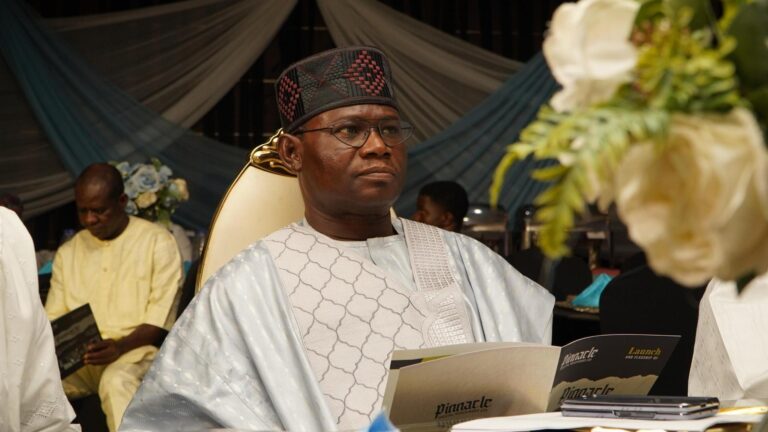
IT is a great honour and privilege to stand before you today at this landmark event which is the official launch of Pinnacle Daily.
The emergence of a new newspaper in the media landscape is always worth praising, but it becomes even more significant when the medium is born into a rapidly changing digital world.
I have been part of the Nigerian media journey for nearly three decades, and I can confidently say there has never been a more exciting and challenging time for our industry than now.
Allow me, therefore, to share a few reflections on the past, present, and future of the media business, particularly as it relates to the new media in our environment.
Transformation from print to online
To understand where we are today, we must remember where we came from.
The story of the newspaper is the story of information itself; from the first printed pages in Europe in the 1660s to pioneering Nigerian titles like the West African Pilot and Daily Times, which shaped public opinion during the colonial and independence eras. For most of the 20th century, newspapers ruled unchallenged. They were the heartbeat of democracy, the watchdogs of government, and the principal platforms for public discourse.
Revenue was predictable: cover price sales and advertisements sustained the newsroom. Newspapers printed high circulation figures, operated multiple presses, and deployed distribution vehicles across the country. Readers waited until morning for the news, and journalists had 24 hours to tell their stories.
But the world changed -and so did the news business.
Over the last two decades, and especially in Nigeria more recently, the internet, mobile phones, and social media have rewritten the rules of media operations. Information now moves at the speed of light. Readers no longer wait for tomorrow’s paper; they want breaking news, analysis, video, commentary, and conversations in real time. It has become necessary for everyone in the media to evolve or risk going to the oblivion.
Permit me to illustrate this evolution with a story close to my heart — the Daily Trust story.
When we founded Media Trust in 1996, we began as a media communications company. Two years later, we launched the weekly Trust which was modest but ambitious in vision. It aimed to become a credible, independent, and respectable regional platform. From there, we expanded to daily titles, first publishing five days a week, then eventually seven in a gradual process that took about five years.
Isiaq Ajibola, Former MD of Daily Trust newspaper and author of the book: Journalism and Business: My Newspaper Odyssey delivers keynote adrress during the official launch of the ‘Pinnacle Daily’ in Abuja.
We had no manual of operations, nor enough capital to buy a printing press. What we had was commitment and top-level managerial involvement that built the editorial and business systems and structure.
Over the years, we developed a strong brand across Nigeria. But like many print organisations, we eventually faced a hard truth; digital was the future.
Rather than resist, we embraced it, though not without a struggle. We invested in digital infrastructure, online editorial teams, and a fairly strong social media presence.
Our business experience had already taught us the need for multiple revenue streams beyond traditional advertising. So we created event-based programmes like the Daily Trust Dialogue, launched special projects and specialised publications that enhanced our brand and created sustainable income lines. We went on to establish Trust TV and Trust Radio, optimising digital platforms to deliver both text and video content.
Today, Daily Trust reaches millions of readers online far beyond the physical limits of print circulation. That evolution was necessary. And it offers valuable lessons for new entrants like Pinnacle Daily.
The Economics of new rules and new models
The shift from print to digital has transformed the traditional media business model. Yet, it has also opened new revenue opportunities. Here are highlights a few models.
Digital advertising
Apart from the primary advertising in the hard copy which still form the significant part of revenue for newspapers ,digital ads is now mostly data-driven and personalised. Most newspapers run display ads online which are purchased through platforms like Google Ads allowing advertisers to reach readers based on demographics, interests, and browsing history — whether they are shopping for cars, furniture or following politics.
Similarly, native advertising blends seamlessly with editorial content. These are sponsored stories written in the same tone and style as news articles but paid for by brands. For example, a bank might sponsor a “Financial Literacy” debate or campaign, or a telecom company might support a “Digital Future” column.
Subscription and premium content
With declining advertising revenue, many newspapers now charge readers for quality journalism. Subscription models require payment for premium content ; investigative reports, deep analysis, or expert opinion pieces.
The New York Times has been variously quoted as making a remarkable success of this model. In Nigeria, platforms like Premium Times and BusinessDay are advertising for it and i believe they are generating some income on it.
Events and conferences
Newspapers can leverage their credibility to create events and products e.g hosting conferences, summits, or webinars on key issues like business, technology, education, or governance.
Thisday ,Leadership newspaper and, Business Day are very good in creating events
Brand partnerships and co-created campaigns
Media houses are increasingly becoming strategic partners to brands, NGOs, and government agencies. These partnerships involve co-creating content campaigns, investigative series, or multimedia storytelling to amplify causes or creating awareness.
For example, a newspaper might collaborate with UNICEF on a child-education awareness campaign, producing articles, videos, and infographics — all funded by the NGO.
Closely related, though not a direct revenue model, are grants. Many media organisations receive grants to pursue public service journalism. For instance, the Daily Trust Foundation received funding from the MacArthur Foundation to support investigative journalism training.
Each of these models shows that innovation and audience understanding are at the heart of profitability.
L–R: Abimbola Adeseyoju, CEO and Founder of DataPro Nigeria; Isiaq Ajibola, former Managing Director of Daily Trust Newspaper; and Farouk Lawan, former Minority Leader of the House of Representatives, during the official launch of Pinnacle Daily in Abuja.
People, technology, and profitability
As Pinnacle Daily steps into this competitive space, adopting new revenue models is part of the journey. Sustainable revenue depends on how well you build your people, deploy technology, and manage profitability itself.
Three classifications that must be made in this regards are;
Human Capital Readiness. Building a lean, smart, multi-skilled team is it.
In today’s media business, small teams with the right skills often outperform some large organisations. Pinnacle Daily must invest in good journalists, multimedia producers, social media experts and data reporters who can distribute stories across platforms and constantly guage audience needs.
Beyond the newsroom, business-focused personnel are essential. content monetisation specialists, event managers, and subscription growth strategists all of whom directly drive revenue must be hired. A lean, cross-functional team of fewer than 15 people in the early phase can often deliver more impact than a larger, less focused workforce.
Technology Capital Readiness; building for scalability and innovation
Your technology is the invisible engine behind your success. A modern newsroom requires a flexible, SEO-optimised Content Management System (CMS) to ensure stories rank high on Google, are published quickly in multiple formats (text, video, podcast), and can integrate seamlessly with newsletters, social platforms, and apps.
Your Customer Relationship Management (CRM) and payment systems must also be technology-driven. Invest in seamless payment gateways like Paystack or Flutterwave, and prioritise automation and renewals. Most importantly, build for mobile first — over 85% of Nigerian audiences consume news via smartphones.
Accounting for Profit – measure, measure, and optimise!
Profitability must be tracked and deliberately managed. Break down your revenue streams into categories ;advertising, subscriptions, events, branded partnerships and monitor each one’s performance regularly.
Control costs by classifying them into content production, technology, marketing, and overheads. Then track key business parameters such as: Customer Acquisition Cost (CAC): The total cost of acquiring a new paying customer.
Example: If you spend ₦5 million on advertising and logistics to attract 1,000 subscribers, your CAC is ₦5,000.
Revenue per Thousand Views (RPM): This may be harder to calculate, but it helps you identify which parts of your business are most profitable and where to focus resources.
Above all, remember: “If you can measure it, you can manage it — and if you can manage it, you can monetise it.”
And never forget that credibility itself is money. The more trust you build with your readers, the more likely they are to pay for your value proposition or recommend your platform to others.
Distinguished guests,
The journey from hard-copy newspapers to online platforms is more than a technological shift. It is a revolution in how we create, distribute, and monetise information. It challenges us to rethink journalism as a social responsibility and a business.
Yet, one truth remains; quality content, credibility and professionalism, will always command true value.
If Pinnacle Daily combines this principle with innovation, smart technology, and sound financial discipline, it will not only survive ,it will thrive.
As you embark on this journey, I urge you to dream boldly, innovate fearlessly, and above all, keep business motivation at the heart of your operations. The future of media in Nigeria and indeed, the world will be written by those who dare to adapt.
Thank you for listening, and once again, congratulations to the Pinnacle Daily team.
– Being text of keynote address delivered by Isiaq Ajibola, Co-Founder, former MD of Daily Trust newspaper and author of the book: Journalism and Business: My Newspaper Odyssey during the official launch of the ‘Pinnacle Daily’ in Abuja.
WOMEN Deliver has announced media scholarships for journalists and creators worldwide to attend and report its 2026 conference.
The group announced this in a statement on its website, noting that the 2026 conference would focus on feminist leadership, lived experience, and first nations advocacy across the Oceanic Pacific and beyond.
“The scholarships will cover full conference registration, airfare, hotel accommodation, visa fees, per diems, and travel insurance, ensuring equitable participation for storytellers who might otherwise be unable to attend,” it read.
The ICIRreports that The Women Deliver 2026 Conference is expected to take place from 27–30 April 2026 in Narrm, Melbourne, Australia and attract global feminist voices to shape policy, strengthen accountability, and spotlight the leadership of women, girls, and gender-diverse people.
Applications open from 15 September 2025 to close on 31 October 2025, with successful applicants notified by November 2025.
“What the scholarship covers: full conference registration, hotel accommodation during the Conference (26-30 April, 2026), roundtrip economy airfare, visa fees and related costs, epr diems to cover local transportation and daily meals, travel insurance,” part of the statement read.
It explained that eligible applicants include reporters, editors, producers, photojournalists, videographers, podcasters, and digital content creators with a focus on factual coverage of social issues. Freelancers are also encouraged to apply with a commissioning letter.
“Priority will be given to first nations and indigenous journalists, LGBTQIA+ persons, people with disabilities, refugees and internally displaced persons, and those from under-resourced communities.
“Early-career media professionals and applicants who have not previously received a Women Deliver scholarship are also strongly encouraged to apply,” it added.
The statement highlighted that scholarship recipients would be expected to actively participate in conference sessions and media briefings, produce and share coverage of the event, and adhere to the WD2026 code of conduct.
For more information and to apply, visit Women Deliver’s website
THE Canada Excellence Research Chair in Migration and Integration (CERC Migration) has announced the opening of applications for its 2026 CERC Migration and Bridging Divides Journalism Fellowship Programme, offering journalists an opportunity to deepen their understanding of global migration and integration issues.
The fellowship, hosted by the Toronto Metropolitan University, aims to build stronger connections between journalists, researchers, and stakeholders working on migration. It also seeks to promote the communication of evidence-based knowledge and foster collaboration that bridges the gap between research and public understanding.
Successful fellows will participate in a one-month residency in Toronto between March 1 and November 30, 2026 (excluding July and August). During this period, they will undertake an independent field research project and engage with an expert network of Canadian and international migration scholars.
Each fellow will receive a CAD$5,000 stipend, which includes travel and living expenses.
Applicants are expected to have at least five years of professional media experience, with a demonstrated record of reporting on complex, internationally focused issues.
The application deadline is November 1, 2025, while successful candidates will be notified by January 2026.
The programme offers participants access to advanced research resources and opportunities to collaborate on stories that highlight the human, social, and policy dimensions of migration.
MEDIA Rights Agenda (MRA) has condemned the Independent National Electoral Commission (INEC) for demanding over N1.5 billion to provide a copy of Nigeria’s National Register of Voters and list of polling units.
The organisation described the move as an attempt to frustrate a legitimate Freedom of Information (FOI) request and undermine transparency.
In a statement on Thursday, October 16, MRA’s Executive Director, Edetaen Ojo, said the Commission’s action amounted to a “blatant attempt to weaponise cost as a tool for denying access to vital public information.”
According to Ojo, the National Register of Voters and the list of polling units are one of the most essential public records needed by stakeholders to effectively monitor the electoral process.
He noted that by “placing such a colossal financial barrier in the way of a requester, INEC is deliberately hindering the public’s right and ability to scrutinise its operations, thereby compromising transparency and avoiding accountability.”
The organisation said its reaction followed INEC’s response, dated October 13, 2025, to a request filed five days earlier by V-C Ottackpukpu & Associates, a law firm.
In the letter signed by the Secretary to the Commission, Rose Oriaran-Anthony, INEC demanded N1,505,901,750.00 as the cost of producing the requested documents.
Ojo described the charge as excessive, prohibitive, and a clear violation of the spirit and letter of the FOI Act, citing Section 8(1) of the Act, which limits fees to “standard charges for document duplication and transcription.
“The staggering amount of over N1.5 billion cannot be a standard charge for duplication and is a clear and deliberate attempt to make public data inaccessible to the public. This is an affront to transparency and democratic accountability,” he said.
He recalled that former Attorney-General of the Federation, Mr. Mohammed Adoke, a senior advocate, had issued Guidelines for the Implementation of the FOI Act, capping photocopying and printing charges at N10 per page.
Ojo argued that even if Nigeria’s 93,469,008 registered voters and 176,846 polling units were to be duplicated, the number of pages could not justify the N1.5 billion cost at the legally permissible rate.
He further cited the African Commission on Human and Peoples’ Rights’ Guidelines on Access to Information and Elections in Africa adopted in 2017, which require election management bodies to proactively disclose key electoral information, including the voters’ roll.
He warned that INEC’s response sent a worrying signal about its commitment to transparency, saying the Commission appeared to be prioritizing bureaucracy and profit over its constitutional and statutory obligations to the Nigerian people.
Ojo called on INEC to immediately cancel the fee and provide the requested information free of charge or in strict compliance with the FOI Act and the former Attorney-General’s guidelines.
“The primary objective of the FOI Act is to make public records and information freely available. If allowed to stand, this action by INEC sets a dangerous precedent, which will encourage other government agencies to impose exorbitant fees, effectively nullifying the gains of the FOI Act and rolling back this transparency initiative in Nigeria,” he warned.
THE British High Commission has reaffirmed its commitment to deepening Nigeria’s democracy.
The British High Commissioner, Richard Montgomery, stated this on Thursday, October 16, after engaging with key stakeholders during a two-day visit to Awka, Anambra State, ahead of the state’s governorship election scheduled for 8 November 2025.
According to a statement mailed to The ICIR by the commission, Montgomery said, “The UK supports Nigeria in conducting democratic contests in accordance with Nigerian law and the constitution.”
He emphasised that the United Kingdom would not endorse any candidate or political party but remained focused on supporting the electoral process.
He explained that he met with the Anambra State Governor Charles Soludo, other governorship candidates, the Independent National Electoral Commission (INEC) Resident Electoral Commissioner, the State Commissioner of Police, and civil society representatives to discuss the technical and logistical arrangements for the upcoming poll.
“Our focus is solely on the electoral process itself – that it should be transparent, peaceful, inclusive and enjoy the confidence of the Anambra people. We do not endorse any particular candidate or political party,” the statement quoted him to have said.
The statement noted that discussions focused on technical and logistical preparations for managing 5,720 polling units across the state, the security situation in its 21 local government areas, factors that could influence voter turnout, and plans for monitoring the electoral process and polling day activities.
He encouraged all eligible voters to exercise their democratic rights and to engage peacefully in the election.
Reinforcing that violence has no place in the democratic process and that peaceful conduct benefits all stakeholders, Montgomery said that the United Kingdom remained committed to its partnership with Nigeria in supporting good governance, democratic institutions, and peaceful electoral processes across all levels of government.