Home Blog Page 156

Senate confirms Joash Amupitan as INEC chairman

0

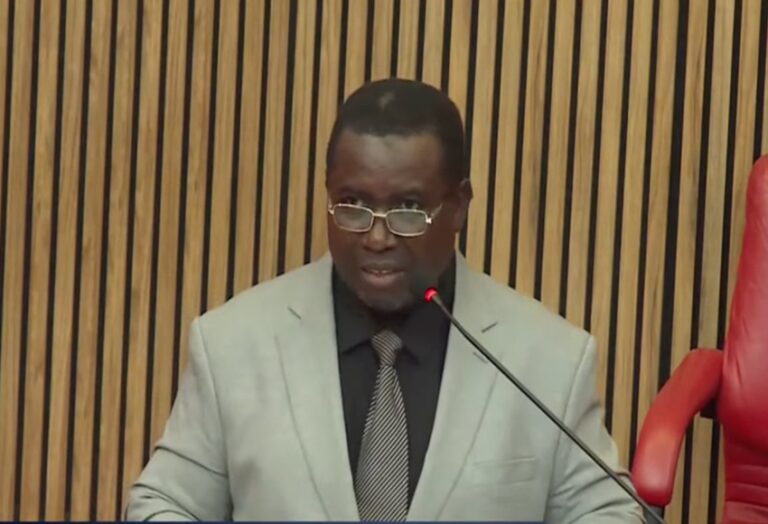
The Senate has confirmed Joash Ojo Amupitan, a senior advocate, as the Chairman of the Independent National Electoral Commission (INEC).

Amupitan’s confirmation followed his screening at the Senate on Thursday, October 16, where lawmakers took turns to grill him.

In his submissions, Amupitan vowed to ensure INEC’s independence.

He also pledged to undertake a comprehensive audit of the Commission’s operations, with a focus on logistics failures recorded during the 2023 general elections.

He said the review would identify operational challenges that affect the conduct of elections and help restore public confidence in the electoral system.

He told the lawmakers that part of the audit would involve examining what went wrong with the INEC Result Viewing Portal (IReV) during the 2023 presidential election. “We must find out what happened and why the confidence of many Nigerians was shaken,” he said.

Citing a Supreme Court judgment, Amupitan explained that the IReV platform was not part of the official result collation system of the Commission. “The purpose of introducing BVAS and IReV was to ensure election integrity. A lot of people thought IReV was part of collation, but the Supreme Court has clarified that it is not,” he noted.

He assured the Senate that he would strengthen the use of technology and logistics management within the Commission.

“My wife served as a collection officer. I had to bring a generator to assist because there was no light. If we want to do it well, we must provide the necessary logistics and transport support,” he said.

Amupitan also called for the establishment of an electoral offences commission to handle cases of malpractice, stating that “INEC does not currently have the capacity to investigate and prosecute offenders.”

After the Committee of the Whole, the President of the Senate, Godswill Akpabio, asked if the confirmation was a true reflection of the House, and the ‘ayes’ had it.

Akpabio said he was approved without any dissenting voice and challenged him to discharge his duty conscientiously.

Earlier, Akpabio announced that Amupitan had been cleared by the National Security Adviser, the State Security Services (SSS), and the Inspector-General of Police, who confirmed that he had no criminal record.

Akpabio, while welcoming the nominee and his family to the chamber, recalled his experience during the 2019 elections, saying, “I was cheated in the election, and we went to court. The court annulled the result and ordered prosecution of the electoral officer, but instead of prosecuting the INEC commissioner, they prosecuted the returning officer.”

The Senate Leader, Opeyemi Bamidele (APC, Ekiti Central), had earlier moved that Order 12 be suspended to admit the nominee and his entourage into the chamber. The motion was seconded by the Minority Leader, Abba Moro (PDP, Benue South). Amupitan was accompanied by Kogi State Governor Ahmed Ododo and senior officials from the University of Jos, including the vice chancellor.

President Bola Tinubu had on Tuesday, October 14, transmitted Amupitan’s name to the Senate for confirmation, following the approval of the National Council of State during its meeting at the Presidential Villa. The Council, chaired by the president, described Amupitan as a man of integrity and experience.

Amupitan succeeds Mahmood Yakubu, who stepped down on October 7 after completing a decade-long tenure marked by major electoral reforms, including BVAS) and IReV portal.

The ICIR reported that despite these reforms, the 2023 general elections were marred by widespread logistical challenges, poor result transmission, and low public trust in the Commission’s processes. Election observers and civil society organisations have repeatedly called for institutional restructuring and accountability within INEC.

Amupitan, a professor of Law at the University of Jos and former Dean of its Faculty of Law, hails from Ayetoro Gbede in Ijumu Local Government Area of Kogi State. He has over three decades of experience in academia and legal practice, specialising in constitutional, company, and corporate governance law.

Sultan calls for regulation of social media to curb abuse

0

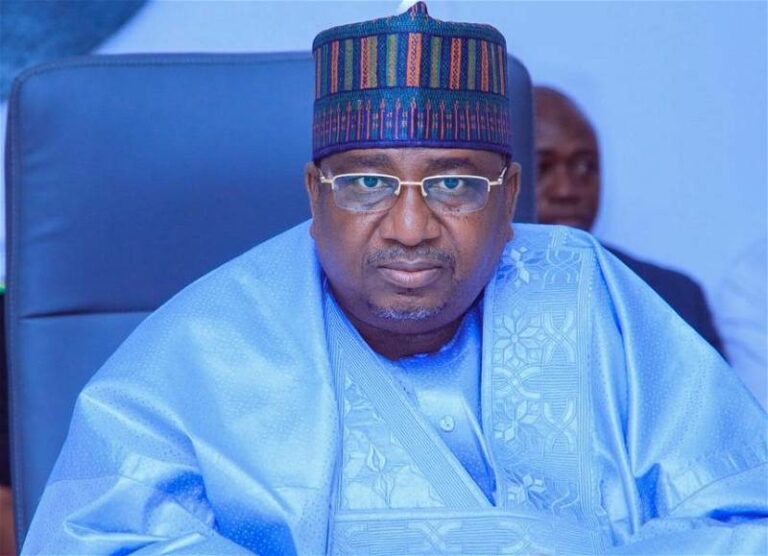
THE Sultan of Sokoto, Sa’ad Abubakar III, has urged the Federal Government to introduce stronger regulations on social media use in Nigeria, citing its growing abuse and potential threat to national peace and unity.

Represented by the Emir of Zazzau, Ahmad Nuhu Bamalli, the Sultan made the call during the Northern Ulamah Summit on insecurity and socioeconomic challenges, organised by the Congregation of Northern Ulamas in Kaduna.

He expressed concern that social media had increasingly become a platform for insults, misinformation, and incitement, even among scholars, warning that the trend undermined social harmony and respect.

“Anyone can wake up, pick up their phone, and insult anyone, be it a respected individual, a leader, your neighbour, or even a family member. There are no laws, no consequences, and no one to challenge this behaviour,” he was quoted to have said.

He also added that “in other countries, social media is regulated. If someone posts something that causes division or incites unrest, they can be traced and punished. This is how it should be done in our country.”

On his part, the President of the Supreme Council for Sharia in Nigeria, Bashir Aliyu Umar, said the gathering aimed to strengthen unity and develop practical solutions to the region’s challenges.

He also warned that the spread of misinformation through social media had become a major driver of conflict and distrust.

He urged Nigerians to use digital platforms responsibly and constructively to support government efforts in addressing insecurity.

On his part, the senator representing Kano South Senatorial District, Kawu Samaila, reacted to international allegations of religious persecution in Nigeria, describing them as baseless.

“Claims of genocide against Christians in Nigeria are false. Even Christian lawmakers in the Senate have dismissed those allegations, affirming that Muslims and Christians live peacefully in this country,” he said.

He further urged Islamic scholars to verify information before making public statements, especially when discussing political or sensitive national issues.

Their comments came amid renewed international debates over alleged persecution of Christians in Nigeria and growing domestic calls for social media oversight to curb hate speech and false narratives that deepen religious and ethnic mistrust.

The ICIR reports that in recent weeks, Nigeria has found itself at the center of a heated international and domestic debates over allegations of “Christian genocide” and religious persecution. 

The controversy began when several United States lawmakers, including Senator Ted Cruz and Representative Riley Moore, raised alarm over what they described as “systematic killings and persecution of Christians in Nigeria.”

Cruz also introduced a bill calling for the protection of “persecuted Christians” in the country, while others urged the U.S. State Department to take diplomatic action against the Nigerian government.

Reacting, President Bola Tinubu, on September 30, described the allegations as unfounded, stressing that the nation was built on the faith and resilience of its people.

Tinubu affirmed that no religion was under threat in the country, adding that after 65 years of independence, Nigerians had learnt to value and embrace their cultural and religious diversity.

Similarly, the lawmaker representing Borno South, Senator Ali Ndume, appealed to the Senate at plenary on Tuesday, October  14, to open diplomatic discussions with members of the United States Congress to challenge what it described as “dangerous misrepresentations” portraying Nigeria’s security crisis as a campaign of Christian genocide.

On October 8, Minister of Information Mohammed Idris dismissed the claims of a Christian genocide in Nigeria, describing them as “ignorant, false, and baseless.”

Kebbi to rehabilitate seven hospitals with N4 billion

0

THE Kebbi State Government has approved N4.05 billion for the rehabilitation of seven general hospitals across the state.

The approval was announced by the Attorney-General and Commissioner for Justice, Junaidu Marshall, after the State Executive Council meeting held on Wednesday, October 15, in Birnin Kebbi. The meeting was presided over by Governor Nasir Idris, according to the News Agency of Nigeria.

Marshall said the decision showed the government’s determination to equip hospitals with modern facilities and strengthen the state’s health system.

He listed the hospitals to benefit from the rehabilitation to include those in Kambaza, Suru, Kamba, Dirin-Daji, Kangiwa, Koko, and Yauri.

“In addition to these, the Argungu General Hospital has already been rehabilitated and equipped with modern facilities to efficiently serve the people of the area.

“Other hospitals in Zaga, Zuru, Bunza, Gulma, Bena, Jega, Shanga, and Sir Yahaya Memorial Hospital in Birnin Kebbi are either completed or undergoing rehabilitation,” he said.

He explained that with the new approval, 16 general hospitals would be rehabilitated by the administration, adding that all 30 general hospitals in the state would be upgraded before the end of the governor’s tenure.

Marshall further announced that the council approved N570 million for the Kebbi Contributory Healthcare Management Agency (KECHEMA) to register 45,000 vulnerable individuals under the State Social Register.

“This means that each of the 225 wards in the state will register at least 200 vulnerable individuals.

“The effort will go a long way in advancing KECHEMA’s mandate of providing affordable healthcare for the poor,” he added.

He explained further that the state had provided its counterpart funding under the World Bank-supported IMPACT project for the rehabilitation of 73 primary healthcare centres (PHCs). 

The commissioner noted that in addition, the council approved the renovation of another 42 PHCs to meet national standards.

To improve access to affordable medicines, the council also approved N407.5 million as a take-off grant for the Kebbi State Drugs, Medical, and Consumables Agency.

The ICIR reports that the initiative came amid a recent World Health Organization (WHO) report revealing that more than 80 per cent of healthcare facilities in Nigeria are dysfunctional.  This, according to WHO, contributes to the $1 billion annual loss to outbound medical tourism.

The report noted that the country’s UHC Social Coverage Index score was 38.4 per cent, falling among the lowest globally due to weak infrastructure, human resource shortages, and inequitable access to essential services.

It also showed that overall, Nigeria’s health system delivered only 45 per cent of its potential, below the African regional average of 56 per cent, with the healthcare costs falling heavily on individuals.

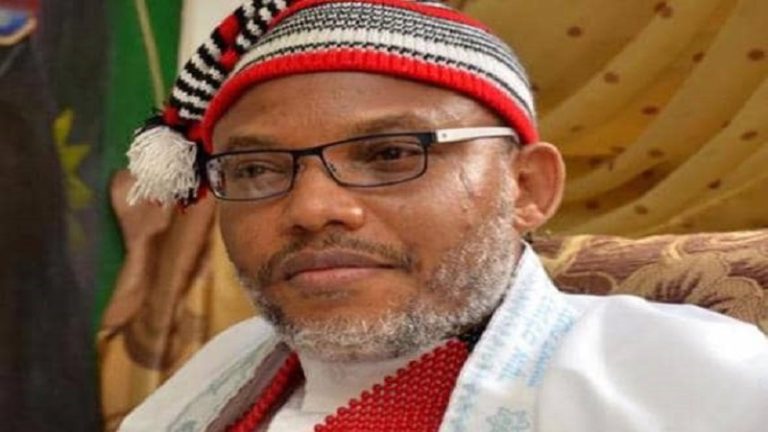
Court declares Nnamdi Kanu medically fit for trial

0

THE Federal High Court in Abuja has ruled that Nnamdi Kanu, the detained leader of the Indigenous People of Biafra (IPOB), is fit to continue his trial after an independent medical panel set up by the Nigerian Medical Association (NMA) found that his health condition is not life-threatening.

The report, submitted to the court on October 13 and partly read in open session on Thursday, October 16, followed weeks of medical assessment ordered by the trial judge, James Omotosho, after conflicting claims from the State Security Services (SSS) and Kanu’s private doctors about his health status.

Presenting the findings, the prosecution team led by Adegboyega Awomolo, a senior advocate, informed the court that the NMA panel confirmed that Kanu’s condition could be managed adequately within the SSS medical facility. The court accepted the report and ruled that the defendant was medically fit to stand trial.

Omotosho consequently fixed October 23 for Kanu to begin his defence and directed that the proceedings must be concluded by October 30.

He also granted an oral request by Kanu’s lead counsel, Kanu Agabi, a senior advocate, allowing his legal team to hold private consultations with him in the courtroom, away from DSS monitoring.

The latest ruling marks the conclusion of a process that began on September 26, when the court ordered the NMA to constitute a team of eight to ten specialists, including a cardiologist, neurologist, and the Chief Medical Director of the National Hospital, to evaluate Kanu’s health and inspect the SSS medical facilities.

The ICIR reported that the directive followed months of disputes between the prosecution and defence over Kanu’s treatment. While SSS lawyers maintained that their facility was equipped to handle his condition, the defence argued that his health was deteriorating and requested his transfer to a public hospital.

The court had earlier adjourned the case to October 16 due to a delay in the submission of the NMA report. With the findings now submitted, the judge ruled that the medical evaluation had resolved all doubts regarding the defendant’s condition.

In a related development, the court reaffirmed that the SSS medical centre was good for Kanu’s ongoing care, despite objections from his lawyers, who expressed concern about the conditions of his detention.

While the legal process continues, calls for Kanu’s release have intensified. Last week, human rights activist Omoyele Sowore met with former President Goodluck Jonathan in Abuja to discuss possible political and humanitarian interventions in the IPOB leader’s case.

Sowore said Jonathan acknowledged the urgency of resolving the matter “in the interest of peace, fairness, and national healing” and pledged to raise it with President Bola Tinubu.

The meeting followed similar appeals from former Vice President Atiku Abubakar, human rights lawyer Femi Falana, and former senator Shehu Sani, among others, who have urged the Federal Government to release the IPOB leader.

Kanu has been in SSS custody since June 2021 after his re-arrest in Kenya and subsequent extradition to Nigeria. His case, which began in 2015, involves a seven-count charge bordering on terrorism, treason, and incitement.

The ICIR reported that his trial had been marked by repeated adjournments, judicial recusals, and controversies surrounding his detention conditions. In 2022, the Court of Appeal discharged and acquitted him, ruling that his rendition from Kenya violated international law. However, the Supreme Court later ordered the resumption of his trial in 2023.

Rajoelina accuses National Assembly of colluding with military

Madagascar’s deposed president, Andry Rajoelina, has accused the National Assembly of conspiring with the military to overthrow his government.

Rajoelina, while confirming for the first time that he had left the country, released a statement following a military takeover sparked by weeks of protests that have thrown the island nation into turmoil.

He said he departed the country on Sunday after receiving “explicit and extremely serious threats” to his life, adding that the threats emerged just as he was preparing to travel abroad for an official mission.

On Monday, he announced that he had sought refuge in a “safe location,” though he declined to provide further details.

The ICIR reported that the country’s new military ruler, Michael Randrianirina, announced on Wednesday, that he would soon be sworn in as president on Friday, following a coup that ousted Rajoelina. 

The 51-year-old leader, who was impeached by lawmakers on Tuesday with 130 yes votes to one blank ballot after fleeing the country aboard a French military plane, denounced the coup and vowed not to step down, even as Gen Z-led protests and mass defections within the security forces intensified calls for his resignation.

Randrianirina, a former commander of the elite Corps d’administration des personnels et des services administratifs et techniques (CAPSAT) army unit that was instrumental in the 2009 coup that brought Rajoelina to power, broke ranks with him last week and urged soldiers not to open fire on protesters.

Madagascar has become the latest former French colony to fall under military rule since 2020, following similar coups in Mali, Burkina Faso, Niger, Gabon, and Guinea.

The youth-led Gen Z movement, which began the protests on September 25 over water and power shortages, welcomed Randrianirina’s intervention.

However, in reaction to the military takeover, the African Union has suspended the island nation from all its activities and membership.

A spokesperson for the African Union told Reuters on Wednesday that Madagascar had been suspended with immediate effect following the coup, though no additional details were provided. 

The suspension by the 55-member bloc holds significant political weight and could further isolate the country’s new leadership.

The ICIR reported that the 51-year-old president first came to power in 2009 through a coup fueled by youth-led protests, becoming the world’s youngest head of state at 34, but his pledges to improve living standards and eliminate corruption remained unfulfilled.

Madagascar, with an average age of under 20 and a population of about 30 million, has roughly three-quarters of its people living in poverty. 

AU suspends Madagascar as coup leader says he will be sworn in as President

0

MADAGASCAR’S new military ruler, Michael Randrianirina, announced on Wednesday, October 15, that he would soon be sworn in as president, following a coup that ousted President Andry Rajoelina. 

Rajoelina, who was impeached by lawmakers on Tuesday, with 130 yes votes to one blank ballot after fleeing the country over the weekend, has denounced the coup and vowed not to step down, even as Gen Z-led protests and mass defections within the security forces intensify calls for his resignation.

The ICIR reported that Rajoelina announced on Sunday that “an attempted illegal and forcible seizure of power” was in progress in the country after administrative and technical officers joined thousands of protesters in the city centre on Saturday in a major shift in the Gen Z anti-government protest movement that began last month.

Rajoelina’s office said he denounced all efforts to destabilise the country and called for “dialogue to resolve the crisis.

Randrianirina earlier announced that the military had seized control of the government and dissolved all state institutions, except for the National Assembly, the lower house of parliament.

“We will be sworn in soon,” the army colonel said during a press briefing on Wednesday, a day after the High Constitutional Court invited him to assume the presidency of the former French colony.

Randrianirina announced on Tuesday that a military-led committee would govern the country for up to two years alongside a transitional administration before holding new elections.

Randrianirina, a former commander of the elite Corps d’administration des personnels et des services administratifs et techniques (CAPSAT) army unit that was instrumental in the 2009 coup that brought Rajoelina to power, broke ranks with him last week and urged soldiers not to open fire on protesters.

However, in reaction to the military takeover, the African Union has suspended the island nation from all its activities and membership.

A spokesperson for the African Union told Reuters on Wednesday that Madagascar had been suspended with immediate effect following the coup, though no additional details were provided. 

The suspension by the 55-member bloc holds significant political weight and could further isolate the country’s new leadership.

“The rule of law must prevail over the rule of force. Our approach is grounded in law and dialogue,” the African Union Commission Chairperson Mahmoud Ali Youssouf said at a bloc meeting earlier on Wednesday.

Security sources told Reuters that Rajoelina fled Madagascar on Sunday aboard a French military aircraft, claiming that his life was in danger and is now believed to be in Dubai, according to three diplomatic and opposition sources.

The ICIR reported that the 51-year-old president first came to power in 2009 through a coup fueled by youth-led protests, becoming the world’s youngest head of state at 34, but his pledges to improve living standards and eliminate corruption remained unfulfilled.

Madagascar, with an average age of under 20 and a population of about 30 million, has roughly three-quarters of its people living in poverty. 

The World Bank reports that between independence in 1960 and 2020, the country’s gross domestic product (GDP) per capita declined by 45 per cent.

In addition to the CAPSAT unit, both the paramilitary gendarmerie and the police have also withdrawn their support for Rajoelina.

The protests, inspired by Gen Z-led movements in Kenya and Nepal, initially erupted over water and electricity shortages but have since intensified, with demonstrators demanding President Rajoelina’s resignation, an apology for the violence against protesters, and the dissolution of both the Senate and the electoral commission.

Thousands of people gathered in Antananarivo on Sunday to protest against the government and honour a fallen CAPSAT soldier, whom the army unit claimed was killed by the gendarmerie on Saturday.

Pinnacle Daily set to change digital news trajectory in Nigeria – Adeseyoju

0

As internet and telecommunication innovations continue to transform how news is produced and consumed, Pinnacle Daily is set to leverage modern digital strategies to deliver and promote accurate, reliable, and engaging news content.

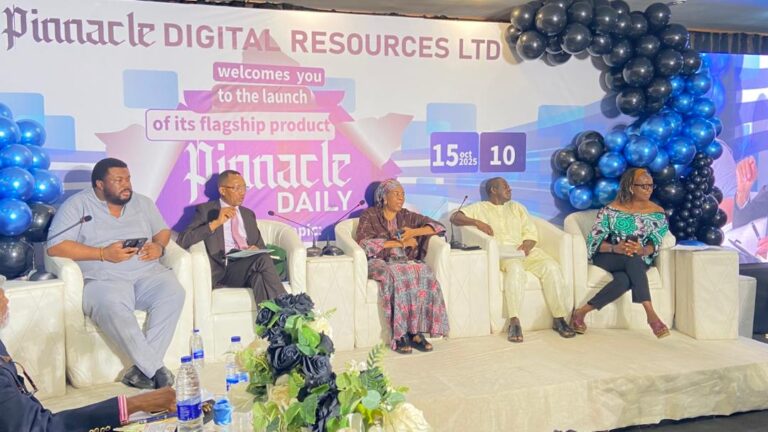
Dignitaries at the launch and flagship of Pinnacle Digital Resources limited

This was revealed by the Chairman of Pinnacle Digital Resources Limited, Abimbola Adeseyoju, on Wednesday, October 15, during the launch of Pinnacle Daily, its flagship news platform in Abuja.

“We did not want to be just another digital media outlet. We wanted to be forever relevant in the lives and decision-making process of the new generation of media consumers, while also targeting the Gen Z or Gen Alpha,” Adeseyoju said.

Chairman of Pinnacle Digital Resources limited, Abimbola Adeseyoju
Chairman of Pinnacle Digital Resources limited, Abimbola Adeseyoju,

The ICIR reports that Pinnacle Daily is the brainchild of the International Centre for Investigative Reporting (ICIR), a respected media non-profit known for its commitment to accountability and investigative journalism, which offers advertising, media coverage, media consultancy and other services.

Pinnacle Daily launch and flagship

Adeseyoju noted that the platform aims to bridge the gap in making relevant decisions from the avalanche of news and information on employment, career, health, education, leisure, entertainment, finance, business opportunities, wealth creation and more.

“We want to be the trusted channel of choice for this generation when it comes to decision-making in their personal, economic, and political lives. We want to be able to provide needed rational and disadvantageous information to our consumers so they can win in life,” he added.

The co-founder of Daily Trust, Isiaq Ajibola, who was the keynote speaker who spoke on “The Economics of Media Business: Understanding Revenue Models &Profitability”, said that advertising is a lifeline of media sustainability.

co-founder of Daily Trust, Isiaq Ajibola,

“Apart from primary advertising in the hardcore, which still forms a significant part of revenue for the newspaper, the digital ad is now mostly print-driven and personalised,” Ajibola said.

He charged Pinnacle Daily to adapt all the relevant digital and manual strategies to generate sustainable income in the fast-evolving media industry.

“Newspapers can leverage their credibility to create events and products. E.g. hosting conferences, summits, or webinars on key issues like business, technology, education, or governance, brand partnership, and campaigns,” he added.

Also in his comments, the Senior Vice Chairman and Editor-In-Chief of Leadership media group, Azubuike Ishiekwene, a panellist, said that the fundamental thing that controls digital media revenue is the algorithms. 

“Google, for example, is a search engine that controls at least 90 per cent of our searches, followed by Bing, which is a product of Microsoft. They determine essentially the kind of revenue that you get. So when you display that, keep in mind that having a platform is one thing, but dealing with the algorithms that determine the kind of revenue you get is entirely different,” Ishiekwene said.

He emphasised how online news consumers rely on social networks for stories than necessarily through your online platform.

“So I would like to suggest to Pinnacle, as we have seen their online platform, which is quite robust, I have tested it, to also work seriously at building online platforms from which people can go and consume their product before they even reach their online presence,” he added.

In the same vein, Musikilu Mojeed, the Editor-In-Chief and Chief Operating Officer of Premium Times, said that great content is key to survival in the media industry.

“Maintaining that standard is what is important. You must consistently produce great content if you want to survive. There is no other way. If your content is not great enough, or if they are just like existing content, it will be difficult. Already, those of us in the market, it’s already difficult. The market is saturated,” he said.

The Chairman of the Occasion, the former Governor of Osun State, Olusegun Osoba, who was represented by Eric Teniola, said that Pinnacle Daily comes at a time when journalism professionals and the media are going through very dramatic changes. 

Eric Teniola
Eric Teniola

“I commend the leadership of Pinnacle Digital Resources India, publishers of Pinnacle Daily, and for braving the odds of today’s harsh media terrorism, to set up a news department that will be value-driven, and that I’m sure engineers will be up early to pay for,” he said.

He emphasised how the economy, businesses and Nigerians will benefit from a value-driven digital newspaper platform like Pinnacle Daily. 

“In the age where technology drives media business, I think it is important for media entrepreneurs to see media as a business, and understand the interplay between having a sound product, understanding that the audience of consumers is key, and being ready to deploy technology appropriately. I commend the board, management, and staff of Pinnacle Daily. I am proud that you have succeeded and become a profitable media angel and withstand the test of time,” he added.

The launch and flagship of the platform saw dignitaries across the Nigerian media industry, business owners, and others.

Nigeria’s inflation rate eases to 18.02% in September

NIGERIA’S headline inflation rate eased to 18.02 per cent in September 2025, a decline from 20.12 per cent recorded in August, according to the latest Consumer Price Index (CPI) report released by the National Bureau of Statistics (NBS).

The report shows that on a month-on-month basis, headline inflation stood at 0.72 per cent, indicating a slower pace of price increases compared to the previous month.

Similarly, the food inflation rate, a key driver of overall inflation, declined by 1.57 per cent month-on-month.

The ICIR reports that the NBS had, at the beginning of the year, changed the methodology for calculating the consumer price index (CPI) used to measure the inflation rate.

In January, the statistics office rebased the CPI to a 2024 base year from a 2009 base year.

Notably, this current inflation marks the sixth consecutive monthly decline since April 2025.

In August, the NBS reported a drop to 20.12 per cent, down from 21.88 per cent in July.

The NBS report noted that the easing was due to falling prices of staple foods such as rice, maize, millet, and semolina.

It also highlighted that urban inflation slowed to 19.75 per cent year-on-year in August from 34.58 per cent a year earlier, while rural inflation was slightly higher at 20.28 per cent.

Similarly, in its July report, the NBS recorded a decline in headline inflation to 21.88 per cent, down from 22.22 per cent in June.


Bayelsa Gov Douye Diri quits PDP, silent about next party move

0

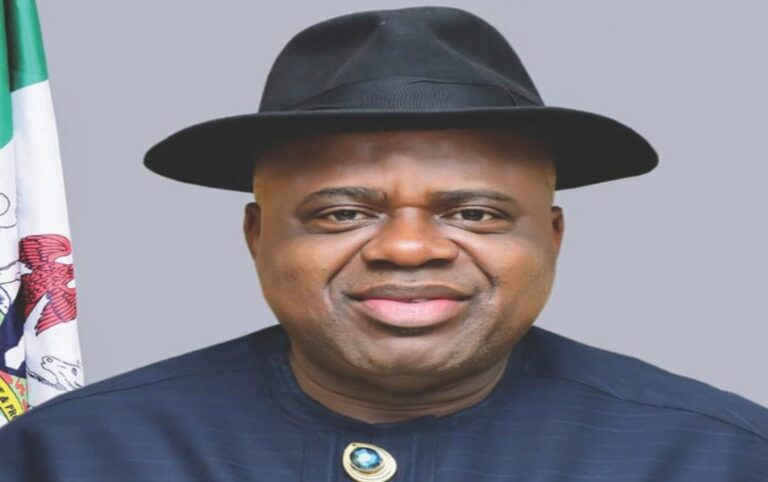
BAYELSA State Governor Douye Diri has announced his resignation from the Peoples Democratic Party (PDP), further deepening the exodus of high-profile members from the opposition ahead of the 2027 general elections.

According to Channels TV, Diri made the announcement on Wednesday, October 14, at the executive council chamber of the Government House in Yenagoa.

He did not, however, disclose his next political destination but said his decision followed careful reflection on the political direction of the state.

His declaration was immediately backed by 23 members of the Bayelsa State House of Assembly, including the Speaker, marking a significant shift in the political alignment of the oil-rich state.

The development came barely 24 hours after Enugu State Governor Peter Mbah officially dumped the PDP for the All Progressives Congress (APC). Mbah described his move as a strategic decision to connect Enugu and the South-East region to the “centre of power” in Abuja.

In recent months, The ICIR has reported a pattern of defections from the PDP to the ruling APC, particularly among governors and lawmakers seeking to align with the federal government.

On Tuesday, Kaila Dahuwa Samaila, the Senator representing Bauchi North and three members of the House of Representatives from Kaduna State also announced their departure from the PDP, citing persistent internal crises within the party.

Political analysts say Diri’s resignation may have ripple effects across the South-South, where the PDP has maintained a stronghold since 1999. His exit follows similar moves by Delta State Governor Sheriff Oborevwori and Akwa Ibom State Governor Umo Eno earlier in the year — both of whom defected to the APC alongside their cabinets.

Meanwhile, the PDP’s National Publicity Secretary, Debo Ologunagba, on Wednesday admitted that the party was battling internal sabotage. Speaking on Channels Television’s The Morning Brief, he expressed disappointment over recent defections, including that of Governor Mbah, but maintained that the PDP would recover through reforms and discipline.

“There are people within our fold undermining the party, but we are addressing that,” Ologunagba said. “Our focus is on rebuilding the PDP ahead of our national convention in Ibadan, where a new leadership will emerge to reposition the party for future elections.”

The APC National Chairman, Nentawe Yilwatda, has repeatedly described the wave of defections as evidence of the party’s growing dominance and the appeal of President Bola Tinubu’s leadership, particularly in regions historically controlled by the opposition.

Despite widespread public discontent over economic hardship, inflation, and unemployment, analysts are worried that the ruling party continues to consolidate power through political realignments and elite defections.

PDP expresses disappointment in Mbah for choosing APC

0

THE Peoples Democratic Party (PDP) has expressed disappointment over the defection of Enugu State Governor, Peter Mbah, to the All Progressives Congress (APC), describing the move as regrettable but within his constitutional rights.

The party’s National Publicity Secretary, Debo Ologunagba, said on Wednesday, October 15, that while the PDP respects the governor’s personal choice, it views his action as unfortunate, especially given the trust and mandate he received on the party’s platform in 2023.

Ologunagba, who spoke on Channels Television’s The Morning Brief, accused certain individuals within the PDP of sabotaging its efforts from within, adding that the leadership was taking steps to address internal cracks ahead of its national convention scheduled for November in Ibadan, Oyo State.

“We are disappointed by the governor’s decision, but we recognise that everyone has a right to make political choices. However, every choice comes with its consequences,”

“There are people who have worked against the unity and progress of the party, but we are methodically dealing with that,” Ologunagba said.

He explained that the convention would mark a “reset” for the party, producing a new National Working Committee capable of rebuilding confidence and strengthening the PDP’s role as the main opposition force.

Mbah had announced his defection to the APC in a statewide broadcast on Tuesday, October 14. He described the decision as a strategic step to “connect Enugu and the South-East to the centre of power in Abuja” and align with the ruling party’s development agenda.

Mbah’s defection was accompanied by members of the Enugu State Executive Council, the House of Assembly, local government chairmen, councillors, and other appointees. The APC National Chairman, Nentawe Yilwatda, said the move signalled the ruling party’s growing strength in the South-East and readiness for the 2027 general elections.

The ICIR reports that the PDP has experienced a wave of defections in recent months, with governors, lawmakers, and party leaders switching allegiance to the APC. On the same day Mbah made his announcement, Kaila Dahuwa Samaila, the Senator representing Bauchi North, and three members of the House of Representatives from Kaduna State also left the PDP for the APC, citing persistent internal crises.

Earlier in the year, Delta State Governor Sheriff Oborevwori and Akwa Ibom State Governor Umo Eno joined the ruling party, taking along members of their cabinets and political allies.

Despite growing concerns over inflation and rising living costs, the APC continues to expand its membership, consolidating its political dominance across regions. The PDP, however, maintains that it remains focused on rebuilding its internal structures to offer Nigerians a credible alternative in 2027.