Home Blog Page 156

Economics of media business: understanding revenue models and profitability by Isiaq Ajibola

0

By Isiaq AJIBOLA

IT is a great honour and privilege to stand before you today at this landmark event which is the official launch of Pinnacle Daily.

The emergence of a new newspaper in the media landscape is always worth praising, but it becomes even more significant when the medium is born into a rapidly changing digital world.

I have been part of the Nigerian media journey for nearly three decades, and I can confidently say there has never been a more exciting and challenging time for our industry than now.

Allow me, therefore, to share a few reflections on the past, present, and future of the media business, particularly as it relates to the new media in our environment.

Transformation from print to online

To understand where we are today, we must remember where we came from.

The story of the newspaper is the story of information itself; from the first printed pages in Europe in the 1660s to pioneering Nigerian titles like the West African Pilot and Daily Times, which shaped public opinion during the colonial and independence eras. For most of the 20th century, newspapers ruled unchallenged. They were the heartbeat of democracy, the watchdogs of government, and the principal platforms for public discourse.

Revenue was predictable: cover price sales and advertisements sustained the newsroom. Newspapers printed high circulation figures, operated multiple presses, and deployed distribution vehicles across the country. Readers waited until morning for the news, and journalists had 24 hours to tell their stories.

But the world changed -and so did the news business.

Over the last two decades, and especially in Nigeria more recently, the internet, mobile phones, and social media have rewritten the rules of media operations. Information now moves at the speed of light. Readers no longer wait for tomorrow’s paper; they want breaking news, analysis, video, commentary, and conversations in real time. It has become necessary for everyone in the media to evolve  or risk going to the oblivion.

Permit me to illustrate this evolution with a story close to my heart — the Daily Trust story.

When we founded Media Trust in 1996, we began as a media communications company. Two years later, we launched the weekly Trust  which was  modest  but ambitious in vision. It aimed to become a credible, independent, and respectable regional platform. From there, we expanded to daily titles, first publishing five days a week, then eventually seven in a  gradual process that took about five years.

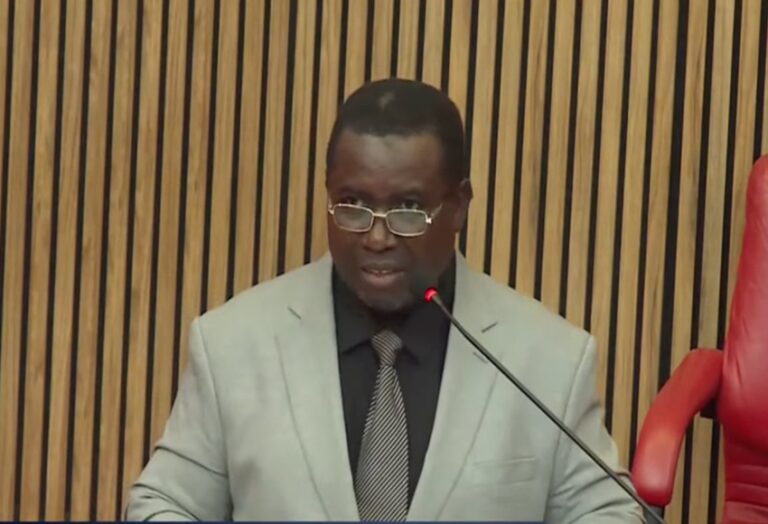
Isiaq Ajibola, Former MD of Daily Trust newspaper and author of the book: Journalism and Business: My Newspaper Odyssey delivers keynote adrress during the official launch of the ‘Pinnacle Daily’ in Abuja.

We had no manual of operations, nor enough capital to buy a printing press. What we had was commitment and  top-level managerial involvement that built the editorial and business systems and structure.

Over the years, we developed a strong brand across Nigeria. But like many print organisations, we eventually faced a hard truth; digital was the future.

Rather than resist, we embraced it, though not without a struggle. We invested in digital infrastructure, online editorial teams, and a fairly strong social media presence.

Our business experience had already taught us the need for multiple revenue streams beyond traditional advertising. So we created event-based programmes  like the Daily Trust Dialogue, launched special projects and specialised publications that enhanced our brand and created sustainable income lines. We went on to establish Trust TV and Trust Radio, optimising digital platforms to deliver both text and video content.

Today, Daily Trust reaches millions of readers online far beyond the physical limits of print circulation. That evolution  was necessary. And it offers valuable lessons for new entrants like Pinnacle Daily.

The Economics of new rules and new models

The shift from print to digital has transformed the traditional media business model. Yet, it has also opened new revenue opportunities. Here are highlights a few models.

  1. Digital advertising

Apart from the primary advertising in the hard copy which still form the significant part of revenue for newspapers ,digital ads is now mostly data-driven and personalised. Most newspapers run display ads online which are  purchased through platforms like Google Ads allowing  advertisers to reach readers based on demographics, interests, and browsing history — whether they are shopping for cars, furniture or  following politics.

Similarly, native advertising blends seamlessly with editorial content. These are sponsored stories written in the same tone and style as news articles but paid for by brands. For example, a bank might sponsor a “Financial Literacy” debate or campaign, or a telecom company might support a “Digital Future” column.

  1. Subscription and premium content

With declining advertising revenue, many newspapers now charge readers for quality journalism. Subscription models require payment for premium content ; investigative reports, deep analysis, or expert opinion pieces.

The New York Times has been variously quoted as making  a remarkable success of this model. In Nigeria, platforms like Premium Times and BusinessDay are advertising for it and i believe they are  generating some income on it.

  1. Events and conferences

Newspapers can leverage their credibility to create  events and products e.g  hosting conferences, summits, or webinars on key issues like business, technology, education, or governance.

Thisday ,Leadership newspaper and, Business Day are very good in creating events

  1. Brand partnerships and co-created campaigns

Media houses are increasingly becoming strategic partners to brands, NGOs, and government agencies. These partnerships involve co-creating content campaigns, investigative series, or multimedia storytelling to amplify causes or creating awareness.

For example, a newspaper might collaborate with UNICEF on a child-education awareness campaign, producing articles, videos, and infographics — all funded by the NGO.

Closely related, though not a direct revenue model, are grants. Many media organisations receive grants to pursue public service journalism. For instance, the Daily Trust Foundation received funding from the MacArthur Foundation to support investigative journalism training.

Each of these models shows that innovation and audience understanding are at the heart of profitability.

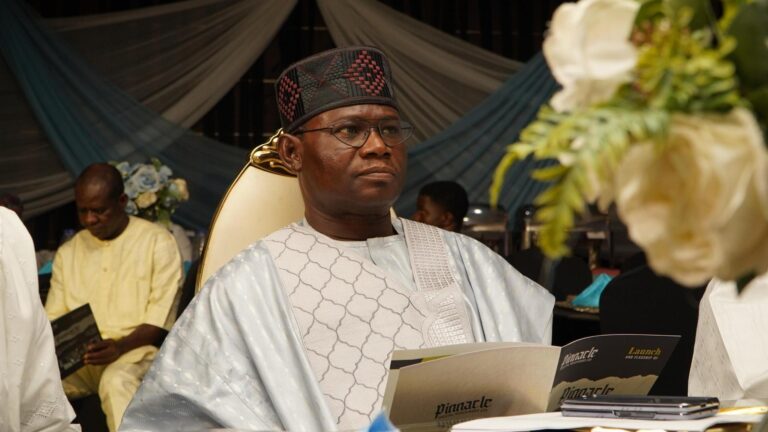
L–R: Abimbola Adeseyoju, CEO and Founder of DataPro Nigeria; Isiaq Ajibola, former Managing Director of Daily Trust Newspaper; and Farouk Lawan, former Minority Leader of the House of Representatives, during the official launch of Pinnacle Daily in Abuja.

People, technology, and profitability

As Pinnacle Daily steps into this competitive space, adopting new revenue models is part of the journey. Sustainable revenue depends on how well you build your people, deploy technology, and manage profitability itself.

Three  classifications that must be made in this regards are;

  1. Human Capital Readiness. Building a lean, smart, multi-skilled team is it.

In today’s media business, small teams with the right skills often outperform some large  organisations. Pinnacle Daily must invest in good journalists, multimedia producers, social media experts and data reporters who can distribute stories across platforms and constantly guage audience needs.

Beyond the newsroom, business-focused personnel are essential. content monetisation specialists, event managers, and subscription growth strategists  all of whom directly drive revenue must be hired. A lean, cross-functional team of fewer than 15 people in the early phase can often deliver more impact than a larger, less focused workforce.

  1. Technology Capital Readiness; building for scalability and innovation

Your technology is the invisible engine behind your success. A modern newsroom requires a flexible, SEO-optimised Content Management System (CMS) to ensure stories rank high on Google, are published quickly in multiple formats (text, video, podcast), and can integrate seamlessly with newsletters, social platforms, and apps.

Your Customer Relationship Management (CRM) and payment systems must also be technology-driven. Invest in seamless payment gateways like Paystack or Flutterwave, and prioritise automation and renewals. Most importantly, build for mobile first — over 85% of Nigerian audiences consume news via smartphones.

  1. Accounting for Profit – measure, measure, and optimise!

Profitability must be tracked and deliberately managed. Break down your revenue streams into categories ;advertising, subscriptions, events, branded partnerships  and monitor each one’s performance regularly.

Control costs by classifying them into content production, technology, marketing, and overheads. Then track key business parameters such as: Customer Acquisition Cost (CAC): The total cost of acquiring a new paying customer.

Example: If you spend ₦5 million on advertising and logistics to attract 1,000 subscribers, your CAC is ₦5,000.

Revenue per Thousand Views (RPM): This may be harder to calculate, but it helps you identify which parts of your business are most profitable and where to focus resources.

Above all, remember: “If you can measure it, you can manage it — and if you can manage it, you can monetise it.”

And never forget that credibility itself is money. The more trust you build with your readers, the more likely they are to pay for your value proposition or recommend your platform to others.

Distinguished guests,

The journey from hard-copy newspapers to online platforms is more than a technological shift. It is a revolution in how we create, distribute, and monetise information. It challenges us to rethink journalism as a social responsibility and a business.

Yet, one truth remains; quality content, credibility and professionalism, will always command true value.

If Pinnacle Daily combines this principle with innovation, smart technology, and sound financial discipline, it will not only survive ,it will thrive.

As you embark on this journey, I urge you to dream boldly, innovate fearlessly, and above all, keep business motivation at the heart of your operations. The future of media in Nigeria and indeed, the world will be written by those who dare to adapt.

Thank you for listening, and once again, congratulations to the Pinnacle Daily team.

Being text of keynote address delivered  by Isiaq Ajibola, Co-Founder, former MD of Daily Trust newspaper and author of the book: Journalism and Business: My Newspaper Odyssey during the official launch of the ‘Pinnacle Daily’ in Abuja.

Women Deliver opens 2026 media scholarships

WOMEN Deliver has announced media scholarships for journalists and creators worldwide to attend and report its 2026 conference.

The group announced this in a statement on its website, noting that the 2026 conference would focus on feminist leadership, lived experience, and first nations advocacy across the Oceanic Pacific and beyond.

“The scholarships will cover full conference registration, airfare, hotel accommodation, visa fees, per diems, and travel insurance, ensuring equitable participation for storytellers who might otherwise be unable to attend,” it read.

The ICIR reports that The Women Deliver 2026 Conference is expected to take place from 27–30 April 2026 in Narrm, Melbourne, Australia and attract global feminist voices to shape policy, strengthen accountability, and spotlight the leadership of women, girls, and gender-diverse people.

Applications open from 15 September 2025 to close on 31 October 2025, with successful applicants notified by November 2025.

“What the scholarship covers: full conference registration, hotel accommodation during the Conference (26-30 April, 2026), roundtrip economy airfare, visa fees and related costs, epr diems to cover local transportation and daily meals, travel insurance,” part of the statement read.

It explained that eligible applicants include reporters, editors, producers, photojournalists, videographers, podcasters, and digital content creators with a focus on factual coverage of social issues. Freelancers are also encouraged to apply with a commissioning letter.

“Priority will be given to first nations and indigenous journalists, LGBTQIA+ persons, people with disabilities, refugees and internally displaced persons, and those from under-resourced communities. 

“Early-career media professionals and applicants who have not previously received a Women Deliver scholarship are also strongly encouraged to apply,” it added.

The statement highlighted that scholarship recipients would be expected to actively participate in conference sessions and media briefings, produce and share coverage of the event, and adhere to the WD2026 code of conduct.

For more information and to apply, visit Women Deliver’s website

Applications open for 2026 CERC Migration Journalism Fellowship in Canada

1

THE Canada Excellence Research Chair in Migration and Integration (CERC Migration) has announced the opening of applications for its 2026 CERC Migration and Bridging Divides Journalism Fellowship Programme, offering journalists an opportunity to deepen their understanding of global migration and integration issues.

The fellowship, hosted by the Toronto Metropolitan University, aims to build stronger connections between journalists, researchers, and stakeholders working on migration. It also seeks to promote the communication of evidence-based knowledge and foster collaboration that bridges the gap between research and public understanding.

Successful fellows will participate in a one-month residency in Toronto between March 1 and November 30, 2026 (excluding July and August). During this period, they will undertake an independent field research project and engage with an expert network of Canadian and international migration scholars.

Each fellow will receive a CAD$5,000 stipend, which includes travel and living expenses.

Applicants are expected to have at least five years of professional media experience, with a demonstrated record of reporting on complex, internationally focused issues.

The application deadline is November 1, 2025, while successful candidates will be notified by January 2026.

The programme offers participants access to advanced research resources and opportunities to collaborate on stories that highlight the human, social, and policy dimensions of migration.

Interested journalists can apply here.

MRA slams INEC for demanding N1.5bn to release voters’ register

0

MEDIA Rights Agenda (MRA) has condemned the Independent National Electoral Commission (INEC) for demanding over N1.5 billion to provide a copy of Nigeria’s National Register of Voters and list of polling units.

The organisation described the move as an attempt to frustrate a legitimate Freedom of Information (FOI) request and undermine transparency.

In a statement on Thursday, October 16, MRA’s Executive Director, Edetaen Ojo, said the Commission’s action amounted to a “blatant attempt to weaponise cost as a tool for denying access to vital public information.”

According to Ojo, the National Register of Voters and the list of polling units are one of the most essential public records needed by stakeholders to effectively monitor the electoral process.

He noted that by “placing such a colossal financial barrier in the way of a requester, INEC is deliberately hindering the public’s right and ability to scrutinise its operations, thereby compromising transparency and avoiding accountability.”

The organisation said its reaction followed INEC’s response, dated October 13, 2025, to a request filed five days earlier by V-C Ottackpukpu & Associates, a law firm. 

In the letter signed by the Secretary to the Commission, Rose Oriaran-Anthony, INEC demanded N1,505,901,750.00 as the cost of producing the requested documents.

Ojo described the charge as excessive, prohibitive, and a clear violation of the spirit and letter of the FOI Act, citing Section 8(1) of the Act, which limits fees to “standard charges for document duplication and transcription.

The staggering amount of over N1.5 billion cannot be a standard charge for duplication and is a clear and deliberate attempt to make public data inaccessible to the public. This is an affront to transparency and democratic accountability,” he said.

He recalled that former Attorney-General of the Federation, Mr. Mohammed Adoke, a senior  advocate, had issued Guidelines for the Implementation of the FOI Act, capping photocopying and printing charges at N10 per page.

Ojo argued that even if Nigeria’s 93,469,008 registered voters and 176,846 polling units were to be duplicated, the number of pages could not justify the N1.5 billion cost at the legally permissible rate.

He further cited the African Commission on Human and Peoples’ Rights’ Guidelines on Access to Information and Elections in Africa adopted in 2017, which require election management bodies to proactively disclose key electoral information, including the voters’ roll.

He warned that INEC’s response sent a worrying signal about its commitment to transparency, saying the Commission appeared to be prioritizing bureaucracy and profit over its constitutional and statutory obligations to the Nigerian people.

Ojo called on INEC to immediately cancel the fee and provide the requested information free of charge or in strict compliance with the FOI Act and the former Attorney-General’s guidelines.

The primary objective of the FOI Act is to make public records and information freely available.  If allowed to stand, this action by INEC sets a dangerous precedent, which will encourage other government agencies to impose exorbitant fees, effectively nullifying the gains of the FOI Act and rolling back this transparency initiative in Nigeria,” he warned.

UK reaffirms support for Nigeria’s democracy

THE British High Commission has reaffirmed its commitment to deepening Nigeria’s democracy.

The British High Commissioner, Richard Montgomery, stated this on Thursday, October 16, after engaging with key stakeholders during a two-day visit to Awka, Anambra State, ahead of the state’s governorship election scheduled for 8 November 2025.

According to a statement mailed to The ICIR by the commission, Montgomery said, “The UK supports Nigeria in conducting democratic contests in accordance with Nigerian law and the constitution.” 

He emphasised that the United Kingdom would not endorse any candidate or political party but remained focused on supporting the electoral process.

He explained that he met with the Anambra State Governor Charles Soludo, other governorship candidates, the Independent National Electoral Commission (INEC) Resident Electoral Commissioner, the State Commissioner of Police, and civil society representatives to discuss the technical and logistical arrangements for the upcoming poll.

“Our focus is solely on the electoral process itself – that it should be transparent, peaceful, inclusive and enjoy the confidence of the Anambra people. We do not endorse any particular candidate or political party,” the statement quoted him to have said.

The statement noted that discussions focused on technical and logistical preparations for managing 5,720 polling units across the state, the security situation in its 21 local government areas, factors that could influence voter turnout, and plans for monitoring the electoral process and polling day activities.

He encouraged all eligible voters to exercise their democratic rights and to engage peacefully in the election.

Reinforcing that violence has no place in the democratic process and that peaceful conduct benefits all stakeholders, Montgomery said that the United Kingdom remained committed to its partnership with Nigeria in supporting good governance, democratic institutions, and peaceful electoral processes across all levels of government.

Senate confirms Joash Amupitan as INEC chairman

0

The Senate has confirmed Joash Ojo Amupitan, a senior advocate, as the Chairman of the Independent National Electoral Commission (INEC).

Amupitan’s confirmation followed his screening at the Senate on Thursday, October 16, where lawmakers took turns to grill him.

In his submissions, Amupitan vowed to ensure INEC’s independence.

He also pledged to undertake a comprehensive audit of the Commission’s operations, with a focus on logistics failures recorded during the 2023 general elections.

He said the review would identify operational challenges that affect the conduct of elections and help restore public confidence in the electoral system.

He told the lawmakers that part of the audit would involve examining what went wrong with the INEC Result Viewing Portal (IReV) during the 2023 presidential election. “We must find out what happened and why the confidence of many Nigerians was shaken,” he said.

Citing a Supreme Court judgment, Amupitan explained that the IReV platform was not part of the official result collation system of the Commission. “The purpose of introducing BVAS and IReV was to ensure election integrity. A lot of people thought IReV was part of collation, but the Supreme Court has clarified that it is not,” he noted.

He assured the Senate that he would strengthen the use of technology and logistics management within the Commission.

“My wife served as a collection officer. I had to bring a generator to assist because there was no light. If we want to do it well, we must provide the necessary logistics and transport support,” he said.

Amupitan also called for the establishment of an electoral offences commission to handle cases of malpractice, stating that “INEC does not currently have the capacity to investigate and prosecute offenders.”

After the Committee of the Whole, the President of the Senate, Godswill Akpabio, asked if the confirmation was a true reflection of the House, and the ‘ayes’ had it.

Akpabio said he was approved without any dissenting voice and challenged him to discharge his duty conscientiously.

Earlier, Akpabio announced that Amupitan had been cleared by the National Security Adviser, the State Security Services (SSS), and the Inspector-General of Police, who confirmed that he had no criminal record.

Akpabio, while welcoming the nominee and his family to the chamber, recalled his experience during the 2019 elections, saying, “I was cheated in the election, and we went to court. The court annulled the result and ordered prosecution of the electoral officer, but instead of prosecuting the INEC commissioner, they prosecuted the returning officer.”

The Senate Leader, Opeyemi Bamidele (APC, Ekiti Central), had earlier moved that Order 12 be suspended to admit the nominee and his entourage into the chamber. The motion was seconded by the Minority Leader, Abba Moro (PDP, Benue South). Amupitan was accompanied by Kogi State Governor Ahmed Ododo and senior officials from the University of Jos, including the vice chancellor.

President Bola Tinubu had on Tuesday, October 14, transmitted Amupitan’s name to the Senate for confirmation, following the approval of the National Council of State during its meeting at the Presidential Villa. The Council, chaired by the president, described Amupitan as a man of integrity and experience.

Amupitan succeeds Mahmood Yakubu, who stepped down on October 7 after completing a decade-long tenure marked by major electoral reforms, including BVAS) and IReV portal.

The ICIR reported that despite these reforms, the 2023 general elections were marred by widespread logistical challenges, poor result transmission, and low public trust in the Commission’s processes. Election observers and civil society organisations have repeatedly called for institutional restructuring and accountability within INEC.

Amupitan, a professor of Law at the University of Jos and former Dean of its Faculty of Law, hails from Ayetoro Gbede in Ijumu Local Government Area of Kogi State. He has over three decades of experience in academia and legal practice, specialising in constitutional, company, and corporate governance law.

Sultan calls for regulation of social media to curb abuse

0

THE Sultan of Sokoto, Sa’ad Abubakar III, has urged the Federal Government to introduce stronger regulations on social media use in Nigeria, citing its growing abuse and potential threat to national peace and unity.

Represented by the Emir of Zazzau, Ahmad Nuhu Bamalli, the Sultan made the call during the Northern Ulamah Summit on insecurity and socioeconomic challenges, organised by the Congregation of Northern Ulamas in Kaduna.

He expressed concern that social media had increasingly become a platform for insults, misinformation, and incitement, even among scholars, warning that the trend undermined social harmony and respect.

“Anyone can wake up, pick up their phone, and insult anyone, be it a respected individual, a leader, your neighbour, or even a family member. There are no laws, no consequences, and no one to challenge this behaviour,” he was quoted to have said.

He also added that “in other countries, social media is regulated. If someone posts something that causes division or incites unrest, they can be traced and punished. This is how it should be done in our country.”

On his part, the President of the Supreme Council for Sharia in Nigeria, Bashir Aliyu Umar, said the gathering aimed to strengthen unity and develop practical solutions to the region’s challenges.

He also warned that the spread of misinformation through social media had become a major driver of conflict and distrust.

He urged Nigerians to use digital platforms responsibly and constructively to support government efforts in addressing insecurity.

On his part, the senator representing Kano South Senatorial District, Kawu Samaila, reacted to international allegations of religious persecution in Nigeria, describing them as baseless.

“Claims of genocide against Christians in Nigeria are false. Even Christian lawmakers in the Senate have dismissed those allegations, affirming that Muslims and Christians live peacefully in this country,” he said.

He further urged Islamic scholars to verify information before making public statements, especially when discussing political or sensitive national issues.

Their comments came amid renewed international debates over alleged persecution of Christians in Nigeria and growing domestic calls for social media oversight to curb hate speech and false narratives that deepen religious and ethnic mistrust.

The ICIR reports that in recent weeks, Nigeria has found itself at the center of a heated international and domestic debates over allegations of “Christian genocide” and religious persecution. 

The controversy began when several United States lawmakers, including Senator Ted Cruz and Representative Riley Moore, raised alarm over what they described as “systematic killings and persecution of Christians in Nigeria.”

Cruz also introduced a bill calling for the protection of “persecuted Christians” in the country, while others urged the U.S. State Department to take diplomatic action against the Nigerian government.

Reacting, President Bola Tinubu, on September 30, described the allegations as unfounded, stressing that the nation was built on the faith and resilience of its people.

Tinubu affirmed that no religion was under threat in the country, adding that after 65 years of independence, Nigerians had learnt to value and embrace their cultural and religious diversity.

Similarly, the lawmaker representing Borno South, Senator Ali Ndume, appealed to the Senate at plenary on Tuesday, October  14, to open diplomatic discussions with members of the United States Congress to challenge what it described as “dangerous misrepresentations” portraying Nigeria’s security crisis as a campaign of Christian genocide.

On October 8, Minister of Information Mohammed Idris dismissed the claims of a Christian genocide in Nigeria, describing them as “ignorant, false, and baseless.”

Kebbi to rehabilitate seven hospitals with N4 billion

0

THE Kebbi State Government has approved N4.05 billion for the rehabilitation of seven general hospitals across the state.

The approval was announced by the Attorney-General and Commissioner for Justice, Junaidu Marshall, after the State Executive Council meeting held on Wednesday, October 15, in Birnin Kebbi. The meeting was presided over by Governor Nasir Idris, according to the News Agency of Nigeria.

Marshall said the decision showed the government’s determination to equip hospitals with modern facilities and strengthen the state’s health system.

He listed the hospitals to benefit from the rehabilitation to include those in Kambaza, Suru, Kamba, Dirin-Daji, Kangiwa, Koko, and Yauri.

“In addition to these, the Argungu General Hospital has already been rehabilitated and equipped with modern facilities to efficiently serve the people of the area.

“Other hospitals in Zaga, Zuru, Bunza, Gulma, Bena, Jega, Shanga, and Sir Yahaya Memorial Hospital in Birnin Kebbi are either completed or undergoing rehabilitation,” he said.

He explained that with the new approval, 16 general hospitals would be rehabilitated by the administration, adding that all 30 general hospitals in the state would be upgraded before the end of the governor’s tenure.

Marshall further announced that the council approved N570 million for the Kebbi Contributory Healthcare Management Agency (KECHEMA) to register 45,000 vulnerable individuals under the State Social Register.

“This means that each of the 225 wards in the state will register at least 200 vulnerable individuals.

“The effort will go a long way in advancing KECHEMA’s mandate of providing affordable healthcare for the poor,” he added.

He explained further that the state had provided its counterpart funding under the World Bank-supported IMPACT project for the rehabilitation of 73 primary healthcare centres (PHCs). 

The commissioner noted that in addition, the council approved the renovation of another 42 PHCs to meet national standards.

To improve access to affordable medicines, the council also approved N407.5 million as a take-off grant for the Kebbi State Drugs, Medical, and Consumables Agency.

The ICIR reports that the initiative came amid a recent World Health Organization (WHO) report revealing that more than 80 per cent of healthcare facilities in Nigeria are dysfunctional.  This, according to WHO, contributes to the $1 billion annual loss to outbound medical tourism.

The report noted that the country’s UHC Social Coverage Index score was 38.4 per cent, falling among the lowest globally due to weak infrastructure, human resource shortages, and inequitable access to essential services.

It also showed that overall, Nigeria’s health system delivered only 45 per cent of its potential, below the African regional average of 56 per cent, with the healthcare costs falling heavily on individuals.

Court declares Nnamdi Kanu medically fit for trial

0

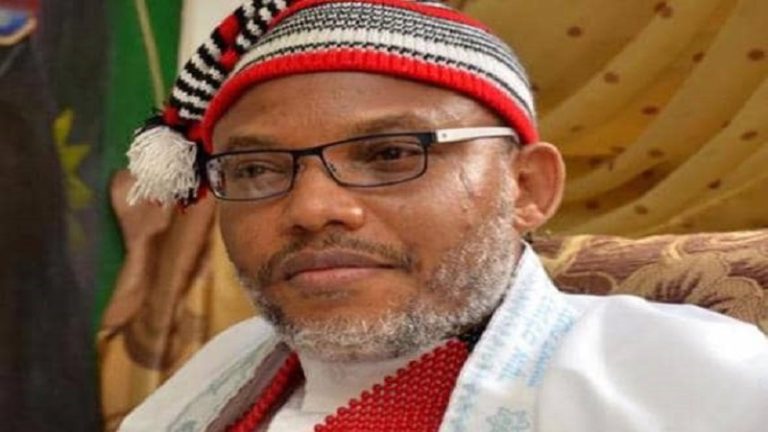
THE Federal High Court in Abuja has ruled that Nnamdi Kanu, the detained leader of the Indigenous People of Biafra (IPOB), is fit to continue his trial after an independent medical panel set up by the Nigerian Medical Association (NMA) found that his health condition is not life-threatening.

The report, submitted to the court on October 13 and partly read in open session on Thursday, October 16, followed weeks of medical assessment ordered by the trial judge, James Omotosho, after conflicting claims from the State Security Services (SSS) and Kanu’s private doctors about his health status.

Presenting the findings, the prosecution team led by Adegboyega Awomolo, a senior advocate, informed the court that the NMA panel confirmed that Kanu’s condition could be managed adequately within the SSS medical facility. The court accepted the report and ruled that the defendant was medically fit to stand trial.

Omotosho consequently fixed October 23 for Kanu to begin his defence and directed that the proceedings must be concluded by October 30.

He also granted an oral request by Kanu’s lead counsel, Kanu Agabi, a senior advocate, allowing his legal team to hold private consultations with him in the courtroom, away from DSS monitoring.

The latest ruling marks the conclusion of a process that began on September 26, when the court ordered the NMA to constitute a team of eight to ten specialists, including a cardiologist, neurologist, and the Chief Medical Director of the National Hospital, to evaluate Kanu’s health and inspect the SSS medical facilities.

The ICIR reported that the directive followed months of disputes between the prosecution and defence over Kanu’s treatment. While SSS lawyers maintained that their facility was equipped to handle his condition, the defence argued that his health was deteriorating and requested his transfer to a public hospital.

The court had earlier adjourned the case to October 16 due to a delay in the submission of the NMA report. With the findings now submitted, the judge ruled that the medical evaluation had resolved all doubts regarding the defendant’s condition.

In a related development, the court reaffirmed that the SSS medical centre was good for Kanu’s ongoing care, despite objections from his lawyers, who expressed concern about the conditions of his detention.

While the legal process continues, calls for Kanu’s release have intensified. Last week, human rights activist Omoyele Sowore met with former President Goodluck Jonathan in Abuja to discuss possible political and humanitarian interventions in the IPOB leader’s case.

Sowore said Jonathan acknowledged the urgency of resolving the matter “in the interest of peace, fairness, and national healing” and pledged to raise it with President Bola Tinubu.

The meeting followed similar appeals from former Vice President Atiku Abubakar, human rights lawyer Femi Falana, and former senator Shehu Sani, among others, who have urged the Federal Government to release the IPOB leader.

Kanu has been in SSS custody since June 2021 after his re-arrest in Kenya and subsequent extradition to Nigeria. His case, which began in 2015, involves a seven-count charge bordering on terrorism, treason, and incitement.

The ICIR reported that his trial had been marked by repeated adjournments, judicial recusals, and controversies surrounding his detention conditions. In 2022, the Court of Appeal discharged and acquitted him, ruling that his rendition from Kenya violated international law. However, the Supreme Court later ordered the resumption of his trial in 2023.

Rajoelina accuses National Assembly of colluding with military

Madagascar’s deposed president, Andry Rajoelina, has accused the National Assembly of conspiring with the military to overthrow his government.

Rajoelina, while confirming for the first time that he had left the country, released a statement following a military takeover sparked by weeks of protests that have thrown the island nation into turmoil.

He said he departed the country on Sunday after receiving “explicit and extremely serious threats” to his life, adding that the threats emerged just as he was preparing to travel abroad for an official mission.

On Monday, he announced that he had sought refuge in a “safe location,” though he declined to provide further details.

The ICIR reported that the country’s new military ruler, Michael Randrianirina, announced on Wednesday, that he would soon be sworn in as president on Friday, following a coup that ousted Rajoelina. 

The 51-year-old leader, who was impeached by lawmakers on Tuesday with 130 yes votes to one blank ballot after fleeing the country aboard a French military plane, denounced the coup and vowed not to step down, even as Gen Z-led protests and mass defections within the security forces intensified calls for his resignation.

Randrianirina, a former commander of the elite Corps d’administration des personnels et des services administratifs et techniques (CAPSAT) army unit that was instrumental in the 2009 coup that brought Rajoelina to power, broke ranks with him last week and urged soldiers not to open fire on protesters.

Madagascar has become the latest former French colony to fall under military rule since 2020, following similar coups in Mali, Burkina Faso, Niger, Gabon, and Guinea.

The youth-led Gen Z movement, which began the protests on September 25 over water and power shortages, welcomed Randrianirina’s intervention.

However, in reaction to the military takeover, the African Union has suspended the island nation from all its activities and membership.

A spokesperson for the African Union told Reuters on Wednesday that Madagascar had been suspended with immediate effect following the coup, though no additional details were provided. 

The suspension by the 55-member bloc holds significant political weight and could further isolate the country’s new leadership.

The ICIR reported that the 51-year-old president first came to power in 2009 through a coup fueled by youth-led protests, becoming the world’s youngest head of state at 34, but his pledges to improve living standards and eliminate corruption remained unfulfilled.

Madagascar, with an average age of under 20 and a population of about 30 million, has roughly three-quarters of its people living in poverty.