MADAGASCAR’S new military ruler, Michael Randrianirina, announced on Wednesday, October 15, that he would soon be sworn in as president, following a coup that ousted President Andry Rajoelina.
Rajoelina, who was impeached by lawmakers on Tuesday, with 130 yes votes to one blank ballot after fleeing the country over the weekend, has denounced the coup and vowed not to step down, even as Gen Z-led protests and mass defections within the security forces intensify calls for his resignation.
The ICIRreported that Rajoelina announced on Sunday that “an attempted illegal and forcible seizure of power” was in progress in the country after administrative and technical officers joined thousands of protesters in the city centre on Saturday in a major shift in the Gen Z anti-government protest movement that began last month.
Rajoelina’s office said he denounced all efforts to destabilise the country and called for “dialogue to resolve the crisis.
Randrianirina earlier announced that the military had seized control of the government and dissolved all state institutions, except for the National Assembly, the lower house of parliament.
“We will be sworn in soon,” the army colonel said during a press briefing on Wednesday, a day after the High Constitutional Court invited him to assume the presidency of the former French colony.
Randrianirina announced on Tuesday that a military-led committee would govern the country for up to two years alongside a transitional administration before holding new elections.
Randrianirina, a former commander of the elite Corps d’administration des personnels et des services administratifs et techniques (CAPSAT) army unit that was instrumental in the 2009 coup that brought Rajoelina to power, broke ranks with him last week and urged soldiers not to open fire on protesters.
However, in reaction to the military takeover, the African Union has suspended the island nation from all its activities and membership.
A spokesperson for the African Union told Reuters on Wednesday that Madagascar had been suspended with immediate effect following the coup, though no additional details were provided.
The suspension by the 55-member bloc holds significant political weight and could further isolate the country’s new leadership.
“The rule of law must prevail over the rule of force. Our approach is grounded in law and dialogue,” the African Union Commission Chairperson Mahmoud Ali Youssouf said at a bloc meeting earlier on Wednesday.
Security sources told Reuters that Rajoelina fled Madagascar on Sunday aboard a French military aircraft, claiming that his life was in danger and is now believed to be in Dubai, according to three diplomatic and opposition sources.
The ICIRreported that the 51-year-old president first came to power in 2009 through a coup fueled by youth-led protests, becoming the world’s youngest head of state at 34, but his pledges to improve living standards and eliminate corruption remained unfulfilled.
Madagascar, with an average age of under 20 and a population of about 30 million, has roughly three-quarters of its people living in poverty.
The World Bank reports that between independence in 1960 and 2020, the country’s gross domestic product (GDP) per capita declined by 45 per cent.
In addition to the CAPSAT unit, both the paramilitary gendarmerie and the police have also withdrawn their support for Rajoelina.
The protests, inspired by Gen Z-led movements in Kenya and Nepal, initially erupted over water and electricity shortages but have since intensified, with demonstrators demanding President Rajoelina’s resignation, an apology for the violence against protesters, and the dissolution of both the Senate and the electoral commission.
Thousands of people gathered in Antananarivo on Sunday to protest against the government and honour a fallen CAPSAT soldier, whom the army unit claimed was killed by the gendarmerie on Saturday.
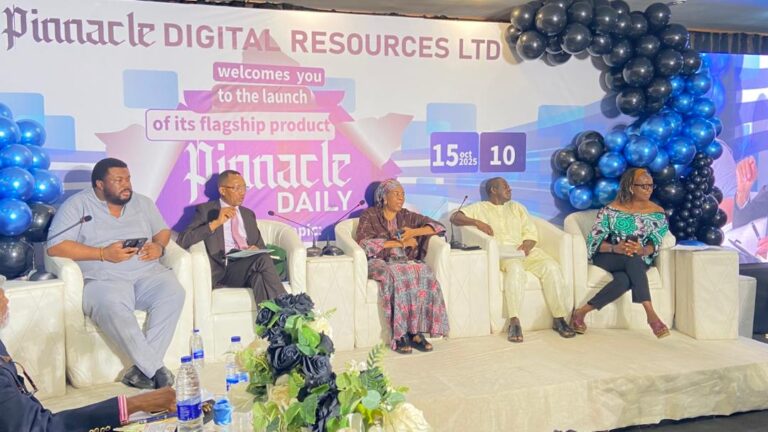
As internet and telecommunication innovations continue to transform how news is produced and consumed, Pinnacle Daily is set to leverage modern digital strategies to deliver and promote accurate, reliable, and engaging news content.
Dignitaries at the launch and flagship of Pinnacle Digital Resources limited
This was revealed by the Chairman of Pinnacle Digital Resources Limited, Abimbola Adeseyoju, on Wednesday, October 15, during the launch of Pinnacle Daily, its flagship news platform in Abuja.
“We did not want to be just another digital media outlet. We wanted to be forever relevant in the lives and decision-making process of the new generation of media consumers, while also targeting the Gen Z or Gen Alpha,” Adeseyoju said.
Chairman of Pinnacle Digital Resources limited, Abimbola Adeseyoju,
The ICIR reports that Pinnacle Daily is the brainchild of the International Centre for Investigative Reporting (ICIR), a respected media non-profit known for its commitment to accountability and investigative journalism, which offers advertising, media coverage, media consultancy and other services.
Pinnacle Daily launch and flagship
Adeseyoju noted that the platform aims to bridge the gap in making relevant decisions from the avalanche of news and information on employment, career, health, education, leisure, entertainment, finance, business opportunities, wealth creation and more.
“We want to be the trusted channel of choice for this generation when it comes to decision-making in their personal, economic, and political lives. We want to be able to provide needed rational and disadvantageous information to our consumers so they can win in life,” he added.
The co-founder of Daily Trust, Isiaq Ajibola, who was the keynote speaker who spoke on “The Economics of Media Business: Understanding Revenue Models &Profitability”, said that advertising is a lifeline of media sustainability.
co-founder of Daily Trust, Isiaq Ajibola,
“Apart from primary advertising in the hardcore, which still forms a significant part of revenue for the newspaper, the digital ad is now mostly print-driven and personalised,” Ajibola said.
He charged Pinnacle Daily to adapt all the relevant digital and manual strategies to generate sustainable income in the fast-evolving media industry.
“Newspapers can leverage their credibility to create events and products. E.g. hosting conferences, summits, or webinars on key issues like business, technology, education, or governance, brand partnership, and campaigns,” he added.
Also in his comments, the Senior Vice Chairman and Editor-In-Chief of Leadership media group, Azubuike Ishiekwene, a panellist, said that the fundamental thing that controls digital media revenue is the algorithms.
“Google, for example, is a search engine that controls at least 90 per cent of our searches, followed by Bing, which is a product of Microsoft. They determine essentially the kind of revenue that you get. So when you display that, keep in mind that having a platform is one thing, but dealing with the algorithms that determine the kind of revenue you get is entirely different,” Ishiekwene said.
He emphasised how online news consumers rely on social networks for stories than necessarily through your online platform.
“So I would like to suggest to Pinnacle, as we have seen their online platform, which is quite robust, I have tested it, to also work seriously at building online platforms from which people can go and consume their product before they even reach their online presence,” he added.
In the same vein, Musikilu Mojeed, the Editor-In-Chief and Chief Operating Officer of Premium Times, said that great content is key to survival in the media industry.
“Maintaining that standard is what is important. You must consistently produce great content if you want to survive. There is no other way. If your content is not great enough, or if they are just like existing content, it will be difficult. Already, those of us in the market, it’s already difficult. The market is saturated,” he said.
The Chairman of the Occasion, the former Governor of Osun State, Olusegun Osoba, who was represented by Eric Teniola, said that Pinnacle Daily comes at a time when journalism professionals and the media are going through very dramatic changes.
Eric Teniola
“I commend the leadership of Pinnacle Digital Resources India, publishers of Pinnacle Daily, and for braving the odds of today’s harsh media terrorism, to set up a news department that will be value-driven, and that I’m sure engineers will be up early to pay for,” he said.
He emphasised how the economy, businesses and Nigerians will benefit from a value-driven digital newspaper platform like Pinnacle Daily.
“In the age where technology drives media business, I think it is important for media entrepreneurs to see media as a business, and understand the interplay between having a sound product, understanding that the audience of consumers is key, and being ready to deploy technology appropriately. I commend the board, management, and staff of Pinnacle Daily. I am proud that you have succeeded and become a profitable media angel and withstand the test of time,” he added.
The launch and flagship of the platform saw dignitaries across the Nigerian media industry, business owners, and others.
NIGERIA’S headline inflation rate eased to 18.02 per cent in September 2025, a decline from 20.12 per cent recorded in August, according to the latest Consumer Price Index (CPI) report released by the National Bureau of Statistics (NBS).
The report shows that on a month-on-month basis, headline inflation stood at 0.72 per cent, indicating a slower pace of price increases compared to the previous month.
Similarly, the food inflation rate, a key driver of overall inflation, declined by 1.57 per cent month-on-month.
The ICIR reports that the NBS had, at the beginning of the year, changed the methodology for calculating the consumer price index (CPI) used to measure the inflation rate.
In January, the statistics office rebased the CPI to a 2024 base year from a 2009 base year.
Notably, this current inflation marks the sixth consecutive monthly decline since April 2025.
In August, the NBS reported a drop to 20.12 per cent, down from 21.88 per cent in July.
The NBS report noted that the easing was due to falling prices of staple foods such as rice, maize, millet, and semolina.
It also highlighted that urban inflation slowed to 19.75 per cent year-on-year in August from 34.58 per cent a year earlier, while rural inflation was slightly higher at 20.28 per cent.
Similarly, in its July report, the NBS recorded a decline in headline inflation to 21.88 per cent, down from 22.22 per cent in June.
BAYELSA State Governor Douye Diri has announced his resignation from the Peoples Democratic Party (PDP), further deepening the exodus of high-profile members from the opposition ahead of the 2027 general elections.
According to Channels TV, Diri made the announcement on Wednesday, October 14, at the executive council chamber of the Government House in Yenagoa.
He did not, however, disclose his next political destination but said his decision followed careful reflection on the political direction of the state.
His declaration was immediately backed by 23 members of the Bayelsa State House of Assembly, including the Speaker, marking a significant shift in the political alignment of the oil-rich state.
The development came barely 24 hours after Enugu State Governor Peter Mbah officially dumped the PDP for the All Progressives Congress (APC). Mbah described his move as a strategic decision to connect Enugu and the South-East region to the “centre of power” in Abuja.
In recent months, The ICIR has reported a pattern of defections from the PDP to the ruling APC, particularly among governors and lawmakers seeking to align with the federal government.
On Tuesday, Kaila Dahuwa Samaila, the Senator representing Bauchi North and three members of the House of Representatives from Kaduna State also announced their departure from the PDP, citing persistent internal crises within the party.
Political analysts say Diri’s resignation may have ripple effects across the South-South, where the PDP has maintained a stronghold since 1999. His exit follows similar moves by Delta State Governor Sheriff Oborevwori and Akwa Ibom State Governor Umo Eno earlier in the year — both of whom defected to the APC alongside their cabinets.
Meanwhile, the PDP’s National Publicity Secretary, Debo Ologunagba, on Wednesday admitted that the party was battling internal sabotage. Speaking on Channels Television’s The Morning Brief, he expressed disappointment over recent defections, including that of Governor Mbah, but maintained that the PDP would recover through reforms and discipline.
“There are people within our fold undermining the party, but we are addressing that,” Ologunagba said. “Our focus is on rebuilding the PDP ahead of our national convention in Ibadan, where a new leadership will emerge to reposition the party for future elections.”
The APC National Chairman, Nentawe Yilwatda, has repeatedly described the wave of defections as evidence of the party’s growing dominance and the appeal of President Bola Tinubu’s leadership, particularly in regions historically controlled by the opposition.
Despite widespread public discontent over economic hardship, inflation, and unemployment, analysts are worried that the ruling party continues to consolidate power through political realignments and elite defections.
THE Peoples Democratic Party (PDP) has expressed disappointment over the defection of Enugu State Governor, Peter Mbah, to the All Progressives Congress (APC), describing the move as regrettable but within his constitutional rights.
The party’s National Publicity Secretary, Debo Ologunagba, said on Wednesday, October 15, that while the PDP respects the governor’s personal choice, it views his action as unfortunate, especially given the trust and mandate he received on the party’s platform in 2023.
Ologunagba, who spoke on Channels Television’s The Morning Brief, accused certain individuals within the PDP of sabotaging its efforts from within, adding that the leadership was taking steps to address internal cracks ahead of its national convention scheduled for November in Ibadan, Oyo State.
“We are disappointed by the governor’s decision, but we recognise that everyone has a right to make political choices. However, every choice comes with its consequences,”
“There are people who have worked against the unity and progress of the party, but we are methodically dealing with that,” Ologunagba said.
He explained that the convention would mark a “reset” for the party, producing a new National Working Committee capable of rebuilding confidence and strengthening the PDP’s role as the main opposition force.
Mbah had announced his defection to the APC in a statewide broadcast on Tuesday, October 14. He described the decision as a strategic step to “connect Enugu and the South-East to the centre of power in Abuja” and align with the ruling party’s development agenda.
Mbah’s defection was accompanied by members of the Enugu State Executive Council, the House of Assembly, local government chairmen, councillors, and other appointees. The APC National Chairman, Nentawe Yilwatda, said the move signalled the ruling party’s growing strength in the South-East and readiness for the 2027 general elections.
The ICIR reports that the PDP has experienced a wave of defections in recent months, with governors, lawmakers, and party leaders switching allegiance to the APC. On the same day Mbah made his announcement, Kaila Dahuwa Samaila, the Senator representing Bauchi North, and three members of the House of Representatives from Kaduna State also left the PDP for the APC, citing persistent internal crises.
Earlier in the year, Delta State Governor Sheriff Oborevwori and Akwa Ibom State Governor Umo Eno joined the ruling party, taking along members of their cabinets and political allies.
Despite growing concerns over inflation and rising living costs, the APC continues to expand its membership, consolidating its political dominance across regions. The PDP, however, maintains that it remains focused on rebuilding its internal structures to offer Nigerians a credible alternative in 2027.
IT is a little after noon in Tudun Bayero, a town in the Dawakin Kudu Local Government Area of Kano State. 40-year-old Hadiza Haladu sat outside a small clinic, cradling her frail five-month-old son, Umar, as she waited for further medical attention.
Umar’s shirt hung loosely on his bony frame, his tiny hands clutching at his mother as his eyes glistened with tears before closing in exhaustion.
Umar leans against her mother at a small clinic while waiting for medical attention.
Desperate to save her child from what she had thought was diarrhoea, Haladu rushed Umar to the clinic. However, after he was diagnosed, the infant was discovered to be suffering from severe malnutrition.
The mother explained that Umar was placed on medication and certain types of food were prescribed for him. Unfortunately, his mother had struggled to get the medicines and food prescribed to make Umar well again. She now visits the clinic every week despite the long distance and the challenges posed by the hike in transport fare.
“The rise in the cost of food items has made my child unable to get the necessary hygienic food. Even as the mother, I am not feeding well, so how do you expect my child to get nutrients from the breast he sucks,” Haladu lamented tearfully.
“The drugs and food they recommended for him, I can’t buy them. I don’t have a job, and my husband’s work is not steady,” she said.
Malnutrition, a silent killer
Malnutrition occurs when people consistently do not consume or absorb the right amounts and types of food and essential nutrients.
According to the World Health Organisation (WHO), the major forms of childhood malnutrition include undernutrition (stunting, wasting, and underweight), overweight and obesity and diet-related noncommunicable diseases (such as diabetes and hypertension later in life).
The most visible forms in Nigeria, especially in Kano, are wasting and stunting. Stunting (low height for age) is caused by long-term nutritional deprivation. It affects brain development, school performance, and future productivity, while wasting (low weight for height) signals recent and severe weight loss, often from acute food shortage or disease, and poses a high risk of death.
Children who are malnourished have weakened immunity, leaving them prone to frequent infections such as diarrhoea, pneumonia, and malaria. A simple childhood illness can become fatal when compounded by poor nutrition.
Data from the WHO shows that globally in 2022, 149 million children under five were estimated to be stunted, 45 million were estimated to be wasted, and 37 million were overweight or living with obesity.
The WHO said nearly half of deaths among children under five years of age are linked to undernutrition, most of which occur in low- and middle-income countries.
According to the 2023 Nigeria Demographic and Health Survey, Nigeria has about 19.8 million children who are malnourished, making it the country with the highest burden in Africa and the second highest in the world.
The report shows that Kano State has 1.5 million children under five years of age who are stunted.
Doctors warn that children who survive early malnutrition often face lifelong consequences, including poor cognitive development, delayed growth, learning difficulties, and increased risk of chronic diseases in adulthood.
More cases
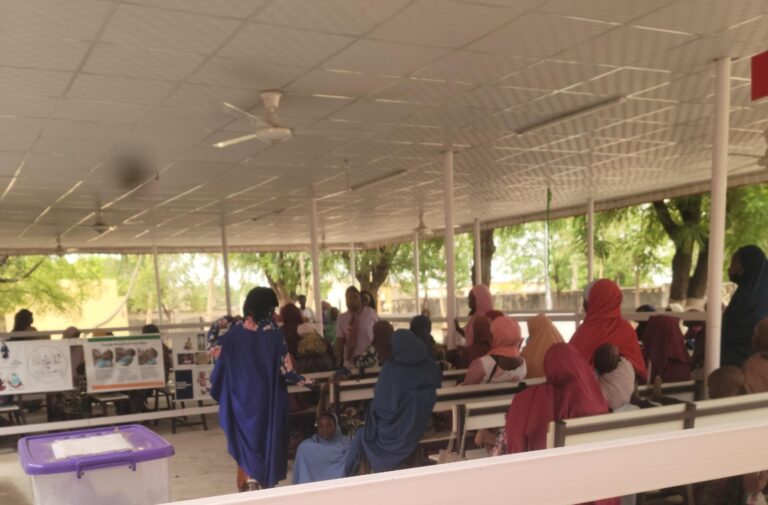
Umar’s case is not isolated. Health workers at the Aminu Kano Comprehensive Teaching Hospital (AKCTH), Kumbotso, say they are often overwhelmed by the growing number of children presenting with signs of severe acute malnutrition, visible signs of wasting, swollen feet, and listlessness.
On one afternoon, 35-year-old Maryam Alhassan, a resident of Garun Babba in the Garun Malam LGA, fought back tears after her seven-month-old daughter, Aisha was diagnosed with acute malnutrition at the teaching hospital. Although she was later referred to Hasiya Bayero hospital, she could not afford the cost of treatment.
Aisha, visibly malnourished, rests on her mother’s lap at the Specialist Hospital in Kumbotso, Kano State.
“I don’t have money, I begged the doctors there for help to help me with food I can give my child, but they refused, saying that my child must be at least six months before they can attend to her,” Alhassan said.
When she gave birth to Aisha, Alhassan was unable to breastfeed due to medical complications. Her breasts being devoid of milk, she relied on the baby formula, which, sadly, she could no longer afford due to its rising cost. Aisha suffered from diarrhoea, heat rashes, and cough. Just like Umar, she was thin, with sunken and pale eyes.
Rising hunger
Over the past two years, malnutrition in Kano has been aggravated by high food prices, insecurity, and the economic hardship triggered by the removal of fuel subsidies.
Before President Bola Tinubu announced the removal of subsidy, Haladu said she struggled but could still afford two meals a day. Now, that has become impossible.
What she earns from making awara (local cheese) is barely enough to afford food and medicines for herself and her family. Her son, Umar, survives on pap, awara, rice, and spaghetti. Occasionally, she manages to buy tombrown, a porridge mix made from millet, groundnut, soya beans, and crayfish.
Tombrown is a polite, short-term label health workers use for the porridge given to children suffering from severe protein-energy deficiency, a condition that Umar developed after he was weaned off breast milk and put on a carbohydrate-heavy diet.
Each morning, tombrown is brought to Umar and more than 20 other children in the hospital. An NGO supplies them with the beverage. It is meant for families who cannot afford packaged nutritional supplements, such as baby food.
At some point, Aisha’s mother, Alhassan, also received tombrown, which she said cost around ₦50,000. But it didn’t last more than two weeks due to her child’s severe condition and the need for what she describes as constant feeding.
“As of then, my husband and I had no money for another. Sometimes I went out begging or borrowed money to buy her custard,” she said. With the current increase in food prices, I cannot afford custard anymore. My child is currently feeding on pap.”
Tinubu policies’ impact
Before Nigeria’s inflation peaked in 2023 and 2024, food prices steadily climbed, worsened by poor governance, economic crises, prolonged conflicts, and climate change. According to a report, food prices in Nigeria rose by 21.14 per cent in May 2025 compared to the same month in 2024. The report also indicates that food inflation in Nigeria had averaged 14.06 per cent since 1996, peaking at 40.87 per cent in June 2024, one of the highest in the country’s history.
A report showed that by 2023, Nigerians spent 59 per cent of their income on food, the highest in the world.
When President Tinubu announced the removal of fuel subsidies on 29 May 2023, living costs surged dramatically. Transportation fares skyrocketed, and the ripple effects pushed the prices of everyday essentials beyond reach.
By August 2023, the average Nigerian household was already spending ₦48,186 per month on groceries, and this has only increased since. Four years before then, Nigerians spent ₦22.8 trillion on food, more than half (56.7 per cent) of the total amount they spent on household expenses (₦40.2 trillion).
While the government insisted subsidy removal was necessary to revive the economy, its ripple effects pushed many families, especially the poor, deeper into poverty and hunger. The cost of basics such as rice, milk, custard, and baby formula doubled or tripled in many communities.
In one measure to cushion the effect of fuel subsidy removal, the federal government disbursed N5 billion in financial support to each state. However, two years later, people who spoke to this reporter said they had not received any improved intervention from the government to cushion the subsidy’s effect.
Survival at any cost
At the AKCTH in Kumbotso, 37-year-old Maraisiya Dahiru sat by a corner as flies buzzed over upturned buckets of water. She watched her toddler, Abdulmalik, suck on a piece of biscuit, the only food she could afford that morning.
Maraisiya with her one-year-old son while waiting for health personnel at Aminu Kano Comprehensive Teaching Hospital.
Her husband, who was once a commercial motorcyclist, could not cope with the high cost of petrol. With passengers dwindling and profits crashing, he stays home most days or wanders nearby villages in search of farm work.
“My husband is struggling, and I am as well, so the child hardly gets better food to eat due to this hardship,” she said, adding that, “The head of my child is now growing bigger.”
Dahiru alongside her son Usman
Health experts explained that the “big head” appearance is a sign of kwashiorkor, a severe form of acute malnutrition caused mainly by protein deficiency. While a child may look swollen, the body is dangerously starved of nutrients.
Severe Acute Malnutrition (SAM) is the most critical form of undernutrition. Children appear extremely thin, fragile, with dangerously low weight compared to their height, and often suffer from nutritional oedema (swelling in the feet, face, and limbs).
Dahiru, a mother of eight, said Abdulmalik is the only one among her children who has suffered malnutrition. “I can’t estimate how much we are spending, but sometimes feeding alone costs about N30,000 to N50,000 monthly. Other times, the child doesn’t even get the necessary food or drugs,” she said.
Infographic showing the inflation figure between January 2024 to June 2025
The sharp rise in food prices forced many low-income households to cut meal portions, skip meals entirely, or rely on cheaper, nutrient-poor diets.
Although the inflation figure dropped to 22.97 per cent in June, this has not directly translated to low food prices and affordability.
Burdened mothers, vulnerable children
When this reporter arrived at the specialist hospital in Kumbotso, the centre was tense and overcrowded by parents seeking health professional interventions.
In one corner of a consultation room, Naima Adam from Dorayi cradled her child tightly on her lap, her eyes fixed on the nurse in front of her. Moments earlier, she had been told that her daughter was suffering from malnutrition and required immediate admission.
Naima with her daughter, Aisha Gidado, who has sunken cheeks and wide, weary eyes.
Adam, 35, said the illness began with her child losing appetite, swelling, and persistent fever. Unable to afford baby formula, she relied on groundnut custard mixed with millet and wheat, a homemade alternative to baby food, passed down from older women in the neighbourhood.
But even that has become difficult to sustain. According to her, a small bucket of groundnut flour now sells for N3,500, and after adding millet and wheat, she spends between ₦15,000 and ₦20,000 in two weeks.
“If this surge in prices continues, I don’t know how our children will be, and the number of malnourished children will increase because most households cannot afford to feed their families well,” she noted.
Rabiatu holding her daughter Hauwau. The little girl appears fragile and undernourished.
In Gaida Makada, another mother, Rabiatu Adamu, faced a similar ordeal. Months earlier, she noticed her six-year-old daughter, Hauwau, rapidly losing weight.
“The time I gave birth to my child, she was looking chubby and good, eventually she started emaciating and later developed a neural disease,” she said.
For children like Hauwau, weakened immune systems cannot fight off even the most common infections. Diseases such as measles, bronchopneumonia, and tuberculosis spread easily, often accompanied by relentless fevers, chronic diarrhoea, vomiting, and swollen feet.
Globally, the picture is no less alarming. UNICEF estimates that four out of five children facing food poverty survive on little more than breastmilk, cow milk, or starchy staples like rice, maize, or wheat, diets that fail to provide the nutrients required for healthy growth.
Nigeria’s deepening child food crisis
Although Nigeria has long struggled with malnutrition, recent UNICEF data shows that one in three children in Nigeria experiences severe child food poverty.
According to the 2024 UNICEF Child Food Poverty Report, at least 32 per cent of Nigerian children under the age of five were living in severe food poverty as of 2022.
infographic showing the rate of child poverty in Nigeria
This condition is defined by the consumption of food from no more than two food groups per day.
This places Nigeria in the same high-burden category as India, Pakistan, the Democratic Republic of Congo, and Somalia, where widespread nutritional deprivation among children is a life-threatening emergency.
While state-level data is limited, Kano remains one of the worst-affected. A 2023 report by Channels Television revealed that in the state, only 10.1 per cent of babies are exclusively breastfed; 15.7 per cent are fed with minimum diet diversity, and a mere 10.6 per cent receive food from animal sources such as meat, milk and eggs.
This is the situation of many nursing mothers who spoke to The ICIR.
As UNICEF has warned, children surviving on empty calories, breastmilk or starchy staples like pap, maize, or rice are deprived of the proteins, vitamins, and minerals critical for brain and body development. This lack of dietary diversity impairs physical and cognitive growth, increases the risk of early death, and traps children in a generational cycle of poverty and poor health.
Mothers turn beggars to feed their sick children
Alhassan, a resident of Garun Babba, while explaining her ordeals, said she often resorts to street begging just to afford basic meals for her ailing daughter.
Alhassan with daughter, Aisha
She explained how her daily routine revolves around keeping her child alive.
“Sometimes, if I have money, I used to feed her with custard and milk, but whenever I feed her, she purges. So, I started feeding her biscuits and warm water with no improvement,” she said.
Like Alhassan, Zainab Ibrahim, another mother from Dawakin Kudu Local Government Area, struggles with a similar issue. She has had to rely on neighbours and strangers to feed her malnourished one-year-old son.
“I also engage in street begging to feed my child. He has two sisters who didn’t have this problem when I was breastfeeding them, but his own case is different.”
Children on low-nutrient diets face life-threatening risks- Experts
A nutrition expert, Monica Aleto, said such stories reflect a worsening crisis in northern Nigeria, where desperate mothers feed their children whatever they can find, often with dire consequences.
Aleto, a paediatric nutritionist, explained that diets lacking in essential vitamins, minerals, and proteins expose children to severe acute malnutrition, stunted growth, developmental delays, and life-threatening infections.
“Feeding malnourished children with pap, biscuits, and water only keeps them alive temporarily. Pap provides only carbohydrates for energy. There is no protein in that diet. Biscuits are refined and carry no real nutritional value,” she said.
She added that malnourished children’s systems are too weak, and without nutrient-rich therapeutic food, they are prone to diseases.
“Their immediate risk of eating that kind of food is undernutrition, which can lead to severe malnutrition, low immunity (this can predispose them to any disease like tuberculosis, malaria and pneumonia) and developmental problems.”
She further noted that the situation in Kano is compounded by poor sanitation, lack of clean water, and limited access to healthcare.
UNICEF corroborates this, warning that undernourished children are more likely to die from preventable illnesses. Globally, pneumonia, diarrhoea, and malaria accounted for about 30 per cent of under-five deaths in 2019, with child pneumonia deaths strongly linked to undernutrition, unsafe water, poor sanitation, and lack of healthcare.
State government accused of misusing relief funds
Despite the high cases of malnutrition across Kano, health workers say the state’s interventions remain grossly inadequate.
The state government confirmed receiving N5 billion from the federal government to alleviate hardship caused by President Tinubu policies.
However, the Commissioner for Information, Baba Dantiye, reportedly said that a significant part of the funds was allocated to social projects, including mass weddings and tuition relief.
Dantiye explained that the state received ‘N2 billion in cash and N3 billion in kind’ from the federal government. The state government decided to use part of the cash release to fund the 1,800 mass weddings (N834 million), tuition fees for 7,000 students, and the slashing of 50 per cent fees in tertiary institutions.
“While some states reduced the cost of foodstuffs as part of the palliative, the governor of Kano State promised to share foodstuffs for free. Currently, a committee has been set up to design the mode of distribution so that both urban and rural areas will benefit,” he said.
Critics, however, argue that such expenditures overlook the urgent and growing hunger crisis, especially among women and children in rural communities.
The high cost of food in Kano continues to worsen the nutrition gap for women and children. Many mothers are unable to meet their dietary needs or provide adequate meals for their children, increasing the risk of malnutrition and related illnesses.
Health experts warn that without improved access to affordable, nutritious food and stronger interventions to support vulnerable households, malnutrition in Kano may persist, with long-term implications for child survival and development.
This report was completed with the support of the Centre for Journalism Innovation and Development (CJID)
THE House of Representatives has called on the Federal Government to convert the forfeited Abuja estate linked to former Central Bank Governor (CBN), Godwin Emefiele, into housing for low- and middle-income earners, internally displaced persons (IDPs), and other vulnerable groups.
This resolution came on Tuesday after lawmakers adopted a motion sponsored by Jafaru Gambo Leko, titled “Need for Transparent and Equitable Allocation of Forfeited Abuja Estate handed over to the Ministry of Housing by the Economic and Financial Crimes Commission (EFCC).”
“If properly managed, the estate could contribute meaningfully to addressing Nigeria’s severe housing deficit, particularly in cities like Abuja,” Leko said.
The ICIRreported that the estate, covering over 150,000 square metres, was allegedly acquired with proceeds of unlawful activities linked to Emefiele and was recently handed over by the EFCC to the Federal Ministry of Housing and Urban Development after a final forfeiture order granted by the Federal High Court.
The lawmaker expressed concern that without a transparent and accountable framework, the estate, which comprises 753 duplexes and apartments located in Lokogoma District, Abuja, might end up in the hands of “privileged elites,” defeating the purpose of asset recovery and denying ordinary Nigerians access to decent housing
“Transparency in asset management is vital to building public trust. Nigerians must see the benefits of recovered assets directly improving lives,” Leko added.
While stating that its recovery marked “a significant milestone in the nation’s anti-corruption efforts.” Leko warned that the absence of a publicly available beneficiary selection process or legislative oversight could “erode public confidence in government’s anti-corruption and social justice programmes.”
He reminded the House of the constitutional duty of all tiers of government to promote citizens’ welfare, including the provision of adequate housing, as stipulated in Chapter II of the 1999 Constitution (as amended).
After deliberations, the House resolved to urge the Ministry of Housing and Urban Development to create and make public a transparent and inclusive framework for allocating the estate.
Agreeing that the framework should give priority to low- and middle-income earners, internally displaced persons (IDPs), and other vulnerable groups, the lawmakers further directed the ministry to submit a detailed report to the House within 60 days, outlining the intended use, allocation criteria, and beneficiary selection process for the estate.
The House also mandated its Committee on Housing and Habitat to work with the ministry to ensure the allocation process upholds the principles of equity, fairness, and transparency, and to present a report within four weeks for further legislative action.
THE Federal Government has announced amajor reform in the admission requirements for Nigerian tertiary institutions, removing ‘Mathematics’ as a compulsory subject for candidates seeking admission into Arts and Humanities programmes.
The Ministry of Education disclosed this in a statement signed by its spokesperson, Folasade Boriowo, on Tuesday, October 14, in Abuja.
According to the revised National Guidelines for Entry Requirements into Nigerian Tertiary Institutions, Mathematics will remain compulsory only for Science, Technology, and Social Science courses. English Language, however, remains mandatory for all fields of study.
The new framework applies to universities, polytechnics, colleges of education, and innovation enterprise institutions across the country.
The statement explained that the revised guidelines are designed to remove barriers while maintaining academic standards.
Under the new policy, universities will require a minimum of five credit passes in relevant subjects, including English Language, obtained in not more than two sittings, while Mathematics will be compulsory only for Science, Technology, and Social Science programmes.
For polytechnics at the National Diploma level, four credit passes will be required, including English for non-science courses and Mathematics for science-related programmes.
At the Higher National Diploma level, candidates must possess a minimum of five credits, including English Language and Mathematics.
For colleges of education, a minimum of four credits is required, with English Language mandatory for Arts and Social Science courses, and Mathematics required for Science, Vocational, and Technical programmes.
Minister of Education, Maruf Tunji Alausa, said the reform is part of the government’s effort to expand access to tertiary education and eliminate long-standing barriers that have prevented many qualified candidates from gaining admission.
Alausa noted that over two million candidates sit for the Unified Tertiary Matriculation Examination (UTME) each year, but only about 700,000 are admitted due to restrictive entry requirements.
He said the new reform will open up opportunities for an additional 250,000 to 300,000 students annually, adding that it aligns with the Renewed Hope Agenda to ensure every Nigerian youth has a fair chance to learn and succeed.
The new admission policy takes effect immediately across all Nigerian higher institutions.
THE Super Eagles of Nigeria have kept their World Cup hopes alive after a decisive 4-0 win against Benin Republic on Tuesday, booking a place in the CAF knockout playoff round of the 2026 FIFA World Cup qualifiers.
The victory at Godwil Akpabio Stadium , Uyo, came on the back of intense pressure on the Nigerian side, which risked missing out on the global showpiece for a second consecutive time.
Before the match, Nigeria sat third in Group C with 14 points, behind leaders Benin (17 points) and South Africa (15 points).
South Africa, meanwhile, sealed their place at next year’s World Cup after a 3-0 victory over Rwanda at home, finishing top of the group with 18 points.
The result meant Nigeria, despite beating Benin, fell short of automatic qualification and will now proceed to the CAF playoff stage.
How the CAF Knockout works
Under the current African qualifying format for the 2026 World Cup, which will be hosted by the United States, Canada, and Mexico, each of the nine group winners qualifies automatically for the tournament.
However, the road is still tough for second-place teams like Nigeria, which still compete in the second-placed ranking.
The top four second-placed teams across all nine qualifying groups advance to a CAF knockout playoff. This mini-tournament determines which nation will represent Africa in the intercontinental playoff.
Currently, Cameroon, Garbon and Nigeria have mathematically qualified for the playoff, with either of Burkina Faso or Congo joining the group.
The playoff involves a single-leg elimination format, where the four runners-up are paired against each other in two matches.
The winners of those two fixtures will then face off in a final playoff match.
Consequently, the victor of that final advances to the intercontinental playoff.
Intercontinental playoff path
The intercontinental playoff will include six teams from different confederations, one each from Africa, Asia, Oceania, and South America, and two from the CONCACAF region (North and Central America).
These six teams will compete in a mini-tournament hosted in one of the World Cup’s organizing countries.
Two of the highest-ranked teams (based on FIFA rankings) will be seeded and given a bye into the second round. The remaining four will play a single-leg semifinal, with the two winners then meeting the seeded teams.
The two final winners will qualify for the 2026 FIFA World Cup.
CAMEROON opposition leader, Issa Tchiroma Bakary, has declared himself the winner of the October 12 presidential election, calling on President Paul Biya to concede defeat and “honour the truth of the ballot box”.
Tchiroma announced in a nearly five-minute video posted on social media early Tuesday, October 14, even though official results are yet to be released.
He urged the 92-year-old incumbent, President Paul Biya, to call and concede defeat, insisting that doing so would demonstrate Cameroon’s political maturity and the resilience of its democracy.
“The people have chosen, and this choice must be respected,” Tchiroma demanded in the video.
He described the election results as “a clear rejection” of Biya’s administration and “the dawn of a new era.”
Tchiroma also expressed gratitude to rival candidates “who have already congratulated me and acknowledged the people’s choice.”
He urged government institutions and the military to accept his victory and “stand with the republic.”
“Do not let anyone divert you from your mission to protect the people,” he said.
However, the government cautioned earlier in the week that only results declared by the Constitutional Council are valid, noting that the council has up to two weeks to announce the official outcome.
Minister of Territorial Administration Paul Atanga Nji recently cautioned that only the Constitutional Council is authorised to declare the winner, adding that any unilateral announcement of results would amount to “high treason.”
Reuters reports that while Cameroon’s electoral law allows polling station results to be publicly displayed, the outcome must be validated by the Constitutional Council, which has until October 26 to make the official announcement.
The ICIR reported that Biya, who at 92 is the world’s oldest sitting president, is currently seeking another seven-year mandate in the October 12 elections, even though his age, health and capacity to govern have become a subject of debate.
Some citizens protested online in February during Biya’s 92nd birthday, demanding his exit when his tenure expires later this year, but others see him as a good leader who should continue in office.
76-year-old Tchiroma, a former government spokesperson and longtime ally of Biya for two decades, emerged as the leading challenger to the president in Sunday’s election.
After resigning from the government in June, his campaign gained momentum, attracting large crowds and securing major endorsements from a coalition of opposition parties and civil society groups.
But Biya, who has ruled for 43 years and is the world’s oldest serving head of state, was widely expected to win another seven-year term, owing to his firm control over state institutions and the divided opposition.
The ICIR reported in August that Cameroon’s constitutional court dismissed a suit seeking to block Biya from running for an eighth term, paving the way for him to extend his nearly 43 years in power.
The bid to stop Biya’s candidacy was filed by Akere Muna of the Universe Party, one of the 12 contenders in the upcoming poll.