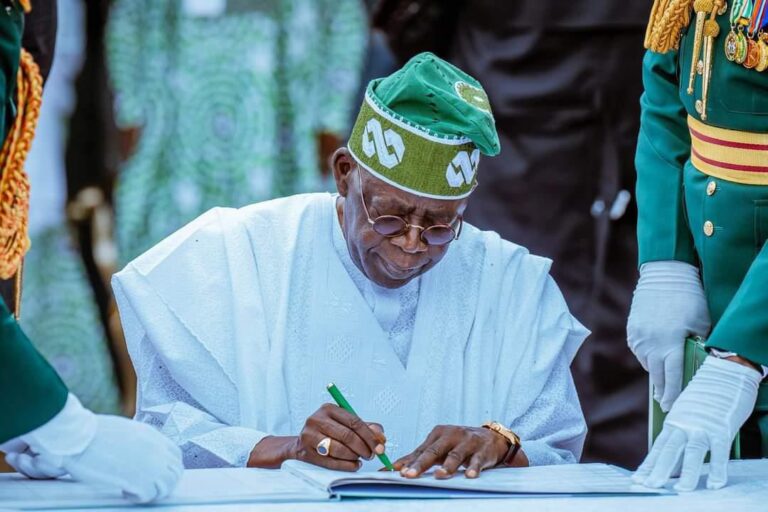
THE Presidency has lauded Shell’s decision to commit $2 billion to the HI offshore gas development project in Nigeria, noting that the project will elevate Nigeria’s gas output by supplying up to 350 million cubic feet of gas needed for economic activities.
The Presidency also disclosed that Nigeria has attracted over $8 billion in new investments in the oil and gas sector within the first two years of President Bola Tinubu’s administration.
A statement on Tuesday, October, by Tinubu’s media aide, Bayo Onanuga, hailed Shell’s Final Investment Decision (FID) on the project as another endorsement of the Tinubu government’s economic and energy sector reforms.
The ICIR reports that the HI gas project, located in the shallow offshore Oil Mining Lease (OML) 144, is expected to produce about 350 million standard cubic feet of gas per day at peak production to Nigeria LNG (NLNG; Shell interest 25.6%)
Shell’s Upstream President Peter Costello, in a statement by Shell, noted that “Following recent investment decisions related to the Bonga deep-water development, today’s announcement demonstrates our continued commitment to Nigeria’s energy sector, with a focus on Deepwater and Integrated Gas.”
“This Upstream project will help Shell grow our leading Integrated Gas portfolio, while supporting Nigeria’s plans to become a more significant player in the global LNG market,” he added.
Shell stated that the increased gas feedstock to Nigeria LNG (NLNG) through the Train 7 project, which is designed to expand production capacity at the Bonny Island terminal, aligns with its strategy to grow global LNG output by an average of 4–5 per cent annually through 2030.
The company added that the development will strengthen NLNG’s role in advancing Nigeria’s economic goals by creating thousands of jobs during construction and operations.
Reacting to this, Tinubu stated, “This major FID announcement by Shell, their second in one year, is a clear validation of our wide-ranging reform efforts and a signal to the world that Nigeria is fully open for business and investment.”
According to the statement, the HI project marks the third major Final Investment Decision in Nigeria’s oil and gas sector since Tinubu assumed office in 2023.
It further said that the projects, including the Ubeta and Bonga North developments, together have brought total new investments in the sector to over $8 billion since Tinubu assumed office.
“This investment decision is Nigeria’s third major oil and gas FID in the last 18 months, following the Ubeta Non-Associated Gas project and the Bonga North deepwater project. It marks yet another milestone in Nigeria’s journey to unlock its abundant gas resources for domestic and export use. The Ubeta and HI gas projects can supply up to 15 per cent of the NLNG’s total feedgas requirements, covering Trains 1 to 7,” the statement noted.
THE wave of defections from the Peoples Democratic Party (PDP) continued on Tuesday, October 14, as Senator representing Bauchi North in the Senate, Kaila Dahuwa Samaila and three members of the House of Representatives from Kaduna State officially joined the All Progressives Congress (APC).
Their defection, which came after an earlier one by the Enugu State governor, Peter Mbah, marks another major political realignment ahead of the 2027 general elections, further consolidating the ruling party’s strength across key regions of the country.
Samaila, in a letter addressed to the Senate President, Godswill Akpabio, and read during plenary, said his decision was driven by the “unending internal crisis” within the PDP, which, he noted, had hindered his ability to effectively serve his constituents.
“The People’s Democratic Party has gravely constrained my ability to discharge my constitutional responsibilities effectively and in good conscience.
“As one deeply committed to the service of our nation and the welfare of my people, I have found it necessary to realign my political engagements with a more progressive platform that embodies good governance, unity, and discipline,” he stated.
He lauded President Bola Tinubu’s “bold and transformative” reforms and pledged loyalty to the APC’s vision of national renewal.
His defection brings the number of APC senators to 74, while PDP now has 27, Labour Party (LP) 4, All Progressives Grand Alliance (APGA) 2, New Nigeria Peoples Party (NNPP) 1, and Social Democratic Party (SDP) 1, making up the 109-member Senate.
In the House of Representatives, three Kaduna lawmakers, Aliyu Abdullahi (Ikara/Kubau Federal Constituency), Abdulkareem Ahmed (Kaduna South Federal Constituency), and Sadiq Abdullahi (Sabon Gari Federal Constituency) also announced their defection from the PDP to the APC.
Deputy Speaker Benjamin Kalu read their defection letters during plenary, confirming their official transition to the ruling party.
The defection of the lawmakers came on the same day, Enugu State Governor Mbah formally announced his defection in a statewide broadcast, saying his decision to join the APC was a strategic move to connect Enugu and the South-East region to the “centre of power in Abuja.
“Leadership demands difficult, even painful decisions in the service of higher principles and goals.
“After a long reflection, we have decided to join the All Progressives Congress to better serve the people of Enugu and align with the party’s broader vision for national development,” Mbah said.
Mbah’s defection was accompanied by members of the Enugu State Executive Council, the House of Assembly, local government chairmen, councillors, and other political appointees.
APC National Chairman Nentawe Yilwatda described the move as a major milestone for the party’s expansion in the South-East, saying it reflected “a growing acceptance of President Tinubu’s leadership and reform agenda.”
The ICIR reports that defections to the APC have intensified in recent months, with several governors, senators, and state legislators crossing over from opposition parties ahead of the 2027 elections.
Earlier in the year, Delta State Governor Sheriff Oborevwori and Akwa Ibom State Governor Umo Eno also joined the APC, leading their cabinets and political allies in what analysts see as part of a broader political realignment towards the ruling party.
Despite widespread public discontent over economic hardship and inflation, the APC continues to attract top politicians from opposition ranks, further tightening its grip on the national political landscape.
PRESIDENT Bola Tinubu has written to the Senate seeking the confirmation of Professor Joash Ojo Amupitan as the new Chairman of the Independent National Electoral Commission (INEC).
The request was contained in a letter read on the floor of the Senate on Tuesday, October 14, by Senate President Godswill Akpabio, who also announced other correspondence from the president seeking approval for various appointments.
Akpabio explained that the request was made in line with the provisions of the 1999 Constitution (as amended), which mandates the Senate to confirm appointments into key federal offices, including the leadership of the electoral body.
The letter was consequently referred to the Committee of the Whole for consideration.
Backstory
The nomination of Amupitan followed the approval of his appointment by the National Council of State during its meeting held on October 9, 2025, at the Presidential Villa, Abuja.
According to a statement by the Special Adviser to the President on Information and Strategy, Bayo Onanuga, the Council unanimously approved the nomination, describing Amupitan as a man of integrity and deep experience.
Governor Ahmed Usman Ododo of Kogi State, who attended the meeting, said the appointment was historic, as Amupitan is the first person from Kogi to be nominated for the position.
Amupitan, 58, is a Professor of Law at the University of Jos, where he serves as the Deputy Vice-Chancellor (Administration). A Senior Advocate of Nigeria (SAN) since 2014, he hails from Ayetoro Gbede in Ijumu Local Government Area of Kogi State.
With over three decades of academic and administrative experience, Amupitan has served as Dean of the Faculty of Law (2008–2014), Chairman of the Committee of Deans and Directors (2012–2014), and Head of the Department of Public Law (2006–2008). He also served as the Pro-Chancellor and Chairman of the Governing Council of Joseph Ayo Babalola University in Osun State.
He holds Bachelor’s, Master’s, and PhD degrees in Law from the University of Jos and was called to the Nigerian Bar in 1988.
Amupitan’s nomination came after the exit of Mahmood Yakubu, who completed his second tenure on October 7 and handed over to National Commissioner May Agbamuche-Mbu in an acting capacity.
Yakubu’s decade-long tenure was marked by major electoral reforms, including the introduction of the Bimodal Voter Accreditation System (BVAS) and the INEC Result Viewing (IReV) portal aimed at promoting transparency.
However, the 2023 general elections attracted widespread criticism from civil society groups and observers over logistical lapses and result transmission challenges.
THE Federal Capital Territory (FCT) Police Command says it has foiled a planned kidnapping operation in Byazhin Forest, Abuja, recovering an AK-47 rifle, ammunition, and preventing what could have been another major attack in the nation’s capital.
A statement signed by the FCT Police Public Relations Officer, Josephine Adeh, on Tuesday, October 14, said the operation was carried out following credible intelligence from the Force Headquarters Technical Intelligence Unit, which revealed that a notorious bandit leader identified as Idrisa, also known as “Mai Duna,” had concluded plans to launch coordinated assaults on several villages around Byazhin.
The police said acting swiftly on the intelligence, the Anti-Kidnapping Unit of the Command deployed tactical teams on October 10, 2025, at about 9 p.m., and mounted an ambush along the suspected routes of the criminals. At about 1 a.m. the next day, officers sighted two groups of heavily armed bandits advancing toward the area. A fierce gun battle ensued and lasted about 20 minutes before the gang was overpowered. The assailants fled into the forest with gunshot wounds.
According to the police, reinforcements from nearby formations and military support were deployed to secure the area and block possible escape routes. A search of the scene led to the recovery of one AK-47 rifle with a defaced serial number, one magazine, and thirty rounds of live 7.6mm ammunition.
The FCT Commissioner of Police commended the swift response of the tactical teams, noting that the operation prevented what could have been a significant breach of public safety. He also directed medical facilities in the FCT and neighbouring states to report any persons presenting with gunshot wounds to the nearest police formation immediately.
The command urged residents to remain vigilant and report suspicious activities through the emergency lines.
The incident comes amid growing concerns over insecurity in Abuja, where residents have in recent months faced waves of kidnapping, robbery, and cult-related violence.
A previous report by The ICIR highlighted multiple kidnapping and robbery incidents across communities such as Lugbe, Mpape, and Kuje, despite several police operations that led to the rescue of abducted victims. In July, suspected cultists attacked a police post in Apo-Waru after a failed raid, while a school caregiver and toddler were murdered in Dawaki in a separate incident that shocked residents.
Although police authorities have announced a 15 per cent drop in crime rate within the FCT, recent attacks continue to raise questions from security analysts about public safety and the adequacy of intelligence-led policing in Nigeria’s capital.
ENUGU State Governor, Peter Mbah, on Tuesday, October 14, officially defected from the Peoples Democratic Party (PDP) to the All Progressives Congress (APC).
The governor made the declaration during a statewide broadcast, describing the decision as a necessary step to connect Enugu and the South-East region to the central government in Abuja.
“Today, after a long reflection, we have decided to join the All Progressives Congress,” Mbah stated,” Mbah said.
He also stressed that his defection is in the best interest of the region, adding that so many things are still unfolding.
He added that his move to the APC was driven by a desire to serve the people of Enugu more effectively and to align with the party’s broader vision for development and progress.
He further thanked the PDP for providing him with the platform on which he campaigned and won the 2023 governorship election.
“Leadership demands difficult, even painful decisions, in the service of higher principles and goals. And there always comes a time where everyone must make a bold choice to determine their destiny,” he added.
The governor crossed over with members of the State Executive Council, House of Assembly, local government chairmen, councillors, and other political appointees.
Last week, the APC confirmed that Mbah’s defection would take place on Tuesday, October 14, following the dissolution of the party’s Enugu State Executive Committee to make room for his entry.
Speaking earlier, the APC National Chairman, Nentawe Yilwatda, said Mbah’s decision reflected the ruling party’s growing influence in the South-East and its resolve to strengthen its presence ahead of the 2027 elections.
Nwoye stated, “For the past 10 years, Enugu State has remained in opposition. But all that will change on Tuesday, the 14th of October, 2025, when the governor will be declaring for the APC.
“And the governor is not coming alone. The governor is coming in with 260 ward councillors. They will be declaring with the governor. He will be coming in with the 24 members of the House of Assembly. He will be coming in with members of the National Assembly. He will also be coming with the entire Exco.”
The ICIR reports that the defectors joined the list of politicians switching allegiance to the ruling party ahead of the 2027 poll.
Earlier in the year, Delta State Governor Sheriff Oborevwori and Akwa Ibom State Governor Umo Eno joined the ruling party with their cabinets.
The Delta governor led all PDP members in the state, including his predecessor, Ifeanyi Okowa, to the ruling party.
Okowa was the running mate to the PDP presidential candidate and former Vice President Atiku Abubakar in the 2023 election.
While many Nigerians are groaning that the APC government, led by President Bola Tinubu, has worsened hardship for citizens, the party’s membership has, however, been swelling in the past months.
AS Nigerians anticipate the Anambra off-cycle governorship election scheduled for November 8, there are growing speculations that the Independent National Electoral Commission (INEC) may postpone voting in some Local Government Areas (LGAs).
Off-cycle elections, heldoutside the regular election schedule, play a significant role in Nigeria’s democracy. They are often organised to fill vacant positions or address specific local and state matters. Unlike general elections that follow fixed timelines and draw large voter numbers, off-cycle polls can occur at any time. Their outcomes can shape both local governance and national politics.
Can INEC postpone elections?
It is not without precedent; Nigeria has experienced postponements in the past, often due to security challenges, logistical issues, or unforeseen disruptions, raising questions about what such a move would mean for voters this time.
Nigeria’s Electoral Actempowers theINEC to postpone voting in specific polling units, wards, local government areas, or even entire constituencies if serious issues prevent elections from holding. Such matters may include outbreaks of violence, natural disasters, widespread insecurity, or technical failures such as faulty BVAS or other election equipment.
This power has been exercised in the past. General elections were shifted in2011 and2019 due to logistical and security challenges. At the local level, elections have also been postponed or rerun in certain areas where ballot snatching, intimidation, or violence disrupted voting.
As the Anambra off-cycle governorship election draws near, there are growing concerns that similar disruptions could lead to postponements in parts of the state, particularly in volatile local government areas with histories of electoral violence.
Why INEC may postpone voting in Anambra
Anambra State has some longstanding issues that could cause the postponement of elections, ranging from insecurity often fuelled by separatist threats to political thuggery, attacks on INEC offices, and persistent logistical challenges such as poor road networks, difficult riverine terrain, and late deployment of materials.
The state has also witnessed fire outbreaks that destroyed election facilities and sensitive equipment, creating delays in preparations. Prolonged court disputes over party primaries and candidate eligibility have historically complicated the electoral process and, in some cases, forced adjustments to election timelines.
The Indigenous People of Biafra (IPOB) have frequentlyenforced sit-at-home directives aimed at disrupting electoral activities. In past elections, these orders, sometimes reversed at the last minute, have created uncertainty and lowered voter turnout in South East states, including Anambra.
In 2021, the separatist groupannounced a one-week sit-at-home order from November 5 to 10, deliberatelytimed to disrupt the governorship election in the state. Although the group later rescinded the directive under pressure, fears of violence lingered, fuelling voter apathy.
According to a 2021 report by The Nation newspaper, which examined the conduct of the Anambra gubernatorial elections that year, while many blamed INEC for shifting voting in Ihiala Local Government Area of the state from Saturday, November 6, to Tuesday, November 9, the real obstacle was insecurity, which continued even during the rescheduled exercise. This showed that INEC has limited control over security matters.
The situation was, however, differentduring the 2023 presidential elections. Unlike other South-Eastern states that witnessed violent attacks and voter apathy, Anambra did not experience such challenges.
Recent months have seen a decline in violent incidents, such as kidnappings and attacks on civilians, some attributed to IPOB or unknown gunmen. These have significantly strained security and election logistics.
A report by The Whistler, whichcited data from SBM Intelligence, indicates a steady decline in killings in Anambra through 2025. In its July 30 update, the firm reported 39 deaths in the second quarter (Q2), a 38 per cent drop from 63 in Q1. This followed another decline from 95 deaths in Q4 2024, the state’s deadliest quarter within the January 2024 to June 2025 period.
While Anambra has shown signs of improved security in 2025, the shadow of past threats and uncertainties lingers. The possibility of election postponement remains tied to how well security agencies, INEC, and community stakeholders can manage risks in volatile areas.
In addition, Anambra was one of the states where INEC’s office suffered arson in 2019, leading to the destruction of over 4,600 Smart Card Readers (SCRs)—critical pieces of election equipment that take months to procure, forcing the commission to reschedule the elections.
Though a postponement does notmean cancellation. Instead, voting in the affected areas is rescheduled to a later date within the constitutional timeframe. This ensures that voters in those areas are not denied their rights.
What it really means
For voters, a postponement means they will be temporarily denied the opportunity to cast their ballot on Election Day, with a new date set once the issues are resolved. While this protects their right to vote eventually, it can discourage participation, especially if voters feel unsafe or lose trust in the process.
Written & edited by Nigeria Fact-Checkers Coalition (NFC) ahead of the Anambra 2025 election.
THE Federal Government has directed vice-chancellors of all federal universities to strictly enforce the “No Work, No Pay” policy against members of the Academic Staff Union of Universities (ASUU) participating in the ongoing nationwide strike.
A circular dated October 13, 2025, and reported by Punch Newspaper, confirmed the development, warning that the government would no longer tolerate violations of labour laws.
The circular, which was confirmed to The ICIR by the Education Ministry spokesperson Boriowo Folasade, was copied to key government offices, including the Head of the Civil Service of the Federation, the Permanent Secretary, Ministry of Education the Accountant-General of the Federation, and the Executive Secretary of the National Universities Commission (NUC), among others.
“In line with the provisions of the Labour Laws of the Federation, the Federal Government reiterates its position on the enforcement of the ‘No Work, No Pay’ policy in respect of any employee who fails to discharge his or her official duties during the period of strike action,” the circular reads.
Alausa further directed all vice-chancellors to conduct a roll call and physical headcount of all academic staff in their institutions.
He also asked the vice-chancellors to submit a detailed report indicating those present at work and those participating in the strike, ordering that salaries be withheld for all academic employees who fail to perform their duties during the strike.
He noted that only members of the Congress of University Academics (CONUA) and the National Association of Medical and Dental Academics (NAMDA), who are not part of the strike, should receive their pay.
Recall that CONUA’s president Niyi Sunmonu, had in a statement, clarified that the union is committed to maintaining academic stability through constructive dialogue and peaceful engagement with the government and other stakeholders.
“It is important to emphasize that CONUA has no basis at this time to declare a dispute or embark on any strike action,” Sunmonu stated.
Backstory
Meanwhile, The ICIR reports that the directive followed ASUU’s firm stance on continuing its two-week warning strike, which began on Monday, October 13, 2025, despite the Federal Government’s plea for restraint.
Reacting to a statement by the Federal Ministry of Education urging the union to shelve its planned strike, ASUU described the move as a threat disguised as negotiation.
In a phone interview with The ICIR on Monday, ASUU president Chris Piwuna stated that the strike had already commenced across public universities nationwide.
He added that the government could not threaten the union and simultaneously call for negotiation, urging authorities to withdraw their threat if they sought genuine dialogue.
ASUU demands have been met –FG
Earlier today, the federal government reiterated that it has addressed all the concerns raised by the striking university lecturers, insisting there is no justification for the union’s planned industrial action.
Minister of Education, Tunji Alausa, stated this during a live interview on Channels Television’s The Morning Brief on Monday, where he appealed to university lecturers to suspend the planned strike and return to the classrooms.
“We have addressed every single request by ASUU; there is no need for this strike, and we are pleading with them to go back to school. We need to keep our children in school,” Alausa said. He added that no other group has engaged his office as frequently as ASUU since he assumed office.
The minister dismissed claims that the government had been indifferent to ASUU’s long-standing demands, explaining that President Bola Tinubu had directed his administration to ensure fair treatment for all labour unions.
THE Federal Government has approved an interest-free loan of N6.3 billion to support 21,000 Nigerians affected by flood disasters across the country.
The Minister of State for Humanitarian Affairs and Poverty Reduction, Yusuf Sanunu, disclosed this on Monday during a roundtable held in Abuja to commemorate the 2025 International Day for Disaster Risk Reduction.
“As a ministry, under the Hope Agenda of Mr President, the Ministry has, through the National Social Investment Agency, done very well in improving the resilience of the local community. As of today, in terms of conditional cash transfer, over 8.1 million households in Nigeria have been reached with a total sum of over 300 and something billion naira. This has really improved their capacity, improved their health and education, and the process will continue,” Sanunu said.
The ICIR reported in January how flood and windstorm increasingly impact Plateau State, with many affected families displaced, but the Plateau State Emergency Management Agency (PLASEMA) and the Environmental Protection and Sanitation Agency (PEPSA) often fail to deliver timely relief and execute effective ecological projects.
Sanunu explained that the intervention aims to lessen the impact of flooding across the country and tackle its effects on food security, noting that the Federal Government has supported 8.1 million households with over N300 billion under the Conditional Cash Transfer scheme.
“We are also planning, together with both national and state levels, to improve on our flood mitigating effect by doling out, in the next few weeks to come, to 21,000 Nigerians, free interest, and also free collateral loan of over 300,000 Naira each. This is to address the issue of crisis in farming to mitigate the impact of flooding in Nigeria,” he said.
The Minister also highlighted plans to empower displaced persons through a scheme designed to create a ready market for their products.
“Already, we have planted a program in collaboration with Federal Minister of Agriculture in addressing the food security of internally displaced persons through the collaboration with internally displaced persons in their camp and host community, the formula of giving the internally displaced person 30% of the produce produced by the internally displaced persons, and the government will off-take 70% and the money will be given to the internally displaced persons that participated in the scheme as a cash component,” he said.
The event had in attendance Vice President Kashim Shettima, the Deputy Speaker of the House of Representatives, Benjamin Kalu, Governor Dauda Lawal of Zamfara State, lawmakers and international partners, among others.
Speaking at the event, Vice President Kashim Shettima emphasised that it is wiser, more cost-effective, and more compassionate to prepare for disasters before they occur than to rebuild after their destruction.
“Every naira we spend today on preparedness saves many more tomorrow on response and recovery. Every investment in resilience is, in truth, an investment in the lives and futures of our people,” Shettima said.
The Vice President explained that in recent years, floods have washed away farmlands, erosion swallowed roads, and fires have razed markets that took years to build.
“These tragedies happen not in distant lands but in our own communities—to people we know, to families just like ours. Each of these disasters reminds us that if we fail to invest in resilience, we will continue to spend our scarce resources cleaning up after crises instead of building lasting prosperity,” he added.
While highlighting how President Bola Tinubu emphasises the need to treat resilience as a national policy, Shettima said that the government is integrating disaster risk reduction into every sector.
“From agriculture and infrastructure to education and health—while expanding early warning systems to ensure that communities receive timely alerts before floods, droughts, or disease outbreaks occur,” the Vice President said.
He noted that the government is enhancing the capacity of state and local emergency management agencies through training, technology, and improved coordination support.
He also urged academia and research institutions to provide data-driven research for informed decision-making, and civil society to raise awareness and hold institutions accountable.
Over the years, Nigeria has faced recurring incidents of flooding, erosion, drought, and other climate-related disasters that have ravaged farmlands, displaced thousands, and placed pressure on public resources.
The ICIRreported in August that the National Emergency Management Agency (NEMA) officially stated that at least 138 persons sustained various degrees of injuries, 43,936 were displaced, 8,594 houses were affected, and 8,278 farmlands were destroyed across 43 Local Government Areas (LGAs) in 19 States due to flooding in 2025.
NEMA also noted that 8,594 houses and 8,278 farmlands have been damaged, with women and children being the most affected.
ON November 8, 2025, the people of Anambra State will head to the polls to elect a new governor. The Independent National Electoral Commission (INEC) has cleared 16 candidates from different political parties to contest in what promises to be a highly competitive race.
From seasoned politicians and entrepreneurs to first-time contenders, each of the 16 candidates bring their unique experiences and plans for the future of Anambra State.
Ukachukwu Nicholas (APC)
Nicholas Ukachukwu is a businessman and politician from Osumenyi, Anambra State. According to his campaign website (archived here), he started his education at Omaigwe Primary School.
Image of Ukachukwu Nicholas. Picture source: Bizwatch NigeriaHe founded SNECOU Group Limited, a business with investments in oil and gas, real estate, construction, agriculture, education, and media. He was a former chairman of Abuja Municipal Area Council (AMAC) in the FCT and also served in Nigeria’s House of Representatives from 1999 to 2003, representing the AMAC/Bwari Federal Constituency.
He is currently the governorship candidate for Anambra State under the All Progressives Congress in the 2025 election.
Ezenwafor Jude (PDP)
Image of Ezenwafor Jude.
Ezenwafor Jude is a real estate developer and trade consultant who emerged as the Peoples Democratic Party’s (PDP) flag-bearer after running unopposed in the party’s primary, where he received unanimous endorsement from 853 delegates across the state.
His career spans key roles in Nigerian politics, including advisory positions to state governors, leadership within political parties.
Charles Soludo (APGA)
File Photo : Charles Soludo
Charles Soludo, the incumbent governor of Anambra State, is running for a second term under the All Progressives Grand Alliance (APGA).
He served as the Governor of the Central Bank of Nigeria (CBN) from 2004 to 2009. Before that, he was the Chief Economic Adviser to President Olusegun Obasanjo and headed the National Planning Commission as its Director-General from 2003 to 2004. He was also the founding Chairman of the Africa Finance Corporation and has consulted for multiple international organisations.
Geoffrey Onyejegbu (NNPP)
Geoffrey Onyejegbu is the New Nigeria Peoples Party (NNPP) governorship candidate for the 2025 Anambra State election. He is a retired Colonel of the Nigerian Army.
Moghalu Nnadubem, the Labour Party’s governorship candidate, hails from Nnewi, Nnewi North LGA, Anambra State.
His career spans decades, with contributions in both public and private sectors, including as Director General of the Bureau of Cooperatives and Rural Development in Abia State. He was also the Managing Director/CEO of the National Inland Waterways Authority (NIWA).
Beyond his professional achievements, he founded the Zimuzo Development Foundation.
Chukwurah Vincent (SDP)
SDP logo
Vincent Chukwurah is the governorship candidate of the Social Democratic Party (SDP).
He contested for Idemili North/ Idemili South seat in the House of Representatives in the 2023 elections under the Social Democratic Party.
Onyeze Charles (A)
Image of Onyeze Charles. Picture source: Facebook.
Onyeze Charles is a politician in Anambra. He was declared unopposed as the candidate of the Accord party during its primary election held at the East End Hotel, Aroma in Awka, Anambra State.
The 54-year-old is running with Ezeadili Appolonia.
Nweke Japhet (AA)
Image of Nweke Japhet. Picture source: Instagram
Nweke Japheth emerged as the Action Alliance Party’s gubernatorial candidate for Anambra State in the 2025 election. He secured the primaries through an Option A4 voting system and garnered 58 votes from party delegates at the state’s party primary.
He is the chairman/CEO of Blue Shield Security Company Limited.
Ifemeludike Chioma (AAC)
Ifemeludike Chioma
Ifemeludike Chioma is the first of five children and lost her father at a young age. She attended Saint Paul’s Primary School, Township Secondary School, and Saint John’s Secondary School – all in Jos, Plateau State. She studied political science at Anambra State University (now Chukwuemeka Odumegwu Ojukwu University), where she was active in student unionism and civil rights volunteering. She is the youngest candidate in this gubernatorial election.
Nwosu Chuma (ADC)
Image of Ifemeludike Chioma.
Chuma Nwosu hails from Oduda, Nnewichi community in Nnewi, Anambra State. He is an economist and computer technologist with over 30 years experience in the private sector. He currently serves as CEO of Jetlink Group Ltd., an ICT firm with regional interests in Nigeria, Ghana, and Liberia.
He emerged as the African Democratic Congress (ADC) governorship candidate, receiving a certificate of return and selecting Geoffrey Nwobu as his running mate.
Otti Echezona (APM)
Image of APM logo.
Otti Echezona is the Allied Peoples’ Movement (APM’s) governorship candidate, with Ezeigwe Chuka Samuel as his running mate. He was confirmed in the final candidate list published by INEC.
The 66-year-old has his first school-leaving certificate, Senior School Certificate Examination, and Higher National Diploma.
Nweke Chukwudubem (APP)
APP logo
INEC’s finalised list for the November 8, 2025, Anambra governorship election identifies Nweke Christopher Chukwudubem as the Action Peoples Party (APP) candidate, with Okeke Blessing Ebele as his running mate.
Nweke is currently 44 years old and studied Law.
Okeke Jerry (BOOT)
Okeke Jerry was born in Ezinifite, Aguata LGA of Anambra State. He attended Town School and Community Secondary School, Ezinifite. He later studied Civil Engineering at IMT Enugu and Geological Science at Nnamdi Azikiwe University (UNIZIK). He pursued further studies in Linguistics, Law, and Public Administration.
Image of Okeke Jerry.
He founded Edumail Publications Ltd. in 2005. This company produces textbooks, storybooks, and educational materials widely used across Nigeria.
Ndidi Olieh (NRM)
Ndidi Olieh
INEC recognised 40-year-old Ndidi Olieh as the National Rescue Movement (NRM) flagbearer for the Anambra governorship election and Ogbe Reginald as her deputy. She is also the Anambra state spokesperson for her party. Her educational qualifications as stated by INEC include a first school-leaving certificate, National Examination Council (NECO), and a BSc from Nnamdi Azikiwe University, Awka.
Paul Chukwuma (YPP)
Paul Chukwuma was born on February 27, 1978, in Ihiala, Anambra State. Paul is married to Fidelia Chukwuma and has six children. He holds degrees in Philosophy (UNN) and Law, plus a Master of Laws in Intellectual Property & IT Law with Distinction. He is also an alumnus of the Lagos Business School.
He founded a group of companies spanning ICT, real estate, construction, and education, including Olivia University of Medical Sciences in Anambra and Olivia University in Burundi, creating jobs and opportunities across Africa. He has invested in youth empowerment and innovation through scholarships, social programmes, and the Centre for Applied Research & Development (CARD).
Martin Ugwoji (ZLP)
Martin Ugwoji, aged 59, is the Zenith Labour Party (ZLP)’s official governorship candidate for the Anambra 2025 election. His deputy running mate is Obi Faith.
ZLP logo
He has his first school-leaving certificate and a WAEC qualification.
Written & edited by Nigeria Fact-Checkers Coalition (NFC) ahead of the Anambra 2025 election.
HAMAS has released the last 20 surviving Israeli hostages on Monday as part of a United States-brokered ceasefire agreement.
Reuters reports that the Israeli military announced that it had received all hostages confirmed to be alive after their handover from Gaza by the Red Cross on Monday, a major step toward ending two years of devastating conflict in Gaza, as President Donald Trump hailed the development as “a historic dawn of a new Middle East”.
Reports revealed that the release of the hostages sparked scenes of joy, embraces, and tears among thousands gathered at “Hostage Square” in Tel Aviv.
The bodies of some of the 26 confirmed dead hostages, along with two others whose fate remains uncertain, are also set to be released on Monday.
Hamas militants have killed 32 members of what they described as a “gang” in Gaza City during a security operation launched after Israeli forces withdrew under the ceasefire, a Palestinian security source said on Monday.
Hamas prisoners’ media office confirmed that dozens of buses transporting some of the nearly 2,000 Palestinian detainees being released from Israeli prisons under the agreement have also arrived in Gaza.
Most of those released had been detained by Israeli forces during the Gaza war, but the group also included 250 prisoners convicted of deadly attacks or held on suspicion of security-related offences.
Meanwhile, the Israeli military said the remaining 13 living hostages released by Hamas had crossed the border into Israel.
The exchange of hostages and Palestinian detainees represents a key component of the initial phase of the ceasefire agreement reached last week in the Egyptian resort city of Sharm el-Sheikh, where Monday’s summit is expected to take place.
The Trump administration brokered the deal in collaboration with Egypt, Qatar, and Turkey, with the next phase set to establish an international body, the “Board of Peace,” to be chaired by Trump.
More than 20 world leaders are expected to discuss the next steps under Trump’s 20-point peace plan, designed to secure lasting stability after two years of conflict that began with Hamas’s cross-border attack on October 7, 2023, which left about 1,200 people dead and 251 taken hostage.
According to health officials in Gaza, Israeli airstrikes, bombardments, and ground assaults have killed more than 67,000 Palestinians, leaving widespread destruction across the enclave and triggering a severe humanitarian crisis.
The group’s public appearance on Monday, with its fighters assembling at Nasser Hospital, highlighted the likely challenge of easing Israeli fears over Hamas’s continued grip on Gaza, where it has been in power since 2007.
Speaking before entering the Israeli parliament, Trump said the Palestinian militant group Hamas would abide by a clause in his plan requiring it to disarm.
Trump is set to become only the fourth US president to address the Knesset, following in the footsteps of Jimmy Carter in 1979, Bill Clinton in 1994, and George W. Bush in 2008.
The ICIR reported that the two years of war have turned Gaza into a vast expanse of rubble, leaving nearly all of its 2.2 million residents homeless and reshaping the Middle East, fueling related clashes between Israel and Iran, Lebanon’s Iran-backed Hezbollah, and Yemen’s Houthis rebels.
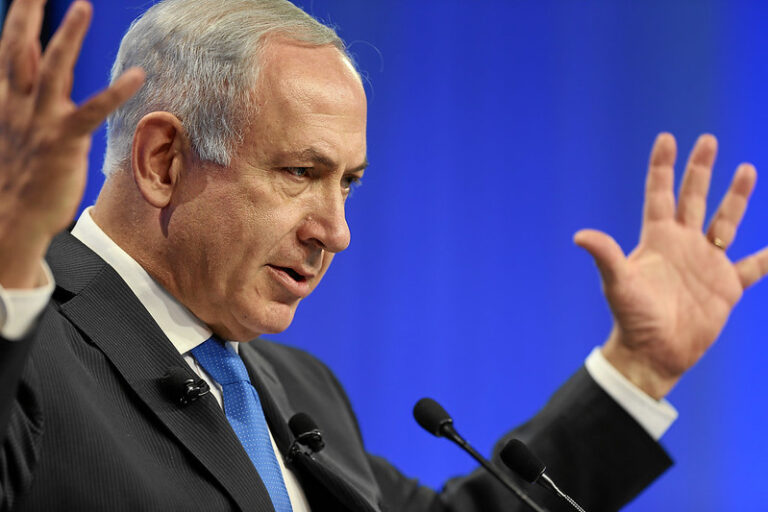
Israeli Prime Minister Benjamin Netanyahu, while addressing the parliament, said Israel has paid a high price for the war, noting, “But our enemies now understand just how powerful and just how determined Israel is.”
He said he had promised to bring all the hostages home and had done so.
The Parliament Speaker Amir Ohana lauded Trump, echoing several of his familiar expressions and pledging that Israel would nominate the US president for the Nobel Peace Prize he has long pursued but did not win last week.