Home Blog Page 158

Anambra election : Why INEC may postpone voting in some areas

0

By Nigerian Fact-checker’s Coalition 

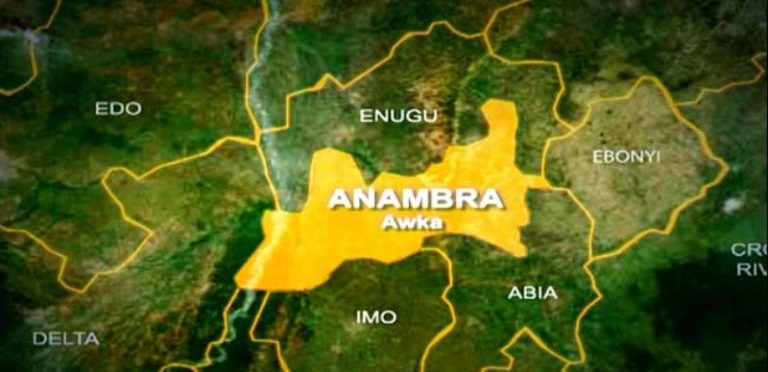
AS Nigerians anticipate the Anambra off-cycle governorship election scheduled for November 8, there are growing speculations that the Independent National Electoral Commission (INEC) may postpone voting in some Local Government Areas (LGAs).

Off-cycle elections, held outside the regular election schedule, play a significant role in Nigeria’s democracy. They are often organised to fill vacant positions or address specific local and state matters. Unlike general elections that follow fixed timelines and draw large voter numbers, off-cycle polls can occur at any time. Their outcomes can shape both local governance and national politics.

Can INEC postpone elections?

It is not without precedent; Nigeria has experienced postponements in the past, often due to security challenges, logistical issues, or unforeseen disruptions, raising questions about what such a move would mean for voters this time.

Nigeria’s Electoral Act empowers the INEC to postpone voting in specific polling units, wards, local government areas, or even entire constituencies if serious issues prevent elections from holding. Such matters may include outbreaks of violence, natural disasters, widespread insecurity, or technical failures such as faulty BVAS or other election equipment.

This power has been exercised in the past. General elections were shifted in 2011 and 2019 due to logistical and security challenges. At the local level, elections have also been postponed or rerun in certain areas where ballot snatching, intimidation, or violence disrupted voting.

As the Anambra off-cycle governorship election draws near, there are growing concerns that similar disruptions could lead to postponements in parts of the state, particularly in volatile local government areas with histories of electoral violence.

Why INEC may postpone voting in Anambra

Anambra State has some longstanding issues that could cause the postponement of elections, ranging from insecurity often fuelled by separatist threats to political thuggery, attacks on INEC offices, and persistent logistical challenges such as poor road networks, difficult riverine terrain, and late deployment of materials. 

The state has also witnessed fire outbreaks that destroyed election facilities and sensitive equipment, creating delays in preparations. Prolonged court disputes over party primaries and candidate eligibility have historically complicated the electoral process and, in some cases, forced adjustments to election timelines.

The Indigenous People of Biafra (IPOB) have frequently enforced sit-at-home directives aimed at disrupting electoral activities. In past elections, these orders, sometimes reversed at the last minute, have created uncertainty and lowered voter turnout in South East states, including Anambra.

In 2021, the separatist group announced a one-week sit-at-home order from November 5 to 10, deliberately timed to disrupt the governorship election in the state. Although the group later rescinded the directive under pressure, fears of violence lingered, fuelling voter apathy.

According to a 2021 report by The Nation newspaper, which examined the conduct of the  Anambra gubernatorial elections that year, while many blamed INEC for shifting voting in Ihiala Local Government Area of the state from Saturday, November 6, to Tuesday, November 9, the real obstacle was insecurity, which continued even during the rescheduled exercise. This showed that INEC has limited control over security matters.

The situation was, however, different during the 2023 presidential elections. Unlike other South-Eastern states that witnessed violent attacks and voter apathy, Anambra did not experience such challenges.

Recent months have seen a decline in violent incidents, such as kidnappings and attacks on civilians, some attributed to IPOB or unknown gunmen. These have significantly strained security and election logistics.

A report by The Whistler, which cited data from SBM Intelligence, indicates a steady decline in killings in Anambra through 2025. In its July 30 update, the firm reported 39 deaths in the second quarter (Q2), a 38 per cent drop from 63 in Q1. This followed another decline from 95 deaths in Q4 2024, the state’s deadliest quarter within the January 2024 to June 2025 period.

While Anambra has shown signs of improved security in 2025, the shadow of past threats and uncertainties lingers. The possibility of election postponement remains tied to how well security agencies, INEC, and community stakeholders can manage risks in volatile areas.

In addition, Anambra was one of the states where INEC’s office suffered arson in 2019, leading to the destruction of over 4,600 Smart Card Readers (SCRs)—critical pieces of election equipment that take months to procure, forcing the commission to reschedule the elections.

Though a postponement does not mean cancellation. Instead, voting in the affected areas is rescheduled to a later date within the constitutional timeframe. This ensures that voters in those areas are not denied their rights.

What it really means

For voters, a postponement means they will be temporarily denied the opportunity to cast their ballot on Election Day, with a new date set once the issues are resolved. While this protects their right to vote eventually, it can discourage participation, especially if voters feel unsafe or lose trust in the process.

Written & edited by Nigeria Fact-Checkers Coalition (NFC) ahead of the Anambra 2025 election.
FG orders VCs to enforce ‘No Work, No Pay’ rule as ASUU continues strike

0

THE Federal Government has directed vice-chancellors of all federal universities to strictly enforce the “No Work, No Pay” policy against members of the Academic Staff Union of Universities (ASUU) participating in the ongoing nationwide strike.

A circular dated October 13, 2025, and reported by Punch Newspaper, confirmed the development, warning that the government would no longer tolerate violations of labour laws.

The circular, which was confirmed to The ICIR by the Education Ministry spokesperson Boriowo Folasade, was copied to key government offices, including the Head of the Civil Service of the Federation, the Permanent Secretary, Ministry of Education the Accountant-General of the Federation, and the Executive Secretary of the National Universities Commission (NUC), among others.

“In line with the provisions of the Labour Laws of the Federation, the Federal Government reiterates its position on the enforcement of the ‘No Work, No Pay’ policy in respect of any employee who fails to discharge his or her official duties during the period of strike action,” the circular reads.

Alausa further directed all vice-chancellors to conduct a roll call and physical headcount of all academic staff in their institutions.

He also asked the vice-chancellors to submit a detailed report indicating those present at work and those participating in the strike, ordering that salaries be withheld for all academic employees who fail to perform their duties during the strike.

He noted that only members of the Congress of University Academics (CONUA) and the National Association of Medical and Dental Academics (NAMDA), who are not part of the strike, should receive their pay.

Recall that CONUA’s president Niyi Sunmonu, had in a statement, clarified that the union is committed to maintaining academic stability through constructive dialogue and peaceful engagement with the government and other stakeholders.

“It is important to emphasize that CONUA has no basis at this time to declare a dispute or embark on any strike action,” Sunmonu stated.

Backstory

Meanwhile, The ICIR reports that the directive followed ASUU’s firm stance on continuing its two-week warning strike, which began on Monday, October 13, 2025, despite the Federal Government’s plea for restraint.

Reacting to a statement by the Federal Ministry of Education urging the union to shelve its planned strike, ASUU described the move as a threat disguised as negotiation.

In a phone interview with The ICIR on Monday, ASUU president Chris Piwuna stated that the strike had already commenced across public universities nationwide.

He added that the government could not threaten the union and simultaneously call for negotiation, urging authorities to withdraw their threat if they sought genuine dialogue.

ASUU demands have been met –FG

Earlier today, the federal government reiterated that it has addressed all the concerns raised by the striking university lecturers, insisting there is no justification for the union’s planned industrial action.

Minister of Education, Tunji Alausa, stated this during a live interview on Channels Television’s The Morning Brief on Monday, where he appealed to university lecturers to suspend the planned strike and return to the classrooms.

“We have addressed every single request by ASUU; there is no need for this strike, and we are pleading with them to go back to school. We need to keep our children in school,” Alausa said. He added that no other group has engaged his office as frequently as ASUU since he assumed office.

The minister dismissed claims that the government had been indifferent to ASUU’s long-standing demands, explaining that President Bola Tinubu had directed his administration to ensure fair treatment for all labour unions.

FG to disburse N6.3billion interest-free loans to 21,000 flood victims

0

THE Federal Government has approved an interest-free loan of N6.3 billion to support 21,000 Nigerians affected by flood disasters across the country.

The Minister of State for Humanitarian Affairs and Poverty Reduction, Yusuf Sanunu, disclosed this on Monday during a roundtable held in Abuja to commemorate the 2025 International Day for Disaster Risk Reduction.

“As a ministry, under the Hope Agenda of Mr President, the Ministry has, through the National Social Investment Agency, done very well in improving the resilience of the local community. As of today, in terms of conditional cash transfer, over 8.1 million households in Nigeria have been reached with a total sum of over 300 and something billion naira. This has really improved their capacity, improved their health and education, and the process will continue,” Sanunu said.

The ICIR reported in January how flood and windstorm increasingly impact Plateau State, with many affected families displaced, but the Plateau State Emergency Management Agency (PLASEMA) and the Environmental Protection and Sanitation Agency (PEPSA) often fail to deliver timely relief and execute effective ecological projects.

Sanunu explained that the intervention aims to lessen the impact of flooding across the country and tackle its effects on food security, noting that the Federal Government has supported 8.1 million households with over N300 billion under the Conditional Cash Transfer scheme.

“We are also planning, together with both national and state levels, to improve on our flood mitigating effect by doling out, in the next few weeks to come, to 21,000 Nigerians, free interest, and also free collateral loan of over 300,000 Naira each. This is to address the issue of crisis in farming to mitigate the impact of flooding in Nigeria,” he said.

The Minister also highlighted plans to empower displaced persons through a scheme designed to create a ready market for their products.

“Already, we have planted a program in collaboration with Federal Minister of Agriculture in addressing the food security of internally displaced persons through the collaboration with internally displaced persons in their camp and host community, the formula of giving the internally displaced person 30% of the produce produced by the internally displaced persons, and the government will off-take 70% and the money will be given to the internally displaced persons that participated in the scheme as a cash component,” he said.

The event had in attendance Vice President Kashim Shettima, the Deputy Speaker of the House of Representatives, Benjamin Kalu, Governor Dauda Lawal of Zamfara State, lawmakers and international partners, among others.

Speaking at the event, Vice President Kashim Shettima emphasised that it is wiser, more cost-effective, and more compassionate to prepare for disasters before they occur than to rebuild after their destruction.

“Every naira we spend today on preparedness saves many more tomorrow on response and recovery. Every investment in resilience is, in truth, an investment in the lives and futures of our people,” Shettima said.

The Vice President explained that in recent years, floods have washed away farmlands, erosion swallowed roads, and fires have razed markets that took years to build. 

“These tragedies happen not in distant lands but in our own communities—to people we know, to families just like ours. Each of these disasters reminds us that if we fail to invest in resilience, we will continue to spend our scarce resources cleaning up after crises instead of building lasting prosperity,” he added. 

While highlighting how President Bola Tinubu emphasises the need to treat resilience as a national policy, Shettima said that the government is integrating disaster risk reduction into every sector.

“From agriculture and infrastructure to education and health—while expanding early warning systems to ensure that communities receive timely alerts before floods, droughts, or disease outbreaks occur,” the Vice President said.

He noted that the government is enhancing the capacity of state and local emergency management agencies through training, technology, and improved coordination support.

He also urged academia and research institutions to provide data-driven research for informed decision-making, and civil society to raise awareness and hold institutions accountable.

Over the years, Nigeria has faced recurring incidents of flooding, erosion, drought, and other climate-related disasters that have ravaged farmlands, displaced thousands, and placed pressure on public resources. 

The ICIR reported in August that the National Emergency Management Agency (NEMA) officially stated that at least 138 persons sustained various degrees of injuries, 43,936 were displaced, 8,594 houses were affected, and 8,278 farmlands were destroyed across 43 Local Government Areas (LGAs) in 19 States due to flooding in 2025.

NEMA also noted that 8,594 houses and 8,278 farmlands have been damaged, with women and children being the most affected.

Anambra 2025 governorship race: Meet 16 candidates battling for the top Seat

0

ON November 8, 2025, the people of Anambra State will head to the polls to elect a new governor. The Independent National Electoral Commission (INEC) has cleared 16 candidates from different political parties to contest in what promises to be a highly competitive race.

From seasoned politicians and entrepreneurs to first-time contenders, each of the 16 candidates bring their unique experiences and plans for the future of Anambra State.

  1. Ukachukwu Nicholas (APC)

Nicholas Ukachukwu is a businessman and politician from Osumenyi, Anambra State. According to his campaign website (archived here), he started his education at Omaigwe Primary School.

Image of Ukachukwu Nicholas. Picture source: Bizwatch NigeriaHe founded SNECOU Group Limited, a business with investments in oil and gas, real estate, construction, agriculture, education, and media. He was a former chairman of Abuja Municipal Area Council (AMAC) in the FCT and also served in Nigeria’s  House of Representatives from 1999 to 2003, representing the AMAC/Bwari Federal Constituency.

He is currently the governorship candidate for Anambra State under the All Progressives Congress in the 2025 election.

  1. Ezenwafor Jude (PDP)

Image of Ezenwafor Jude.

Ezenwafor Jude is a real estate developer and trade consultant who emerged as the Peoples Democratic Party’s (PDP) flag-bearer after running unopposed in the party’s primary, where he received unanimous endorsement from 853 delegates across the state.

His career spans key roles in Nigerian politics, including advisory positions to state governors, leadership within political parties.

  1. Charles Soludo  (APGA)

File Photo : Charles Soludo

Charles Soludo, the incumbent governor of Anambra State, is running for a second term under the All Progressives Grand Alliance (APGA).

He served as the Governor of the Central Bank of Nigeria (CBN) from 2004 to 2009. Before that, he was the Chief Economic Adviser to President Olusegun Obasanjo and headed the National Planning Commission as its Director-General from 2003 to 2004. He was also the founding Chairman of the Africa Finance Corporation and has consulted for multiple international organisations.

  1. Geoffrey Onyejegbu (NNPP)

Geoffrey Onyejegbu is the New Nigeria Peoples Party (NNPP) governorship candidate for the 2025 Anambra State election. He is a retired Colonel of the Nigerian Army.

Geoff Onyejegbu.
Geoff Onyejegbu.

Previously,  he vied for the gubernatorial  ticket of the All Progressive Congress (APC) in 2021 but contested under the Allied Peoples Movement (APM).

  1. Moghalu Nnadubem (LP)

George Moghalu.
George Moghalu.

Moghalu Nnadubem, the Labour Party’s governorship candidate, hails from Nnewi, Nnewi North LGA, Anambra State.

His career spans decades, with contributions in both public and private sectors, including as Director General of the Bureau of Cooperatives and Rural Development in Abia State. He was also the Managing Director/CEO of the National Inland Waterways Authority (NIWA).

Beyond his professional achievements, he founded the Zimuzo Development Foundation.

  1. Chukwurah Vincent (SDP)

SDP logo
SDP logo

Vincent Chukwurah is the governorship candidate of the Social Democratic Party (SDP).

Born in 1954 and from Anambra State, Vincent has a general high school diploma.

He contested for Idemili North/ Idemili South seat in the House of Representatives in the 2023 elections under  the Social Democratic Party.

  1. Onyeze Charles (A)

Image of Onyeze Charles. Picture source: Facebook.

Onyeze Charles is a politician in Anambra. He was declared unopposed as the candidate of the Accord party during its primary election held at the East End Hotel, Aroma in Awka, Anambra State.

The 54-year-old is running with Ezeadili Appolonia.

  1. Nweke Japhet (AA)


Image of Nweke Japhet. Picture source: Instagram

Nweke Japheth emerged as the Action Alliance Party’s gubernatorial candidate for Anambra State in the 2025 election. He secured the primaries through an Option A4 voting system and garnered 58 votes from party delegates at the state’s party primary.

He is the chairman/CEO  of Blue Shield Security Company Limited.

  1. Ifemeludike Chioma (AAC)

Ifemeludike Chioma
Ifemeludike Chioma

Ifemeludike Chioma is the first of five children and lost her father at a young age. She attended Saint Paul’s Primary School, Township Secondary School, and Saint John’s Secondary School – all in Jos, Plateau State. She studied political science at Anambra State University (now Chukwuemeka Odumegwu Ojukwu University), where she was active in student unionism and civil rights volunteering. She is the youngest candidate in this gubernatorial election.

  1. Nwosu Chuma (ADC)

Image of Ifemeludike Chioma.

Chuma Nwosu hails from Oduda, Nnewichi community  in Nnewi, Anambra State. He is an economist and computer technologist with over 30 years experience in the private sector. He currently serves as CEO of Jetlink Group Ltd., an ICT firm with regional interests in Nigeria, Ghana, and Liberia.

He emerged as the African Democratic Congress (ADC) governorship candidate, receiving a certificate of return and selecting Geoffrey Nwobu as his running mate.

  1. Otti  Echezona (APM)

Image of APM logo.

Otti Echezona is the Allied Peoples’ Movement (APM’s) governorship candidate, with Ezeigwe Chuka Samuel as his running mate. He was confirmed in the final candidate list published by INEC.

The 66-year-old has his first school-leaving certificate, Senior School Certificate Examination, and Higher National Diploma.

  1. Nweke  Chukwudubem (APP)

APP logo

INEC’s finalised list for the November 8, 2025, Anambra governorship election identifies Nweke Christopher Chukwudubem as the Action Peoples Party (APP) candidate, with Okeke Blessing Ebele as his running mate.

Nweke is currently 44 years old and studied Law.

  1. Okeke Jerry (BOOT)

Okeke Jerry was born in Ezinifite, Aguata LGA of Anambra State. He attended Town School and Community Secondary School, Ezinifite. He later studied Civil Engineering at IMT Enugu and Geological Science at Nnamdi Azikiwe University (UNIZIK). He pursued further studies in Linguistics, Law, and Public Administration.

Image of Okeke Jerry.

He founded Edumail Publications Ltd. in 2005. This company produces textbooks, storybooks, and educational materials widely used across Nigeria.

  1. Ndidi Olieh (NRM)

Ndidi Olieh
Ndidi Olieh

INEC recognised 40-year-old Ndidi Olieh as the National Rescue Movement (NRM) flagbearer for the Anambra governorship election and Ogbe Reginald as her deputy. She is also the Anambra state spokesperson for her party. Her educational qualifications as stated by INEC include a first school-leaving certificate, National Examination Council (NECO), and a BSc from Nnamdi Azikiwe University, Awka.

  1. Paul Chukwuma  (YPP)

Paul Chukwuma was born on February 27, 1978, in Ihiala, Anambra State. Paul is married to Fidelia Chukwuma and has six children. He holds degrees in Philosophy (UNN) and Law, plus a Master of Laws in Intellectual Property & IT Law with Distinction. He is also an alumnus of the Lagos Business School.

He founded a group of companies spanning ICT, real estate, construction, and education, including Olivia University of Medical Sciences in Anambra and Olivia University in Burundi, creating jobs and opportunities across Africa. He has invested in youth empowerment and innovation through scholarships, social programmes, and the Centre for Applied Research & Development (CARD).

  1. Martin  Ugwoji (ZLP)

Martin Ugwoji, aged 59, is the Zenith Labour Party (ZLP)’s official governorship candidate for the Anambra 2025 election. His deputy running mate is Obi Faith.

ZLP logo

He has his first school-leaving certificate and a WAEC qualification.

Written & edited by Nigeria Fact-Checkers Coalition (NFC) ahead of the Anambra 2025 election.
All surviving Gaza hostages back home-Israel

HAMAS has released the last 20 surviving Israeli hostages on Monday as part of a United States-brokered ceasefire agreement.

Reuters reports that the Israeli military announced that it had received all hostages confirmed to be alive after their handover from Gaza by the Red Cross on Monday, a major step toward ending two years of devastating conflict in Gaza, as President Donald Trump hailed the development as “a historic dawn of a new Middle East”.

Reports revealed that the release of the hostages sparked scenes of joy, embraces, and tears among thousands gathered at “Hostage Square” in Tel Aviv.

The bodies of some of the 26 confirmed dead hostages, along with two others whose fate remains uncertain, are also set to be released on Monday. 

Hamas militants have killed 32 members of what they described as a “gang” in Gaza City during a security operation launched after Israeli forces withdrew under the ceasefire, a Palestinian security source said on Monday.

Hamas prisoners’ media office confirmed that dozens of buses transporting some of the nearly 2,000 Palestinian detainees being released from Israeli prisons under the agreement have also arrived in Gaza.

Most of those released had been detained by Israeli forces during the Gaza war, but the group also included 250 prisoners convicted of deadly attacks or held on suspicion of security-related offences.

Meanwhile, the Israeli military said the remaining 13 living hostages released by Hamas had crossed the border into Israel.

The exchange of hostages and Palestinian detainees represents a key component of the initial phase of the ceasefire agreement reached last week in the Egyptian resort city of Sharm el-Sheikh, where Monday’s summit is expected to take place.

The Trump administration brokered the deal in collaboration with Egypt, Qatar, and Turkey, with the next phase set to establish an international body, the “Board of Peace,” to be chaired by Trump.

More than 20 world leaders are expected to discuss the next steps under Trump’s 20-point peace plan, designed to secure lasting stability after two years of conflict that began with Hamas’s cross-border attack on October 7, 2023, which left about 1,200 people dead and 251 taken hostage.

According to health officials in Gaza, Israeli airstrikes, bombardments, and ground assaults have killed more than 67,000 Palestinians, leaving widespread destruction across the enclave and triggering a severe humanitarian crisis.

The group’s public appearance on Monday, with its fighters assembling at Nasser Hospital, highlighted the likely challenge of easing Israeli fears over Hamas’s continued grip on Gaza, where it has been in power since 2007.

Speaking before entering the Israeli parliament, Trump said the Palestinian militant group Hamas would abide by a clause in his plan requiring it to disarm.

Trump is set to become only the fourth US president to address the Knesset, following in the footsteps of Jimmy Carter in 1979, Bill Clinton in 1994, and George W. Bush in 2008.

The ICIR reported that the two years of war have turned Gaza into a vast expanse of rubble, leaving nearly all of its 2.2 million residents homeless and reshaping the Middle East, fueling related clashes between Israel and Iran, Lebanon’s Iran-backed Hezbollah, and Yemen’s Houthis rebels.

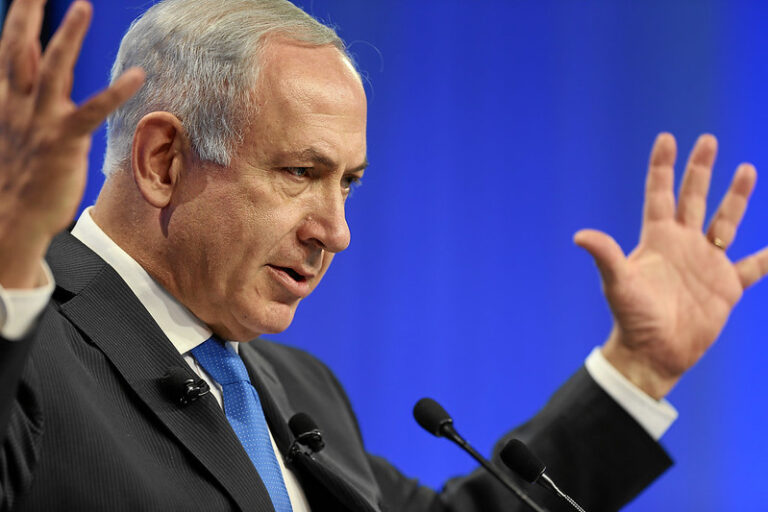
Israeli Prime Minister Benjamin Netanyahu, while addressing the parliament, said Israel has paid a high price for the war, noting, “But our enemies now understand just how powerful and just how determined Israel is.”

He said he had promised to bring all the hostages home and had done so.

The Parliament Speaker Amir Ohana lauded Trump, echoing several of his familiar expressions and pledging that Israel would nominate the US president for the Nobel Peace Prize he has long pursued but did not win last week.

10 things to Know about late cleric Uma Ukpai

0

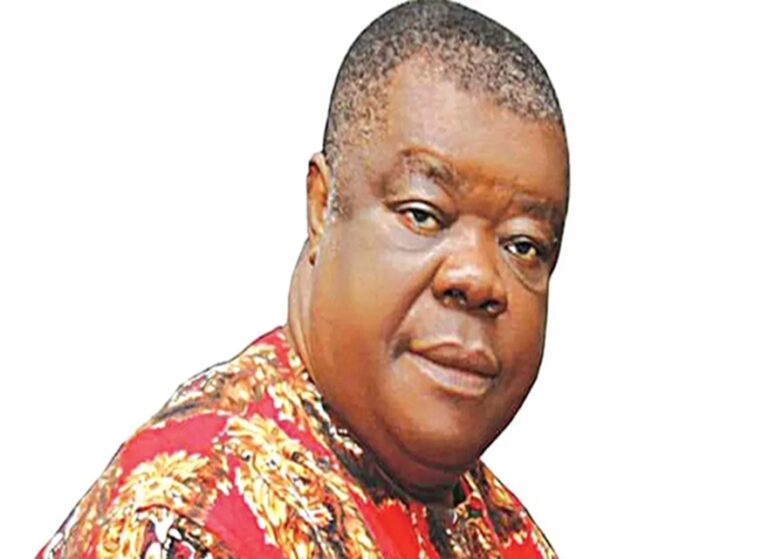
RENOWNED evangelist and founder of the Uma Ukpai Evangelistic Association (UUEA), Uma Ukpai, has passed away at the age of 80. He died on October 6, 2025, after more than six decades of devoted Christian ministry.

In a statement issued  on October 13, his family described his death as a “triumphant homegoing”, noting that he “finished his race and is now resting in eternal praise.” Ukpai was widely revered for his evangelistic crusades, mentorship, and lifelong dedication to spreading the gospel across Nigeria and beyond.

Here are 10 key things to know about the late cleric:

  1. Uma Ukpai was born on January 7, 1945, in Asaga, Ohafia, Abia State, Nigeria. He lost his father at the age of 10.

  2. He became a Christian in 1958, a turning point that marked the beginning of his spiritual journey and lifelong mission in evangelism.

  3. Ukpai established the Uma Ukpai Evangelistic Association (UUEA), a non-denominational gospel ministry headquartered in Uyo, Akwa Ibom State.

  4. He was one of the founding leaders of the Pentecostal Fellowship of Nigeria (PFN) and played a major role in uniting the body of Christ in the country.

  5. Ukpai studied in both Nigeria and abroad, attending institutions such as the School of Journalism and Television, Frisham, UK, South Florida Christian College, USA, Carolina Christian University, and Burke Bible College, Kentucky.

  6. He earned a Diploma in Journalism, a Certificate in Electrical Engineering Practice, and Bachelor’s and Doctorate degrees in Divinity.

  7. He was married to Pastor Philomena Uma Ukpai, and their union was blessed with eight biological children and one adopted child.

  8. Ukpai endured personal tragedy when two of his children died in a car accident on the same day, an experience he often referenced as a test of his faith.

  9. His powerful crusades across Africa and beyond were marked by large gatherings, healing testimonies, and passionate preaching that inspired countless lives.

  10. Known for humility, compassion, and unwavering faith, Ukpai mentored many young ministers and left behind a spiritual legacy that continues to shape Christianity in Nigeria.

The family announced that details of his burial arrangements will be released later, as tributes continue to pour in from across the world, celebrating his life of service, faith, and impact.


Lagos re-arraigns convicted kidnapper Evans over police officers’ murder

0

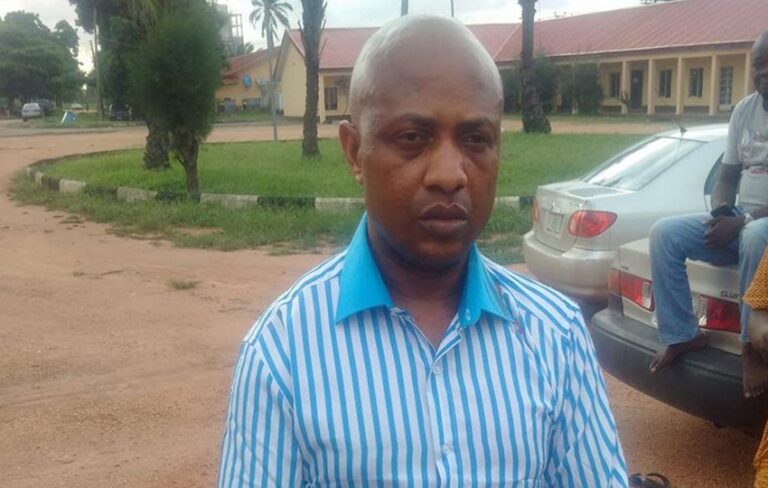
THE Lagos State Government has re-arraigned convicted kidnap kingpin, Chukwudumeme Onwuamadike, popularly known as Evans, on Monday, October 13, before the Lagos State High Court sitting in Ikeja on fresh charges bordering on murder, attempted murder, and conspiracy to commit kidnapping.

Evans was brought to court alongside his co-defendant, Joseph Emeka, where both men pleaded not guilty to a five-count charge read before Justice A.O. Ogala. The charges relate to the alleged killing of two police officers during one of their kidnapping operations.

The re-arraignment marks yet another chapter in the long-running prosecution of Evans, who has been standing trial in multiple kidnapping and murder cases since his arrest in 2017. According to court records, Evans has been convicted in at least two separate cases, one earning him a life sentence and another 21 years in prison for the abduction of businessman Sylvanus Ahanonu Hafia.

In one of those judgments, delivered by Oluwatoyin Taiwo of the Ikeja Special Offences Court, Evans and an accomplice, Victor Aduba, were found guilty of kidnapping and demanding a $2 million ransom in 2014. The court held that the sentence was necessary to deter others involved in similar crimes.

Despite these convictions, Evans has continued to face fresh charges, including the latest murder case, while also pursuing a plea bargain with the state government. Earlier this year, he informed the court that he had reformed while serving his term at the Kirikiri Correctional Centre, where he now teaches inmates after earning a teaching diploma in economics through a government scholarship.

Evans had previously expressed willingness to forfeit 14 trucks and other assets to compensate his victims as part of a plea arrangement. However, the state government has yet to formally respond to his latest application.

The Lagos State Ministry of Justice confirmed that the new case before Justice Ogala is part of ongoing efforts to consolidate all pending criminal charges against Evans across different courts.

Meanwhile, court proceedings have been adjourned to a later date for trial commencement.

The re-arraignment of Evans comes only days after President Bola Tinubu approved presidential clemency for several convicted inmates across the country, a move that has sparked widespread debate among Nigerians. While some view the gesture as a step toward prison decongestion and restorative justice, others argue it undermines the integrity of the justice system, particularly when high-profile offenders continue to face fresh charges in court.

FG claims ASUU’s demands met as lecturers begin warning strike

0

THE Federal Government has reiterated that it has addressed all the concerns raised by the Academic Staff Union of Universities (ASUU), insisting there is no justification for the union’s planned industrial action.

Minister of Education, Tunji Alausa, stated this during a live interview on Channels Television’s The Morning Brief on Monday, where he appealed to university lecturers to suspend the planned strike and return to the classrooms.

“We have addressed every single request by ASUU; there is no need for this strike, and we are pleading with them to go back to school. We need to keep our children in school,” Alausa said. He added that no other group has engaged his office as frequently as ASUU since he assumed office.

The minister dismissed claims that the government had been indifferent to ASUU’s long-standing demands, explaining that President Bola Tinubu had directed his administration to ensure fair treatment for all labour unions.

Alausa also highlighted new steps being taken by the government to strengthen tertiary education funding, including the reconstitution of the Federal Government Tertiary Institutions Expanded Negotiation Committee led by former Head of Service, Mahmud Yayale Ahmed.

The new committee, inaugurated last week, was tasked with unifying and accelerating negotiations with unions across universities, polytechnics, and colleges of education. The Minister said the initiative reflects Tinubu’s commitment to ending the cycle of disruptions in Nigeria’s academic calendar through constructive dialogue.

However, despite these assurances, ASUU has commenced a two-week warning strike beginning Monday, October 13, 2025, accusing the government of failing to honour key agreements.

ASUU President, Chris Piwuna, announced the strike at a press conference in Abuja, saying the decision followed the government’s failure to fulfil several critical obligations, including the payment of earned academic allowances (EAA) and withheld salaries from the 2022 strike.

Piwuna said the union had received ₦50 billion from the government as part of the EAA but maintained that the total outstanding arrears stood at ₦103 billion. He added that the government’s recent request for additional time to address the pending issues was viewed by ASUU’s National Executive Council (NEC) as a delay tactic.

“The letter from Alhaji Yayale Ahmed was considered by our union as a delay tactic. They asked for two weeks two weeks ago, and now they’re asking for another three. NEC viewed that as an attempt to stall progress,” Piwuna said.

He lamented that lecturers are still being owed several months of salary arrears despite promises made by the government, stressing that the union’s patience had been overstretched.

The ICIR had earlier reported that the federal government inaugurated the new negotiation committee barely a day after ASUU began mobilising members for the current action. The committee’s formation was part of broader efforts to unify discussions with tertiary education unions and avoid the fragmented negotiations that have plagued past administrations.

ASUU, however, maintains that the reconstituted committee and recent government interventions have yet to produce tangible results. The union insists that without concrete action from the government, it will be compelled to escalate its strike beyond the initial two weeks.

Piwuna reaffirmed ASUU’s commitment to revitalising Nigeria’s public universities and protecting the welfare of its members, saying, “We’re not disputing that President Tinubu or Dr. Alausa have made efforts, but ASUU too has made great sacrifices.”

While the government continues to appeal for dialogue, the renewed standoff has again raised concerns about the stability of Nigeria’s higher education system, which has suffered repeated disruptions from prolonged industrial actions over the years.

‘Let them go ahead with their threat’ — ASUU defies FG, continues strike

0

THE Academic Staff Union of Universities (ASUU) has declared that it will not be intimidated by the Federal Government’s threat to invoke the no-work, no-pay policy, insisting that its ongoing strike will continue until the government addresses all outstanding issues affecting the nation’s public universities.

Reacting to a statement by the Federal Ministry of Education urging the union to shelve its planned strike, ASUU described the move as “a threat disguised as negotiation.”

In a phone interview with The ICIR on Monday, October 13, ASUU Chairman Chris Piwuna stated that the strike had already commenced across public universities nationwide.

“We have started the strike, and it will continue. We don’t respond to threats. If they want to resort to a threat, let them go ahead. The union is ready for any threat,” Piwuna said.

“They can’t threaten us and call for negotiation. They should withdraw their threat if they want negotiations.”

The federal government had on Sunday, October 12, in a joint statement by the Minister of Education, Maruf Tunji Alausa, and Minister of State for Education, Suwaiba Sai’d Ahmad, asked ASUU to embrace dialogue, noting that it had made a “comprehensive offer” covering staff welfare, working conditions, and institutional governance.

The ministers further warned that the government would not hesitate to apply the no-work, no-pay rule if the union proceeded with the strike.

They also clarified that certain aspects of ASUU’s demands, particularly those relating to internal governance, appointments, and promotions, are statutory responsibilities of university governing councils. They urged the union to allow these matters to be handled appropriately at the institutional level in line with existing regulations.

The statement mentioned that it would invoke “No-Work, No-Pay” should ASUU proceed with the strike.

“While government remains committed to peaceful dialogue, it will equally enforce existing laws to protect the integrity of our education system and ensure accountability,” the statement added.

However, ASUU insisted that the government has failed to meet several key obligations, including unpaid salary arrears, earned academic allowances, and withheld wages from the 2022 strike.

While declaring the strike, Piwuna said the decision to declare a strike followed the federal government’s failure to meet the union’s long-standing demands, despite repeated engagements and notices.

“Compatriots of the press, it goes without saying that there is nothing sufficient on ground to stop the implementation of the ASUU-NEC’s resolution to embark on a two-week warning strike at the expiry of the 14-day notice given on the 28th of September 2025,” Piwuna stated.

Previously, Piwuna urged the federal government to resolve outstanding issues affecting lecturers while commending the Minister of Education, Tunji Alausa, for facilitating the release of ₦50 billion as part of the Earned Academic Allowances (EAA).

However, he noted that the amount represents only a fraction of what is owed to members, stating that the total EAA arrears stand at ₦103 billion. He explained that the union had earlier agreed to forfeit 50 per cent of the allowance, provided the remaining balance would be paid and integrated into their salaries.

Background

On Sunday, October 12, ASUU President Chris Piwuna announced that the union would embark on a two-week warning strike across all its branches starting Monday, October 13, 2025.

Speaking at a press briefing at the union’s national headquarters in the University of Abuja, Piwuna said the decision followed the federal government’s failure to meet ASUU’s long-standing demands despite multiple engagements and notices.

“Compatriots of the press, it goes without saying that there is nothing sufficient on ground to stop the implementation of the ASUU-NEC’s resolution to embark on a two-week warning strike at the expiry of the 14-day notice given on the 28th of September 2025,” he stated.

He lamented that the government has yet to settle several key obligations, including 12 months of unpaid salary increments (25–35 per cent) and three and a half months of withheld salaries from the 2022 strike, describing the withholding as “punitive.”

Piwuna added that the industrial court’s ruling on the no work, no pay policy was inconclusive, effectively leaving its enforcement to the government’s discretion.

A standoff rekindled

The ICIR reports that the latest confrontation between ASUU and the federal government rekindles memories of previous prolonged strikes that crippled Nigeria’s public university system. 

The 2022 strike, which lasted eight months, disrupted academic calendars nationwide and sparked student protests.

The union went on strike five times in five years under Buhari.

The group was on strike in 2016, 2017, 2018, 2020, and 2022. However, a hitch-free academic year was recorded in 2023.

Despite assurances of reform from the Nigeria government, ASUU said chronic underfunding, poor remuneration, and weak institutional autonomy persist.

ASUU commences nationwide warning strike Monday

0

THE Academic Staff Union of Universities (ASUU) has announced that it will begin a two-week warning strike across all its branches nationwide from Monday, October 13, 2025.

According to Daily Trust, ASUU President, Chris Piwuna, disclosed this during a press briefing at the union’s national headquarters in the University of Abuja on Saturday.

He said the decision followed the Federal Government’s failure to meet the union’s long-standing demands, despite repeated engagements and notices.

“Compatriots of the press, it goes without saying that there is nothing sufficient on ground to stop the implementation of the ASUU-NEC’s resolution to embark on a two-week warning strike at the expiry of the 14-day notice given on the 28th of September 2025,” Piwuna stated.

He directed all ASUU branches to “withdraw their services with effect from midnight on Monday,” adding that the strike would be “total and comprehensive as agreed at the last NEC meeting.”

Last week, Piwuna had urged the Federal Government to resolve outstanding issues affecting lecturers while commending the Minister of Education, Dr. Tunji Alausa, for facilitating the release of ₦50 billion as part of the Earned Academic Allowances (EAA).

However, he noted that the amount represents only a fraction of what is owed to members, stating that the total EAA arrears stand at ₦103 billion. He explained that the union had earlier agreed to forfeit 50% of the allowance provided the remaining balance would be paid and integrated into their salaries.

Piwuna also revealed that 20% of ASUU’s ₦50 billion allocation was deducted to settle other campus unions, including the Senior Staff Association of Nigerian Universities (SSANU) and the Non-Academic Staff Union (NASU) — a move ASUU accepted “in good faith.”

While acknowledging the efforts of the current administration, Piwuna stressed that ASUU had also made sacrifices in the national interest.

“We’re not disputing that President Tinubu or Dr. Alausa have made efforts, but ASUU too has made great sacrifices,” he said.

He added that the union’s National Executive Council (NEC) held an emergency meeting last week to review a letter from the chairman of the Federal Government’s negotiation team, Alhaji Yayale Ahmed, which requested additional time to resolve the outstanding issues.

“The letter from Alhaji Yayale Ahmed was considered by our union as a delay tactic. They asked for two weeks two weeks ago, and now they’re asking for another three. NEC viewed that as an attempt to stall progress,” Piwuna explained.

He said the meeting, which had representatives from all 70 chartered ASUU chapters, reaffirmed the union’s commitment to defending the welfare of university lecturers and revitalizing Nigeria’s public universities.

Piwuna lamented that the government has yet to settle several key obligations, including unpaid salary arrears, earned academic allowances, and withheld wages from the 2022 strike.

“We are still being owed 12 months of the 25–35% salary increment approved by this government. We also have three and a half months of salaries withheld from the 2022 action. That decision to withhold our pay is punitive,” he said.

On the ‘no work, no pay’ policy, he noted that the industrial court’s ruling was inconclusive, effectively leaving the final decision to the government’s discretion.

Piwuna warned that unless the government demonstrates genuine commitment to addressing ASUU’s concerns, the union will have no choice but to continue with the warning strike — and possibly escalate its action if necessary.