Home Blog Page 159

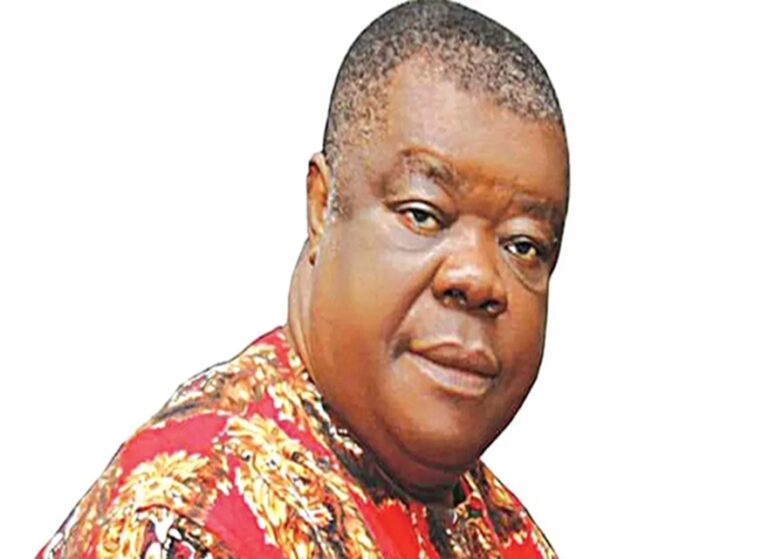
10 things to Know about late cleric Uma Ukpai

0

RENOWNED evangelist and founder of the Uma Ukpai Evangelistic Association (UUEA), Uma Ukpai, has passed away at the age of 80. He died on October 6, 2025, after more than six decades of devoted Christian ministry.

In a statement issued  on October 13, his family described his death as a “triumphant homegoing”, noting that he “finished his race and is now resting in eternal praise.” Ukpai was widely revered for his evangelistic crusades, mentorship, and lifelong dedication to spreading the gospel across Nigeria and beyond.

Here are 10 key things to know about the late cleric:

  1. Uma Ukpai was born on January 7, 1945, in Asaga, Ohafia, Abia State, Nigeria. He lost his father at the age of 10.

  2. He became a Christian in 1958, a turning point that marked the beginning of his spiritual journey and lifelong mission in evangelism.

  3. Ukpai established the Uma Ukpai Evangelistic Association (UUEA), a non-denominational gospel ministry headquartered in Uyo, Akwa Ibom State.

  4. He was one of the founding leaders of the Pentecostal Fellowship of Nigeria (PFN) and played a major role in uniting the body of Christ in the country.

  5. Ukpai studied in both Nigeria and abroad, attending institutions such as the School of Journalism and Television, Frisham, UK, South Florida Christian College, USA, Carolina Christian University, and Burke Bible College, Kentucky.

  6. He earned a Diploma in Journalism, a Certificate in Electrical Engineering Practice, and Bachelor’s and Doctorate degrees in Divinity.

  7. He was married to Pastor Philomena Uma Ukpai, and their union was blessed with eight biological children and one adopted child.

  8. Ukpai endured personal tragedy when two of his children died in a car accident on the same day, an experience he often referenced as a test of his faith.

  9. His powerful crusades across Africa and beyond were marked by large gatherings, healing testimonies, and passionate preaching that inspired countless lives.

  10. Known for humility, compassion, and unwavering faith, Ukpai mentored many young ministers and left behind a spiritual legacy that continues to shape Christianity in Nigeria.

The family announced that details of his burial arrangements will be released later, as tributes continue to pour in from across the world, celebrating his life of service, faith, and impact.


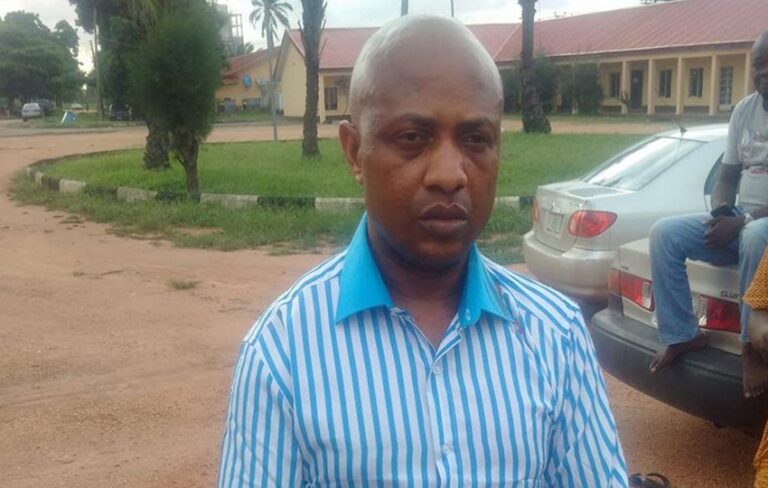
Lagos re-arraigns convicted kidnapper Evans over police officers’ murder

0

THE Lagos State Government has re-arraigned convicted kidnap kingpin, Chukwudumeme Onwuamadike, popularly known as Evans, on Monday, October 13, before the Lagos State High Court sitting in Ikeja on fresh charges bordering on murder, attempted murder, and conspiracy to commit kidnapping.

Evans was brought to court alongside his co-defendant, Joseph Emeka, where both men pleaded not guilty to a five-count charge read before Justice A.O. Ogala. The charges relate to the alleged killing of two police officers during one of their kidnapping operations.

The re-arraignment marks yet another chapter in the long-running prosecution of Evans, who has been standing trial in multiple kidnapping and murder cases since his arrest in 2017. According to court records, Evans has been convicted in at least two separate cases, one earning him a life sentence and another 21 years in prison for the abduction of businessman Sylvanus Ahanonu Hafia.

In one of those judgments, delivered by Oluwatoyin Taiwo of the Ikeja Special Offences Court, Evans and an accomplice, Victor Aduba, were found guilty of kidnapping and demanding a $2 million ransom in 2014. The court held that the sentence was necessary to deter others involved in similar crimes.

Despite these convictions, Evans has continued to face fresh charges, including the latest murder case, while also pursuing a plea bargain with the state government. Earlier this year, he informed the court that he had reformed while serving his term at the Kirikiri Correctional Centre, where he now teaches inmates after earning a teaching diploma in economics through a government scholarship.

Evans had previously expressed willingness to forfeit 14 trucks and other assets to compensate his victims as part of a plea arrangement. However, the state government has yet to formally respond to his latest application.

The Lagos State Ministry of Justice confirmed that the new case before Justice Ogala is part of ongoing efforts to consolidate all pending criminal charges against Evans across different courts.

Meanwhile, court proceedings have been adjourned to a later date for trial commencement.

The re-arraignment of Evans comes only days after President Bola Tinubu approved presidential clemency for several convicted inmates across the country, a move that has sparked widespread debate among Nigerians. While some view the gesture as a step toward prison decongestion and restorative justice, others argue it undermines the integrity of the justice system, particularly when high-profile offenders continue to face fresh charges in court.

FG claims ASUU’s demands met as lecturers begin warning strike

0

THE Federal Government has reiterated that it has addressed all the concerns raised by the Academic Staff Union of Universities (ASUU), insisting there is no justification for the union’s planned industrial action.

Minister of Education, Tunji Alausa, stated this during a live interview on Channels Television’s The Morning Brief on Monday, where he appealed to university lecturers to suspend the planned strike and return to the classrooms.

“We have addressed every single request by ASUU; there is no need for this strike, and we are pleading with them to go back to school. We need to keep our children in school,” Alausa said. He added that no other group has engaged his office as frequently as ASUU since he assumed office.

The minister dismissed claims that the government had been indifferent to ASUU’s long-standing demands, explaining that President Bola Tinubu had directed his administration to ensure fair treatment for all labour unions.

Alausa also highlighted new steps being taken by the government to strengthen tertiary education funding, including the reconstitution of the Federal Government Tertiary Institutions Expanded Negotiation Committee led by former Head of Service, Mahmud Yayale Ahmed.

The new committee, inaugurated last week, was tasked with unifying and accelerating negotiations with unions across universities, polytechnics, and colleges of education. The Minister said the initiative reflects Tinubu’s commitment to ending the cycle of disruptions in Nigeria’s academic calendar through constructive dialogue.

However, despite these assurances, ASUU has commenced a two-week warning strike beginning Monday, October 13, 2025, accusing the government of failing to honour key agreements.

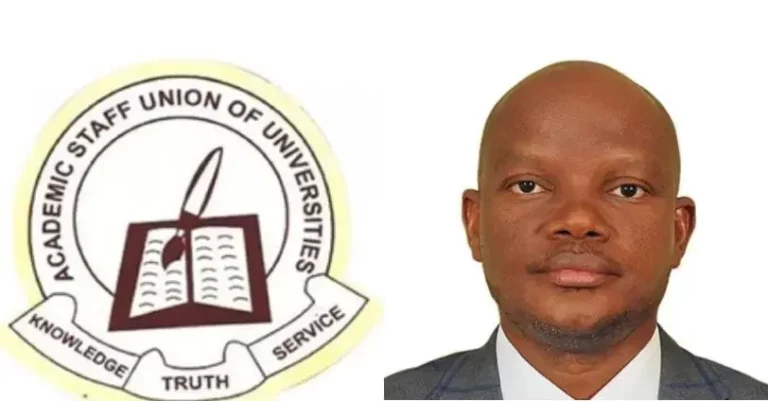
ASUU President, Chris Piwuna, announced the strike at a press conference in Abuja, saying the decision followed the government’s failure to fulfil several critical obligations, including the payment of earned academic allowances (EAA) and withheld salaries from the 2022 strike.

Piwuna said the union had received ₦50 billion from the government as part of the EAA but maintained that the total outstanding arrears stood at ₦103 billion. He added that the government’s recent request for additional time to address the pending issues was viewed by ASUU’s National Executive Council (NEC) as a delay tactic.

“The letter from Alhaji Yayale Ahmed was considered by our union as a delay tactic. They asked for two weeks two weeks ago, and now they’re asking for another three. NEC viewed that as an attempt to stall progress,” Piwuna said.

He lamented that lecturers are still being owed several months of salary arrears despite promises made by the government, stressing that the union’s patience had been overstretched.

The ICIR had earlier reported that the federal government inaugurated the new negotiation committee barely a day after ASUU began mobilising members for the current action. The committee’s formation was part of broader efforts to unify discussions with tertiary education unions and avoid the fragmented negotiations that have plagued past administrations.

ASUU, however, maintains that the reconstituted committee and recent government interventions have yet to produce tangible results. The union insists that without concrete action from the government, it will be compelled to escalate its strike beyond the initial two weeks.

Piwuna reaffirmed ASUU’s commitment to revitalising Nigeria’s public universities and protecting the welfare of its members, saying, “We’re not disputing that President Tinubu or Dr. Alausa have made efforts, but ASUU too has made great sacrifices.”

While the government continues to appeal for dialogue, the renewed standoff has again raised concerns about the stability of Nigeria’s higher education system, which has suffered repeated disruptions from prolonged industrial actions over the years.

‘Let them go ahead with their threat’ — ASUU defies FG, continues strike

0

THE Academic Staff Union of Universities (ASUU) has declared that it will not be intimidated by the Federal Government’s threat to invoke the no-work, no-pay policy, insisting that its ongoing strike will continue until the government addresses all outstanding issues affecting the nation’s public universities.

Reacting to a statement by the Federal Ministry of Education urging the union to shelve its planned strike, ASUU described the move as “a threat disguised as negotiation.”

In a phone interview with The ICIR on Monday, October 13, ASUU Chairman Chris Piwuna stated that the strike had already commenced across public universities nationwide.

“We have started the strike, and it will continue. We don’t respond to threats. If they want to resort to a threat, let them go ahead. The union is ready for any threat,” Piwuna said.

“They can’t threaten us and call for negotiation. They should withdraw their threat if they want negotiations.”

The federal government had on Sunday, October 12, in a joint statement by the Minister of Education, Maruf Tunji Alausa, and Minister of State for Education, Suwaiba Sai’d Ahmad, asked ASUU to embrace dialogue, noting that it had made a “comprehensive offer” covering staff welfare, working conditions, and institutional governance.

The ministers further warned that the government would not hesitate to apply the no-work, no-pay rule if the union proceeded with the strike.

They also clarified that certain aspects of ASUU’s demands, particularly those relating to internal governance, appointments, and promotions, are statutory responsibilities of university governing councils. They urged the union to allow these matters to be handled appropriately at the institutional level in line with existing regulations.

The statement mentioned that it would invoke “No-Work, No-Pay” should ASUU proceed with the strike.

“While government remains committed to peaceful dialogue, it will equally enforce existing laws to protect the integrity of our education system and ensure accountability,” the statement added.

However, ASUU insisted that the government has failed to meet several key obligations, including unpaid salary arrears, earned academic allowances, and withheld wages from the 2022 strike.

While declaring the strike, Piwuna said the decision to declare a strike followed the federal government’s failure to meet the union’s long-standing demands, despite repeated engagements and notices.

“Compatriots of the press, it goes without saying that there is nothing sufficient on ground to stop the implementation of the ASUU-NEC’s resolution to embark on a two-week warning strike at the expiry of the 14-day notice given on the 28th of September 2025,” Piwuna stated.

Previously, Piwuna urged the federal government to resolve outstanding issues affecting lecturers while commending the Minister of Education, Tunji Alausa, for facilitating the release of ₦50 billion as part of the Earned Academic Allowances (EAA).

However, he noted that the amount represents only a fraction of what is owed to members, stating that the total EAA arrears stand at ₦103 billion. He explained that the union had earlier agreed to forfeit 50 per cent of the allowance, provided the remaining balance would be paid and integrated into their salaries.

Background

On Sunday, October 12, ASUU President Chris Piwuna announced that the union would embark on a two-week warning strike across all its branches starting Monday, October 13, 2025.

Speaking at a press briefing at the union’s national headquarters in the University of Abuja, Piwuna said the decision followed the federal government’s failure to meet ASUU’s long-standing demands despite multiple engagements and notices.

“Compatriots of the press, it goes without saying that there is nothing sufficient on ground to stop the implementation of the ASUU-NEC’s resolution to embark on a two-week warning strike at the expiry of the 14-day notice given on the 28th of September 2025,” he stated.

He lamented that the government has yet to settle several key obligations, including 12 months of unpaid salary increments (25–35 per cent) and three and a half months of withheld salaries from the 2022 strike, describing the withholding as “punitive.”

Piwuna added that the industrial court’s ruling on the no work, no pay policy was inconclusive, effectively leaving its enforcement to the government’s discretion.

A standoff rekindled

The ICIR reports that the latest confrontation between ASUU and the federal government rekindles memories of previous prolonged strikes that crippled Nigeria’s public university system. 

The 2022 strike, which lasted eight months, disrupted academic calendars nationwide and sparked student protests.

The union went on strike five times in five years under Buhari.

The group was on strike in 2016, 2017, 2018, 2020, and 2022. However, a hitch-free academic year was recorded in 2023.

Despite assurances of reform from the Nigeria government, ASUU said chronic underfunding, poor remuneration, and weak institutional autonomy persist.

ASUU commences nationwide warning strike Monday

0

THE Academic Staff Union of Universities (ASUU) has announced that it will begin a two-week warning strike across all its branches nationwide from Monday, October 13, 2025.

According to Daily Trust, ASUU President, Chris Piwuna, disclosed this during a press briefing at the union’s national headquarters in the University of Abuja on Saturday.

He said the decision followed the Federal Government’s failure to meet the union’s long-standing demands, despite repeated engagements and notices.

“Compatriots of the press, it goes without saying that there is nothing sufficient on ground to stop the implementation of the ASUU-NEC’s resolution to embark on a two-week warning strike at the expiry of the 14-day notice given on the 28th of September 2025,” Piwuna stated.

He directed all ASUU branches to “withdraw their services with effect from midnight on Monday,” adding that the strike would be “total and comprehensive as agreed at the last NEC meeting.”

Last week, Piwuna had urged the Federal Government to resolve outstanding issues affecting lecturers while commending the Minister of Education, Dr. Tunji Alausa, for facilitating the release of ₦50 billion as part of the Earned Academic Allowances (EAA).

However, he noted that the amount represents only a fraction of what is owed to members, stating that the total EAA arrears stand at ₦103 billion. He explained that the union had earlier agreed to forfeit 50% of the allowance provided the remaining balance would be paid and integrated into their salaries.

Piwuna also revealed that 20% of ASUU’s ₦50 billion allocation was deducted to settle other campus unions, including the Senior Staff Association of Nigerian Universities (SSANU) and the Non-Academic Staff Union (NASU) — a move ASUU accepted “in good faith.”

While acknowledging the efforts of the current administration, Piwuna stressed that ASUU had also made sacrifices in the national interest.

“We’re not disputing that President Tinubu or Dr. Alausa have made efforts, but ASUU too has made great sacrifices,” he said.

He added that the union’s National Executive Council (NEC) held an emergency meeting last week to review a letter from the chairman of the Federal Government’s negotiation team, Alhaji Yayale Ahmed, which requested additional time to resolve the outstanding issues.

“The letter from Alhaji Yayale Ahmed was considered by our union as a delay tactic. They asked for two weeks two weeks ago, and now they’re asking for another three. NEC viewed that as an attempt to stall progress,” Piwuna explained.

He said the meeting, which had representatives from all 70 chartered ASUU chapters, reaffirmed the union’s commitment to defending the welfare of university lecturers and revitalizing Nigeria’s public universities.

Piwuna lamented that the government has yet to settle several key obligations, including unpaid salary arrears, earned academic allowances, and withheld wages from the 2022 strike.

“We are still being owed 12 months of the 25–35% salary increment approved by this government. We also have three and a half months of salaries withheld from the 2022 action. That decision to withhold our pay is punitive,” he said.

On the ‘no work, no pay’ policy, he noted that the industrial court’s ruling was inconclusive, effectively leaving the final decision to the government’s discretion.

Piwuna warned that unless the government demonstrates genuine commitment to addressing ASUU’s concerns, the union will have no choice but to continue with the warning strike — and possibly escalate its action if necessary.


Lady faints at Abuja airport after fight with sister over missing flight

0

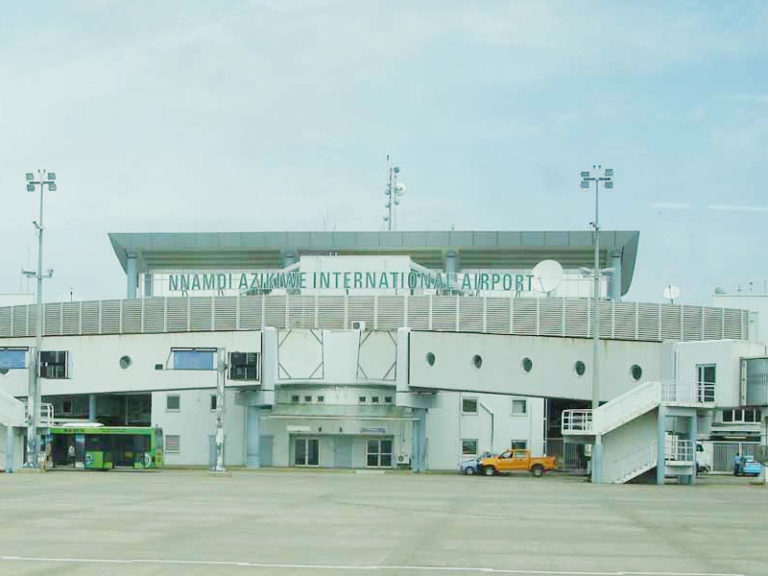
A heated confrontation between two adult sisters erupted at the Nnamdi Azikiwe International Airport in Abuja on Sunday, culminating in one of them fainting.

The incident was revealed by the Spokesperson of the Nigeria Civil Aviation Authority, Michael Achimugu,on his X account.

“The strangest thing just happened at the Abuja airport. Two sisters, both adults, booked to travel via a NG EAGLE flight. They missed the flight because they were late,” Achimugu said.

The spokesperson said perhaps one of the sisters may have blamed the other for their missed flight, which sparked the physical altercation between them, and quickly turned into a physical combat.

“They scattered luggage and other items before being dragged to the interrogation office by airport security. Inside, they began to fight again until one of them fainted,” he added.

Achimugu said that when  calls were made for an ambulance to take the lady to the hospital, the conscious sister rejected the need for medical help, and insistedd that the problem was more spiritual than medical.

He said that despite her objections, the sister who fainted was moved to the FAAN clinic, where she is currently receiving attention. 

“She is presently receiving attention at the FAAN clinic. Hopefully, she makes a recovery. This is not how things should be,” he added.

SERAP to new INEC chair: Prioritise prosecuting electoral crimes

0

THE Socio-Economic Rights and Accountability Project (SERAP) has urged the newly nominated Chairman of the Independent National Electoral Commission (INEC), Joash Amupitan, to prioritise the effective prosecution of politicians and their sponsors allegedly involved in electoral offences including violence, bribery, vote-buying, conspiracy, and undue influence during both general and off-cycle elections since 2015.

SERAP made the appeal in a letter signed by its Deputy Director, Kolawole Oluwadare, according to a statement released on Sunday.

“The general elections and off-cycle elections conducted since 2015 have been characterised by grave electoral offences, including violence, bribery, vote-buying, conspiracy, and undue influence, making a mockery of INEC.

“High-ranking politicians and their sponsors are rarely brought to justice for electoral offences, reinforcing a culture of impunity for violations of Nigerians’ democratic rights,” Oluwadare said.

The ICIR reported that the National Council of State approved the appointment of Joash Ojo Amupitan, a Professor and a senior advocate, as the new Chairman of INEC, following the resignation of Professor Mahmood Yakubu weeks before the expiration of his second term of five years.

The approval came after President Tinubu presented Amupitan’s name during the Council’s meeting held on Thursday, October 9, at the Presidential Villa, Abuja. 

SERAP wants the commission’s new chief to “prioritise the amendment of the Electoral Act 2022 to ensure the conduct of free and fair elections in 2027, in conformity with the provisions of the Nigerian Constitution 1999 [as amended] and the country’s international obligations.”

The organisation also urged him to ensure that any reform of the Electoral Act includes provisions for the timely prosecution of electoral offences and access of voters to justice and effective remedies for violations of their fundamental rights.

Oluwadare insisted that Amupitan should ensure that any reform of the Electoral Act includes provisions for the timely prosecution of electoral offences and access of voters to justice and effective remedies for violations of their fundamental rights.

“Impunity for past electoral offences is a major barrier to free and fair elections in Nigeria.  Amupitan must demonstrate that INEC under his watch would not tolerate electoral offences in the country’s elections,” Oluwadare said.

The Deputy Director said that unless the legacy of impunity for these grave electoral offences is combated and perpetrators, especially high-ranking politicians and their sponsors are effectively prosecuted and voters provided with access to justice, those contemplating electoral crimes will feel unconstrained in future elections.

“There cannot be a fair electoral process if the body managing the electoral process fails to ensure the effective investigation and prosecution of electoral offences and access of voters to justice and effective remedies.

“No right is more precious in a democratic society than that of having a voice in the election of those who govern the citizens, and other rights, even the most basic, are illusory if unresolved electoral offences are not thoroughly investigated and prosecuted, and voters are not provided with access to justice,” he said.

Tinubu jets out to Rome for counter-terrorism meeting

0

PRESIDENT Bola Tinubu will on Sunday, October 12, depart Abuja for Rome, Italy, to attend the Aqaba Process Heads of State and Government Level Meeting.

The meeting  will focus on tackling the worsening security crisis in West Africa.

The programme, scheduled to begin on October 14, will bring together leaders from across Africa, senior intelligence and military officials, as well as representatives of intergovernmental and non-governmental organisations.

Participants are expected to discuss the growing threats of terrorism, organised crime, and piracy affecting the region.

Launched in 2015 by King Abdullah II of Jordan, the Aqaba Process is a counter-terrorism initiative jointly chaired by Jordan and the Italian government. It aims to enhance international cooperation in confronting terrorism and violent extremism, particularly in regions facing rising instability.

According to a statement by the Special Adviser to the President on Information and Strategy, Bayo Onanuga, the meeting will examine the expansion of terrorist networks in West Africa, the link between crime and terror groups, and the increasing overlap between land-based insurgencies in the Sahel and piracy in the Gulf of Guinea.

Participants will also exchange insights on the current security landscape and explore new strategies for countering terrorism both on land and at sea. The meeting will further address how to disrupt digital networks used for terrorist propaganda and recruitment.

While in Rome, President Tinubu is expected to hold bilateral talks with other world leaders on strengthening regional cooperation and addressing security challenges across the subregion.

The President will be accompanied by the Minister of State for Foreign Affairs, Ambassador Bianca Odumegwu–Ojukwu; the Minister of Defence, Mohammed Badaru Abubakar; the National Security Adviser, Nuhu Ribadu; the Director-General of the National Intelligence Agency (NIA), Ambassador Mohammed Mohammed; and other senior government officials.

Power-grab underway as army claims control over Gen Z protest, says Madagascar President

MADAGASCAR’s presidency has announced that “an attempted illegal and forcible seizure of power” was in progress in the country.

President Andry Rajoelina made the announcement on Sunday in a statement, after administrative and technical officers joined thousands of protesters in the city centre on Saturday in a major shift in the Gen Z anti-government protest movement that began last month.

Rajoelina’s office said he denounced all efforts to destabilize the country and called for “dialogue to resolve the crisis.

According to Reuters, rival factions on Sunday both claimed control of the country’s security operations, with one group representing the CAPSAT soldiers announcing that it would oversee and coordinate all branches of the military from its base on the outskirts of Antananarivo.

The troops from the elite CAPSAT unit, the same force that aided Rajoelina’s rise to power in the 2009 coup, have called on fellow soldiers to defy orders and support the youth-led protests that began on September 25, marking the most serious challenge to Rajoelina’s rule since his 2023 reelection.

The unit had previously stated that it would “disobey any order to open fire” and condemned the gendarmerie for allegedly using excessive force against protesters, which has resulted in multiple deaths.

Reports revealed that soldiers from the unit engaged in clashes with gendarmes outside a barracks on Saturday before driving into the city in military vehicles to join the protesters, who greeted them with cheers and renewed calls for Rajoelina’s resignation.

Media reports showed dozens of soldiers leaving their barracks on Saturday to escort thousands of protesters into Antananarivo’s May 13 Square, a historic site of past political uprisings that had been heavily guarded and closed off during the recent unrest.

The gendarmerie, which has been handling the protests alongside the police in recent weeks and faces accusations from demonstrators of excessive force, stated that it would continue to act on its own orders “exclusively from the National Gendarmerie Command Center.”

The ICIR reported that the protests, inspired by Gen Z-led movements in Kenya and Nepal, initially erupted over water and electricity shortages but have since intensified, with demonstrators demanding President Rajoelina’s resignation, an apology for the violence against protesters, and the dissolution of both the Senate and the electoral commission.

Thousands of people gathered in Antananarivo on Sunday to protest against the government and honor a fallen CAPSAT soldier, whom the army unit claimed was killed by the gendarmerie on Saturday.

The peaceful demonstration drew church leaders, opposition figures including former President Marc Ravalomanana as well as members of the CAPSAT unit.

The Ever-Lingering Benue/Plateau Crisis

0

By Eric Teniola

I saw Mr. Caleb Manasseh Mutfwang (60), the Governor of Plateau, a lawyer-banker and former Chairman of Mangu Local Government Area of Plateau State, lamenting on the television on the invasion of herdsmen to his state. The governor was almost in tears.
The same with Mr. Hyacinth Iormem Alia (59) the Governor of Benue State, from Mbangur, Mbadede, Vandeikya Local Government Area of Benue State. Mr. Alia, a Nigerian Catholic Cleric and politician, is an ex-student of St. Augustine’s Major Seminary in Jos. Incidentally, the concern of the two governors has been lingering even before they were born.

In 2018, I wrote on the crisis. I like to quote what I wrote then. “The Tiv/Fulani crisis in Benue/Plateau State has been on for too long. The older generation passed this crisis to the present one in an unresolved form, and it is getting worse with the years. The present generation must not pass the crisis down too, thereby saddling and punishing the incoming generation with an inherited mayhem. Much blood has been spilled, and particularly those of innocent folks. While many families have been displaced, many homes have equally been destroyed. And many still face a bleak future because of this crisis. It should and must end.”

In 1977, I had special relationship with two gentlemen involved in the crisis. They were Chief Solomon Daushep Lar (4 April 1933 – 9 October 2013) and Chief Joseph Sarwuan Tarka (10 July 1932 – 30 March 1980), both of whom I got to know when I covered the Constituent Assembly in 1977.

Chief Solomon Lar was elected as a councillor to the Langtang Natives Authority in January 1959. On 12 December 1959 he was elected to the Federal Parliament on the platform of United Middle Belt Congress (UMBC). He was reelected in 1964, and from then until 15 January 1966, when General Yakubu Gowon GCFR took power in a coup, Lar was parliamentary secretary to Prime Minister Abubakar Tafawa Balewa. He was also a junior minister in the Federal Ministry of Establishments.

He became chairman of the Board of Directors of African Continental Bank, member of the Nigeria Council of Legal Education and a member of the Constituent Assembly (1977–1978). He was a member of the panel chaired by Justice Ayo Irikefe that recommended expanding from 12 to 19 states during the regime of General Murtala Mohammed.
I used to call Chief Solomon Lar “Chairman” because he was the chairman of African Continental Bank – one of the dead glories of the present SOUTH EAST region, just like National Bank is to the present SOUTH WEST.

His house at Obafemi Awolowo Road Ikoyi was part of my rendezvous. That was at the earlier formation of the Nigeria’s People’s Party (NPP). He was one of the sponsors of Club 19 that eventually gave birth to the NPP at that time.

I asked him at that time, why he did not join the Makama Bida/Shehu Shagari’s group that eventually formed the NPN, he said it would be a taboo if he should do so. He narrated to me the circumstances that led to his father’s death.

In the transition to the Nigerian Fourth Republic Chief Solomon Lar became the first National Chairman of People’s Democratic Party (PDP) in 1998, holding this position until 2002 when he handed over to Chief Barnabas Gemade. In February 2004 he resigned as chairman of the PDP Board of Trustees, handing over to Chief Tony Anenih at a caucus in Abuja.

Notwithstanding, he was a true middle belter.

In November 1979, Governor Solomon Lar told me in Jos, that the day the Middle Belt crisis is resolved is the day that the Nigeria crisis would be resolved. He explained that unless you are a Middle Belter, one can never understand what “we go through in the hands of the Fulani man.” I was in Obudu, Cross Rivers State recently, for the burial of Elizabeth Agbo Adede (1956-2025), the immediate junior sister of my friend, Senator Musa Adede. I was at the burial along with Colonel Lawan Gwadabe(rtd.), Emmanuel Ibe Kachikwu, Major Bashir Galma (rtd.), Bishop Jato, Alhaji Jani Ibrahim, John Owan and others. From Obudu, enroute Makurdi, I drove to Abuja, to take a flight back to Lagos. When I got to Makurdi that day, I had memories of my earlier life in that city. I visited Makurdi for the first time in 1977, courtesy of Chief Joseph Sarwuan Tarka.

On March 30, this year, it was 45 years that Chief Joseph Sarwuan Tarka (July 10, 1932-March 30, 1980) answered the final call. Unfortunately, the issue that he fought against in the last 24 years of his life – the conquest agenda of the Fulanis – still lingers. During his era, the problem was not about herdsmen but the imperialist policies of the Northern People’s Congress (NPC), dictated by Sir Ahmadu Bello, the Sardauna of Sokoto, who was then the premier of Northern Nigeria.He was a teacher like his father, Tarka Nanchi. His mother, Sera Ikpu Anyam Tarka, a nurse, died in December 2005 at the age of 95. At an early age, he attended the London Constitutional Conference in 1958.

Others like him, who were young and from minority parties, who attended the conference included Mr. H. Biriye, Dr. Okoi Arikpo of the United National Independence Party; Mr. P. Dokotri, also of the United Middle Belt Congress; Dr. Udo Udoma of the United National Independence Party; Mallam Aminu Kano, Mallam Ibrahim Imam, and Dr. S.E. Imoke from Itigidi in Cros River State, who later became a minister and married a pretty princess from Sabongida-Ora in the present Edo State. Dr. Imoke was the father of Senator Liyel Imoke, the former governor of Cross River State.

Chief Tarka got elected into the House of Representatives, representing Jemgbar Constituency, by 34,243 votes. He defeated J.I. Ukume of the NPC who scored 1,191 votes and S.C. Sarma of the National Council of Nigeria and the Cameroons (NCNC), who scored 703 in the 1958 election. He then formed his party, the United Middle Belt Congress, along with Patrick Dokotri, David Obadiah Vreng Lot, Ahmadu Angara, Isaac Shaahu, Edward Kundu Swen and others. He entered into an alliance with the Action Group, led by Chief Obafemi Awolowo. He later entered into another alliance with the Northern Elements Progressive Union (NEPU), made up of Mallam Aminu Kano, Yerima Bello,Abubakar Zukogi, Ahmed Tireda, Gambo Sawaba, Ibrahim Heeban, Saliu Tate, Yahaya Abdullahi, Saliu Nakande, Shehu Sataima, Ali Dakat, Ango Soba, Adamu Gaya, Mallam Lawal Dan Bazua, Abubakar Tambuwal, Babadije Jimeta, Alhaji Tanko Yankassai (spokesman) and others.

The primary aim of Chief Tarka was to fight for the independence of the Tivs from the hands of the Northern Peoples’ Congress. That fight led to the emancipation of the people we now refer to as the Middle Belt. It had snowballed into the major crisis which we now refer to as the Tiv Riots of 1960 to 1964. This was at the time that Alhaji Aliyu Muhammed, the Wazirin Jamaa, who later became secretary to the government of the federation, was sent by Sir Ahmadu Bello as administrator of Tiv land. The Nigerian Army was forced to quell those riots. Senior Military officers, including Major Adewale Ademoyega, Major Christain Anuforo, Lt. Col. Yakubu Pam, Major Timothy Onwuatuegwu, took part in quelling the upheavals.

These officers, who were of the 3rd Battalion of the Nigerian Army had just returned from Tanzania after cracking down on an internal problem in that country. They later became victims or key players in January 15, 1966 coup. Eventually one of them from the Middle Belt, General Yakubu Gowon, came into power in July 1966 and a few months later in 1967 split the country into 12 states.

General Gowon invited Chief Tarka into his cabinet as minister for communication, only to be succeeded by Brigadier General Rufai Murtala Ramat Mohammad (1938-76), but was later forced out of the cabinet as a result of allegations of corruption made by one of his kinsmen, Chief Godwin Daboh Adzuana (1942-2012).

The Tiv Riots and the independence of the Middle Belt played a key role later in the creation of more states in 1967. The calculation then was that the creation of states would free the Middle Belt from the conquest agenda of the Fulanis. That calculation has proved wrong.

My friendship with Chief Joseph Sarwuan Tarka was a friendship that I valued and still cherish till date. He was a charismatic and true leader of the Tiv people. I was introduced to him by Alhaji Uba Ahmed sometimes in 1977, after which our friendship grew and lasted till, he died in a London hospital on March 30, 1980. Friendship between Journalists and Politicians is inevitable.

I was at the hospital with Senator Uba Ahmed when he died and we accompanied his corpse back to Nigeria in a Nigerian Air Force Hercules plane, courtesy of President Shehu Shagari. I was also at his funeral service in his hometown. Between 1977 till his death, his general complaint was about the plight of his Tiv people. He kept referring to the Tiv Riots and how his people were massacred during the military campaigns that followed it.

Chief Tarka was a persuasive talker not used to exaggeration. At his Ikoyi residence, near the present Ikoyi marriage registry, his house was always full of people. To ensure privacy, he would take me upstairs, where he would narrate tragic stories of the Tiv Riots. He explained to me then that the Tivs were not the aggressors; “How can we be on our land”, he pointed out several times. At the age of twenty-four, he had become a leader, and he died at the age of 48.

The mystery about his political life was that in 1978, he aligned with the National Party of Nigeria (NPN), a party composed largely of those he fought against in the last 20 years of his life. One would have expected that he would align with the Unity Party of Nigeria led by Chief Obafemi Awolowo, who opened the door of opportunities to many tribes’ nationalities in the present Middle Belt. Or that he would align with the Nigerian People’s Party of Chief Solomon Daushep Lar, Chief Paul Wantaregh Unongo, George Baba Hoomkwap, Garba Matta, John Wash Pam, Abubakar Ibrahim, Muhammadu Musa and others.

In the 1979 Benue East Senatorial election, after joining the NPN, he scored 122,622, as against Mr. J.V. Vembeh of the NPP, who scored 15,180 and J.V. Yaji of the UPN who had 5,747. His son, Simeon was also elected on the platform of NPN, Gboko Constituency into the Federal House of Representatives. With his influence, all the NPN candidates in Benue State, including Chief Andrew Abogede, Mr. Suemo Chia, Chief Ameh Ebute and Colonel Adah Ahmadu Ali, all won their senatorial elections.

When he joined the NPN, he was denied the presidential nomination of the party in 1978, the Senate presidency in 1979 and the Senate leadership also in 1979. He was only rewarded with the chairmanship of Senate Committee on Finance and Appropriation, before being flown to London in 1980 for a medical checkup, during which he died.

Unlike now, that an average member of the National Assembly is an instant millionaire because of easy access to public funds, deals, constituency projects and budgets padding, the members of the National Assembly between 1979 and 1983 only lived on salaries and travel allowances.

When Chief Tarka was appointed the Chairman of the finance committee, he did not understand his schedule. Only Senator Uba Ahmed persuaded him from resigning from that committee.

At the Senate, although an NPN Senator, he was more at home in company of notable UPN, NPP and GNPP senators, including Senators Abraham Aderibigbe Adesanya, Mahmud Waziri, Patrick Emeka Echeruo, Kayode Ogunleye, Idrissa Kadi, Buka Sanda, Joseph Ansa, Kunle Oyero, Jonathan Olawole Akinremi Odebiyi, Cornelius Adebayo, Stephen Adebanji Akintoye and, of course, his friend, Senator Jaja Anucha Wachukwu (Aba). He enjoyed his Senate days until his health deteriorated and had to leave for London with his friend, Senator Uba Ahmed (Bauchi North East).

On December 8 1996, General Sanni Abacha created Tarka Local Government out of Gboko Local Government in honour of the memory of Chief Joseph Tarka. Today, the council is one of the 23 local governments in Benue State, and is situated north of Gboko Local Government Area, in the North-East wing of Benue State. The local council shares boundaries with Guma, Gwer, Buruku and Gboko Local Governments.

Benue and Plateau states have produced to date, the highest number of military officers, yet, their states have been terrorized by a tiny army of Fulani herdsmen for the past sixty years also. To the ordinary person, the thinking is that, these officers while serving or retired, would not allow their land to be invaded by the Fulani herdsmen. Apart from General Yakubu Gowon GCFR, who is from Plateau state, there are other outstanding military officers that I have in mind.

Colonel Joseh Agbo Akaahan(April 1937 – May 1968) was Chief of Army Staff from May 1967 until May 1968, when he was killed in a helicopter crash during the Nigerian Civil War. Lieutenant-General Victor Samuel Leonard Malu (15 January 1947 – 9 October 2017) who was Chief of Army Staff (COAS) from 1999 to 2001 and Force Commander of the ECOMOG peace-keeping force in Liberia from 1996 to 1998. He was from Benue state.

I don’t want to mention names of other military officers, both dead or alive who are from Benue or Plateau state.

This present generation should not pass the issue of herdsmen to the coming generation in Benue and Plateau states. Too many lives have been lost.

LinkedIn made several suggestions on resolving community conflict, which I will like to make reference to.

The first step to resolving a community conflict is to understand its nature, causes, and effects. You need to identify who are the parties involved, what are their perspectives, needs, and emotions, and how the conflict impacts them and the community. Such tools such as conflict mapping, stakeholder analysis, or surveys can be used to gather information and data. Personal biases, assumptions, and feelings about the conflict must be aware of. This comprehensive understanding sets the foundation for effective conflict resolution, fostering empathy and informed decision-making to address the underlying issues and promote harmony.

Conflict is common in every setting and the foremost step is identifying the parties involved and giving every person involved a fair hearing. It will be a grave mistake to listen to just one side of the issue and come to a conclusion.

The second step to resolving a community conflict is to communicate effectively with the parties involved. Trust, respect, and rapport must be established with the community involved, listen actively and empathetically to their views and concerns. Opinions and feelings must be clearly, respectfully, and constructively expressed, and avoid blaming, criticising, or judging others.

Effective communication is crucial during conflict resolution. You should be able to listen well and pay attention to details. Allow parties to establish their grievances, so you can address the issue. Remember emotions are high and try to show empathy during the process. Showing empathy will help you to build trust and rapport with the people. Do not take sides, try to stay objective so you can give constructive criticism during the process.
Again, the best way to resolve a conflict is by giving everyone a chance to speak, fair hearing is key. Listen with empathy to build trust!

The third step to resolving a community conflict is to explore options for solving the problem or meeting the needs of the parties involved. You need to brainstorm and generate as many ideas as possible, without evaluating or rejecting them at first. You should also encourage creativity, innovation, and collaboration among the parties, and look for common ground, shared interests, or mutual benefits. You can use methods such as brainstorming, mind mapping, or SWOT analysis to generate and organize options.

During conflict resolution, we are always looking for a win-win solution, which is good, but that does not always happen. As the mediator, you should explore more options such as reaching an agreement, looking for a middle ground among the parties so that the issue can be addressed. Ask the parties what would best solve their problems after carefully listening to their concerns. This would eventually help you to analyze and identify a workable solution.

The fourth step to resolving a community conflict is to negotiate and agree on a solution or a plan of action. You need to evaluate and compare the options generated in the previous step, and select the ones that are most feasible, acceptable, and beneficial for all parties. You should also negotiate and compromise on the details, roles, responsibilities, and resources involved in implementing the solution or plan. You can use strategies such as ranking, rating, or voting to choose and prioritize options.

The fifth step to resolving a community conflict is to implement and monitor the solution or plan agreed upon in the previous step. You need to execute the actions, tasks, and activities required to achieve the desired outcomes, and monitor the progress, results, and impacts of the solution or plan. You should also communicate and coordinate with the parties involved, and provide feedback, support, and recognition. You can use tools such as action plans, timelines, or indicators to implement and monitor the solution or plan.

The sixth and final step to resolving a community conflict is to evaluate and learn from the experience. You need to assess the effectiveness, efficiency, and sustainability of the solution or plan implemented in the previous step, and identify the strengths, weaknesses, opportunities, and challenges encountered along the way. You should also reflect on the lessons learned, best practices, and areas for improvement for future conflicts.

On June 17, this year, the Tor Tiv V, Professor James Ortese Iorzua Ayatse (69), from Kwande Local Government Area of Benue State, the Paramount Ruler/King of Tiv Nation, told President Bola Tinubu GCFR that the killings in Benue State are not clashes between herders and farmers, but a planned attack aimed at taking over land.

Speaking at a meeting with President Tinubu and stakeholders in Makurdi, the traditional ruler said many people had misunderstood the crisis and wrongly advised Benue citizens to stay calm and live peacefully with their neighbours.

Professor Ayatse said, “We do have grave concerns about the misinformation and misrepresentation of the security crisis in Benue State.

“Your Excellency, it’s not herders-farmers clashes, it’s not communal clashes, it’s not reprisal attacks or skirmishes.”

He described the violence as a “calculated, well-planned, full-scale genocidal invasion and land-grabbing campaign” by herder terrorists and bandits that has lasted for decades.
He added, “Wrong diagnosis will always lead to wrong treatment… We are dealing with something far more sinister than we think. It’s not about learning to live with your neighbours; it is dealing with a war.”

The view of the Tor Tiv was echoed by another group who claimed that they are not northerners.

According to Tivzualumun, “the misconception that the Tiv people and other minority tribes of the Middle Belt belong to “the North” was deliberately created by the British colonial government in conspiracy with Northern elites. This was done after the Tiv and other tribes of the Middle Belt united against the Europeans during slavery and also brought an end to the Islamic Jihad.

The Europeans never succeeded in forcefully entering the region now called the Middle Belt (or Central Nigeria). Instead, they wrongly tagged it as “North Central,” against the will of the people who inhabited the area. The Tiv people arrived in present-day Cameroon and Nigeria (Karagbe) around 6,000 BC, settling on both sides of Ifi i Karagbe (the Benue and Niger Rivers).

This territory stretched from Garoua in present-day Northern Cameroon to Lokoja in present-day Kogi State, Nigeria.

Between 6,000 BC and 1500 AD, the Tiv people firmly established their territory, living in peace and forging friendships with other small tribes that later migrated into the region.
The years 1500–1800 were turbulent due to the transatlantic slave trade. Vulnerable tribes fled from different parts of the country and found refuge in the Middle Belt. The Tiv people, together with their neighbors, stood united against slavery, making the region a safe haven for the oppressed.

The people of the Middle Belt also fought together against the Fulani Jihadists, who had conquered the Hausa states in the far North. The advance of the Jihad came to an end in the Middle Belt, where the resistance proved too strong for the invaders.
After Lagos, the Northern Caliphate, and the Benin Kingdom fell into British hands, the colonialists amalgamated Nigeria in 1914—but they had never conquered the Middle Belt, the largest region geographically.

From 1900 to 1960, the tribes of the Middle Belt resisted colonial rule fiercely, just as they had resisted slavery and Jihad. Because of this defiance, the British excluded them from major political structures.

Northerners and Southerners were used as interpreters, messengers, and administrators, while the Middle Belt endured punishment under the brutal force of machine guns.
With Nigeria’s independence in 1960, the struggle to capture the Middle Belt intensified. The British feared that if recognized as an independent region—like the East or Niger Delta—the Middle Belt would rise to disrupt Nigeria’s balance of power.

Through Islamic leadership and political manipulation, the Northern elites laid claim to the Middle Belt. The British also fueled divisions among the minority tribes, creating mistrust and disunity where once there had been strong solidarity. Despite all attempts, the people of the Middle Belt continue to reject the false identity of being called Northerners.

We demand recognition of our region by its rightful name: THE MIDDLE BELT (CENTRAL NIGERIA).

The Importance of the Middle Belt- Food Basket: The Middle Belt produces about 70% of Nigeria’s food supply – Population: With over 50 million people, it is the second most populated region in Nigeria – Economy: It has the second-highest purchasing power in the country – Geography: It is the largest region by landmass, covering Plateau, Taraba, Kogi, Nasarawa, Adamawa, Niger, Benue, Kwara, FCT, Southern Bauchi, and Southern Kaduna.
In 1967, just seven years after independence, the Middle Belt was divided:- Gongola State (later Adamawa & Taraba in 1976) was merged into the North East. – Benue-Plateau State (created in 1967) was later split into Benue and Plateau, and subsequently broken into more states.

This division was intentional, designed to weaken the unity and political strength of the Middle Belt. The Middle Belt was never part of the Northern Caliphate. It was never conquered by the Jihadists who established the Sokoto Caliphate. It should never be called “North Central.”
We are the People of the Middle Belt.
We are Central Nigeria”.

To me, the sentiments expressed by the Tor Tiv and the Tivzualumun may not lead to the solution in resolving the perennial past and present clashes in Benue and Plateau states. More dialogue will be required.