Home Blog Page 170

PENGASSAN’s ‘attack on Dangote Refinery is unconscionable’ – Manufacturers

0

MANUFACTURERS Association of Nigeria (MAN) has condemned the strike declared by Petroleum and Natural Gas Senior Staff Association of Nigeria (PENGASSAN) over its feud with the Dangote Refinery, which has led to a significant shut down of Nigeria’s economy.

The group said while PENGASSAN could fight for workers’ rights, it had no right to ground the nation’s economy.

Its Director-General, Segun Ajayi-Kadir, made the association’s position known on Tuesday, September 30, while reacting to the impact of the ongoing industrial dispute on the overall economy.

“The attack on Dangote Refinery is unconscionable, it is unreasonable and should be condemned by everyone. It appears the vultures are gathering to devour what should be a jewel of Nigerian manufacturing. This shouldn’t be allowed to go on further.”

He added: “There’s no way I will build a factory of $20 billion and I will allow it to be decimated. If there’s a labour issue you have with the refinery, deal with it. There are processes of law in dealing with it, and you have chosen to shut down the country because of disagreements. This is wrong.”

He urged PENGASSAN not to shut down the economy, warning that it would disincentivise private sector investment in the economy.

The ICIR reports that PENGASSAN and Dangote Refinery have been at daggers drawn following the alleged laying off of union members by the refinery management.

The union, in a statement on Thursday, September 25, signed by Abdullahi Muhammed, the refinery’s branch chairman, and Eseoghene Choice, the branch secretary, said the workers who voluntarily joined the union body had received an email terminating their appointments.

It added that the dismissals came after the successful unionisation of the refinery’s workers, the appointment of the caretaker committee of the branch executive council and submission of batch one of the unionised members’ list to management.

Meanwhile, the Federal Government’s efforts to broker peace between the refinery’s management and PENGASSAN over the alleged mass sack of union members ended in a deadlock on Monday night.

The ICIR reports that the meeting, which commenced at about 3:50 p.m. at the Minister of Labour and Employment’s Conference Hall in Abuja, stretched into the late hours.

Informed sources said talks were expected to resume at 2 p.m. Tuesday, September 30.

Residents flee Kwara community after bandits killed 12 vigilantes, traditional ruler

RESIDENTS of Oke-Ode in Ifelodun Local Government Area of Kwara State are fleeing their homes following a deadly attack that claimed at least 12 lives, including the Baale of Ogbayo.

A video circulating on social media shows residents, including school children, boarding buses and tricycles to leave the town. A male voice speaking in Yoruba language was heard lamenting that insecurity compelled the mass exodus.

Confirming the attack in a statement on Sunday, September 28, the Kwara State Police Command said armed men stormed the Ogbayo area of Oke-Ode around 7 a.m., shooting indiscriminately and targeting local vigilantes.

Police spokesperson Adetoun Ejire-Adeyemi disclosed that a joint response team of police operatives and personnel of the National Forest Security Service arrived at the scene but found 12 vigilantes already dead. Among them was the Baale of Ogbayo. Four others who sustained injuries were taken to the hospital for treatment.

“At about 7:00 a.m. today, armed men invaded the Ogbayo area of Oke-Ode, shooting sporadically. A combined team of police operatives and members of the National Forest Security Service responded swiftly to the scene, where they discovered 12 lifeless bodies of vigilante members, including the Baale of Ogbayo,” the statement partly read.

Ejire-Adeyemi added that the police, working with the military and other security agencies, had intensified efforts to track down the perpetrators. She assured residents that those behind the killings would be brought to justice.

Kwara State Commissioner of Police, Adekimi Ojo, described the killings as ‘heinous’ and commiserated with the victims’ families. He reaffirmed the command’s commitment to protecting lives and property.

The Oke-Ode attack was the latest in a series of violent raids across Kwara in recent weeks. On September 26, security operatives arrested five suspected kidnappers, including a notorious abductor, and seized 127 bags of cannabis hidden in a lorry loaded with yams along the Babanla–Oreke–Oke-Ode axis. Among the suspects was Tukur Ibrahim, identified as the mastermind of an August 8 abduction in Babanla.

The rising insecurity has triggered growing fear and protests in communities. Earlier in September, residents of the Isin Local Government Area barricaded the Ilorin–Omu-Aran–Kabba highway to demand stronger government intervention.

Demonstrators carried placards reading “Stop Kidnapping Our People” and “We Are Tired of Paying Ransom Without Results,” decrying repeated abductions and killings.

Community leaders told The ICIR that ransom payments have become routine, with millions of naira already paid to kidnappers. Yet, victims are often not released, while vigilantes who confront the attackers are either killed or whisked away.

The ICIR reported that Kwara South, once regarded as one of the most peaceful regions in the country, has been plagued by escalating violence. Attacks linked to bandits and armed herders have displaced families, forced farmers from their lands, and crippled local economies.

Civil society groups have also warned that Kwara’s porous borders with Niger and Kogi states have made it a transit route for armed groups fleeing military operations in the North-West and North-Central. The ICIR’s findings show that the violence has disrupted farming, leading to food insecurity and displacements in several communities.

Kwara State Governor AbdulRahman AbdulRazaq, through his spokesperson Rafiu Ajakaye, has said the government was working with traditional rulers, security agencies, and vigilantes to “roll back security breaches” in the state.

He noted that joint security initiatives and raids had recorded some success, but residents continue to insist that the measures are not enough.

Dangote, PENGASSAN’s meeting with FG deadlocked as crisis plunges Nigerian cities into darkness

0

THE industrial dispute between Dangote Refinery and Petroleum and Natural Gas Senior Staff Association of Nigeria (PENGASSAN) has caused most generating plants across the country to shut down, which depletes power supply to gas-powered stations.

This Nigerian Independent System Operator (NISO) confirmed that industrial actions within the supply chain triggered widespread gas shortages that resulted in a reduction of power generation by 1,100 megawatts by Sunday night.

The system operator also confirmed that available generation on the National grid fell sharply from over 4,300MW in the early hours of Monday, September 28, to about 3,200 to about 3,200MW at the lowest point.

Currently, most major cities, including Lagos and Abuja, are without light, with socio-economic lives of Nigerians adversely affected.

In a statement obtained by The ICIR in the early hours of Tuesday, September 30, NISO stated that the development heightened pressure on the grid, promoting emergency measures to stabilise supply and avert a nationwide blackout.

In an effort to address the concern, NISO said it ramped up generation from major hydropower stations, injecting over 400 megawatts (MW) to cushion the shortfall from gas-fired plants.

The agency further stated that it also implemented real-time load adjustments, frequency support measures, and selective load shedding to maintain operational security.

The agency reaffirmed its commitment to proactive grid management and best-in-class operational practices to guarantee a reliable electricity supply despite emerging challenges.

“The Nigerian Independent System Operator (NISO) wishes to notify the public of recent major generation shortfalls on the national grid, caused by industrial actions of the Petroleum and Natural Gas Senior Staff Association of Nigeria (PENGASSAN) within the gas supply chain.

The ICIR reports that shutting down power-generating plants comes with consequences which expose the machines to losses, and in some cases, grid collapse.

Experts in the power sector have lamented the increasing impact of grid collapses on  Generating Companies (GenCos) in Nigeria, citing that in 2024 alone, each incurred at least N21,873,684,285 in financial losses.

A power sector expert, Stephen Ogaji, told The ICIR that apart from great revenue loss due to the inability to generate power into the grid, grid collapse affects not only the utilities but also the entire economic system that depends on a stable power supply.

Ogaji stressed that grid collapses and forced shutdowns on thermal generating plants lead to a decrease in capacity utilisation, resulting in a decrease in revenue by the station, poor efficiency in gas utilisation, poor utilisation of contracted gas on take-or-pay commitment, and deterioration or damage of key mechanical and electrical equipment during frequent startups and shutdowns, among others.

PENGASSAN, Dangote meeting with FG deadlocked

Meanwhile, the Federal Government’s efforts to broker peace between the management of Dangote Refinery and the Petroleum and PENGASSAN over alleged mass sack of union members ended in a deadlock on Monday night.

The ICIR reports that the meeting, which commenced at about 3:50 p.m. at the Minister of Labour and Employment’s Conference Hall in Abuja, stretched into the late hours.

However, it broke up a few minutes after midnight without any agreement.

Informed sources said talks are expected to resume at 2 p.m. Tuesday, September 30.

Recall, the Federal Government, worried about the potential impact of the dispute on the nation’s economy and energy security, had summoned both sides to the negotiating table following reports of widespread discontent.

The rift stemmed from allegations by PENGASSAN that Dangote Refinery had embarked on the mass transfer and sack of union members.

Also, he allegedly replaced some Nigerians with foreign nationals, a claim the company has consistently denied.

At the meeting, PENGASSAN was led by its President, Festus Osifo, alongside the General Secretary of the Trade Union Congress of Nigeria, TUC, Nuhu Toro.

The Minister of Labour and Employment, Mohammad Dingyadi, led the government delegation, while Dangote Refinery was represented by senior management officials.

The session, originally scheduled for 2 p.m., began around 3:50 p.m. due to the late arrival of key stakeholders, before moving into a closed-door discussion that lasted several hours.

The Minister appealed to both parties to demonstrate good faith in dialogue, stressing that industrial peace in the oil and gas sector was critical at a time Nigeria is banking on the Dangote Refinery to boost local refining capacity and reduce dependence on imported petroleum products.

The deadlock means tension remains high, with PENGASSAN insisting its members will not return to work until alleged anti-labour practices are reversed, while Dangote Refinery maintains that its restructuring exercise is in line with global best practices.


ARISE News anchor Somtochukwu Maduagwu killed in Abuja

0

ARISE News has confirmed the death of its anchor, reporter, and producer, Somtochukwu Christelle Maduagwu, who was killed during an armed robbery at her residence in Katampe, Abuja, in the early hours of Monday, September 29.

Maduagwu, fondly called Sommie by colleagues, was 29 years old. She was also a trained lawyer.

Her employers described her as a professional, supportive colleague and friend to many.

In a statement signed by Hadiza Usman-Ajayi, on behalf of the station’s management, ARISE News expressed shock over the tragedy, describing her as “a vibrant voice that engaged and connected with our viewers.”

The statement added: “Her voice is now silent, but her spirit, passion and legacy will endure as part of our collective memory. We remain in shock and call for a speedy investigation, apprehension, and prosecution of the culprits.”

The station extended condolences to her family, friends, and colleagues, noting that she was not only an anchor but also a lawyer whose dedication and professionalism left a mark on the newsroom.

The statement added that the incident was under investigation by the Federal Capital Territory (FCT) Police Command.

Her death adds to a string of violent crimes that have unsettled Abuja in recent months.

An ICIR report in August detailed how the capital had been grappling with recurring cases of robberies, kidnappings, cult clashes, and one-chance attacks, despite police claims of improved security.

In Katampe and neighbouring Mpape, residents have long complained of being under siege from armed robbers, with reports of midnight invasions and violent street attacks.

In April, armed men stormed a hotel in Mpape and robbed a driver attached to the Zamfara State governor’s convoy before police arrested the suspects.

Similarly, one-chance robberies, where criminals disguise themselves as taxi drivers to rob passengers, have continued to claim lives in the city.

In July, the family of Freda Arnong, a young woman killed in such an attack, demanded justice from the government. Her case echoed that of Greatness Olorunfemi, another victim of a one-chance robbery in Abuja less than two years earlier.

The ICIR also reported several cases of kidnappings in the FCT this year, including the abduction of farm workers in Rubochi, Kuje Area Council, and a naval officer seized with two civilians in Mpape, all of whom were later rescued by security operatives.

The killing of Maduagwu comes barely three months after a school caregiver, Chinyere Anaene, and a 14-month-old child were murdered in Dawaki, Abuja, in a crime that shocked residents.

Although the FCT administration recently cited reports indicating a decline in crime rates, incidents like Maduagwu’s death continue to raise doubts about safety in the capital city.

Security analysts argue that tackling insecurity in Abuja will require stronger collaboration between the government, law enforcement, and residents, alongside deploying surveillance technology and addressing socio-economic drivers of crime.

World Cup Qualifier: Hope rises for Nigeria as South Africa loses 3 points

0

THE Super Eagles’ chances of qualifying for the 2026 FIFA World Cup received a boost on Monday, September 29, after world football governing body, FIFA, deducted three points from South Africa for fielding an ineligible player in a Group C qualifier.

In a statement, FIFA’s Disciplinary Committee announced that the South African Football Association (SAFA) breached Article 19 of the FIFA Disciplinary Code and Article 14 of the 2026 World Cup Preliminary Competition Regulations by featuring midfielder Teboho Mokoena in the March 21, 2025 fixture.

The player had accumulated two yellow cards in earlier matches, which automatically translated to his one-game suspension.

The ruling overturns the original result and awards the match to Lesotho, while SAFA must also pay a fine of 10,000 Swiss francs (about ₦18 million). 

“The FIFA Disciplinary Committee has sanctioned the South African Football Association (SAFA) for having fielded an ineligible player, Teboho Mokoena, in the South Africa v. Lesotho match played on 21 March 2025 in the FIFA World Cup 2026™ preliminary competition, thereby breaching article 19 of the FIFA Disciplinary Code (FDC) and article 14 of the FIFA World Cup 2026™ Preliminary Competition Regulations.

“Consequently, the FIFA Disciplinary Committee has declared the match in question to have been forfeited by the representative team of South Africa by a score of 3-0. SAFA has also been ordered to pay a fine of CHF 10,000 to FIFA, while Teboho Mokoena has been issued with a warning,” the statement read.

The FIFA added that all parties had been informed of the decision and given 10 days to request a written explanation, which would be published on legal.fifa.com. 

It noted that SAFA could appeal to the FIFA Appeal Committee, but the forfeiture remained in effect until any appeal is decided.

“The parties were notified of the terms of the FIFA Disciplinary Committee’s decision today. In accordance with the relevant provisions of the FDC, they have ten days in which to request a motivated decision, which, if requested, would subsequently be published on legal.fifa.com,” the statement read.

Meanwhile, the decision has thrown Group C wide open. Before the sanction, South Africa topped the table with 17 points and an eight-goal difference, followed by Benin on 14 points, while Nigeria trailed with 11 points and a +2 goal difference.

The three-point deduction now drops Bafana Bafana to 14 points, level with Benin but still ahead on goal difference. Nigeria, only three points behind with two matches remaining, suddenly have a realistic chance to finish top of the group.

The Super Eagles will face Lesotho and Benin during the October international break. Consecutive wins would move Nigeria to 17 points, but they must also hope that South Africa falter in their remaining fixtures against Rwanda and Zimbabwe.

Only the group winner is guaranteed an automatic ticket to the 2026 FIFA World Cup in the United States, Canada, and Mexico.

However, Nigeria still retains a lifeline even if they finish second. Under FIFA’s new qualifying format for Africa, the four best runners-up across the nine groups will advance to a CAF playoff, with the winners moving into an intercontinental playoff for a final spot.

Independence anniversary: FG declares Wednesday, October 1, public holiday

0
THE Federal Government has declared Wednesday, October 1, a public holiday to commemorate Nigeria’s 65th Independence anniversary.

The announcement was made in Abuja on Monday, September 29, by the Minister of Interior, Olubunmi Tunji-Ojo, in a statement signed by the ministry’s Permanent Secretary, Magdalene Ajani.

Tunji-Ojo congratulated Nigerians at home and abroad, urging them to remain committed to unity, patriotism, and resilience, which he described as the pillars that had sustained the country since independence in 1960.

He also appealed to citizens to continue supporting the “Renewed Hope Agenda” of President Bola Tinubu, “anchored on national rebirth, economic transformation, and shared prosperity.”

Meanwhile, the Minister of Information and National Orientation, Mohammed Idris, said the Federal Government had opted for a modest celebration.

Speaking at a pre-independence press conference in Abuja, Idris said the commemoration anniversary was themed “Nigeria @65: All Hands on Deck for a Greater Nation.”

According to him, activities kicked off with special prayers in mosques and churches, while other events include the unveiling of the National Value Charter, a framework developed by the National Orientation Agency (NOA) to strengthen national pride and responsible citizenship.

“The National Value Charter will highlight both the Nigerian Promise and the Citizens’ Commitment,” Idris explained, adding that “The government pledges equality, democracy, inclusivity, and meritocracy, while citizens are enjoined to embrace discipline, accountability, environmental awareness, tolerance, and resilience.”

The minister added that a national students’ debate had also been scheduled as part of efforts to engage young people in shaping the country’s future.

Idris stressed that the decision to keep the celebration low-key was informed by current economic realities, but he assured Nigerians that the anniversary would still reflect the spirit of unity and hope for national progress.

He expressed confidence that with the cooperation of all Nigerians, the country would continue to grow stronger in peace, development, and prosperity.

Nigeria gained independence from British colonial rule on October 1, 1960, and has since marked the day as a symbol of freedom and self-determination.

Nigerian man arrested in India for defrauding over 100 women

INDIAN police have arrested a Nigerian man, Stephane, also known as K Cee Dominic, in Tilak Nagar, West Delhi, for allegedly scamming more than 100 women across the country.

Deputy Commissioner of Police Shahdara, Prashant Gautam, revealed on Monday, September 29, that Dominic posed as a United Kingdom-based Korean businessman on a language exchange app, designed to help users practice languages with native speakers worldwide to target single women and win their trust through conversations before claiming to be stranded at Immigration with large-value cheques or documents pending clearance. 

Meanwhile, his accomplices would pose as officials during phone calls and pressure victims into transferring money digitally.

“Dominic would introduce himself as Duck Young, a Korean jewelry-based businessman who settled in the UK. He would then lure the victims with false promises of personal relationships and business partnerships,” Gautam said.

He added that they picked the 29-year-old into custody from his rented apartment in West Delhi.

Gautam explained that the case surfaced after a woman named Anjali filed a complaint on September 24, claiming she was defrauded of ₹48,500.

“Anjali met Dominic, introduced as ‘Duck Young’ through the app, who later claimed he was detained at the Mumbai airport for travelling without a medical facility card. Anjali also received calls from Indian numbers by people impersonating as Immigration officials and demanding money for Dominic’s clearance. After she transferred the money via UPI, Anjali was asked to pay an additional ₹2 lakh, which she refused. Following this, the accused cut off all communication with her,” he added.

The Deputy Commissioner of Police said the case was filed at Shahdara’s Cyber Police Station, where a team was set up to track the suspect. The police first examined call records, bank details, and social media accounts, which eventually led them to Dominic in West Delhi.

Police also seized a mobile phone from him, which contained the fake profile along with chat records involving over 100 women.

He said that during questioning, Dominic disclosed that he entered India in 2019 on a six-month tourist visa using a passport from the Ivory Coast, since Nigerian citizens were facing difficulties obtaining Indian visas.

After his visa lapsed, he remained in India illegally and, upon running out of savings, resorted to cyber fraud.

Dominic’s case adds to the list of Nigerians that have been arrested in diaspora this year.

The ICIR reported in April that the United States Federal Bureau of Investigation (FBI) arrested 22 Nigerians allegedly involved in a financially driven sextortion scheme linked to over 20 teen suicides in the country since 2021. 

The FBI said it launched Operation Artemis nearly two years ago after receiving thousands of reports of teen boys being coerced into sharing sexually explicit photos online and then extorted with threats of exposure unless they paid.

In May, a 28-year-old Nigerian residing in Toronto, Canada, Chimezie Nwabueze, was arrested by police and is facing multiple charges for allegedly defrauding two victims of over $600,000 through an online romance scam.

The Peel Regional Police said the victims were led to believe they were in a legitimate romantic relationship with the suspect between June 2021 and July 2023 after connecting with him on an online dating platform.

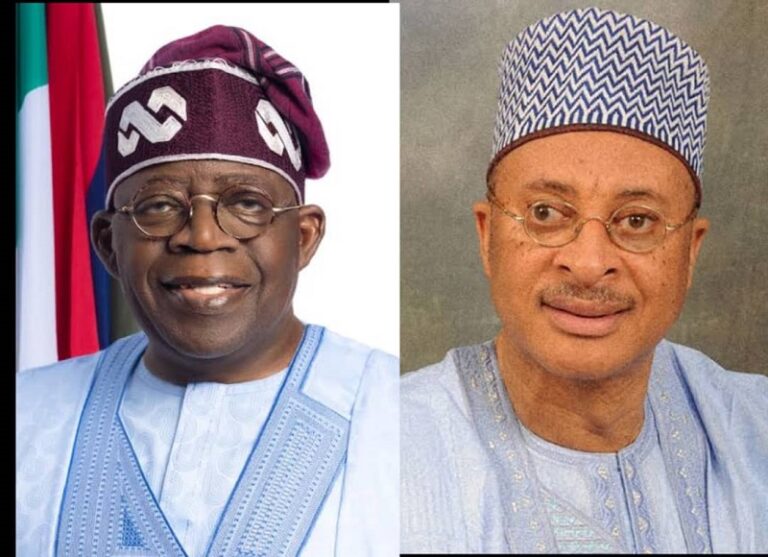
Court declares Pat Utomi’s ‘shadow government’ unconstitutional

0

THE Federal High Court (FHC) in Abuja has declared as unconstitutional the shadow government launched by political economist Pat Utomi, earlier this year, ruling that the move was alien to Nigeria’s presidential system of government.

The judge, James Omotosho, while delivering judgment in a suit filed by the State Security Service (SSS), held that the Nigerian Constitution made no provision for any alternative or parallel government outside the one established through elections.

“The constitution is supreme and binding on all citizens, irrespective of political divides. No section of the law allows for a shadow cabinet.,” the court said.

The judge said the defendant could not import foreign constitutional models to confuse Nigerians.

“Therefore, any participation in any government which is unknown to law will be struck down by this court. I hereby declared the formation as void,” the judge ruled.

The case, marked FHC/ABJ/CS/937/2025, was initiated in May after Utomi announced the formation of a shadow government under the Big Tent Coalition.

He described the initiative as a platform to provide credible opposition to President Bola Tinubu’s administration and unveiled a shadow cabinet in July, comprising academics, lawyers, and civil society figures tasked with analysing policies and proposing alternatives.

The SSS argued that the plan usurped executive authority, threatened national security, and could incite unrest similar to the 2020 #EndSARS protests. It urged the court to declare the initiative illegal and restrain Utomi and his associates from pursuing it.

In his defence, Utomi contended that the suit lacked merit, arguing that the shadow government was merely a civic engagement platform protected under the constitutional rights of expression, association, and political participation. He insisted that the SSS was attempting to criminalise opposition politics.

But Omotosho ruled that Nigeria’s constitutional framework did not recognise such a body. Citing sections 1 and 14 of the 1999 Constitution (as amended), he said governance in Nigeria could only be carried out by elected officials. “Any participation in government unknown to law will be struck down by this court,” he declared.

The court also dismissed Utomi’s objection to its jurisdiction, affirming its authority to entertain the matter. To address the novelty of the issues raised, the judge had earlier invited senior lawyers and amici curiae to make submissions before arriving at Monday’s decision.

Utomi’s shadow government had attracted both support and criticisms since its launch. He had argued that the initiative would serve as a policy watchdog, scrutinising government performance and offering solutions in areas such as the economy, education, healthcare, and security.

The ICIR reported that the project generated widespread controversy. Legal experts argued that while opposition politics and policy critique were legitimate, declaring a parallel government structure was inconsistent with Nigeria’s presidential system. Ilorin-based lawyer Moshood Ibrahim described the move as ‘treasonous,’ noting that only elected officials could govern under the Constitution.

However, some analysts downplayed fears over it. Laolu Akande, a former presidential spokesperson, described Utomi’s proposal as a harmless exercise in political thought rather than a threat to national security. He urged security agencies to focus on tackling pressing security challenges instead of targeting civic initiatives.

Nigeria’s environmental crisis demands transparency, MRA says in new report

0

MEDIA Rights Agenda (MRA) has called on federal and state governments to strengthen citizens’ access to environmental information, warning that Nigeria’s weak response to climate and ecological challenges was costing lives, livelihoods and billions of naira in damages.

The appeal came on Monday, September 29, as the Lagos-based watchdog launched a report, ‘Access to Environmental Information and the Cost of Ignorance in Nigeria,’ to mark this year’s International Day for Universal Access to Information. 

The report, according to a statement by the organisation communication officer, Idowu Adewale, detailed the mounting toll of deforestation, flooding, desertification, oil pollution, plastic waste and worsening air and water quality, describing them as threats to ecosystems, public health and national stability.

The statement noted that the country already had constitutional guarantees, statutory provisions and international commitments that could support transparency and accountability, adding that public institutions had, however, remained reluctant to disclose data.

The MRA’s Programme Officer, Ayomide Eweje, was quoted as saying, “Critical to a national response framework is the right of citizens to access timely and reliable environmental information, without which their effective participation in environmental governance and the protection of their rights will not be possible. However, ensuring access to environmental information is not just about compliance with the law alone; it is also about empowering people to protect their health, livelihoods, and environment; hold duty bearers accountable; and build a future where development does not come at the expense of sustainability,” she added.

The group also highlighted key threats, including deforestation, desertification, recurrent flooding, oil pollution in the Niger Delta, rising plastic waste, and worsening air and water quality. 

It argued that public access to data on these issues was “not a luxury but a necessity” for protecting health, livelihoods and national stability.

Although Nigeria has constitutional guarantees and laws such as the Freedom of Information Act, the Climate Change Act and the Environmental Impact Assessment Act, MRA said government agencies rarely released information proactively and often ignored requests.

The group also criticised the exclusion of rural communities and women from decision-making, and urged authorities to invest in broadband expansion, solar-powered digital hubs and community ICT centres to bridge the rural digital divide.

“The cost of environmental devastation in Nigeria is already staggering, running into billions of dollars annually in destruction of public and private property, facilities and infrastructure; the displacement of millions of citizens; and the loss of thousands of lives. Without meaningful and effective access to environmental information, citizens cannot protect their health and livelihoods, or hold decision-makers accountable. This report underscores the urgency of transparency and public participation in environmental governance,” Eweje added. 

She, however, urged the federal and state governments to guarantee citizens easy access to environmental information, stressing that data availability and transparency were essential for public accountability in the digital era.

To achieve this, she said authorities should strengthen and enforce laws requiring proactive disclosure of environmental data in clear, user-friendly digital formats, and establish centralised open-access portals with regular updates on pollution levels, deforestation rates, water quality and climate risks.

MRA also called for investment in broadband expansion, solar-powered community ICT hubs, and digital training to bridge the rural connectivity gap.

It appealed to civil society groups, journalists, researchers, and technology companies to monitor and report environmental hazards and ensure that available data is accessible, comprehensible and actionable.

Ohaneze’s wake-up call: reclaiming Igbo language before it’s too late

0

By IfeanyiChukwu AFUBA

IT’S relieving to hear that the Igbo socio – cultural organisation, Ohaneze, is finally interested in checking the continued setback of Igbo language. Leadership newspaper of Saturday, September 13, 2025, reported  that John Azuta-Mbata, President of Ohaneze, pledged the organisation’s support on the mission of Igbo cultural renaissance.

The affirmation was made in the course of briefing on preparations for this year’s Ohajioku Festival, scheduled for September 26 at Owerri.  Ohajioku debuted in 1979 as a platform for fertilisation of the Igbo worldview. Mbata reportedly said the present Ohaneze leadership has sponsored endowment chairs for researches in Igbo language, history and culture. “We are encouraging studies and research on Igbo language and culture. We have set up a committee for that. Any role we are expected to play, we shall gladly play it at the Ahajioku lecture. Our people must be heard.”

In the past two decades of the alarm on eroding use of Igbo, Ohaneze leadership maintained scandalous silence. UNESCO has classified Igbo along with some other indigenous Nigerian Language as a ‘vulnerable’ language since 2004, warning of possible endangerment if current trends continue. No institution or study of note has controverted the UN agency’s prediction. The lack of contradiction is not surprising given the verifiable bases of language influences.

Ohaneze, in the past, had proved ineffectual on the issue of modern Igbo civilisation. Some would even say she was vacuous. Many have tried to exploit the body as leverage for political relevance and patronage. Sadly, in the intervening period since UNESCO’s alert, the fortunes of Igbo language has further diminished.

One indicator of decline is the reduced use of Igbo among educated speakers, often due to social and economic incentives to use English. Many educated Igbo prefer listening to radio and television news in English than Igbo which would pose problems of nuanced expression.

Although many factors contribute to the downward slide of Igbo, the major ones converge around three areas. They consist of the technological, political and social. The technological relates to the leaps in modernisation which have neither been reported nor domesticated in the language. Modern advances in learning, professions, science and technology, cannot be discussed in many native languages because they have not kept pace with the changes in time. Language does not exist in a vacuum. It grows and develops from lived experiences.

Consequently, a language like Igbo which is not a participant in the tradefair of the jet age, suffers two main disabilities. It becomes confined to it’s ancestral space, and even within that limitation, experiences shrinking patronage.  Dominant technologies, by their utilitarian value, exert influences on their recipients. You cannot be using American computers and say you don’t recognise American spelling in English. And so, lacking the feed of the new world order, the Igbo and members of her class live under danger of stunted growth.

Fortunes of the Igbo language have been further eroded as a result of the political disadvantage faced by about 40 – 50 million Igbo sub nationality. With the winner – takes – all equation that governs much of Nigeria’s power game, fluency in the language of the ruling ethnic group, could admit into the banquet hall. The post – Biafra officer was a spectator in the military manoeuvres for power.

Dispossessed in the judicial heights and other strategic centres through the unwritten law of marginalisation, it’s still an elusive chase under democracy. While some consciously embrace language of the ruling bloc, some others are subtly conditioned by the prestige and influence flowing from political authority. The political angle is also about what might have been on home front; the road not taken by governments of Igbo – speaking States. Were there not measures they could have put in place to bolster the use of Igbo? There were and there still are.

The social factor refers broadly to the impediments in intergenerational transmission of a language. According to Wikipedia, “following the rise of colonialism, language death has typically resulted from the process of cultural assimilation leading to language shift and the gradual abandonment of a native language in favour of a foreign lingua franca.”

For decades after independence, speaking Igbo in schools was discouraged or even punished, a policy that began under colonial rule and lingered into the late 20th century. In my five years of secondary education in Enugu, Igbo never appeared in the timetable and was not taught for one day. As if acting on cue, parents from about the 1980s, gradually took pride in making English the child’s first language at home. With Igbo taken out of the child’s early formative years, both at home and at school, the foundation was sadly laid for cultural alienation. How would generations, exiled from Igbo, as it were, be enthusiastic about using the language, let alone, ensuring it’s transfer to the next generation?

Of interest too, is a trend that may be described as the Igbo split personality. This shifty attitude speaks to a lack of consciousness of social imperatives. Even without any undue influence, some Igbo learn and choose to speak other languages simply to demonstrate their linguistic prowess. In itself, this seems a very positive attitude – but not when the apparent liberalism is at the detriment of the native language.

Consider the oddity of religious worship in Igboland, where members of the congregation are Igbo speakers, yet the choir busies itself singing hymns in other Nigerian languages. This is not an uncommon sight. And this in an age Christianity has emphasised local enculturation of the faith. The same zeal for sophistication continues outside the Church. Non Igbo speakers visiting or resident in the southeast, whose assimilation of the language would have added to the spread chain, are told not to bother. And Igbos gladly speak to other Nigerians in their sub national languages right in Igboland!

As it were, Ohaneze has it’s work on the language issue cut out for it. She has the dual responsibility of lobbying governments in the southeast and parts of Delta, Rivers, Benue, and Cross River States to adopt affirmative action on Igbo language use. Among other measures, these governments can give Igbo a boost by making it alternative communication medium for executive and legislative businesses.

Igbo-language broadcasting is still significantly less than English, possibly around 20 per cent on many stations, though figures vary. This lopsidedness can legitimately be rectified on the basis of public interest in government owned media. With time and sustained momentum, privately owned media should also see the need to key in.

On the other hand, Ohaneze leadership has some aspects of the language project to execute or oversee directly. There is need to have clear terms of reference for committees working on this brief as well as have their reports reviewed by a second body. Such a vetting process will help avoid the gaffe represented by “ututu oma” as Igbo new day salutation. Ututu oma is a product of validation mindset seeking to worship at English’s good morning altar. The transliteration neither reflects the communal ethos of “ndeewoo” nor the interactive forge of “unu aputago ula” with which most Igbo societies identify. This bland imitation ought to be discontinued immediately.

Top on the priority should be the compilation, publication and availability of a standard Igbo dictionary. Translation of general and literary classics into Igbo, beginning with Chinua Achebe’s Things Fall Apart should start apace.

Ohaneze is invited to consider creating substantial prizes for outstanding films, home videos, documentaries and novels rendered in Igbo. Quizzes and essay competitions on brilliant works of literature in Igbo will help to spur interest and readership. English will remain a dominant tongue for a long time to come but let Igbo function alongside.

Afuba  can be reached via afubaifeanyichukwu@gmail.com.