Home Blog Page 171

Panic buying hits Abuja as NNPC, NUPRC, NMDPRA shut over PENGASSAN strike

0

PANIC buying of petrol has spread across the Federal Capital Territory as the nationwide strike declared by the Petroleum and Natural Gas Senior Staff Association of Nigeria (PENGASSAN) shut down operations at Nigeria’s key oil and gas regulatory institutions.

Motorists were seen thronging fuel stations for panic buying in several parts of the city, including the Airport and Kubwa roads, while queues also stretched at Maple, Kugbo and Nyanyan areas of the nation’s capital .

The industrial action, which commenced on Monday, paralysed activities at the Nigerian National Petroleum Company Limited (NNPCL), the Nigerian Upstream Petroleum Regulatory Commission (NUPRC), and the Nigerian Midstream and Downstream Petroleum Regulatory Authority (NMDPRA).

According to Punch, at the NUPRC headquarters in Abuja, the main gate was firmly locked, leaving staff stranded outside. Security operatives confirmed that no entry was permitted in line with the union’s directive. Similar scenes played out at the NMDPRA office in the Central Business District, where offices were deserted.

Confirming the situation, PENGASSAN chairman at NMDPRA, Tony Iziogba, said the strike recorded “100 per cent compliance,” barring both staff and visitors from accessing facilities. He added that the same level of compliance was achieved at the NNPCL and other agencies nationwide.

The strike followed PENGASSAN’s National Executive Council (NEC) resolution over the dismissal of about 800 workers at the Dangote Petroleum Refinery. The union accused the refinery of violating Nigerian labour laws and International Labour Organisation (ILO) conventions by sacking workers for joining the union and replacing them with foreigners.

“All processes involving gas and crude supply to Dangote Refinery should be halted immediately,” the NEC declared in a statement signed by PENGASSAN General Secretary, Lumumba Okugbawa. The resolution directed all international oil companies (IOCs) to cut crude and gas shipments to the plant.

The move has already triggered fears of acute fuel scarcity and blackouts. Marketers warn that halting supply to Nigeria’s largest refinery will disrupt distribution, drive up prices, and destabilise the downstream market.

On Sunday, September 27, the union instructed members in field locations to down tools from 6:00 am on September 28 and commence a round-the-clock prayer vigil, while all offices and oil facilities were ordered to shut from 12:01 am on September 29.

Just last week, the House of Representatives waded into the crisis, urging PENGASSAN to withdraw its order stopping crude and gas supply to the refinery and allow dialogue.

Chairman of the House Committee on Petroleum Resources (Downstream), Ikenga Ugochinyere, said the decision to halt supply could destabilise the sector, scare away investors, and worsen hardship for Nigerians. “The House does not support shutting down gas and crude supply without exhausting the dispute resolution processes provided in labour laws,” he said.

The committee announced the creation of a sub-committee led by Akin Rotimi to harmonise positions within 14 days, focusing on alleged retrenchments, union rights, and the extent of management powers in private companies.

On its part, Dangote Petroleum Refinery described the directive on the strike as reckless and illegal. The company argued that its contracts with crude and gas suppliers were not subject to union directives and warned that disruptions could undermine federal and state revenues, calling PENGASSAN’s action “economic sabotage.”

The refinery also accused the union of spreading misinformation, urging the Federal Government and security agencies to intervene. “Continued disruption could trigger scarcity of essential products such as petrol, diesel, aviation fuel and cooking gas,” the company warned.

The ICIR earlier reported that a similar dispute arose in September when the Nigeria Union of Petroleum and Natural Gas Workers (NUPENG) threatened a strike over the refinery’s refusal to recognise workers’ rights to unionise.

That action was only suspended after the Department of State Services (DSS) brokered a truce in a meeting with the Minister of Finance, Wale Edun, and the Nigeria Labour Congress (NLC).

Criminal defamation or criminal intimidation: exposing the phantom charges against me

0

By Chinedu Agu

IT is no longer news that on Wednesday, 17 September 2025, I honoured the invitation by the X-Squad Unit of the Nigeria Police Force, Imo State Command, over allegations of “Criminal Defamation of the Governor of Imo State” and “conduct likely to cause a breach of the peace.”

This account is not intended to sensationalise the matter, but rather to lay bare certain uncomfortable truths which I am prepared to stand by, as they are rooted in incontrovertible facts which demonstrate three clear points:

One:. The persecution against me was directly initiated by the Imo State Commissioner of Information.

Two: The so-called “civil society organisation” presented as the originator of the petition against me – Imo Democratic Alliance, allegedly coordinated by one Umukoro Marvis Udechukwu – does not exist in Nigeria. It is not registered and has no traceable office address anywhere in the country.

Three: But for the courage and professionalism of magistrates in Imo State, and the overwhelming solidarity of lawyers, civil society organisations, and friends, I would have been languishing in detention much earlier.

What follows should shed light on the rot, the decay, and the complicity that continue to fester in our Imo State.

At 12:47 p.m. on September 12, 2025, my phone rang. The caller introduced himself as a police officer and asked if I was Chinedu Agu. Without hesitation, he informed me that there was a petition against me for “criminal defamation of His Excellency, the Governor of Imo State.” He further requested me to honour an invitation to appear before the X-Squad Unit of the State Police Command on Wednesday, September 17, 2025.

Curious, I asked about the source of the petition. He replied that it came directly from the Imo State Ministry of Information and even went on to mention the name of the official who signed it.

When I requested for a copy of the petition, he responded I would have to “call Oga” for a copy. When I reached out, ‘Oga’ categorically told me I could not be given a copy of the petition except I applied formally to the Commissioner of Police for a Certified True Copy (CTC).

After we eventually settled on a date for my encounter with the X-Squad, the officer reluctantly sent an “Invitation Letter” to me via WhatsApp. That letter, bare as it was, stood as a symbol of something deeper – the rot and decay in our system, where power is wielded not to protect truth and justice, but to intimidate voices that dare to speak both.

This refusal by the police to furnish a citizen with a copy of the petition forming the basis of his invitation raises grave constitutional and statutory issues. Under Section 36(6)(a) & (b) of the 1999 Constitution, every person facing criminal allegations has the right to be informed “promptly and in detail” of the nature of the offence, and to have adequate facilities for the preparation of his defence. Denying access to the petition until one applies for a CTC clearly violates this right.

The Administration of Criminal Justice Law of Imo State, 2020 (ACJL) reinforces this. Section 8 of the ACJL guarantees fair hearing, while Section 17 mandates humane treatment and respect for the dignity of suspects. Transparency at the investigative stage is, therefore, not a matter of grace, but a constitutional and legal obligation.

This practice, whereby the police serve an invitation letter yet withhold the petition that underpins it, fosters intimidation, secrecy, and abuse of power. It effectively disarms the citizen and turns what should be a fact-finding process into a trap.

I digress.

On the agreed date, I arrived at the station accompanied by a team of lawyers numbering about 72. I was ushered in together with Chief Chris Ihentuge, Chairman of the Nigerian Bar Association (NBA), Owerri Branch, and Chief H.N. Duroha, Chairman of the Sports Committee of the branch. A police officer, who introduced himself as the “2/IC”, laboured rather gratuitously to persuade us that the petition did not emanate from the Ministry of Information but rather from “Imo Democratic Alliance”.

To convince us, he brought out a two-page petition and read the first page aloud. He then handed me over to the Investigating Police Officer (IPO) to whom the matter had been assigned.

At the IPO’s office, he made to read the petition to me. I politely requested to personally peruse it. What I saw was a farce: a hastily contrived letterhead, garishly designed, with “IMO DEMOCRATIC ALLIANCE” written in capital letters. Its motto, inscribed in red, declared “FOR GOOD GOVERNANCE.” On the top right corner of the page was a needless sketch of the map of Imo State. It bore no office or return address. The ‘petition’ was dated September 2, 2025 and captioned, “Criminal Defamation of the Governor of Imo State and Incitement of the Public Against Imo State Government and the Police by Barr. Chinedu Agu.”

The ‘petition’ referred to two articles authored by me: the latter article, “Imo State – Where Justice is On Vacation During Court Vacation”, was published 31 August 2025. The earlier one, “Tears From Enugu: A Lawyer’s Heartbreaking Diary From a State That Works To a State In Ruins”, was published one day earlier on 30 August. The author alleged that I published both with the “intention to incite an insurrection against state institutions through the vicious provocation of the citizens”. It concluded by warning that “if Barr. Agu is not called to order now, he may be on his way to inciting the citizenry into violent action.” Critically, the author did not say how either article had incited anyone nor suggest how I was to be called to order.

The petition was signed by one “Umukoro Marvis Udechukwu”, who claimed to be the “Co-ordinator” of the Imo Democratic Alliance.

In my response, I pointed out that this petition did not disclose any offence known to law. On the accusation of “criminal defamation”, everything I wrote in my two pieces is factual and truth is a complete defence to defamation. I requested the IPO to retrieve and review the full texts and identify a single line that was untrue.

I also added that the law does not permit a third party to lay such a complaint. Defamation is personal, and no busybody can initiate action in that regard. The fictitious organisation did not allege defamation of itself, nor did Umukoro Marvis Udechukwu allege defamation of his own person.

Importantly, the so-called petition did not annex the articles complained of. Instead, it imported mutilated texts, using only those parts that suited its persecutorial purpose. As for the allegation of “inciting the public,” I also invited the police to point to a single line in my articles that did any such thing.

Upon leaving the police, I immediately conducted a search on the portal of the Corporate Affairs Commission (CAC). Imo Democratic Alliance is legally non-existent. It is not a registered organisation. To use such a phantom entity as source for a law enforcement procedure is itself criminal.

On the evening prior to my scheduled encounter with the police on 17 September, I received credible information that my detention was already pre-determined. Indeed, the police made strenuous efforts to procure a magistrates’ signature for an order to detain me but none could be persuaded at the time to lend legitimacy to such illegality.

Frustrated by that setback, and confronted with the overwhelming solidarity of more than 72 lawyers who accompanied me to the station, the police chose to release me on bail, on self-recognizance. It was a temporary respite.

Thereafter, they fixed a fresh encounter for early afternoon on Tuesday, September 23. I shall honour that invitation once again to see what new tricks they will conjure.

One undeniable truth from this entire episode is that initiator of the police persecution against me is the Imo State Commissioner of Information. I welcome genuine legal process. I am not afraid of lawful process but I already suspect that is not what this is about.

A former secretary of the NBA, Owerri Branch, Chinedu Agu, wrote this piece on September 20, 2025. Since September 23, 2025, he has been detained at the direct instigation of the Imo State Government. He can be reached at ezeomeaku@gmail.com

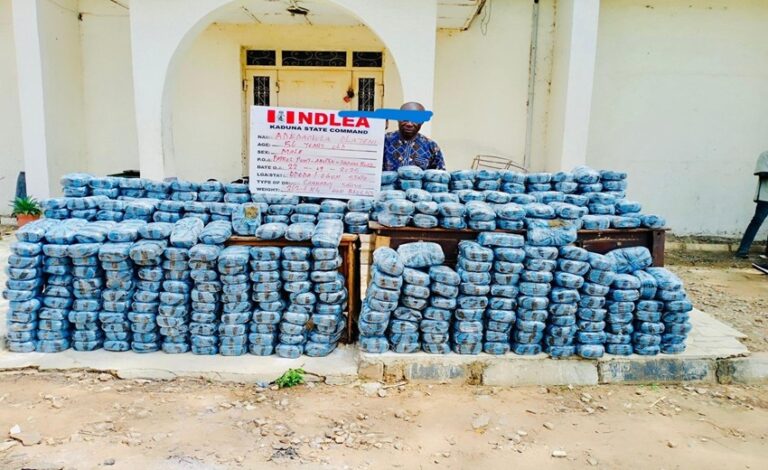
Two drug kingpins arrested with consignments of cocaine, heroin, meth in Lagos

0

THE National Drug Law Enforcement Agency (NDLEA) has arrested two alleged drug barons in Lagos after uncovering consignments of cocaine, heroin, and methamphetamine destined for Europe.

The suspects, identified as Victor Nwosa, 64, and Felix Chika Obiegbu, 49, were apprehended in separate operations following weeks of surveillance by operatives of the agency’s Special Operations Unit (SOU).

NDLEA, in a statement on Sunday, September 28, by its spokesperson, Femi Babafemi, said Nwosa, who posed as a textile merchant, was arrested on September 17 at his residence on Femi Kila Street, Okota, where 4.33 kilograms of heroin and 448 grams of cocaine were recovered.

According to the agency, Obiegbu, who ran a wine distribution business, was picked up on September 11 at Shada Shonefun Street, Aguda Surulere, with 2.9 kilograms of methamphetamine seized from his home.

In separate operations in Borno and Yobe, the NDLEA said it intercepted suspected drug couriers believed to be supplying narcotics to terrorists and bandits.

In Borno, officers arrested 26-year-old Baba Kaka Ibrahim on September 27 at Njimtilo village while driving a Mercedes-Benz GLK. A search of the vehicle revealed 39,380 pills of tramadol and exol-5 hidden in the engine compartment.

On the same day, in Yobe, operatives stopped Halima Adamu along the Damaturu-Maiduguri highway with 39 parcels of Colorado weighing 1.4kg concealed in her luggage. A follow-up operation led to the arrest of another woman, Habiba Muhammad, at her residence on Baga Road, Maiduguri.

Seizures across states

The agency reported further arrests in other states. In Kano, two suspects, Aliyu Sani, 27, and Yahaya Tata, 26, were caught with 30,030 tramadol pills along the Zaria-Kano road. In Bayelsa, three men were arrested at Swali jetty, Yenagoa, with 12kg of skunk and 50 cartridges.

In Ekiti, an ex-convict identified as Femi Owoeye, alias “Do Good,” was arrested at his home in Ikere Ekiti on September 25 with 32kg of skunk and 10.5 grams of tramadol. He had previously served a three-year jail term for drug trafficking.

In Kaduna, NDLEA operatives intercepted a Honda Pilot vehicle at the Abuja-Kaduna tollgate on September 22 carrying 262.6 kilograms (kg) of skunk. The driver, Adedamola Olayeni, 56, was arrested. Another suspect, Zubairu Haruna, 30, was caught with 506 grams of methamphetamine at a checkpoint in the state, while a follow-up operation in Gombe led to the arrest of Babangida Mohammed, 25, said to be the intended recipient.

In Lagos, three suspects were arrested in Apapa with 85,100 opioid pills, while in Abuja, a 40-year-old man, Opeyemi Ogundipe, was arrested with 2.1kg of Colorado along the Abaji-Gwagwalada expressway.

Large-scale cannabis destruction in Edo

NDLEA officers also destroyed over 24,000kg of cannabis in Edo State. At Uromi forest, Esan West Local Government Area, 12,115kg was destroyed on nearly five hectares of farmland, while 345kg of processed cannabis was recovered. Two suspects were arrested.

At Ogu forest in Igueben Local Government Area, another 12,031kg of cannabis was destroyed on over four hectares, with 106kg evacuated.

The agency also intercepted a truck loaded with 1,025kg of cannabis hidden in charcoal bags along Wareke-Auchi road in Etsako West Local Government Area, arresting two suspects in the process.

The NDLEA Chairman, Mohamed Buba Marwa, commended officers involved in the various operations across Lagos, Borno, Yobe, Edo, Kano, Kaduna, Ekiti, Bayelsa, FCT, and Gombe.

He said the seizures and arrests highlighted the agency’s commitment to disrupting drug networks and protecting communities.

The agency also reported that its War Against Drug Abuse (WADA) sensitisation campaigns continued across schools, worship centres, and communities nationwide during the week.

Reps intervenes in Dangote, PENGASSAN dispute as labour tension deepens

0

THE House of Representatives has directed its Committee on Petroleum Resources (Downstream) to intervene in the ongoing industrial dispute between the Dangote Petroleum Refinery and the Petroleum and Natural Gas Senior Staff Association of Nigeria (PENGASSAN).

The committee, chaired by Ikenga Ugochinyere, urged PENGASSAN to withdraw its directive halting crude oil and gas supply to the refinery, allowing room for dialogue.

In a statement issued on Saturday, September 27, Ugochinyere said the union’s action could destabilise the downstream sector, frighten potential investors, and cause disruptions in the supply of petroleum products.

“The House of Representatives Committee on downstream petroleum resources disagrees with PENGASSAN’s order to stop gas and crude supply to the Dangote refinery without exhausting the dispute resolution processes provided in labour laws,” he said.

Ugochinyere explained that the committee had established channels of engagement with key industry players, including the Nigerian Midstream and Downstream Petroleum Regulatory Authority (NMDPRA), the Nigeria Union of Petroleum and Natural Gas Workers (NUPENG), and the Ministry of Labour.

He noted that a subcommittee chaired by Akin Rotimi, with Midala Usman, Billy Osawaru, and Mathew Nwaogu as members, had been set up to harmonise positions on the dispute. The subcommittee is expected to submit its findings within 14 days.

According to him, the intervention would focus on issues relating to union rights, alleged retrenchments, and the powers of private companies to manage their workforce in line with productivity demands.

“We call on PENGASSAN to return to the table for direct talks presided over by the committee, regulators and relevant stakeholders to reach a sustainable solution,” he said.

The legislative intervention comes amid escalating labour action. On Saturday, PENGASSAN’s National Executive Council (NEC) ordered members nationwide to withdraw services following what it described as the unlawful dismissal of over 800 Nigerian employees by the refinery.

The NEC accused the company of violating labour laws and International Labour Organisation (ILO) conventions by sacking unionised workers and replacing them with more than 2,000 foreign nationals.

The circular, signed by General Secretary Lumumba Okugbawa, instructed members across field locations to stop work from the morning of Sunday, September 28. It also ordered a total shutdown across offices, institutions, and oil facilities from Monday, September 29. In addition, branches were directed to cut crude and gas supply lines to the refinery, with international oil companies asked to suspend shipments destined for the plant.

“No man is bigger than our country,” the NEC declared, insisting that the strike would continue until the dismissed workers were reinstated.

In its response, Dangote Petroleum Refinery described the union’s directive as reckless and illegal. The company said supply contracts with gas and crude vendors were not subject to interference by PENGASSAN and warned that the disruption could trigger scarcity of essential products such as petrol, diesel, aviation fuel and cooking gas.

“PENGASSAN has no legal right to disrupt or interfere with the refinery’s contractual obligations,” the company stated. It argued that Nigeria is governed by law, and the union’s action amounted to “criminal interference” that could plunge the country into economic instability.

The refinery also accused PENGASSAN of economic sabotage and spreading misinformation. It urged the Federal Government and security agencies to intervene, stressing that continued disruption could harm state and federal revenues as well as ordinary citizens who rely on fuel for daily activities.

The latest face-off follows similar clashes earlier in September when NUPENG accused the refinery of reneging on an agreement to recognise workers’ rights to unionise.

The ICIR reported that NUPENG had suspended a nationwide strike only after a deal was reached at a meeting convened by the Department of State Services (DSS), attended by the Minister of Finance, Wale Edun, and the Nigeria Labour Congress (NLC).
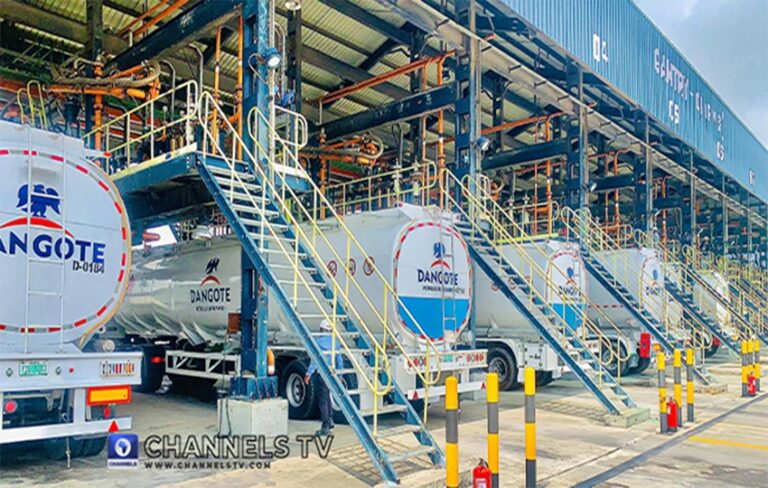
At that meeting, the refinery reportedly agreed to respect unionisation rights. However, NUPENG later alleged that the company backtracked, ordering the removal of union stickers from trucks and failing to honour its commitments. The union threatened to resume its strike, warning against the use of security agents to suppress workers’ rights.

The refinery has consistently maintained that its actions are in line with labour laws and productivity requirements, while unions argue that its approach undermines Nigerian workers and prioritises foreign staff.

With both sides holding firm, the House committee stressed the need for negotiation and alternative dispute resolution. “While we acknowledge the concerns of PENGASSAN, the decision to halt gas supply is hasty and will have a multiplier effect on Nigeria’s energy needs and investment climate,” Ugochinyere said.

The committee also called on all parties to submit detailed information on the dispute and warned that disruptions at the country’s largest refinery could worsen hardship for Nigerians.

PENGASSAN orders nationwide strike amid face-off with Dangote Refinery

0

THE Petroleum and Natural Gas Senior Staff Association of Nigeria (PENGASSAN) has directed its members nationwide to down tools following the alleged dismissal of more than 800 Nigerian workers by Dangote Petroleum Refinery.

In a circular issued after an emergency National Executive Council (NEC) meeting on Saturday, September 27, 2025, and signed by General Secretary Lumumba Okugbawa, the union accused the refinery of breaching Nigeria’s labour laws, the Constitution, and International Labour Organisation (ILO) conventions by sacking workers who joined the association.

The NEC further alleged that the refinery replaced the dismissed staff with “over 2,000 Indians,” describing the move as “an affront to all Nigerian workers.”

To press its demands, PENGASSAN instructed members in field locations to withdraw their services from 6:00 a.m. on Sunday, September 28, with a nationwide shutdown across offices, companies, institutions, and agencies to begin at 12:01 a.m. on Monday, September 29.

It also directed that all processes involving gas and crude supply to the refinery be halted immediately, while international oil companies were ordered to ramp down production and supply to the plant.

The circular added that 24-hour prayer vigils would be held during the strike, stressing that no intervention would be entertained except in situations threatening personnel safety or critical assets.

“An injury to one is an injury to all. No man is bigger than our country,” the NEC declared, calling on the Federal Government to intervene and vowing that the strike would continue until the sacked workers were reinstated.

The directive comes amid a deepening labour dispute between the refinery and oil sector unions over workers’ rights and safety standards.

AI in Africa: 5 issues that must be tackled for digital equality

0

By Rachel Adams, University of Cape Town

IF it’s steered correctly, artificial intelligence (AI) has the potential to accelerate development. It can drive breakthroughs in agriculture. It can expand access to healthcare and education. It can boost financial inclusion and strengthen democratic participation.

But without deliberate action, the AI “revolution” risks deepening inequality more than it will expand opportunity.

As a scholar of the history and future of AI, I’ve written about the dangers of AI widening global inequality. There’s an urgent need to develop governance mechanisms that will try to redistribute the benefits of this technology.

The scale of the AI gap is stark. Africa holds less than 1% of global data centre capacity. Data centres are the engines that drive AI. This means the continent has minimal infrastructure for hosting the computing power necessary to build and run AI models.

While only 32 countries worldwide host specialised AI data centres, the US and China account for over 90% of them.

And only about 5% of Africa’s AI talent (innovators with AI skills) have sufficient access to the resources needed for advanced research and innovation.

Leaders and policy-makers from around the world must grapple with an uncomfortable truth: AI is not equally distributed, and without deliberate action it will magnify global divides.

But they also still have the chance to set a new trajectory – one where Africa and the global majority shape the rules of the game. One that ensures AI becomes a force for shared prosperity rather than exclusion.

To achieve this, five critical policy areas most be addressed. These are data; computing capacity; AI for local languages; skills and AI literacy; and AI safety, ethics and governance. These are not just African priorities; they’re global imperatives.

1. Compute and infrastructure

Access to computational power has become the defining chokepoint in today’s AI ecosystem. African researchers and innovators will remain on the margins of the AI economy unless there is investment in regional data centres, GPU clusters (a group of computers working together on large-scale AI processing) and secure cloud infrastructure.

Europe, by contrast, has pooled over US$8 billion in establishing the European High-Performance Computing Joint Undertaking to ensure the continent has computing capacity for local innovations.

African countries should press for funding and partnerships to expand local capacity. They will also need to insist on transparency from global providers about who controls access, and ensure regional cooperation to pool resources across borders.

2. Data governance

AI systems are only as good as the data they’re trained on. Much of the continent’s data is fragmented, poorly governed, or extracted without fairly compensating those it’s collected from. Large, diverse and machine-readable datasets are used to teach AI models about the contexts and realities the data reflect.

Where ethical stewardship frameworks exist, locally managed datasets have already driven innovation that has impact. For example, the Lacuna Fund has helped researchers across Africa build over 75 open-machine-learning datasets in areas like agriculture, health, climate and low-resource languages. These have filled critical data gaps, allowing for tools that better reflect African realities. Realities like high-accuracy crop yield datasets for farming. Or voice/text resources for under-served languages.

Robust national data protection and governance laws are needed. So are regional data commons, a shared resource where data is collected, stored, and made accessible to a community under common standards and governance. This would enable collaboration, reuse, and equitable benefits. Standards for quality, openness, interoperability and ethics developed by multilateral organisations must be designed with African priorities at their centre.

3. AI for local languages

Inclusive AI depends on the languages it speaks. Current large models overwhelmingly privilege English and other dominant languages. African languages are all but invisible in the digital sphere. This not only entrenches existing biases and inequalities, it also risks excluding millions from access to AI-enabled services.

Take the example of the Cape Town-based non-profit organisation Gender Rights in Tech. It has developed a trauma-informed chatbot called Zuzi that supports survivors of gender-based violence by providing anonymous, accessible guidance in diverse South African languages on their rights, available legal services, and sexual and reproductive health. It helps overcome stigma and bridge gaps in access. Zuzi demonstrates the power of AI technologies in local languages.

Dedicated investment in datasets, benchmarks, and models for African languages is urgently needed, as well as in tools for speech recognition, text-to-speech, and literacy.

4. AI skills and literacy

African infrastructure and data will mean little without human capacity to use them. At present, AI skills supply falls far short of demand, and public understanding of AI’s benefits and risks remains low.

To increase skills, AI and data science will need to be integrated into school and university curricula, and vocational training will need to be expanded. Supporting lifelong learning programmes is essential.

Public awareness campaigns can ensure citizens understand both the promise and perils of AI. This will support deeper public debate on these issues. It can also target support for women, rural communities, and African language speakers to help prevent new divides from forming.

5. Safety, ethics, and governance

Finally, stronger governance frameworks are urgently needed. African countries face unique risks from AI. Among them are electoral interference, disinformation, job disruption, and environmental costs. These risks are shaped by Africa’s structural realities: fragile information ecosystems, large informal labour markets, weak social safety nets, and resource-strained infrastructure. National strategies are emerging, but enforcement capacity and oversight remain limited.

African governments should push for the creation of an African AI safety institute. Safety and ethical audits must be mandated for high-risk systems. Regulations and AI governance instruments must be aligned with rights-based African principles that emphasise equity, justice, transparency, and accountability. Participation in global standard-setting bodies is also crucial to ensure that African perspectives help shape the rules being written elsewhere.

All eyes on the G20

Taken together, these priorities are not defensive measures but a blueprint for empowerment. If pursued, they would reduce the risk of inequality. They would position Africa and other regions across the majority world to shape AI in ways that serve their people and economies.

Digital and technology ministers from the world’s biggest economies will be attending the G20’s digital economy working group ministerial meeting at the end of September.

On paper, it’s a routine meeting. In practice, it may be the most consequential gathering on AI policy Africa has ever hosted.

This is the first time the G20’s digital ministers are meeting on African soil. It’s happening at the very moment AI is being hailed as the technology that will redefine the global economy.

This meeting will not stand alone. It will be followed by the AI for Africa conference, co-hosted by South Africa’s G20 presidency, Unesco and the African Union. Here the AI in Africa Initiative will be launched. It is designed as a practical mechanism to carry forward the G20’s commitments and advance implementation of the African Union’s Continental AI Strategy.

Cape Town could mark a turning point: the moment when African leadership, working in concert with the G20, starts to close the AI divide and harness this technology for shared prosperity.The Conversation

Rachel Adams, Honorary Research Fellow of The Ethics Lab, University of Cape Town

This article is republished from The Conversation under a Creative Commons license. Read the original article.

Police, military rescue 8 Kidnapped passengers in Kogi

0

THE Kogi State Police Command has confirmed the rescue of eight kidnapped victims who were abducted along the Okene–Auchi highway.

The incident occurred on September 26 when a Toyota Hiace commuter bus belonging to Big Joe Ventures Ltd, with registration number Edo FUG 13 XY, was attacked by armed men at Tyre village in Okene Local Government Area.

The vehicle, which was conveying 12 passengers from Abuja to Benin in Edo State, was intercepted by the assailants, who whisked the passengers into the bush.

In a statement obtained by The ICIR on Saturday, September 27, the Police Public Relations Officer (PRO) of the command, William Ovye Aya, said the police and other security agencies acted swiftly following the report of the abduction.

According to Aya, the Divisional Police Officer (DPO) of Okene Division, Nasir Muhammad, immediately mobilised personnel in collaboration with the military and local vigilantes in pursuit of the kidnappers.

He noted that the operation led to the rescue of eight victims, including the driver of the bus.

“In the process, eight victims, including the driver, were rescued unhurt while efforts are ongoing to rescue the remaining four passengers and apprehend the perpetrators of the crime,” he stated.

Security sources said the kidnappers were nine in number and dressed in military camouflage during the attack. They added that the joint security team recovered expended ammunition at the scene of the confrontation.

He stressed that the area was still being combed by operatives to locate the remaining victims.

The Kogi police spokesperson assured the public that all available resources had been deployed to ensure the safe rescue of the other passengers still in captivity.

He appealed to residents to provide useful information that could aid ongoing operations.

“The Commissioner of Police has directed that the search and rescue operations should continue until the remaining victims are freed and the criminals arrested. We urge members of the public to remain calm and cooperate with security agencies, Aya stated.

The Kogi police command reaffirmed its commitment to protecting lives and property, stressing that it would not relent until criminal networks operating in the state are dismantled.

The attack was the latest in a series of abductions that have plagued major highways linking the Federal Capital Territory and the southern parts of the country.

The Okene–Auchi road has become one of the flashpoints where travellers face repeated threats of kidnapping and armed robbery.

Security analysts have repeatedly warned that criminal gangs operating across central Nigeria often disguise themselves in military uniforms to mislead unsuspecting travellers and gain an upper hand during attacks.

Kogi State in North Central Nigeria has been a hotbed of insecurity and kidnappings in recent years.

Just last week, it was reported that a newly called lawyer to the bar, Onyesom Peace Udoka, was kidnapped alongside her sister in Kogi while returning home from her Call to Bar ceremony.

It was gathered that the abduction occurred around Lokoja, Kogi State, on Friday, September 27, 2025, just days after she was called to the bar.

In a public appeal for help, one of her colleagues posted, “My friend and colleague has been kidnapped on her way home from the Call To Bar ceremony. Please, we need help. There’s a 20 million naira ransom for her and her sister”.

It was reported that she was on a vehicle from Abuja to Benin, the Edo State capital, when she was abducted

Dangote Refinery slams PENGASSAN over crude supply cut threat, says scarcity looms

0

THE Dangote Petroleum Refinery has condemned the directive by the Petroleum and Natural Gas Senior Staff Association of Nigeria (PENGASSAN) ordering a halt in crude oil and gas supplies to its $20bn facility, describing the move as “lawless, criminal, and reckless.”

In a statement issued on Saturday, September 27, the refinery management stated that the union has no legal authority to instruct its members to disrupt contractual agreements between the refinery and its vendors, which could lead to nationwide scarcity.

It warned that such actions amount to criminal interference and could trigger chaos in the country.

“Those supply contracts were not entered into with PENGASSAN; they were entered into with third-party vendors and suppliers. PENGASSAN has no right whatsoever to disrupt or interfere with the performance of those contracts,” the refinery said. It added that Nigeria is a country governed by laws, and mob-style directives risk plunging the nation into anarchy.

The company further accused the union of economic sabotage, noting that the disruption would affect essential products such as aviation fuel, petrol, kerosene, diesel, and cooking gas—commodities used daily by Nigerians across all classes.

Dangote Refinery also highlighted that it is one of the largest contributors to government revenue, and any interruption in operations would threaten federal and state income.

The refinery urged the Federal Government and security agencies to intervene immediately, warning that allowing the union’s directive to stand would have nationwide repercussions.

The standoff follows a letter dated September 26, in which PENGASSAN accused the refinery of sacking unionised workers and spreading “misinformation and propaganda” instead of addressing labour concerns.

The union instructed its branches, including the Nigerian Gas Infrastructure Company (NGIC), to shut all crude supply valves, cut gas supply, and halt loading operations for vessels headed to the refinery.


Dangote Refinery restores petrol sales in Naira after FG’s Intervention

0

THE Dangote Petroleum Refinery has reversed its decision to suspend the sale of petrol in naira following the intervention of the Federal Government’s naira-for-crude technical committee.


Plateau government rescues 16 children trafficked to Anambra

0

THE Plateau State Government has announced the rescue of 16 children who were being trafficked from Bassa Local Government Area of the state to Anambra.

Commissioner for Women Affairs and Social Development, Caroline Dafur, confirmed the development in a statement issued in Jos on Saturday. She disclosed that the children, aged between four and nine, were intercepted by security personnel while being moved to a motor park for onward travel.

The rescued children were later reunited with their families and community representatives during a brief ceremony at the J.D. Gomwalk Secretariat in Jos. Dafur disclosed that those behind the act had been arrested and would face prosecution after investigations are concluded.

According to her, the rescue was a major step in the state’s campaign against child trafficking. She reiterated that the administration of Governor Caleb Mutfwang remains committed to protecting the rights of children and other vulnerable groups.

“This rescue represents triumph over trauma, resilience, and hope restored in a world where the innocence of childhood should be protected,” Dafur said, urging residents to remain vigilant and promptly report suspicious activities.

According to a report by Dailypost, the wife of the Bassa council chairman, Miriam Riti, who received the children on behalf of her husband, said arrangements had been made for medical checks, school enrollment, and follow-up monitoring through community leaders.

The incident in Plateau adds to a rising number of child trafficking cases uncovered in recent months.

In August, The ICIR reported that security agents in Benue arrested a suspected trafficker, Priscilia Mhiive Terhemen, who allegedly attempted to move 11 children from Katsina-Ala to Benin City in Edo State. The victims, some of them minors, were rescued with the help of Benue indigenes and later returned home. Police authorities confirmed that the suspect was in custody while investigations continued.

Similarly, in July, The ICIR reported that the Anambra State Police Command rescued 11 trafficked children in Uruagu, Nnewi North.

Investigations revealed that the victims were abducted from Adamawa and sold to unsuspecting individuals under the guise of adoption. Police disclosed that boys were sold for N1.5 million each while girls were sold for N800,000.