Home Blog Page 1768

Internet usage drops by 6% as Airtel, MTN, Glo lose subscribers

THERE was a decline in the number of Nigerians who made use of internet and carried out voice calls in the first quarter (Q1) of 2021, as against the fourth quarter (Q4) of 2020.

From 154.301 million  in the fourth quarter (Q4) of 2020 to 144.949 million active internet data subscribers in the first quarter (Q1) of 2021, there was a 6.06 per cent decline in internet usage.

For voice callers, the number dropped from 204.601 million in Q4 of 2020 to 192.413 million subscribers in Q1 of 2021, representing a 5.96 per cent decrease in voice subscriptions.

No service provider was spared in the decline.

According to the data released by the National Bureau of Statistics (NBS) on Tuesday, the decline in voice calls spread across the major telecom service providers in the country.

GLO and MTN experienced a decline in internet service subscriptions by 3.24 per cent and 5.79 per cent respectively.

Airtel and 9MOBILE’s rate of internet subscriptions dropped by 8.50 per cent and 9.85 per cent respectively.

There was, however, a 13.86 per cent decrease in internet usage for the service providers designation as ‘others.’

A total of nine million users did not make use of the internet actively in Q1 of 2021, according to the NBS.

Also, 12 million voice subscribers were inactive in Q1 of 2021

GLO and MTN lost active voice subscribers by 3.50 per cent and 5.99 per cent respectively. On the other hand,  9MOBILE lost subscribers by a margin of 1.01 per cent.

Airtel saw a 9.45 per cent decline in its voice subscribers.

Lagos State has the highest number of active internet and voice users, with 23 million voice subscribers and 17 million internet subscribers.

This is followed by Ogun State, with 10 million voice and 8 million internet subscribers. Kano State has 12 million voice and 8 million data users.

According to the NBS report, MTN has the highest share of subscriptions, followed by GLO, AIRTEL and other service providers.


Two Nigerians among three African, 12 UFC champions


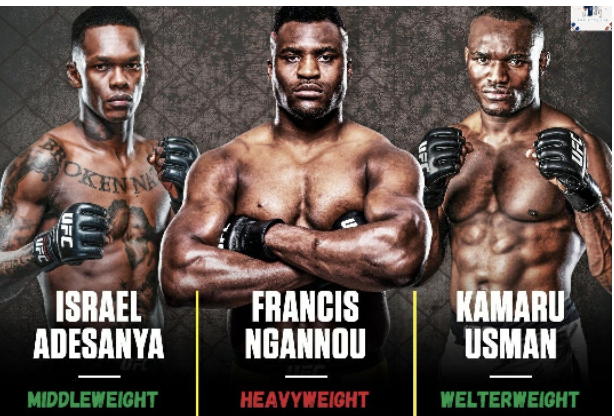
TWO Nigerians, Israel Adesanya and Kamaru Usman are current champions in different weight categories of the Ultimate Fighting Championship (UFC).

Despite less than 30 of the over 600 active fighters in the UFC being from Africa, three Africans have performed exceedingly well in the sport to earn titles among 12 weight division champions.

Celebrating the feat on his official instagram page, Adesanya, who is the current world middleweight champion wrote:  “An era in the history of sports that will never be forgotten. I am honored to be part of this trio in mixed martial arts”.

Usman beat Gilbert Burns with punches 34 seconds in the third round at UFC 258 held in February to defend for the second time his welterweight champion title which he first won in 2019.

The welterweight champion who had been away from Nigeria for over a decade, disclosed last Thursday in Abuja that he was planning to set up a sporting academy in Nigeria, as a way of giving back to the homeland.

The third African UFC champion Francis Ngannou is from Cameroon and currently holds the world heavyweight title.

Nigeria to harness arts for improved revenue generation


THE Nigerians in Diaspora Commission (NIDCOM) said it was partnering with the National Gallery of Art (NGA) to harness the huge potential in the creative industry for improved revenue generation and economic development.

Chairman of NIDCOM Abike Dabiri-Erewa made this known on Wednesday in Abuja when she received Director General of the National Gallery of Art Ebeten William Ivara and management staff of the office.

Dabiri-Erewa, who recognised that there was a huge revenue yet untapped in the creative industry, said the collaboration had the potential to increase the value and appreciation of Nigeria’s visual arts and artists, including those in the diaspora, and ultimately lead to more profitability.

“We must hit the ground running in this relationship between NIDCOM and NGA, which has long been overdue,”  Dabiri-Erewa stressed.

On his part, Ivara said the mandate of the NGA included harnessing, harvesting and assembling all visual arts of Nigerians at home and in the diaspora as a repository of Nigeria’s socio-cultural and historical development.

He also disclosed that the NGA had designed an online form for capturing and registering Nigerian artists at home and in the diaspora for proper documentation.

A six-member working committee will be constituted to fast track the process of the collaboration. 

Art work in Nigeria is as old as the people, preceding even the colonial era. Although many Nigerian artists have gained wide recognition with their works exhibited across Africa, America, Europe and Asia, revenue from art is still very low.

An artist based in Lagos Sandra Ike noted that  art was a powerful tool that could be used to educate, transform, illuminate, inspire, and motivate.

“The art industry in Nigeria still has a lot of potential,” she added.

According to statista, in the first quarter of 2021, the combined revenue from arts, entertainment, and recreation accounted for 0.3 per cent of Nigeria’s Gross Domestic Product (GDP), showing a slight decline when compared to the first quarter of 2020 when it reached 0.31 per cent. However, compared to 2019, the contribution of arts, entertainment, and recreation to the GDP increased.


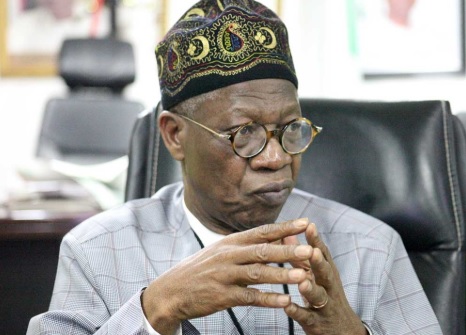
Lawyers fault Lai Mohammed’s claim that Twitter CEO is liable for #EndSARS violence

LAWYERS have faulted the claim by  Minister of Information and Culture Lai Mohammed that Twitter Chief Executive Officer (CEO) Jack Dorsey is liable for the violent outcome of #EndSARS protests in Nigeria.

Mohammed had, on Wednesday, said Dorsey was ‘vicariously liable’ for the violence and destruction of property that occurred during the protest because he tweeted in support of the demonstrations.

In October 2020, Nigerian youths had protested against extra-judicial killings and other forms of police brutality perpetrated by men of the now defunct Special Anti-Robbery Squad (SARS) of the Nigerian Police Force.

However, the protest eventually turned violent, resulting in loss of lives and destruction of properties across different states in Nigeria.

During the protest, Dorsey had posted the bitcoin account through which funds were raised for the protests.

Following the recent feud between Twitter and the Nigerian government, Mohammed said Dorsey shared an Emoji to attract local and foreign support for the protest and promoted bitcoin donations for the movement. He said as a result, the Twitter chief executive was liable for the outcome.

“If you ask people to donate money via bitcoins for #EndSARS protesters then you are vicariously liable for whatever is the outcome of the protest,” Mohammed said.

Lawyers Speak

Reacting to the minister’s position, some lawyers have said Dorsey’s support for the protest does not make him responsible for its outcome.

In an interview with The ICIR, an Abuja-based lawyer Uche Alum said there was no justification in law for what the minister said.

According to Alum, Dorsey could not be vicariously responsible because he did not sponsor the protest.

“If he provided a platform for everybody to hear their views and gave them support, he has not done anything wrong. The government is trying to play the ostrich,” Alum said.

He noted that the government was only trying to mix politics with the law by saying he was vicariously responsible.

Alum said the Nigerian government was against human rights and anyone who was against human rights violations had automatically become its enemy.

“Even if he had an office in Nigeria and is registered here, he can still not be liable. It is preposterous to say that someone who is a rights activist is directly or vicariously liable for the actions of some other people.

“The #EndSARS campaign was acted by Nigerians who sought international support. Assuming Dorsey sponsored the protest, why would the government leave Nigerians carrying out the protest and attack the sponsor,” Alum said.

“When President Muhammadu Buhari posted a civil war threat on Twitter, does that mean that Dorsey was responsible for it because the president used tweeter to do so?” he asked.

Secretary of the Nigeria Bar Association (NBA) Collins Osiagwu said that Mohammed’s argument was baseless.

Osiagwu said it was more of an opinion rather than what the Nigerian law stipulated.

He said, “For instance, it (vicarious liability) can be about an employer and employee and principal and agent where the actions of an employee/agent are the responsibility of the principal/employer.”

He also expressed suspicions over the motive behind Mohammed’s comment, noting that the minister did not talk about Dorsey’s liability before he removed the president’s civil war post.

When asked if the Nigerian government could sue Twitter for such damages, a lawyer with the Gamzaki Law Chamber Olayinka Olaore said it was impossible because there were no terms and conditions binding the former and the latter.

“Holding Dorsey liable for the #EndSARS protest might be impossible except where terms and conditions are guiding the cyberspace relationship between Nigeria as a country and Twitter, but there is none.”

She noted that section 78 (1) of the Companies and Allied Act 2020 stated that “Non-registration of company stipulates that the company shall not have a place of business or an address for service of documents or processes in Nigeria for any purpose other than receipt of notices and other documents concerning preliminary incorporation matters.”

Olaore further noted that only a social media regulatory law could create room for terms and conditions that would guide both parties’ activities and set boundaries.

Gunmen abduct Chinese nationals working on Lagos-Ibadan railway

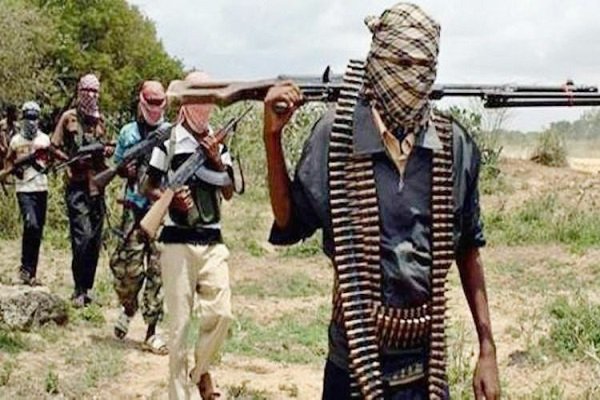
SOME yet-to-be-identified gunmen abducted four Chinese railway workers on Wednesday in Odeda Local Government Area (LGA) of Ogun State, killing a policeman in the process.

Spokesperson for the Ogun State Police Command Abimbola Oyeyemi confirmed the incident and identified the abductees as workers on the ongoing Lagos-Ibadan standard gauge railway project.

In a phone conversation with The ICIR, Oyeyemi described the deceased policeman as a security detail attached to the expatriates but was unable to identify his name at the time of filing this report.

“The Chinese are our railway workers, they are working on our railway terminus construction site. The kidnappers came and it is like they ambushed them. They even killed a policeman that was attached to them, and they kidnapped the Chinese,” he said.

According to a report, some village youths had chased the gunmen into the forests in a bid to rescue the victims, but their efforts did not yield results.

The police spokesperson, however, stated that the police were doing their best to ensure the timely release of the kidnapped expatriates.

“We are on it. We believe hopefully that we’re going to get them,” he said.

As a result of the declining security in Nigeria, kidnapping for ransom has fast become the order of the day.

Elder Statesman Wole Soyinka had, on Monday, lamented that kidnapping had become a business in the Western corridors of Lagos, Ogun, Kwara and other states.

Soyinka argued that the creation of a regional security outfit, Western Nigeria Security Network codenamed Operation Amotekun, was a result of the desperation of the people due to the rising spate of insecurity in the country.

After ICIR investigations, Imo govt sets up panel to probe extra-judicial killings

By Olanrewaju OYEDEJI


THE Imo State government, led by Governor Hope Uzodinma, has set up a judicial panel to probe extra-judicial killings in the state.

This development is coming after The ICIR published an investigation entitled, ‘EndSARS Protest that left Imo communities desolate and traumatic,’ which detailed how Imo citizens were killed by the personnel of Nigerian military as an aftermath of  Nwaorieubi Police Station burning.

The report, which exclusively revealed the deaths, also told the story of the clamour of the people in the state for justice after denials of such extra-judicial killings by the Nigerian Army.


READ ALSO: 

When Hunters Become Hunted: How attacks on Police Stations in the Southeast leave Officers at risk and communities vulnerable

#EndSARS protest that left Imo communities desolate and traumatised

South East governors, Buratai will be attacked if spotted outside Nigeria – Nnamdi Kanu


“That same day, angry soldiers reportedly stormed Nwaorieubi where the police station had been razed down and started shooting sporadically leading to several deaths. This newspaper was able to identify at least seven persons who lost their lives that day from the shooting and has decided to use only their first names as sources requested,” the report published in March this year read in part.

This development is also coming as the state says it is interested in ensuring justice and immortalising those who have been killed extra-judicially in the state.

The state government has also begun to accelerate action on the #EndSARS police brutality panel report as at the time of this report.

In another related development, the state government ordered a setting up of a life insurance scheme for policemen in the state. This development is coming weeks after the ICIR’s investigative report titled, “When Hunters Become Hunted: How attacks on Police Stations in the Southeast leave Officers at risk and communities vulnerable.”

The report also exposed how officers fell victims to the attacks on police stations, inadequacy of their welfare, and officers’ concern about their family not being properly catered for, detailing the despirited nature of police personnel. The report revealed names of policemen, their duty before death and other exclusive information.

“We will bring up an insurance policy in the state for all police officers in the state, which will benefit their relations. This is to boost their moral in service delivery,” Uzodimma stated.

Confirming the developments to our reporter, Chief Press Secretary to the governor of Imo State Oguwike Nwachukwu noted that the actions were beginning to be in place as a way of ensuring justice and better policing in the state.

The governor has also begun to embark on visits to communities in the state, holding stakeholders meeting with communities, with the latest being in Obowo, one of the communities hit by attack on police stations.

Buhari’s plan to revive old cattle routes stirs more controversies

SINCE President Muhammadu Buhari announced his resolve to revive cattle routes and grazing areas gazetted during the First Republic in 1963, some Nigerians have continued to express mixed reactions.

Prominent among them are state governors who are custodians of land at the state level as entailed in the Nigeria Land Use Act, 1978.

The Act states that “Subject to the provisions of this Act, all land comprised in the territory of each State in the Federation is hereby vested in the Governor of that State, and such land shall be held in trust and administered for the use and common benefit of all Nigerians in accordance with the provisions of this Act.”

Checks by The ICIR to ascertain the existence of any legal provision reflecting grazing routes in the 1963 Republican Constitution proved abortive. No part of the sections deals with grazing routes.


READ ALSO: 

Troops intercept 73 men travelling from Nasarawa to Imo with 47 motorcycles

Grazing routes in southern Nigeria: Falana says Malami misled Buhari

Govt negligence, herdsmen, climate change crippling farming in Anambra


Though chapter three of the referred constitution reflects sections such as fundamental human rights, freedom of movement, and freedom from discrimination, it does not capture the issues surrounding the grazing routes or reserves.

Buhari had earlier made the debated announcement on grazing routes when he appeared at an exclusive interview with Arise Television.

During the interview session, he announced that he had already directed the Minister of Justice and Attorney-General of the Federation Abubakar Malami to dig up the 1963 Gazette which established grazing routes across the country. He gave no specifics as to the day, month or the volume number of the said gazette.

“What I did was to ask him to go and dig the gazette of the First Republic when people were obeying laws. There were cattle routes and grazing areas. Cattle routes were for when they (herdsmen) were moving upcountry, north to south or east to west. They had to go through there,” Buhari disclosed at the interview.

The designated routes were used to move cattle from up north to several other parts of Nigeria, he had claimed.

Southern governors kick   

However, amidst the controversy, state governors, who questioned the idea, argued that some of the states were nonexistent as of the period the said gazette was created.

The governors of Ondo, Delta, Cross River, Enugu, Ekiti, Akwa Ibom, among others, from the southern part of the country all insisted on their position, disproving open grazing as part of measures to reducing random killings attributed to the herdsmen.

Benue is first on the list of states that banned open grazing in the country.

Last month, leaders of the ruling All Progressives Congress (APC) from the South-West also threw their weight behind the decision of the South-South governors on the open grazing ban.

After about four hours of meeting, the leaders, including former Governor of Lagos State Bola Ahmed Tinubu and former interim national chairman of the APC Bisi Akande, reached the consensus in a communique read to the media.

“We endorse the position of the southern governors taken at their May 11, 2021 summit in Asaba, Delta State, regarding ranching. We do so because such a decision will lessen tensions between farmers and herders,” Akande stated after the closed-door meeting.

Meanwhile, if grazing land is recovered, as initiated by the president,  land on the designated routes, which had been converted for use by the respective state governments or approved for residential purposes, could be forfeited for grazing purpose.

Still, the controversy has continued to stir up concerns on the legality of the president’s directive since state governors are land administrators, and the grazing route is not recognised by the 1999 Constitution.

While some experts blamed Malami to have wrongly advised the president, others argued Buhari’s declaration was no law and had no constitutional basis.

Lawyers speak – say no federal legislation on grazing routes  

A Senior Advocate of Nigeria (SAN) Wole Olanipekun, in his reaction, said the Land Use Act passed by the National Assembly (NASS) displaced whatever gazette Buhari might have referred the attorney-general to.

Olanipekun, a former attorney-general of old Ondo State, said no specific federal law was enacted for the country on grazing routes, except the northern region.

“If there is any gazette, it can’t apply to the entire country. There is a difference between order and law. There is no law that universally applies to Nigeria on grazing routes.

“Section 4(2) of the 1999 Constitution empowers the National Assembly to make laws for the good of the country. There is no law made by the National Assembly regulating grazing routes in Nigeria and I say this on good authority,” he said, in an interview

He continued that he was “…not aware of any gazette that established grazing routes in Nigeria. I listened to Mr President and I have checked the books and no law sanctions grazing routes. I’m not unaware of the law establishing grazing reserves in Kwara State which was exclusive to the state.

“I’m also not unaware that under the regional system, northern region had something similar which was exclusive to the region. I know in places like Igbaja, Okuta, Omu-Aran, Kaiama, Oro, there were grazing reserves different from grazing routes.

“When you look at Nigeria as a whole, the law on land matters is the Land Use Act and it is entrenched in the 1999 Constitution. The law vests all powers on land issues all over the country in governors and not the Federal Government.”

The lawyer emphasised that with respect to land and its use, the Federal Government could not legislate on how land was controlled and distributed in any part of the country.

According to him, even if it was assumed, without conceding, that laws for grazing routes made under the Northern Region of Nigeria covered everywhere, the Land Use Act already superseded both routes and the law establishing them.

Chairman of the Senate Committee on Media and Public Affairs Ajibola Basiru shared the same position with Olanipekun, stressing that there was no such law as Grazing Act or Federal Grazing Law upon which the president’s directive could be implemented.

He noted that except for a decree on reserve and grazing routes promulgated by the premier of defunct northern region Ahmadu Bello, such law was not applicable and enforceable to other parts of the country.

His words: “It is regrettable that the president has not been properly advised by his attorney-general and the legal team. They need to go and check their facts. If anybody will implement any law, it is the states where those routes are applicable that can do so.

“Grazing routes law is not applicable in any state in southern Nigeria. Southern Nigeria has its own law on cattle and other related matters. With respect, it is unfortunate that we have a situation whereby the president of a country is being misadvised by his legal and policy teams for whatever reason it is.”

Human Rights lawyer Femi Falana also criticised the move and accused Malami of misleading the president.

Another lawyer  Solomon Okedara also questioned the legality of the gazette and its compliance with the constitution.

He told The ICIR that though certain laws such as the Ordinance Law of 1922, was still valid only in Lagos State, “if the constitutionality of regular laws could be challenged in the court of law, how much more a gazette which is not recognised by the 1999 Constitution.”

“Gazetting the instrument does not confer validity or constitutionality. That is, the legal instrument or document must have been constitutionally passed and must not be in contradiction with the constitution.”

Ranching, National Livestock Plan solution to open grazing

Inaugurated by the Vice President Yemi Osinbajo in 2019, the National Livestock Transformation Plan was launched by the Federal Government as part of deliberate measures to reduce the farmer-herder crisis, which has claimed over 1,300 lives since January 2018.

It is a 10-year plan designed to develop the livestock sector, improve dairy needs of the country and cater to the affairs of the pastoralists. While the 36 state governors are expected to partner in the project implementation, it is mostly accepted by state administrators from the north.

It is to be piloted in Adamawa, Benue, Kaduna, Plateau, Nasarawa, Taraba and Zamfara.

Indirectly, if well implemented, it is expected to discourage open grazing and promote ranching.

Modernising the livestock sector, according to the International Crisis Group, would help address the lingering herder-farmers conflict, “which threatens Nigeria’s political stability and food security.”

“In this plan, the State Government or private investors provide the land, the federal government does not and will not take any land from a State or local government.

“Any participating state will provide the land and its own contribution to the project. The federal government merely supports,” Osinbajo stated during the inauguration.

“It is a plan that hopes to birth tailor-made ranches where cattle are bred, and meat and dairy products are produced using modern livestock breeding and dairy methods.”


Does COVID-19 vaccine turn people into vampires as claimed by Chris Okotie?

0

By Bukola AYENI


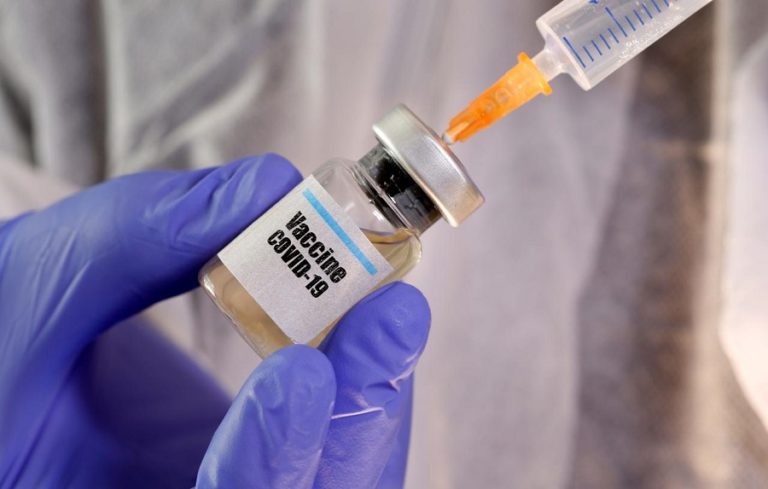
SENIOR  pastor of Household of God Church International Ministries Reverend Chris Okotie claims that the COVID-19 vaccine turns people into vampires. He explains that Bill Gates’ Genetically Modified Food (GM Food), when taken with the vaccine, puts people in communion with Satan.

In a video interview published on 12th, July 202o on YouTube, which has been viewed 375,000 times, Okotie described the COVID-19 vaccine as satanic. He said, “What Bill Gate is doing under the auspices of the United Nations is to make sure that you receive the food, the GMOs. When you eat that Genetically Modified Food that you eat and you take the vaccine, you have entered into communion with Satan, Lucifer. And that communion involves blood.

“Now, since the blood of Jesus is not what he is talking about, or what he has to offer, he will require you to seek blood somewhere else. And the only place where you can find blood is in another human being. So, one of the things that the vaccine will make you do is to become a vampire who needs to drink blood for sustenance.


READ ALSO: 

Can eating bananas prevent COVID-19 infection?

Govt negligence, herdsmen, climate change crippling farming in Anambra

Call for review of power sector privatisation heightens as epileptic electricity supply persists


“But we, as Christians, don’t drink the blood, we drink wine, which is an emblem of the blood and that sustains us spiritually. But his communion will require you drinking blood consistently so that you are a vampire for your sustenance.”

According to the World Health Organisation (WHO), “GMO foods are foods derived from organisms whose genetic material (DNA) has been modified in a way that does not occur naturally, e.g. through the introduction of a gene from a different organism.”

The blood of Jesus for Christians symbolises being bought back to God and for the cleansing of sins inherited from Adam, Christians say.

Vampires are creatures that feed and live on the blood of humans.

Chris Okotie claims that the GMO symbolises the bread and the vaccine symbolises blood, and taking both means being in communion with Satan, just like Christians take communion in remembrance of Jesus Christ.

In August 2020, via WhatsApp broadcast, he instructed his members not to wear face masks, claiming that “when a man is standing before God in church wearing a shield or mask, he is denying the finished work of the cross.” According to him, wearing a face mask is ‘denying the finished work of Christ.'”

This WhatsApp broadcast was a major news story in several newspapers. His instruction came before COVID-19 vaccine was available in Nigeria.

Pastor Chris Okotie
Pastor Chris Okotie

The Nigerian government imported four million doses of the first batch of AstraZeneca COVAX in early March, and President Muhammadu Buhari and Vice President Yemi Osinbajo were vaccinated publicly on Saturday, March 6, 2021, to encourage citizens to also take the vaccine.

Executive Director of the National Primary Health Care Development Agency (NHCDA) Faisal Shuaib disclosed this in a press conference held on the 1st of June, 2021 which was also published on the NHCDA website. He said nearly that two million of targeted eligible Nigerians had been vaccinated with their first dose of the Oxford/Astrazeneca vaccine.

“There have been cases of mild, moderate and severe  and adverse effects following immunisation (AEFI) since we officially rolled out COVID-19 vaccination on March 15, 2021. The AEFIs symptoms ranged from pain and swelling at the site of vaccination to more serious symptoms such as headaches, abdominal pain, fever, dizziness and allergic reactions.”

Globally, as of 6:45pm CEST, 14 June 2021, there have been OVER 175,000 confirmed cases of COVID-19. As of 10 June 2021, over two million vaccine doses had been administered, as provided by the WHO.

Responses from a few that have taken the vaccine in Nigeria are as follows:


Citizens who have taken the Vaccine
Tweet from a Nigerian regarding the vaccine.


The  WHO, NHCDA and Nigerians that have taken the vacine affirm that it does not turn people into vampires as Chris Okoties claims. The claim that the vaccine will make people suck blood is false and should be disregarded.

This publication was produced as part of IWPR’s Africa Resilience Network (ARN) programme, administered in partnership with the Centre for Information Resilience (CIR), the International Centre for Investigative Reporting (ICIR), and Africa Uncensored. For more information on ARN, please visit the ARN site.

INEC announces dates for Osun, Ekiti elections

THE Independent National Electoral Commission (INEC) has announced the dates for gubernatorial elections in Ekiti and Osun states.

The announcement was made by INEC Chairman Mahmood Yakubu at the commission’s headquarters in Abuja on Wednesday.

The Ekiti election would be held on Saturday, June 18, 2022 while that of Osun was slated for Saturday, July 16, 2022.

“In keeping with our policy of announcing the dates of elections in advance to enable early and effective preparations by all concerned, the commission has approved that the Ekiti State Governorship election will hold on Saturday June 18, 2022, while the Osun State Governorship election will hold one month later on Saturday July 16, 2022,” Yakubu said.

Noting that INEC had begun preparations for the upcoming elections, he enjoined concerned parties to ensure rancour-free primaries and peaceful electioneering campaigns.

The timetable for both elections has been published on INEC’s website and social media platforms.

Governor of Osun State Gbenga Oyetola was declared winner after a supplementary election was held in seven polling units across four local government areas three years ago.

In Ekiti, Kayode Fayemi emerged governor after defeating Peoples Democratic Party (PDP) candidate Kolapo Eleka and other opponents in the 2018 gubernatorial elections.


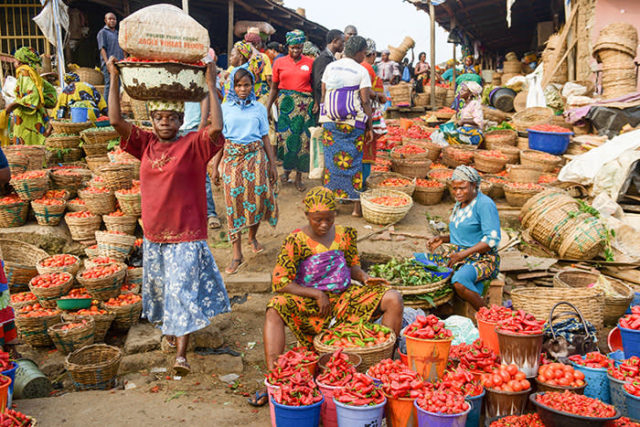
Food prices remain high despite drop in inflation rate to 17.93%

THE Consumer Price Index (CPI) released by the National Bureau of Statistics (NBS) on Tuesday revealed that food prices in Nigeria remained unaffordable despite a drop in the country’s inflation rate to 17.93 per cent.

The inflation statistics released by the NBS showed that the rate dropped from 18.12 per cent in April to the present rate of 17.93 in May, representing a decrease of o.19 per cent.

But the composite food index rose to 22.28 per cent in May 2021, compared with 22.72 per cent in April 2021. This means that food is still expensive and unaffordable by the majority of Nigeria’s population. Poverty rate in Nigeria is between 45 and 50 per cent, according to several reports.

The World Bank said the country’s surging inflation and rising prices had pushed an estimated seven million Nigerians below the poverty line in 2020.

In its Nigeria Development Update (NDU) released on Tuesday, the World Bank noted that Nigeria’s economic growth was being hindered by food inflation, heightened insecurity, unemployment, and stalled reforms.

According to the update, persistent inflationary pressure was mainly driven by accelerating food prices, while the nation’s inflation rate rose steadily throughout 2020 and reached a four-year high in March 2021.

The headline index increased by 1.01 per cent in May 2021 on a month-on-month basis. This represents a 0.04 percentage point higher than the rate recorded in April 2021 (0.97 per cent).

FOOD INDEX

The composite food index rose to 22.28 per cent in May 2021 compared to 22.72 per cent in April 2021. 

This rise in the food index resulted from the increase in prices of bread, cereals, milk, cheese, eggs, fish, soft drinks, coffee, tea and cocoa, fruits, meat, oils and fats, and vegetables.

On a month-on-month basis, the food sub-index increased by 1.05 per cent in May 2021, up by 0.06 percent points, from 0.99 per cent recorded in April 2021.

The average annual rate of change of the food sub-index for the 12 months ending May 2021 over the previous twelve-month average was 19.18 per cent, 0.60 percent points from the average annual rate of change recorded in April 2021 (18.58) per cent.

CORE INFLATION

The core inflation, which excludes the prices of volatile agricultural produce, stood at 13.15 per cent in May 2021, up by 0.41 per cent when compared with 12.74 per cent recorded in April 2021. On a month-on-month basis, the core sub-index increased by 1.24 per cent in May 2021. This was up by 0.25 per cent when compared with 0.99 percent recorded in April 2021.

The highest increases were recorded in prices of pharmaceutical products, garments, shoes and other footwear, hairdressing salons and personal grooming establishments, furniture and furnishing as well as carpet and other floor covering.

STATE PROFILES

All Items Inflation

All items inflation on year-on-year basis, in May 2021, was highest in Kogi (25.13per cent), Bauchi (23.02 per cent), and Sokoto (20.11 per cent). Katsina (15.69 per cent), Imo (15.52 per cent) and Delta (14.85 per cent) recorded the slowest rise in headline year-on-year inflation. On month-on-month basis, however, in the same month, all items inflation was highest in Kogi (2.22 per cent), Ogun (2.17 per cent) and Cross River (2.07 per cent), while Ekiti (0.02 per cent) recorded the slowest rise in headline month-on-month, with River and Sokoto recording price deflation or negative inflation (general decrease in the general price level of food or a negative food inflation rate).

Food Inflation

Food inflation on year-on-year basis, in May 2021, was highest in Kogi (32.82 per cent), Kwara (26.02 per cent) and Enugu (25.43 per cent). Akwa Ibom (20.06 per cent), Bauchi (18.65 per cent) and Abuja (16.91 per cent) recorded the slowest rise on year-on-year inflation. 

On month-on-month basis, however, in the same month, food inflation was highest in Kogi (3.11 per cent), Ogun (2.89 per cent) and Anambra (2.37 per cent), while Edo, Sokoto and Ekiti recorded price deflation or negative inflation (general decrease in the general price level of food or a negative food inflation rate).

In his June 12 Democracy Day speech last Saturday, President Muhammadu Buhari said his administration had lifted 10.5 million Nigerians out of poverty in the last two years, but a factcheck by the ICIR showed otherwise as data available punctured the president’s claim.

Not only has the number of people living in extreme poverty swelled within the last two years from 87 million to 105 million, the 67 per cent fall in household incomes has plunged more Nigerian into poverty. These have greatly reduced the purchasing power to below average. 

In addition, economic growth in the last two quarters has not been sustainable enough to lift people out of poverty and the prices of food are not getting cheap  enough as they should be.